Hanoi and the Northeast · Hanoi
Hanoi Old Quarter guide: where to sleep, walk and eat in the 36 streets
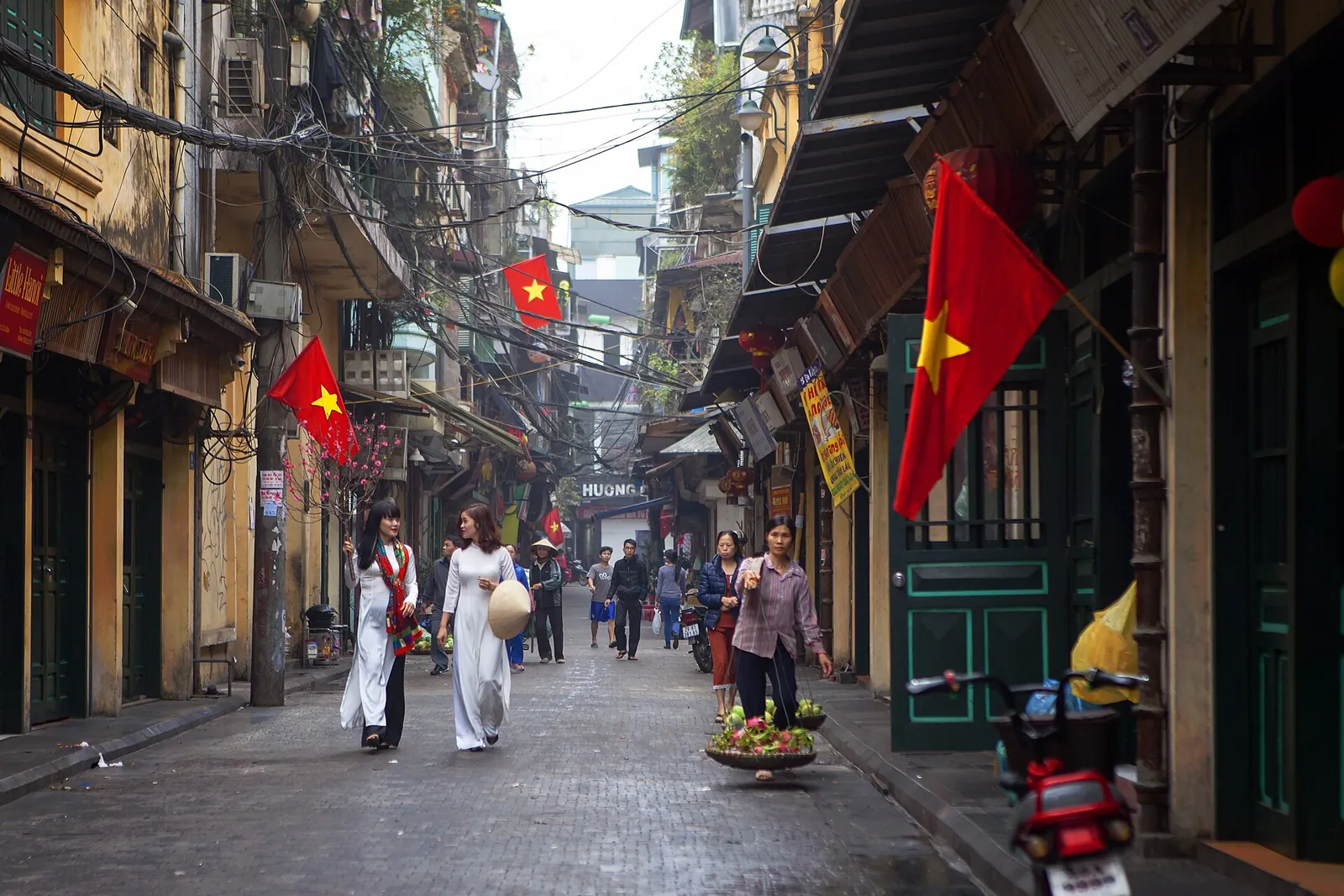
Hanoi's Old Quarter is the dense grid of trading streets just north of Hoan Kiem Lake, roughly a square kilometre that the national tourism site still calls the 36 streets. Most of them still carry the names of the trades that once filled them. It is the most convenient base in the city and also the most tiring one, with shops spilling onto the pavement, cooks working on the kerb and motorbikes in every lane. The quarter works best when you treat it as a place to live in for a few days rather than a sight to tick off: early mornings by the lake, a slow loop through a few chosen streets, a long break at midday and dinner at a stall when the evening cools.
- Suggested time
- 2–3 nights
- Where to stay
- A side street in the Old Quarter or the lanes by St Joseph's Cathedral; the French Quarter if you want quieter nights
- Season and timing
- The national tourism site suggests April to June or September to December. June to August is hot, humid and rainy; from late December to March nights can drop to around 10 degrees.
The short answer
Base yourself here for two or three nights if Hanoi is your first stop in the north: two full days are enough to walk the main streets, see the lake, the heritage house at 87 Ma May and Dong Xuan Market, and eat well. Sleep on a side street or on the lake and Cathedral side rather than on the bar streets around Ta Hien, and ask for a room at the back or on a higher floor. If you need quiet more than convenience, stay in the French Quarter south of the lake, a short walk from the grid. Walk in the early morning and from late afternoon, keep the middle of the day for a café or your room, and save one evening for the weekend walking streets.
Decide how close to the noise you want to sleep
Staying inside the Old Quarter means the lake, the craft streets, the market and hundreds of places to eat are all on foot. It also means motorbikes outside the door from early morning, bar noise in some lanes and narrow tube-house buildings where some rooms face the street and others have no outside window. The difference between a good and a bad Old Quarter stay is usually the exact street and the side of the building, not the price.
The loudest corner after dark is the beer junction where Ta Hien meets Luong Ngoc Quyen, which the national tourism site describes as the most famous bia hoi corner in the quarter, with drinkers on plastic stools spilling into the street. Hotels a few blocks away, on the streets towards the lake or around Hang Gai and the Cathedral, are a better compromise. South of the lake, the French Quarter has wider, tree-lined streets, colonial buildings and larger hotels; it is still a short walk to the grid but much calmer at night. On a map, check how far the hotel is from Ta Hien, whether your room has an outside window, and whether the lane is wide enough for a taxi to reach the door with luggage.
How to read the 36 streets
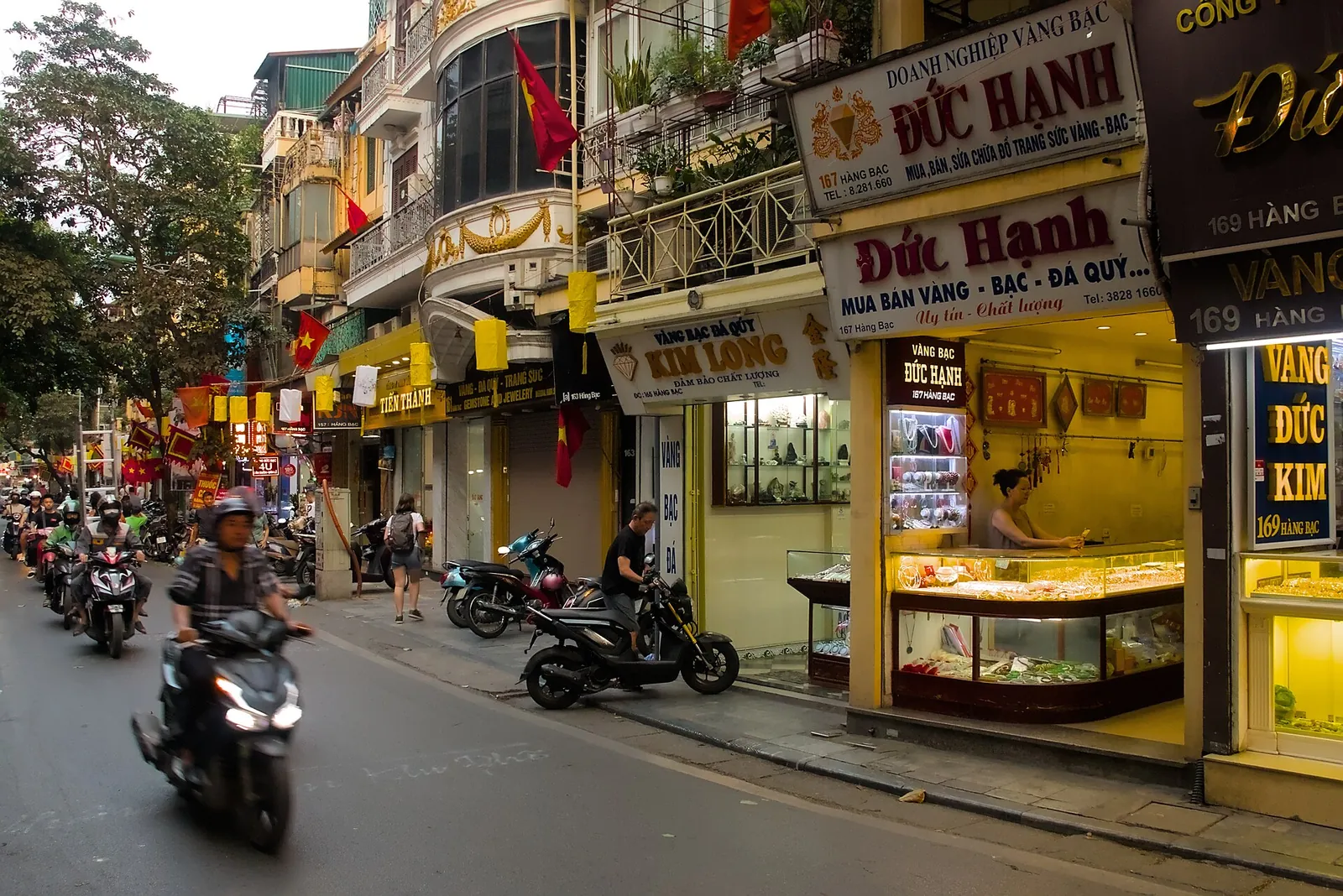
The national tourism site explains that the guild streets were named for the trades and crafts that set up north of the lake to supply the royal court in the Thang Long Citadel. Most of the names start with Hang, meaning goods or shop. Only some streets still sell what their name says, and those are the ones worth walking slowly: Hang Bac (silver) still has jewellers and money changers, Hang Ma sells paper offerings, lanterns and festival decorations, Hang Gai is now the silk and tailoring street, Lan Ong smells of traditional medicines and herbs, Hang Vai has bamboo goods and Hang Duong traditional sweets. Choose three or four of these rather than trying to cover every street.
Look up and through doorways as you walk. The typical building is the tube house, with a narrow street front and a long, deep plan of rooms and courtyards behind. The best way to see one from the inside is the restored heritage house at 87 Ma May. Vietnam's national tourism administration describes it as one of 14 ancient houses in Hanoi from the late 19th century that keep their original features: a shop at the front, then a courtyard garden, a kitchen and a backyard with rainwater jars, with sleeping and worship rooms upstairs. It was restored in 1998–1999 in a cooperation between Hanoi and Toulouse and recognised as a national heritage site in 2004.
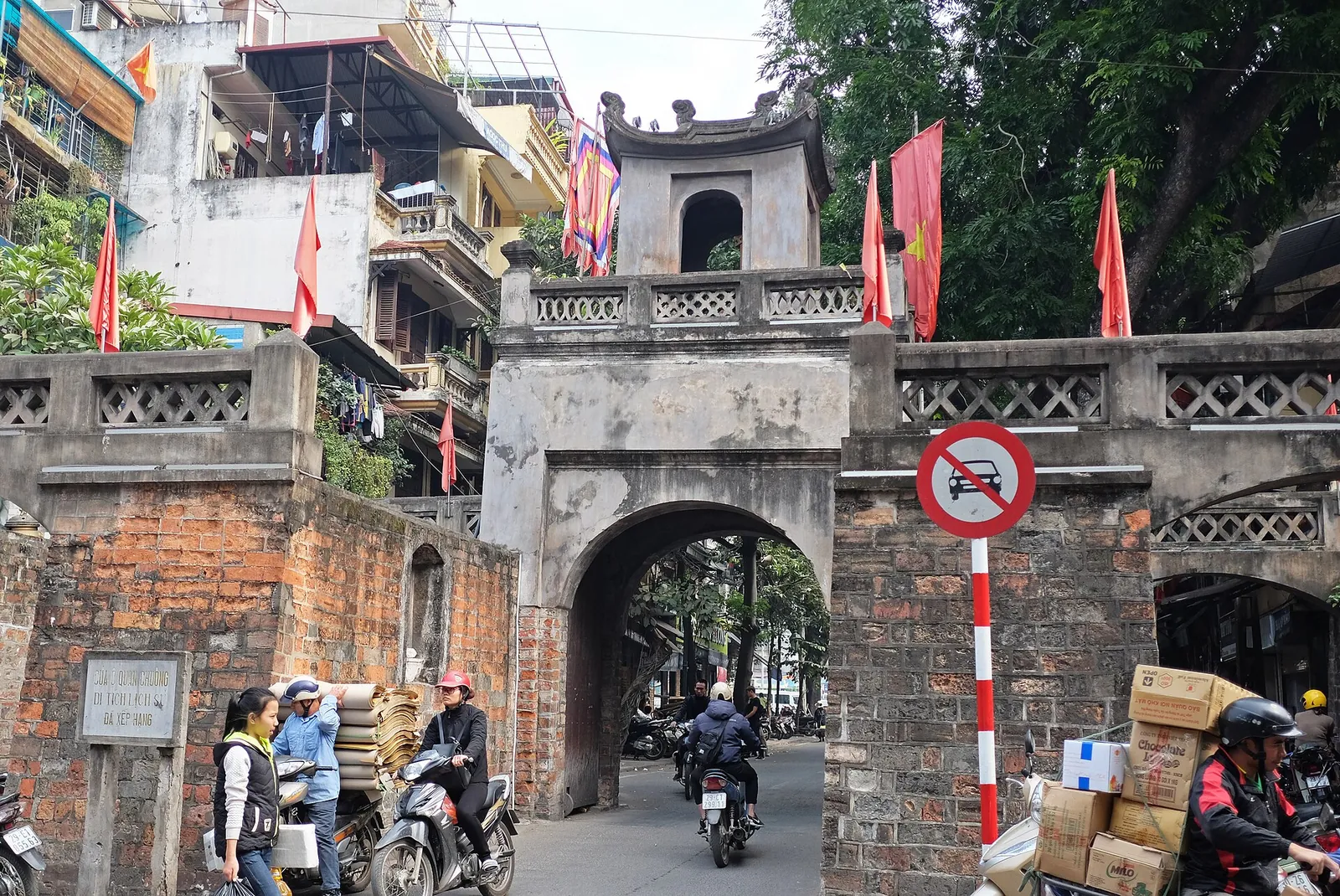
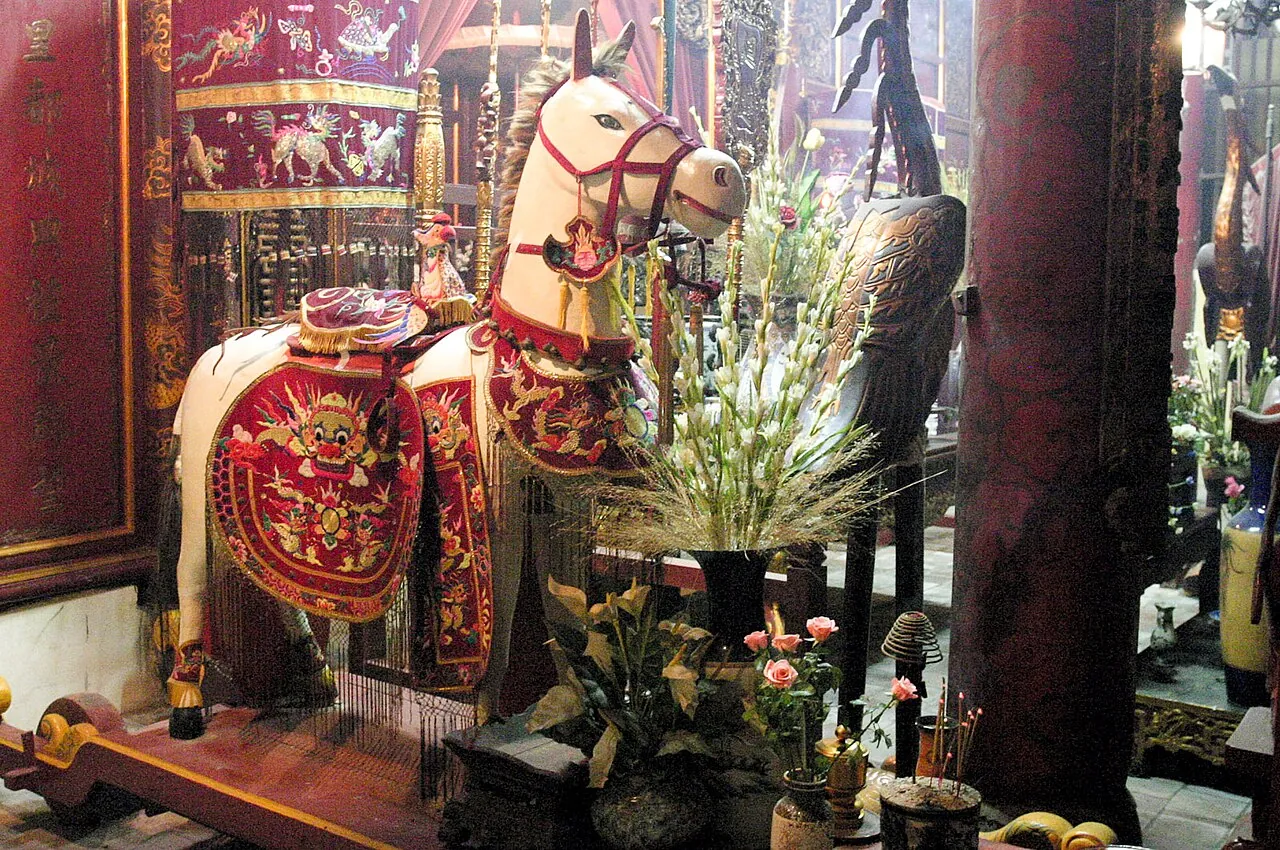
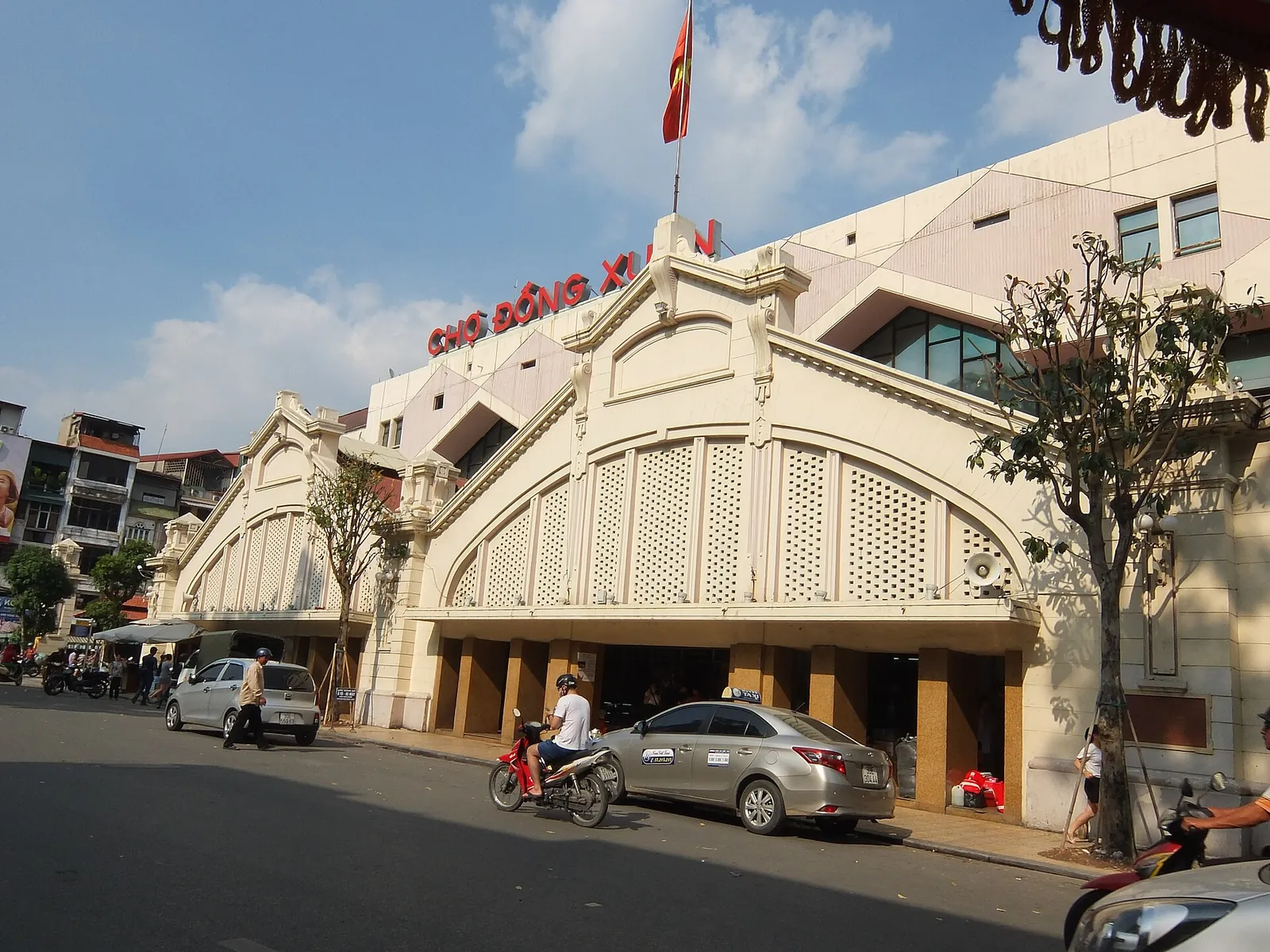
Two older landmarks anchor a walk. Bach Ma Temple, in the middle of the quarter, is described by the national tourism site as the oldest temple in Hanoi, built in the 9th century to honour the god Long Do; it is still a place of worship, so dress modestly and keep your voice down. At the quarter's eastern edge, O Quan Chuong is the only gate left from the wall that once surrounded the citadel area; the present gate dates from 1817. To the north, Dong Xuan Market, the large wholesale market at the top of Hang Dao and Dong Xuan streets, sells fabric, clothes, toys, souvenirs and sweets, and the lanes around it are as much part of the market as the building.
Make time for the local food
What to eat and where to look
Bun cha (grilled pork with rice vermicelli)
Grilled pork patties and slices of pork belly served in a bowl of sweet-and-sour dipping sauce, with cold rice vermicelli and a plate of fresh herbs on the side. You dip the noodles and herbs into the bowl as you eat. It is one of the three dishes the national tourism site calls Hanoi's most famous.
- Where to look
- Small shops with charcoal grills on the pavement; the national tourism site names Hang Quat in the Old Quarter as a less crowded alternative to the best-known restaurant outside the quarter.
- Fit it into your day
- Make it lunch on a walking day; it is a filling meal.
Pork, and a dipping sauce made with fish sauce; ask about chilli and garlic if you are sensitive.
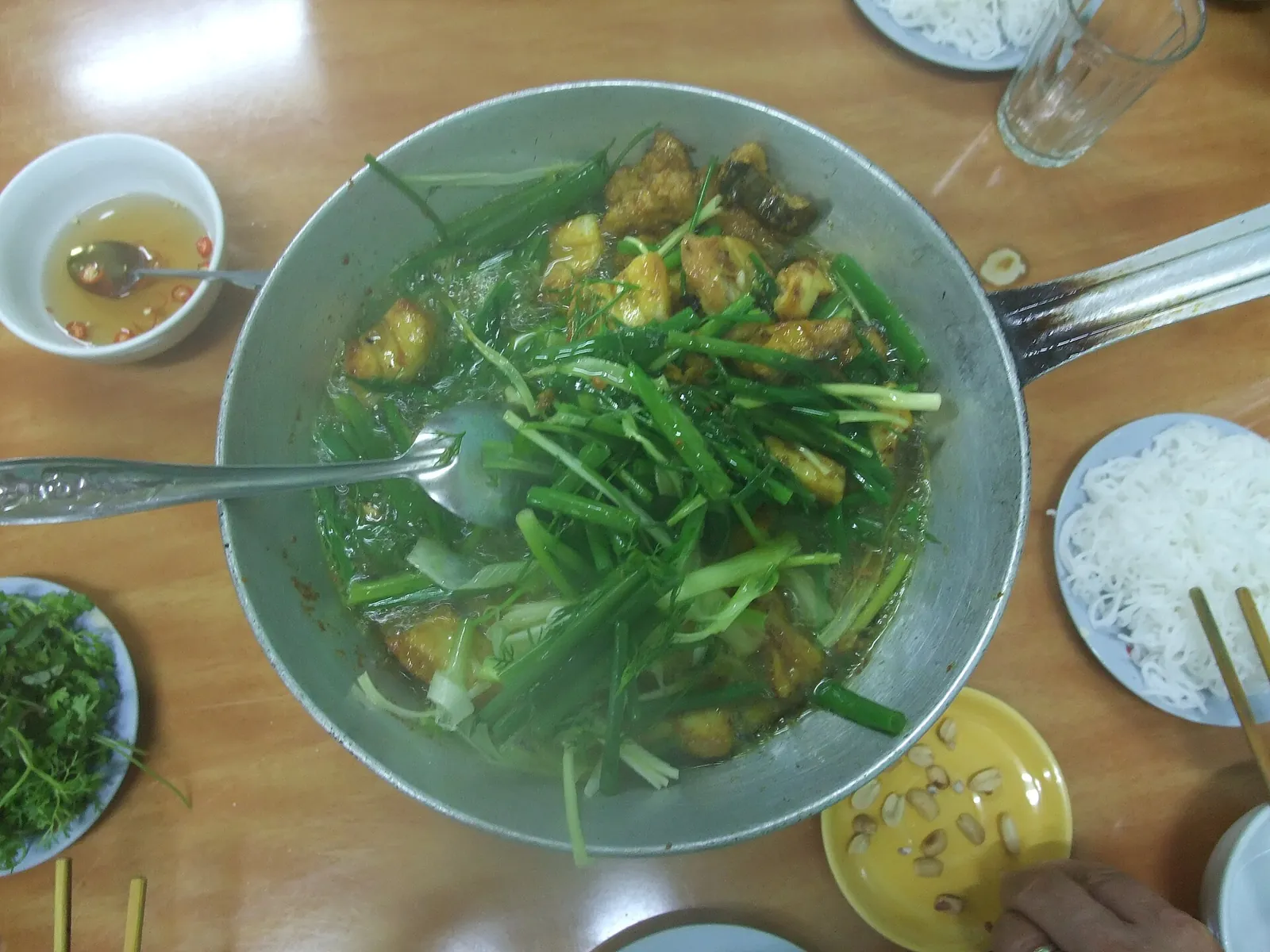
Cha ca (turmeric fish with dill)
Chunks of fish marinated in turmeric and spices, grilled, and served with soft rice noodles, dill and crunchy peanuts. The national tourism site calls it one of the Old Quarter's original dishes, created at the La Vong restaurant.
- Where to look
- Sit-down restaurants in the Old Quarter that specialise in the dish.
- Fit it into your day
- A dinner to share at a table, best with two or more people.
Contains fish and peanuts, and is often eaten with fish sauce.
Banh cuon (steamed rice rolls)
Thin sheets of steamed rice batter rolled around minced pork and mushroom, topped with fried shallots and served with a sweet-and-sour fish sauce, herbs and a lime-based sauce. The national tourism site describes it as one of the capital's traditional breakfasts.
- Where to look
- Breakfast shops and morning stalls around the quarter.
- Fit it into your day
- Breakfast after an early walk round the lake.
Usually contains pork; versions with egg are common. Ask for it without meat if needed.
Ca phe trung (egg coffee)
Strong Vietnamese coffee topped with a thick, sweet foam of whisked egg. The national tourism site traces it to the founder of Cafe Giang, who used whisked egg in place of fresh milk during wartime shortages.
- Where to look
- Old Quarter cafés, including Cafe Giang and courtyard cafés hidden behind shop fronts, such as the one the national tourism site describes behind a silk shop on Hang Gai.
- Fit it into your day
- A mid-morning or mid-afternoon break, ideally upstairs away from the traffic.
Contains egg and sugar; strong, so not a late-evening drink if caffeine keeps you awake.
Nom bo kho (papaya salad with beef jerky)
Shredded green papaya with slices of beef jerky, peanuts, lemon balm and fish sauce: sweet, sour and crunchy. It is a classic Old Quarter snack.
- Where to look
- The national tourism site points to long-established stalls on Ho Hoan Kiem street, near the north end of the lake.
- Fit it into your day
- A light snack between sights, or a starter before dinner.
Contains peanuts and fish sauce; ask about chilli if you are sensitive.
Walking the quarter without being worn down
Pavements in the Old Quarter are rarely for walking: they are shop fronts, motorbike parking and kitchens with low stools. Expect to step into the road often, walk at a steady pace so riders can read your line, and keep to the edge rather than the middle of a lane. The national tourism site warns that most thefts in big cities are drive-by snatchings and advises keeping phones and cameras close to your body and away from the traffic when you take pictures on the street.
Plan the day around the heat and the traffic, not around a list of sights. A loop of three or four streets, the heritage house and a temple is a full morning. Stop for coffee upstairs somewhere with a view of the street and come back out when the light softens. If you want an overview before walking, the national tourism site suggests a cyclo, the pedal rickshaw that was once Hanoi's main transport, as a gentle introduction; agree the route and price before you get in.
The weekend changes the quarter. Hanoi opened a pedestrian zone around Hoan Kiem Lake in September 2016, from 19:00 on Friday to 24:00 on Sunday, closing the lakeside streets to traffic, and a separate walking space runs in the Old Quarter itself. In April 2026 the Hoan Kiem Ward People's Committee, which now manages both areas, published adjusted hours for the national holidays and said the Old Quarter space would open on its normal schedule that Friday, Saturday and Sunday. The national tourism site adds that Hang Dao turns into a night market after dark at weekends. Times shift for holidays and events, so check the ward's latest notice or ask your hotel.
Hoan Kiem Lake: the quarter's front porch
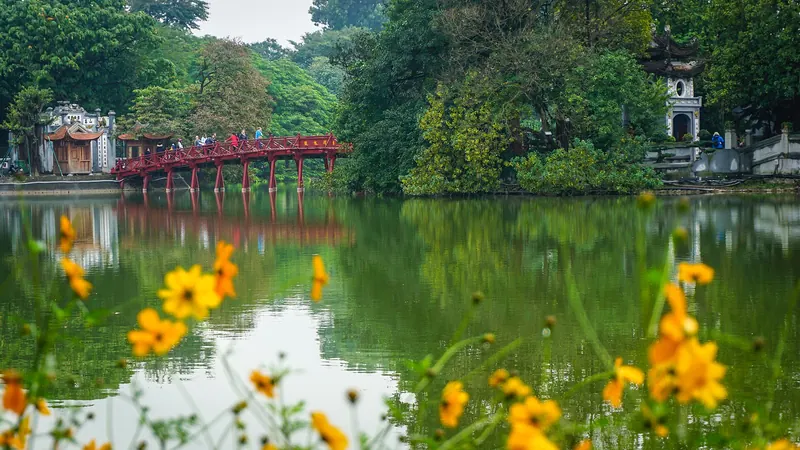
The lake is where the quarter breathes. Come before breakfast at least once: the national tourism site describes joggers, tai chi groups and friends playing games of hacky-sack along the banks in the hours around sunrise, and couples on the benches in the evening. Walk the full loop and you pass the red The Huc Bridge, Ngoc Son Temple on its small island and the Turtle Tower in the water. When we checked on 2026-10-03, the national tourism site's list of Hanoi attractions gave Ngoc Son Temple's hours as 7:30 to 17:30 daily with a 20,000 VND ticket; check at the gate, as the page is not dated.
The same page lists the water puppet theatre at 57B Dinh Tien Hoang, at the north end of the lake, with several shows each afternoon and evening. Water puppetry, with lacquered wooden figures moved across a pool by puppeteers hidden behind a screen, is a simple and entertaining hour after an afternoon rest. Book a show for the evening of your arrival day if you land in time, since it needs no stamina. Afterwards, the national tourism site's suggestion is a local one: buy an ice cream on Trang Tien and walk around the lake.
A workable two-day plan
This is an editorial suggestion, not a timetable. Check opening hours for the places you choose.
- Day 1 — Lake and craft streets: Hoan Kiem Lake at sunrise and Ngoc Son Temple when it opens; banh cuon for breakfast; Hang Gai, Hang Bac and the heritage house at 87 Ma May before the midday heat; a long break; Bach Ma Temple and O Quan Chuong in the late afternoon; dinner at a stall and a water puppet show.
- Day 2 — Market and edges: coffee and a walk north through Hang Dao to Dong Xuan Market in the morning; Hang Ma and Lan Ong for paper goods and herbs; bun cha for lunch; rest; from late afternoon, the walk to Long Bien Bridge, then back for cha ca or the bia hoi corner.
- Friday to Sunday evening: add the walking streets around the lake and the Hang Dao night market.
Beyond the grid on foot
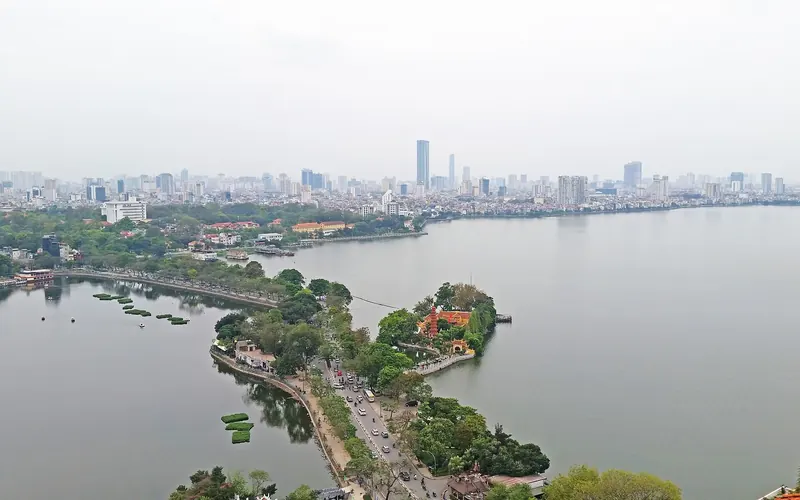
Three easy walks start from the quarter's edges, all described by the national tourism site. From Dong Xuan, follow the lanes past Long Bien station onto Long Bien Bridge, the iron bridge that was Hanoi's main supply line in wartime; from its narrow walkway you see small homes and farm plots along the Red River. South of the lake, a walk past St Joseph's Cathedral and through the French Quarter to the Opera House shows the colonial city. North-west, Truc Bach Lake and its food streets, famous for pho cuon rice-noodle rolls, are a short taxi or a long walk away.
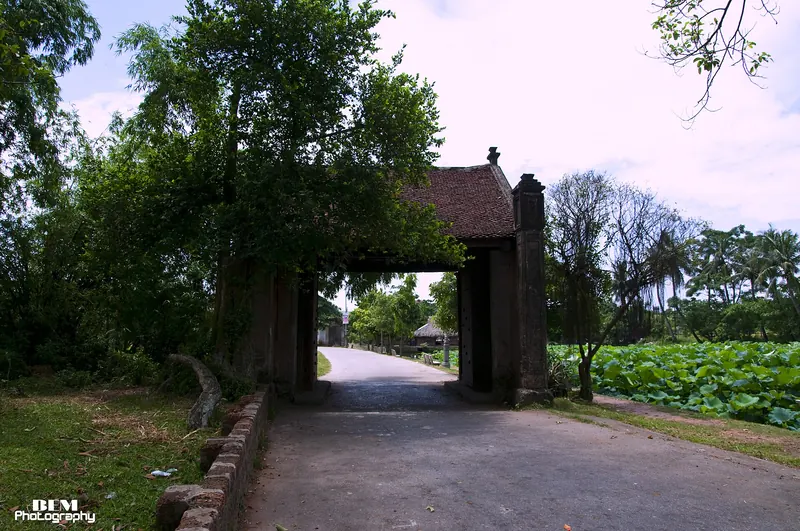
For the rest of Hanoi — the Temple of Literature about 2 kilometres west of the lake, the Thang Long Imperial Citadel and the mausoleum area — see our Hanoi guide; for a quieter base by the water, see the Tay Ho guide. The old village of Duong Lam, west of the city, makes a good day out after two days in the quarter.
Practical questions
How many nights should I spend in the Old Quarter?
Two or three nights. Two full days are enough to walk the main craft streets, the lake and the market and to eat well; a third night lets you add the rest of Hanoi or a weekend evening on the walking streets.
Is the Old Quarter too noisy to stay in?
It can be, depending on the street. Avoid the bar area around Ta Hien and Luong Ngoc Quyen if you want sleep, ask for a room at the back or on a higher floor, and consider the lanes by the Cathedral or the French Quarter south of the lake for quieter nights.
When are the walking streets around Hoan Kiem Lake open?
The pedestrian zone opened in 2016 from 19:00 on Friday to 24:00 on Sunday, and a separate walking space runs in the Old Quarter at weekends. Hours change for holidays and events, so check the Hoan Kiem Ward notices or ask your hotel.
What is the best way to get around the Old Quarter?
On foot, at a steady pace, mostly in the early morning and from late afternoon. A cyclo ride is a gentle introduction if the traffic feels overwhelming; agree the route and price first. Use a taxi or ride-hailing car for trips beyond the quarter.
Which Old Quarter sights are worth going inside?
The restored tube house at 87 Ma May shows how merchant families lived behind their shops, Bach Ma Temple is the city's oldest temple, and Dong Xuan Market shows the quarter still trading. Ngoc Son Temple on Hoan Kiem Lake is a short visit at the quarter's southern edge.
How do I get from Noi Bai Airport to the Old Quarter?
By taxi or ride-hailing car, or by the airport bus route 86 that Hanoi's bus operator opened in 2016 between the airport terminals and Hanoi Railway Station via Long Bien and the Hoan Kiem lakeside. Check the current timetable before you rely on it, and make sure a taxi can reach your hotel's lane.
Sources and checks before you travel
Reference sources for the version dated 3 October 2026. Confirm opening times, access, transport and conditions for your travel dates.
- Vietnam Tourism: Explore the Old Quarter your way ↗ — opens in a new tab
- Vietnam Tourism: 11 must-see attractions in Ha Noi ↗ — opens in a new tab
- Vietnam Tourism: Six heritage sites that capture the story and spirit of Hanoi ↗ — opens in a new tab
- Vietnam Tourism: Shopping in Hanoi — markets and malls ↗ — opens in a new tab
- Vietnam Tourism: 3 walking tours of Hanoi ↗ — opens in a new tab
- Vietnam Tourism: Ha Noi food guide ↗ — opens in a new tab
- Vietnam Tourism: Exploring Hanoi street food with Sens Asia ↗ — opens in a new tab
- Vietnam Tourism: The perfect weekend in Ha Noi ↗ — opens in a new tab
- Vietnam Tourism: Weather and climate in Vietnam ↗ — opens in a new tab
- Vietnam Tourism: Health and safety ↗ — opens in a new tab
- Vietnam National Authority of Tourism: Ma May ancient house ↗ — opens in a new tab
- Vietnam National Authority of Tourism: Ha Noi opens pedestrian zone around Hoan Kiem Lake (2016) ↗ — opens in a new tab
- Nguoi Ha Noi: Hoan Kiem Ward adjusts walking-space hours (April 2026) ↗ — opens in a new tab
- Hanoi Moi: airport bus route 86 opens (2016) ↗ — opens in a new tab
- Vietnam Tourism: Getting to Vietnam ↗ — opens in a new tab
Does this experience fit your route?
A guided food walk is the easiest way to try many Old Quarter dishes in one evening. Check the meeting point, the number of stops and the dietary options before you book.
Check dates and details on Viator ↗ — opens in a new tabAffiliate link · Book with ViatorPhoto credits
Ta Hien Street by day, before the evening crowds arrive
Photograph: 9636137 — opens in a new tab · CC0 — opens in a new tab
Changes: Resized and converted to WebP; displayed with responsive crops. · Original photograph and licence details ↗ — opens in a new tab
Hang Bac, the old silver street, still lined with jewellers
Photograph: Benjamin Smith — opens in a new tab · CC BY-SA 4.0 — opens in a new tab
Changes: Resized and converted to WebP; displayed with responsive crops. · Original photograph and licence details ↗ — opens in a new tab
Cha ca, turmeric fish finished with dill at the table
Photograph: Yun Huang Yong — opens in a new tab · CC BY-SA 2.0 — opens in a new tab
Changes: Resized and converted to WebP; displayed with responsive crops. · Original photograph and licence details ↗ — opens in a new tab
O Quan Chuong, the last surviving gate of the old city wall
Photograph: Alex 69200 vx — opens in a new tab · CC BY-SA 4.0 — opens in a new tab
Changes: Resized and converted to WebP; displayed with responsive crops. · Original photograph and licence details ↗ — opens in a new tab
The white horse inside Bach Ma Temple
Photograph: Greg Willis — opens in a new tab · CC BY-SA 2.0 — opens in a new tab
Changes: Resized and converted to WebP; displayed with responsive crops. · Original photograph and licence details ↗ — opens in a new tab
Dong Xuan Market at the northern end of the Old Quarter
Photograph: shankar s. from Dubai, united arab emirates — opens in a new tab · CC BY 2.0 — opens in a new tab
Changes: Resized and converted to WebP; displayed with responsive crops. · Original photograph and licence details ↗ — opens in a new tab
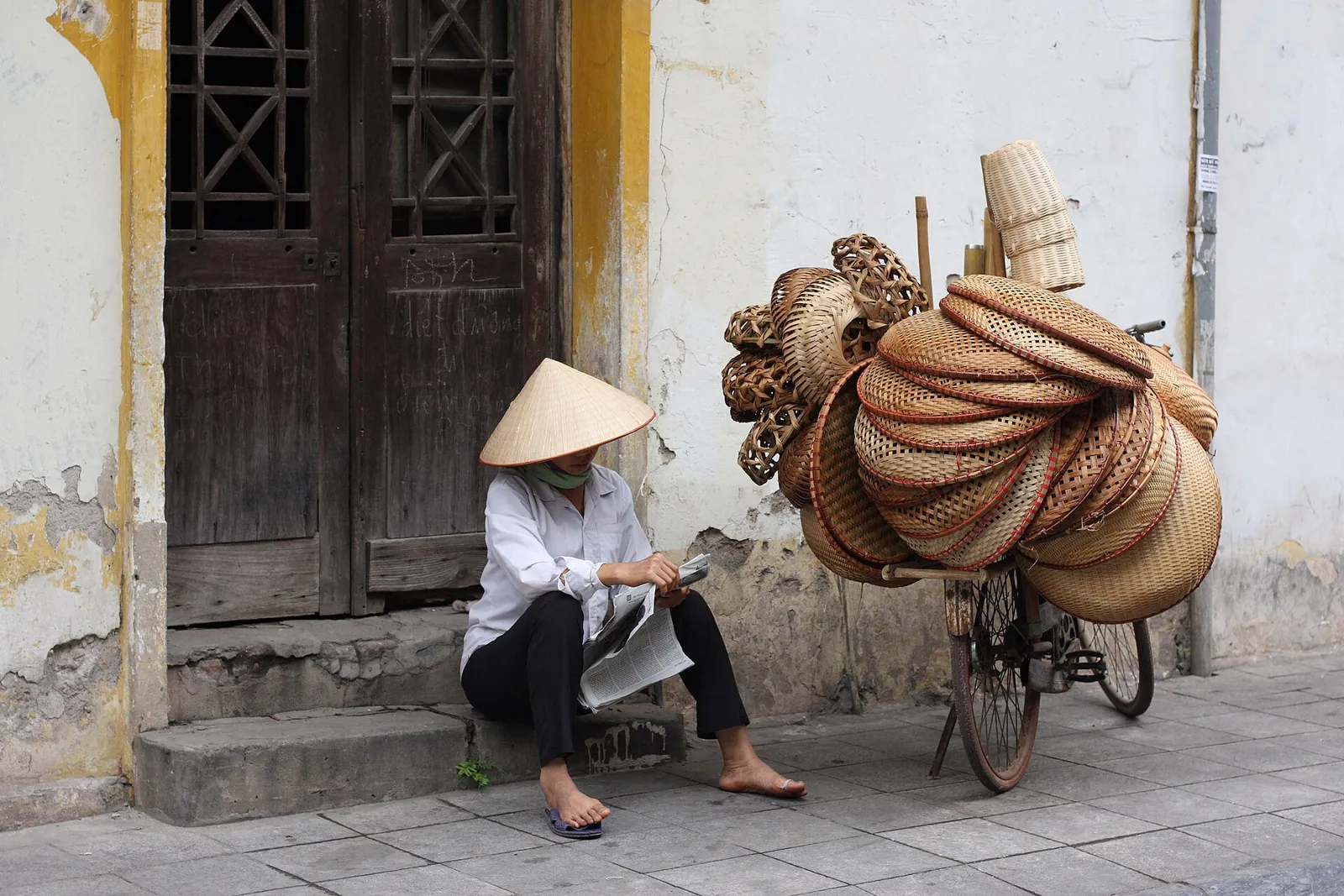
A basket seller takes a break in the Old Quarter
Photograph: yeowatzup — opens in a new tab · CC BY 2.0 — opens in a new tab
Changes: Resized and converted to WebP; displayed with responsive crops. · Original photograph and licence details ↗ — opens in a new tab