Itineraries · Vietnam
Southern Vietnam in 7 days: Saigon, Cu Chi, Can Tho and Phu Quoc
The south is the easiest part of Vietnam to cover in one week, because it runs in a single direction: from the city, out into the river country and on to the sea. Ho Chi Minh City gives you the war history and the street food, the Cu Chi Tunnels fit into a morning, Can Tho puts you on the Mekong at dawn, and Phu Quoc is the place to stop moving. The catch is the order. The floating market only works if you sleep beside it, and the island only works if you do not arrive on it exhausted. This route keeps both, with one night in Ha Tien to break the journey and reach the island by fast boat rather than by plane.
- Suggested time
- 7 days (6 nights)
- Where to stay
- Ho Chi Minh City, old District 1 (2 nights), Can Tho, Ninh Kieu waterfront (1 night), Ha Tien (1 night), Phu Quoc, Long Beach (2 nights)
- Season and timing
- December to April is the safest window: Vietnam's tourism board describes a wet season from May to November in Ho Chi Minh City and the Mekong Delta, with a dependable afternoon downpour, and advises avoiding Phu Quoc from July to September, when storms make ferry crossings dangerous. It calls December and January the island's best months. In the wet season the route still works, but leave slack around the boat day.
The short answer
Spend seven days and six nights moving west: two nights in the old District 1 of Ho Chi Minh City (with the Cu Chi Tunnels as a morning trip), one night on the Ninh Kieu waterfront in Can Tho, one night in Ha Tien and two nights on Phu Quoc at Long Beach. Go to Can Tho by bus or car (about four hours), be on a boat to the Cai Rang floating market by dawn, cross the delta by road to Ha Tien, and take the fast boat to Phu Quoc the next morning. Fly home from Phu Quoc, directly or via Ho Chi Minh City. If Ha Tien is one move too many, swap that night for a flight to the island and a third beach night, but check first that the flight you want is actually on sale.
Why this route runs one way, west to the sea
Vietnam's tourism board warns that many travellers underestimate the distances between cities, and the south is no exception. The way to beat that in one week is to stop going back on yourself. Ho Chi Minh City, Can Tho, Ha Tien and Phu Quoc lie roughly in a line from the Saigon River to the Gulf of Thailand, so every move on this route is forward, and the only flight is the one home.
Each stop also does one job. Ho Chi Minh City is the arrival city and the history lesson: the Independence Palace, the War Remnants Museum and, out in the countryside, the Cu Chi Tunnels. Can Tho is the Mekong Delta's largest city and the base for the Cai Rang floating market, which is at its busiest in the early morning and cannot be seen properly on a day trip from Saigon. Ha Tien is a small border town on the coast and the mainland port for the fast boats to the island. Phu Quoc is the beach finish: Vietnam's largest island, with Long Beach on its west coast.
Six nights is the minimum that keeps this from becoming a series of bus rides. Two of them are on Phu Quoc on purpose: the boat day is the part of the plan most exposed to weather, and the last beach day is your buffer before the flight home.
Days 1–2: Ho Chi Minh City and the Cu Chi Tunnels
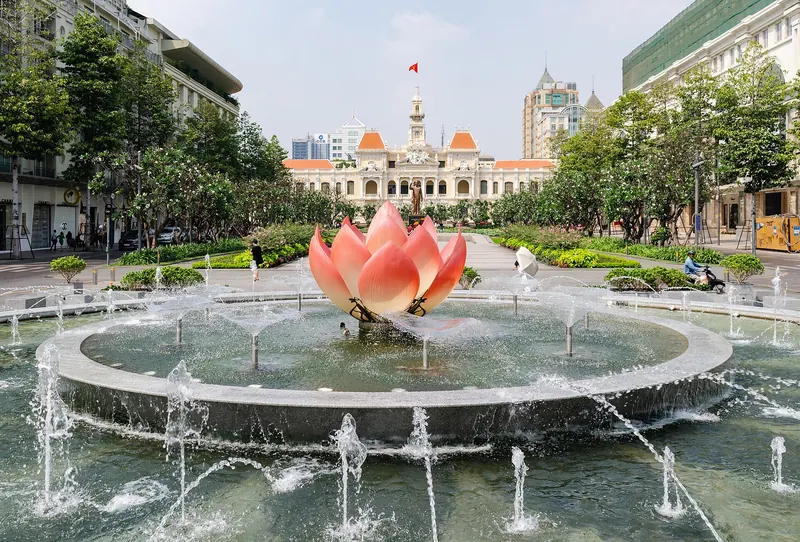
Sleep in the old District 1, where the cathedral, the Central Post Office, Nguyen Hue boulevard, Ben Thanh Market and the Independence Palace are all within walking distance. Give day one to the colonial core on foot and the palace before lunch: when we checked on 2026-10-03, the palace's official site listed opening hours of 7:00 to 18:00 and an adult ticket of 80,000 VND. Finish on Nguyen Hue at sundown. Tan Son Nhat airport is only about eight kilometres from the centre, but the tourism board says the drive can take 50 minutes or more in traffic, so do not plan a fixed-time visit on the afternoon you land.
Day two is for the Cu Chi Tunnels, which the management board puts about 70 km north-west of the city centre. Leave early by private car or on a tour so that you are at the gate soon after it opens. When we checked on 2026-10-03, the board's site listed opening every day from 7:00 to 17:00, and a notice for foreign visitors set the price from 1 February 2026 at 35,000 VND for the historic-site fee plus 100,000 VND for the service and guide ticket. There are two separate sites, Ben Dinh and Ben Duoc; choose one, because doing both turns a morning into a full day. Wear clothes you do not mind getting dirty, and if narrow tunnels are not for you, you can see the trapdoors, trenches and shelters from above.
Back in the city by mid-afternoon, use what is left of the day for the War Remnants Museum (its war photography is graphic, so plan nothing demanding afterwards) or for Ben Thanh Market and an early dinner. Our Ho Chi Minh City and Cu Chi Tunnels guides cover both in more detail.
Make time for the local food
What to eat and where to look
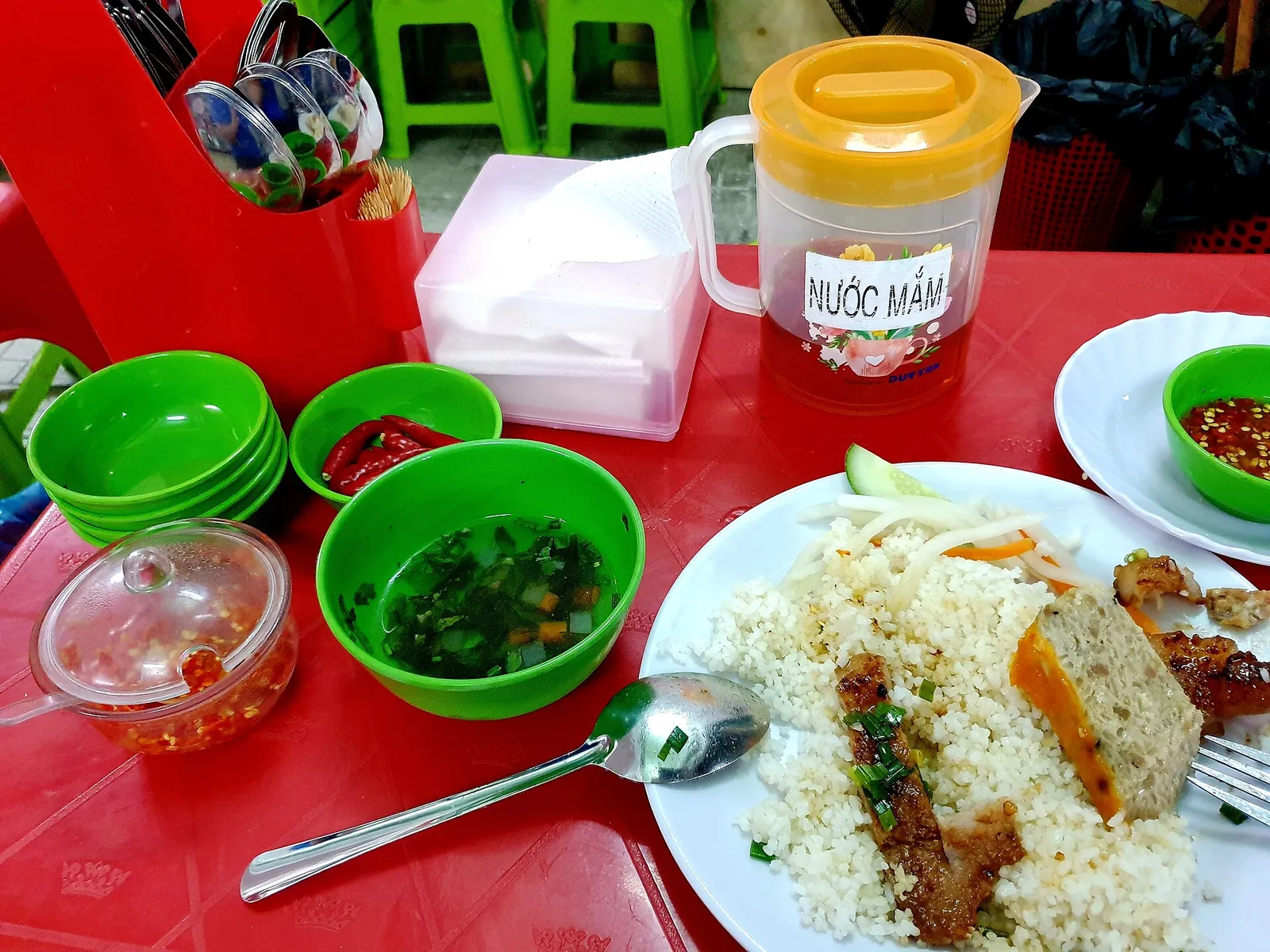
Com tam (broken rice)
Broken rice grains with a grilled pork chop, pickles and sweet fish sauce. Vietnam's tourism board calls it one of the few dishes that originated in Ho Chi Minh City and the city's go-to breakfast.
- Where to look
- Neighbourhood com tam shops in and around the old District 1; look for a charcoal grill at the front.
- Fit it into your day
- Breakfast on day two, before the early drive to Cu Chi.
Pork-based, and the sauce contains fish sauce; ask for chicken or egg if you avoid pork.
Hu tieu on the floating market
The tourism board's breakfast for Can Tho: sticky tapioca noodles, bean sprouts and thinly sliced pork in a savoury broth, ideally eaten on the water among the market boats.
- Where to look
- The small boats that pull alongside at Cai Rang selling noodles and coffee, or noodle shops in central Can Tho.
- Fit it into your day
- Breakfast on day four, during the floating-market trip.
Usually pork-based; ask about shrimp or offal toppings if you avoid them.
Nem nuong Cai Rang with banh hoi
Skewers of lean pork grilled over charcoal and served with peanut sauce, herbs, pickles and banh hoi, fine vermicelli woven into small bundles and topped with garlic, which the tourism board suggests for lunch after the floating market.
- Where to look
- Grill stalls and small restaurants in Can Tho and Cai Rang, and on De Tham Street.
- Fit it into your day
- An early lunch on day four before the road to Ha Tien, or dinner on day three.
Contains pork and usually peanuts; the dipping sauce may include fish sauce.
Goi ca trich (Phu Quoc herring salad)
The island's signature dish, according to VnExpress: raw herring prepared as a salad and eaten with rice paper, grated coconut, roasted peanuts and fresh herbs.
- Where to look
- Seafood restaurants on Phu Quoc; ask whether the herring is that day's catch.
- Fit it into your day
- A shared starter at dinner on day five or six.
The fish is not cooked; skip it if you are pregnant or have a weak stomach, and order it only where the fish is clearly fresh.
Grilled seafood at the night market
The tourism board recommends Phu Quoc's night market for a dinner of barbecued seafood, and a lunch at a floating restaurant on the water.
- Where to look
- The night markets on the west coast and in the south; our Phu Quoc guide lists the current ones.
- Fit it into your day
- Dinner on day six, the last night of the trip.
Ask the price by weight before seafood is cooked, and carry cash.
Days 3–4: a night in Can Tho and the floating market at dawn
Leave Saigon on the morning of day three. The tourism board describes a four-hour bus journey from Ho Chi Minh City to a terminal about four kilometres outside Can Tho, and notes that local buses link most delta provinces with Mien Tay Bus Station in Ho Chi Minh City; a private car is the simpler option with luggage. Check in on the Ninh Kieu waterfront, walk the riverside promenade in the late afternoon, and book tomorrow's boat the same evening, through your hotel or at the wharf. For dinner, the tourism board points to De Tham Street, known locally as the food street.
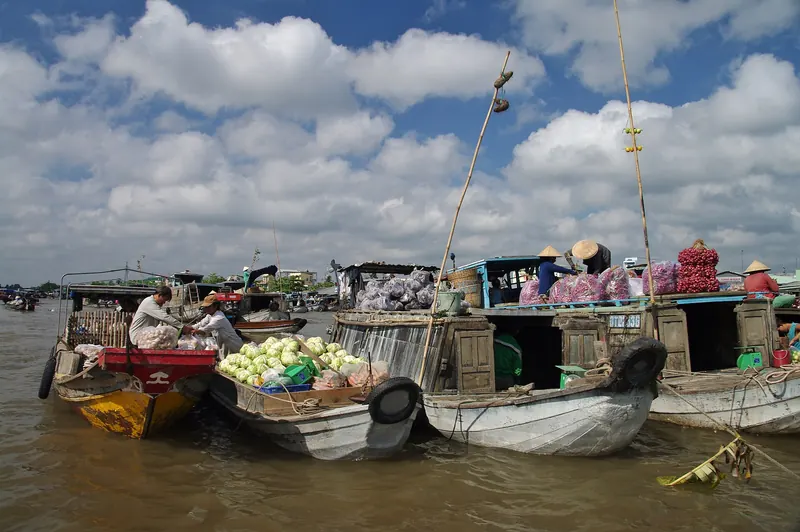
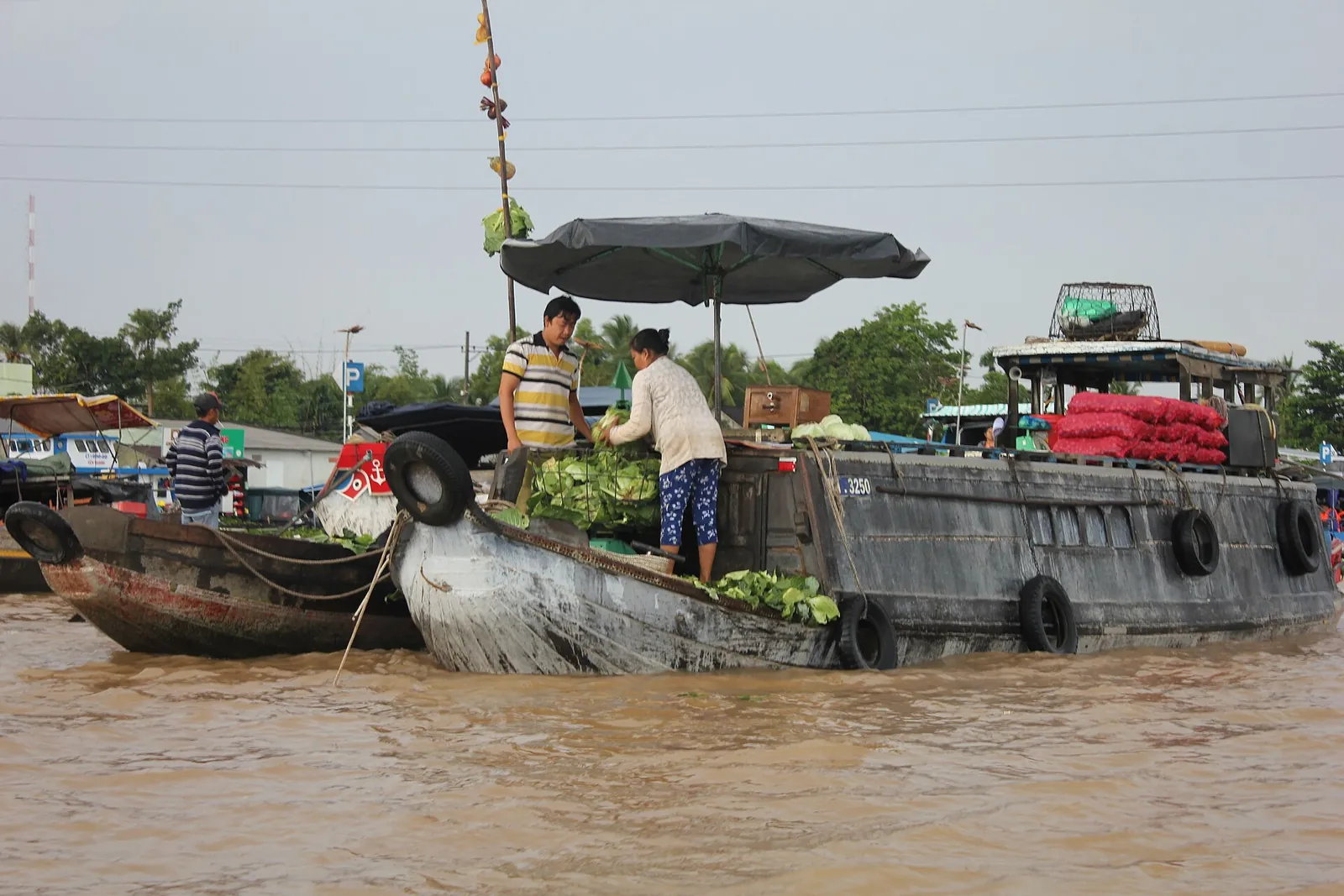
On day four, get up early. The tourism board describes boats leaving Ninh Kieu wharf at 5:00, a ride of about 30 minutes to Cai Rang, and a market that runs from early morning to midday, the largest wholesale floating market in the delta. Sellers hang samples of their produce from long poles at the bow, and smaller boats move between them selling breakfast noodles and coffee. Ask for a trip that continues into the small canals afterwards; it is the quieter half of the morning. Cai Rang is closed or runs on a limited basis on the first two days of Tet.
Be back at your hotel by late morning, because the afternoon is a long road leg west across the delta to Ha Tien, which lies about 80 km north-west of Rach Gia near the Cambodian border. We could not find an official timetable or journey time for the Can Tho – Ha Tien road, so book a bus or car through your hotel the evening before, and treat the rest of the day as a travel day. Our Can Tho guide has a fuller two-night plan if you can spare an extra day here.
Day 5: Ha Tien and the fast boat to Phu Quoc
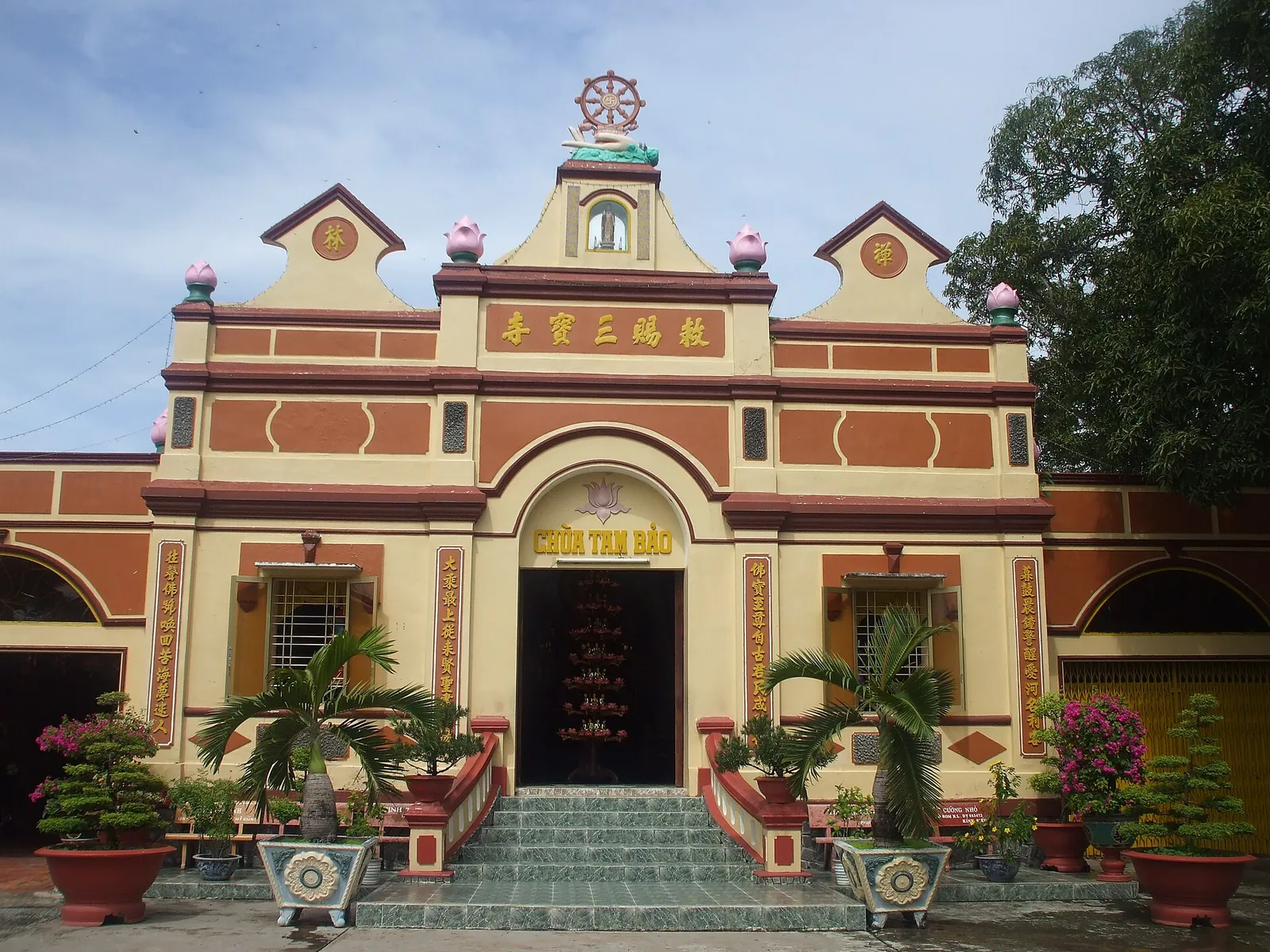
Ha Tien is a small town on the Gulf of Thailand at the western end of the delta, close to the Cambodian border and about 60 km east of Phu Quoc. A night here means you sail in the morning instead of starting the crossing after a full day on the road. If your boat leaves late enough, walk the waterfront and the old centre first; our Ha Tien guide covers the Mac family tombs, Thach Dong and Mui Nai if you decide to stay longer.
The fast boats leave from Ha Tien's passenger port on Kim Du Street in To Chau, across the lagoon from the old centre, and arrive at Bai Vong port on Phu Quoc's east coast. The operator Phu Quoc Express puts Bai Vong about 7 km from Phu Quoc airport and about 12 km from Duong Dong. When we checked on 2026-10-03, its site asked passengers to be at the port at least 30 minutes before departure, to carry valid ID (a passport for foreign travellers), and promised a full refund if a sailing is cancelled for bad weather. Wikipedia puts the crossing at about 80 to 90 minutes. Departure times vary with the season and the weather, so check them on the operator's booking page the day before and book your seat.
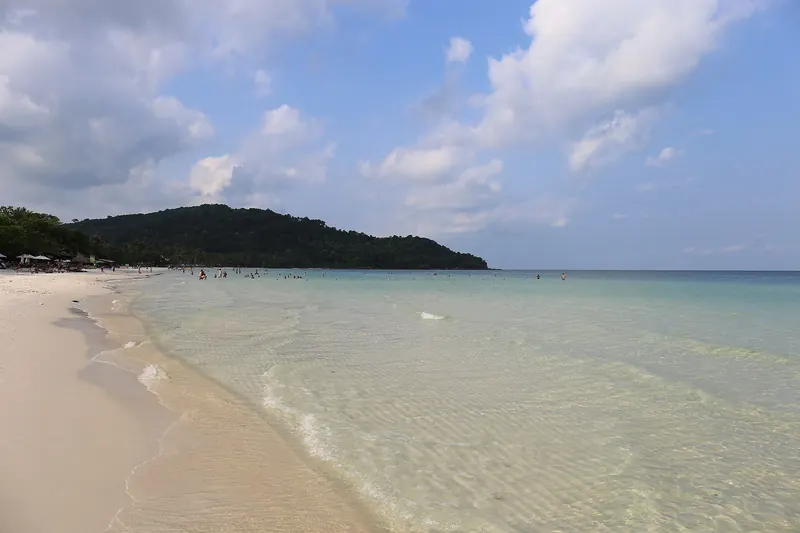
From Bai Vong, take a taxi or a hotel transfer across the island to Long Beach on the west coast, which the tourism board describes as 20 kilometres of unobstructed sunsets. You should be on the sand by the afternoon.
Days 6–7: Phu Quoc, and the flight home
Use the one full island day for the sea, not for a checklist. The tourism board recommends hiring a boat or joining a tour to snorkel off the An Thoi archipelago in the south, or riding the Hon Thom cable car, which it describes as about eight kilometres long and about 15 minutes one way, with a free shuttle to Hon Thom beach on the far side. Pick one: both are in the south of the island and both depend on the weather. The cable car stops in bad weather, and VnExpress reported a power failure on 19 February 2026 that left thousands of visitors to be brought back by boat, so never put it on the day of your flight.
Keep day seven for a swim, a late lunch and the flight. Wikipedia lists domestic flights from Phu Quoc to Ho Chi Minh City with Vietnam Airlines, Vietjet and Sun PhuQuoc Airways, and direct international routes to cities including Singapore, Kuala Lumpur, Seoul and Hong Kong. If you connect through Ho Chi Minh City, check which terminal and, for international flights from 1 December 2026, which airport your ticket names (see below).
Our Phu Quoc guide compares the island's coasts and has a four-night plan if you extend the beach finish.
The seven days at a glance
This is an editorial suggestion, not a timetable. Check opening days, boat departures and the weather forecast before each move.
- Day 1 — Arrive in Ho Chi Minh City: the cathedral, the post office and the Independence Palace, then Nguyen Hue at sundown. Night: old District 1.
- Day 2 — Cu Chi Tunnels: an early start for Ben Dinh or Ben Duoc, back by mid-afternoon for the War Remnants Museum or Ben Thanh Market. Night: old District 1.
- Day 3 — To the Mekong Delta: bus or car to Can Tho, the Ninh Kieu promenade, book the boat, dinner on De Tham Street. Night: Can Tho.
- Day 4 — Cai Rang, then west: boat at 5:00 to the floating market and the side canals, back by late morning, then the road to Ha Tien. Night: Ha Tien.
- Day 5 — By sea to Phu Quoc: fast boat from To Chau to Bai Vong, transfer to Long Beach, sunset on the west coast. Night: Long Beach.
- Day 6 — The south of the island: snorkelling off the An Thoi islands or the Hon Thom cable car. Night: Long Beach.
- Day 7 — Home: a morning swim and the flight from Phu Quoc, direct or via Ho Chi Minh City.
The flight option, weather and entry rules
Skipping Ha Tien. The overland route is the one we recommend, because it needs no extra flight and the boat crossing is part of the trip. If you would rather trade the road day for a third night on the beach, the alternative is to fly from Can Tho to Phu Quoc on the afternoon of day four. Bamboo Airways opened a Can Tho – Phu Quoc route in January 2021 with a flight time of about an hour, Saigon Giai Phong reported, but we could not confirm from an official source which airlines fly it now. Check that a flight is actually on sale for your date before you build the week around it; if not, the overland route is the reliable one.
Weather. The tourism board describes Ho Chi Minh City and the delta as hot all year, with a wet season from May to November that brings a dependable afternoon downpour, usually lasting a few hours. On Phu Quoc it advises avoiding July to September, when storms roll through and make ferrying dangerous, and calls December and January the best months. In the storm months, keep the Ha Tien boat at the start of a day and have a plan B: an extra night in Ha Tien, or the flight option.
Entry and airports. Phu Quoc's 30-day visa exemption applies only if you arrive on the island directly from abroad, which you do not on this route, since you enter Vietnam in Ho Chi Minh City. Vietnam's tourism board says e-visas are available to citizens of all countries; when we checked on 2026-10-03, the UK government's travel advice said British citizens could visit Vietnam without a visa for up to 45 days. Check the rules for your own passport before you book. Finally, VnExpress reported that the Civil Aviation Authority of Vietnam has agreed that airlines may start international flights at the new Long Thanh International Airport in Dong Nai from 1 December 2026, with long-haul international flights moving there from 28 March 2027. Check which airport your arrival and any connection name.
Practical questions
Is seven days enough for southern Vietnam?
Yes, if you keep to one direction. Two nights in Ho Chi Minh City, one in Can Tho, one in Ha Tien and two on Phu Quoc cover the city, the Cu Chi Tunnels, the Mekong Delta and a beach finish without going back on yourself. Add a night in Can Tho or on the island before adding another stop.
Can I see the Mekong Delta floating markets on a day trip from Saigon?
Not well. The tourism board puts the bus to Can Tho at about four hours, and boats to Cai Rang leave Ninh Kieu wharf at 5:00, so only a night in Can Tho gets you there at the busiest time.
How do I get from the Mekong Delta to Phu Quoc?
Overland to Ha Tien and then the fast boat to Bai Vong port, which Wikipedia puts at about 80 to 90 minutes. The operator Phu Quoc Express also runs a route from Rach Gia. The alternative is a flight; check that a Can Tho – Phu Quoc flight is on sale for your date, or fly via Ho Chi Minh City.
Does Phu Quoc's visa exemption cover this route?
No. It applies only when you arrive on Phu Quoc directly from abroad. On this route you enter Vietnam in Ho Chi Minh City, so you need a visa or a visa exemption that covers your passport for the whole country.
When should I avoid this route?
July to September is the riskiest time, because the tourism board warns that storms make Phu Quoc ferry crossings dangerous. December to April is the most reliable window for all four stops.
Which Cu Chi site should I choose?
Ben Dinh for the tunnels themselves in a shorter morning, Ben Duoc if you want the memorial temple and a fuller day. On this route, with a free afternoon in the city, Ben Dinh usually fits better.
Sources and checks before you travel
Reference sources for the version dated 3 October 2026. Confirm opening times, access, transport and conditions for your travel dates.
- Vietnam National Authority of Tourism: Transport within Vietnam ↗ — opens in a new tab
- Vietnam National Authority of Tourism: Weather and climate in Vietnam ↗ — opens in a new tab
- Vietnam National Authority of Tourism: a traveller's guide to Vietnam's airports ↗ — opens in a new tab
- Independence Palace (official site) ↗ — opens in a new tab
- Cu Chi Tunnels Historical Relic Area (management board): homepage ↗ — opens in a new tab
- Cu Chi Tunnels management board: introduction ↗ — opens in a new tab
- Cu Chi Tunnels management board: ticket notice for foreign visitors (19 January 2026) ↗ — opens in a new tab
- Vietnam National Authority of Tourism: Can Tho ↗ — opens in a new tab
- Vietnam National Authority of Tourism: 4 memorable days in the Mekong Delta ↗ — opens in a new tab
- Vietnam National Authority of Tourism: the Mekong Delta's floating markets ↗ — opens in a new tab
- Vietnam National Authority of Tourism: Dining in the Delta ↗ — opens in a new tab
- Wikipedia: Cai Rang Floating Market ↗ — opens in a new tab
- Wikipedia: Ha Tien (ward) ↗ — opens in a new tab
- Wikipedia: Ha Tien (city) ↗ — opens in a new tab
- Phu Quoc Express: Ha Tien boat port and Bai Vong ↗ — opens in a new tab
- Phu Quoc Express: Ha Tien – Phu Quoc route ↗ — opens in a new tab
- Vietnam National Authority of Tourism: Phu Quoc ↗ — opens in a new tab
- Vietnam National Authority of Tourism: Beachy, beautiful Phu Quoc ↗ — opens in a new tab
- VnExpress: Hon Thom cable car breakdown (19 February 2026) ↗ — opens in a new tab
- VnExpress: Goi ca trich Phu Quoc ↗ — opens in a new tab
- Vietnam National Authority of Tourism: eating like a local in Ho Chi Minh City ↗ — opens in a new tab
- Saigon Giai Phong: new Can Tho – Phu Quoc and Can Tho – Con Dao routes (12 January 2021) ↗ — opens in a new tab
- Wikipedia: Phu Quoc International Airport ↗ — opens in a new tab
- Vietnam Airlines: Phu Quoc visa guide ↗ — opens in a new tab
- Vietnam National Authority of Tourism: visa requirements ↗ — opens in a new tab
- GOV.UK: Vietnam entry requirements ↗ — opens in a new tab
- VnExpress: Long Thanh airport operating roadmap (29 July 2026) ↗ — opens in a new tab
Does this experience fit your route?
The Cai Rang boat is the one booking that sets the pace of this week. Choose one that starts at dawn and gets you back by late morning.
Check dates and details on Viator ↗ — opens in a new tabAffiliate link · Book with ViatorPhoto credits
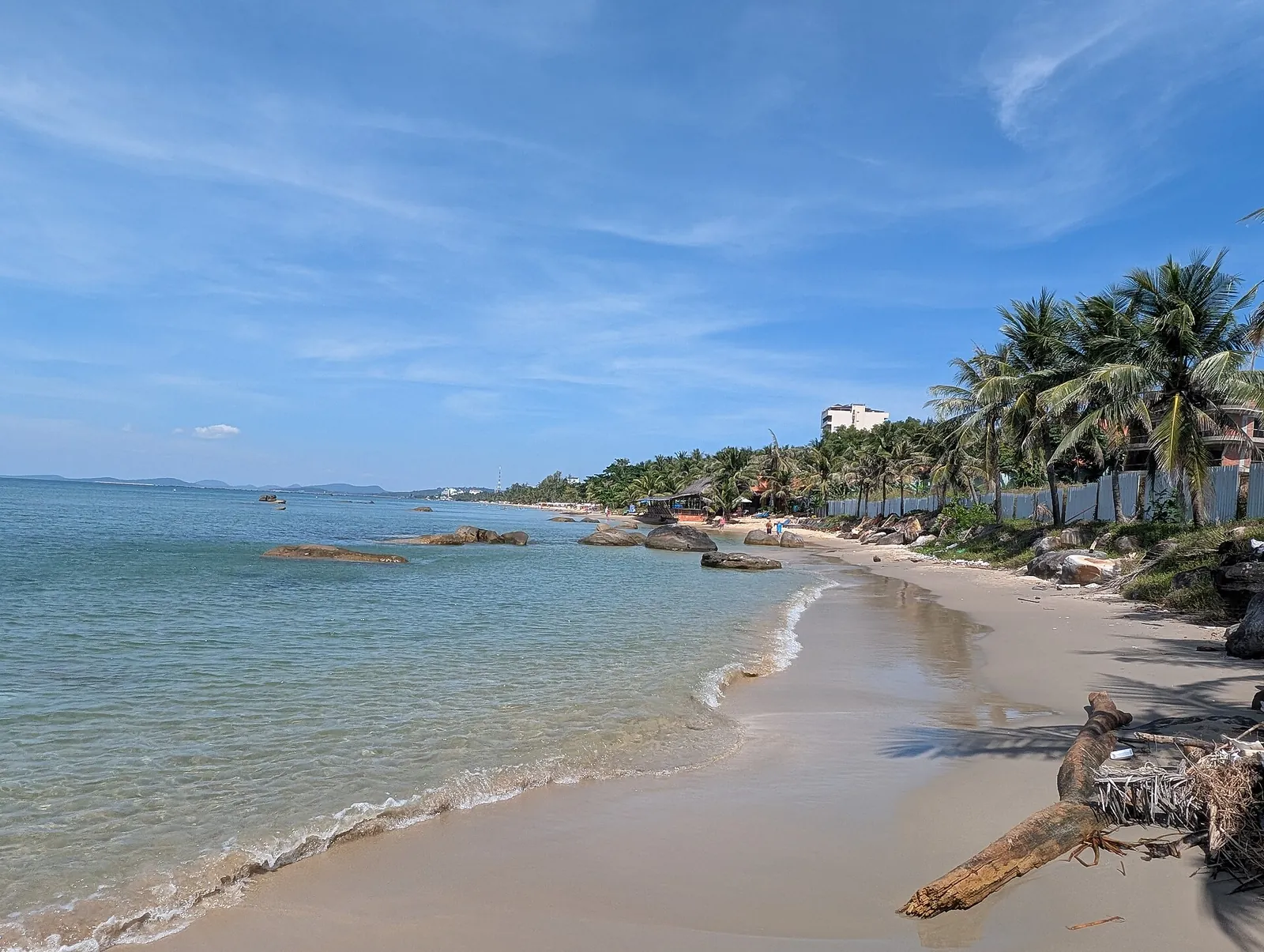
A beach on Phu Quoc, the island where this route ends
Photograph: Elmschrat — opens in a new tab · CC BY-SA 4.0 — opens in a new tab
Changes: Resized and converted to WebP; displayed with responsive crops. · Original photograph and licence details ↗ — opens in a new tab
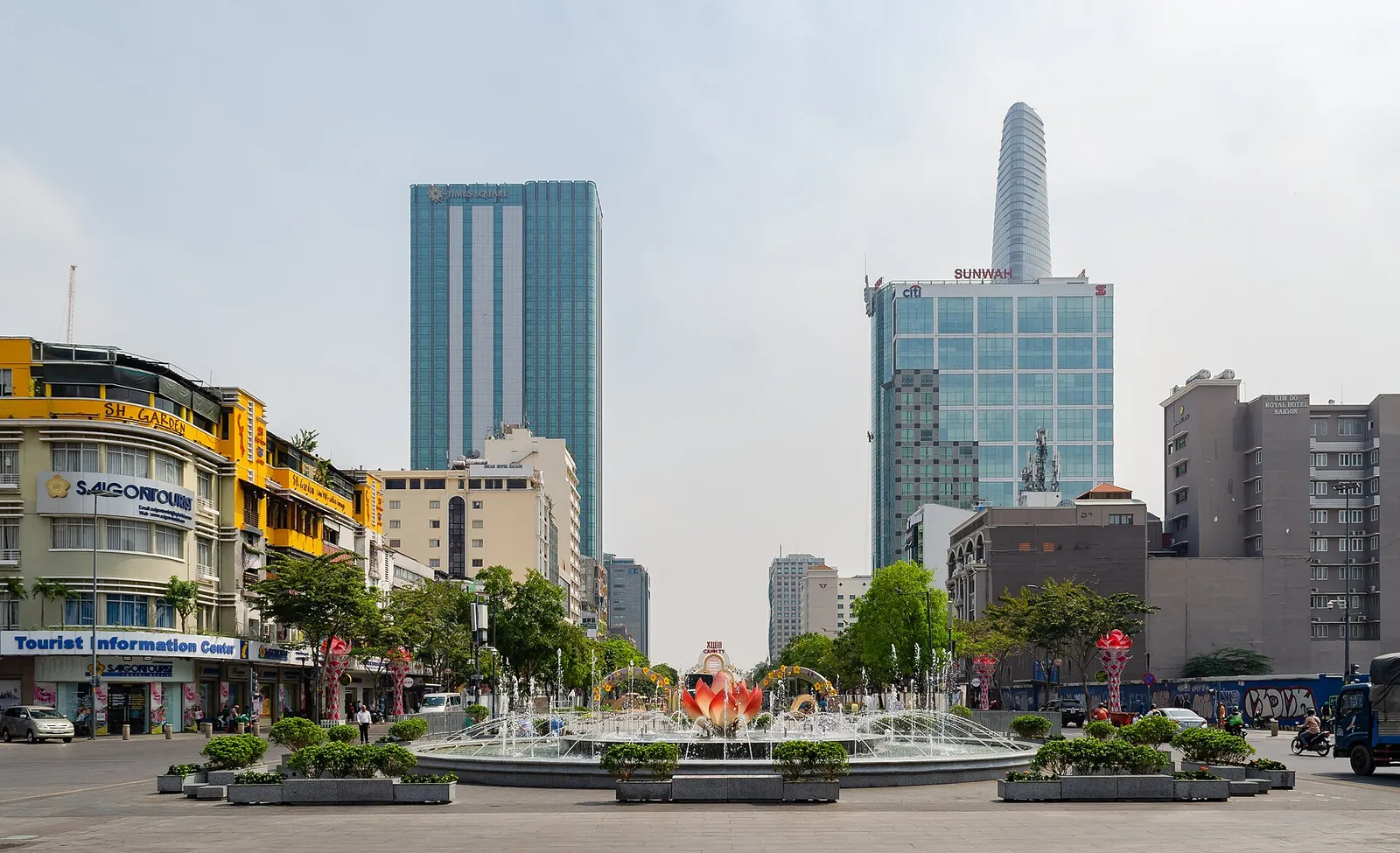
Nguyen Hue Street in central Ho Chi Minh City, the start of the week
Photograph: Steffen Schmitz ( more photos ) — opens in a new tab · CC BY-SA 4.0 — opens in a new tab
Changes: Resized and converted to WebP; displayed with responsive crops. · Original photograph and licence details ↗ — opens in a new tab
Boats trading produce at a floating market in Can Tho
Photograph: MoriCher — opens in a new tab · CC BY-SA 4.0 — opens in a new tab
Changes: Resized and converted to WebP; displayed with responsive crops. · Original photograph and licence details ↗ — opens in a new tab
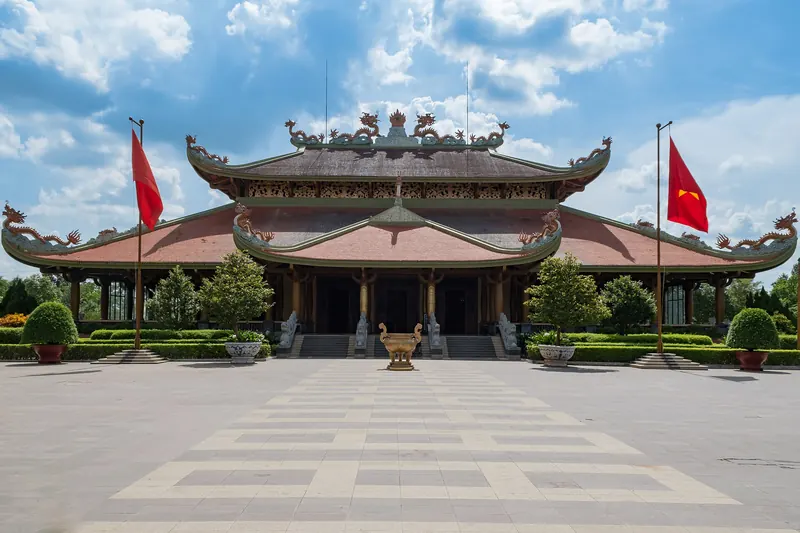
Tam Bao pagoda in Ha Tien, the overnight stop before the boat to Phu Quoc
Photograph: Bùi Thụy Đào Nguyên — opens in a new tab · CC BY-SA 3.0 — opens in a new tab
Changes: Resized and converted to WebP; displayed with responsive crops. · Original photograph and licence details ↗ — opens in a new tab
Com tam (broken rice), Ho Chi Minh City's breakfast staple
Photograph: Phương Huy — opens in a new tab · CC0 — opens in a new tab
Changes: Resized and converted to WebP; displayed with responsive crops. · Original photograph and licence details ↗ — opens in a new tab