Mekong Delta and Phu Quoc · An Giang
Ha Tien travel guide: caves, Mui Nai beach and the boat to Phu Quoc
Most travellers see Ha Tien only from a bus window on the way to the Phu Quoc boat, and that undersells it. This small town on the Gulf of Thailand, almost on the Cambodian border, grew into a trading port after the Chinese émigré Mac Cuu settled here in 1680, and it still has the feel of a self-contained world: limestone hills with pagodas inside them, the Mac family tombs under old trees, a lagoon that locals have written poems about for three centuries, and seafood stalls on the road into town. Give it one unhurried night and it becomes the best part of the journey between the delta and the island.
- Suggested time
- 1–2 nights
- Where to stay
- Central Ha Tien near Chieu Anh Cac Square, or Mui Nai beach
- Season and timing
- December to March is the dry, calm stretch; rain builds from April and peaks from July to October, when afternoon storms are common and boats can be cancelled in bad weather. Expect heat all year.
The short answer
Stay one night, two if you want a boat day to the offshore islands. Sleep in the centre of Ha Tien, within walking distance of the Mac Cuu tombs and the waterfront, or out at Mui Nai if you want the beach. Spend a morning on the Mac family tombs and the town's pagodas, the afternoon at Thach Dong and Mui Nai, and take a fast boat to Phu Quoc the next morning — Vietnam's tourism authority puts the crossing at about an hour. There is no airport in Ha Tien: fly into Phu Quoc (PQC) and cross by boat, or arrive by road from Rach Gia or Chau Doc.
Why stop in Ha Tien instead of rushing to the boat
Ha Tien sits at the far western edge of the Mekong Delta, where the flat rice country meets the Gulf of Thailand and a scatter of limestone hills. Vietnam National Authority of Tourism (VNAT) describes a coastline of about 22 kilometres and a town that grew from a near-empty frontier in the 17th century into a busy commercial port in the 18th, after Mac Cuu settled here and offered the land to the Nguyen lords. The mix of Chinese, Khmer and Vietnamese heritage is still visible in its temples, its food and the Cambodian-style dishes sold near the border.
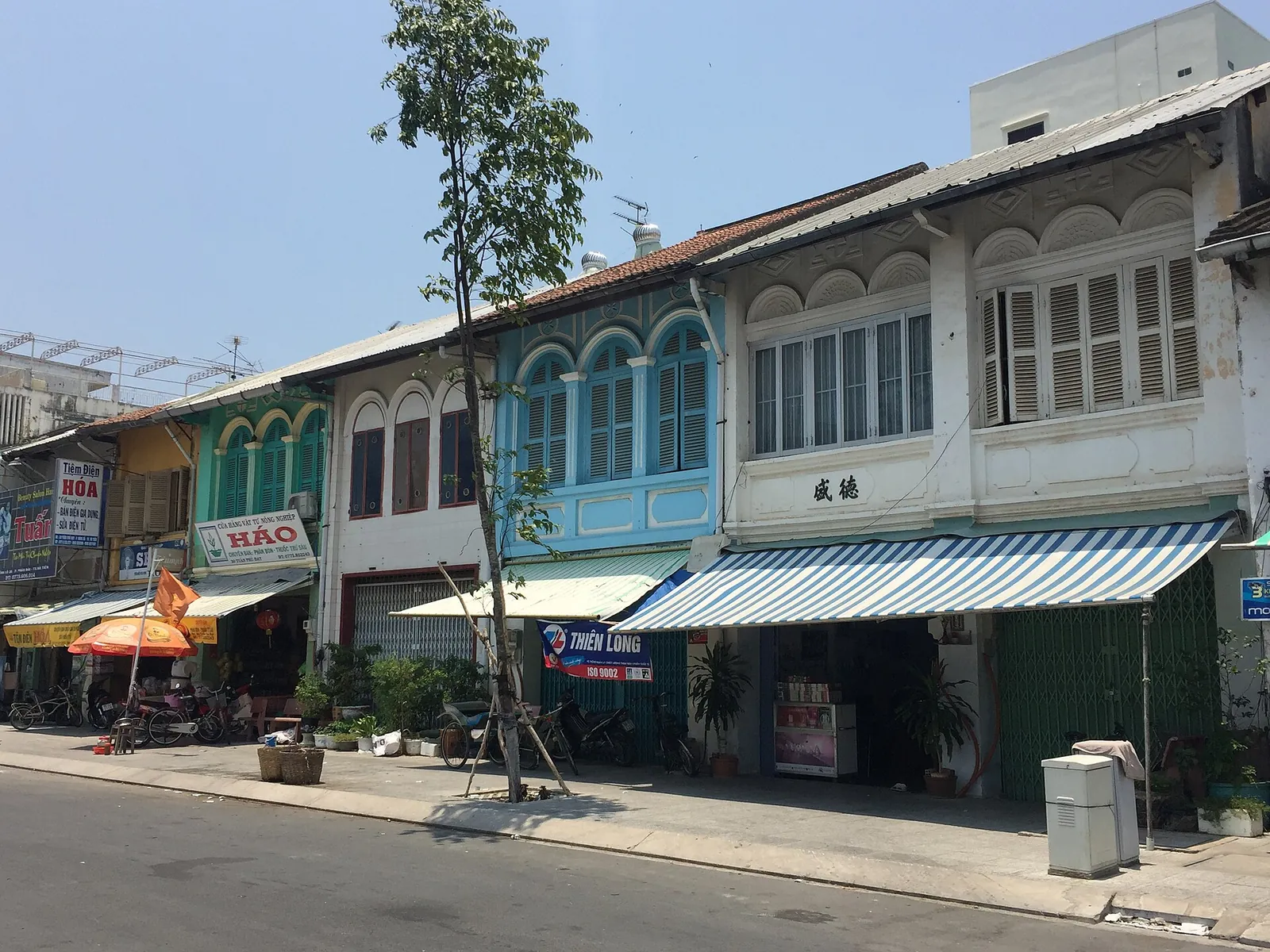
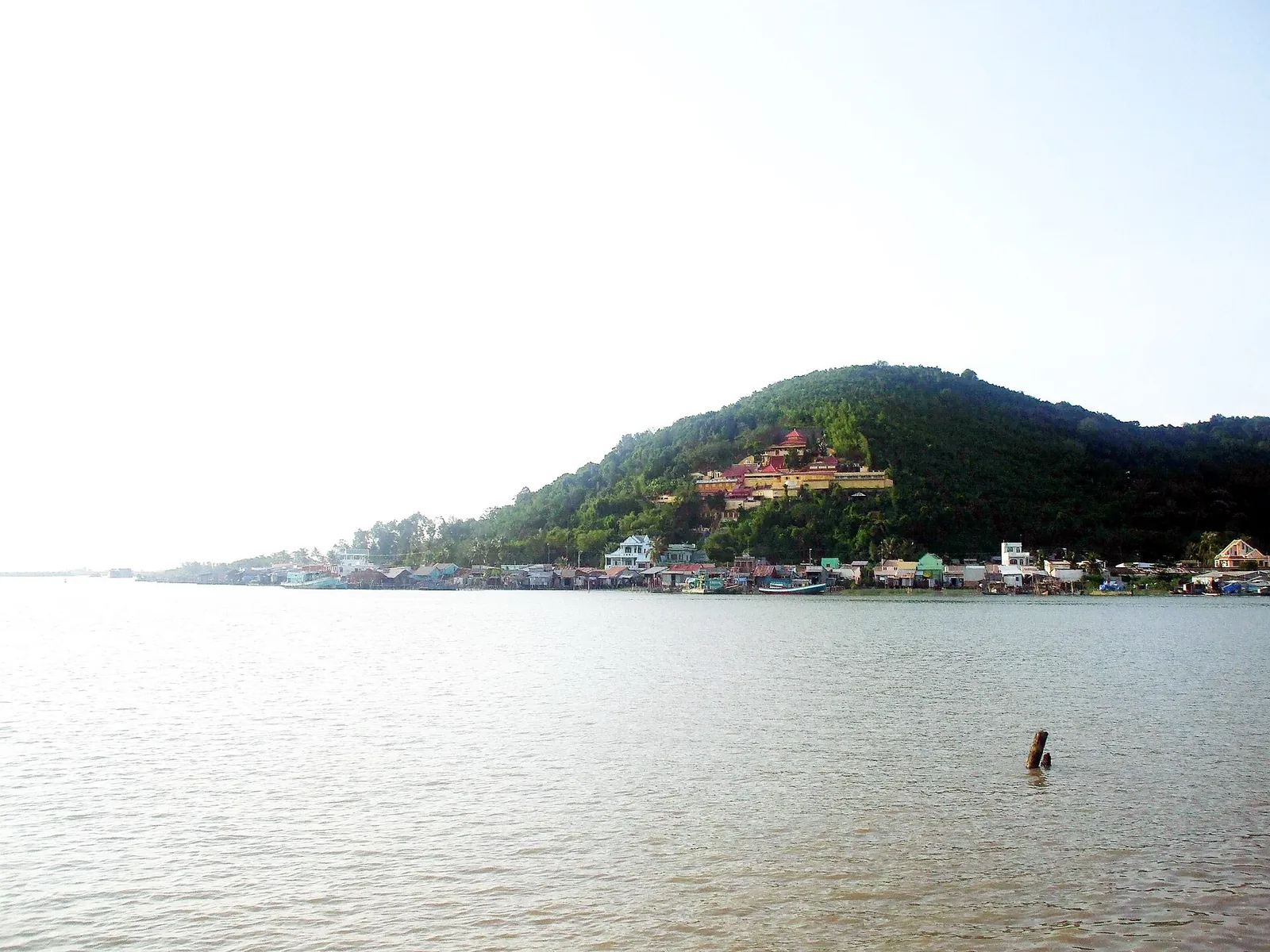
The town is split in two by the Dong Ho lagoon. On one side are the old centre and the Mac family tombs on Binh San hill; across the water lies To Chau, where the passenger port for the Phu Quoc boats now is. Since the July 2025 reorganisation, the former Kien Giang province is part of An Giang, and the old centre is now Ha Tien ward — you may see both names on signs and maps.
A day trip does not work well here: Ha Tien is about two hours from Rach Gia by road, according to VNAT, and further from anywhere else. Arrive in the afternoon, walk the waterfront, and give the following morning to the tombs and caves before moving on. If you are heading to Phu Quoc, an overnight in Ha Tien also means an unhurried morning boat rather than a pre-dawn transfer.
The Mac family tombs, Chieu Anh Cac and the old town
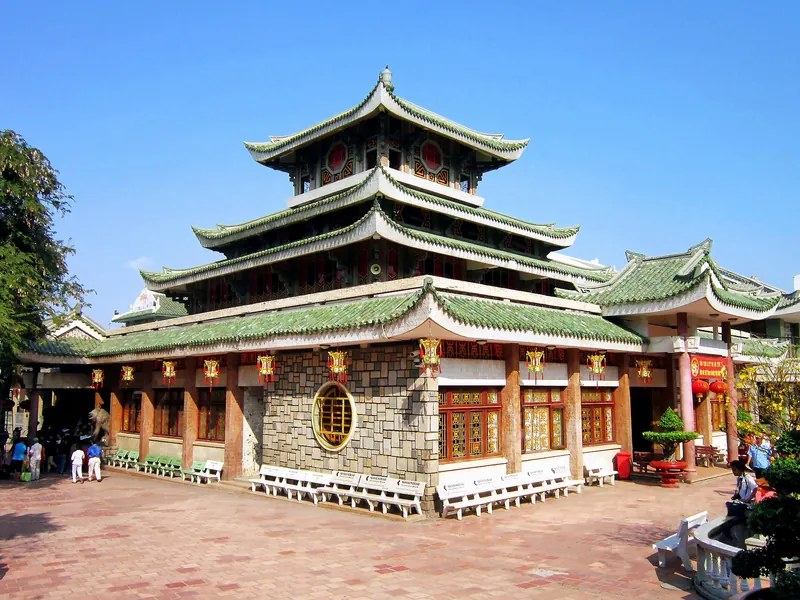
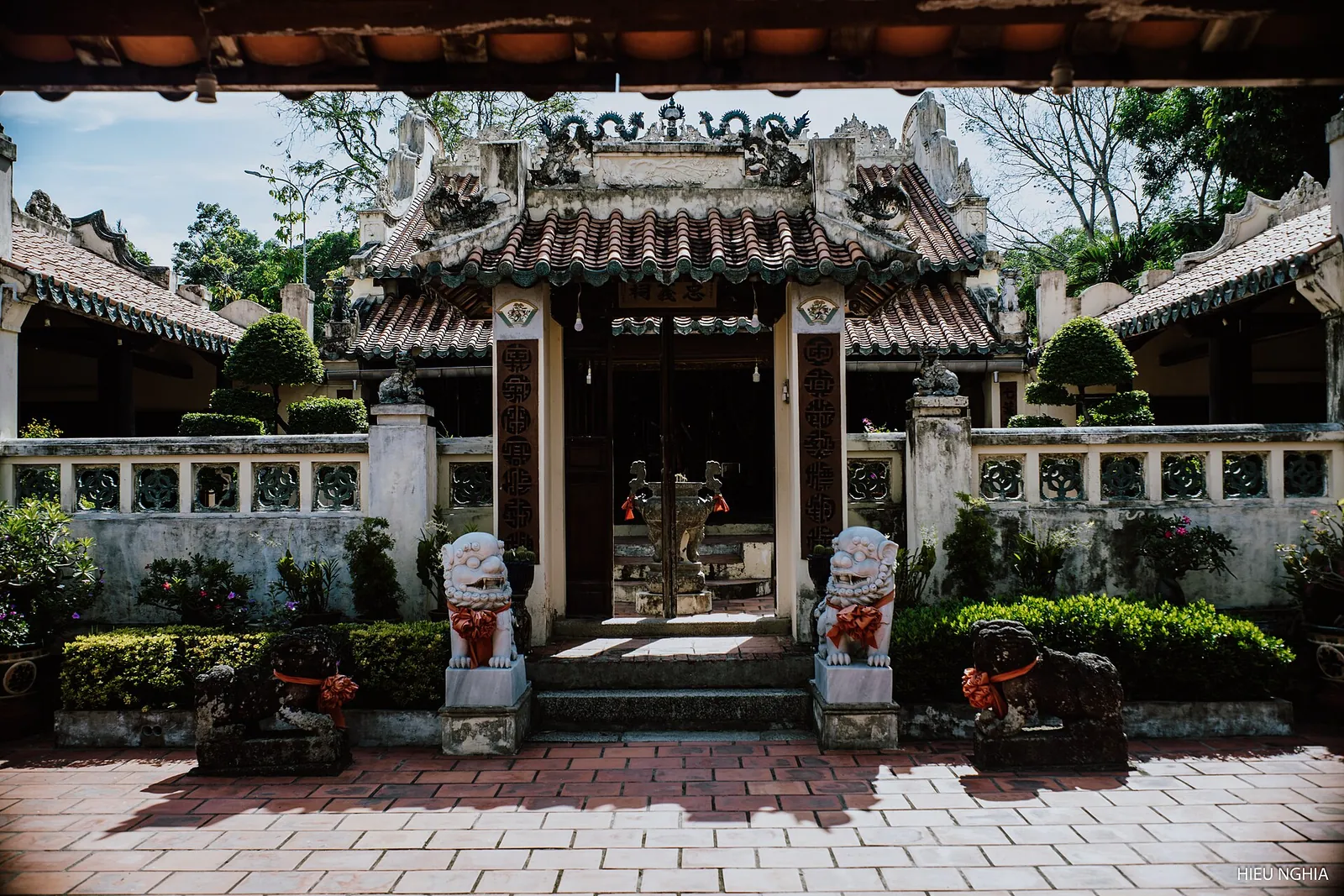
Start at the Mac Cuu tombs at the foot of Binh San hill, a short walk from the centre. VNAT describes a temple to the Mac family and more than 60 old tombs of family members and loyal officials, laid out in four areas under tall trees. Mac Cuu's own tomb is the highest, set into the hillside and facing the sea, guarded by two stone generals. In front of the temple are lotus ponds that Mac Cuu built to store fresh water for the dry season. Come early, before the heat, when the grounds are at their quietest.
Under Mac Cuu (1655–1735) and seven generations of his family, VNAT writes, Ha Tien became one of the most important trading places in the country, and it also earned a name as a land of letters through the Chieu Anh Cac poetry society. A pavilion of that name stands by the tombs, and the square named after it is the centre of town today. VNAT notes that the anniversary of Mac Cuu's death is marked on the 27th day of the fifth lunar month, usually in May or June; in 2025 the town held a tourism and food festival on Chieu Anh Cac Square around the date. A ten-metre statue of Mac Cuu stands near the To Chau Bridge.
Nearby, Phu Dung pagoda is worth a look for its architecture, VNAT suggests, and Tam Bao pagoda is the setting of one of the "ten scenes of Ha Tien" celebrated by the Chieu Anh Cac poets — the dawn bell of the temple. These are active places of worship: dress modestly, take off your shoes where others do, and keep your voice down.
Make time for the local food
What to eat and where to look
Bánh canh ghẹ (crab noodle soup)
Thick, slippery rice or tapioca noodles in a rich broth with blue swimmer crab. VNAT names bánh canh ghẹ first among the seafood dishes visitors should try in Ha Tien.
- Where to look
- Noodle shops in the town centre and seafood restaurants by the water.
- Fit it into your day
- A filling lunch, or a first dinner on the evening you arrive.
Contains shellfish; the broth is usually made with pork bones and fish sauce.
Grilled squid and gỏi cá (fish salad)
Ha Tien is a fishing port, and grilled squid and fish salad with fresh herbs are two of the local dishes VNAT recommends. Seafood stands also line the road into town.
- Where to look
- Seafood restaurants around the town centre and at Mui Nai.
- Fit it into your day
- Dinner after sunset at Mui Nai, shared between the table.
Check prices by weight before ordering live seafood; ask how the fish in gỏi cá is prepared if you avoid raw fish.
Bánh mì phá lấu
A baguette filled with slow-braised beef offal. VNAT notes that Ha Tien cooks cook the offal with coconut milk, which gives the filling a sweetish taste.
- Where to look
- Street stalls in the centre of town.
- Fit it into your day
- A quick breakfast or a snack before the boat.
Offal throughout; not for squeamish eaters.
Bánh khọt and chè with palm sugar
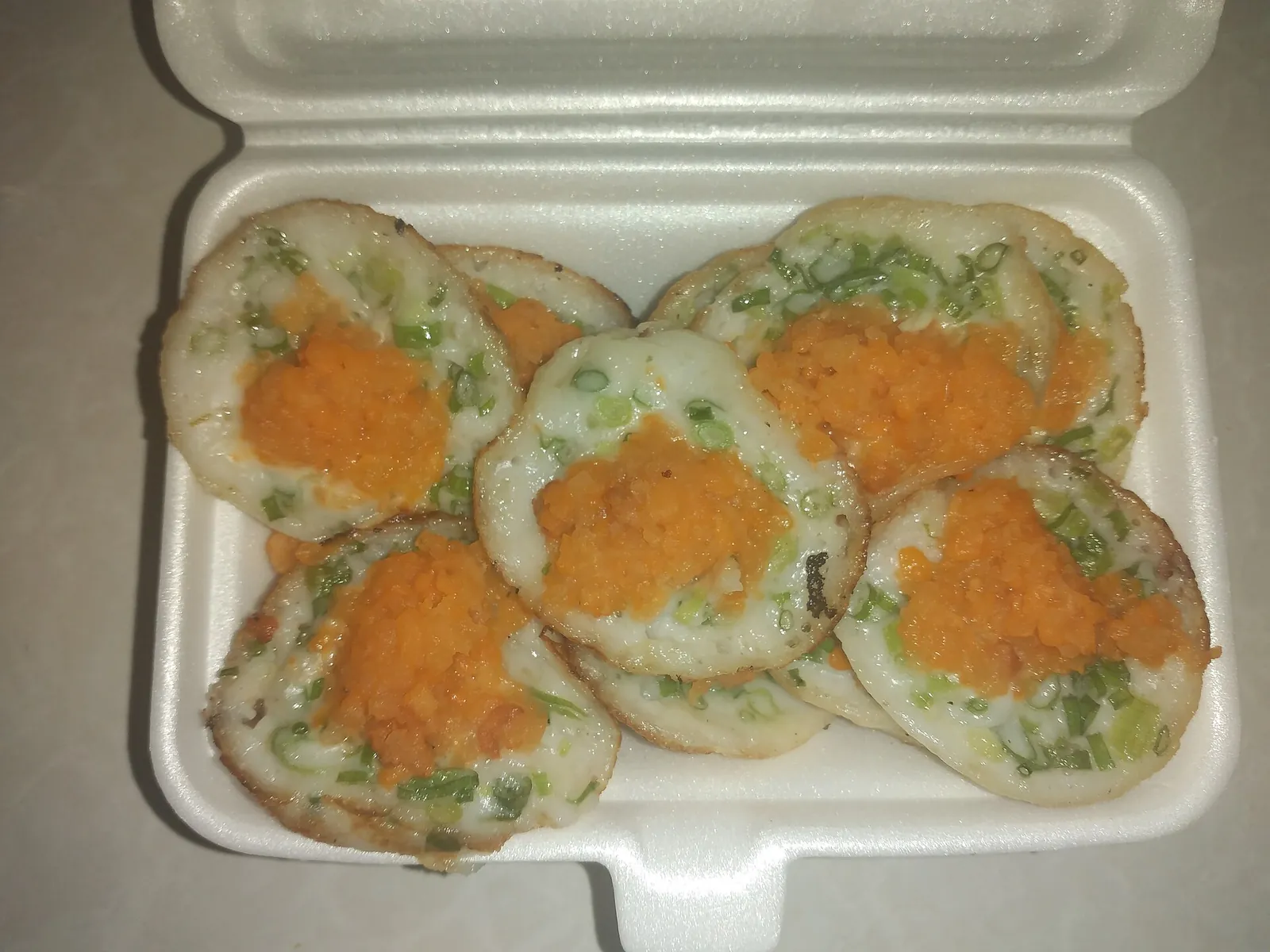
Small crisp rice-flour pancakes with shrimp, and black-bean sweet soup with palm sugar served over ice; VNAT mentions both in the small alleys near the Mac Cuu tombs, along with Cambodian-style sticky rice wrapped in leaves.
- Where to look
- Small eateries in the lanes around the Mac Cuu tombs.
- Fit it into your day
- A mid-morning break after visiting the tombs.
Bánh khọt contains shrimp and is fried; chè is very sweet.
Khmer-style bún riêu
Rice vermicelli in a field-crab broth, a staple of Khmer cooking. VNAT suggests trying the Cambodian-style version at a small restaurant near the Xa Xia border gate.
- Where to look
- Simple eateries on the road towards the Xa Xia border gate, nearly 10 km from town.
- Fit it into your day
- Lunch on the way to or from the border area.
Contains crab and shrimp paste.
Thach Dong and Mui Nai
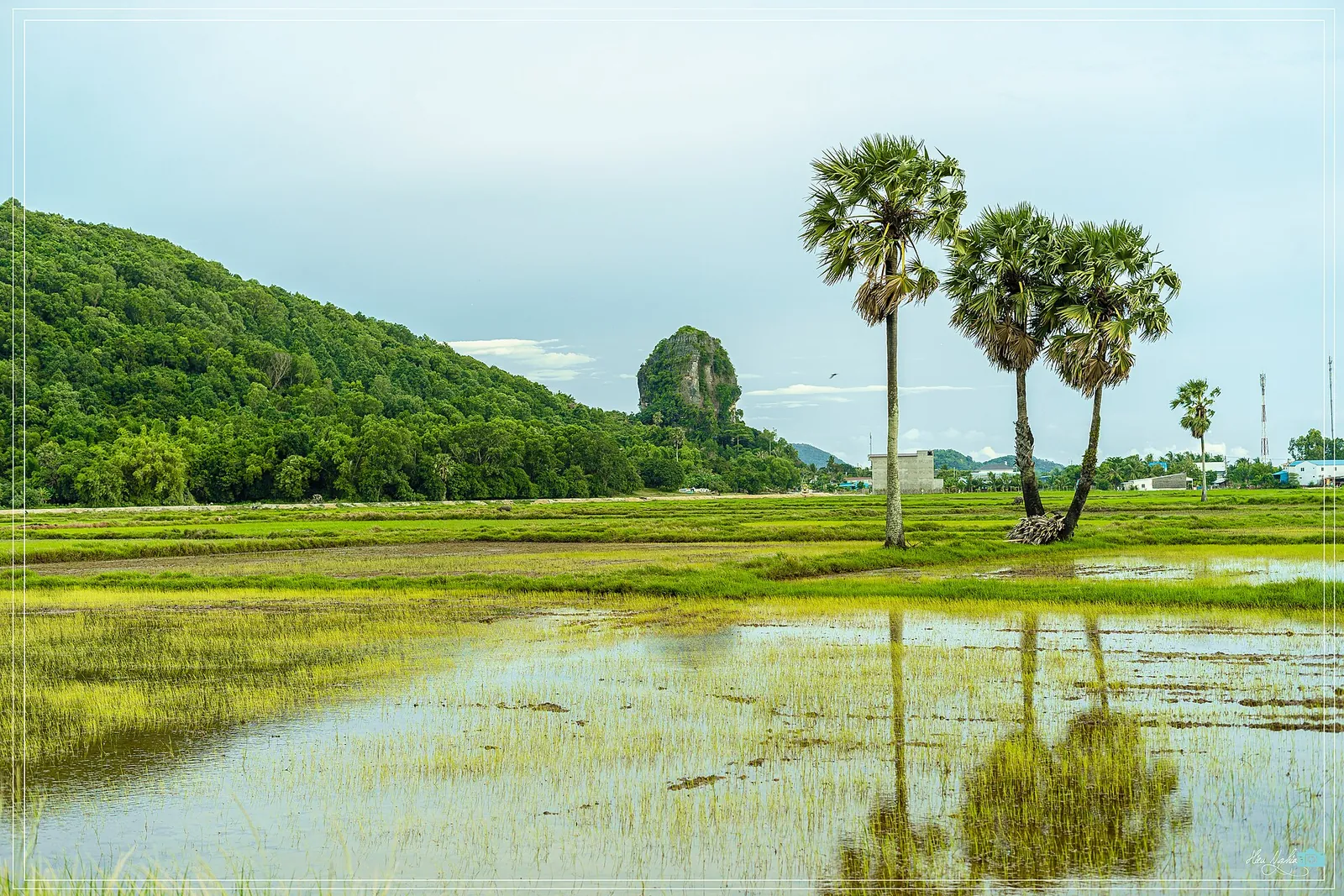
Thach Dong, a limestone outcrop a few kilometres from the centre, is another of the ten scenes — "Thach Dong swallowing the clouds". VNAT describes a hill with a Buddhist pagoda built into it, a shrine to Ba Chua Xu, stalactites, and views over Ha Tien from its flanks; one of its articles dates the wooden Tien Son pagoda inside to 1790. VNAT also warns that some of the small, dark side grottos should not be entered. Wear shoes with grip, carry water and a torch, and go in the morning or late afternoon rather than at midday.
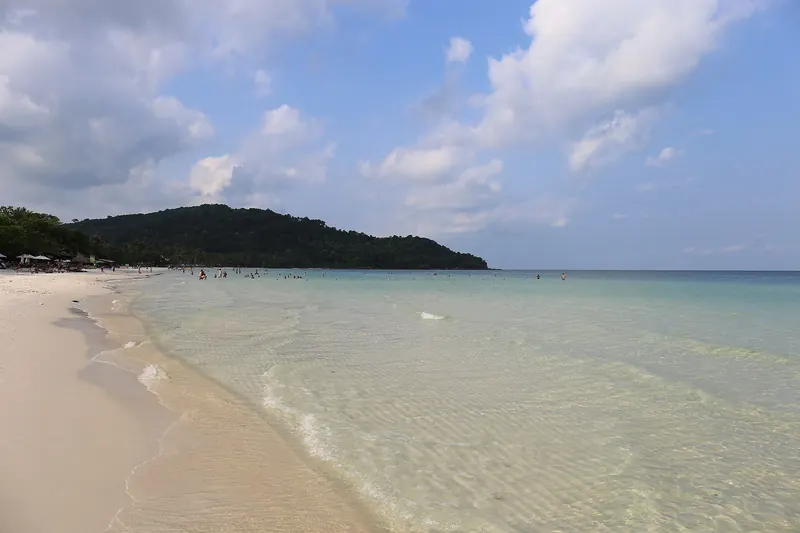
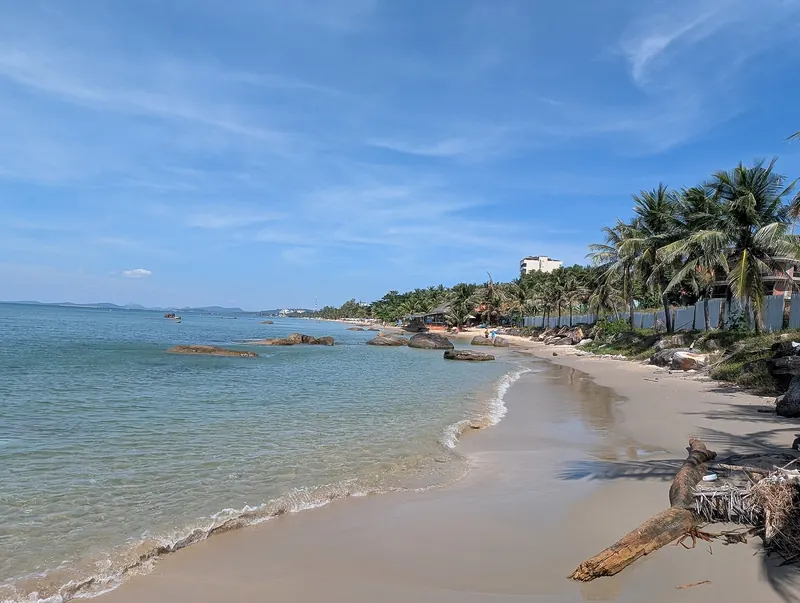
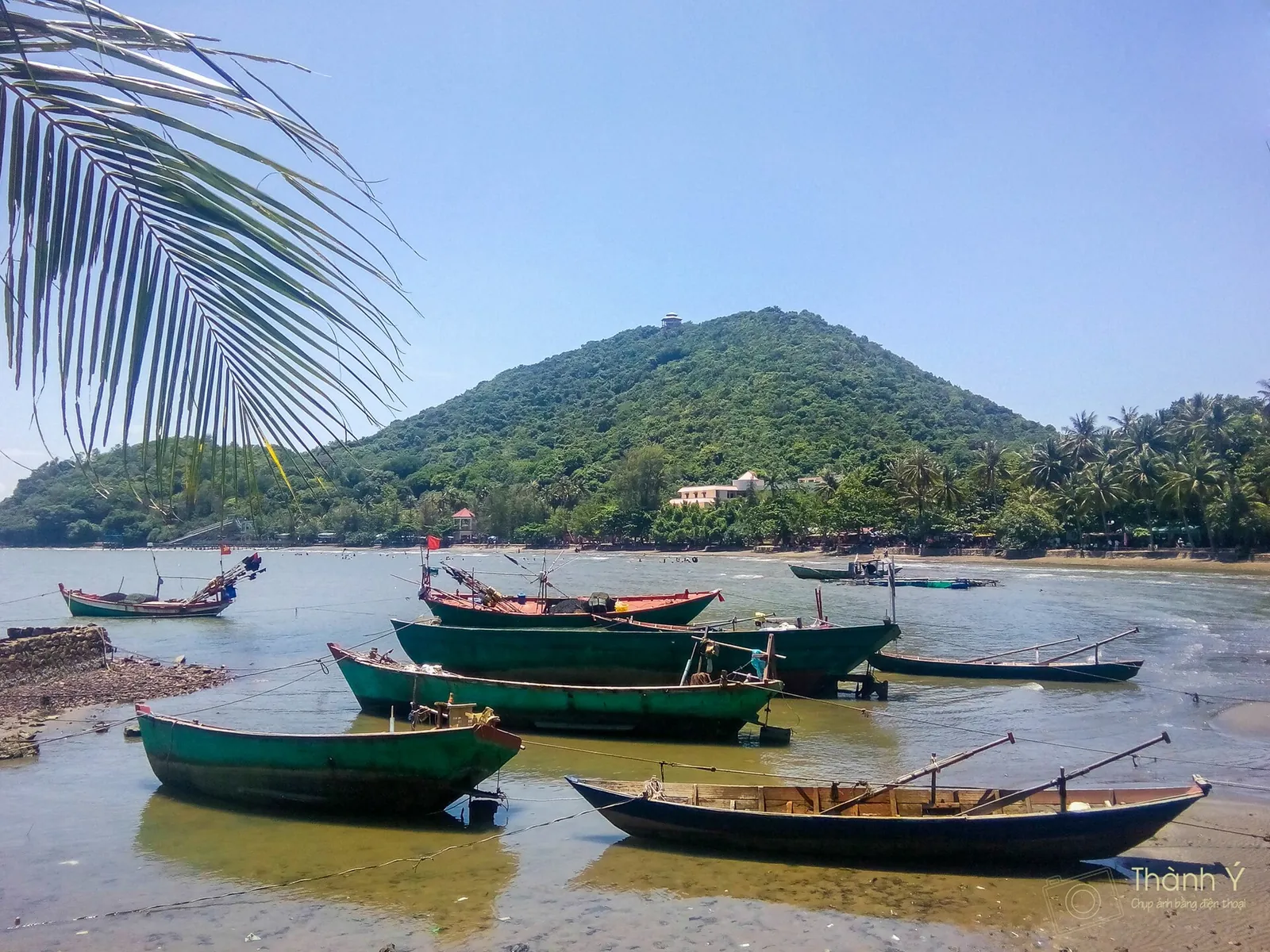
Mui Nai, about five kilometres from the centre by VNAT's count, is Ha Tien's beach: a curve of sand under green headlands, which VNAT praises for its gentle waves. VNAT has called it the most beautiful beach in the former Kien Giang province, and the town has invested heavily in laying white sand at Mui Nai and the neighbouring Bai No. Most visitors are Vietnamese families, and national holidays bring big crowds.
Above the beach, VNAT describes a forest track up Ta Ban hill with a small mountain-coaster ride, and a lookout tower at the top from which you can see Phu Quoc and the nearby islands on a clear day. Check locally what is running before you go; fares and opening times were not published on any official page we could find. Sunset at Mui Nai, followed by grilled seafood, is the easiest good evening in Ha Tien.
The Dong Ho lagoon, the islands and Hon Phu Tu
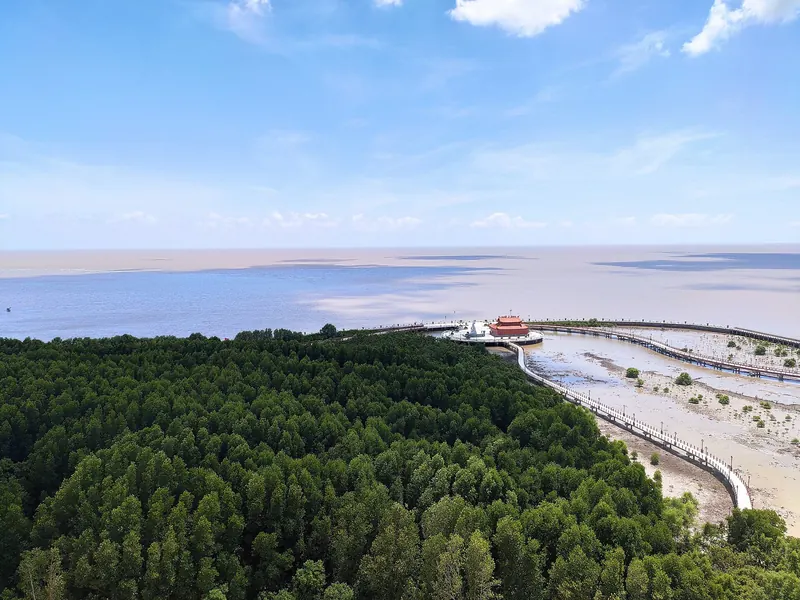
The Dong Ho lagoon, which VNAT puts at nearly 1,400 hectares, lies between the old town and To Chau, framed by To Chau and Ngu Ho hills. "Dong Ho reflecting the moon" is one of the ten scenes, and the lagoon is at its most beautiful on a full-moon night.
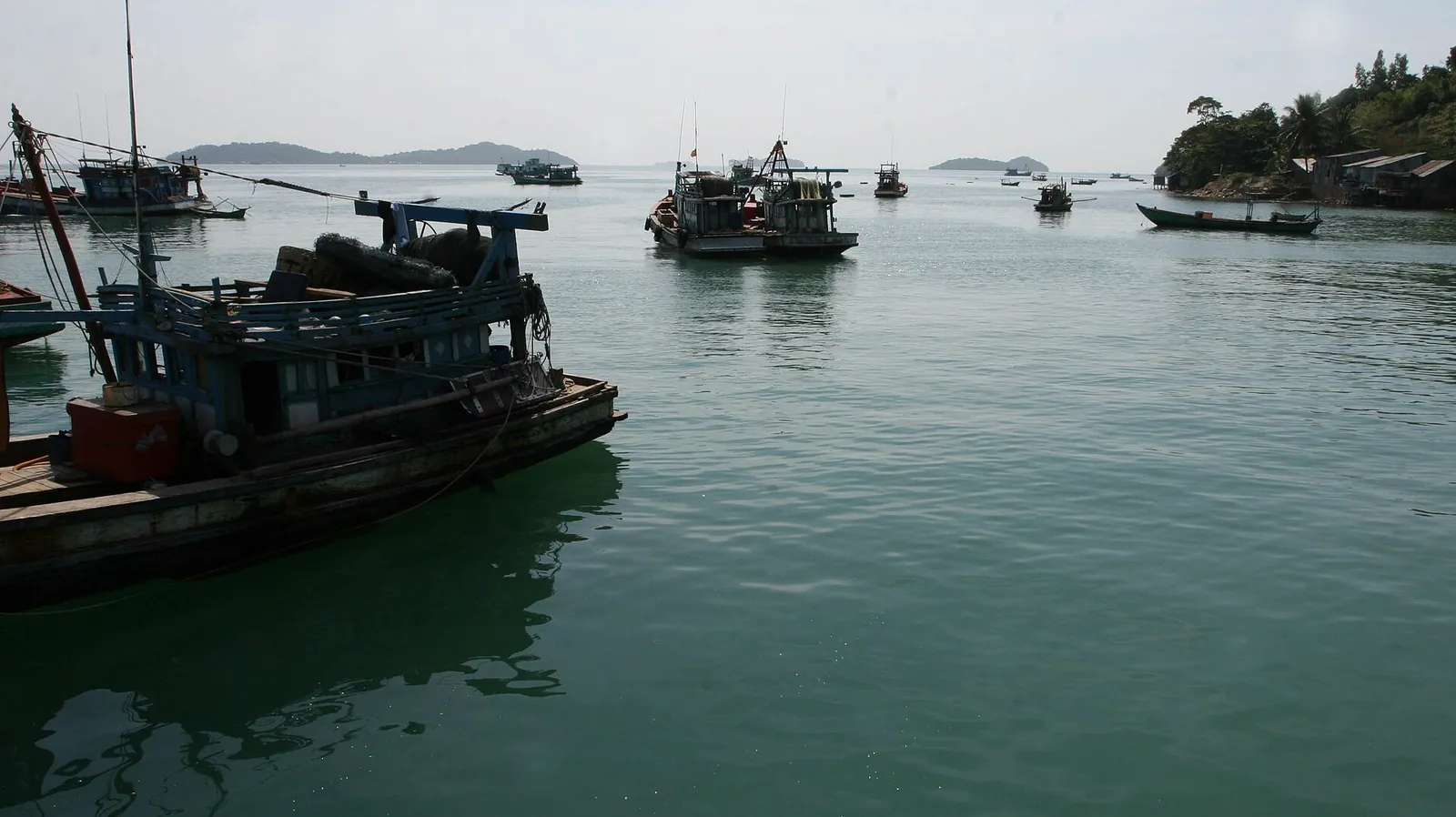
Offshore, the Hai Tac (Pirate) archipelago of more than a dozen small islands is about 30 minutes from Ha Tien by speedboat, according to VNAT. It is still largely a fishing community, with cage fish farms, simple homestays and a few beaches; VNAT notes that tourism services are not yet fully developed. Treat it as a day trip unless you are happy with very basic lodging, and check the weather — the sea crossing is exposed in the rainy season.
Further along the coast in neighbouring Kien Luong, the cave pagoda of Chua Hang and the rock islet of Hon Phu Tu ("father and son") are a classic half-day trip. Go with the right expectation: the taller "father" column of Hon Phu Tu collapsed into the sea in August 2006, and only the "son" still stands.
Getting there: the Phu Quoc boat, the road and the border
The main reason many people come is the fast boat to Phu Quoc. VNAT puts the crossing at about an hour; other estimates are closer to 80–90 minutes depending on the sea. Phu Quoc Express, one of the operators, says its boats leave from the new Ha Tien passenger port on Kim Du Street in To Chau and arrive at Bai Vong port on the island's east coast, which it puts about 7 km from Phu Quoc airport and 12 km from Duong Dong. When we checked on 2026-10-03, the operator asked passengers to be at the port at least 30 minutes before departure, to carry ID (a passport for foreign travellers), and noted that the car ferry from Thanh Thoi uses a different pier. Departure times vary with the season and the weather, so check them on the operator's booking page the day before.
By road, VNAT puts Rach Gia about two hours away on National Highway 80, with onward roads to Chau Doc, Long Xuyen and Can Tho. Ha Tien is about 75 km from Chau Doc, which makes the two a natural pair on a western delta route: Chau Doc first, then Ha Tien, then the boat to Phu Quoc.
Ha Tien is also a border town. When we checked on 2026-10-03, VNAT's list of international border gates open to e-visa holders included the Ha Tien international border gate (listed under its former Kien Giang name). Border rules change; confirm the current list on Vietnam's official e-visa portal and the entry rules for Cambodia before planning a crossing. Even if you do not cross, VNAT suggests the area near Xa Xia border gate, nearly 10 km from town, for a bowl of Cambodian-style noodle soup.
A workable one- or two-night plan
This is an editorial suggestion, not a timetable. Confirm boat departures with the operator the day before.
- Day 1 — Arrive: check in near Chieu Anh Cac Square, walk the waterfront at sunset, seafood or bánh canh ghẹ for dinner.
- Day 2 — Tombs, caves and beach: Mac Cuu tombs early, Phu Dung pagoda, then Thach Dong before the midday heat; lunch, a rest, and Mui Nai for the late afternoon and sunset.
- Day 3 — Onward or offshore: a morning fast boat to Phu Quoc, a road trip to Chau Doc, or a speedboat day to the Hai Tac islands if you are staying a second night.
Practical questions
How many days do I need in Ha Tien?
One night is enough for the Mac Cuu tombs, Thach Dong and Mui Nai. Stay a second night if you want a speedboat day to the Hai Tac islands or a half-day trip to Hon Phu Tu and Chua Hang.
How do I get from Ha Tien to Phu Quoc?
By fast boat from the Ha Tien passenger port in To Chau to Bai Vong on Phu Quoc's east coast. VNAT puts the crossing at about an hour. Be at the port at least 30 minutes early with your passport, and check departure times with the operator the day before, especially in the rainy season.
Is Ha Tien in Kien Giang or An Giang province?
Since the July 2025 reorganisation, Kien Giang has been merged into An Giang province, and central Ha Tien is now Ha Tien ward. Older maps, signs and guides still say Kien Giang.
Can I cross into Cambodia at Ha Tien?
When we checked on 2026-10-03, VNAT's list of e-visa border gates included the Ha Tien international border gate. Rules change, so confirm the current list on Vietnam's official e-visa portal and Cambodia's entry requirements before you go.
Is Mui Nai good for swimming?
It is Ha Tien's main beach, and VNAT describes its waves as gentle. In the rainy season the sea can be rougher; swim where others are swimming and avoid the water in storms.
When is the best time to visit Ha Tien?
December to March is the driest and calmest period. Rain increases from April and is heaviest from July to October, when sea crossings are more often affected by weather.
Sources and checks before you travel
Reference sources for the version dated 3 October 2026. Confirm opening times, access, transport and conditions for your travel dates.
- VNAT: Exploring Ha Tien Township in Kien Giang Province ↗ — opens in a new tab
- VNAT: A visit to Mac Cuu tomb in Ha Tien ↗ — opens in a new tab
- VNAT: Fruit and history: a journey through Ha Tien ↗ — opens in a new tab
- VNAT: Touring the west side of the Delta ↗ — opens in a new tab
- VNAT: Two well-spent days in Kien Giang ↗ — opens in a new tab
- VNAT: Hai Tac (Pirate) archipelago ↗ — opens in a new tab
- VNAT: Vietnamese baguette with cow offal in Ha Tien town ↗ — opens in a new tab
- VNAT (Vietnamese): Hà Tiên, an ideal destination ↗ — opens in a new tab
- VNAT (Vietnamese): Hà Tiên, an interesting destination ↗ — opens in a new tab
- VNAT (Vietnamese): Ha Tien tourism and food festival 2025 ↗ — opens in a new tab
- VNAT: Visa issuance at Viet Nam's international border gates ↗ — opens in a new tab
- Phu Quoc Express: Ha Tien boat port ↗ — opens in a new tab
- Phu Quoc Express: Ha Tien–Phu Quoc route ↗ — opens in a new tab
- Wikipedia: Hà Tiên (ward) ↗ — opens in a new tab
- Wikipedia: Hà Tiên (city) ↗ — opens in a new tab
- Wikipedia (Vietnamese): Hà Tiên (thành phố) ↗ — opens in a new tab
- Wikipedia (Vietnamese): Hòn Phụ Tử ↗ — opens in a new tab
- Wikipedia: Phu Quoc International Airport ↗ — opens in a new tab
Photo credits
Fishing boats at Mui Nai, Ha Tien's beach on the Gulf of Thailand
Photograph: TRƯƠNG THÀNH Ý — opens in a new tab · CC BY 4.0 — opens in a new tab
Changes: Resized and converted to WebP; displayed with responsive crops. · Original photograph and licence details ↗ — opens in a new tab
Thach Dong, one of the ten scenes of Ha Tien, seen across the fields
Photograph: Hieu nghia TRAN — opens in a new tab · CC BY-SA 2.0 — opens in a new tab
Changes: Resized and converted to WebP; displayed with responsive crops. · Original photograph and licence details ↗ — opens in a new tab
The temple of the Mac family at the foot of Binh San hill
Photograph: Hieu nghia TRAN — opens in a new tab · CC BY 2.0 — opens in a new tab
Changes: Resized and converted to WebP; displayed with responsive crops. · Original photograph and licence details ↗ — opens in a new tab
Old shophouses on a main street in central Ha Tien
Photograph: Sgnpkd — opens in a new tab · CC BY-SA 4.0 — opens in a new tab
Changes: Resized and converted to WebP; displayed with responsive crops. · Original photograph and licence details ↗ — opens in a new tab
The Dong Ho lagoon, which divides Ha Tien in two
Photograph: Bùi Thụy Đào Nguyên — opens in a new tab · CC BY-SA 3.0 — opens in a new tab
Changes: Resized and converted to WebP; displayed with responsive crops. · Original photograph and licence details ↗ — opens in a new tab
A boat anchorage in the Hai Tac (Pirate) islands off Ha Tien
Photograph: Đỗ Doãn Hoàng — opens in a new tab · CC BY-SA 3.0 — opens in a new tab
Changes: Resized and converted to WebP; displayed with responsive crops. · Original photograph and licence details ↗ — opens in a new tab
Bánh khọt, one of the snacks sold in the lanes near the Mac Cuu tombs
Photograph: Nguyenhai314 — opens in a new tab · CC BY-SA 4.0 — opens in a new tab
Changes: Resized and converted to WebP; displayed with responsive crops. · Original photograph and licence details ↗ — opens in a new tab