Mekong Delta and Phu Quoc · Can Tho
Can Tho travel guide: Cai Rang floating market, canals and where to stay
Can Tho is the Mekong Delta's largest city and its most practical base, but most visitors see it at the wrong hour. The Cai Rang floating market is at its busiest around dawn, long before a day tour from Ho Chi Minh City can arrive. Sleep in the city, and the best of the delta comes to you early: boats loaded with fruit on the river, breakfast noodles served from a sampan, then slow canals, orchards and workshops on the islets before the heat sets in.
- Suggested time
- 2–3 nights
- Where to stay
- Ninh Kieu waterfront or Cai Khe, close to the boat landings
- Season and timing
- Hot and dry for most of the year; rain falls regularly from July to November, March to June is the hottest stretch, and December and January are the coolest months. The floating market runs year-round but closes or is reduced on the first days of Tet.
The short answer
Stay two nights, three if you want a slow day on the islets. Arrive in the afternoon, walk the Ninh Kieu riverfront and book a boat for the next morning; be on the water by 6am for Cai Rang, then continue into the small canals and back for lunch. Sleep on the Ninh Kieu waterfront or on Cai Khe for the shortest start. Can Tho has its own airport (VCA), and buses from Ho Chi Minh City take about four hours.
Why sleep in Can Tho instead of a day trip from Saigon
Wikipedia's figures put Can Tho about 170 km from Ho Chi Minh City by National Highway 1A, a drive of three to four hours in daytime, and Vietnam Tourism describes the bus as a four-hour journey. A same-day round trip therefore spends more time on the road than on the river, and reaches Cai Rang after its busiest hours. Vietnam Tourism's own advice is to be on a boat by 6am, which is only practical if you are already in the city.
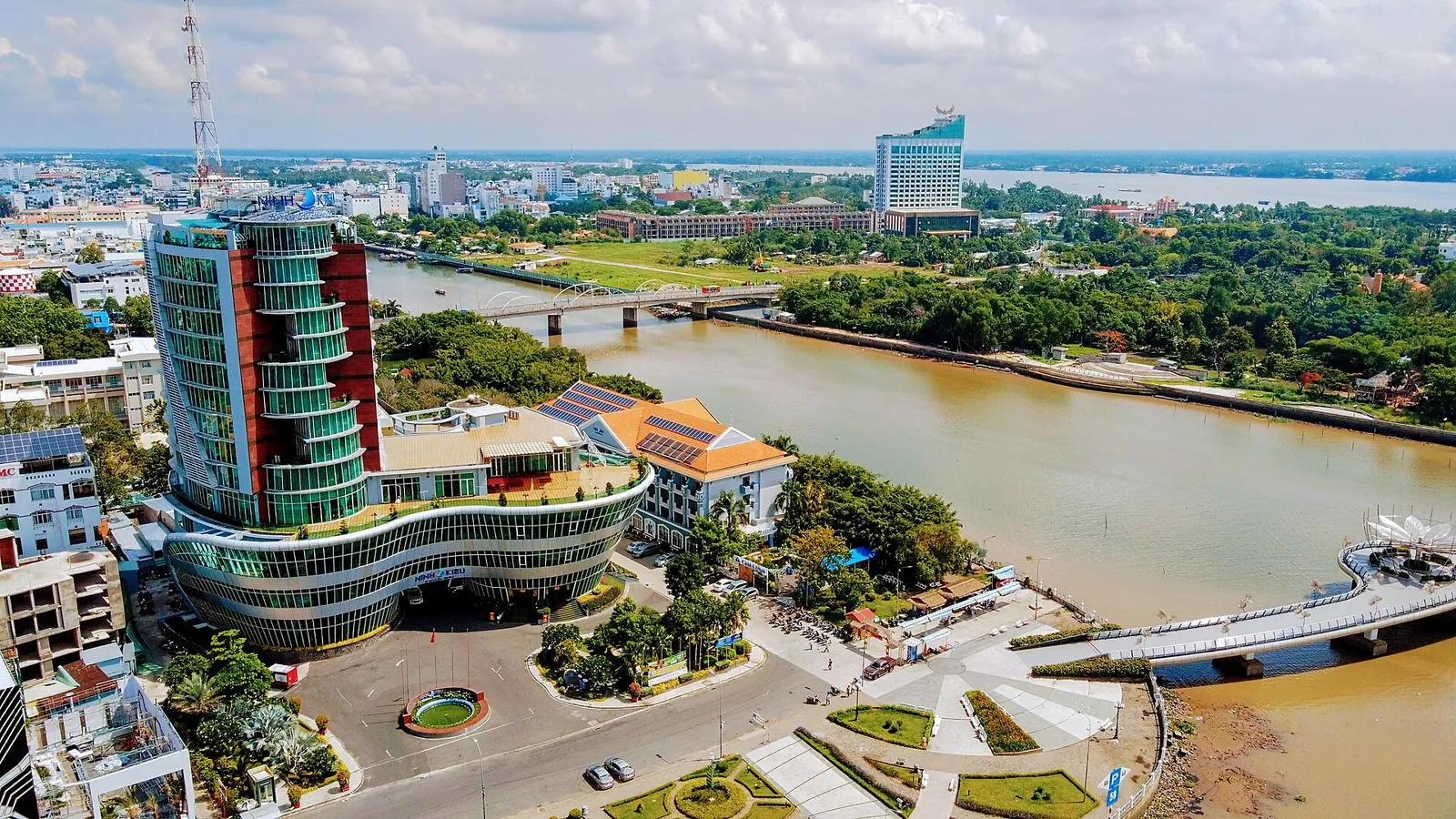
Can Tho is also a large, modern city: on 12 June 2025 the National Assembly merged the former Soc Trang and Hau Giang provinces into it, so the municipality now stretches far beyond the urban core. For a visitor the part that matters is small. Ninh Kieu, the old central district, holds the riverfront promenade, the main boat landings, the market streets and most hotels; Cai Rang lies downstream; the orchard islets and canals sit around both.
Give yourself an afternoon arrival, one early river morning and, if you can, a second day for the islets or a side trip. That rhythm — late afternoon on the waterfront, early to bed, out on the water before sunrise — is what the delta rewards.
The Cai Rang floating market at dawn
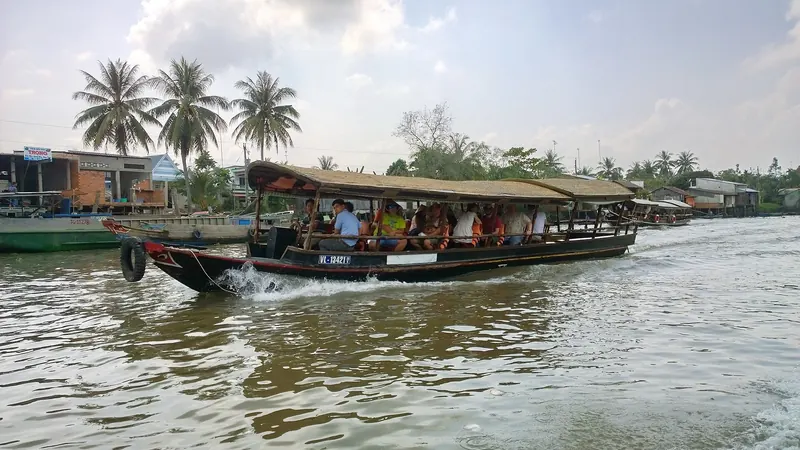
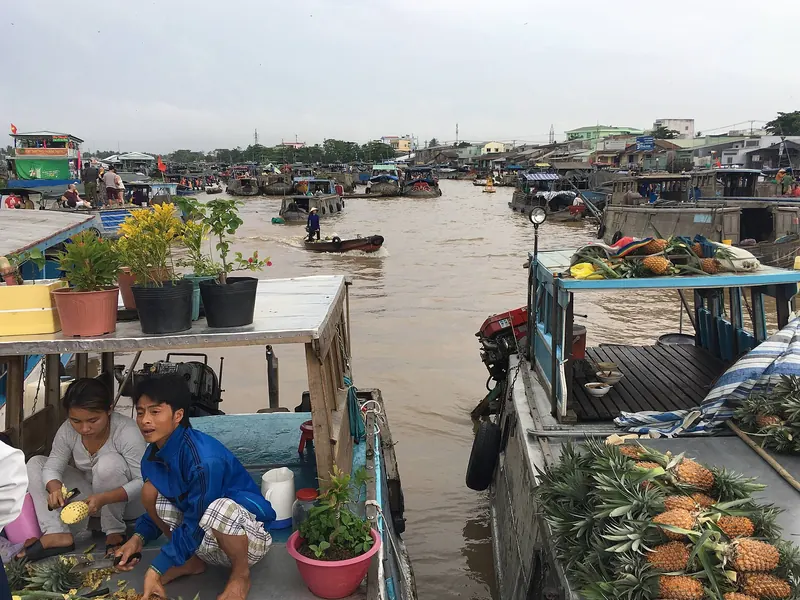
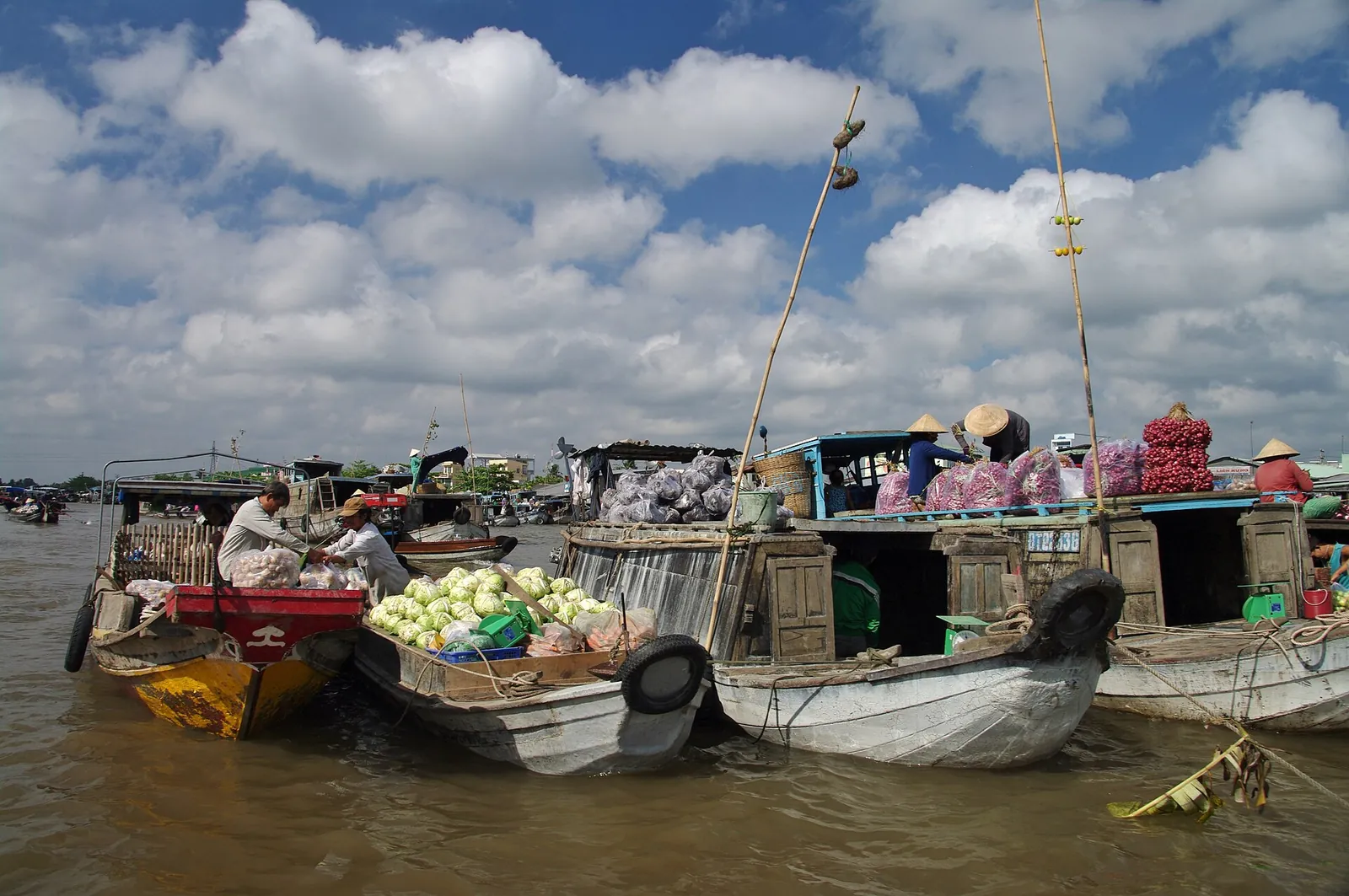
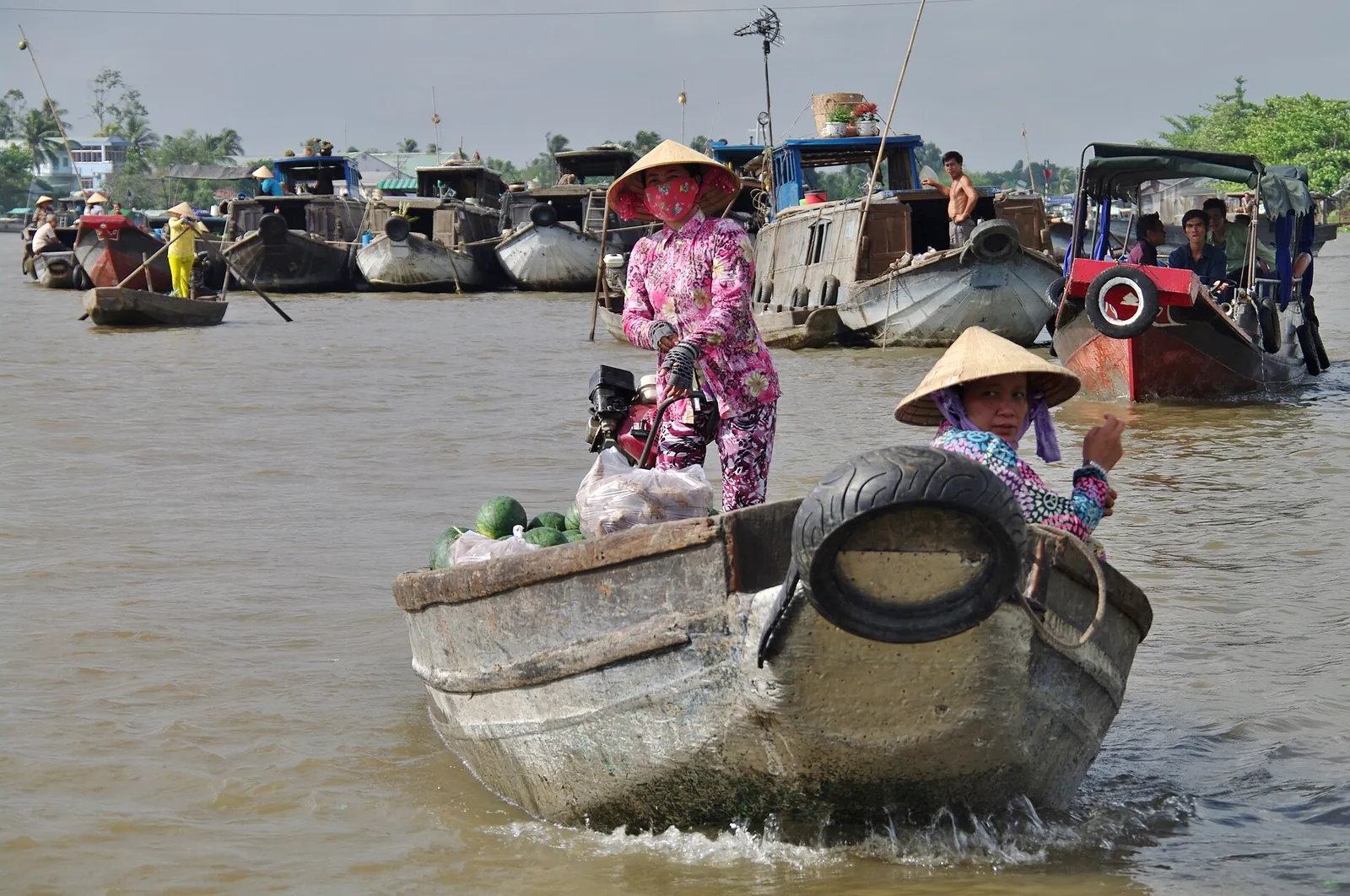
Cai Rang is a wholesale fruit and vegetable market held on the Can Tho River near the Cai Rang Bridge, about six kilometres from the centre by Vietnam Tourism's count. Vietnam Tourism describes it as the largest wholesale floating market in the delta and says trading gets going around five in the morning; boats of every size trade pomelos, pineapples, durians and other produce by the sackful, while small rowing boats move between them selling coffee, snacks and noodles. It keeps going until about midday, but the early hours are the reason to come.
Vendors do not use signs. Each large boat hangs a sample of what it sells from a tall pole at the bow — a pumpkin, a bunch of onions, a cassava root — so buyers can read the market from a distance. Watch for the boats with a breakfast stall on board: a bowl of hủ tiếu eaten on the water is the classic Can Tho breakfast.
Book the boat the evening before, through your hotel or at the Ninh Kieu waterfront. Boats can be hired at the Ninh Kieu wharf, and Vietnam Tourism puts the ride to Cai Rang at about 30 minutes. Ask how long the trip lasts and whether it continues into the side canals afterwards, which is the better half of the morning. The market is closed or runs on a reduced scale on the first two days of the Lunar New Year (Tet). If you want a quieter scene where you can talk to the growers, ask your host about the smaller floating markets around the city, such as Phong Dien.
Make time for the local food
What to eat and where to look
Hủ tiếu (pork and noodle soup)
Vietnam Tourism's pick for Can Tho's best breakfast: sticky tapioca noodles, crunchy bean sprouts and thinly sliced pork in a savoury broth, with herbs on the side.
- Where to look
- Breakfast boats at the Cai Rang floating market, and noodle shops around the town centre.
- Fit it into your day
- Breakfast on the water during the floating-market trip — order from the boat as it pulls alongside.
Usually pork-based; ask about shrimp or offal toppings if you avoid them.
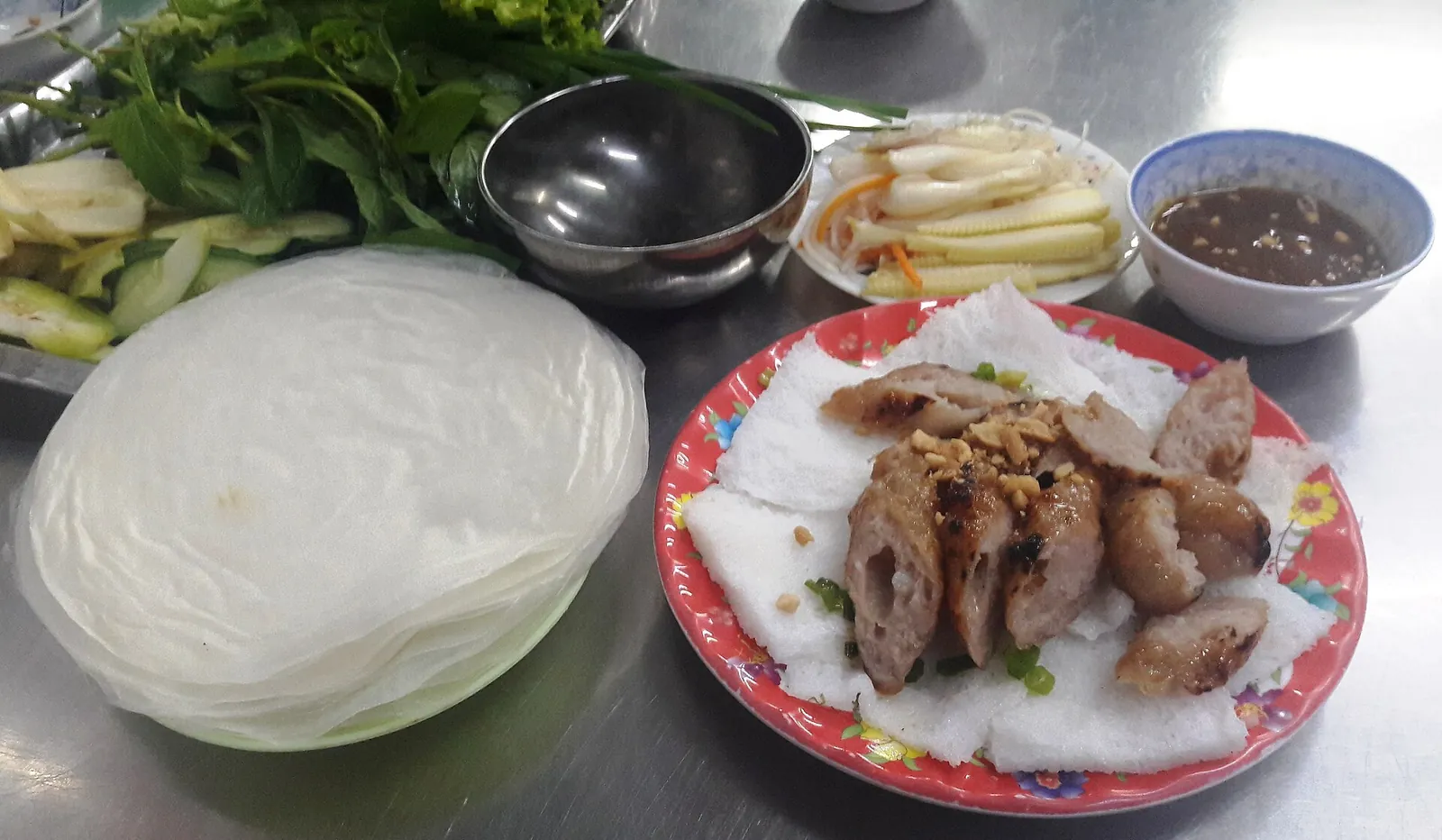
Nem nướng Cái Răng with bánh hối
Skewers of kneaded pork grilled over charcoal, served with peanut sauce, herbs, pickles and bánh hối — fine rice vermicelli woven into small bundles and topped with garlic oil. You roll everything in rice paper yourself.
- Where to look
- Grill stalls and small restaurants in Can Tho and Cai Rang; follow the charcoal smoke.
- Fit it into your day
- Lunch back in town after the river morning.
Contains pork and usually peanuts; the sauce may include fish sauce.
Bún nước lèo
A fish-broth noodle soup from neighbouring Soc Trang, flavoured with fermented river fish and served with shrimp, roast pork, crackling, fish balls, herbs and shredded banana blossom. Vietnam Tourism's dining guide names it among the delta dishes worth seeking out in Can Tho.
- Where to look
- Noodle shops in central Can Tho, including around De Tham Street.
- Fit it into your day
- A filling lunch or early dinner; eat it in Soc Trang if you make the side trip.
The broth is built on fermented fish — strong-smelling, and not suitable for vegetarians.
Canh chua (sour soup)
The delta's hot-and-sour soup of fish or shrimp with pineapple, tomato, bean sprouts and elephant-ear stems, eaten with rice as part of a shared meal.
- Where to look
- Family-style restaurants downtown and riverside places serving Mekong cooking.
- Fit it into your day
- Order it with two or three other dishes and rice at dinner.
Usually made with fish sauce and fish or shrimp.
Bánh cống
A crisp savoury fritter of mung bean, taro and rice flour, fried in a small ladle with a whole shrimp on top; Vietnam Tourism notes it is popular in Can Tho and Soc Trang.
- Where to look
- Afternoon street stalls and markets.
- Fit it into your day
- An afternoon snack — two or three with fresh herbs.
Deep-fried and contains shrimp.
Canals, orchards and the islets
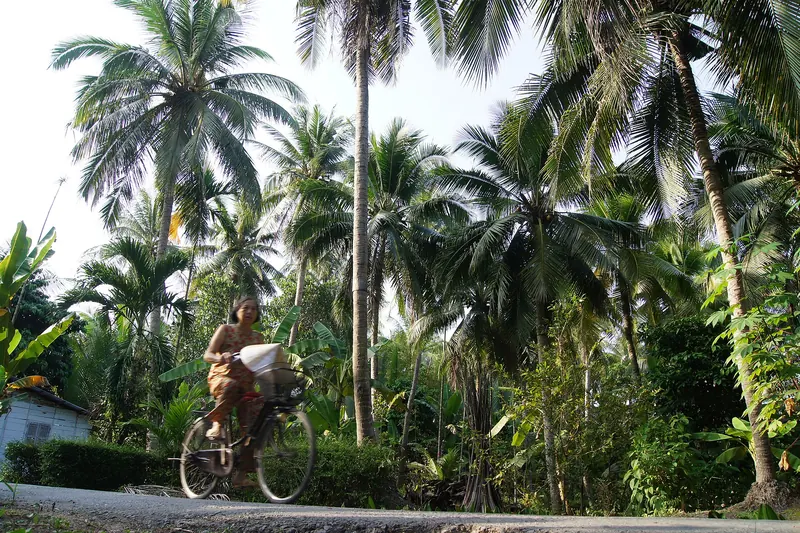
The other half of Can Tho is its islets and the narrow canals that run through them. Vietnam Tourism suggests seeing them by bicycle or sampan, or on a short motorbike tour: shaded lanes past fish ponds, banana and guava trees and fruit orchards, with stops at family workshops where rice paper and noodles are made by hand. Community-based tours add lunch with a local family.
This is the part that rewards a second day. Rather than a fixed list of stops, plan a half-day at the pace of a rowing boat or a bicycle, and finish before the midday heat. Local ferries run regularly between the mainland and the islets, and Vietnam Tourism suggests asking your hotel about bicycle rental; a rowing boat can be hired for a few hours.
If you are combining the islets with the floating market on the same morning, pick a trip that goes into the small canals after Cai Rang rather than returning straight to town. That way you see the busy river and the quiet backwaters in one outing and are back for lunch.
Ninh Kieu, Ong Pagoda and Binh Thuy
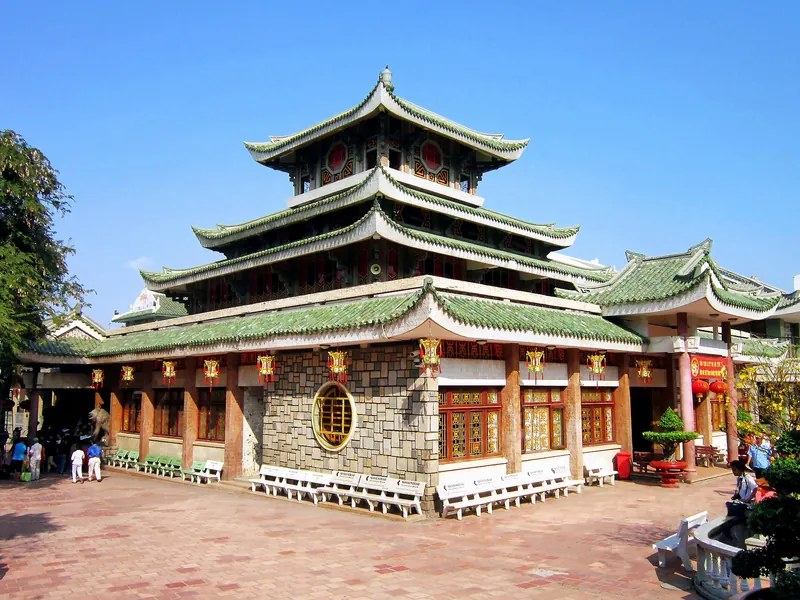
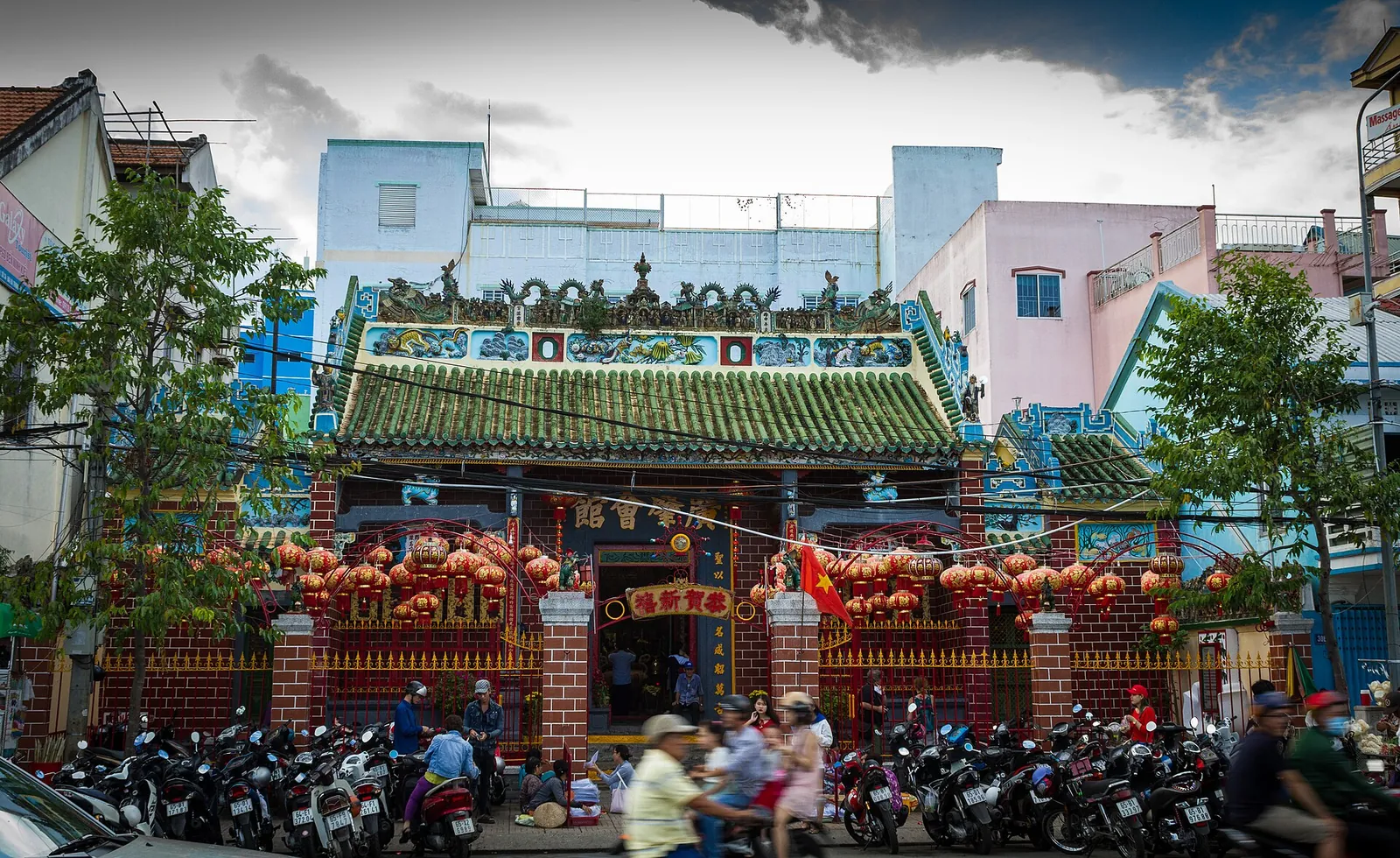
Spend the arrival afternoon on foot. The Ninh Kieu riverfront promenade is where the city comes out in the cooler hours, and Vietnam Tourism recommends a stroll there and around the town centre. In the town centre, Ong Pagoda was built at the end of the 19th century by Can Tho's Chinese community: a dim, red-lacquered hall hung with coils of burning incense. Dress modestly and keep your voice down; it is an active place of worship.
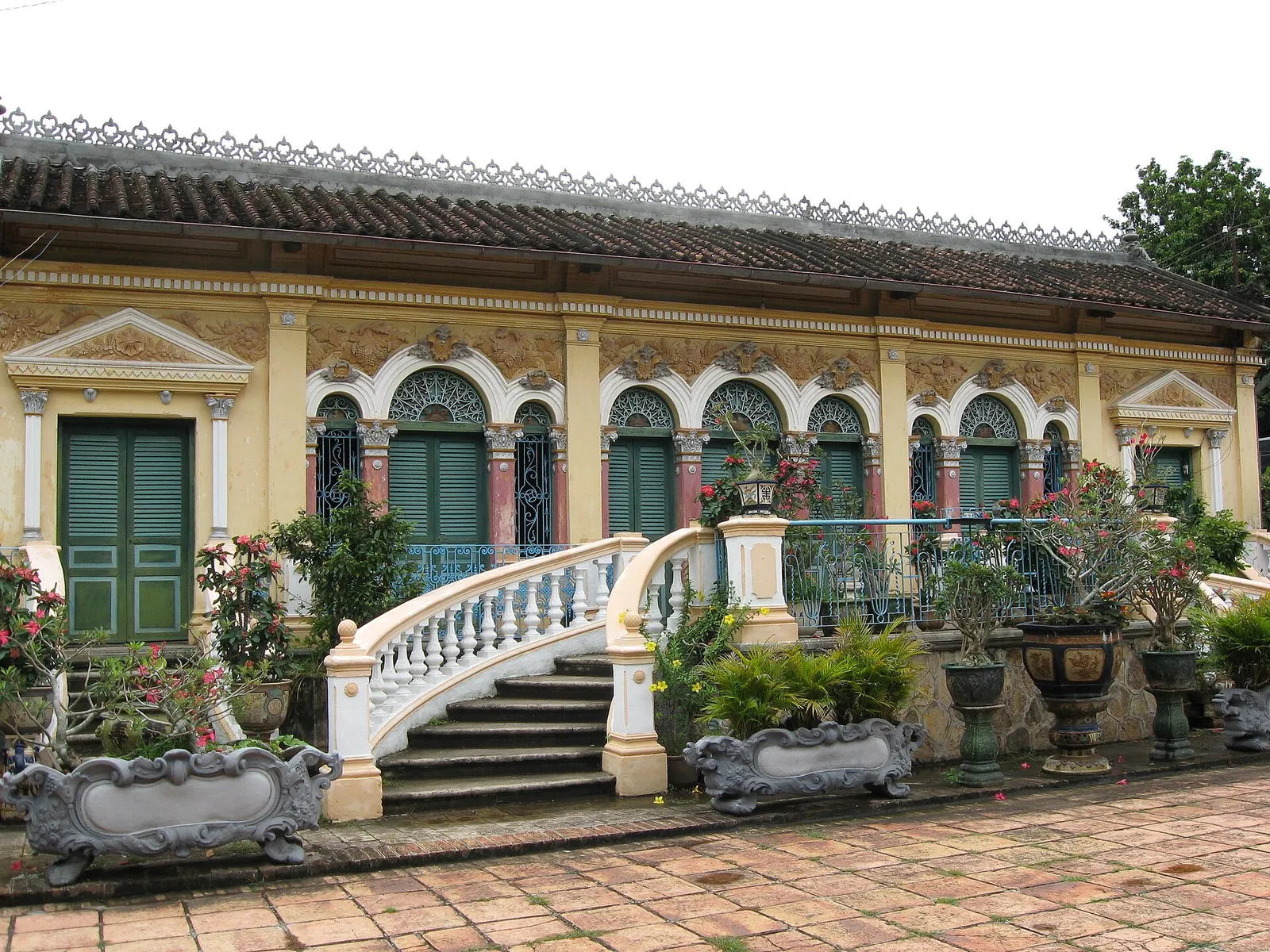
A short taxi ride from the centre, the Binh Thuy ancestral house shows how the delta's wealthy merchant families lived. Vietnam Tourism dates it to 1870 and describes a brightly painted house, home to several generations of the Duong family, that blends French and Asian architecture. Check locally whether it is open before you go, since it is a family home.
The Can Tho City Museum covers the city's history and is a reasonable rainy-afternoon option. For dinner, De Tham Street — known locally as the food street, according to Vietnam Tourism — is the easiest place to start: pick the busiest stall and point at what the next table is eating.
Getting there and getting around
Can Tho International Airport (VCA), the former Tra Noc airfield, is about 20 minutes from the city by road, Vietnam Tourism says, with flights from Vietnam's main hubs. Buses from Ho Chi Minh City arrive at a terminal about four kilometres outside town; Vietnam Tourism notes that local buses link most delta provinces with each other and with Mien Tay Bus Station in Ho Chi Minh City. Taxis are easy to find in town; check that the meter is running, and agree the fare before a motorbike taxi ride.
You can also arrive by water. Vietnam Tourism lists river cruises along the Hau River from Ho Chi Minh City and from Cambodia, a slower but memorable way to reach the delta.
Can Tho also works as the hub for the wider delta. Vietnam Tourism puts Soc Trang, home of bún nước lèo, about 60 km to the south-east and Tra Vinh about three hours by road; Chau Doc, on the Hau River near the Cambodian border, has its own smaller floating market and is a natural next stop upriver.
A workable two- or three-night plan
This is an editorial suggestion, not a timetable. Confirm boat times with your operator the evening before.
- Day 1 — Arrive: check in by the river, walk the Ninh Kieu promenade and Ong Pagoda, book tomorrow's boat, dinner on De Tham Street, early night.
- Day 2 — River morning: leave around 5:30, Cai Rang floating market and breakfast on the water, then the side canals and a workshop; back for lunch and a rest, Binh Thuy ancestral house in the late afternoon.
- Day 3 (optional) — Islets: a half-day by bicycle or rowing boat through the orchards with lunch at a family home, or onward to Chau Doc or Soc Trang.
Practical questions
How many days do I need in Can Tho?
Two nights is the minimum that lets you be on the river at dawn without rushing: arrive one afternoon, do the floating market and canals the next morning. A third night allows a slow day on the islets or a side trip to Chau Doc or Soc Trang.
What time should I go to the Cai Rang floating market?
Early. Vietnam Tourism says trading gets going around 5am and advises being on a boat by 6am; the boat ride from Ninh Kieu takes about 30 minutes. The market continues until around midday, but it is busiest in the first hours.
Can I visit Can Tho as a day trip from Ho Chi Minh City?
It is possible but not recommended. The road journey is three to four hours each way, so a day trip reaches Cai Rang after its busiest time and leaves little time for the canals. Stay at least one night.
Is the floating market open every day?
It trades daily, but it is closed or reduced on the first two days of the Lunar New Year and on the Doan Ngo festival (the fifth day of the fifth lunar month). Check with your boat operator if you travel around those dates.
How do I get to Can Tho?
Fly to Can Tho International Airport (VCA), about 20 minutes from the city, or take a bus from Ho Chi Minh City's Mien Tay Bus Station, roughly four hours. River cruises also run along the Hau River from Ho Chi Minh City and from Cambodia.
When is the best time to visit Can Tho?
December and January are the coolest months. Rain falls regularly from July to November and March to June is the hottest period; the market runs year-round, so plan the outdoor parts for early morning in any season.
Sources and checks before you travel
Reference sources for the version dated 3 October 2026. Confirm opening times, access, transport and conditions for your travel dates.
- Vietnam Tourism: Can Tho ↗ — opens in a new tab
- Vietnam Tourism: 5 unique towns in the Mekong Delta ↗ — opens in a new tab
- Vietnam Tourism: 4 memorable days in the Mekong Delta ↗ — opens in a new tab
- Vietnam Tourism: Dining in the Delta ↗ — opens in a new tab
- Wikipedia: Cần Thơ ↗ — opens in a new tab
- Wikipedia: Cái Răng Floating Market ↗ — opens in a new tab
- Wikipedia: Can Tho International Airport ↗ — opens in a new tab
Does this experience fit your route?
An early boat is the whole point of staying in Can Tho. Book it the day before, and check the departure time, the canals included and whether breakfast is on board.
Check dates and details on Viator ↗ — opens in a new tabAffiliate link · Book with ViatorPhoto credits
Trading boats at the Cai Rang floating market, downstream from central Can Tho
Photograph: Jean-Marc Astesana from Voisins le Bretonneux, France — opens in a new tab · CC BY-SA 2.0 — opens in a new tab
Changes: Resized and converted to WebP; displayed with responsive crops. · Original photograph and licence details ↗ — opens in a new tab
Central Can Tho and the Can Tho River from the air
Photograph: [//commons.wikimedia.org/wiki/User:Trantuonglam Trantuonglam] — opens in a new tab · CC BY-SA 4.0 — opens in a new tab
Changes: Resized and converted to WebP; displayed with responsive crops. · Original photograph and licence details ↗ — opens in a new tab
Ong Pagoda (Chua Ong), the Chinese temple in central Can Tho
Photograph: rhjpage — opens in a new tab · CC BY 2.0 — opens in a new tab
Changes: Resized and converted to WebP; displayed with responsive crops. · Original photograph and licence details ↗ — opens in a new tab
A small rowing boat working the Cai Rang floating market
Photograph: Jean-Marc Astesana from Voisins le Bretonneux, France — opens in a new tab · CC BY-SA 2.0 — opens in a new tab
Changes: Resized and converted to WebP; displayed with responsive crops. · Original photograph and licence details ↗ — opens in a new tab
The Binh Thuy ancestral house, home of the Duong family, in Can Tho
Photograph: Daaé — opens in a new tab · Public domain — opens in a new tab
Changes: Resized and converted to WebP; displayed with responsive crops. · Original photograph and licence details ↗ — opens in a new tab
Nem nướng with bánh hỏi, served with rice paper and herbs for rolling
Photograph: Phương Huy — opens in a new tab · CC BY-SA 4.0 — opens in a new tab
Changes: Resized and converted to WebP; displayed with responsive crops. · Original photograph and licence details ↗ — opens in a new tab