Plan your trip · Vietnam
Regional food in Vietnam: what to eat in Hanoi, Hue, Hoi An and the Mekong
Most Vietnamese dishes can be found somewhere in Ho Chi Minh City or Hanoi, but many of them are at their best, or only exist in their proper form, in the town that made them. Hanoi eats bún chả at lunch over charcoal, Hai Phong builds its morning around red crab noodles, Hue still cooks the small steamed cakes of its royal past, Hoi An has a noodle the national tourism board calls unique to the town, and the Mekong Delta cooks with river fish, pickled fish and fruit from the boats. This guide is about planning a trip around those dishes: which base gives you which food, what to eat at which hour, and how many days each place needs.
- Suggested time
- 10–12 days for four food bases; at least two nights in each
- Where to stay
- Hanoi Old Quarter, Hue, Hoi An and Can Tho
- Season and timing
- Any time of year; February to April for the central coast before the heat, and avoid Hue and Hoi An in the October to December flood season if food is your main reason to go.
The short answer
Give food four bases and at least two nights each: Hanoi (with a day trip to Hai Phong), Hue, Hoi An and Can Tho in the Mekong Delta. That is about 10 to 12 days, with flights for the long legs between Hanoi, the central coast and the south. Sleep in the middle of each eating district — Hanoi's Old Quarter, the south bank of the Perfume River in Hue, the edge of Hoi An's Ancient Town and the Ninh Kieu waterfront in Can Tho — so that breakfast noodles are a walk away. Plan each day around one breakfast dish, one lunch dish and one evening speciality, and keep the central coast short from October to December, when Hue and Hoi An have their storms and floods.
Why the home town matters
The national tourism board describes Vietnam's cooking in three movements: northern food is known for its simplicity, the dishes of central Vietnam are generous in spice and quantity, and southerners like to add sugar. Its regional guide adds that northern cooks rely less on chilli and sugar, that the centre is bold and famously spicy, with the former imperial capital Hue adding refinement, and that the south and the Mekong Delta cook with abundant fruit, seafood, coconut milk and sugar.
Many dishes travel, but the tourism board is clear that some do not travel well. Its Hue food guide quotes the local saying that you can get Hue cuisine elsewhere in Vietnam, but it never tastes quite the same as it does there; it calls cao lầu a dish unique to Hoi An, describes bún chả as a speciality of Hanoi's Old Quarter and places the origin of the red rice noodles bánh đa đỏ in Hai Phong. In the Mekong Delta, it notes, 'real' restaurants are rare and many of the best meals come from tiny stalls cooking one or two dishes the way they always have.
That is the case for planning by base rather than by dish. A bowl of bún bò Huế in Saigon is a fine lunch; a morning in Hue, with steamed rice cakes after the noodles, is a different meal. Pick the regions whose food you most want, give each at least two nights so you have two breakfasts and two lunches there, and fly between them rather than spending your eating days on the road.
Hanoi and Hai Phong: bún chả, chả cá and red crab noodles
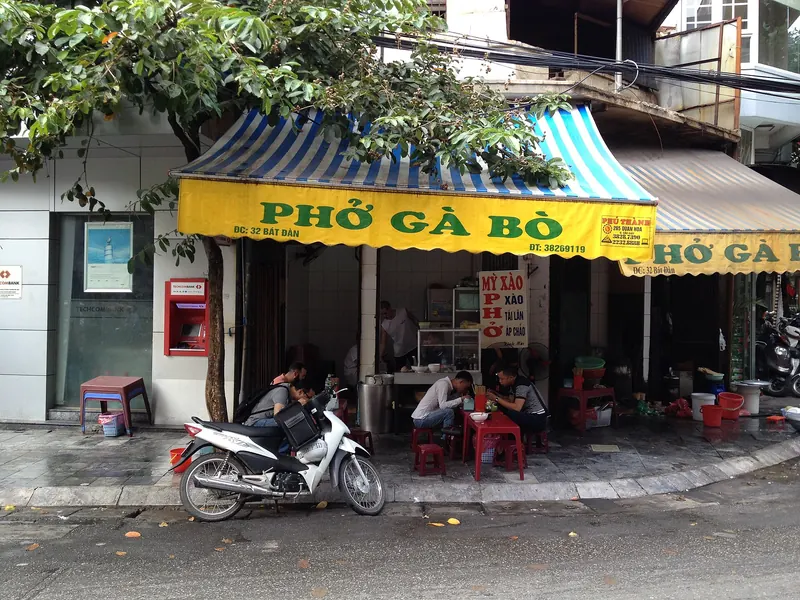
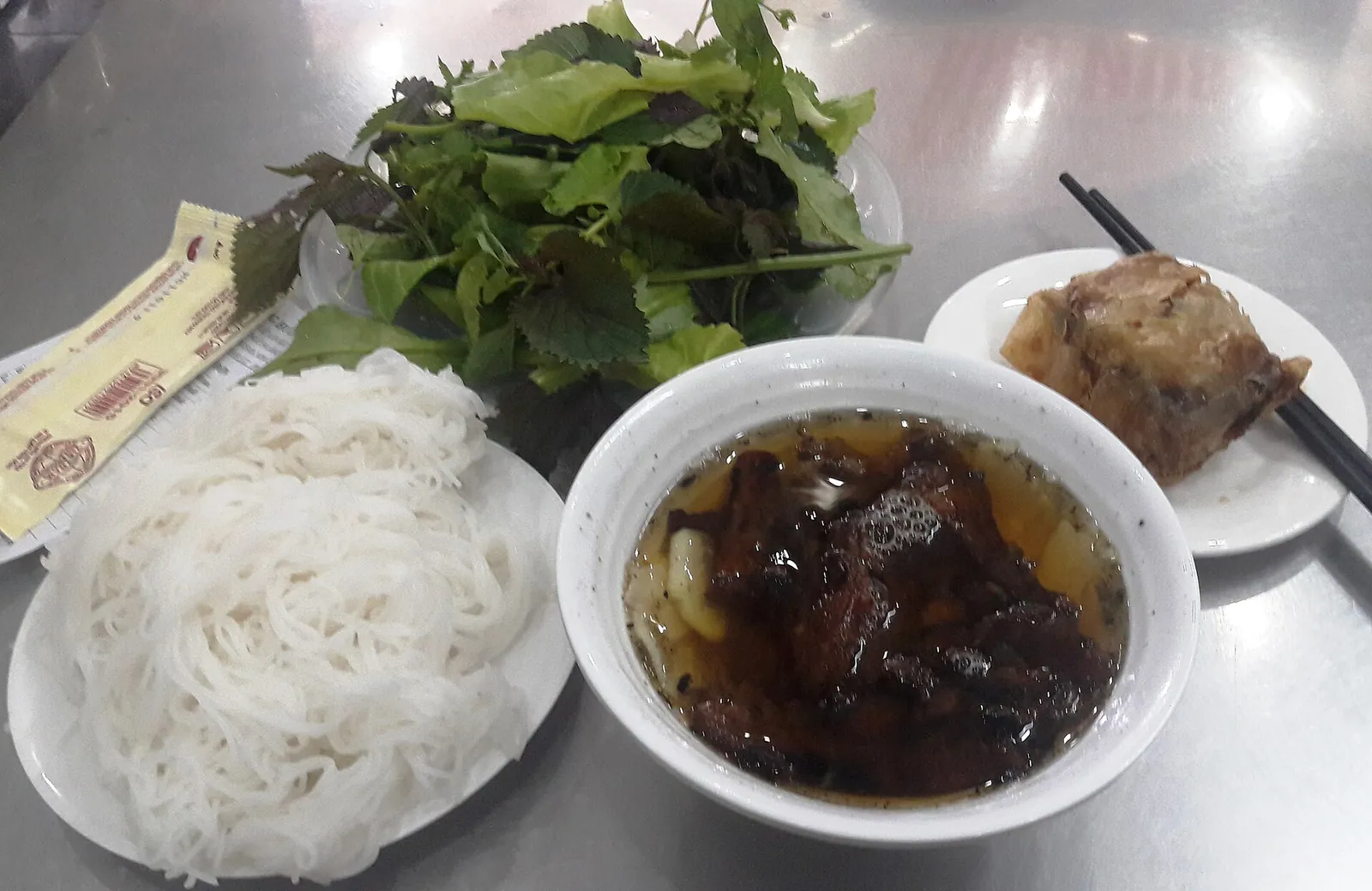
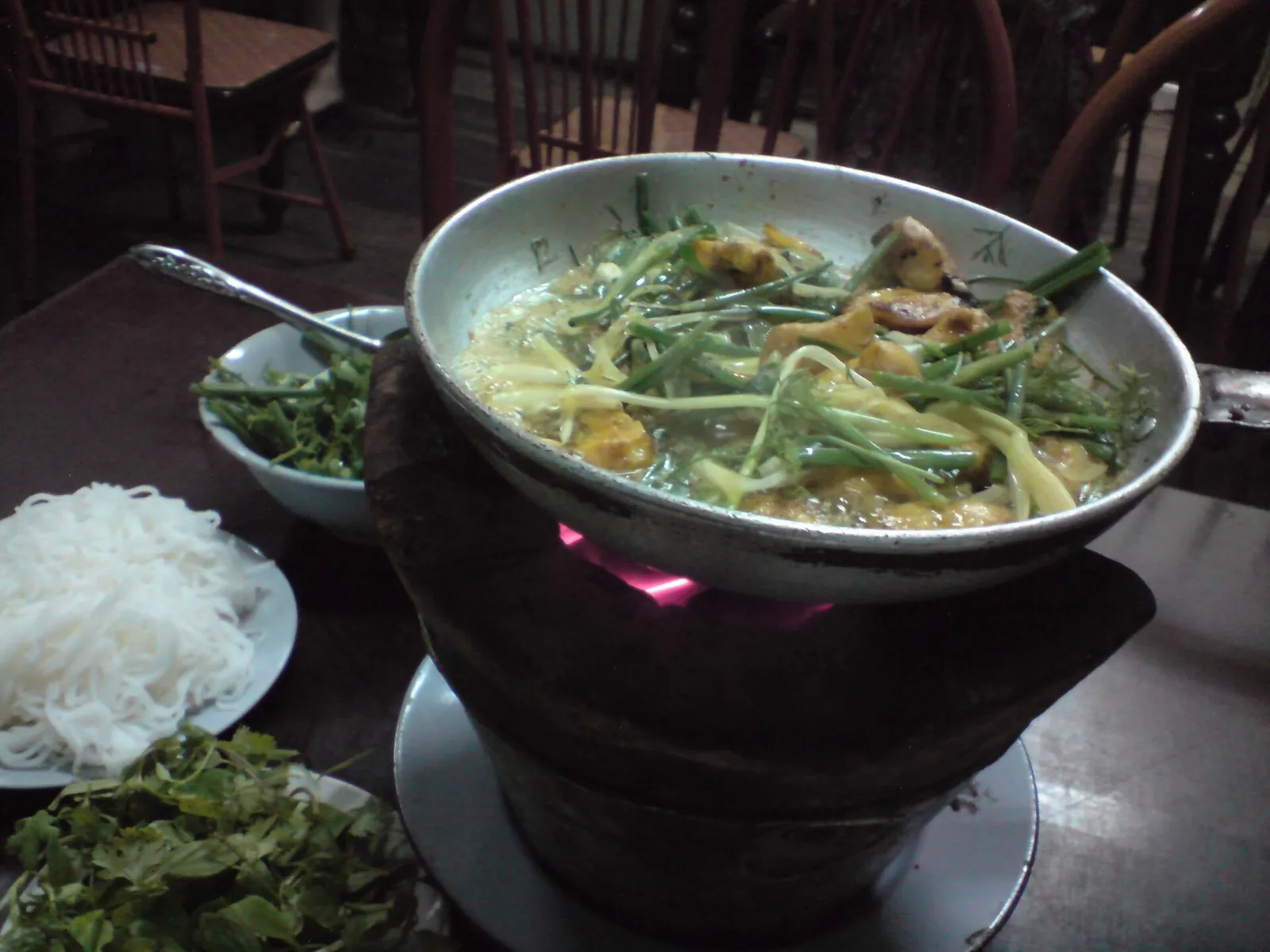
Hanoi is where the northern style is clearest. The tourism board names phở bò, bún chả and bánh mì as the city's three most famous dishes, and its own guides add the breakfast of bánh cuốn, steamed rice sheets rolled around minced pork and wood-ear mushroom, made fresh to order. Bún chả is a lunch dish: around midday, pork patties and belly slices are grilled over charcoal on the pavement and served in a fish-sauce broth with cold rice vermicelli and a pile of herbs. In the evening, look for chả cá, which the official guide calls a uniquely northern delicacy from the capital: white fish marinated in turmeric, fried in a pan at the table and buried in dill and spring onion. Bún riêu, a sour crab and tomato noodle soup, is another northern bowl worth a breakfast.
Hai Phong, on the coast east of Hanoi, is worth a day for one bowl alone. The city's official portal describes bánh đa cua as red-brown rice noodles from traditional noodle villages, served in a broth made from pounded field crabs with crab roe, water spinach, tomato and crisp pork crackling, and eaten at every hour from breakfast to evening. Add bánh mì cay, the finger-thin Hai Phong bread stick filled only with pâté, crisped over charcoal and eaten with a chilli sauce of chilli, tomato, garlic and salt, and nem cua bể, square sea-crab spring rolls dipped in Cat Hai fish sauce, for which the portal points to Tran Nhat Duat Street.
Hai Phong is easy to reach for breakfast. When we checked on 2026-10-03, the Hai Phong city newspaper's timetable valid from 10 February 2026 listed train HP1 leaving Hanoi at 6:00 and arriving in Hai Phong at 8:25, and train HP2 leaving Hai Phong at 18:40 and reaching Hanoi at 21:15. Check the current times with Vietnam Railways before you go; stay overnight instead if you are continuing to Cat Ba.
Make time for the local food
What to eat and where to look
Bún chả (Hanoi)
Charcoal-grilled pork patties and belly slices in a warm, sweet-sour fish-sauce broth, with cold rice vermicelli and a pile of herbs. The tourism board calls it a speciality of Hanoi's Old Quarter.
- Where to look
- Small shops with a charcoal grill on the pavement in and around Hanoi's Old Quarter.
- Fit it into your day
- Lunch; the grills are going around midday, so go early rather than mid-afternoon.
Pork and fish sauce; the crab spring rolls often ordered with it contain shellfish.
Bánh đa cua (Hai Phong)
Flat red-brown rice noodles in a broth of pounded field crab with crab roe, water spinach, tomato and crisp pork crackling. The noodles come from Hai Phong's traditional noodle villages.
- Where to look
- Noodle shops and street stalls all over central Hai Phong; it is the city's everyday bowl.
- Fit it into your day
- Breakfast on arrival from Hanoi, though Hai Phong eats it at every meal.
Contains crab and pork crackling; ask about extra toppings such as fish cake or pork ribs if you prefer the plain bowl.
Bún bò Huế (Hue)
Round rice noodles in a lemongrass broth of beef and pork bones, with brisket, pork hock and blood cubes, seasoned with shrimp paste and chilli. Spicier and heavier than phở.
- Where to look
- Noodle shops in Hue, busiest in the morning; it is sold all over Vietnam, but this is its home.
- Fit it into your day
- Breakfast before the Imperial City, then Hue's steamed rice cakes for lunch.
Spicy, and the broth contains shrimp paste and pork; ask them to leave out the blood cubes if you prefer.
Cao lầu (Hoi An)
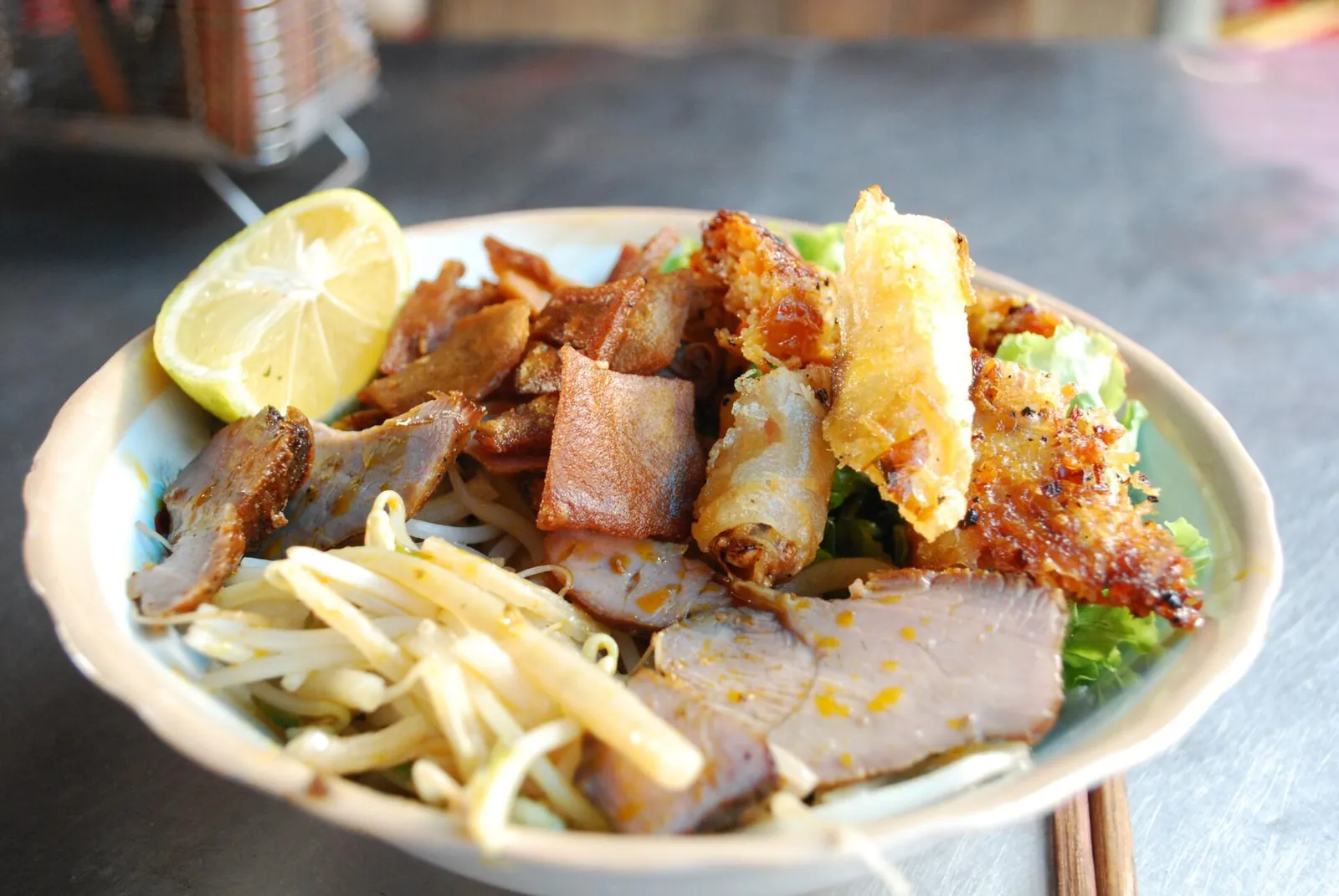
Thick, chewy noodles with barbecued pork, herbs and crushed pork crackling in a little spiced sauce rather than a full soup. The tourism board calls it unique to Hoi An.
- Where to look
- Market stalls and family restaurants in and around Hoi An's Ancient Town.
- Fit it into your day
- Lunch in Hoi An; order mì Quảng or cơm gà at the next meal to compare.
Contains pork; ask before ordering if you avoid soy or pork.
Cá tai tượng chiên xù (Mekong elephant ear fish)
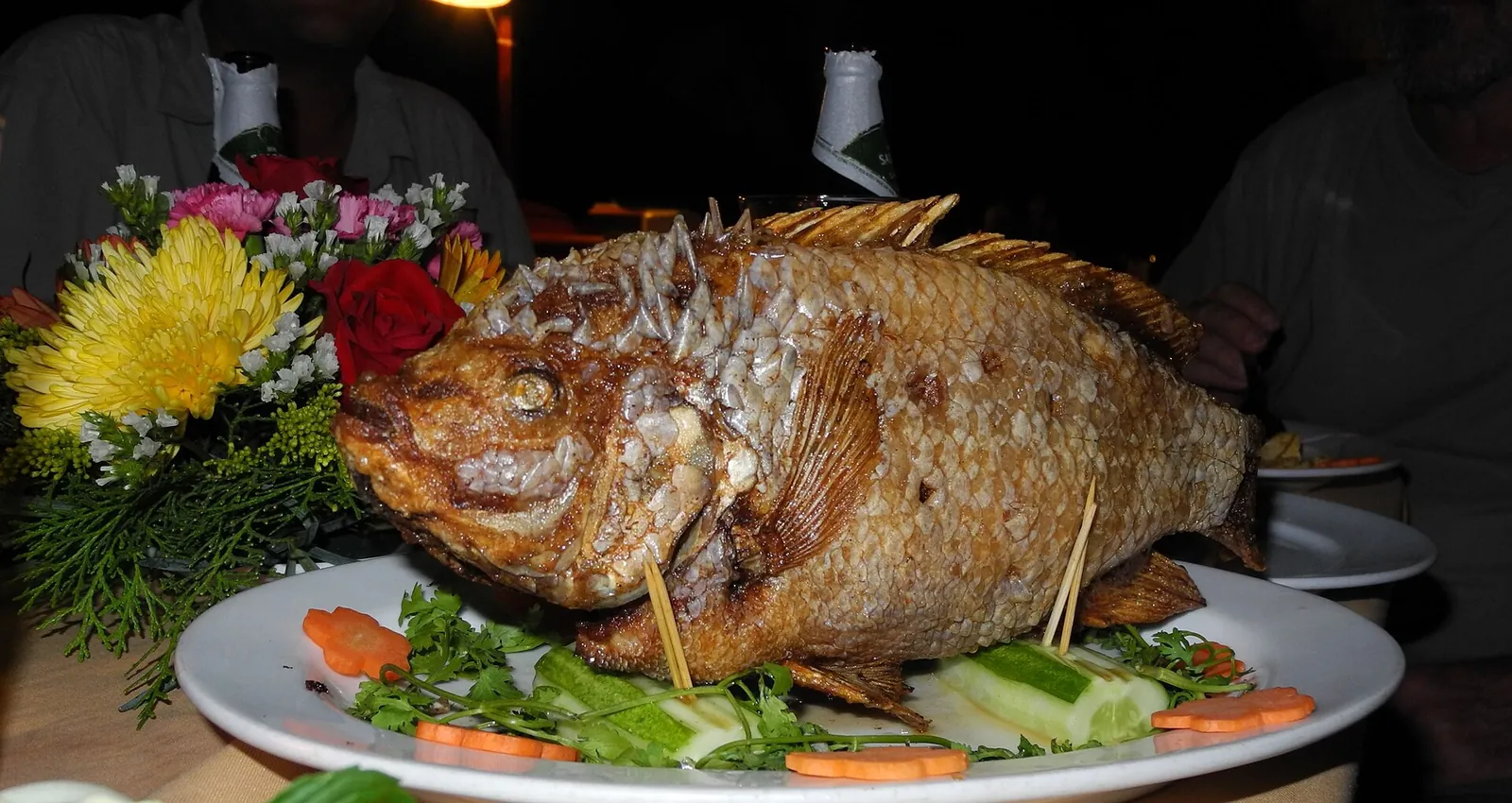
A whole elephant ear fish, fried until crisp and served standing upright, so the flesh can be raked off and rolled in rice paper with herbs, pickles and cucumber.
- Where to look
- Riverside restaurants and garden eateries around Can Tho and on delta day trips; the tourism board says it is served liberally to travellers passing through.
- Fit it into your day
- A shared lunch after a morning on the Cai Rang floating market.
A whole fish is a dish to share; watch for small bones and ask the size and price before ordering.
Bún nước lèo (Soc Trang, eaten in Can Tho)
A fish-stock noodle soup flavoured with pickled river fish, topped with shrimp, roast pork, pork crackling and fish balls, with herbs and shredded banana blossom.
- Where to look
- De Tham Street, Can Tho's 'food street', or in Soc Trang itself, about 60 km south-east.
- Fit it into your day
- Dinner on your first evening in Can Tho, before an early start at the floating market.
Strong fermented fish flavour; contains shrimp and pork.
Hue: bún bò, steamed cakes and clam rice
Hue is the most rewarding single stop for food. The tourism board explains that the Nguyen emperors, and Tu Duc in particular, pushed their chefs to keep inventing, and that it is said over half of all Vietnamese dishes originated in Hue. What you eat there now ranges from dishes born in the royal kitchen to cheap snacks with peasant origins.
Start the day with bún bò Huế, round rice noodles in a lemongrass broth with beef brisket and pork — hock, trotter and cubes of congealed blood — seasoned with shrimp paste and chilli. For lunch or an afternoon snack, order a spread of Hue's small rice cakes: bánh bèo, coin-sized cakes steamed in little saucers and topped with dried shrimp, pork crackling and scallion oil; bánh nậm, flat dumplings steamed in banana leaf; and bánh bột lọc, chewy tapioca dumplings with a piece of pork and shrimp inside. Cơm hến is the dish with the humblest roots: rice with tiny clams from the Perfume River, herbs, peanuts, pork rind and pungent shrimp sauce, a way, the official guide says, of using leftover rice. In the evening, bánh khoái is a crisp turmeric crepe with shrimp and pork, which in Hue comes with a salad of fig, star fruit and cucumber and a thick peanut and pork liver sauce.
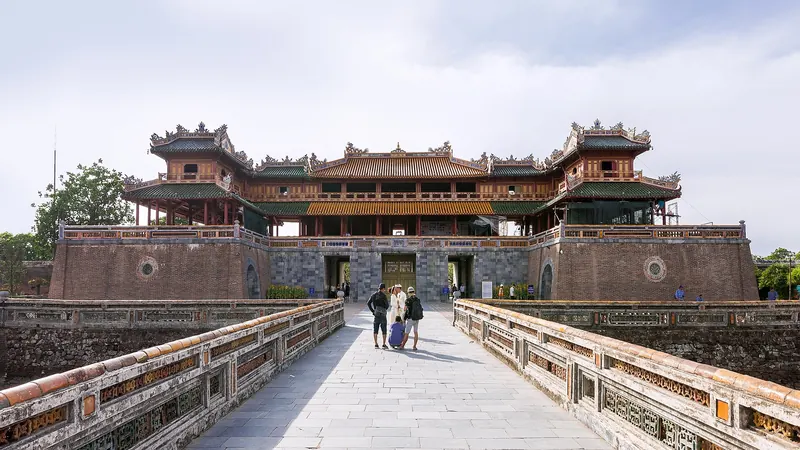
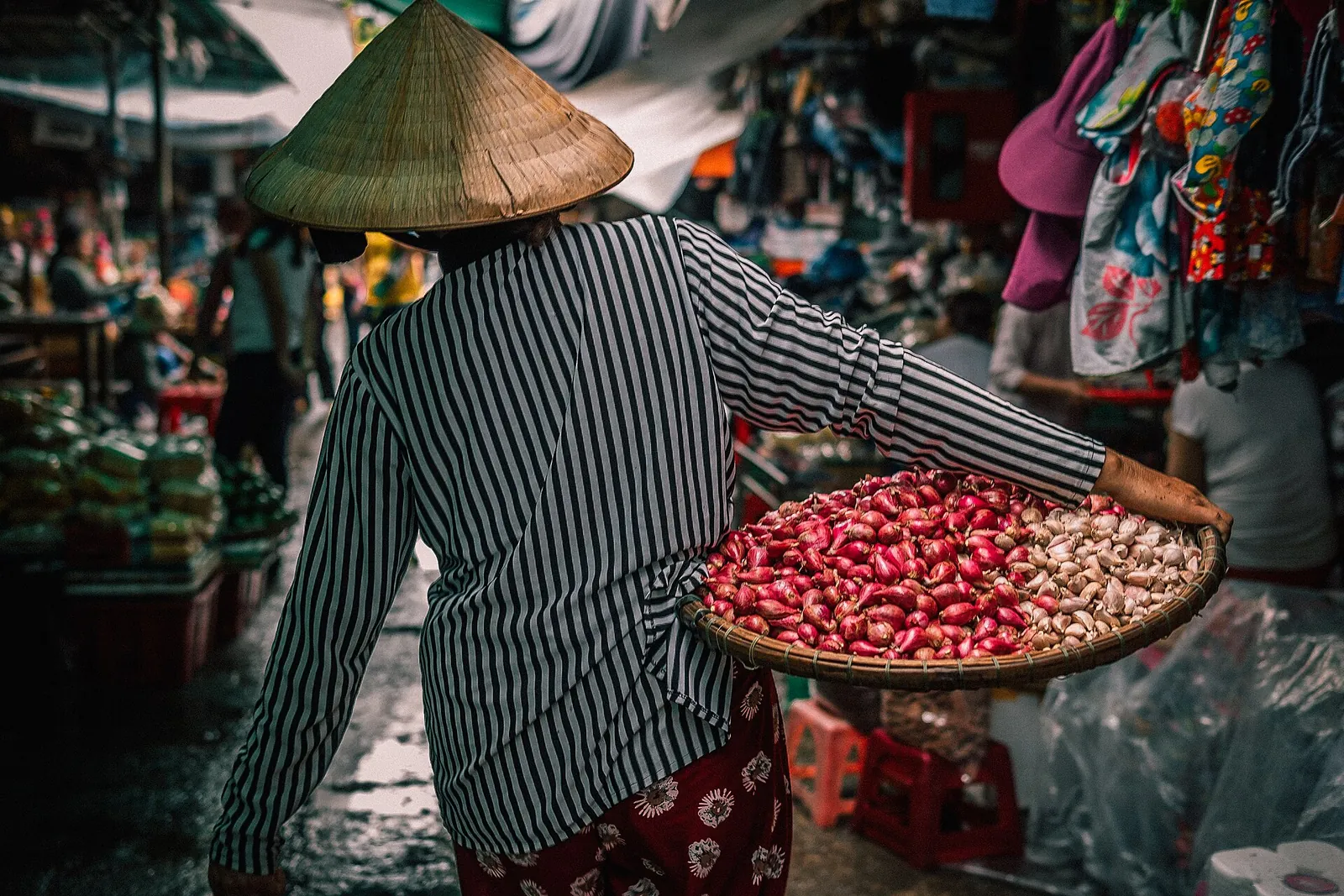
Walk through Dong Ba Market, which the tourism board recommends for a look at the produce, before your first meal. Two nights is the minimum: one breakfast is not enough for bún bò and the cakes as well. Hue's official climate note matters here: rains come from August and can last into January, with flooding usually from October, so build in a spare day if you travel late in the year.
Hoi An and Da Nang: cao lầu, chicken rice and mì Quảng
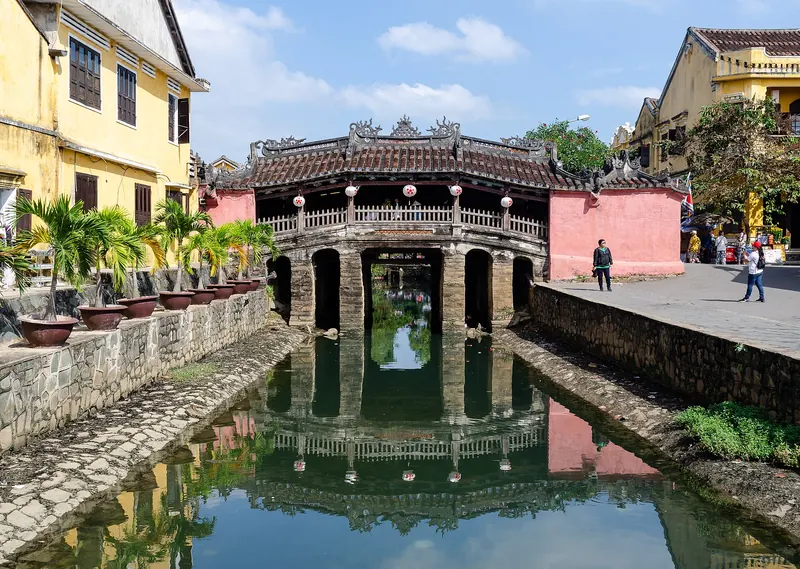
The tourism board names cao lầu, hoành thánh (Hoi An wontons) and white rose dumplings as the three quintessential Hoi An dishes. Cao lầu is the reason to eat here: thick, chewy noodles with the heft of Japanese udon, slices of barbecued pork, herbs and crushed pork crackling in a little spiced sauce, a mix of Japanese, Chinese and Vietnamese influences from the town's trading past. The official guide repeats the local claim that authentic cao lầu is made with water from the old Ba Le well in Hoi An. Order it in the town, at the market or a family restaurant.
Hoi An also has its own cơm gà, chicken rice in which shredded chicken is dressed with fish sauce and onion and served on turmeric rice with herbs and pickled shallots, and the Hoi An heritage authority lists everyday local dishes such as bánh đập hến xào, baby clams stir-fried with herbs and peanuts and scooped up with a cracked rice cracker. Mì Quảng comes from the former Quang Nam province around Hoi An: wide yellow noodles with only a ladleful of turmeric broth, shrimp, pork, herbs and a toasted sesame rice cracker. The tourism board's advice is to look for it in the alleyways and restaurants of Da Nang and Hoi An.
Sleep on the edge of the Ancient Town so you can eat breakfast before the day visitors arrive and walk back after dinner. An Bang Beach, which the tourism board puts about a 10-minute drive from the Ancient Town, is the place for a seafood lunch. Three nights let you combine eating with the town itself; for food alone, two are enough. Expect rainy days and storms from October to January.
The Mekong Delta: river fish, pickled fish and noodles on the water
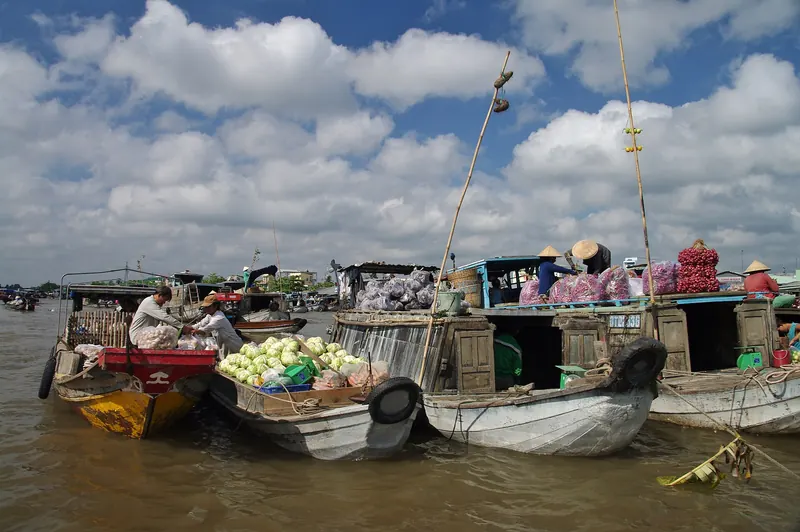
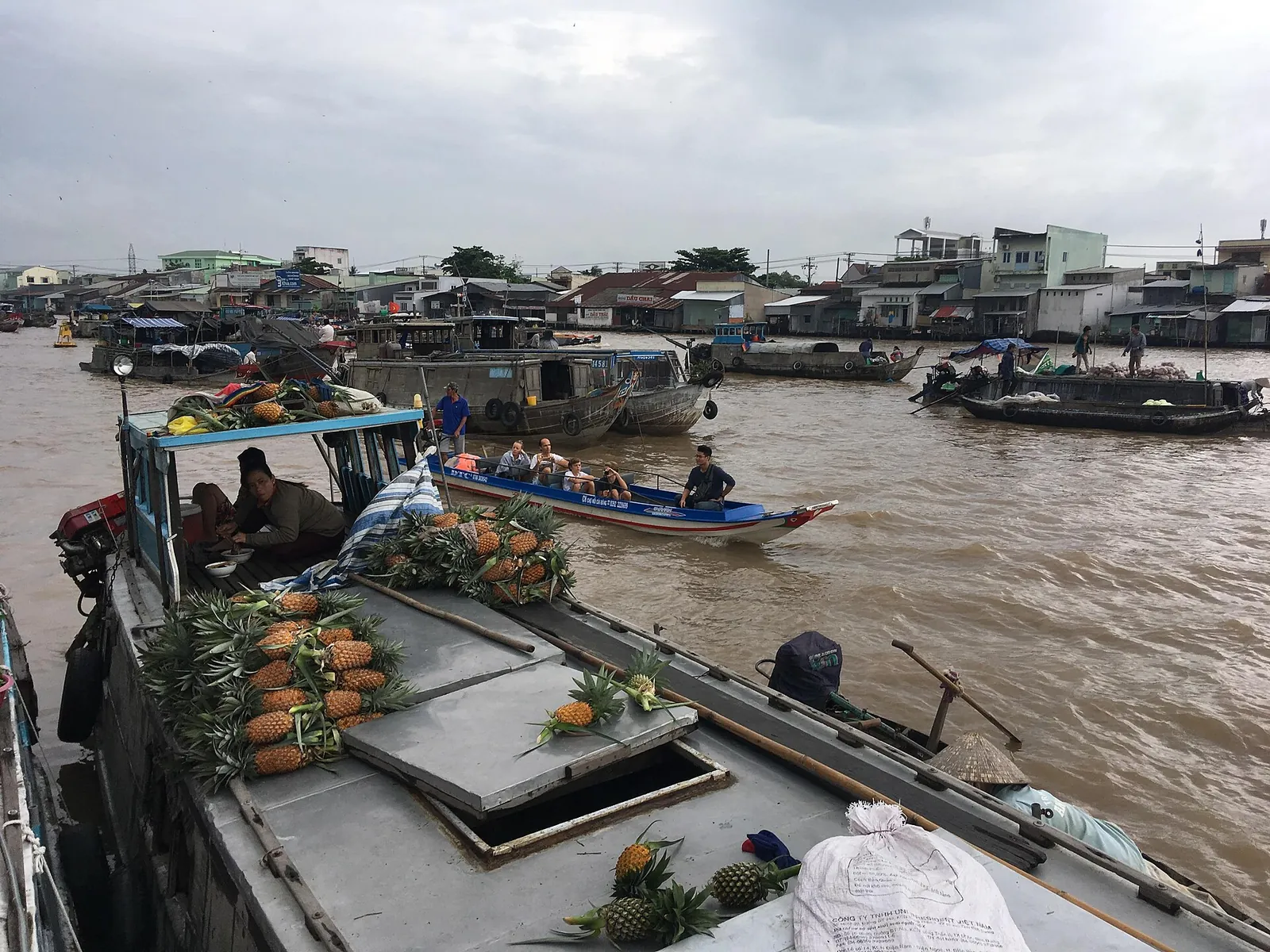
The tourism board calls Can Tho and Chau Doc the ideal bases for eating in the delta, and describes the region's cooking as naturally sweet, built on rice, fruit, shrimp and river fish. Can Tho is the easier base. Its morning starts at the Cai Rang floating market, about six kilometres from the city, where noodle sellers pull up beside the boats; the official guide recommends a breakfast of hủ tiếu, tapioca noodles with pork and bean sprouts, eaten on the water. Back in town, De Tham Street is known locally as the food street, and the tourism board's tip there is bún nước lèo, a fish-stock noodle soup from Soc Trang flavoured with pickled river fish and topped with shrimp, roast pork and banana blossom.
River fish is the delta's signature. Cá tai tượng, elephant ear fish, is fried whole and served standing upright, so you rake off the flesh and roll it in rice paper with herbs, pickles and cucumber. Fish is also stewed in caramel and fish sauce as cá kho in a clay pot, a staple the tourism board describes as part of any Vietnamese cook's repertoire. In the afternoon, look for bánh cống, a fried mung bean and taro fritter with a whole shrimp on top, popular in Can Tho and Soc Trang, and the delta's large, thin bánh xèo.
Chau Doc, near the Cambodian border, is known as the 'kingdom of pickled fish'. The tourism board suggests its market just after sunrise, when the neat mountains of mắm are on display, and names bún cá (fish noodle soup), the palm-sugar sweet bánh bò Thốt Nốt and a lẩu mắm, fermented fish hotpot, for dinner. The official guide gives August to November as Chau Doc's high-water season. Allow two nights in Can Tho, and add one or two in Chau Doc if pickled fish and border river life appeal.
Putting the food route together
Vietnam's main gateways are Hanoi (HAN), Ho Chi Minh City (SGN) and Da Nang (DAD), according to the tourism board, so a regional food trip usually starts at one end and finishes at the other. A workable order is Hanoi first, with Hai Phong as a day trip, then a flight to the centre for Hue and Hoi An, then a flight south to Ho Chi Minh City for the road to Can Tho, or the reverse.
The official transport notes for each base keep the transfers short: Hue's Phu Bai airport is about a 30-minute drive from the city and Da Nang's international airport about two hours away; Hoi An is about 50 minutes from Da Nang airport; Can Tho's airport is about 20 minutes from the city, and buses from Ho Chi Minh City take about four hours. Use travel days for a simple dinner in the new town rather than trying to eat a speciality you have been saving.
- Breakfast is the regional meal. Phở and bánh cuốn in Hanoi, bánh đa cua in Hai Phong, bún bò Huế in Hue, hủ tiếu on the water at Cai Rang. Be out early; many stalls cook a single pot.
- Lunch has its own dishes. Bún chả in Hanoi is a midday meal; Hue's steamed cakes and Hoi An's cao lầu suit lunch or an afternoon snack.
- Evenings are for shared dishes. Chả cá in Hanoi, bánh khoái in Hue, elephant ear fish or lẩu mắm in the Mekong.
- Weather changes the route, not the menu. From October to December, keep Hue and Hoi An flexible because of storms and floods; the dishes are the same all year.
Practical questions
Which Vietnamese city is best for food?
It depends on the style you like. Hanoi is the place for the mild, clear northern dishes such as phở and bún chả; Hue has the widest range of local specialities, and the tourism board notes the saying that Hue food never tastes quite the same elsewhere; the Mekong Delta is best for river fish and fruit. If you can only add one stop to Hanoi and Ho Chi Minh City, make it Hue.
Can you only eat cao lầu in Hoi An?
The national tourism board calls cao lầu a dish unique to Hoi An and repeats the local claim that authentic cao lầu uses water from the town's Ba Le well. You may see it on menus elsewhere, but Hoi An is where to eat it.
How many days do I need for a food trip in Vietnam?
About 10 to 12 days for four bases — Hanoi, Hue, Hoi An and Can Tho — with at least two nights in each, so you have two breakfasts and two lunches in every place. Add a day for Hai Phong, which works as a day trip from Hanoi by train.
Is Hai Phong worth a day trip from Hanoi for food?
If you like noodles, yes. Bánh đa cua, the red crab noodle soup, and bánh mì cay are the city's own dishes. When we checked on 2026-10-03, the timetable published by the Hai Phong city newspaper listed a 6:00 train from Hanoi arriving at 8:25 and an 18:40 train back; confirm current times with Vietnam Railways.
When is the best time for a food trip to Vietnam?
The food is there all year, so let the weather decide. The central coast is the region to watch: the tourism board notes flooding in Hue usually from October and rainy days and storms in Hoi An from October to January. Spring, from February to April, is the official pick for Hue.
What should I eat in the Mekong Delta?
Breakfast hủ tiếu at the Cai Rang floating market, bún nước lèo on De Tham Street in Can Tho, elephant ear fish rolled in rice paper, caramelised fish in a clay pot and bánh cống fritters. In Chau Doc, try pickled fish dishes such as lẩu mắm.
Sources and checks before you travel
Reference sources for the version dated 3 October 2026. Confirm opening times, access, transport and conditions for your travel dates.
- Vietnam National Authority of Tourism: 21 must-try Vietnamese dishes ↗ — opens in a new tab
- Vietnam National Authority of Tourism: The culinary symphony of Vietnam ↗ — opens in a new tab
- Vietnam National Authority of Tourism: A foodie guide to Vietnam's noodles ↗ — opens in a new tab
- Vietnam National Authority of Tourism: Ha Noi food guide ↗ — opens in a new tab
- Vietnam National Authority of Tourism: How to eat like a local in Hue ↗ — opens in a new tab
- Vietnam National Authority of Tourism: Hue's best to eat, from the palace to the street ↗ — opens in a new tab
- Vietnam National Authority of Tourism: Hue ↗ — opens in a new tab
- Vietnam National Authority of Tourism: Hoi An ↗ — opens in a new tab
- Hoi An World Heritage (Hoi An Centre for Cultural Heritage Management): Local dishes visitors should try ↗ — opens in a new tab
- Vietnam National Authority of Tourism: Dining in the Delta ↗ — opens in a new tab
- Vietnam National Authority of Tourism: Can Tho ↗ — opens in a new tab
- Vietnam National Authority of Tourism: Chau Doc ↗ — opens in a new tab
- Hai Phong city portal: Bánh đa cua Hải Phòng ↗ — opens in a new tab
- Hai Phong city portal: Nem cua bể ↗ — opens in a new tab
- Viet Nam News: Taking a salty, spicy bite of Hai Phong cuisine ↗ — opens in a new tab
- Báo Hải Phòng: Hanoi–Hai Phong trains resume across Long Bien Bridge ↗ — opens in a new tab
- Vietnam National Authority of Tourism: Getting to Vietnam ↗ — opens in a new tab
- Noi Bai International Airport: public transportation ↗ — opens in a new tab
Does this experience fit your route?
Eating your way through Vietnam? Compare guided food walks in Hanoi and Hue and early boat trips at Cai Rang, and check what each tour includes before you book.
Check dates and details on Viator ↗ — opens in a new tabAffiliate link · Book with ViatorPhoto credits
Dong Ba Market in Hue, the place the tourism board suggests for a first look at local produce
Photograph: Alice Young youngalicesalvatore — opens in a new tab · CC0 — opens in a new tab
Changes: Resized and converted to WebP; displayed with responsive crops. · Original photograph and licence details ↗ — opens in a new tab
Elephant ear fish served upright in Can Tho, ready to be rolled in rice paper with herbs
Photograph: Franzfoto — opens in a new tab · CC BY-SA 3.0 — opens in a new tab
Changes: Resized and converted to WebP; displayed with responsive crops. · Original photograph and licence details ↗ — opens in a new tab
Bún chả: grilled pork in a fish-sauce broth with cold vermicelli and herbs, Hanoi's lunch dish
Photograph: Phương Huy — opens in a new tab · CC BY-SA 4.0 — opens in a new tab
Changes: Resized and converted to WebP; displayed with responsive crops. · Original photograph and licence details ↗ — opens in a new tab
Chả cá cooking at the table in Hanoi, turmeric fish fried with dill and spring onion
Photograph: avlxyz — opens in a new tab · CC BY-SA 2.0 — opens in a new tab
Changes: Resized and converted to WebP; displayed with responsive crops. · Original photograph and licence details ↗ — opens in a new tab
Cao lầu with spring rolls at a stall in Hoi An's market, the town's own noodle dish
Photograph: avlxyz — opens in a new tab · CC BY-SA 2.0 — opens in a new tab
Changes: Resized and converted to WebP; displayed with responsive crops. · Original photograph and licence details ↗ — opens in a new tab
Pineapple boats at the Cai Rang floating market near Can Tho, where noodle sellers serve breakfast on the water
Photograph: Christophe95 — opens in a new tab · CC BY-SA 4.0 — opens in a new tab
Changes: Resized and converted to WebP; displayed with responsive crops. · Original photograph and licence details ↗ — opens in a new tab