Hanoi and the Northeast · Hai Phong
Hai Phong travel guide: French quarter, crab noodles and the Cat Ba link
Most travellers see Hai Phong through a bus window on the way to the Cat Ba ferry. That is a pity, because the port city has something neither Hanoi nor the bays offer: a compact French-built centre that still works as a city rather than a showcase, and a food culture of its own built on field crab, red rice noodles and charcoal-baked bread sticks. A single night, timed so that you eat dinner and breakfast here, is enough to see why locals are so attached to it.
- Suggested time
- 1 night (2 if you want a slow food day)
- Where to stay
- The old centre around the Opera House and Tam Bac Lake; Lach Tray for newer hotels; Le Hong Phong Street for an early flight from Cat Bi
- Season and timing
- September to November is the most settled weather on this coast; June to August brings monsoon storms that can stop boats to the islands. The Red Flamboyant (Hoa Phuong Do) Festival fills the centre in May.
The short answer
Give Hai Phong one night, on the way to or from Cat Ba. Sleep in the old centre around the Opera House and Tam Bac Lake, so the French streets, the museum and the noodle shops are all on foot. Arrive from Hanoi by the morning train or in the afternoon, walk the colonial quarter before dinner, eat banh da cua for breakfast and cross to Cat Ba by ferry, cable car or speedboat the next day. Add a second night only if you also want Du Hang Pagoda and a slower food crawl.
Why stop for a night instead of passing through
Hai Phong grew up as a port, not as a royal or provincial capital. The local historian Ngo Dang Loi, quoted by Thanh Nien, points out that before the French arrived the area had only the villages of Gia Vien and An Bien; after 1872 the colonial authorities took land on the Cam River and laid out a new city on a grid. That is why the centre feels so different from Hanoi's Old Quarter: wide, straight streets, yellow public buildings and a long garden strip where a canal used to be.
The city is also bigger than it was. On 1 July 2025 Hai Phong merged with Hai Duong province; the city newspaper gives the new city an area of 3,194.72 square kilometres and more than 4.6 million people, organised into 114 wards, communes and special zones. The old urban districts were abolished in the reorganisation, but many addresses and maps still use their names, such as Hong Bang and Le Chan, so expect to see both old and new names.
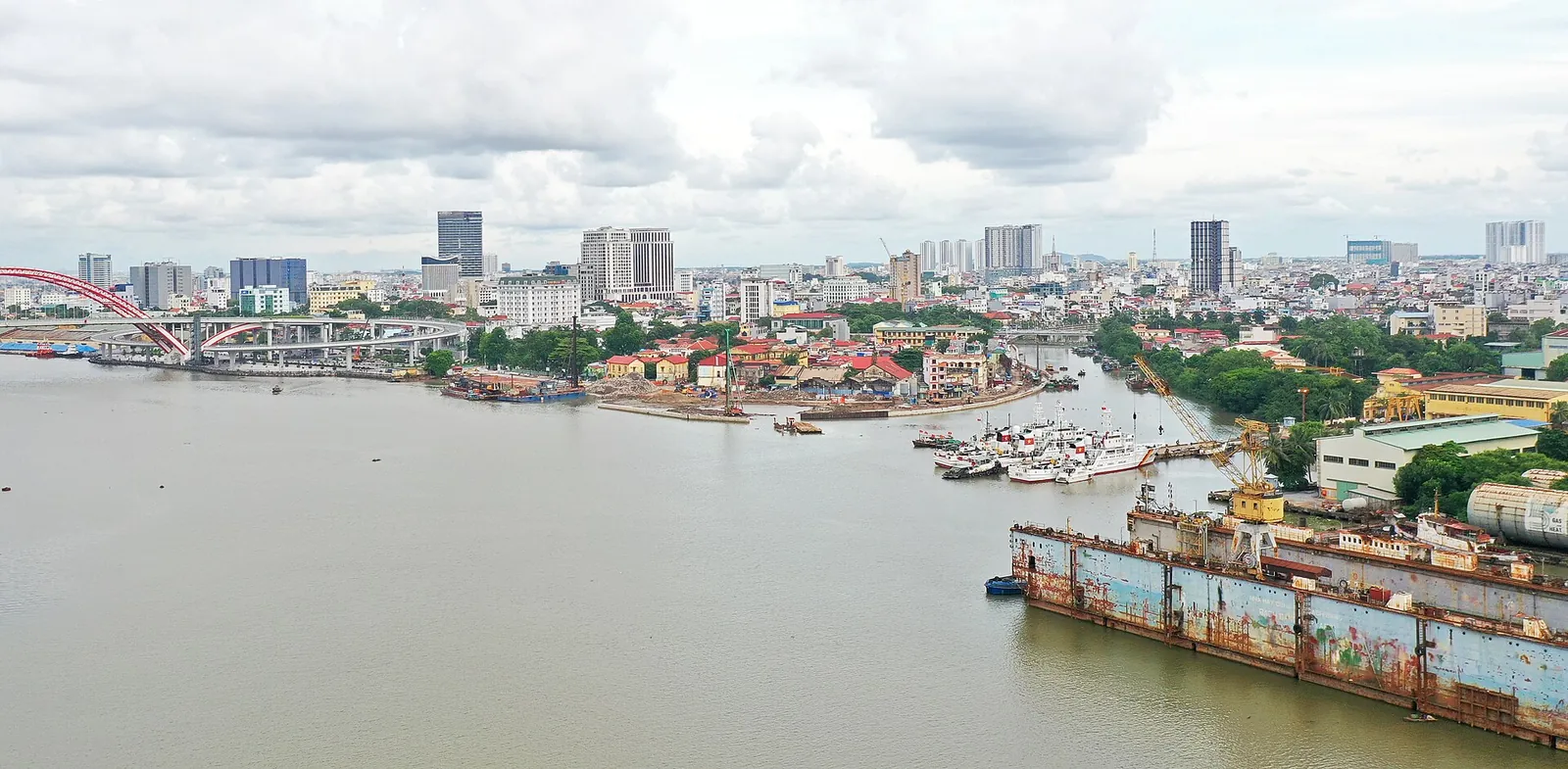
For a traveller the useful Hai Phong is small. The Opera House, the museum, the post office, the station and the flower-garden strip around Tam Bac Lake are all within walking distance of each other, and the city's best-known dishes are cooked in ordinary shops in the same streets. Book a room in that centre and you can do everything below without a taxi.
Walking the French quarter
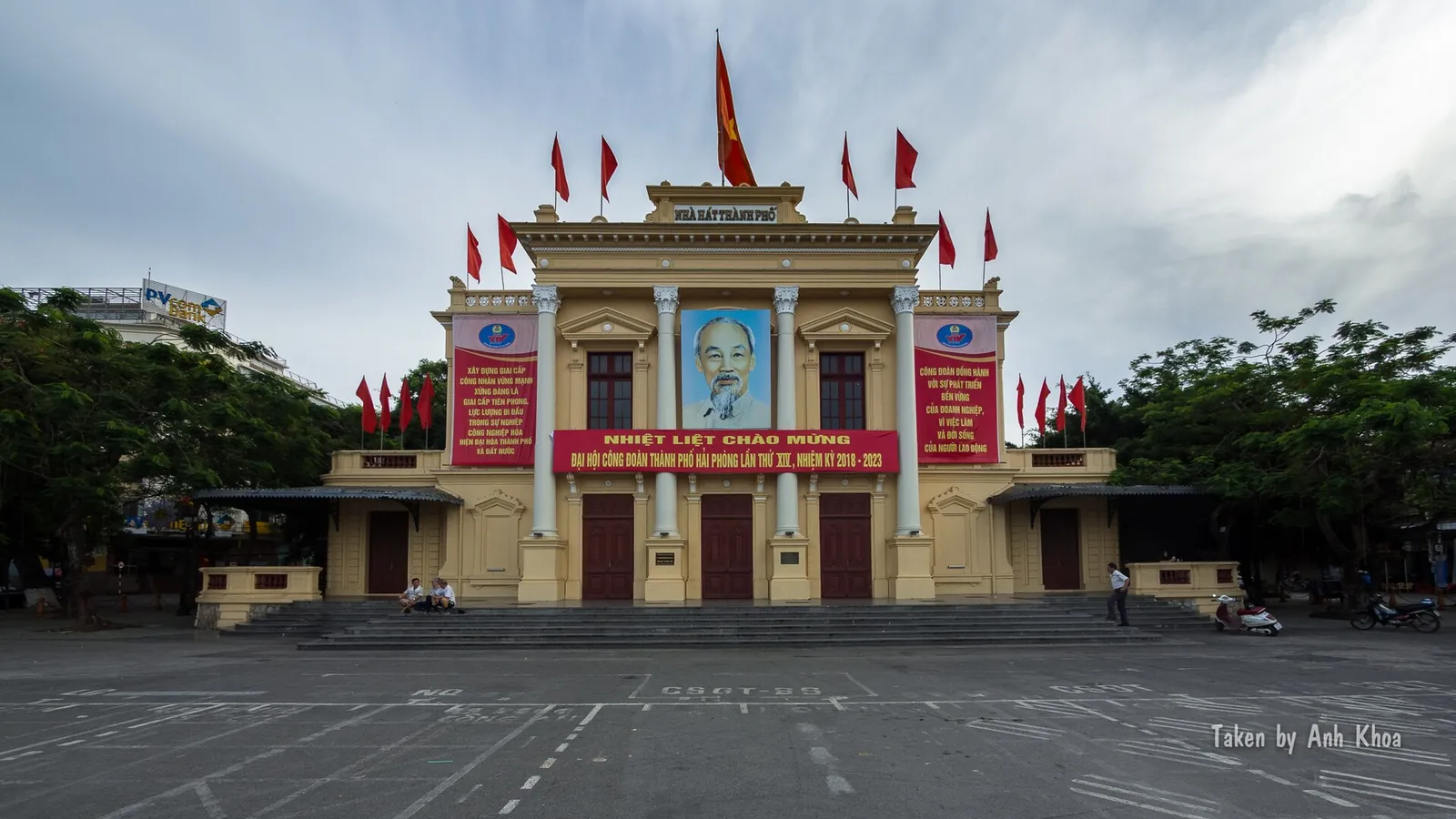
Start at the Opera House (Nha hat Thanh pho), which faces a large square at 28 Tran Hung Dao. According to the city newspaper, construction began in 1898 and finished in November 1900 on the site of the old An Bien village market, with materials shipped from France and Vietnamese workers building it under a French architect. It was inspired by the Palais Garnier in Paris and has a horseshoe-shaped auditorium of 400 seats. The square has been the stage for the city's big moments: the 1945 rally that set up a revolutionary committee, a day-long last stand by 13 soldiers in November 1946, and the welcome for Vietnamese troops on 13 May 1955. The Ministry of Culture listed it as a national monument in 2015.
The long garden strip and Tam Bac Lake in front of the theatre follow the line of the Bonnal Canal, which the French dug to separate their concession from the Vietnamese town; three bridges once linked the two. North and east of it lay the European quarter, and its streets — today Hoang Van Thu, Minh Khai, Le Dai Hanh and Dien Bien Phu — still hold many of the colonial buildings. Dien Bien Phu, the old Boulevard Paul Bert, was the grandest. Walk it slowly: the city's former Chamber of Commerce, built in 1895 with a three-faced clock tower, is now the Department of Culture, Sports and Tourism, and the former Franco-Chinese Bank of 1919 is the Hai Phong Museum.
The museum opened on 20 December 1959; the city's foreign-affairs portal calls it Vietnam's first local museum and says more than 2,000 objects are on display, from ceramics and textiles to paper and basketwork. Close by are the post office on Nguyen Tri Phuong Street, built in 1905 and still a post office, and the former town hall, completed in 1905 and now the seat of the city People's Committee. We could not find official opening hours for the museum; check locally before you plan around it.
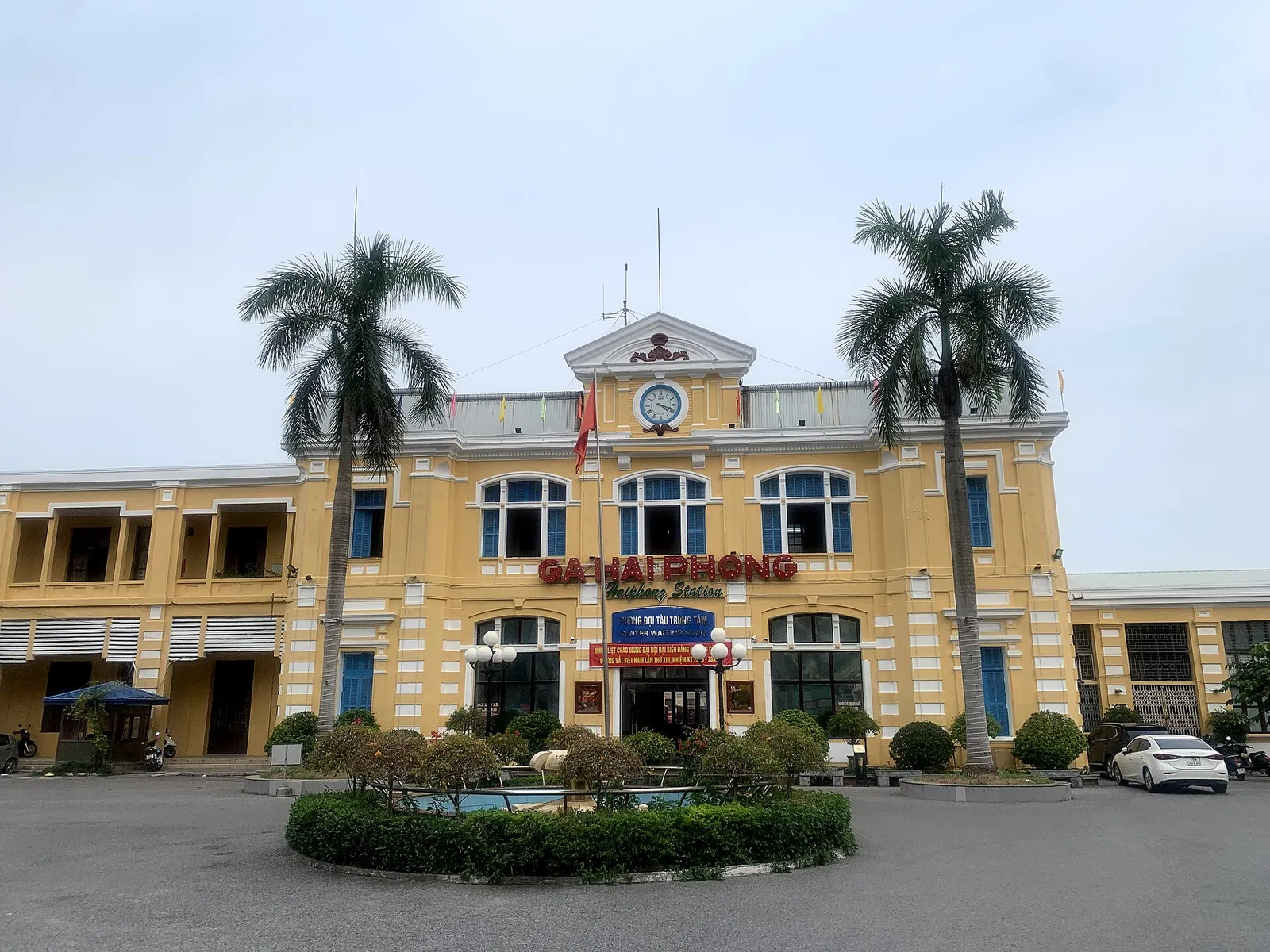
Finish at Hai Phong station, the terminus of the line from Hanoi. The city's portal dates it to 1902 and describes it as a symmetrical neoclassical building — in other words, the yellow facade and clock you will see as you arrive or leave.
Make time for the local food
What to eat and where to look
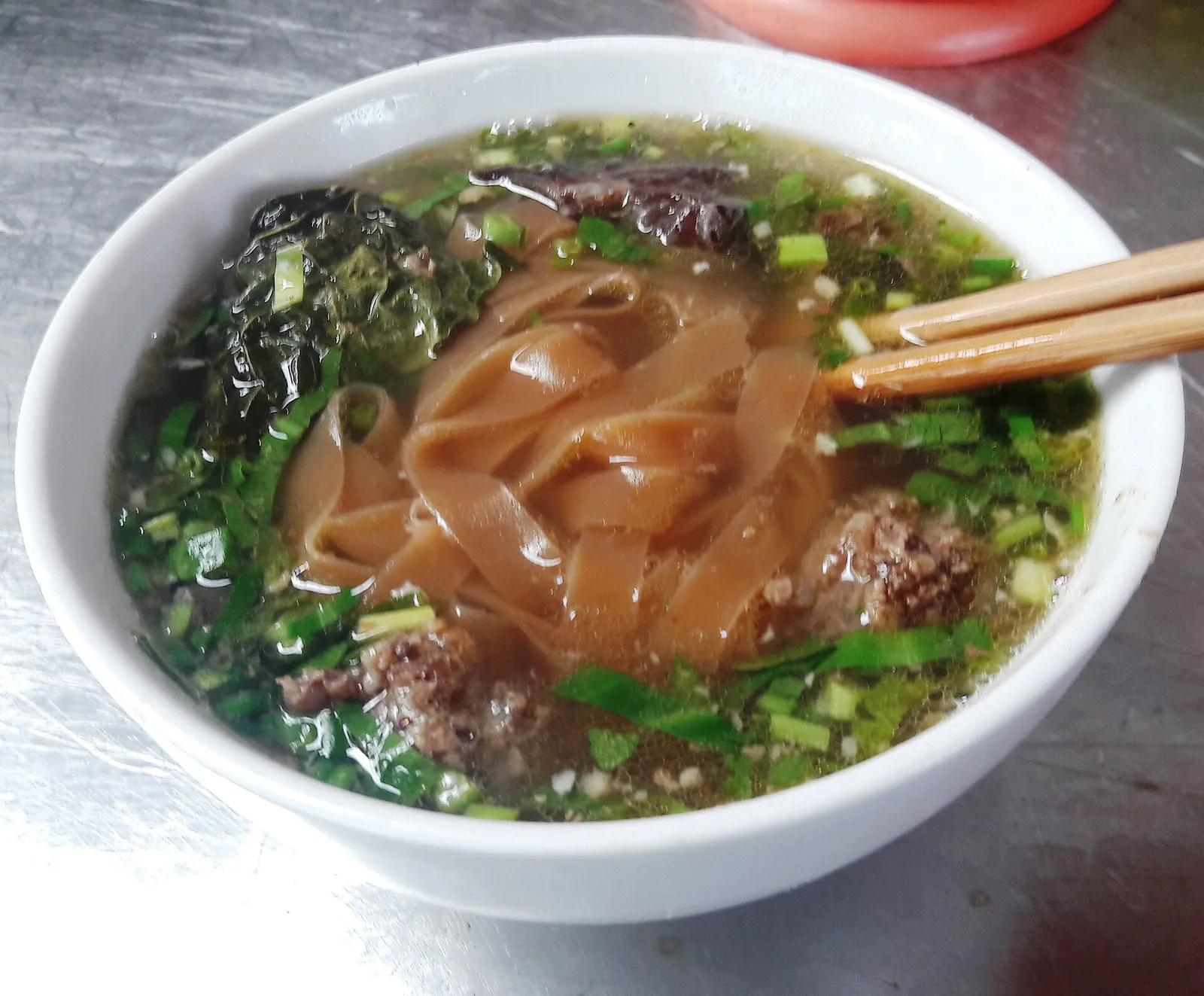
Banh da cua (crab noodle soup with red rice noodles)
Hai Phong's signature bowl: flat, reddish-brown rice noodles (banh da do) in a broth made from pounded field crab, finished with crab roe, water spinach, tomato, fried shallots and crisp pork crackling. The city portal describes the noodles being made from rice and dried in sun and dew in old noodle villages such as Lang Con in Kien Thuy; shops often add prawns, ribs or fish cake.
- Where to look
- Ordinary noodle shops throughout the old centre; the city portal describes it as eaten from breakfast to dinner.
- Fit it into your day
- Make it breakfast on the morning you leave for Cat Ba.
Contains crab and fish sauce, and usually pork fat; ask for no crackling or extras if you want the plain version.
Banh mi cay (spicy bread sticks)
Not the stuffed baguette of Hanoi or Saigon but a finger-thin bread stick, filled only with pork-liver pâté, brushed with oil and crisped over charcoal, then eaten with a chilli sauce made from chilli, tomato, garlic and salt. Locals also call it banh mi que (stick bread) and buy them by the bagful.
- Where to look
- Vietnam News points to the shops on Le Loi and Hang Kenh streets, Cat Cut and the Cot Den area.
- Fit it into your day
- A snack in the afternoon, or several to take on the train or ferry.
The pâté is pork and liver; the chilli sauce is hot, so ask for it on the side.
Nem cua be (square sea-crab spring rolls)
Fried spring rolls wrapped into hand-sized squares and filled with sea crab, minced pork, egg, mushrooms, wood ear, bean sprouts, carrot, onion and glass noodles. They are cut at the table and eaten with rice vermicelli, lettuce, herbs and a dipping sauce of Cat Hai fish sauce with lime, sugar, garlic and chilli.
- Where to look
- Seafood restaurants in the city, on Cat Ba and at Do Son; the city portal names Tran Nhat Duat Street as a street known for it.
- Fit it into your day
- The centrepiece of a sit-down dinner, shared with a few other dishes.
Contains crab, egg, pork and fish sauce, and is deep-fried.
Du Hang Pagoda: the city before the French
To see what was here before the port, take a short taxi ride from the centre to Du Hang Pagoda (Chua Hang, formally Phuc Lam Tu), in the Le Chan area. According to its steles, as summarised by the city government, its origins go back to the Early Le dynasty (980–1009); it was enlarged in 1672 and restored again in 1899 and 1917, and it was listed as a national historical and cultural relic in 1986.
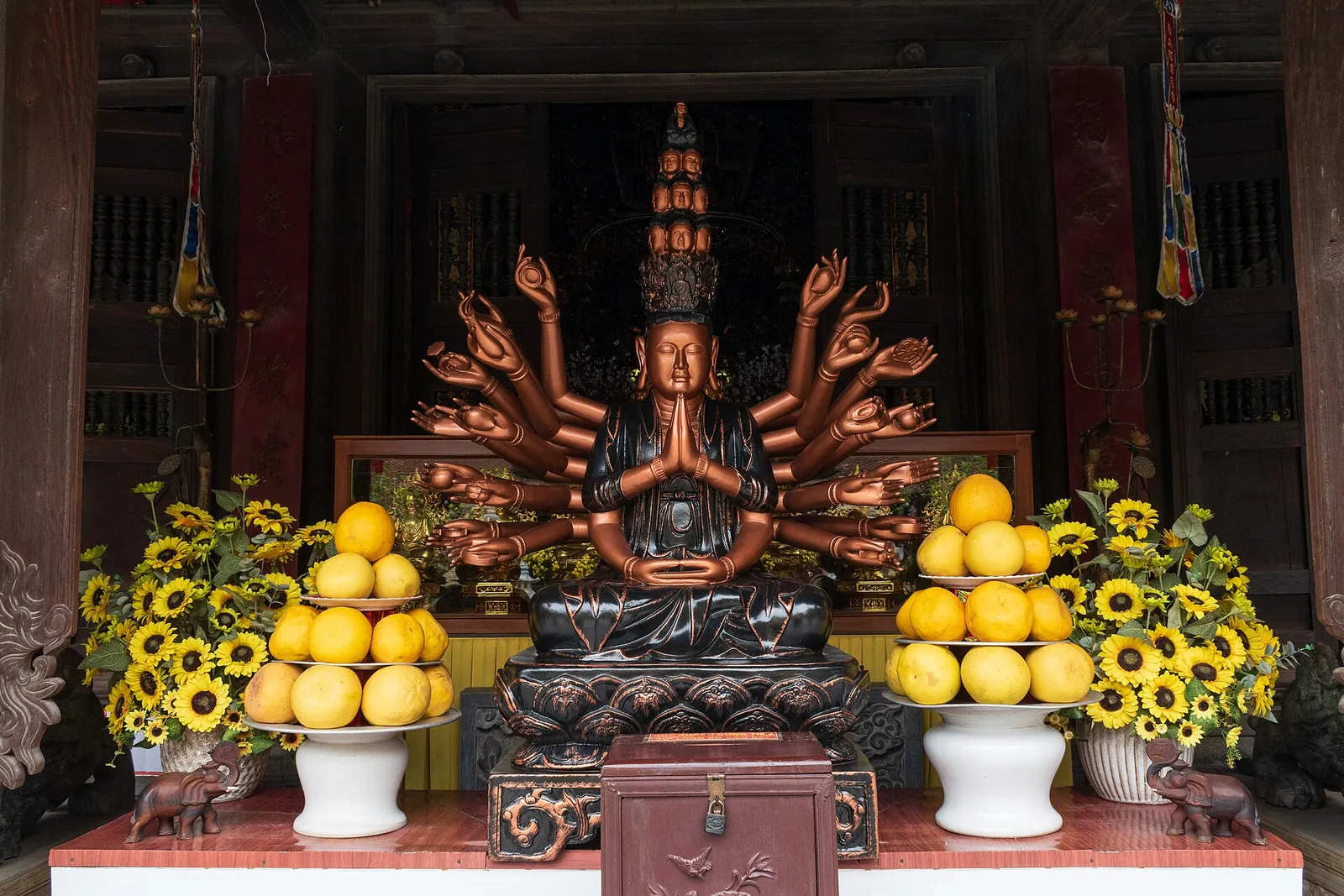
Inside the gate, a three-tiered bell tower holds a large bronze bell inscribed "Phuc Lam tu chung". The seven-bay main hall is built of ironwood columns and decorated with gilded lacquer boards and carvings in the late Nguyen style. To the right of the gate is a statue garden around a pond, with a seated Buddha under a bodhi tree, a black Maitreya and ten white stone figures; to the left, a quiet garden of eleven stone stupas holds the remains of former abbots and masters of the Truc Lam Zen school.
The pagoda also has a modern history. In 1926 monks, students and workers gathered here to hold a memorial for the patriot Phan Chu Trinh, and after the August Revolution of 1945 it hosted the launch of Hai Phong's National Salvation Buddhist association and a "Gold Week" fundraising drive. It is an active place of worship: dress modestly, keep your voice down and ask before photographing people at prayer.
Getting here from Hanoi, and on to Cat Ba
The train is the most pleasant way in from Hanoi. When we checked on 2026-10-03, the city newspaper's timetable for the line, in force from 10 February 2026, listed departures from Hanoi station at 6:00, 9:25 and 15:15 and an evening train from Long Bien at 18:20 (from Hanoi station at weekends and holidays), with daytime runs taking roughly two and a half to two and three-quarter hours. Times change; check Vietnam Railways before you travel. The haiphongnews portal puts the city a little over 100 kilometres from Hanoi.
Cat Bi International Airport is about 8 kilometres from the centre. It mostly handles domestic flights, so many international visitors land at Hanoi's Noi Bai instead and come on by road or rail.
For Cat Ba, the city newspaper describes two main routes from Hai Phong: the Dong Bai – Cai Vieng ferry, followed by the road across the island, and the cable car that lands at Phu Long station. A 2022 report also described high-speed boats from Ben Binh pier in central Hai Phong taking about 45 minutes; check current departures with the operator. Drivers should know that the ferry fills up: over the summer of 2026 (weekends from 9 May to 30 September) the city's Department of Construction stopped taking cars and lorries towards Cat Ba between 9:00 and 13:00 and pointed travellers to the cable car, speedboats and buses instead. Check for similar limits around public holidays.
Weather decides the water. Quang Ninh suspended overnight and evening boat permits on neighbouring Ha Long Bay ahead of Storm Maysak in July 2026, and storms on this stretch of coast can stop the Cat Ba crossings too, so if you are crossing to the islands between June and September, keep the Hai Phong night flexible and do not book a tight onward connection.
A workable one-night plan
This is an editorial suggestion, not a timetable. Check opening times and departures for anything you build the day around.
- Afternoon: arrive by train or road, drop your bags in the centre and walk from the station along the garden strip to the Opera House square.
- Late afternoon: Dien Bien Phu Street, the museum facade and the old post office while the light is soft on the yellow buildings.
- Evening: nem cua be (square crab spring rolls) for dinner, then a walk around Tam Bac Lake.
- Next morning: banh da cua for breakfast and a bag of banh mi cay for the journey, then the ferry, cable car or speedboat to Cat Ba.
- With a second night: Du Hang Pagoda in the morning and a slower food day around Cat Cut and Hang Kenh.
When to go, and the Red Flamboyant Festival
Hai Phong shares its weather with Ha Long Bay next door. The national tourism site describes September to November as cool with clear skies, December to March as misty, April and May as sunny with a breeze, and June to August as the monsoon season, when visits can be unpredictable. For a city stop the weather matters less than for the islands, but it decides whether your onward boat leaves.
Locals call Hai Phong the city of red flamboyant flowers (hoa phuong do), and the Red Flamboyant Festival is its big annual event. In 2026 it opened on the evening of 8 May, ahead of Liberation Day on 13 May, as part of a programme of more than 60 cultural, sports and tourism events from late March to the end of May, with the peak from 8 to 14 May. Expect a lively centre and fireworks around those dates, and book your room early.
Practical questions
Is Hai Phong worth a night on the way to Cat Ba?
Yes, if you enjoy cities and food. One night lets you walk the French quarter in the late afternoon, eat nem cua be for dinner and banh da cua for breakfast, and still reach Cat Ba the next day.
How do I get from Hanoi to Hai Phong?
By train or by road. When we checked on 2026-10-03, the February 2026 timetable listed four daily trains from Hanoi (one leaving from Long Bien on weekdays) taking roughly two and a half hours. Check Vietnam Railways for current times.
How do I get from Hai Phong to Cat Ba?
Take the Dong Bai – Cai Vieng ferry and then the road across the island, the cable car to Phu Long, or a speedboat from Ben Binh pier where it is running. Check departures and the weather before you go.
Where should I stay in Hai Phong?
In the old centre around the Opera House and Tam Bac Lake, so the colonial streets and food shops are walkable. Lach Tray has newer hotels, and Le Hong Phong Street is convenient for an early flight from Cat Bi.
What should I eat in Hai Phong?
Banh da cua (crab noodle soup with red rice noodles), banh mi cay (thin pâté bread sticks with chilli sauce) and nem cua be (square crab spring rolls).
Is Hai Phong the same as Ha Long?
No. Ha Long is in Quang Ninh province to the north-east. Cat Ba Island and Lan Ha Bay belong to Hai Phong, which is why the city is the usual gateway to them.
Sources and checks before you travel
Reference sources for the version dated 3 October 2026. Confirm opening times, access, transport and conditions for your travel dates.
- Bao Hai Phong: the city theatre, a witness to history (2025) ↗ — opens in a new tab
- Thanh Nien: French architecture in Hai Phong ↗ — opens in a new tab
- Hai Phong foreign-affairs portal: famous places in Hai Phong ↗ — opens in a new tab
- Hai Phong foreign-affairs portal: Du Hang Pagoda ↗ — opens in a new tab
- Hai Phong city government: Du Hang Pagoda ↗ — opens in a new tab
- Hai Phong foreign-affairs portal: banh da cua ↗ — opens in a new tab
- Hai Phong foreign-affairs portal: nem cua be ↗ — opens in a new tab
- Vietnam News: taking a salty, spicy bite of Hai Phong cuisine ↗ — opens in a new tab
- Bao Hai Phong: Hanoi – Hai Phong trains through Long Bien Bridge (February 2026) ↗ — opens in a new tab
- Vietnam Railways (operator) ↗ — opens in a new tab
- Hai Phong city government: cars paused on the Dong Bai ferry (April 2026) ↗ — opens in a new tab
- Bao Hai Phong: two routes to Cat Ba Island ↗ — opens in a new tab
- Bao Hai Phong: Cat Ba, pearl of the Gulf of Tonkin (2022) ↗ — opens in a new tab
- Bao Hai Phong: the Hai Duong – Hai Phong merger, one year on ↗ — opens in a new tab
- Hai Phong city government: opening of the Red Flamboyant Festival 2026 ↗ — opens in a new tab
- Bao Hai Phong: Red Flamboyant Festival 2026 programme ↗ — opens in a new tab
- Vietnam Tourism: Ha Long ↗ — opens in a new tab
- Vietjet: Cat Bi Airport guide ↗ — opens in a new tab
- Thanh Nien: boats suspended on Ha Long Bay ahead of Storm Maysak (July 2026) ↗ — opens in a new tab
Does this experience fit your route?
If you would rather see Lan Ha Bay without moving to Cat Ba, a day cruise that picks up in Hai Phong is the simplest option. Check the pick-up point, the time on the water and the weather terms before you book.
Check dates and details on Viator ↗ — opens in a new tabAffiliate link · Book with ViatorPhoto credits
Hai Phong Opera House, the French-built theatre at the head of the old city centre
Photograph: Tran Anh Khoa (zorrotran) — opens in a new tab · CC BY-SA 2.0 — opens in a new tab
Changes: Resized and converted to WebP; displayed with responsive crops. · Original photograph and licence details ↗ — opens in a new tab
Hai Phong station, terminus of the line from Hanoi
Photograph: Bambusser — opens in a new tab · CC BY 4.0 — opens in a new tab
Changes: Resized and converted to WebP; displayed with responsive crops. · Original photograph and licence details ↗ — opens in a new tab
Banh da cua, Hai Phong's crab noodle soup with red rice noodles
Photograph: Phương Huy — opens in a new tab · CC BY-SA 4.0 — opens in a new tab
Changes: Resized and converted to WebP; displayed with responsive crops. · Original photograph and licence details ↗ — opens in a new tab
The mouth of the Tam Bac river and the city skyline, Hai Phong
Photograph: HP1992 — opens in a new tab · CC BY-SA 4.0 — opens in a new tab
Changes: Resized and converted to WebP; displayed with responsive crops. · Original photograph and licence details ↗ — opens in a new tab
The Thousand-Armed Avalokiteshvara altar at Du Hang Pagoda, Hai Phong
Photograph: BigDom — opens in a new tab · CC BY-SA 4.0 — opens in a new tab
Changes: Resized and converted to WebP; displayed with responsive crops. · Original photograph and licence details ↗ — opens in a new tab