South Central Coast and Highlands · Lam Dong
Mui Ne travel guide: sand dunes, kitesurfing and where to stay
Mui Ne is a long, wind-blown stretch of beach on the coast east of Phan Thiet, about 220 kilometres from Ho Chi Minh City. It was a fishing outpost before it was a resort, and it still works as one: at dawn the fishing boats unload at the harbour while, a few kilometres away, the first visitors are climbing coastal sand dunes. In between runs a strip of guesthouses, resorts, kite schools and seafood grills. It is not a place of sights so much as a place of rhythms. Get up early for the harbour and the dunes, spend the windy afternoons on or by the water, and end the day at a seafood grill by the sea wall.
- Suggested time
- 2–3 nights (longer for kitesurf lessons)
- Where to stay
- The Ham Tien beach strip for walking access; the harbour end for early starts; Phu Hai for quieter resorts
- Season and timing
- The national tourism site names November to April as the best months, with most visitors from November to January and the kitesurf season from November to March. The May–October rainy season is drier here than in most of Vietnam, so Mui Ne works year-round.
The short answer
Give Mui Ne two or three nights. That is enough for one sunrise at the white dunes, one early morning at the fishing harbour, the Fairy Stream, the Cham towers and a sunset on the red dunes, with time left for the beach. Stay longer only if you are learning to kitesurf, which needs several sessions and the right wind. Sleep on the main beach strip in Ham Tien if you want restaurants and kite schools on your doorstep, at the harbour end if you are an early riser, or on the quieter Phu Hai stretch towards Phan Thiet if you want a resort and do not mind taking a taxi. Come from Ho Chi Minh City by road (the national tourism site says around four hours) or by train to Phan Thiet, and move around by taxi, ride-hailing or a rented motorbike.
Where to stay along the strip
Mui Ne is not a compact town but a beach road. The national tourism site describes a 12-kilometre run of beach from Phan Thiet to Mui Ne, and the hotels are spread along much of it; most of the resort addresses the tourism site lists are on Nguyen Dinh Chieu Street in Ham Tien. Where you sleep along that line decides how much of the trip you can do on foot.
The Ham Tien strip is the default: the most guesthouses and resorts, the kite schools, and seafood grills within walking distance. The harbour end of the strip, towards Mui Ne village, puts you close to the fishing village and the red dunes, which matters if you plan to be out before dawn. Towards Phan Thiet, the Phu Hai stretch around kilometre 8 to 9 has larger, quieter resorts and is near the Po Sah Inu Cham towers, but you will need a taxi for dinner. Phan Thiet city is closer to the train stations but some way from the harbour and the dunes.
The national tourism site notes that prices change with the season and recommends booking ahead. That matters most from November to January, when it says visitors are most numerous. Before you book, check whether the property is on the beach side of the road, whether that stretch of sand is wide enough to sit on, and how far it is from the part of the strip you want to walk to.
The fishing harbour at dawn
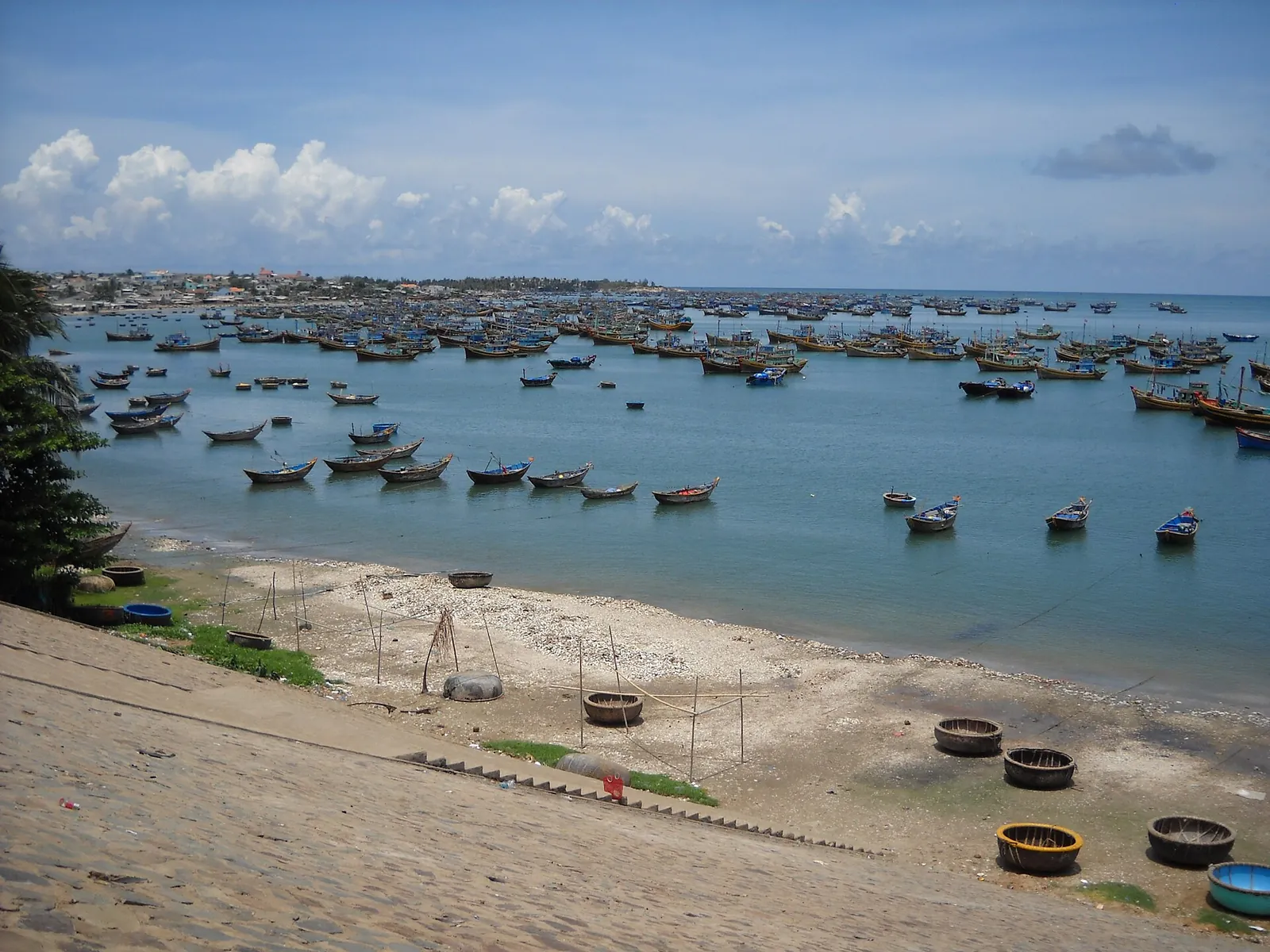
The best hour in Mui Ne is the first one. Just after dawn, the national tourism site writes, the market at the fishing village is in full swing: boats crowd together, fishermen unload the night's catch with crates, trolleys and motorbikes, and women sort fish, aerate the tanks and bargain with buyers. Once the catch is ashore, it is time for cards and coffee.
Go early, stand back from the work, and ask before photographing people up close. This is a working harbour, not an attraction. The national tourism site's one-day plan starts here and suggests looking around the local market on the way.
Make time for the local food
What to eat and where to look
Bo ke seafood grills
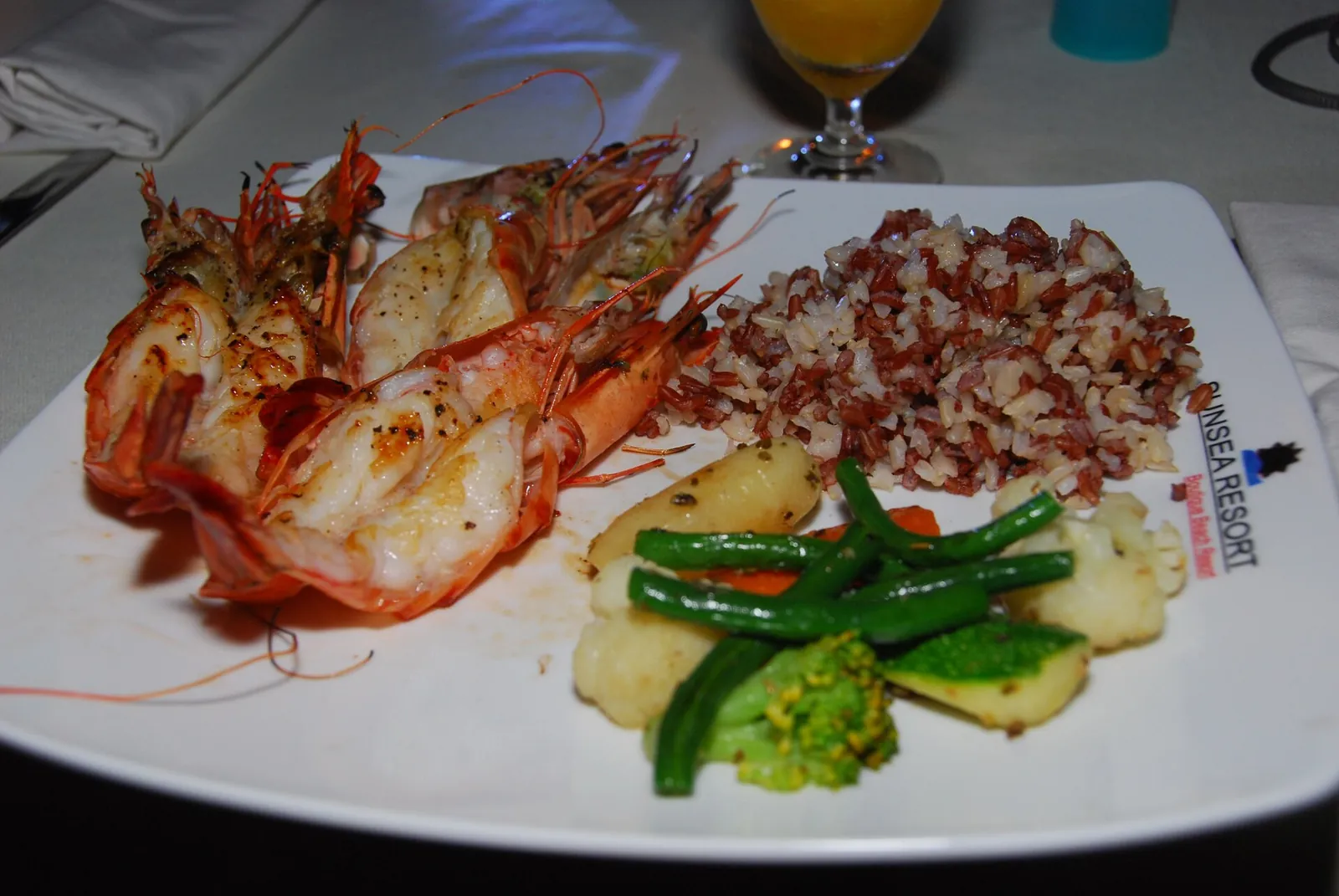
The classic Mui Ne dinner: a seaside grill along the sea wall where you pick live seafood from the tanks and choose how it is cooked. The national tourism site lists oysters, lemongrass clams, garlic scallops, grilled prawns, crispy fish and chilli-stuffed squid among the options.
- Where to look
- The seafood grills along the sea wall on the beach strip; look for busy places with bubbling tanks.
- Fit it into your day
- Dinner after the red dunes at sunset.
Confirm the price of what you choose, and whether it is charged by weight, before it is cooked.
Steamed fish, grilled clams and sweet-and-sour prawns
The national tourism site's Mui Ne page recommends these three as safe choices from the evening seafood stalls along the coast, where the day's catch is laid out and cooked to order.
- Where to look
- Evening seafood stalls and small restaurants along the coast road.
- Fit it into your day
- A shared spread with rice for a group.
Contains shellfish; ask for less chilli if you need it.
Fresh coconut at the Fairy Stream
Not a dish but the right drink after a hot walk: the national tourism site suggests stopping for a cool coconut at one of the rest stops along the Fairy Stream.
- Where to look
- Rest stops along the Fairy Stream walk.
- Fit it into your day
- Mid-morning, halfway along the stream.
Keep the plastic straw and cup with you until you find a bin.
Morning catch at the fishing village
The harbour market at dawn is where the night's catch is sold, sorted and bargained over. It is the best place to see what ends up on the grills in the evening.
- Where to look
- The fishing village market at the harbour end of the strip, just after dawn.
- Fit it into your day
- Go before breakfast, then have coffee and breakfast back on the strip.
It is a working market: keep out of the way of the porters and motorbikes.
White dunes at sunrise, red dunes at sunset
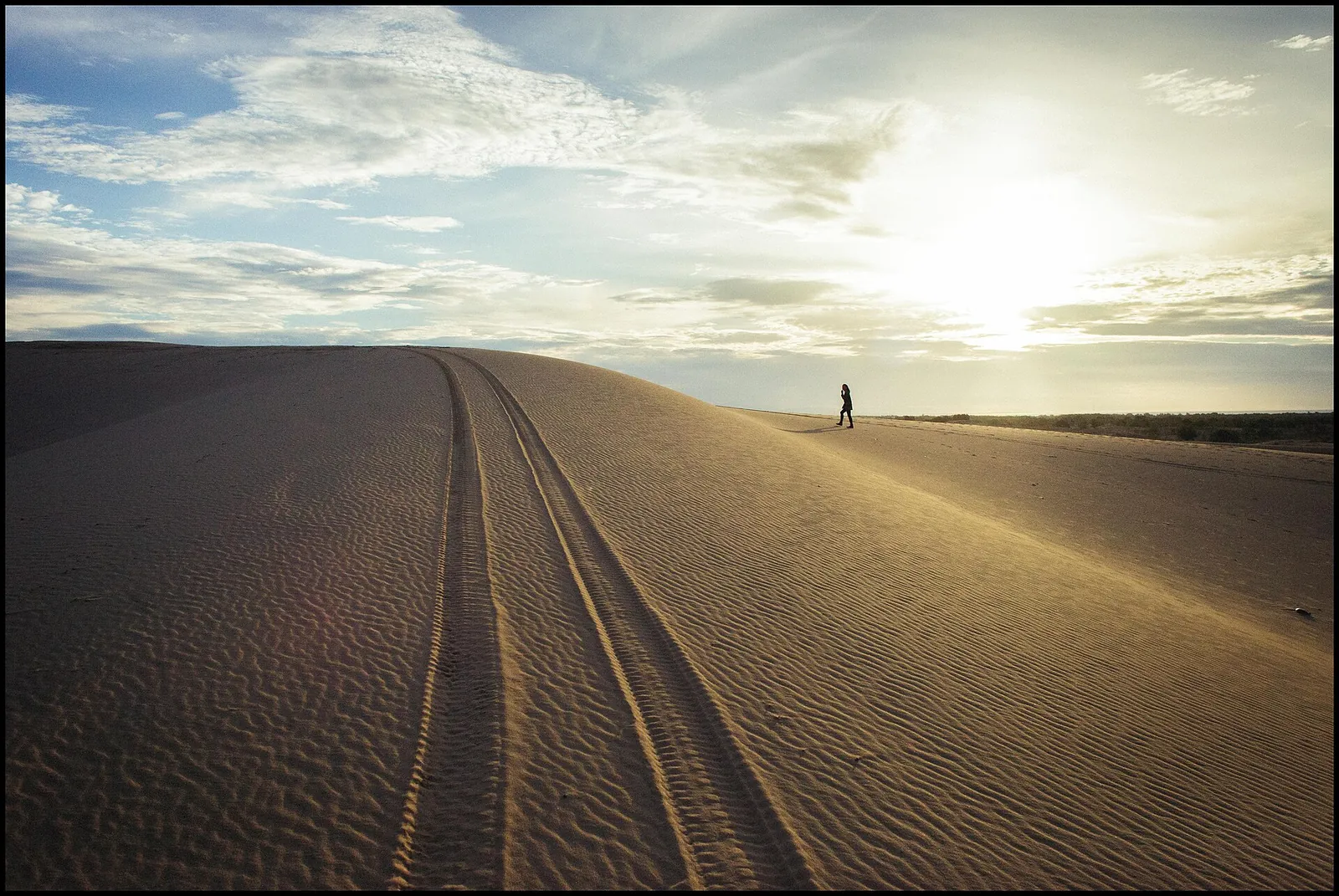
Mui Ne sits in a dry coastal landscape and is known for two sets of dunes. The red dunes are the easy ones: just outside town, a few kilometres from the beach, and, in the national tourism site's words, the most accessible. Go at the end of the day, when the sand turns deep orange, and try sliding down on a board or plastic sled.
The white dunes are bigger and further away. The national tourism site puts them at roughly 25 to 30 kilometres from the strip and recommends them for sunrise, which means leaving in the dark. The reward is the sky turning pink and purple over wide pale hills with the sea in the distance. The tourism site also names Bau Trang, alongside Mui Ne, for 4x4 dune driving, sandboarding and sand sliding.
Getting there is the decision. A taxi or a car arranged through your hotel is the simplest way for a dark, early start; the national tourism site also suggests a motorbike for flexibility, but only ride if you are licensed and confident on sand-blown roads. Take water, a hat and something to cover your arms, as there is little shade once the sun is up.
Kitesurfing and beach days
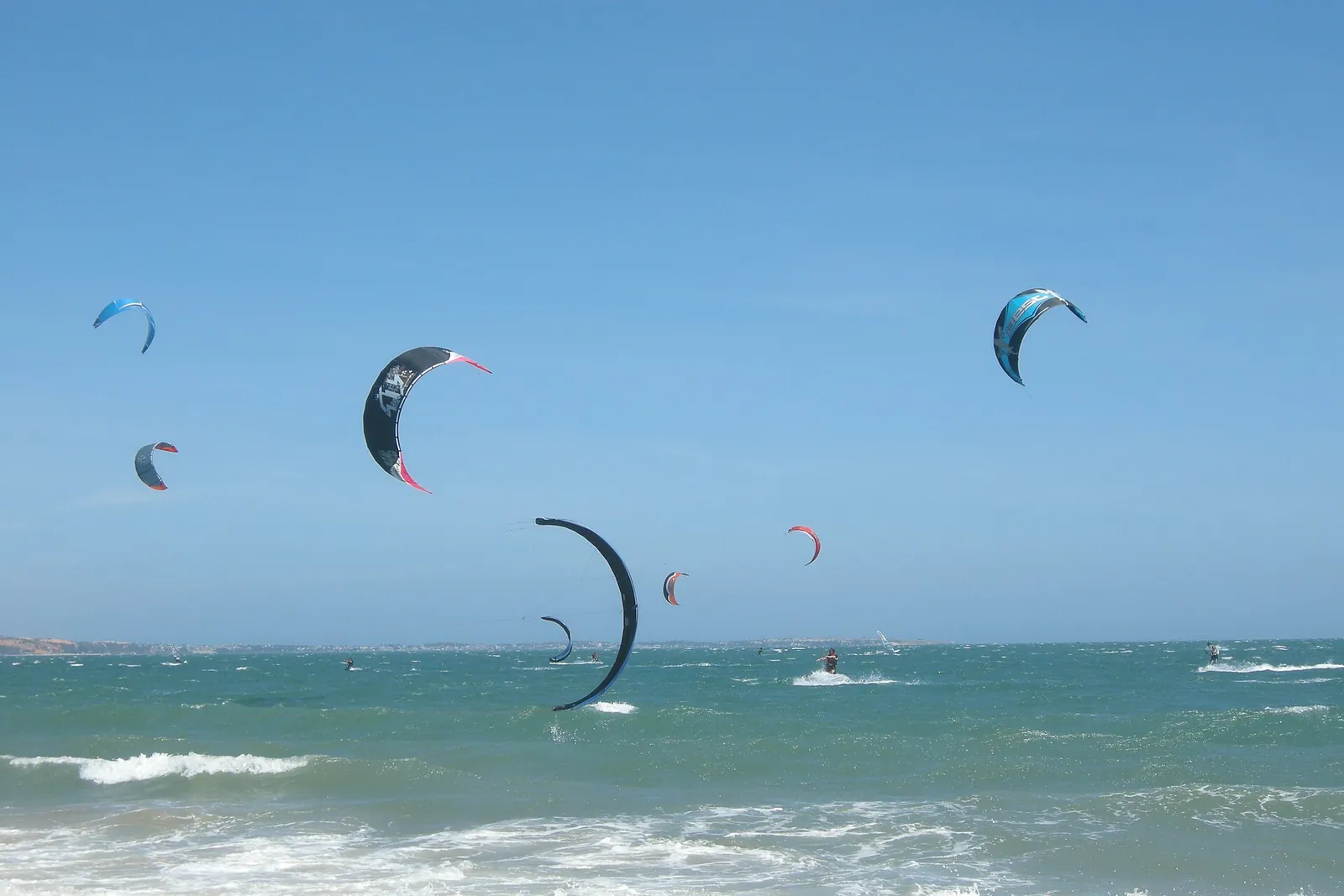
Wind is what made modern Mui Ne. The national tourism site calls it Vietnam's leading hub for watersports, and especially for kitesurfing, with schools for every level. Its Mui Ne page says the wind averages over 12 knots on more than 200 days a year, and puts the main kitesurf season from November to March.
If you are a beginner, take lessons at the main beach, which the tourism site describes as the safest area for learners, and it suggests experienced riders try other bays and beaches. The wind is up in the late afternoon, and the tourism site points first-timers to the gentler morning wind. Ask a school about the instructor's certification, whether a rescue boat is on hand, and what happens to your booking if the wind does not come.
If you are not on the water, the afternoon is beach time. Many beachfront resorts sell day passes to their gardens, loungers and pools, which the tourism site suggests if your own hotel is across the road. When the wind is up the sea can be rough; swim where others are swimming and follow any flags or warnings.
The Fairy Stream and the Po Sah Inu Cham towers
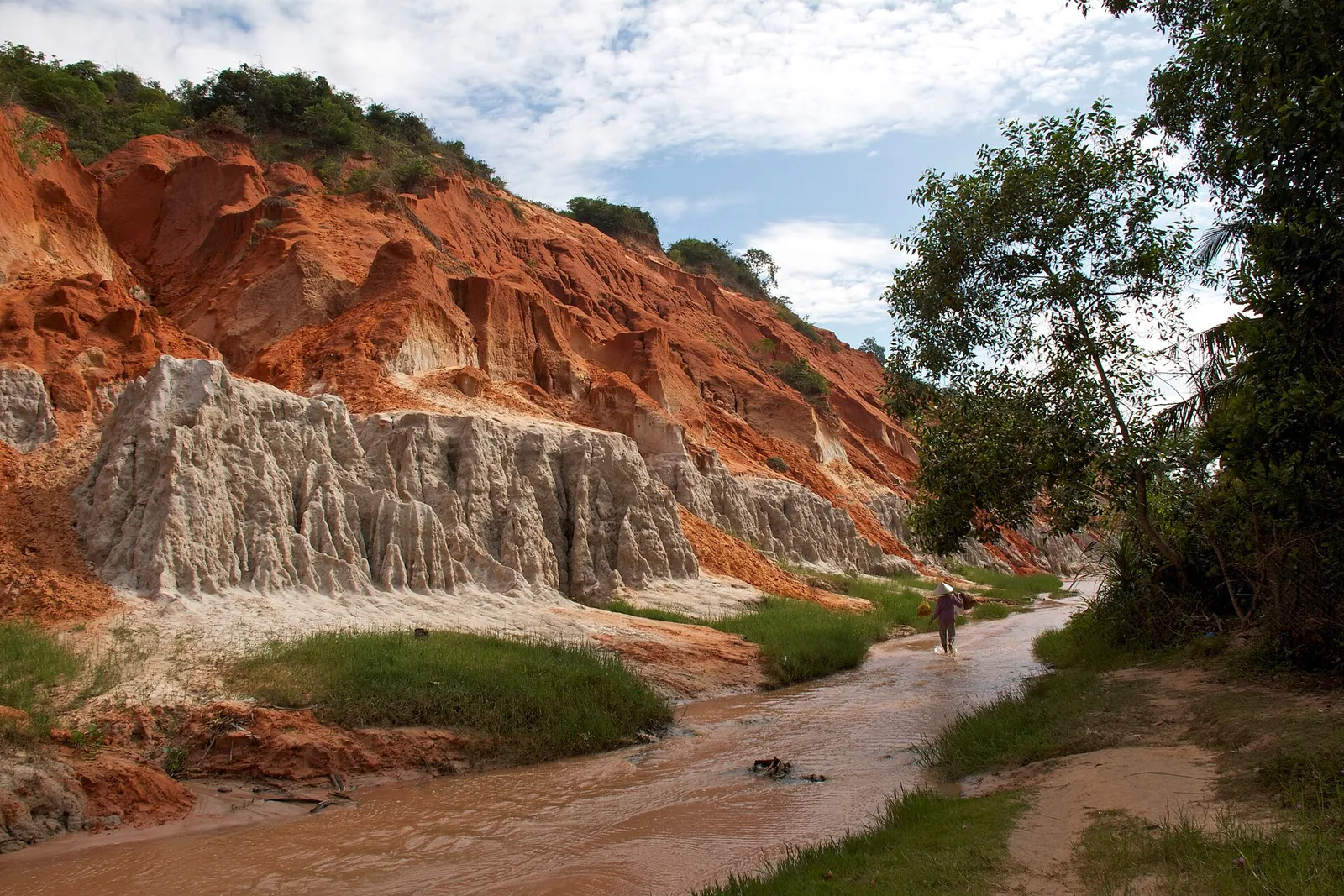
The Fairy Stream (Suoi Tien) is a short, shoes-off walk. The national tourism site describes an ankle-deep stream with red clay and limestone formations on one side and green forest on the other; you walk upstream in the water and turn back when you have had enough, ideally with a fresh coconut at one of the rest stops. It is just off the main road and fits easily into a morning after the harbour.
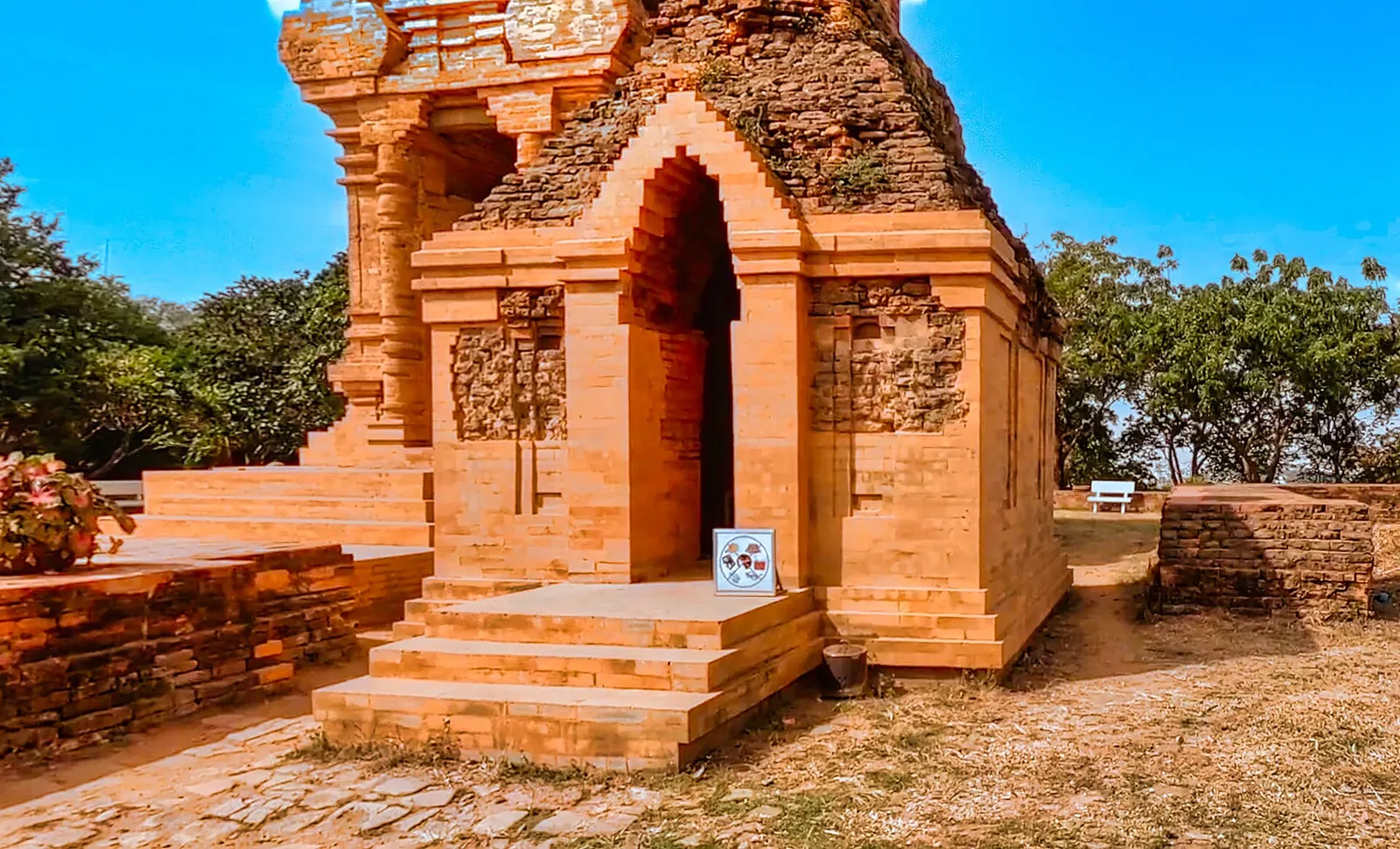
Between Mui Ne and Phan Thiet, on a hill above the coast, stand the Po Sah Inu (Poshanu) towers. According to the national tourism site, these Cham temple towers are about 1,200 years old, were built in the Hoa Lai architectural style during the Champa kingdom, and are national monuments; the hilltop also looks out over Phan Thiet. They are a reminder that this coast was once part of the Cham principality of Panduranga, and a good stop on the late-afternoon ride back from the dunes or on the way to Phan Thiet.
Is Mui Ne a good short break from Saigon?
Yes, if you want sand, wind and seafood rather than calm, clear water. The national tourism site notes that Mui Ne draws weekenders from Ho Chi Minh City as well as travellers heading south from Nha Trang and Da Lat, and the road trip from Saigon is around four hours by its count. Two nights is enough for a Saigon break; three lets you do both dunes without rushing.
Tourist buses stop along the main strip, while the local bus station is at the eastern end of town, the tourism site says, so check where your bus drops you. If you prefer the train, the North–South Railway passes through Muong Man station just outside Phan Thiet, and the tourism site's Mui Ne page names Phan Thiet as the nearest station, about 30 minutes from Mui Ne by car, and suggests Grab or a taxi for the last leg.
A workable two- or three-night plan
This is an editorial suggestion, not a timetable. Check sunrise times and the wind forecast for your dates.
- Day 1 — Arrival: afternoon on the beach or a first kitesurf session, then dinner at a seafood grill by the sea wall.
- Day 2 — Early start: white dunes at sunrise, back by mid-morning, the Fairy Stream before the heat, a slow afternoon, and the red dunes at sunset.
- Day 3 — Harbour and towers: the fishing harbour just after dawn, a beach morning or a lesson, and the Po Sah Inu towers in the late afternoon on the way to Phan Thiet or on a last ride along the coast.
- Extra days: more kitesurf sessions while the wind is up, from November to March.
Practical questions
How many days do you need in Mui Ne?
Two or three nights. That covers a sunrise at the white dunes, the fishing harbour at dawn, the Fairy Stream, the Po Sah Inu towers and a sunset on the red dunes, with some beach time. Add days if you are learning to kitesurf.
Where is the best area to stay in Mui Ne?
The Ham Tien strip on Nguyen Dinh Chieu Street has the most hotels, kite schools and seafood grills within walking distance. Stay at the harbour end for early mornings, or on the Phu Hai stretch towards Phan Thiet for quieter resorts if you are happy to take taxis.
How do I get from Ho Chi Minh City to Mui Ne?
By road (the national tourism site puts it at around four hours) on a tourist bus or van that stops along the main strip, or by train to Muong Man or Phan Thiet station and then a taxi or Grab. Mui Ne is about 220 kilometres from the city.
When is the kitesurfing season in Mui Ne?
The national tourism site gives November to March as the kitesurf season and says the wind averages over 12 knots on more than 200 days a year. Beginners usually take lessons in the gentler morning wind.
Red or white sand dunes: which should I visit?
Both, if you can. The red dunes are close to town and best at sunset; the white dunes are roughly 25 to 30 kilometres away and best at sunrise. If you only have time for one, the white dunes are the bigger landscape, the red dunes the easier trip.
Is Mui Ne worth visiting in the rainy season?
Yes. The national tourism site notes that the area gets less rain from May to October than most of Vietnam and that Mui Ne can be visited year-round. Check sea conditions before swimming.
Sources and checks before you travel
Reference sources for the version dated 3 October 2026. Confirm opening times, access, transport and conditions for your travel dates.
Photo credits
Fishing boats in the bay at Mui Ne's fishing village
Photograph: Đông Sơn ( thảo luận ) — opens in a new tab · CC BY-SA 3.0 — opens in a new tab
Changes: Resized and converted to WebP; displayed with responsive crops. · Original photograph and licence details ↗ — opens in a new tab
The white dunes near Mui Ne, best visited at sunrise
Photograph: Erwin Verbruggen from Amsterdam, The Netherlands — opens in a new tab · CC BY-SA 2.0 — opens in a new tab
Changes: Resized and converted to WebP; displayed with responsive crops. · Original photograph and licence details ↗ — opens in a new tab
The Fairy Stream (Suoi Tien), an ankle-deep walk past red clay cliffs
Photograph: Jean-Marie Hullot — opens in a new tab · CC BY 3.0 — opens in a new tab
Changes: Resized and converted to WebP; displayed with responsive crops. · Original photograph and licence details ↗ — opens in a new tab
Kitesurfing off Mui Ne beach, Vietnam's best-known kite spot
Photograph: Vyacheslav Argenberg — opens in a new tab · CC BY 4.0 — opens in a new tab
Changes: Resized and converted to WebP; displayed with responsive crops. · Original photograph and licence details ↗ — opens in a new tab
The Po Sah Inu Cham towers between Mui Ne and Phan Thiet
Photograph: Ms Sarah Welch — opens in a new tab · CC0 — opens in a new tab
Changes: Resized and converted to WebP; displayed with responsive crops. · Original photograph and licence details ↗ — opens in a new tab
Grilled prawns, the kind of seafood the Mui Ne grills are known for
Photograph: jetsun — opens in a new tab · CC BY-SA 3.0 — opens in a new tab
Changes: Resized and converted to WebP; displayed with responsive crops. · Original photograph and licence details ↗ — opens in a new tab