Itineraries · Vietnam
South Central Coast in 7 days: Quy Nhon, Nha Trang, Da Lat and Mui Ne
If your first trip to Vietnam ran Hanoi, Hoi An and Saigon, the stretch of coast between Quy Nhon and Mui Ne is the obvious next week. It has fewer famous names and more variety: a fishing-village peninsula and Cham towers in Quy Nhon, basalt columns and cactus-topped bluffs around Tuy Hoa, the big bay and Po Nagar at Nha Trang, a climb into the pine-covered highlands at Da Lat, and the red and white dunes of Mui Ne on the way back down to the sea. The catch is that it is a string of road days. This route runs one way, north to south, so you never double back, and it keeps two nights in the two places that need a full day: Quy Nhon and Da Lat.
- Suggested time
- 7 days (6 nights)
- Where to stay
- Quy Nhon city beach (2 nights), Nha Trang, Tran Phu (1 night), central Da Lat (2 nights), Mui Ne, Ham Tien strip (1 night)
- Season and timing
- January to April suits the whole loop best: the national tourism site gives September to December as the rainy and storm season for Nha Trang and Phu Yen, Da Lat's rains as April to October, and November to April as the best months for Mui Ne. May to August is good on the coast (it gives April to September for Ky Co) but brings wet afternoons in Da Lat. The UK government puts the tropical-cyclone season at May to November.
The short answer
Spend seven days and six nights travelling south: two nights on the Quy Nhon city beach, one night in Nha Trang on or behind Tran Phu, two nights in central Da Lat and one night on the Mui Ne strip, then go on to Ho Chi Minh City. Fly into Phu Cat (UIH), about 30 km from Quy Nhon. Hire a car with a driver for the coast day from Quy Nhon to Nha Trang so you can stop at Ganh Da Dia, Bai Xep and Tuy Hoa; take the train instead if you would rather skip the stops. Go up to Da Lat and down to Mui Ne by car or shuttle van, which the national tourism site puts at a few hours each. Mui Ne is about four hours by road from Ho Chi Minh City, so book your international flight from Tan Son Nhat (SGN) for day 8 rather than the evening of day 7. Avoid September to December, the rainy and storm months on this coast.
How the week fits together
The route is a line, not a circle: Quy Nhon in the north, Tuy Hoa about halfway to Nha Trang (the national tourism site describes it as roughly equidistant between the two), Nha Trang, then a turn inland and uphill to Da Lat, and a descent to the coast again at Mui Ne. Ending in Mui Ne puts you within road distance of Ho Chi Minh City, which is where most international flights leave from. Starting in Quy Nhon means flying in to Phu Cat, which the national tourism agency places about 30 km from the city and served by domestic connections from Hanoi and Ho Chi Minh City.
Six nights is the honest minimum. Quy Nhon and Da Lat each get two nights because their main sights fill a full day; Nha Trang and Mui Ne get one each, which is enough for the essentials if you are not after a beach holiday. If you can find an eighth day, give it to Nha Trang for a boat day in the bay, or to Tuy Hoa for a sunrise at Mui Dien.
Treat every transfer as a half day. Do not plan a long road leg in heavy rain, and do not put the drive to Ho Chi Minh City on the same day as an international flight: the UK government's travel advice warns that floods and landslides can block roads in the wet months.
Days 1–2: Quy Nhon and the Phuong Mai Peninsula
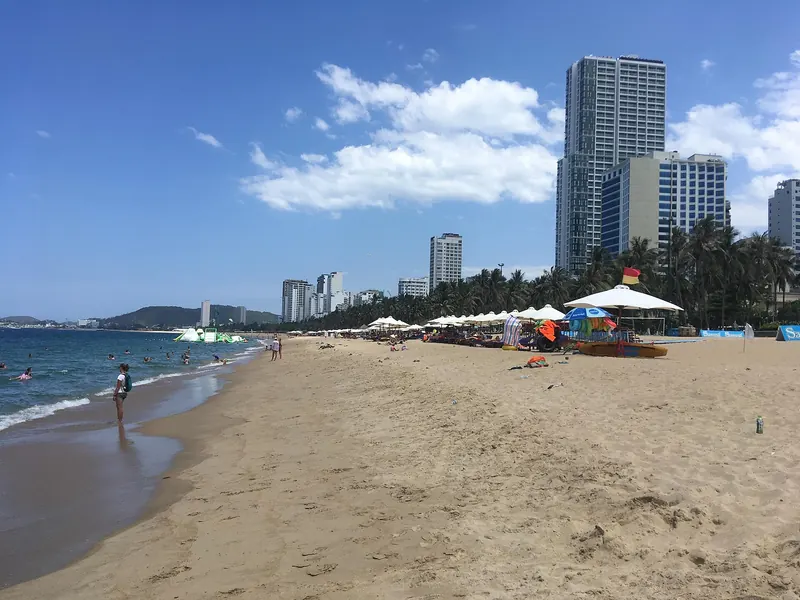
Sleep on the city beach, which the national tourism agency describes as a crescent of golden sand about 5 km long from Tan Cape to Ghenh Rang, with the town's restaurants and taxis behind it. On the afternoon you arrive, walk the beach, then visit the Twin Towers (Thap Doi, also called Hung Thanh), Cham towers from the end of the 12th or start of the 13th century that stand in the middle of the city.
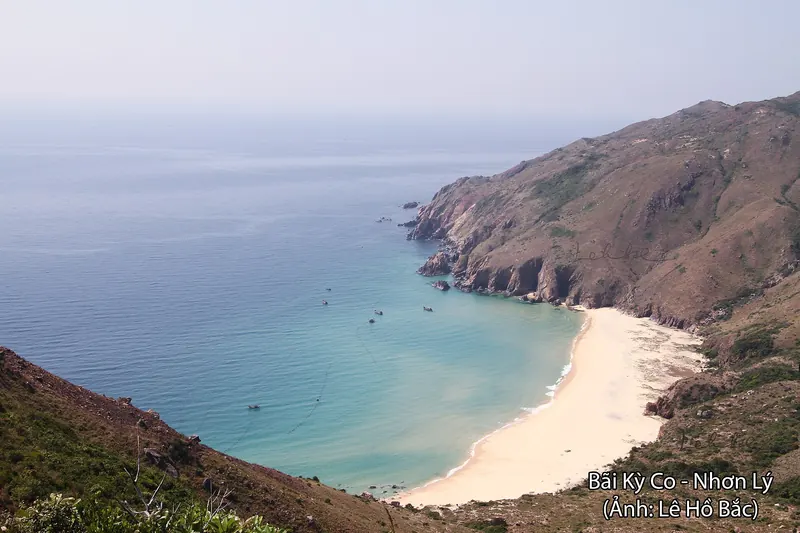
Give day 2 to the Phuong Mai Peninsula, across the Thi Nai Lagoon. The agency puts Eo Gio about 25 km north-east of the centre: a bay embraced by rocky hills, with a boulder beach and paths at the foot of the slope. From there you take a canoe or boat to Ky Co, a crescent of white sand with three sides facing the mountains and water that shades from dark blue to jade. The agency suggests basket-boat rides, snorkelling and fishing trips with local boatmen, and seafood such as grilled abalone and steamed crab. Agree the price, what is included and the return time before you get in a boat. Finish in the Nhon Ly fishing village before driving back.
If the sea is too rough for the boat, swap the order: spend the morning at Ghenh Rang, which the agency places about 2 km from the city by Xuan Van Mountain, with winding stone banks, the Queen's Beach cove and a panoramic view of Quy Nhon, and go on to Bai Xep, a fishing village by Quy Hoa beach about 13 km from the centre that the agency describes as a homestay destination. You will need a taxi, a car or a motorbike for all of this; there is nothing on the peninsula within walking distance of the city beach.
Make time for the local food
What to eat and where to look
Jumping-shrimp pancake (bánh xèo tôm nhảy)
A crisp prawn pancake that the national tourism agency calls a specialty of Quy Nhon and Binh Dinh. It points to Xuan Dieu street, which it calls Seafood Street, for family-run places serving it.
- Where to look
- Xuan Dieu street and the streets behind the Quy Nhon city beach.
- Fit it into your day
- Dinner on day 1, ordered a few at a time with herbs and dipping sauce.
Contains shellfish and is fried in oil; it is best eaten straight from the pan.
Seafood lunch at Ky Co
Local cooks serve what the boats bring in; the national tourism agency names grilled abalone, steamed crab and squid.
- Where to look
- The beach and village kitchens around Ky Co and Nhon Ly on the peninsula.
- Fit it into your day
- Lunch on day 2, between the boat ride and the fishing village.
Agree the price per kilo or per dish before cooking starts, and check it on the bill.
Bánh căn (grilled rice cakes)
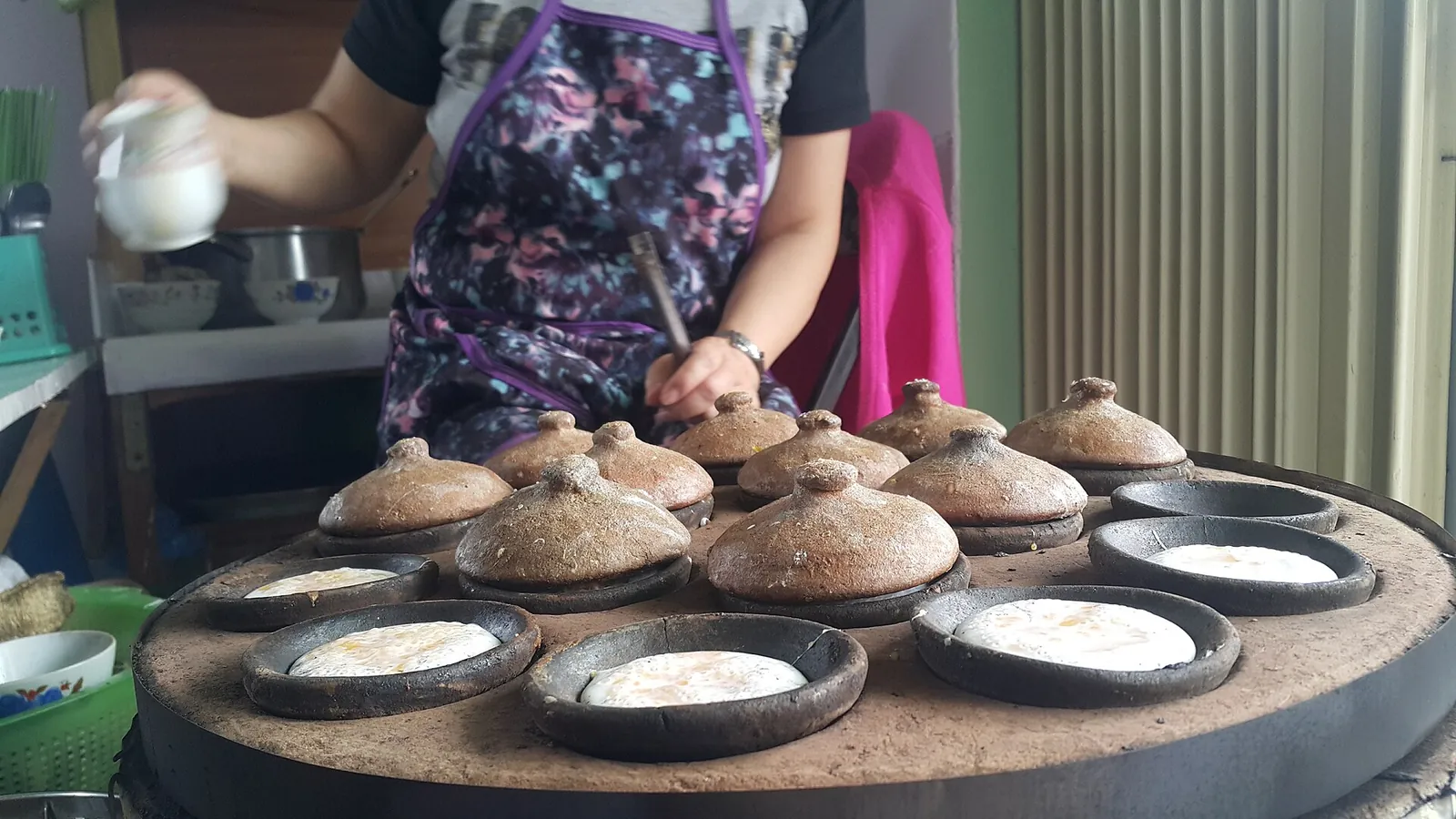
Bite-size rice-flour cakes cooked in clay moulds, which the national tourism site describes in Da Lat topped with quail egg and dunked in an onion sauce.
- Where to look
- Street stalls in central Da Lat; look for the trays of small clay moulds over charcoal.
- Fit it into your day
- Breakfast on day 5 before the market, or a warm snack in the evening.
Often served with fish-sauce-based dips; ask if you avoid fish sauce.
Bánh mì xíu mại
Bread eaten with xíu mại, dipped in a hot, meaty broth; the national tourism site lists it as one of Da Lat's evening snacks.
- Where to look
- Small shops and street stalls in central Da Lat.
- Fit it into your day
- A light supper on day 4 after the drive up from Nha Trang.
Pork-based; not one for vegetarians.
Bo ke seafood grills, Mui Ne
Seaside grills where you choose from tanks of fresh seafood and the cooking method. The national tourism site lists oysters, lemongrass clams, garlic scallops, grilled prawns, crispy fish and chilli-stuffed squid.
- Where to look
- Along the sea wall on the Mui Ne strip.
- Fit it into your day
- Dinner on day 6 after the red dunes.
Seafood is usually priced by weight; confirm the price and the weight before it goes on the grill.
Day 3: down the coast via Ganh Da Dia and Tuy Hoa
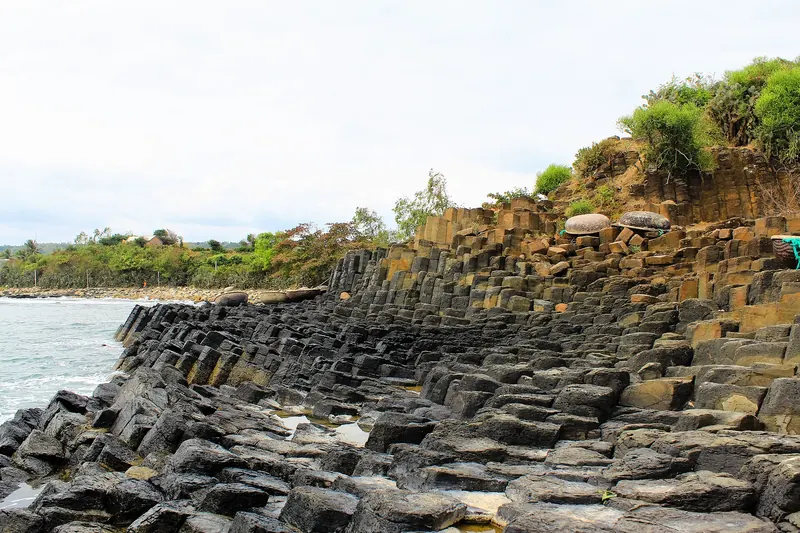
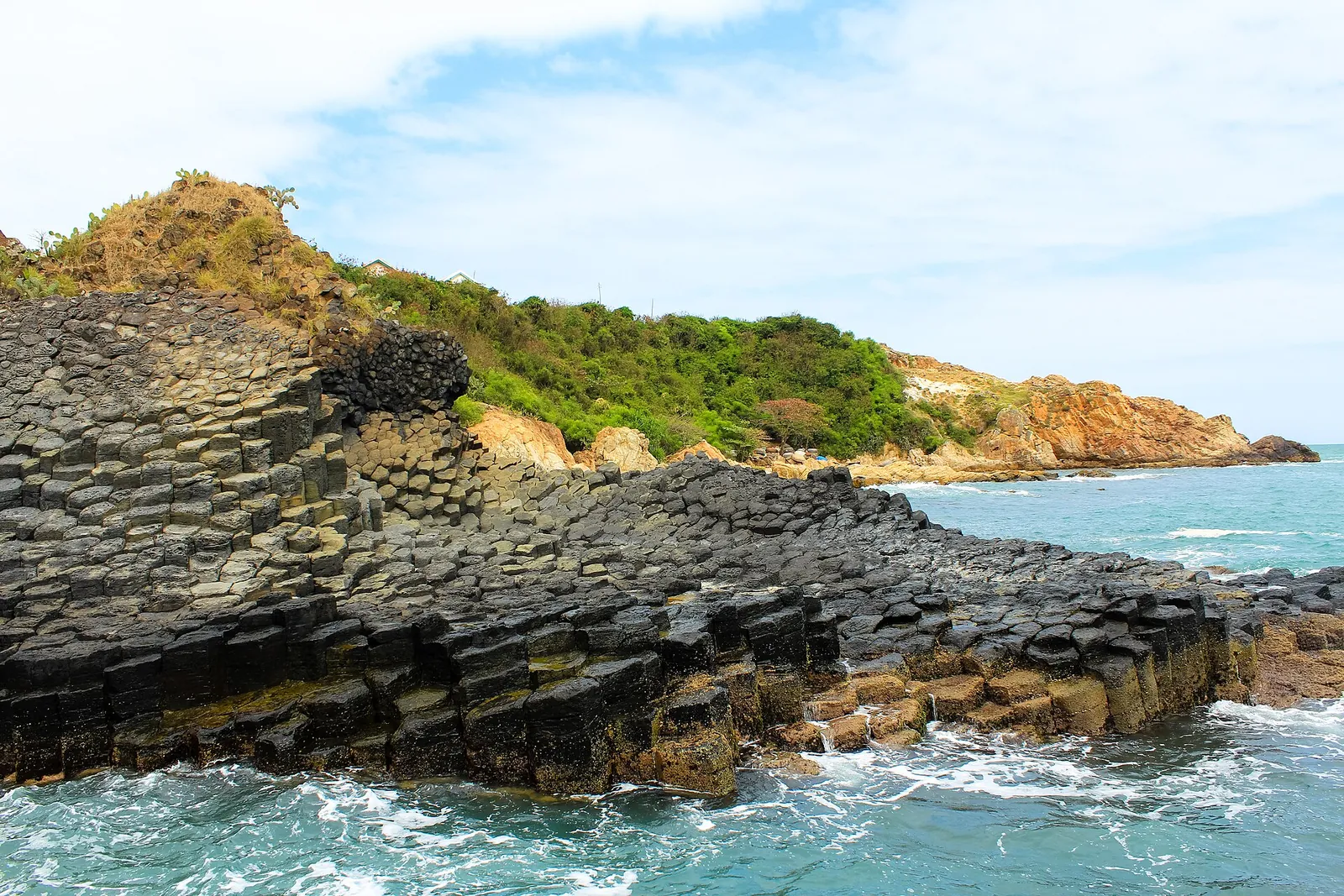
This is the day that makes the route different from the classic one. With a car and driver, leave Quy Nhon early for Ganh Da Dia in Tuy An, north of Tuy Hoa. Vietnam's Department of Cultural Heritage describes basalt from volcanic activity cracking into regular five- and six-sided columns that were later exposed by the sea; seen from the side they look like stacked plates, which gives the place its name. The rocks are uneven and wet near the water, so wear shoes with grip. The national tourism site notes that a beach next to the columns offers food and drinks, and a path leads north up the cliffs to a lighthouse.
Continue south to Bai Xep in Phu Yen (not the Quy Nhon village of the same name), the grassy bluff lined with yellow-flowering cactus that, according to the national tourism site, became famous after the film *Dear Brother* shot a scene there. Have lunch in Tuy Hoa, and climb to Nhan Tower, an 11th-century Cham tower on a hill above the Da Rang River with a view over the town and its bridges, before the last stretch to Nha Trang.
If you would rather not spend a day in a car, take the train. The rail operator's route list shows trains from Quy Nhon station and from Dieu Tri, on the main line, stopping at Tuy Hoa and Nha Trang; check the current timetable on Vietnam Railways' booking site, dsvn.vn. You lose Ganh Da Dia and Bai Xep, which are not near the stations. If you want both the coast and a slower pace, stay a night in Tuy Hoa instead and add a sunrise at Mui Dien, the lighthouse cape that the national tourism site calls Vietnam's second-to-easternmost point.
Day 4: Nha Trang in a morning, then up to Da Lat
With one night in Nha Trang, choose the morning. Go early to the Po Nagar Cham Towers, which the national tourism site dates to the 8th century and calls a must-see; dress modestly, as you would for any temple. Then swim off Tran Phu Beach, the seven-kilometre city beach, before the midday heat. A day in Nha Trang Bay, with Hon Mun's marine reserve for snorkelling, needs a full day of its own: add a second night if the islands are why you came.
Leave for Da Lat around midday. The national tourism site says Da Lat is a few hours from Nha Trang by car or shuttle van, and that buses run between the two; the road climbs steeply from the coast into the highlands, so a car with a driver is the comfortable choice if you are prone to motion sickness. Pack a warm layer: the national tourism site advises a jumper from November to January, and the highland air is cool all year.
Da Lat no longer has a mainline railway, so this and the next leg are by road. Sleep in the centre between Xuan Huong Lake and the central market, where the evening food stalls are within walking distance.
Day 5: a full day in Da Lat
Start early at the central market, the multi-level building in the middle of town; the national tourism site recommends the early morning, when the produce stalls are busiest, and points to cooks serving mì Quảng on the upper floor all day. It is also where to buy preserved fruit, candied ginger, coffee and artichoke tea. Walk round Xuan Huong Lake afterwards and on to the old railway station.
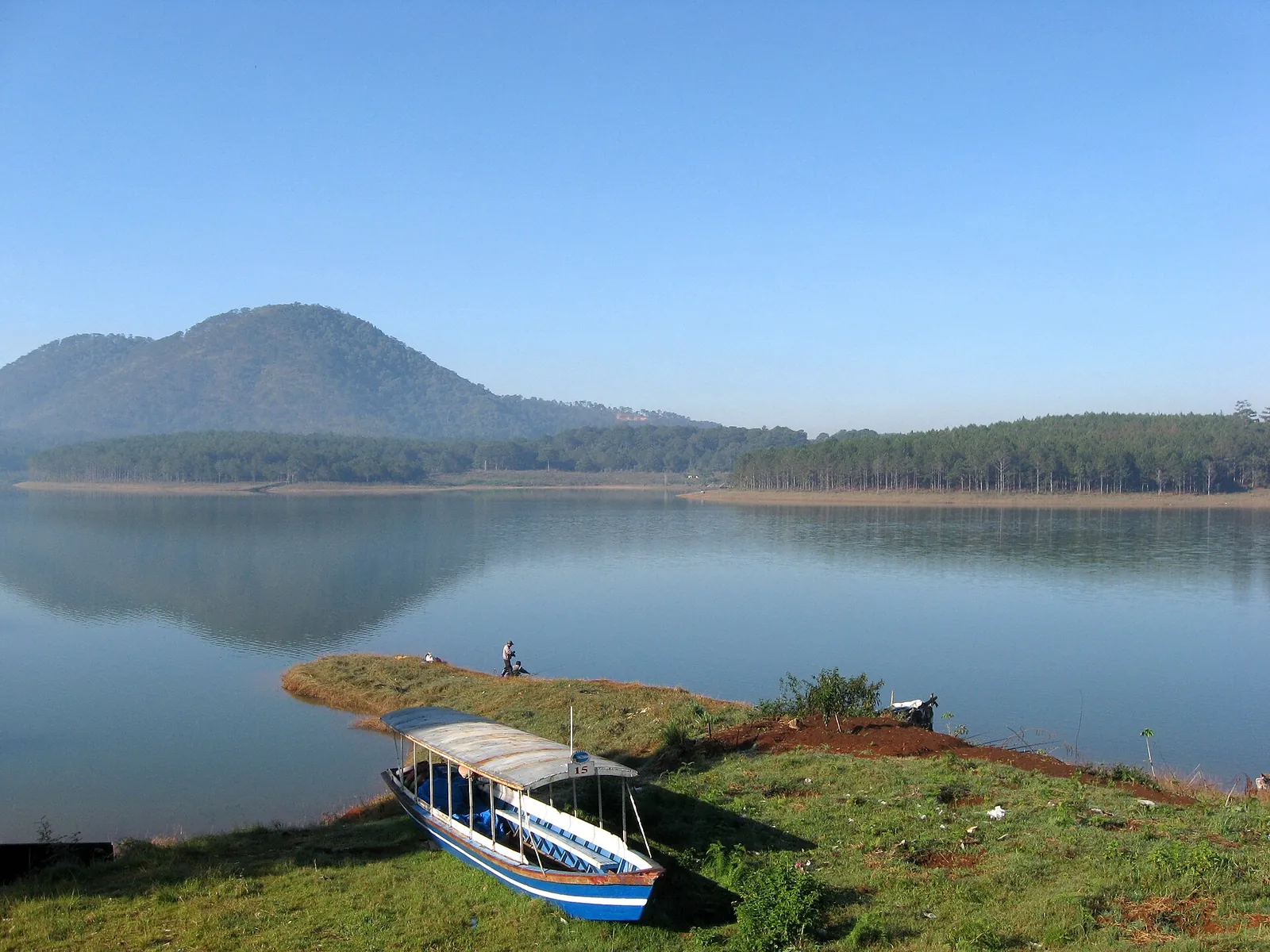
Spend the afternoon outdoors. Datanla falls is where the national tourism site sends you for canyoning, a guided mix of abseiling, climbing, swimming and sliding; ask about group size and what happens if the water is high after rain. If you prefer something quieter, take a taxi to Tuyen Lam Lake, south of town, or ride the short tourist train from the station out to Trai Mat for the mosaic-covered Linh Phuoc Pagoda.
Da Lat's rainy season brings afternoon showers, so put anything you would hate to cancel in the morning. Finish with the evening street stalls, where bánh căn and hot bánh mì xíu mại suit the cool air.
Days 6–7: Mui Ne, then on to Ho Chi Minh City
Leave Da Lat in the morning for Mui Ne, which the national tourism site also puts a few hours away by car or shuttle van. Check in along the beach road in Ham Tien, then go to the red dunes, just outside town, for sunset and a slide down the sand. Eat at one of the *bo ke* seafood grills along the sea wall, where you pick the seafood from the tanks and choose how it is cooked.
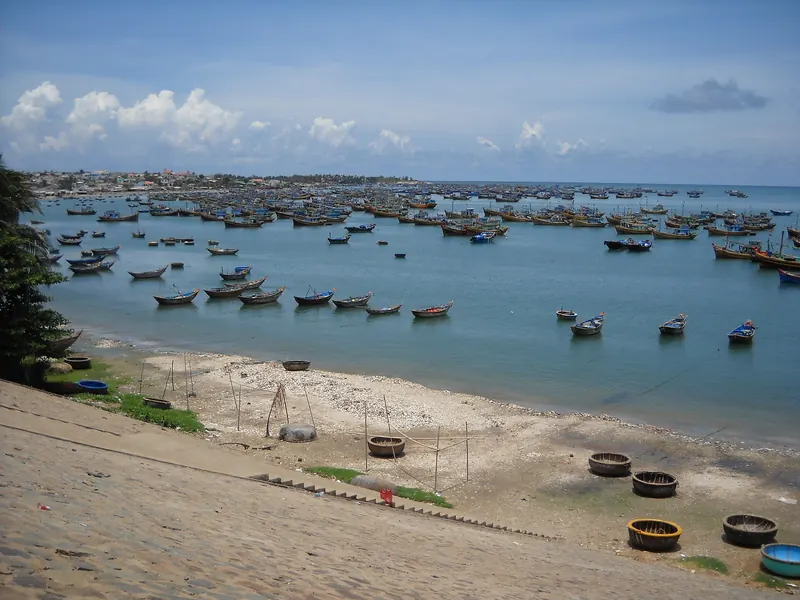
On day 7, choose one early start. The fishing village is in full swing just after dawn, as boats unload and the catch is sorted; stand back and ask before photographing people. Or drive the 25 km to the white dunes for sunrise, which the national tourism site calls worth the early effort. Then head for Ho Chi Minh City: the national tourism site puts Mui Ne about four hours away by road, and the rail operator's route list includes SPT trains between Phan Thiet and Saigon. Spend the night in the city and fly out on day 8.
If you have an extra day, use it here: a second night in Mui Ne gives you both dunes, the harbour and an unhurried beach afternoon.
The plan at a glance
This is an editorial suggestion, not a timetable. Check the weather and sea each morning, and confirm transfer times with your driver or operator.
- Day 1 — Quy Nhon: fly into Phu Cat, the city beach and the Twin Towers in the late afternoon.
- Day 2 — Phuong Mai Peninsula: Eo Gio, the boat to Ky Co, a seafood lunch and Nhon Ly; Ghenh Rang and Bai Xep if the sea is rough.
- Day 3 — Coast road to Nha Trang: Ganh Da Dia, Bai Xep in Phu Yen, lunch and Nhan Tower in Tuy Hoa; or the train.
- Day 4 — Nha Trang to Da Lat: Po Nagar early, a swim, then the road up into the highlands.
- Day 5 — Da Lat: the central market and Xuan Huong Lake, then Datanla, Tuyen Lam Lake or the Trai Mat train.
- Day 6 — Down to Mui Ne: check in on the Ham Tien strip, red dunes at sunset, dinner at a seafood grill.
- Day 7 — To Ho Chi Minh City: the fishing village at dawn or the white dunes at sunrise, then the road or train to Saigon; fly out on day 8.
Practical questions
Is seven days enough for Quy Nhon, Nha Trang, Da Lat and Mui Ne?
Yes, if you accept one night each in Nha Trang and Mui Ne and treat three of the days as part-travel days. Two nights in Quy Nhon and Da Lat are the ones not to cut. With eight days, add a night in Nha Trang for the bay islands or in Mui Ne for both sets of dunes.
Should I do the route north to south or the other way?
Either works, but north to south ends you within road distance of Ho Chi Minh City, where most international flights leave from, and starts you at Phu Cat airport near Quy Nhon. Doing it in reverse means a long journey north at the end of the trip.
Can I do the whole route by train?
Only part of it. Trains link Quy Nhon (or Dieu Tri), Tuy Hoa and Nha Trang on the coastal main line, and SPT trains run between Phan Thiet and Saigon, but Da Lat is not on the mainline railway. The Nha Trang to Da Lat and Da Lat to Mui Ne legs are by road, by car, shuttle van or bus.
When is the best time for this trip?
January to April is the safest window for the whole route. September to December is the rainy and storm season on the Nha Trang and Phu Yen coast, Da Lat's rains run from about April to October, and the UK government gives May to November as the tropical-cyclone season. Keep boat and beach days flexible whenever you go.
Do I need a driver for the coast between Quy Nhon and Nha Trang?
To see Ganh Da Dia, Bai Xep and Nhan Tower in one day, a car with a driver is the practical way; we could not find public transport to the capes. If you only want to get from Quy Nhon to Nha Trang, the train is simpler.
Is Nha Trang worth only one night?
For Po Nagar and a swim, yes. If you want a day on the water in Nha Trang Bay, with snorkelling at the Hon Mun marine reserve, give it a second night: the island trips take a full day.
Sources and checks before you travel
Reference sources for the version dated 3 October 2026. Confirm opening times, access, transport and conditions for your travel dates.
- Vietnam National Authority of Tourism: Ky Co beach's pristine beauty ↗ — opens in a new tab
- Vietnam National Authority of Tourism: Phuong Mai Peninsula ↗ — opens in a new tab
- Vietnam National Authority of Tourism: Come to explore Quy Nhon City ↗ — opens in a new tab
- Vietnam National Authority of Tourism: homestays at Bai Xep fishing village ↗ — opens in a new tab
- Vietnam National Authority of Tourism: Finding peacefulness in Quy Nhon ↗ — opens in a new tab
- Vietnam National Authority of Tourism: Australian magazine dubs Quy Nhon a hidden gem ↗ — opens in a new tab
- Vietnam Tourism: Phu Yen, undiscovered nature and remote culture ↗ — opens in a new tab
- Vietnam Tourism: Phu Yen ↗ — opens in a new tab
- Department of Cultural Heritage: Ganh Da Dia ↗ — opens in a new tab
- Vietnam Tourism: Nha Trang ↗ — opens in a new tab
- Vietnam Tourism: 7 reasons to visit Nha Trang ↗ — opens in a new tab
- Vietnam Tourism: Da Lat ↗ — opens in a new tab
- Vietnam Tourism: 8 ways to appreciate Da Lat ↗ — opens in a new tab
- Vietnam Tourism: weather and climate in Vietnam ↗ — opens in a new tab
- Vietnam Tourism: Wind, sand and sea, Mui Ne's must-do list ↗ — opens in a new tab
- Vietnam Tourism: Binh Thuan ↗ — opens in a new tab
- Vietnam Railways passenger company: train routes ↗ — opens in a new tab
- UK FCDO travel advice: Vietnam safety and security ↗ — opens in a new tab
Photo credits
The basalt columns of Ganh Da Dia, north of Tuy Hoa, on the coast road between Quy Nhon and Nha Trang
Photograph: Đông Hồ — opens in a new tab · CC BY-SA 2.0 — opens in a new tab
Changes: Resized and converted to WebP; displayed with responsive crops. · Original photograph and licence details ↗ — opens in a new tab
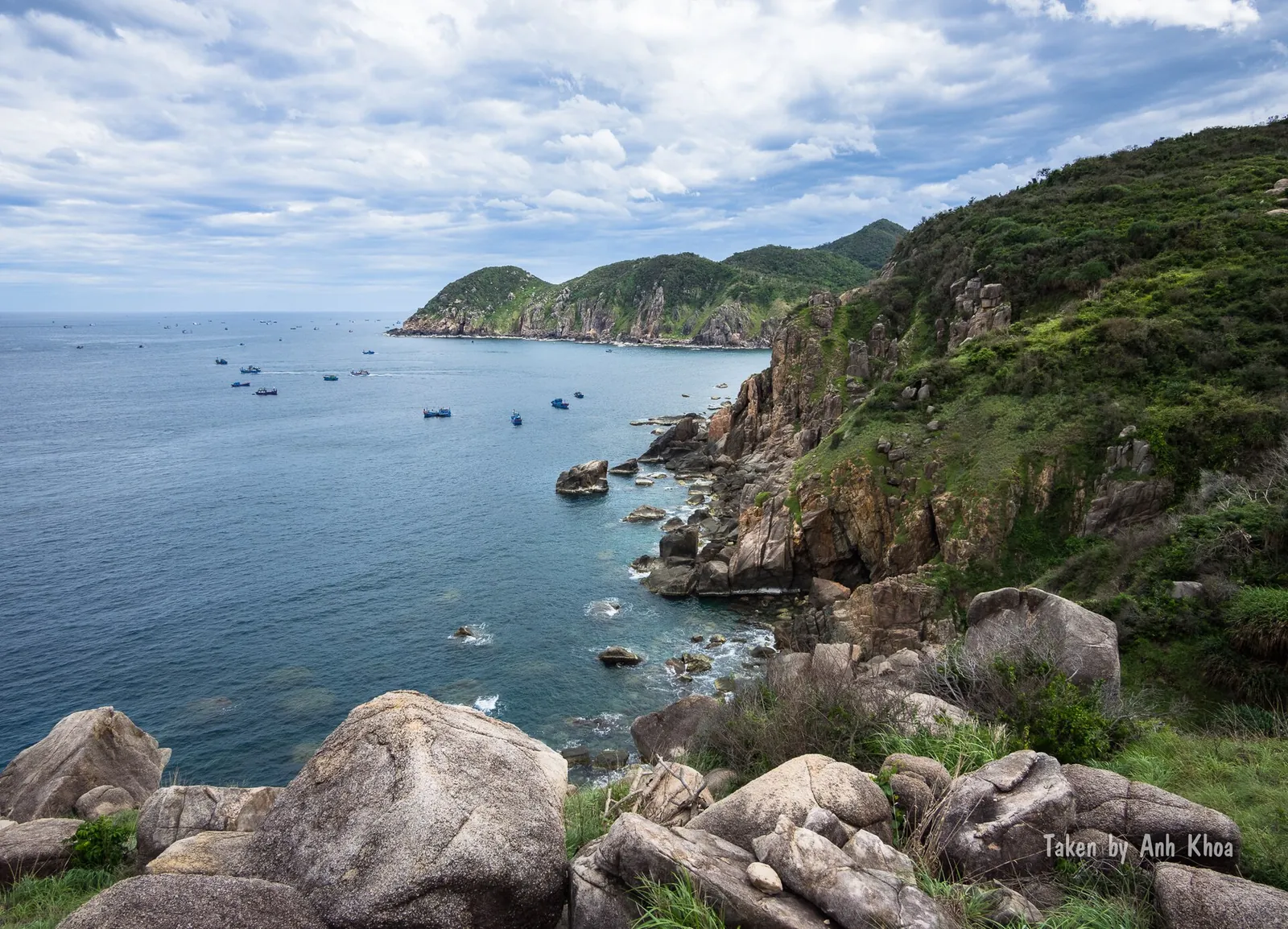
The coast at Mui Dien (Dien Cape), south of Tuy Hoa
Photograph: Tran Anh Khoa (zorrotran) — opens in a new tab · CC BY-SA 2.0 — opens in a new tab
Changes: Resized and converted to WebP; displayed with responsive crops. · Original photograph and licence details ↗ — opens in a new tab
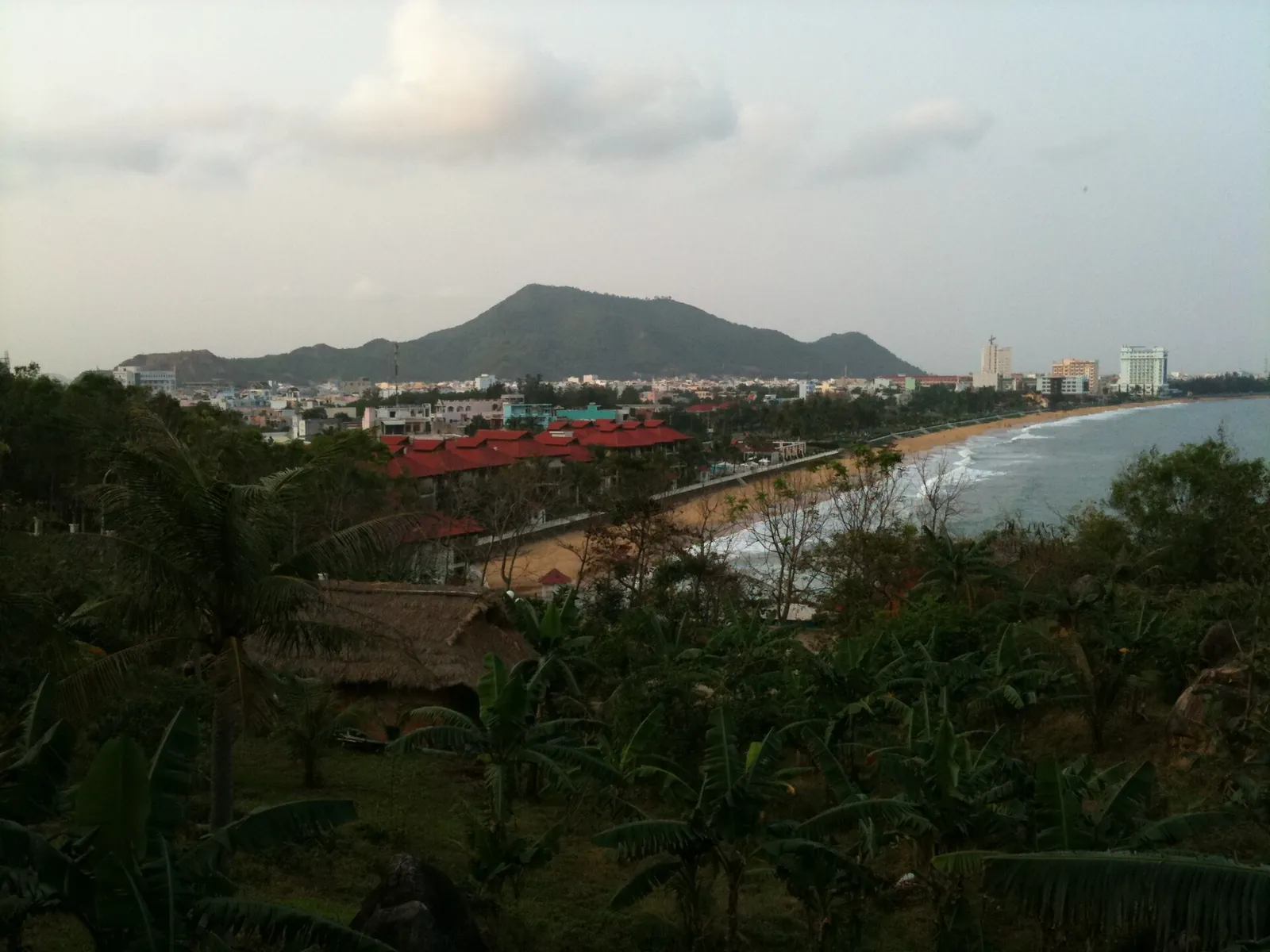
Quy Nhon and its city beach seen from Ghenh Rang
Photograph: Dragfyre — opens in a new tab · CC BY-SA 3.0 — opens in a new tab
Changes: Resized and converted to WebP; displayed with responsive crops. · Original photograph and licence details ↗ — opens in a new tab
Tuyen Lam Lake, south of Da Lat
Photograph: Diane Selwyn — opens in a new tab · Public domain — opens in a new tab
Changes: Resized and converted to WebP; displayed with responsive crops. · Original photograph and licence details ↗ — opens in a new tab
Bánh căn, small rice-flour cakes cooked in clay moulds
Photograph: VinhNguyen.1257 — opens in a new tab · CC BY-SA 4.0 — opens in a new tab
Changes: Resized and converted to WebP; displayed with responsive crops. · Original photograph and licence details ↗ — opens in a new tab