Gangwon · Gangwon State
Yeongwol travel guide: Cheongnyeongpo, King Danjong and Donggang rafting
Yeongwol is a small county town in southern Gangwon State where the Donggang and Seogang rivers wind through the hills in tight loops, and the Donggang flows on into the Namhangang. Its story is a sad one. In 1456 the boy-king Danjong, sixth ruler of the Joseon dynasty, was sent here in exile after his uncle took the throne. He was held on a river bend that could only be reached by boat, and he died here, still a teenager. His tomb, Jangneung, is now part of a UNESCO World Heritage site. Most of what visitors come for lies within a short drive of the town: Cheongnyeongpo, where he was confined; the bends and cliffs of the Seogang; rafting on the Donggang; and a public observatory on the mountain above town. It is a quiet place, best for travellers who like history told through landscape.
- Suggested time
- 1–2 nights; a long day at most if you only want the Danjong sites
- Where to stay
- Yeongwol-eup town centre, near Yeongwol Station and the bus terminal
- Season and timing
- Spring and autumn are the easy seasons for walking the Danjong sites and viewpoints. The Danjong Culture Festival runs for three days from the last Friday of April (24 to 26 April in 2026). Rafting on the Donggang runs from April to October according to the county, and the Donggang Raft Festival takes place in late July or early August (31 July to 2 August in 2026). In winter the rafting stops, the Hanbando wooden-raft ride closes from 1 December to 14 March, and the Danjong sites and Byeolmaro stay open.
The short answer
Give Yeongwol one night, or two if you want to raft or drive out to the Kim Satgat valley. Sleep in Yeongwol-eup, the town around the station and bus terminal. Day one: Jangneung and Cheongnyeongpo, which are both close to town, then Byeolmaro Observatory after dark (book ahead). Day two: the Korean Peninsula river bend at Hanbando-myeon and Seondol rock, or a morning rafting on the Donggang between April and October. Get there by bus from Dong Seoul Terminal or Seoul Express Bus Terminal, or by train to Yeongwol Station on the Taebaek Line. The two Danjong sites are near town, but you will want a car or a taxi for everything else. Avoid Mondays, when Cheongnyeongpo, Jangneung and Byeolmaro all close.
Following King Danjong: Cheongnyeongpo and Jangneung
Do the Danjong sites first and in order, because the landscape only makes sense once you know the story. Danjong became king as a child, was forced to give up the throne to his uncle, who became King Sejo, and in 1456, when six court officials tried to restore him, he was demoted and sent into exile. According to Yeongwol County, he was escorted here via Wonju and Jucheon, guarded by fifty soldiers.
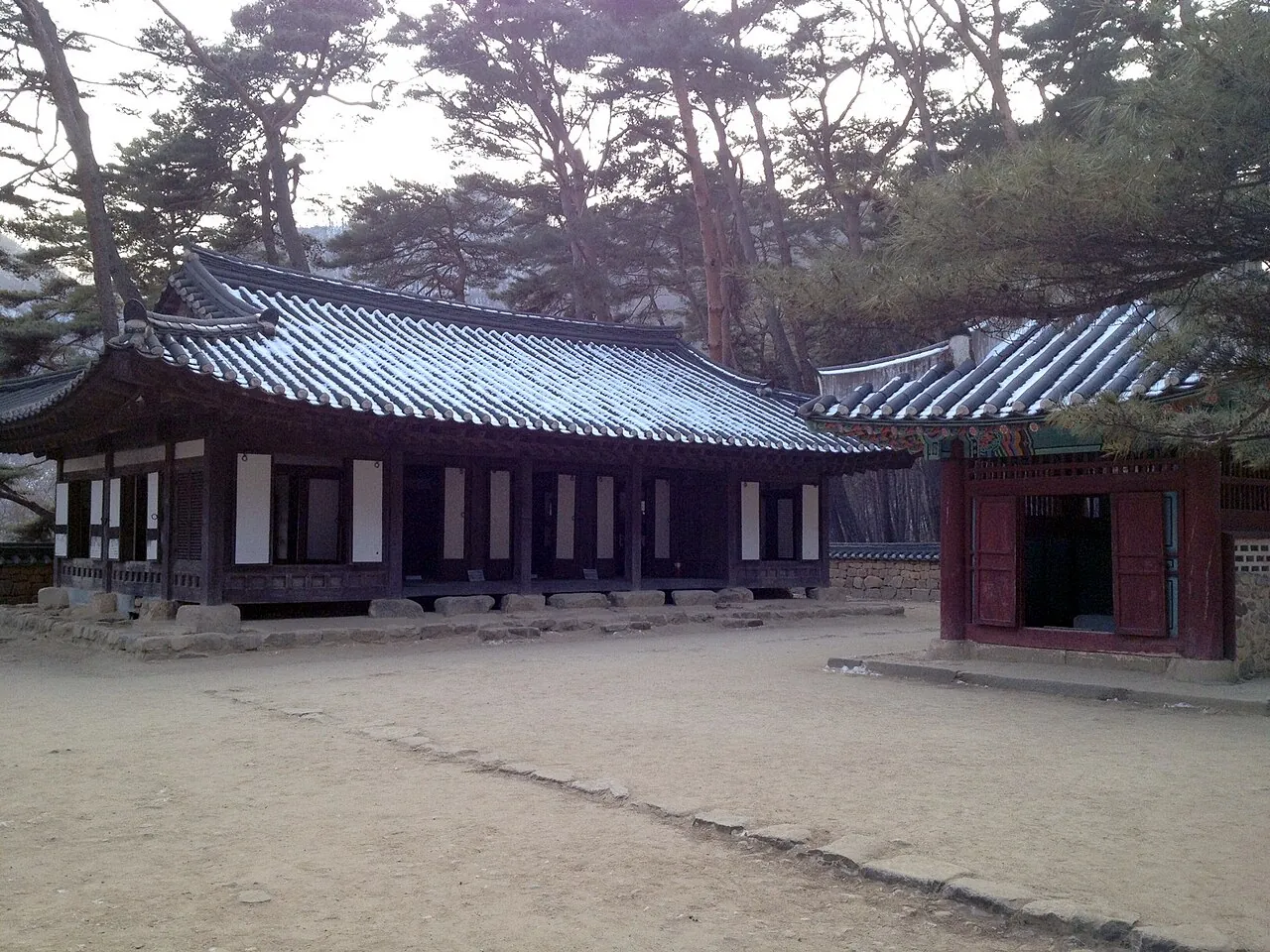
Cheongnyeongpo, on the upper Namhangang close to town, is where he was confined. The river wraps around it on the east, south and north, and the Yukyukbong cliff closes off the west, so even today you cross by ferry. The county describes it as an island inside the land, covered in dense pine forest; it is designated Scenic Site No. 50. Inside stands a house where Danjong is said to have stayed. The local official Eom Heung-do is said to have crossed at night to pay his respects. County material also names the Gwaneumsong, an old pine that, in the telling, watched over the exiled king. When we checked on 2026-10-03, VisitKorea listed hours of 09:00–18:00 with last admission at 17:00, closed on Mondays and on the days of Seollal and Chuseok, with adult admission at 3,000 won. The county's admission table notes that this fee includes the ferry.
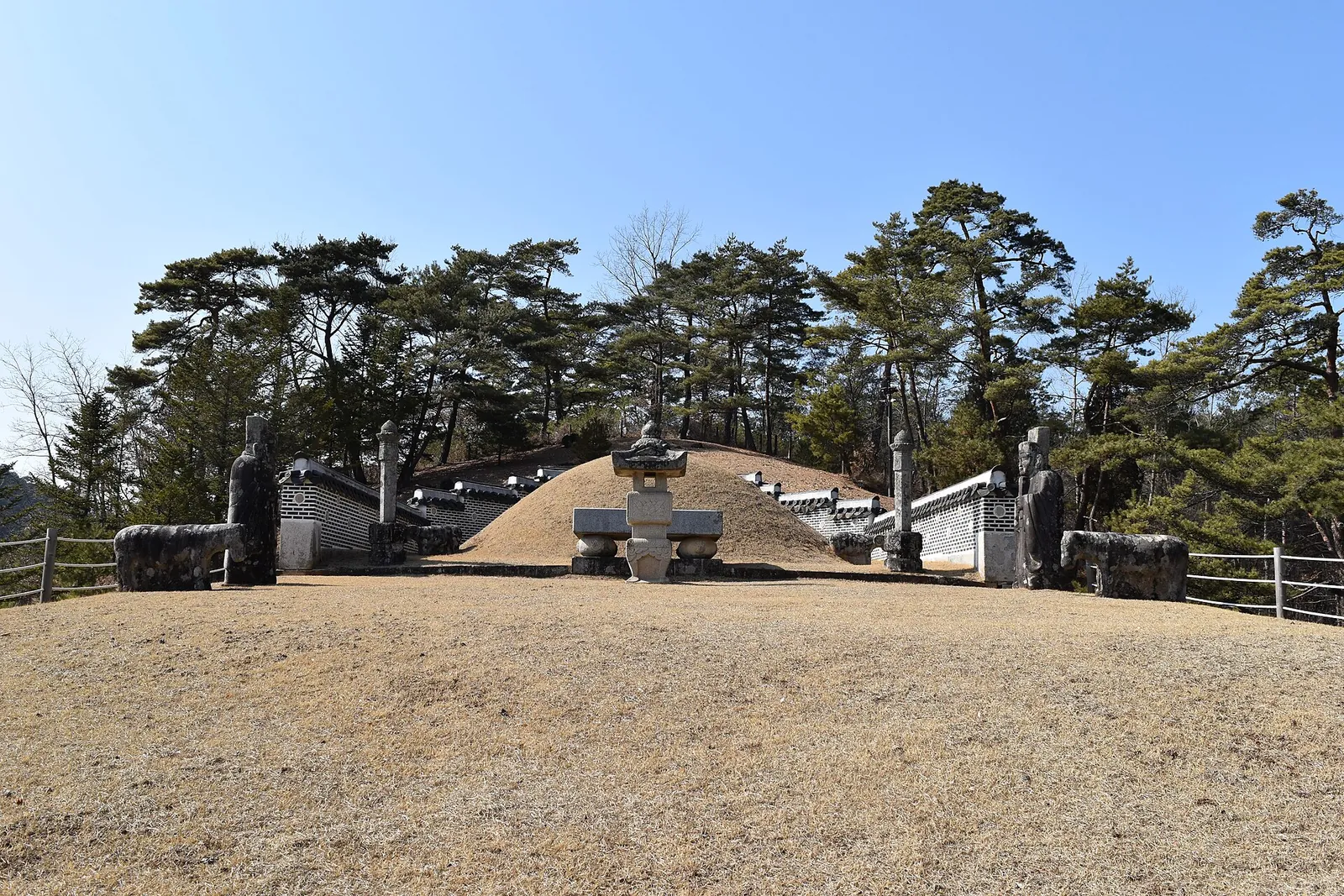
Jangneung, Danjong's tomb, is at 190 Danjong-ro, in the centre of Yeongwol-eup. VisitKorea notes that it is modest and smaller than most royal tombs, which fits the story. The county says it was designated a historic site in 1970 and was inscribed on the UNESCO World Heritage List on 30 June 2009, as part of the Royal Tombs of the Joseon Dynasty. Start at the Danjong History Hall: it covers his life from birth to death, maps his exile route from Changdeokgung Palace in Seoul to Yeongwol and has old photographs of Cheongnyeongpo and wax figures of the king and his escort. From the hall, a path climbs to the mound. When we checked on 2026-10-03, VisitKorea listed hours of 09:00–18:00 (last admission 17:30), closed on Mondays, with adult admission at 2,000 won.
In town, Gwanpungheon, the old magistrate's office, and Jagyuru Pavilion are free and open at all hours, according to VisitKorea. VisitKorea's listing says Danjong stayed at Jagyuru during his exile and often wrote poems there, comparing his grief to the cry of the jagyu, a bird with a mournful call. The two buildings are about 50 metres apart and make a short stop between the main sites.
- Order: Jangneung and its history hall first, then Cheongnyeongpo, then Gwanpungheon in town.
- Cheongnyeongpo takes longer than it looks, because of the ferry crossing each way.
- Neither main site opens on Mondays.
River bends of the Seogang: the Korean Peninsula terrain and Seondol
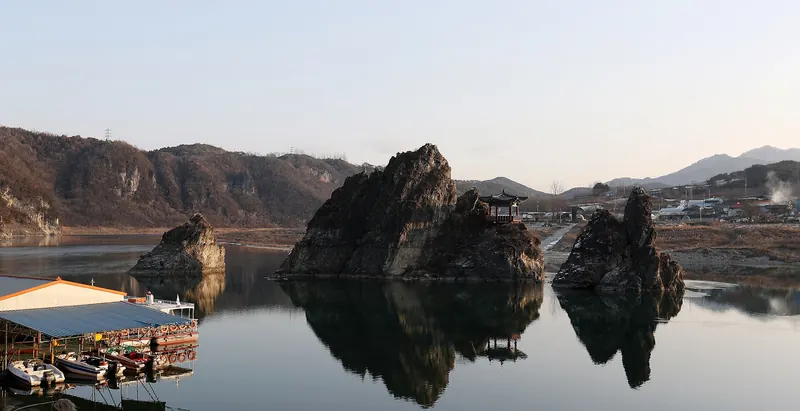
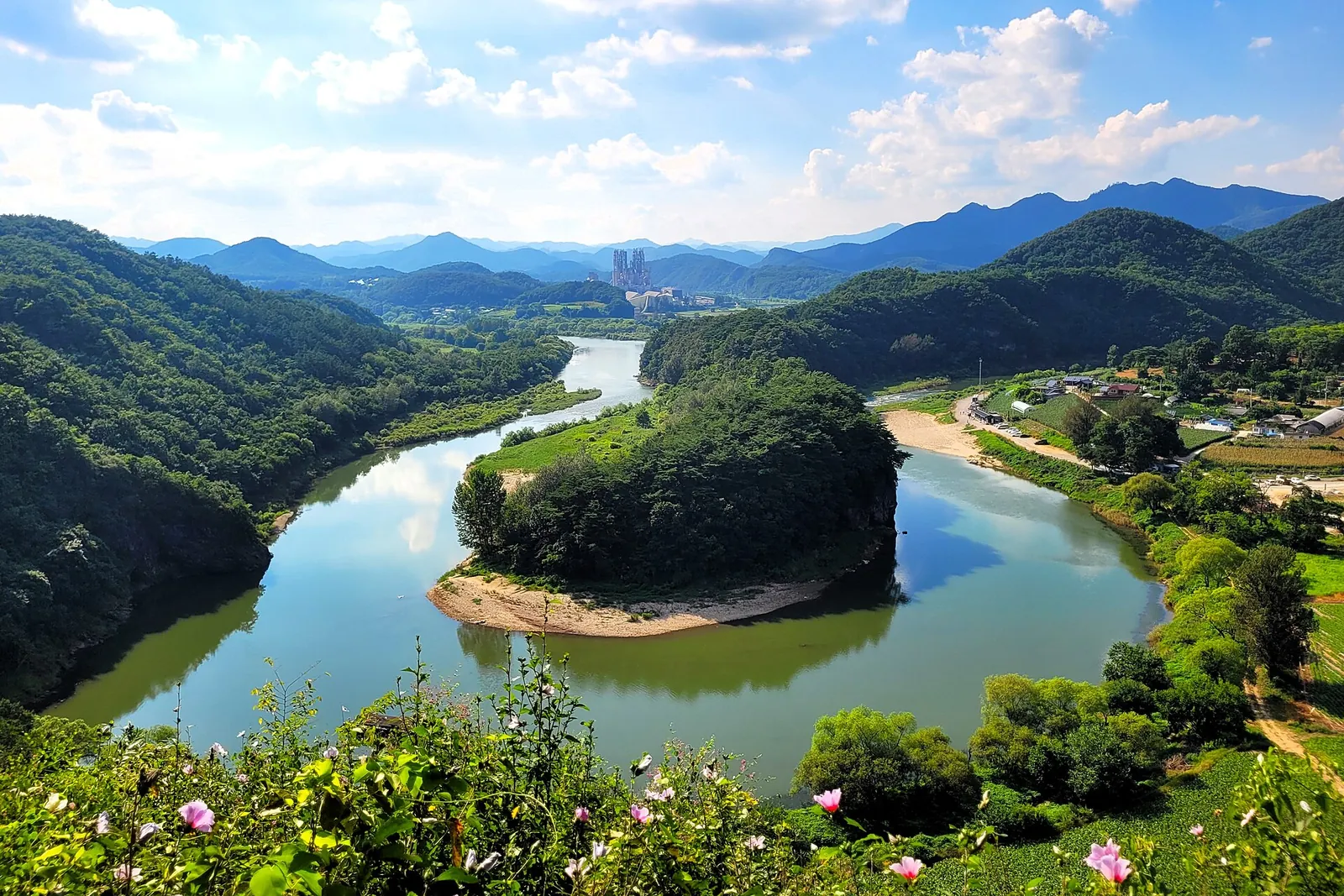
Yeongwol's other draw is its rivers, which wind back on themselves so tightly that their loops have become sights in their own right. The best known is the Korean Peninsula Terrain (Hanbando Jihyeong) at 555 Hanbando-ro in Hanbando-myeon, a wooded headland that, seen from above, has the outline of the Korean Peninsula, with water on three sides. VisitKorea explains that it was shaped by the erosion of an incised meandering river and describes it as part of the Gangwon Paleozoic National Geopark. From the car park it is an 800-metre, roughly 15-minute walk along a pine trail to the viewpoint. VisitKorea lists it as open at all hours, and the county notes that it is a good place for sunset.
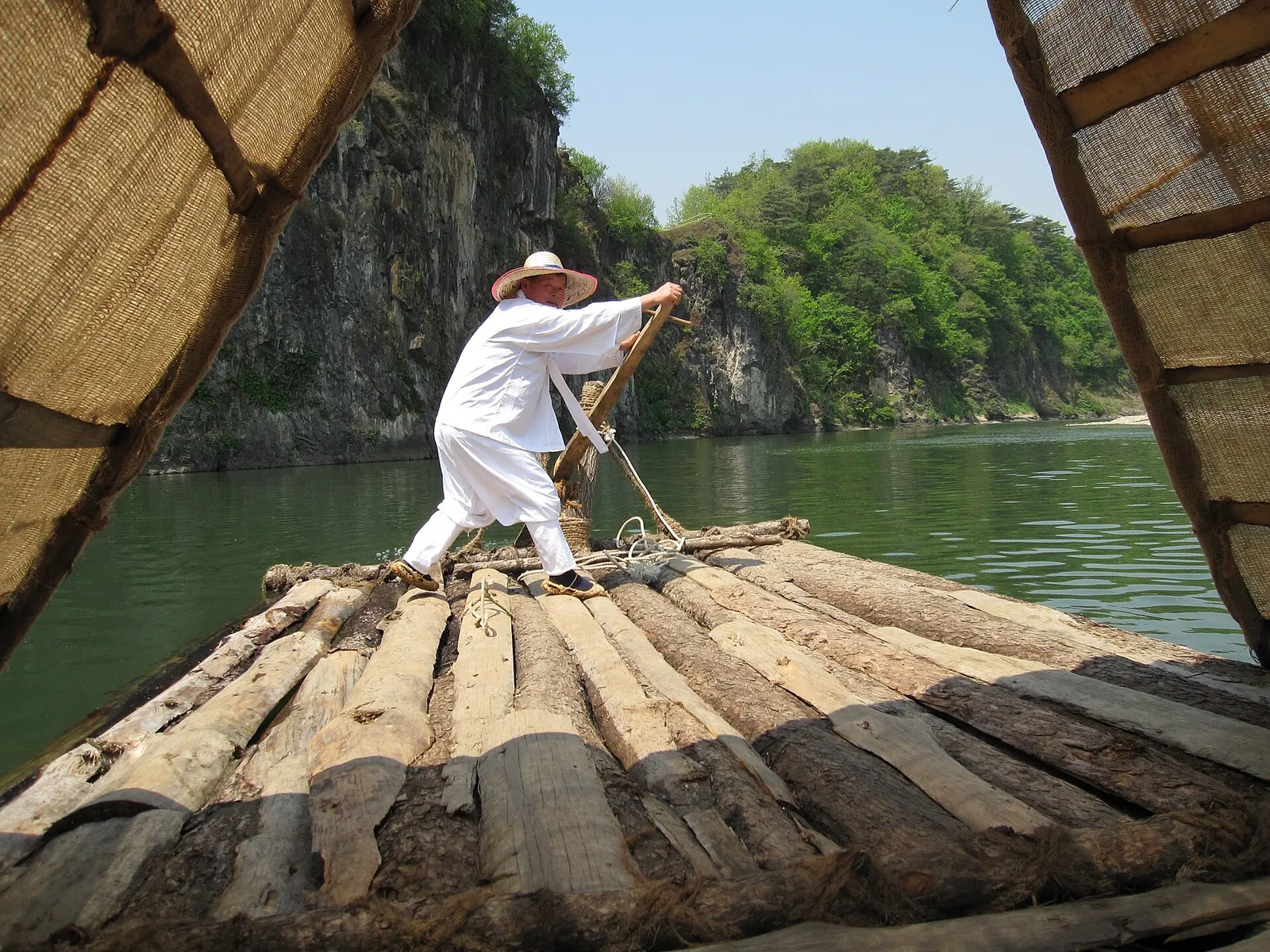
To see the bend from the water, Hanbando Raft Village in Seonam Village runs wooden rafts from the 'east coast' of the mini peninsula to its 'west coast' and back, a trip of about 30 minutes in which the boatman tells the story of the landscape. VisitKorea says it operates from spring to autumn and lists it as closed from 1 December to 14 March and in bad weather.
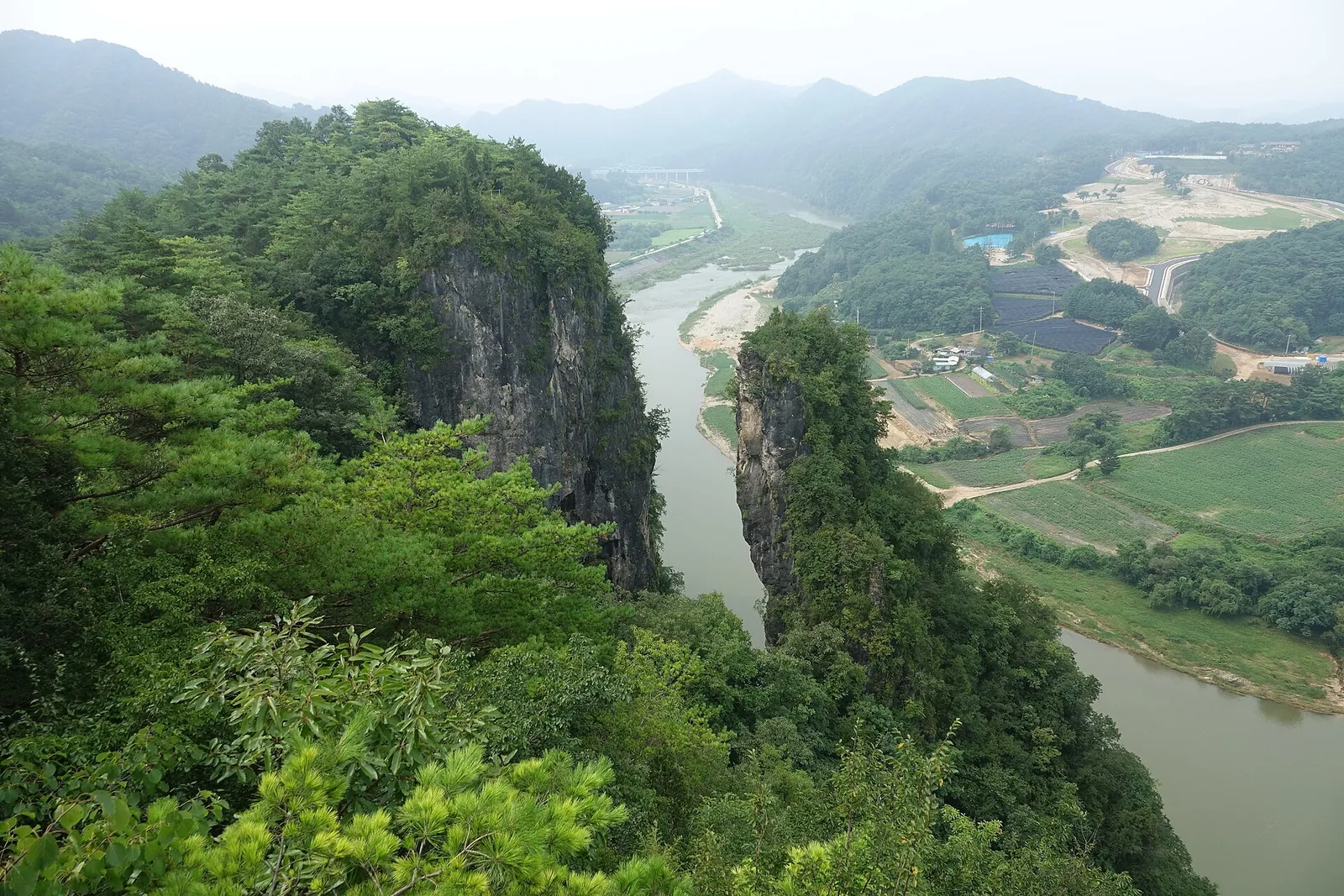
Seondol, in Bangjeol-ri, is a standing rock about 70 metres high beside the Seogang, split from the cliff as if, in the county's words, a great blade had cut it and stopped. It is a short stop from the road, and it pairs naturally with the Hanbando viewpoint on a half-day drive.
Make time for the local food
What to eat and where to look
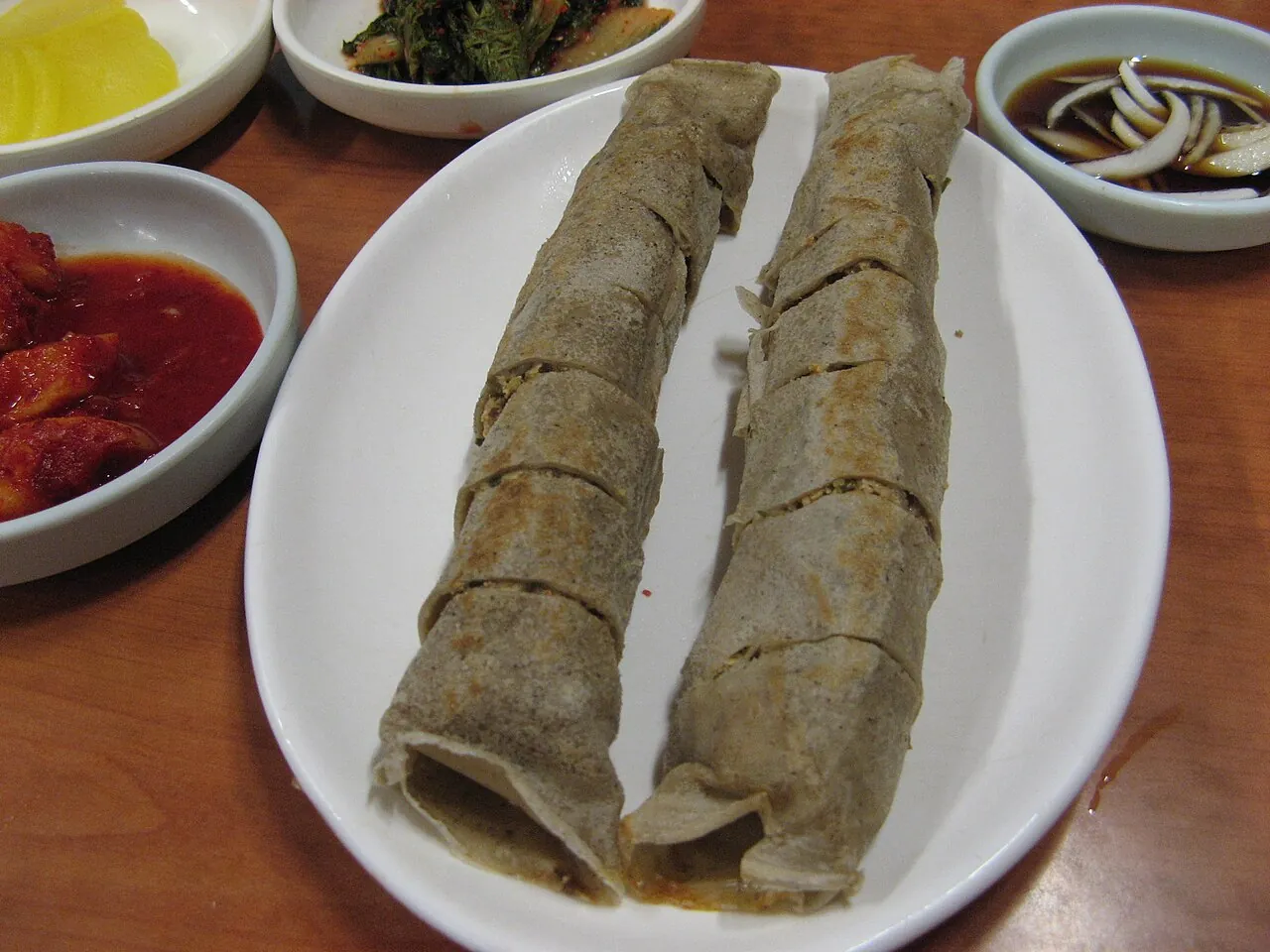
Buckwheat jeonbyeong and pancakes at Seobu Market
Seobu Morning Market, open since 1959, is the town's food market, and VisitKorea notes a cluster of shops making wheat and buckwheat pancakes there. The county singles out jeonbyeong, thin buckwheat crepes rolled around spicy kimchi, as the market's signature snack, along with olchaengi guksu noodles, susu bukkumi (sorghum cakes) and savoury pancakes.
- Where to look
- Yeongwol Seobu Market, 30-1 Jungang-ro, Yeongwol-eup. As the name says, it started as a morning market, and hours vary by stall.
- Fit it into your day
- A late breakfast or snack lunch between Jangneung and Cheongnyeongpo; share a plate of jeonbyeong and a buckwheat pancake.
Buckwheat is a common allergen, and the kimchi filling is spicy.
Dakgangjeong (sweet-and-spicy fried chicken)
Crisp fried chicken pieces in a sticky sweet-and-spicy glaze. The county calls it the market's best-known snack and says visitors often take a box home.
- Where to look
- Seobu Market in Yeongwol-eup, where VisitKorea lists dakgangjeong among the main products.
- Fit it into your day
- Takeaway for the evening or for a bus or train journey.
The glaze is both sweet and spicy, and the pieces are best eaten fresh.
Gondeure and eosuri herb rice
Rice cooked with mountain greens and eaten with soy-based seasoning; the county counts gondeure (thistle) among Yeongwol's local products. VisitKorea describes Yeongwol Bakgane as serving eosuri (East Asian hogweed) rice and gondeure rice in set meals with bulgogi, deodeok root or spicy pork.
- Where to look
- Yeongwol Bakgane, 149 Jungang-ro, Yeongwol-eup. When we checked on 2026-10-03, VisitKorea listed 10:00–20:00 (last order 19:00), and noted that it may close early if ingredients run out.
- Fit it into your day
- Lunch on the town day; the set menus make a full meal.
The set menus are built around meat; ask if you need a meat-free meal.
Boribap (barley rice) and acorn jelly near Jangneung
Steamed barley rice mixed bibimbap-style with vegetables and red chilli paste. VisitKorea says Jangneung Boribapjip adds potatoes, and also serves mukchae, a chilled acorn-jelly soup with perilla oil, plus potato and buckwheat pancakes and grilled deodeok.
- Where to look
- Jangneung Boribapjip, 178-10 Danjong-ro, just below Jangneung. When we checked on 2026-10-03, VisitKorea listed 11:30–18:00.
- Fit it into your day
- Lunch straight after visiting the tomb.
Barley contains gluten; the chilli paste can be mixed in to taste.
Hanu beef and dasulgi haejangguk
For dinner, Yeongwol Donggang Hanu is a butcher-and-grill restaurant: you choose your cut at the counter and grill it yourself. VisitKorea lists a table charge of 5,000 won for guests aged 14 and over. For breakfast, the county recommends dasulgi haejangguk, a soup of freshwater snails, and says the shop opposite Yeongwol Station often has a queue.
- Where to look
- Yeongwol Donggang Hanu, 65 Hasongan-gil, Yeongwol-eup; the dasulgi soup restaurant opposite Yeongwol Station.
- Fit it into your day
- Beef for a group dinner; snail soup for breakfast before an early train or bus.
Check the price and weight of each cut before you buy. Dasulgi is a freshwater snail, so not suitable for those who avoid shellfish.
Rafting and walking on the Donggang
The Donggang (East River) runs about 60 kilometres from Jeongseon down to Yeongwol, according to VisitKorea, and stayed little developed because of its strong current and steep, cliff-lined course. VisitKorea names it one of Korea's top three rafting rivers, along with the Hantangang and the Naerincheon.
Yeongwol County lists the rafting season as April to October, with no rafting from November to March, and says the river has both gentle stretches and rapids. Its highlight is Eorayeon, a valley about 12 kilometres up the river that VisitKorea says was designated a national scenic site in December 2004 for its rock formations and pine forest. Rafting is run by private operators; the county lists the Donggang rafting association at the Eorayeon car park (www.rafting24.co.kr). Ask what the trip includes and how long you will be on the water before you book.
If you would rather walk, VisitKorea describes a popular trail to Eorayeon over Jatbong Peak of about three hours. The Donggang Raft Festival, held on the riverbanks in Yeongwol-eup, recreates the timber rafts that once carried wood down the Han River to Seoul, and adds rafting, water games and fireworks; the county listed 31 July to 2 August for 2026.
Byeolmaro Observatory, Gossigul Cave and the Kim Satgat valley
Byeolmaro Observatory sits on the summit of Bongnaesan (799.8 m), directly above town. It is a public observatory with an 80 cm main telescope, and the county says it opened in 2001 and has far more clear observing nights than the Korean average. The summit also gives a view over the lights of Yeongwol-eup. When we checked on 2026-10-03, VisitKorea said advance reservation was required, listed hours of 14:00–22:00 from October to March and 15:00–23:00 from April to September, closed on Mondays and the day after public holidays, and gave adult admission as 7,000 won. Book on www.yao.or.kr, go on a clear evening, and plan a car or taxi to the summit and back.
Gossigul Cave, at 1117 Yeongwoldong-ro, is a limestone cave with several levels and an underground stream. VisitKorea notes that it was designated a natural monument in 1969 and opened to the public in 1974. When we checked on 2026-10-03, VisitKorea listed hours of 09:00–18:00 (last tickets an hour before closing) and adult admission at 4,000 won.
In Gimsatgat-myeon, the Kim Satgat Historic Site honours the wandering poet Kim Satgat (1807–1863), named after the wide traditional hat he wore. It brings together his house, his tomb, a literary museum and a statue. VisitKorea suggests about two hours and lists the site as free; the museum closes on Mondays. On the same road, the Chosun Minhwa Museum holds about 3,000 Joseon-era folk paintings. Save these and Gossigul for a second day with a car.
Getting there and getting around
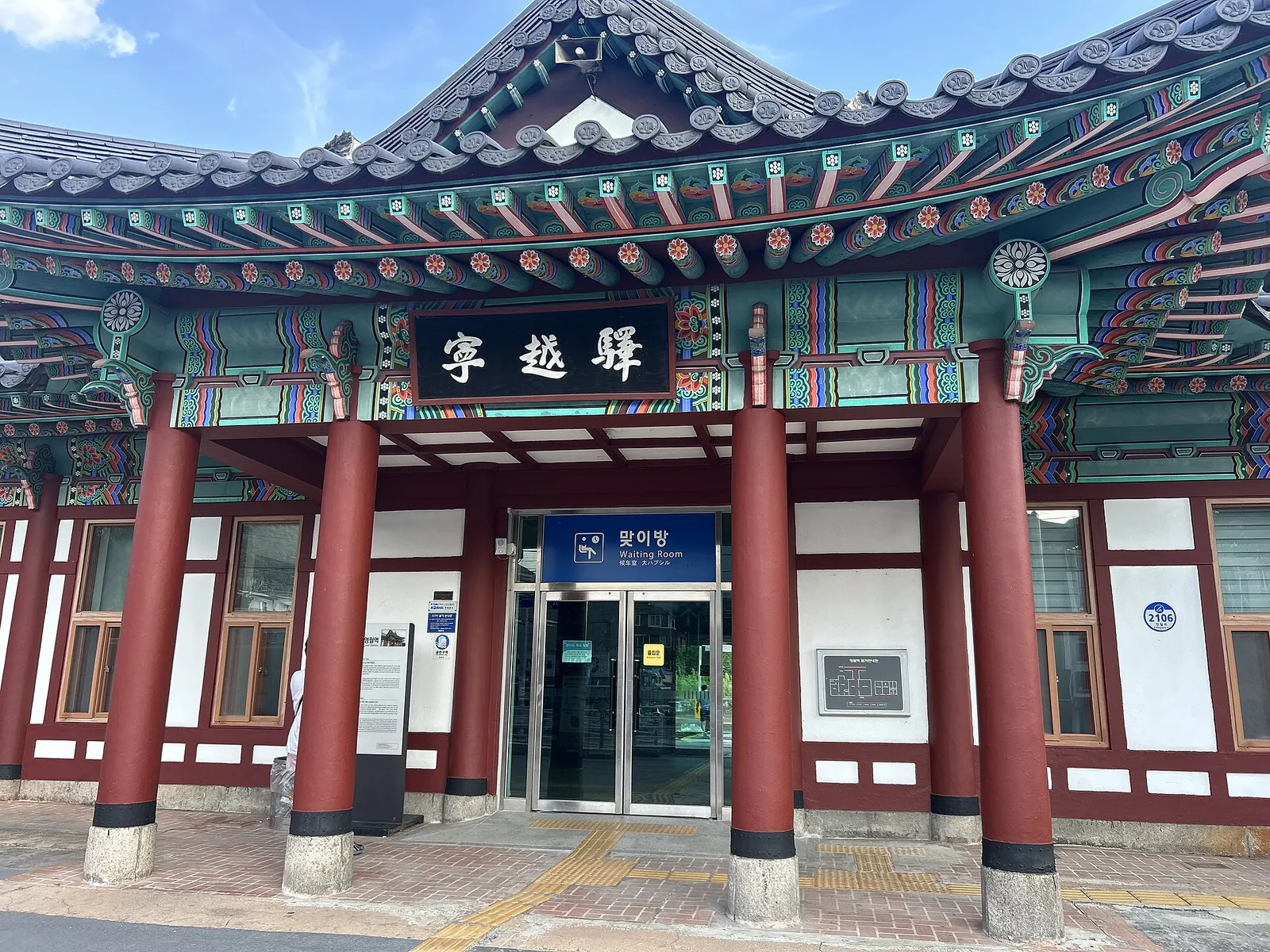
VisitKorea's bus guide lists Yeongwol among the routes from both Dong Seoul Terminal (Gangbyeon Station, Line 2) and Seoul Express Bus Terminal (Lines 3, 7 and 9), so a direct bus from Seoul is the simplest way in. By rail, Yeongwol Station is on the Taebaek Line. The station building, built in 1955, is designed like a hanok with a tiled roof and painted eaves, and the county calls it one of the most beautiful stations in Korea. Check Korail for current trains.
In town, start at the Yeongwol Tourism Center (Y-Square), at 126-3 Cheongnyeongpo-ro, which VisitKorea says gives information on sights and suggests itineraries; when we checked on 2026-10-03 it listed hours of 09:00–18:00, closed on Mondays. Jangneung, Gwanpungheon and Cheongnyeongpo are close together, but Hanbando-myeon, the Donggang rafting bases, Byeolmaro and the Kim Satgat valley are spread out. Rent a car or use taxis; the county's tourism site also links to a Yeongwol tourism taxi that can be booked through Naver.
Yeongwol works well on a Gangwon loop with Jeongseon, further up the Donggang, and Pyeongchang, or as a quiet stop between Danyang or Yeongju and the Gangwon mountains.
Practical questions
How do you get to Cheongnyeongpo?
It is a river bend close to Yeongwol-eup, cut off by water on three sides, that you reach by ferry. When we checked, the county's admission table said the fee includes the ferry. It is closed on Mondays.
Can I visit Yeongwol as a day trip from Seoul?
You can see Jangneung and Cheongnyeongpo in a long day by bus, but one night lets you add Byeolmaro Observatory after dark and the river bends the next morning.
When is the Donggang rafting season?
Yeongwol County lists April to October, with no rafting from November to March. Book with an operator and check the length of the trip.
Who was King Danjong?
The sixth king of Joseon. He lost the throne to his uncle, King Sejo, was exiled to Yeongwol after a failed attempt to restore him, and died here in 1457. He is buried at Jangneung.
Do I need to book Byeolmaro Observatory?
Yes. VisitKorea says advance reservation is required. It opens in the afternoon and evening and is closed on Mondays; check www.yao.or.kr.
When is the Danjong Culture Festival?
It runs for three days from the last Friday of April, at Jangneung, Gwanpungheon, Cheongnyeongpo and the Donggang riverbank. In 2026 it ran from 24 to 26 April.
Sources and checks before you travel
Reference sources for the version dated 3 October 2026. Confirm opening times, access, transport and conditions for your travel dates.
- VisitKorea: Cheongnyeongpo Meandering Stream ↗ — opens in a new tab
- Yeongwol County: Cheongnyeongpo (Yeongwol 10 views no. 2) ↗ — opens in a new tab
- Yeongwol County: admission fees ↗ — opens in a new tab
- Yeongwol County: following Danjong's exile road ↗ — opens in a new tab
- VisitKorea: Yeongwol Jangneung Royal Tomb ↗ — opens in a new tab
- Yeongwol County: Jangneung (Yeongwol 10 views no. 1) ↗ — opens in a new tab
- VisitKorea: Jagyuru Pavilion and Gwanpungheon Hall ↗ — opens in a new tab
- Yeongwol County: Danjong Culture Festival ↗ — opens in a new tab
- VisitKorea: Danjong Culture Festival ↗ — opens in a new tab
- VisitKorea: Korean Peninsula Terrain ↗ — opens in a new tab
- Yeongwol County: Korean Peninsula Terrain ↗ — opens in a new tab
- VisitKorea: Hanbando Raft Village ↗ — opens in a new tab
- Yeongwol County: Seondol ↗ — opens in a new tab
- VisitKorea: Yeongwol Donggang River ↗ — opens in a new tab
- VisitKorea: Donggang River Rafting (Yeongwol) ↗ — opens in a new tab
- Yeongwol County: Donggang rafting ↗ — opens in a new tab
- VisitKorea: Eorayeon Valley ↗ — opens in a new tab
- Yeongwol County: Donggang Raft Festival ↗ — opens in a new tab
- VisitKorea: Byeolmaro Observatory ↗ — opens in a new tab
- Yeongwol County: Byeolmaro Observatory ↗ — opens in a new tab
- VisitKorea: Gossigul Cave ↗ — opens in a new tab
- VisitKorea: Kim Satgat Historic Site ↗ — opens in a new tab
- VisitKorea: Chosun Minhwa Museum ↗ — opens in a new tab
- Yeongwol County: Yeongwol, Ssangnyong and Seokhang stations ↗ — opens in a new tab
- VisitKorea: Express Bus & Intercity Bus ↗ — opens in a new tab
- VisitKorea: Yeongwol Tourism Center ↗ — opens in a new tab
- VisitKorea: Yeongwol Seobu Morning Market ↗ — opens in a new tab
- Yeongwol County: signature foods ↗ — opens in a new tab
- VisitKorea: Yeongwol Bakgane ↗ — opens in a new tab
- VisitKorea: Jangneung Boribapjip ↗ — opens in a new tab
- VisitKorea: Yeongwol Donggang Hanu ↗ — opens in a new tab
Does this experience fit your route?
Yeongwol is easy to do on your own by bus or train and taxi. A packaged tour from Seoul only makes sense if it really includes Yeongwol, so check the itinerary.
Browse relevant experiences on Viator ↗ — opens in a new tabAffiliate link · Book with ViatorPhoto credits
The Korean Peninsula Terrain (Hanbando Jihyeong) in Hanbando-myeon, Yeongwol
Photograph: Trainholic — opens in a new tab · CC BY 4.0 — opens in a new tab
Changes: Resized and converted to WebP; displayed with responsive crops. · Original photograph and licence details ↗ — opens in a new tab
The house at Cheongnyeongpo where the exiled King Danjong is said to have stayed
Photograph: Naturehead — opens in a new tab · CC BY-SA 3.0 — opens in a new tab
Changes: Resized and converted to WebP; displayed with responsive crops. · Original photograph and licence details ↗ — opens in a new tab
Jangneung, the tomb of King Danjong in Yeongwol, in early spring
Photograph: Jjw — opens in a new tab · CC BY-SA 4.0 — opens in a new tab
Changes: Resized and converted to WebP; displayed with responsive crops. · Original photograph and licence details ↗ — opens in a new tab
Seondol, the split rock pillar above the Seogang in Yeongwol
Photograph: Seohae1999 — opens in a new tab · CC BY-SA 3.0 — opens in a new tab
Changes: Resized and converted to WebP; displayed with responsive crops. · Original photograph and licence details ↗ — opens in a new tab
A traditional wooden raft on the river at Hanbando-myeon, Yeongwol
Photograph: Korea.net / Korean Culture and Information Service — opens in a new tab · CC BY-SA 2.0 — opens in a new tab
Changes: Resized and converted to WebP; displayed with responsive crops. · Original photograph and licence details ↗ — opens in a new tab
Yeongwol Station on the Taebaek Line, built in the style of a hanok
Photograph: 웨제 — opens in a new tab · CC BY-SA 4.0 — opens in a new tab
Changes: Resized and converted to WebP; displayed with responsive crops. · Original photograph and licence details ↗ — opens in a new tab
Memil jeonbyeong, rolled buckwheat crepes of the kind sold at Yeongwol's Seobu Market
Photograph: Michael Sean Gallagher — opens in a new tab · CC BY-SA 2.0 — opens in a new tab
Changes: Resized and converted to WebP; displayed with responsive crops. · Original photograph and licence details ↗ — opens in a new tab