Gangwon · Gangwon State
Jeongseon travel guide: five-day market, rail bike and Arirang
Jeongseon is a county of steep valleys in the south of Gangwon State, and its small market town, Jeongseon-eup, still runs to an old calendar: on every date ending in 2 or 7, the five-day market fills the lanes with mountain greens, grains and food stalls. The county is also the home of Jeongseon Arirang, the regional version of Korea's best-known folk song, which VisitKorea says was born at Auraji, where two streams meet and timber rafts once set off downriver for Seoul. Around those two anchors sit Korea's first rail bike, a gold-mine cave, the silver-grass slopes of Mindungsan and, further south, the High1 ski resort in the old coal town of Gohan. The trick is to build the trip on a market day and accept that the sights are spread out.
- Suggested time
- 2 nights; 1 night if you only want the market and the rail bike
- Where to stay
- Jeongseon-eup for the market and Arirang; Gohan-eup (High1) for skiing and the mining heritage
- Season and timing
- Autumn is the strongest season: the Jeongseon Arirang Festival is held in early October (1 to 4 October in 2026, per VisitKorea), Mindungsan's silver grass is at its height in mid-October, and the Sogeumgang cliffs are known for their autumn colour. The market and the rail bike run all year, though the rail bike has one fewer departure from November to February. In winter, High1's slopes are the main draw; Gariwangsan is known for royal azaleas in spring and its summer music festival.
The short answer
Give Jeongseon two nights and arrange them so that one full day falls on a market day — a date ending in 2 or 7. Sleep in Jeongseon-eup, within walking distance of the market, and spend the other day at Auraji and the rail bike (Gujeol to Auraji, with a train ride back), or at Hwaam Cave and the Sogeumgang cliffs. Arrive by intercity bus from Dong Seoul or Seoul Nambu terminal, or on the Jeongseon Arirang Train (A-Train) from Jecheon, and use taxis or a car between sights; they are too far apart to walk. In winter, or if skiing is the point, base yourself at High1 in Gohan instead and visit the market as a day out.
Build the trip around a market day
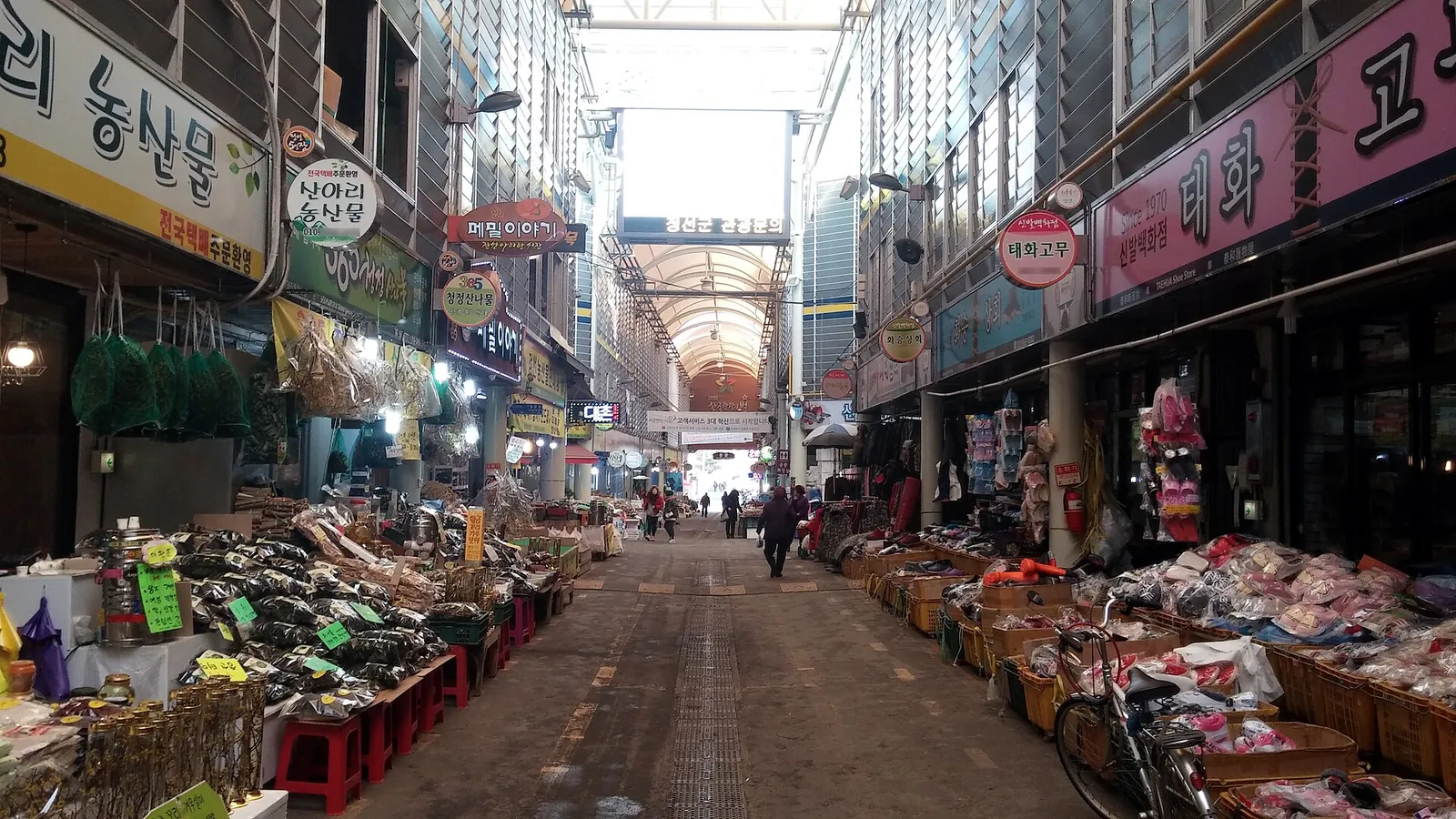
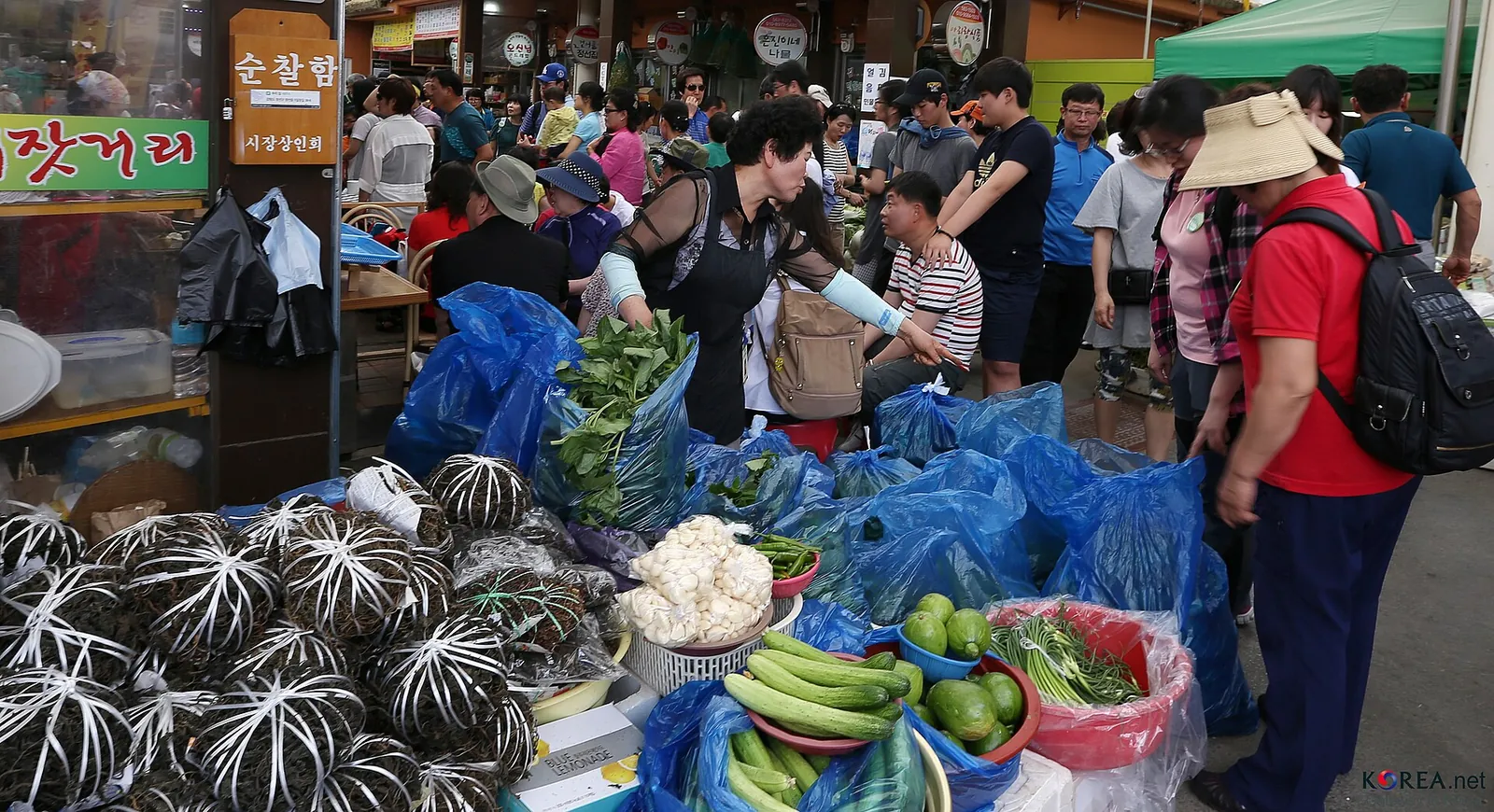
The Jeongseon 5-day Market, also called the Jeongseon Arirang Market, is at 36 Oiljang-gil in Jeongseon-eup. VisitKorea describes it as one of Korea's representative traditional markets: it opens on dates ending in 2 or 7, when local growers bring in produce and the lanes are crowded with both locals and visitors. The permanent market trades every day, and VisitKorea notes that it is also busy on Saturdays, but a market day is a different experience. In October 2026, the remaining market days are the 7th, 12th, 17th, 22nd and 27th.
The market's revival is tied to the railway. VisitKorea's history is that it declined sharply when the coal mines closed, then picked up again after a special tourist train from Seoul began running to it in 1999 — the ancestor of today's A-Train. When we checked on 2026-10-03, VisitKorea listed the market as open 09:00–18:00, with hours varying by stall, and open all year.
On market days, Arirang is part of the show. In 2025, VisitKorea's performance guide listed the musical *ARI – The Spirit of Korea* on market days and the sorigeuk *The Raftmen* on Saturday afternoons at the Jeongseon Arirang Center (51 Aesan-ro, Jeongseon-eup), with all seats at 5,000 won and the ticket price returned as Jeongseon Arirang gift certificates that can be spent at the market. We could not confirm the 2026 programme, so check with the Arirang Center before planning around a show.
Arrive in the morning, when the produce stalls are fullest, eat lunch in the market, and keep the afternoon for the Arirang Center or the Byeongbangchi Skywalk just outside town. Staying in Jeongseon-eup the night before means you do not have to time a bus or train to the market's peak hours.
Auraji and the song of Jeongseon
Arirang was inscribed on UNESCO's Representative List of the Intangible Cultural Heritage of Humanity in 2012. UNESCO describes it as a simple refrain — 'Arirang, arirang, arariyo' — with two lines that differ from region to region, and estimates some 3,600 variations. Jeongseon's version is one of the best known. VisitKorea says it is Gangwon's Intangible Cultural Asset No. 1, and traces it to the late Goryeo period, to seven scholars loyal to the fallen dynasty who settled in Jeongseon.
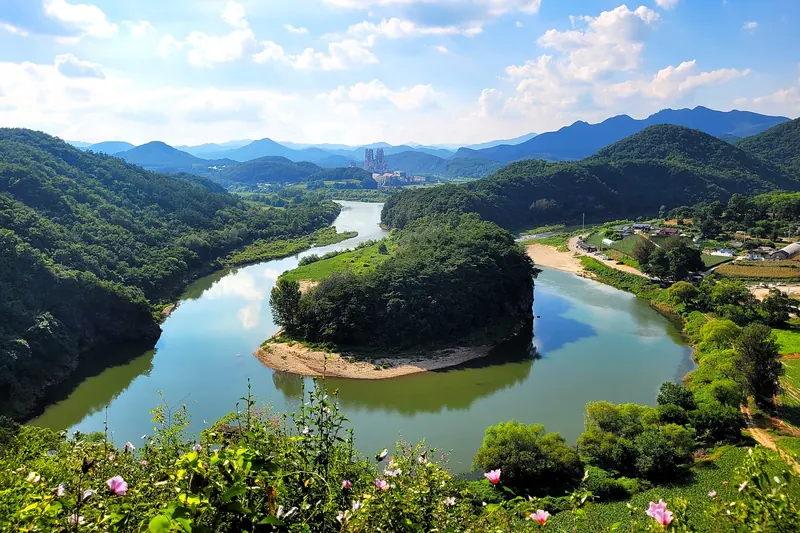
The place to understand it is Auraji, in Yeoryang-myeon. VisitKorea explains that the name comes from *eoureojida*, 'to meet', because the waters from the Pyeongchang and Samcheok sides join here at the top of the Namhangang (South Han River). Auraji was a starting point for the log rafts that carried timber down to Hanyang, the old name for Seoul, and the song's lyrics carry the longing of the women left behind. The riverside is open at all hours.
Beside it, the Jeongseon Arirang Training Hall (69 Auraji-gil) has an exhibition area and an experience area where official holders of the heritage teach the song. When we checked on 2026-10-03, VisitKorea listed it as open on Wednesdays from 10:00 to 16:00, with free programmes that need advance reservation. Book ahead if you want to sing rather than just listen.
The Jeongseon Arirang Festival is the song's big annual event. VisitKorea's listing for 2026 gives 1 to 4 October at Jeongseon Public Stadium, 10:00–22:00 and free, organised by the Jeongseon Arirang Culture Foundation, with a Chilhyeon ritual ceremony, an Arirang parade, a national Arirang singing contest and an A-POP dance competition. After this year's festival, check arirangfestival.kr for next year's dates.
Make time for the local food
What to eat and where to look
Kotdeungchigi guksu (buckwheat noodles)
Jeongseon's signature noodles. VisitKorea explains that buckwheat replaced wheat in valleys where wheat was hard to grow, and that the dough is mixed with cold water, so the noodles are springy enough to flick up and hit your nose when slurped — the meaning of the name. The VisitKorea recipe uses anchovy and kelp broth; Donggwang Sikdang in Jeongseon-eup serves a local version in a broth of perilla and soybean paste.
- Where to look
- Noodle menus in Jeongseon-eup; VisitKorea recommends Donggwang Sikdang at 27 Noksong 1-gil, Jeongseon-eup (open 09:00–21:00 when we checked VisitKorea's listing).
- Fit it into your day
- Market-day lunch; order a bowl each and share a plate of pancakes or dumplings.
Buckwheat is a common allergen, and broths are usually fish-based.
Hwanggi jokbal (pigs' feet braised with milk vetch root)
VisitKorea names this as the standout dish at Donggwang Sikdang, a Jeongseon-eup restaurant with over 50 years of history: pigs' feet braised for a long time with milk vetch root (hwanggi), which softens the meat and cartilage and gives a clean, mild flavour.
- Where to look
- Donggwang Sikdang, 27 Noksong 1-gil, Jeongseon-eup. VisitKorea lists it as closed over the Seollal and Chuseok holidays.
- Fit it into your day
- An early dinner in Jeongseon-eup, shared between two or more, with a bowl of noodles to finish.
Pork, skin and cartilage; not for those who avoid pork.
Olchaengi guksu (corn noodles)
Short, soft noodles made from corn, the hardy crop that VisitKorea calls a former staple of Gangwon State. The name means 'tadpole noodles', after their shape. They are served without broth and mixed with a sauce of chilli powder and soy sauce.
- Where to look
- Noodle menus in Jeongseon-eup; VisitKorea lists it at Donggwang Sikdang, alongside mandu soup.
- Fit it into your day
- A light lunch or a snack alongside heavier dishes at the market.
The sauce is spicy; ask for it on the side if you are unsure.
Chaemandu and susubukkumi (market buckwheat and millet snacks)
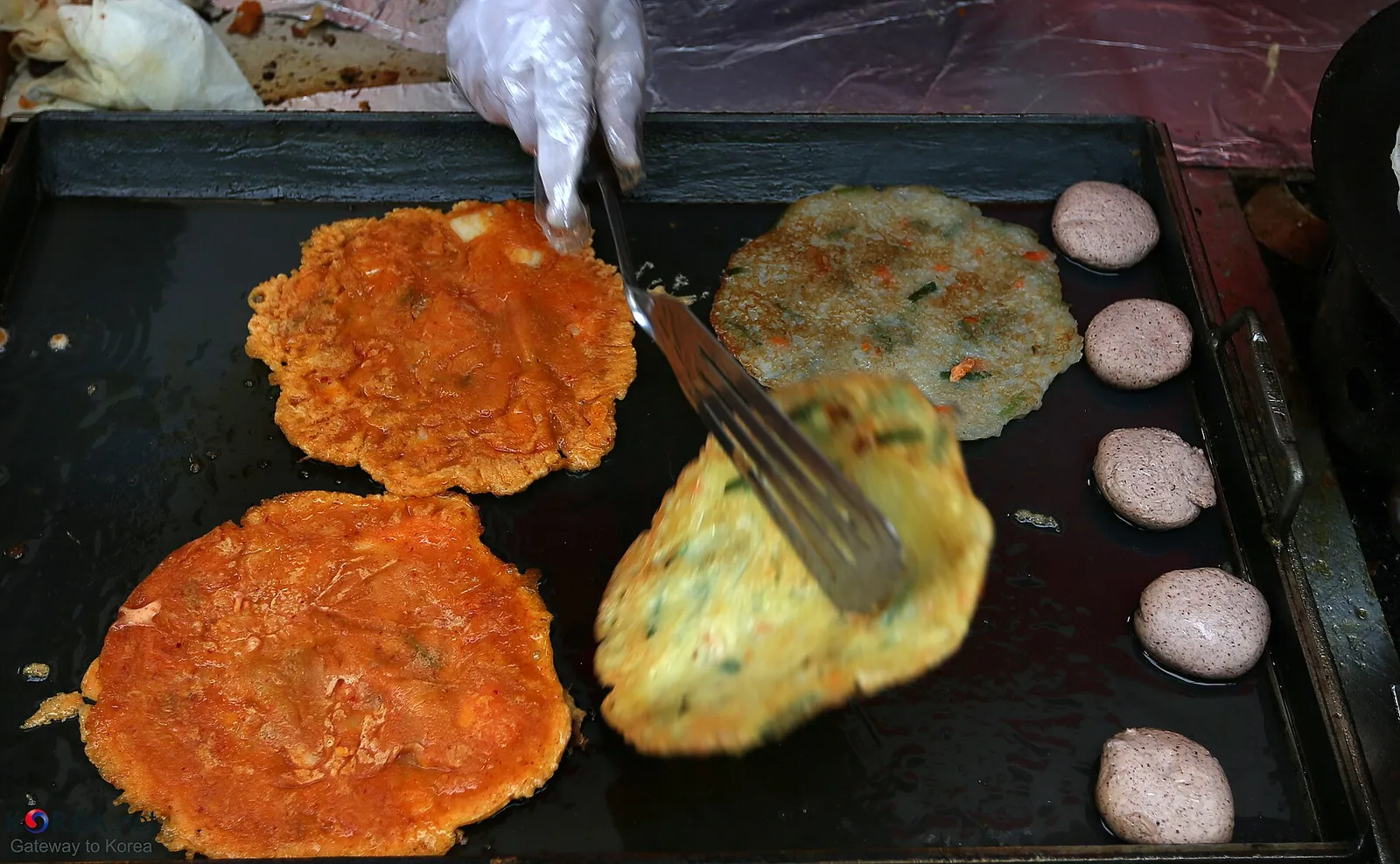
Two market foods from the hill crops. VisitKorea describes chaemandu as a Jeongseon folk dumpling with a buckwheat wrapper, filled with leaf-mustard kimchi, dried vegetables, tofu, green onion and perilla powder, steamed and brushed with perilla oil; it hardens as it cools, so it is cooked in small batches. Its Jeongseon performance guide also picks out susubukkumi, a pan-fried millet rice cake, at the Arirang Market.
- Where to look
- Griddle and snack stalls in the Jeongseon Arirang Market, best on a market day.
- Fit it into your day
- Graze through the market: buy a few pieces at a time, hot, rather than one big meal.
Eat chaemandu while it is warm; kimchi fillings are usually made with fish sauce.
The rail bike and the A-Train
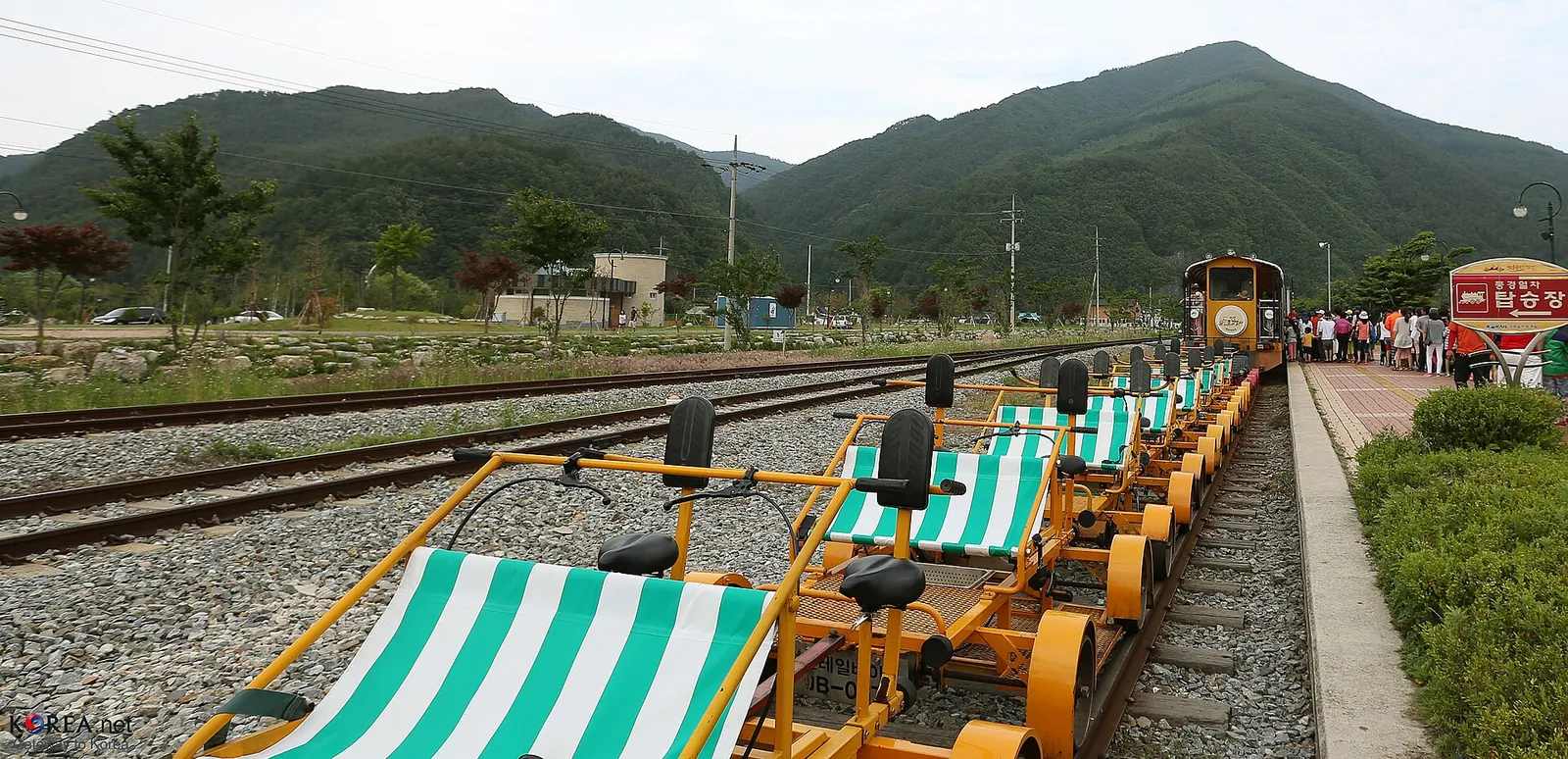
Jeongseon Railbike, at 745 Nochusan-ro in Yeoryang-myeon, was the first rail bike in Korea. According to VisitKorea, two- and four-person bikes run 7.2 km along a disused railway from Gujeol Station to Auraji Station, beside the river, through forest and through old tunnels lit with coloured lights. The line is fairly flat, the ride takes 30 to 40 minutes, and a train takes riders back to Gujeol at the end. Look out for the station cafés shaped like a grasshopper at Gujeol and a fish at Auraji.
When we checked on 2026-10-03, VisitKorea listed departures at 08:40, 10:30, 13:00, 14:50 and 16:40 from March to October, without the 16:40 run from November to February, and no closing days. Children aged three and under ride on a parent's lap. Departures are fixed, so book or arrive early on weekends and in autumn; the operator's site is www.railbike.co.kr, which we could not reach.
The Jeongseon Arirang Train (A-Train) is Korail's tourist train to the county. VisitKorea's tourist-train page, last updated in May 2026, lists it between Jecheon in Chungcheongbuk-do and Auraji, calling at Yeongwol, Yemi, Mindungsan, Byeoreogok, Seonpyeong, Jeongseon and Najeon, in about two hours, with each carriage decorated in its own theme. Tickets are sold at major stations and through Korail's website and app; VisitKorea warns that schedules change for maintenance, so check the day you want before planning a market visit around it.
Combine the two on one day: the rail bike in the morning, then Auraji and the Training Hall (on a Wednesday) in the afternoon. Gujeol and Auraji are not in Jeongseon-eup, so plan on a taxi or car from town.
Hwaam Cave, Sogeumgang and the Byeongbangchi Skywalk
The Hwaam Tourist Attractions string eight scenic sites along a winding road with signposts. The centrepiece is Hwaamdonggul Cave (12 Hwaamdonggul-gil), a gold mine that VisitKorea says was worked commercially from 1922 to 1945 until miners broke into a natural limestone cave. The route runs 1,803 m, starting with a 515 m upper tunnel that recreates gold mining before reaching flowstones, stalactites and cave coral; VisitKorea allows about an hour and a half.
When we checked on 2026-10-03, VisitKorea listed the cave as open 09:30–18:00 with last admission on foot at 16:00 (17:10 in peak season), closed on Wednesdays except in peak season, with adult admission at 7,000 won and the monorail charged separately. Check with the operator (www.jsimc.or.kr) before a Wednesday visit.
Beyond the cave, the road follows the Sogeumgang, a 4 km stretch of river between cliffs 100 to 150 m high that VisitKorea compares to the Geumgangsan mountains. It ends at Molundae, a cliff top with 500-year-old pines and a broad rock shelf below; VisitKorea notes it was a filming location for the film *Decision to Leave*, and that it is free and open year-round. In autumn, this is the drive for leaf colour.
Closer to town, the Byeongbangchi Skywalk (225 Byeongbangchi-gil, Jeongseon-eup) is an 11 m U-shaped glass platform at 583 m, looking down on Bamseom, a piece of land shaped like the Korean peninsula by a loop of the Donggang River. When we checked on 2026-10-03, VisitKorea listed hours of 09:00–18:00 in summer and 09:00–17:00 in winter and adult admission of 2,000 won, sold on site only, and warned that it can close in heavy rain, snow or fog.
Mindungsan, Gariwangsan and the high country
Mindungsan (1,118.8 m), in Nam-myeon, is the 'bare mountain': VisitKorea explains that few trees grow near the top and that its slopes are covered in silver grass, which reaches waist height in mid-October. The gradual slope makes it a manageable hike for most walkers, and the A-Train route lists a Mindungsan station. Go on a weekday if you can, when the trail is likely to be quieter.
Gariwangsan, reached by Gariwangsan-ro from Jeongseon-eup, is a major mountain of the county. VisitKorea describes royal azaleas in spring, a summer music festival, autumn colour and snow in winter, a view of the East Sea from the summit on clear days, and a cable car and zipline. We could not find official hours or fares for the cable car, so check locally.
Gohan-eup is the county's resort town. High1 sits on Baegunsan; VisitKorea's ski guide says its slopes start from three peaks and that free shuttles run from Gohan and Sabuk stations, and the complex also includes Kangwon Land Casino, hotels and condominiums. Nearby, Samtan Art Mine is an art complex in a coal mine that worked for 40 years before becoming an art space in 2001. When we checked on 2026-10-03, VisitKorea listed it as closed on Mondays and Tuesdays, open 09:00–18:00 from April to November, with adult admission at 13,000 won.
Getting there and getting around
By bus, VisitKorea's bus guide lists Jeongseon among the routes from both Dong Seoul Terminal (Gangbyeon Station, Line 2) and Seoul Nambu Terminal (Line 3). By rail, the A-Train from Jecheon is the most memorable way in, and it ties Jeongseon to Yeongwol on the same line; for High1, go to Gohan or Sabuk station for the resort shuttles.
Within the county, the distances are what shape the trip. Jeongseon-eup, Auraji and the rail bike, Hwaam and Gohan are separate valleys, and VisitKorea's listings give no public transport for most of them. Taxis from Jeongseon-eup or a rental car make a two-day plan workable; without them, choose one area per day.
Jeongseon fits well into a longer Gangwon loop: Pyeongchang and Gangneung, Samcheok on the coast, and Yeongwol, which is on the A-Train's route.
- Day 1 (market day): the market from mid-morning, lunch there, then the Arirang Center or the Byeongbangchi Skywalk.
- Day 2: the rail bike from Gujeol to Auraji in the morning, Auraji and the Training Hall in the afternoon — or Hwaam Cave and the Sogeumgang drive instead.
- Mid-October extra: a morning on Mindungsan for the silver grass.
- Winter: stay at High1 in Gohan and visit the market as a day out.
Practical questions
When is the Jeongseon five-day market held?
On dates ending in 2 or 7 — the 2nd, 7th, 12th, 17th, 22nd and 27th of each month. The permanent market trades every day, and VisitKorea notes that it is also busy on Saturdays, but market days are when growers and food stalls fill the lanes.
How long is the Jeongseon rail bike ride?
VisitKorea gives 7.2 km from Gujeol Station to Auraji Station, taking 30 to 40 minutes on a fairly flat line, with a train back to Gujeol. Departures are at fixed times, five a day from March to October and four from November to February.
Can I visit Jeongseon as a day trip from Seoul?
It is possible on a market day, but the bus or train takes much of the day and the sights are spread across the county. One night lets you see the market and the rail bike; two nights add Auraji or Hwaam Cave without rushing.
What is Jeongseon Arirang?
The Jeongseon version of Arirang, the Korean folk song inscribed by UNESCO in 2012. VisitKorea says it began in the late Goryeo period and is linked to Auraji, where timber rafts set off for Seoul. You can learn it at the Training Hall at Auraji on Wednesdays, by reservation.
How do I get to Jeongseon without a car?
Take an intercity bus from Dong Seoul or Seoul Nambu terminal, or the A-Train from Jecheon via Yeongwol. Once there, use taxis between areas, as the rail bike, Hwaam Cave and Gohan are each in separate valleys.
When is the best time to visit Jeongseon?
Early to mid-October brings the Arirang Festival (1 to 4 October in 2026), the silver grass on Mindungsan and autumn colour on the Sogeumgang. Winter suits skiers based at High1; the market and the rail bike run all year.
Sources and checks before you travel
Reference sources for the version dated 3 October 2026. Confirm opening times, access, transport and conditions for your travel dates.
- VisitKorea: Jeongseon 5-day Market / Jeongseon Arirang Market ↗ — opens in a new tab
- VisitKorea: A Local Journey Full of Charm, Paired with Musicals ↗ — opens in a new tab
- VisitKorea: The Sounds and Movements of Korea (The Raftmen) ↗ — opens in a new tab
- UNESCO: Arirang, lyrical folk song in the Republic of Korea ↗ — opens in a new tab
- VisitKorea: Jeongseon Arirang Training Hall ↗ — opens in a new tab
- VisitKorea: Auraji Lake ↗ — opens in a new tab
- VisitKorea: Jeongseon Arirang Festival ↗ — opens in a new tab
- VisitKorea: Jeongseon Railbike ↗ — opens in a new tab
- VisitKorea: Unique Transportation (tourist trains) ↗ — opens in a new tab
- VisitKorea: Hwaamdonggul Cave ↗ — opens in a new tab
- VisitKorea: Hwaam Tourist Attractions (Eight Scenic Sites) ↗ — opens in a new tab
- VisitKorea: Jeongseon Morundae Cliff ↗ — opens in a new tab
- VisitKorea: Byeongbangchi Skywalk ↗ — opens in a new tab
- VisitKorea: Mindungsan Mountain ↗ — opens in a new tab
- VisitKorea: Gariwangsan Mountain ↗ — opens in a new tab
- VisitKorea: High1 Wellness ↗ — opens in a new tab
- VisitKorea: 12 Ski Resorts to Spend an Exciting Winter in Korea ↗ — opens in a new tab
- VisitKorea: Samtan Art Mine ↗ — opens in a new tab
- VisitKorea: Sangyujae ↗ — opens in a new tab
- VisitKorea: Donggwang Sikdang ↗ — opens in a new tab
- VisitKorea: Kotdeungchigi guksu ↗ — opens in a new tab
- VisitKorea: Olchaengi guksu ↗ — opens in a new tab
- VisitKorea: Chaemandu ↗ — opens in a new tab
- VisitKorea: Express Bus & Intercity Bus ↗ — opens in a new tab
- VisitKorea: Airport transportation guide ↗ — opens in a new tab
- VisitKorea: Domestic Flights ↗ — opens in a new tab
Does this experience fit your route?
Jeongseon is easy to do on your own by bus or the A-Train. A packaged trip from Seoul mainly suits travellers who want transport arranged — check that it really goes to Jeongseon and lands on a market day.
Browse relevant experiences on Viator ↗ — opens in a new tabAffiliate link · Book with ViatorPhoto credits
Rail bikes lined up for the next departure on the old Jeongseon Line track
Photograph: Korea.net / Korean Culture and Information Service (Jeon Han) — opens in a new tab · CC BY-SA 2.0 — opens in a new tab
Changes: Resized and converted to WebP; displayed with responsive crops. · Original photograph and licence details ↗ — opens in a new tab
A covered lane of the Jeongseon Arirang Market in Jeongseon-eup
Photograph: IRTC1015 — opens in a new tab · Public domain — opens in a new tab
Changes: Resized and converted to WebP; displayed with responsive crops. · Original photograph and licence details ↗ — opens in a new tab
Pancakes frying on a griddle at the Jeongseon market
Photograph: Korea.net / Korean Culture and Information Service (Jeon Han) — opens in a new tab · CC BY-SA 2.0 — opens in a new tab
Changes: Resized and converted to WebP; displayed with responsive crops. · Original photograph and licence details ↗ — opens in a new tab
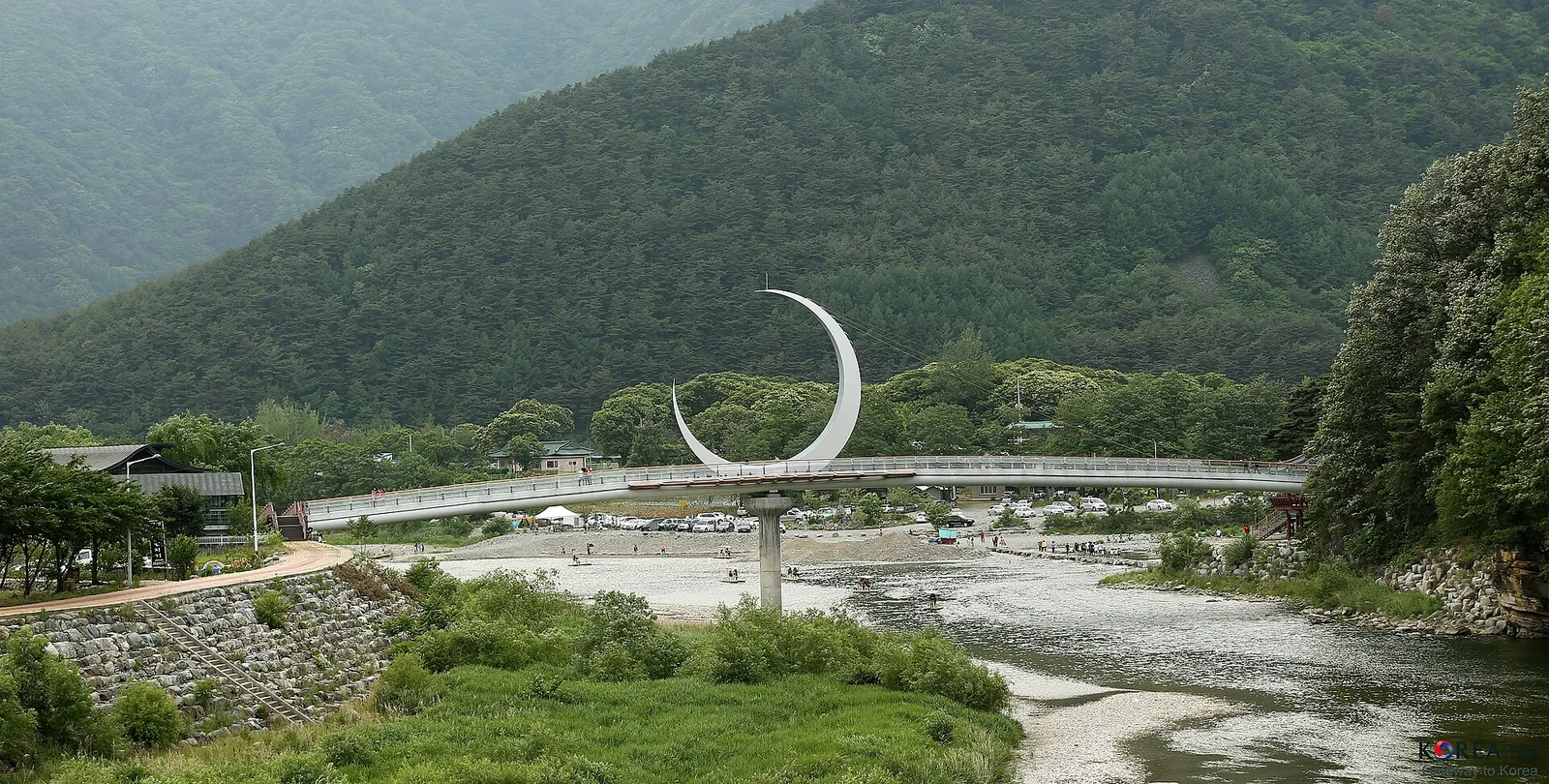
A river valley in Jeongseon County on a summer day
Photograph: Korea.net / Korean Culture and Information Service (Jeon Han) — opens in a new tab · CC BY-SA 2.0 — opens in a new tab
Changes: Resized and converted to WebP; displayed with responsive crops. · Original photograph and licence details ↗ — opens in a new tab
Shoppers at a produce stall on Jeongseon market day
Photograph: Korea.net / Korean Culture and Information Service (Jeon Han) — opens in a new tab · CC BY-SA 2.0 — opens in a new tab
Changes: Resized and converted to WebP; displayed with responsive crops. · Original photograph and licence details ↗ — opens in a new tab