Daegu and North Gyeongsang · North Gyeongsang
Yeongju travel guide: Buseoksa, Sosuseowon and Museom Village
Yeongju is a small city in the north of Gyeongsangbuk-do, tucked under the southern side of Sobaeksan Mountain, and it holds two UNESCO World Heritage sites that most visitors to Korea never reach. Buseoksa, a mountain temple founded in 676, keeps Muryangsujeon, a wooden hall that the national heritage register dates to the middle Goryeo period. Sosuseowon, founded in 1542, was the first Confucian academy in Korea to receive a royal charter. Add Museom, a hanok village almost surrounded by a river, and Punggi, the town that has made Yeongju's name for ginseng, and you have a quiet, unhurried stop on a route through the inland north between Danyang and Andong. It suits travellers who like old buildings in their setting more than busy sightseeing.
- Suggested time
- 1 day; 1–2 nights with Museom Village or Sobaeksan
- Where to stay
- Central Yeongju near Yeongju Station, or a hanok stay at Seonbichon or Museom Village
- Season and timing
- The heritage sites are open all year, but Sosuseowon, Seonbichon and the Sosu Museum close an hour earlier in winter (November–February), so a winter day is shorter. Spring brings royal azaleas to Sobaeksan, which VisitKorea says peak in May, and Birobong Peak holds snow for much of the winter. Autumn is festival season: the Punggi Insam (ginseng) Festival ran from 3 to 11 October 2026 in Punggi-eup, according to VisitKorea, and Museom holds its Single-Log Bridge Festival in October.
The short answer
Give Yeongju one full day, or one night if you want Museom Village or a walk in Sobaeksan as well. Sleep in central Yeongju near the station if you arrive by train, or at Seonbichon's hanok stay or in Museom if you want the old buildings at dusk. Spend the morning at Buseoksa, which VisitKorea lists as open around the clock and free, then go to Sosuseowon, the Sosu Museum and Seonbichon, which share one ticket and close in the late afternoon. Keep Museom, Punggi's ginseng market and Huibangsa for a second day. Reach Yeongju by train from Seoul's Cheongnyangni Station or by express bus from Seoul. The sights are spread out, so plan on a hire car or taxis.
Buseoksa: climb to Muryangsujeon early
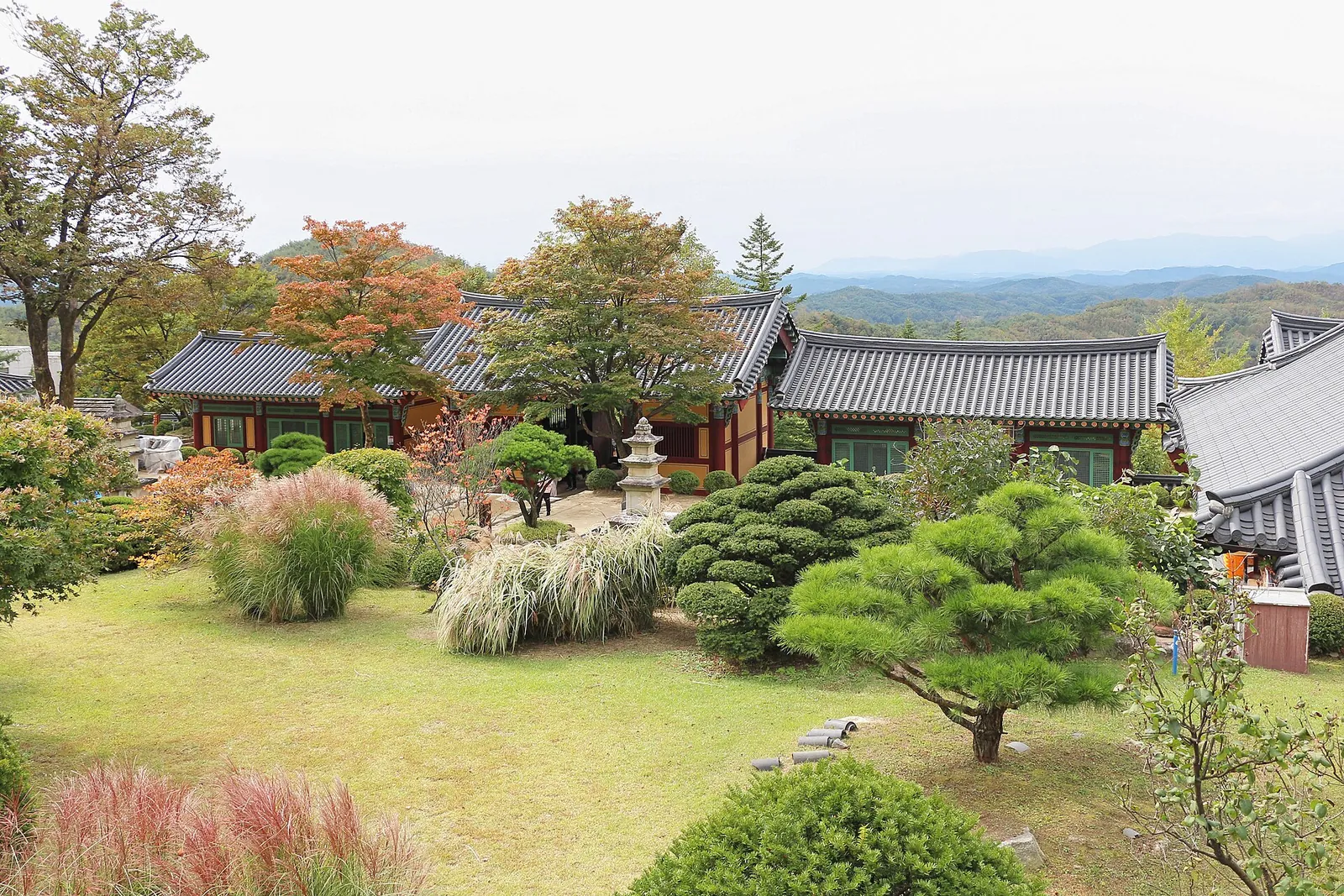
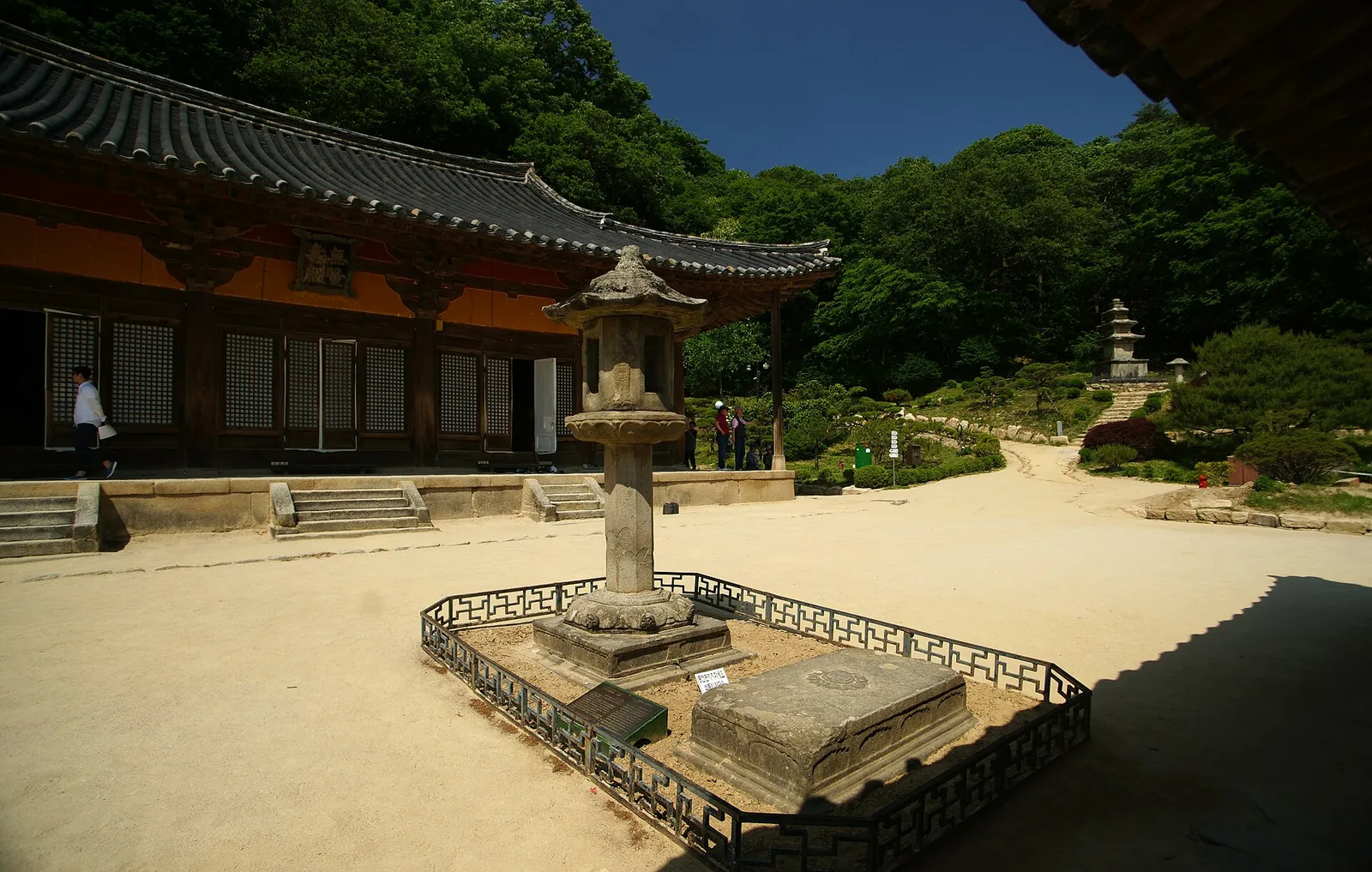
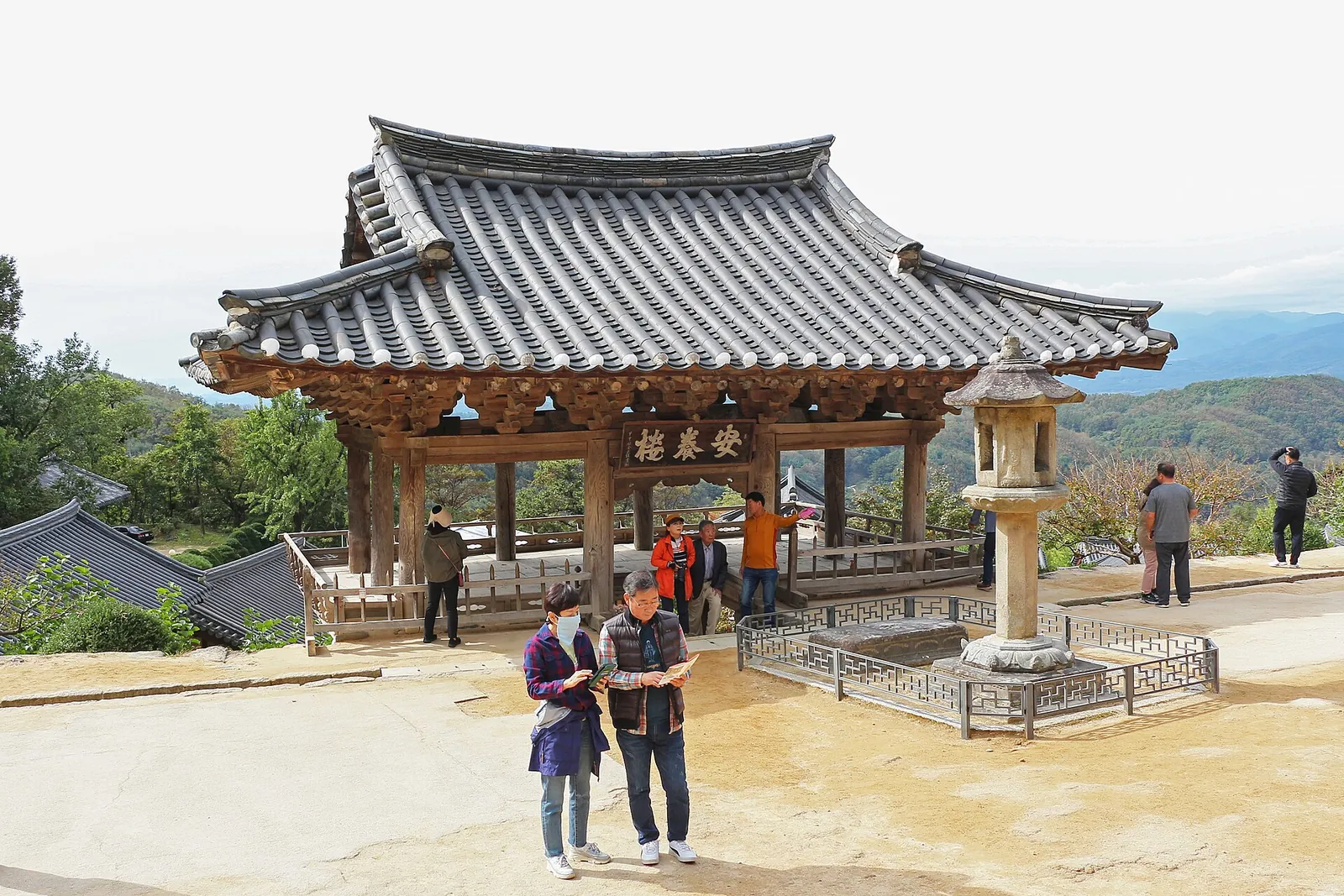
Make Buseoksa the first stop of the day. VisitKorea says the temple was founded in 676 on the eastern slope of Sobaeksan Mountain, during the Silla kingdom, and that over the centuries it was rebuilt and enlarged many times. It is one of the seven mountain monasteries inscribed together by UNESCO as Sansa, Buddhist Mountain Monasteries in Korea; VisitKorea's World Heritage overview notes the approach by a staircase of 108 steps, a number with meaning in Buddhism.
The reason to come is Muryangsujeon Hall at the top. Korea's national heritage register lists it as a National Treasure, designated in 1962, and dates it to the middle Goryeo period. A VisitKorea feature on Yeongju calls it a prime example of Goryeo-era Buddhist architecture and points out its baeheullim pillars, which swell in the middle and narrow towards the top; the art historian Choi Sun-woo named a well-known book after leaning on them. VisitKorea's feature recommends coming up at sunset, when the light falls between the ridges of Taebaeksan, Bonghwangsan and Sobaeksan.
When we checked on 2026-10-03, VisitKorea's listing gave Buseoksa as open 24 hours all year, with free admission and parking, and suggested about an hour for a visit. Allow longer if you want to walk up slowly and look at the side halls. This is a working temple: speak quietly, ask before photographing inside the halls and remove your shoes if you go in.
Buseoksa is at 345 Buseoksa-ro, in Buseok-myeon, well outside central Yeongju. We could not confirm local bus times from an official English source, so plan on a hire car or a taxi from Yeongju Station, and agree the return if you take a taxi.
Sosuseowon, the Sosu Museum and Seonbichon: one ticket, one afternoon
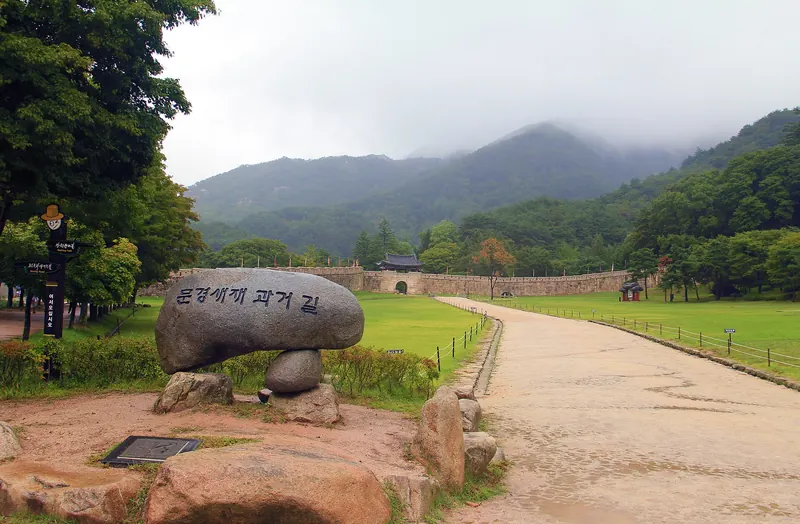
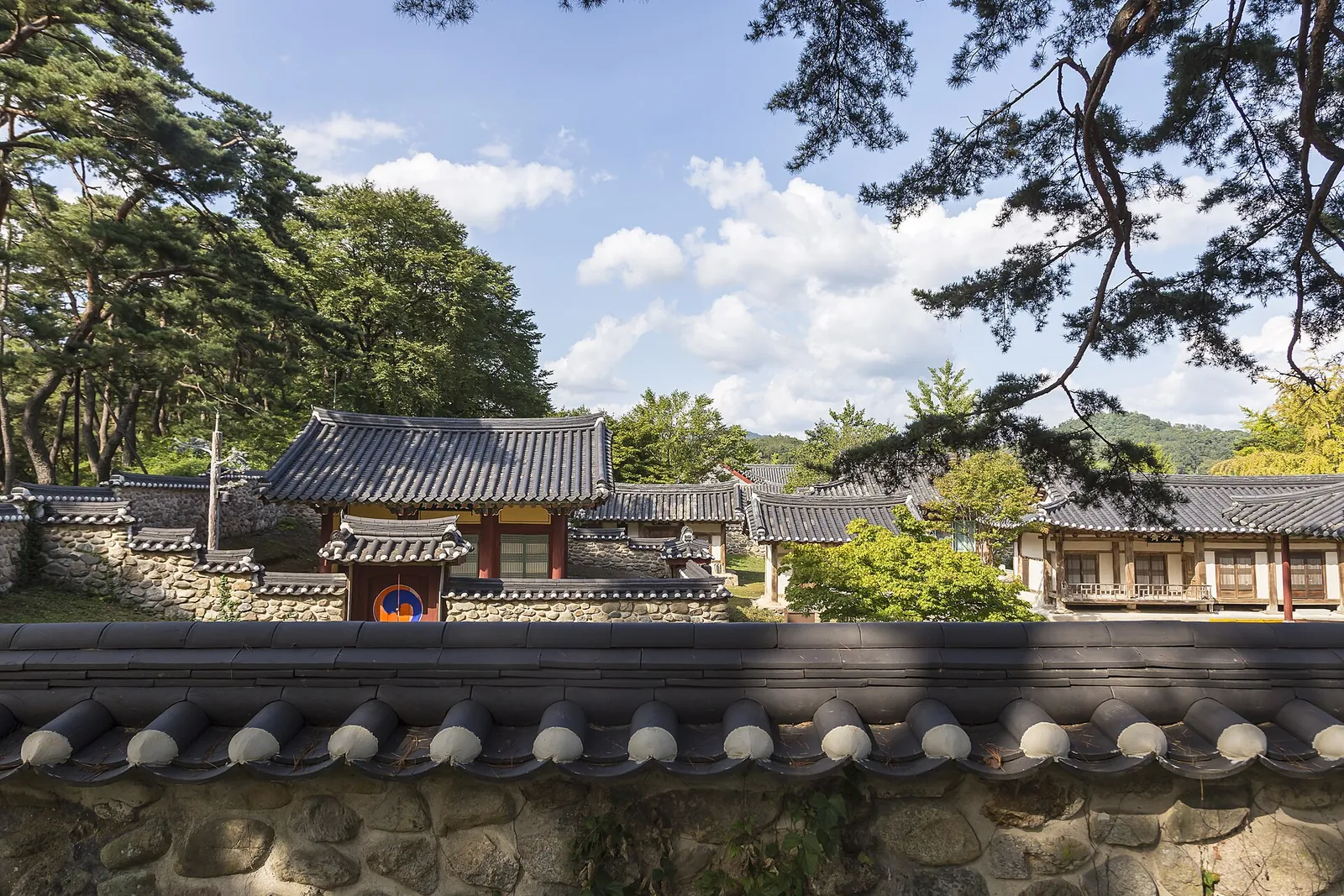
Sosuseowon sits at the foot of Sobaeksan, outside the city centre. According to VisitKorea, the magistrate of Punggi, Ju Se-bung, founded it in 1542 as Baegundong Seowon, to honour the Goryeo scholar An Hyang. His successor, the great Confucian scholar Toegye Yi Hwang, asked the king for a royal charter, and the academy was renamed Sosuseowon. It was the first private academy in Korea to receive a charter and royal support. UNESCO inscribed it with eight other academies as Seowon, Korean Neo-Confucian Academies, and VisitKorea's overview notes that it is unusual in placing its two study halls, Jikbangjae and Ilsinjae, side by side.
Inside, the Myeongnyundang lecture hall and the Munseonggong Shrine are both designated Treasures, according to a VisitKorea feature. Next door, the Sosu Museum, opened in 2004, tells the story of Confucian culture in the Joseon period through the academy's relics. Beyond it is Seonbichon, a village of traditional scholars' houses, where you can see how the seonbi, or classical scholars, lived. It has a street of traditional restaurants and runs programmes from calligraphy to rice-cake pounding. Check the programmes before you go, because VisitKorea notes that they change.
When we checked on 2026-10-03, VisitKorea listed one ticket for Sosuseowon, the Sosu Museum and Seonbichon, at 3,000 won for adults on its museum and Seonbichon pages. Its Sosuseowon page gave 2,000 won, so check the price at the gate. VisitKorea listed Sosuseowon and Seonbichon from 09:00 to 17:00 in spring and autumn (March–May and September–October), 09:00–18:00 in summer (June–August) and 09:00–16:00 in winter (November–February), and the museum one hour later in each season. Last entry is one hour before closing. All three are open every day.
Give the three sites two to three hours together. The addresses run along one road (2740, 2780 and 2796 Sobaek-ro), so once you are there you can walk between them.
- Morning at Buseoksa, afternoon at Sosuseowon: the temple has no closing time, but the academy does.
- In winter, aim to arrive at Sosuseowon by early afternoon, because last entry is at 15:00.
- Jukgyegugok Valley, which Yi Hwang named in nine sections, runs up from Baejeom-ri to the small temple of Choamsa, near Sosuseowon, and is a cool place for a walk in summer.
Make time for the local food
What to eat and where to look
Insam galbitang (ginseng and beef rib soup)
Beef short ribs simmered in a long-boiled bone broth with whole Punggi ginseng roots. VisitKorea describes it as a restorative dish, the tender rib meat and rich broth set off by the bittersweet ginseng.
- Where to look
- Restaurants in Punggi-eup around the ginseng market and in central Yeongju.
- Fit it into your day
- A warming lunch after Huibangsa or a morning at the ginseng market.
Contains beef; ginseng has a strong, bitter taste that not everyone likes.
Pyogo ochaebap (shiitake and five-vegetable rice)
A local dish developed by the city of Yeongju from its own produce, according to VisitKorea: rice steamed with burdock root and shiitake mushrooms, topped with lightly stir-fried shiitake, carrot, pumpkin and bean sprouts and finished with thin slices of Punggi ginseng. It comes with soybean-paste stew, a hot chilli sauce and mushroom side dishes.
- Where to look
- Restaurants in Yeongju that advertise 표고오채밥 (pyogo ochaebap) on the menu.
- Fit it into your day
- Lunch between Buseoksa and Sosuseowon; a good choice if you want a meal built mostly on vegetables.
The chilli sauce is very hot, so add it a little at a time; the stew and side dishes may contain fish or meat stock.
Jjolmyeon (spicy chewy noodles) at Nadeuri
Cold, chewy wheat noodles in a sweet and spicy chilli-paste sauce with crunchy cabbage and carrot. VisitKorea says Nadeuri, which has made jjolmyeon since 1986, uses Yeongju apples and Punggi ginseng among nearly 30 ingredients in its sauce, and serves a milder soy-sauce version and a handmade pork cutlet.
- Where to look
- Nadeuri, 89 Jungang-ro, central Yeongju. When we checked on 2026-10-03, VisitKorea listed hours of 11:00–20:30.
- Fit it into your day
- A quick lunch in town before or after a train.
The standard version is spicy; ask for the soy-sauce version if you prefer it mild. Contains wheat.
Punggi ginseng sweets and red ginseng
Punggi Ginseng Market sells fresh roots and red ginseng in many forms. VisitKorea's shopping feature describes candied red ginseng with a jelly-like texture and honeyed red ginseng slices (hongsam jeolpyeon).
- Where to look
- Punggi Ginseng Market, 8 Insam-ro, Punggi-eup, and the stalls during the Punggi Insam Festival in October.
- Fit it into your day
- A snack or a gift to take home rather than a meal.
If you take regular medication, ask a doctor before eating ginseng in quantity. Compare the weight and price of each product before buying.
Museom Village: hanok houses inside a river bend
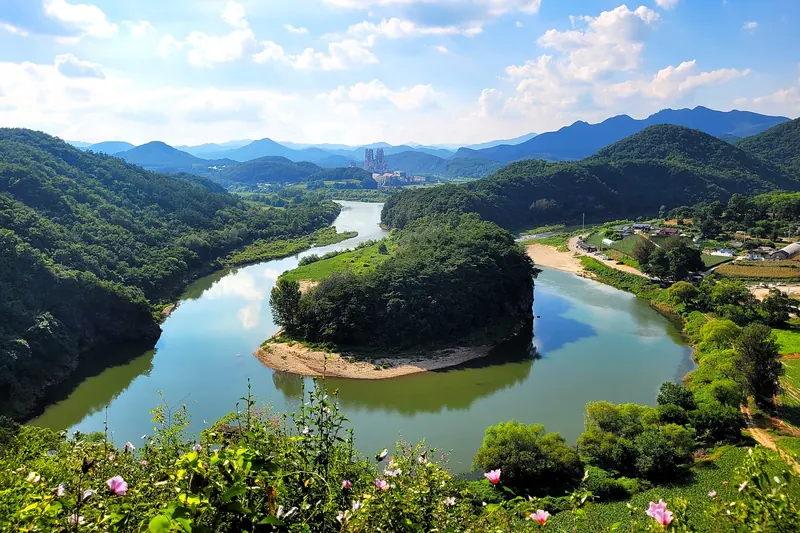
Museom, in Sudo-ri outside the city centre, is a village of traditional houses on a near-island. VisitKorea explains that the Naeseongcheon and Yeongjucheon streams meet and loop around it, enclosing it on three sides, with a broad sandy riverbank in front and woods behind. Its oldest house, Manjukje, was built in 1666 by Bak Su, founder of the Bannam Bak family, and the village keeps several other historic houses, among them Haeudang and the Kim Gyu-jin and Kim Wi-jin houses.
The image everyone takes home is the single-log bridge, a narrow plank walkway across the sand and water. VisitKorea says it was the village's only link to the outside world for more than 350 years, until Sudo Bridge was built in 1979, and that it used to be rebuilt every year after the rainy season washed it away. Today's bridge is a reconstruction. Museom holds its Single-Log Bridge Festival in October, with folk wrestling, farmers' music and a traditional wedding procession, according to VisitKorea; the latest dates we could find were for 2020, so check before you plan around it.
VisitKorea lists Museom as free and open all year, with parking, and notes that some houses offer hanok stays. People live here, so keep to the paths, stay out of courtyards unless a house is open to visitors and keep your voice down. The log bridge is narrow, so cross it only if you are steady on your feet, and not when the water is high.
Punggi: ginseng, Huibangsa and the edge of Sobaeksan
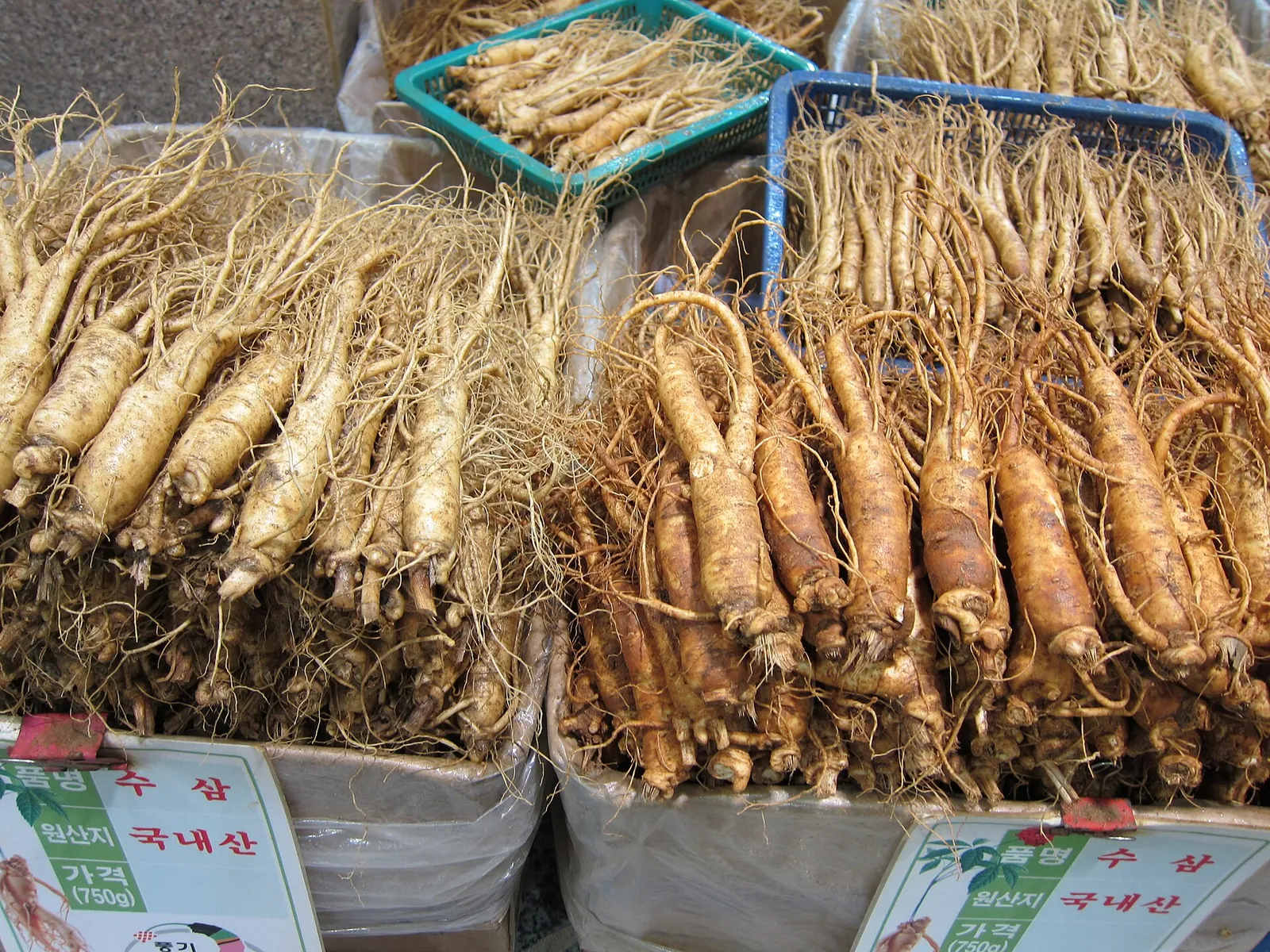
Punggi-eup, a town within Yeongju at the foot of Sobaeksan, is the centre of Yeongju's ginseng trade. VisitKorea says Punggi has grown ginseng for more than 500 years, since the Joseon period. Punggi Ginseng Market, at 8 Insam-ro, opened in 1965 and sells fresh and red ginseng, ginseng sweets and other products. The Punggi Insam Festival is held around the stream and Punggi Insam Park each autumn. When we checked on 2026-10-03, VisitKorea listed it from 3 to 11 October 2026, from 10:00 to 20:00, with free entry and fees for some programmes.
Above Punggi, Sobaeksan National Park begins. VisitKorea says it became Korea's 18th national park in 1987 and is best known for royal azaleas in late spring and long snowy winters on Birobong, its highest peak. The easiest stop for non-hikers is Huibangsa, a temple founded in 643 at about 850 metres in a valley below Yeonhwabong Peak. Beside it, Huibang Falls drops 28 metres. When we checked on 2026-10-03, VisitKorea listed admission at 2,000 won for adults and suggested about two hours. Birosa, founded in 680 at the southern foot of Birobong, keeps two Silla-period stone Buddhas.
Mountain weather changes quickly, and VisitKorea notes that the park can close without notice in bad weather. Check the Korea National Park Service's Sobaeksan page for trail closures before a hike, and do not set out for the summit late in the day.
Getting there and getting around
By train, a VisitKorea feature gives the KTX from Seoul's Cheongnyangni Station to Yeongju as about 1 hour 40 minutes, and the slower Mugunghwa as about 3 hours. Check Korail for current trains and times. VisitKorea's bus guide lists Yeongju and Punggi among the express routes from Seoul Express Bus Terminal, and Yeongju among the routes from Dong Seoul Terminal.
Yeongju Station is also the southern end of the Baekdudaegan Valley Train (V-Train), a slow tourist train that VisitKorea says runs through the mountain gorges from Cheoram Station in Gangwon State via Bonghwa and takes about 2 hours 10 minutes. Check Korail before you plan around it.
Close to the station, the Yeongju Modern History and Culture Street is free and open at all hours, according to VisitKorea. It has early-20th-century railway staff houses, a rice mill with its old machinery, the Gothic-style Yeongju Jeil Church of 1909 and a barbershop that is still in business. It is a good hour while you wait for a train. Everything else, from Buseoksa and Sosuseowon to Museom and Punggi, is outside the centre, so rent a car or use taxis.
Yeongju fits well on a route through the inland north: Danyang lies across Sobaeksan to the north, and Andong, with Hahoe Village and Dosanseowon, another of the UNESCO academies, is to the south. Our Andong, Danyang and Mungyeong guides cover those stops.
Practical questions
Can I see Buseoksa and Sosuseowon in one day?
Yes. Go to Buseoksa in the morning, as VisitKorea lists it as open around the clock, then spend the afternoon at Sosuseowon, the Sosu Museum and Seonbichon, which close between 16:00 and 19:00 depending on the season. You will need a car or taxis between them.
Is Buseoksa free to visit?
When we checked on 2026-10-03, VisitKorea listed free admission and free parking at Buseoksa, open 24 hours all year.
What does the Sosuseowon ticket include?
VisitKorea's pages for the Sosu Museum and Seonbichon say one ticket covers Sosuseowon, the Sosu Museum and Seonbichon, at 3,000 won for adults when we checked; its Sosuseowon page lists 2,000 won, so confirm the price at the gate.
How do I get to Yeongju from Seoul?
Take a train from Cheongnyangni Station (a VisitKorea feature gives the KTX as about 1 hour 40 minutes) or an express bus from Seoul Express Bus Terminal or Dong Seoul Terminal. Check Korail and the bus operators for current times.
Can I stay overnight in a hanok in Yeongju?
Yes. VisitKorea says Seonbichon runs an overnight hanok stay programme and that some houses in Museom Village offer hanok stays. Book ahead and check what is included.
When is the Punggi ginseng festival?
It is held in Punggi-eup each autumn. In 2026, VisitKorea listed it from 3 to 11 October at Namwoncheon Stream and Punggi Insam Park, with free entry.
Sources and checks before you travel
Reference sources for the version dated 3 October 2026. Confirm opening times, access, transport and conditions for your travel dates.
- VisitKorea: Buseoksa Temple [UNESCO World Heritage] ↗ — opens in a new tab
- Korea Heritage Service portal: Muryangsujeon Hall of Buseoksa Temple, Yeongju ↗ — opens in a new tab
- VisitKorea: UNESCO World Heritage — Cultural Heritage Sites ↗ — opens in a new tab
- VisitKorea: Sobaeksan National Park Nature Center (wellness feature) ↗ — opens in a new tab
- VisitKorea: Sosuseowon Confucian Academy ↗ — opens in a new tab
- VisitKorea: Sosu Museum ↗ — opens in a new tab
- VisitKorea: Seonbichon Village ↗ — opens in a new tab
- VisitKorea: Jukgyegugok Valley ↗ — opens in a new tab
- VisitKorea: Yeongju Museom Village ↗ — opens in a new tab
- VisitKorea: Museom Single-Log Bridge Festival ↗ — opens in a new tab
- VisitKorea: Punggi Ginseng Market ↗ — opens in a new tab
- VisitKorea: Yeongju Punggi Insam Festival ↗ — opens in a new tab
- VisitKorea: Shopping like a local — Yeongju Punggi ginseng ↗ — opens in a new tab
- VisitKorea: Sobaeksan National Park (Gyeongsangbuk-do region) ↗ — opens in a new tab
- VisitKorea: Huibangsa Temple (Yeongju) ↗ — opens in a new tab
- VisitKorea: Yeongju Birosa Temple ↗ — opens in a new tab
- Korea National Park Service: Sobaeksan ↗ — opens in a new tab
- VisitKorea: Yeongju Modern History & Culture Street ↗ — opens in a new tab
- VisitKorea: Express Bus & Intercity Bus ↗ — opens in a new tab
- VisitKorea: Unique Transportation (tourist trains) ↗ — opens in a new tab
- VisitKorea: Ginseng and Galbi Soup (Insamgalbitang) ↗ — opens in a new tab
- VisitKorea: Golden Oak Mushroom and Five Vegetable Bibimbap (Pyogoochaebap) ↗ — opens in a new tab
- VisitKorea: Welcome to Korea's Long-Standing Restaurants (Nadeuri) ↗ — opens in a new tab
- VisitKorea: Sobaeksan Punggi Spa Resort ↗ — opens in a new tab
Does this experience fit your route?
Yeongju is easy to visit on your own by train and taxi. Only choose a packaged tour if its itinerary really includes Buseoksa or Sosuseowon.
Browse relevant experiences on Viator ↗ — opens in a new tabAffiliate link · Book with ViatorPhoto credits
The grounds of Buseoksa Temple in Yeongju in autumn, with Sobaeksan's ridges on the horizon.
Photograph: Bernard Gagnon — opens in a new tab · CC0 — opens in a new tab
Changes: Resized and converted to WebP; displayed with responsive crops. · Original photograph and licence details ↗ — opens in a new tab
The stone lantern in front of Muryangsujeon Hall at Buseoksa, on the top terrace of the temple.
Photograph: Contax3 — opens in a new tab · CC BY-SA 4.0 — opens in a new tab
Changes: Resized and converted to WebP; displayed with responsive crops. · Original photograph and licence details ↗ — opens in a new tab
Anyangnu Pavilion at Buseoksa, below Muryangsujeon, with views across the mountains.
Photograph: Bernard Gagnon — opens in a new tab · CC0 — opens in a new tab
Changes: Resized and converted to WebP; displayed with responsive crops. · Original photograph and licence details ↗ — opens in a new tab
Sosuseowon in Yeongju, the first Confucian academy in Korea to receive a royal charter.
Photograph: 이상화 — opens in a new tab · CC BY 4.0 — opens in a new tab
Changes: Resized and converted to WebP; displayed with responsive crops. · Original photograph and licence details ↗ — opens in a new tab
Fresh ginseng roots for sale in Punggi, Yeongju's ginseng town.
Photograph: Eugene Kim — opens in a new tab · CC BY 2.5 — opens in a new tab
Changes: Resized and converted to WebP; displayed with responsive crops. · Original photograph and licence details ↗ — opens in a new tab