Busan and South Gyeongsang · Ulsan
Ulsan travel guide: Taehwagang bamboo, Daewangam and whale petroglyphs
VisitKorea calls Ulsan Korea's largest industrial city, and the industry is never far away: VisitKorea's own listing for Ilsan Beach, next to Daewangam Park, notes that Hyundai Heavy Industries is nearby. But the reasons to stop here are older and greener. The Taehwagang River runs through the middle of the city past a bamboo grove about four kilometres long that local people saved from a flood-control scheme and that became Korea's second national garden in 2019. On the Dong-gu coast, pine woods end in rocky reefs and a footbridge to Daewangam Rock. Up a quiet valley in the west, prehistoric people carved whales, hunters and boats into a cliff; since July 2025 the Petroglyphs along the Bangucheon Stream have been on the UNESCO World Heritage List. The sights are spread across a big municipality, so the way you link them decides the trip.
- Suggested time
- 2 nights; a long day trip from Busan or Gyeongju covers the garden and one more area
- Where to stay
- Samsan-dong (Nam-gu) or the old centre around Seongnam-dong (Jung-gu) for the river and the trains; Ilsan Beach (Dong-gu) for Daewangam and the coast; Eonyang (Ulju-gun) for the petroglyphs and bulgogi
- Season and timing
- Ulsan works all year, because its main sights are outdoors and open around the clock. Taehwagang National Garden, the Simni bamboo grove and Daewangam Park are listed by VisitKorea as open 24 hours, so on hot summer days go early or after dark. Autumn is VisitKorea's season of silver grass in the Yeongnam Alps, and the silver-grass field on Sinbulsan is one of the city's Twelve Scenic Places. VisitKorea listed the Jangsaengpo whale-watching cruise from April to October, plus November weekends. Ganjeolgot is busiest on New Year's Day, when people come from all over Korea to see the first sunrise.
The short answer
Stay two nights, or give Ulsan one long day from Busan or Gyeongju if you only want the garden and the coast. Sleep in Samsan-dong or the old centre around Seongnam-dong for the river and the evening, or by Ilsan Beach in Dong-gu if the coast matters most. Arrive by KTX-Eum at Taehwagang Station (about 40 minutes from Bujeon in Busan, according to VisitKorea) or by KTX at Ulsan Station. Spend the first afternoon walking the Simni bamboo grove in Taehwagang National Garden and stay for the lit Milky Way Trail after dark. Give the next morning to the petroglyphs: bus 348 from Ulsan Station to the Ulsan Petroglyph Museum, then the 2.4-kilometre round-trip trail to the carvings. Spend the afternoon at Daewangam Park and Bangeojin Port, or at the whaling museum in Jangsaengpo. Take a taxi or a car for Ganjeolgot.
Three Ulsans: the river, the coast and the valley of the whales
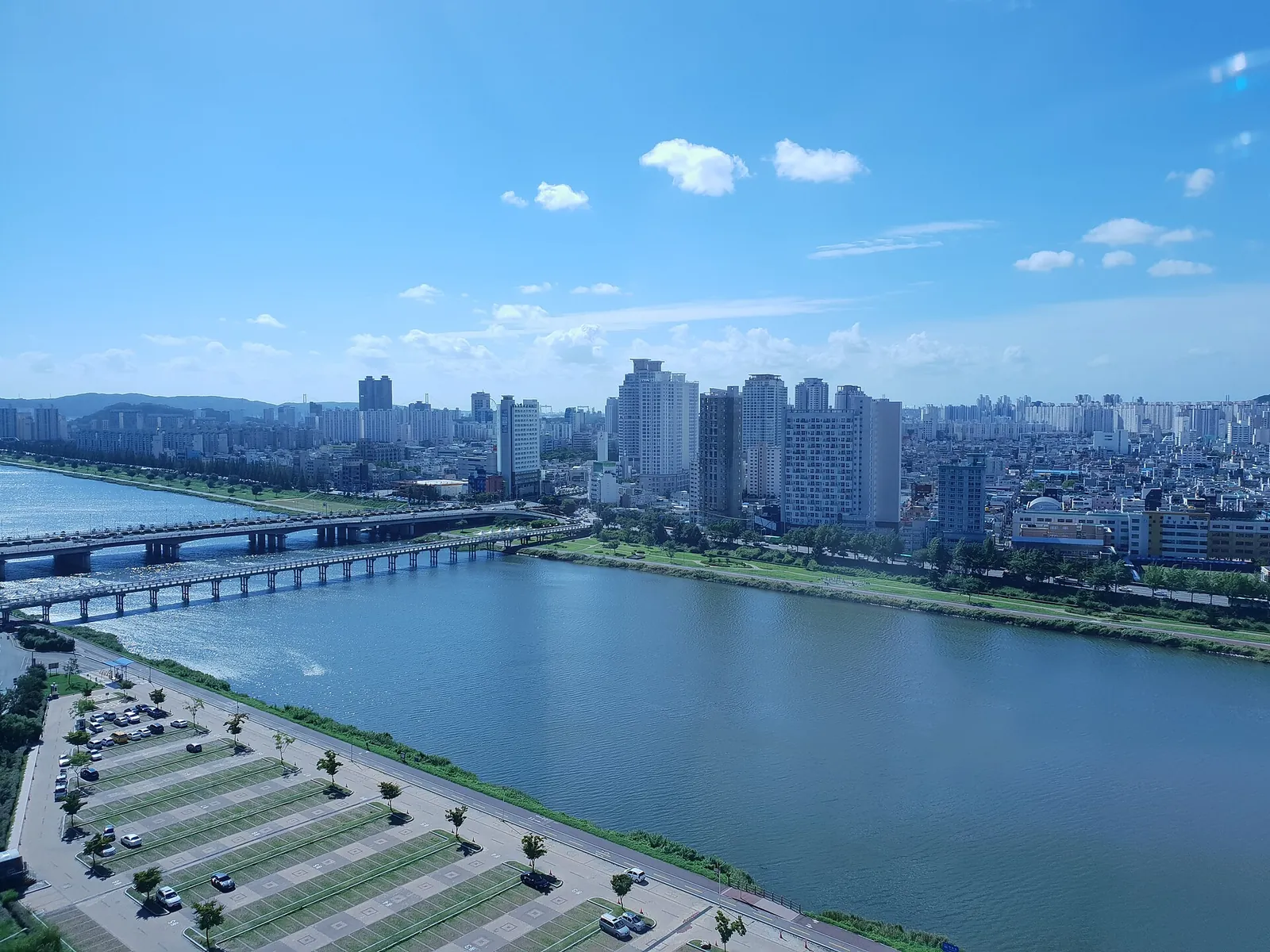
Ulsan is a metropolitan city rather than a compact town, and its sights fall into three areas that are not within walking distance of each other. The river: Taehwagang National Garden and the Simni bamboo grove lie on the Taehwagang in Jung-gu, the district of the old centre around Seongnam-dong, with the newer shopping district of Samsan-dong in neighbouring Nam-gu. The coast: Daewangam Park, Ilsan Beach and Bangeojin Port share the end of the Dong-gu peninsula, facing the East Sea, with Jangsaengpo, the old whaling port, on the bay in Nam-gu. The valley: the Bangucheon petroglyphs and their museums are in Ulju-gun, out towards Eonyang and the mountains, and Ganjeolgot is far down the coast in Seosaeng-myeon.
So plan the trip around the areas rather than a list of sights. The river is easy without a car and is best in the late afternoon and evening. The coast needs a city bus or a taxi from the centre. The petroglyphs need a plan: the city's directions page lists just three departures of bus 348 from Ulsan Station, so either fit your morning around the bus or take a taxi. For Ganjeolgot, VisitKorea warns that public transport is limited and suggests a car.
Where you sleep follows from that. Samsan-dong in Nam-gu is the modern shopping district: VisitKorea places the Lotte Department Store, Lotte Hotel and the Ferris wheel there, next to the Ulsan Express and Intercity Bus Terminal, which is handy if you arrive by bus from Gimhae Airport. The old centre around Seongnam-dong in Jung-gu has Youth Street and the night market at Ulsan Jungang Traditional Market. Both suit travellers without a car. Ilsan Beach in Dong-gu is, in VisitKorea's words, surrounded by accommodation and close to Daewangam Park, which makes it the base for sunrise walks on the coast. Eonyang in Ulju-gun is a small town on the bus 348 route between Ulsan Station and the petroglyphs, and the home of Eonyang bulgogi; it suits a stay that is mainly about the valley and the Yeongnam Alps.
- One day from Busan: Taehwagang National Garden and either Daewangam or Jangsaengpo.
- Two nights: add the petroglyphs on the bus 348 morning and an evening on the Milky Way Trail.
- With a car: add Ganjeolgot on the south coast and Oegosan Onggi Village.
Taehwagang National Garden and the Simni bamboo grove
The Taehwagang rises at Tapgolsaem Spring on Baegunsan and runs 47.54 kilometres through Ulsan to Ulsan Bay, according to VisitKorea. Halfway along, a long-neglected riverside field became Taehwagang National Garden, which VisitKorea says was recognised as Korea's second national garden in 2019 and is more than twice the size of Yeouido Park in Seoul. VisitKorea's listing mentions six themed gardens, while its Ulsan shopping feature counts more than 20; either way, most visitors come for the bamboo. VisitKorea gives the garden's area as 835,400 square metres and an average of 14,000 visitors a day. The listing also notes canola and forage barley fields beside the water, and the riverbanks are a well-known habitat for migratory birds.
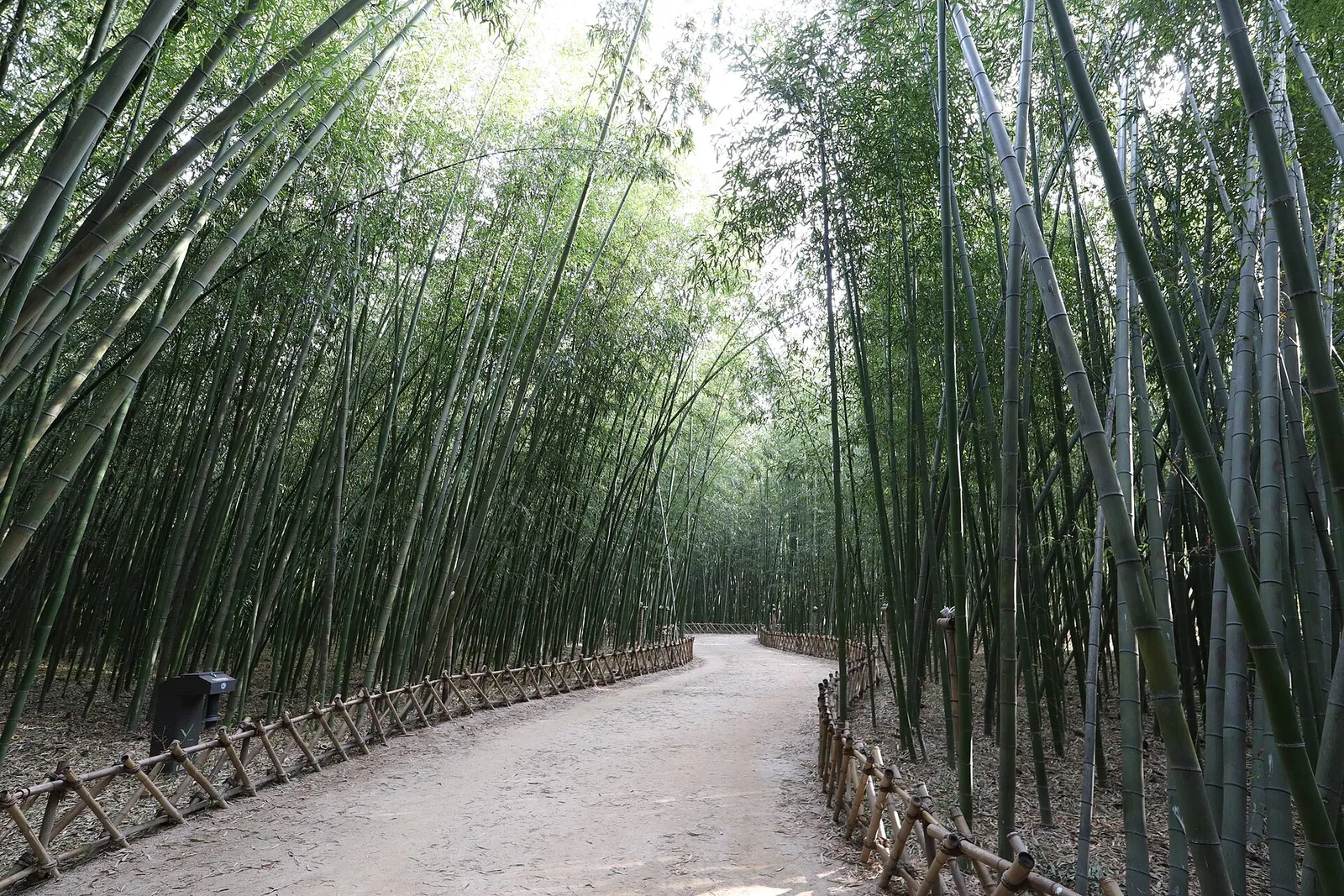
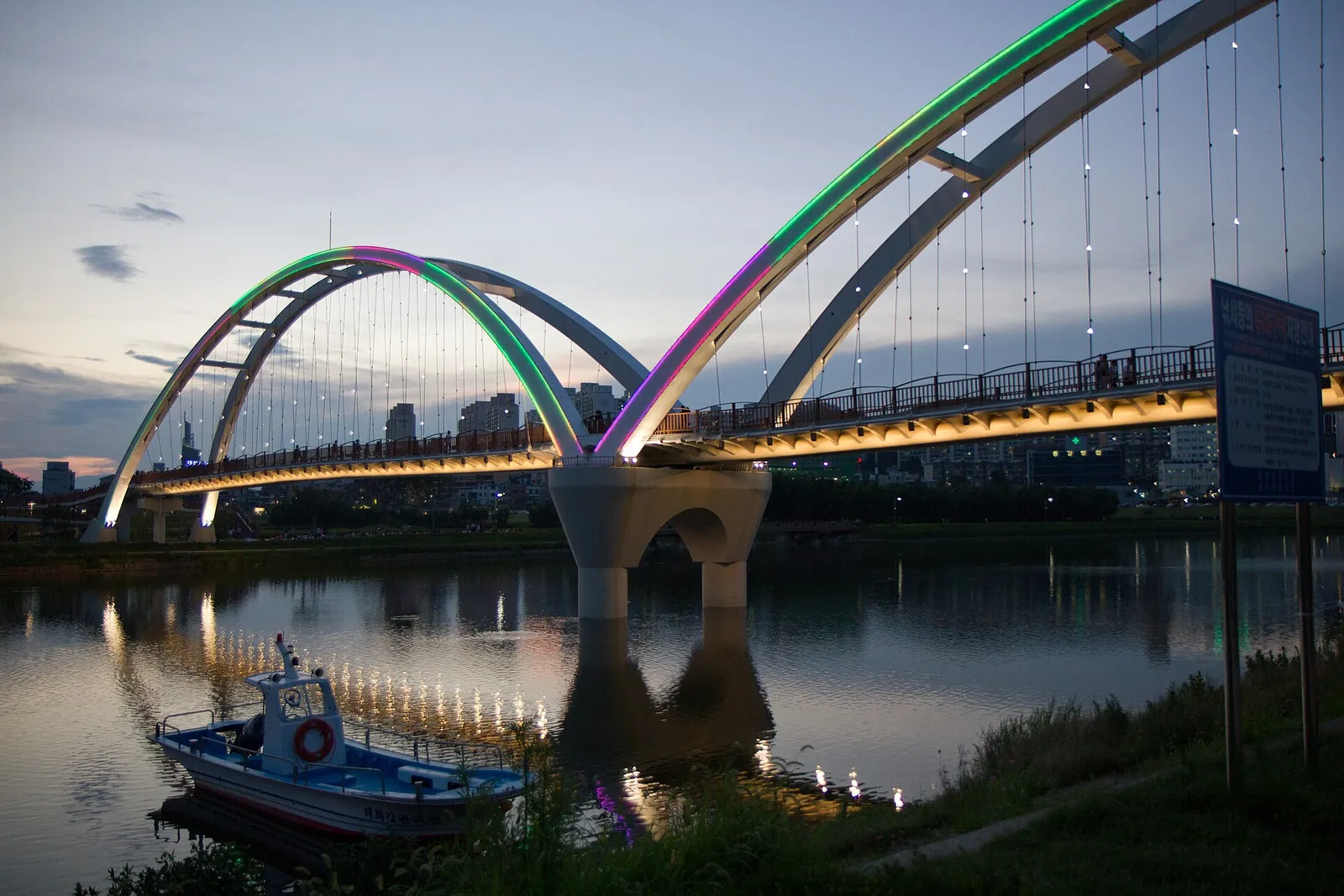
The Simni bamboo grove (Simnidaesup) stretches for about four kilometres along the river, says VisitKorea, and has grown there naturally for a long time; another VisitKorea feature dates the river's bamboo groves to the Joseon period. The grove was nearly cut down under a government flood-control plan and was saved by community campaigning, which is what turned the area into a national garden. The name comes from the old unit li: simni, ten li, is about four kilometres. The Samho Bamboo Grove section is singled out in VisitKorea's Ulsan feature as a must-visit.
Stay until dark. The grove becomes the Milky Way Trail (Eunhasu-gil), where coloured lights among the bamboo are meant to look like the night sky; VisitKorea includes it in its compilation of Korea's best night attractions. When we checked on 3 October 2026, VisitKorea listed both the garden and the bamboo grove as open 24 hours, all year, with no admission fee mentioned; its December 2024 Ulsan feature gives the Milky Way Trail lighting as sunset to 22:00, so arrive well before ten. For drivers, it listed parking at 500 won for 30 minutes, then 200 won per 10 minutes, up to 10,000 won a day. The garden's official address is 5 Saetgangnam-gil, Jung-gu, and the city runs a garden site at ulsan.go.kr/s/garden.
Make time for the local food
What to eat and where to look
Eonyang bulgogi
Ulsan's signature beef dish, from the town of Eonyang. Unlike Seoul-style bulgogi cooked in broth, VisitKorea describes it as seasoned beef grilled dry on a gridiron over charcoal. Some restaurants slice it thinly, others mince it and grill it as a wide, flat patty with a smoky flavour, served with green-onion salad and lettuce wraps.
- Where to look
- Eonyang itself, on the way to the petroglyphs: VisitKorea lists Eonyang Giwajip Bulgogi in a renovated hanok at 86 Heonnyang-gil, Eonyang-eup (11:00–20:50), and Eonyang Jinmi Bulgogi at 33 Jungpyeong-ro, Samnam-eup (11:00–21:00). In the city, Ulsan Eonyang Bulgogi at 205 Wolpyeong-ro, Samsan-dong, was listed as open 11:30–22:00 with a 15:00–17:00 break on weekdays.
- Fit it into your day
- Lunch after the petroglyph walk, or dinner in Samsan-dong on the night you arrive.
It is made with Korean hanu beef and priced accordingly; hours are as VisitKorea listed them when we checked on 3 October 2026.
Raw fish and seafood at Bangeojin Port
Bangeojin is Ulsan's main fishing port. VisitKorea lists yellowtail, cutlassfish, Spanish mackerel and anchovies among the catch, and says you can buy fresh seafood at the market or sit down in one of the raw-fish restaurants nearby and eat it straight away.
- Where to look
- The fish market and hoe (raw-fish) restaurants around Bangeojin Port, 2 Seongkkeut-gil, Dong-gu, a short way from Daewangam Park.
- Fit it into your day
- A late lunch or early dinner after Daewangam Park, before the walk to Seuldo Lighthouse.
VisitKorea lists no prices or hours for the market and restaurants, so ask the price before you order.
The night market at Ulsan Jungang Traditional Market
The market began as Okgyo Market in 1922 and, according to VisitKorea, has the longest arcade of any market in Korea. Its night market sells almost 30 kinds of food, prepared by former restaurant chefs, cooking-school teachers and young chefs.
- Where to look
- Okgyo-dong in the old centre of Jung-gu. When we checked on 3 October 2026, VisitKorea listed the night market from 19:00 to midnight every day except Monday; the market closes on the second and fourth Mondays of the month.
- Fit it into your day
- Dinner on a night you stay in the old centre, before or after the Milky Way Trail.
Stall hours vary by vendor; cards are accepted, according to VisitKorea.
Boksoondoga makgeolli
A sparkling, unpasteurised rice wine brewed in Ulju-gun from local rice. VisitKorea says it ferments for 20 days at low temperature in onggi jars and is naturally carbonated 'like champagne'.
- Where to look
- The brewery at 48 Hyangsandong-gil, Sangbuk-myeon, close to KTX Ulsan Station, with a pub next door for tasting and buying; VisitKorea listed it as open daily 09:00–18:00.
- Fit it into your day
- A stop on the way to or from Ulsan Station, or a bottle to drink with dinner.
It is alcoholic and lively: open the bottle slowly. For something sweet to take home instead, VisitKorea suggests Ganjeolgot Hae Bbang, a cream- or red-bean-filled bun, or whale-shaped rice cakes, which must be ordered a day ahead.
Daewangam Park, Bangeojin and the Dong-gu coast
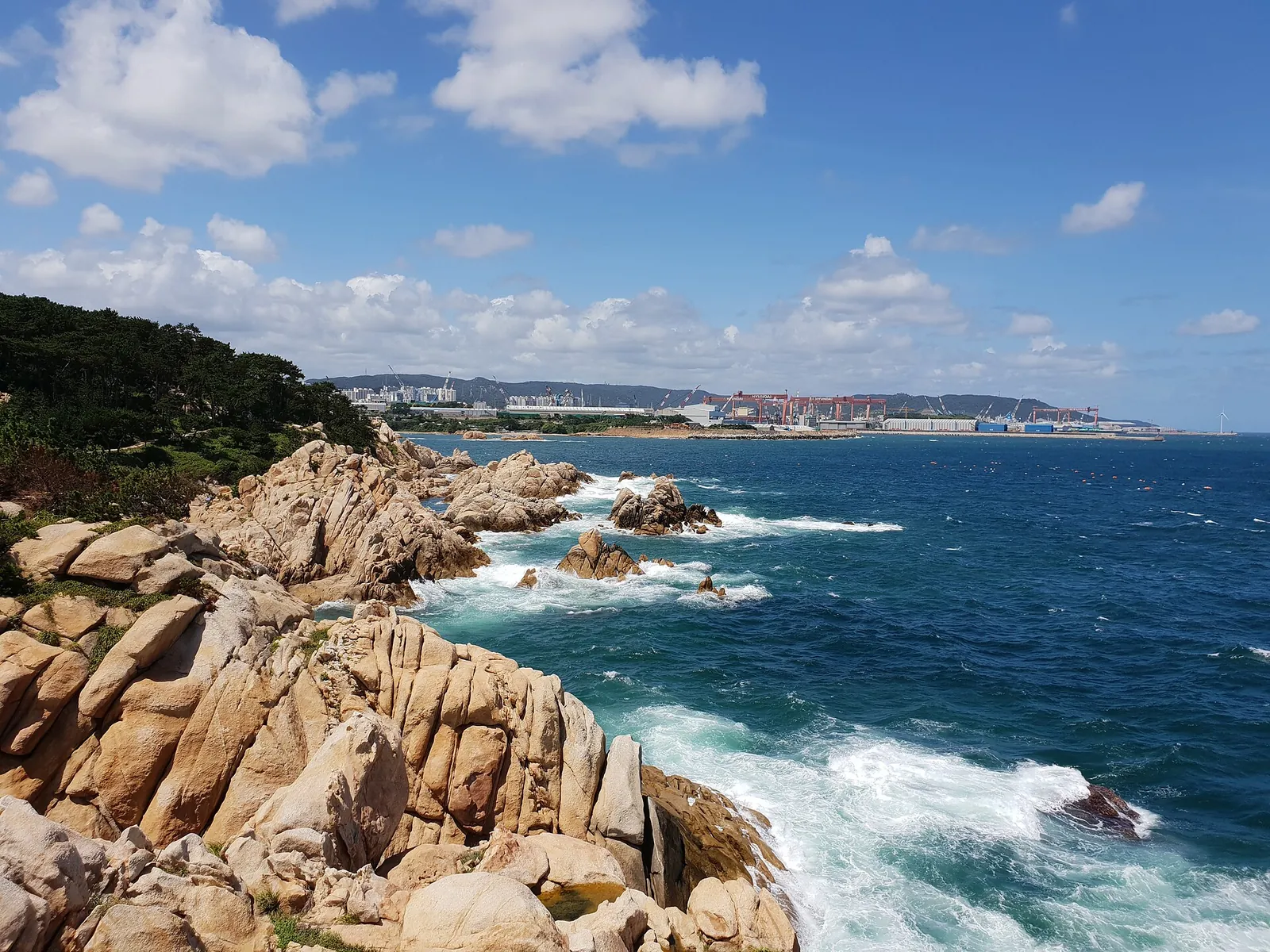
Daewangam Park sits at the end of the Dong-gu peninsula; VisitKorea places it at the southeasternmost point, facing the East Sea. VisitKorea's Ulsan feature counts 15,000 sea pines, and the 600-metre road from the entrance to the rocks runs through dense pine woods; the park listing adds cherry, magnolia, camellia, apricot and forsythia, and a lighthouse. Beyond the trees is a cluster of sea rocks. The largest, Daewangam Rock, looks to VisitKorea's writer like a dragon rising into the sky, and an iron footbridge links it to the shore. Local legend, retold by VisitKorea, says the queen of King Munmu of Silla is buried beneath it. VisitKorea lists the park as open 24 hours.
The Daewangam Park Suspension Bridge links the Hatgaebi and Surubang coastal trails over the sea. VisitKorea gives its length as 303 metres, with no supports in between, and its height as 42 metres. When we checked on 3 October 2026, VisitKorea listed it as free and open 09:00–18:00, with last entry at 17:40, and closed on the second Tuesday of each month (its Ulsan feature adds Seollal and Chuseok). Walk the bridge in daylight, then come back to the rocks at dusk: VisitKorea's Ulsan feature says the sea-and-rock view is even better at night.
Ilsan Beach, 600 metres of fine sand about a kilometre north of Bangeojin according to VisitKorea, is the beach by the park. To the south, Bangeojin Port has been a national fishing port since 1971. It has a fish market and raw-fish restaurants, and a breakwater promenade out to the Seuldo Lighthouse. Further along the Dong-gu coast, Jujeon Mongdol Beach is a 1.5-kilometre beach of black pebbles and odd-shaped rocks, and one of the city's Twelve Scenic Places.
The Bangucheon petroglyphs: whales on a cliff
This is the sight that makes Ulsan unique. In July 2025, UNESCO inscribed the Petroglyphs along the Bangucheon Stream as a single property: the Petroglyphs of Bangudae Terrace in Daegok-ri and the Petroglyphs of Cheonjeon-ri, about three kilometres apart along the same stream. VisitKorea notes that this made it Korea's 17th World Heritage Site and the country's first Stone Age listing.
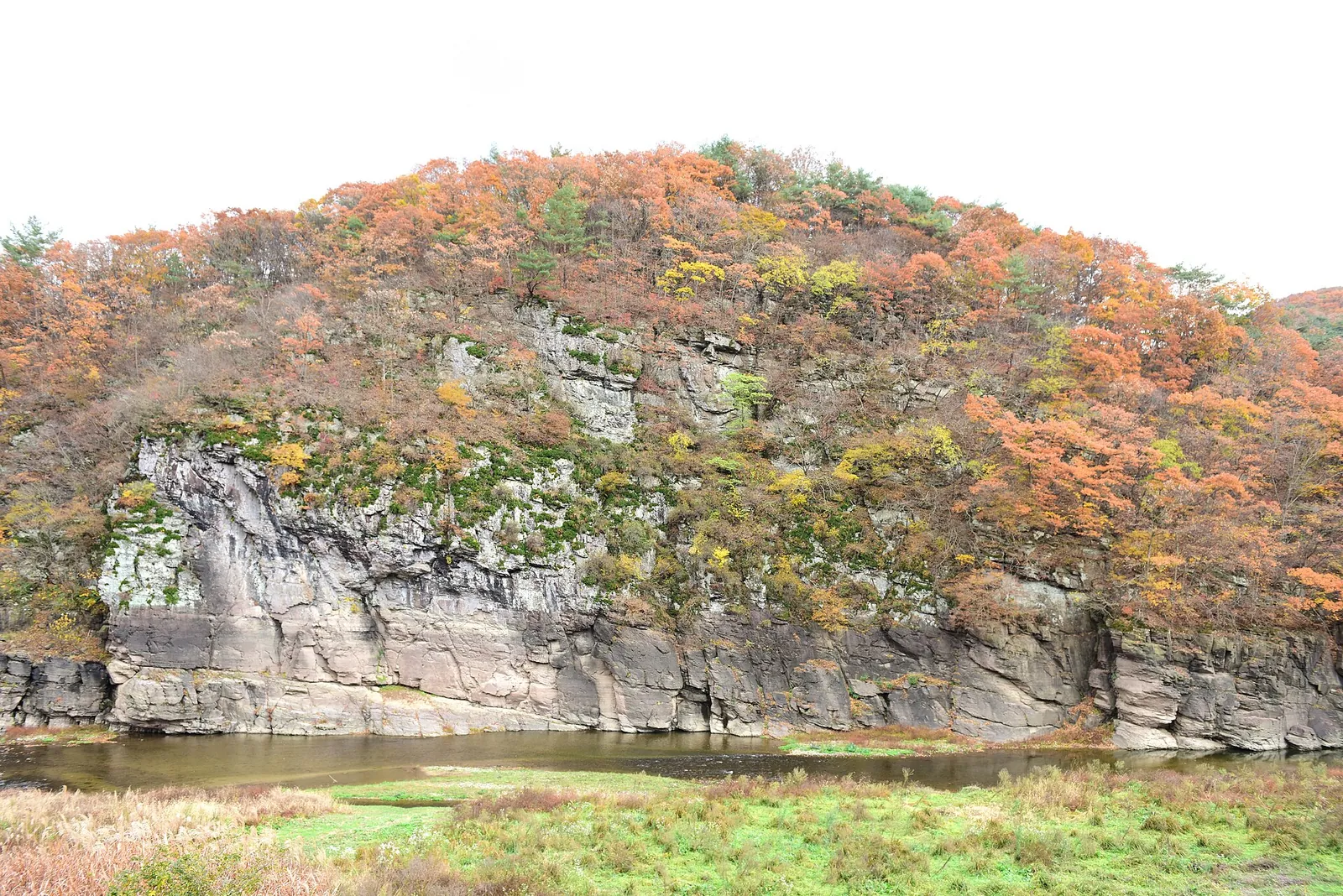
At Daegok-ri, the city's heritage site describes a main rock face about eight metres wide and 4.5 metres high, with a rock overhang that has protected it from the weather. It holds 312 carved images of at least 20 animal species, including northern right, humpback, grey and sperm whales, turtles, a shark, tigers, deer and wild boar. Among them is a harpooned whale with a boat on one side and a float on the other. The city dates the carvings to about 7,000 years ago, in the Neolithic; VisitKorea's feature says about 6,000. Researchers from the Dongguk University Museum were shown the rock by a villager on 25 December 1971, a year after the Cheonjeon-ri carvings were reported. Cheonjeon-ri is different in character: Bronze Age geometric patterns, concentric circles and running deer on the upper surface, and on the lower part more than 800 Chinese characters recording royal visits under the Silla king Beopheung (r. 514–540). The city also points out about 130 dinosaur footprints on the rocks opposite.
Start at the Ulsan Petroglyph Museum, 254 Bangudaean-gil. It has replicas of both rock faces and an outdoor display of copies, which help you understand the faint lines on the real cliff. When we checked on 3 October 2026, VisitKorea listed it as free and open 09:00–18:00 (last entry 30 minutes before closing), closed on Mondays (on the following day when Monday is a public holiday) and on New Year's Day. From the museum, the city's recommended half-day course runs to the Daegok-ri petroglyphs past Jipcheongjeong Pavilion, Bangudae Terrace, the Bangu Seowon Confucian academy and dinosaur footprints. It is 2.4 kilometres and about an hour round trip. Ulsan Daegok Museum is the other museum in the valley.
Without a car, use bus 348. When we checked on 3 October 2026, the official petroglyph site gave its route from Samnam Sinhwa via Ulsan Station, Eonyang Bus Terminal and the Petroglyph Museum to Daegok Museum. It listed departures from Ulsan Station at 10:25, 13:00 and 18:00. With only three buses, take the 10:25, decide in advance how you will get back (the site lists later times at the museum stops, but confirm them locally or call +82-52-229-4797), and keep a taxi as the fallback.
Jangsaengpo: Korea's old whaling port
The whales on the cliff have a modern echo on Ulsan Bay. Jangsaengpo was once Korea's largest whaling port, and VisitKorea's Busan-region feature describes the themed village there as a recreation of Jangsaengpo in the 1970s. The Jangsaengpo Whale Museum covers whale evolution, ecology and the history of whaling, with a 10-metre whale skeleton and whaling tools. A monorail gives views over the village, the Ulsandaegyo Bridge and the industrial complex. When we checked on 3 October 2026, VisitKorea listed the museum as open 09:00–18:00 (ticketing closes 30 minutes earlier), closed on Mondays and on Seollal and Chuseok, at 2,000 won for adults.
Across the road, Jangsaengpo Whale Culture Village, opened in 2015, recreates the old village alongside a whale plaza, a sculpture park and gardens. VisitKorea listed it as open 09:00–18:00 on weekdays and to 20:00 at weekends, closed on Mondays. The Whales Fantasium media-art space is at the same address, 271-1 Jangsaengpogorae-ro.
The Jangsaengpo Whale Watching Cruise sails from 244 Jangsaengpogorae-ro. When we checked on 3 October 2026, VisitKorea listed whale-exploration sailings from April to October (Tuesday to Sunday) and on November weekends, about three hours long, with adult fares of 20,000 won and children 10,000 won. A shorter coastal tour was listed too, and the boat was closed on Mondays. You need valid ID to board, and sightings are not guaranteed: the listing describes alternative free admissions or discounts when no dolphins are seen. Schedules change by season, so check whalecity.kr before you plan around it.
With a car or a spare day: Ganjeolgot, Onggi Village and the Yeongnam Alps
Ganjeolgot Cape, in Seosaeng-myeon, where VisitKorea says the East Sea meets the south coast, is where the sun rises earliest on Korea's east coast: VisitKorea says a minute before Homigot and five minutes before Jeongdongjin. The grassy headland has a lighthouse, a monument and a 5-metre Hope Post Box you can step inside to write a postcard; VisitKorea says the cards are free and are delivered like ordinary mail. It is free and open around the clock. VisitKorea's feature on the cape's Hae Bbang bakery warns that public transport in the area is limited and suggests going by car.
Oegosan Onggi Village is, according to VisitKorea, the largest village in Korea devoted to onggi, the traditional earthenware jars, with a museum and an academy for hands-on classes, and it hosts the annual Ulsan Onggi Festival.
Inland, the Yeongnam Alps are a range of nine peaks over 1,000 metres that Ulsan shares with Miryang, Yangsan, Cheongdo and Gyeongju, according to VisitKorea. They are the reason Ulsan appeals to hikers: spring flowers, cool valleys in summer, snow in winter and, in autumn, silver grass, best known on Sinbulsan. Treat them as a separate hiking day with proper planning rather than an add-on to the city sights.
Getting there and getting around
From Busan, VisitKorea gives about 40 minutes by KTX-Eum from Bujeon Station to Taehwagang Station, or about 80 minutes on the Donghae Line metro. Since 30 December 2025, the Donghae Line KTX-Eum has run between Gangneung and Bujeon via Pohang, Gyeongju and Taehwagang. That makes it easy to combine Ulsan with Gyeongju, the next stop north. When we checked, VisitKorea said the line had three trains in each direction a day, so check the timetable on Korail's site or the Korail Talk app.
Ulsan Station is the city's KTX stop and the start of bus 348 to the petroglyphs; check KTX times from Seoul on Korail's site. VisitKorea's airport guide says it is about 50 minutes from Ulsan Airport by city bus, against 20–30 minutes from the airport to downtown, so it lies well outside the centre. Arriving there, allow for a bus or taxi into town.
From Gimhae Airport, intercity buses run to Ulsan, and VisitKorea places the Ulsan Express and Intercity Bus Terminal in Samsan-dong. Locally, the river sights can be done on foot or by a short taxi ride from Samsan-dong or the old centre. Use city buses or taxis for Daewangam, Bangeojin and Jangsaengpo, and the bus 348 or a taxi for the petroglyphs. Ganjeolgot and the Yeongnam Alps are easiest with a car.
Practical questions
How many days do I need in Ulsan?
Two nights covers the three main areas: Taehwagang National Garden and the Milky Way Trail in the evening, the petroglyphs on a morning, and Daewangam or Jangsaengpo in an afternoon. A long day from Busan or Gyeongju covers the garden and one of the others.
Is Ulsan a good day trip from Busan?
Yes. VisitKorea gives about 40 minutes by KTX-Eum from Bujeon Station to Taehwagang Station, or about 80 minutes on the Donghae Line metro. In a day, pair the bamboo grove with either Daewangam Park or the Jangsaengpo whaling village; the petroglyphs take a half day of their own.
How do I get to the Bangudae petroglyphs without a car?
Take bus 348. When we checked on 3 October 2026, the city's official petroglyph site listed departures from Ulsan Station at 10:25, 13:00 and 18:00 to the Petroglyph Museum and Daegok Museum stops. From the museum, the trail to the Daegok-ri carvings is 2.4 kilometres and about an hour round trip. With so few buses, plan your return or use a taxi.
Is the Ulsan Petroglyph Museum worth it if I can see the real carvings?
Yes, see it first. The museum has replicas of both rock faces, which make it easier to pick out the whales, boats and hunters on the real cliff. When we checked on 3 October 2026, VisitKorea listed it as free, open 09:00–18:00 and closed on Mondays.
Is Daewangam Park free, and when is the suspension bridge open?
The park is free and, according to VisitKorea, open 24 hours. When we checked on 3 October 2026, VisitKorea listed the 303-metre suspension bridge as free, open 09:00–18:00 with last entry at 17:40, and closed on the second Tuesday of each month.
Can I see whales in Ulsan?
Possibly, on the Jangsaengpo Whale Watching Cruise. VisitKorea listed sailings from April to October and on November weekends, with alternative free admissions or discounts if no dolphins are seen. Sightings are not guaranteed; check the timetable at whalecity.kr. The whale museum in Jangsaengpo is open all year except Mondays and major holidays.
Sources and checks before you travel
Reference sources for the version dated 3 October 2026. Confirm opening times, access, transport and conditions for your travel dates.
- VisitKorea: Taehwagang National Garden ↗ — opens in a new tab
- VisitKorea: Taehwagang National Garden and Simni Bamboo Grove (Milky Way Trail) ↗ — opens in a new tab
- VisitKorea: Taehwagang River ↗ — opens in a new tab
- VisitKorea: Daewangam Park ↗ — opens in a new tab
- VisitKorea: Daewangam Park Suspension Bridge ↗ — opens in a new tab
- VisitKorea: Ulsan Ilsan Beach ↗ — opens in a new tab
- VisitKorea: Bangeojin Port ↗ — opens in a new tab
- VisitKorea: Jujeon Mongdol Beach ↗ — opens in a new tab
- VisitKorea: Petroglyphs of Bangudae Terrace in Daegok-ri [UNESCO World Heritage] ↗ — opens in a new tab
- VisitKorea: Petroglyphs of Cheonjeon-ri [UNESCO World Heritage] ↗ — opens in a new tab
- VisitKorea: New Addition to Korea's UNESCO World Heritages: Petroglyphs along the Bangucheon Stream ↗ — opens in a new tab
- Bangucheon Petroglyphs (Ulsan Metropolitan City): Petroglyphs of Daegok-ri ↗ — opens in a new tab
- Bangucheon Petroglyphs (Ulsan Metropolitan City): Directions ↗ — opens in a new tab
- Bangucheon Petroglyphs (Ulsan Metropolitan City): Trail ↗ — opens in a new tab
- VisitKorea: Ulsan Petroglyph Museum ↗ — opens in a new tab
- VisitKorea: [Korea Beyond Seoul 4] Fly to Gimhae International Airport and Experience Busan and Gyeongsangnam-do ↗ — opens in a new tab
- VisitKorea: Travel from Gangneung to Busan on the New Donghae Line KTX-Eum ↗ — opens in a new tab
- VisitKorea: Domestic Flights ↗ — opens in a new tab
- VisitKorea: Jangsaengpo Whale Museum ↗ — opens in a new tab
- VisitKorea: Jangsaengpo Whale Culture Village ↗ — opens in a new tab
- VisitKorea: Jangsaengpo Whale Watching Cruise ↗ — opens in a new tab
- VisitKorea: Ganjeolgot Lighthouse ↗ — opens in a new tab
- VisitKorea: Ganjeolgot Cape ↗ — opens in a new tab
- VisitKorea: Twelve Scenic Places of Ulsan City ↗ — opens in a new tab
- VisitKorea Shopping Like a Local: [Ulsan] Bamboo merch, Ganjeolgot Hae Bbang, Whale rice cake, Keunaegi merch ↗ — opens in a new tab
- VisitKorea: Yeongnam Alps ↗ — opens in a new tab
- VisitKorea Shopping Like a Local: Ulsan ↗ — opens in a new tab
- VisitKorea: Ulsan Eonyang Bulgogi, Eonyang Giwajip Bulgogi and Eonyang Jinmi Bulgogi ↗ — opens in a new tab
- VisitKorea: Ulsan Jungang Traditional Market ↗ — opens in a new tab
- VisitKorea: [Must Have Items] Four Items Capturing the Mountains and Rivers of Ulsan ↗ — opens in a new tab
- VisitKorea: Compilation of Korea's Most Stunning Night Attractions ↗ — opens in a new tab
Photo credits
The rocky coast of Daewangam Park, at the eastern tip of Ulsan's Dong-gu peninsula
Photograph: Choi2451 — opens in a new tab · CC BY-SA 4.0 — opens in a new tab
Changes: Resized and converted to WebP; displayed with responsive crops. · Original photograph and licence details ↗ — opens in a new tab
The Simni bamboo grove (Simnidaesup) in Taehwagang National Garden
Photograph: Mobius6 — opens in a new tab · CC BY-SA 4.0 — opens in a new tab
Changes: Resized and converted to WebP; displayed with responsive crops. · Original photograph and licence details ↗ — opens in a new tab
The cliff of the Petroglyphs of Bangudae Terrace in Daegok-ri, part of a UNESCO World Heritage Site since 2025
Photograph: Korea Heritage Service — opens in a new tab · CC BY-SA 4.0 — opens in a new tab
Changes: Resized and converted to WebP; displayed with responsive crops. · Original photograph and licence details ↗ — opens in a new tab
Simnidaebat Bridge over the Taehwagang, next to the Simni bamboo grove, at dusk
Photograph: Happyday19c at Korean Wikipedia This photo was taken with Canon EOS 7D — opens in a new tab · CC BY-SA 3.0 — opens in a new tab
Changes: Resized and converted to WebP; displayed with responsive crops. · Original photograph and licence details ↗ — opens in a new tab
The Taehwagang seen from Hotel Riverside Ulsan, with Samsan-dong in the middle distance
Photograph: Choi2451 — opens in a new tab · CC BY-SA 4.0 — opens in a new tab
Changes: Resized and converted to WebP; displayed with responsive crops. · Original photograph and licence details ↗ — opens in a new tab