Daegu and North Gyeongsang · North Gyeongsang
Pohang travel guide: Homigot sunrise, Jukdo Market and Guryongpo
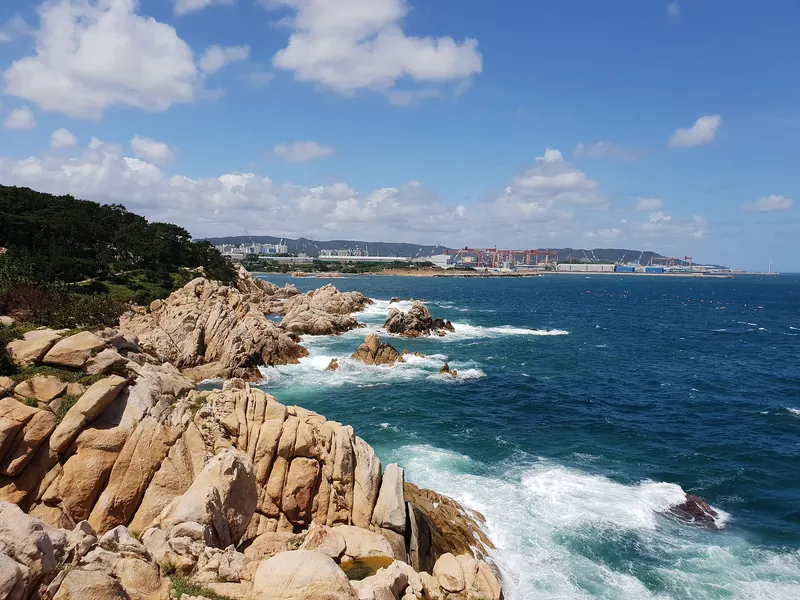
Pohang is a steel town on the sea. POSCO's works line Yeongil Bay, and at night their lights are part of the view from the city's beaches. But the reasons to come are on the water's edge. Jukdo Market, the biggest traditional market on Korea's east coast, grew out of street stalls in a reed marsh by the old harbour. South of the city the Homigot peninsula sticks out into the East Sea. Its tip is the easternmost point of the Korean mainland, where a bronze hand rises out of the waves and the year's first sunrise draws crowds. On the far side of the peninsula, the fishing port of Guryongpo still has a street of wooden houses built by Japanese settlers in the colonial period. Pohang is also where many travellers board the fast ferry to Ulleungdo. The city is spread out, so plan your days around three areas: the centre and Yeongildae Beach, the Homigot peninsula, and the hills to the north.
- Suggested time
- 2 nights; 1 night if you are catching the Ulleungdo ferry
- Where to stay
- Yeongildae Beach (Buk-gu) for the sea, the evening views and the ferry terminal; the centre near Jukdo Market for budget hotels and the market; Guryongpo on the Homigot peninsula for sunrise
- Season and timing
- Pohang is a year-round city, but the specialities follow the seasons. Gwamegi, the half-dried saury of Guryongpo, is a winter dish, and VisitKorea's festival calendar for Pohang puts the Guryongpo Gwamegi Festival in November and the Guryongpo Snow Crab Festival in March. New Year is the busiest time at Homigot: VisitKorea, citing the Korea Astronomy and Space Science Institute, gives 7:32 a.m. as the time of the 1 January sunrise there, the earliest on the mainland, and the city's Homigot Sunrise Festival runs through the night from New Year's Eve. In April, VisitKorea's listing for the Homigot Octopus Festival mentions canola fields in flower by the coast. Summer is beach season at Yeongildae; VisitKorea listed its 2026 swimming period as 10 July to 23 August, and swimming is not allowed outside the official season or at night.
The short answer
Stay two nights, or one if you are only passing through on the way to the Ulleungdo ferry. Sleep near Yeongildae Beach for the sea, the night view of the steelworks and the ferry terminal, or in the centre near Jukdo Market if you are travelling on a budget. Spend the first afternoon and evening on the city side: Jukdo Market for raw fish or mulhoe, then Space Walk in Hwanho Park in the late afternoon (it closes at 17:00 on winter weekdays) and Yeongildae Beach as the steelworks light up. Give the second day to the Homigot peninsula: sunrise at the Hands of Harmony at Homigot, the lighthouse and the free National Lighthouse Museum (closed Mondays), then Guryongpo's Japanese House Street, the market and a bowl of moriguksu. Take a taxi, or rent a car, for the peninsula. Arrive by KTX at Pohang Station; VisitKorea gives about 35 minutes from Dongdaegu in Daegu, and the Donghae Line KTX-Eum links Pohang with Gyeongju, Ulsan and Busan to the south and Yeongdeok, Samcheok and Gangneung to the north.
Three Pohangs: the city shore, the Homigot peninsula and the northern hills
Pohang is a large municipality, and its sights fall into three areas that are not within walking distance of each other. The city shore in Buk-gu has Jukdo Market, the Pohang Canal, Yeongildae Beach and Hwanho Park with Space Walk. It is compact enough for buses, taxis and walking. The Homigot peninsula in Nam-gu runs out to Homigot, the eastern tip, and down the coast to Guryongpo. The northern hills of Songna-myeon hold Naeyeonsan and Bogyeongsa Temple, with Oeosa Temple in the south-west of the city.
So decide where to sleep by what you want from the trip. Yeongildae Beach in Duho-dong is the most pleasant base: VisitKorea notes several lodging facilities and seafood restaurants near the beach, the ferry terminal for Ulleungdo is on the same seafront road, and Space Walk is in the park behind it. From Pohang Station, VisitKorea gives about 15 minutes to the beach on express bus 9000, or about 12 minutes by taxi. The centre around Jukdo Market has business hotels, such as the BENIKEA Hotel Pohang on Jungang-ro that VisitKorea lists, and puts you a short walk from the market and the canal. Guryongpo, on the peninsula, has accommodation by its beach, according to VisitKorea, and suits travellers who want to be on the coast for sunrise without a dark drive from the city.
Getting around: VisitKorea notes that cards from Seoul and other regions, such as T-money, work on local transport in the cities on the Donghae Line. The peninsula is where a car or taxi makes the difference. VisitKorea also mentions Pohang's tourist taxi service, which you book in advance for a route of your choice (the booking site is in Korean only).
- One night: Jukdo Market in the afternoon, Space Walk in the late afternoon, Yeongildae after dark, Ulleungdo ferry in the morning.
- Two nights: add a full day on the Homigot peninsula, with sunrise at Homigot and lunch in Guryongpo.
- Three nights or a car: add Naeyeonsan's waterfalls and Bogyeongsa Temple, or the Homibando coastal trail.
Jukdo Market, the canal and Yeongildae Beach
Jukdo Market began more than 50 years ago as street stalls in a reed-filled wetland near the inner harbour, according to VisitKorea, and was officially established in 1969. It is now the largest traditional market on Korea's east coast, with about 1,500 shops, and lies about 500 metres east of the city's central intersection. The heart of it for visitors is Jukdo Fish Market, where more than 200 hoe (raw fish) restaurants are packed around the seafood auction area. You pick seafood from the stalls and have it prepared on the spot for a small fee. When we checked on 3 October 2026, VisitKorea listed the market as open from 08:00 to 22:00 all year. Other alleys deal in dried seafood, produce, kitchenware, quilts and hanbok.
From the market it is a short way to the Pohang Canal, a 1.3-kilometre channel completed in January 2014 between Songdo-dong and Jungdo-dong. VisitKorea describes it as the restoration of an old waterway, with paths on both banks and boat rides along it.
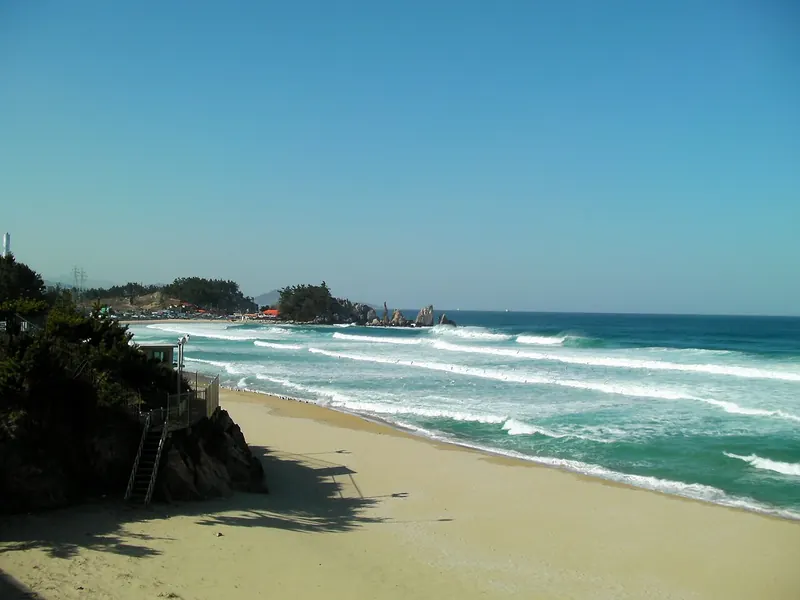
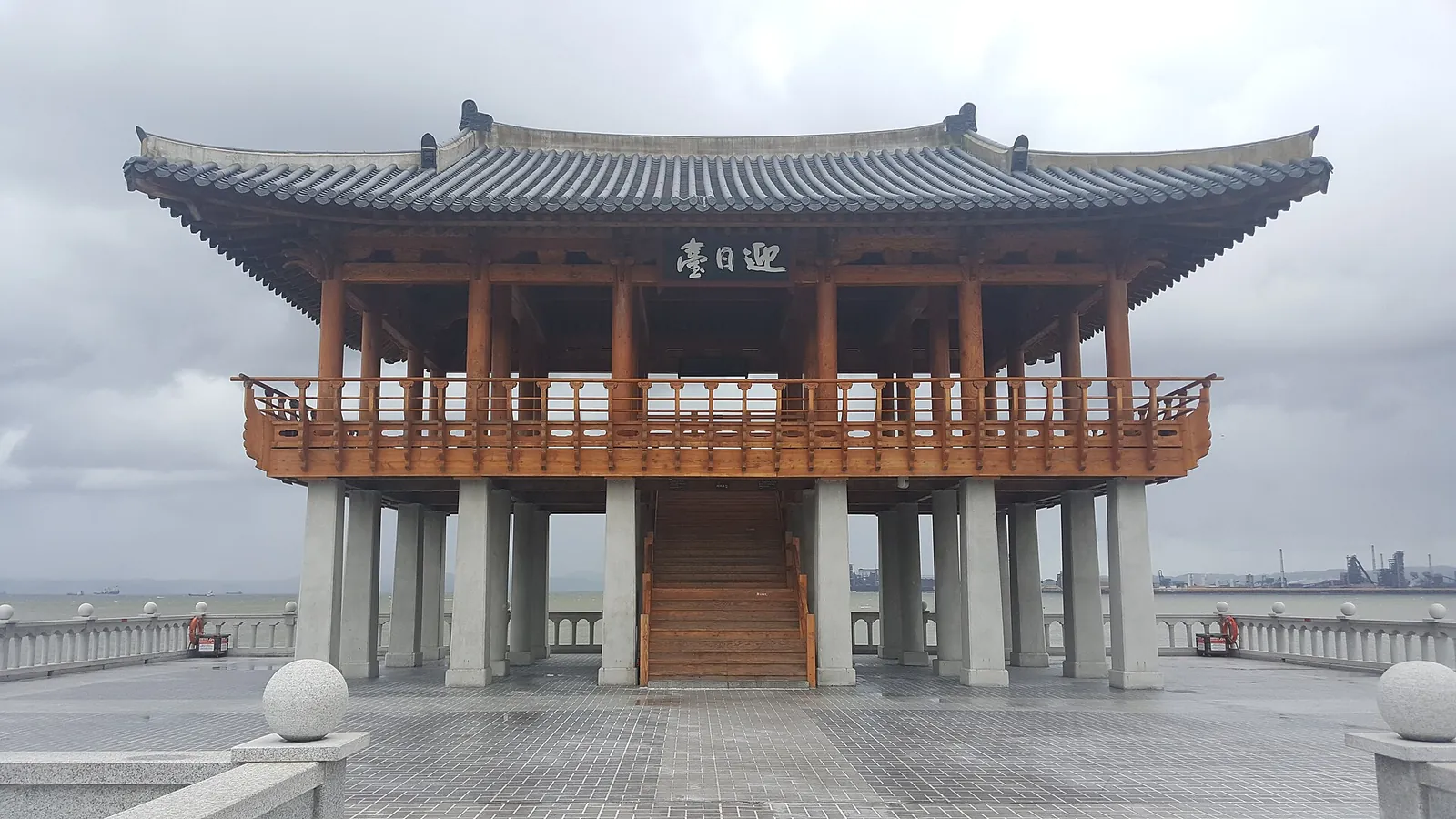
Yeongildae Beach, 1,750 metres long, is the largest beach on the east coast according to VisitKorea. Its landmark is the two-storey Yeongildae pavilion, which VisitKorea calls the first pavilion in Korea built on the sea, reached by a bridge from the sand. Come at dusk, when the lights of the POSCO steelworks come on across the bay. Further along Haean-ro in Yeonam-dong, the Pohang Marine Skywalk runs 463 metres over the sea at an average height of 7 metres, with glass sections in the deck. VisitKorea listed it as free and open from 09:00 to 18:00, and suggests phoning ahead for details.
Make time for the local food
What to eat and where to look
Pohang-style mulhoe
Mulhoe is sliced raw fish in a cold, tangy broth, a dish of the Gyeongsang, Jeju and Gangwon coasts. VisitKorea describes the traditional Pohang style as a gochujang mulhoe mixed with noodles, pear, chilli-paste seasoning and ice, light enough to eat even without much broth.
- Where to look
- Jukdo Fish Market, where VisitKorea counts more than 200 raw-fish restaurants; Odaeyang Mulhoe Sikdang in Bukbu Market (28-1 Daesin-ro, Buk-gu), listed by VisitKorea as open 08:00–20:30; or Hwanyeo Hoetjip near Yeongildae Observatory (189-1 Haean-ro), known for mulhoe guksu with noodles.
- Fit it into your day
- Lunch at Jukdo Market on arrival, or a late lunch at the beach after Space Walk.
Raw fish. Hours are as VisitKorea listed them when we checked on 3 October 2026; Hwanyeo Hoetjip had short breaks in the late morning and mid-afternoon.
Gwamegi (half-dried saury)
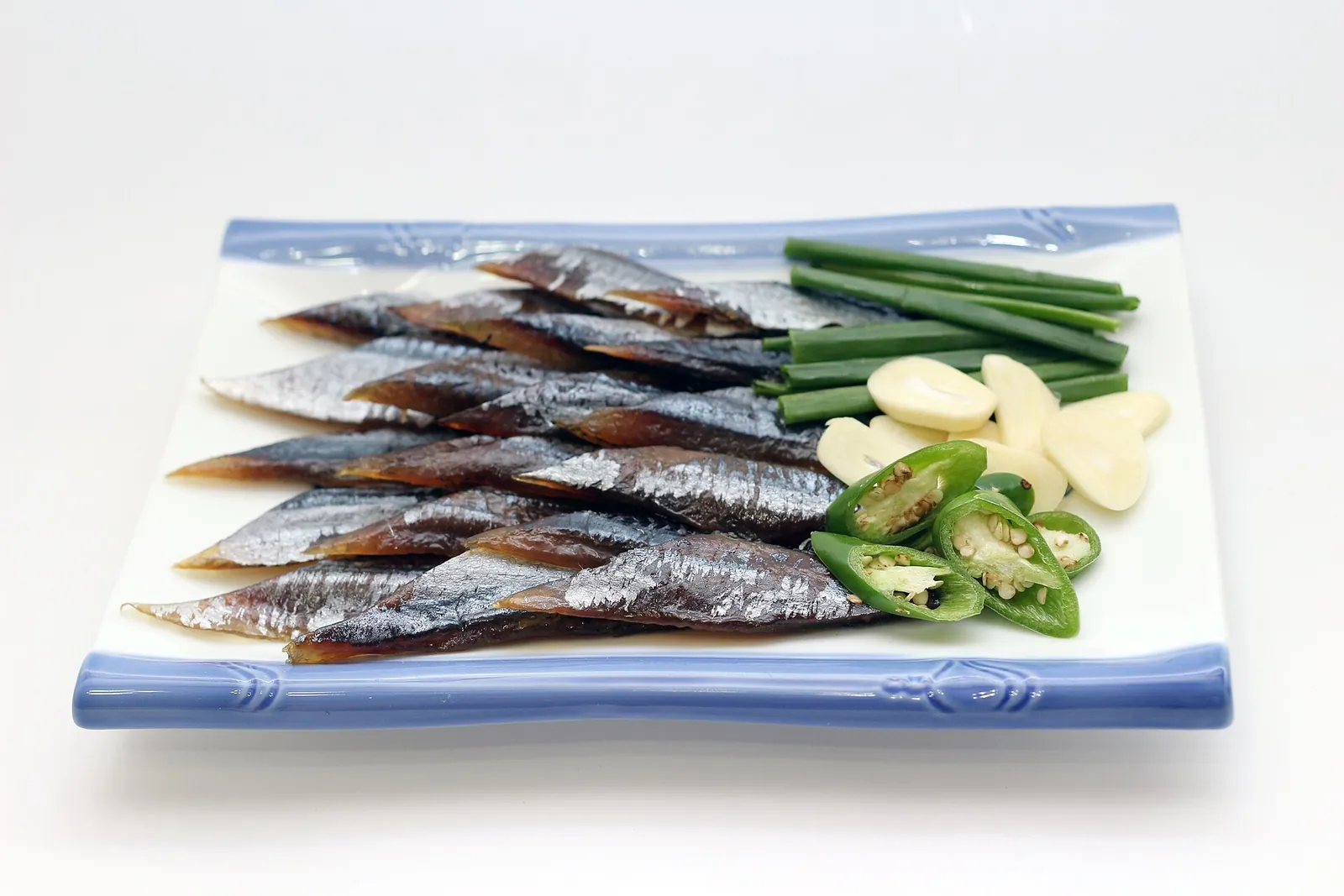
Guryongpo's winter speciality: saury, or traditionally herring, dried in the sea breeze for about ten days until it is tender, chewy and rich in oil, according to VisitKorea. It is dipped in vinegared chilli paste or wrapped in seaweed or laver with garlic, chilli and green onion.
- Where to look
- Shops around Guryongpo Port, which VisitKorea says sell it widely, and the seafood alleys of Jukdo Market in winter.
- Fit it into your day
- A winter lunch in Guryongpo after Homigot, or a shared plate with drinks in the evening.
It is mainly a winter dish and an acquired taste: oily, strong and eaten raw-dried.
Moriguksu
A folk dish of Guryongpo fishermen: a big communal pot of noodles boiled with fresh seafood such as monkfish, shrimp and mussels, garlic and chilli powder, finished thick and spicy, as VisitKorea describes it.
- Where to look
- Restaurants around Guryongpo Market and the port. For noodles, Jeil Guksu Gongjang in Guryongpo Market dries its noodles in the sea breeze and runs Haepung Guksu near Guryongpo Beach, which VisitKorea lists as closed on the first and third Monday of the month.
- Fit it into your day
- Lunch in Guryongpo after Japanese House Street.
Usually served for sharing and very spicy; contains shellfish.
Snow crab
VisitKorea calls Guryongpo the country's largest producer of snow crab, and lists it among the Pohang specialities at Jukdo Market alongside mulhoe and gwamegi.
- Where to look
- The seafood restaurants of Guryongpo Port and the crab stalls of Jukdo Market.
- Fit it into your day
- A special dinner, ideally in late winter and early spring around the Guryongpo Snow Crab Festival.
VisitKorea lists no prices; ask the price before the crab is cooked.
Simin Jegwa's red-bean buns
Simin Jegwa opened in 1949 and is recognised as Pohang's first bakery, according to VisitKorea. Its best-known items are the 1949 danpat-ppang (red-bean bun) and chapssal-tteok, plus a bun made with Pohang chives.
- Where to look
- Daeheung-dong, Buk-gu, in the city centre; VisitKorea listed it as open 09:00–22:00 all year.
- Fit it into your day
- Breakfast or a snack on the walk between Jukdo Market and the centre.
Hours are as VisitKorea listed them when we checked on 3 October 2026.
Space Walk in Hwanho Park
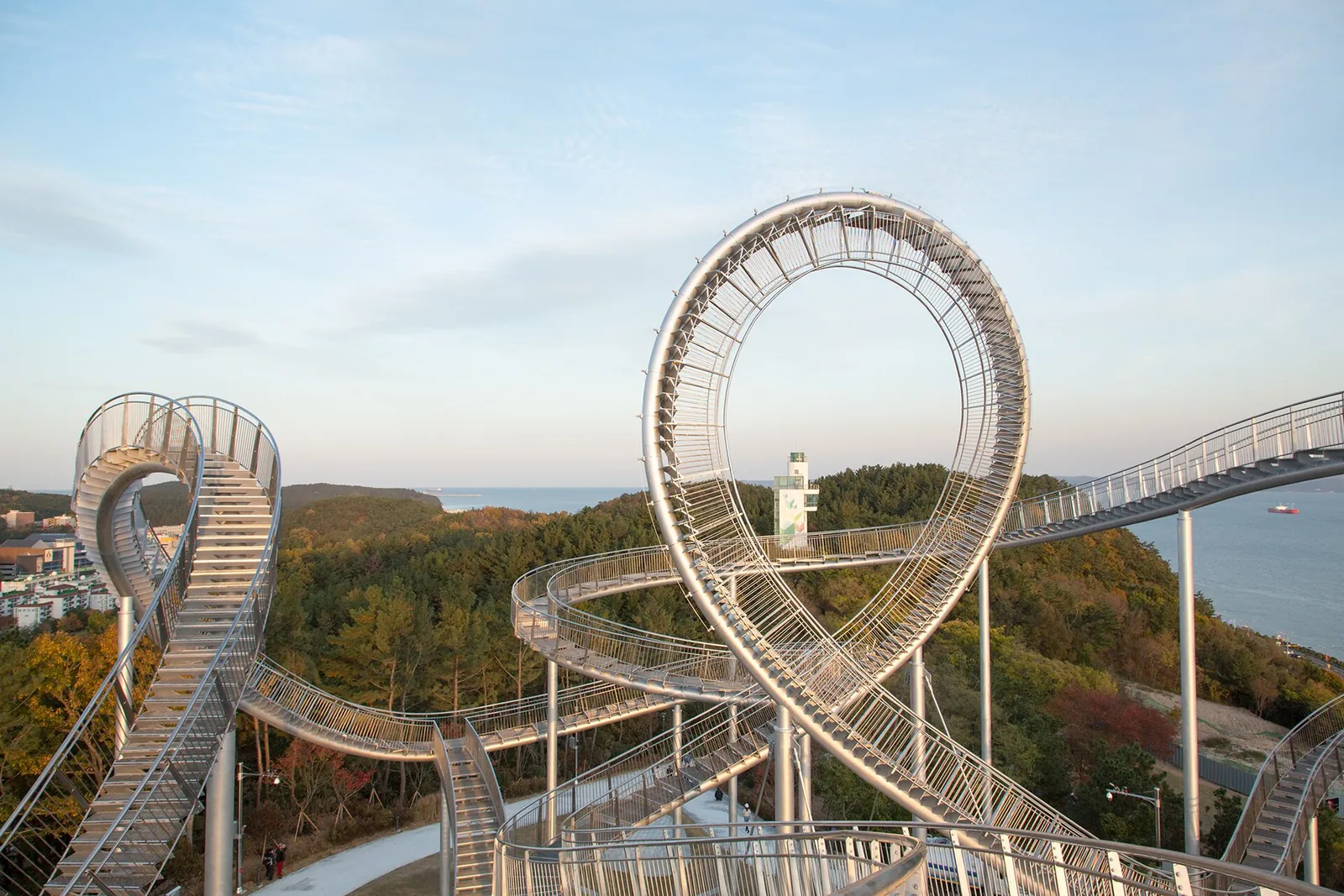
Behind Yeongildae Beach, Hwanho Park is Pohang's largest park, with the Pohang Museum of Steel Art, fountains and views over the steelworks and the sea, according to VisitKorea. Its landmark is Space Walk, a walkable steel sculpture whose track loops 333 metres through the air; VisitKorea presents it as a symbol of Pohang as a city of steel and light. There are 717 steps, and from the top you look over the city, the bay and the steelworks.
When we checked on 3 October 2026, VisitKorea listed Space Walk as open from 10:00 to 20:00 on weekdays and 10:00 to 21:00 at weekends from April to October, and 10:00 to 17:00 on weekdays and 10:00 to 18:00 at weekends from November to March. It is closed on the first Monday of every month, or the next working day if that Monday is a public holiday. The track is open to the weather and climbs steeply, so wear shoes with grip and skip it in strong wind.
Pohang's biggest event, the Pohang International Fire & Light Festival, sends fireworks over Yeongil Bay. VisitKorea's tip is to watch from Yeongildae or Songdo beaches, where it is less crowded, and then walk over to the festival grounds at Hyeongsangang Sports Park. Dates change from year to year, and VisitKorea's sources disagree on the 2026 dates, so check the Pohang Cultural Foundation's festival site before you plan around it.
Homigot: the tiger's tail and the first sunrise
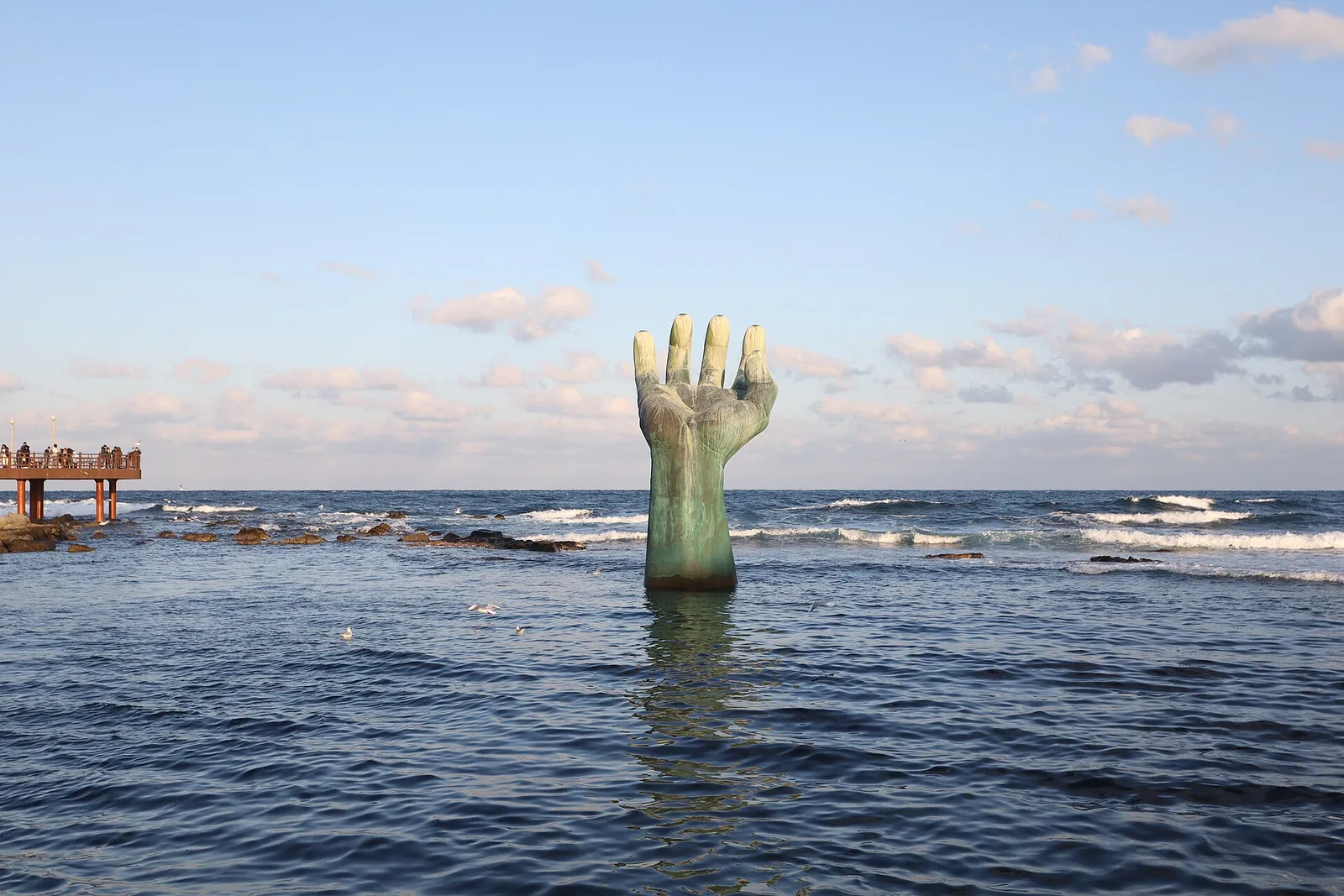
Koreans often picture the peninsula as a tiger, and Homigot is its tail: the easternmost point of the Korean mainland. VisitKorea says the mapmaker Kim Jeong-ho visited seven times to confirm this when he drew his Daedongyeojido map. At Homigot Sunrise Square stands the bronze Hands of Harmony (Sangsaeng-ui Son), put up in December 1999 for the new millennium: a left hand on land and a right hand rising from the sea — the classic sunrise photograph. VisitKorea lists the square as open 24 hours and free.
Next to the square, Homigot Lighthouse was the tallest lighthouse in Korea when it was lit on 20 December 1908. VisitKorea describes an octagonal six-storey tower 26.4 metres high, built of brick without steel reinforcement, with pear-blossom carvings on each ceiling and 108 steps inside. The National Lighthouse Museum beside it covers the history and architecture of lighthouses and has hands-on activities for children. When we checked, VisitKorea listed it as free, open 09:00–18:00 and closed on Mondays.
For New Year, the Homigot Sunrise Festival runs through the night: VisitKorea's listing for 2025–26 ran from 14:00 on 31 December to 09:00 on 1 January, with concerts, fireworks, a sunrise event and free tteokguk (rice-cake soup). It is free, but plan for crowds on the peninsula road.
Guryongpo: Japanese House Street, the port and moriguksu
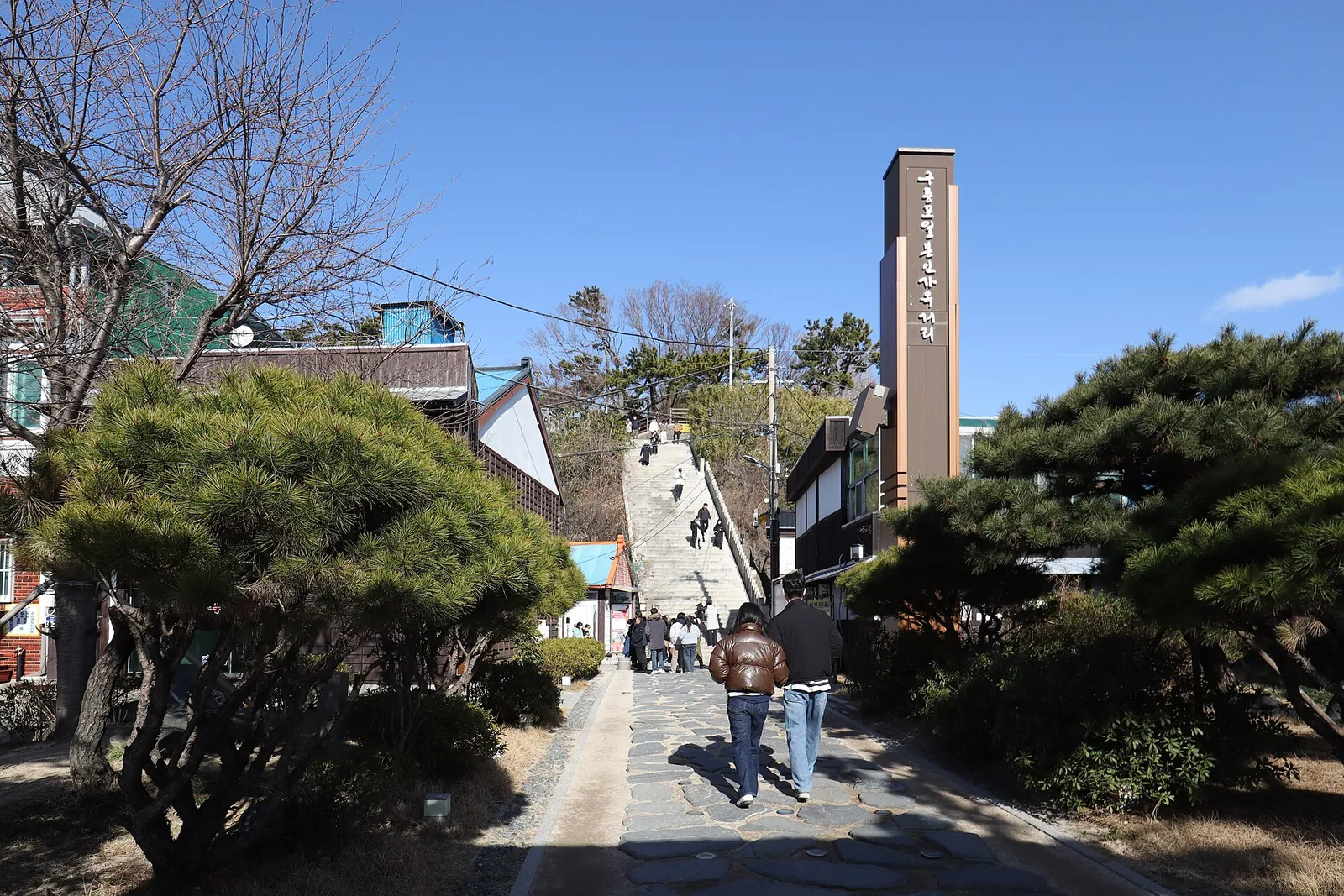
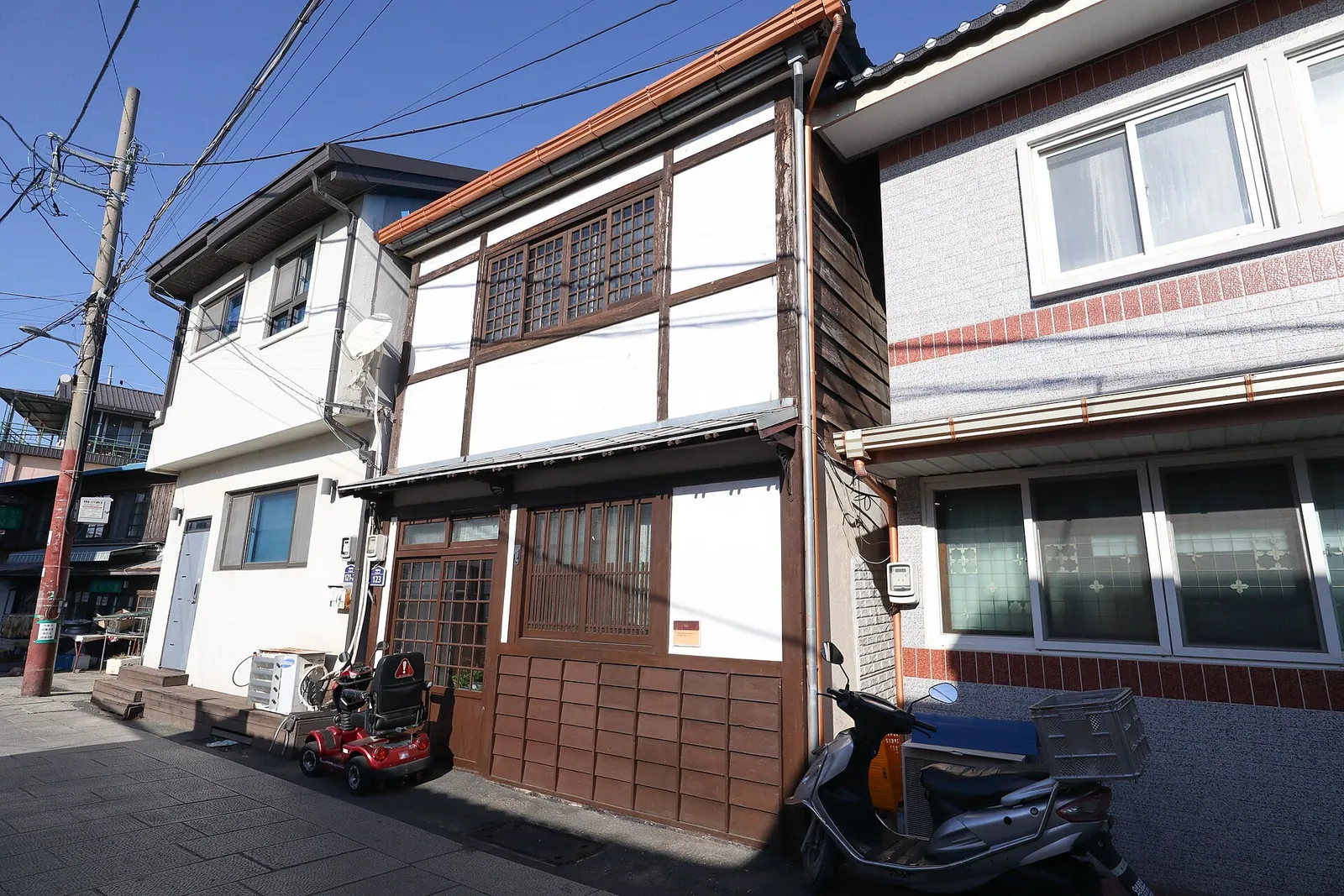
Guryongpo became a proper port when a pier and breakwater were built in 1923, under Japanese rule. Japanese settlers had come after the Joseon–Japan trade treaty of 1883, and VisitKorea notes that they came to dominate the East Sea fishery while Korean fishing rights were restricted. The city has kept 47 of their wooden houses as Guryongpo Japanese House Street (VisitKorea also calls it the Modern Culture and History Street), as a record of that painful period. The street was the main filming location of the 2019 drama *When the Camellia Blooms*, and the view of the fishing village from the stone steps up to the park has won a Korea Landscape Award.
Step inside the Guryongpo Modern History Museum, a two-storey wooden house built in the 1920s by Hashimoto Zenkichi (spelled Jenkichi in VisitKorea's listing), bought by the city in 2010 and restored. It shows Japanese furniture such as a butsudan (household altar) and kotatsu, and a recreated kitchen and toilet. When we checked, VisitKorea listed it as free, open 10:00–17:30 and closed on Mondays.
Then walk down to the harbour. VisitKorea calls Guryongpo the country's largest producer of snow crab, and many shops sell gwamegi, the half-dried saury it is famous for. Guryongpo Market spreads out along Changjucheon Stream on fifth-day market days, which VisitKorea lists as dates ending in 3 and 8. The crescent-shaped Guryongpo Beach, 400 metres long, is another sunrise spot, with the Guryongpo columnar joints nearby.
Walking the Homibando coast
The Homibando Peninsula Coastal Trail follows 58 kilometres of Pohang's shoreline from Donghae-myeon via Guryongpo and Homigot to Janggi-myeon. VisitKorea describes it as four courses past cliffs and rock formations. Course 3, Guryongso-gil, takes about two hours from Janggun Rock to Guryongso, past colonies of golden rain trees and black jetbead. Course 4, Homi-gil, is the shortest and ends at Homigot Sunrise Square, so it makes a good walk to or from the bronze hands.
Plan transport before you start, because the trail is linear and the peninsula is spread out. A taxi to the start and a bus or taxi back from Homigot or Guryongpo is the simplest plan; confirm local bus times locally, as we could not verify them from official pages.
Naeyeonsan, Bogyeongsa and Oeosa
In Songna-myeon, in the north of Pohang, Naeyeonsan (710 metres) is known for twelve waterfalls along a 14-kilometre valley, with rock walls 50 to 100 metres high such as Sinseondae and Haksodae, according to VisitKorea. On the southern side of the mountain, Bogyeongsa Temple was founded in 603 in the Silla period. Legend says it stands on a site that protects the nation because a sacred eight-sided mirror was buried beneath the main hall. VisitKorea listed the temple grounds as free and open 06:00–18:00, with a templestay programme charged separately.
In Ocheon-eup, Nam-gu, Oeosa Temple sits on Unjesan Mountain. It dates from the 7th century and is linked with the monk Wonhyo. Its name, roughly 'My Fish Temple', comes from a legend in which Wonhyo and another monk compete to bring fish back to life in the stream. Its main hall, Daeungjeon, was rebuilt in 1741.
Both temples are easiest by car or taxi. If you only have time for one, choose Naeyeonsan if you want a hike and Oeosa for a short, quiet visit.
Getting there, and the ferry to Ulleungdo
VisitKorea lists Pohang among the KTX high-speed destinations from Seoul, and gives about 35 minutes by KTX or SRT from Dongdaegu Station in Daegu. Since 30 December 2025, the Donghae Line KTX-Eum has run the east coast from Bujeon in Busan to Gangneung, stopping at Pohang. VisitKorea's route diagram puts Gyeongju about 22 minutes south and Yeongdeok about 20 minutes north. With only three trains in each direction a day, book through Korail or the Korail Talk app, especially at weekends and in summer.
Pohang Gyeongju Airport (KPO), in Donghae-myeon, Nam-gu, is a domestic airport with flights to Gimpo and Jeju. VisitKorea puts it 30 to 40 minutes by city bus from downtown Pohang. International travellers can fly into Daegu International Airport, take city bus 101 or 401 or a taxi to Dongdaegu Station (about 15 minutes, according to VisitKorea), and then the KTX or SRT to Pohang.
For Ulleungdo, Daezer Ferry's El Dorado Express leaves from Pohang Ferry Terminal at 44 Haean-ro, Buk-gu, on the same seafront road as Yeongildae Beach. Daezer's site gives 2 hours 50 minutes for the crossing to Ulleungdo, and offers combined KTX-and-ferry booking and posts notices for a shuttle bus between Pohang Station and the terminal. VisitKorea also names Yeongilman Port, in Heunghae-eup, as a starting point for sailings to Ulleungdo, so check which terminal is on your ticket. Sailings depend on the sea, so leave a spare day either side if you can.
Practical questions
How many days do I need in Pohang?
Two nights is ideal: one day for Jukdo Market, Yeongildae Beach and Space Walk, and one for the Homigot peninsula and Guryongpo. One night is enough if you are mainly catching the ferry to Ulleungdo.
Where should I stay in Pohang?
Near Yeongildae Beach for the sea views, restaurants and the Ulleungdo ferry terminal, or in the centre near Jukdo Market for budget hotels. Stay in Guryongpo if you want to be on the peninsula for sunrise.
What time is sunrise at Homigot on New Year's Day?
VisitKorea, citing the Korea Astronomy and Space Science Institute, gives 7:32 a.m. on 1 January, the earliest first sunrise of the year on the mainland. Plan for crowds during the Homigot Sunrise Festival.
Is Space Walk open every day?
No. When we checked, VisitKorea listed it as closed on the first Monday of each month, with shorter hours from November to March. It is outdoors, so it may not be worth climbing in strong wind or rain.
How do I get from Pohang to Ulleungdo?
By ferry. Daezer Ferry's El Dorado Express sails from Pohang Ferry Terminal at 44 Haean-ro and takes 2 hours 50 minutes, according to the operator. Sailings depend on the weather, so check the operator's daily notice.
Can I visit Pohang as a day trip from Gyeongju?
Yes. VisitKorea's route diagram puts Gyeongju about 22 minutes from Pohang on the Donghae Line KTX-Eum. A day is enough for Jukdo Market and Yeongildae; the Homigot peninsula needs a car or taxi.
Sources and checks before you travel
Reference sources for the version dated 3 October 2026. Confirm opening times, access, transport and conditions for your travel dates.
- VisitKorea: Homigot Sunrise Square ↗ — opens in a new tab
- VisitKorea: Homigot Sunrise Square (Cruise feature) ↗ — opens in a new tab
- VisitKorea: Homigot Lighthouse ↗ — opens in a new tab
- VisitKorea: National Lighthouse Museum ↗ — opens in a new tab
- VisitKorea: Homigot Sunrise Festival ↗ — opens in a new tab
- VisitKorea: Homigot Octopus Festival ↗ — opens in a new tab
- VisitKorea: Festival schedule, Pohang ↗ — opens in a new tab
- VisitKorea: Guryongpo Japanese House Street ↗ — opens in a new tab
- VisitKorea: Guryongpo Modern History Museum ↗ — opens in a new tab
- VisitKorea: Guryongpo Port ↗ — opens in a new tab
- VisitKorea: Guryongpo Fifth-Day Market ↗ — opens in a new tab
- VisitKorea: Guryongpo Beach ↗ — opens in a new tab
- VisitKorea: Homibando Peninsula Coastal Trail ↗ — opens in a new tab
- VisitKorea: Jukdo Market ↗ — opens in a new tab
- VisitKorea: Jukdo Market (Cruise feature) ↗ — opens in a new tab
- VisitKorea: Pohang Canal ↗ — opens in a new tab
- VisitKorea: Yeongildae Beach ↗ — opens in a new tab
- VisitKorea: Yeongildae Beach (Cruise feature) ↗ — opens in a new tab
- VisitKorea: East Coast Train Trip by KTX-Eum ↗ — opens in a new tab
- VisitKorea: Hwanho Park ↗ — opens in a new tab
- VisitKorea: Space Walk ↗ — opens in a new tab
- VisitKorea: Hwanho Park Space Walk (Cruise feature) ↗ — opens in a new tab
- VisitKorea: Pohang Marine Skywalk ↗ — opens in a new tab
- VisitKorea: Pohang International Fire & Light Festival ↗ — opens in a new tab
- VisitKorea: Naeyeonsan Bogyeongsa Municipal Park ↗ — opens in a new tab
- VisitKorea: Bogyeongsa Temple ↗ — opens in a new tab
- VisitKorea: Oeosa Temple ↗ — opens in a new tab
- VisitKorea: Pohang Guryongpo Half-Dried Saury ↗ — opens in a new tab
- VisitKorea: Spicy Seafood Noodle Soup (Moriguksu) ↗ — opens in a new tab
- VisitKorea: Cold Raw Fish Soup (Mulhoe) ↗ — opens in a new tab
- VisitKorea: Odaeyang Mulhoe Sikdang ↗ — opens in a new tab
- VisitKorea: Hwanyeo Hoetjip ↗ — opens in a new tab
- VisitKorea: Jeil Guksu Gongjang ↗ — opens in a new tab
- VisitKorea: Simin Jegwa ↗ — opens in a new tab
- VisitKorea: BENIKEA Hotel Pohang ↗ — opens in a new tab
- VisitKorea: Train ↗ — opens in a new tab
- VisitKorea: Fly to Daegu International Airport ↗ — opens in a new tab
- VisitKorea: Donghae Line KTX-Eum ↗ — opens in a new tab
- VisitKorea: Domestic Flights ↗ — opens in a new tab
- VisitKorea: Pohang, a window to the world's oceans ↗ — opens in a new tab
- Daezer Ferry: ships (Korean) ↗ — opens in a new tab
- Daezer Ferry: terminals (Korean) ↗ — opens in a new tab
- Daezer Ferry: home page (Korean) ↗ — opens in a new tab
- Korea Airports Corporation: Pohang Gyeongju Airport ↗ — opens in a new tab
Photo credits
The sea half of the Hands of Harmony at Homigot Sunrise Square, the eastern tip of the Korean mainland
Photograph: Mobius6 — opens in a new tab · CC BY 4.0 — opens in a new tab
Changes: Resized and converted to WebP; displayed with responsive crops. · Original photograph and licence details ↗ — opens in a new tab
The stairway up to the park above Guryongpo Japanese House Street
Photograph: Mobius6 — opens in a new tab · CC BY 4.0 — opens in a new tab
Changes: Resized and converted to WebP; displayed with responsive crops. · Original photograph and licence details ↗ — opens in a new tab
Space Walk, the walkable steel sculpture in Hwanho Park above Yeongildae Beach
Photograph: Fixateur — opens in a new tab · CC BY-SA 4.0 — opens in a new tab
Changes: Resized and converted to WebP; displayed with responsive crops. · Original photograph and licence details ↗ — opens in a new tab
Yeongildae, the pavilion built out over the sea at Yeongildae Beach
Photograph: Choi2451 — opens in a new tab · CC BY-SA 3.0 — opens in a new tab
Changes: Resized and converted to WebP; displayed with responsive crops. · Original photograph and licence details ↗ — opens in a new tab
Colonial-era wooden houses on Guryongpo Japanese House Street
Photograph: Mobius6 — opens in a new tab · CC BY 4.0 — opens in a new tab
Changes: Resized and converted to WebP; displayed with responsive crops. · Original photograph and licence details ↗ — opens in a new tab
Gwamegi, half-dried saury served with garlic, chilli and green onion, the winter speciality of Guryongpo
Photograph: Hyeon-Jeong Suk — opens in a new tab · CC BY 2.0 — opens in a new tab
Changes: Resized and converted to WebP; displayed with responsive crops. · Original photograph and licence details ↗ — opens in a new tab