Itineraries · Busan / North Gyeongsang
Busan and Gyeongju in 5 days: markets, sea temple, Ulsan and Silla sites
Busan and Gyeongju are close enough to share one trip — VisitKorea puts the KTX between Busan Station and Gyeongju Station at about 30 minutes — but different enough that neither works as a quick day trip from the other. Busan is a port city of markets, steep lanes and long beaches. Gyeongju, the capital of the Silla kingdom for nearly a thousand years, is a low city of royal tombs, palace ponds and mountain temples that is at its best after dark. Ulsan lies between them on the coast, and since the Donghae Line KTX-Eum opened at the end of 2025 it makes a natural stop on the way north. This route uses five days and four nights: two in Busan, two in Gyeongju, and the day in between in Ulsan.
- Suggested time
- 5 days, 4 nights
- Where to stay
- Busan (2 nights, in Nampo-dong or Haeundae) and Gyeongju (2 nights, near Daereungwon in Hwangnam-dong)
- Season and timing
- Spring and autumn are the most comfortable for walking; VisitKorea's 2026 foliage forecast lists Bulguksa among the autumn colour spots, with peak foliage across the country from mid-October to early November. The Busan International Film Festival fills Haeundae in early October. Summer is beach season in Busan.
The short answer
Take five days and four nights: two nights in Busan, two in Gyeongju. Fly into Gimhae International Airport (PUS) or take the KTX to Busan Station. Day 1 is the old port: Gamcheon Culture Village in the morning, a seafood lunch at Jagalchi, Gukje Market and Busan Tower at dusk. Day 2 is the east coast: Haedong Yonggungsa early, the Blueline Park coastal train, Haeundae and Dongbaekseom, and Gwangalli at night. On day 3 take the KTX-Eum from Bujeon to Taehwagang in Ulsan (about 40 minutes), walk the Simni bamboo grove, see the sea rocks of Daewangam Park, and continue to Gyeongju. Give day 4 to the centre of Gyeongju — Daereungwon, Cheomseongdae, the national museum and Wolji Pond after dark — and day 5 to Bulguksa and Seokguram before the train or bus out. Skip Ulsan and take the KTX straight to Gyeongju if you would rather have an extra afternoon there.
How the route fits together, and where to sleep
The southeast is one compact corridor. Busan sits at the bottom, with its two halves — the old port around Nampo-dong and the beaches around Haeundae and Gwangalli — far enough apart that each needs its own day. Ulsan lies north along the coast, and Gyeongju is inland beyond it. VisitKorea gives about 30 minutes by KTX from Busan Station to Gyeongju Station and about 40 minutes by KTX-Eum from Bujeon Station in Busan to Taehwagang Station in Ulsan. Since 30 December 2025, the Donghae Line KTX-Eum has stopped at Bujeon, Taehwagang and Gyeongju on its way to Gangneung, so the three cities sit on one line. The catch is frequency: when we checked on 2026-10-03, VisitKorea said the line had only three trains in each direction a day.
That is why the route goes in one direction and changes bags only once. Sleep two nights in Busan, use day 3 to move north with a stop in Ulsan, and sleep two nights in Gyeongju. Leave from Gyeongju at the end: by KTX from Gyeongju Station towards Busan or Seoul (about two hours to Seoul Station, according to VisitKorea), or by intercity bus towards Gimhae Airport.
In Busan, choose by the day you care about most. Nampo-dong puts Jagalchi, Gukje Market and Yongdusan Park on foot, and VisitKorea notes that Nampo-dong and the two markets are about 15 minutes from Busan Station. Haeundae is the beach base: Haeundae Station on Line 2 is about five minutes' walk from the sand, and Blueline Park and the road to Haedong Yonggungsa are close. In Gyeongju, stay in Hwangnam-dong, between Daereungwon and Hwangnidan Street, which puts the tombs, Cheomseongdae and the lit-up evening sights within walking distance. Gyeongju Station is outside the centre — VisitKorea gives about 30 minutes by taxi from the station to Gyeongju World at Bomun — so plan a taxi with your bags. Bomun Tourist Complex, Gyeongju's international tourist district around Bomunho Lake about 10 kilometres east of downtown, is the alternative for drivers and families.
Day 1: Busan's old port — Gamcheon, Jagalchi and Busan Tower
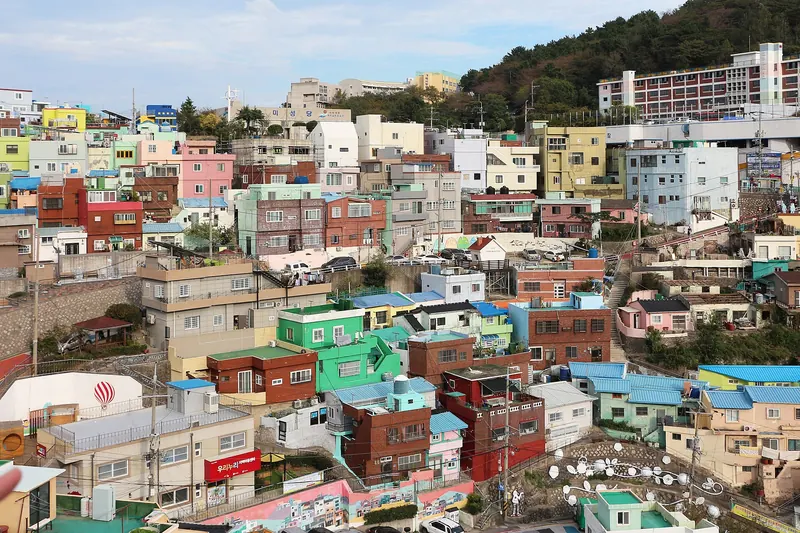
Start at Gamcheon Culture Village, the hillside of houses that Korean War refugees built in tiers above the coast, now painted with murals and dotted with sculptures by residents. It is a residential area that Busan has designated a special management zone: when we checked on 2026-10-03, VisitKorea's etiquette notice restricted visits to the residential areas to 09:00–18:00, asked visitors not to talk loudly, look into houses or take photos without permission, and said tourist vehicles, taxis included, are restricted inside the village. Go in the morning.
Come down to the waterfront for lunch at Jagalchi Market, one of Korea's largest seafood markets, where most of the sellers are women known as the Jagalchi ajumeoni. VisitKorea's advice is to choose live fish and seafood on the ground floor and have it served upstairs, raw or grilled; agree what you are buying and what preparation costs before anything is cut. When we checked, VisitKorea listed the market at 05:00–22:00, closed on the first and third Tuesdays of the month. Next door, Gukje Market grew from the stalls of refugees after the war and is one of Korea's largest markets, a maze of alleys; VisitKorea listed it at 09:00–20:00 (varying by shop) and closed on Sundays. Between them, BIFF Square is a 428-metre street of cinemas renamed in 1996 for the first Busan International Film Festival.
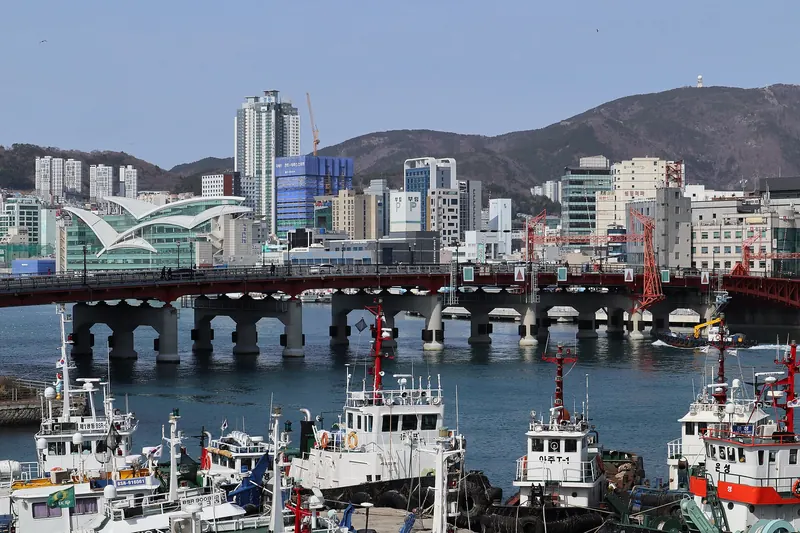
Finish above Nampo-dong in Yongdusan Park, reached by escalators from the shopping streets, with views over Busan Port and Yeongdo. The 120-metre Busan Tower stands in the park; when we checked, VisitKorea listed it at 10:00–22:00 (last admission 21:30) and 12,000 won for adults, with a projection show on the observatory windows at night. Go up at dusk, after the market lunch, so the harbour lights come last.
Make time for the local food
What to eat and where to look
Raw fish and grilled seafood at Jagalchi
The Jagalchi way of eating: choose live fish and shellfish from the ground-floor stalls, then have them served upstairs as sliced raw fish (hoe) or grilled, as VisitKorea describes.
- Where to look
- Jagalchi Market on the Nampo-dong waterfront in Jung-gu.
- Fit it into your day
- Lunch on day 1, between Gamcheon and Gukje Market.
We found no official price list; agree the weight, the price and the preparation charge before anything is cut. The market closes on the first and third Tuesdays.
Milmyeon and Busan market snacks
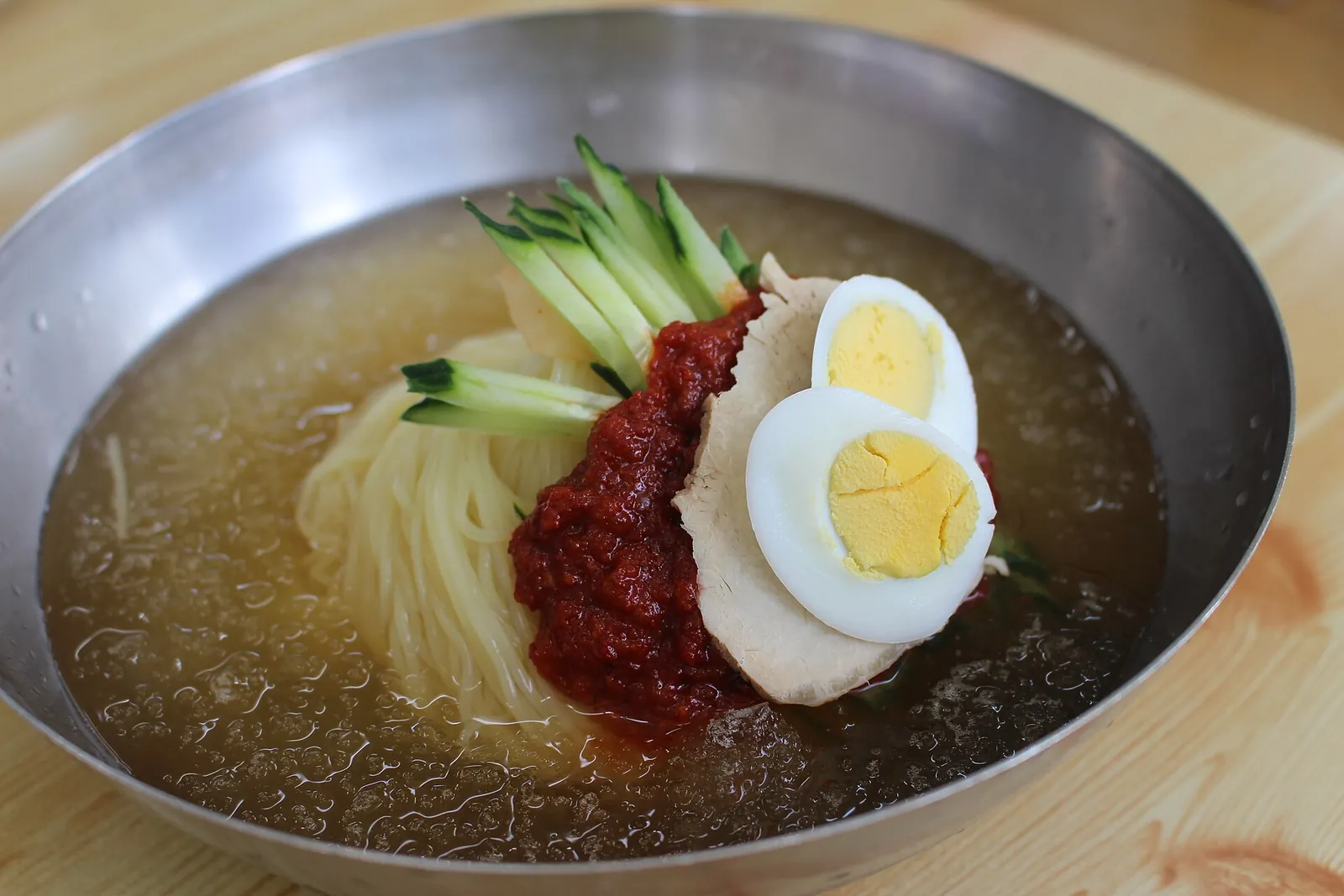
Milmyeon is Busan's cold noodle dish of wheat flour and starch in a chilled broth of beef, pork or chicken bones, or a spicy version without broth; VisitKorea traces it to the Korean War, when it was made with flour from US aid. Gukje Market's food alleys add ssiat hotteok (a seed-filled griddle cake) and eomuk (fishcake).
- Where to look
- The Gukje Market food street, where dishes are eaten on stools next to the stalls, and noodle restaurants across the city.
- Fit it into your day
- An afternoon snack on day 1, or a quick lunch on day 2 before the coast.
The Gukje Market food street was listed as closed on the first and third Sundays of the month; the spicy milmyeon comes without broth.
Dwaeji gukbap (pork and rice soup)
Pork soup with rice, which VisitKorea calls Busan's representative local dish; gukbap has long been the meal Koreans turn to when they need to eat quickly.
- Where to look
- Gukbap restaurants all over Busan, including the Gukje Market food street.
- Fit it into your day
- Breakfast on day 2 before Haedong Yonggungsa, or a late supper after Gwangalli.
It is pork-based throughout, so it is not an option for those who avoid pork.
Ssambap (leaf wraps with rice)
A Gyeongju set meal of rice with fresh vegetables for wrapping and substantial side dishes such as fish, meat and doenjang jjigae made with homemade soybean paste. VisitKorea describes a whole ssambap street around Daereungwon.
- Where to look
- Ssambap Street around the Daereungwon tomb complex in Hwangnam-dong.
- Fit it into your day
- Lunch on day 4, between Daereungwon and the national museum.
A full table of leaves and side dishes; it is a sit-down lunch, not a quick bite, so leave time for it.
Hwangnam-ppang (Hwangnam bread)
A small round pastry filled with red bean paste and stamped with a comb pattern inspired by Silla design. VisitKorea says it was created in Hwangnam-dong in 1939 by Choi Yeong-hwa of the Gyeongju Choi family, and is still flavoured only with red beans.
- Where to look
- Bakeries around Hwangnam-dong and Hwangnidan Street, including the Hwangnambbang shop.
- Fit it into your day
- An evening sweet on day 4, or a box for the train on day 5.
Very sweet; it contains wheat flour and red beans.
Seafood at Bangeojin Port
Ulsan's main fishing port; VisitKorea lists yellowtail, cutlassfish, Spanish mackerel and anchovies among the catch, and says you can buy seafood at the market or sit down at a raw-fish restaurant and eat it straight away.
- Where to look
- The fish market and raw-fish restaurants around Bangeojin Port in Dong-gu, near Daewangam Park.
- Fit it into your day
- A late lunch on day 3, after Daewangam and before the train to Gyeongju.
We found no official prices; confirm the price of what you choose before it is prepared.
Day 2: the east coast — the sea temple, the coastal train and Gwangalli
Go early to Haedong Yonggungsa, one of the few Korean temples built on the shore rather than in the mountains. VisitKorea dates it to 1376 and the Goryeo-era teacher Naong; it was destroyed in the Imjin War and rebuilt in the early 1930s. When we checked on 2026-10-03, VisitKorea listed it as free and open 04:30–19:20 (last admission 18:50). Its directions are the Donghae Line to OSIRIA Station, then blue bus 139 or red bus 1001 from Exit 1 to the Yonggungsa Temple & National Institute of Fisheries Science stop, and a walk of about 15 minutes.
Then ride Haeundae Blueline Park, which reuses 4.8 kilometres of the old Donghae Nambu Line railway between Mipo, Cheongsapo and Songjeong. The Beach Train runs the whole stretch; the operator gives an average speed of 15 km/h and about 25 minutes one way. The Sky Capsule is a four-seat pod on a 2-kilometre track between Mipo and Cheongsapo, 7 to 10 metres above the sea. Hours change by season, so check the operator's timetable on bluelinepark.com on the day.
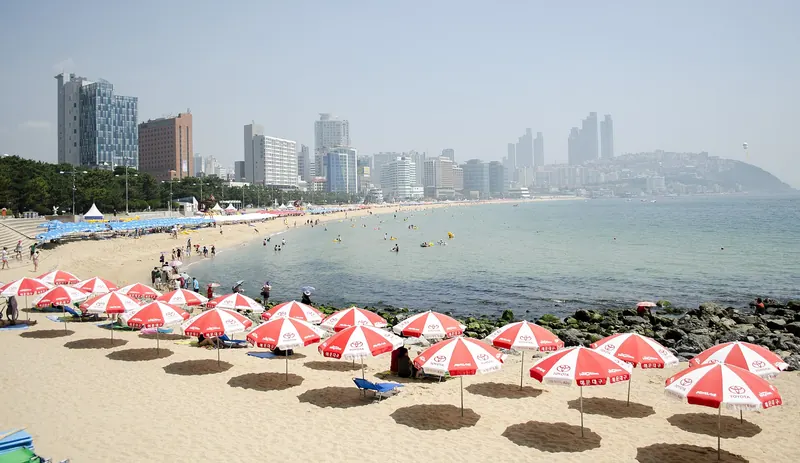
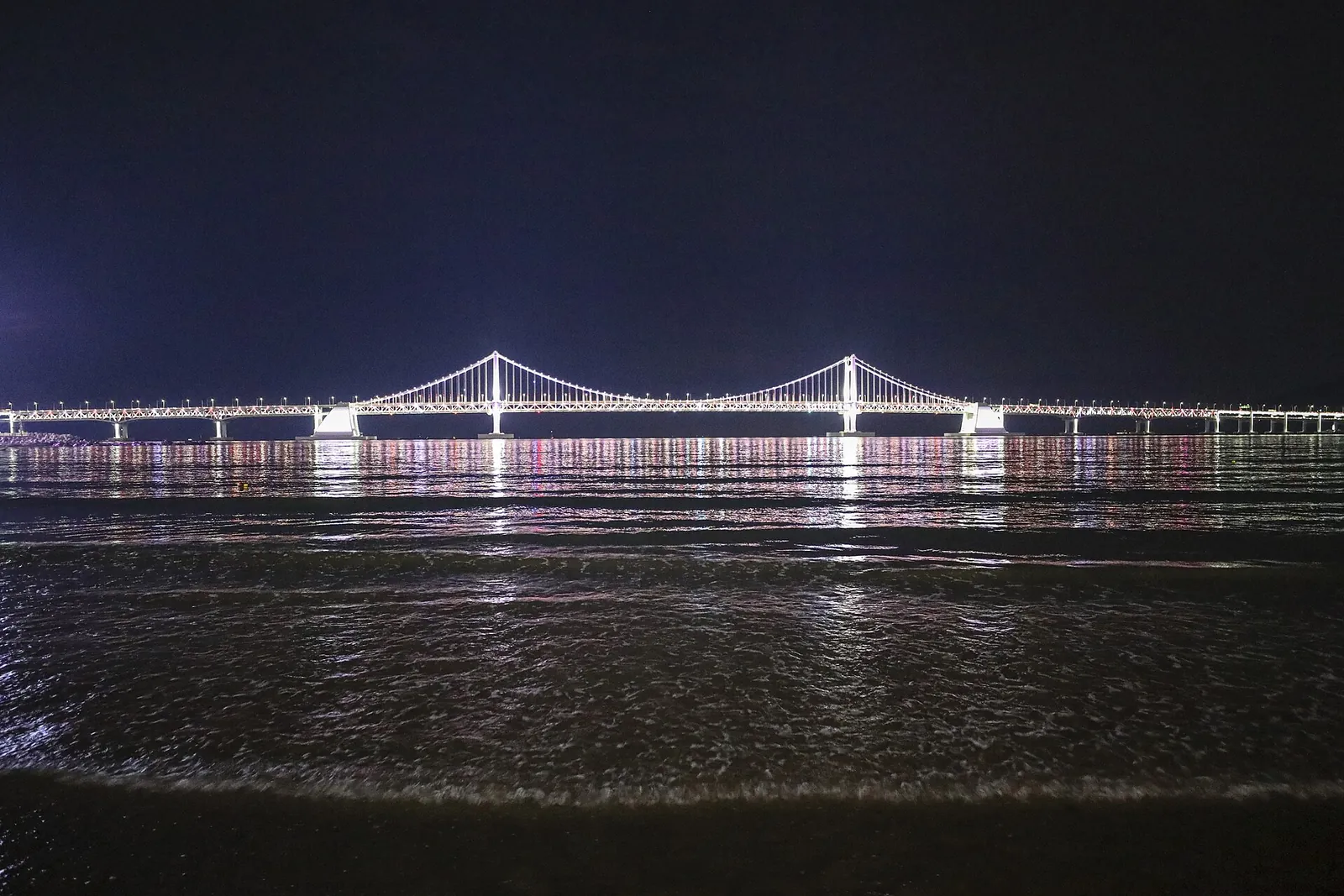
Spend the afternoon on Haeundae Beach, about 1.5 kilometres of white sand, and walk the path around Dongbaekseom at its western end, past the monument to the scholar Choi Chi-won and the mermaid statue, with views to Gwangandaegyo Bridge; VisitKorea lists the island as open 24 hours and free. End at Gwangalli Beach, 1.4 kilometres long, where, as VisitKorea puts it, many people come in the evening for the lights of Gwangandaegyo. It is about ten minutes' walk from Gwangan Station on Line 2, on the same line as Haeundae.
Day 3: north via Ulsan — the bamboo grove and Daewangam
This is the moving day. Take the KTX-Eum from Bujeon to Taehwagang, about 40 minutes according to VisitKorea; the Donghae Line metro covers the same trip in about 80 minutes. Because the KTX-Eum runs only three times a day in each direction, book both legs — Bujeon to Taehwagang in the morning and Taehwagang on to Gyeongju later — on Korail's site or the Korail Talk app before you commit to the day. We could not find official information on luggage storage at Taehwagang Station, so travel light or plan to keep your bag with you in a taxi.
Spend the morning in Taehwagang National Garden, a riverside field that became Korea's second national garden in 2019 and is, VisitKorea says, more than twice the size of Yeouido Park in Seoul. Its draw is the Simni bamboo grove, which stretches about four kilometres along the river; it was nearly cleared under a flood-control plan and survived thanks to community campaigning. When we checked on 2026-10-03, VisitKorea listed the garden as open 24 hours, all year, and a VisitKorea feature gave the lighting of the bamboo grove's Milky Way Trail as sunset to 22:00 — worth knowing if you would rather do Ulsan as an evening stop.
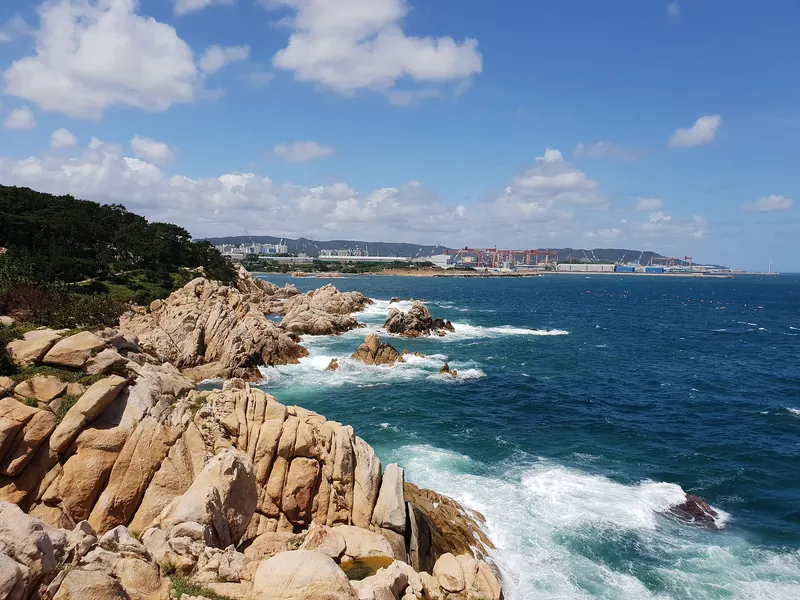
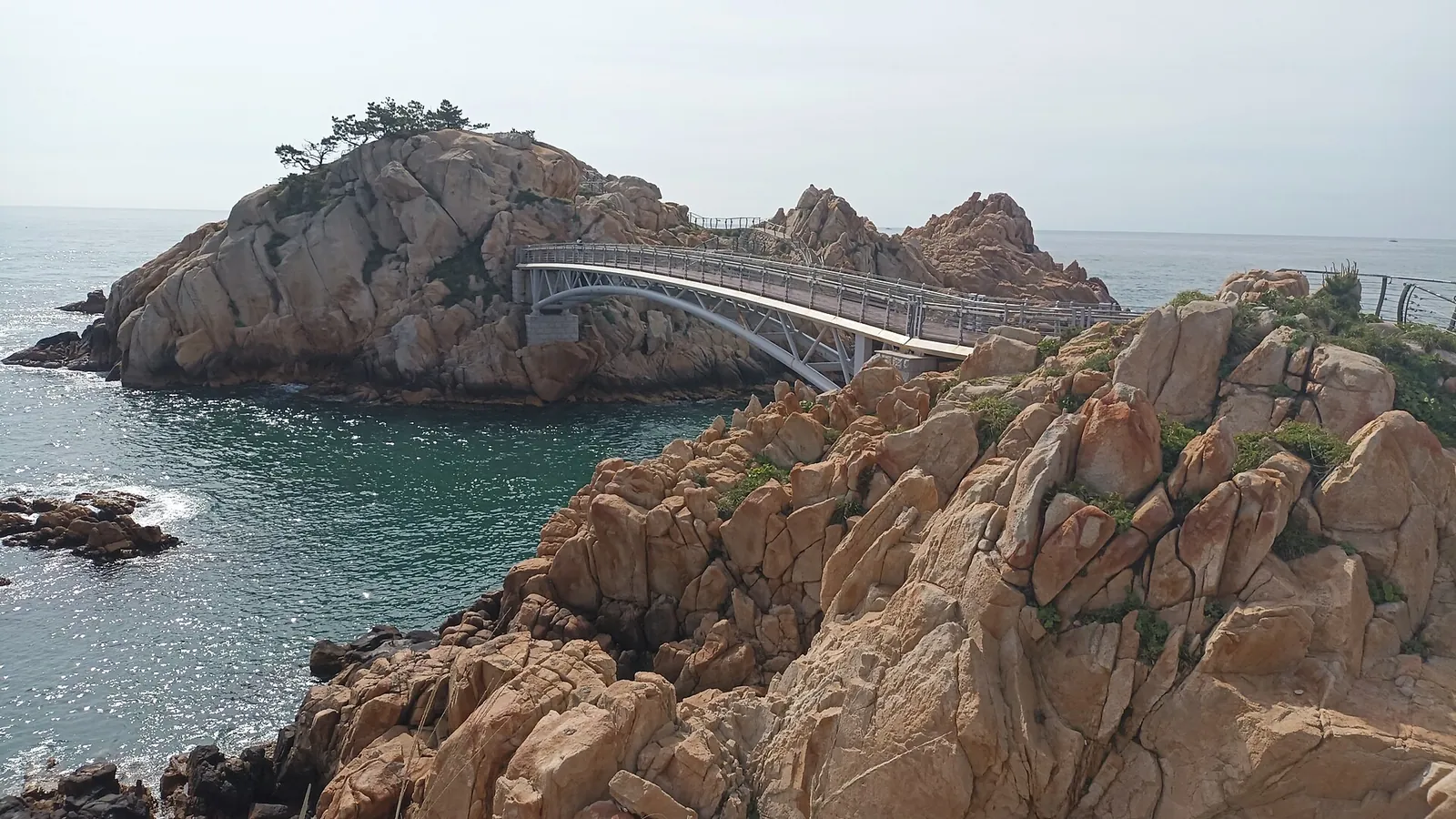
In the afternoon, take a taxi out to the coast at Daewangam Park in Dong-gu, on Ulsan's eastern edge facing the East Sea. VisitKorea describes a 600-metre road from the entrance lined with dense sea pines, and Daewangam Rock, said to look like a dragon rising into the sky, linked to the mainland by an iron bridge. The Daewangam Park Suspension Bridge, 303 metres without intermediate supports, crosses between two coastal trails; when we checked, VisitKorea listed it as free and open 09:00–18:00 (last admission 17:40), closed on the second Tuesday of each month. Bangeojin Port, a national fishing port since 1971, is close by for a late seafood lunch. Then head back to Taehwagang for the train to Gyeongju, and take a taxi from Gyeongju Station to your guesthouse.
Day 4: Gyeongju's centre — tombs, observatory, museum and Wolji Pond
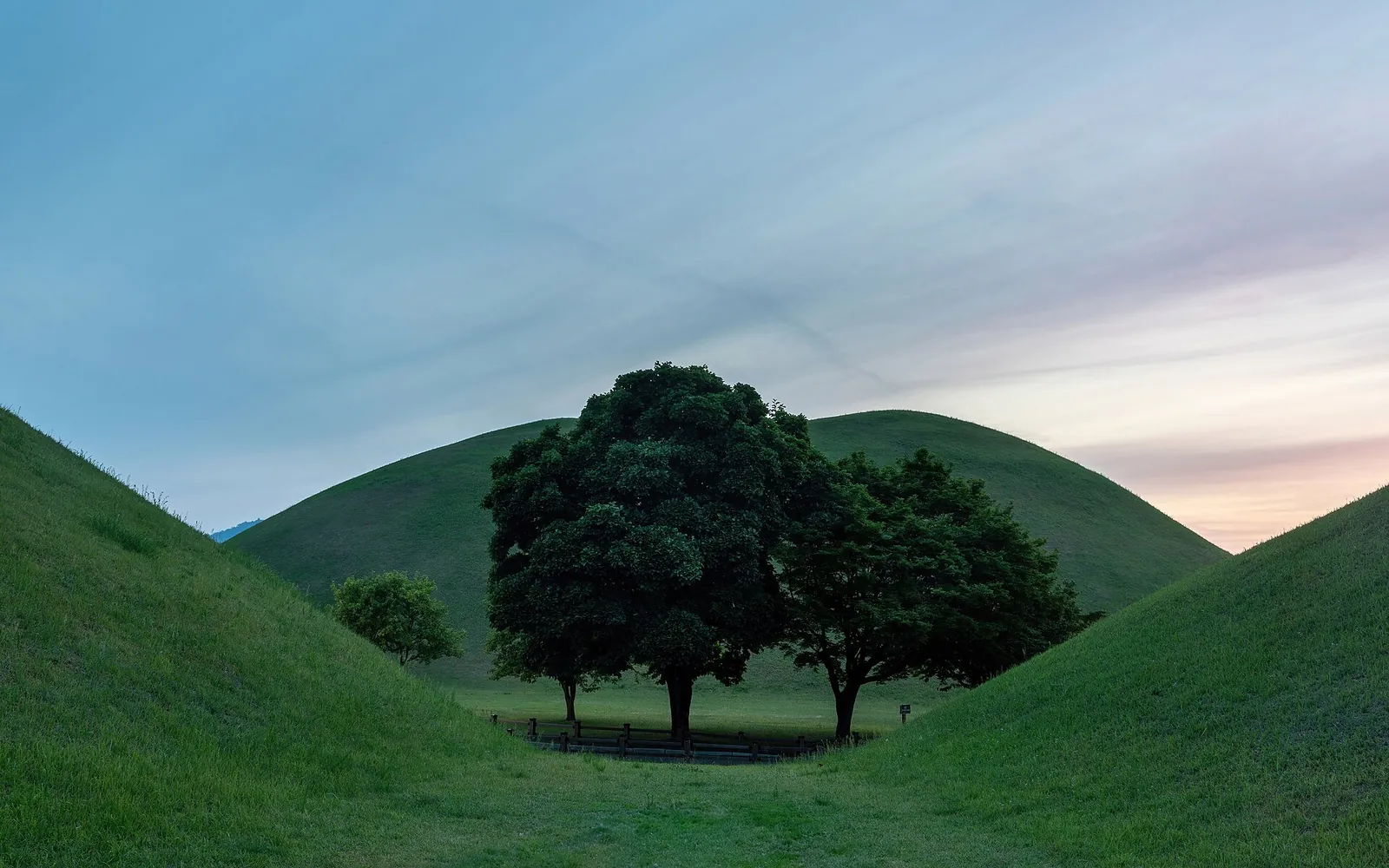
The centre of Gyeongju is flat and walkable, and two zones of the Gyeongju Historic Area, a UNESCO listing since 2000, lie within it: the Daereungwon tombs and the Wolseong area of Cheomseongdae, Gyerim Forest and Wolji Pond. Start at Daereungwon, the park of 23 large and small Silla tombs in Hwangnam-dong. Cheonmachong, excavated in 1973, is the only tomb you can enter: 12.7 metres high and 50 metres across, named after a saddle flap painted with a heavenly horse, and the source of the largest and most elaborate gold crown found in Korea. When we checked on 2026-10-03, VisitKorea listed Daereungwon as open 09:00–22:00 with free grounds, and Cheonmachong at 3,000 won for adults.
From the main gate, Cheomseongdae, the observatory built under Queen Seondeok (r. 632–647), is about two minutes' walk; by tradition it is made of 365 stones. A path continues to Gyerim Forest and Gyochon Village, home of the Gyeongju Choi clan and of Gyodong Beopju liquor. VisitKorea's bike route starts at rental shops near Daereungwon and runs to the Five Royal Tombs, the Hwangnyongsa Temple History and Culture Hall and the Gyeongju National Museum, where the Cheonmachong crown is displayed. When we checked, VisitKorea listed the museum as free (with a free ticket; special exhibitions may charge), open 10:00–18:00 on weekdays and 10:00–19:00 at weekends and on public holidays, to 21:00 on Saturdays and the last Wednesday of the month from March to December, and closed on New Year's Day, Seollal, Chuseok and the first Monday of March and November.
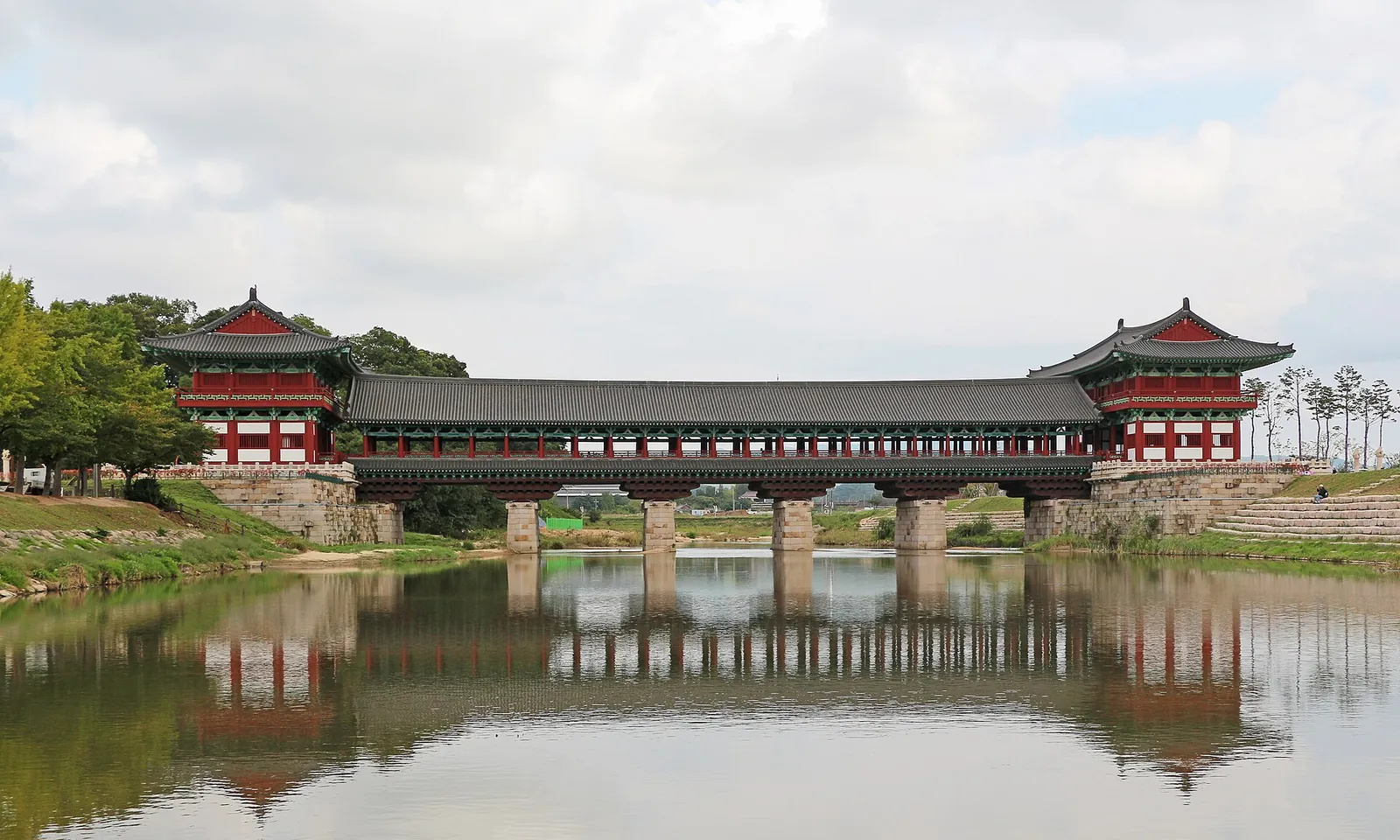
Save the evening for the lit sights. Donggung Palace and Wolji Pond, the crown prince's palace and banquet site, where King Munmu dug the pond in 674, is the classic Gyeongju night view; VisitKorea listed it at 09:00–22:00 (last ticketing and admission 21:30) and 3,000 won for adults. Woljeonggyo, rebuilt in April 2018 as the largest wooden bridge in Korea on the line of a bridge recorded in 760, is free and open until 22:00. Walk back for dinner on Hwangnidan Street, the old main street of Hwangnam-dong, now cafés, restaurants and shops in renovated hanok.
Day 5: Bulguksa and Seokguram, then home
The second UNESCO site, Bulguksa and Seokguram, is on Tohamsan, outside the centre, so give it the last morning. VisitKorea gives city bus 10 from Gyeongju Express Bus Terminal to Bulguksa. Its listing for Seokguram puts the grotto 3 kilometres from Bulguksa by hiking trail or 9 kilometres by road, and a VisitKorea temple feature says shuttle buses run up from Bulguksa about every hour and take about 20 minutes. Seokguram, built under King Gyeongdeok (742–765), is an artificial cave temple with a seated Buddha facing the East Sea.
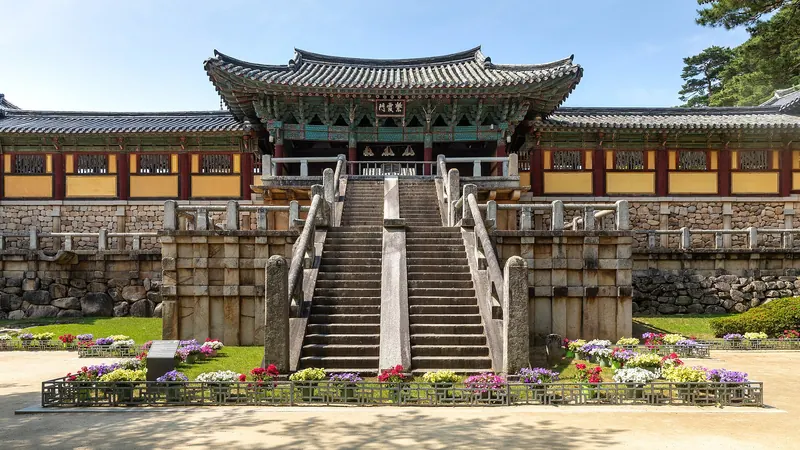
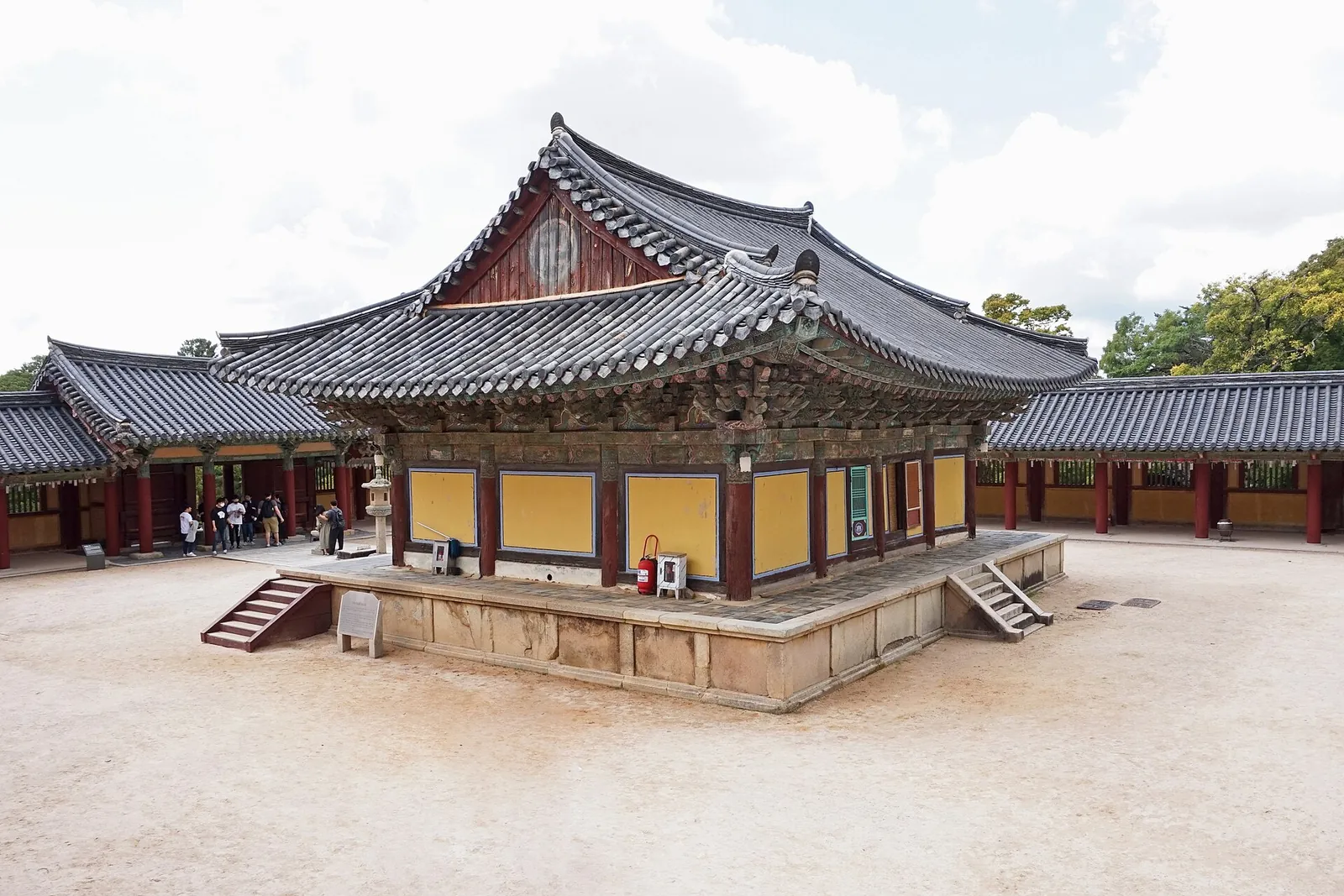
Bulguksa was first built under King Beopheung, rebuilt in 751 by Kim Dae-seong, burned in the Imjin War and has been restored since 1920; it holds seven national treasures, including the stone bridges of Cheongungyo and Baegungyo and the pagodas Dabotap and Seokgatap. When we checked on 2026-10-03, VisitKorea listed Bulguksa as free and open 09:00–18:00 (exit by 19:00), and Seokguram as free and open 09:00–18:00 with viewing until 19:00, noting that hours may change. Allow a half day for both.
Then leave. The KTX from Gyeongju Station reaches Busan Station in about 30 minutes and Seoul Station in about two hours, according to VisitKorea; book ahead on Korail. If you are flying out of Gimhae, VisitKorea lists an intercity bus of about an hour between Gimhae International Airport and Gyeongju Intercity Bus Terminal; check the departure times at the terminal the day before.
The route at a glance, and variations
This route is an editorial suggestion, not a timetable. Check closing days for each place you choose — especially Jagalchi's Tuesdays and Gukje Market's Sundays — and the KTX-Eum times before day 3.
- Day 1 — Busan, old port: Gamcheon Culture Village after 09:00, seafood lunch at Jagalchi, Gukje Market and BIFF Square, Busan Tower at dusk.
- Day 2 — Busan, east coast: Haedong Yonggungsa early, the Blueline Park train or Sky Capsule, Haeundae and Dongbaekseom, Gwangalli at night.
- Day 3 — Ulsan to Gyeongju: KTX-Eum to Taehwagang, the Simni bamboo grove, Daewangam Park and Bangeojin, then on to Gyeongju.
- Day 4 — Gyeongju centre: Daereungwon and Cheonmachong, Cheomseongdae, Gyochon, the national museum, Wolji Pond and Woljeonggyo after dark.
- Day 5 — Tohamsan: Seokguram and Bulguksa, then the KTX or bus out.
- Without Ulsan: take the KTX from Busan Station to Gyeongju (about 30 minutes) on the morning of day 3 and move day 4's evening sights to that night, which frees day 4 for Yangdong Village or Namsan.
- Flying in from Incheon: VisitKorea suggests a bus to Gwangmyeong Station (about 50 minutes) and the KTX to Busan Station (about 2 hours 40 minutes); add half a day at the start.
Practical questions
Is five days enough for Busan and Gyeongju?
Yes, for the main sights of both: two days covers Busan's old port and east coast, and two days covers Gyeongju's centre and Bulguksa with Seokguram. It does not leave time for Taejongdae on Yeongdo, Yangdong Village or Namsan; add a day for any of them.
Should I sleep in Gyeongju or visit it as a day trip from Busan?
Sleep there. The KTX takes only about 30 minutes, but Gyeongju's centre is at its best in the evening, when Daereungwon, Cheomseongdae, Wolji Pond and Woljeonggyo are lit and open until 22:00, and Bulguksa and Seokguram are a separate half day on Tohamsan.
How do I get from Busan to Ulsan and Gyeongju?
VisitKorea gives about 40 minutes by KTX-Eum from Bujeon Station to Taehwagang Station in Ulsan, or about 80 minutes on the Donghae Line metro; the KTX-Eum continues to Gyeongju. It ran only three times a day in each direction when we checked, so book on Korail. For Gyeongju alone, the KTX from Busan Station takes about 30 minutes.
Which airport should I use?
Gimhae International Airport (PUS) in Busan. VisitKorea gives about 30 minutes to Seomyeon, 50 minutes to Gwangalli and 70 minutes to Haeundae by light rail and Metro Line 2, and lists an intercity bus of about an hour between the airport and Gyeongju, which makes it easy to fly in and out of the same airport.
Where should I stay in Busan for this route?
Nampo-dong if the markets and the old port matter most, Haeundae if you want the beach. Either works for two nights; Nampo-dong is closer to Busan Station, and Haeundae is closer to Haedong Yonggungsa and Blueline Park.
What closing days should I plan around?
When we checked, VisitKorea listed Jagalchi Market as closed on the first and third Tuesdays, Gukje Market on Sundays, the Daewangam suspension bridge on the second Tuesday, and the Gyeongju National Museum on New Year's Day, Seollal, Chuseok and the first Monday of March and November.
Sources and checks before you travel
Reference sources for the version dated 3 October 2026. Confirm opening times, access, transport and conditions for your travel dates.
- VisitKorea: Explore Beyond Seoul at SONO Hotels & Resorts ↗ — opens in a new tab
- VisitKorea: Travel from Gangneung to Busan on the Donghae Line KTX-Eum ↗ — opens in a new tab
- VisitKorea: East Coast Train Trip by KTX-Eum ↗ — opens in a new tab
- VisitKorea: [Korea Beyond Seoul] Fly to Gimhae International Airport ↗ — opens in a new tab
- VisitKorea: Airport Transportation Guide ↗ — opens in a new tab
- VisitKorea: Gyeongju Reimagined ↗ — opens in a new tab
- VisitKorea: Feel the Sea, Enjoy the City — discover Busan ↗ — opens in a new tab
- VisitKorea: Busan Gamcheon Culture Village ↗ — opens in a new tab
- VisitKorea: Travel Etiquette When Visiting Gamcheon Culture Village ↗ — opens in a new tab
- VisitKorea: Jagalchi Market ↗ — opens in a new tab
- VisitKorea: Gukje Market ↗ — opens in a new tab
- VisitKorea: Gukje Market Food Street ↗ — opens in a new tab
- VisitKorea: BIFF Square ↗ — opens in a new tab
- VisitKorea: Yongdusan Park ↗ — opens in a new tab
- VisitKorea: Busan Tower ↗ — opens in a new tab
- VisitKorea: [Busan] Fishcake ↗ — opens in a new tab
- VisitKorea: Haedong Yonggungsa Temple ↗ — opens in a new tab
- VisitKorea: K-Temple Tours ↗ — opens in a new tab
- VisitKorea: Haeundae Blueline Park ↗ — opens in a new tab
- Haeundae Blueline Park (operator): Beach Train fares ↗ — opens in a new tab
- VisitKorea: Haeundae Beach ↗ — opens in a new tab
- VisitKorea: Haeundae Dongbaekseom Island ↗ — opens in a new tab
- VisitKorea: Gwangalli Beach ↗ — opens in a new tab
- VisitKorea: Best Summer Beach Destinations ↗ — opens in a new tab
- VisitKorea: Korea's TOP 14 Autumn Festivals in 2026 ↗ — opens in a new tab
- VisitKorea: 2026 Fall Foliage Forecast ↗ — opens in a new tab
- VisitKorea: Taehwagang National Garden ↗ — opens in a new tab
- VisitKorea: Taehwagang National Garden and Simni Bamboo Grove ↗ — opens in a new tab
- VisitKorea: Four Items Capturing the Mountains and Rivers of Ulsan ↗ — opens in a new tab
- VisitKorea: Daewangam Park ↗ — opens in a new tab
- VisitKorea: Daewangam Park Suspension Bridge ↗ — opens in a new tab
- VisitKorea: Bangeojin Port ↗ — opens in a new tab
- VisitKorea: Gyeongju Historic Area [UNESCO World Heritage] ↗ — opens in a new tab
- VisitKorea: Gyeongju Daereungwon Ancient Tomb Complex ↗ — opens in a new tab
- VisitKorea: Cheonmachong Tomb ↗ — opens in a new tab
- VisitKorea: The Ultimate 2-Day Gyeongju Itinerary ↗ — opens in a new tab
- VisitKorea: Cheomseongdae Observatory ↗ — opens in a new tab
- VisitKorea: Gyeongju Gyochon Traditional Village ↗ — opens in a new tab
- VisitKorea: Pedaling Through Time: A Bike Tour Guide to Gyeongju ↗ — opens in a new tab
- VisitKorea: Gyeongju National Museum ↗ — opens in a new tab
- VisitKorea: Donggung Palace and Wolji Pond ↗ — opens in a new tab
- VisitKorea: Woljeonggyo Bridge ↗ — opens in a new tab
- VisitKorea: Gyeongju Hwangnidan Street ↗ — opens in a new tab
- VisitKorea: Explore Korea's Thrill at Gyeongju World ↗ — opens in a new tab
- VisitKorea: Gyeongju Bulguksa Temple [UNESCO World Heritage] ↗ — opens in a new tab
- VisitKorea: Gyeongju Seokguram Grotto [UNESCO World Heritage] ↗ — opens in a new tab
- VisitKorea: Bulguksa Temple and Seokguram Grotto ↗ — opens in a new tab
- VisitKorea: Busan Wheat Noodles (milmyeon) ↗ — opens in a new tab
- VisitKorea: Gyeongju Ssambap Street ↗ — opens in a new tab
- VisitKorea: Hwangnambbang ↗ — opens in a new tab
Does this experience fit your route?
If you would rather have one Busan day guided, a city tour linking Haedong Yonggungsa and Gamcheon saves the cross-town transfers. Check the stops, the time on site and the pick-up point before you book.
Check dates and details on Viator ↗ — opens in a new tabAffiliate link · Book with ViatorPhoto credits
Woljeonggyo in Gyeongju, rebuilt in 2018 and open until 22:00 — one of the evening stops on day 4.
Photograph: Bernard Gagnon — opens in a new tab · CC0 — opens in a new tab
Changes: Resized and converted to WebP; displayed with responsive crops. · Original photograph and licence details ↗ — opens in a new tab
Milmyeon, the cold wheat-noodle dish that Busan claims as its own.
Photograph: yangmin00 — opens in a new tab · CC0 — opens in a new tab
Changes: Resized and converted to WebP; displayed with responsive crops. · Original photograph and licence details ↗ — opens in a new tab
Daeungjeon Hall at Bulguksa, the temple that fills the last morning of the route.
Photograph: Bernard Gagnon — opens in a new tab · CC0 — opens in a new tab
Changes: Resized and converted to WebP; displayed with responsive crops. · Original photograph and licence details ↗ — opens in a new tab
Daereungwon in Hwangnam-dong, where day 4 in Gyeongju's centre begins.
Photograph: Basile Morin — opens in a new tab · CC BY-SA 4.0 — opens in a new tab
Changes: Resized and converted to WebP; displayed with responsive crops. · Original photograph and licence details ↗ — opens in a new tab
Daewangam Park on Ulsan's Dong-gu coast, the afternoon stop on day 3.
Photograph: Dittwjfsdgkvkdjg — opens in a new tab · CC BY-SA 3.0 — opens in a new tab
Changes: Resized and converted to WebP; displayed with responsive crops. · Original photograph and licence details ↗ — opens in a new tab
Gwangandaegyo from Gwangalli Beach, the end of the east-coast day in Busan.
Photograph: bryan... — opens in a new tab · CC BY-SA 2.0 — opens in a new tab
Changes: Resized and converted to WebP; displayed with responsive crops. · Original photograph and licence details ↗ — opens in a new tab