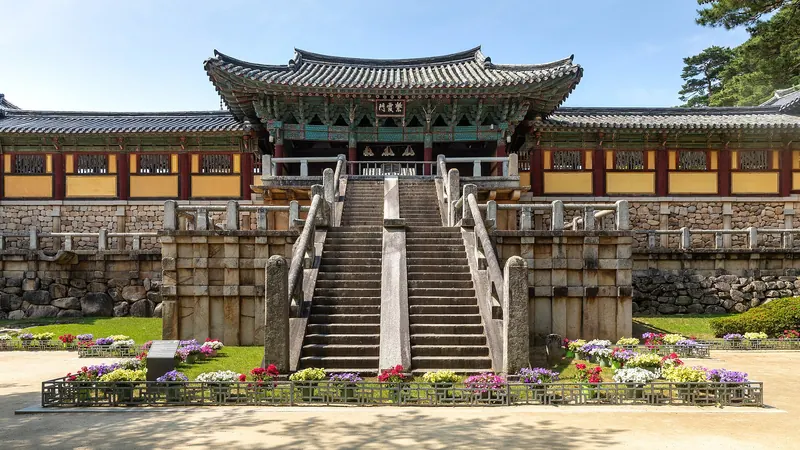
Plan your trip · South Korea
Templestay in South Korea: choosing a temple, schedule and etiquette
A templestay is a night (or a few hours) inside a working Korean Buddhist temple: you wear a loose temple uniform, eat vegetarian monastic meals, and are woken before dawn by drums and bells for the morning ceremony. Each temple runs its own programmes, and most are booked through one national website run by the Jogye Order's Cultural Corps of Korean Buddhism, so the real choices are which kind of programme you want, which temple, and whether a city temple in Seoul or a mountain monastery fits your route. This guide walks through those choices with the schedules, rules and prices the temples themselves publish.
- Suggested time
- One night (two days) for a first stay; a two-to-three-hour day programme if you cannot stay overnight
- Where to stay
- The temple itself for the night; Seoul (Jongno), Gyeongju or Daegu before and after
- Season and timing
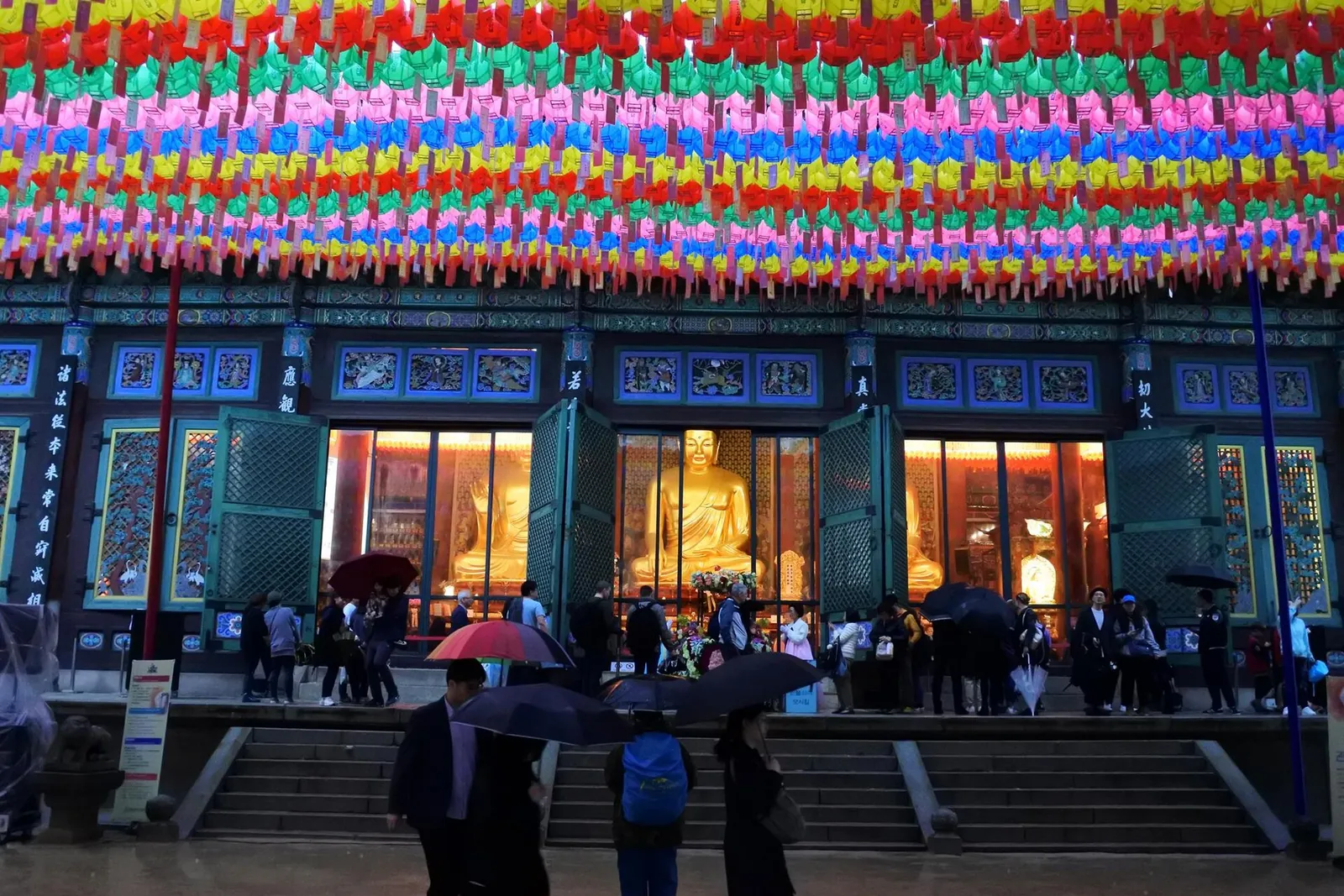
- Year-round; mountain temples are cold in winter, and the weeks before Buddha's Birthday (the 8th day of the 4th lunar month) bring lanterns and events.
The short answer
For a first templestay, book one night (two days) at a temple that runs a regular programme for international visitors: Jogyesa in central Seoul if you have little time, or a mountain temple such as Woljeongsa (Odaesan), Beopjusa (Songnisan), Haeinsa or Golgulsa (near Gyeongju) if you want the full pre-dawn atmosphere. Choose an experience-type programme (usually at weekends) for guided activities, or a rest-type one for free time; a two-to-three-hour day programme is the option if you cannot stay overnight. Book on templestay.com a few days ahead at the least, arrive by mid-afternoon, and spend the night before or after in Seoul, Gyeongju or Daegu.
Day, experience or rest: pick the programme type first
The Templestay website, run by the Cultural Corps of Korean Buddhism of the Jogye Order, sorts programmes into three types. A one-day templestay normally lasts two or three hours and combines a temple tour, meditation and a tea ceremony; it is the fit for a busy city itinerary. An experience-oriented templestay is typically done at weekends with one overnight stay and includes the morning chanting, 108 prostrations, the formal monastic meal with traditional bowls and meditation, often with a craft such as a lotus lantern or prayer beads. A rest-oriented templestay keeps the ceremonies and meals but leaves most of the time free.
VisitKorea, the Korea Tourism Organization's site, describes a typical programme in the same terms: a Buddhist service, Seon (Zen) meditation, the 108 prostrations and communal work, with some temples adding meal-offering rituals and tea ceremonies. The deciding question is how structured you want the night to be. If you have never been inside a Korean temple, the experience type explains what is going on around you; if you want quiet, a walk in the forest and an early night, the rest type is better, and Beopjusa states that on its rest programme staff accompany you only for the tour, the three meals and two ceremonies.
Not every temple runs every type, and programmes change by season, so start from the temple's own programme list on templestay.com rather than from a general description.
What one night actually looks like
Schedules are published per programme and are strikingly similar. As an example, when we checked on 2026-10-03, Jogyesa's Regular Templestay in Seoul (one night, two days) listed gathering and check-in at 13:30, temple-etiquette orientation, a paper lotus lantern craft, a temple tour, the evening monastic meal from 16:30, the evening ceremony with the Dharma instruments around 18:00, optional 108 prostrations at 19:00, bedtime at 21:00, waking at 04:00 for the early-morning ceremony, breakfast at 07:00 and check-out at 10:00.
Mountain temples start even earlier. Haeinsa's weekend Tripitaka Koreana Pilgrimage listed check-in from 13:30, woodblock printing and a temple tour, dinner at 17:30, lights out in the evening and leaving for the main Dharma hall at 03:10 for the morning ceremony, with breakfast at 06:00 and check-out at 11:00. Beopjusa's Saturday experience programme listed a 04:00 wake-up, the early ceremony and 108 prostrations, then a walking meditation on Sujeongbong peak or the King Sejo road before lunch and check-out.
Two things follow for planning. First, you need to arrive by mid-afternoon: Woljeongsa, for instance, listed check-in from 15:00 to 15:30 and said guests arriving after 16:30 cannot check in or be refunded, and that its office closes at 17:00. Second, the morning after is short and early, so do not book a long transfer for the evening you arrive; book it for the late morning you leave.
- Arrive: early to mid-afternoon; change into the temple uniform (vest and trousers).
- Evening: orientation, tour, an early dinner around 17:00–18:00, the evening ceremony, bed around 21:00.
- Morning: wake-up around 03:00–04:00, ceremony, sometimes prostrations or meditation, breakfast around 06:00–07:00.
- Leave: check-out mid- to late morning, depending on the temple.
Make time for the local food
What to eat and where to look
Balwoo gongyang (formal monastic meal)
The traditional way monks and nuns eat, from a nested set of bowls holding a modest amount of rice and vegetables. The Templestay site describes it as a practice in itself, built on equality, cleanliness and thrift: everyone shares the same food and nothing is wasted.
- Where to look
- Experience-type templestays that list balwoo gongyang in their schedule; not every programme includes it.
- Fit it into your day
- Usually the evening or morning meal of an experience programme; check the schedule to see whether yours includes it.
The ritual is built around wasting nothing, so take only what you will finish and follow the monk's instructions for handling the bowls.
Temple food (sachal eumsik)
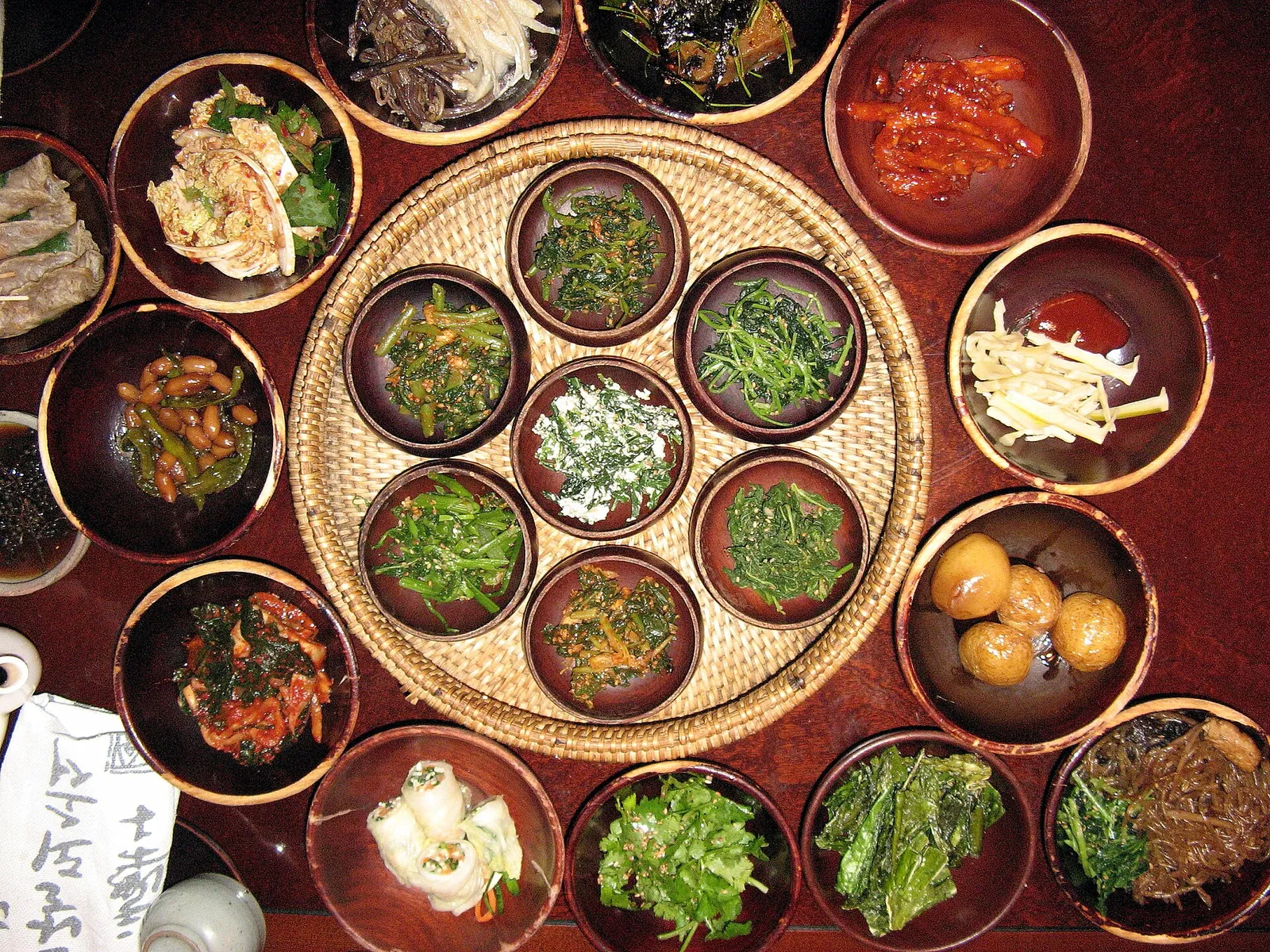
VisitKorea describes templestays as a way to try a Korean-style vegetarian diet through temple food. Expect rice, soup and seasonal vegetable side dishes rather than the meat and fish of most Korean menus.
- Where to look
- The temple dining hall during your stay; in Seoul, temple-food restaurants in Insa-dong, near Jogyesa.
- Fit it into your day
- Dinner on arrival and breakfast before check-out are included in overnight programmes; meals are early, around 17:00–18:00 and 06:00–07:00.
Temple meals are vegetarian, but ask about dishes you avoid; if you have an allergy, tell the temple when you book.
Tea with a monk
Several programmes include tea time or a tea ceremony (Da-Seon), which the Templestay site presents as a meditation practice: watching, smelling and tasting the tea with full attention.
- Where to look
- Jogyesa's tea programmes and tea-with-a-monk sessions, and the evening or morning slot of many experience programmes.
- Fit it into your day
- Usually an afternoon session after check-in, or the closing activity of a day programme.
Some sessions run only with a minimum number of participants; Jogyesa says its tea conversation is held with five or more people and replaced by sutra copying otherwise.
Choosing a temple for a first stay
VisitKorea lists temples that run regular templestay programmes for international visitors, from Seoul and Ganghwa Island to Gangwon, the Chungcheong and Jeolla provinces, Gyeongsang and Jeju. The Templestay FAQ narrows that list by what you want from the stay. A few that fit common routes:
- Jogyesa, Seoul: in Jongno, central Seoul, a short walk from Jonggak (Line 1) or Anguk (Line 3) stations. The easiest first night if you are short of time; it also runs short daytime programmes.
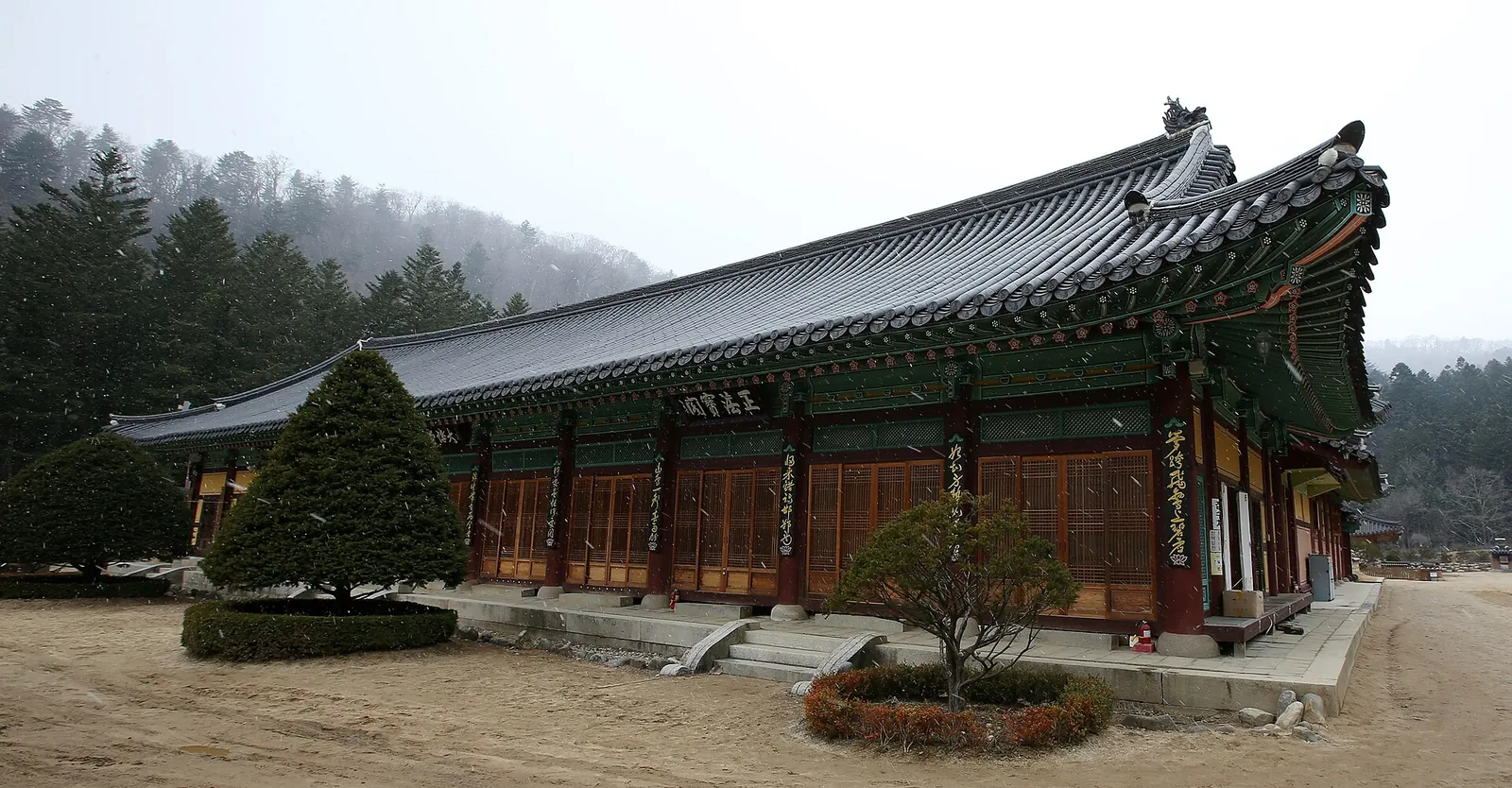
- Woljeongsa, Odaesan (Gangwon): a rest-type programme in the fir forest; the temple says participation in activities is optional and all rooms have a private bathroom. See our Odaesan guide for the valley and the trails.
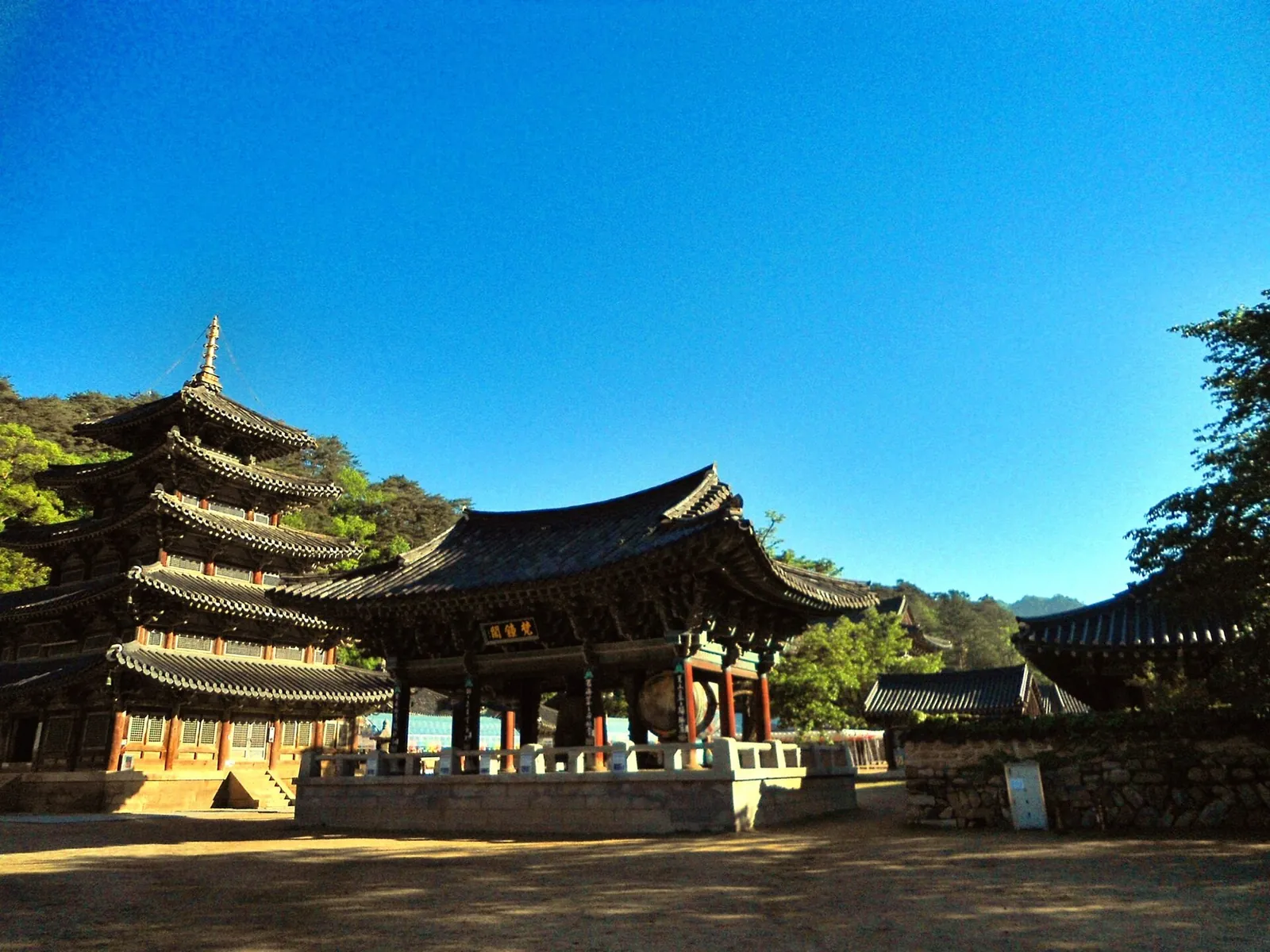
- Beopjusa, Songnisan (North Chungcheong): one of the four UNESCO-listed temples the Templestay FAQ names as offering English programmes (with Bulguksa, Magoksa and Haeinsa); weekend experience and weekday rest programmes. See our Songnisan guide.
- Haeinsa (South Gyeongsang): home of the Tripitaka Koreana woodblocks, with a weekend pilgrimage programme built around them. See our Haeinsa guide.
- Golgulsa, near Gyeongju: the Templestay FAQ points to it for Seonmudo, a Buddhist martial-art meditation; it combines easily with a stay in Gyeongju.
- Meditation-focused stays: the FAQ suggests the International Seon Center in Seoul or the Lotus Lantern International Meditation Center on Ganghwa Island, which it says runs a monthly intensive course of three nights and four days.
Booking, prices and cancellation
Bookings go through templestay.com (Korean and English) or the temple's own channel; VisitKorea points international visitors to the Templestay website for information and reservations. You pick a temple, a programme and a date, and the price is set per person per night. When we checked on 2026-10-03, the listed adult prices included 80,000 won per night for Jogyesa's Regular Templestay, 100,000 won for Beopjusa's weekend experience programme and 80,000 won for its weekday rest programme, 100,000 won per night for Woljeongsa's Relaxing Templestay, 100,000–130,000 won at Haeinsa depending on room type, and 120,000 won per night for Golgulsa's relaxation programme. Jogyesa's daily short programme (temple tour and lotus lantern making) was listed at 10,000 won.
Lead times and refunds are set by each temple, so read them before paying. Jogyesa and Beopjusa listed reservations until three days before the programme, Woljeongsa and Golgulsa until two days before. Jogyesa's policy gave a full refund up to seven days before and none from six days before; Haeinsa's gave 100% up to three days before and nothing on the day. Jogyesa also said a booking is not confirmed until payment is made and that card payment is not possible on the spot, so pay online.
Rooms are usually shared and separated by sex. The Templestay FAQ says men and women may not share a room, even as a couple, and that some temples offer private rooms for two to four people for an extra fee. Jogyesa listed shared three- and six-person rooms with families and groups placed together and private rooms only on prior request; Beopjusa listed single-room prices. The FAQ also says you do not need to bring a printed confirmation, as each temple keeps its own list.
Etiquette, clothing and what to bring
Temples provide the uniform; you provide the rest. The Templestay FAQ says most temples supply only soap, toothpaste and the vest-and-trousers uniform, so bring a towel, toiletries, socks, underwear and a change of clothes, and warm layers in winter because mountain monasteries are colder than you might expect. Haeinsa asked guests to bring a T-shirt to wear under the vest (sleeveless shirts not permitted), comfortable sneakers or hiking shoes and no flip-flops or slippers; socks must be worn in the Dharma halls.
The rules repeat from temple to temple: dress modestly, keep quiet (Haeinsa asks for noble silence), no alcohol or smoking, no displays of affection between couples, and be on time for the schedule. Greet monks and nuns with *hapjang*, palms together with a slight bow; Beopjusa adds a half bow with hapjang when passing a Buddha hall. You are not expected to be Buddhist, and the Templestay FAQ says that if you feel unwell or too tired you can rest in your room after telling the staff.
Families should check age rules. Woljeongsa, for example, listed that children under five cannot take part and that guests under 19 or over 75 must come with a guardian; Haeinsa's pilgrimage listed no pre-school children.
Fitting a templestay into your route
A city temple costs you an afternoon and an early morning; a mountain temple can take most of a day to reach and leave. Most international visitors land at Incheon, and the easiest first templestay is in Seoul. For a mountain temple, put it where your route already goes: Woljeongsa on the way to the east coast through Gangwon, Haeinsa from Daegu (its programme page gives the bus from Daegu's Seobu Intercity Bus Terminal at about 1 hour 30 minutes), Golgulsa with Gyeongju, and Beopjusa between Seoul and the south.
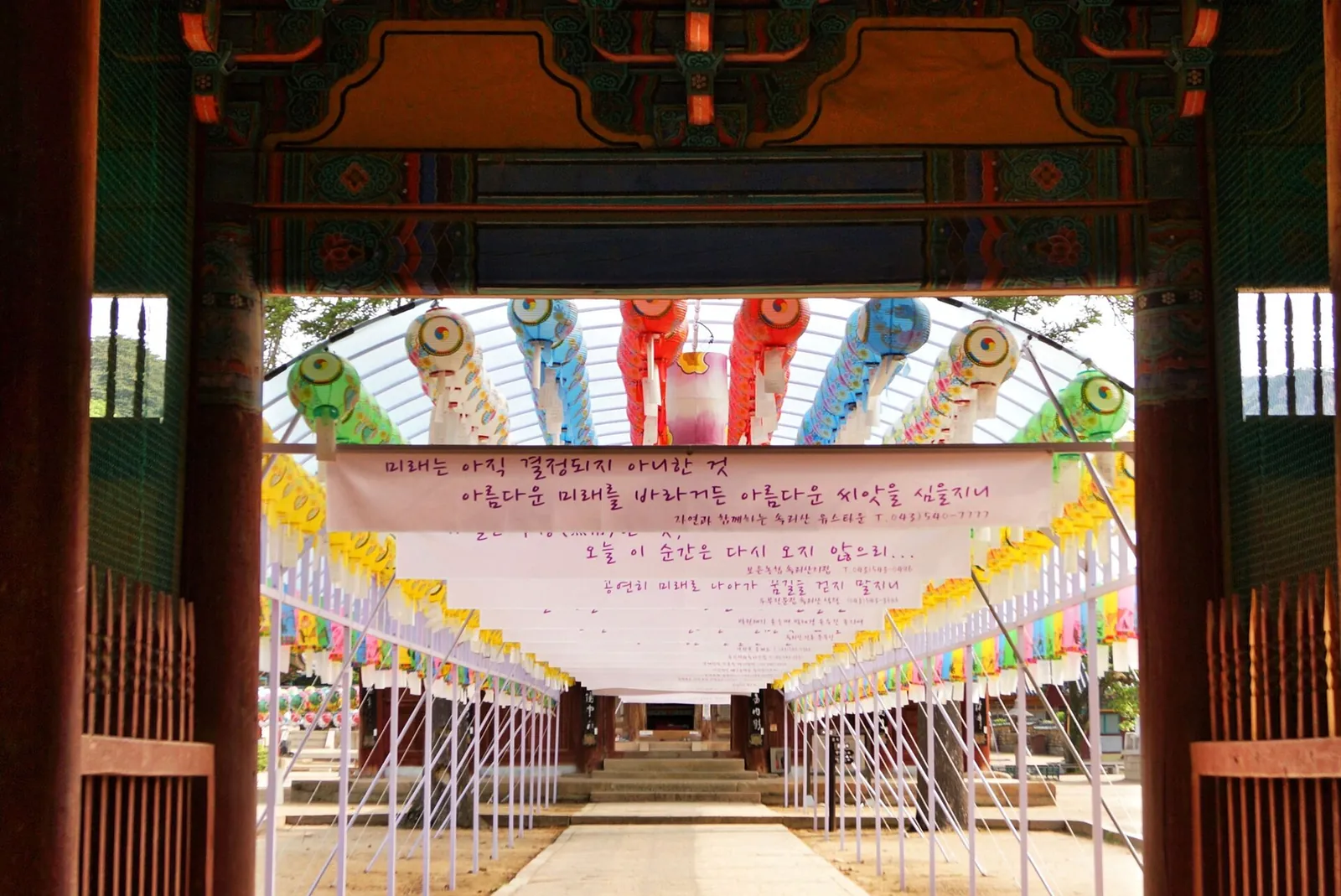
Avoid trying to reach a rural temple on the day you fly in; spend that night in Seoul or a regional city and travel the next morning. Holidays matter too: Jogyesa lists programmes through the week, but Beopjusa's experience programme runs on Saturdays and Haeinsa's pilgrimage at weekends, and Buddha's Birthday, the 8th day of the fourth lunar month, brings lanterns to temples across the country and plenty of events, according to VisitKorea. Golgulsa noted that its daily Seonmudo demonstration does not run on Mondays and Tuesdays.
Practical questions
Do I need to be Buddhist to do a templestay?
No. Programmes for international visitors are designed for people with no background in Buddhism, and the orientation explains etiquette such as hapjang and bowing. You are asked to follow the temple's rules and schedule, and the Templestay FAQ says you may rest in your room if you are unwell or too tired, after telling the staff.
How much does a templestay cost?
Each temple sets its own price. When we checked on 2026-10-03, overnight adult prices for the temples in this guide ranged from 80,000 won (Jogyesa's regular programme, Beopjusa's weekday rest programme) to about 130,000 won (single rooms at Haeinsa or Beopjusa), with Jogyesa's short daily programme at 10,000 won. Check the programme page for the current price.
Can couples stay in the same room?
Generally not. The Templestay FAQ says men and women cannot stay together in the same room, and Jogyesa assigns couples separate rooms even when they travel together, except parents with minor children. Some temples sell private rooms for an extra fee.
What time do you have to get up?
Early. The schedules we checked woke guests at about 04:00 at Jogyesa and Beopjusa, and Haeinsa's pilgrimage leaves for the main hall at 03:10. The morning ceremony is often optional, but the temple is quiet and in bed by about 21:00.
Can I do a templestay without staying overnight?
Yes. The Templestay site describes one-day programmes of about two to three hours with a temple tour, meditation and tea. In Seoul, Jogyesa listed short daily programmes when we checked, and Golgulsa near Gyeongju listed a half-day visit.
How far ahead should I book?
Most temples close bookings two or three days before the date, but weekend experience programmes and private rooms fill first, so book as soon as your dates are fixed and read the refund rules, which can be strict.
Sources and checks before you travel
Reference sources for the version dated 3 October 2026. Confirm opening times, access, transport and conditions for your travel dates.
- VisitKorea (Korea Tourism Organization): Templestay ↗ — opens in a new tab
- Templestay (Jogye Order): What is Templestay ↗ — opens in a new tab
- Templestay (Jogye Order): FAQ ↗ — opens in a new tab
- Templestay: Jogyesa Regular Templestay (1 night 2 days) ↗ — opens in a new tab
- Templestay: Jogyesa Always Templestay (daily) ↗ — opens in a new tab
- Templestay: Haeinsa Tripitaka Koreana Pilgrimage (weekend) ↗ — opens in a new tab
- Templestay: Beopjusa weekend experience programme ↗ — opens in a new tab
- Templestay: Beopjusa weekday rest programme ↗ — opens in a new tab
- Templestay: Woljeongsa Relaxing Templestay ↗ — opens in a new tab
- Templestay: Golgulsa Relaxation templestay ↗ — opens in a new tab
- VisitKorea: From the Airport to the City ↗ — opens in a new tab
Does this experience fit your route?
Want to see a mountain temple before booking a night there? Compare guided day trips to Beopjusa and Haeinsa, and book the templestay itself directly with the temple.
Check dates and details on Viator ↗ — opens in a new tabAffiliate link · Book with ViatorPhoto credits
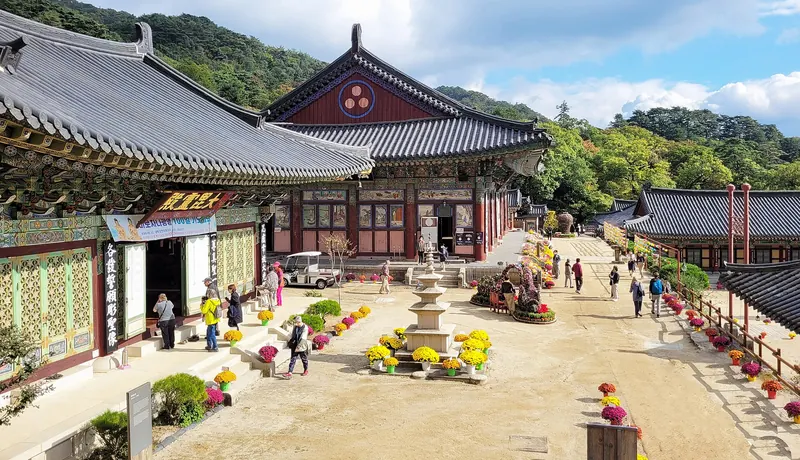
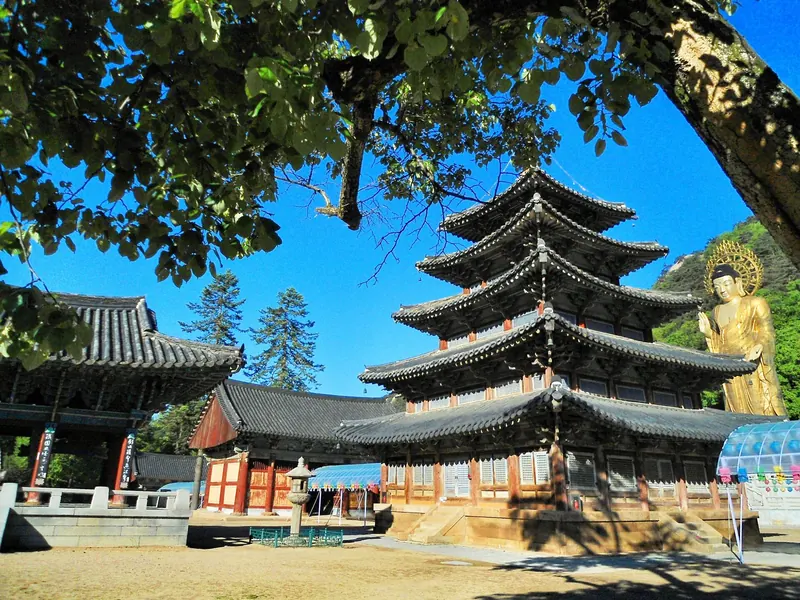
Beopjusa in Songnisan, one of the UNESCO-listed temples with an English templestay programme
Photograph: MeganYoungmee — opens in a new tab · CC BY-SA 3.0 — opens in a new tab
Changes: Resized and converted to WebP; displayed with responsive crops. · Original photograph and licence details ↗ — opens in a new tab
Korean temple dishes at Sanchon, a temple-food restaurant in Insa-dong, Seoul
Photograph: by Richy! at flickr — opens in a new tab · CC BY-SA 2.0 — opens in a new tab
Changes: Resized and converted to WebP; displayed with responsive crops. · Original photograph and licence details ↗ — opens in a new tab
Jogyesa in central Seoul, decorated for the Lotus Lantern Festival
Photograph: Ken Eckert — opens in a new tab · CC BY-SA 4.0 — opens in a new tab
Changes: Resized and converted to WebP; displayed with responsive crops. · Original photograph and licence details ↗ — opens in a new tab
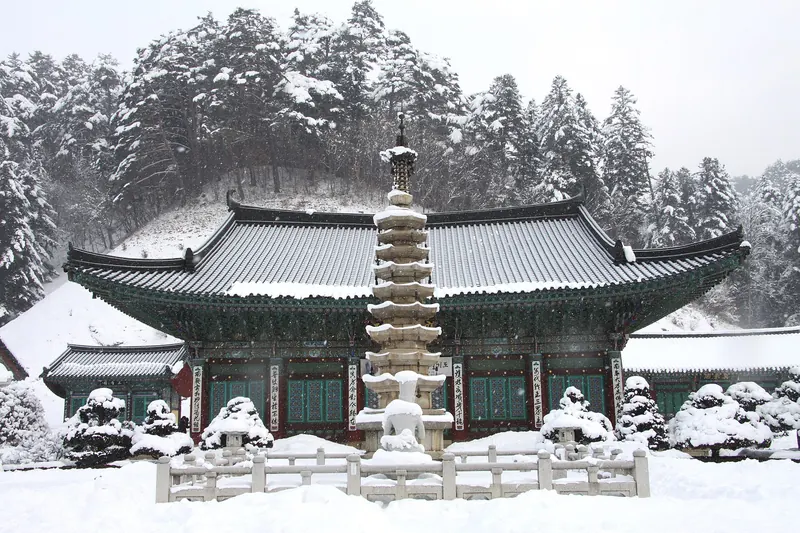
A hall at Woljeongsa, Odaesan, which runs a rest-type templestay
Photograph: Republic of Korea from Seoul, Republic of Korea — opens in a new tab · CC BY-SA 2.0 — opens in a new tab
Changes: Resized and converted to WebP; displayed with responsive crops. · Original photograph and licence details ↗ — opens in a new tab
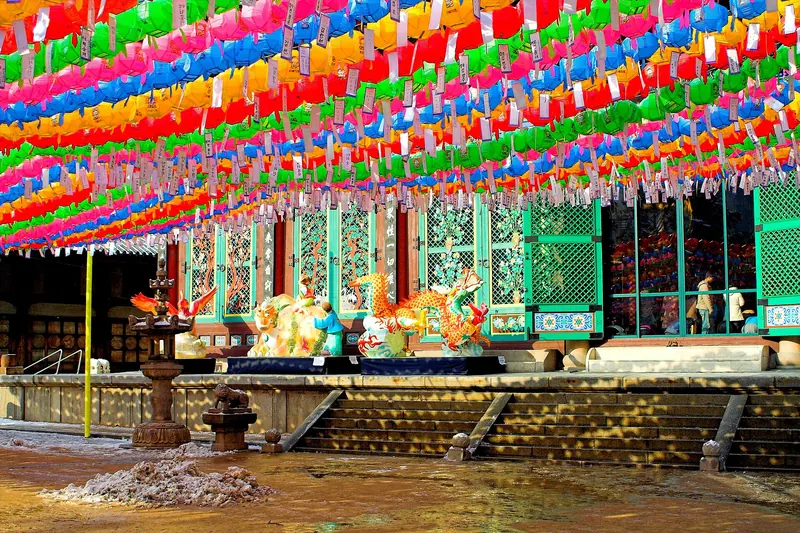
Lanterns hung at Beopjusa ahead of Buddha's Birthday
Photograph: MeganYoungmee — opens in a new tab · CC BY-SA 3.0 — opens in a new tab
Changes: Resized and converted to WebP; displayed with responsive crops. · Original photograph and licence details ↗ — opens in a new tab