Itineraries · Seoul
Seoul in 5 days: palaces, markets and day trips to Suwon and the DMZ
Five days is the point where Seoul stops being a list of palaces and starts working as a base. Three days in the city cover the two great Joseon palaces, Bukchon, the markets and Namsan; the other two go to places an hour or so away by train that are worth a full day each: Suwon's fortress wall and either the border at Paju or the river islands of Gapyeong. The trick is to keep one hotel for all five nights, put it on the right subway line, and arrange the days around which sites close on Monday and which on Tuesday.
- Suggested time
- 5 days (5 nights in Seoul)
- Where to stay
- One hotel for all five nights: Jongno near Jongno 3-ga or Jongno 5-ga (Line 1), or the Seoul Station area; Hongdae suits the DMZ day and late arrivals on AREX
- Season and timing
- Autumn, September to November, is Seoul's most pleasant season according to the city government, and spring starts in March with blossom in the parks. Summer is long, hot and humid with monsoon rain in June and July, which makes the fortress walk in Suwon hard going. Palace hours are shortest from November to February, so winter days need earlier starts.
The short answer
Sleep five nights in one hotel near a Line 1 station in Jongno, or around Seoul Station, which is also where the AREX airport train arrives. Spend day 1 on Gyeongbokgung and Bukchon (not a Tuesday), day 2 on Changdeokgung with a booked Secret Garden tour, Jongmyo and dinner at Gwangjang Market (not a Monday), day 3 at Suwon's Hwaseong Fortress by Line 1 and a city bus, day 4 at the DMZ with your passport (not a Monday) or at Nami Island by train, and day 5 on Namsan, Namdaemun and Myeongdong, or a morning hike at Bukhansan. Use a rechargeable transport card throughout.
One base, five nights: why Line 1 decides it
Changing hotels on a five-day trip costs half a day, and none of the day trips here needs an overnight stay. What matters is how easily the hotel connects with three things: the palaces in Jongno, the trains out of the city, and the airport. Seoul Subway Line 1 links most of them. It stops at Jongno 3-ga and Jongno 5-ga, by Jongmyo and Gwangjang Market, and runs through Seoul Station to Suwon, which is the Suwon Cultural Foundation's recommended route to the fortress.
Jongno, around Insa-dong, Jongno 3-ga (Lines 1, 3 and 5) and Anguk (Line 3), puts you within walking distance or one stop of both palaces, Bukchon and Gwangjang Market, and gives you Line 1 for Suwon. The Seoul Station area is the most practical base for the day trips: the AREX airport railway ends there, Line 1 leaves for Suwon, and the Gyeongui–Jungang Line runs north to Munsan for the DMZ, all from one station. It is less atmospheric in the evening, but Namdaemun Market and Myeongdong are close.
Myeongdong, on Line 4, is the busiest all-round shopping and street-food district, next to Namsan, and works if you want lively evenings; you change lines for the palaces and day trips. Hongdae, around Hongik University Station, is known for street performances, bars and clubs; the all-stop AREX train from Incheon stops there, and VisitKorea notes that Gyeongui–Jungang Line trains to Munsan run more often from Hongik University and Gongdeok than from Seoul Station. Gangnam, south of the river, adds travel time to everything on this route except the red express bus to Suwon.
Days 1 and 2: the palaces, Bukchon and Gwangjang Market
Split the palaces over two days, because they do not close on the same day. VisitSeoul lists Gyeongbokgung as closed on Tuesdays and Changdeokgung as closed on Mondays; Jongmyo Shrine also closes on Tuesdays. When a closing day falls on a public holiday, the palace opens and closes the next working day instead. Put Gyeongbokgung on day 1 and Changdeokgung on day 2, and simply check that neither lands on its closing day.
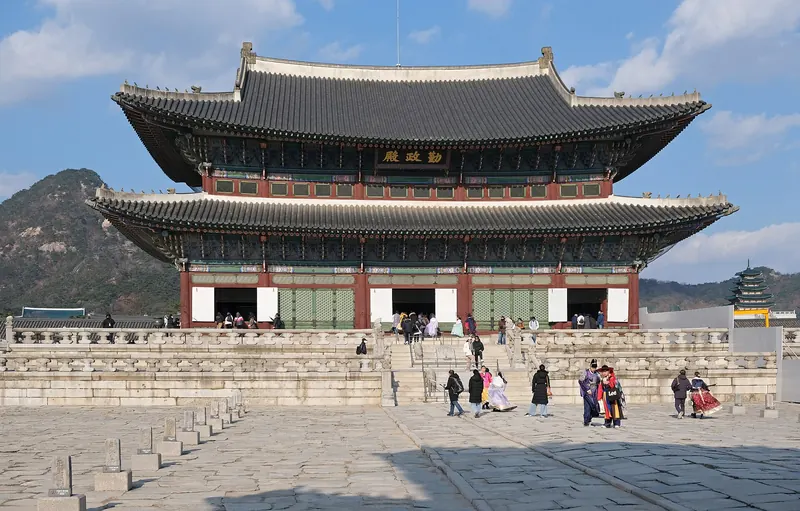
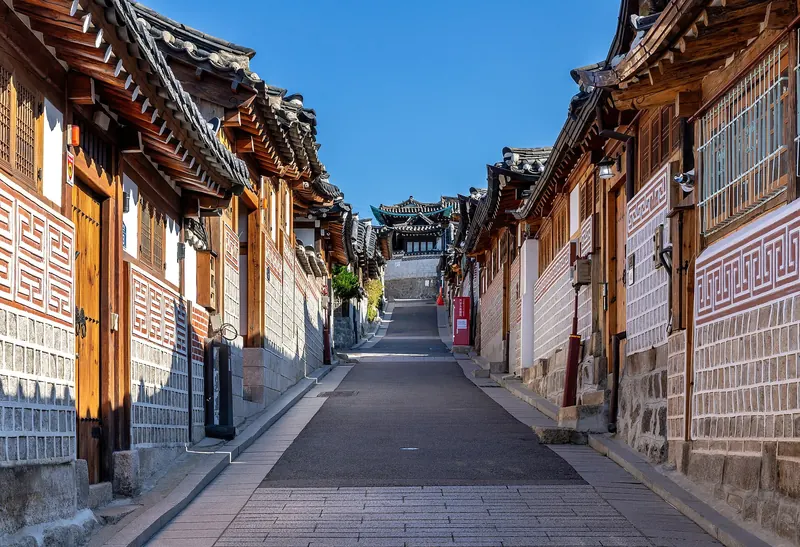
Day 1: Gyeongbokgung and Bukchon. Gyeongbokgung was built in 1395 as the main palace of the Joseon dynasty and is the largest of the five. When we checked on 2026-10-03, VisitKorea listed its hours as 09:00–18:00 from March to May and in September and October, 09:00–18:30 from June to August and 09:00–17:00 from November to February, with last admission an hour before closing, and an adult ticket at 3,000 won; visitors in a complete hanbok enter free, VisitSeoul confirms. VisitSeoul listed free English guided tours at 11:00, 13:30 and 15:30 every day except Tuesday. The National Palace Museum of Korea, beside Heungnyemun Gate, and the National Folk Museum of Korea, inside the grounds, are useful if the afternoon turns wet. Then walk east into Bukchon: since November 2024 its core lanes have been a special management area, and VisitSeoul lists visiting hours of 10:00 to 17:00, with visitors not allowed in the restricted area outside those hours. It is a residential neighbourhood; keep your voice down and do not photograph into houses.
Day 2: Changdeokgung, Jongmyo and Gwangjang. Changdeokgung is reached from Anguk station (Line 3, exit 3). Its rear garden, the Huwon or Secret Garden, takes up about sixty percent of the palace, VisitSeoul notes, around the Buyongji pond and its pavilions. VisitKorea listed 3,000 won for the palace grounds and 5,000 won for adults for the Secret Garden (Huwon), a separate guided visit that VisitSeoul says is booked through the palaces' integrated reservation service at least three days ahead. Book it before you fly and build the day around your slot. Jongmyo Shrine is a short walk south; VisitSeoul lists timed guided tours on Mondays and Wednesdays to Fridays, with English tours at 10:00, 12:00, 14:00 and 16:00, and free entry without a guide at weekends, on public holidays and on the last Wednesday of each month. End at Gwangjang Market by Jongno 5-ga station: when we checked, VisitSeoul listed its food alley as open daily from 09:00 to 23:00, while the rest of the market closes on Sundays.
Make time for the local food
What to eat and where to look
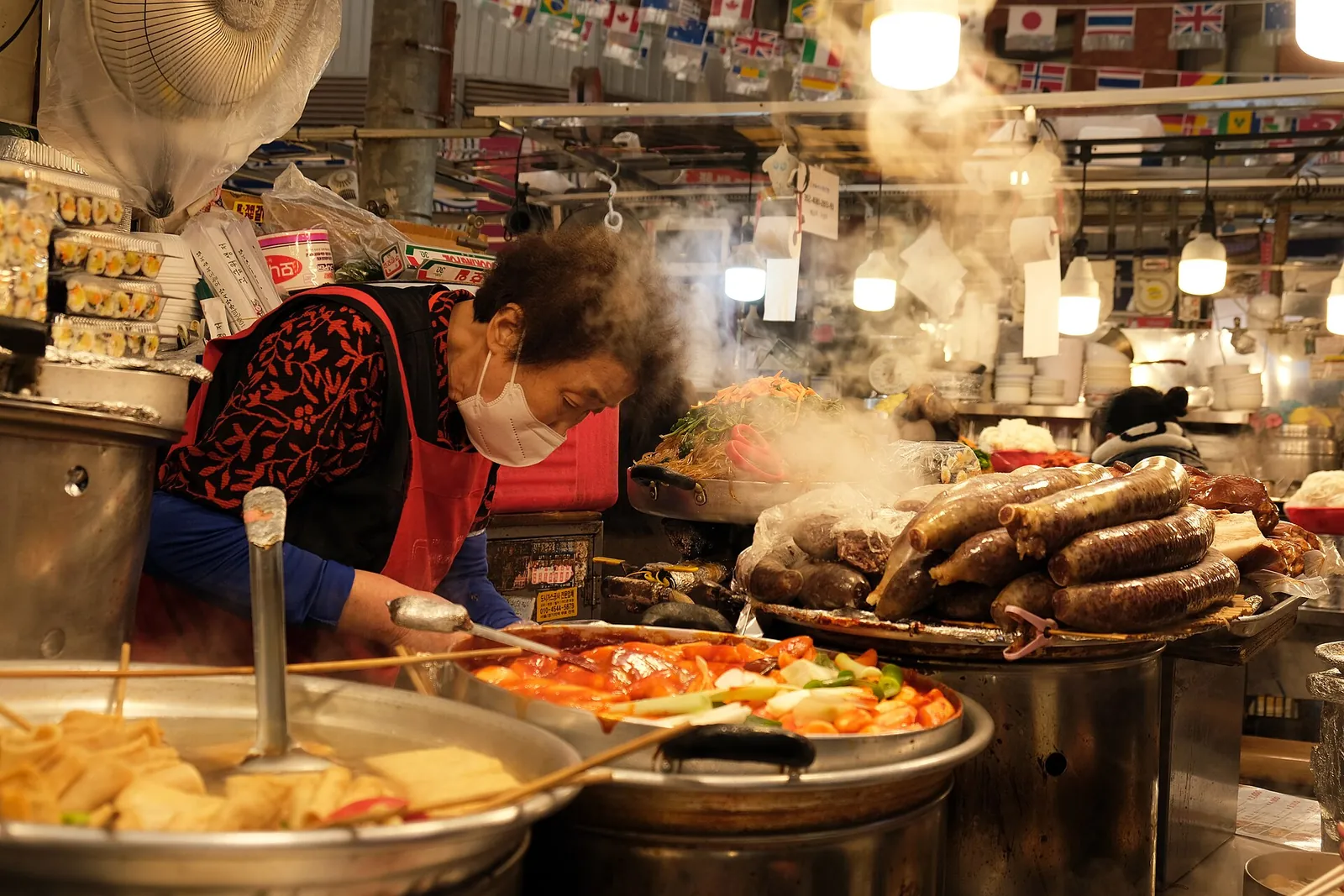
Bindaetteok (mung bean pancake) at Gwangjang Market
A thick, crisp-edged pancake of ground mung beans fried in oil, the dish VisitSeoul names first among Gwangjang Market's favourite foods, along with mayak gimbap, sundae and yukhoe.
- Where to look
- The pancake stalls in Gwangjang Market's food alley, by Jongno 5-ga station exit 8.
- Fit it into your day
- Dinner on day 2 after Changdeokgung and Jongmyo: share one pancake, then try one or two other stalls.
Fried in plenty of oil and often made with pork; check the price before you sit down at a crowded stall.
Suwon wanggalbi (jumbo beef ribs)
VisitKorea describes Suwon's grilled galbi as made with extra-large ribs simply seasoned with salt, a style that grew up because the city once had a slaughterhouse and ribs were affordable.
- Where to look
- Galbi restaurants in Suwon's old town around the fortress.
- Fit it into your day
- The main dinner of the Suwon day, before the bus back to Suwon Station.
A beef dish grilled at the table; it is a long, sit-down meal, so do not start it just before your last bus.
Suwon tongdak (cauldron-fried chicken)
Whole chicken fried in a large cauldron, plain or seasoned. VisitKorea describes Suwon Chicken Street as a 100-metre alley on Paldal-ro with about 11 shops, the oldest dating from 1970.
- Where to look
- Suwon Chicken Street on Paldal-ro, near Paldalmun.
- Fit it into your day
- An alternative Suwon dinner if galbi is too heavy or too slow; portions are large, so share.
Deep-fried and served in generous portions, VisitKorea notes; the seasoned version is coated in sauce.
Jangdan soybean tofu dishes (Paju)
Tofu made from Jangdan soybeans, grown north of the Imjingang River. VisitKorea's Imjingak guide names dubujjabagi, a spicy braise of tofu with mushrooms and vegetables, and dubukimchi, tofu with stir-fried kimchi.
- Where to look
- Restaurants in the Imjingak tourist area, where VisitKorea mentions the Jangdankong Soybean Village.
- Fit it into your day
- Lunch on the DMZ day, between the tunnel tour and the gondola.
Both can be vegetarian, but VisitKorea notes that some versions use meat or seafood stock; ask when ordering.
Jatguksu (noodles in cold pine nut soup)
A Gapyeong folk dish: noodles in a cold soup of finely ground pine nuts, garnished with cucumber, which VisitKorea describes as richer and cleaner-tasting than its soybean cousin.
- Where to look
- Restaurants in Gapyeong, a county known for growing pine nuts.
- Fit it into your day
- Lunch on the Gapyeong day after the morning on Nami Island; it is best in warm weather.
Contains pine nuts, a tree-nut allergen; it is served cold.
Day 3: Suwon's Hwaseong Fortress
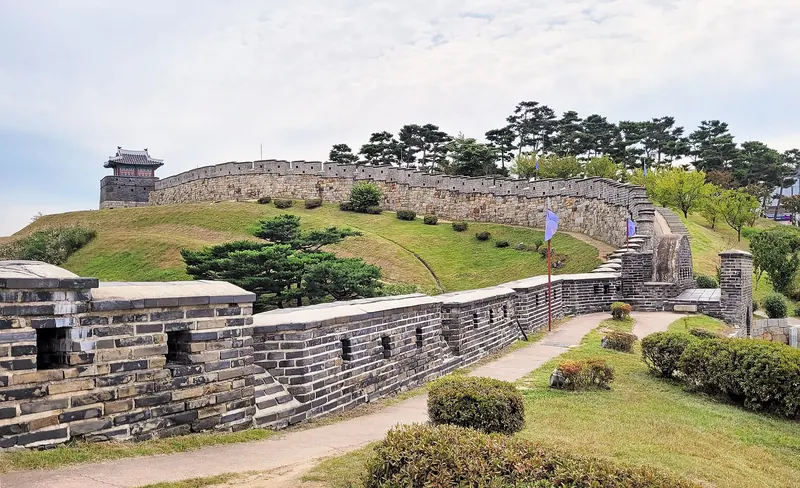
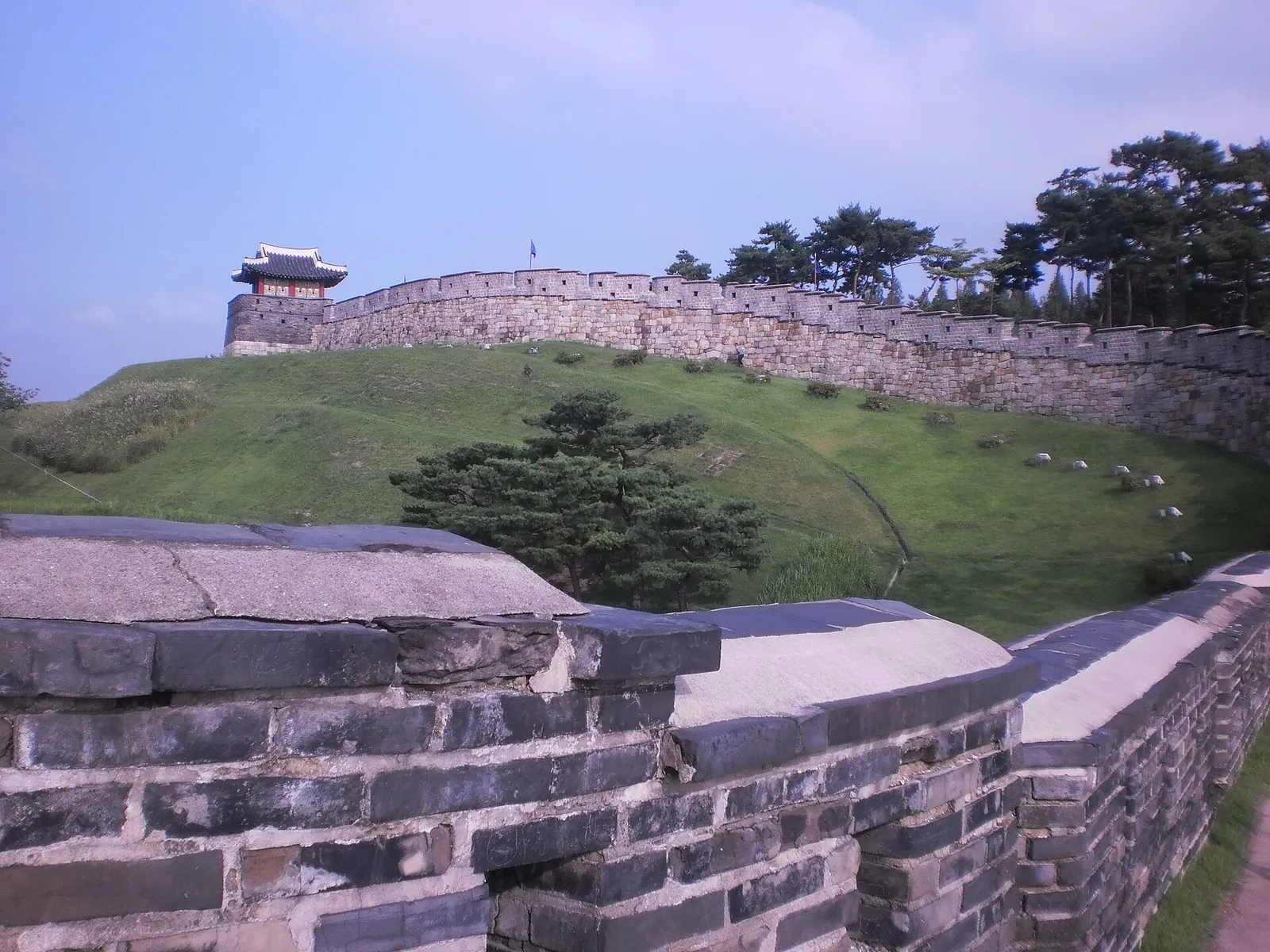
Hwaseong Fortress was built between 1794 and 1796 for King Jeongjo and its wall runs 5,744 metres around the old town, flat in the east and climbing Paldalsan in the west, according to the Suwon Cultural Foundation, which manages it. VisitKorea lists the wall as open 24 hours and free. Walking the full circuit and seeing the Haenggung, the royal travel palace inside it, takes most of a day, which is why Suwon gets one of its own.
From central Seoul, the foundation's directions are Line 1 to Suwon Station (it names trains bound for Cheonan, Byeongjeom and Seodongtan), then city bus 11, 13 or 13-4 from near exit 4 to the Hwaseong Haenggung stop. If you are south of the river, red express bus 3000 runs from near Gangnam Station exit 5 to the Paldalmun stop, and bus 1007 from Jamsil Station exit 6. When we checked on 2026-10-03, the foundation listed the Haenggung at 09:00–18:00 with last admission at 17:30 and an adult ticket of 2,000 won, free for visitors in hanbok and on the last Wednesday of the month.
Start at the palace, climb Paldalsan first while your legs are fresh, then follow the wall north and east. Stay for dinner: Suwon is known for wanggalbi and for the cauldron-fried chicken of Suwon Chicken Street, and either makes a good dinner before the bus back to the station. If your dates fall between 4 and 11 October 2026, VisitKorea lists the Suwon Hwaseong Cultural Festival around the fortress from 12:00 to 21:00, free except for some programmes, with a reenactment of King Jeongjo's royal procession of 1795. Expect crowds and plan a later train back. Our Suwon guide has the full wall route.
Day 4, option A: the DMZ from Paju
Choose the DMZ if the history of the division is the reason you came. Do not go on a Monday: VisitKorea lists the Third Tunnel as closed on Mondays, on public holidays falling on weekdays and over Seollal and Chuseok. Carry your original passport. VisitKorea's DMZ guide says that sites inside the Civilian Control Line are open to civilians only after an ID check, that tours can be cancelled at the last minute when security issues arise, and that Panmunjeom (the JSA) has not accepted non-Korean visitors since July 2024; its Panmunjeom page still showed the site closed for civilian tours when we checked. Do not book anything built around the JSA.
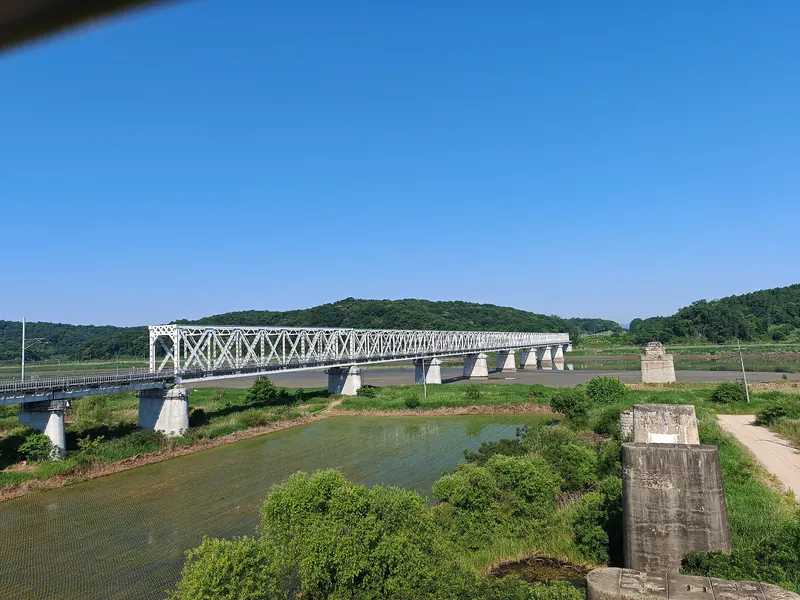
There are two ways to do the day. A guided tour from Seoul with hotel pick-up removes the transport legs. On your own, VisitKorea's route guide sends you on the Gyeongui–Jungang Line from Seoul Station to Munsan (about an hour, with more frequent trains from Gongdeok or Hongik University), then a taxi of about 7 kilometres from exit 1 to Imjingak. From there, the Third Tunnel visit must be reserved in advance and starts at Imjingak; when we checked on 2026-10-03, VisitKorea listed the programme at 09:10–14:40 and 12,200 won for adults with the tunnel monorail. The Imjingak Peace Gondola crosses the river and the civilian control zone to Camp Greaves; VisitKorea listed it at 09:00–18:00 on weekdays and to 19:00 at weekends, with adult tickets from 12,000 won, and every visitor fills in a security pledge.
Lunch near Imjingak on dishes made with Jangdan soybeans, the local speciality. Back in Seoul, keep the evening near your hotel; it is a long day even when everything runs on time. Our Paju DMZ guide covers the sites in more detail.
Day 4, option B: Nami Island and Gapyeong
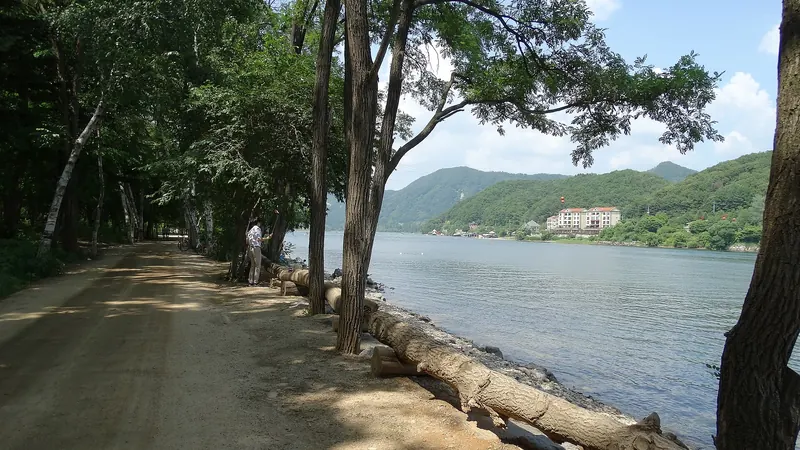
Choose Gapyeong if you would rather have a river, trees and a garden than a border. VisitKorea gives two rail options of about an hour each to Gapyeong Station: the ITX-Cheongchun from Yongsan or Cheongnyangni, or the Gyeongchun Line from Sangbong on Subway Line 7. The ITX-Cheongchun is a Korail intercity train; VisitKorea says tickets usually go on sale a month ahead at 07:00, so book as soon as you know the date, especially for an autumn weekend. From Gapyeong Station it is a 30-minute walk or a five-minute taxi to the Nami Island ferry.
When we checked on 2026-10-03, VisitKorea listed Nami Island as open 08:00–21:00, with ferries from Gapyeongnaru pier every 30 minutes from 08:00 to 09:00 and every 10 to 20 minutes after that, and regular admission at 19,000 won. Arrive on one of the first boats, before the day trippers build up. In the afternoon, add one more stop rather than three: the Garden of Morning Calm, which VisitKorea lists at 08:30–19:00 with adult tickets at 11,000 won, is the strongest. Our Gapyeong guide covers the county's circular tourist bus between the sights.
Both day-4 options are full days. Doing the DMZ and Gapyeong as well as Suwon in five days leaves only two days for Seoul itself; if you want all three, make it a six-day trip.
Day 5: Namsan, the markets and an easy last day
Keep the last day close to the hotel. Namdaemun Market, around the old South Gate at Hoehyeon station on Line 4, is Korea's largest traditional market, with over 10,000 stores and a largely wholesale trade, VisitSeoul says; it is better for a morning walk and a snack than a sit-down meal. Myeongdong next door is the street-food and cosmetics district. From there, go up Namsan: when we checked on 2026-10-03, VisitSeoul listed Namsan Seoul Tower open 10:00–22:30 on weekdays and to 23:00 at weekends, and the cable car from 10:00 to 23:00. Walking up through Namsan Park is the alternative.
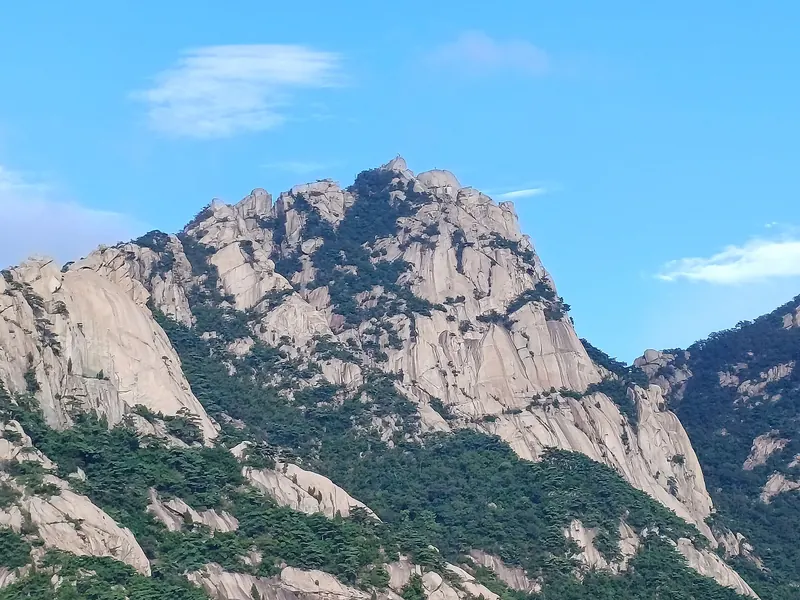
If you prefer a hill to a tower, the Seoul City Wall, first built in 1396 and 18.6 km long, can be walked over Naksan from Dongdaemun station (Lines 1 and 4), a shorter outing than its mountain sections. For a real hike, Bukhansan National Park, which VisitSeoul describes as the only national park in the Seoul area and free to enter, has trails from gentle slopes to steep, rugged tracks; the Seoul Hiking Tourism Center near Bukhansan Ui station gives trail advice and rents boots and poles. Go in the morning, and check the Korea National Park Service notices for trail closures the day before.
On a departure day, leave plenty of time for the airport. VisitKorea lists the non-stop AREX Express Train at about 43 minutes between Terminal 1 and Seoul Station, and 51 minutes for Terminal 2.
The five days at a glance, and how to reorder them
This is an editorial suggestion, not a timetable. Check each site's closing day and reservation for your dates.
- Day 1 — Gyeongbokgung and Bukchon (not Tuesday): palace from 09:00, Bukchon after 10:00, the palace museums or Insa-dong in the afternoon.
- Day 2 — Changdeokgung, Jongmyo, Gwangjang (not Monday): booked Secret Garden tour, Jongmyo on a guided tour or at the weekend at your own pace, dinner in Gwangjang's food alley.
- Day 3 — Suwon: Line 1 and a city bus to Hwaseong Haenggung, the wall walk, galbi or fried chicken for dinner.
- Day 4 — DMZ (not Monday, passport) or Nami Island: a tour from Seoul or the train to Munsan; or the ITX to Gapyeong and the first ferries.
- Day 5 — Namsan and the markets, or Bukhansan: Namdaemun, Myeongdong and the tower; or a morning hike and a quiet evening.
- Reordering: if you arrive on a Monday, do Gyeongbokgung or Suwon that day and keep Changdeokgung and the DMZ for later in the week. If you land on a Tuesday, start with Changdeokgung.
Practical questions
Is five days enough for Seoul and day trips?
Yes, for three days in the city and two day trips. Arrival and departure days are partly lost to the airport transfer, so if your flights land late or leave early, drop one day trip rather than squeezing the palaces.
Should I change hotels for the day trips?
No. Suwon, Paju and Gapyeong all work as day trips from Seoul. Pick one hotel near a Line 1 station in Jongno or around Seoul Station, and you have direct trains to Suwon and the DMZ side and AREX to the airport.
Which days of the week should I avoid?
Gyeongbokgung and Jongmyo close on Tuesdays, Changdeokgung on Mondays, and the Third Tunnel and most DMZ sites on Mondays. Most of Gwangjang Market, though not its food alley, closes on Sundays.
DMZ or Nami Island: which is better?
The DMZ for history and the division of Korea; it needs your passport, an advance reservation or a tour, and can be cancelled at short notice. Nami Island and Gapyeong for a relaxed day by the river, especially in the autumn foliage season. Doing both needs a sixth day.
Can I visit the JSA at Panmunjeom?
Not when we checked on 2026-10-03. VisitKorea's pages said Panmunjeom was closed to civilian tours and had not accepted non-Korean visitors since July 2024. Check the official Panmunjeom tour site before planning around it.
Do I need to book anything in advance?
The Changdeokgung Secret Garden tour (at least three days ahead, VisitSeoul says), the Third Tunnel visit or a DMZ tour, and on busy dates the ITX-Cheongchun to Gapyeong, which usually goes on sale a month ahead.
Sources and checks before you travel
Reference sources for the version dated 3 October 2026. Confirm opening times, access, transport and conditions for your travel dates.
- VisitSeoul: Gyeongbokgung Palace ↗ — opens in a new tab
- VisitKorea: Gyeongbokgung Palace ↗ — opens in a new tab
- VisitKorea: Changdeokgung Palace ↗ — opens in a new tab
- VisitSeoul: Changdeokgung Palace ↗ — opens in a new tab
- VisitSeoul: Jongmyo Shrine ↗ — opens in a new tab
- VisitSeoul: Bukchon Hanok Village ↗ — opens in a new tab
- VisitSeoul: Gwangjang Market ↗ — opens in a new tab
- VisitSeoul: Namdaemun Market ↗ — opens in a new tab
- VisitSeoul: Myeongdong ↗ — opens in a new tab
- VisitSeoul: Namsan Seoul Tower ↗ — opens in a new tab
- VisitSeoul: Seoul City Wall ↗ — opens in a new tab
- VisitSeoul: Bukhansan National Park ↗ — opens in a new tab
- VisitSeoul: Seoul Hiking Tourism Center, Bukhansan Branch ↗ — opens in a new tab
- VisitSeoul: About Seoul ↗ — opens in a new tab
- VisitSeoul: getting around Seoul ↗ — opens in a new tab
- Suwon Cultural Foundation: Hwaseong Fortress ↗ — opens in a new tab
- Suwon Cultural Foundation: directions ↗ — opens in a new tab
- Suwon Cultural Foundation: Hwaseong Haenggung admission ↗ — opens in a new tab
- VisitKorea: Suwon Hwaseong Fortress ↗ — opens in a new tab
- VisitKorea: Suwon Hwaseong Festival ↗ — opens in a new tab
- VisitKorea: Suwon wanggalbi ↗ — opens in a new tab
- VisitKorea: Suwon Chicken Street ↗ — opens in a new tab
- VisitKorea: DMZ 101 ↗ — opens in a new tab
- VisitKorea: Panmunjeom ↗ — opens in a new tab
- VisitKorea: the 3rd Tunnel ↗ — opens in a new tab
- VisitKorea: Imjingak Peace Gondola route guide ↗ — opens in a new tab
- VisitKorea: Paju Imjingak Peace Gondola ↗ — opens in a new tab
- VisitKorea: Nami Island travel column ↗ — opens in a new tab
- VisitKorea: Nami Island ↗ — opens in a new tab
- VisitKorea: The Garden of Morning Calm ↗ — opens in a new tab
- VisitKorea: Noodles in cold pine nut soup ↗ — opens in a new tab
- VisitKorea: travelling by train ↗ — opens in a new tab
- VisitKorea: Incheon Airport transport ↗ — opens in a new tab
- Seoul Metropolitan Government: climate ↗ — opens in a new tab
Photo credits
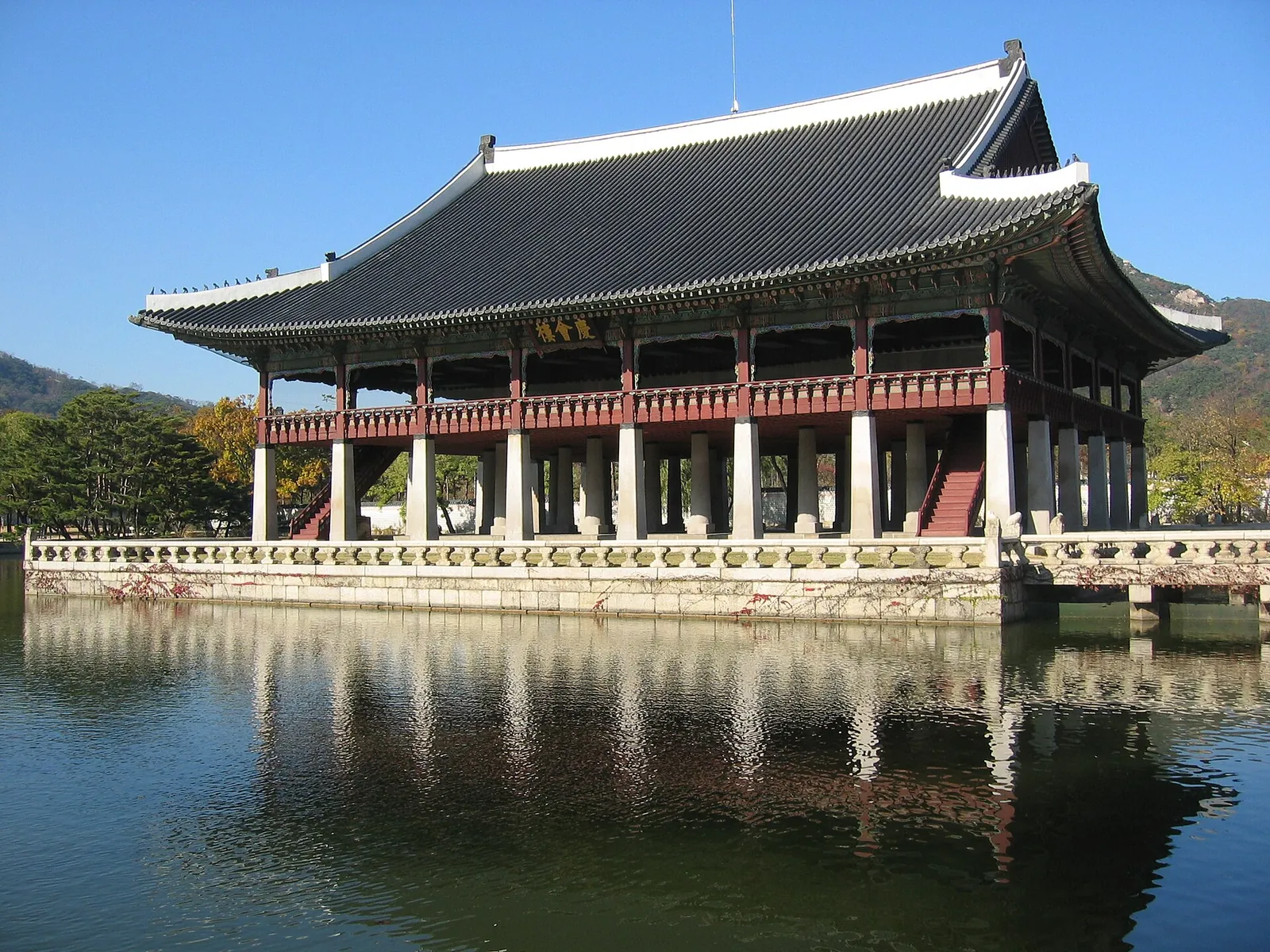
Gyeonghoeru, the banquet pavilion on its pond at Gyeongbokgung, the first palace of the route
Photograph: eimoberg (a flickr user) — opens in a new tab · CC BY 2.0 — opens in a new tab
Changes: Resized and converted to WebP; displayed with responsive crops. · Original photograph and licence details ↗ — opens in a new tab
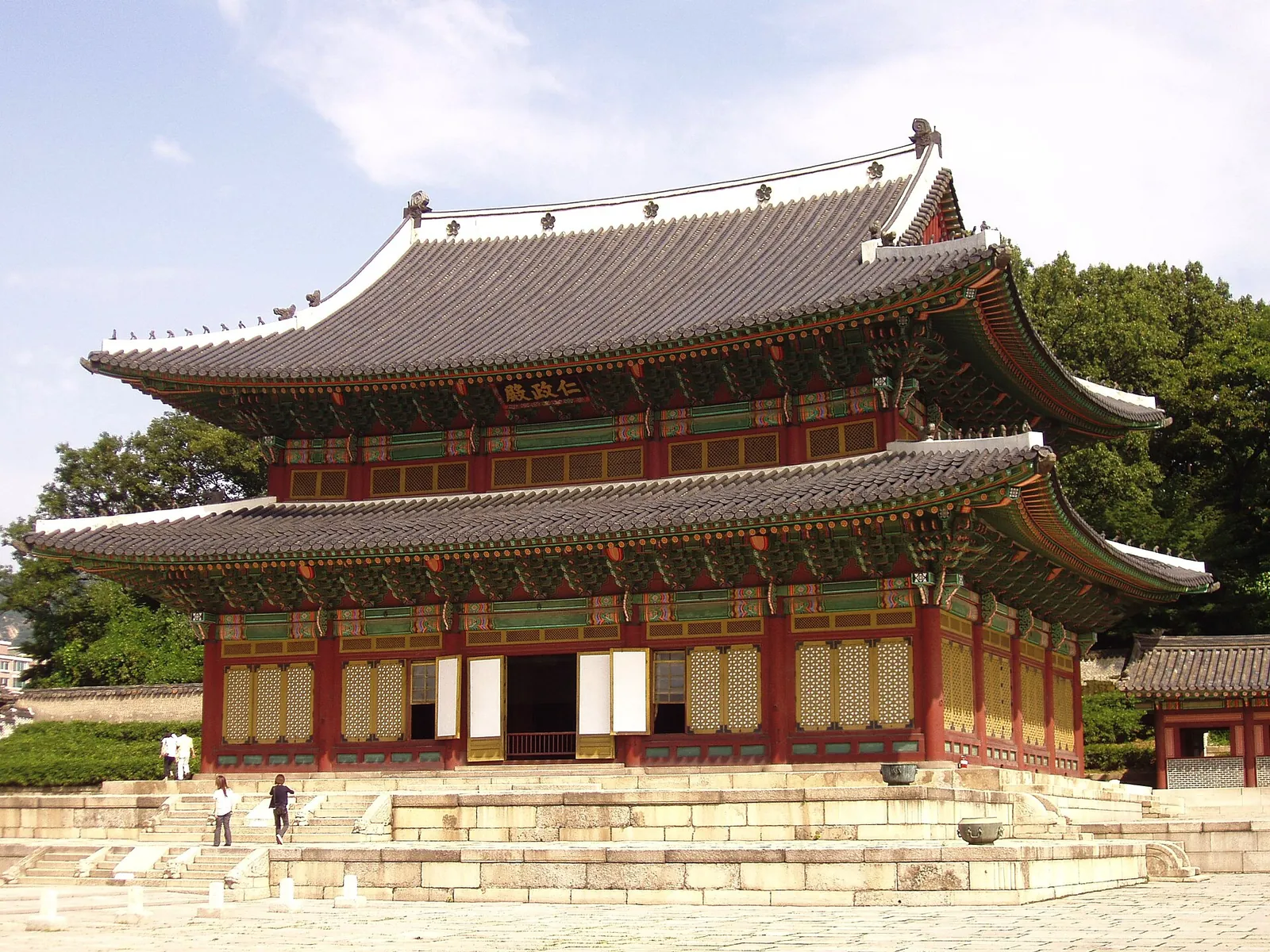
Injeongjeon, the throne hall of Changdeokgung, the palace for day 2
Photograph: Daderot. — opens in a new tab · CC BY-SA 3.0 — opens in a new tab
Changes: Resized and converted to WebP; displayed with responsive crops. · Original photograph and licence details ↗ — opens in a new tab
Hwaseong Fortress wall in Suwon, the day-3 trip from Seoul
Photograph: Onlyfortruth — opens in a new tab · CC BY-SA 4.0 — opens in a new tab
Changes: Resized and converted to WebP; displayed with responsive crops. · Original photograph and licence details ↗ — opens in a new tab
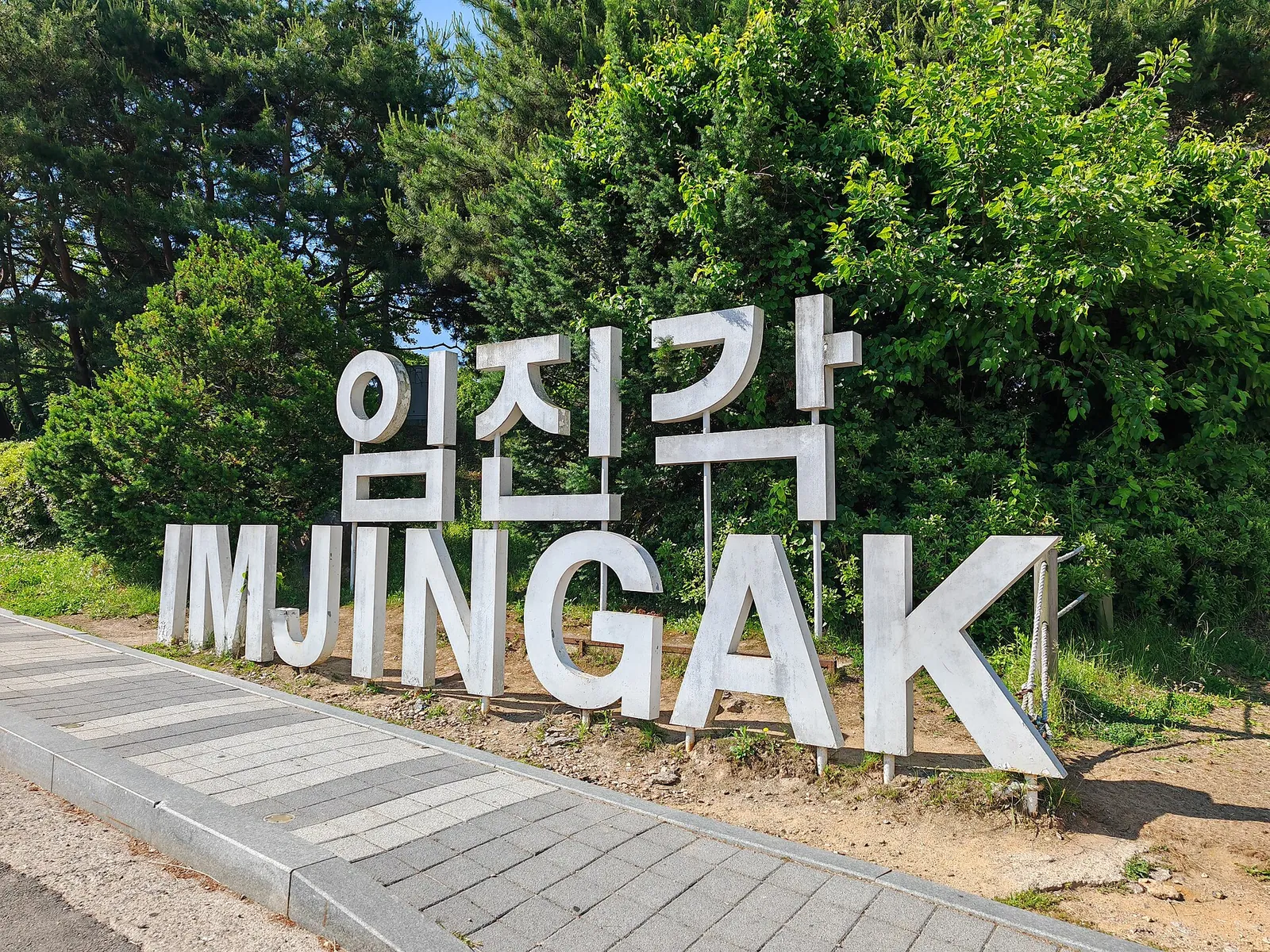
The entrance sign at Imjingak in Paju, starting point for the DMZ day
Photograph: Dwxn — opens in a new tab · CC BY-SA 4.0 — opens in a new tab
Changes: Resized and converted to WebP; displayed with responsive crops. · Original photograph and licence details ↗ — opens in a new tab
A food stall at Gwangjang Market, where day 2 ends with dinner
Photograph: kallerna — opens in a new tab · CC BY-SA 4.0 — opens in a new tab
Changes: Resized and converted to WebP; displayed with responsive crops. · Original photograph and licence details ↗ — opens in a new tab