Seoul and the Capital Area · Gyeonggi
Paju DMZ guide: tours vs going alone, passport rules and Imjingak
Paju is where most visitors meet the Demilitarized Zone, the 4-kilometre-wide buffer strip that has divided the peninsula since the 1953 armistice. The trip is less a single attraction than two layers. South of the Civilian Control Line, Imjingak, the riverside observatory at Odusan and the art and book towns of Heyri and Paju Book City are open to anyone who arrives by train or taxi. North of it, the Third Tunnel, Dora Observatory and Dorasan Station can only be seen with an ID check and an organised visit. Knowing which layer each sight belongs to decides almost everything about how you plan the day.
- Suggested time
- 1 day (2 with Heyri and Paju Book City)
- Where to stay
- Seoul, near a Gyeongui–Jungang Line station or your tour's pick-up point; Munsan or Tanhyeon in Paju for a second day
- Season and timing
- Possible all year, but most border sites close on Mondays and some on public holidays; the Jangdan Soybean Festival is held at Imjingak each autumn. Sites can close at short notice for security reasons, so check on the day.
The short answer
Give Paju one full day from Seoul, and don't go on a Monday, when most border sites are closed. If you want the Third Tunnel and Dora Observatory, book either a guided DMZ tour from Seoul or the DMZ Peace Tour that leaves from Imjingak, and bring your passport. If Imjingak, the Peace Gondola and Camp Greaves are enough, go on your own by Gyeongui–Jungang Line train to Munsan, then a taxi. Sleep in Seoul, near Seoul Station or Hongik University Station; stay in Paju only if you add a second day for Heyri and Paju Book City. Panmunjeom (the JSA) was closed to foreign visitors when we checked.
How a DMZ day works: two zones, two ways in
The DMZ proper is a 4-kilometre strip centred on the Military Demarcation Line, and nobody tours it freely. What visitors see is the belt just south of it, below the Civilian Control Line (CCL). VisitKorea's DMZ guide explains that a few sites outside the CCL can be visited independently, while places inside it are open to civilians only after an ID check, and that foreign visitors arriving on their own are not guaranteed entry. Almost all sites near the line also need a vehicle, because public transport doesn't go there.
In practice that gives you two choices. Imjingak, at the end of the line from Seoul, is the one border site you can reach by public transport, and from it the Peace Gondola crosses the CCL to Camp Greaves. The Third Tunnel, Dora Observatory and Dorasan Station need either a tour from Seoul with hotel pick-up, or the DMZ Peace Tour that departs from Imjingak and must be reserved in advance. For the tunnel, the observatory and the station, carry your original passport, not a photocopy left at the hotel.
That's also why Seoul is the natural base. Many tours offer pick-up in central Seoul, and the independent route runs from Seoul Station, Gongdeok or Hongik University Station on the Gyeongui–Jungang Line. Book a room in Paju only if you want to continue the next day to Heyri Art Valley, Paju Book City or the Odusan observatory, which are much closer to Paju's southern edge than to central Seoul.
Imjingak and the Peace Gondola: the part you can do alone
VisitKorea's September 2025 route guide recommends the Gyeongui–Jungang Line from Seoul Station to Munsan (trains every 30 to 60 minutes, about an hour, more frequent from Gongdeok or Hongik University), then a taxi of about 7 kilometres from the rank by Exit 1. Bus 058B from the Hanjin 1st Apartment·Munsan Station stop is cheaper but slow and infrequent, and the shuttle train from Munsan to Imjingang Station, right at the site's entrance, ran only two return trips on weekdays and four at weekends in that guide. Match your train to it before you count on it.
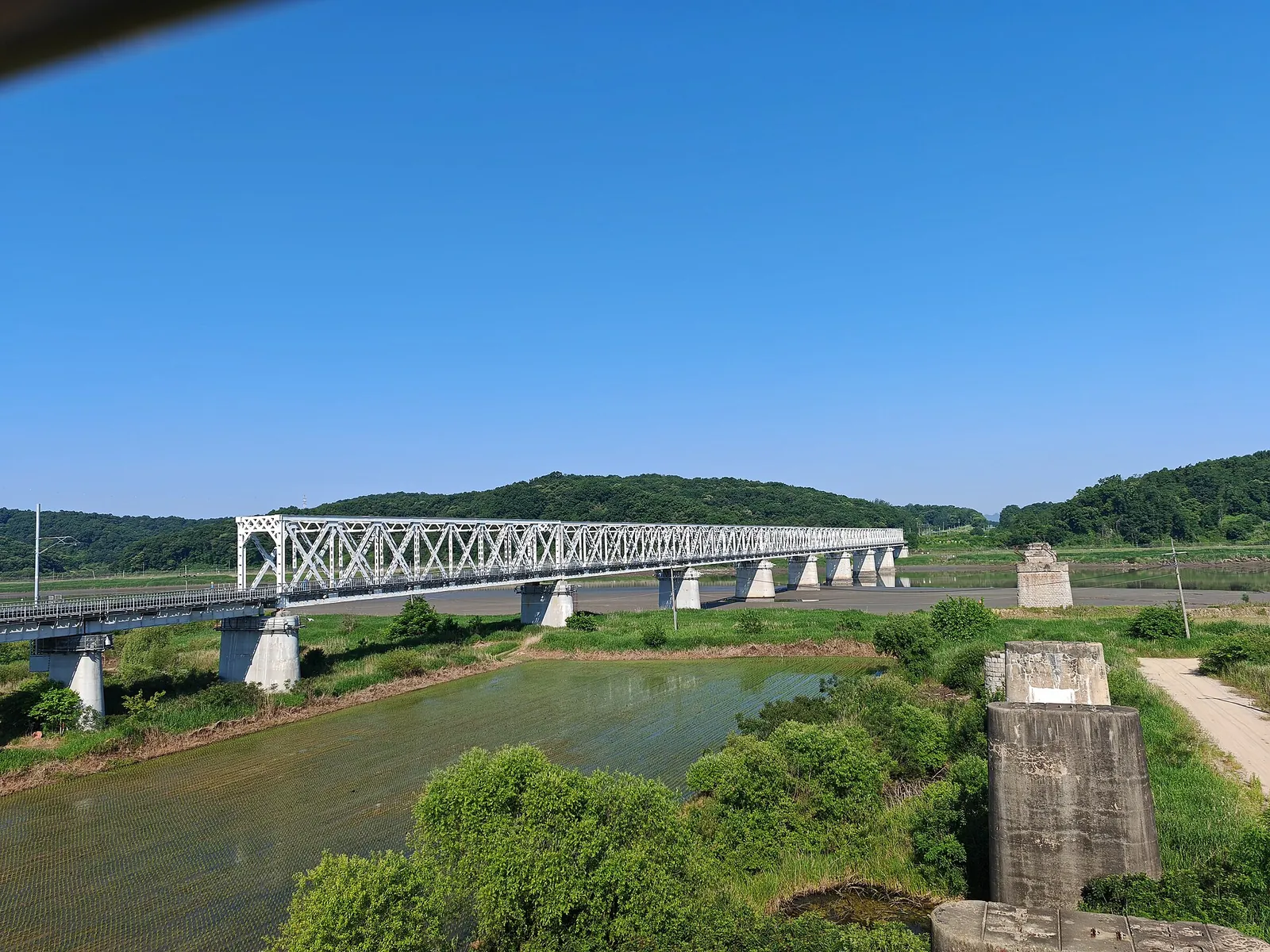
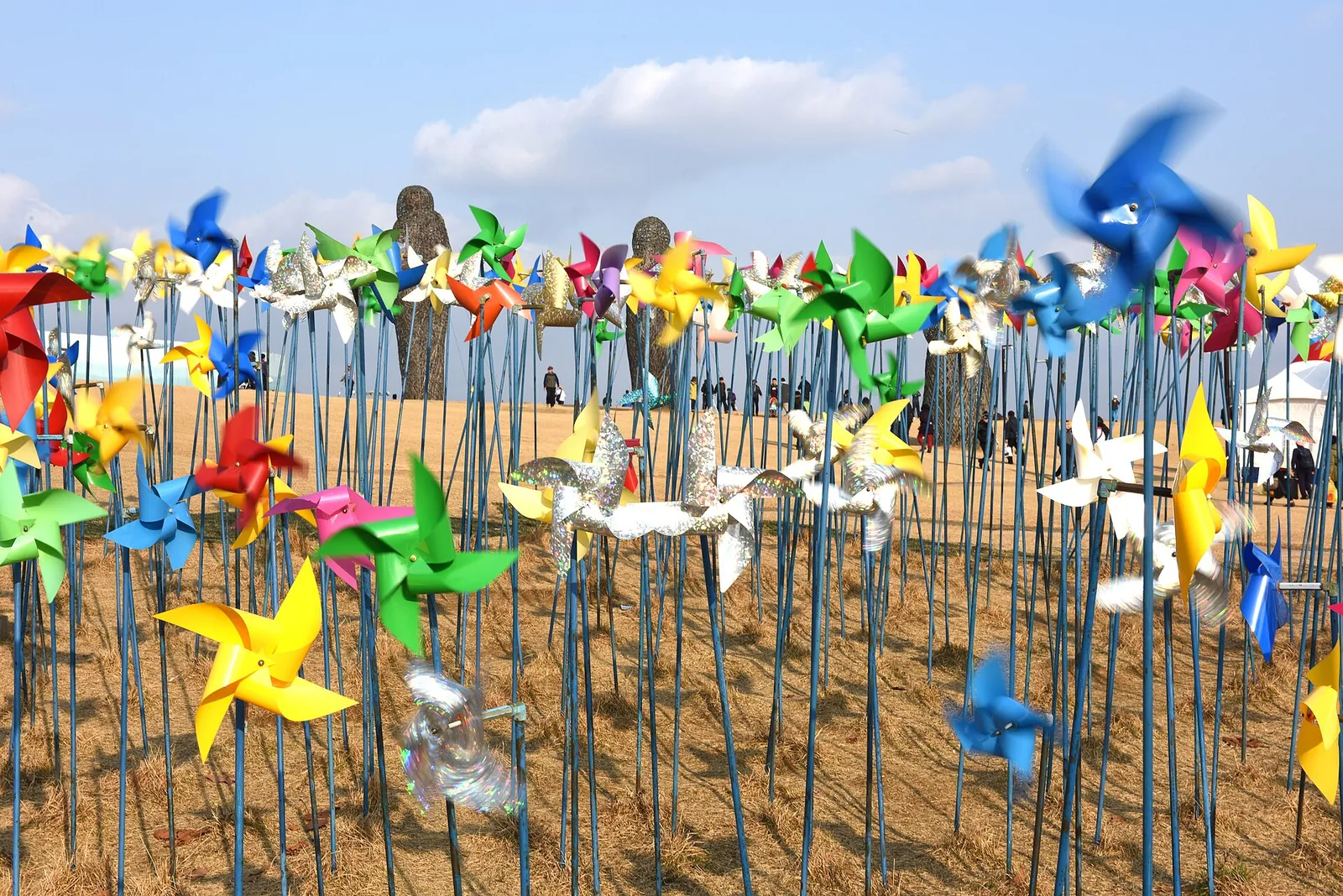
Imjingak itself was built in 1972. VisitKorea lists the surrounding Pyeonghwa Nuri Park as open around the clock and free, with its grassy Hill of Music and a hillside of pinwheels. The war is close by. The bombed piers of Dokgae Bridge stand in the Imjingang River, the Freedom Bridge is where prisoners of war returned south in 1953, and a steam locomotive that was wrecked at Jangdan Station during the war now rests near the bridge with its frame full of bullet holes. Dokgae Bridge shares a small ticket with Art Space BEAT 131, a former military bunker turned exhibition space, and both close on Mondays.
The Imjingak Peace Gondola, open since 2020, crosses the river and the CCL to the former US base of Camp Greaves. Before boarding you fill in a security pledge, and VisitKorea notes that a passport or residence card, or a copy or photo of one, is accepted. When we checked on 3 October 2026, VisitKorea's listing gave hours of 09:00–18:00 on weekdays and 09:00–19:00 at weekends and on public holidays, with last tickets 30 minutes before closing, round-trip fares of 12,000 won (adults) in a standard cabin and 15,000 won in a glass-floored crystal cabin, and closures on the first Monday of March, June, September and December for maintenance. Check dmzgondola.com before you go.
At the far end, Camp Greaves sits about 2 kilometres from the Southern Limit Line, and US troops were stationed there until 2004. The main base can only be seen on a guided tour of about 70 minutes, in Korean but with English signs, and VisitKorea's 2025 guide listed five tours a day and closures on Mondays, 1 January, Seollal and Chuseok. Allow half a day for Imjingak, the gondola and the camp together.
Make time for the local food
What to eat and where to look
Jangdan soybean tofu dishes (dubu jeongol, dubukimchi)
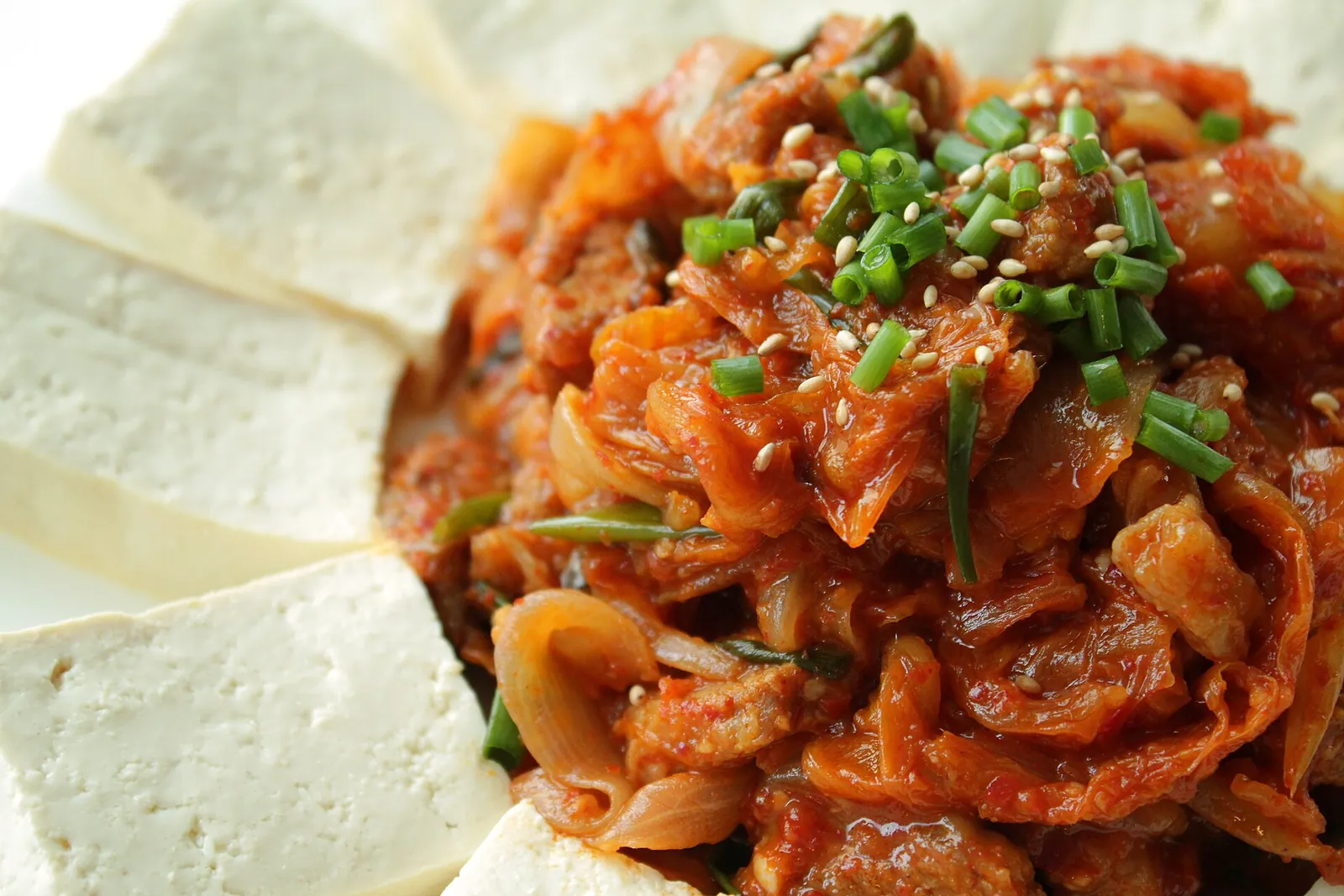
Paju's best-known local food is tofu made from Jangdan soybeans, grown north of the Imjingang River and counted with Paju rice and ginseng among the district's three great products. Expect handmade tofu with stir-fried kimchi, tofu hot pot and dubujjabagi, a spicy braise of tofu with mushrooms and vegetables.
- Where to look
- Tofu restaurants in the Imjingak tourist area, and Tongilchon Jangdankong Maeul in the Unification Village inside the CCL (reached through a checkpoint with ID).
- Fit it into your day
- The natural DMZ-day lunch between the tunnel and the gondola.
VisitKorea notes that these dishes can be made vegetarian but some versions use meat or seafood stock; ask when you order.
Kongguksu (noodles in cold soybean soup)
Noodles in a chilled broth of ground soybeans. VisitKorea singles out the Jangdan soybean version as a summer favourite at the Unification Village restaurant.
- Where to look
- Soybean and tofu restaurants around Imjingak and Tongilchon, mainly in the warm months.
- Fit it into your day
- A light lunch on a hot day at the border.
Mainly a summer dish; ask whether it is on the menu in the colder months.
Gaeseong juak (fried glutinous rice cake)
A small round sweet from Kaesong, the old Goryeo capital just across the border: glutinous rice dough fried golden and soaked in cinnamon malt syrup, crisp outside and chewy inside, now often topped with fruit or cheese.
- Where to look
- Traditional dessert cafés; VisitKorea recommends Yeonlihuijae in Tanhyeon-myeon, near Jangneung and Heyri.
- Fit it into your day
- An afternoon break on the Heyri and Book City day.
Very sweet and syrupy; one is usually enough with tea.
Jangdan soybean snacks and bakes
Local soybeans also turn up in sweets: roasted beans coated in chocolate, sold as DMZ chocolate, and soybean drinks and red bean buns at the cafés by the gondola.
- Where to look
- The bakery café on the second floor of the gondola building at Imjingak, the café at the gondola's DMZ station, and the Jangdankong Well-being Maru shop on Pilseung-ro in Tanhyeon.
- Fit it into your day
- Coffee before the gondola, or a souvenir to take back to Seoul.
Soy is a common allergen; check ingredients on packaged snacks.
Beyond the checkpoint: the Third Tunnel, Dora Observatory and Dorasan
The Third Tunnel is one of four infiltration tunnels dug by North Korea and found in the south. VisitKorea says it was discovered in 1978, runs 1.6 kilometres, is about 2 metres wide and lies roughly 52 kilometres from Seoul, closer than any of the others. Visits must be reserved in advance and start at Imjingak, with passport or residence card required. When we checked on 3 October 2026, VisitKorea's listing for the tunnel gave the DMZ Peace Tour as roughly three hours, operating 09:10–14:40, closed on Mondays, on public holidays that fall on weekdays and over Seollal and Chuseok, at 12,200 won for adults with the tunnel monorail or 9,200 won going down on foot.
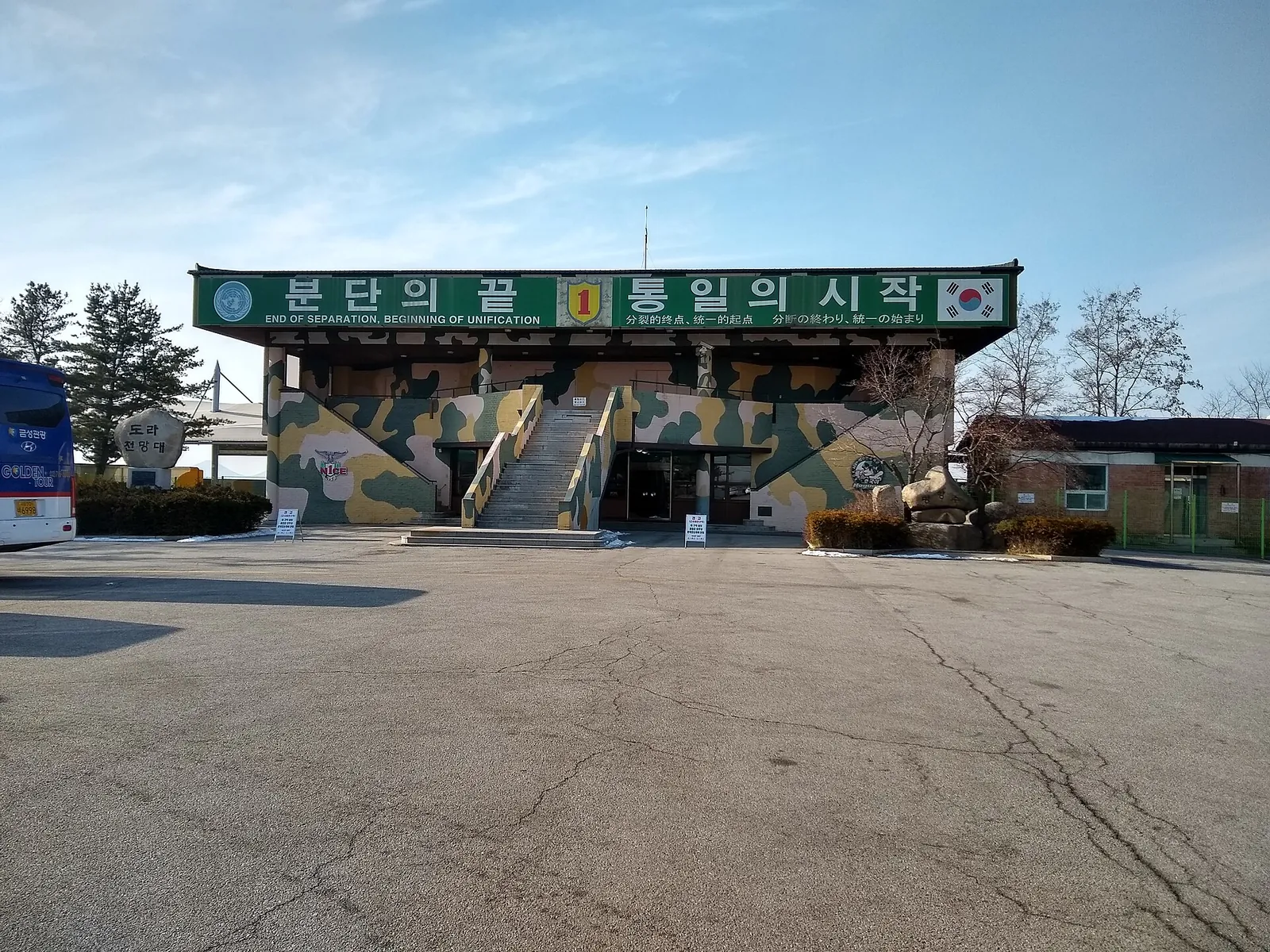
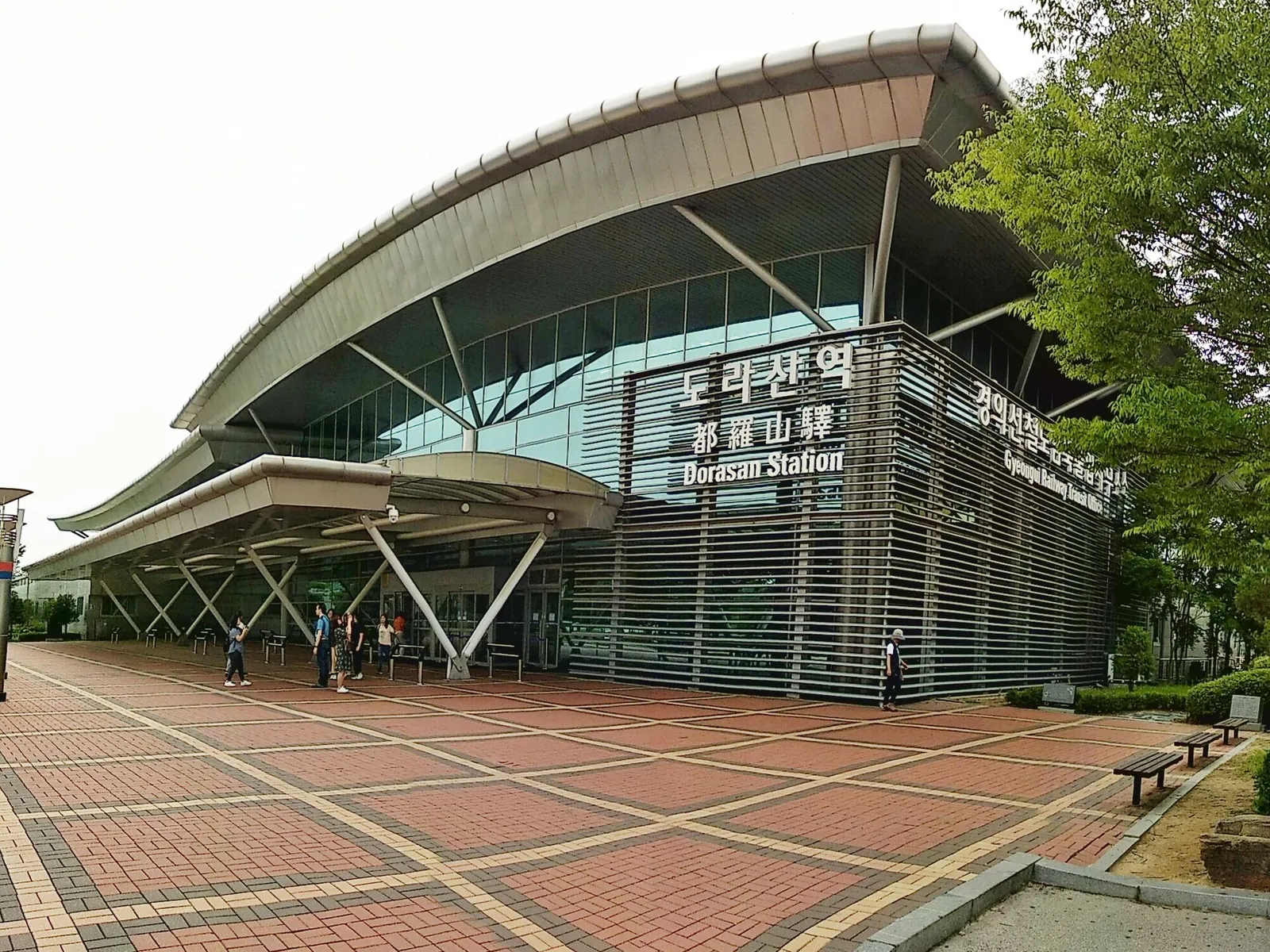
Dora Observatory is the closest DMZ observatory to Panmunjeom. On a clear day it looks across to Daeseong-dong village inside the DMZ, North Korean farmland and the city of Kaesong, the former Goryeo capital. VisitKorea is explicit that individual visits are not allowed and that it is reached only through the DMZ Peace Tour from Imjingak or an organised tour. Dorasan Station, rebuilt in 2002 as the last stop before the North, is 205 kilometres from Pyongyang. Its listing also describes a weekend and holiday train from Imjingang Station with ID checks before departure, so ask about it if you would rather arrive by rail.
Reaching these sites by tour bus from Seoul or by the Imjingak programme is mostly a question of convenience. A Seoul tour removes the train and taxi legs and gives you a guide. The Imjingak programme lets you combine the tunnel with the gondola on the same day at your own pace. Either way, the sites run on military terms, with ID checks, places where photography is not allowed and sometimes cancellations at very short notice.
Panmunjeom (the JSA): check before you plan around it
The blue huts on the demarcation line at Panmunjeom are the image most people associate with the DMZ, and tours there are run separately from other DMZ trips by agencies approved by the United Nations Command. VisitKorea's DMZ guide said the site had not accepted non-Korean visitors since July 2024, and when we checked on 3 October 2026 its Panmunjeom page (last updated October 2025) still said Panmunjeom was closed for civilian tours.
Don't build a trip around the JSA unless the official Panmunjeom tour site (panmuntour.go.kr) or one of the approved agencies confirms that tours for foreign nationals have resumed. Treat any listing that still advertises a JSA visit with caution, and ask the operator in writing what happens if the visit is cancelled.
Paju away from the border: books, art and a royal tomb
Paju's southern edge, along the Han estuary, has a different character. Odusan Unification Observatory stands where the Hangang and Imjingang rivers meet and looks over the water to North Korea, with binoculars for the view toward Kaesong's Songaksan. It is outside the CCL, free, and closed on Mondays. VisitKorea's two listings give slightly different hours, so check the observatory's own site before going late in the day.
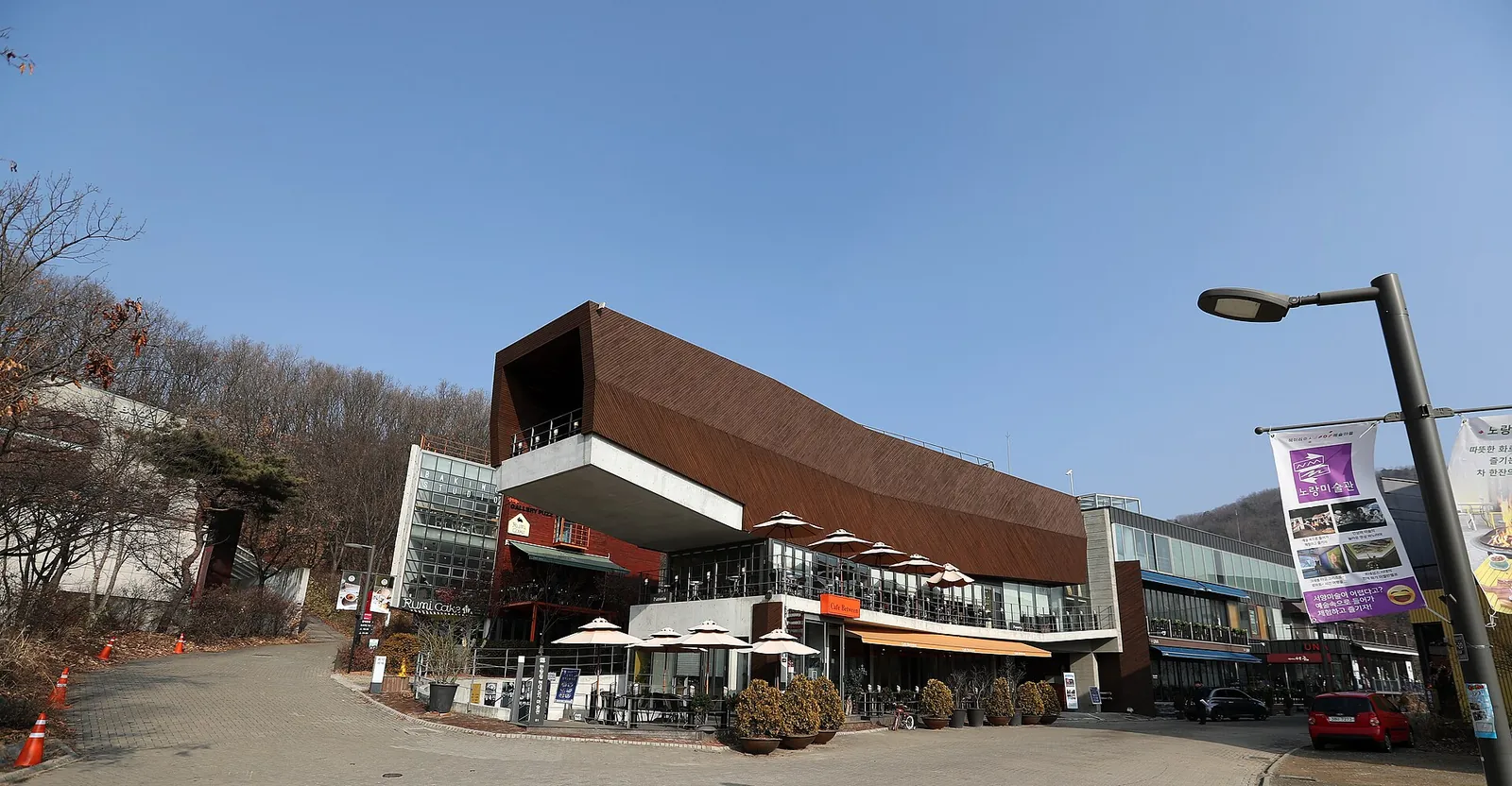
Heyri Art Valley grew up beside Paju Book City as artists settled here, and its galleries, workshops and cafés are spread along winding streets laid without asphalt. Paju Book City, founded by publishers in 1989, is a district of publishing houses, printers, book cafés and libraries. Opening times at both vary by building, so they suit a slow afternoon better than a checklist. Nearby, Jangneung is the tomb of King Injo, the 16th Joseon ruler, and part of the UNESCO-listed Joseon royal tombs. VisitKorea suggests about 40 minutes there and lists it as closed on Mondays.
Paju also has two large premium outlet malls, and it is known for the produce of Jangdan, north of the Imjingang River: soybeans, rice and Paju-Gaeseong ginseng. Those soybeans are what you will be eating at lunch.
Practical rules: ID, Mondays and sudden closures
VisitKorea warns that DMZ sites run to irregular schedules and that tours may be cancelled at the last minute when tension rises between the two Koreas, when CCL areas, and sometimes nearby districts, close to non-residents. If you travel independently, check with the regional office or the 1330 Korea Travel Helpline (+82-2-1330) before you set out. If you go with a tour, keep your phone on in case the operator contacts you.
Carry your original passport for anything beyond the gondola. Follow your guide's instructions on where you may stand and photograph. Expect rules on clothing and behaviour at some sites. Mondays are the day to avoid. The Third Tunnel and Dora Observatory, Camp Greaves, Odusan, Dokgae Bridge and Jangneung all listed Monday closures when we checked.
Two workable days
These are editorial suggestions, not timetables. Confirm each site's opening day and your reservation before you leave Seoul.
- Independent border day (Tuesday to Sunday): an early Gyeongui–Jungang Line train to Munsan, a taxi to Imjingak, the DMZ Peace Tour to the Third Tunnel and Dora Observatory if you have reserved it, a tofu lunch, then the Peace Gondola and a Camp Greaves tour in the afternoon.
- Guided border day: a half-day or full-day tour from Seoul to the Third Tunnel, Dora Observatory and Imjingak, with your passport. Choose one that names these sites rather than the JSA.
- Second day (optional, stay in Paju): Odusan Unification Observatory in the morning, Heyri Art Valley and Paju Book City in the afternoon, and Jangneung if you want a quiet royal tomb.
Practical questions
Can I visit the DMZ without a tour?
Partly. Imjingak, the Peace Gondola, Camp Greaves and the Odusan observatory can be visited independently. The Third Tunnel, Dora Observatory and Dorasan Station are inside the Civilian Control Line. According to VisitKorea, Dora Observatory cannot be visited individually, so you need either the DMZ Peace Tour from Imjingak (reserved in advance) or a tour from Seoul.
Do I need my passport for the DMZ?
Yes. VisitKorea says a passport or residence card is required for sites beyond the Civilian Control Line, including the Third Tunnel, Dora Observatory and Dorasan Station. For the Peace Gondola, a copy or a photo was accepted with the security pledge when we checked.
Is the JSA (Panmunjeom) open to tourists?
When we checked on 3 October 2026, VisitKorea's Panmunjeom page said the site was closed for civilian tours, and its DMZ guide said foreign visitors had not been admitted since July 2024. Check panmuntour.go.kr or an approved agency before you book anything that includes it.
What day should I avoid?
Mondays. The Third Tunnel tour, Dora Observatory, Camp Greaves, the Odusan observatory and several Imjingak exhibits were listed as closed on Mondays, and the tunnel tour also skips weekday public holidays, Seollal and Chuseok.
How do I get to Imjingak from Seoul by public transport?
Take the Gyeongui–Jungang Line to Munsan (about an hour from Seoul Station), then a taxi of about 13 minutes. Bus 058B and a limited shuttle train to Imjingang Station are slower alternatives.
Should I stay overnight in Paju?
Only if you want a second day for Heyri Art Valley, Paju Book City and Odusan. For the border sites alone, Seoul is the easier base because tours pick up there and the train to Munsan starts there.
Sources and checks before you travel
Reference sources for the version dated 3 October 2026. Confirm opening times, access, transport and conditions for your travel dates.
- VisitKorea: DMZ 101, a tourist's guide to the DMZ ↗ — opens in a new tab
- VisitKorea: Regional DMZ attractions — Paju ↗ — opens in a new tab
- VisitKorea: Panmunjeom tour ↗ — opens in a new tab
- VisitKorea: Enjoy a gondola ride over the DMZ (September 2025) ↗ — opens in a new tab
- VisitKorea: Paju Imjingak Peace Gondola ↗ — opens in a new tab
- VisitKorea: The 3rd Tunnel ↗ — opens in a new tab
- VisitKorea: Dora Observatory ↗ — opens in a new tab
- VisitKorea: Dorasan Station ↗ — opens in a new tab
- VisitKorea: Imjingak Resort (Pyeonghwa Nuri Park) ↗ — opens in a new tab
- Gyeonggi Province DMZ: attractions around the DMZ ↗ — opens in a new tab
- VisitKorea: Odusan Unification Observatory ↗ — opens in a new tab
- VisitKorea: Heyri Art Valley ↗ — opens in a new tab
- VisitKorea: Paju Book City ↗ — opens in a new tab
- VisitKorea: Paju Jangneung Royal Tomb ↗ — opens in a new tab
- VisitKorea: Tongilchon Jangdankong Maeul ↗ — opens in a new tab
- VisitKorea: Gen Z's choice of traditional desserts ↗ — opens in a new tab
- VisitKorea: Jangdan soybean chocolate ↗ — opens in a new tab
- VisitKorea: Paju Jangdan Soybean Festival ↗ — opens in a new tab
- VisitKorea: Airport transportation guide ↗ — opens in a new tab
Does this experience fit your route?
A guided tour from Seoul is the simplest way into the sites beyond the Civilian Control Line. Bring your passport, avoid Mondays, and check that the itinerary names the sites you want to see.
Browse relevant experiences on Viator ↗ — opens in a new tabAffiliate link · Book with ViatorPhoto credits
The Imjingang railway bridge and the pier of a war-damaged bridge, seen from Imjingak
Photograph: Dwxn — opens in a new tab · CC BY-SA 4.0 — opens in a new tab
Changes: Resized and converted to WebP; displayed with responsive crops. · Original photograph and licence details ↗ — opens in a new tab
Pinwheels at Pyeonghwa Nuri Park, Imjingak
Photograph: 한국문화관광연구원 — opens in a new tab · CC0 — opens in a new tab
Changes: Resized and converted to WebP; displayed with responsive crops. · Original photograph and licence details ↗ — opens in a new tab
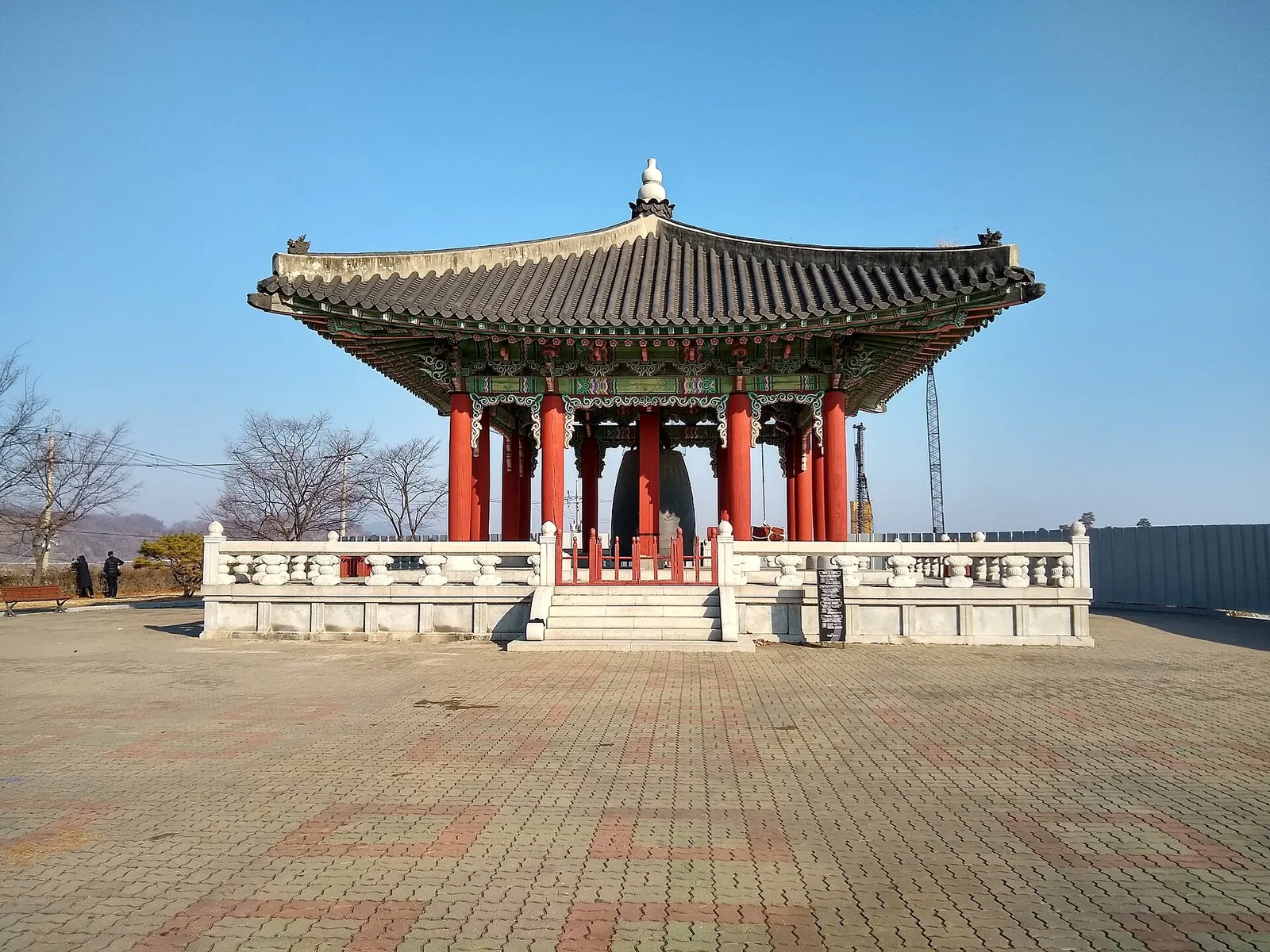
The Peace Bell pavilion at Imjingak
Photograph: Lance Vanlewen — opens in a new tab · CC BY-SA 4.0 — opens in a new tab
Changes: Resized and converted to WebP; displayed with responsive crops. · Original photograph and licence details ↗ — opens in a new tab
Dora Observatory, reached only on an organised visit beyond the Civilian Control Line
Photograph: Lance Vanlewen — opens in a new tab · CC BY-SA 4.0 — opens in a new tab
Changes: Resized and converted to WebP; displayed with responsive crops. · Original photograph and licence details ↗ — opens in a new tab
Dorasan Station, the last stop on the Gyeongui Line before North Korea
Photograph: Sanmosa — opens in a new tab · CC BY-SA 4.0 — opens in a new tab
Changes: Resized and converted to WebP; displayed with responsive crops. · Original photograph and licence details ↗ — opens in a new tab
Dubukimchi, warm tofu with stir-fried kimchi, the kind of dish served with Jangdan soybean tofu in Paju
Photograph: Chloe Lim — opens in a new tab · CC BY 2.0 — opens in a new tab
Changes: Resized and converted to WebP; displayed with responsive crops. · Original photograph and licence details ↗ — opens in a new tab
Galleries and cafés in Heyri Art Valley, Paju
Photograph: Republic of Korea from Seoul, Republic of Korea — opens in a new tab · CC BY-SA 2.0 — opens in a new tab
Changes: Resized and converted to WebP; displayed with responsive crops. · Original photograph and licence details ↗ — opens in a new tab