Daegu and North Gyeongsang · North Gyeongsang
Cheongsong guide: Jusanji Pond, Juwangsan's gorge and where to stay
Cheongsong is a rural county in the mountains of North Gyeongsang, a long way from any railway, and that distance is why it stays quiet. Its two famous sights sit inside Juwangsan National Park. Jusanji is a small farm reservoir dug in 1720, where old willows grow straight out of the water. Juwangsan itself is a horseshoe of rock peaks, and a level path follows its gorge to three waterfalls. The whole county is a UNESCO Global Geopark, so the rocks and springs also have a story behind them. Add a hanok night at Songso House, a bowl of chicken boiled in Dalgi's mineral water and, in autumn, some of the best foliage in Korea. Cheongsong rewards travellers who have a car, or who are patient enough to work out the bus connections.
- Suggested time
- 2 days, 1 night; 3 days, 2 nights with the Jeolgol or Janggunbong hikes
- Where to stay
- Juwangsan tourist area at the park entrance (Juwangsan-myeon), Cheongsong-eup, or Songso House in Pacheon-myeon
- Season and timing
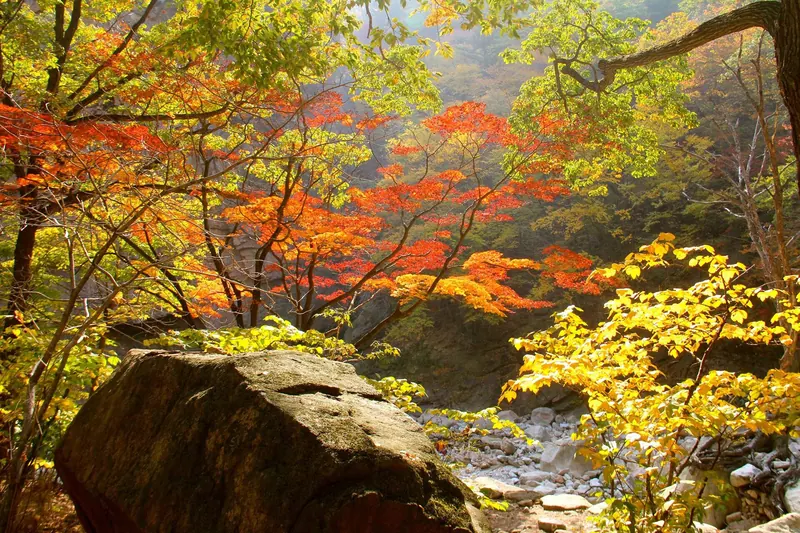
- Autumn is the high season. The Korea National Park Service names mid-October to early November as the best time for foliage in the Juwang Valley, and counts 1 October to 15 November as a peak-demand period for parking fees. Between 16 September and 14 November 2026, the Jeolgol trail needs an online reservation. Cheongsong's Apple Festival runs from 4 to 8 November 2026, according to VisitKorea. In early May the park holds a festival when royal azaleas (sudallae) bloom along the stream. In summer, the Jeolgol valley is cool for walking, but the park service asks hikers to avoid it in the rainy season. In winter, Eoreumgol's frozen falls are the draw. VisitKorea notes that entry to trails can be restricted during the wildfire season.
The short answer
Give Cheongsong two days and one night; stay a second night if you want a long ridge hike. Sleep in the Juwangsan tourist area by the park entrance (Sono Belle Cheongsong or the HAHN BY SONO hanok), or at Songso House if you want a traditional house. On day one, walk the Juwang Valley course from Sangui car park to Yongchu, Jeolgu and Yongyeon falls. The national park service gives it as 5.3 km and about 2 hours 10 minutes, mostly gentle. On day two, go to Jusanji Pond early. Until 23 October 2026 the access road is closed, so you park at the Jusanji Theme Park car park and walk in. Then eat baeksuk at Dalgi Mineral Spring on your way out. Drive from Daegu (about 2 hours 30 minutes) or take an intercity bus from Dongdaegu or Dong Seoul to Cheongsong. Taxis help a lot here, because local buses are infrequent and hard to check in English.
Jusanji Pond: go early, and check the 2026 road closure
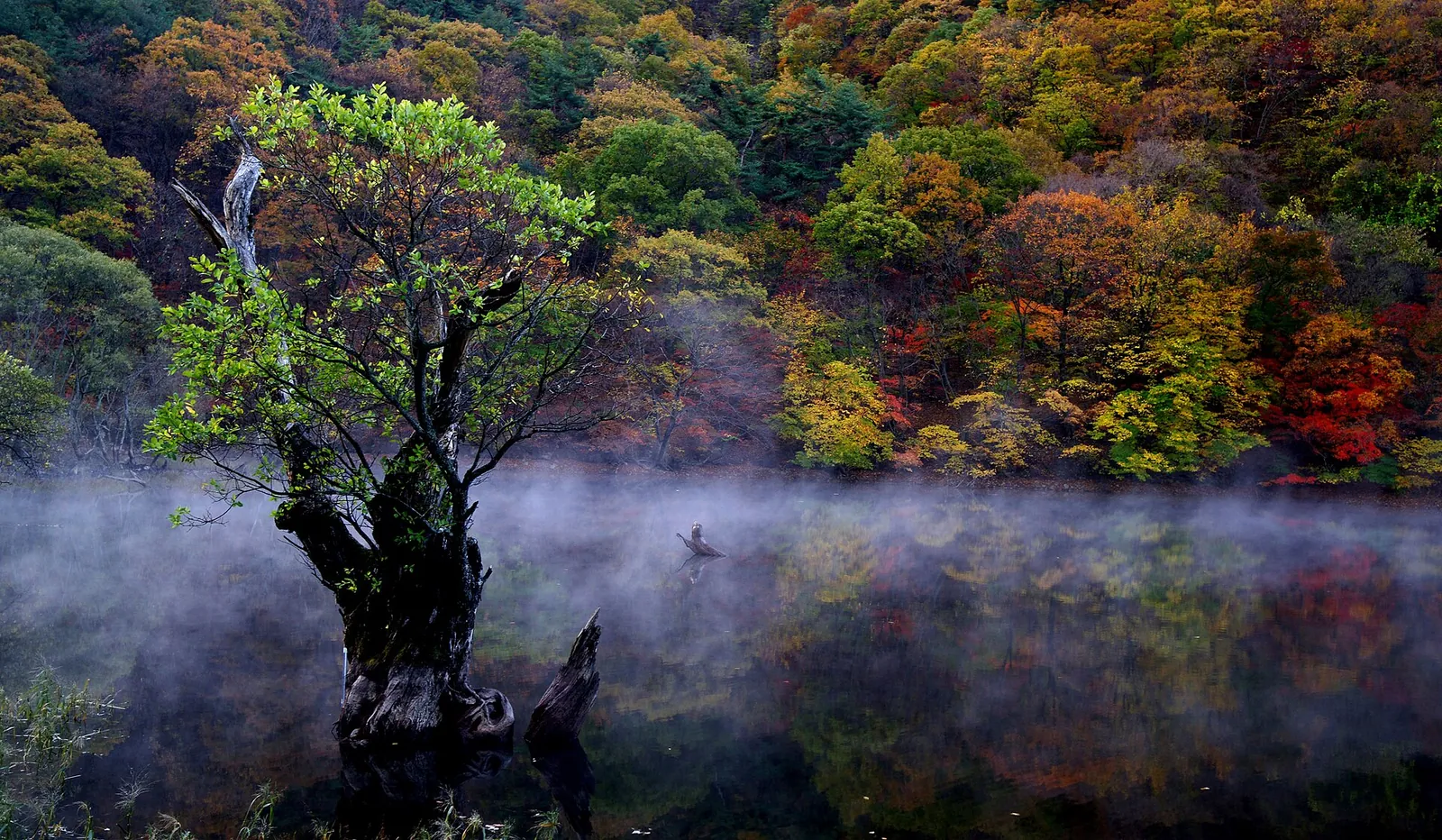
Jusanji is small, and you should know that before you drive a long way to see it. VisitKorea describes it as a man-made reservoir inside Juwangsan National Park. Work began in August 1720 and finished in October of the following year. It is about 200 metres long and 8 metres deep, and VisitKorea says it has never dried up, even in a drought. The reason to come is the willow trees rooted in the water itself, about 150 years old by VisitKorea's estimate. Their trunks rise out of the still surface against wooded slopes. It is one of the most photographed views in Korea.
Plan Jusanji as a short visit of an hour or two, not a full day. Come early in the morning, especially on autumn weekends, before the crowds arrive. Keep to the paths and the viewing areas by the water. The trees are old and grow at the edge of the pond.
Access in October 2026: the Juwangsan National Park office announced that the county is building a Jusanji tourist site. To keep visitors safe, the access road (rural road 301, between Jusanji-ri 186-8 and Jusanji-ri 83) is closed from 25 August to 23 October 2026. During the closure you park at the Jusanji Theme Park car park (Jusanji-ri 112) and walk in on a temporary path. If you visit around those dates, check the national park website or call Cheongsong County's tourism policy division on +82-54-870-6239.
Juwangsan: the valley walk to three waterfalls
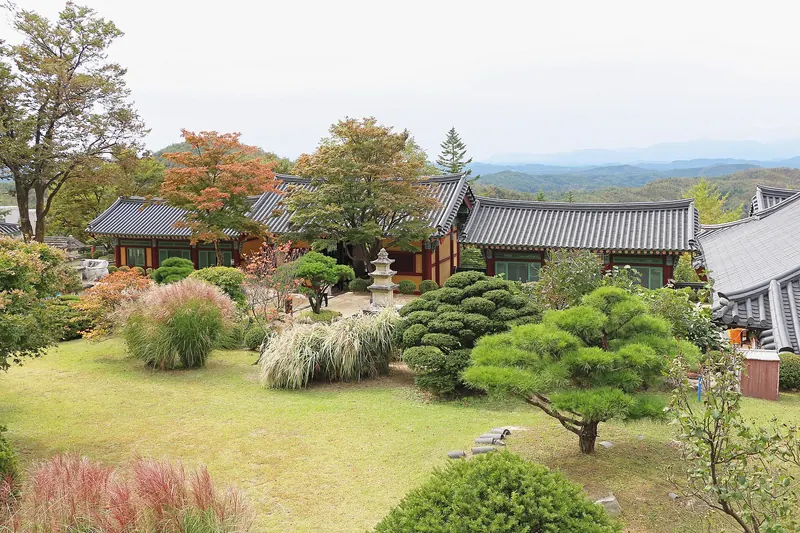
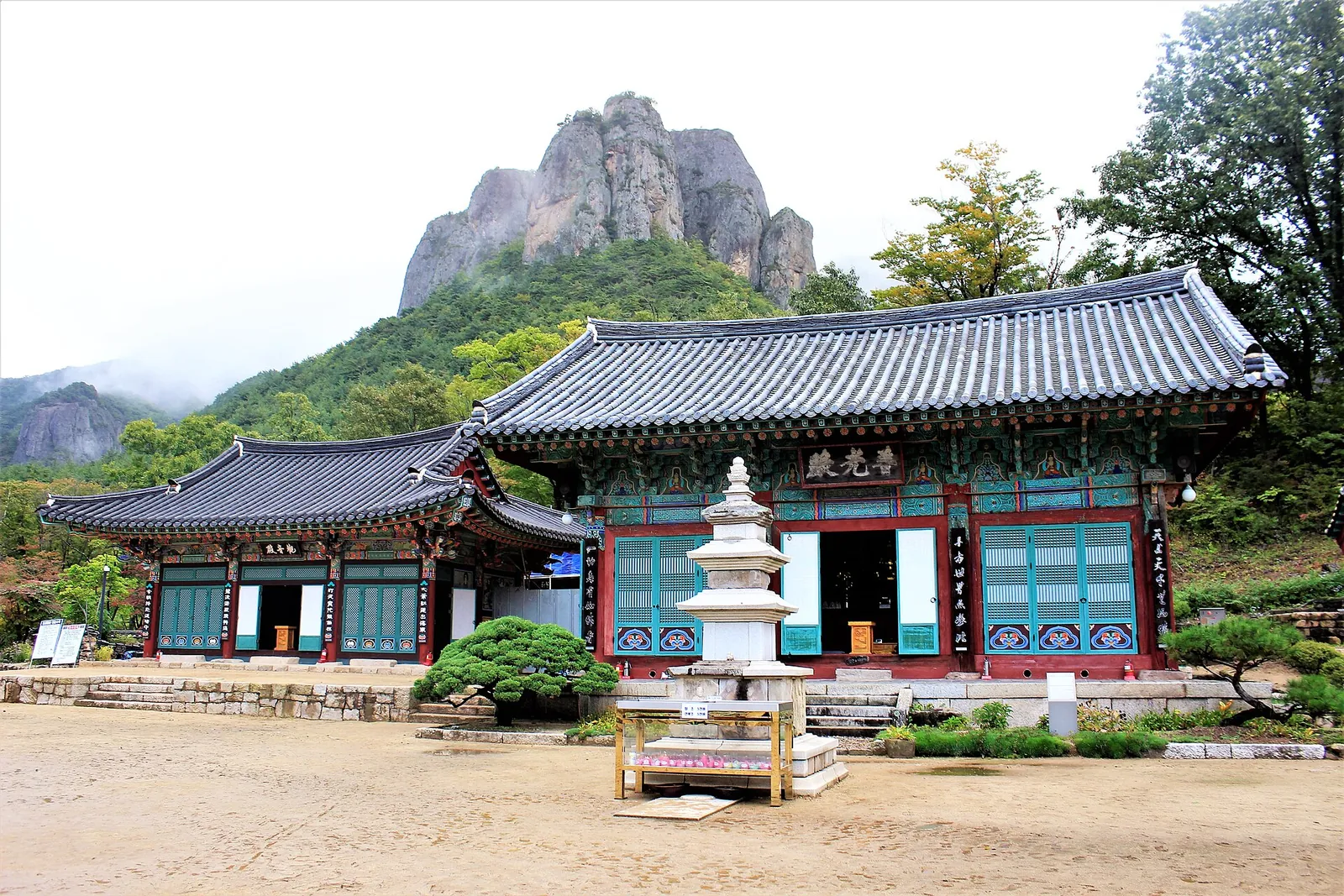
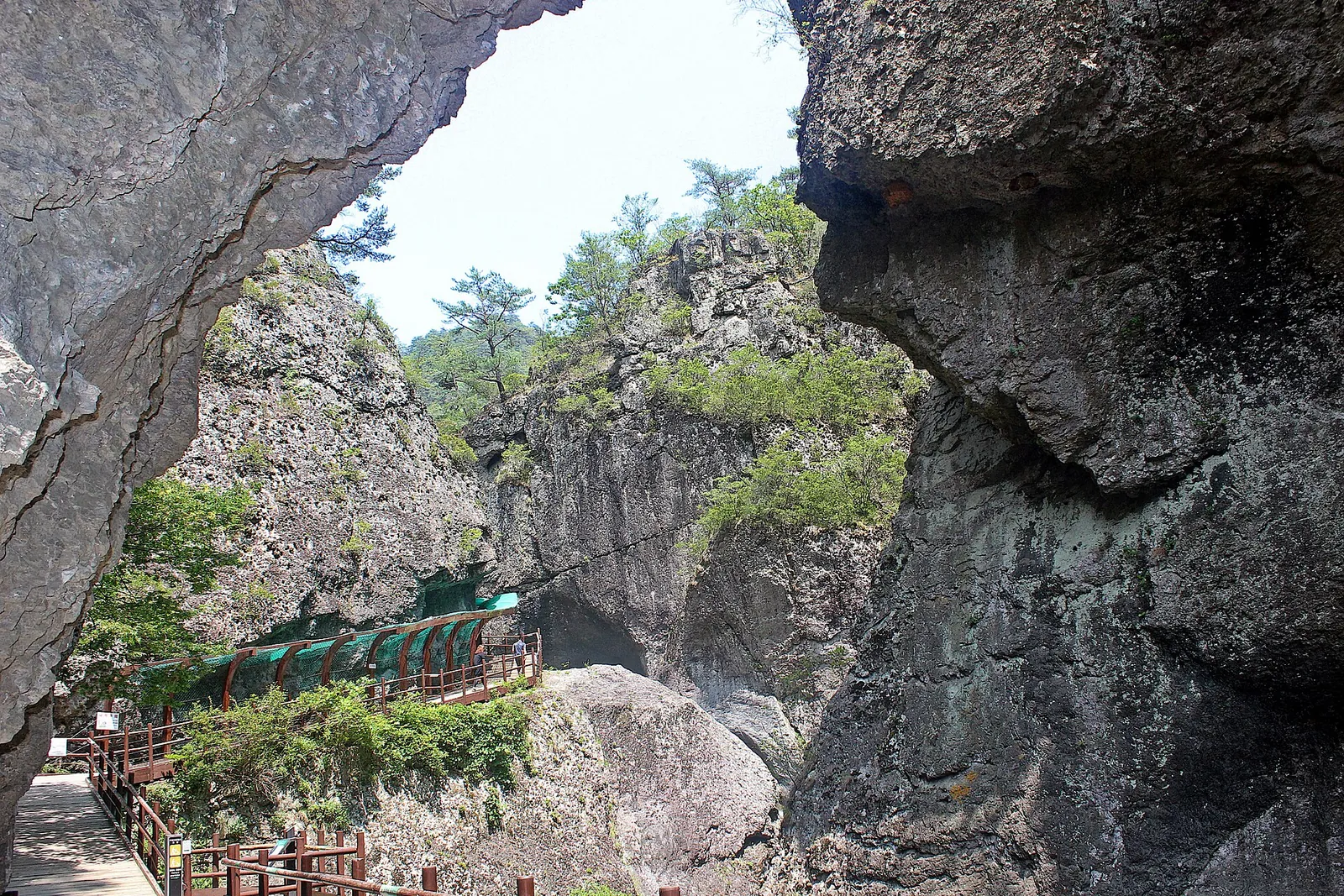
Juwangsan became Korea's 12th national park in 1976. The Korea National Park Service describes a ring of peaks around Juwangsan (722 m) and calls it one of the three great rock mountains of Korea. Its cliffs are made of welded tuff, left by lava that flowed and cooled about 70 million years ago. Most visitors start at Sangui car park and walk past Daejeonsa Temple, where the rock peaks rise right behind the main hall. VisitKorea says the temple was founded in 672 and rebuilt in 1672, after a fire during the Imjin War destroyed the original buildings. When we checked on 2026-10-03, VisitKorea listed the temple as open from sunrise to sunset, with a cultural-heritage admission of 4,500 won for adults. Check this at the gate, because we could not confirm it with the temple.
The Juwang Valley course is the walk to do if you only have one. The park service gives it as 5.3 km from Sangui car park to the old Naewon-dong village site, taking about 2 hours 10 minutes. The first 2.7 km to Yongchu Falls is a flat dirt path (about 1 hour 15 minutes) along the stream, suitable for children, older walkers, pushchairs and wheelchairs. Beyond Yongchu the path is stony, with wooden decks and bridges. Pushchairs and wheelchairs cannot manage it, but trainers are fine.
VisitKorea describes the three falls in order. Yongchu Falls pours through a narrow gorge of encircling rock. Jeolgu Falls, with the Seonnyeotang pool below it, is about 1 km further on. Yongyeon Falls, the largest of the three, has two streams of water. VisitKorea lists the falls trail as open all year and free.
When we checked, the park service listed Sangui car park at 4,000 won on weekdays and 5,000 won on weekends and in peak periods (1 July–31 August and 1 October–15 November) for a small car.
- Juwang Valley course: Sangui car park → Yongchu → Jeolgu → Yongyeon falls → Naewon-dong, 5.3 km, about 2 h 10 min one way (KNPS)
- Juwangsan summit loop via Kaldeung Pass and Hurimegi: 10.1 km, about 4 h 40 min (KNPS)
- Janggunbong course: 11.8 km, about 5 h 25 min, with steep rock sections; KNPS says it is for experienced hikers
Make time for the local food
What to eat and where to look
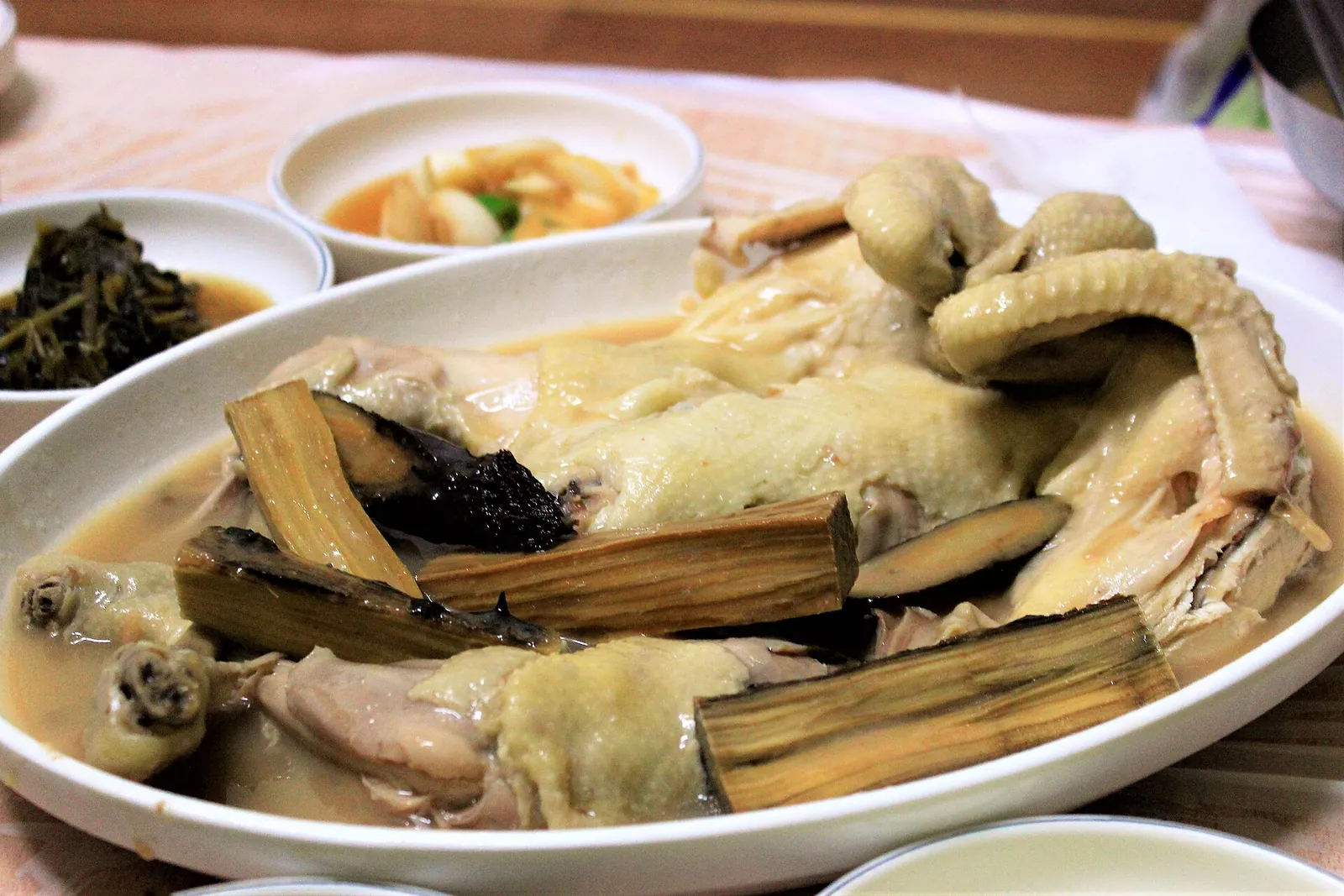
Dalgi baeksuk (chicken boiled in mineral water)
A whole chicken simmered with medicinal herbs in the carbonated water of Dalgi Mineral Spring,. The park service recommends it with a drink from the spring before you hike. VisitKorea lists Marnbauchon Garden, which makes its baeksuk with ginseng, jujube and mung beans, and Palpal Sikdang, known for dakbulbaeksuk, a spicy version.
- Where to look
- The restaurant street at Dalgi Mineral Spring (Dalgi Yaksutang) in Jinbo-myeon, north of the park; Palpal Sikdang is at 5157 Gyeongdong-ro and Marnbauchon Garden at 5173-17 Gyeongdong-ro.
- Fit it into your day
- A long lunch on the drive between Juwangsan and the north of the county, or after the Wolwoe course past Dalgi Falls.
It takes time to cook, so allow at least an hour. VisitKorea says Palpal Sikdang takes reservations on weekdays but not at weekends.
Beoseot jeongol (mushroom hot pot)
A light broth packed with mixed mountain mushrooms and cooked at the table. VisitKorea singles out the version at Songi Garden near the Juwangsan tourist complex, which also serves memilmuk (buckwheat jelly salad) and spicy braised chicken.
- Where to look
- Songi Garden, 504 Juwangsan-ro, and other restaurants in the Juwangsan tourist area near the park entrance.
- Fit it into your day
- Dinner after the valley walk if you are staying by the park entrance.
VisitKorea lists Songi Garden as closed on Tuesdays.
Cheongsong apples
Apples are the crop Cheongsong celebrates, with an Apple Festival every autumn. In 2026, VisitKorea lists it from 4 to 8 November along Yongjeoncheon Stream and Hyeonbiam Cliff in Cheongsong-eup, with free entry.
- Where to look
- Roadside stalls and farm shops across the county in autumn, the festival grounds in Cheongsong-eup, and apple picking at Songso House in season.
- Fit it into your day
- Buy a bag for the hike or the drive home.
Harvest and festival dates vary each year; check before you plan a trip around them.
Ssanghwacha and patbingsu by the park gate
Supullim, a café at the entrance to Juwangsan National Park, serves handmade ssanghwacha (a thick, bitter-sweet medicinal herb tea) and injeolmi patbingsu (shaved ice with red beans and roasted-soybean rice cake). VisitKorea notes the mountain view from its second floor.
- Where to look
- Supullim, at the park entrance by Sangui.
- Fit it into your day
- A warming tea after the valley walk in autumn, or bingsu on a summer afternoon.
Ssanghwacha is strongly herbal and not to everyone's taste. Check the opening hours, which VisitKorea lists as different on weekdays and weekends.
Jeolgol Valley and the longer hikes
Jeolgol is the park's quieter southern valley, on the same side as Jusanji. VisitKorea describes it as a 5 km gorge from the Jeolgol visitor centre to Daemun Bridge, cut into welded volcanic tuff that cracked vertically into steep cliffs. The park service says the stretch to Daemun Bridge is close to level, with stepping stones and wooden bridges. After that, a steep climb of about an hour leads to Gamebong peak. Jeolgol to Gamebong is 5.7 km, about 3 hours. The full Jeolgol course over Gamebong down to Sangui is 13.5 km and takes about 7 hours. The park service asks hikers to avoid the valley during the summer rainy season.
Jeolgol needs a reservation in autumn 2026. The park office's notice says the trail from the Jeolgol entrance to Gamebong is under a reservation system from 16 September to 14 November 2026. It is open from 09:00 to 18:00, with a limit of 1,350 people a day. Book online through the national park reservation site (reservation.knps.or.kr). Entering without a booking can bring a fine of up to 500,000 won under the Natural Parks Act.
There are two other long routes. Gamebong from Sangui is 7.2 km, about 4 hours, and the park service calls it the hardest route in the park. On clear days you can see as far as the sea at Yeongdeok. The Gatbawi course starts on the east side and is 13.3 km one way, about 6 hours 45 minutes. It is steep and the park service does not recommend it for older walkers. Start any of these in the morning. Carry water and food, and check the park's trail-control notices first.
Songso House, the geopark sites and Dalgi Mineral Spring
UNESCO designated the Cheongsong UNESCO Global Geopark in 2017. It covers the whole county, 84,606 hectares according to UNESCO. UNESCO picks out the Flower Stone Ecotrail, a 1.1 km route past outcrops of spherulitic rhyolite, a rock that cooled in dark and light rings that look like flowers. It also lists the Sinseong-ri dinosaur footprints and the Yongchu Gorge in Juwangsan. Dalgi Mineral Spring, north of the park, is one of UNESCO's two representative geosites. VisitKorea says the carbonated spring was found about 130 years ago, while a waterway was being dug, and that it forms when rainwater meets carbon dioxide rising from magma. The park service notes that the baeksuk cooked with its water at Dalgi Yaksutang is famous.
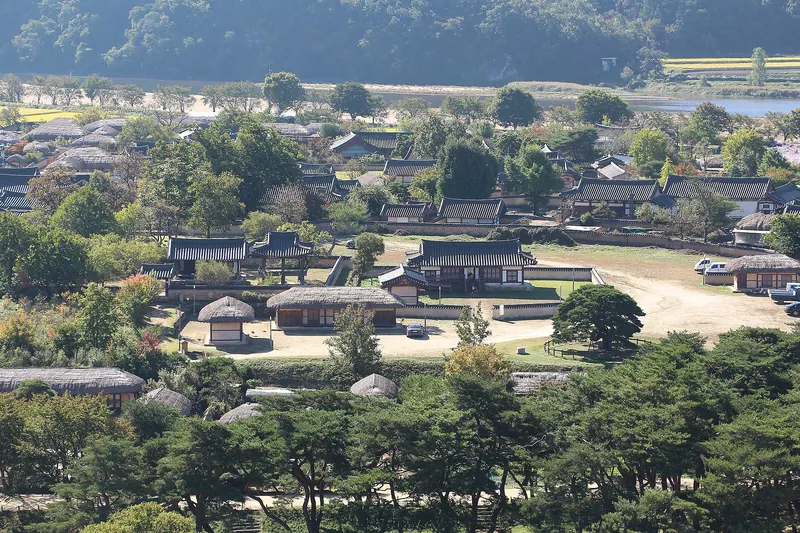
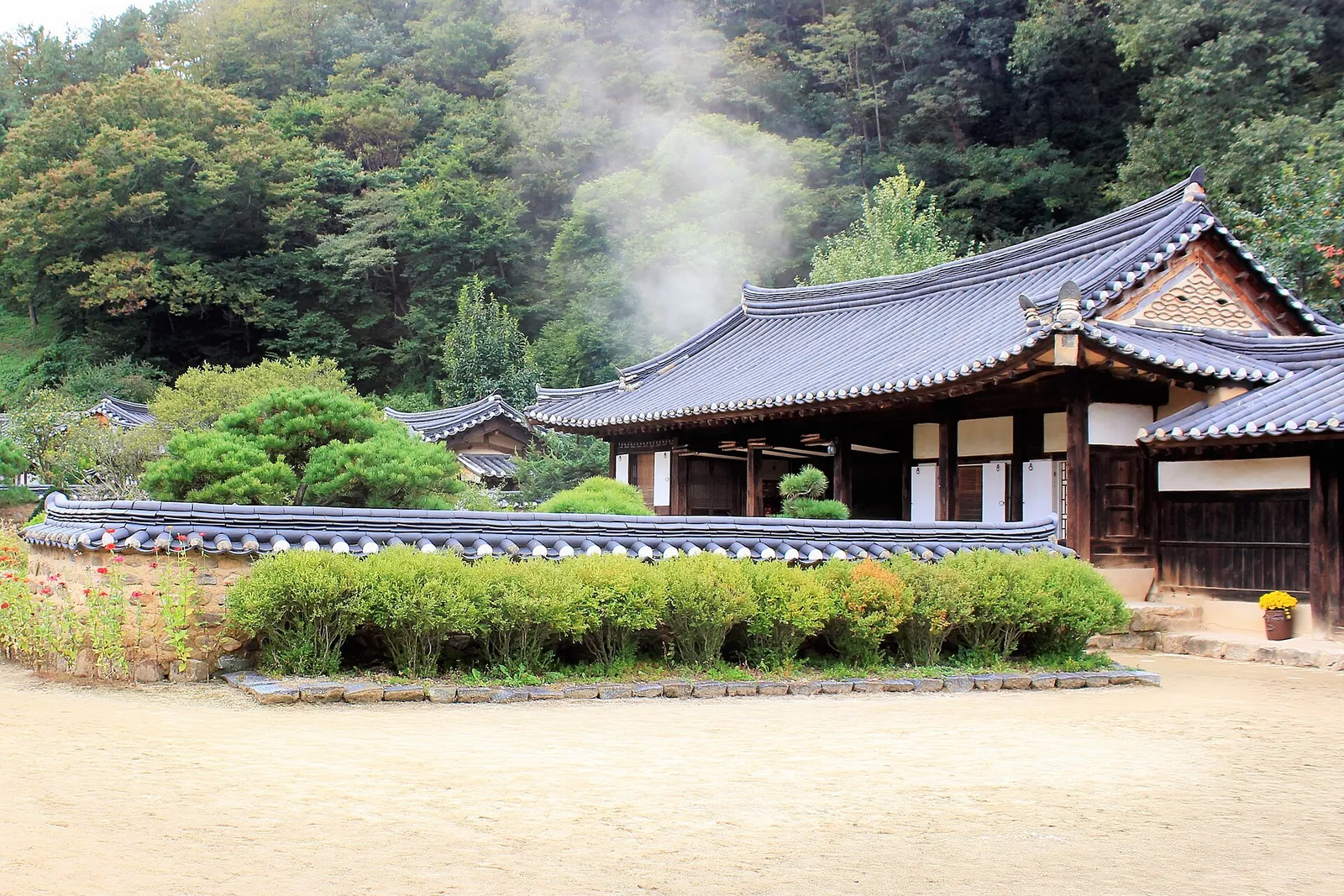
Songso House (Songso Gotaek) is the hanok to see, or to sleep in. VisitKorea says the house of the wealthy Sim family was built around the 1880s, in the square layout of a Joseon aristocrat's home. Its annex is now a guesthouse, with activities such as a tea ceremony, rice-cake pounding and, in season, apple picking. UNESCO's geopark page also names it as a cultural highlight.
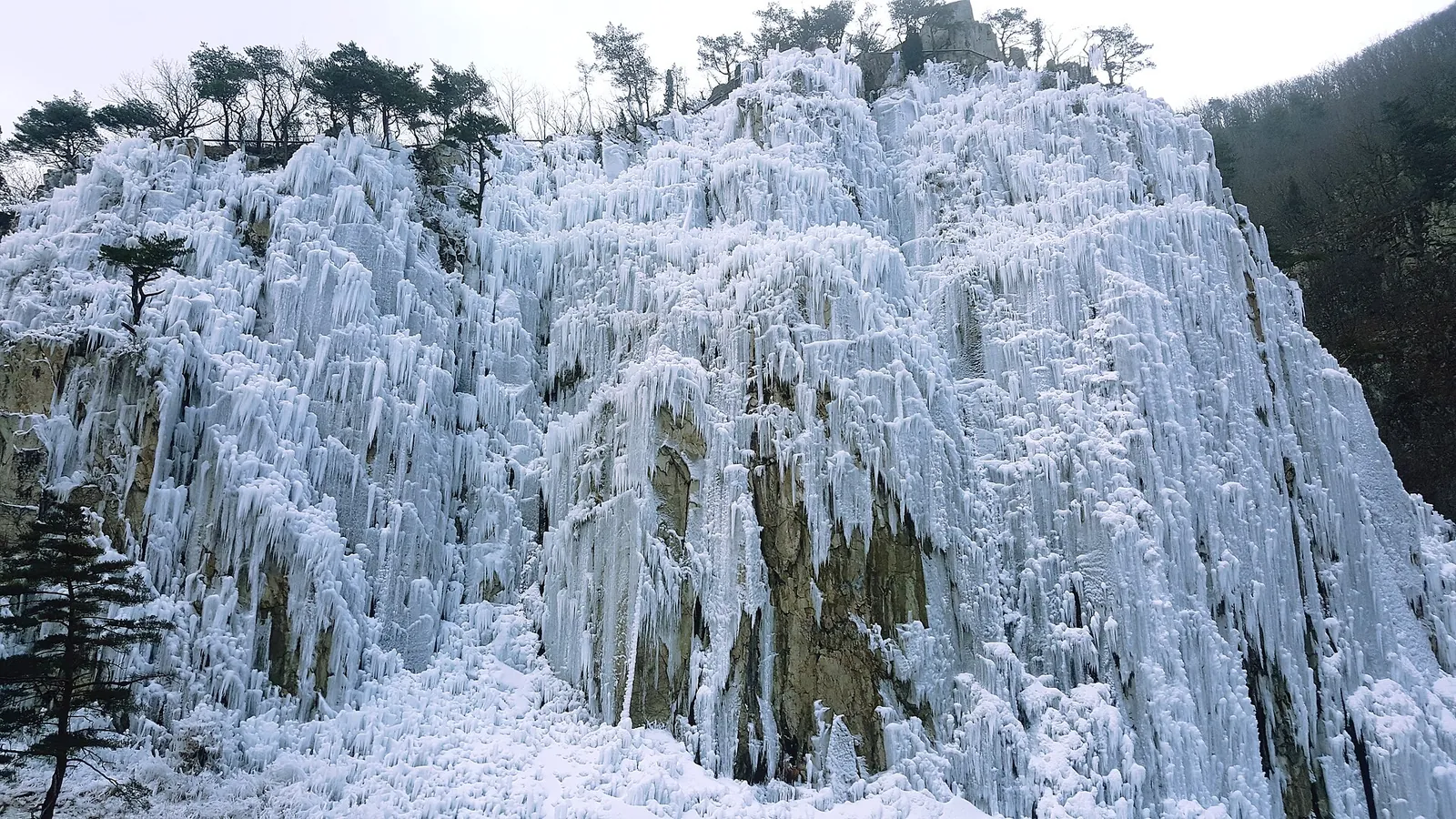
In winter, Eoreumgol (Ice Valley), on the edge of Juwangsan, is known for its frozen falls. VisitKorea describes the valley as warm in winter and cool in summer, and says ice forms in the rocks on the hottest summer days. Near the park entrance, the Cheongsong Folk Museum is a free rainy-day option. When we checked, VisitKorea listed it as open from 09:30 to 18:00, closed on Mondays.
Getting there and getting around
Cheongsong has no railway station, so most visitors arrive by road. The park service puts the drive from Daegu at about 2 hours 30 minutes, via the Sangju–Yeongdeok expressway to Cheongsong IC and then local roads to Sangui car park. From Seoul it is about 3 hours 30 minutes. With a car, you can see Jusanji, Jeolgol and Dalgi in one day.
By bus, the park service lists these routes. From Dongdaegu Transit Center there are buses to Cheongsong Terminal, then on to Juwangsan Terminal and the Sangui visitor centre (about 2 hours 30 minutes in total). From Dong Seoul Terminal, buses towards Andong and Juwangsan reach Cheongsong Terminal (about 4 hours 50 minutes to Sangui). By rail, take a train from Cheongnyangni to Andong, then a bus from Andong Terminal to Cheongsong and Juwangsan (about 5 hours). For Jusanji and Jeolgol, change at Cheongsong Terminal to the local bus towards Ijeon and Jusanji.
We could not verify local bus timetables from an official English source. If you come without a car, base yourself in the Juwangsan tourist area and use taxis for Jusanji, Dalgi and Songso House. Agree the return pick-up before the taxi leaves, so you are not stranded at a trailhead.
Practical questions
How long do I need in Cheongsong?
Two days and one night covers the Juwang Valley walk to the three waterfalls, Jusanji Pond and a baeksuk lunch at Dalgi. Add a night if you want to hike Jeolgol or one of the ridge routes.
Can I drive to Jusanji Pond in October 2026?
Not all the way. The Juwangsan National Park office announced that the Jusanji access road is closed from 25 August to 23 October 2026 while a tourist site is built. Park at the Jusanji Theme Park car park (Jusanji-ri 112) and walk in on the temporary path.
Is the Juwangsan valley walk difficult?
No. The park service describes the first 2.7 km from Sangui car park to Yongchu Falls as a flat dirt path, suitable for pushchairs and wheelchairs. Beyond that, the path to Jeolgu and Yongyeon falls is stony but fine in trainers.
Do I need a reservation for Jeolgol Valley?
In autumn 2026, yes. From 16 September to 14 November 2026 the trail from the Jeolgol entrance to Gamebong is under a reservation system (09:00–18:00, 1,350 people a day), booked through the national park reservation site.
How do I get to Cheongsong without a car?
Take an intercity bus from Dongdaegu Transit Center or Dong Seoul Terminal to Cheongsong Terminal, then a bus on to Juwangsan Terminal. For Jusanji and Jeolgol, the local bus runs from Cheongsong Terminal towards Ijeon. Check timetables locally and use taxis to fill the gaps.
When are the autumn colours at their best?
The Korea National Park Service names mid-October to early November as the best time for foliage in the Juwang Valley. Weekends in that period are very busy, so come early or on a weekday.
Sources and checks before you travel
Reference sources for the version dated 3 October 2026. Confirm opening times, access, transport and conditions for your travel dates.
- VisitKorea: Jusanji Pond [National Geopark] ↗ — opens in a new tab
- Korea National Park Service: Jusanji access road closure (Juwangsan notice, 18 Aug 2026) ↗ — opens in a new tab
- Korea National Park Service: Juwangsan 2026 trail reservation notice ↗ — opens in a new tab
- Korea National Park Service: Juwangsan National Park courses and transport ↗ — opens in a new tab
- VisitKorea: Juwangsan National Park ↗ — opens in a new tab
- VisitKorea: Three Falls of Juwangsan Mountain ↗ — opens in a new tab
- VisitKorea: Daejeonsa Temple ↗ — opens in a new tab
- VisitKorea: Jeolgolgyegok Valley [National Geopark] ↗ — opens in a new tab
- UNESCO: Cheongsong UNESCO Global Geopark ↗ — opens in a new tab
- VisitKorea: Dalgi Mineral Spring [National Geopark] ↗ — opens in a new tab
- VisitKorea: Songso House ↗ — opens in a new tab
- VisitKorea: Cheongsong Eoreumgol Valley ↗ — opens in a new tab
- VisitKorea: Cheongsong Apple Festival ↗ — opens in a new tab
- VisitKorea: Sono Belle Cheongsong ↗ — opens in a new tab
- VisitKorea: HAHN BY SONO ↗ — opens in a new tab
- VisitKorea: Juwangsan Spa Tourist Hotel ↗ — opens in a new tab
- VisitKorea: Palpal Sikdang ↗ — opens in a new tab
- VisitKorea: Marnbauchon Garden ↗ — opens in a new tab
- VisitKorea: Songi Garden ↗ — opens in a new tab
- VisitKorea: Supullim ↗ — opens in a new tab
- VisitKorea: Cheongsong Folk Museum ↗ — opens in a new tab
Photo credits
Jusanji Pond in Cheongsong on an autumn morning: the willows grow straight out of the water.
Photograph: Contax3 — opens in a new tab · CC BY-SA 3.0 — opens in a new tab
Changes: Resized and converted to WebP; displayed with responsive crops. · Original photograph and licence details ↗ — opens in a new tab
Daejeonsa Temple at the Sangui entrance to Juwangsan National Park.
Photograph: Trainholic — opens in a new tab · CC BY-SA 4.0 — opens in a new tab
Changes: Resized and converted to WebP; displayed with responsive crops. · Original photograph and licence details ↗ — opens in a new tab
The valley path in Juwangsan National Park passes between sheer cliffs of welded tuff.
Photograph: 최옥석 — opens in a new tab · CC BY-SA 4.0 — opens in a new tab
Changes: Resized and converted to WebP; displayed with responsive crops. · Original photograph and licence details ↗ — opens in a new tab
Eoreumgol (Ice Valley) in Cheongsong, frozen in winter.
Photograph: José Carioca — opens in a new tab · CC BY-SA 4.0 — opens in a new tab
Changes: Resized and converted to WebP; displayed with responsive crops. · Original photograph and licence details ↗ — opens in a new tab
Songso House (Songso Gotaek) in Cheongsong, a Joseon-style hanok that now takes overnight guests.
Photograph: Trainholic — opens in a new tab · CC BY-SA 4.0 — opens in a new tab
Changes: Resized and converted to WebP; displayed with responsive crops. · Original photograph and licence details ↗ — opens in a new tab
Baeksuk cooked with herbs in the water of Dalgi Mineral Spring, Cheongsong.
Photograph: Trainholic — opens in a new tab · CC BY-SA 4.0 — opens in a new tab
Changes: Resized and converted to WebP; displayed with responsive crops. · Original photograph and licence details ↗ — opens in a new tab