Busan and South Gyeongsang · South Gyeongsang
Jinju travel guide: Jinjuseong Fortress, lantern festival and bibimbap
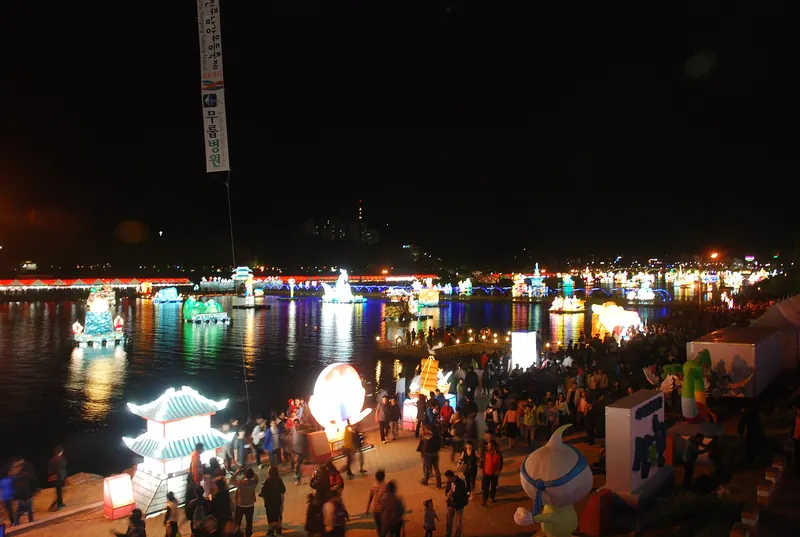
Jinju is a mid-sized city in the west of South Gyeongsang, and almost everything a visitor comes for sits on one bend of the Namgang River. On the north bank, the walls of Jinjuseong Fortress climb above a rocky cliff, with Chokseongnu Pavilion on the edge and the Jinju National Museum inside. This is where one of the great battles of the Imjin War was fought in 1592, and where, the story goes, Nongae leapt into the river with a Japanese general in her arms. Every October the same stretch of river fills with floating lanterns for the Namgang Yudeung Festival, a tradition VisitKorea links to the lanterns used to send signals during the siege. A few streets away, the Jungang and Nongae markets serve the city's own versions of bibimbap and cold buckwheat noodles. It is not a big-sights city; it is a calm, walkable overnight between Busan and the Jirisan and Hadong side of the south coast.
- Suggested time
- 1 night (2 during the October lantern festival)
- Where to stay
- The Namgang riverside below Jinjuseong Fortress (Namgang-ro, Nongae-gil); modern hotels around Jinju City Hall south of the river
- Season and timing
- October is Jinju's month: in 2026 the Namgang Yudeung Festival runs from 3 to 18 October, so book early if you want a riverside room for the festival nights. Spring and autumn are the most pleasant seasons for walking the fortress walls. From April to October the Jinju National Museum stays open until 21:00 on Saturdays, and from March to September the bullfighting arena holds regular Saturday matches. Summer is hot and humid but brings lotus blossom to Gangju Pond on the edge of the city.
The short answer
One night is enough; two if you come for the lantern festival or want a slow morning in the markets. Sleep on the riverside near the fortress, along Namgang-ro or Nongae-gil, so you can walk everywhere. Arrive by early afternoon, spend two or three hours in Jinjuseong Fortress (Chokseongnu, the walls and the free Jinju National Museum), eat Jinju bibimbap or naengmyeon, and come back to the river after dark, when the walls are lit. Next morning, walk through Jungang Market before moving on to Hadong, Namhae or Tongyeong. Most people arrive by bus — express and intercity buses run from Seoul, and Sacheon Airport, with flights from Gimpo and Jeju, is about 30 minutes away by intercity bus — or by train to Jinju Station, which is outside the centre.
Where to stay: the riverside below the fortress
The riverside streets around Jinjuseong Fortress, close to the markets, are the base to choose. The fortress, Chokseongnu, the museum, the restaurants that made Jinju bibimbap famous and both traditional markets are within walking distance of each other. VisitKorea's listing for the Golden Tulip Hotel Namgang on Namgang-ro 673beon-gil describes it as overlooking the old town, within walking distance of the intercity bus terminal and with rooms from which you can watch the lantern festival; the Dongbang Hotel on Nongae-gil, also listed by VisitKorea, stands on the riverbank with river-view rooms.
Around Jinju City Hall there are newer business hotels — VisitKorea lists the J Square Hotel across from City Hall — but you are away from the fortress and the markets, so check the distance before booking and expect a taxi or bus for dinner in the old centre.
Mind the stations. Jinju Station (KTX and Gyeongjeon Line trains) is not in the centre: VisitKorea's market guide gives about 40 minutes by public transport from the station to Jungang Market, and the Golden Tulip listing about 15 minutes by car to the hotel. The Jinju Express Bus Terminal, by contrast, is about 10 minutes from the market by public transport. If you arrive by train with luggage, a taxi is the sensible last leg.
Jinjuseong Fortress, Chokseongnu and the Imjin War
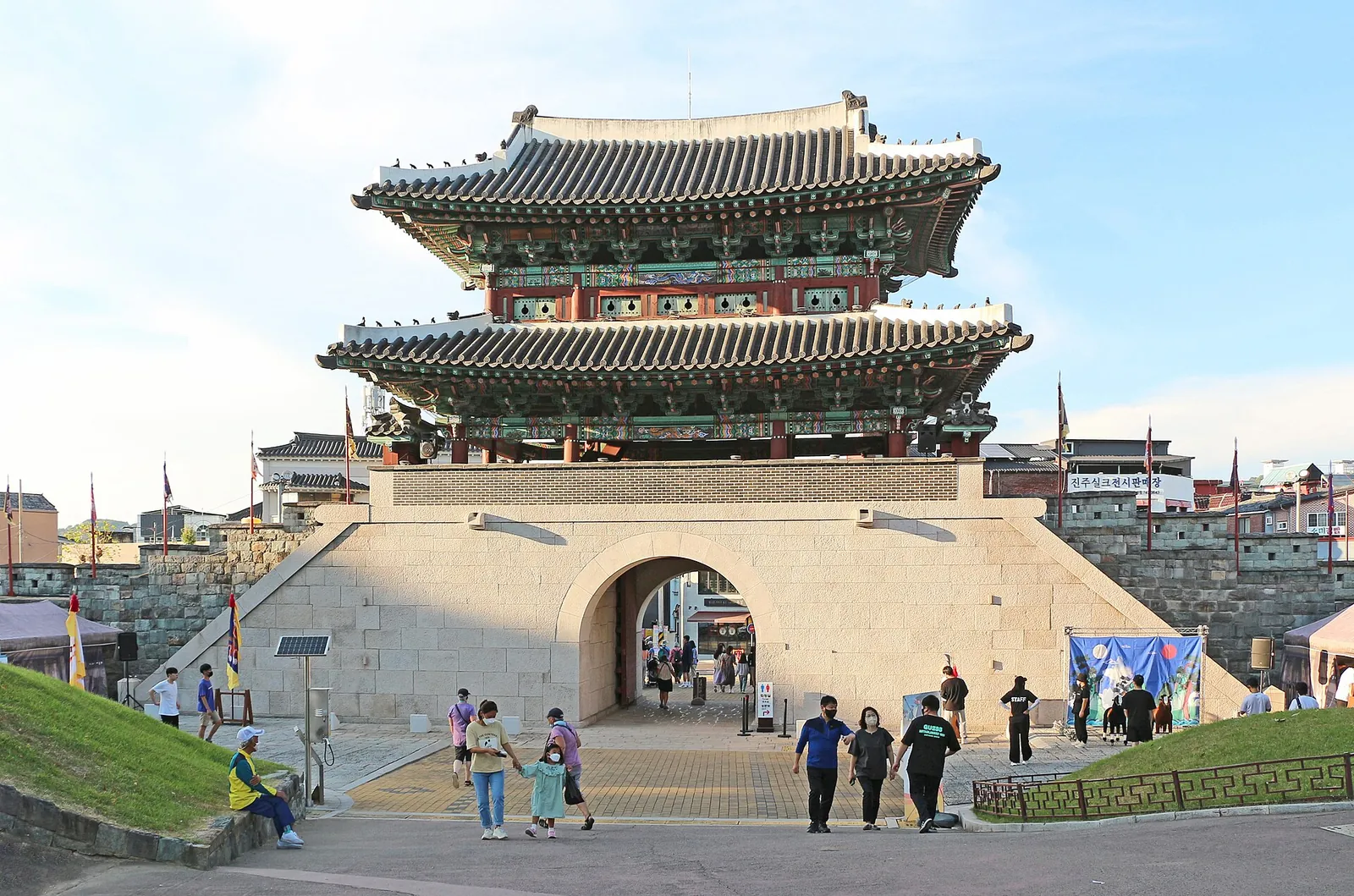
Jinjuseong Fortress was first built in ancient times and enlarged in 1379 to hold off pirate raids, according to VisitKorea. It was besieged twice during the Imjin War (1592–1598). In the first siege, in 1592, VisitKorea writes, General Kim Si-min held the fortress with only 3,800 soldiers against more than 20,000 Japanese troops. Allow two to three hours for a loop along the walls, the gates and the pavilions; Gongbukmun, the two-storey north gate, makes a good starting point. When we checked on 2026-10-03, VisitKorea listed the fortress as open every day from 05:00 to 23:00 between March and October (05:00 to 22:00 from November to February), with admission of 2,000 won for adults, 1,000 won for teenagers and 600 won for children; children aged 6 and under and visitors aged 65 and over enter free.
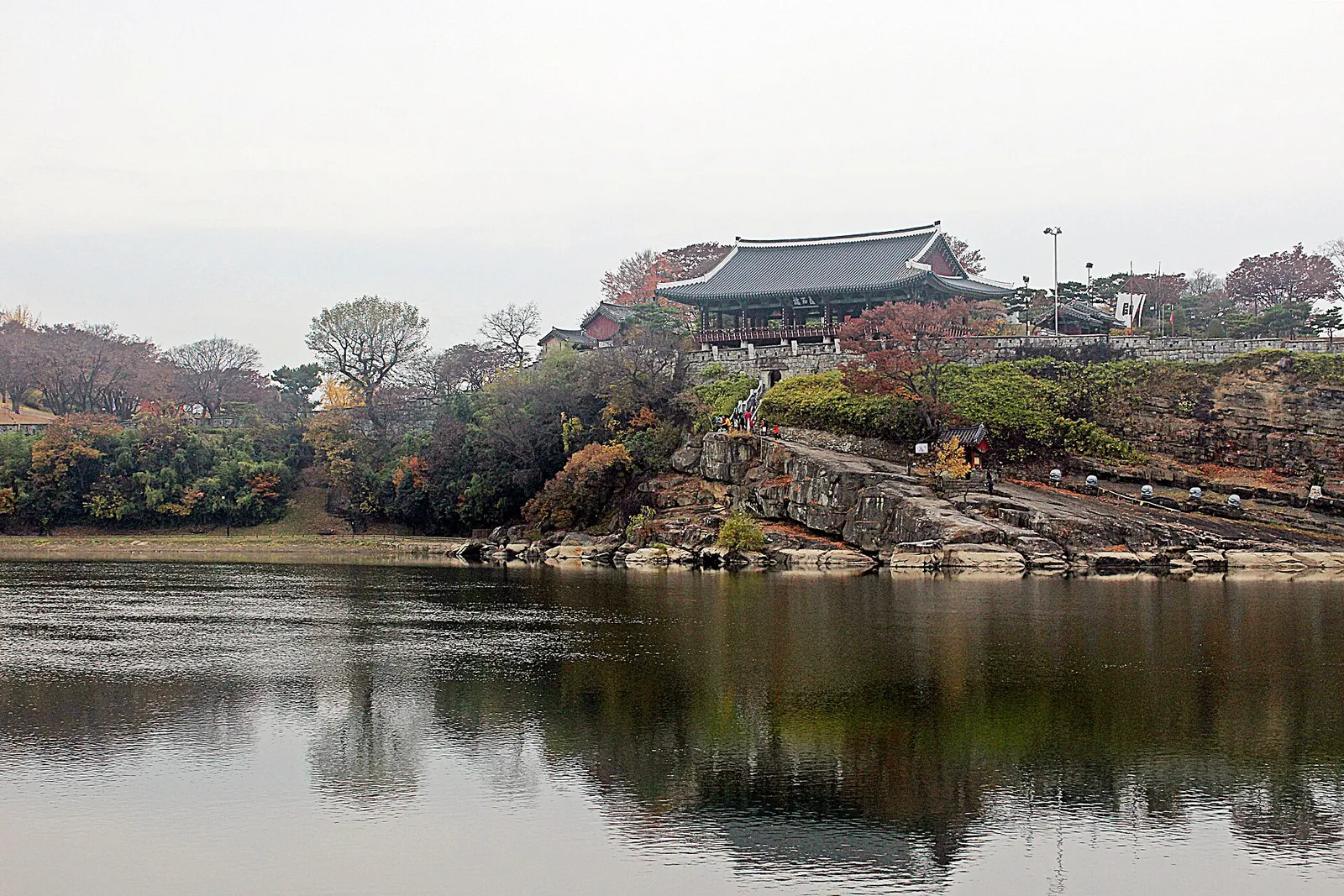
Chokseongnu Pavilion, on the cliff above the river, is the reason to come. VisitKorea calls it one of the most beautiful pavilions of the Yeongnam region and counts it, with Gwanghallu in Namwon and Yeongnamnu in Miryang, among Korea's three great pavilions. First built in 1241 and historically known as Jangwollu, it served as a command post in war and hosted state examinations in peacetime; it burned down during the Korean War and was rebuilt in 1960. Below it, Uiamsa Shrine commemorates Nongae, the woman who, according to tradition, threw herself into the Namgang from the pavilion, holding a Japanese general.
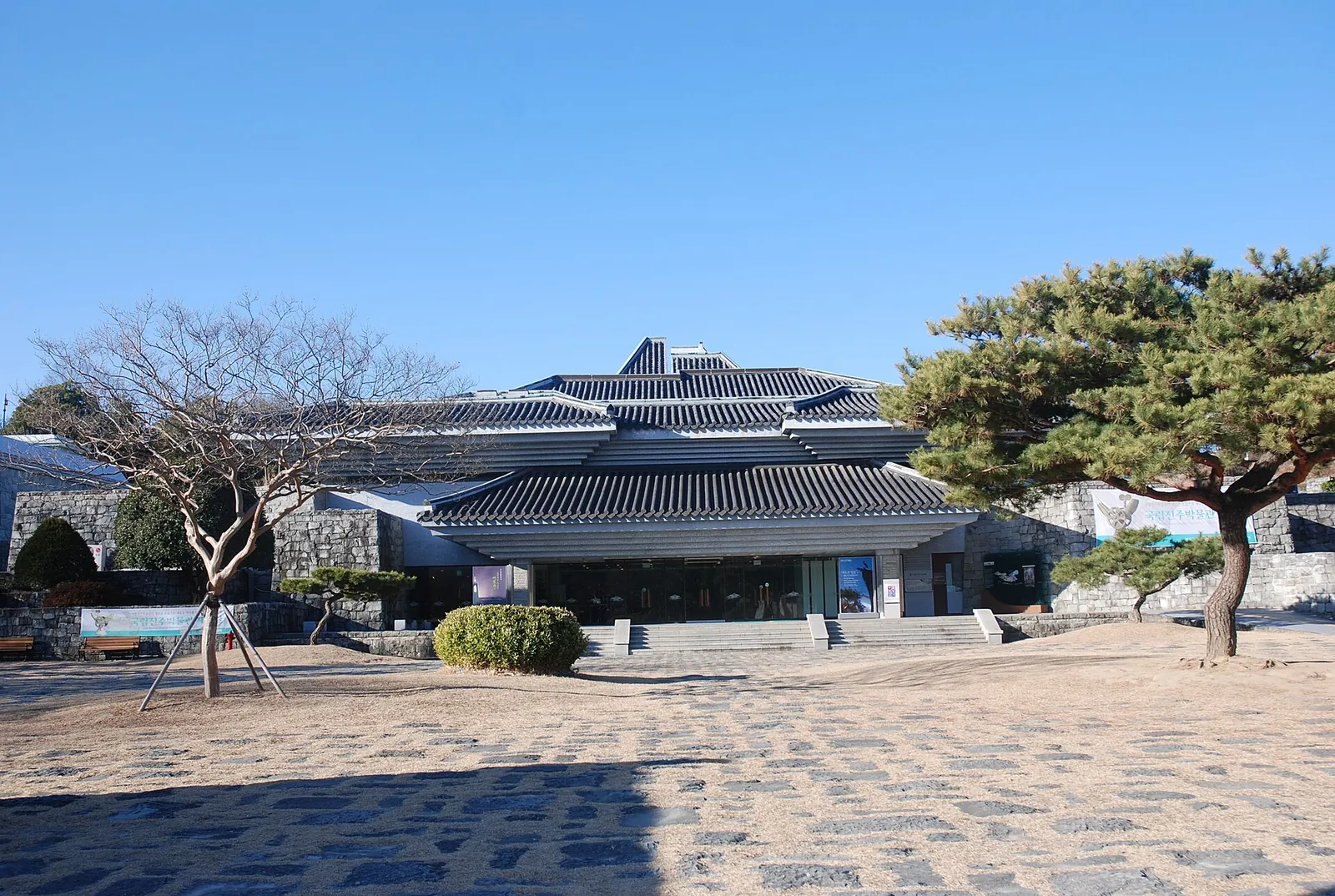
Jinju National Museum, inside the fortress, opened on 2 November 1984 and has specialised since 1998 in the Imjin War, which makes it the best place to understand what you have just walked through. Its permanent galleries are the Imjin War Hall, the History and Culture Hall and Duam Hall, which shows cultural assets donated by the collector Kim Yongdu. Admission to the museum is free, though you pay the fortress entry to reach it. When we checked on 2026-10-03, VisitKorea listed 09:00–18:00 on weekdays, 09:00–19:00 at weekends and public holidays, and 09:00–21:00 on Saturdays from April to October, with last entry 30 minutes before closing; it is closed on Mondays, New Year's Day, Seollal and Chuseok. The same listing mentions a free 15-minute 3D film on the Siege of Jinju, shown several times a day.
- Start at Gongbukmun, walk the walls towards Chokseongnu, then finish in the museum.
- VisitKorea also lists hanbok experiences inside the fortress and boat rides on the river.
- Come back after dark: the walls are floodlit and the reflection on the Namgang is the classic Jinju view.
Make time for the local food
What to eat and where to look
Jinju bibimbap
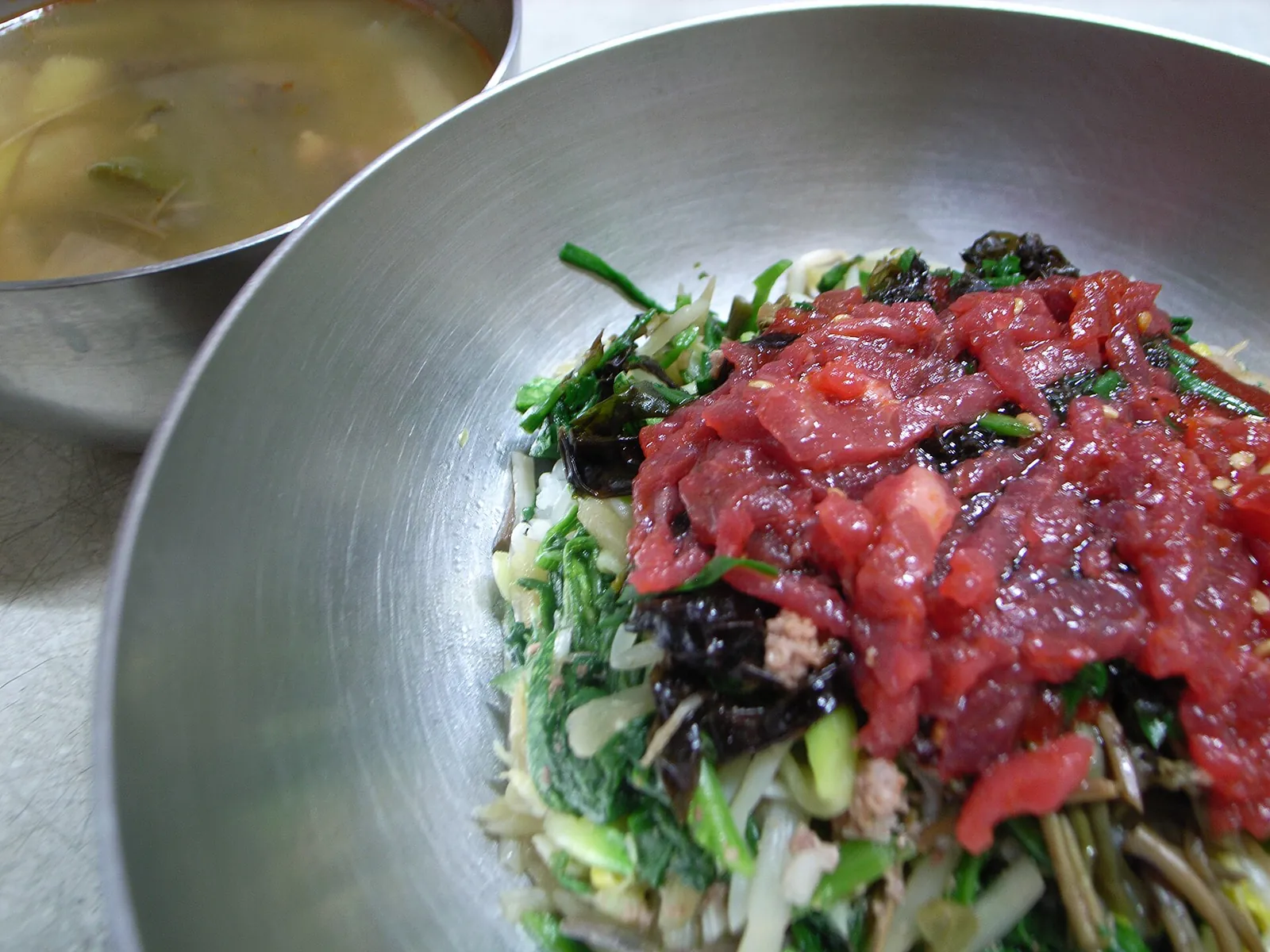
Jinju's own bibimbap, served in a brass bowl with seasonal vegetables arranged in seven colours — hence the old nickname chilbo hwaban, "seven-treasure flower bowl" — and topped with finely sliced raw beef seasoned with sesame oil, as VisitKorea describes it. The rice is sometimes cooked in beef broth, and it traditionally comes with seonjitguk (beef blood soup) on the side.
- Where to look
- Cheonhwang Sikdang, 3 Chokseok-ro 207beon-gil, near Jungang Market, which VisitKorea says opened in 1927 and is run by the third generation; it serves yukhoe bibimbap and grilled bulgogi, with three side dishes and seonji soup. When we checked on 2026-10-03, VisitKorea listed it as open 09:00 to 21:00 and closed on the first and third Tuesdays of the month. The food alleys of Jungang Market also serve yukhoe bibimbap.
- Fit it into your day
- Lunch after the fortress walk, or an early dinner before going back to the river at dusk.
The beef is raw (yukhoe). Ask whether a cooked-beef version is available if you prefer, and note that the side soup is made with blood.
Jinju naengmyeon (cold buckwheat noodles)
Jinju's answer to Pyongyang naengmyeon. VisitKorea's market guide says the noodles are made with buckwheat only and served in a broth brewed from anchovies, clams, dried pollack and mushrooms, topped with a slice of yukjeon — beef dipped in egg batter and pan-fried. There is a spicy, sauce-dressed version too (bibim naengmyeon).
- Where to look
- Hayeonok, 7 Namgang-ro 673beon-gil, close to Chokseongnu, specialises in Jinju bibim naengmyeon with yukjeon and also serves bibimbap and galbi; when we checked on 2026-10-03, VisitKorea listed it as open 10:00 to 20:30 every day. The Noodle Road in Nongae Market also serves Jinju naengmyeon.
- Fit it into your day
- A light lunch on a warm day, or a second meal if you had bibimbap already.
The broth is seafood-based, so it is not vegetarian. The bibim version is spicy.
Allbam Night Market snacks
Jinju's Saturday night market in Nongae Market is a grazing dinner. VisitKorea lists bibim mandu (flat dumplings in a spicy dressing), yukjeon, grilled ice cream and spicy braised pigs' feet among the stall food, and its market guide mentions pork-belly vegetable rolls, lamb skewers and Jinju's own beer, Jinju Jinmaek.
- Where to look
- Nongae Market, 12 Jinyangho-ro 569beon-gil. When we checked on 2026-10-03, VisitKorea listed the night market every Saturday from 18:00 to 23:00, with opening and closing dates for the season announced each year on its official Instagram page.
- Fit it into your day
- Saturday dinner, then walk ten minutes to the river to see the fortress lit up.
Only on Saturdays and only in season; check the dates before planning around it.
Jinju honey bread
Jinju has its own take on kkulppang: VisitKorea's market guide describes a large bun filled with red-bean paste, coated in a glossy syrup and covered with nuts.
- Where to look
- In and around Jungang and Nongae markets, where VisitKorea's market guide lists it among the top eats.
- Fit it into your day
- A sweet snack for the bus or train onwards.
Very sweet and contains nuts — check if you have a nut allergy.
The Namgang Yudeung lantern festival in October
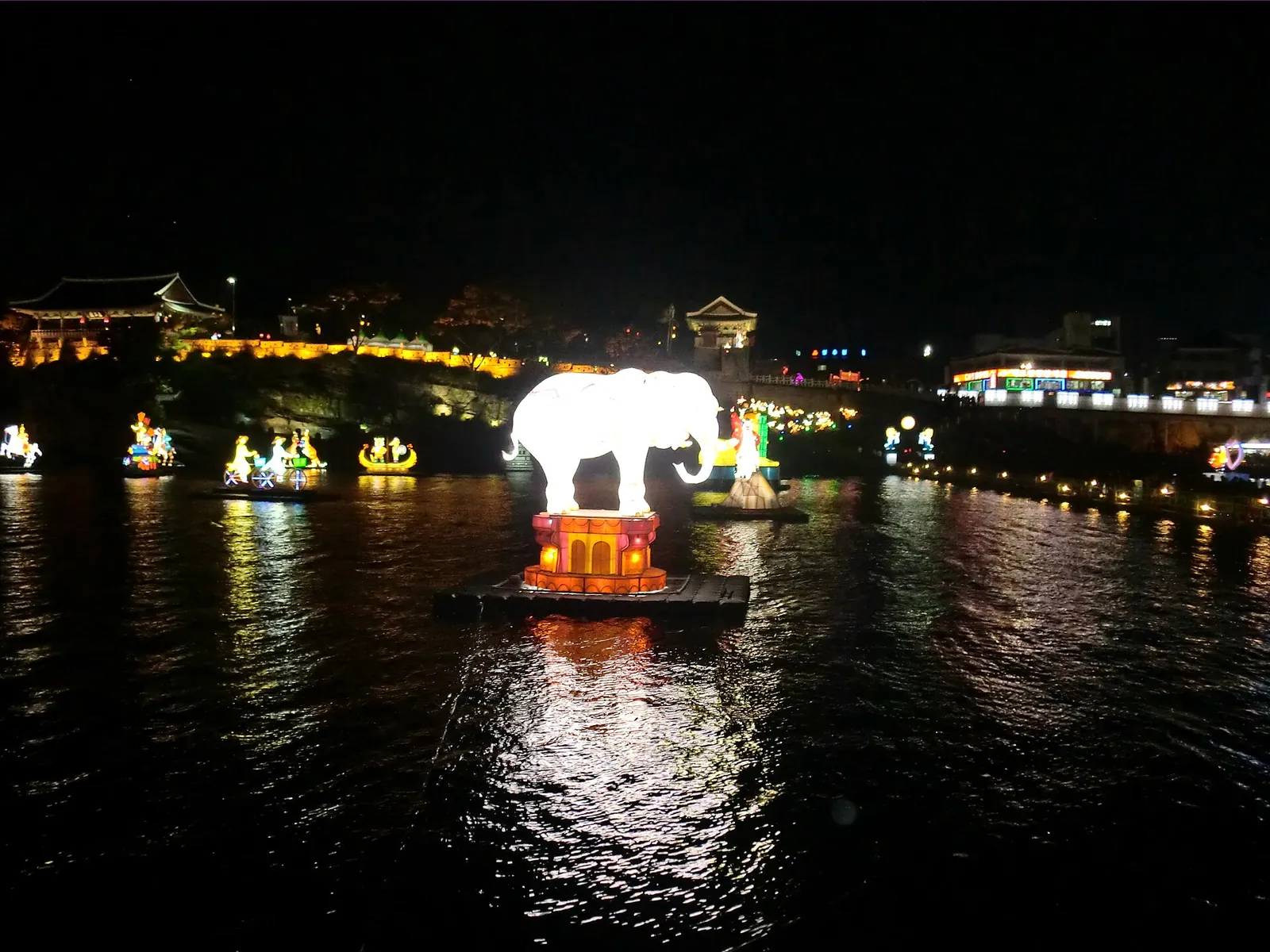
The Jinju Namgang Yudeung Festival fills the river in front of the fortress with lanterns every October. VisitKorea traces it to the lanterns used for communication during the Battle of Jinju and describes more than 70,000 lanterns floating on the Namgang, with fireworks over the water and a drone light show. When we checked on 2026-10-03, VisitKorea's event listing gave the 2026 dates as 3 to 18 October, programmes from 13:00 to 23:00 around Jinjuseong Fortress and the Namgang, a floating lantern exhibition, a land lantern exhibition, a drone light show and a water fireworks show, and free admission.
Because the festival is about light, most of it happens at night. Earlier VisitKorea guides describe making and floating your own lantern, riverboat rides among the floating lanterns and crossing the river on a temporary bridge, booked on site; check which of these run this year on the official site, yudeung.com, which has an English version. VisitKorea advises taking the city buses marked for the festival rather than driving.
During the 2026 festival there is also Guardians of Jinju, a night-time mission tour around the fortress and the Jinju Battle History Culture Park that runs in a web browser, with one of its three parts in English; VisitKorea says it starts at the lawn plaza inside Gongbukmun Gate.
Outside October you can still see the lanterns at Somangjinsan Lantern Theme Park, near the fortress and Nongae Market, created to show the festival's lanterns all year. VisitKorea lists it as free and open all year, with a rooftop terrace looking over the river and the fortress.
Jungang Market, Nongae Market and the Saturday night market
Jinju Jungang Market traces its origins to 1884 and was designated a cultural tourism market in 2011, according to VisitKorea. It runs under a 980-metre arcade, with hanbok and fabric shops, food alleys and general goods; produce from the Jirisan area and seafood from the south coast arrive in the early-morning wholesale trading before the regular shops open. When we checked on 2026-10-03, VisitKorea listed it as open 04:00 to 22:00, with hours varying by stall, and closed on the first and third Sundays of the month.
Next door, Nongae Market, opened in 1962 as Jangdae Market, has a Noodle Road of noodle shops, and VisitKorea mentions a youth food zone on the second floor of Jungang Market. On Saturday evenings Nongae Market hosts the Allbam Night Market, Jinju's only permanent night market: when we checked, VisitKorea listed it as running every Saturday from 18:00 to 23:00 within a season set each year, with stalls selling bibim mandu, yukjeon (battered pan-fried beef), grilled ice cream and spicy braised pigs' feet. If you can arrange your night in Jinju for a Saturday, this is the easiest dinner in town.
Beyond the fortress: Jinyangho Lake and Gangju Pond
With a second day, head upstream to Jinyangho Park on Jinyangho Lake, which VisitKorea describes as the only man-made lake in South Gyeongsang, with a small zoo and a three-storey observatory looking over the water. When we checked on 2026-10-03, VisitKorea listed the zoo as open 09:00–18:00 from March to October (09:00–17:00 from November to February, last entry an hour before closing), with tickets of 1,000 won for adults. The Jinju Bullfighting Arena nearby seats 3,000; VisitKorea lists regular matches on Saturdays at 13:30 from March to September — a local tradition rather than a show, and not one everyone will want to watch.
In summer, Gangju Pond in Jeongchon-myeon, on the edge of the city, is filled with lotus flowers and ringed by trees that VisitKorea says are 500 to 600 years old. VisitKorea lists it as open around the clock.
Getting there and moving on
By bus is the most practical way in. VisitKorea's bus guide lists Jinju among the express-bus routes from Seoul Express Bus Terminal and the intercity routes from Seoul Nambu Terminal and Dong Seoul Terminal; check times on kobus.co.kr (express) and txbus.t-money.co.kr (intercity).
By train, Jinju Station is on the Gyeongjeon Line, which VisitKorea's rail page shows running between Busan and Mokpo via Masan, Jinju, Hadong and Suncheon, and KTX trains also stop there. Check current services on Korail (letskorail.com); remember the station is a taxi ride from the fortress.
By air, Sacheon Airport is the closest: VisitKorea lists flights to Gimpo (Seoul) and Jeju, and about 30 minutes by intercity bus from the airport to the Jinju Express Bus Terminal. International travellers usually land at Incheon or Gimhae (Busan) and continue by bus or train.
Moving on, Jinju makes a natural first or last stop for the western South Gyeongsang coast and Jirisan: Hadong follows Jinju on VisitKorea's Gyeongjeon Line route, and VisitKorea lists Namhae among the places close to Sacheon Airport.
Practical questions
How many days do I need in Jinju?
One night is enough for Jinjuseong Fortress, Chokseongnu, the museum, a Jinju bibimbap lunch and the river at night. Stay two nights during the October lantern festival or if you want to add Jinyangho Lake.
When is the Jinju lantern festival in 2026?
VisitKorea lists the Jinju Namgang Yudeung Festival from 3 to 18 October 2026, around Jinjuseong Fortress and the Namgang River, with programmes from 13:00 to 23:00 and free admission. The lanterns are best after dark.
How much does Jinjuseong Fortress cost and when is it open?
When we checked on 2026-10-03, VisitKorea listed 2,000 won for adults, 1,000 won for teenagers and 600 won for children, and opening hours of 05:00–23:00 from March to October and 05:00–22:00 from November to February. The Jinju National Museum inside is free.
What is special about Jinju bibimbap?
It is served with seasonal vegetables in seven colours and topped with seasoned raw beef, sometimes with rice cooked in beef broth, and comes with seonji (blood) soup — VisitKorea's description. Cheonhwang Sikdang near Jungang Market has served it since 1927.
How do I get from Jinju Station to the fortress?
Jinju Station is outside the centre. VisitKorea gives about 40 minutes by public transport from the station to Jungang Market, next to the old town, so a taxi is quicker with luggage. The express bus terminal is much closer.
Which airport is closest to Jinju?
Sacheon Airport, with flights to Gimpo and Jeju. VisitKorea gives about 30 minutes by intercity bus from the airport to the Jinju Express Bus Terminal. From abroad, fly into Incheon or Gimhae and continue overland or on a domestic flight.
Sources and checks before you travel
Reference sources for the version dated 3 October 2026. Confirm opening times, access, transport and conditions for your travel dates.
- VisitKorea: Jinjuseong Fortress ↗ — opens in a new tab
- VisitKorea: Chokseongnu Pavilion ↗ — opens in a new tab
- VisitKorea: Shopping Like A Local — Four Elegant Items from Gyeongsangnam-do ↗ — opens in a new tab
- VisitKorea: Jinju National Museum ↗ — opens in a new tab
- Jinju National Museum (official site) ↗ — opens in a new tab
- VisitKorea: Jinju Namgang Yudeung Festival (event listing) ↗ — opens in a new tab
- VisitKorea: Korea's TOP 14 Autumn Festivals in 2026 ↗ — opens in a new tab
- VisitKorea: Five Fall Festivals of Golden Light & Romance ↗ — opens in a new tab
- VisitKorea: Guardians of Jinju ↗ — opens in a new tab
- VisitKorea: Somangjinsan Lantern Theme Park ↗ — opens in a new tab
- VisitKorea: Traditional Markets — Jinju Jungang and Nongae Markets ↗ — opens in a new tab
- VisitKorea: Jinju Jungang Market ↗ — opens in a new tab
- VisitKorea: Jinju Allbam Night Market (Nongae Market) ↗ — opens in a new tab
- VisitKorea: Jinju Bibimbap ↗ — opens in a new tab
- VisitKorea: Cheonhwang Sikdang ↗ — opens in a new tab
- VisitKorea: Hayeonok ↗ — opens in a new tab
- VisitKorea: Golden Tulip Jinju Hotel Namgang ↗ — opens in a new tab
- VisitKorea: Dongbang Hotel ↗ — opens in a new tab
- VisitKorea: J Square Hotel ↗ — opens in a new tab
- VisitKorea: Jinyangho Park ↗ — opens in a new tab
- VisitKorea: Jinju Bullfighting Arena ↗ — opens in a new tab
- VisitKorea: Gangju Pond ↗ — opens in a new tab
- VisitKorea: Domestic Flights ↗ — opens in a new tab
- VisitKorea: Express Bus & Intercity Bus ↗ — opens in a new tab
- VisitKorea: Unique Transportation (S-Train) ↗ — opens in a new tab
Photo credits
Gongbukmun, the main north gate of Jinjuseong Fortress
Photograph: Bernard Gagnon — opens in a new tab · CC0 — opens in a new tab
Changes: Resized and converted to WebP; displayed with responsive crops. · Original photograph and licence details ↗ — opens in a new tab
Chokseongnu Pavilion above the Namgang River
Photograph: 최옥석 — opens in a new tab · CC BY-SA 4.0 — opens in a new tab
Changes: Resized and converted to WebP; displayed with responsive crops. · Original photograph and licence details ↗ — opens in a new tab
Floating lanterns on the Namgang River during the 2015 Yudeung Festival
Photograph: hyolee2 — opens in a new tab · CC BY-SA 3.0 — opens in a new tab
Changes: Resized and converted to WebP; displayed with responsive crops. · Original photograph and licence details ↗ — opens in a new tab
Jinju bibimbap with yukhoe (seasoned raw beef)
Photograph: by shizu k (shezzz) at Flickr — opens in a new tab · CC BY-SA 2.0 — opens in a new tab
Changes: Resized and converted to WebP; displayed with responsive crops. · Original photograph and licence details ↗ — opens in a new tab
Jinju National Museum inside the fortress grounds
Photograph: Kang Byeong Kee — opens in a new tab · CC BY 3.0 — opens in a new tab
Changes: Resized and converted to WebP; displayed with responsive crops. · Original photograph and licence details ↗ — opens in a new tab