Busan and South Gyeongsang · South Gyeongsang
Hadong travel guide: wild tea, Ssanggyesa and the Hwagae blossom road
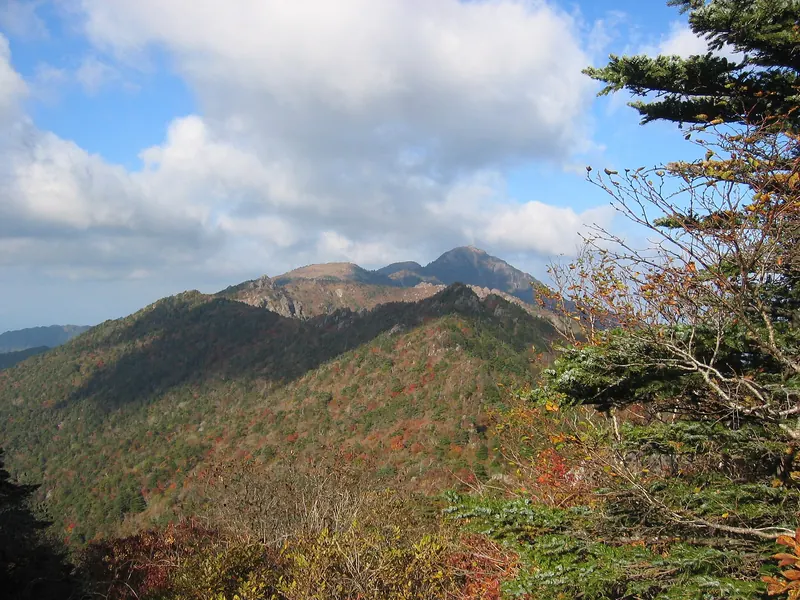
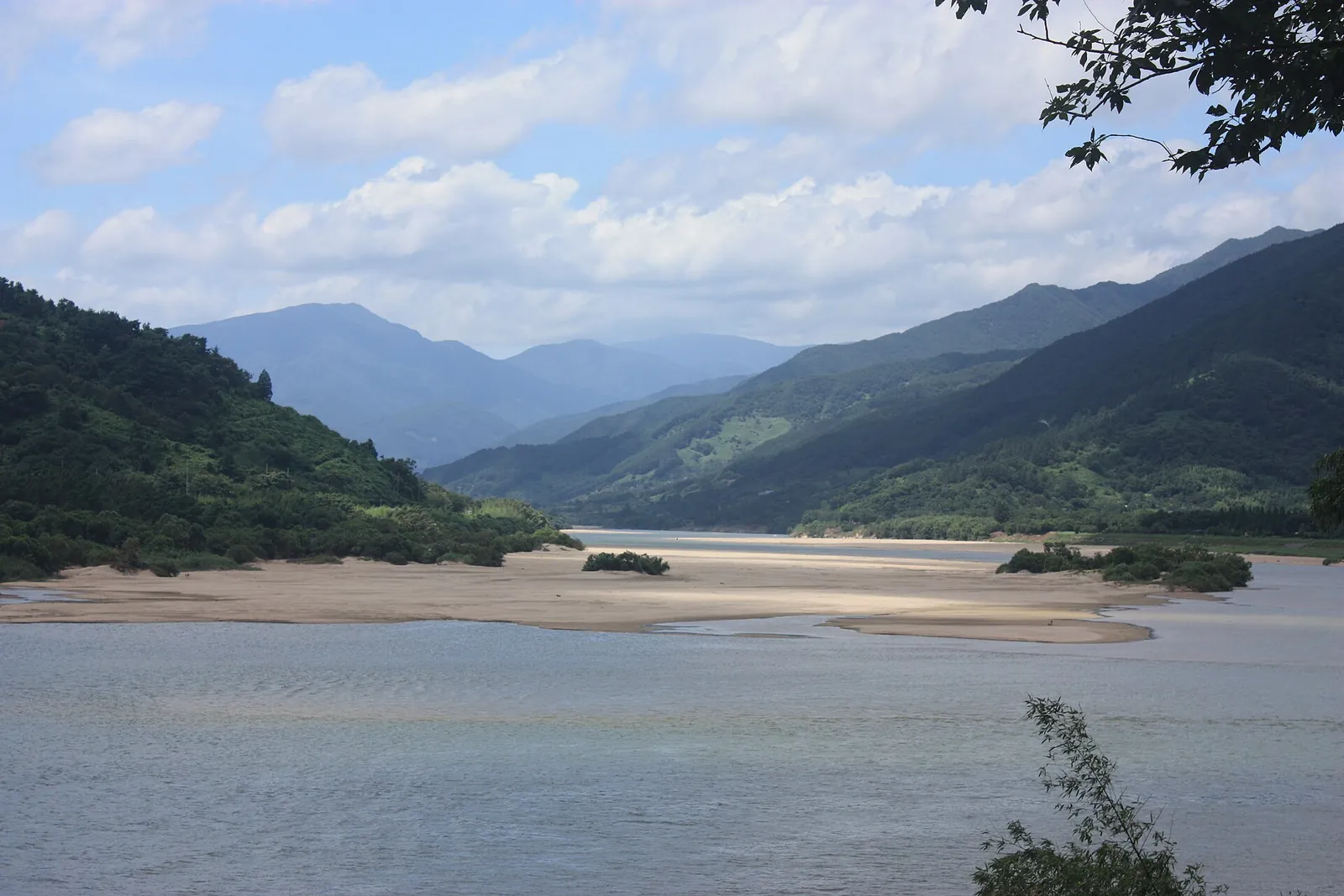
Hadong is a rural county in the far west of South Gyeongsang, where the Seomjin River runs south from the foot of Jirisan along the border with South Jeolla. Its claim in Korea is tea: Ssanggyesa Temple records that tea seeds brought back from Tang China were first planted in the Hwagae area in 828, and the bushes that still grow in patches up the steep valley sides are prized as wild rather than cultivated. Around that story sit a thousand-year-old temple, a riverside market at the mouth of the Hwagae valley, a road of cherry trees between the two, and, further down the river, the farm village that Pak Kyongni made famous in her novel Toji. Nothing here is big; the point is to slow down, drink tea where it is grown and let the valley set the pace.
- Suggested time
- 1–2 nights
- Where to stay
- Hwagae-myeon (Hwagae Market and the valley towards Ssanggyesa); Agyang-myeon (Pyeongsa-ri) for a quieter hanok stay
- Season and timing
- Spring for the cherry blossom road between Hwagae Market and Ssanggyesa; April to June for tea picking, with the Hadong Wild Tea Cultural Festival every May (1–5 May in 2026); autumn for persimmons, chestnuts and the Toji literature festival at Pyeongsa-ri.
The short answer
Give Hadong one night, two if you want both the tea valley and Pyeongsa-ri without rushing. Sleep in Hwagae-myeon, near Hwagae Market or up the valley towards Ssanggyesa, so that the temple, the tea museum and the tea gardens are a short bus or taxi ride away; Agyang-myeon (Pyeongsa-ri) is the quieter alternative, with a hanok stay at the Choi Champan house. Arrive by intercity bus to Hwagae from Seoul Nambu Terminal or Busan Seobu Terminal, or by train or bus to Hadong-eup and a local bus up the river. Come in spring for the cherry road, in late April and May for the new tea and the Hadong Wild Tea Cultural Festival, or in autumn for persimmons and the Toji literature festival.
Three parts of one county: Hwagae, Agyang and Hadong-eup
Hadong is easiest to plan as three places strung along the Seomjin River. Hwagae-myeon, upriver near the South Jeolla border, is the one most visitors come for: Hwagae Market sits where the Hwagae stream meets the Seomjin, and the road from the market climbs the narrow valley past tea gardens to Ssanggyesa Temple, with the Hadong Tea Museum and Tea Cultural Center on the way. This is the tea country and the cherry road, and the best place to sleep if tea is the reason for your trip.
Agyang-myeon, downstream, is a basin of fields surrounded by Jirisan and crossed by the Agyang stream. VisitKorea describes it as a Slow City where about 80 per cent of Hadong's persimmons are grown; at its edge, the hillside village of Pyeongsa-ri holds the Choi Champan house from the novel Toji and looks over the fields to the river. It is the quieter base: there is a hanok stay in the Choi Champan village, and VisitKorea lists Starway Hadong Healfort, a 13-room lodging halfway up the slope with views over the river.
Hadong-eup, the county town further downstream, is where Hadong Station is. It has the Hadong Pine Forest on the riverbank and a traditional market, but it is a transport stop rather than a reason to stay. If you arrive late, sleep here and take a morning bus up the river to Hwagae.
Wild tea in the Hwagae valley
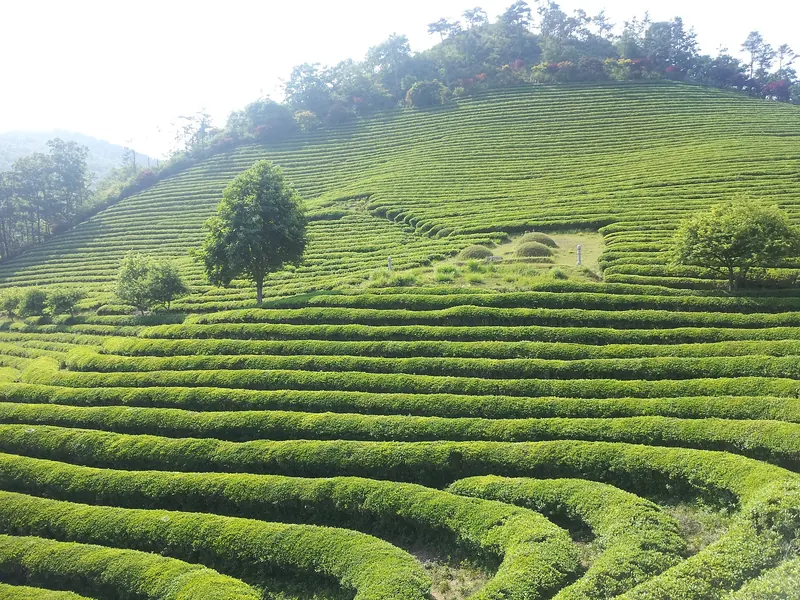
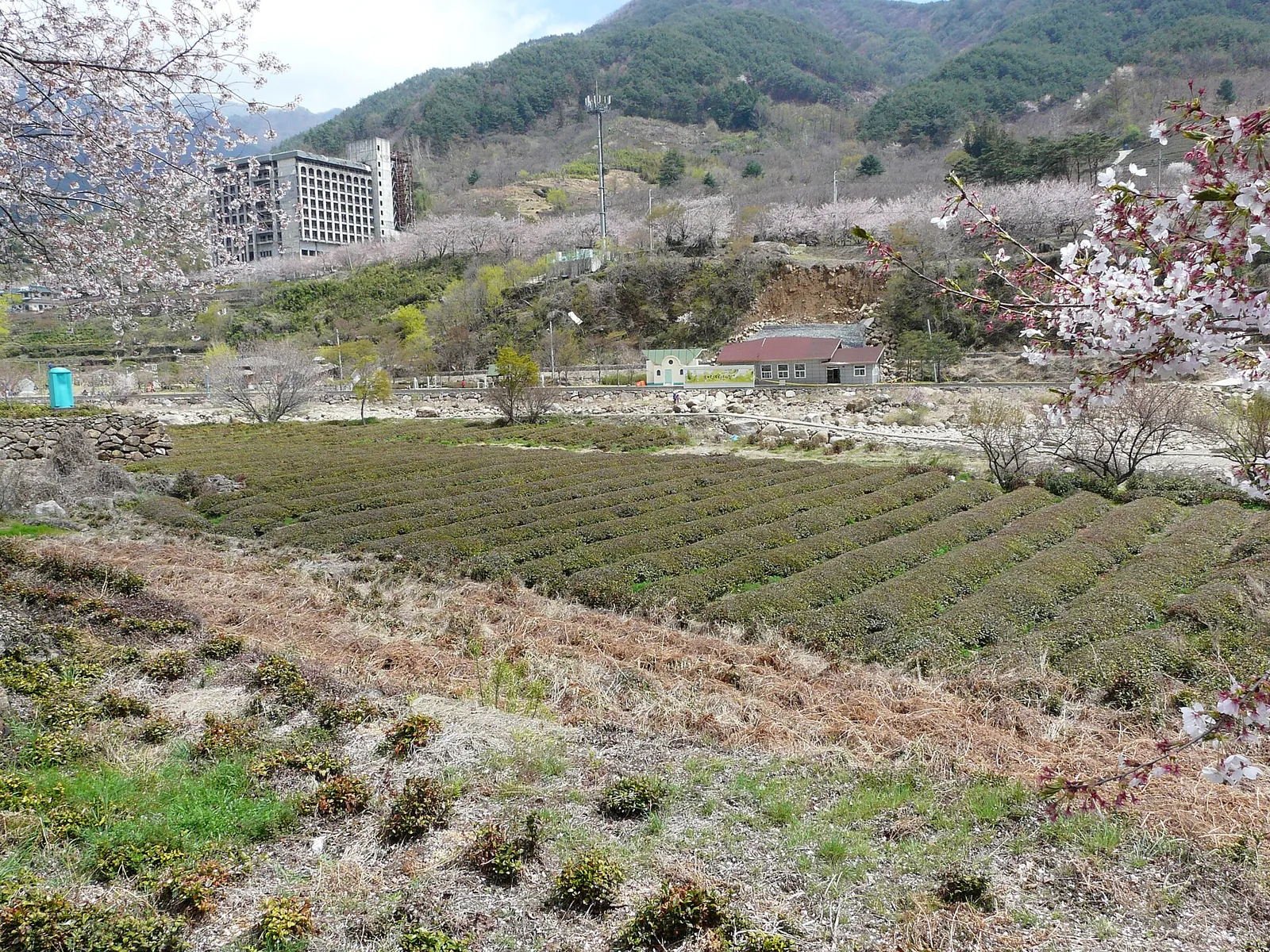
Ssanggyesa's own history explains why Hadong calls itself Korea's first tea place: in 828, the envoy Kim Daeryeom returned from Tang China with tea seeds, and by royal order they were first planted here and spread through the Hwagae area. The temple lists the tea trees' first planting site as a natural heritage site of South Gyeongsang province. VisitKorea notes that Hadong's tea fields are known for being wild rather than cultivated, and historically presented to the royal court. Expect bushes growing among rocks and trees on steep slopes rather than the clipped, terraced rows of Boseong.
Start at the Hadong Tea Cultural Center (571-25 Ssanggye-ro), which groups the Hadong Tea Museum, a tea experience hall and a tea market, plus a Tea Healing Center opened in 2024 with a tea café and a green-tea foot bath that looks out over the tea slopes. When we checked on 2026-10-03, VisitKorea listed opening hours of 10:00 to 18:00 from March to October and 10:00 to 17:00 from November to February, closed on Mondays, 1 January, Seollal and Chuseok, with free entry to the museum and paid experiences such as a tea ceremony (5,000 won), tea-leaf picking (3,000 won) and tea roasting (9,000 won). VisitKorea's wellness feature says the programmes are by reservation and that picking and roasting are offered in the harvest season, April to June.
For tea in the fields themselves, the valley's private tea gardens serve their own leaves. VisitKorea singles out Dosimdawon, a garden with a pavilion above the tea rows that appeared in the TV show House on Wheels; when we checked, it listed opening from 10:00 to 17:00 every day, a 3,000-won entry waived if you order at the café, and a 25,000-won tea set for brewing your own in the pavilion. It is off the valley road on Sinchondosim-gil; a taxi from Hwagae Market is the simplest way there.
- Tea Café at the Tea Healing Center: VisitKorea recommends jaeksaltang, a fermented wellness tea named after the Hadong dialect word for young tea leaves, as well as ujeon, the traditional Hadong green tea.
- Buying tea: the Ssanggye Tea Museum, run by the Ujeon tea artisan Kim Dong-gon, is inside Hwagae Market, according to VisitKorea's Hadong tea shopping guide.
- Brewing at home: VisitKorea's guide suggests letting boiled water cool to 70–80 °C and steeping Hadong green tea for two to three minutes.
Make time for the local food
What to eat and where to look
Jaecheop (Seomjin River freshwater clams)
Tiny freshwater marsh clams from the Seomjin River are Hadong's everyday speciality. VisitKorea describes jaecheopguk as a clear clam soup with chives, and the local restaurants also serve jaecheophoe, the clams tossed raw with vegetables in a sweet-and-sour chilli dressing, clam pancakes and full jaecheop set meals.
- Where to look
- Clam restaurants along Seomjingang-daero near Hwagae and in Hadong-eup; VisitKorea lists Hwanggeum Jaecheop Sikdang (3915 Seomjingang-daero, Hwagae-myeon) and Buheung Jaecheop Sikdang (98 Gyeongseo-daero, Hadong-eup).
- Fit it into your day
- A set meal of soup, pancake and clam salad for lunch on the way into the valley, or jaecheopguk for breakfast in Hadong-eup.
Jaecheophoe is a raw shellfish dish; order the soup or pancake if you avoid raw shellfish.
Temple-style perilla noodles (sachal guksu)
VisitKorea's food guide mentions a restaurant in front of Ssanggyesa that is known for Buddhist temple-style noodles made from a blend of buckwheat and ground perilla seeds, in a thick, savoury soup with a mushroom stock.
- Where to look
- The restaurants in front of Ssanggyesa Temple.
- Fit it into your day
- Lunch after a morning at the temple.
Temple-style dishes are usually meat-free, but ask if you need a strictly vegetarian meal.
Hadong green tea and tea drinks
Ujeon is the traditional Hadong green tea. VisitKorea also recommends jaeksaltang, a fermented wellness tea brewed with jujube, wild pear, angelica root and ginger, served at the Tea Café in the Hadong Tea Cultural Center, alongside tea-based ades.
- Where to look
- The Tea Café at the Tea Healing Center (571-25 Ssanggye-ro), the valley's tea gardens and the tea shops of Hwagae Market.
- Fit it into your day
- An afternoon tea break between the museum and the temple.
The Tea Cultural Center closes on Mondays; high-grade ujeon is expensive, so taste before buying.
Chestnut pie and sweetfish
Hadong chestnuts go into the chestnut pie that VisitKorea recommends at Bamtol near Hwagae Market. In summer, the clean rivers also bring sweetfish (eun-eo), which VisitKorea describes as a summer delicacy deep-fried whole and dipped in vinegared soy sauce or chilli paste.
- Where to look
- Bamtol, 17-1 Hwagae-ro, Hwagae-myeon, for the pie; river restaurants around Hwagae for sweetfish in season.
- Fit it into your day
- Chestnut pie as a snack in the market; fried sweetfish with dinner in summer.
Sweetfish is seasonal and not on every menu; ask before you set out for it.
Ssanggyesa Temple and the cherry blossom road
Ssanggyesa stands at the top of the valley on the southern slopes of Jirisan. The temple dates its opening to 723 and its full founding to 840, when the Seon master Jingam built a hall here and taught Seon and Buddhist chant; VisitKorea adds that the present name dates from 887 and the current buildings from 1632, after the temple burned in the Imjin War. The Silla scholar Choe Chiwon praised the setting as a separate world inside a gourd bottle, and the stele of Master Jingam is the temple's National Treasure. When we checked on 2026-10-03, VisitKorea listed opening hours of 08:00 to 17:30 and free admission.
Beyond the main halls lie Bulil Falls, which the temple and VisitKorea both name among the area's highlights, and the area around the falls that the temple identifies as Cheonghakdong, the 'blue crane valley' where people once sought an ideal world. Ssanggyesa also runs a templestay programme; check the temple's site for the current programmes and booking.
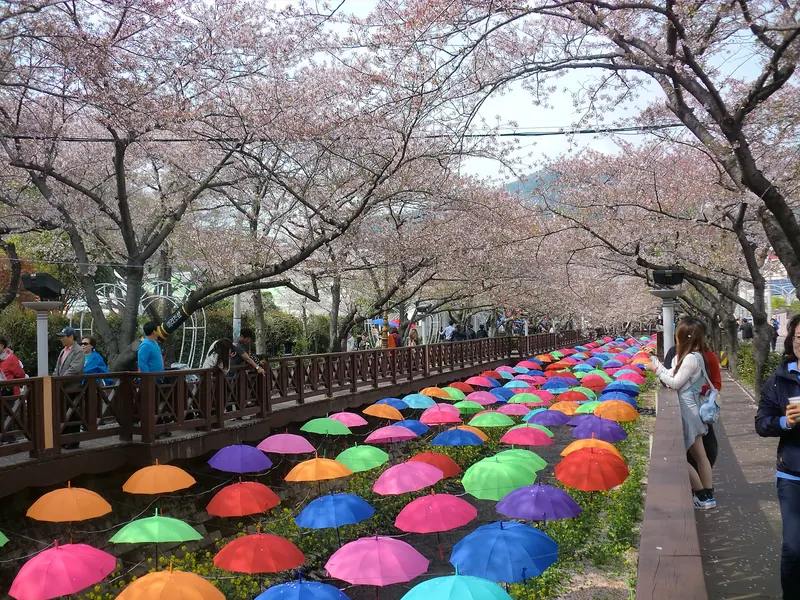
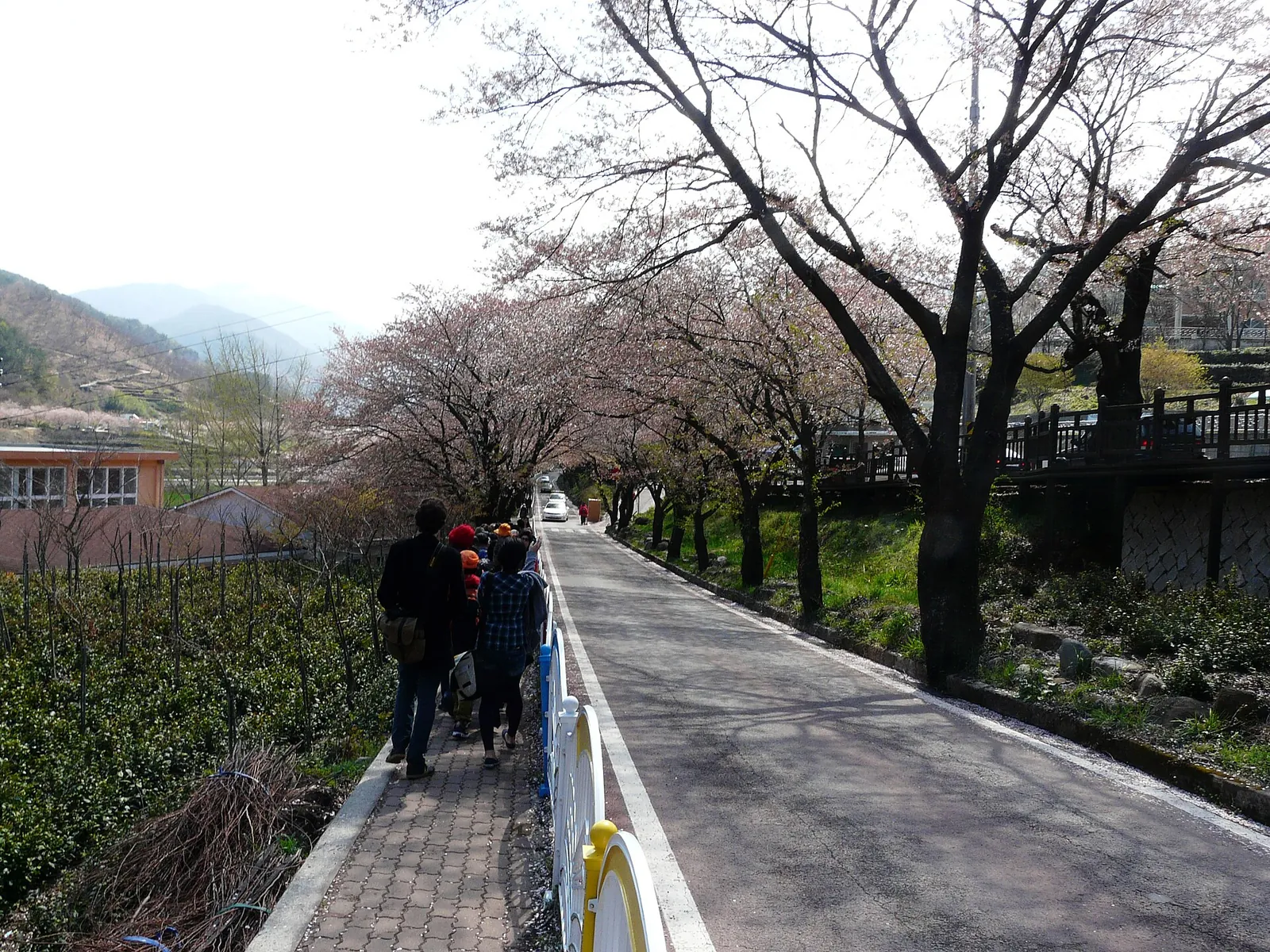
The road between Hwagae Market and the temple is lined with cherry trees. VisitKorea calls it the Simni (10-ri) Cherry Blossom Road and says the stretch runs for about 6 kilometres; local lore holds that a couple who walk it hand in hand will stay together for a hundred years, so it is also called the wedding road. The trees flower in spring and the Hwagae Market Cherry Blossom Festival is held then, but the exact week shifts every year: follow the blossom forecast, come on a weekday if you can, and expect crowds at weekends.
Hwagae Market
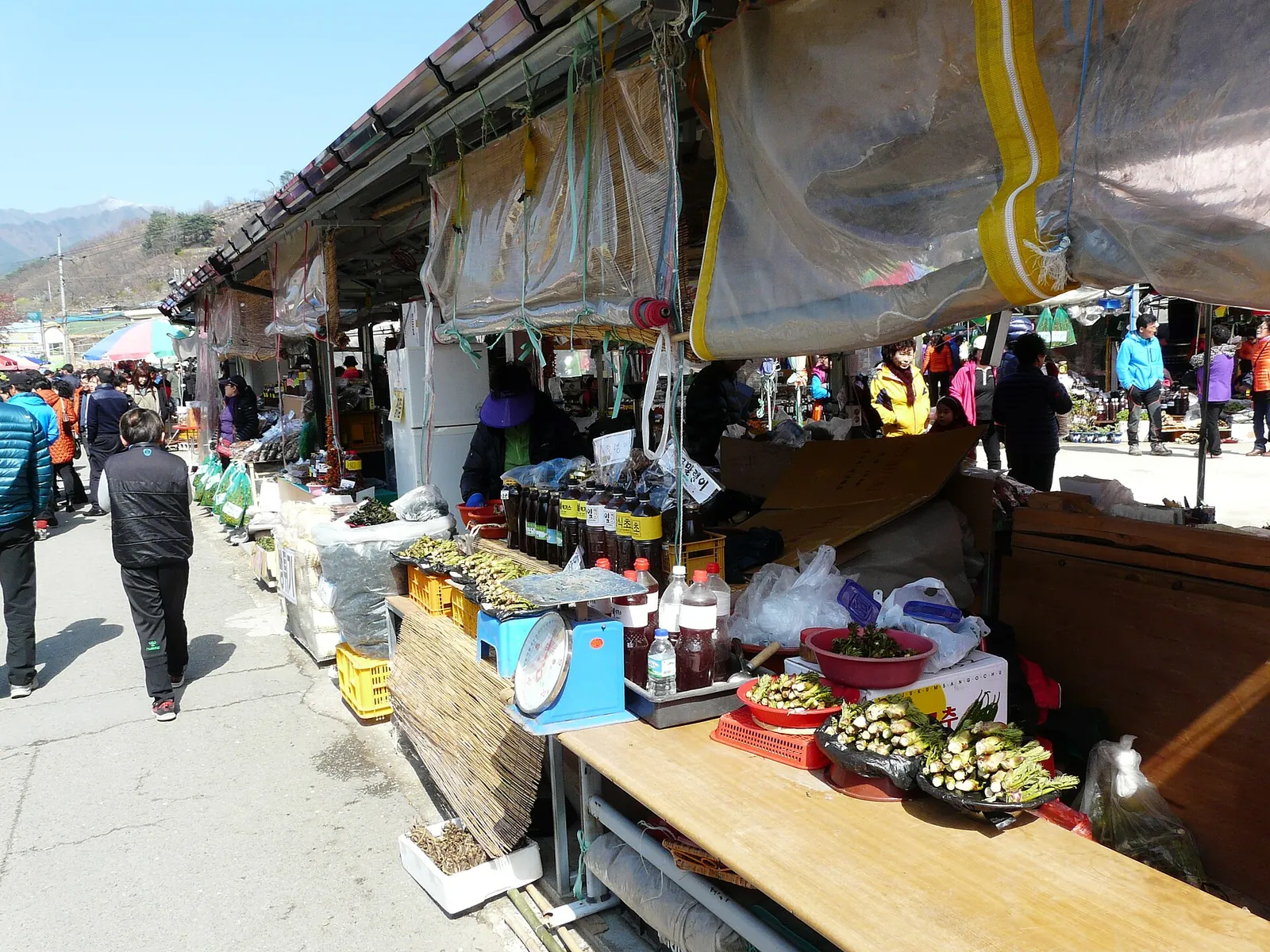
Hwagae Market is the meeting point of the valley and the river, and a natural first or last stop. VisitKorea describes it as one of the five great traditional markets of old Korea and the setting of Kim Dong-ri's story Yeokma, and lists chestnuts, wild greens, persimmons, jakseolcha (young-leaf tea) and sweetfish among its local products. Another VisitKorea guide explains why it mattered: it stands where the Hwagae stream joins the Seomjin, on the old border between the Jeolla and Gyeongsang regions, so Jirisan's wild and medicinal herbs were traded here for Jeolla rice and barley; it is also where the cherry road to Ssanggyesa begins. When we checked on 2026-10-03, VisitKorea listed the market as open daily, 09:00 to 18:00, with cards accepted.
Treat it as a place to eat and shop for tea, wild greens and green-plum preserves from the Jirisan slopes rather than as a sight. VisitKorea's autumn food feature points to Bamtol, near the market at 17-1 Hwagae-ro, for chestnut pie made with Hadong chestnuts. Market stalls and restaurants are busiest on blossom weekends; on an ordinary weekday the market is calm and the bus stop is right there.
Pyeongsa-ri, the Choi Champan house and the Toji trail
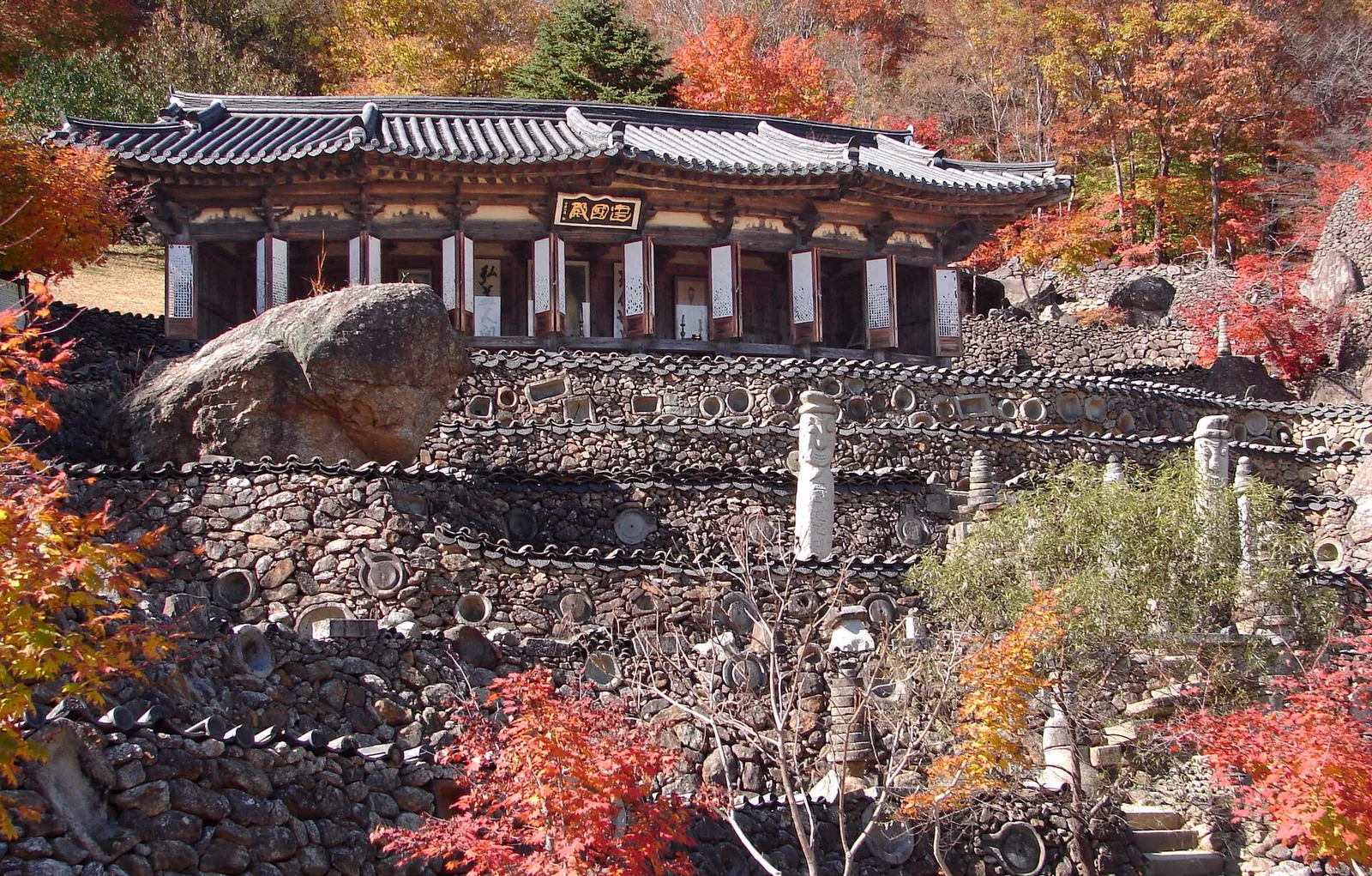
Pak Kyongni's saga Toji (The Land) is set in Pyeongsa-ri, and the houses of the novel have been reproduced on the hillside above the fields. VisitKorea describes Choi Champandaek as a group of fourteen hanok buildings in a small folk literature village, used as the main set of the 2004 drama version, with a raised wooden hall that looks across the Pyeongsa-ri plain to the river. The Toji Literature Festival is held here every autumn. When we checked on 2026-10-03, VisitKorea listed opening hours of 09:00 to 18:00 every day and admission of 2,000 won for adults, 1,500 won for teenagers and 1,000 won for children aged 7 to 12, free for under-sevens and over-65s with proof of age.
The village also has a hanok stay. When we checked, VisitKorea's Choi Champandaek page listed it at 35,000 won on weekdays and 50,000 won at weekends (enquiries +82-55-880-2654), and its accommodation listing describes whole houses and single rooms, some with a raised wooden floor, check-in at 15:00 and a ban on cooking strong-smelling food in the rooms. Staying here means having the village to yourself after the day visitors leave.
Walkers can follow Toji-gil Trail 1, which VisitKorea describes as an 18-kilometre route along the Seomjin River from Pyeongsa-ri Park to Hwagae Market, and a good cherry-blossom walk in spring. Pyeongsari Park itself is a riverside park with campgrounds and shaded rest areas, where the sandbanks were traditionally used for gathering freshwater clams.
Further out: Samseonggung, the pine forest and the zip-wire
Samseonggung, high on Jirisan in Cheongam-myeon, is a Taoist shrine at about 850 metres where, in 1983, a Taoist priest and his disciples restored a sacred altar honouring the three legendary founders of the Korean people. Its stone towers and altars are striking, especially in autumn colour. When we checked on 2026-10-03, VisitKorea listed opening hours of 08:30 to 16:40 every day and adult admission of 8,000 won. It is a separate excursion by car or taxi, not something to tack on to a tea day.
In Hadong-eup, the Hadong Pine Forest lines the Seomjin River: VisitKorea says it was planted in 1745 to block wind and sand and now has about 750 old pines beside a white sandbank, with the Hasangjeong pavilion inside. It is an easy hour if you are waiting for a bus or train in town.
In the south of the county, the Hadong Korea Zip-wire starts from the top of Geumosan at 849 metres and, according to VisitKorea, reaches up to 120 km/h on its run down towards the island-dotted sea. VisitKorea's pages give different operating hours, so check the operator's site (hdalps.or.kr) before you go; like Samseonggung, it needs a car.
Getting there and around
Most travellers come by intercity bus straight to Hwagae. When we checked on 2026-10-03, the directions page on Ssanggyesa's website listed ten buses a day from Seoul Nambu Terminal to Hwagae, from 06:30 to a 22:00 late-night bus; nine from Busan Seobu Terminal to Hwagae between 07:00 and 17:50, plus one direct bus to Ssanggyesa at 10:30; local buses from Hadong to Ssanggyesa from 08:00 to 20:30; and seven buses from Gurye on the Jeolla side. The page is not dated, so confirm times on the operator's booking site or at the terminal before you travel. VisitKorea also lists Hadong among the destinations served from Seoul Nambu Terminal.
Hadong Station in Hadong-eup is on the Gyeongjeon Line between Jinju and Suncheon, which makes a train plus a local bus up the river possible from either side. Within the valley, local buses run between Hadong-eup, Hwagae Market and Ssanggyesa, but with gaps of an hour or more: for Dosimdawon, Samseonggung or a day that covers both Hwagae and Pyeongsa-ri, taxis or a car are far more practical.
This is an editorial suggestion, not a timetable; check the closing days of each place you choose.
- Day 1 — Hwagae: arrive at Hwagae Market by bus, lunch of jaecheop or temple noodles, then up the cherry road to the Tea Cultural Center (closed Mondays) and a late-afternoon tea in a valley tea garden.
- Day 2 — Ssanggyesa and Pyeongsa-ri: Ssanggyesa in the morning, with time for Bulil Falls if you are fit for a forest walk, then down the river to Pyeongsa-ri for the Choi Champan house, and on to Hadong-eup for an onward bus or train.
- Extra day (with a car): Samseonggung in the morning and the Hadong Pine Forest on the way out.
Practical questions
How many days do I need in Hadong?
One night in Hwagae covers the tea museum, a tea garden, Ssanggyesa and the market. Add a second night, or a car, if you also want Pyeongsa-ri and the Choi Champan house, or Samseonggung.
Where should I stay in Hadong?
In Hwagae-myeon, near Hwagae Market or up the valley towards Ssanggyesa, for the tea and the temple. Choose Pyeongsa-ri in Agyang-myeon for a quiet hanok night, and Hadong-eup only if you arrive late by train or bus.
When is the Hadong Wild Tea Cultural Festival?
Every May. When we checked on 2026-10-03, VisitKorea listed the 2026 festival from 1 to 5 May, 10:00 to 18:00, at the Hadong Tea Museum and the Wild Tea Healing Center, with free entry and fees for some programmes.
When do the Hwagae cherry blossoms bloom?
In spring, but the week changes every year with the weather. Follow the official blossom forecast and the festival announcement, and plan a weekday visit if you can, as the single valley road is congested at weekends.
How do I get to Hwagae Market and Ssanggyesa by public transport?
Take an intercity bus to Hwagae from Seoul Nambu Terminal or Busan Seobu Terminal, or reach Hadong-eup by train or bus and take a local bus up the river. Ssanggyesa's website listed local buses from Hadong and Gurye to the temple when we checked; confirm times before you go.
How is Hadong tea different from Boseong?
Hadong's tea is known for growing wild on steep, rocky slopes in the Hwagae valley, where Ssanggyesa records the first tea planting in 828. Boseong is the place for wide, clipped tea terraces.
Sources and checks before you travel
Reference sources for the version dated 3 October 2026. Confirm opening times, access, transport and conditions for your travel dates.
- Ssanggyesa Temple: overview and history ↗ — opens in a new tab
- Ssanggyesa Temple: directions and bus times ↗ — opens in a new tab
- VisitKorea: Hadong Ssanggyesa Temple ↗ — opens in a new tab
- VisitKorea: Hadong Tea Museum ↗ — opens in a new tab
- VisitKorea: Hadong Tea Cultural Center ↗ — opens in a new tab
- VisitKorea: Hadong Wild Tea Cultural Festival ↗ — opens in a new tab
- VisitKorea: Dosimdawon ↗ — opens in a new tab
- VisitKorea: Like A Local [Hadong] Tea ↗ — opens in a new tab
- VisitKorea: Simni (10-ri) Cherry Blossom Road ↗ — opens in a new tab
- VisitKorea: Hadong Hwagae Market ↗ — opens in a new tab
- VisitKorea: Like A Local [Tongyeong] (Hwagae Market note) ↗ — opens in a new tab
- VisitKorea: Choi Champandaek (House of Choi Champan) ↗ — opens in a new tab
- VisitKorea: House of Choi Champan hanok stay ↗ — opens in a new tab
- VisitKorea: Hadong Pak Kyongni Toji-gil Trail 1 ↗ — opens in a new tab
- VisitKorea: Pyeongsari Park ↗ — opens in a new tab
- VisitKorea: Hadong Agyang Slow City ↗ — opens in a new tab
- VisitKorea: Samseonggung ↗ — opens in a new tab
- VisitKorea: Starway Hadong Healfort ↗ — opens in a new tab
- VisitKorea: Hadong Pine Forest ↗ — opens in a new tab
- VisitKorea: Hadong Korea Zip-wire ↗ — opens in a new tab
- VisitKorea: Hwanggeum Jaecheop Sikdang ↗ — opens in a new tab
- VisitKorea: Buheung Jaecheop Sikdang ↗ — opens in a new tab
- VisitKorea: Freshwater Marsh Clam Soup (Jaecheopguk) ↗ — opens in a new tab
- VisitKorea: Temple Noodles (Sachal guksu) ↗ — opens in a new tab
- VisitKorea: Deep-Fried Sweetfish ↗ — opens in a new tab
- VisitKorea: An Autumn Culinary Journey through Korea's Seasonal Flavors ↗ — opens in a new tab
- VisitKorea: Unique Transportation (South Coast train routes) ↗ — opens in a new tab
- VisitKorea: Express bus and intercity bus ↗ — opens in a new tab
- VisitKorea: Fly to Gimhae International Airport ↗ — opens in a new tab
Photo credits
The Seomjin River north of Hadong-eup, flowing down from the Jirisan foothills
Photograph: Marco Schmidt [1] — opens in a new tab · CC BY-SA 3.0 — opens in a new tab
Changes: Resized and converted to WebP; displayed with responsive crops. · Original photograph and licence details ↗ — opens in a new tab
Tea bushes and spring cherry blossom in the Hwagae valley
Photograph: myself ( User:Piotrus ) — opens in a new tab · CC BY-SA 3.0 — opens in a new tab
Changes: Resized and converted to WebP; displayed with responsive crops. · Original photograph and licence details ↗ — opens in a new tab
A cherry-lined lane beside the tea bushes of Hwagae during the blossom festival
Photograph: myself ( User:Piotrus ) — opens in a new tab · CC BY-SA 3.0 — opens in a new tab
Changes: Resized and converted to WebP; displayed with responsive crops. · Original photograph and licence details ↗ — opens in a new tab
Samseonggung's stone-built shrine grounds in autumn colour
Photograph: Steve46814 — opens in a new tab · CC BY-SA 3.0 — opens in a new tab
Changes: Resized and converted to WebP; displayed with responsive crops. · Original photograph and licence details ↗ — opens in a new tab
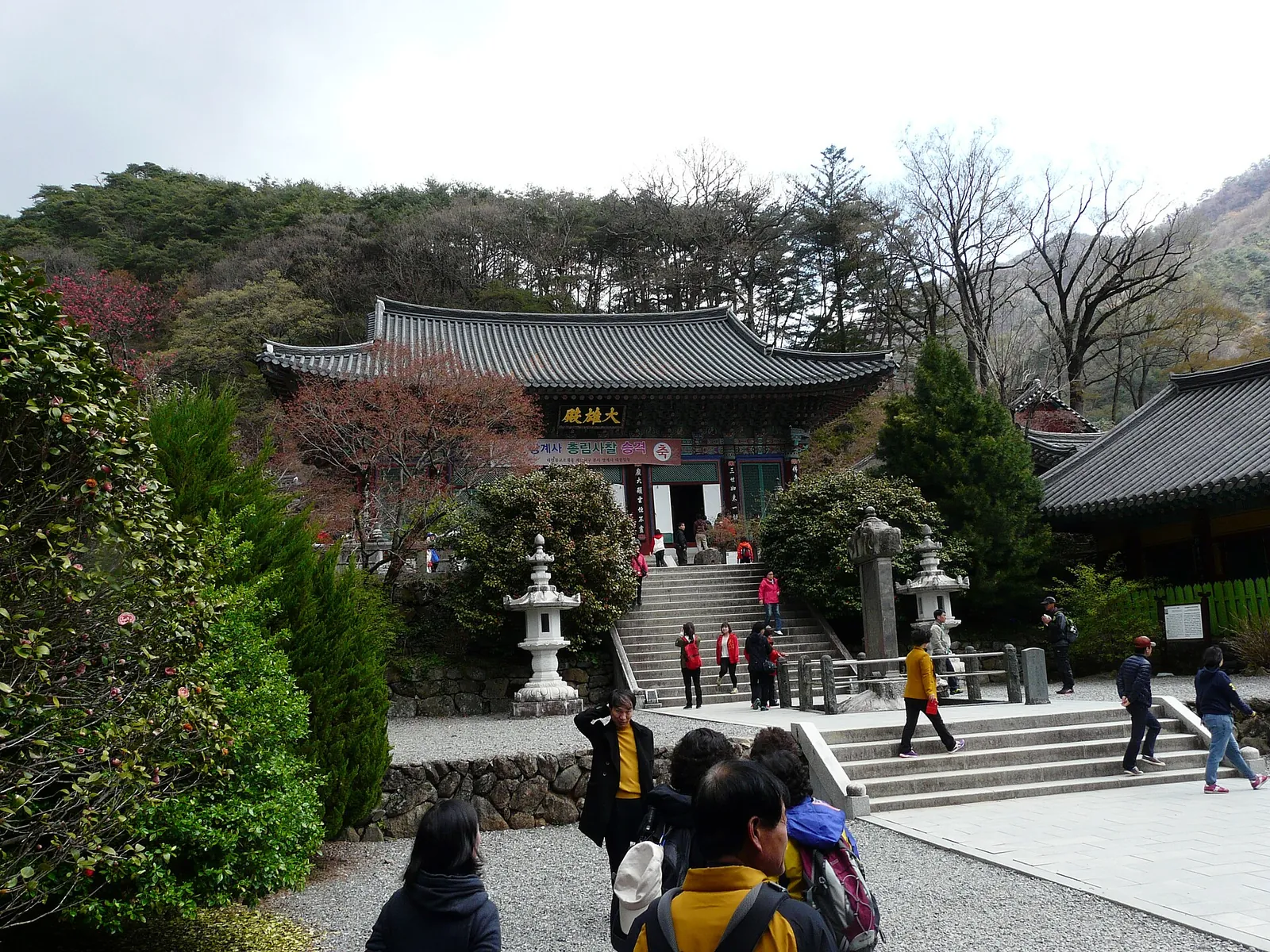
Visitors climbing the steps to the upper halls of Ssanggyesa Temple
Photograph: myself ( User:Piotrus ) — opens in a new tab · CC BY-SA 3.0 — opens in a new tab
Changes: Resized and converted to WebP; displayed with responsive crops. · Original photograph and licence details ↗ — opens in a new tab
Stalls at Hwagae Market during the spring blossom season
Photograph: myself ( User:Piotrus ) — opens in a new tab · CC BY-SA 3.0 — opens in a new tab
Changes: Resized and converted to WebP; displayed with responsive crops. · Original photograph and licence details ↗ — opens in a new tab
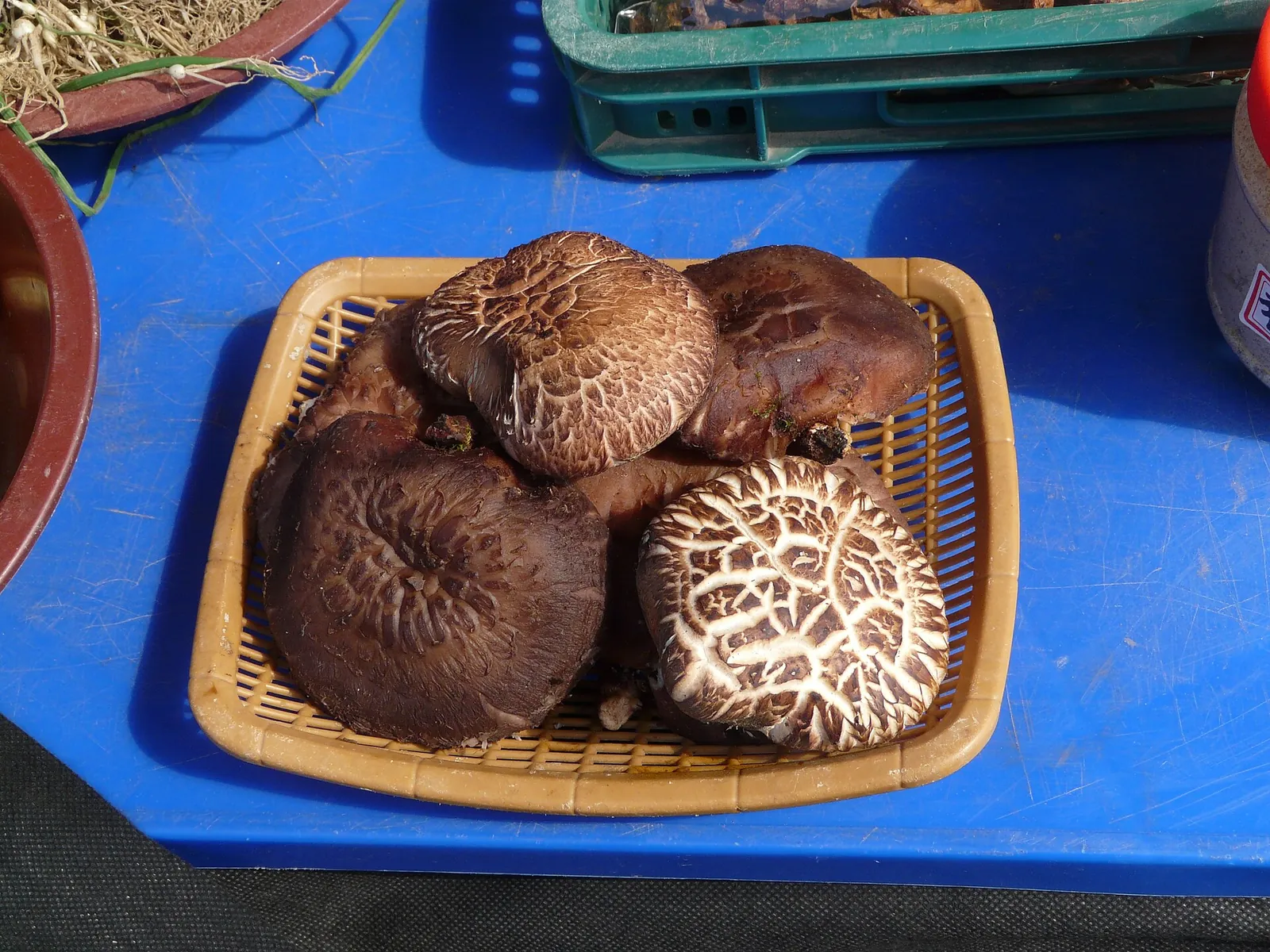
Shiitake mushrooms for sale on a stall in Hwagae
Photograph: myself ( User:Piotrus ) — opens in a new tab · CC BY-SA 3.0 — opens in a new tab
Changes: Resized and converted to WebP; displayed with responsive crops. · Original photograph and licence details ↗ — opens in a new tab