Plan your trip · South Korea
Festivals in South Korea: lanterns, mud, masks and Seollal or Chuseok
South Korea runs a festival somewhere almost every week, but only a handful are worth building a trip around, and two holidays, Seollal and Chuseok, affect your plans more than any festival. The useful festivals cluster in a few windows: cherry blossom at the turn of March and April, lanterns in May, the mud on the west coast in high summer, and an extraordinary run of heritage festivals in late September and October. The lunar calendar moves the big holidays every year, and most organisers publish exact dates only a few months ahead, so this guide gives you the pattern, the dates already announced, and the questions to ask before you book.
- Suggested time
- Two nights in the host town for one festival; 5–7 days to combine two in October
- Where to stay
- Seoul (Jongno) for the Lotus Lantern Festival; old Jinju, Daecheon Beach in Boryeong and central Andong for their festivals
- Season and timing
- Late March–early April for cherry-blossom festivals; May for the Lotus Lantern Festival; late July–early August for the Boryeong Mud Festival; late September to mid-October for Andong, Jinju, Suwon and the Baekje festival; January for ice festivals.
The short answer
Pick one festival and give it two nights in the host town rather than visiting as a day trip from Seoul: the lantern festivals, fireworks and night concerts are at their best after dark, when a day-tripper is heading for the last train. For lanterns, choose the Lotus Lantern Festival in Seoul in May (stay in Jongno) or the Jinju Namgang Yudeung Festival in October (stay in old Jinju by the river). For a party, the Boryeong Mud Festival in late July and early August (stay at Daecheon Beach). For tradition, the Andong Maskdance Festival at the turn of September and October (stay in central Andong or in Hahoe Village). Early October is the richest fortnight: in 2026, Andong, Jinju, Suwon and the Baekje festival in Gongju and Buyeo overlapped. Treat Seollal (around 7 February in 2027) and Chuseok (around 15 September in 2027) as days to stay put in one city: millions of Koreans travel home, many businesses close, but palaces open with free admission.
How festival dates work in Korea
Korea uses the Gregorian calendar, but VisitKorea notes that its traditional holidays still follow the lunar calendar, so Seollal, Buddha's Birthday, Dano and Chuseok move each year. The Korea Astronomy and Space Science Institute's official lunar calendar converter gives the 2027 dates: the first day of the first lunar month (Seollal) falls on 7 February 2027, the eighth day of the fourth month (Buddha's Birthday) on 13 May, the fifth day of the fifth month (Dano) on 9 June, and the fifteenth day of the eighth month (Chuseok) on 15 September. The government confirms public holidays and any substitute days separately, so check those before you fix flights.
Most other festivals keep to a season rather than a date, and the organisers announce each year's programme a few months ahead. When we checked on 2026-10-03, VisitKorea's Hwacheon page already listed the January 2027 ice festival, but the pages for the spring and summer festivals still showed their 2026 editions. Use those as a guide to the timing, then confirm on the festival's own website before booking; this guide names that site for each festival.
Book the room first. Festival towns such as Jinju, Andong and Boryeong have far fewer hotels than Seoul or Busan, the main events happen in the evening, and a night in town is the difference between seeing the lanterns lit and leaving to catch the last bus.
Seollal and Chuseok: what the two big holidays do to a trip
VisitKorea calls Seollal (Lunar New Year) and Chuseok (the harvest festival often called Korean Thanksgiving) the most important traditional holidays, when millions of people visit their home towns. Each is a three-day public holiday, the main day plus the day before and the day after. In 2026 Seollal ran from 16 to 18 February and Chuseok from 24 to 26 September, according to VisitKorea's public holiday list. For 2027, the lunar dates above put Seollal on 7 February and Chuseok on 15 September, so expect holidays around 6–8 February and 14–16 September, subject to the government's confirmation.
For a visitor, the effect is mixed. VisitKorea says that on public holidays palaces, museums, department stores and amusement facilities are open, while government offices and banks close, but during Seollal most businesses close and during both holidays some shut for several days in a row. Smaller attractions often close on the main day itself: VisitKorea lists the Hahoe Mask Museum in Andong, for example, as closed on 1 January and on the days of Seollal and Chuseok. Family-run restaurants and market stalls are the most likely to be shut.
The upside is the cities' heritage programme. VisitKorea's guide to the traditional holidays says many royal palaces, including Gyeongbokgung and Deoksugung, hold events and offer free admission during the Seollal and Chuseok holidays, along with museums and folk villages. The practical plan is to spend the holiday in Seoul, Busan or Gyeongju with a hotel already booked, to do your long train or bus journeys before the first day or after the last, and to expect intercity traffic to peak at the start and end of the break, when the whole country travels at once.
Make time for the local food
What to eat and where to look
Tteokguk (rice cake soup)
Sliced rice cakes in a clear broth, the dish VisitKorea names as the centre of the Seollal feast, often alongside manduguk, dumpling soup. Eating a bowl at New Year is a way of marking the year turning.
- Where to look
- Korean restaurants in Seoul and other cities that stay open over the holiday; it is also on many everyday menus year round.
- Fit it into your day
- A warming lunch during a Seollal stay in the city, when many smaller restaurants are closed.
The broth is usually beef-based and often topped with egg and seaweed; ask before ordering if you avoid meat.
Songpyeon (half-moon rice cakes)
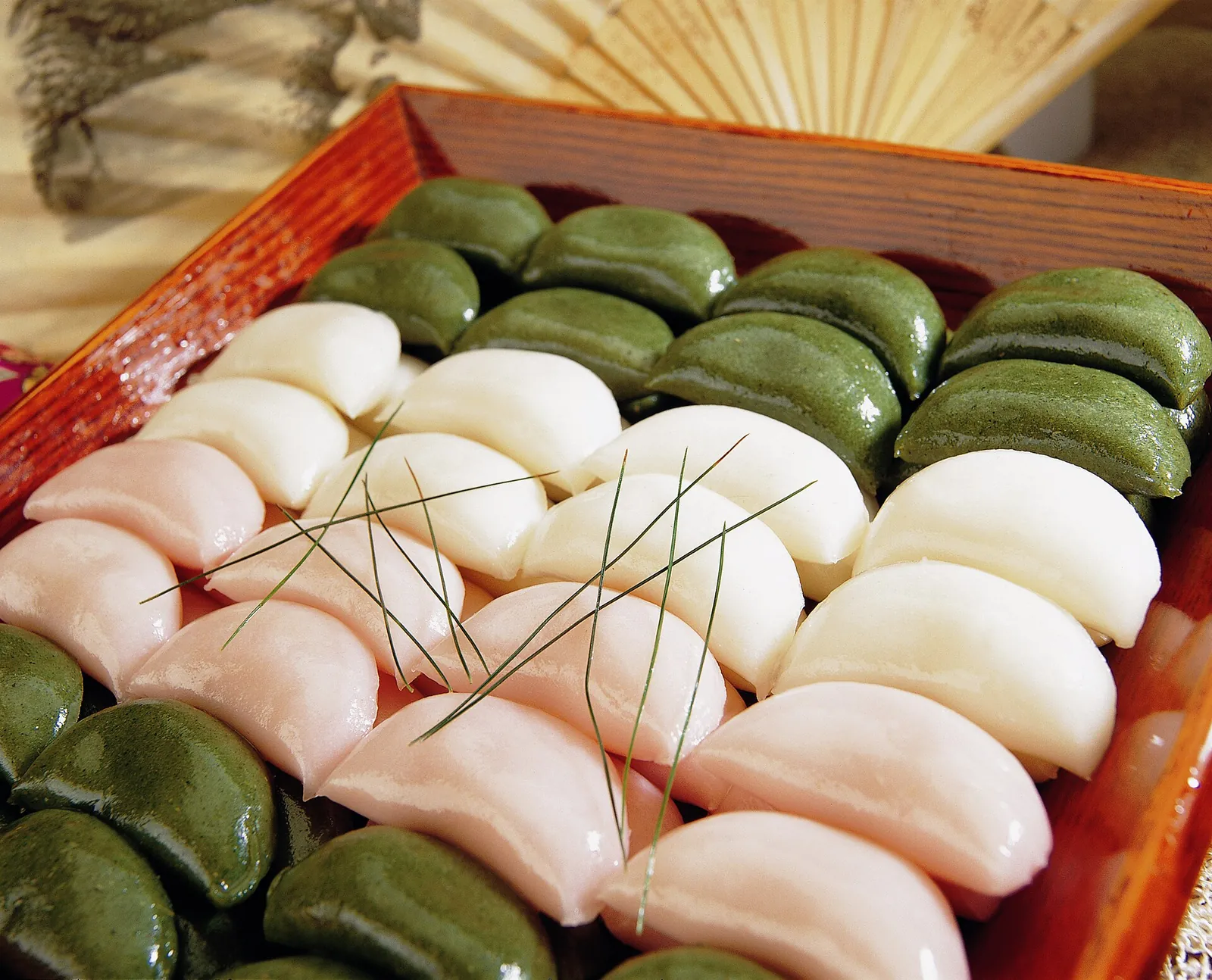
Small half-moon rice cakes filled with red beans, beans or sesame seeds, which VisitKorea lists as the signature Chuseok food along with japchae, seasoned greens, jeon pancakes and newly harvested apples and pears.
- Where to look
- Rice-cake shops (tteokjip) and traditional markets in the days before Chuseok, when they are made in quantity.
- Fit it into your day
- Buy a small box before the holiday as a snack for the days when shops are shut.
Sesame and nut fillings are common; rice cakes are chewy, so cut them for small children.
Jinju bibimbap and bibim naengmyeon
Jinju's own versions of two national dishes. VisitKorea describes Cheonhwang Sikdang, near Jungang Market and open since 1927, serving yukhoe (beef tartare) bibimbap with seonjitguk, a soup with blood cake, and Hayeonok near Chokseongnu Pavilion making its spicy cold buckwheat noodles with strips of pan-fried battered beef on top.
- Where to look
- The old downtown between Jungang Market and Jinjuseong Fortress, a short walk from the lantern festival.
- Fit it into your day
- An early dinner in town before the lanterns are lit, so you are back at the river by dusk.
Yukhoe is raw beef, and seonjitguk contains blood; ask for alternatives if you prefer. When we checked on 2026-10-03, Cheonhwang Sikdang was listed as closed on the first and third Tuesdays of each month.
Andong jjimdak and festival snacks
Andong's braised chicken in a soy-based sauce with glass noodles. VisitKorea's festival page lists stall dishes such as fried chicken in jjimdak sauce, tteokbokki made with Andong apple and mountain yam, and rice balls with braised chicken.
- Where to look
- Festival food stalls around the Maskdance Festival venues, and the jjimdak restaurants in Andong's old market for a sit-down meal.
- Fit it into your day
- Snack at the stalls between performances, then share a full plate of jjimdak in the market in the evening.
The sauce is salty and can be spicy; ask for it less hot if you need to.
Grilled sancheoneo (mountain trout)
At the Hwacheon ice festival, VisitKorea says, the trout you catch can be eaten straight away, sliced raw or grilled.
- Where to look
- The grilling areas at the festival site in Hwacheon-eup.
- Fit it into your day
- Lunch after a morning on the ice, when you need to warm up.
Raw freshwater fish is not for everyone; choose the grilled option if you are unsure.
Spring: cherry blossom in Jinhae and the Lotus Lantern Festival
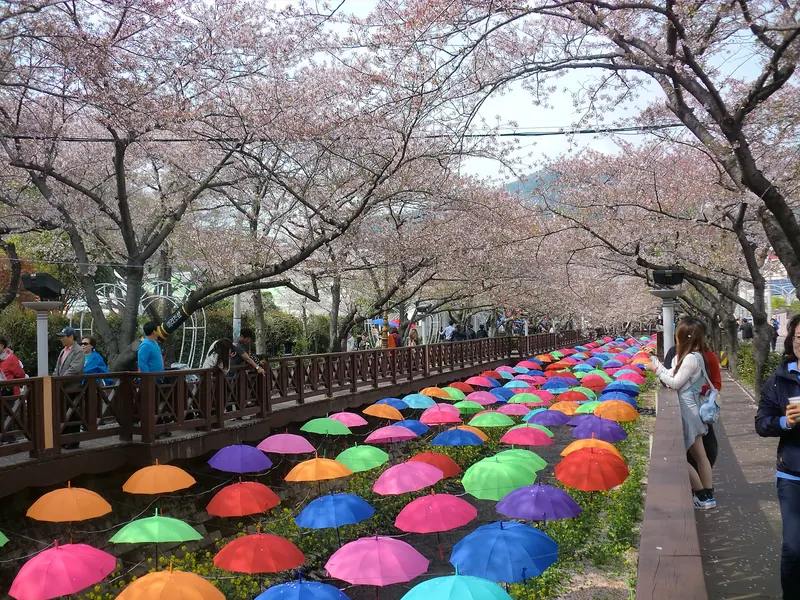
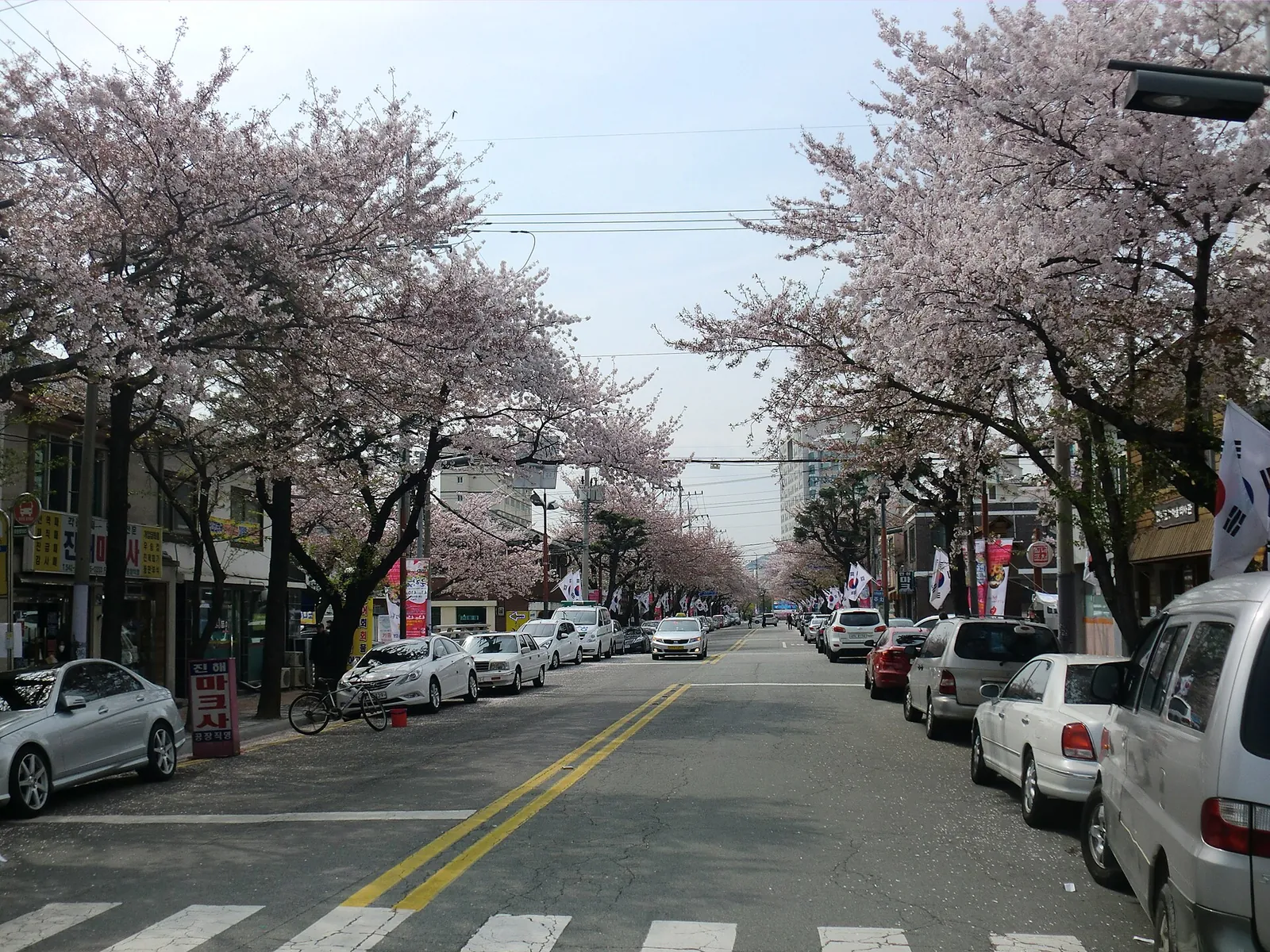
The Jinhae Gunhangje Festival in Changwon is the biggest of the cherry-blossom festivals. VisitKorea says it began in 1952 as a memorial ceremony for Admiral Yi Sun-sin, became a festival in 1963 and now draws more than two million visitors, when about 360,000 king cherry trees flower across Jinhae. The 2026 edition ran from 27 March to 5 April, with a memorial rite, a victory parade, a military band and honour guard festival on Friday evenings and weekends, and rare public access to the Korea Naval Academy and the naval base. Its official site is jgfestival.or.kr. The blossom does not wait for the calendar, so see our cherry blossom guide for how to read the forecasts.
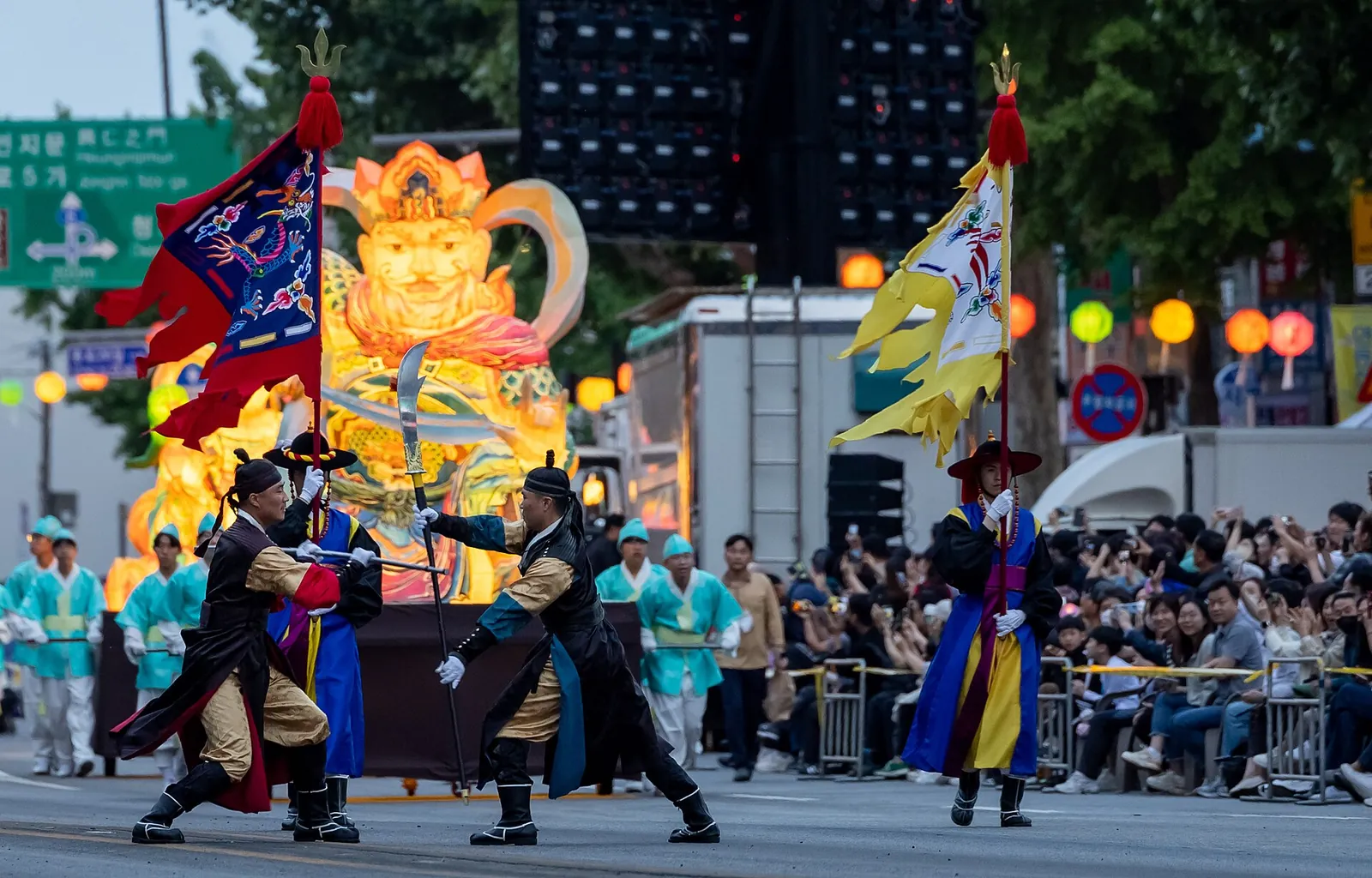
In Seoul, Yeon Deung Hoe, the Lotus Lantern Festival, celebrates Buddha's Birthday. VisitKorea traces it back about 1,200 years to the Silla dynasty and notes its UNESCO recognition. When we checked on 2026-10-03, VisitKorea listed the 2026 festival on 16 and 17 May in the Jongno area, free, with a traditional lantern exhibition, a Buddhist cheer rally, the lantern parade and a street celebration afterwards, organised by the Yeon Deung Hoe Preservation Committee (llf.or.kr). That was the weekend before the Buddha's Birthday holiday on 24 May. With Buddha's Birthday on 13 May in 2027, expect the festival earlier in the month, and wait for the committee's announcement.
Stay in Jongno for the lantern festival: VisitKorea lists the Jongno area as the venue, so you can walk back to your room after the evening parade instead of queuing for transport. VisitKorea's holiday page adds that on Buddha's Birthday itself, temples across the country hold ceremonies and hang lanterns along the streets leading to them, so a temple visit that week is worthwhile anywhere.
Summer: the Boryeong Mud Festival and Dano
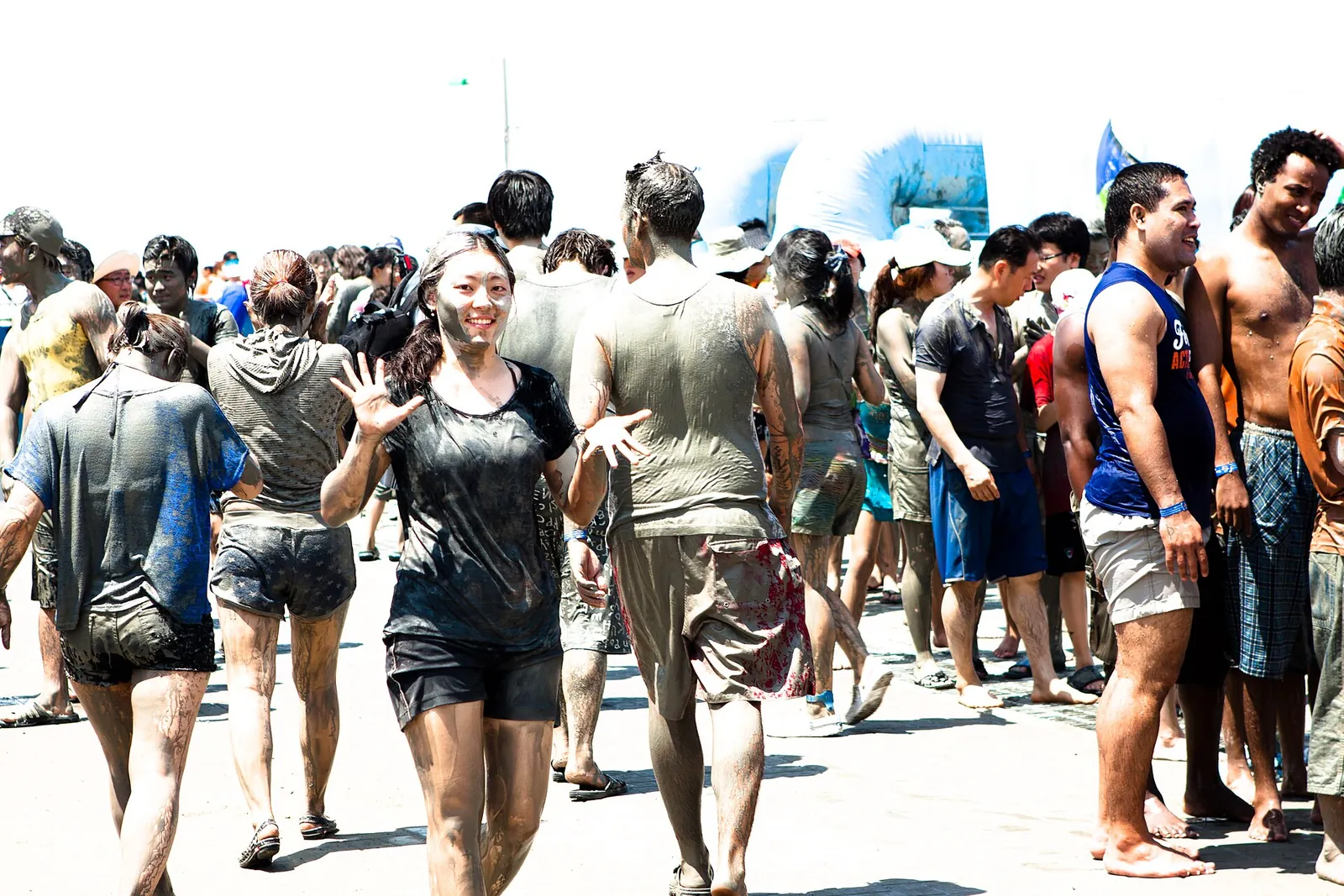
The Boryeong Mud Festival is Korea's best-known summer party, held beside Daecheon Beach on the west coast. When we checked on 2026-10-03, VisitKorea listed the 2026 festival from 24 July to 9 August at the Boryeong Mud Expo Plaza, with paid entry, a general zone with a mud run, a family zone, a water-park zone, the Mud Mob Scene with DJ sets and mud cannons, a drone show over the sea and night concerts. The 2027 dates will appear on mudfestival.or.kr. It is loud, crowded and messy by design: bring clothes you can throw away, and read our Boryeong guide for the ticket zones and how to get there.
Dano, the fifth day of the fifth lunar month, is the older summer festival. VisitKorea's guide to the traditional holidays describes customs such as washing hair in water boiled with sweet flag and ssireum wrestling, and names the Gangneung Danoje Festival on the east coast as the main celebration, inscribed by UNESCO, with rope swinging, ssireum, tug-of-war and traditional performances. Dano falls on 9 June in 2027; the festival committee publishes its programme on danojefestival.or.kr, where the 2026 programme listed events between 15 and 22 June.
Late September and October: the heritage festival fortnight
If you can choose only one window, choose the first half of October. In 2026 four major festivals overlapped, all listed on VisitKorea when we checked on 2026-10-03; confirm next year's dates, but expect the same season.
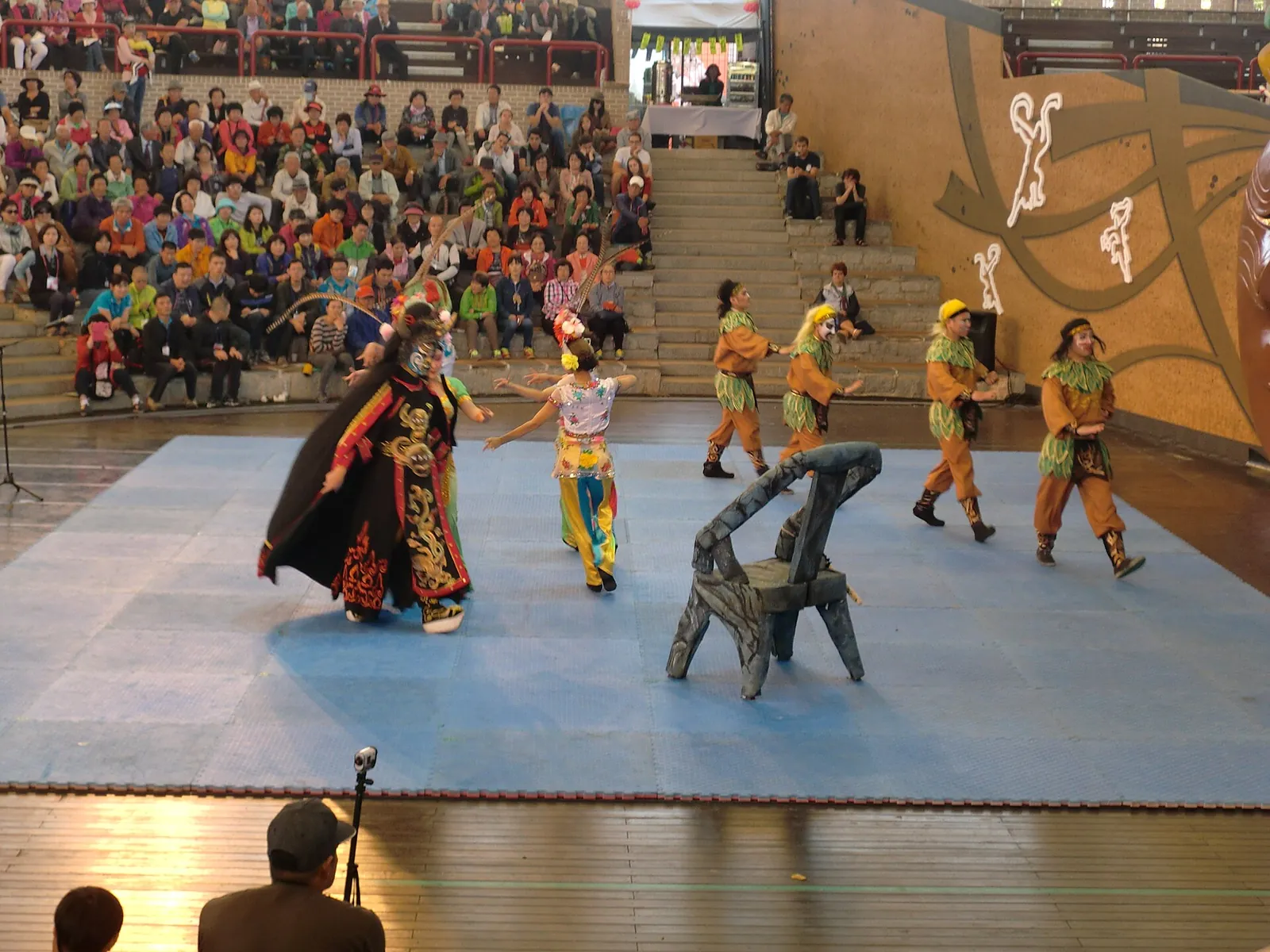
The Andong Maskdance Festival ran from 24 September to 4 October 2026 around Jungang Line 1942 Andong Station, Mask Dance Park and the old downtown, free with charges for some programmes. VisitKorea describes Korean and international mask dances, a street parade, mask-making and a world mask play competition, and notes that Korea's mask dance traditions are on UNESCO's intangible heritage list. Pair it with a night in Hahoe Village and its own mask dance drama; see our Andong guide (maskdance.com for the programme).
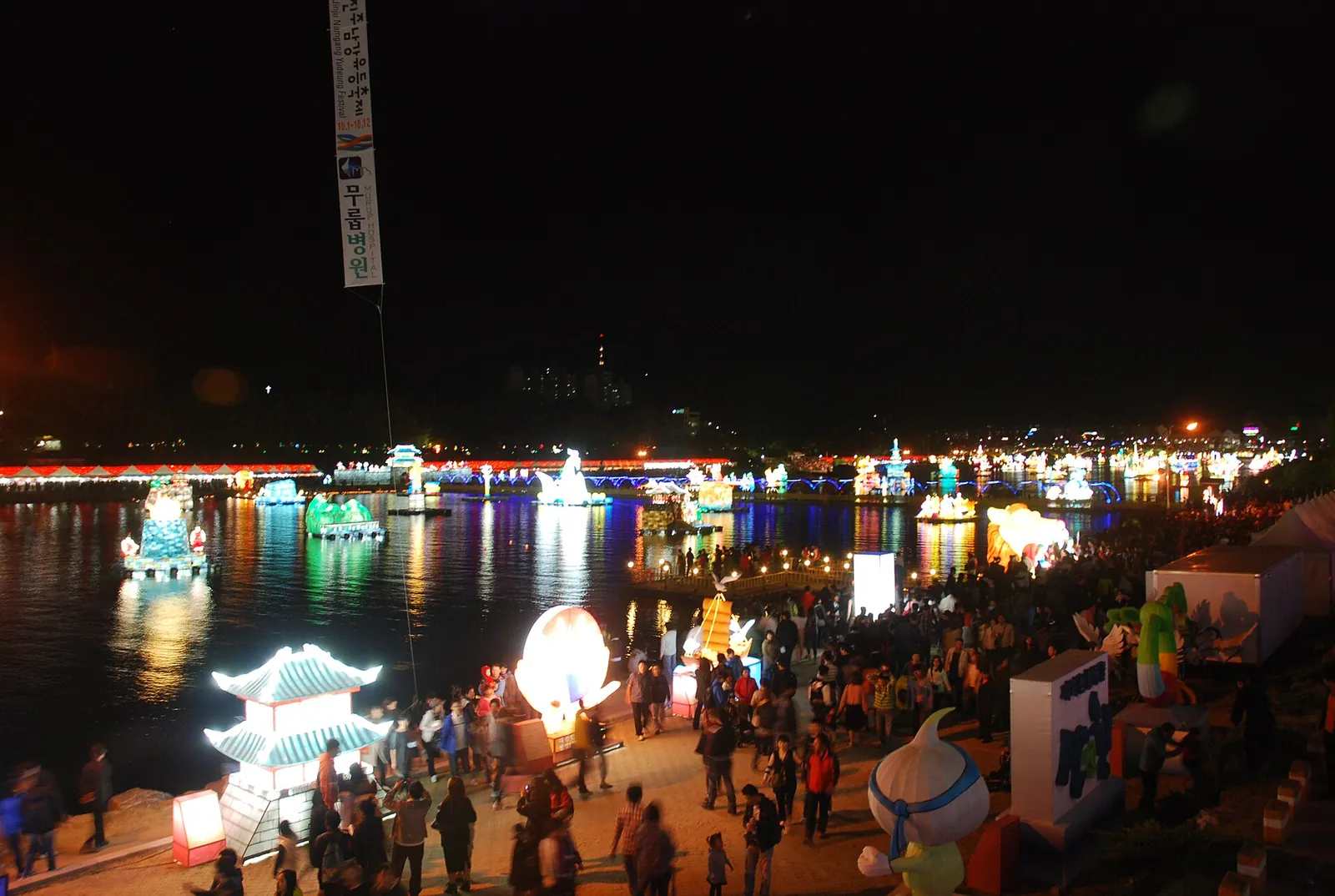
The Jinju Namgang Yudeung Festival fills the Namgang River below Jinjuseong Fortress with lanterns. VisitKorea traces the tradition to the 1592 Battle of Jinjuseong in the Imjin War, when lanterns were floated as military signals and as messages between families; the festival grew out of the Gaecheon Art Festival, first held in 1949, and has run on its own since 2000. When we checked, the 2026 edition was listed from 3 to 18 October, free, from 13:00 to 23:00, with floating and land lantern exhibitions, a drone light show and water fireworks (yudeung.com). The lanterns are the point, so arrive in the afternoon, walk the fortress before dusk and stay by the river after dark. VisitKorea listed Jinjuseong itself as open 05:00–23:00 from March to October, with adult admission at 2,000 won.
Closer to Seoul, the Suwon Hwaseong Cultural Festival was listed from 4 to 11 October 2026 at Hwaseong Fortress, reimagining King Jeongjo's royal procession of 1795 (shfestival.com). Its centrepiece, King Jeongjo's Royal Parade, was a one-day reenactment on 4 October 2026 that VisitKorea says starts from Gyeongbokgung Palace in Seoul and is organised jointly by Seoul, Gyeonggi Province, Suwon and Hwaseong. In South Chungcheong, the Baekje Cultural Festival, first held in 1955, was listed from 3 to 11 October 2026 across the UNESCO-listed Baekje sites in Gongju and Buyeo.
- Andong Maskdance Festival: late September to early October; central Andong. Two nights, one of them in Hahoe.
- Jinju Namgang Yudeung Festival: first half of October; the Namgang River and Jinjuseong Fortress. One or two nights by the river.
- Suwon Hwaseong Cultural Festival and the Royal Parade: early October; Suwon is an easy trip from Seoul, so check the parade route and day.
- Baekje Cultural Festival: early October; Gongju and Buyeo. Base yourself in one and visit the other.
November to January: fireworks in Busan and ice in Hwacheon
The Busan Fireworks Festival is a single autumn evening on Gwangalli Beach. When we checked on 2026-10-03, the festival's official site listed the 21st edition on Saturday 7 November 2026 around Gwangalli Beach, Igidae and Dongbaekseom, with regular tickets on sale through NOL Ticket until 6 November at 17:00. VisitKorea says it draws crowds of over a million, and that Hwangnyeongsan Mountain, Dongbaekseom Island and Igidae Coastal Park also give good views. If you go without a ticket, choose a viewpoint early and plan to walk part of the way home; the official site publishes the evening's traffic controls.
In deep winter, the Hwacheon Sancheoneo Ice Festival in Gangwon takes over the frozen Hwacheoncheon Stream. When we checked on 2026-10-03, VisitKorea listed the 2027 festival from 9 to 31 January, with paid entry, ice fishing (on site or booked ahead), catching mountain trout by hand, lure fishing and snow and ice sledding, from 09:00 to 18:00 and night fishing until 21:00. It says the festival draws more than a million visitors and that the fish you catch can be eaten raw or grilled on the spot. The official site is narafestival.com. It depends on the ice: dress for serious cold and check for weather notices before you travel.
Practical questions
When is Seollal in 2027?
The Korea Astronomy and Space Science Institute's lunar calendar puts the first day of the first lunar month on 7 February 2027. Seollal is a three-day holiday (the day before, the day and the day after), so expect 6–8 February, subject to the government's confirmation of holidays and substitute days.
When is Chuseok in 2027?
Chuseok falls on the 15th day of the eighth lunar month, which is 15 September in 2027 according to the official lunar calendar. Expect the three-day holiday around 14–16 September. In 2026 it ran from 24 to 26 September.
Is it a good idea to travel in Korea during Seollal or Chuseok?
Yes, if you stay in one city. Palaces, museums and department stores stay open, and many royal palaces offer free admission and holiday events. Avoid long intercity journeys on the first and last days, when millions of people travel to and from their home towns, and expect some restaurants and smaller sights to close.
When is the Jinju lantern festival?
In October. When we checked on 2026-10-03, VisitKorea listed the 2026 Jinju Namgang Yudeung Festival from 3 to 18 October, free, from 13:00 to 23:00, around Jinjuseong Fortress and the Namgang River. Check yudeung.com for the next edition.
When is the Lotus Lantern Festival in Seoul?
It is held in the run-up to Buddha's Birthday, usually in May. The 2026 festival was on 16 and 17 May in Jongno, a week before the holiday. Buddha's Birthday falls on 13 May in 2027, so watch llf.or.kr for the confirmed dates.
When is the Boryeong Mud Festival?
In late July and early August. The 2026 edition ran from 24 July to 9 August by Daecheon Beach, with paid entry. The 2027 dates will be published on mudfestival.or.kr.
Which month has the most festivals worth travelling for?
October. In 2026 the Andong Maskdance Festival (until 4 October), the Jinju Namgang Yudeung Festival, the Suwon Hwaseong Cultural Festival and the Baekje Cultural Festival all overlapped in the first half of the month.
Sources and checks before you travel
Reference sources for the version dated 3 October 2026. Confirm opening times, access, transport and conditions for your travel dates.
- VisitKorea: Public Holidays ↗ — opens in a new tab
- VisitKorea: Three Major Traditional Korean Holidays: Seollal, Dano and Chuseok ↗ — opens in a new tab
- Korea Astronomy and Space Science Institute: solar–lunar calendar converter ↗ — opens in a new tab
- VisitKorea: Jinju Namgang Yudeung Festival ↗ — opens in a new tab
- VisitKorea: Jinjuseong Fortress ↗ — opens in a new tab
- VisitKorea: Yeon Deung Hoe (Lotus Lantern Festival) ↗ — opens in a new tab
- VisitKorea: Jinhae Gunhangje Festival ↗ — opens in a new tab
- VisitKorea: Boryeong Mud Festival ↗ — opens in a new tab
- VisitKorea: Andong Maskdance Festival ↗ — opens in a new tab
- VisitKorea: Hahoe Mask Museum ↗ — opens in a new tab
- VisitKorea: Suwon Hwaseong Festival ↗ — opens in a new tab
- VisitKorea: King Jeongjo's Royal Parade ↗ — opens in a new tab
- VisitKorea: Baekje Cultural Festival ↗ — opens in a new tab
- Busan Fireworks Festival (official) ↗ — opens in a new tab
- VisitKorea: Busan Fireworks Festival ↗ — opens in a new tab
- VisitKorea: Hwacheon Sancheoneo Ice Festival ↗ — opens in a new tab
- Gangneung Danoje Festival (official) ↗ — opens in a new tab
- VisitKorea: Cheonhwang Sikdang and Hayeonok (Jinju restaurants) ↗ — opens in a new tab
- VisitKorea: Golden Tulip Jinju Hotel Namgang ↗ — opens in a new tab
- VisitKorea: Express and intercity buses ↗ — opens in a new tab
- VisitSeoul: from the airport to Seoul ↗ — opens in a new tab
Does this experience fit your route?
Building a trip around a festival? Book your room in the host town first, then compare day trips for the days either side, and check that each tour runs on your dates.
Check dates and details on Viator ↗ — opens in a new tabAffiliate link · Book with ViatorPhoto credits
Floating lanterns on the Namgang River during the Jinju Namgang Yudeung Festival
Photograph: Asfreeas at Korean Wikipedia This photo was taken with Nikon D80 — opens in a new tab · CC BY 3.0 — opens in a new tab
Changes: Resized and converted to WebP; displayed with responsive crops. · Original photograph and licence details ↗ — opens in a new tab
The 2023 Lotus Lantern Festival parade in central Seoul
Photograph: Republic of Korea — opens in a new tab · CC BY-SA 2.0 — opens in a new tab
Changes: Resized and converted to WebP; displayed with responsive crops. · Original photograph and licence details ↗ — opens in a new tab
Mud-covered festivalgoers at the Boryeong Mud Festival
Photograph: Jirka Matousek from Brussels Taipei Hong Kong Singapore Prague Shenzhen — opens in a new tab · CC BY 2.0 — opens in a new tab
Changes: Resized and converted to WebP; displayed with responsive crops. · Original photograph and licence details ↗ — opens in a new tab
A mask dance performance at the 2015 Andong Mask Dance Festival
Photograph: hyolee2 — opens in a new tab · CC BY-SA 3.0 — opens in a new tab
Changes: Resized and converted to WebP; displayed with responsive crops. · Original photograph and licence details ↗ — opens in a new tab
Cherry trees in bloom along a Jinhae street during the 2015 Gunhangje Festival
Photograph: hyolee2 — opens in a new tab · CC BY-SA 3.0 — opens in a new tab
Changes: Resized and converted to WebP; displayed with responsive crops. · Original photograph and licence details ↗ — opens in a new tab
Songpyeon, the half-moon rice cakes made for Chuseok
Photograph: wizdata — opens in a new tab · CC0 — opens in a new tab
Changes: Resized and converted to WebP; displayed with responsive crops. · Original photograph and licence details ↗ — opens in a new tab