Itineraries · Gangwon State
Gangwon coast in 5 days: Gangneung, Yangyang, Sokcho and Seoraksan
Gangwon's East Sea coast is the easiest mountain-and-sea break from Seoul: fast trains reach one end, express buses reach the other, and the stretch in between is short enough to cover in an afternoon. What makes the trip work is direction. Ride the KTX out to Gangneung, move north along the coast by road through Yangyang, and take the bus home from Sokcho, so you never travel the same stretch twice. Five days gives two calm days in Gangneung, a coast day for the temple cliffs, and two nights in Sokcho with a full day on Seoraksan.
- Suggested time
- 5 days, 4 nights
- Where to stay
- Gangneung (2 nights) and Sokcho (2 nights); Naksan Beach in Yangyang if you want sunrise at Uisangdae
- Season and timing
- July–August is the swimming season (VisitKorea listed Gangmun Beach in Gangneung from 10 July to 23 August 2026); October brings foliage and festivals. Seoraksan's 2026 foliage forecast put first colour on 3 October and the peak around 25 October.
The short answer
Take five days and four nights: two nights in Gangneung, two in Sokcho. Go out by KTX from Seoul to Gangneung, which VisitKorea puts at about two hours from Seoul Station, and spend day 1 on the Gyeongpo side and day 2 at the Joseon houses and the market. On day 3 travel north by road, stopping at Hajodae and Naksansa in Yangyang, and reach Sokcho by evening. Give day 4 to Seoraksan, with bus 7 or 7-1 to the park, and day 5 to Sokcho's harbour before the express bus back to Seoul, which the Seorak cable car operator puts at about two and a half hours. Surfers can swap one Gangneung night for Yangyang's beaches. Add Samcheok at the start only if you have six or seven days.
How the route fits together, and where to sleep
The coast from Gangneung north to Sokcho is one continuous strip, but it is not one kind of place. Gangneung is a city with a KTX station, lakeside pavilions and old houses. Yangyang, in the middle, has no compact centre: its sights — Naksansa Temple, the Hajodae headland, the surf beaches at Ingu and Jukdo — are spread out along the shore. Sokcho is a harbour town at the foot of Seoraksan. The railway stops at Gangneung: the KTX Gangneung Line ends there, and the Donghae Line KTX-Eum runs south from it towards Samcheok and Busan, not north. North of Gangneung, you travel by road.
That is why this route goes in one direction. Arrive by train in Gangneung, travel up the coast by road, and leave from Sokcho by express or intercity bus; VisitKorea's bus guide lists both Seoul Express Bus Terminal and Dong Seoul Terminal for Sokcho and Gangneung. A return to Seoul from either end is possible, but doing the coast as a line saves half a day of backtracking.
Sleep in only two places. In Gangneung, Gyeongpo or Anmok put you by the sea; the station area is better if you arrive late or want Jungang Market on foot. In Sokcho, the area around the intercity bus terminal is the practical base: VisitKorea puts the Tourist & Fishery Market about five minutes' walk away, and bus 7 or 7-1 to Seoraksan starts there. Sokcho Beach is the sea-view alternative. Change bags once, on day 3, and the rest of the trip is light.
Days 1–2: Gangneung by the lake and the old houses
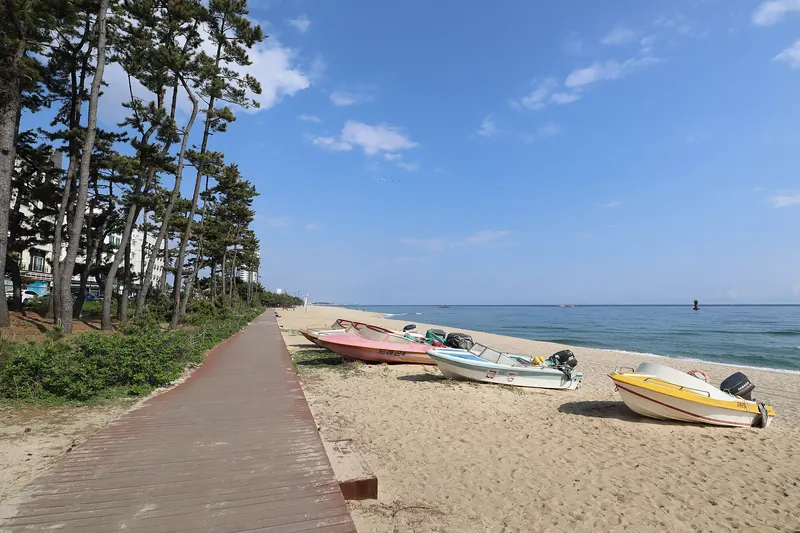
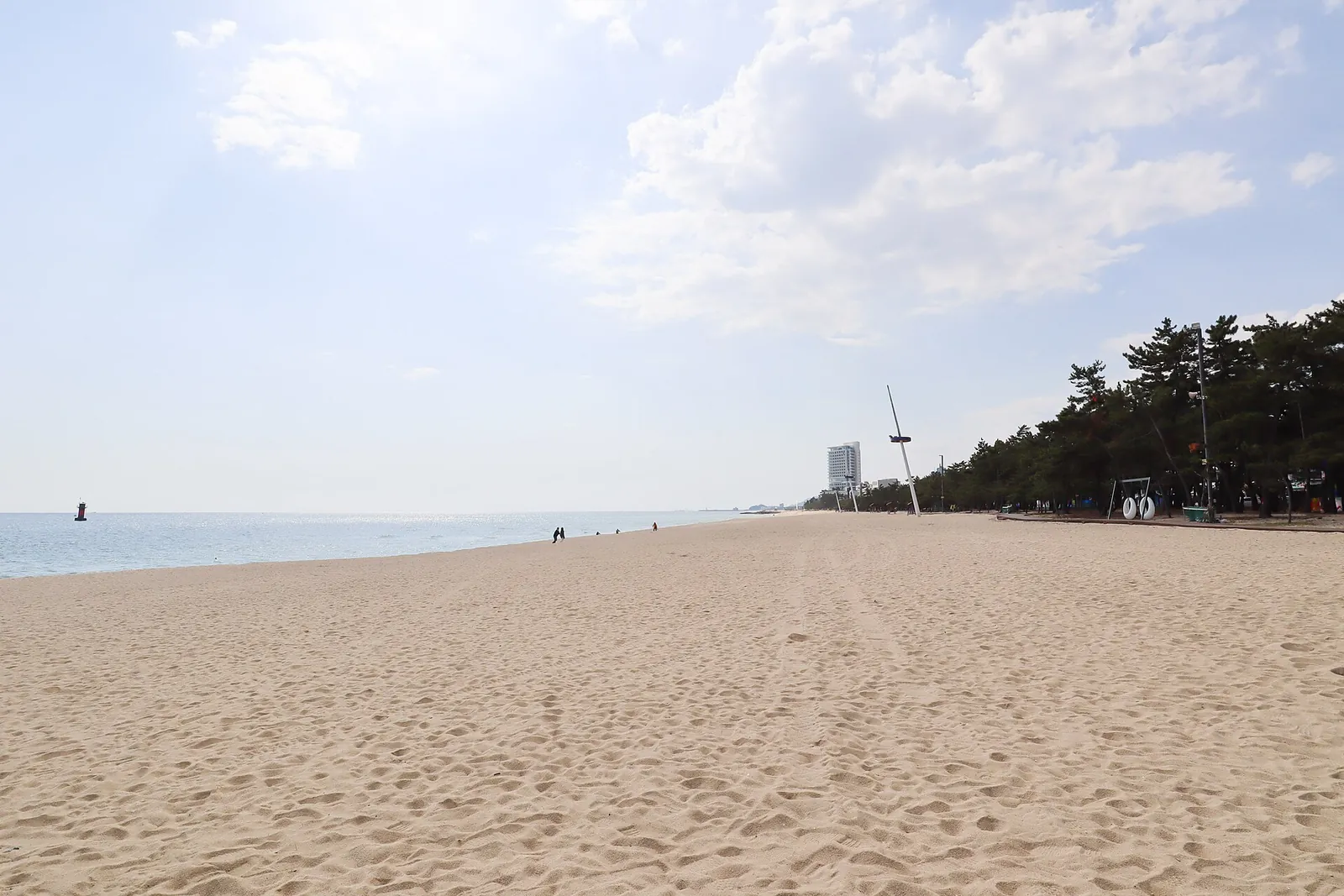
Day 1. Take a morning KTX from Seoul Station or Cheongnyangni; VisitKorea gives the Gangneung Line as 237.7 km and the trip from Seoul Station as about two hours. Leave your bag, then head for the Gyeongpo side: Gyeongpodae Pavilion above Gyeongpoho Lake, which VisitKorea lists as open 24 hours and free, a walk along the lake shore, and Gyeongpo Beach behind the pines. Have a late lunch of tofu in Chodang Dubu Village, just south of the beach. End the day at Anmok, where Gangneung Coffee Street faces the sea; VisitKorea lists city buses 300-1, 223-1, 225-1 and 314-1 from Gangneung Station, about 15 minutes.
Day 2. Start at Ojukheon, the birthplace of the Joseon scholar Yi I (Yulgok), designated a Treasure in 1963. When we checked on 2026-10-03, VisitKorea listed it as open 09:00–18:00 (last admission 17:00), with adult admission at 3,000 won. Then go on to Seongyojang, the Lee family's upper-class house by the lake; VisitKorea listed 09:00–18:00 from March to October and 09:00–17:00 from November to February, and 5,000 won for adults. Spend the afternoon at Gangneung Jungang Market, a permanent market since 1980, and save the evening for the beach you did not see yesterday.
If the sea matters more to you than the houses, Jeongdongjin and its cliff path, or Jumunjin's fish market, can replace day 2; our Gangneung guide covers both. Plan around the city's big October events: when we checked, VisitKorea listed the 2026 Gangneung Coffee Festival for 21 to 25 October; the festival grew out of Anmok's coffee culture, so expect the seafront there to be busy.
Make time for the local food
What to eat and where to look
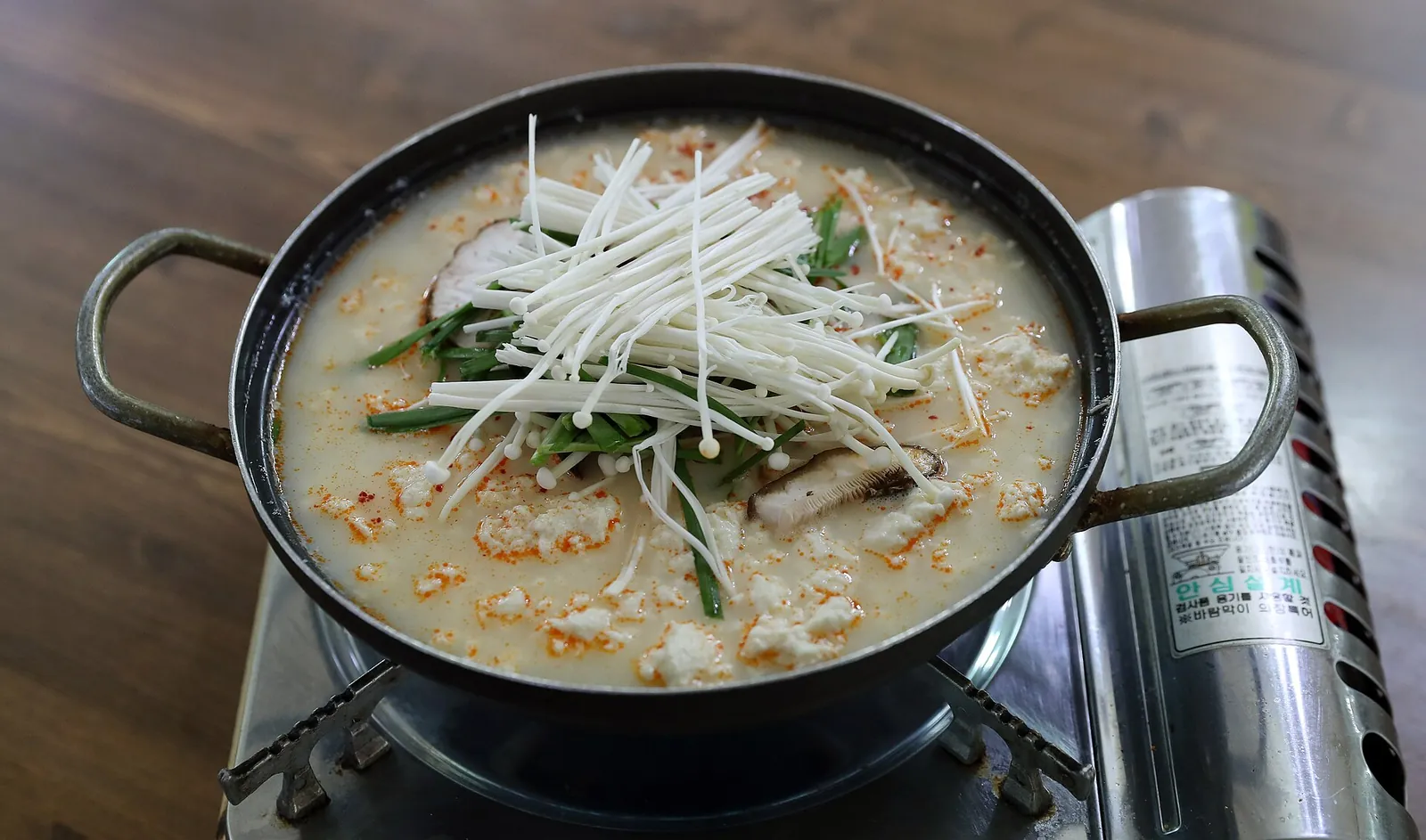
Chodang sundubu (soft tofu)
Gangneung's soft tofu, which VisitKorea says is made with ground beans and East Sea salt water, giving it a soft, light texture. It is served plain and white, or as a spicy stew.
- Where to look
- The restaurants of Chodang Dubu Village, under the pines just south of Gyeongpo Beach.
- Fit it into your day
- Lunch on day 1, between Gyeongpodae and the beach, or breakfast on day 2 before the old houses.
The red stew versions are spicy and may include seafood; the plain white tofu is the mild option.
Jogae mulhoe (cold raw clam soup)
A cold, spicy soup that VisitKorea says Yangyang calls jjaebok mulhoe: boiled East Sea venus clams over shredded lettuce, carrot and cucumber, with a chilled spicy broth poured on top.
- Where to look
- Seafood restaurants near Naksan Beach and along the Yangyang coast.
- Fit it into your day
- Lunch on day 3, between Hajodae and Naksansa; it suits a warm day.
Shellfish, and usually spicy; ask about the base before ordering if you avoid chilli.
Dakgangjeong (glazed fried chicken)
Crisp fried chicken pieces tossed in a sweet-spicy sauce with nuts. VisitKorea says it was first made in Gangwon and notes that it stays good as it cools, which is why people carry boxes home.
- Where to look
- The chicken alley of the Sokcho Tourist & Fishery Market.
- Fit it into your day
- Buy a box on the evening of day 3 for dinner in your room, or for the bus on day 5.
Usually contains nuts and is sweet and sticky; ask about a non-spicy version.
Myeongtae hoe naengmyeon (cold noodles with raw pollack)
Chewy cold buckwheat noodles topped with a generous spicy-sour salad of raw pollack. VisitKorea traces the dish to refugees from Hamheung and calls it one of Sokcho's specialities.
- Where to look
- The restaurant alley of Abai Village and noodle restaurants in central Sokcho.
- Fit it into your day
- Lunch on day 5 in Abai Village, before the bus back to Seoul.
Contains raw fish and is spicy; the noodles are often served with scissors for cutting.
Day 3: up the coast through Yangyang
This is the moving day, and the only one without a train. There is no railway north of Gangneung, so the options are an intercity bus along the coast or a taxi. VisitKorea's bus guide points to txbus.t-money.co.kr for intercity routes and times; we could not confirm a current Gangneung–Yangyang–Sokcho timetable from an official page, so check it there the day before. For a sense of distance: VisitKorea puts Yangyang International Airport, which sits on this coast between the two towns, about 45 minutes by taxi from Gangneung, 10 minutes from Naksansa and Hajodae, and 30 minutes from Sokcho.
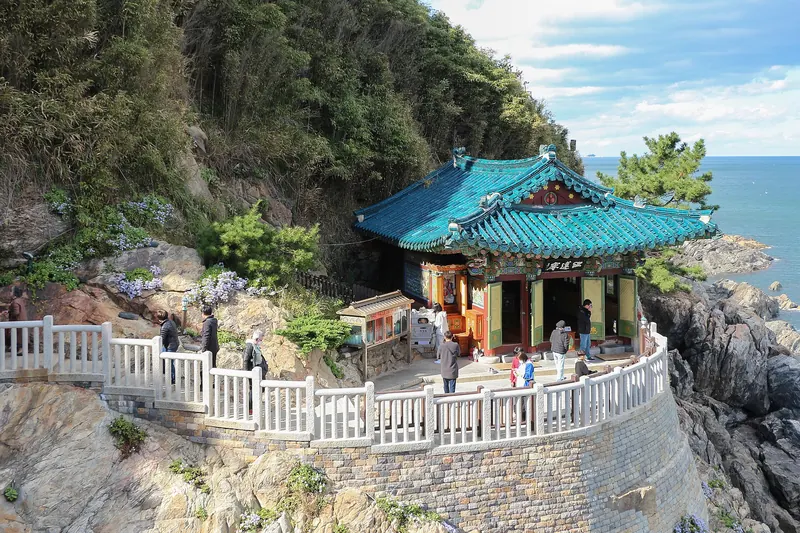
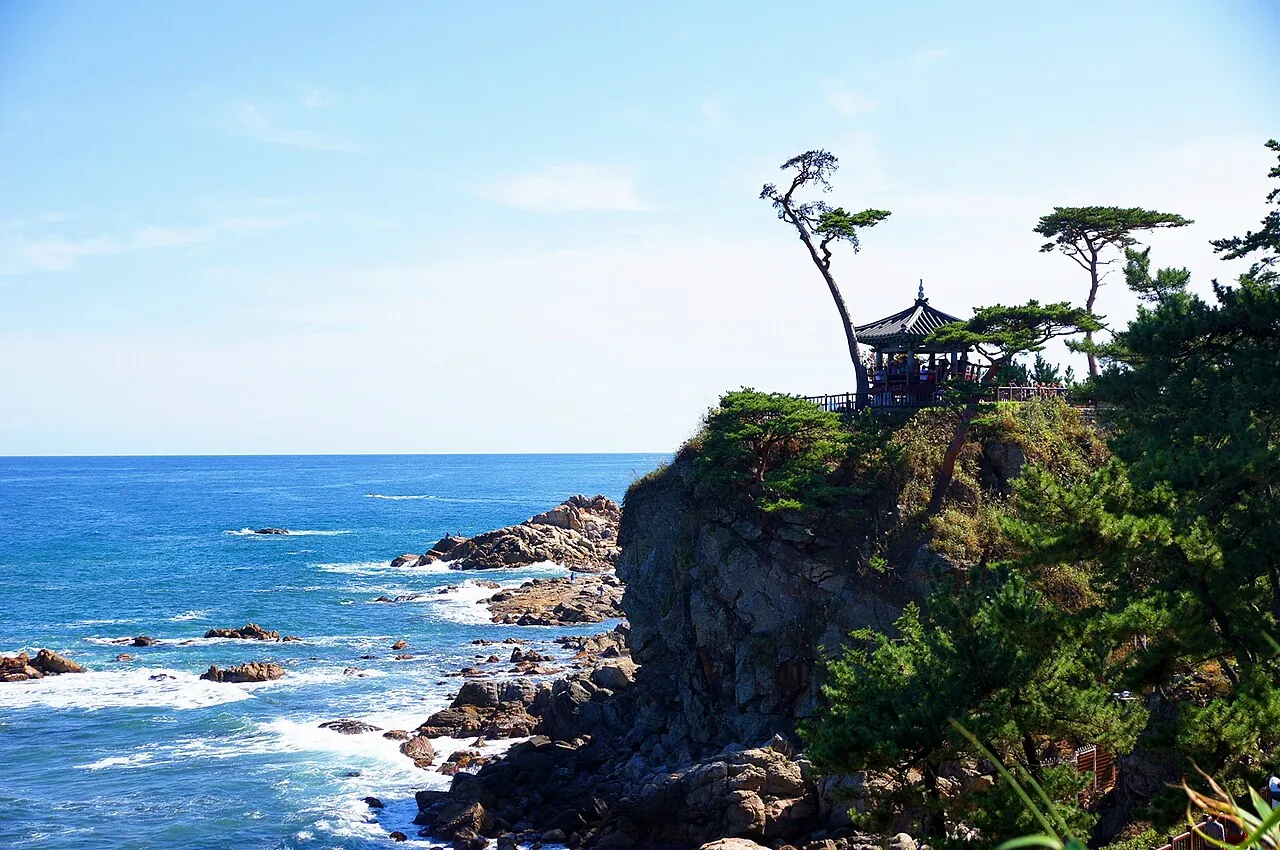
Stop first at Hajodae, a rocky headland with pine trees, rock stacks and a pavilion on the cliff, named after the late-Goryeo officials Ha Ryun and Jo Jun; the pavilion is a 1998 restoration. Surfers can add a stop at Ingu Beach, further down the Yangyang coast, which VisitKorea describes as shallow and popular with novice surfers. Then go on to Naksansa, founded in 671 by the monk Uisang and one of Korea's three main centres of devotion to Avalokitesvara, according to VisitKorea. Walk from the main temple to Uisangdae, a hexagonal pavilion on a sea cliff, and on towards Hongnyeonam Hermitage; together they are designated Scenic Site No. 27. When we checked on 2026-10-03, VisitKorea listed Naksansa as open 06:00–17:30, with visitors required to leave by 18:30.
From Naksansa, continue north and reach Sokcho by late afternoon, check in near the intercity bus terminal and walk to the market for dinner. If you want Uisangdae at sunrise — it is one of the east coast's classic sunrise points — sleep at Naksan Beach on night 3 instead, see the temple at dawn on day 4, and move the Seoraksan day to day 5. That variant means the bus back to Seoul on the evening of day 5 or an extra night.
Day 4: Seoraksan from Sokcho
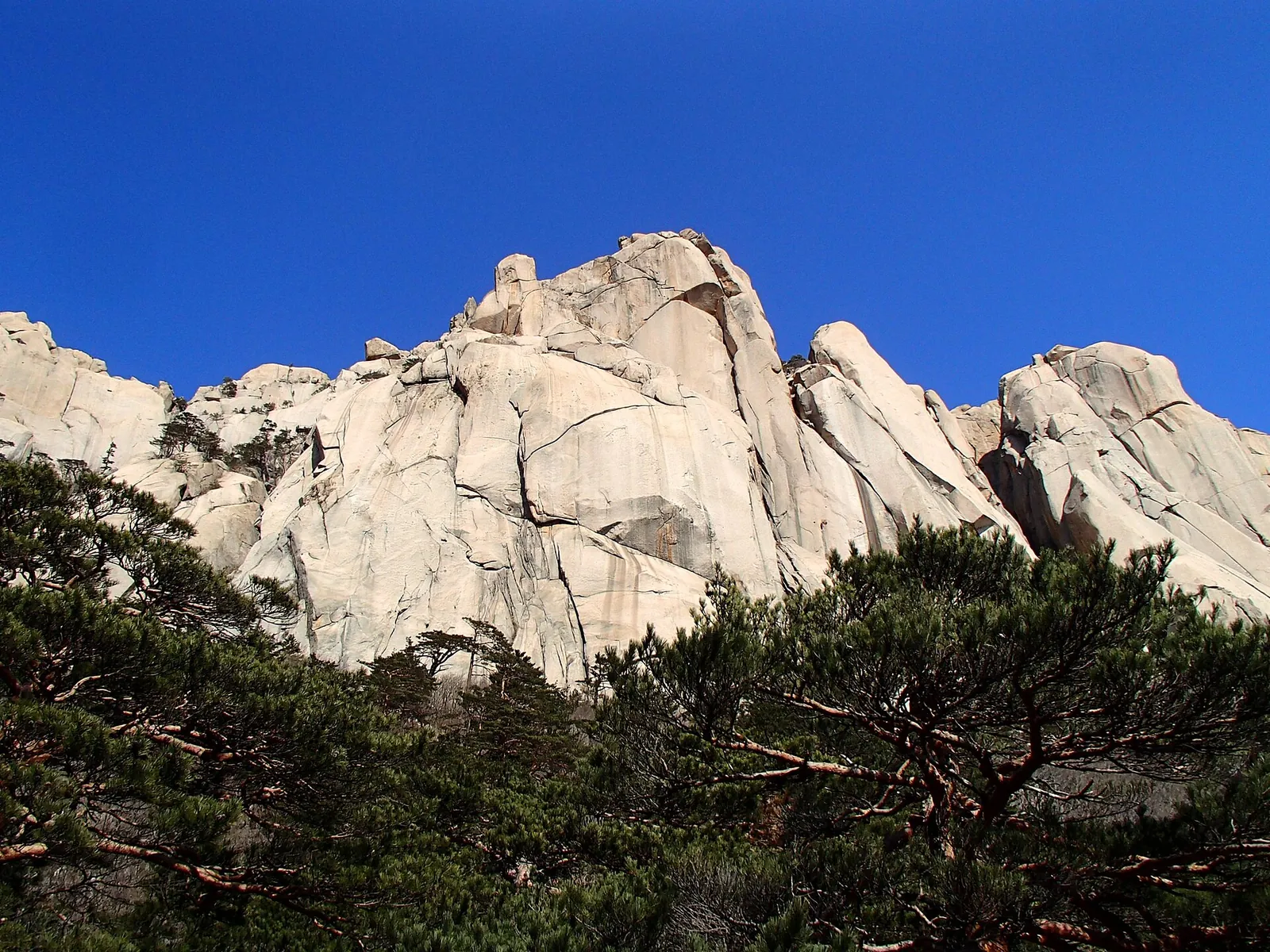
Take city bus 7 or 7-1 from the Sokcho Intercity Bus Terminal; the cable car operator lists the route past the express bus terminal and the park entrance to the Seoraksan car park, the last stop, and VisitKorea's hiking guide uses the same bus to Sogongwon Park. From there, choose one of two days.
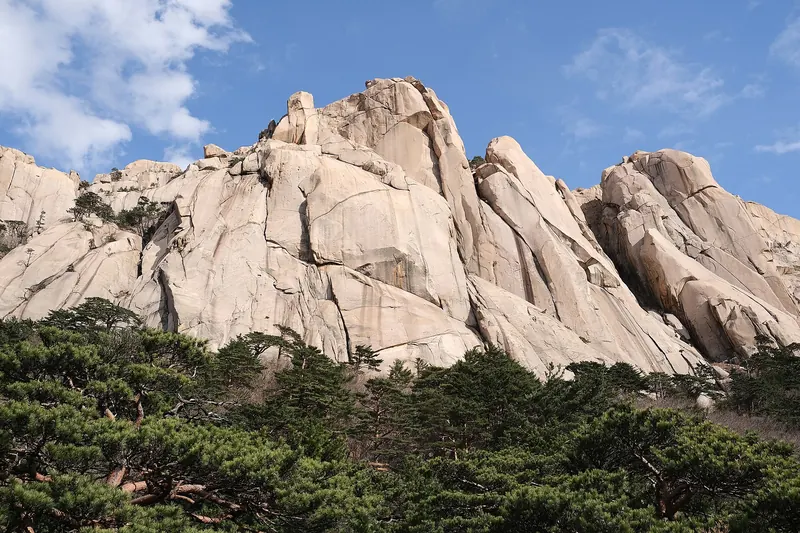
Ulsanbawi is the classic hike: VisitKorea gives the loop from Sogongwon via Sinheungsa and Heundeulbawi as 7.6 km, with a gentle forest path as far as Heundeulbawi and a steep climb after it to the granite ridge. The cable car to Gwongeumseong is the easy alternative. When we checked on 2026-10-03, the Seorak Cable Car's official site listed return-only tickets at 16,000 won for adults and 12,000 won for children from 37 months to primary-school age, a ride of about five minutes each way, and operating hours posted daily on its website. It warns that taking the last car up leaves only about 20 minutes at the top. Combine it with the level valley walk towards Biseondae, which VisitKorea recommends as the easier trail.
In the foliage season, which VisitKorea's 2026 forecast put at first colour on 3 October and a peak around 25 October, go on a weekday and be at the park early; the cable car operator says most weekends are busy. VisitKorea's hiking guide also lists closures of the upper trails beyond Biseondae for forest-fire prevention, from 2 March to 15 May and from 15 November to 15 December; the lower valley stays open. For the summit, Daecheongbong, plan a separate trip from Osaek — see our Seoraksan guide.
Day 5: Sokcho's harbour, then the bus home
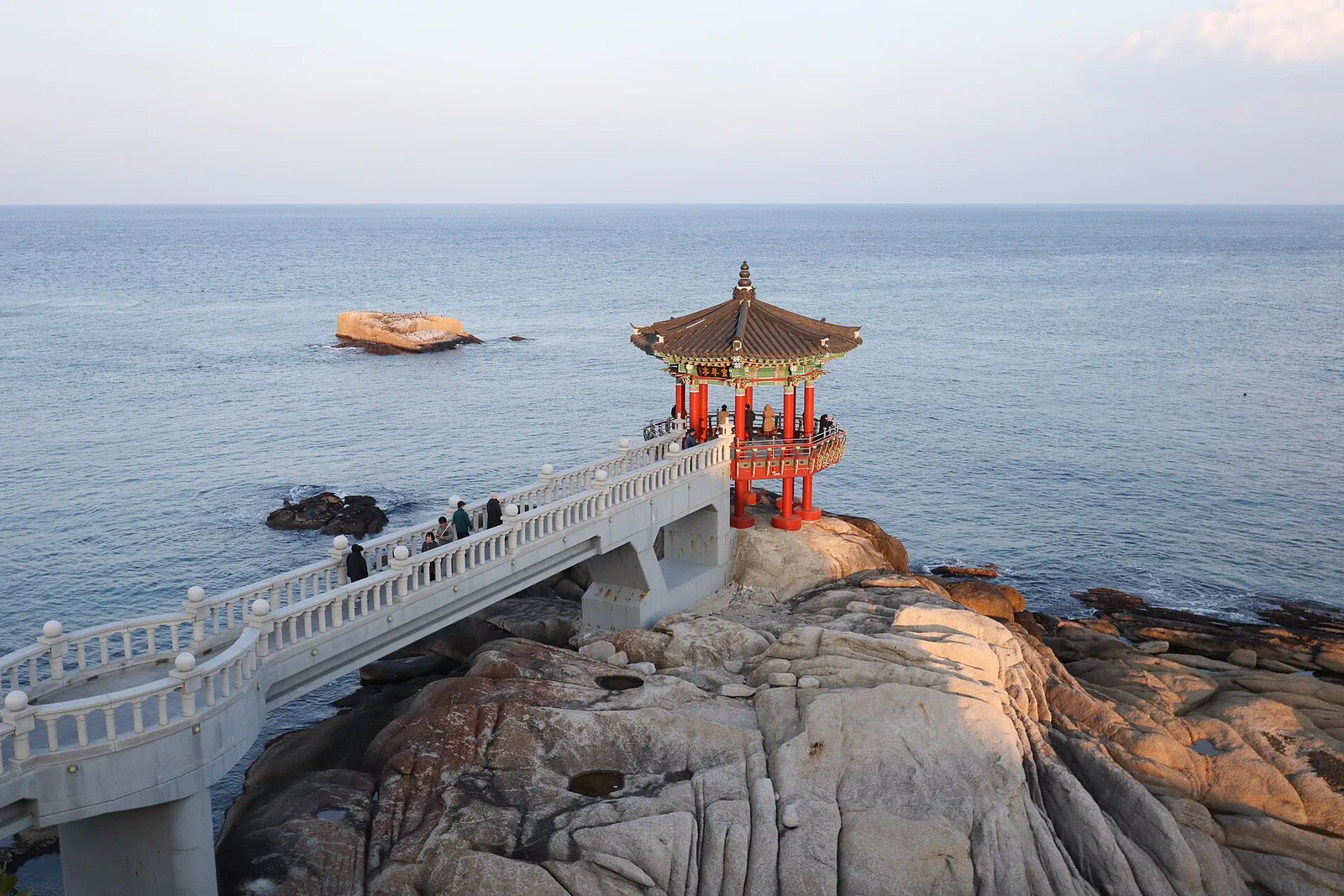
Keep the last morning on foot. Cross to Abai Village on the gaetbae, an engineless barge that passengers pull along a steel wire across a channel of about 50 metres; VisitKorea says the crossing takes about five minutes. The village was settled by Korean War refugees, mainly from Hamgyeong-do, and its restaurant alley serves their food: Hamheung-style cold buckwheat noodles, stuffed squid and North Korean-style sausage soup. Walk back to Yeonggeumjeong, a pavilion at the end of a 50-metre bridge over the rocks by Sokcho Lighthouse, and finish at the Sokcho Tourist & Fishery Market, which VisitKorea listed as open 08:00–24:00, with hours varying by shop.
Book the bus back for the afternoon. The Seorak cable car operator gives about 2 hours 30 minutes by express bus and 2 hours 10 minutes by intercity bus via the Seoul–Yangyang Expressway, with departures about every 30 minutes; check times on kobus.co.kr (express) or txbus.t-money.co.kr (intercity), as VisitKorea's bus guide advises. Choose Seoul Express Bus Terminal or Dong Seoul Terminal by where you are staying in Seoul.
If you would rather not carry bags around town, VisitKorea notes that the Gangwon Tourist Taxi for Foreigners also operates in Sokcho, with a driver who speaks your language or translation; when we checked, it listed a three-hour minimum with 20,000 won paid by the user, hours of 09:00–17:30, and a passport requirement, booked through the tourist information centres or online.
Variations: surf days, Samcheok and a longer stay
This route is an editorial suggestion, not a timetable. Check opening days for each place you choose, and the bus times the day before you travel.
- Day 1 — Gangneung: KTX from Seoul; Gyeongpodae, the lake and Gyeongpo Beach; tofu in Chodang; coffee at Anmok.
- Day 2 — Gangneung: Ojukheon, Seongyojang and Jungang Market, or Jeongdongjin or Jumunjin instead.
- Day 3 — Yangyang to Sokcho: Hajodae and Naksansa with Uisangdae on the way north; dinner at Sokcho's market.
- Day 4 — Seoraksan: Ulsanbawi, or the cable car to Gwongeumseong with the Biseondae valley.
- Day 5 — Sokcho and home: gaetbae to Abai Village, Yeonggeumjeong, then the bus to Seoul.
- Surf variant: replace Gangneung's second night with a night at Ingu or Jukdo; VisitKorea describes Ingu as shallow and popular with novice surfers.
- Six or seven days: start in Samcheok, which the Donghae Line KTX-Eum links with Gangneung, for the caves and the rail bike, then continue north on this route. Our Samcheok guide suggests two nights there.
Practical questions
Is five days enough for the Gangwon coast?
Yes, for Gangneung, Yangyang and Sokcho with one full day on Seoraksan. It does not leave time for the Daecheongbong summit or for Samcheok; add one or two days for either.
Can I do the whole route by public transport?
Yes. The KTX goes from Seoul to Gangneung, city bus 7 or 7-1 goes from Sokcho to Seoraksan, and express and intercity buses return from Sokcho to Seoul. The link from Gangneung north through Yangyang is by intercity bus or taxi, because the railway ends at Gangneung; check times on txbus.t-money.co.kr.
Should I go Gangneung to Sokcho or the other way round?
Either works. Gangneung first lets you start with the fast train and leave the hiking day for when you are settled. Going the other way, take the bus to Sokcho and the KTX home from Gangneung.
How do I avoid long waits for the Seoraksan cable car?
Plan for a wait rather than a booking. When we checked, the official site posted operating hours daily, said cars run every 10–15 minutes when it is quiet and every 5 minutes when it is busy, and warned that you may have to wait for your boarding time. Buy your ticket early at weekends and in the foliage season, and walk the valley while you wait.
When is the best time for this trip?
October brings foliage on Seoraksan and festivals such as the Gangneung Coffee Festival and Yangyang's Pine Mushroom and Salmon Festival, along with crowds. July and August are the swimming season; VisitKorea listed Gangmun Beach in Gangneung as open for swimming from 10 July to 23 August 2026.
Where should I stay for sunrise at Naksansa?
At Naksan Beach, which VisitKorea places about five minutes' walk from the Naksan bus terminal, with Naksansa on the hill behind the port at one end of the beach. Move your Seoraksan day back by one day if you do this.
Sources and checks before you travel
Reference sources for the version dated 3 October 2026. Confirm opening times, access, transport and conditions for your travel dates.
- VisitKorea: Train ↗ — opens in a new tab
- VisitKorea: Long-lasting Restaurants to Visit in Winter ↗ — opens in a new tab
- VisitKorea: Express Bus & Intercity Bus ↗ — opens in a new tab
- VisitKorea: Travel from Gangneung to Busan on the Donghae Line KTX-Eum ↗ — opens in a new tab
- VisitKorea: East Coast Train Trip by KTX-Eum ↗ — opens in a new tab
- VisitKorea: Airport Transportation Guide ↗ — opens in a new tab
- VisitKorea: Gyeongpodae Pavilion ↗ — opens in a new tab
- VisitKorea: Ojukheon House ↗ — opens in a new tab
- VisitKorea: Seongyojang House ↗ — opens in a new tab
- VisitKorea: Chodang Dubu Village ↗ — opens in a new tab
- VisitKorea: Gangneung Jungang Market ↗ — opens in a new tab
- VisitKorea: Gangneung Coffee Festival ↗ — opens in a new tab
- VisitKorea: Hajodae Scenic Point ↗ — opens in a new tab
- VisitKorea: Naksansa Temple ↗ — opens in a new tab
- VisitKorea: Uisangdae Pavilion ↗ — opens in a new tab
- VisitKorea: Naksan Beach ↗ — opens in a new tab
- VisitKorea: Best Summer Beach Destinations ↗ — opens in a new tab
- VisitKorea: Ingu Beach ↗ — opens in a new tab
- VisitKorea: Cold Raw Clam Soup (Jogaemulhoe) ↗ — opens in a new tab
- Seorak Cable Car (official): fares, hours and directions ↗ — opens in a new tab
- VisitKorea: Best hiking trails in Korea's national parks ↗ — opens in a new tab
- VisitKorea: Seoraksan Cable Car ↗ — opens in a new tab
- VisitKorea: 2026 Fall Foliage Forecast ↗ — opens in a new tab
- VisitKorea: Abai Village ↗ — opens in a new tab
- VisitKorea: Abai Village Ferry (gaetbae) ↗ — opens in a new tab
- VisitKorea: Yeonggeumjeong ↗ — opens in a new tab
- VisitKorea: Sokcho Tourist & Fishery Market ↗ — opens in a new tab
- VisitKorea: Sokcho Tourism and Fisheries Market (2023 feature) ↗ — opens in a new tab
- VisitKorea: Cold Buckwheat Noodles with Raw Pollack ↗ — opens in a new tab
- VisitKorea: Tourist Taxi for Foreigners ↗ — opens in a new tab
- VisitKorea: Yangyang Pine Mushroom and Salmon Festival ↗ — opens in a new tab
Photo credits
Uisangdae Pavilion at Naksansa Temple in Yangyang, one of the east coast's classic sunrise points
Photograph: Minquddyd — opens in a new tab · CC BY-SA 4.0 — opens in a new tab
Changes: Resized and converted to WebP; displayed with responsive crops. · Original photograph and licence details ↗ — opens in a new tab
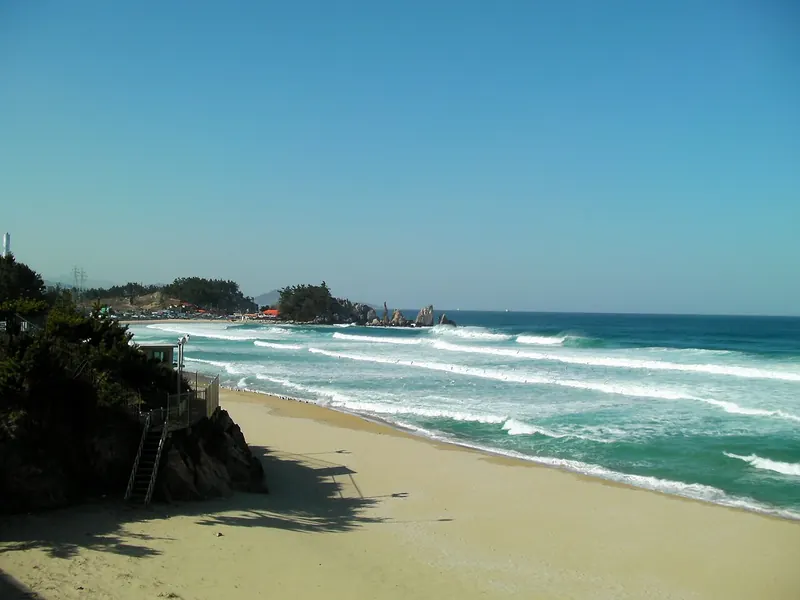
Gyeongpo Beach in Gangneung, where the route begins
Photograph: Mobius6 — opens in a new tab · CC BY-SA 4.0 — opens in a new tab
Changes: Resized and converted to WebP; displayed with responsive crops. · Original photograph and licence details ↗ — opens in a new tab
Sundubu (soft tofu stew) in Chodang-dong, Gangneung
Photograph: Republic of Korea from Seoul, Republic of Korea — opens in a new tab · CC BY-SA 2.0 — opens in a new tab
Changes: Resized and converted to WebP; displayed with responsive crops. · Original photograph and licence details ↗ — opens in a new tab
Ulsanbawi in Seoraksan National Park, the classic half-day hike from Sokcho
Photograph: Lcarrion88 — opens in a new tab · CC BY-SA 4.0 — opens in a new tab
Changes: Resized and converted to WebP; displayed with responsive crops. · Original photograph and licence details ↗ — opens in a new tab
Yeonggeumjeong on the Sokcho shore, next to the lighthouse
Photograph: Mobius6 — opens in a new tab · CC BY-SA 4.0 — opens in a new tab
Changes: Resized and converted to WebP; displayed with responsive crops. · Original photograph and licence details ↗ — opens in a new tab