Gangwon · Gangwon State
Seoraksan guide: cable car, Ulsanbawi or Daecheongbong, and autumn timing
Seoraksan is the granite range behind Sokcho on the east coast, and it gives you three very different days out from the same mountain. A five-minute cable car lifts you to the Gwongeumseong fortress site. Ulsanbawi is a steep half-day climb to a wall of rock above Sinheungsa temple. Daecheongbong, at 1,708 metres the park's highest point, is a full day of hard climbing. The Korea National Park Service made Seoraksan the country's fifth national park in 1970. UNESCO listed it as a Biosphere Reserve in 1982, and it is also on the IUCN Green List. It also gets very busy in the foliage season. Which option you choose, and on which day, decides what kind of trip you have.
- Suggested time
- 2–3 nights
- Where to stay
- Seorak-dong at the park entrance, or downtown Sokcho near the intercity bus terminal; Osaek in Yangyang County for an early Daecheongbong start
- Season and timing
- The VisitKorea 2026 foliage forecast, published in September 2026, expected Seoraksan to be the first mountain in Korea to colour, from 3 October, with the peak around 25 October. Actual dates depend on the weather. KNPS uses separate trail entry hours for April to October and for November to March. VisitKorea reported that upper trails close for forest-fire prevention from 2 March to 15 May and from 15 November to 15 December. The valley from Sogongwon to Biseondae stays open during those closures. Snow and ice are possible in winter, and trails are closed during weather warnings.
The short answer
Give Seoraksan two or three nights, based in Seorak-dong at the park entrance or in downtown Sokcho, which is a city-bus ride away on bus 7 or 7-1. On the first day, start early from Sogongwon Park and climb Ulsanbawi via Sinheungsa and Heundeulbawi. The Korea National Park Service (KNPS) lists it as 3.8 km and about 2 hours one way, at a middle difficulty grade. Take the cable car to Gwongeumseong the same afternoon only if the queue is short. If you are a fit hiker and want the summit, make Daecheongbong a separate day from Osaek on the south side. KNPS times the 5 km climb at about 4 hours one way and gives it the hardest grade. When we checked, entry closed at 12:00 from April to October, so sleep in Osaek and start at dawn. Families and anyone not hiking should take the cable car and walk the flat valley to Biseondae. In autumn, go on a weekday.
Cable car, Ulsanbawi or Daecheongbong: choosing your Seoraksan
KNPS splits the park into three areas. Outer Seorak faces Sokcho and the sea, Inner Seorak lies on the Inje side to the west, and South Seorak runs from Hangyeryeong Pass to Osaek. Most first-time visitors use only Outer Seorak, where everything starts at Sogongwon Park in Seorak-dong: the cable car, the Ulsanbawi trail, the Biseondae valley and the long routes to the summit. Daecheongbong's shortest approach is from Osaek, on the other side of the range in Yangyang County.
Choose by fitness and time. The cable car asks almost nothing of you and gives a big view in an hour or two. Ulsanbawi is the classic half-day hike, steep at the end but short. Daecheongbong is a mountaineering day with an early start and a hard grade. Even the fastest route has about 4 hours of climbing, and KNPS classes the longer traverses as overnight trips. Sleep in Seorak-dong or Sokcho for the first two. Sleep in Osaek if you want the summit.
- Half a day, any fitness: cable car to Gwongeumseong, then the level walk towards Biseondae.
- One morning, reasonably fit: Ulsanbawi, 3.8 km and about 2 hours one way (KNPS).
- One long day, experienced hikers: Osaek to Daecheongbong, 5 km and about 4 hours one way, hardest grade (KNPS).
- Two days with a shelter booking: the Seorak-dong–Daecheongbong–Osaek traverse or the Gongnyong Ridge (KNPS lists both as overnight courses).
Ulsanbawi via Sinheungsa: the best half day in the park
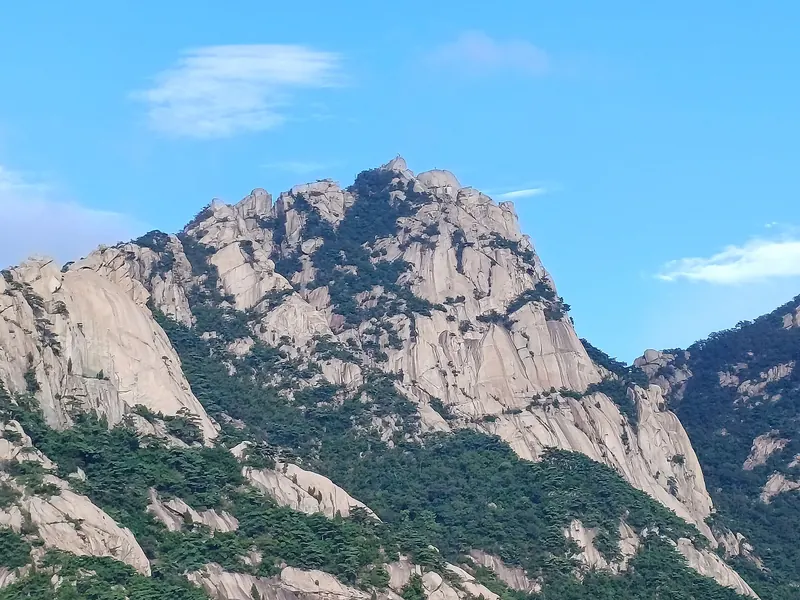
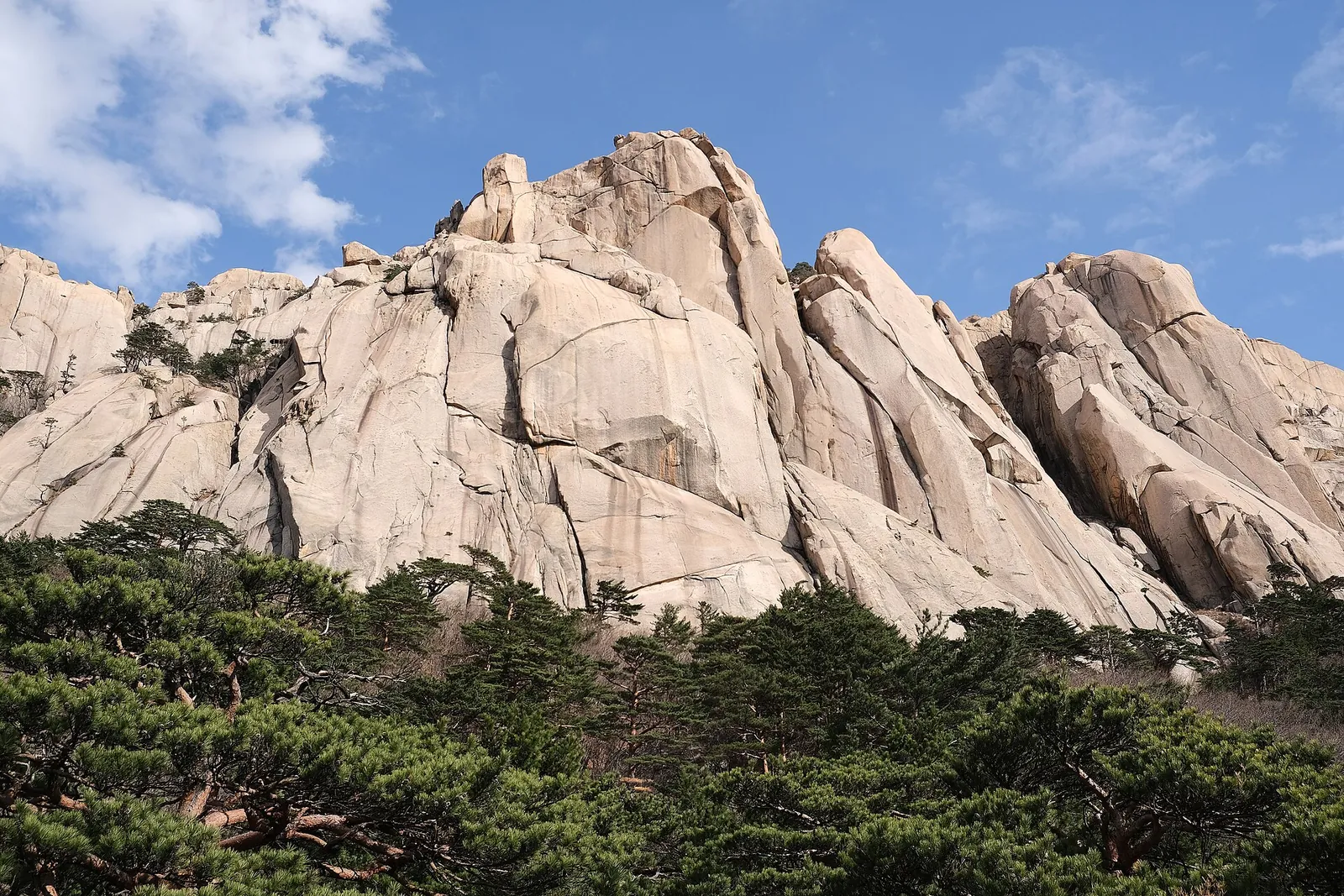
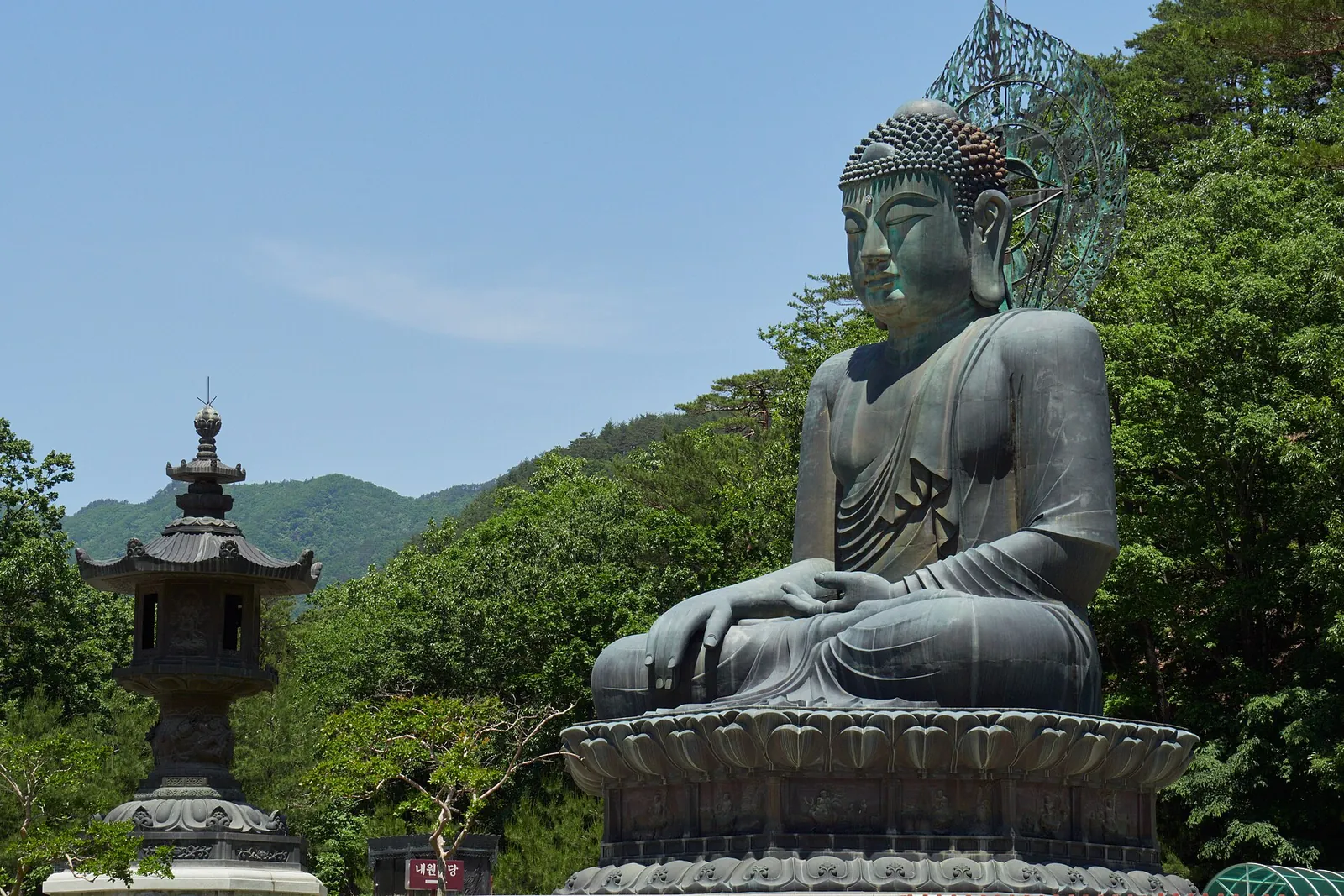
Ulsanbawi is a long ridge of bare granite towers above the Sogongwon valley. KNPS lists the course as Sogongwon, Sinheungsa, Heundeulbawi and Gyejoam hermitage, then Ulsanbawi: 3.8 km and about 2 hours one way, at the middle of its three difficulty grades. VisitKorea describes the forest path as far as Heundeulbawi as gentle. Heundeulbawi is the 'rocking rock' that visitors try to push. After that the climb to the top is rather steep, says VisitKorea, which gives the full loop back to Sogongwon as 7.6 km and about 4 hours.
Start early. KNPS bars entry to the Sogongwon trails, Ulsanbawi included, from sunset until two hours before sunrise. You can start as soon as entry opens, and an early start keeps you ahead of the crowds on the steep upper section. Sinheungsa is on the way up, so visit the temple on the way down rather than adding time before the climb. Good shoes matter more than technical gear. In winter, check the KNPS notices for ice before you go.
Make time for the local food
What to eat and where to look
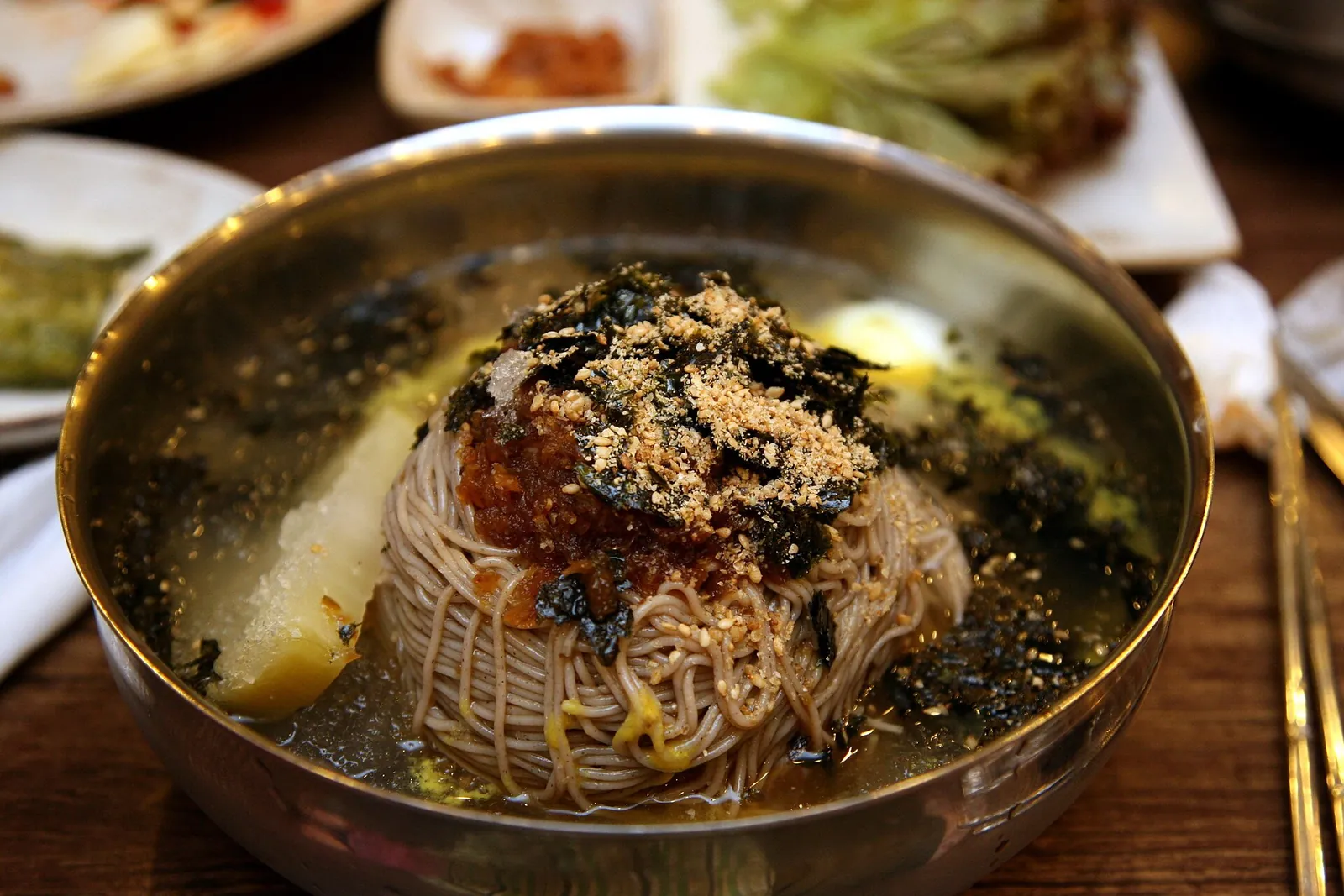
Makguksu (Yangyang buckwheat noodles)
Buckwheat noodles, served cold in broth or dressed with chilli sauce, are what VisitKorea calls Yangyang's famous local speciality. It recommends Beombu Memil Guksu in Seo-myeon, the township that also contains Osaek.
- Where to look
- Beombu Memil Guksu, 6 Goindol-gil, Seo-myeon, Yangyang-gun, on the road out of the Osaek side of the mountain.
- Fit it into your day
- A late lunch or early dinner after coming down from Daecheongbong or Jujeongol.
Buckwheat is a common allergen. VisitKorea gives no opening hours, so check before you rely on it after a long hike.
Coffee and snacks at the Gwongeumseong upper station
The cable car operator lists a snack corner and a coffee shop on the first and second floors of the upper station. They are useful if you are waiting for low cloud to lift over the fortress site.
- Where to look
- The upper cable car station at Gwongeumseong.
- Fit it into your day
- A break during the cable car outing, not a full meal; eat properly in Seorak-dong or Sokcho.
The operator says the toilets at the top use a foam system to protect the environment, and asks visitors to use the toilets at Sogongwon before buying a ticket.
Gimbap carried for the summit
VisitKorea calls a roll of gimbap eaten at the summit an unmissable pleasure for Korean hikers. On Daecheongbong, carrying your own lunch is also the practical choice.
- Where to look
- Buy it in Sokcho or Osaek the evening before or early on the morning of your climb.
- Fit it into your day
- Lunch at or near the summit, with enough water and snacks for a climb of 4 hours or more each way.
We found no official confirmation of food sales on the Daecheongbong trails, so carry everything you need and take your rubbish down with you.
Dakgangjeong from Sokcho's market
Crunchy fried chicken glazed in a sweet, spicy sauce. VisitKorea says the chicken alley of Sokcho Tourist & Fishery Market has many dakgangjeong shops, each with its own version.
- Where to look
- The chicken alley in Sokcho Tourist & Fishery Market, downtown, on the bus 7 and 7-1 route back from the park.
- Fit it into your day
- A takeaway box for the evening after a long day on the trail.
Popular shops have queues. Some versions contain nuts, so ask if you have an allergy.
The cable car to Gwongeumseong
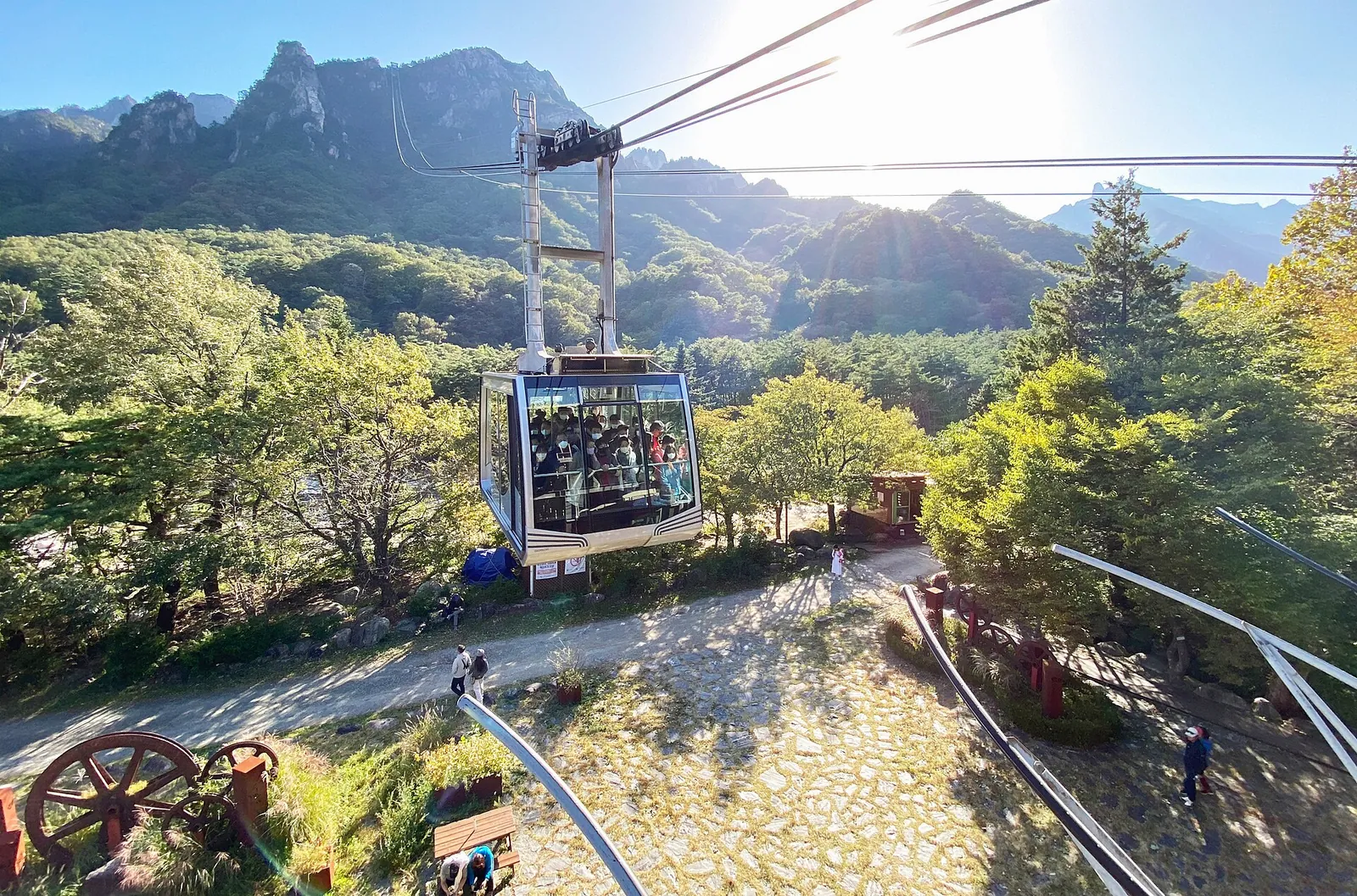
The Seorak Cable Car leaves from Sogongwon, about five minutes' walk from the park entrance, and runs 1,128 m along the ridge to an upper station at 699 m above sea level. The ride takes about five minutes, according to the operator. From the top, a short walk leads to Gwongeumseong, the site of a Goryeo-dynasty stone fortress, with views over Outer Seorak to Ulsanbawi, Sokcho and the East Sea. The operator also names the Allakam hermitage and an old pine as things to see up there. There is no walking trail back down, so tickets are return only. When we checked on 2026-10-03, the official site listed return fares of 16,000 won for adults (middle-school age and up) and 12,000 won for children from 37 months to primary-school age. Children under 36 months ride free.
Tickets are sold only at the station on the day, with no advance booking. Operating hours change with season and weather and are posted daily on the operator's website, so check them the morning you go. Cabins run every 10–15 minutes when it is quiet and every 5 minutes when it is busy, and you may have to wait for your boarding time. The operator warns that if you take the last car up you will have only about 20 minutes at the top. Strong wind can stop the service, and unused tickets are then refunded. In autumn, buy a ticket first thing and hike Ulsanbawi or Biseondae while you wait for your slot. Wheelchairs can board using the lift, but strollers cannot. The cable car has no car park of its own; drivers use the paid car park at Sinheungsa.
Daecheongbong: the Osaek climb and the long traverses
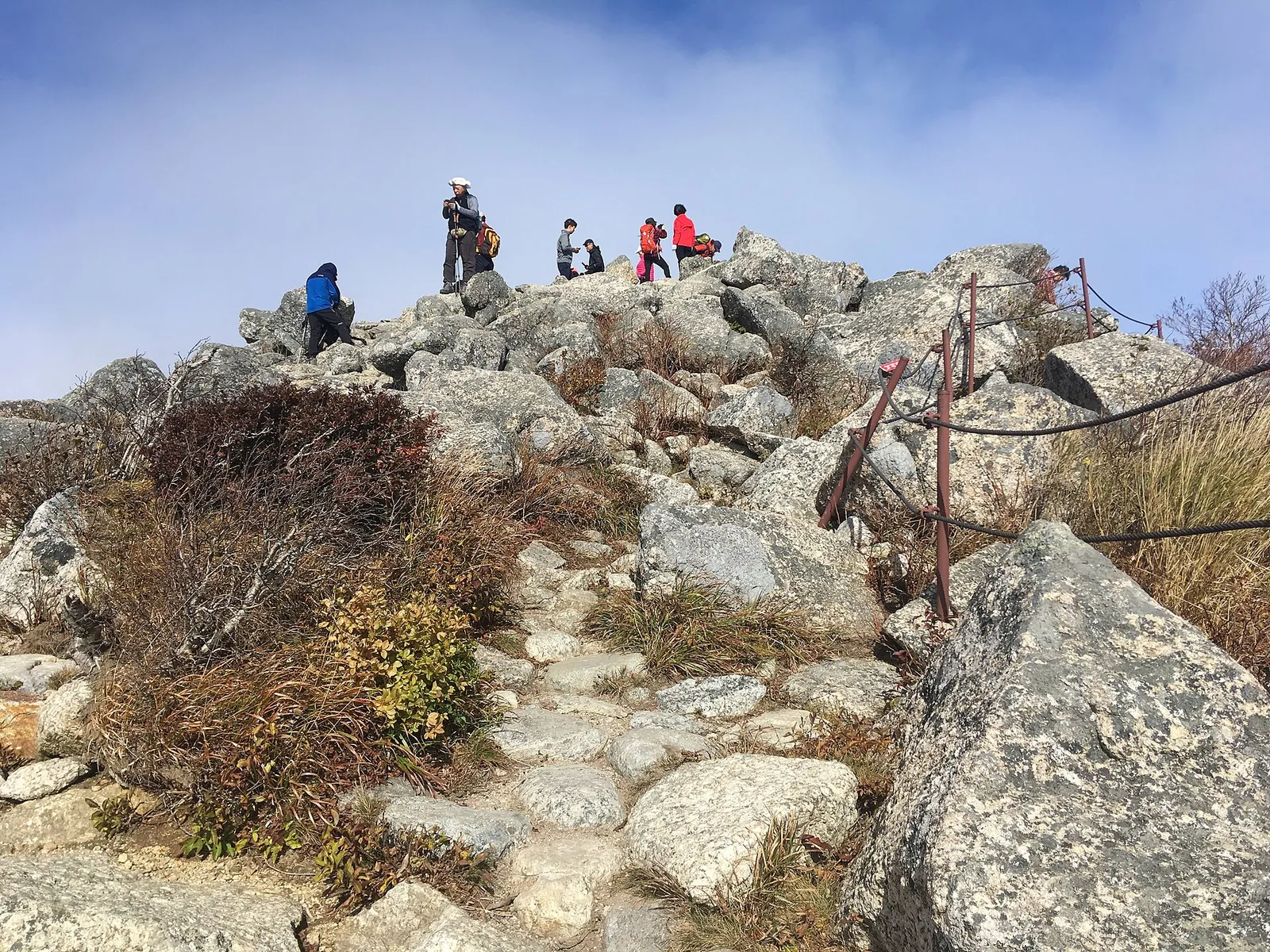
Daecheongbong (1,708 m) is the highest of Seoraksan's thirty-odd peaks, and VisitKorea ranks it as the third-highest peak in Korea. The shortest way up is from the South Seorak Visitor Center at Osaek. KNPS describes the route as Osaek, Seorak Falls and Daecheongbong: 5 km and about 4 hours one way, with the hardest difficulty grade. KNPS lists it as a day course; unless you have planned a traverse, you come back down the same way. KNPS does not publish a return time, so allow for a slow descent on tired legs.
Entry hours are the deciding factor. When we checked on 2026-10-03, KNPS listed entry from Osaek towards Daecheongbong as 03:00–12:00 from April to October and 04:00–11:00 from November to March. After that time you are not allowed to start. The longer routes have similar cut-offs. KNPS times the traverse from Sogongwon via Biseondae and Huiungak to the summit and down to Osaek at 16 km and about 10 hours 40 minutes. The Gongnyong Ridge course, from Sogongwon via Madeungnyeong and the ridge to the summit and Osaek, is 19.1 km and about 14 hours 40 minutes. KNPS classes both as overnight trips. If you have a shelter booking, KNPS extends the cut-off at certain trailheads. Its entry-hours page names the Huiungak, Socheong, Yangpok and Suryeomdong shelters and asks hikers to reach the shelter during check-in hours, 15:00–19:00 from April to October.
- Entry from Biseondae towards Madeungnyeong (the Gongnyong Ridge): 03:00–11:00 April–October, 04:00–10:00 November–March (KNPS).
- Entry from Biseondae towards Yangpok and the summit: 03:00–14:00 April–October, 04:00–12:00 November–March (KNPS).
- Entry from Hangyeryeong Pass (1,004 m, on National Road 44) towards the main ridge: 03:00–12:00 April–October, 04:00–10:00 November–March (KNPS).
Easier valleys: Biseondae, Biryong Falls and Jujeongol
Not every good day on Seoraksan involves a summit. VisitKorea recommends the stream-side trail to Biseondae for an easier walk. KNPS lists Sogongwon to Geumganggul cave, by Waseondae and Biseondae, as 3.6 km and about 2 hours at its easiest grade, and the path continues up the valley to the Yangpok shelter (6.5 km, about 3 hours 10 minutes). A second short route goes from Sogongwon to Biryong Falls and the Towangseong Falls viewpoint: 2.8 km, about 1 hour 30 minutes, easy grade. Both start at Sogongwon, near the cable car, so they fill the time while you wait for your boarding slot.
On the Osaek side, the Jujeongol valley is the autumn walk VisitKorea singles out for its maple colour. KNPS times the course from the mineral-spring trailhead, past Seongguksa temple, to Yongso Falls at 3.2 km and about an hour, at the easiest grade. The Osaek mineral spring by the stream gives carbonated, iron-rich water, says VisitKorea. The neighbouring Heullimgol trail is one way only, from the Heullimgol entrance towards Yongso Falls. When we checked, KNPS said it needed a reservation in October and November. Entry was 09:00–14:00, extended to 08:00–15:00 during the October peak.
Autumn colour without the worst crowds
In VisitKorea's 2026 forecast, Seoraksan was the first mountain in Korea to colour: first leaves on 3 October and the peak around 25 October. VisitKorea's cable car page warns of crowds at weekends, on public holidays and in the foliage season, and the cable car operator says most weekends are busy. So the most useful thing you can do is go on a weekday. Avoid the weekends and public holidays around the forecast peak if your dates allow.
On any October day, use the early entry hours. The Sogongwon valley trails open two hours before sunrise, and the Osaek route opens at 03:00. Reach the cable car ticket office as early as you can and walk Ulsanbawi or Biseondae while you wait for your slot. For Heullimgol, book your reservation as soon as you know your date.
Getting there and getting around
Sokcho is the gateway. VisitKorea lists express and intercity buses to Sokcho from Seoul Express Bus Terminal and Dong Seoul Terminal. The cable car operator gives about 2 hours 30 minutes by express bus and 2 hours 10 minutes by intercity bus via the Seoul–Yangyang Expressway, with departures about every 30 minutes. From Sokcho's intercity bus terminal, city buses 7 and 7-1 run past the express bus terminal and the park entrance to the Seoraksan car park, the last stop, near Sogongwon.
Osaek is harder to reach by public transport, and we could not confirm a current bus timetable from an official source. Staying the night in Osaek is the simplest way to use the 03:00 opening; otherwise plan on a taxi from Yangyang or Sokcho. Yangyang International Airport is about 30 minutes from Sokcho by taxi, says VisitKorea, but it has few flights. Check before you go: KNPS closes trails during official weather warnings and posts closures and restrictions on its Seoraksan notice board.
Practical questions
How long does it take to hike Ulsanbawi?
KNPS lists the course from Sogongwon via Sinheungsa and Heundeulbawi to Ulsanbawi as 3.8 km and about 2 hours one way, at a middle difficulty grade. VisitKorea gives the full loop back to Sogongwon as 7.6 km and about 4 hours. The last section above Heundeulbawi is steep.
What is the shortest route to Daecheongbong?
The route from Osaek (the South Seorak Visitor Center): KNPS lists it as 5 km and about 4 hours one way, at the hardest grade. When we checked on 2026-10-03, entry was 03:00–12:00 from April to October and 04:00–11:00 from November to March.
Can I walk down from the Seoraksan cable car?
No. The operator says there is no hiking trail between the upper station and Sogongwon, so tickets are sold as returns only. Tickets are sold only on the day at the station, and operating hours are posted daily on the operator's website.
When is the best time to see autumn leaves on Seoraksan?
In 2026, VisitKorea's forecast expected the first colour on 3 October and the peak around 25 October, with actual dates depending on the weather. Go on a weekday. Weekends and holidays in the foliage season are the busiest times at the cable car.
Are Seoraksan's trails ever closed?
Yes. VisitKorea reported fire-prevention closures of the upper trails (Biseondae to Daecheongbong) from 2 March to 15 May and from 15 November to 15 December, with the valley from Sogongwon to Biseondae still open. KNPS also closes trails during official weather warnings, and Heullimgol needed a reservation in October and November when we checked.
How do I get from Sokcho to Seoraksan?
City buses 7 and 7-1 run from Sokcho Intercity Bus Terminal past the express bus terminal to the Seoraksan car park by Sogongwon, where the cable car and the Ulsanbawi trail start.
Sources and checks before you travel
Reference sources for the version dated 3 October 2026. Confirm opening times, access, transport and conditions for your travel dates.
- Korea National Park Service: Seoraksan National Park ↗ — opens in a new tab
- Korea National Park Service: Seoraksan trail courses ↗ — opens in a new tab
- Korea National Park Service: designated entry hours ↗ — opens in a new tab
- Seorak Cable Car (official): fares, hours and boarding ↗ — opens in a new tab
- VisitKorea: Seoraksan National Park (Outer Seorak) ↗ — opens in a new tab
- VisitKorea: Best hiking trails in Korea's national parks ↗ — opens in a new tab
- VisitKorea: Seoraksan Cable Car ↗ — opens in a new tab
- VisitKorea: Seoraksan Gwongeumseong Fortress ↗ — opens in a new tab
- VisitKorea: Seoraksan Osaek Jujeongol Valley ↗ — opens in a new tab
- VisitKorea: Osaek Mineral Spring ↗ — opens in a new tab
- VisitKorea: Osaengnyeong (Hangyeryeong) Pass ↗ — opens in a new tab
- VisitKorea: 2026 Fall Foliage Forecast ↗ — opens in a new tab
- VisitKorea: Osaek Greenyard Hotel ↗ — opens in a new tab
- VisitKorea: Sokcho Tourist & Fishery Market ↗ — opens in a new tab
- VisitKorea: Express Bus & Intercity Bus ↗ — opens in a new tab
- VisitKorea: Airport Transportation Guide ↗ — opens in a new tab
Does this experience fit your route?
Seoraksan is easy to do on your own from Sokcho. If you want a guide and transport from Seoul for a single day, check that the tour really goes to Seoraksan and how long it leaves you there.
Browse relevant experiences on Viator ↗ — opens in a new tabAffiliate link · Book with ViatorPhoto credits
Ulsanbawi, the granite ridge at the end of the classic half-day hike from Sogongwon
Photograph: kallerna — opens in a new tab · CC BY-SA 4.0 — opens in a new tab
Changes: Resized and converted to WebP; displayed with responsive crops. · Original photograph and licence details ↗ — opens in a new tab
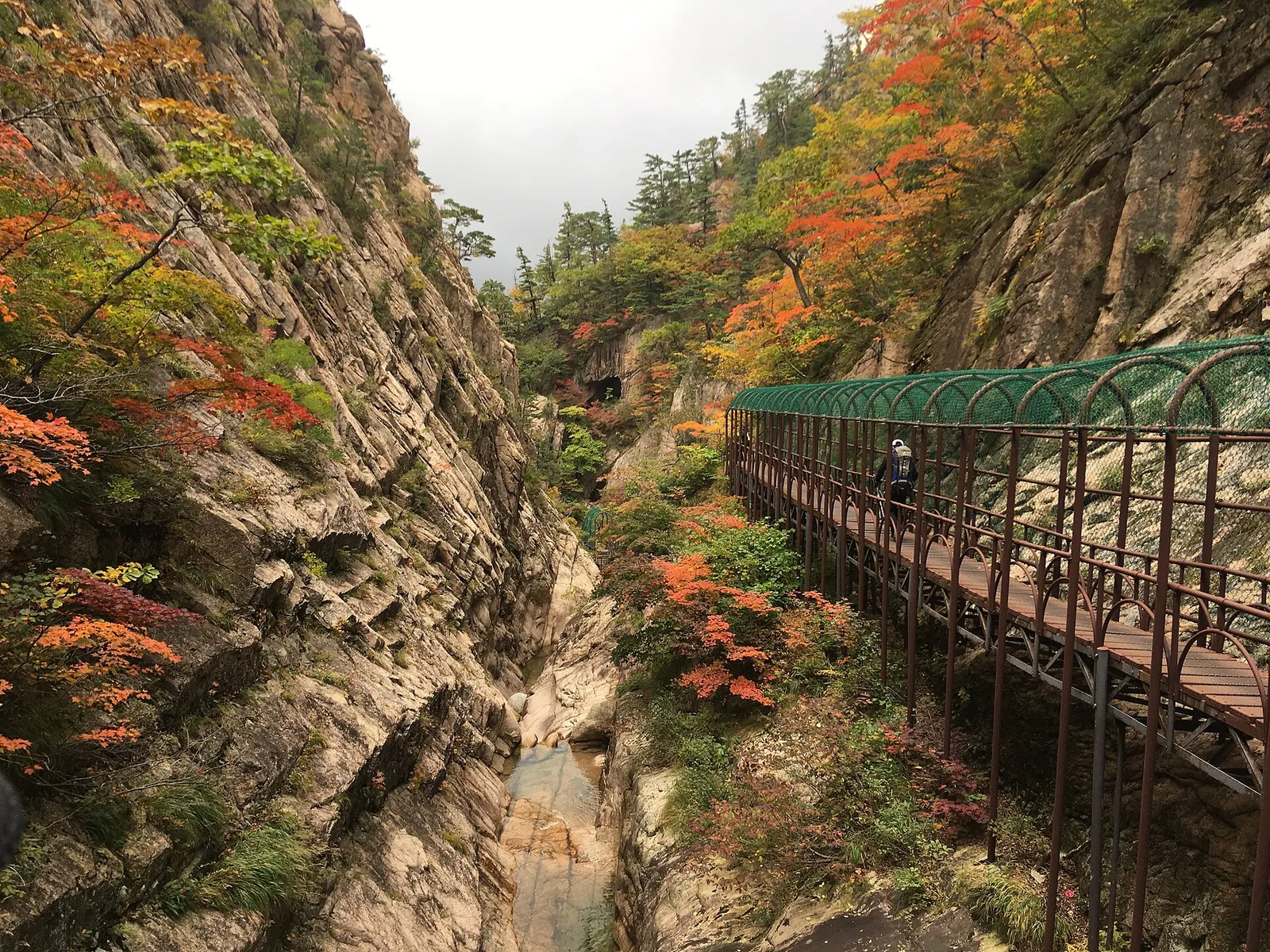
Autumn colour in a Seoraksan gorge, with a covered walkway along the cliff
Photograph: Christophe95 — opens in a new tab · CC BY-SA 4.0 — opens in a new tab
Changes: Resized and converted to WebP; displayed with responsive crops. · Original photograph and licence details ↗ — opens in a new tab
A Seorak Cable Car cabin, with the peaks of Outer Seorak behind
Photograph: Bernard Gagnon — opens in a new tab · CC0 — opens in a new tab
Changes: Resized and converted to WebP; displayed with responsive crops. · Original photograph and licence details ↗ — opens in a new tab
Hikers on Daecheongbong, at 1,708 metres the highest point in Seoraksan National Park
Photograph: Christophe95 — opens in a new tab · CC BY-SA 4.0 — opens in a new tab
Changes: Resized and converted to WebP; displayed with responsive crops. · Original photograph and licence details ↗ — opens in a new tab
The bronze seated Buddha at Sinheungsa, passed on the way to Ulsanbawi
Photograph: lumoplank — opens in a new tab · CC0 — opens in a new tab
Changes: Resized and converted to WebP; displayed with responsive crops. · Original photograph and licence details ↗ — opens in a new tab
Makguksu, the cold buckwheat noodles of Gangwon State (photographed in Gangneung)
Photograph: by Junho Jung at Flickr from South Korea — opens in a new tab · CC BY-SA 3.0 — opens in a new tab
Changes: Resized and converted to WebP; displayed with responsive crops. · Original photograph and licence details ↗ — opens in a new tab