Seoul and the Capital Area · Incheon
Ganghwa Island guide: dolmens, coastal forts and Jeondeungsa by bus
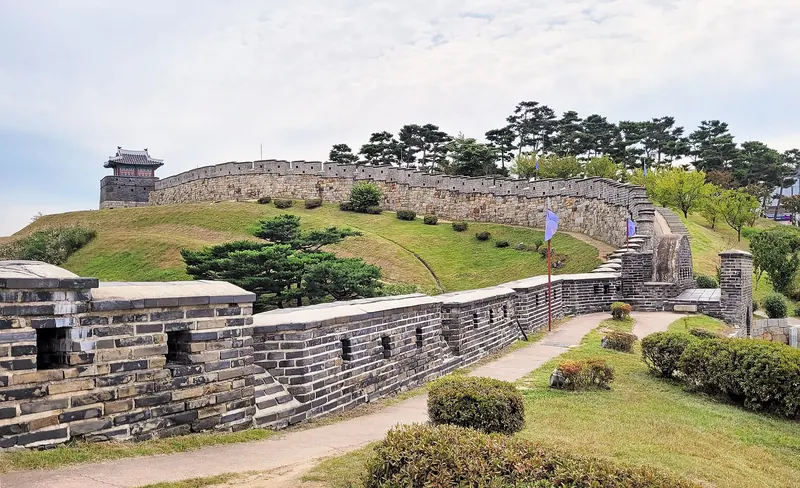
Ganghwa Island sits in the mouth of the Han River, joined to the mainland by road bridges, and it packs more Korean history into one place than almost anywhere near Seoul. Bronze Age dolmens stand in its northern fields, the Goryeo court retreated here from the Mongols in the 13th century, and the forts along its eastern strait were where Joseon troops fought French and American landing parties in 1866 and 1871. Add a temple inside an old mountain fortress, wide tidal flats in the south and a view of North Korea from the island's northernmost hill, and you have an island that rewards a plan rather than a drive-by.
- Suggested time
- 1 long day or 1 night
- Where to stay
- Ganghwa-eup near the bus terminal; Gilsang-myeon near Jeondeungsa for a quieter night
- Season and timing
- VisitKorea singles out spring and autumn for the coastal Nadeul-gil trail; the tidal flats depend on the tide rather than the season, and the Peace Observatory closes an hour earlier from December to February.
The short answer
Give Ganghwa one long day from Seoul, or one night if you want both the north and the south of the island without rushing. Take the 3000 bus from Sinchon to Ganghwa Bus Terminal, then split the island in two: the town of Ganghwa-eup with the fortress walls, the Anglican church and the dolmen site with the history museum to the north-west, and the eastern coastal forts with Jeondeungsa temple and the southern tidal flats. Sleep in Ganghwa-eup for bus connections, or near Jeondeungsa if you want a templestay and a quiet morning.
Split the island into two halves
Ganghwa is bigger than most visitors expect — VisitKorea calls it Korea's fourth-largest island — and its sights are spread across farmland, hills and coast rather than clustered in one town. Trying to see everything in a single loop means most of the day goes on buses and waiting. It works far better as two halves.
The north and centre is Ganghwa-eup, the island's town, with the bus terminal, the Goryeo-era fortress walls, the Anglican church and the market, plus the dolmen site at Bugeun-ri and the Ganghwa History Museum to the north-west. The east and south is the line of Joseon coastal forts facing the strait — Gwangseongbo, Deokjinjin and Chojijin — with Jeondeungsa temple inland and the tidal flats of Dongmak Beach on the south coast. On a day trip, pick one half; with a night on the island, do one each day.
The Ganghwa County tourism site lists tourist information centres in the waiting room of Ganghwa Bus Terminal, at the dolmen ticket office and at Chojijin. Ask at the terminal desk for the current island bus routes and return times before you head out: they are the most useful piece of paper you will get all day.
- Day trip, history focus: Ganghwa-eup walls and church, then the dolmen site and history museum.
- Day trip, coast and temple: Gwangseongbo, Deokjinjin and Chojijin, then Jeondeungsa.
- One night: both halves, with sunset over the southern tidal flats in between.
The dolmens and the Ganghwa History Museum
Ganghwa is one of the three Korean dolmen areas inscribed together by UNESCO in 2000 as the Gochang, Hwasun and Ganghwa Dolmen Sites. VisitKorea's UNESCO page says more than 160 Bronze Age dolmens remain on the island, spread over very different terrain, and that most Korean dolmens were built around 1000 BC.
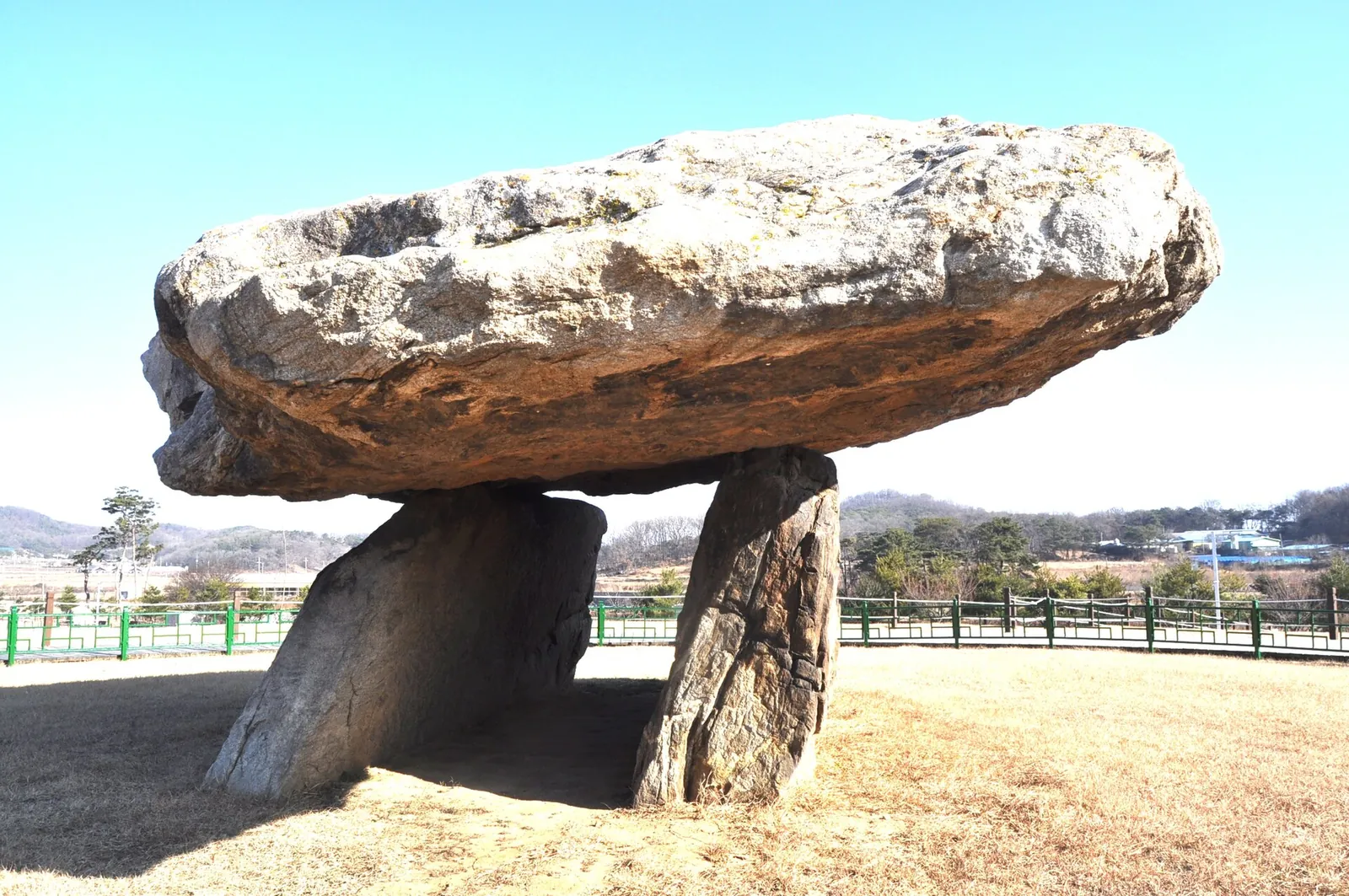
The one to see is the Dolmen in Bugeun-ri in Hajeom-myeon, a table-style dolmen whose capstone, according to VisitKorea, is 710 centimetres long, 550 centimetres wide and 260 centimetres high, resting on two upright stones. It stands in an open field, so you see the whole structure at once. When we checked on 2026-10-03, VisitKorea listed the site as open 24 hours with free admission.
The Ganghwa History Museum, which opened in 2010, sits beside it at 994-19 Ganghwa-daero and covers the island from prehistory to modern times — a good way to put the forts and fortress walls you will see later into order. When we checked on 2026-10-03, VisitKorea listed it as open 09:00–18:00 (last tickets 17:30), closed on Mondays, 1 January, Seollal and Chuseok, with adult admission at 3,000 won. Come on a Monday and you get the dolmen but not the museum.
If the dolmens are your reason to come, Gochang in the Jeolla region has a far larger concentration — VisitKorea counts 447 of its dolmens on the UNESCO list — and its own dolmen museum. Ganghwa's advantage is that it is reachable from Seoul in a day.
Make time for the local food
What to eat and where to look
Jeotgukgalbi (pork rib soup seasoned with salted shrimp)
A clear, lightly spicy broth of pork ribs, tofu and vegetables, seasoned with salted shrimp, mainly produced on Ganghwa. VisitKorea describes it as a light soup that keeps the flavour of its ingredients.
- Where to look
- Korean restaurants in Ganghwa-eup and along the roads near the forts and Jeondeungsa; look for 젓국갈비 on the menu.
- Fit it into your day
- A warming lunch between the coastal forts and the temple.
Contains pork and shellfish; often served for two or more.
Baendaengi (scaled sardine), raw or as a spicy salad
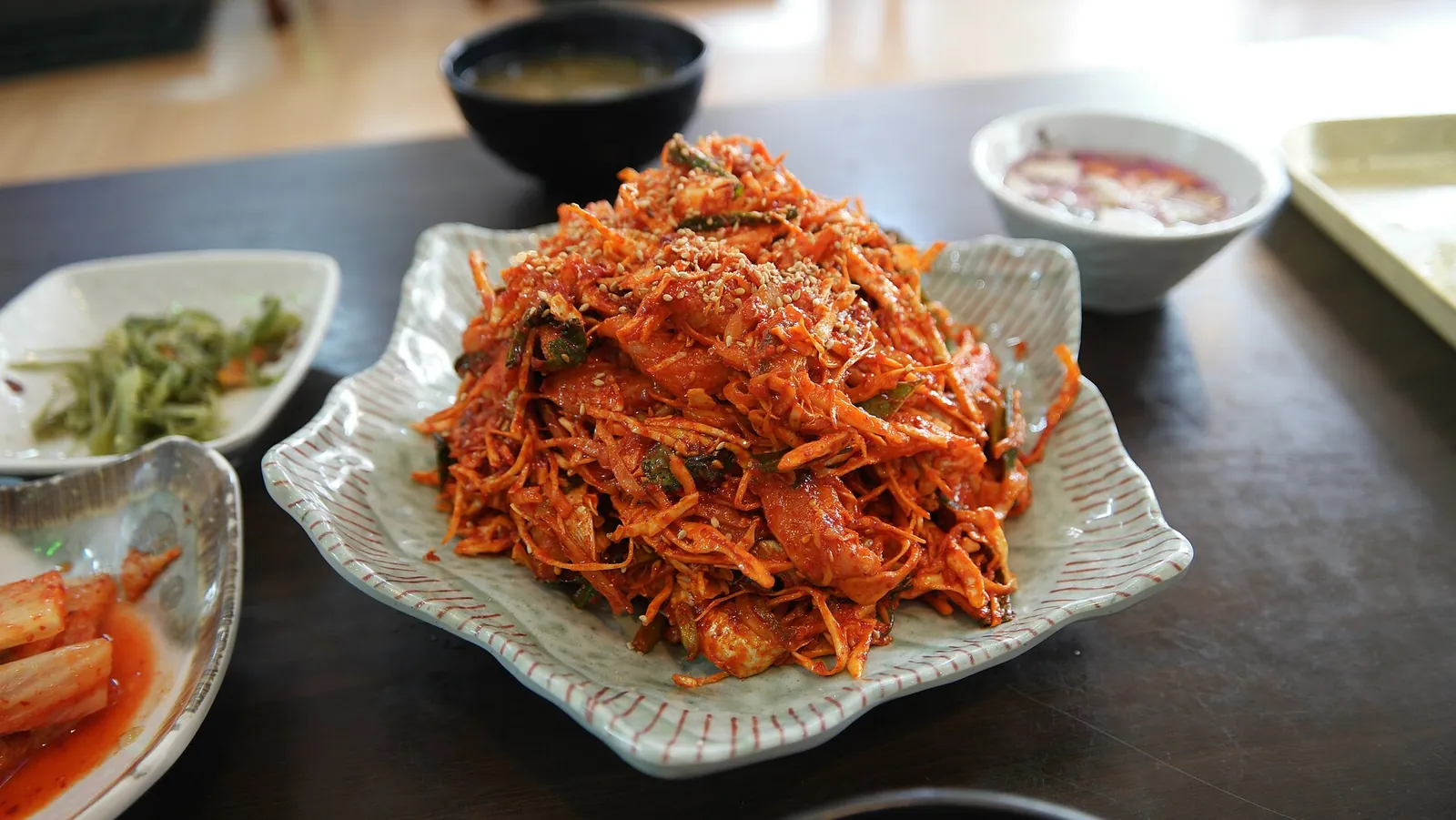
Small scaled sardines from the waters where the river meets the sea, eaten raw or mixed with vegetables in a sweet-spicy sauce (baendaengi hoe muchim). VisitKorea notes the fish dies quickly once caught, which is why it is eaten fresh near where it is landed; the county's tourism page singles out the April–June catch.
- Where to look
- The raw-fish restaurants at Seonsu port in Hwado-myeon, which the county names as a baendaengi village, or at Oepo-ri.
- Fit it into your day
- Lunch on a south-coast day with Dongmak Beach or before the bridge to Seongmodo.
Raw fish; season and availability vary, so ask what is fresh.
Ganghwa salted shrimp (saeujeot)
Salted shrimp from the Ganghwa coast, where the Han, Imjin and Yeseong rivers meet the sea. The county's festival page says the shrimp were once sent to the king as tribute, and that salted shrimp is stored at Oepo-ri, where an annual Salted Shrimp Festival is held in October.
- Where to look
- Fish and seafood markets in Ganghwa-eup and at Oepo-ri; it also seasons the island's soups and kimchi.
- Fit it into your day
- Something to buy rather than a meal — and the flavour behind jeotgukgalbi.
Very salty and strong-smelling; check customs rules before packing seafood products.
Sunmu kimchi (Ganghwa turnip kimchi)
The county describes Ganghwa's purple-topped turnip as sweetish with a peppery, ginseng-like note, and names turnip kimchi among the dishes made with it.
- Where to look
- As a side dish in Ganghwa restaurants and in the market in Ganghwa-eup.
- Fit it into your day
- It arrives with almost any Korean meal on the island; ask for it by name.
Fermented and strongly flavoured; may contain salted seafood.
The coastal forts: 1866, 1871 and 1876
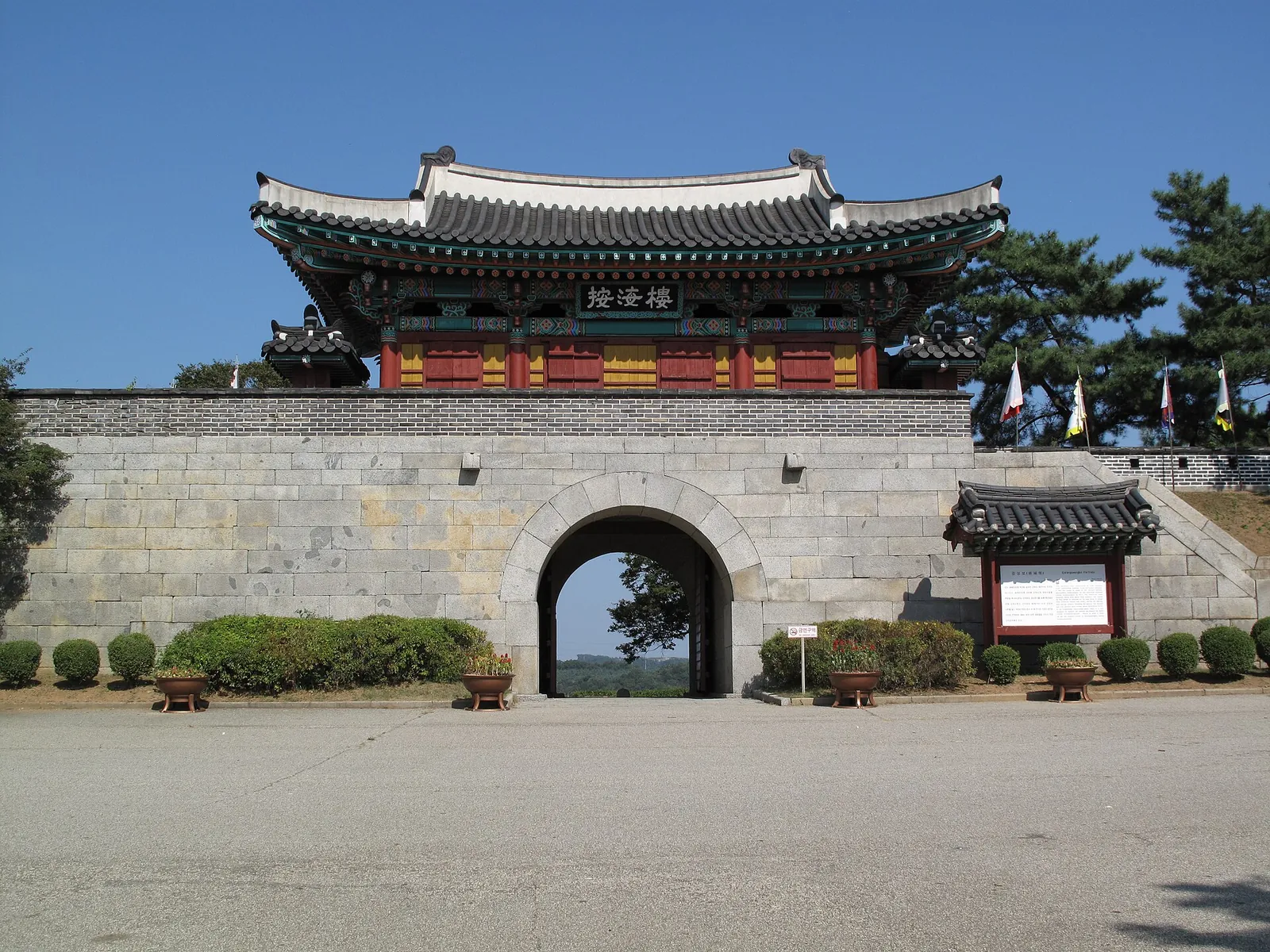
The eastern shore of Ganghwa faces the narrow Ganghwa Strait, and a chain of Joseon forts and gun batteries guarded it. VisitKorea describes how Deokjinjin was the scene of heavy fighting during the French expedition of 1866 and the American one of 1871, and how in 1871 an American force under Rear Admiral John Rodgers attacked Chojijin and Deokjinjin before fighting at close quarters at Gwangseongbo, the fiercest battle on the island. In 1876 the Japanese warship Unyangho (Un'yō) attacked Chojijin, in the episode that led to the treaty forcing Korea to open its ports.
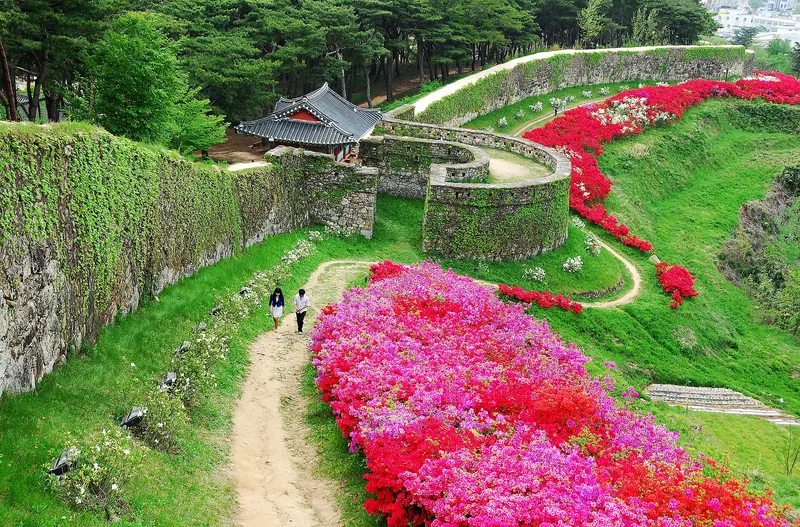
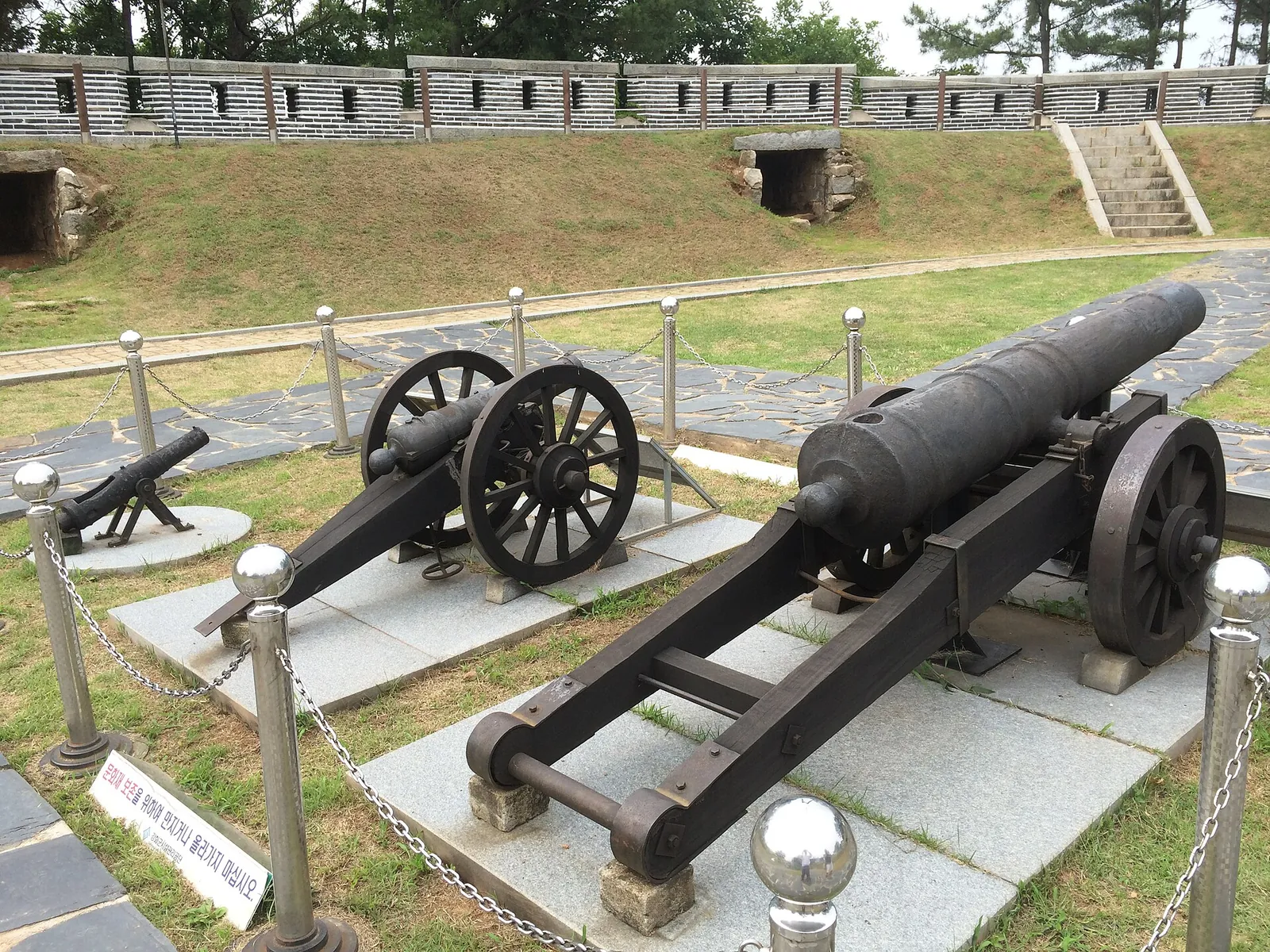
Gwangseongbo is the most rewarding stop: restored walls and gate towers, the Gwangseongdon and Yongdudon batteries above the water, and the tombs of General Eo Jae-yeon and the soldiers who died there. VisitKorea suggests about 50 minutes; Deokjinjin takes about 30 and has reproduced Joseon cannons at its Namjangpodae battery. Chojijin is the southernmost of the three.
When we checked on 2026-10-03, VisitKorea listed all three as open 09:00–18:00 every day, and Chojijin's admission at 700 won for adults. Its Chojijin page also describes a combined discount across Ganghwa County's main paid sites — 15% for three or four and 20% for five or more — so ask about it at the first ticket office if you plan several. Walkers can follow Ganghwa Nadeul-gil Course 2, which VisitKorea describes as a 17-kilometre coastal route between Gapgotdon watchtower and Chojijin, particularly beautiful in spring and autumn.
Jeondeungsa: a temple inside a fortress
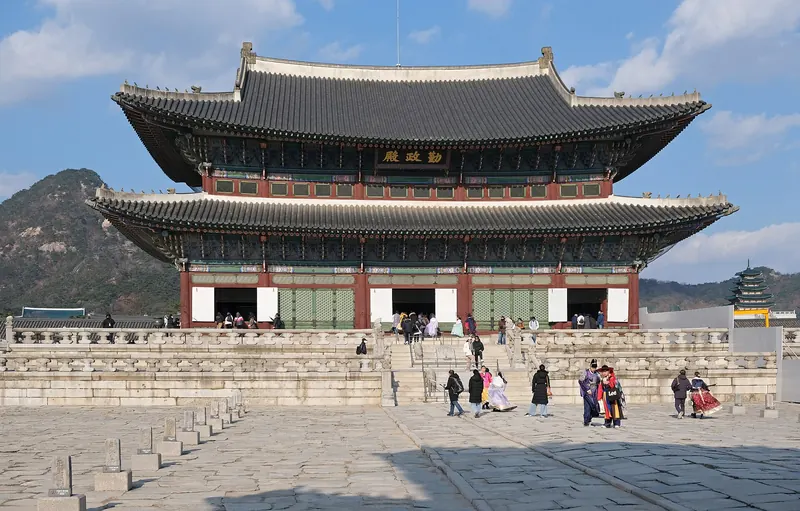
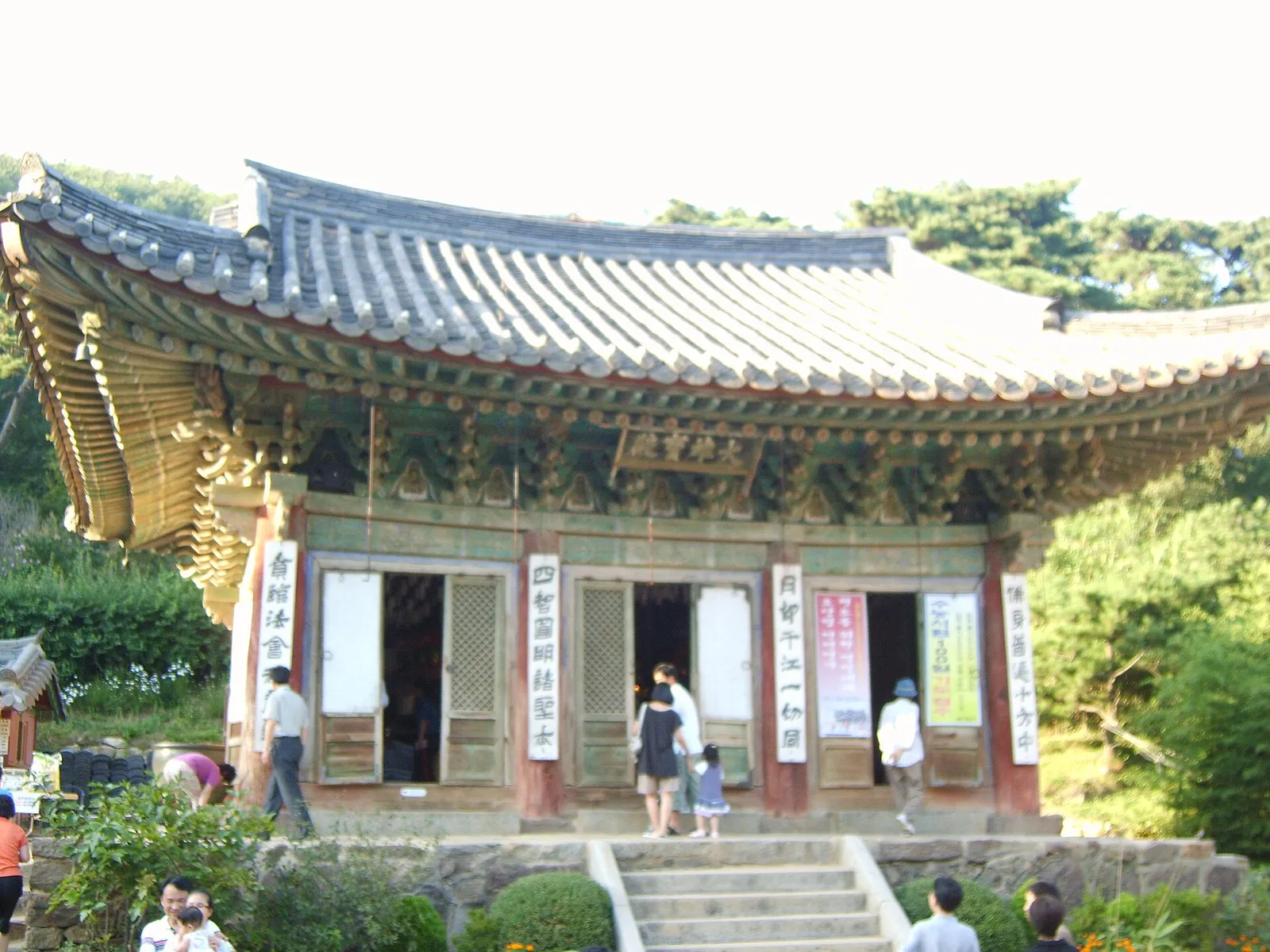
Jeondeungsa stands inside Samnangseong, a mountain fortress that legend attributes to the three sons of Dangun, Korea's mythical founder. VisitKorea notes that the temple was originally called Jinjongsa and took its present name during the Goryeo period, and that its buildings are fine examples of mid-Joseon architecture. Look closely in the main hall, Daeungjeon: the walls and columns carry names written by soldiers who fought the French navy, praying for luck in battle.
Give yourself an hour for the halls, the bell and the old trees inside the fortress walls. When we checked on 2026-10-03, VisitKorea listed the temple as open 09:00–17:30 all year, with free admission. Jeondeungsa also runs a templestay; VisitKorea's templestay page lists it with information in Korean and English, which is the most atmospheric way to spend a night on the island.
Ganghwa-eup: Goryeo walls, an Anglican church in hanok style
The island's town is easy on foot from the bus terminal. Ganghwa Sanseong began, as VisitKorea explains, as earthen walls built in 1232 after King Gojong of Goryeo moved his court here to resist the Mongols. Only the inner wall, about 1.2 kilometres around, survives in rebuilt stone form, with gates on four sides. At the west gate stands Yeonmudang, the drill ground where the 1876 Treaty of Ganghwa was signed.
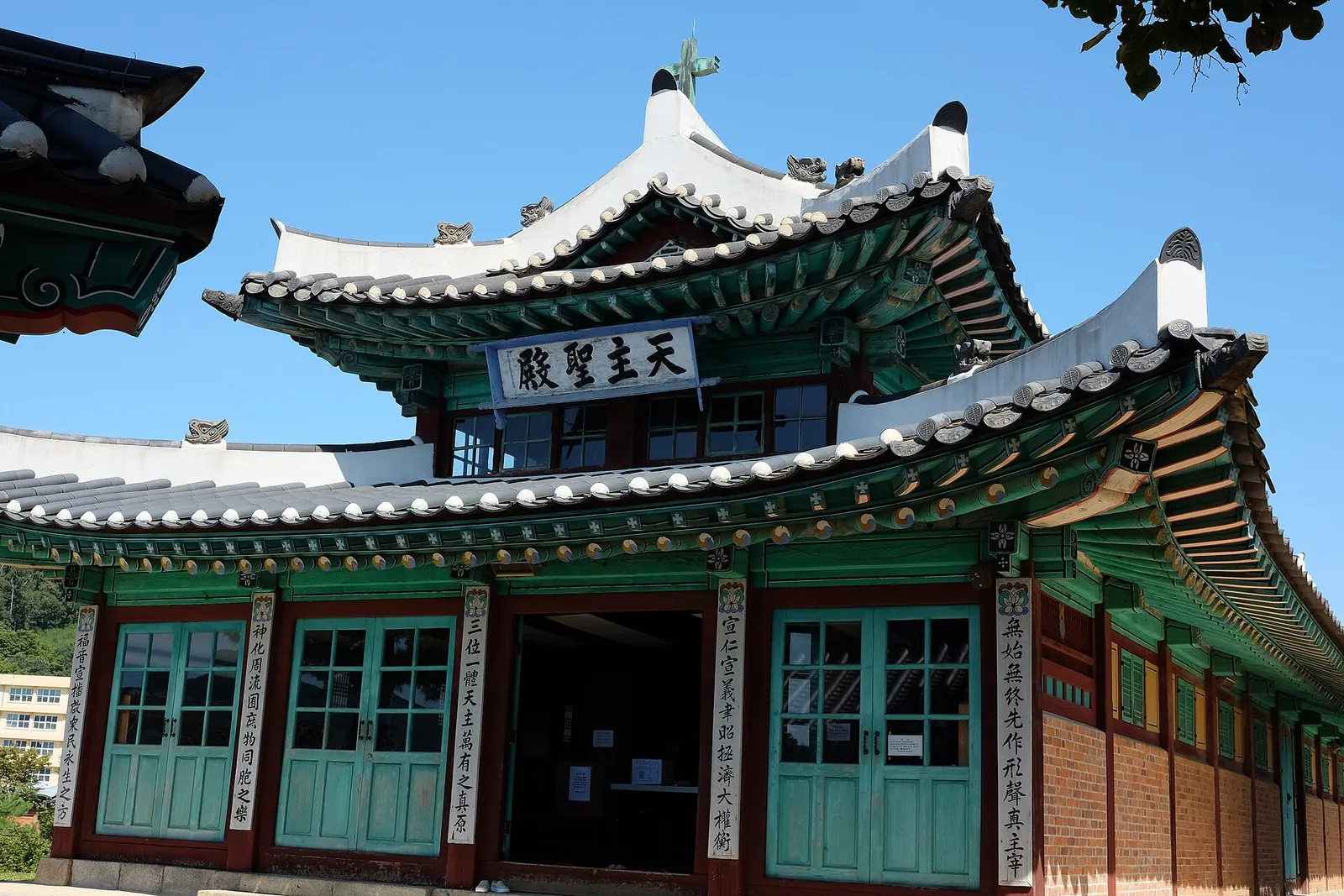
The Ganghwa Anglican Church, consecrated in 1900 by Bishop Charles John Corfe, looks from outside like a two-storey hanok and inside like a Western basilica; it is a national Historic Site. For a coffee break, Joyang Bangjik is a former textile factory turned into a large café and gallery with the old workbenches used as tables.
With a car or patience for buses, the town is also the springboard for the north: VisitKorea's page on the Jejeokbong Peace Observatory says it looks across the water to North Korea and asks visitors to carry a passport. When we checked on 2026-10-03, it listed 09:00–18:00 from March to November and 09:00–17:00 from December to February, with adult admission at 2,500 won.
Tidal flats, Seongmodo and Gyodongdo
Ganghwa's south coast is tidal-flat country. At Dongmak Beach, VisitKorea describes a pine-backed sand beach that becomes a wide mudflat at low tide, with clams and crabs to look at; nearby, the Janghwa-ri tidal flats are a photographers' favourite at sunset. What you see depends entirely on the tide, so check the tide time before you plan sunset here.
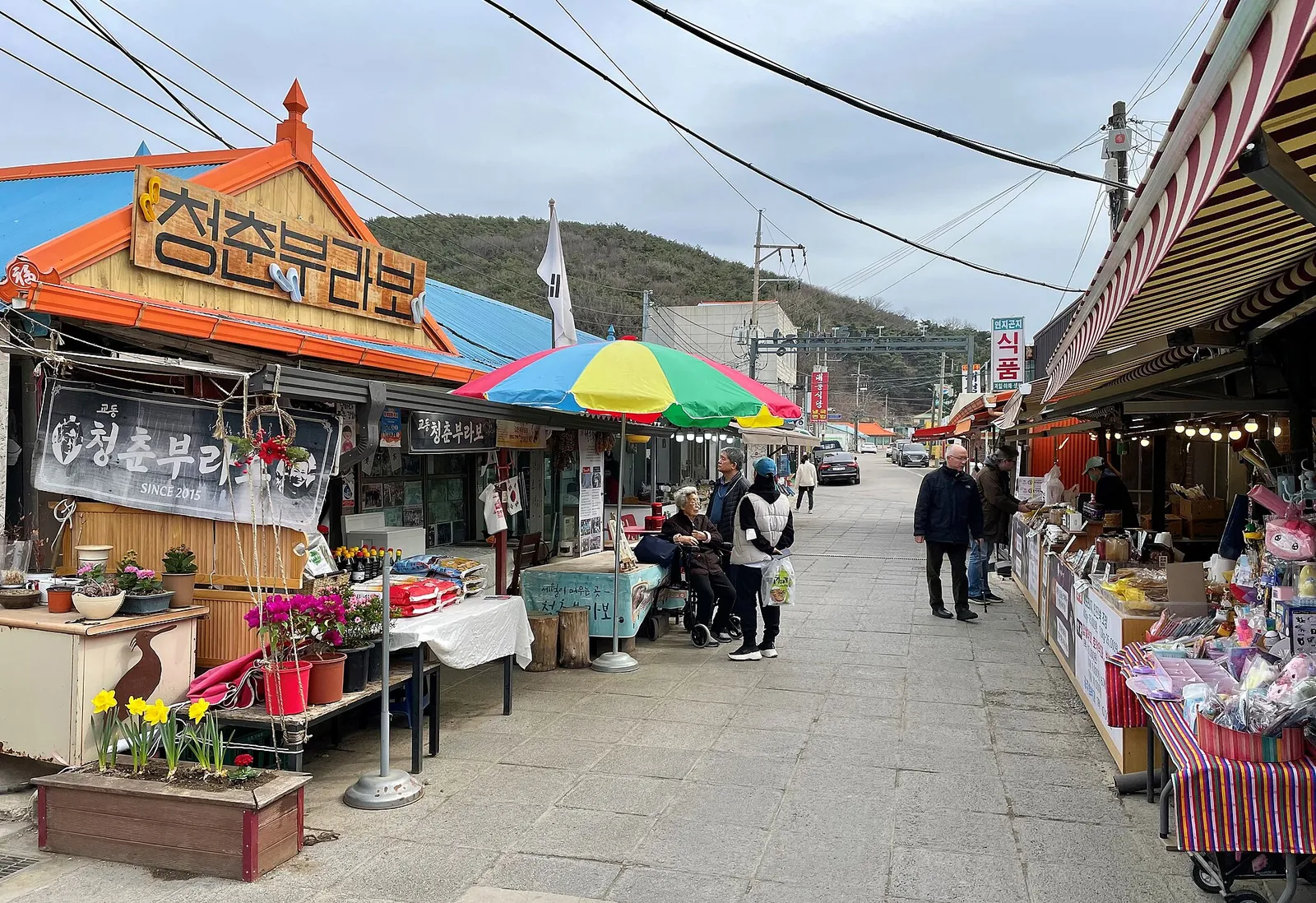
To the west, 1.2 kilometres across the water, lies Seongmodo, whose Bomunsa temple faces the sea from Sangbongsan Mountain and is believed to date from 635. When we checked on 2026-10-03, VisitKorea listed it as open 09:00–18:00 with adult admission at 2,000 won. To the north-west, Gyodongdo has been linked by the Gyodong Bridge since July 2014; its Daeryong Market was built by refugees from Hwanghae Province during the Korean War and keeps a 1960s look. Both islands are better as an extra day or by car than squeezed into a bus day trip.
For a hike, Manisan (472 metres), on the south-west of the island, has the Chamseongdan altar where Dangun is said to have performed rituals, and VisitKorea notes views over the sea and towards North Korea from the top.
Practical questions
Can I visit Ganghwa Island as a day trip from Seoul?
Yes. Take the 3000 bus from Sinchon to Ganghwa Bus Terminal and choose one half of the island: the town, fortress walls and dolmen site, or the eastern forts and Jeondeungsa. Seeing both halves comfortably needs a night.
How long is the bus from Seoul to Ganghwa?
Ganghwa County's English transport page lists an average of about 1 hour 40 minutes for bus 3000 between Sinchon and Ganghwa. Road traffic can make it longer.
Where are the UNESCO dolmens on Ganghwa?
The best-known is the Dolmen in Bugeun-ri in Hajeom-myeon, north-west of Ganghwa-eup, next to the Ganghwa History Museum. VisitKorea says more than 160 dolmens remain on the island.
Is Jeondeungsa free to visit?
When we checked on 2026-10-03, VisitKorea listed free admission and opening from 09:00 to 17:30 all year. The temple also offers a templestay.
Do I need my passport on Ganghwa?
Bring it if you plan to visit the Jejeokbong Peace Observatory in the north: VisitKorea asks visitors to carry identification such as a passport or alien registration card.
What happened at Gwangseongbo?
In 1871 an American naval force landed on Ganghwa, attacked Chojijin and Deokjinjin and fought Joseon troops under General Eo Jae-yeon at Gwangseongbo, the fiercest fighting on Ganghwa. The fort and the soldiers' tombs can be visited.
Sources and checks before you travel
Reference sources for the version dated 3 October 2026. Confirm opening times, access, transport and conditions for your travel dates.
- VisitKorea: Ganghwa Jeondeungsa Temple ↗ — opens in a new tab
- VisitKorea: Gochang, Hwasun and Ganghwa Dolmen Sites (UNESCO) ↗ — opens in a new tab
- VisitKorea: Dolmen in Bugeun-ri ↗ — opens in a new tab
- VisitKorea: Ganghwa History Museum ↗ — opens in a new tab
- VisitKorea: Gwangseongbo Fortress ↗ — opens in a new tab
- VisitKorea: Ganghwa Deokjinjin Fortress ↗ — opens in a new tab
- VisitKorea: Ganghwa Chojijin Fortress ↗ — opens in a new tab
- VisitKorea: Ganghwasanseong Fortress ↗ — opens in a new tab
- VisitKorea: Ganghwa Anglican Church ↗ — opens in a new tab
- VisitKorea: Ganghwado Jejeokbong Peace Observatory ↗ — opens in a new tab
- VisitKorea: Dongmak Beach ↗ — opens in a new tab
- VisitKorea: Ganghwa Bomunsa Temple ↗ — opens in a new tab
- VisitKorea: Gyodongdo Daeryong Market ↗ — opens in a new tab
- VisitKorea: Ganghwa Nadeul-gil Course 2 ↗ — opens in a new tab
- VisitKorea: Salted shrimp and galbi soup (jeotgukgalbi) ↗ — opens in a new tab
- VisitKorea: Spicy raw scaled sardine salad ↗ — opens in a new tab
- Ganghwa County: transportation (English) ↗ — opens in a new tab
- Ganghwa County: tourist information centres (English) ↗ — opens in a new tab
- Ganghwa County: local food and Salted Shrimp Festival (English) ↗ — opens in a new tab
- VisitKorea: Airport Transportation Guide ↗ — opens in a new tab
Does this experience fit your route?
If island buses put you off, a guided day from Seoul is the alternative. Check that the tour really goes to Ganghwa — and to the half of the island you want — before you book.
Browse relevant experiences on Viator ↗ — opens in a new tabAffiliate link · Book with ViatorPhoto credits
The main gate of Gwangseongbo, the Joseon fort on Ganghwa's eastern strait where the fiercest fighting of 1871 took place
Photograph: G41rn8 — opens in a new tab · CC BY-SA 4.0 — opens in a new tab
Changes: Resized and converted to WebP; displayed with responsive crops. · Original photograph and licence details ↗ — opens in a new tab
The table-style Dolmen in Bugeun-ri, part of the UNESCO-listed Ganghwa dolmen site
Photograph: 김영창1 — opens in a new tab · CC BY-SA 4.0 — opens in a new tab
Changes: Resized and converted to WebP; displayed with responsive crops. · Original photograph and licence details ↗ — opens in a new tab
Daeungjeon, the main hall of Jeondeungsa temple inside the Samnangseong fortress
Photograph: Dalgial — opens in a new tab · CC BY-SA 3.0 — opens in a new tab
Changes: Resized and converted to WebP; displayed with responsive crops. · Original photograph and licence details ↗ — opens in a new tab
Ganghwa Anglican Church in Ganghwa-eup, consecrated in 1900 and built in Korean hanok style
Photograph: Motoko C. K. — opens in a new tab · CC BY 4.0 — opens in a new tab
Changes: Resized and converted to WebP; displayed with responsive crops. · Original photograph and licence details ↗ — opens in a new tab
Baendaengi hoe muchim, raw scaled sardine salad in a sweet-spicy sauce, a speciality of the Ganghwa coast
Photograph: hyun chun kim — opens in a new tab · CC0 — opens in a new tab
Changes: Resized and converted to WebP; displayed with responsive crops. · Original photograph and licence details ↗ — opens in a new tab
Daeryong Market on Gyodongdo, the island north-west of Ganghwa, founded by Korean War refugees
Photograph: Vincent van Zeijst — opens in a new tab · CC BY-SA 4.0 — opens in a new tab
Changes: Resized and converted to WebP; displayed with responsive crops. · Original photograph and licence details ↗ — opens in a new tab
Cannons on display inside the walls of Gwangseongbo
Photograph: Jjw — opens in a new tab · CC BY-SA 4.0 — opens in a new tab
Changes: Resized and converted to WebP; displayed with responsive crops. · Original photograph and licence details ↗ — opens in a new tab