Jeolla · Jeonbuk State
Gochang guide: UNESCO dolmens, Seonunsa and the fortress wall walk
Gochang is a rural county in the southwest corner of Jeonbuk with three reasons to stop: one of the densest clusters of Bronze Age dolmens on earth, a fifteenth-century town wall you can walk all the way round, and Seonunsa, an old temple at the foot of a rocky provincial-park mountain. The distances are short enough to see all three in a day and a half without a car, if you plan around the bus timetable rather than against it.
- Suggested time
- 1–2 days
- Where to stay
- Gochang-eup (county town) for buses and the fortress; the Seonunsan entrance in Asan-myeon for the temple and eel restaurants
- Season and timing
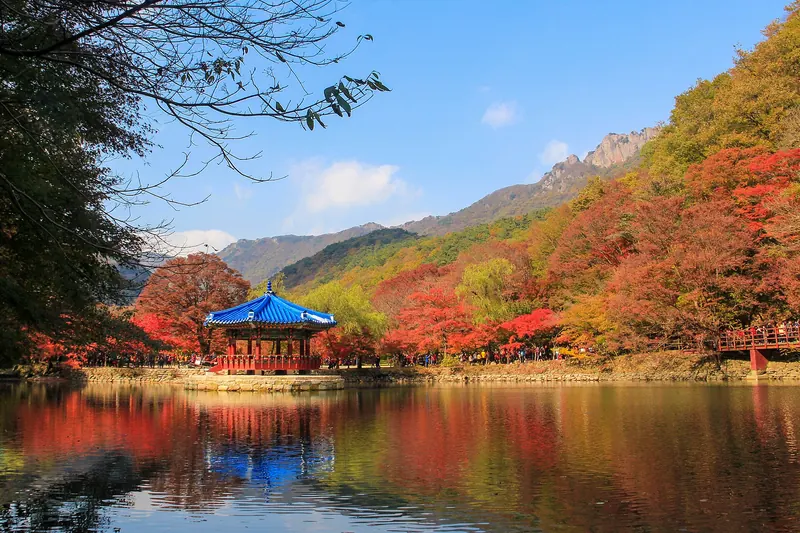
- April for Seonunsa's camellias and the green barley fields, autumn for maple colour on Seonunsan and the Moyang Fortress Festival in October. The fortress wall and the dolmen paths are exposed, so start early on hot summer days.
The short answer
Give Gochang one full day plus an evening, or two relaxed days. Sleep in Gochang-eup, the county town, where the intercity bus terminal, the fortress and the hanok guesthouses are; move to the Seonunsan entrance only if you want an early start at the temple and an eel dinner on the doorstep. Do the fortress wall in the late afternoon or evening, the dolmen site and museum the next morning, and Seonunsa in the afternoon. Come by intercity bus from Seoul, Jeonju or Gwangju, and use local buses or a taxi between the sites.
Base yourself in Gochang-eup, not by the temple
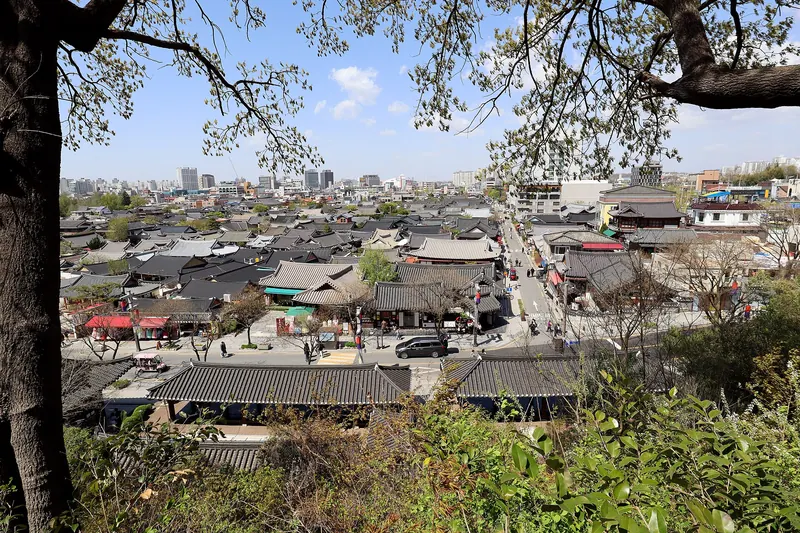
Gochang-eup is a small county town, but it is where the intercity bus terminal is and where the local buses start, so it is the practical base for anyone without a car. Gochangeupseong, the walled fortress, is at the edge of town, and the Gochangeupseong Hanok Village next to it rents rooms in traditional tile-roofed houses: VisitKorea describes seven houses with eleven rooms, check-in from 15:00 and no breakfast, so plan to eat in town.
The alternative is the entrance to Seonunsan Provincial Park in Asan-myeon, about 14 km from the dolmen museum according to the museum's own directions page. It is quieter at night and puts you within walking distance of Seonunsa and of the eel restaurants along Seonunsa-ro, but you will depend on buses or taxis for everything else. If you have only one night, stay in town and visit the temple as a half-day trip.
Walk the 1453 wall of Gochangeupseong
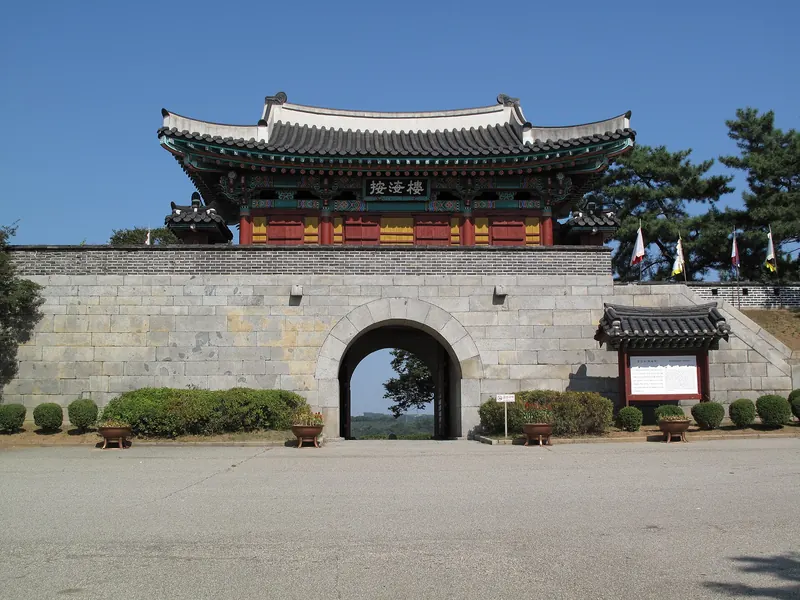
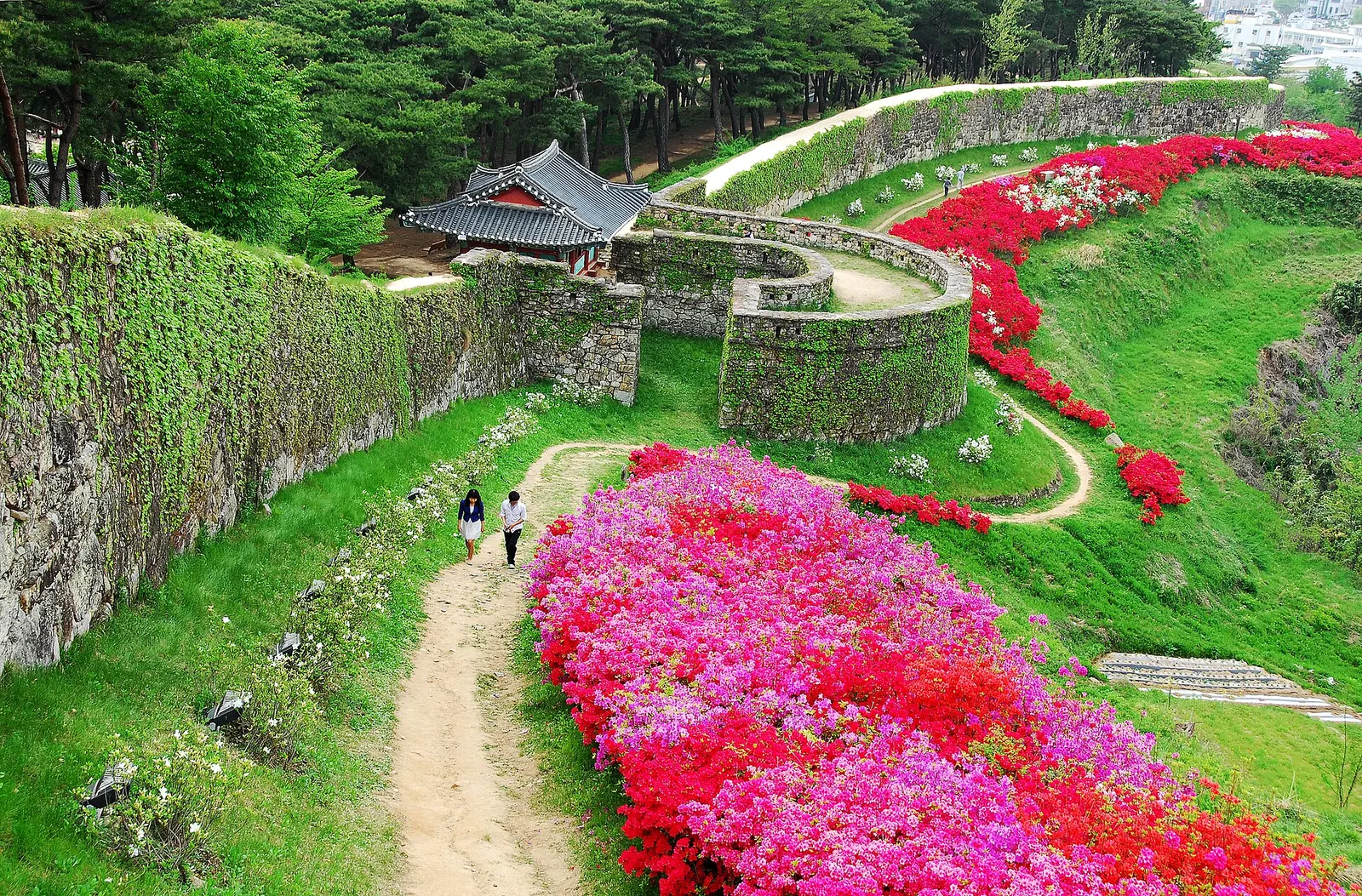
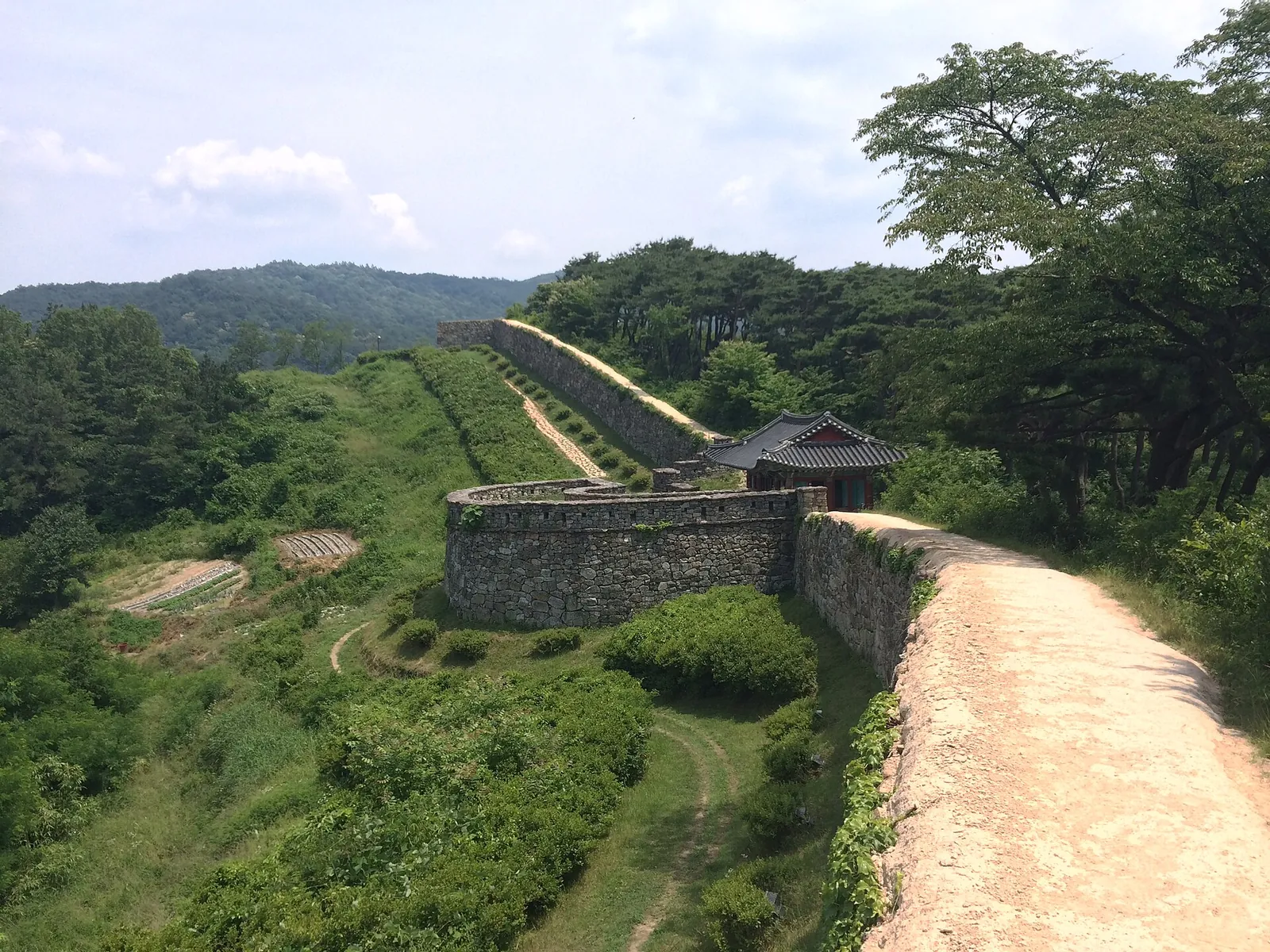
Gochangeupseong, also called Moyangseong, is a Joseon-period town fortress finished in 1453. VisitKorea gives its walls as 4 to 6 metres high and 1,684 metres long, with gates on the north, east and west sides, each guarded by a curved outer wall. You can walk the circuit along the top of the wall; inside, some of the old government buildings have been rebuilt among pine woods and a bamboo grove.
The walk is tied to a local ritual, dapseongnori: according to the county, walking the circuit once cures minor illness, twice brings long life and three times opens the way to paradise, and participants traditionally carry a palm-sized stone on their heads. You will see it performed at the Moyang Fortress Festival, which VisitKorea says has been held at the fortress since 1973 and which ran in October in its most recent listed edition.
When we checked on 2026-10-03, Gochang County's English page listed the fortress as open daily from 05:00 to 22:00 with adult admission of 3,000 won (2,000 won for teenagers); VisitKorea gave a slightly different opening time, so check at the gate if you plan a very early visit. The long opening hours make a late-afternoon or evening loop easy after you arrive by bus.
Make time for the local food
What to eat and where to look
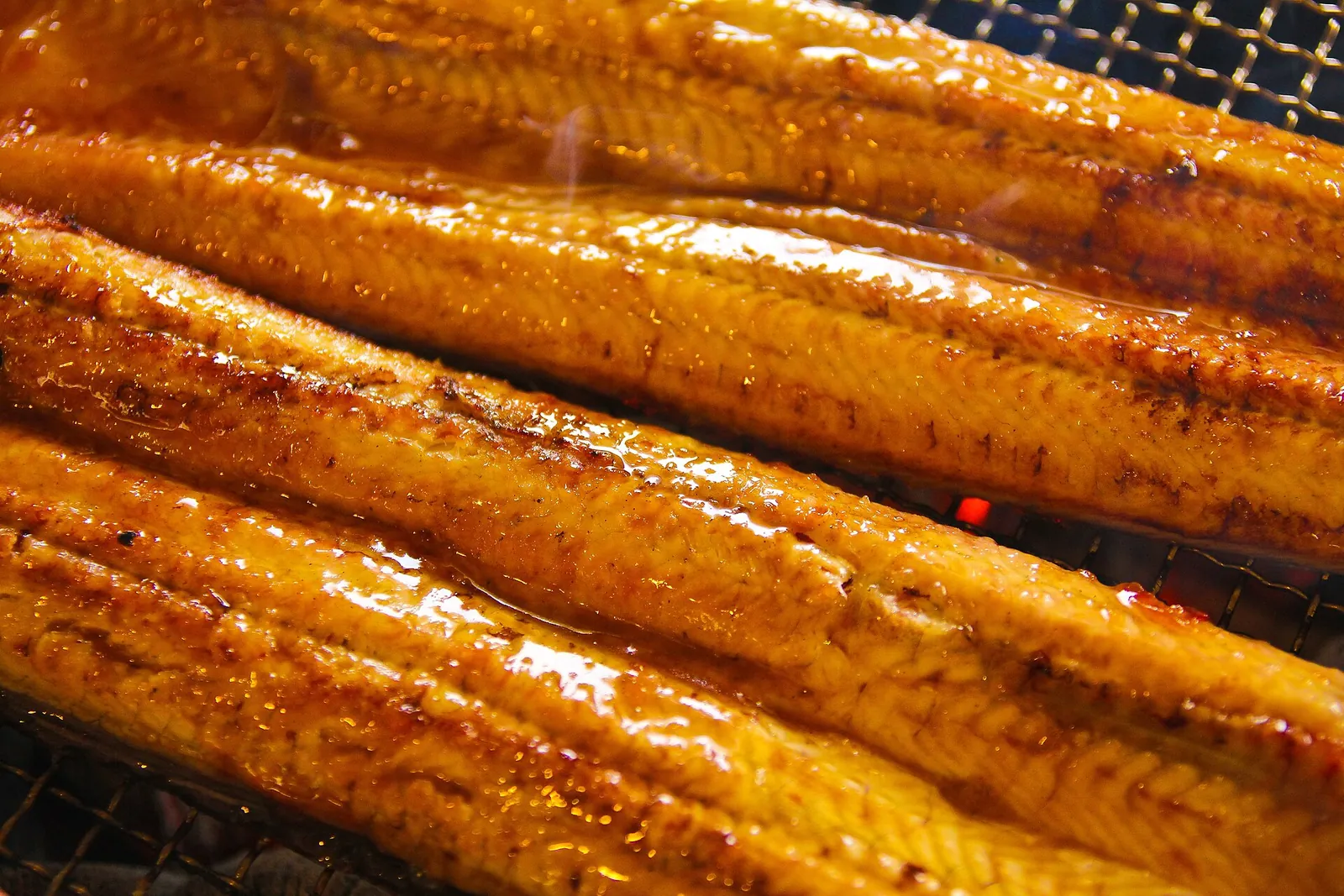
Pungcheon jangeo gui (grilled freshwater eel)
Freshwater eel grilled over charcoal, either seasoned with salt (sogeum-gui) or brushed with a sweet-savoury sauce (yangnyeom-gui). Pungcheon eel from the Seonunsan area is the county's best-known dish, and several restaurants near the temple cook it at the table or in the kitchen.
- Where to look
- Eel restaurants along Seonunsa-ro and the side streets of Asan-myeon near the Seonunsan Provincial Park entrance.
- Fit it into your day
- Make it the dinner after Seonunsa, or a long lunch before the bus back to Gochang-eup.
Ask whether the eel is grilled at the table (smoky) or in the kitchen.
Jangeotang (eel soup)
A rich soup or stew made with eel, offered alongside the grilled dishes in Gochang's eel restaurants; one restaurant listed by VisitKorea serves it as a spicy stew.
- Where to look
- The same eel restaurants by Seonunsa; it often appears on the menu next to the grilled eel.
- Fit it into your day
- A lighter way to try eel at lunch, or a shared extra with a grilled order.
Spice levels vary; ask before ordering if you avoid chilli.
Bokbunja-ju (black raspberry wine)
A fruit wine made from Korean black raspberries (bokbunja). The county names it together with eel as Seonunsan's local speciality and suggests a glass of it with the eel.
- Where to look
- Eel restaurants by Seonunsa, and the bokbunja sales point that the county lists at 164 Seonunsa-ro, at the Seonunsan Provincial Park entrance.
- Fit it into your day
- Order a bottle with grilled eel, or buy one to take home.
It is alcoholic; check the label for strength before you drive or hike.
Dolsot sanchae bibimbap (wild vegetable rice in a hot stone bowl)
Rice topped with seasoned mountain vegetables and served in a hot stone bowl.
- Where to look
- Restaurants at the Seonunsan entrance; VisitKorea lists it on the menu of at least one eel restaurant there.
- Fit it into your day
- A good lunch for anyone who does not eat eel, or before walking up the Dosol valley.
Ask for the chilli paste on the side if you prefer it mild.
Read the dolmen fields, not just the museum
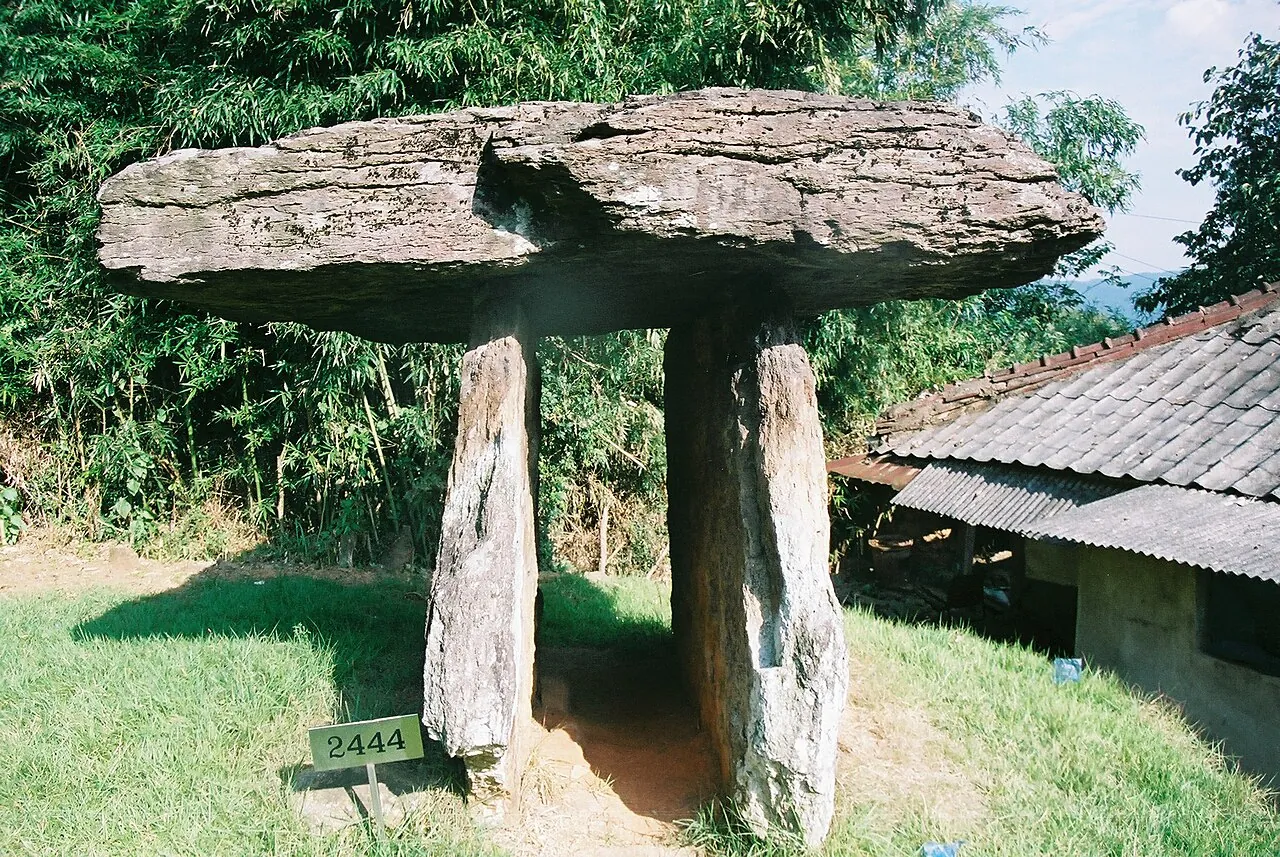
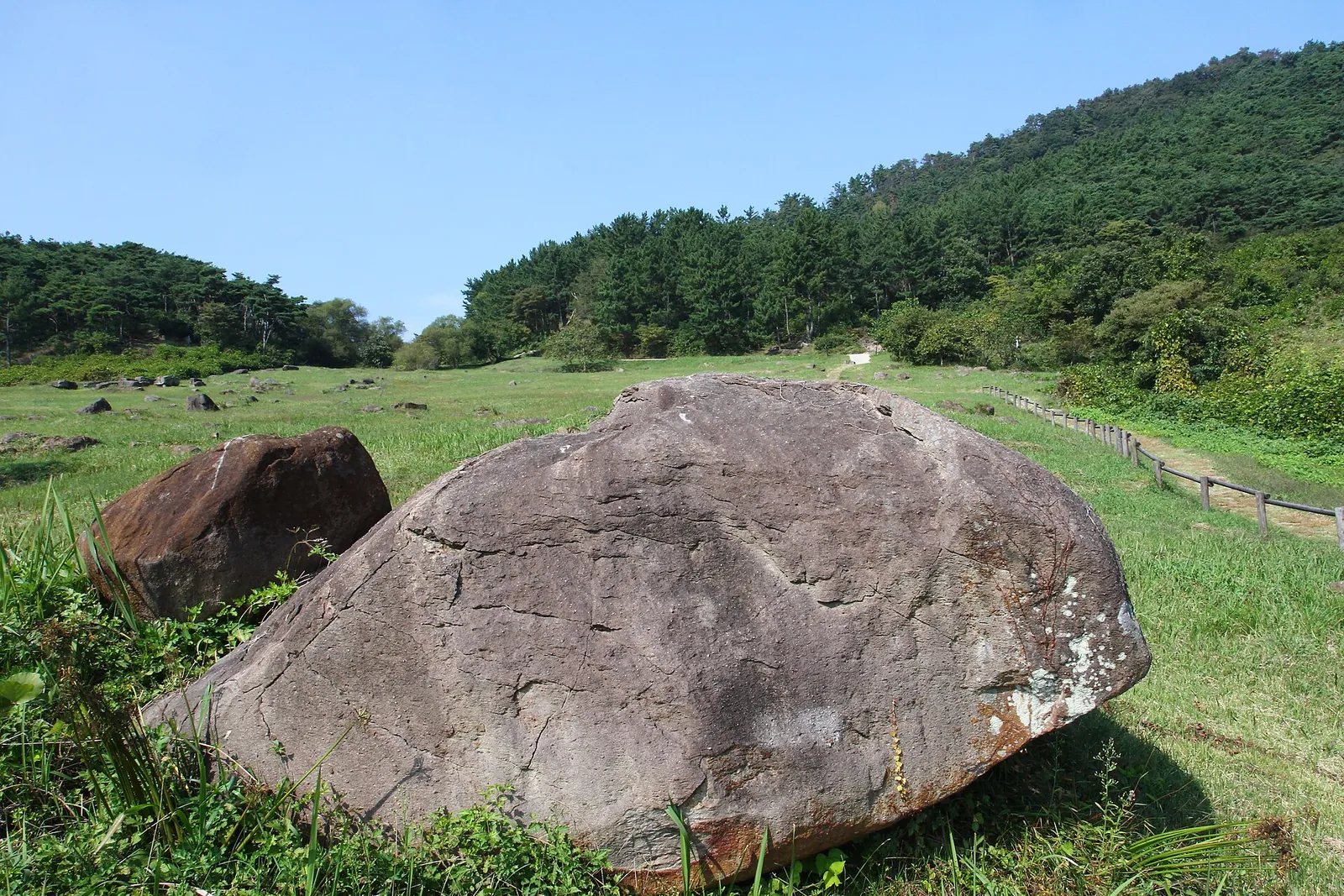
Gochang, Hwasun and Ganghwa were inscribed together on UNESCO's World Heritage List in 2000 as Korea's dolmen sites. Gochang has the largest concentration in Korea: VisitKorea notes that 447 of the county's dolmens are part of the inscription, and the county counts more than 1,600 across the area. The core site lies along a hillside in Jungnim-ri and Sanggap-ri, where the museum's trail map divides it into five courses covering about 1.8 km, with a sixth course at Dosan-ri.
The courses are worth walking in order because they show different things. According to the museum, course 2 holds a single capstone estimated at 120 to 150 tonnes, course 3 is the densest cluster with 128 dolmens, course 4 climbs to 23 quarry sites where the stone was cut, and course 5 has 220 mostly small dolmens laid out in rows. Course 6 at Dosan-ri is a classic table-shaped dolmen about 1.9 metres high.
When we checked on 2026-10-03, the Gochang Dolmen Museum's official site listed opening from 09:00 to 18:00 (09:00 to 17:00 from November to February), last entry one hour before closing, closure on Mondays and 1 January, and adult admission of 3,000 won. It also listed the small Moro-Moro tourist train along the dolmen site, running every 30 minutes between 10:00 and 17:30 except at lunchtime, at 1,000 won for adults; it does not run in rain, snow or strong wind and cannot be reserved for weekends. Allow two hours, as VisitKorea suggests, or longer if you want to walk to the quarries.
Seonunsa and the Dosolsan valley
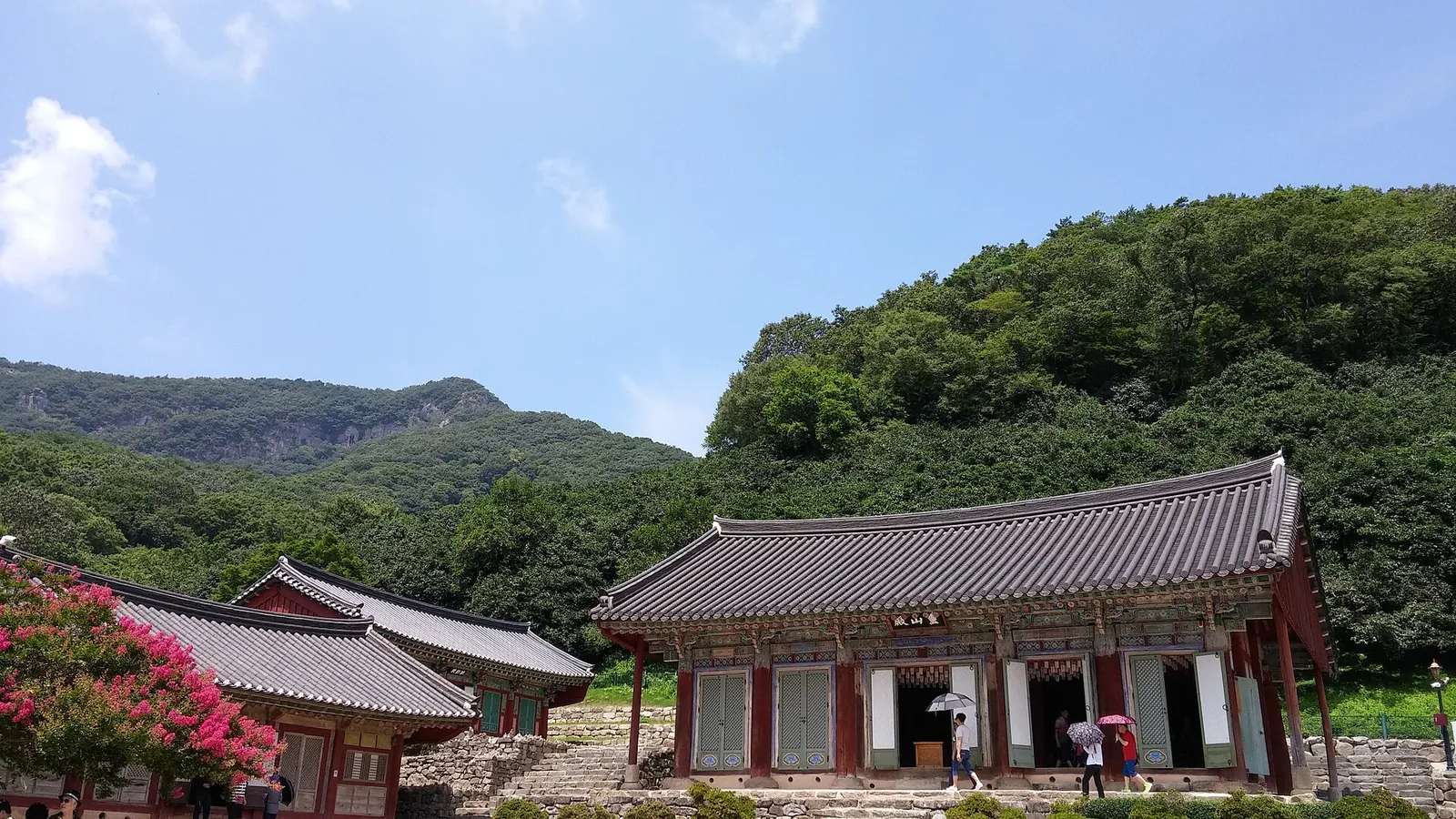
Seonunsa sits where the Dosol valley comes out of Seonunsan, a mountain of sharp volcanic rock under thick forest. VisitKorea dates the temple's founding to 577, in the Baekje period, and notes that of the 89 hermitages it once had, four remain: Dosoram, Chamdangam, Dongunam and Seoksangam. The temple's camellia forest is designated as a Natural Monument and has its own festival every April.
The best short walk follows the stream up the valley from the temple. The county's description passes Jinheunggul cave, Dosoram hermitage with a Maitreya Buddha carved into a cliff face, Yongmungul cave and finally Nakjodae and Cheonmabong, the viewpoints over the valley. Go as far as your time allows and come back the same way.
Sources disagree on the temple's admission: VisitKorea listed an adult fee of 3,000 won, while the county's admission table listed Seonunsa as free, so bring a little cash. Seonunsa's VisitKorea listing points to the national Templestay site; check templestay.com for current programmes if you want to stay overnight inside the temple.
Buses, the city tour and getting between the sites
Gochang Intercity Bus Terminal is the hub. When we checked on 2026-10-03, the county's timetable (dated 1 October 2026) listed departures from Gochang to Seoul, Incheon Airport Terminal 2, Jeonju, Jeongeup, Gwangju, Gunsan, Iksan and Mokpo, among others. The dolmen museum's directions page listed express buses from Seoul's Gangnam Express Bus Terminal to Gochang between 07:00 and 19:00, roughly every 50 minutes. Buy tickets for the exact departure: the county notes that seats are tied to a specific bus.
Between sites, the county publishes local bus timetables for the Gochang–Seonunsa and Gochang–dolmen routes, as well as Seonunsa to the barley fields. The distances are short — the dolmen museum is about 7 km from the fortress — so a taxi is a reasonable fallback when the next bus is an hour away.
Gochang County's English pages also describe a City Tour bus with a 2,000-won day ticket, running at weekends and on holidays from April to November and stopping at the terminal, the dolmen museum, Ungok Wetland, Seonunsa and the fortress. The page appears to date from 2023, so confirm with the county tourism office before building a day around it.
A workable day and a half
This is an editorial suggestion, not a timetable. Check the museum's Monday closure and the bus times on the day.
- Arrival afternoon — Gochang-eup: check in near the fortress, walk the full wall circuit before dusk, and look at Sin Jae-hyo's House, the 1850 home of the pansori patron, on Dongni-ro in town.
- Morning — dolmen site: reach the museum at opening, see the exhibition, then walk or take the Moro-Moro train along the courses; walk up to the quarries if you have the energy.
- Afternoon — Seonunsa: bus or taxi to the Seonunsan entrance, the temple and the lower Dosol valley, then grilled eel on Seonunsa-ro before the bus back.
- Extra day: Ungok Ramsar Wetland (its shortest course is 3.6 km, about 50 minutes, according to VisitKorea), Munsusa's maple forest in autumn, or the barley fields of Hagwon Farm in spring.
Seasons worth timing a visit for
Spring is Gochang's strongest season. The camellias behind Seonunsa flower in April, and the Green Barley Field Festival at Hagwon Tourism Farm in Gongeum-myeon is held from late April into May — VisitKorea calls it the region's most popular festival, and its listed 2024 edition ran from 20 April to 12 May. The farm also holds a buckwheat flower festival in autumn.
In autumn, the county highlights the foliage on Seonunsan and the red spider lilies (kkotmureut) in the park, and Munsusa, a smaller temple in the hills, has a forest of nearly 500 maples designated as a Natural Monument. The Moyang Fortress Festival brings the dapseongnori walk to the fortress in October. Festival dates move every year; check the county or VisitKorea before planning around one.
Practical questions
How many days do I need in Gochang?
One full day covers the fortress, the dolmen site and Seonunsa if you stay the night before. Two days let you walk further up the Seonunsan valley or add Ungok Wetland, and they make the trip less dependent on bus connections.
Is Gochang worth it if I have already seen the dolmens on Ganghwa Island?
Yes, if you are interested in the dolmens themselves. Ganghwa's best-known dolmen is a single large table stone; Gochang is a whole hillside of them, with the quarries where the stones were cut and a museum built around the site. It also adds the Gochangeupseong wall walk and Seonunsa, so the trip is more than the stones alone.
Can I visit Gochang without a car?
Yes. Express and intercity buses reach Gochang Intercity Bus Terminal from Seoul, Jeonju, Gwangju and other cities, and local buses run from Gochang to Seonunsa and to the dolmen site. Check the county's local timetables, and use a taxi for the short gaps.
When is the Gochang Dolmen Museum closed?
When we checked on 2026-10-03, the official site listed closures on Mondays and on 1 January, plus other days set by the county. The dolmen fields themselves are listed by the county as open at all times.
What should I eat in Gochang?
Grilled freshwater eel (Pungcheon jangeo) and bokbunja, a black raspberry wine, are the two specialities the county names for Seonunsan. Several eel restaurants line the road to Seonunsa.
Can I stay overnight at Seonunsa?
Seonunsa's VisitKorea listing points to the Templestay programme. Check the current dates, programmes and booking rules on templestay.com before you go.
Sources and checks before you travel
Reference sources for the version dated 3 October 2026. Confirm opening times, access, transport and conditions for your travel dates.
- VisitKorea: UNESCO World Heritage cultural sites (Gochang, Hwasun and Ganghwa Dolmen Sites) ↗ — opens in a new tab
- VisitKorea: Gochang Dolmen Site ↗ — opens in a new tab
- VisitKorea: Gochang Dolmen Museum ↗ — opens in a new tab
- Gochang Dolmen Museum: visitor information (Korean) ↗ — opens in a new tab
- Gochang Dolmen Museum: trail courses (Korean) ↗ — opens in a new tab
- Gochang Dolmen Museum: directions (Korean) ↗ — opens in a new tab
- VisitKorea: Gochangeupseong Walled Town ↗ — opens in a new tab
- Gochang County (English): Gochang Eupseong ↗ — opens in a new tab
- Gochang County (English): Dolmen of World Cultural Heritage ↗ — opens in a new tab
- VisitKorea: Gochang Seonunsa Temple ↗ — opens in a new tab
- Gochang County (English): Seonun Mountain Provincial Park ↗ — opens in a new tab
- VisitKorea: Dosolgyegok Valley (Seonunsan) ↗ — opens in a new tab
- Gochang County (English): tourist attraction admission fees ↗ — opens in a new tab
- Gochang County (English): Gochang City Tour ↗ — opens in a new tab
- Gochang County: intercity bus timetable (Korean, dated 1 October 2026) ↗ — opens in a new tab
- Gochang County: transport to attractions (Korean) ↗ — opens in a new tab
- VisitKorea: Gochang Moyang Fortress Festival ↗ — opens in a new tab
- VisitKorea: Gochang Green Barley Field Festival ↗ — opens in a new tab
- VisitKorea: Borinara Hagwon Farm ↗ — opens in a new tab
- VisitKorea: Gochang-eup Sunghanok Village ↗ — opens in a new tab
- VisitKorea: Sin Jae-hyo's House ↗ — opens in a new tab
- VisitKorea: Ungok Ramsar Wetland ↗ — opens in a new tab
- VisitKorea: Gochang Munsusa Temple ↗ — opens in a new tab
- Gochang County (English): Autumn Trip ↗ — opens in a new tab
- VisitKorea: Gohyang Sikdang ↗ — opens in a new tab
- VisitKorea: Cheongwon Garden ↗ — opens in a new tab
- VisitKorea: Yeongi Sikdang ↗ — opens in a new tab
- Gochang County (English): exhibition sales stores ↗ — opens in a new tab
- VisitKorea: Airport Transportation Guide ↗ — opens in a new tab
Does this experience fit your route?
Gochang is easiest to do independently by bus. If you prefer a guided trip through the southwest, compare tours from Seoul and check that Gochang is on the itinerary before you book.
Browse relevant experiences on Viator ↗ — opens in a new tabAffiliate link · Book with ViatorPhoto credits
Spring on the wall of Gochangeupseong, the 1453 town fortress in Gochang-eup
Photograph: Leeyoungbum — opens in a new tab · CC BY-SA 4.0 — opens in a new tab
Changes: Resized and converted to WebP; displayed with responsive crops. · Original photograph and licence details ↗ — opens in a new tab
A table-style dolmen at Jungnim-ri, part of the UNESCO-listed Gochang dolmen site
Photograph: Kussy — opens in a new tab · CC BY-SA 3.0 — opens in a new tab
Changes: Resized and converted to WebP; displayed with responsive crops. · Original photograph and licence details ↗ — opens in a new tab
The Jungnim-ri dolmen cluster, the core of Gochang's World Heritage site
Photograph: 김영창1 — opens in a new tab · CC BY-SA 4.0 — opens in a new tab
Changes: Resized and converted to WebP; displayed with responsive crops. · Original photograph and licence details ↗ — opens in a new tab
Seonunsa's main hall below Seonunsan in Gochang
Photograph: Euchan0224 — opens in a new tab · CC BY-SA 4.0 — opens in a new tab
Changes: Resized and converted to WebP; displayed with responsive crops. · Original photograph and licence details ↗ — opens in a new tab
The walk along the top of the Gochangeupseong wall
Photograph: 오힘찬 — opens in a new tab · CC BY-SA 4.0 — opens in a new tab
Changes: Resized and converted to WebP; displayed with responsive crops. · Original photograph and licence details ↗ — opens in a new tab
Jangeo-gui, grilled freshwater eel, the dish Gochang's Seonunsa restaurants are known for (photo not taken in Gochang)
Photograph: mino park — opens in a new tab · CC0 — opens in a new tab
Changes: Resized and converted to WebP; displayed with responsive crops. · Original photograph and licence details ↗ — opens in a new tab