Chungcheong · South Chungcheong
Boryeong travel guide: Daecheon Beach, Mud Festival and West Sea sunsets
Boryeong is a West Sea beach town on the South Chungcheong coast, a little over two hours from Seoul by bus or train. Its centrepiece, Daecheon Beach, is a 3.5-kilometre strand that VisitKorea calls the largest beach on the West Sea, with resort hotels behind it since the 1930s and the sun setting over the islands offshore. For two and a half weeks each summer it also hosts the Boryeong Mud Festival, which VisitKorea calls one of Korea's most internationally famous festivals. The real decision is which Boryeong you want: the crowded, loud, mud-covered festival in late July and early August, or the rest of the year, when the beach empties, the shellfish restaurants stay open and the evenings belong to the sunset.
- Suggested time
- 1–2 nights; 2 nights during the Mud Festival
- Where to stay
- Daecheon Beach hotels; Muchangpo Beach for a quieter night
- Season and timing
- The Mud Festival fills late July and early August (VisitKorea listed 24 July to 9 August 2026); the beach swimming season runs through the summer. Spring and autumn are quieter and better for sunset walks, Seongjusan's cherry blossoms in spring and seafood. Oysters at Cheonbuk are best from November to February, with an oyster festival in December. The Spring Cool Tunnel opens only in July and August.
The short answer
Stay one or two nights at Daecheon Beach. If you want the Mud Festival, book early for its late-July to early-August run (24 July to 9 August in 2026), spend one afternoon in the mud zones and the evening on the beach, and keep the second day for Muchangpo or Jukdo. Outside the festival, one night is enough: arrive by early afternoon, walk the beach and Daecheon Port, watch the sunset from the sand, eat grilled shellfish, and the next morning visit Jukdo's Sanghwawon garden (Friday to Sunday, March to November) or Chungcheong Suyeongseong at Ocheon before leaving. From Seoul, take the train from Yongsan to Daecheon Station or an express bus to Boryeong Bus Terminal; VisitKorea gave roughly 2 hours 40 minutes and 2 hours 10 minutes respectively, then a short taxi ride to the beach.
Festival or quiet trip: how to choose
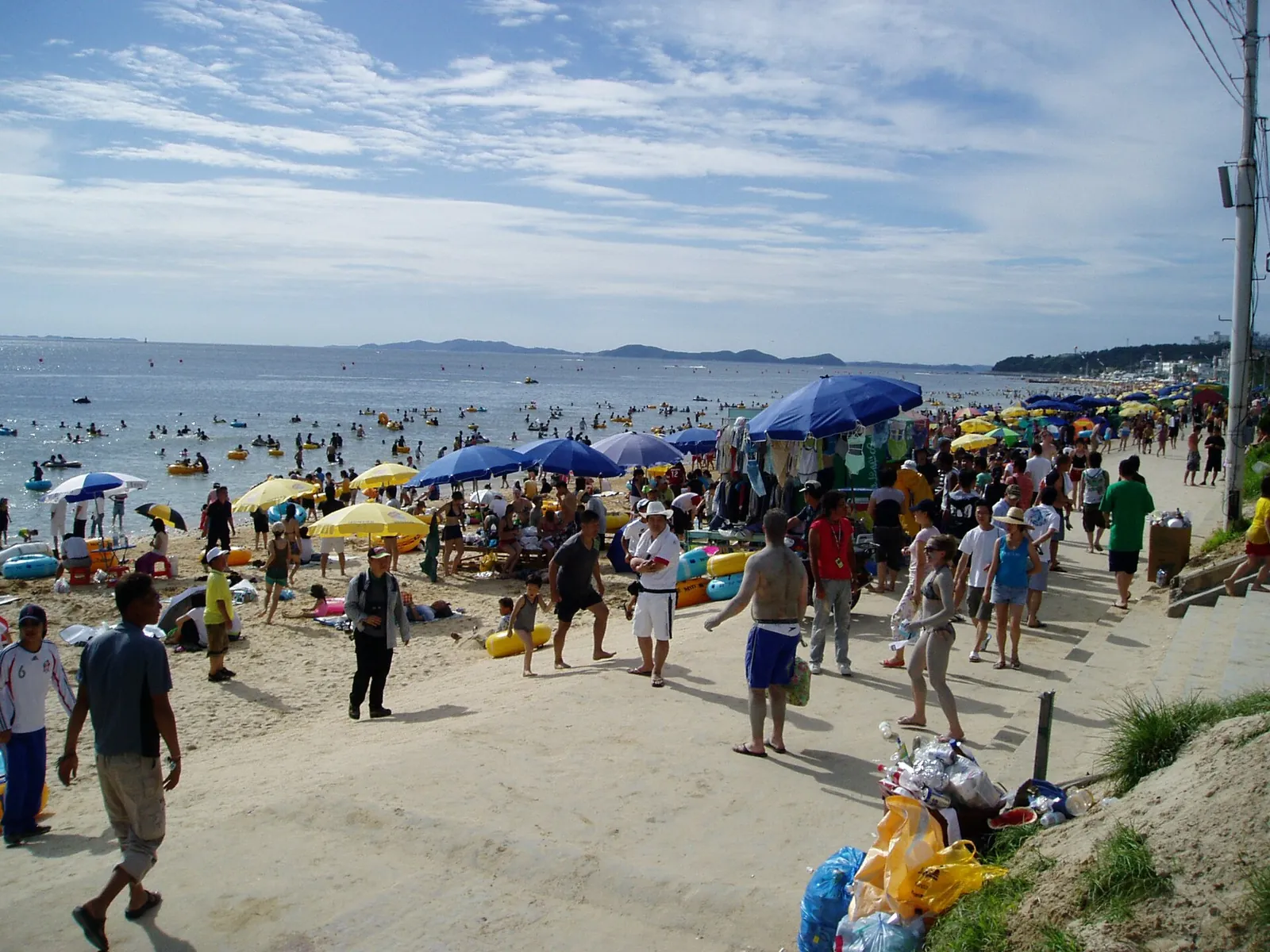
Boryeong works in two very different modes. During the Boryeong Mud Festival, Daecheon Beach is packed: VisitKorea's page for the Boryeong Beach Special Tourist Zone puts festival attendance at about 2 million domestic and international visitors a year. The draw is the mud itself, collected from the tidal flats and, VisitKorea says, rich in minerals that are good for the skin, turned into mud slides, an obstacle course and daily music stages. If you want a crowd, a party and a story to tell, plan the whole trip around it and book a beachfront room early.
The rest of the year, Daecheon is simply a long, gently shelving beach with hotels and seafood restaurants, and Boryeong becomes a sunset town. VisitKorea singles out the sunset over Dabodo Island from Daecheon, and Muchangpo to the south has its own sunset views and a sea path that appears at low tide. A quiet visit is a one-night trip from Seoul: arrive in the afternoon, eat grilled shellfish on the beachfront, watch the sun go down, and spend the next morning on Jukdo or at the old naval fortress at Ocheon.
In practice: choose the festival if you are in Korea in late July or early August and like crowds; choose any other weekend if what you want is the sea, the light and a seafood dinner. The festival's 2026 edition has finished; the official site, mudfestival.or.kr, is where the 2027 dates will appear.
The Boryeong Mud Festival
When we checked on 3 October 2026, VisitKorea listed the 2026 festival from 24 July to 9 August at the Boryeong Mud Expo Plaza by Daecheon Beach, hosted by Boryeong City and organised by the Boryeong Festival Tourism Foundation, with paid entry. Its programme included opening and closing ceremonies, mud experience zones (a general zone with a mud run, a family zone and a water-park zone), a mud flash-mob performance, Mud on the Beach Night and the Mud Rock Festa.
VisitKorea's festival guide, last updated for the 2024 edition, explains how the site works, and the logic is worth knowing even though prices and hours change each year. The Regular Zone is for adults and the Family Zone for families with children; an adult Regular Zone ticket also lets parents into the Family Zone, but a Family Zone guardian ticket does not get you into the Regular Zone, so buy the Regular Zone ticket if you need both. In 2024 tickets cost more from Friday to Sunday than from Monday to Thursday (an adult Regular Zone ticket was 10,000 won on weekdays and 14,000 won at weekends), weekday opening started later, and the festival closed for one day mid-run for safety inspections.
Practical rules from the same guide: shoes are not allowed inside the festival area and go into shoe lockers, but gloves and closed shoes (no slippers or sandals) are required for the Mud Challenge obstacle course. There are outdoor showers to wash off, shaded rest areas under the pines, and food trucks. Bring a cheap swimsuit and clothes you are happy to stain, keep your phone in a waterproof pouch, and check the year's ticket rules on the official site before you go.
Make time for the local food
What to eat and where to look
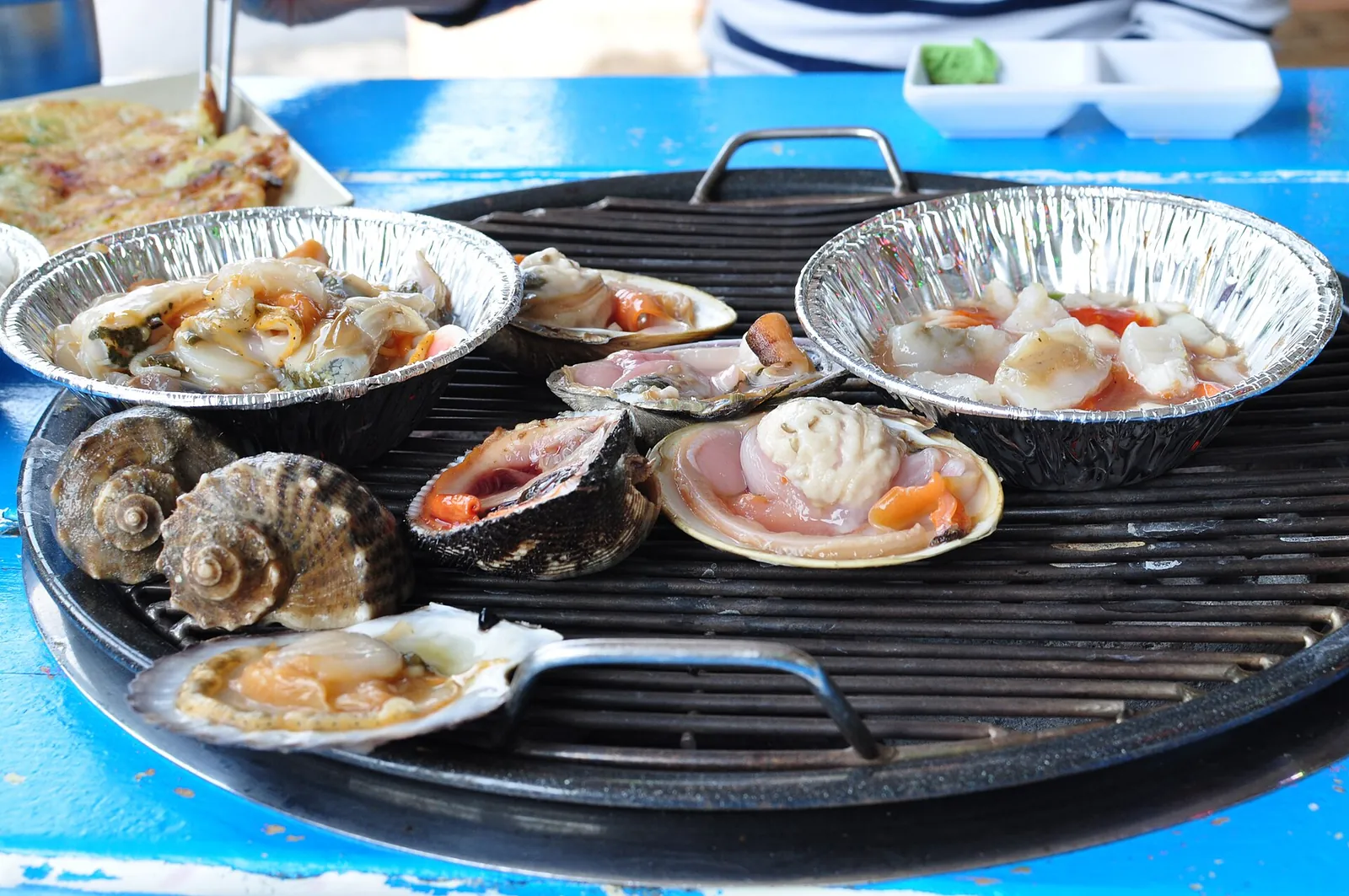
Jogae-gui (grilled shellfish)
Platters of clams, scallops and pen shells grilled at the table are a Daecheon beachfront favourite. VisitKorea's festival guide recommends 1987 Rooftop & Lounge Clam on the beachfront's Gourmand Alley, whose rooftop faces the sunset.
- Where to look
- The beachfront restaurants along Haesuyokjang 4-gil behind Daecheon Beach; 1987 Rooftop & Lounge Clam is at 124 Haesuyokjang 4-gil.
- Fit it into your day
- Dinner after sunset. In July 2024 VisitKorea listed the restaurant's hours as 11:00 to 03:00 and its clam platter for two at 70,000 won; check current prices.
Shellfish allergies; agree prices before ordering market-priced platters.
Gegukji and soy-marinated crab
Gegukji is a South Chungcheong stew of crab or crab broth boiled with kimchi, rarely found elsewhere in Korea, and is served with ganjang gejang, raw crab marinated in soy sauce.
- Where to look
- Sinseonhan Gegukji Ganjang Gejang, 76 Haesuyokjang 4-gil, in the middle of the Daecheon Beach strip.
- Fit it into your day
- Lunch or dinner on the beachfront. When we checked, VisitKorea listed 9:30 to 21:00 on weekdays and 8:30 to 21:00 at weekends, closed on Wednesdays.
Ganjang gejang is raw crab; avoid it if you are pregnant or have a shellfish allergy.
Cheonbuk oysters
Boryeong produces oysters in quantity, and the Cheonbuk Oyster Complex near the Hongseong Embankment is a cluster of restaurants serving them grilled, raw and cooked with rice. VisitKorea says oysters from November to February are the finest, and the Cheonbuk Oyster Festival is held in December.
- Where to look
- Cheonbuk Oyster Complex, Cheonbuk-myeon, in the north of Boryeong; restaurants set their own hours.
- Fit it into your day
- A winter lunch on a drive north towards Taean or Hongseong.
Raw oysters carry a food-safety risk; eat them only in season and from busy restaurants.
Kijogae kalguksu (pen-shell noodle soup)
Ocheon Port is the main landing port for pen shells, and VisitKorea recommends them in kalguksu, knife-cut noodles in an anchovy and vegetable broth with the chewy pen-shell meat.
- Where to look
- Restaurants around Ocheon Port, below Chungcheong Suyeongseong.
- Fit it into your day
- Lunch after the fortress walk.
Contains shellfish and anchovy stock.
Sagol sujebi (hand-torn dough soup)
For a break from seafood, Kimgane Jeontong Sagol Sujebi near Daecheon Beach has served hand-torn dough soup in beef-bone broth for more than 50 years, VisitKorea says, with kimchi and ox-knee versions and boiled dumplings.
- Where to look
- Kimgane Jeontong Sagol Sujebi, 57 Seokseo 1-gil.
- Fit it into your day
- An early lunch only: VisitKorea listed 9:30 to 14:00 (last order 13:30), closed on Tuesdays and Wednesdays.
Contains wheat and beef; check the days off before you go.
Daecheon Beach, the mud museum and the beachfront
Daecheon Beach is 3.5 kilometres long and about 100 metres wide, with a gentle slope and clean sand, according to VisitKorea; the local tourism association describes it as a beach of crushed-shell sand. The beach is divided into two zones, Sunset Plaza and Mud Plaza, and the streets behind it are full of hotels and seafood restaurants. The official address is 123 Meodeu-ro.
The Boryeong Mud Museum, facing the beach at 897-15 Daehae-ro, covers the history and uses of the mud and runs mud showers and massage. When we checked on 3 October 2026, VisitKorea listed it as open 9:00 to 18:00 with free admission, closed on Mondays and public holidays except during the beach season, with mud showers at 4,000 won and mud experiences offered only during the swimming season. Outside summer, treat it as a short indoor stop rather than a reason to come.
For something more active, VisitKorea describes two rides along the shore: the Sky Bike, a rail bike over the beach and Daecheon Port, and Ziptrek Korea, a zip line launched from a 52-metre, 19-storey tower that runs out over the water, with a cart ride of about 10 minutes back. When we checked, VisitKorea listed Ziptrek's hours as 9:00 to 20:00 in high season and 9:00 to 18:00 in low season, subject to weather; there is an observation café at the top for those who would rather watch.
Walk to Daecheon Port at the northern end of the beach. VisitKorea describes a fish market selling fish, blue crabs and shrimp from the West Sea, early-morning auctions, and the coastal passenger terminal with ferries to Boryeong's islands, including Sapsido and Nokdo, about 25 kilometres offshore. An island day needs a ferry timetable checked on the day; we have not listed sailings.
Muchangpo's sea road and Jukdo's Sanghwawon
Muchangpo Beach, south of Daecheon, is smaller (1.5 kilometres long, VisitKorea says) and quieter, with pine woods, a red lighthouse on its breakwater and guesthouses facing the sand. Its draw is the sea parting: on one or two days each lunar month the tide drops far enough to expose a 1.5-kilometre path to Seokdaedo Island, and visitors walk out to gather clams and crabs. VisitKorea notes that the phenomenon was once thought to happen only in summer but occurs every lunar month. The sea-parting days follow the tide tables, so check them before you plan a trip around it, and walk back well before the water returns.
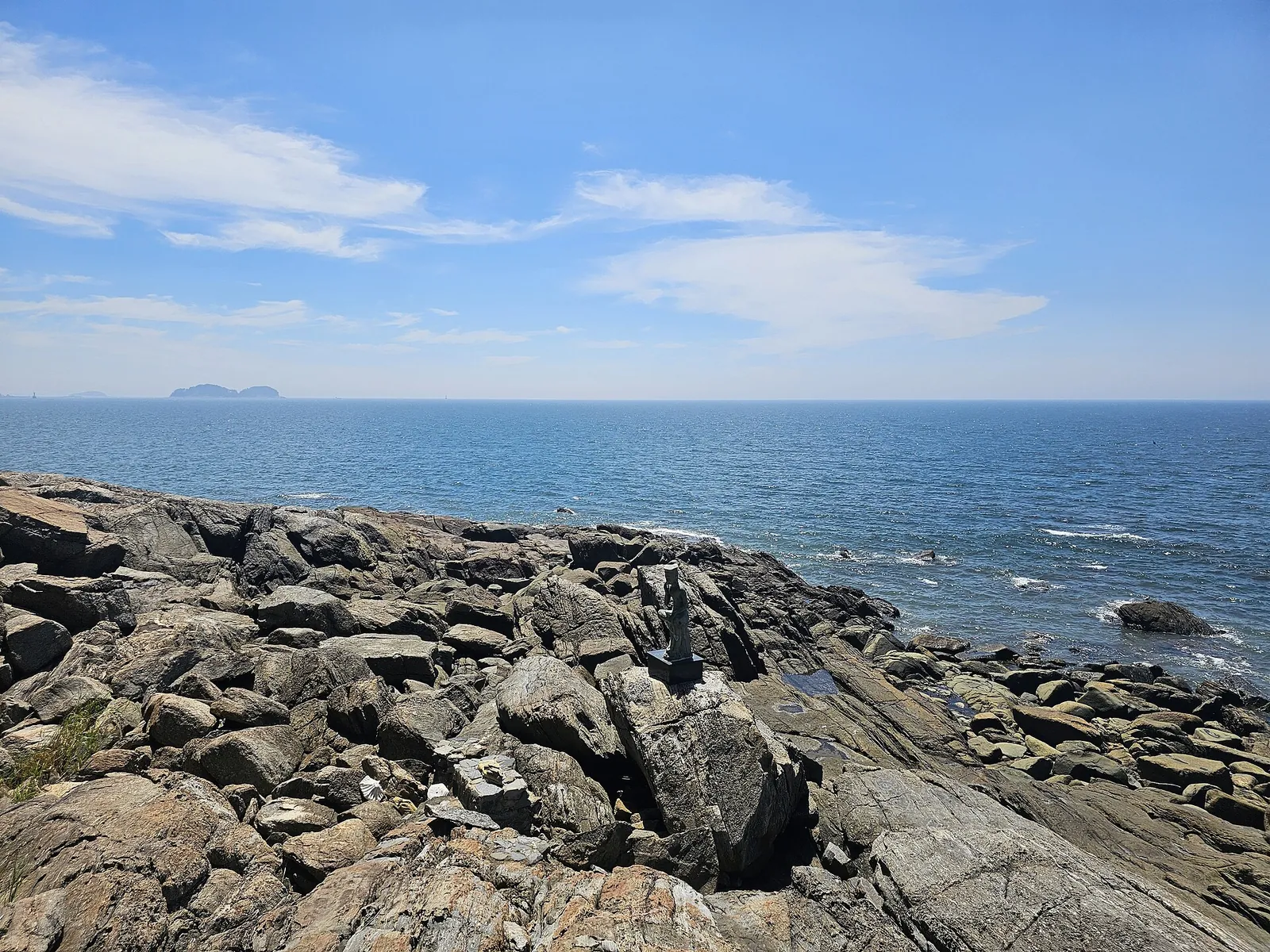
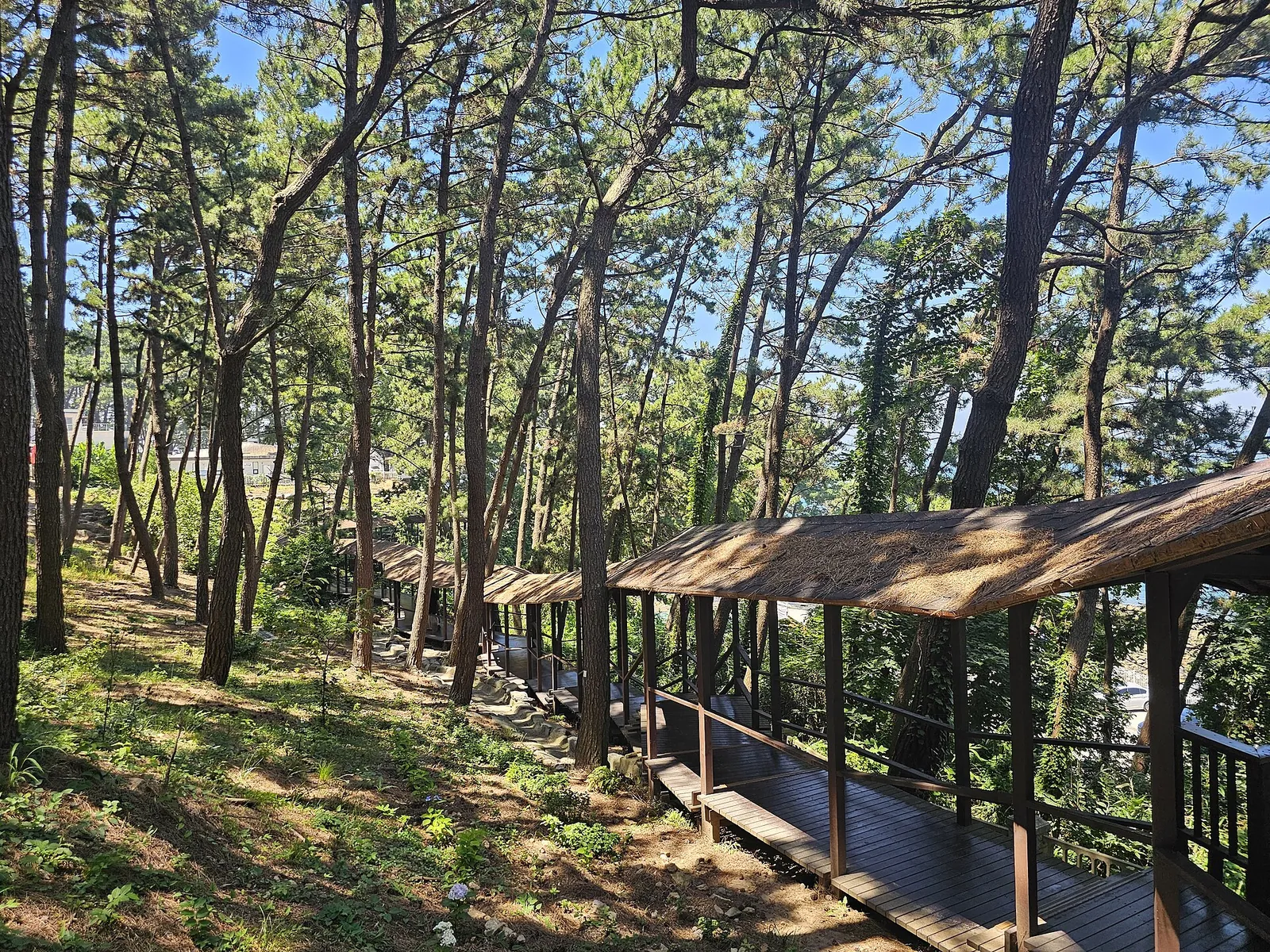
Between the two beaches, Jukdo was a bamboo-covered island until the Nampo Embankment joined it to the mainland in 1999; raw-fish restaurants line the road in. Jukdo is home to Sanghwawon, a garden created to protect the island's natural setting, with a covered corridor of about 1 kilometre, an early-Joseon shrine called Uigokdang, a small hanok village and a Sky Garden three storeys high for sunset views over the sea. When we checked on 3 October 2026, VisitKorea listed Sanghwawon as open on Fridays to Sundays and public holidays from March to November (9:00 to 18:00 in summer, last entry 17:00), admission 7,000 won, with no parking of its own. It is the best short outing near Daecheon, but only if your dates fall on an opening day.
Ocheon, the old naval fortress and the inland side
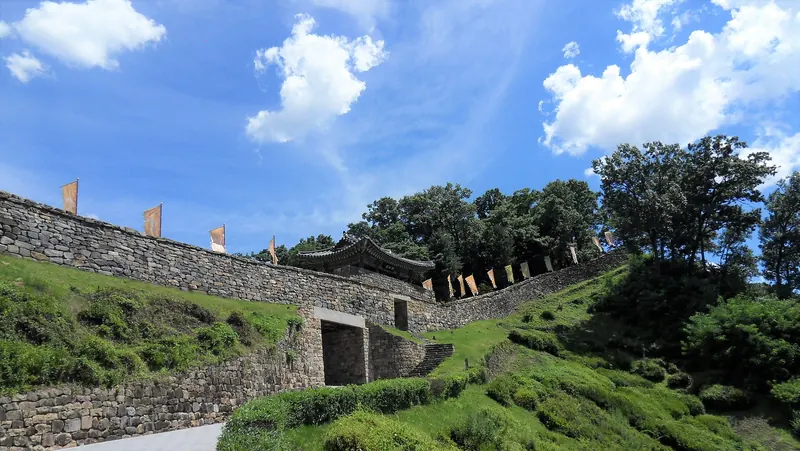
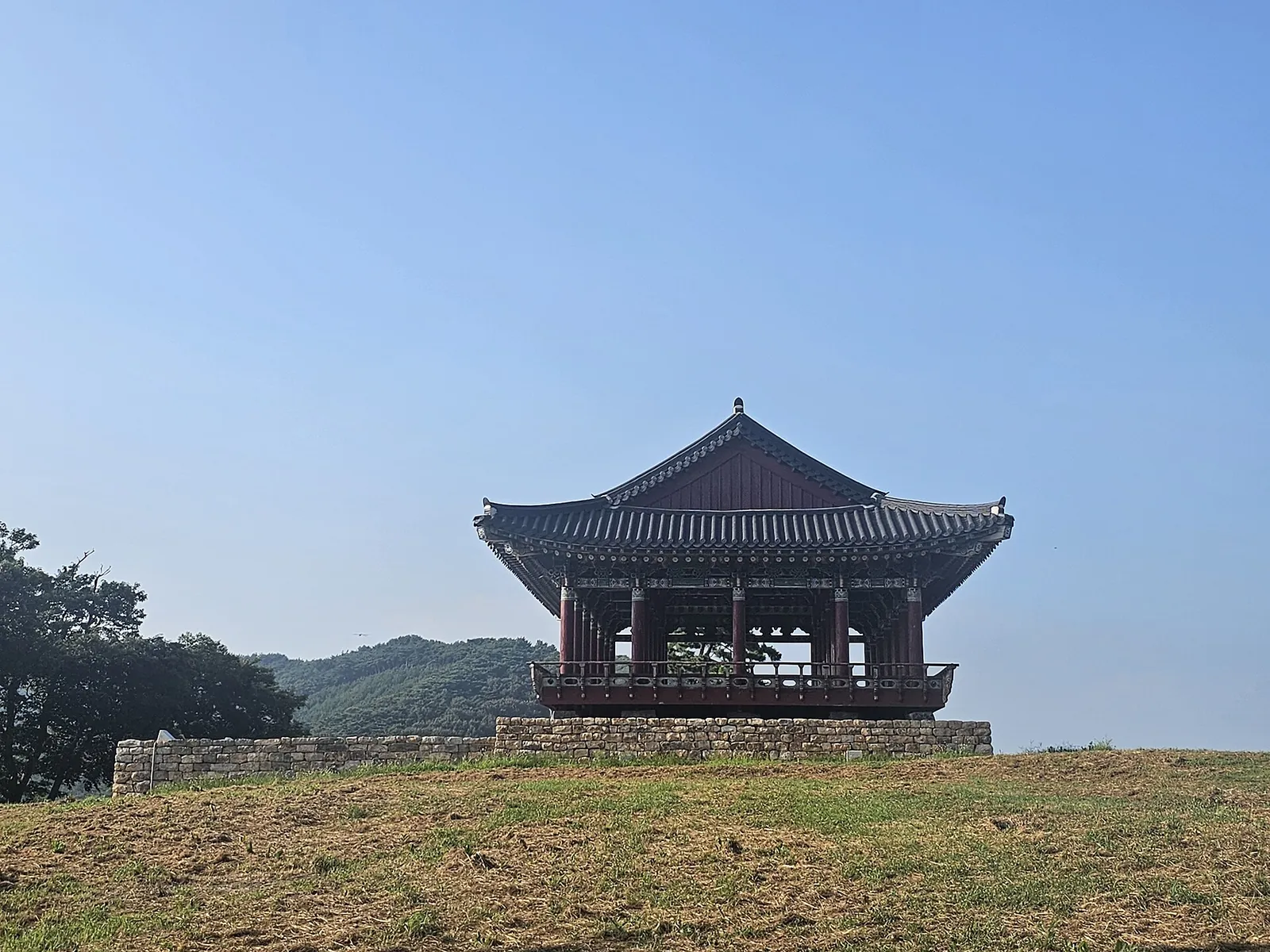
North of Daecheon, the fishing port of Ocheon sits where the Gwangcheoncheon Stream meets the sea. It was an administrative centre in the Joseon dynasty, and above it stands Chungcheong Suyeongseong, a stone fortress built in the 16th century as the naval headquarters guarding the coast. VisitKorea notes its granite-arched Manghwamun Gate, the view over the sea and islands, and its place in the history of the 19th-century Catholic persecutions. It was listed as open 24 hours and free, and an hour is enough. Ocheon's market sells the day's catch, and ferries leave for islands such as Woldo and Yukdo.
Inland, Boryeong was a coal town. The Boryeong Coal Museum at Seongju-myeon tells that story with mining equipment and a reconstructed mine shaft; when we checked, VisitKorea listed opening hours of 9:00 to 18:00 from March to October and 9:00 to 17:00 from November to February, closed on Mondays, with adult admission at 1,500 won. Nearby, the Spring Cool Tunnel, an abandoned mine on the slopes of Seongjusan that blows air at about 12°C, is open only in July and August, and Seongjusan Recreational Forest has spring cherry blossoms and a two-to-three-hour round-trip hike to the summit area. These need a car or taxi; combine them on a hot festival day or a rainy one.
Getting to Boryeong and around
There are two direct public-transport options from Seoul, and VisitKorea's festival guide gives the times: the train from Yongsan Station to Daecheon Station takes about 2 hours 40 minutes, and the express bus from the Central City Terminal (Express Bus Terminal Station, Lines 3, 7 and 9) to Boryeong Bus Terminal about 2 hours 10 minutes. VisitKorea's bus guide also lists Boryeong (Daecheon) among the destinations from Dong Seoul Terminal. The bus terminal is about five minutes' walk from Daecheon Station; from either, take a taxi to the beach. Fares and timetables change, so book through Korail or the bus apps rather than relying on figures from an older guide.
The same railway runs on south via Janghang to Gunsan and Iksan, and VisitKorea lists Daecheon as a stop on the West Sea Gold Train (G-Train), a themed tourist train between Yongsan and Iksan with ondol-floored carriages. That makes Boryeong an easy stop on a slow west-coast route. To the north, the southern tip of Anmyeondo in Taean faces Boryeong's islands across the water; VisitKorea notes that Yeongmokhang Harbor there takes its role from linking Boryeong and Taean. Baekje-era Buyeo and Gongju are the natural inland pairing for a few days in South Chungcheong.
Around Boryeong itself, taxis and a hire car are much easier than local buses for Ocheon, Jukdo and the inland sights. Daecheon Beach, the mud museum and Daecheon Port can all be done on foot.
- Afternoon: arrive at Daecheon, walk the beach and up to Daecheon Port's fish market.
- Sunset: the sand at Sunset Plaza, or the rooftop of a beachfront restaurant.
- Dinner: grilled shellfish or gegukji on the beachfront.
- Next morning: Sanghwawon on Jukdo (Friday to Sunday, March to November) or Chungcheong Suyeongseong at Ocheon, then the train or bus back.
Practical questions
When is the Boryeong Mud Festival?
It runs for about two and a half weeks in late July and early August. VisitKorea listed the 2026 edition from 24 July to 9 August at the Mud Expo Plaza by Daecheon Beach. We found no 2027 dates when we checked on 3 October 2026; watch the official site, mudfestival.or.kr.
Is Boryeong worth visiting outside the Mud Festival?
Yes, for one night: Daecheon Beach is quieter, the sunsets over the islands are the main event, and the seafood restaurants stay open. Add Sanghwawon on Jukdo (Friday to Sunday, March to November), Muchangpo's sea road on a low-tide day, or Cheonbuk oysters in winter.
How do I get from Seoul to Daecheon Beach?
By train from Yongsan Station to Daecheon Station (about 2 hours 40 minutes, according to VisitKorea) or by express bus from the Central City Terminal to Boryeong Bus Terminal (about 2 hours 10 minutes), then a short taxi ride to the beach.
How many days do I need in Boryeong?
One night for a beach-and-sunset trip, two nights if you are going to the Mud Festival or want to add Muchangpo, Jukdo and Ocheon.
What is the Muchangpo sea parting?
On one or two days each lunar month, low tide exposes a 1.5-kilometre path from Muchangpo Beach to Seokdaedo Island, and visitors walk out to collect shellfish. Check the tide times and come back before the water rises.
Do I need separate tickets for the festival's family zone?
In 2024, an adult Regular Zone ticket also allowed parents into the Family Zone with their children, but a Family Zone guardian ticket did not allow entry to the Regular Zone. Check the current year's ticket rules on the official site.
Sources and checks before you travel
Reference sources for the version dated 3 October 2026. Confirm opening times, access, transport and conditions for your travel dates.
- VisitKorea: Daecheon Beach ↗ — opens in a new tab
- VisitKorea: Boryeong Beach Special Tourist Zone ↗ — opens in a new tab
- VisitKorea: Boryeong Mud Festival (event listing) ↗ — opens in a new tab
- VisitKorea: Korea's Top 10 Summer Festivals for 2026 ↗ — opens in a new tab
- VisitKorea: Blast Away the Summer Heat With the Boryeong Mud Festival (updated July 2024) ↗ — opens in a new tab
- VisitKorea: Muchangpo Beach ↗ — opens in a new tab
- VisitKorea: Boryeong Jukdo Island ↗ — opens in a new tab
- VisitKorea: Sanghwawon ↗ — opens in a new tab
- VisitKorea: Boryeong Mud Museum ↗ — opens in a new tab
- VisitKorea: Ziptrek Korea ↗ — opens in a new tab
- VisitKorea: Ziptrek Korea (Daecheon zip track) ↗ — opens in a new tab
- VisitKorea: Daecheon Port ↗ — opens in a new tab
- VisitKorea: Nokdo Island ↗ — opens in a new tab
- VisitKorea: Chungcheong Suyeongseong Fortress ↗ — opens in a new tab
- VisitKorea: Ocheon Port ↗ — opens in a new tab
- VisitKorea: Noodle Soup with Pen Shells ↗ — opens in a new tab
- VisitKorea: Cheonbuk Oyster Complex ↗ — opens in a new tab
- VisitKorea: Sinseonhan Gegukji Ganjang Gejang ↗ — opens in a new tab
- VisitKorea: Kimgane Jeontong Sagol Sujebi ↗ — opens in a new tab
- VisitKorea: Boryeong Coal Museum ↗ — opens in a new tab
- VisitKorea: Boryeong Spring Cool Tunnel ↗ — opens in a new tab
- VisitKorea: Seongjusan Recreational Forest ↗ — opens in a new tab
- VisitKorea: Day Nice Hotel ↗ — opens in a new tab
- VisitKorea: Merrymud Hotel ↗ — opens in a new tab
- VisitKorea: Express bus and intercity bus ↗ — opens in a new tab
- VisitKorea: Unique transportation (G-Train) ↗ — opens in a new tab
- VisitKorea: Yeongmokhang Harbor ↗ — opens in a new tab
- Daecheon Tourism Association: Daecheon Beach ↗ — opens in a new tab
Does this experience fit your route?
Boryeong is easy on your own by train or bus, and best with a night on the beach for the sunset. A guided transfer from Seoul only makes sense in festival season if you want the logistics handled; check that it really goes to Daecheon and what is included.
Browse relevant experiences on Viator ↗ — opens in a new tabAffiliate link · Book with ViatorPhoto credits
Daecheon Beach on a festival day: umbrellas along the sand and islands on the horizon of the West Sea.
Photograph: dokaspar — opens in a new tab · CC BY-SA 3.0 — opens in a new tab
Changes: Resized and converted to WebP; displayed with responsive crops. · Original photograph and licence details ↗ — opens in a new tab
The rocky shoreline of Jukdo below Sanghwawon, looking out over the West Sea.
Photograph: Sadopaul — opens in a new tab · CC BY-SA 4.0 — opens in a new tab
Changes: Resized and converted to WebP; displayed with responsive crops. · Original photograph and licence details ↗ — opens in a new tab
Sanghwawon's long covered corridor winds through the pines around Jukdo.
Photograph: Sadopaul — opens in a new tab · CC BY-SA 4.0 — opens in a new tab
Changes: Resized and converted to WebP; displayed with responsive crops. · Original photograph and licence details ↗ — opens in a new tab
A pavilion on the grounds of Chungcheong Suyeongseong, the Joseon-era naval fortress at Ocheon.
Photograph: Sadopaul — opens in a new tab · CC BY-SA 4.0 — opens in a new tab
Changes: Resized and converted to WebP; displayed with responsive crops. · Original photograph and licence details ↗ — opens in a new tab
Jogae-gui: clams, scallops and sea snails grilled at the table, the meal to look for on Daecheon's beachfront.
Photograph: Jordi Sanchez — opens in a new tab · CC BY-SA 2.0 — opens in a new tab
Changes: Resized and converted to WebP; displayed with responsive crops. · Original photograph and licence details ↗ — opens in a new tab