Plan your trip · South Korea
South Korea with kids: Seoul, Busan and Jeju at a family pace
South Korea is an easy country to travel with children once you stop trying to see all of it. Trains are fast, subway stations have lifts, airports lend strollers, and the big cities have parks, museums and an indoor theme park for the days when the weather turns. What wears families out is moving hotel every other night and planning a beach day outside the short swimming season. Build the trip around a few bases, give each day one main thing, and let the weather decide which day is the theme park and which is the museum.
- Suggested time
- About 10 days for Seoul, Busan and Jeju; 5–6 days for Seoul and one beach
- Where to stay
- Jamsil or Seoul Station in Seoul, Haeundae in Busan, one coast of Jeju
- Season and timing
- Late spring and autumn are the easiest. Beaches have lifeguards only in their official summer swimming periods (roughly late June or July to August); Seoul's monsoon rain falls in June and July, and the typhoon season runs from June to November.
The short answer
For a first family trip, allow about ten days and three bases: four nights in Seoul, three in Busan and three in Jeju. In Seoul, stay near Jamsil for Lotte World or near Seoul Station for the airport train, the KTX and the National Museum of Korea; in Busan, stay at Haeundae for the beach; on Jeju, pick one coast and consider a rental car. Take the KTX from Seoul to Busan (about three hours) and a domestic flight from Busan's Gimhae Airport to Jeju. Swim only in the official summer swimming season, keep an indoor plan for monsoon and typhoon days, and book the Children's Museum online before you fly.
Three bases, fewer moves
Every hotel change with children costs half a day: packing, a taxi big enough for the luggage and the stroller, a check-in time to wait for. A ten-day trip works best with three bases — Seoul, Busan and Jeju — linked by two easy journeys. VisitKorea gives about three hours for the KTX from Seoul Station to Busan Station, and its domestic-flight guide lists Jeju among the routes from Busan's Gimhae Airport, so you never have to backtrack to Seoul to reach the island. If your flight home leaves from Incheon, fly Jeju to Gimpo, a route VisitKorea calls the busiest in the world, and take the airport railway on.
In Seoul, choose the district for what your children will actually do. Jamsil puts Lotte World Adventure at the door: VisitSeoul lists it 271 metres from Exit 3 of Jamsil Station on Lines 2 and 8. Seoul Station and nearby Yongsan are better for a trip that leaves the city: the airport express and the KTX to Busan leave from Seoul Station, and the National Museum of Korea is a short ride away on Line 4. In Busan, Haeundae gives you the beach, the Blueline Park trains and hotels behind the sand. On Jeju, choose one coast rather than moving around the island: the west, near Hyeopjae, is the beach side.
Outside the cities, Korean pensions (holiday houses and guesthouses) are worth a look for families. VisitKorea describes 'kids pensions' with play facilities, as well as pool villas with private pools — but it also warns that some pensions do not accept children or pets, and that breakfast may be free, paid or not offered. Check all three before you book.
Seoul with children: one big day, one quiet day
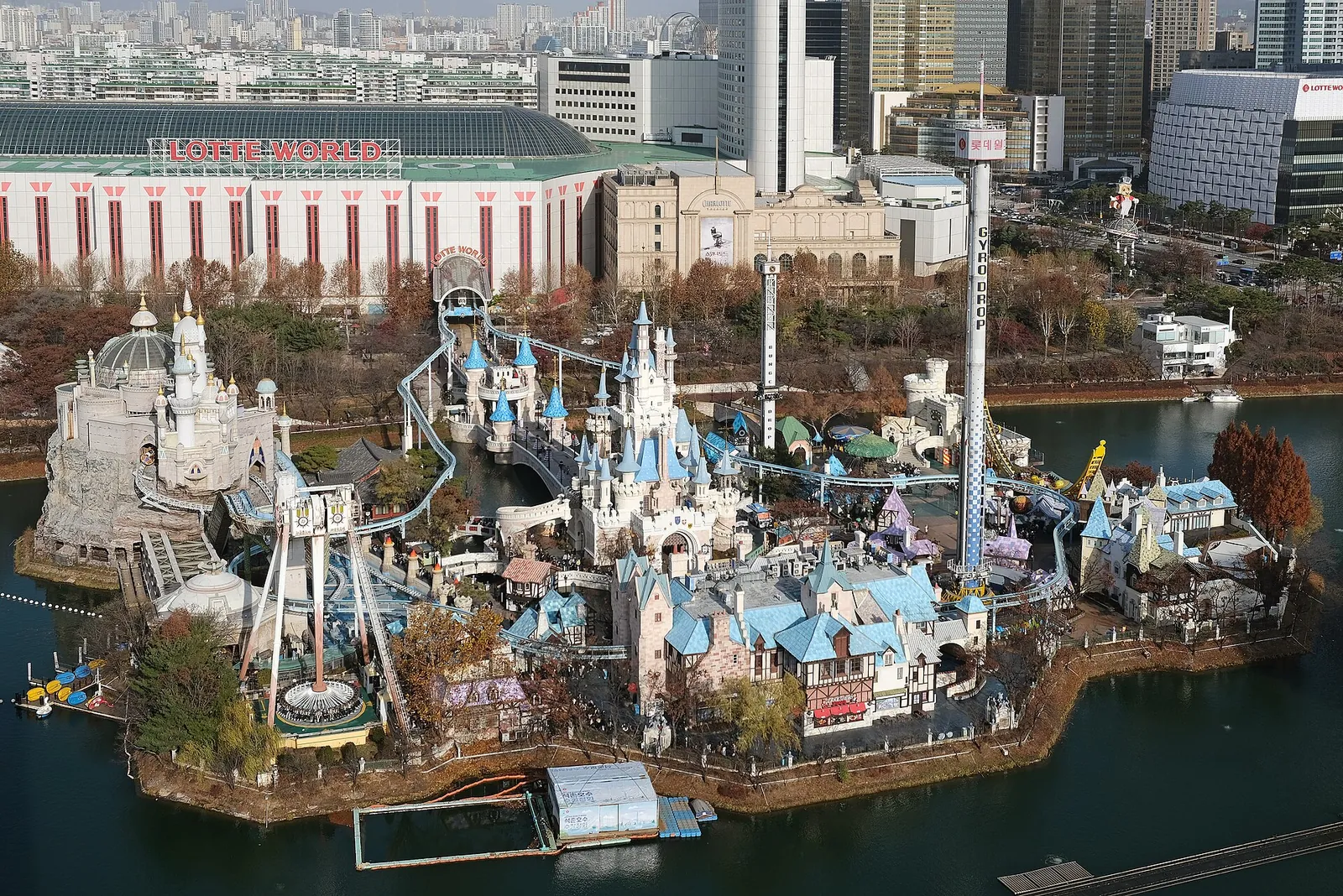
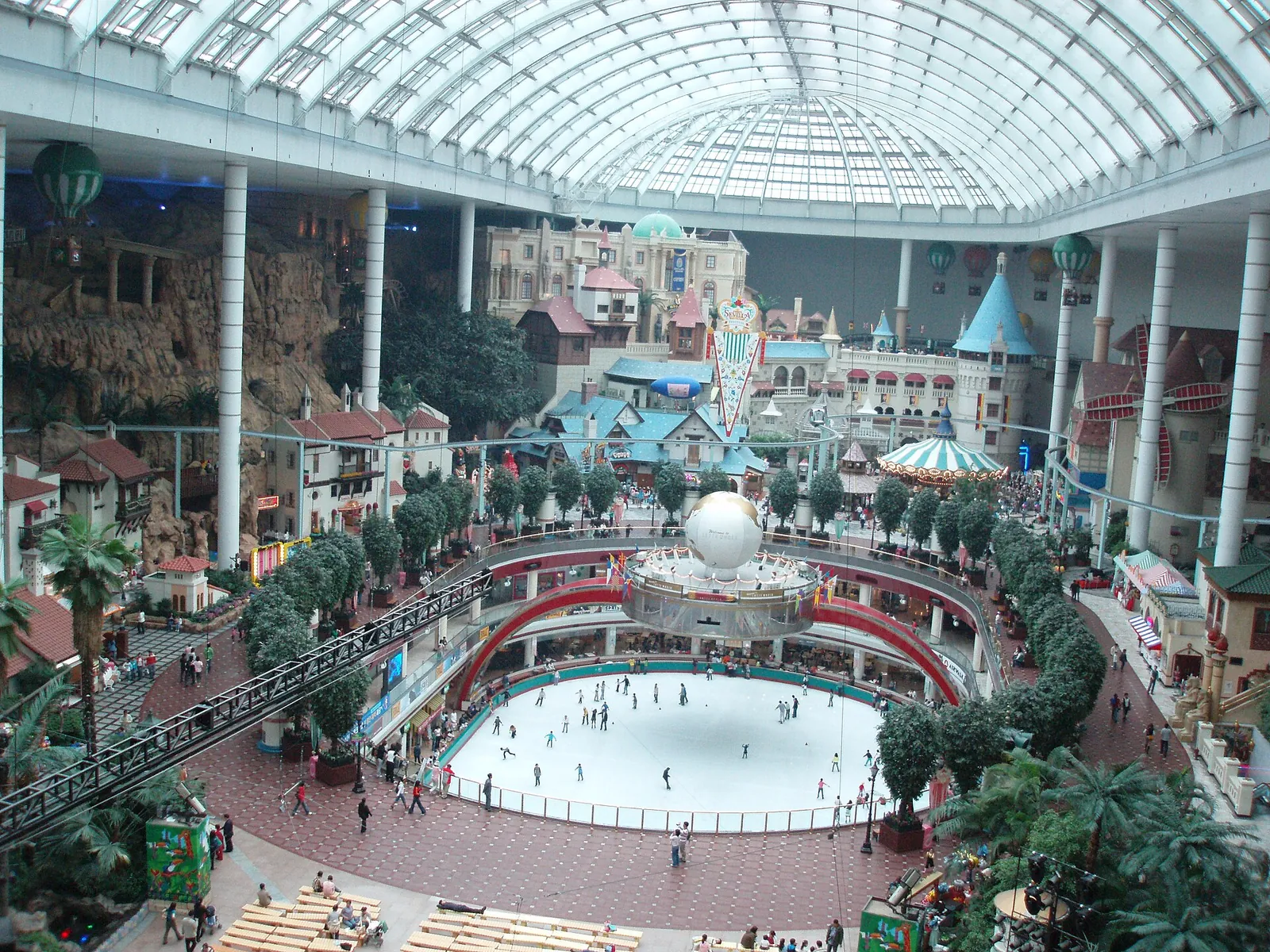
Lotte World Adventure is two theme parks in one. VisitSeoul describes the indoor Adventure, which it calls the world's largest indoor theme park, with 22 rides, and Magic Island, an outdoor park with 17 rides on an island in Seokchon Lake. The split matters for planning: VisitSeoul says Magic Island's rides may stop in heavy or continuous rain or snow, when the temperature falls to minus 5 degrees or in winds of 7 m/s or more, while indoor rides carry on. That makes Lotte World a good wet-day plan, but go to Magic Island first on a dry morning. Ticketing and entry close an hour before closing time.
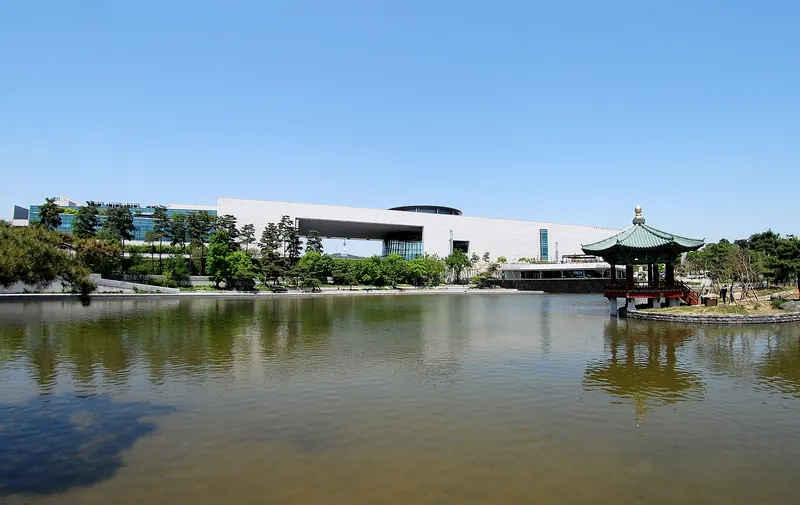
The Children's Museum at the National Museum of Korea is free, but it is not a walk-in visit. When we checked on 2026-10-03, its reservation page said that entry is by online booking only (no telephone bookings and no on-site tickets), for up to five people, once per day, opening at midnight 14 days before the visit. Toddlers under 36 months need a reservation too, adults are not admitted without children, nor children without an adult, and a booking is cancelled if you have not entered 30 minutes after your session starts; a no-show blocks new bookings for 60 days. The museum's home page listed five sessions a day. Book as soon as your dates are fixed.
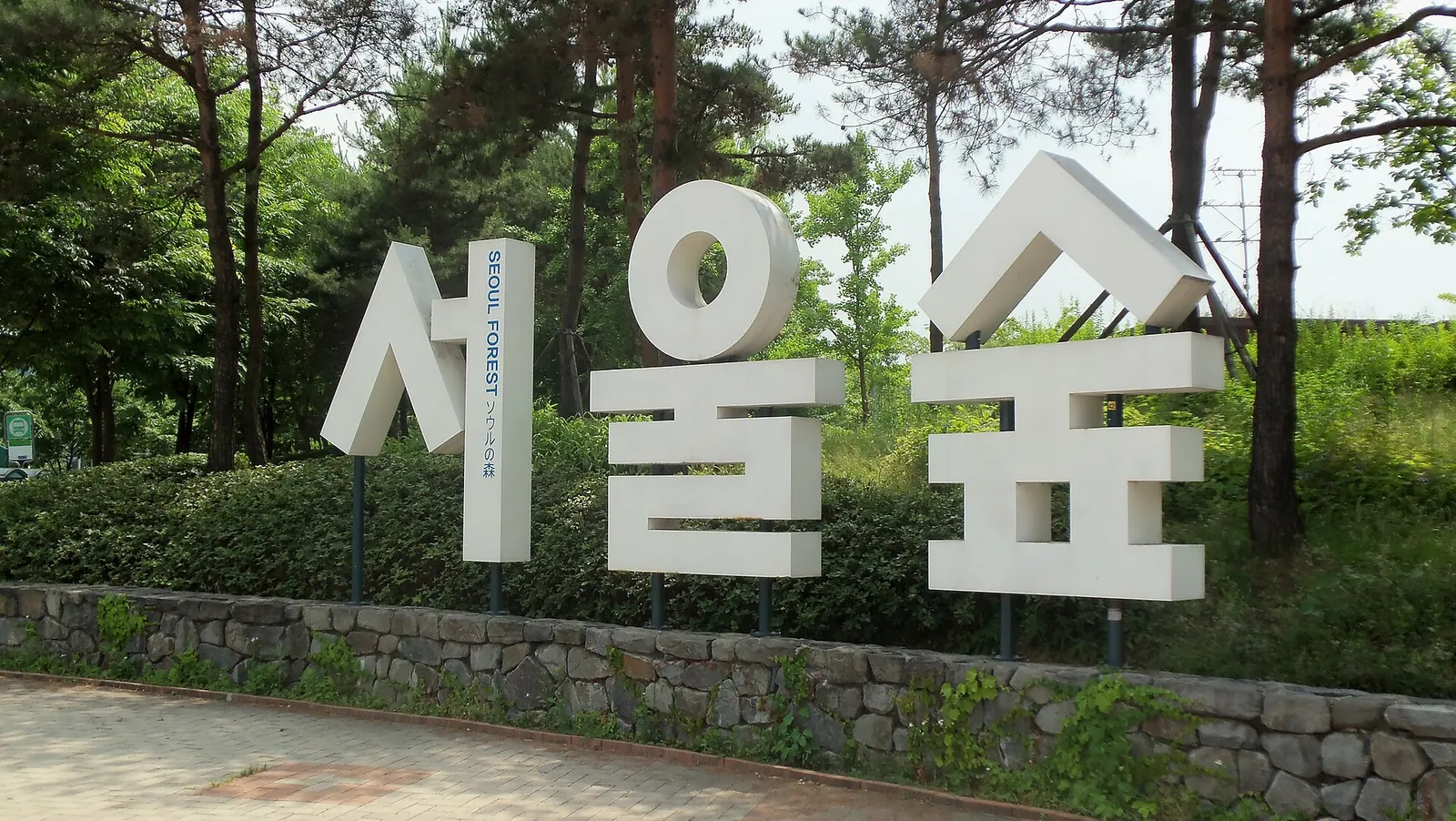
The main museum building suits a short visit with small children: Seoul Danurim's accessibility listing describes lifts to every floor, a step-free entrance and a nursing room in the first-floor lobby with a microwave and a changing table, about 309 metres from Exit 2 of Ichon Station (Line 4). For a quiet afternoon, Seoul Forest has wide, step-free main paths, and VisitSeoul says the park information desk rents strollers and that there are nursing rooms and changing stations; some paths are gravel.
Make time for the local food
What to eat and where to look
Gimbap
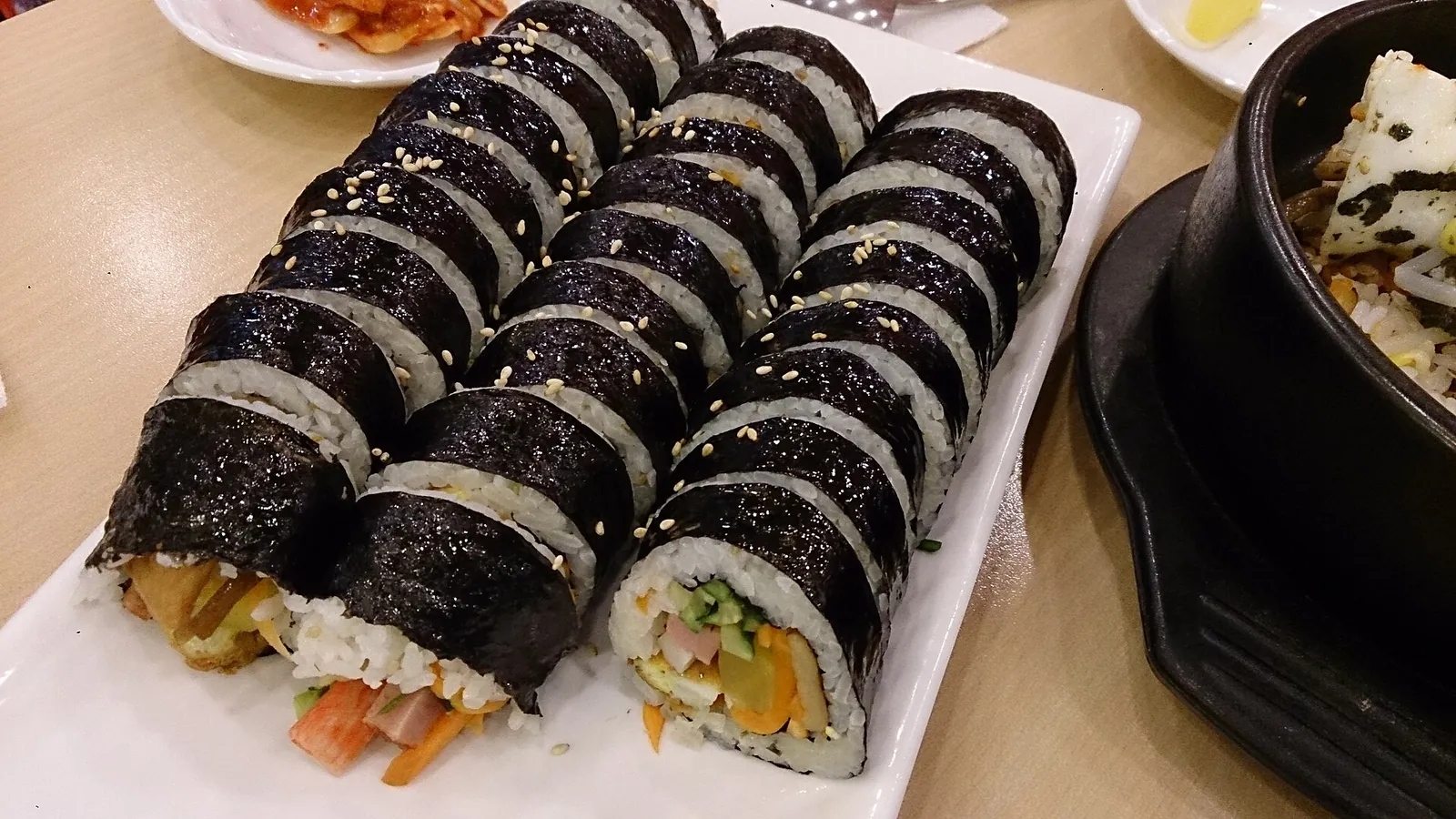
Rice and mixed fillings rolled in seaweed and sliced into rounds. It is mild, easy to eat with fingers and one of the snacks VisitKorea lists in Busan's markets.
- Where to look
- Gimbap shops near stations, convenience stores and traditional market stalls.
- Fit it into your day
- Breakfast on a KTX morning, a picnic on the beach or a snack between sights.
Fillings vary: ask about fish cake, tuna or kimchi rolls if your child avoids them, and eat fresh rolls the same day.
Jjajangmyeon
Wheat noodles in a thick, sweet-savoury black bean sauce, a Korean-Chinese dish most children like. VisitKorea calls Gonghwachun in Incheon's Chinatown, opened in 1905, its birthplace; the restaurant serves its version with the sauce on the side and offers family courses.
- Where to look
- Korean-Chinese restaurants in every town; in Incheon, Gonghwachun and its neighbours in Chinatown.
- Fit it into your day
- An easy lunch or a first dinner after a long travel day.
The sauce stains clothes; jjamppong, often ordered alongside, is a spicy seafood soup.
Dwaeji gukbap (Busan pork and rice soup)
Rice in a long-simmered pork broth with plenty of sliced meat, which VisitKorea calls Busan's representative local dish. VisitKorea describes the stock as rich but without a strong smell, seasoned to taste with salted shrimp.
- Where to look
- Gukbap restaurants around Busan's markets and stations; VisitKorea lists one by the street from Haeundae Station to the beach that opens early in the morning.
- Fit it into your day
- A warming, quick lunch or dinner on a cool or rainy Busan day.
Season a child's bowl yourself: taste it before adding salted shrimp or any chilli from the table.
Jeju black pork
The island's signature pork, grilled at the table or served as dombegogi — steamed black pork sliced on a wooden board, a Jeju speciality according to VisitKorea.
- Where to look
- Black-pork barbecue restaurants in Jeju City and Seogwipo, and the evening night market at Dongmun Market in Jeju City.
- Fit it into your day
- Dinner on Jeju; a table grill is part of the entertainment for older children.
Table grills get very hot; sit small children away from the grill side.
Hotteok and rest-stop snacks
Hotteok is a pan-fried pancake filled with brown sugar; VisitKorea lists it among the snacks at motorway service areas, along with potato corn dogs and sotteok sotteok (sausage and rice-cake skewers).
- Where to look
- Motorway rest stops on bus or car journeys, and street stalls in markets.
- Fit it into your day
- A treat during a long road day rather than a meal.
The sugar filling is very hot straight from the pan; let it cool before handing it to a child.
Beaches: swim only when the lifeguards are there
Korean beaches have an official swimming period each summer, and VisitKorea is clear that swimming is not allowed outside it, because lifeguards are not on duty, and that it is banned at night even during the season. When we checked on 2026-10-03, its summer guide listed the 2026 periods as 26 June to 15 September at Haeundae, 1 July to 31 August at Gwangalli, and 10 July to 23 August at several east-coast beaches. Check the coming year's dates before you fix a summer trip around the sea; in spring and autumn, plan beach days for sand, rock pools and walks, not swimming.
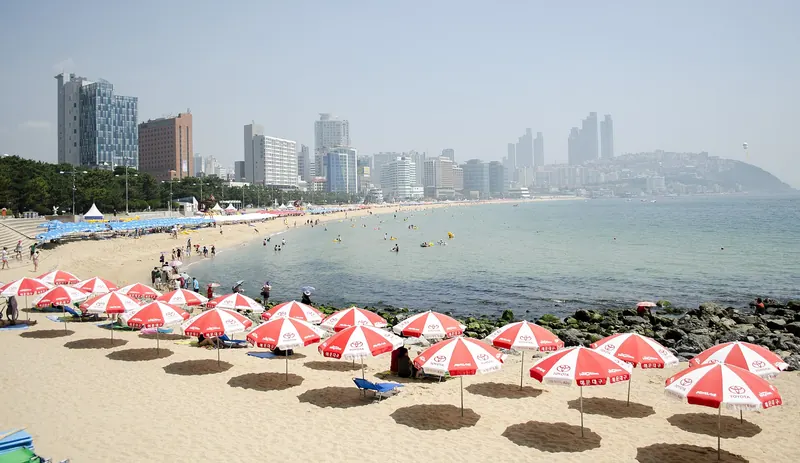
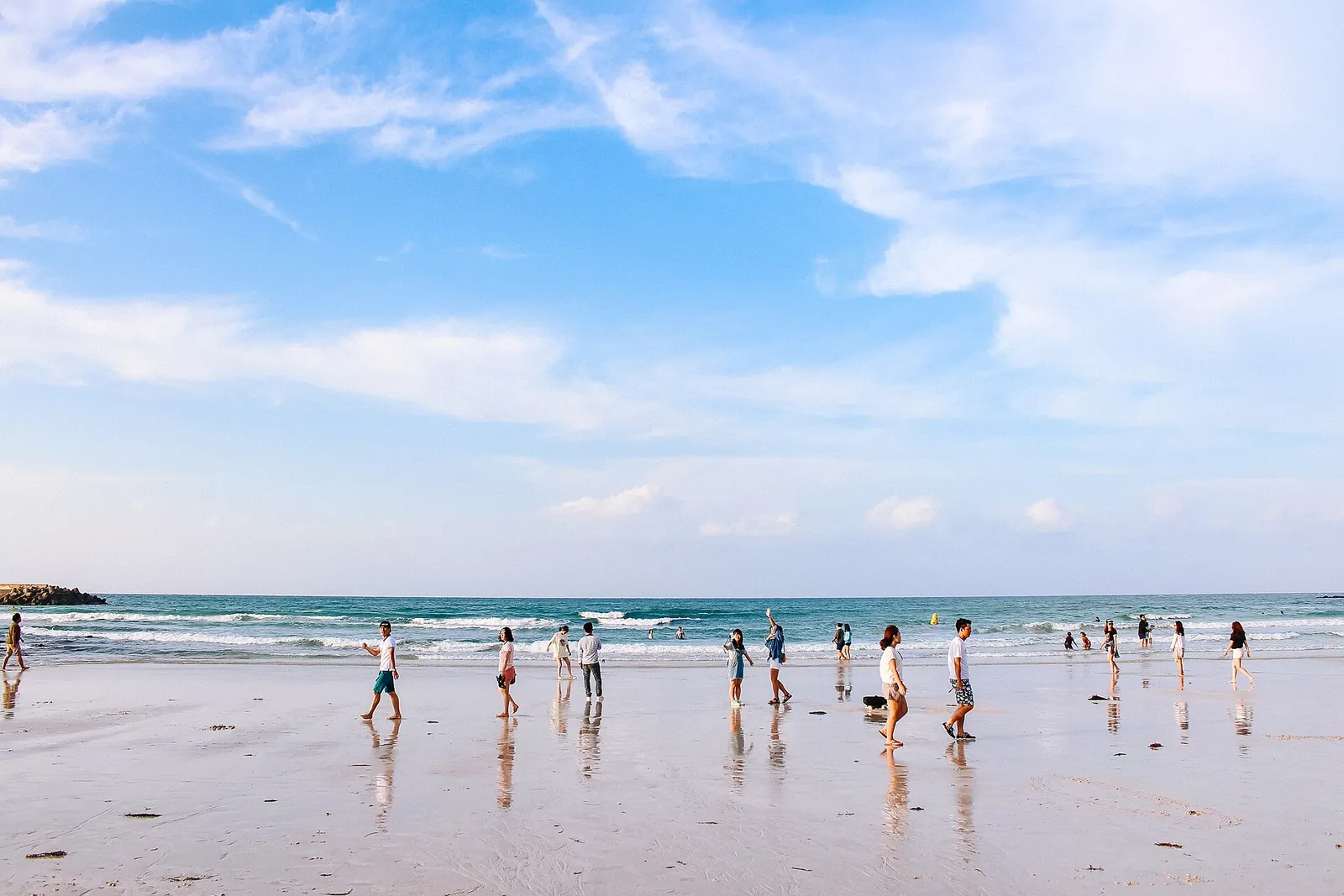
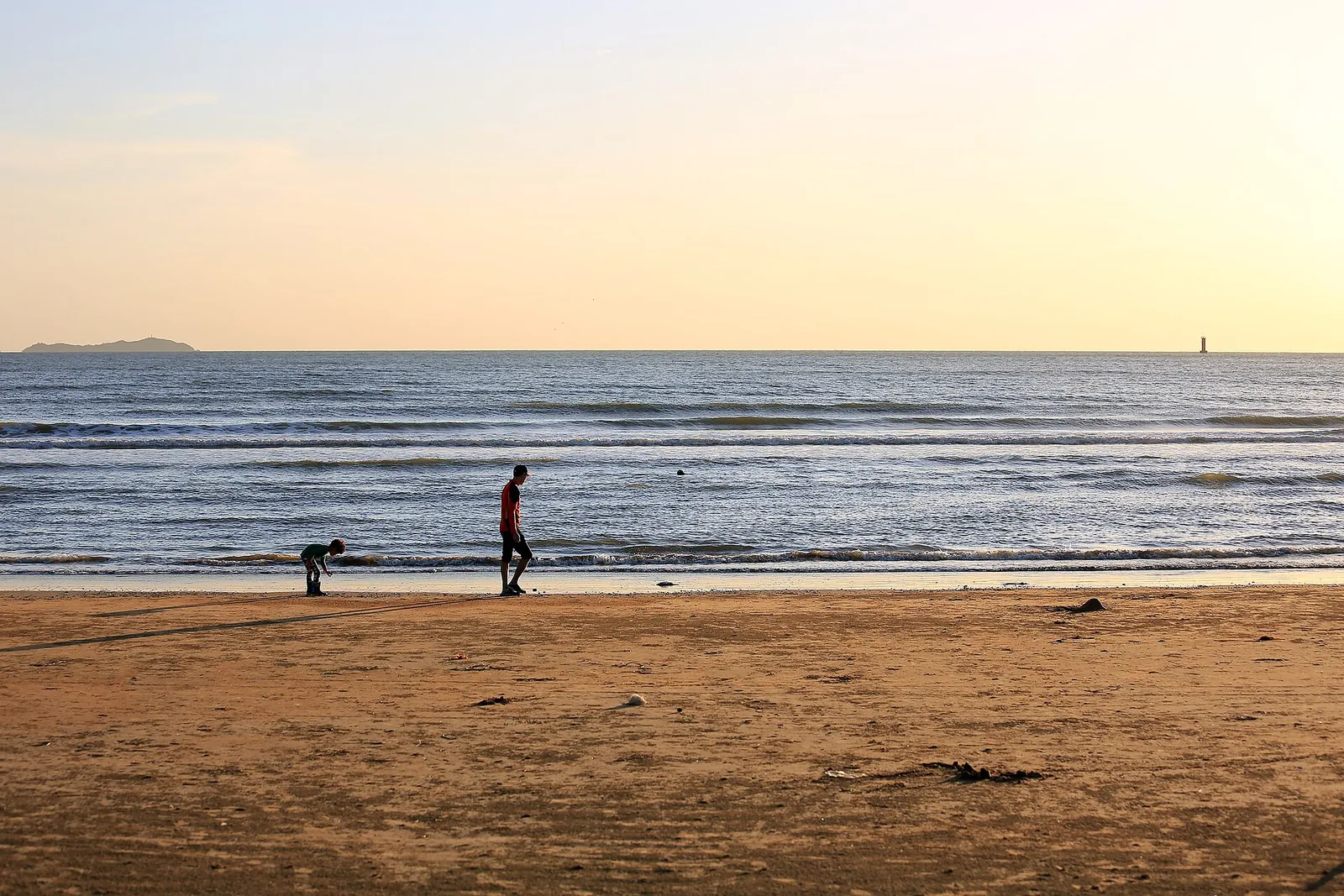
Some beaches are gentler than others. VisitKorea describes Haeundae as a shallow bay; Songjeong, further east in Busan, as ideal for families with young children because of its shallow water; Hyeopjae on Jeju as shallow and gently sloping, a favourite with families; and Sinyang Seopji near Seongsan as averaging about a metre deep with small waves. On the west coast, Mongsanpo in Taeanhaean National Park has a different kind of day: at low tide the mudflats open up and, VisitKorea says, people come to dig for clams and mud crabs and children learn about the mudflat ecosystem there. Check the tide table before you go.
In Busan, the Blueline Park along the old coastal railway between Haeundae and Songjeong is a good outing for younger children. When we checked on 2026-10-03, the operator's fare page listed free rides for children under 36 months on the Beach Train and a 30 per cent child discount from 36 months to the end of primary school, applied only when you buy at the ticket office. The Sky Capsule cars carry two to four people; for a larger family, the operator allows one extra child aged seven or under to ride along.
Strollers, transport cards and the airport
Arrival is easier than many parents expect. When we checked on 2026-10-03, Incheon Airport's page for families said that strollers are lent free at the information desks, and listed nursing rooms in both terminals with changing tables, sinks, bottle sterilisers and water dispensers. Its priority-lane scheme covers children under seven and up to three companions: you first confirm eligibility at your airline's check-in counter and receive a priority card. The page also notes that Korean Air and Asiana offer family support for a woman travelling alone with two or more children under seven.
On the Seoul subway, Seoul Metro's fare page says children younger than six ride free, up to three with one guardian, and lists separate children's and teenagers' fares. VisitKorea's transport-card guide adds the catch: to get the under-18 discount on a T-money-type card, you must register the child's date of birth when you buy the card at a convenience store. Seoul Metro also lists nursing rooms in a number of stations.
If you do not want to fly in with your own stroller, the Seoul Danurim Accessible Tourism Center, run by the Seoul Tourism Organization for travellers including families with infants, lists strollers among its rental equipment. When we checked on 2026-10-03, it rented for 3 to 7 days against a deposit, with bookings from two months to 14 days ahead and free delivery to a hotel in Seoul. Long-distance buses have no toilets on board, but VisitKorea notes that the motorway service areas where they stop have nursing rooms. To rent a car on Jeju, VisitKorea lists an international driving permit, a minimum age of 21, a passport and a credit card in the driver's name; ask the rental company about child seats when you book.
Weather, dust and the indoor plan
Seoul's own climate page describes a long, hot and humid summer interrupted by monsoon rain in June and July, a very cold, windy winter, and spring days that turn sharply cold after dark. It also recommends a mask against the 'yellow dust' of spring, and the UK government's health advice notes that air pollution, including yellow dust, is common especially in spring, with residents staying indoors on bad days.
The UK advice gives the typhoon season as normally June to November and suggests following the Korea Meteorological Administration. With children, that simply means keeping one indoor plan per base: Lotte World's indoor park or the Children's Museum in Seoul, a covered market or museum in Busan, and a museum or market on Jeju. Late spring and autumn give the most comfortable outdoor days; summer is for the sea, with early starts and long breaks in the heat.
A ten-day family route
This is an editorial outline, not a timetable. Swap days around the weather and the opening days of the places you choose.
- Days 1–4 — Seoul: arrive by the airport railway and keep the first afternoon free. Then one day for Lotte World (Magic Island first if it is dry), one for the Children's Museum and the National Museum of Korea, and one slower day in Seoul Forest or a palace.
- Days 5–7 — Busan: KTX from Seoul Station (about three hours). Stay at Haeundae; ride the Blueline Park Beach Train or Sky Capsule towards Songjeong, and swim only inside the official season.
- Days 8–10 — Jeju: fly from Gimhae Airport. Base yourself on one coast, for example near Hyeopjae in the west, with a rental car or close to a bus route; keep one day for a short walk or a ferry to a small island in calm weather.
- Alternative: in July or August, swap Jeju for two nights at Taean's beaches by car, with a low-tide afternoon on the mudflats at Mongsanpo.
Practical questions
Is South Korea a good destination for a family trip?
Yes, if you keep the pace slow. Fast trains, lifts in subway stations, free strollers at Incheon Airport, nursing rooms in stations and parks, and indoor attractions for bad weather make it easy. Plan around three bases rather than moving every night.
Do children pay on the Seoul subway?
Seoul Metro's fare page says children younger than six ride free, up to three per guardian. Older children and teenagers pay reduced fares; to get them on a transport card, register the child's date of birth when you buy the card at a convenience store, as VisitKorea explains.
Do I need to book the Children's Museum at the National Museum of Korea?
Yes. When we checked on 2026-10-03, entry was free but by online reservation only, opening 14 days before the visit, for up to five people. There are no on-site tickets, toddlers under 36 months need a booking too, and adults are not admitted without children.
When can children swim at Korean beaches?
Only during each beach's official swimming period, when lifeguards are on duty, and never at night. For 2026, VisitKorea listed 26 June to 15 September at Haeundae and 1 July to 31 August at Gwangalli. Check the dates for the year you travel.
Should I bring a stroller?
A light, folding one helps in cities. Incheon Airport lends strollers free at its information desks, Seoul Forest rents them at its information desk, and the Seoul Danurim centre rents them for 3 to 7 days with delivery in Seoul if you book at least 14 days ahead.
What can we do with children on a rainy day in Seoul?
Lotte World's indoor park keeps running when Magic Island's outdoor rides stop for rain, cold or wind, and the Children's Museum at the National Museum of Korea is indoors and free with a reservation.
Sources and checks before you travel
Reference sources for the version dated 3 October 2026. Confirm opening times, access, transport and conditions for your travel dates.
- National Museum of Korea: Reservations for Children's Museum ↗ — opens in a new tab
- National Museum of Korea Children's Museum: home page ↗ — opens in a new tab
- Seoul Danurim: National Museum of Korea accessibility listing ↗ — opens in a new tab
- VisitSeoul: Lotte World Adventure ↗ — opens in a new tab
- VisitSeoul: Seongsu accessible course (Seoul Forest) ↗ — opens in a new tab
- VisitKorea: East coast train trip, summer beaches by KTX-Eum ↗ — opens in a new tab
- VisitKorea: Haeundae Beach ↗ — opens in a new tab
- VisitKorea: Songjeong Beach ↗ — opens in a new tab
- VisitKorea: Jeju airport travel guide ↗ — opens in a new tab
- VisitKorea: Sinyang Seopji Beach ↗ — opens in a new tab
- VisitKorea: Mongsanpo Beach ↗ — opens in a new tab
- Blueline Park: Beach Train fares ↗ — opens in a new tab
- Blueline Park: Sky Capsule fares ↗ — opens in a new tab
- Incheon Airport: Pregnant women, infants and children ↗ — opens in a new tab
- Incheon Airport: Travellers with reduced mobility ↗ — opens in a new tab
- Seoul Metro: Fare ↗ — opens in a new tab
- Seoul Metro: Nursing rooms ↗ — opens in a new tab
- VisitKorea: Transportation cards ↗ — opens in a new tab
- Seoul Danurim: Travel aid rental ↗ — opens in a new tab
- VisitKorea: Express and intercity buses ↗ — opens in a new tab
- VisitKorea: Driving and car rental ↗ — opens in a new tab
- VisitKorea: Airports and transport to the city ↗ — opens in a new tab
- VisitKorea: Domestic flights ↗ — opens in a new tab
- VisitKorea: Busan travel guide ↗ — opens in a new tab
- VisitKorea: Pensions ↗ — opens in a new tab
- VisitKorea: Dwaeji gukbap restaurant at Haeundae ↗ — opens in a new tab
- VisitKorea: Gonghwachun ↗ — opens in a new tab
- VisitKorea: Jeju travel guide ↗ — opens in a new tab
- Seoul Metropolitan Government: Climate ↗ — opens in a new tab
- UK FCDO travel advice: South Korea safety and security ↗ — opens in a new tab
- UK FCDO travel advice: South Korea health ↗ — opens in a new tab
Photo credits
Magic Island, the outdoor half of Lotte World Adventure, sits on Seokchon Lake next to Jamsil Station in Seoul.
Photograph: kallerna — opens in a new tab · CC BY-SA 4.0 — opens in a new tab
Changes: Resized and converted to WebP; displayed with responsive crops. · Original photograph and licence details ↗ — opens in a new tab
Lotte World's indoor park keeps running in rain and cold, when the outdoor Magic Island rides may stop.
Photograph: SJ Yang — opens in a new tab · CC BY-SA 2.0 — opens in a new tab
Changes: Resized and converted to WebP; displayed with responsive crops. · Original photograph and licence details ↗ — opens in a new tab
Hyeopjae Beach on Jeju's west coast has shallow, gently sloping water that VisitKorea recommends for families.
Photograph: Sohyeon Bak — opens in a new tab · CC BY-SA 3.0 — opens in a new tab
Changes: Resized and converted to WebP; displayed with responsive crops. · Original photograph and licence details ↗ — opens in a new tab
Seoul Forest has step-free main paths, and its information desk rents strollers.
Photograph: Christian Bolz — opens in a new tab · CC BY-SA 4.0 — opens in a new tab
Changes: Resized and converted to WebP; displayed with responsive crops. · Original photograph and licence details ↗ — opens in a new tab
At low tide Mongsanpo Beach in Taeanhaean National Park opens onto mudflats where families look for clams and crabs.
Photograph: Sonmunsu(손문수) — opens in a new tab · CC BY-SA 4.0 — opens in a new tab
Changes: Resized and converted to WebP; displayed with responsive crops. · Original photograph and licence details ↗ — opens in a new tab
Gimbap, rice and fillings rolled in seaweed, is mild, easy to eat with fingers and good for trains and picnics.
Photograph: ProjectManhattan — opens in a new tab · CC0 — opens in a new tab
Changes: Resized and converted to WebP; displayed with responsive crops. · Original photograph and licence details ↗ — opens in a new tab