Chungcheong · South Chungcheong
Taean and Anmyeondo guide: pine beaches, dunes and Kkotji sunsets
Taean is the ragged peninsula that juts into the Yellow Sea in the north-west of South Chungcheong, and Anmyeondo is the long, pine-covered island that hangs south of it. Together they make up Taeanhaean National Park, which the Korea National Park Service describes as the country's only coastal-type national park: 198 kilometres of indented shoreline with 27 beaches, tidal flats, sand dunes and small rocky islands. This is not a place of single big sights. It rewards picking the right stretch of coast, timing it for the tide and the sunset, and eating the crab and octopus that come out of the mud in front of you.
- Suggested time
- 2–3 nights
- Where to stay
- Anmyeon-eup for Anmyeondo and Kkotji; Taean-eup for buses to the north coast; Mallipo and Cheollipo by car
- Season and timing
- April is magnolia time at Cheollipo Arboretum and flower-festival season near Kkotji; July and August are the swimming months; autumn brings jumbo prawns to Baeksajang. Sunsets and tidal flats are worth it all year.
The short answer
Give Taean two or three nights. A car makes it easy; without one, it works if you choose a base by bus terminal. Stay in Anmyeon-eup on Anmyeondo for Baeksajang port, the Noeul-gil coastal walk and sunset at Kkotji, or in Taean-eup for buses to the north coast: the Sinduri dunes, Mallipo and Cheollipo Arboretum. Spend one day on each half, walk a section of the Taean Haebyeon-gil trail one way and ride a local bus back, and plan dinner around gegukji (crab and kimchi stew) or baksok nakjitang (octopus and gourd soup).
Two halves of one coast: the peninsula and Anmyeondo
Taeanhaean National Park, designated in 1978 as Korea's 13th national park, runs north to south across the Taean peninsula and Anmyeondo, according to the Korea National Park Service (KNPS). It is a long, thin park of beaches, dunes and headlands rather than a single area you can see in an afternoon, and distances between the best spots are measured in bus rides, not short walks.
Think of it as two halves. The north and west of the peninsula — Hagampo, the Sinduri dunes, Mallipo, Cheollipo and the arboretum — is reached from Taean-eup, the county town with the main bus terminal. Anmyeondo to the south is, as VisitKorea explains, Korea's sixth-largest island: once part of the mainland, it was cut off by a canal dug to move grain and rejoined to it by a bridge in 1970. Its town, Anmyeon-eup, has its own bus terminal and sits near Baeksajang port, Kkotji Beach and the island's pine forest. Mongsanpo and the Nam-myeon coast lie between the two.
With a car, base yourself wherever you like the lodging and drive. Without one, choose the half you care about most and sleep by its terminal; two nights lets you do one half properly each day rather than spending the trip on transfers.
- Anmyeondo day: Baeksajang port, the Noeul-gil walk south through the pines, sunset at Kkotji.
- North-coast day: the Sinduri dunes and Duung wetland, then Mallipo and Cheollipo Arboretum.
- Extra day: Mongsanpo's tidal flats, or the quiet beaches of southern Anmyeondo by car.
Anmyeondo: Baeksajang, the Noeul-gil and Kkotji at sunset
Baeksajang port, VisitKorea says, is the largest harbour on Anmyeondo, its approach lined with seafood restaurants and fish markets. A pedestrian bridge decorated with blue crabs and prawns — the Kkotgedari — crosses the channel to Deureuni port on the mainland side and is lit up at night. KNPS calls Baeksajang the country's largest landing place for wild jumbo prawns (daeha).
From here the Noeul-gil (Sunset Trail), section 5 of the Taean Haebyeon-gil, follows the coast south to Kkotji. KNPS gives it as 12 kilometres and about 3 hours 40 minutes, through dense black-pine woods behind Sambong and Gijipo beaches, past a restored dune at Gijipo, the stone fish trap (doksal) at Batgae, and the stand of golden rain trees at Bangpo, a Natural Monument. KNPS lists a Taean-bound city bus from Anmyeon Bus Terminal to Baeksajang, about 15 minutes, so you can ride to the start and walk back towards town.
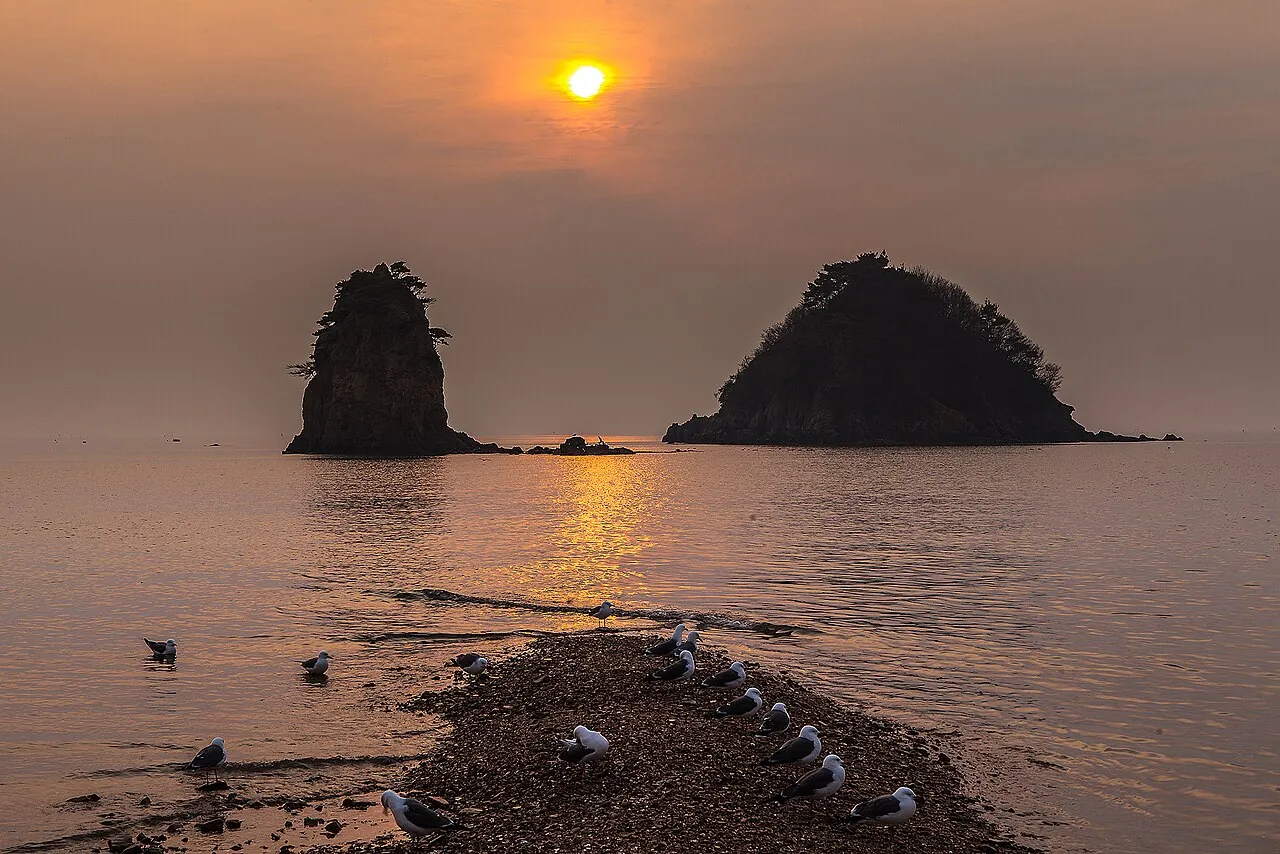
Kkotji Beach has a 5-kilometre stretch of sand and the two rock islets Halmibawi and Halabibawi — Grandma and Grandpa Rocks. VisitKorea retells the legend of Mido, a Silla-era wife who waited by the sea for a husband who never came back and turned to stone; KNPS counts the rocks among the three great sunset spots of the Yellow Sea. The flower bridge between Bangpo and Kkotji is the classic place to watch it.
Two calmer additions: the Anmyeondo Recreational Forest, a pine forest that VisitKorea says was managed by the royal family in the Goryeo period (when we checked on 2026-10-03, VisitKorea listed 09:00–18:00 from March to October and 09:00–17:00 from November to February, closed on the first Monday of the month, adult admission 1,000 won), and Unyeo Beach further south, where a pine-topped breakwater fills with water at high tide and makes a mirror for the sunset.
Make time for the local food
What to eat and where to look
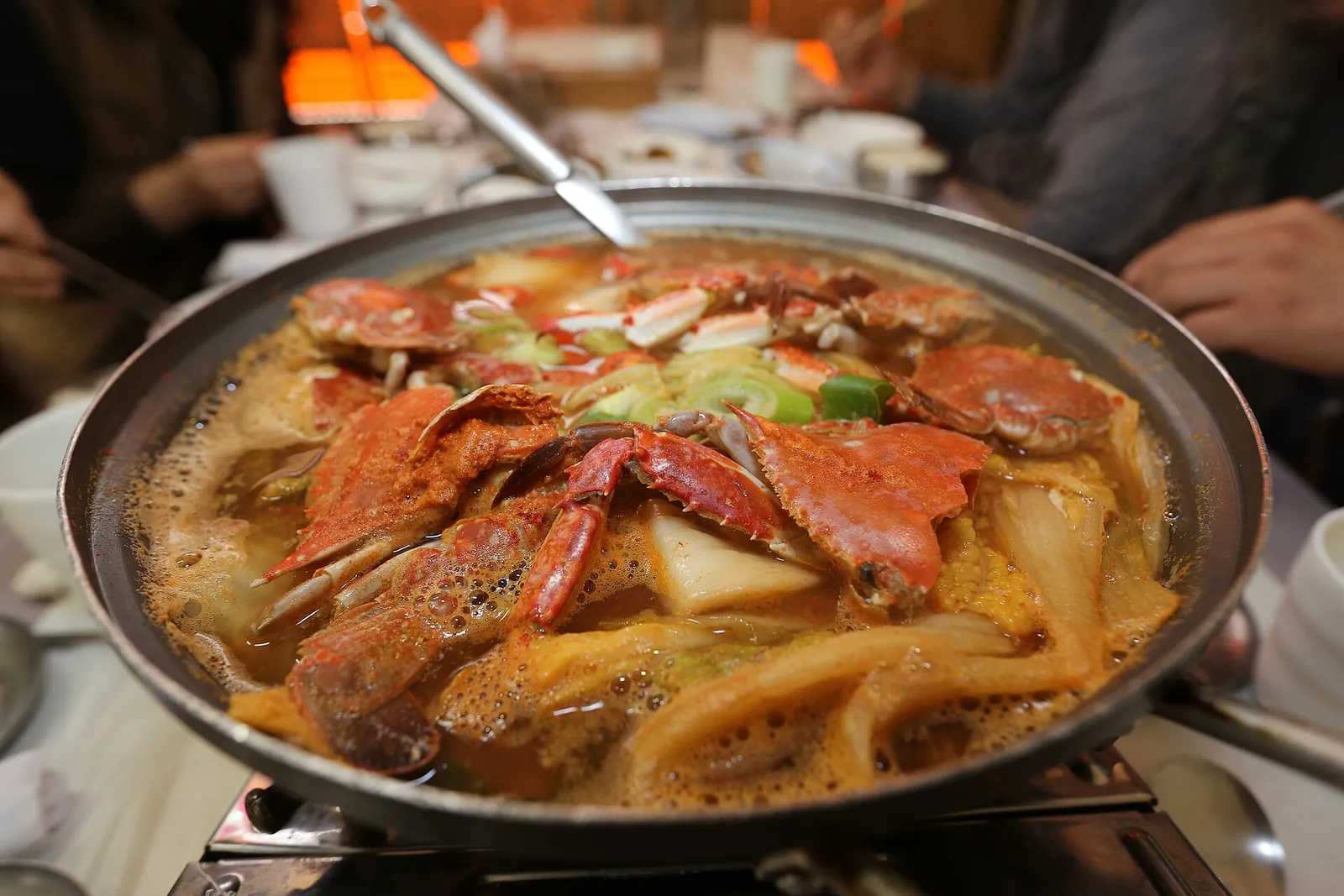
Gegukji (blue crab and kimchi stew)
A stew of blue crab or crab broth boiled with kimchi. VisitKorea describes it as a dish of the Taean and Seosan area that is uncommon elsewhere in Korea, and notes that restaurants specialising in it are easy to find on Anmyeondo.
- Where to look
- Seafood restaurants around Baeksajang port and Anmyeon-eup; VisitKorea's autumn food feature names Teolbo Seonjang Hoetjip on Baeksajang 1-gil, which serves gegukji and grilled prawns.
- Fit it into your day
- Dinner after the Noeul-gil walk or a sunset at Kkotji.
Spicy, from the kimchi; contains shellfish.
Baksok nakjitang (octopus and gourd soup)
A clear soup of octopus caught on Taean's mudflats with thinly sliced calabash gourd, which tastes rather like radish. VisitKorea calls it a local food of Taean and advises eating the octopus as soon as it is lightly cooked.
- Where to look
- Jeonggane Baksok Nakjitang at 6 Sudeung-gil in Taean-eup; when we checked on 2026-10-03, VisitKorea listed 10:00–19:00, closed on the first and third Wednesdays of the month. Noodles can be added to the soup.
- Fit it into your day
- Lunch in Taean-eup before or after the north-coast buses.
VisitKorea notes that rice is not included with the soup there; eat the octopus as soon as it is lightly cooked, or it toughens.
Daeha sogeumgui (salt-grilled jumbo prawns)
Jumbo prawns roasted on a pan lined with coarse salt, often with the heads fried separately. VisitKorea says daeha are at their plumpest in autumn, and that Baeksajang and Sambong beaches hold a prawn festival every fall at the peak of the catch.
- Where to look
- The restaurants and fish market at Baeksajang port, which KNPS calls Korea's largest landing place for wild prawns.
- Fit it into your day
- An autumn dinner at the port after the Kkotgedari bridge at sunset.
VisitKorea singles out autumn for daeha; at other times ask what is fresh.
Ganjang gejang (soy-marinated raw crab)
Raw crab marinated in soy sauce with garlic, onion and chilli, eaten with rice — the dish Koreans call a 'rice thief'. VisitKorea's food feature lists a crab restaurant at Kkotji among its picks.
- Where to look
- Crab restaurants near Kkotji Beach, such as Kkotzzi the Original Crab at 185 Kkotji 1-gil named by VisitKorea, and around Anmyeon-eup.
- Fit it into your day
- A late lunch before sunset at Kkotji.
The crab is raw; avoid it if you are pregnant or have a weakened immune system.
Hoe (sliced raw fish) at the ports
Fish chosen from the tank and sliced to order, often followed by maeuntang, a spicy stew made from the rest of the fish. VisitKorea mentions raw-fish restaurants at Mongdaepo near Mongsanpo and lists Bangpo Susan between Kkotji and Bangpo port.
- Where to look
- Mongdaepo port, Bangpo port and Baeksajang port.
- Fit it into your day
- Lunch by the sea on a beach day.
Ask the price before the fish is prepared; it depends on the species and the amount.
The north coast: Sinduri dunes, Mallipo and Cheollipo Arboretum
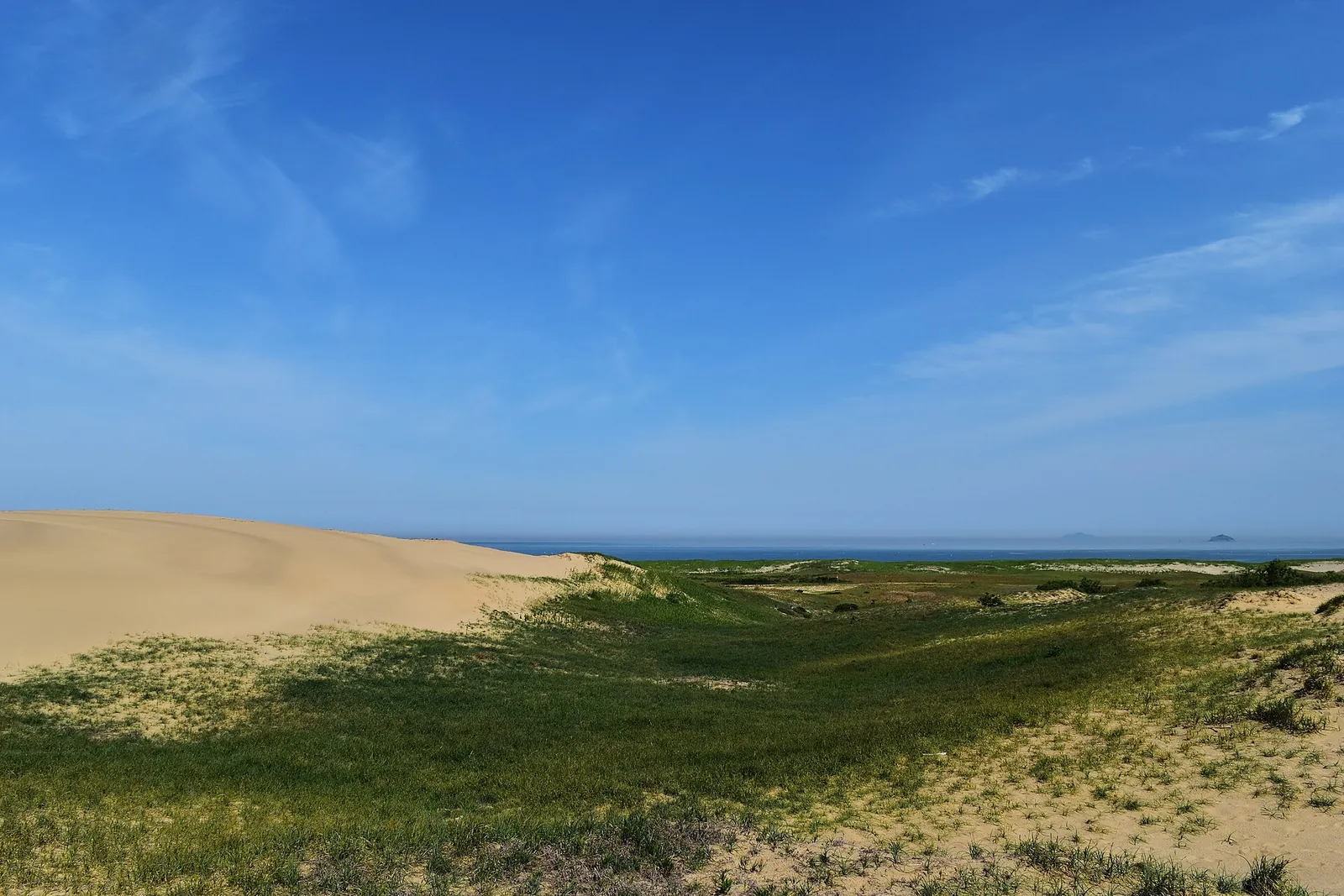
The Sinduri Coastal Sand Dune is the most unusual landscape in the park. VisitKorea says the dune is believed to have formed about 15,000 years ago, after the Ice Age, as winds carried sand inland from the beach; KNPS calls it Korea's largest coastal dune and a Natural Monument. You cannot walk across the dune itself: KNPS explains that visitors follow paths around its edge. When we checked on 2026-10-03, VisitKorea listed opening hours of 09:00–18:00 from March to October and 09:00–17:00 from November to February. Behind it, the Duung Wetland, a Ramsar site since 2007 according to KNPS, is a rare wetland formed behind a dune.
Walkers can reach Sinduri on the Bara-gil, section 1 of the Haebyeon-gil: KNPS gives 12 kilometres and about 3 hours 40 minutes from Hagampo by way of Guryepo and Meondong beaches, with a 1,004-metre barrier-free stretch at Guryepo suitable for wheelchairs and pushchairs. KNPS lists a city bus from Taean Bus Terminal to the Hagampo terminus.
Mallipo Beach is a C-shaped, shallow sandy bay with a pine wood behind it and an observatory for sunset views, according to VisitKorea; nearby shops offer lodging and fresh seafood, which makes it the easiest beach on this coast to base yourself. Cheollipo Beach is 2 kilometres north. Above it, the Cheollipo Arboretum was founded by Carl Ferris Miller (Min Byung-gal), whom VisitKorea calls the "blue-eyed Korean" and describes as a naturalised Korean citizen; VisitKorea notes he bought the land in 1962 and that it opened to the general public only in 2009, and its thalassotherapy feature says the magnolias peak in April. When we checked on 2026-10-03, VisitKorea listed 09:00–18:00 from March to November and 09:00–17:00 from December to February (last entry an hour before closing), with adult admission at 10,000 won from March to November and 7,000 won in winter.
This coast was hit by the Hebei Spirit oil spill in December 2007. KNPS says the Haebyeon-gil trail was created partly in response, to spread visitors beyond the summer beaches and to help the local economy recover.
Mongsanpo, the tidal flats and the middle coast
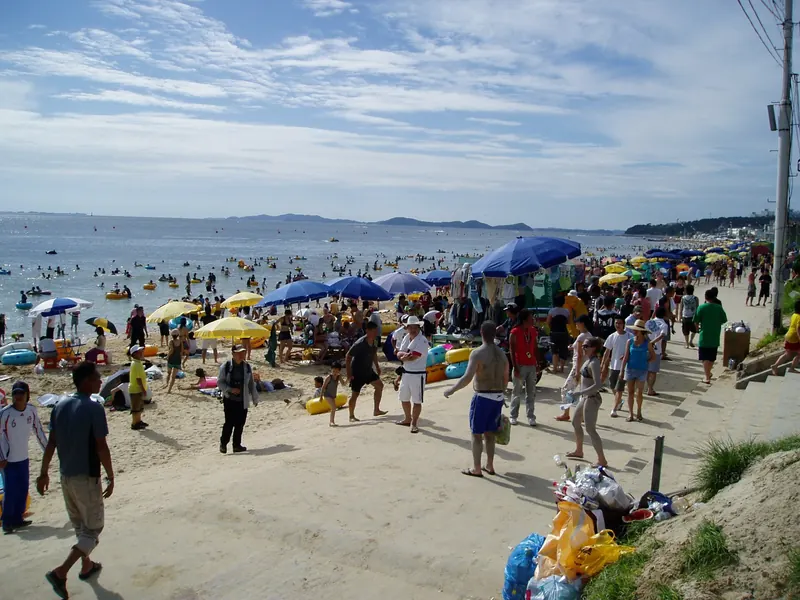
Between Taean-eup and the Anmyeondo bridge, Mongsanpo Beach is about 3 kilometres of white sand backed by a dense pine forest used for auto-camping, according to VisitKorea. At low tide the mudflats open up and families come to dig for clams and look for mud crabs; a kilometre west through a pine tunnel, Mongdaepo port has small seafood restaurants serving sliced raw fish.
The Solmorae-gil, section 4 of the Haebyeon-gil, runs from the Mongsanpo visitor centre to Deureuni port, 16 kilometres and about four hours according to KNPS, and links up with the crab bridge to Baeksajang — so a strong walker can cross from the peninsula to Anmyeondo on foot. KNPS lists intercity or city buses from Taean Bus Terminal towards Anmyeondo, getting off at Nam-myeon (about 10 minutes).
Low tide decides what you see on this coast. Check the tide table before planning a mudflat walk or a sunset at Unyeo or Kkotji, and keep to marked areas on the flats. Note too that the KNPS Taeanhaean office posted a notice on 9 September 2026 about a reservation system for park trails: check the park's page before you walk.
Two new or less obvious stops: the Taean Thalassotherapy Center on Dalsanpo Beach in Nam-myeon, which VisitKorea says opened in January 2026 with seawater pools, mud and salt treatments, and online booking from 60 days ahead; and, on Baekhwasan (258 metres) just north of Taean-eup, Taeeulam Hermitage, whose rock-carved standing Buddha triad is a National Treasure.
Getting there and around without a car
There is no railway to Taean. VisitKorea's bus guide lists Taean among the South Chungcheong destinations served from Seoul Nambu Terminal and Dong Seoul Terminal, and Taean and Anmyeondo among those from the Express Bus Terminal complex in Seoul. Check the current departures and terminal on the KOBUS and T-money bus sites that VisitKorea links, since express and intercity buses to the same town can leave from different terminals.
On the ground, local city buses leave from Taean Bus Terminal and Anmyeon Bus Terminal. KNPS's trail pages name the useful lines by destination: Wonbuk (Hagampo) for the Bara-gil and Sinduri, Sowon (Mallipo or Padori) for the west coast, and the Taean-bound bus from Anmyeon to Baeksajang. We could not confirm current timetables from an official English source, so ask at the terminal desk or call the 1330 Korea Travel Hotline before relying on a last bus.
The simplest car-free plan is one night in each town, or two nights in one: walk a trail section one way and ride back. For Cheollipo Arboretum and the beaches of southern Anmyeondo, for which KNPS's trail pages give no bus connection, a car or a taxi booked through your lodging is simpler.
Practical questions
Can I visit Taean and Anmyeondo without a car?
Yes, with planning. Take a bus from Seoul to Taean or Anmyeondo, sleep near Taean Bus Terminal or Anmyeon Bus Terminal, and use the local buses that KNPS lists for each trail section. Check current timetables locally, and allow for a car or taxi for Cheollipo Arboretum and southern Anmyeondo.
Where is the best sunset in Taean?
Kkotji Beach on Anmyeondo, with the Halmibawi and Halabibawi rocks, which KNPS counts among the three great sunset spots of the Yellow Sea. Mallipo, Cheollipo and Unyeo Beach are good alternatives.
Can you walk on the Sinduri sand dunes?
No. KNPS explains that visitors cannot walk directly on the dune; paths go around its edge. When we checked on 2026-10-03, VisitKorea listed 09:00–18:00 from March to October and 09:00–17:00 from November to February.
How long is the Noeul-gil from Baeksajang to Kkotji?
KNPS gives 12 kilometres and about 3 hours 40 minutes. A Taean-bound city bus runs from Anmyeon Bus Terminal to Baeksajang in about 15 minutes, according to KNPS.
When can I swim in Taean?
In high summer. VisitKorea's Bangpo Beach page, for example, limits swimming to July and August. The beaches are open to walk on all year.
Is Anmyeondo really an island?
Yes. VisitKorea explains that it was once part of the mainland, became an island when a canal was cut for grain transport, and was reconnected by a bridge in 1970.
Sources and checks before you travel
Reference sources for the version dated 3 October 2026. Confirm opening times, access, transport and conditions for your travel dates.
- KNPS: Taeanhaean National Park ↗ — opens in a new tab
- KNPS: Taean Haebyeon-gil (overview) ↗ — opens in a new tab
- KNPS: Haebyeon-gil section 1, Bara-gil ↗ — opens in a new tab
- KNPS: Haebyeon-gil section 4, Solmorae-gil ↗ — opens in a new tab
- KNPS: Haebyeon-gil section 5, Noeul-gil ↗ — opens in a new tab
- VisitKorea: Taeanhaean National Park ↗ — opens in a new tab
- VisitKorea: Anmyeondo Island ↗ — opens in a new tab
- VisitKorea: Kkotji Beach ↗ — opens in a new tab
- VisitKorea: Kkotgedari Ocean Bridge ↗ — opens in a new tab
- VisitKorea: Baeksajang Beach ↗ — opens in a new tab
- VisitKorea: Taean Thalassotherapy Center feature ↗ — opens in a new tab
- VisitKorea: Anmyeondo Island Recreational Forest ↗ — opens in a new tab
- VisitKorea: Unyeo Beach ↗ — opens in a new tab
- VisitKorea: Bangpo Beach ↗ — opens in a new tab
- VisitKorea: Sinduri Coastal Sand Dune ↗ — opens in a new tab
- VisitKorea: Mallipo Beach ↗ — opens in a new tab
- VisitKorea: Cheollipo Beach ↗ — opens in a new tab
- VisitKorea: Cheollipo Arboretum ↗ — opens in a new tab
- VisitKorea: Mongsanpo Beach ↗ — opens in a new tab
- VisitKorea: Baekhwasan Mountain (Taean) ↗ — opens in a new tab
- VisitKorea: Taean Taeeulam Hermitage ↗ — opens in a new tab
- VisitKorea: Express Bus and Intercity Bus guide ↗ — opens in a new tab
- VisitKorea: Airport Transportation Guide ↗ — opens in a new tab
- VisitKorea: Blue crab and kimchi stew (gegukji) ↗ — opens in a new tab
- VisitKorea: Sinseonhan Gegukji Ganjang Gejang ↗ — opens in a new tab
- VisitKorea: Octopus soup (nakjitang) ↗ — opens in a new tab
- VisitKorea: Jeonggane Baksok Nakjitang ↗ — opens in a new tab
- VisitKorea: An Autumn Culinary Journey ↗ — opens in a new tab
- VisitKorea: The Most Flavorful Delicacies to Savor in Korea ↗ — opens in a new tab
- VisitKorea: Bangpo Susan ↗ — opens in a new tab
Does this experience fit your route?
Taean is best done independently, with a night or two on the coast. If you would rather join a group from Seoul, check that the itinerary really goes to the Taean coast before you book.
Browse relevant experiences on Viator ↗ — opens in a new tabAffiliate link · Book with ViatorPhoto credits
The Sinduri Coastal Sand Dune on the north coast of Taean, viewed from its edge
Photograph: Jjw — opens in a new tab · CC BY-SA 4.0 — opens in a new tab
Changes: Resized and converted to WebP; displayed with responsive crops. · Original photograph and licence details ↗ — opens in a new tab
Sunset behind Grandma and Grandpa Rocks at Kkotji Beach, Anmyeondo
Photograph: HiHoHo — opens in a new tab · CC BY-SA 3.0 — opens in a new tab
Changes: Resized and converted to WebP; displayed with responsive crops. · Original photograph and licence details ↗ — opens in a new tab
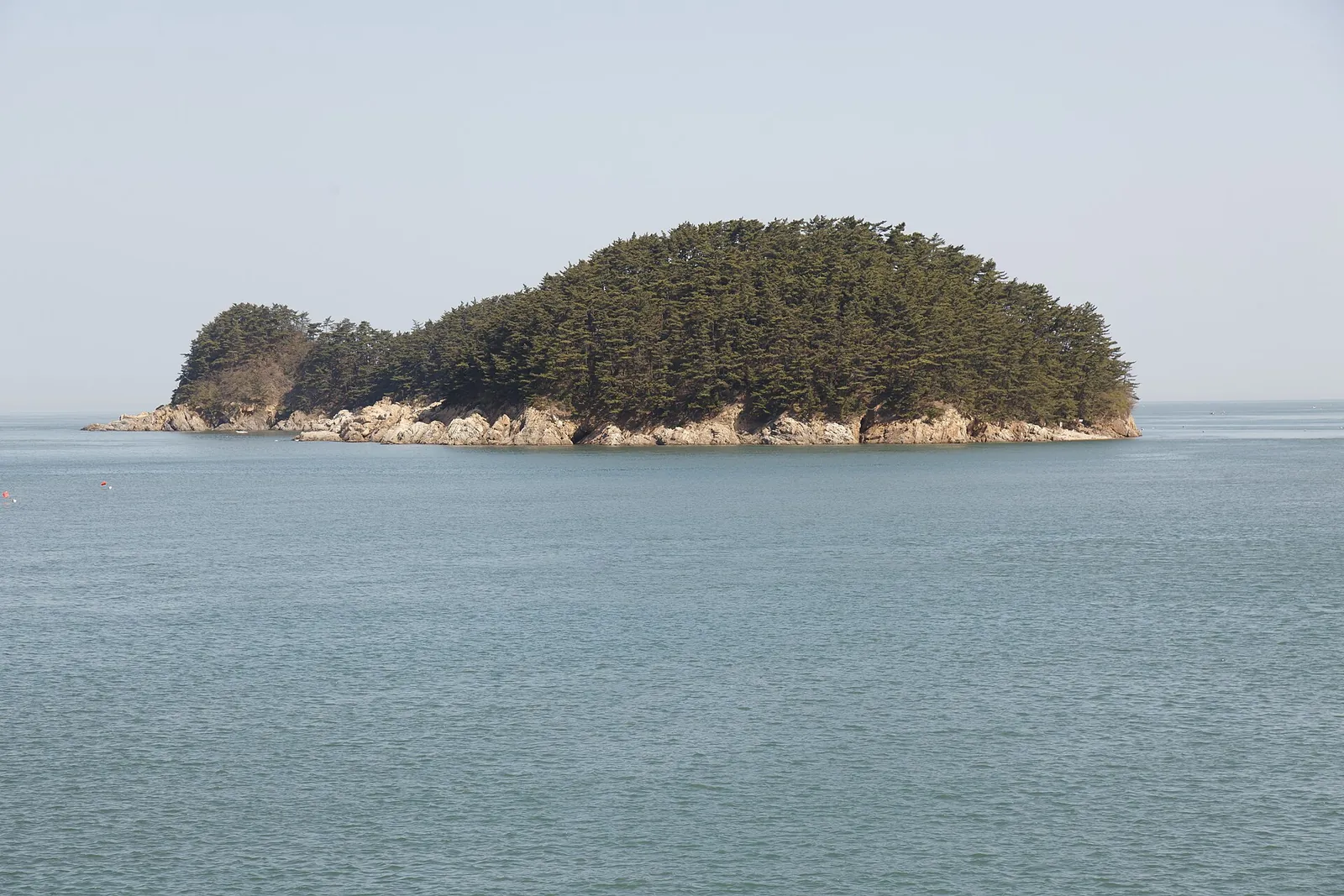
A pine-topped islet off Cheollipo on the Taean coast
Photograph: Olga Lipunova — opens in a new tab · CC BY-SA 3.0 — opens in a new tab
Changes: Resized and converted to WebP; displayed with responsive crops. · Original photograph and licence details ↗ — opens in a new tab
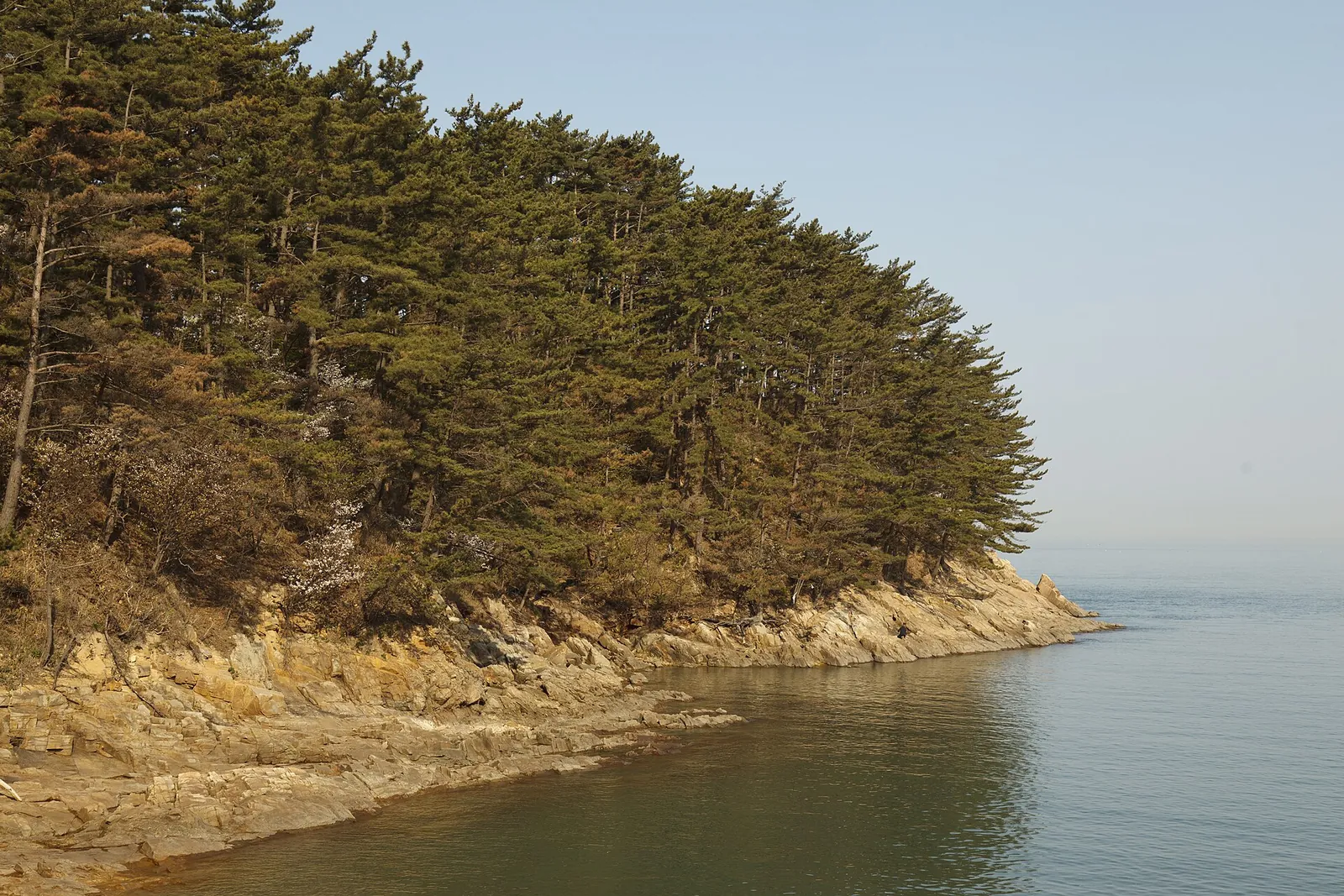
Pines and rocks on a headland at Mallipo, Taeanhaean National Park
Photograph: Olga Lipunova — opens in a new tab · CC BY-SA 3.0 — opens in a new tab
Changes: Resized and converted to WebP; displayed with responsive crops. · Original photograph and licence details ↗ — opens in a new tab
Gegukji, the blue crab and kimchi stew of the Taean and Seosan area
Photograph: Seosan City Government — opens in a new tab · CC BY-SA 4.0 — opens in a new tab
Changes: Resized and converted to WebP; displayed with responsive crops. · Original photograph and licence details ↗ — opens in a new tab