Plan your trip · South Korea
Accessible South Korea: wheelchair travel in Seoul and beyond
South Korea is easiest to plan with limited mobility if you start in Seoul. The city's tourism organisation runs a dedicated accessible tourism centre with a free wheelchair-lift airport van and rental equipment, the subway has lifts at nearly every station, and the centre publishes detailed access notes for the major sights. Outside the capital, support is patchier and mostly in Korean, but the national parks maintain a set of barrier-free trails, and the regional airports have wheelchair services of their own. The work lies in booking the right services weeks ahead and checking each station and sight on your route, not just the headline attractions.
- Suggested time
- 4–5 days in Seoul; add 1–2 days for a barrier-free park trail or a flight to Jeju or Busan
- Where to stay
- Seoul Station or City Hall area, close to the AREX terminus and the Danurim centre
- Season and timing
- Book Danurim services two months to 14 days ahead; the van and rental desk work weekday office hours only.
The short answer
Make Seoul the base and give it four or five days, sleeping near Seoul Station or City Hall, where the step-free AREX airport train arrives and the Seoul Danurim Accessible Tourism Center has its office. Book the free Danurim airport van and any rental equipment between two months and 14 days before you arrive. Get around by subway after checking the lifts at every station you will use, and keep a jumbo taxi or an accessible call taxi as the fallback rather than the plan. Add a national park barrier-free trail as a day out by car, or fly to Jeju or Busan and ask for wheelchair help at the airport information desk.
Why Seoul is the place to start
The Seoul Danurim Accessible Tourism Center, opened by the Seoul Tourism Organization in 2019, is a support centre for travellers with disabilities, older travellers, pregnant women and families with infants. It runs a free wheelchair-lift van from the airports, rents out travel aids and keeps an English-language database of accessible attractions and hotels, with restaurant listings in Korean. When we checked on 2026-10-03, its office was at 20 Seosomun-ro 9-gil, Jung-gu (2F, Dong Wha Pharm Building), near Exit 10 of City Hall Station on Lines 1 and 2, open 9:00–18:00 on weekdays and closed at weekends and on public holidays. It has an information desk, a rest area and a free same-day luggage locker.
The database is the most useful planning tool. Each entry describes the approach, the entrance, toilets, lifts and the nearest station exit in plain terms, including the awkward parts: a steep slope here, a narrow toilet there. When we checked, it listed 284 attractions, and it can be filtered by physical, visual or hearing impairment, older travellers and families with small children. Start with it before you fix a single day, and check each sight's own website for current hours.
Arriving: Incheon, Gimpo and the free Danurim van
Incheon International Airport publishes its own service page for travellers with reduced mobility. When we checked, it listed an electric cart and wheelchair escort service from the terminal entrances to check-in and from the departure area to the gates, available 7:00–22:00 by calling the help desk (1577-2600) before you arrive or asking at an information desk. Manual wheelchairs can be borrowed free at every information desk, and WheelShare lends power-assisted and lightweight electric wheelchairs free of charge near Exits 7 and 8 on the third floor of Terminal 1. Every terminal toilet block has at least one accessible toilet. Arrange help on the plane itself with your airline.
From the airport, the Danurim centre recommends the AREX airport railway: it describes all stations and trains as fully accessible, with wheelchair spaces on every train, and the express runs non-stop to Seoul Station. Its FAQ gave about 43 to 51 minutes for the express and about an hour for the all-stop train. The same page warns that most airport limousine buses are not accessible vehicles.
The Danurim Mini Van is a free airport pick-up and drop-off in a nine-seat van with a wheelchair lift, for any group with at least one wheelchair user. When we checked, the official FAQ and notices said it runs between Incheon (Terminals 1 and 2) or Gimpo and accommodation in Seoul only, during service hours of 9:00–18:00 Korean time. The wheelchair must be smaller than 130 × 76 cm, the driver speaks only Korean, and you must send proof of travel insurance bought before departure. Bookings open month by month (November 2026 opened on 1 October at 11:00 KST), from two months to 14 days before the date, and approval takes two to three days on average.
Make time for the local food
What to eat and where to look
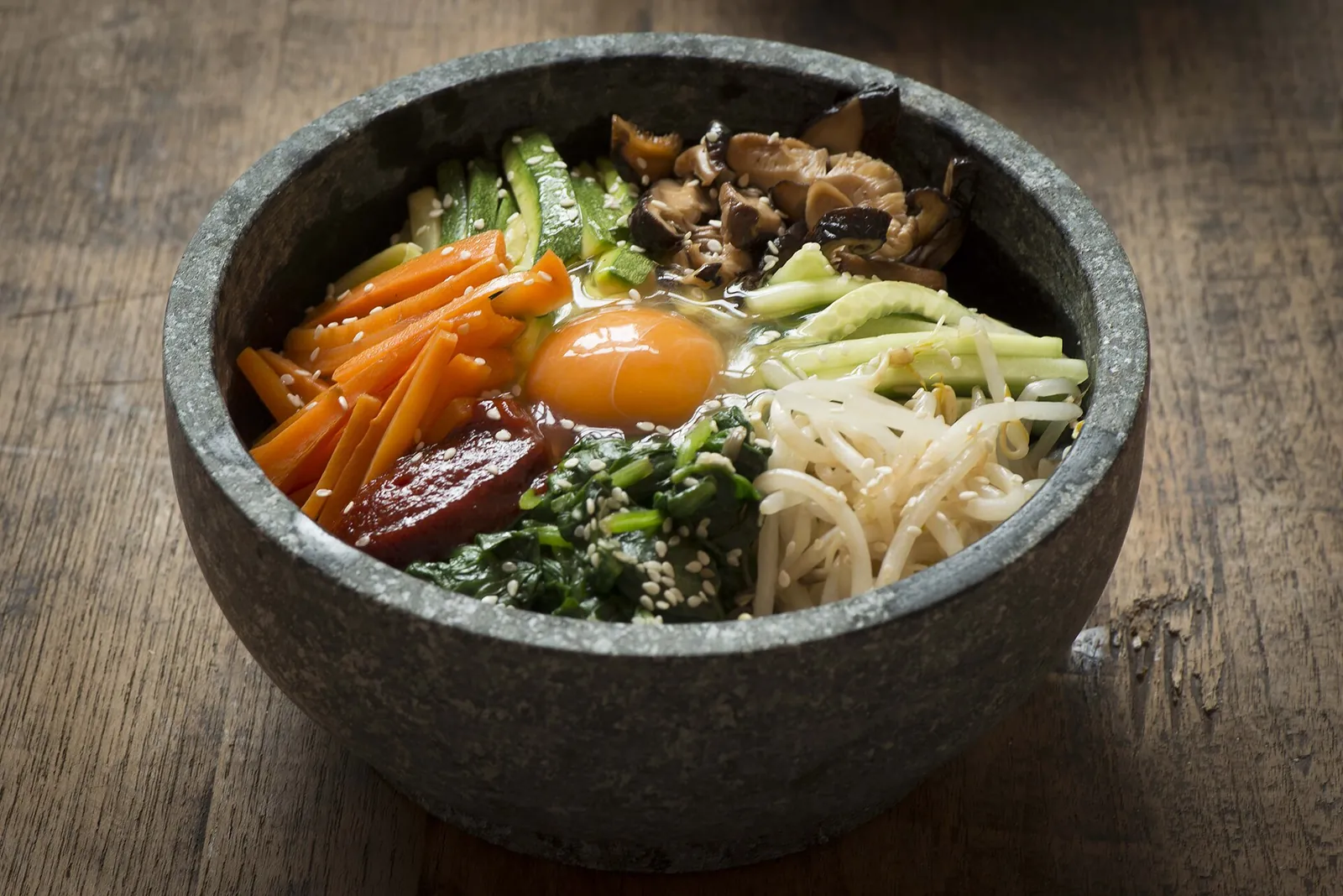
Bibimbap
Rice topped with seasoned vegetables, often beef and an egg, mixed with chilli paste at the table. It arrives as a single bowl, so it is easy to order and eat without passing shared side dishes around a crowded table.
- Where to look
- Museum and department-store food courts and restaurants near major stations, which usually have chairs and lift access.
- Fit it into your day
- Lunch on a museum day, eaten in the same building to avoid an extra transfer.
Dolsot (hot stone bowl) bibimbap stays dangerously hot for a long time; keep it well away from hands or legs with reduced sensation. Ask for the chilli paste on the side if you avoid spice.
Gimbap
Rice and fillings rolled in seaweed and sliced into rounds. It needs no cutlery and travels well, which makes it the easiest picnic for a park day or a long car journey to a national park trail.
- Where to look
- Gimbap shops and convenience stores near subway stations; buy before you set off.
- Fit it into your day
- Packed lunch for Seoul Forest or a barrier-free park trail, where cafés may be few or have steps.
Fillings often include ham, fish cake or egg; eat it the same day.
Juk (rice porridge)
Slow-cooked rice porridge with pumpkin, abalone, vegetables or chicken. It is soft, mild and filling, a gentle choice after a long flight or on a tiring day.
- Where to look
- Specialist porridge shops in central Seoul and near hospitals and stations.
- Fit it into your day
- Breakfast or a light dinner close to your hotel at the end of a long day.
Seafood versions contain shellfish; ask before ordering if you have allergies.
Mandu (dumplings)
Steamed or pan-fried dumplings filled with meat, kimchi or vegetables, often served as a quick meal in soup or on their own.
- Where to look
- Market stalls and casual restaurants; check for tables with chairs, as some traditional places seat guests on the floor.
- Fit it into your day
- A quick lunch between sights when you want to keep the stop short.
Kimchi and meat fillings are common; vegetable versions may still contain egg or meat stock.
Getting around Seoul: subway first, taxis as back-up
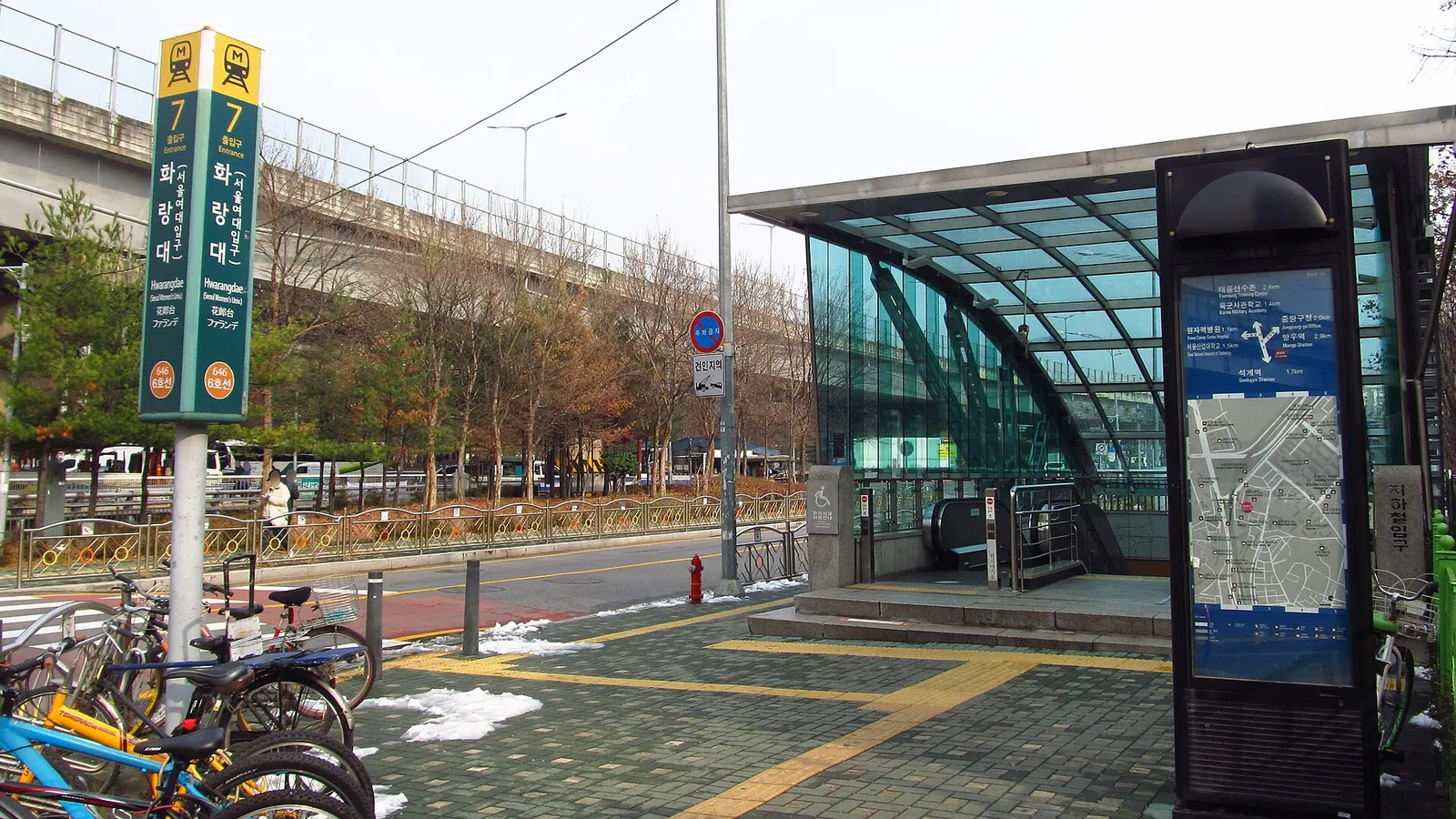
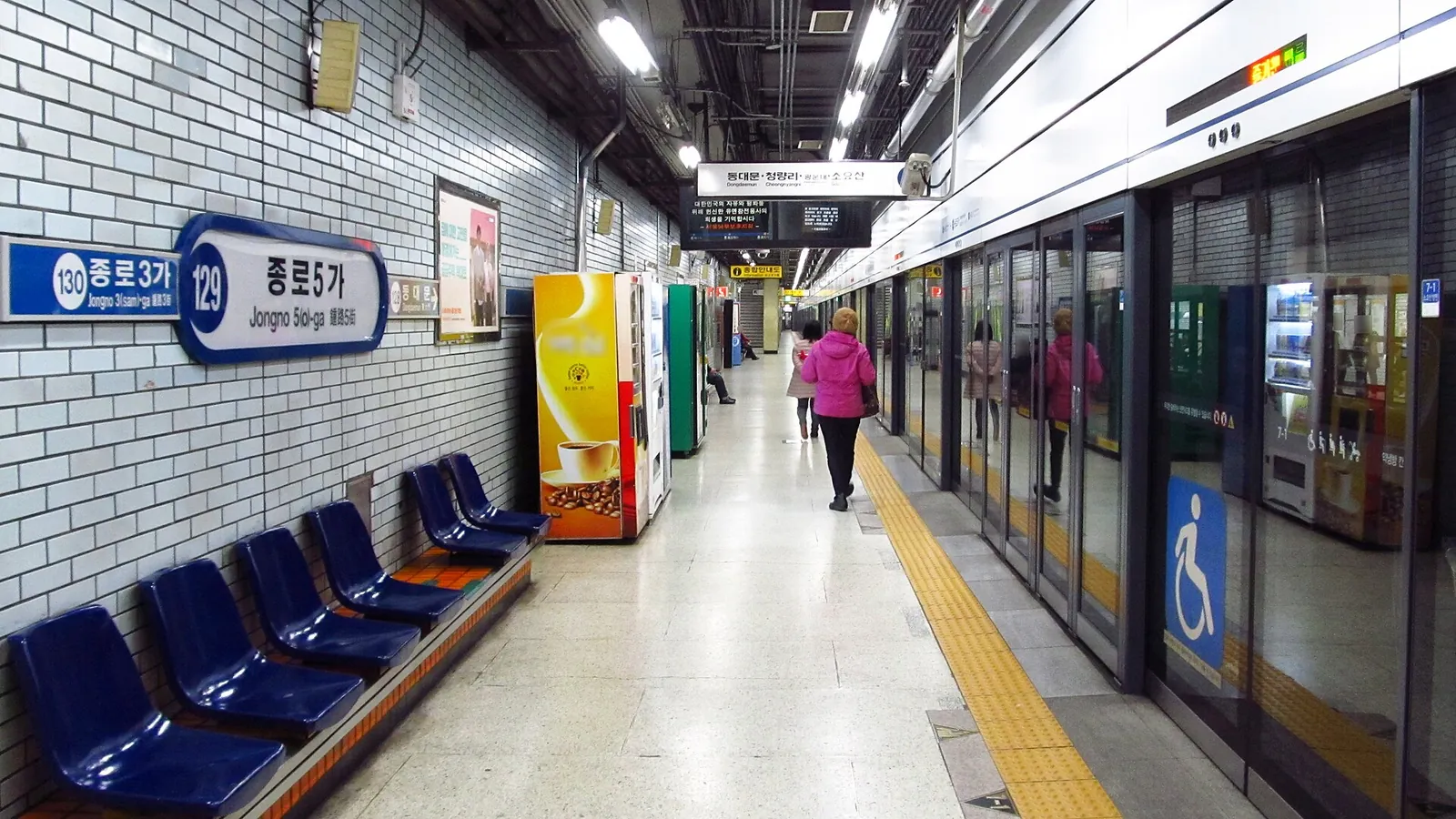
Danurim's transport guide says nearly all Seoul subway stations can be reached by lift. Most stations need two: one from the street to the ticket level and another down to the platform. Street-level lifts sit in large glass boxes, often without signs, and a lift entrance with card readers goes straight to the platform. Most older stations without lifts have a wheelchair stair lift that you ask station staff to operate, and the guide advises wheelchair users to avoid stations where a stair lift is the only option. Gates for wheelchair users replace turnstiles where needed, and a large blue wheelchair sign on the platform screen door marks where the wheelchair space will stop. Seoul Metro's English site publishes a station-by-station table of lifts, escalators, stair lifts and accessible toilets for its lines; check your departure, transfer and arrival stations in it.
Seoul's wheelchair-accessible call taxis, run by the Seoul Facilities Corporation, are vans with a ramp or lift. Danurim says foreigners travelling by wheelchair may use them, but they must be booked in advance and demand exceeds supply, with average waits of 30 to 60 minutes, so it advises against relying on them as your main transport. When we checked, it listed the booking line as +82-2-1588-4388, operating 24 hours, with fares cheaper than regular taxis. Regular, international and deluxe taxis may not have room for a wheelchair because of the gas tank in the boot. Jumbo taxis are not adapted vehicles, but Danurim says they are large enough to fit a wheelchair, and taxis can be hired for up to a day. For a full sightseeing day that is often the most practical choice.
Danurim puts low-floor buses at more than 70 percent of Seoul's fleet, with ramps and wheelchair spaces, but it still recommends the subway and taxis because low-floor buses run only on some routes and most bus stops lack English signs.
Seoul sights that work well, and the ones to plan around
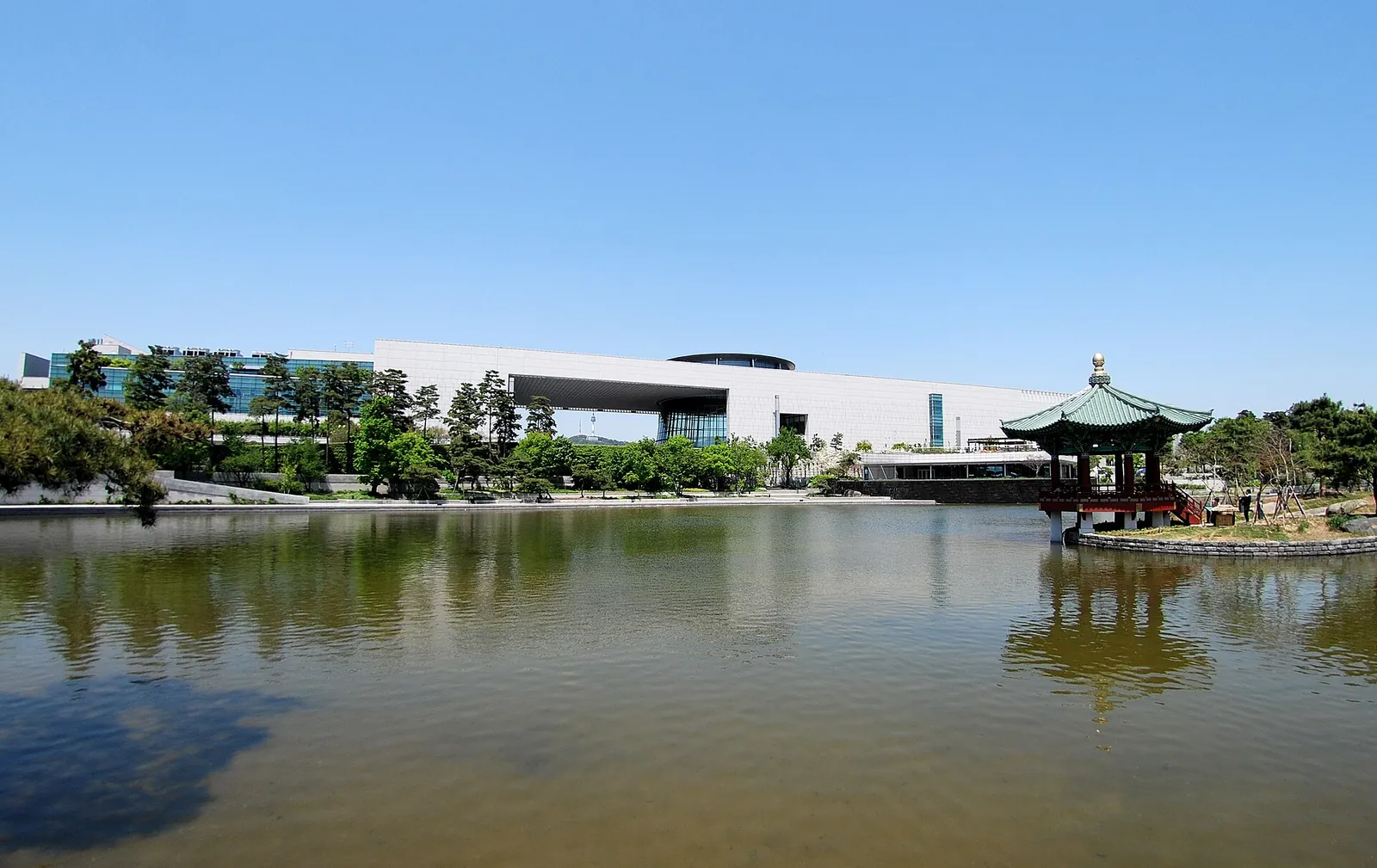
The National Museum of Korea in Yongsan is the most straightforward big visit. Danurim describes a level approach with a ramp of 3 degrees or less, a step-free main entrance, lifts to every floor and accessible toilets on every floor, plus tactile models and sign-language interpretation on request. It is 309 m from Exit 2 of Ichon Station on Line 4. When we checked, Danurim listed opening hours of 9:30–17:30, with late opening to 21:00 on Wednesdays and Saturdays. The Seoul Museum of Craft Art, 137 m from Exit 1 of Anguk Station, has lifts to all its exhibition buildings and accessible toilets on every floor, although Danurim warns of a fairly steep slope between Exhibition Buildings 1 and 3.
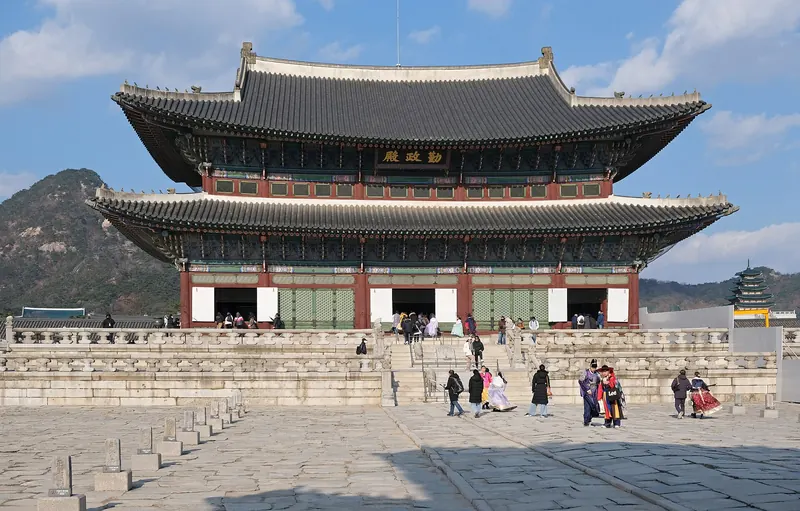
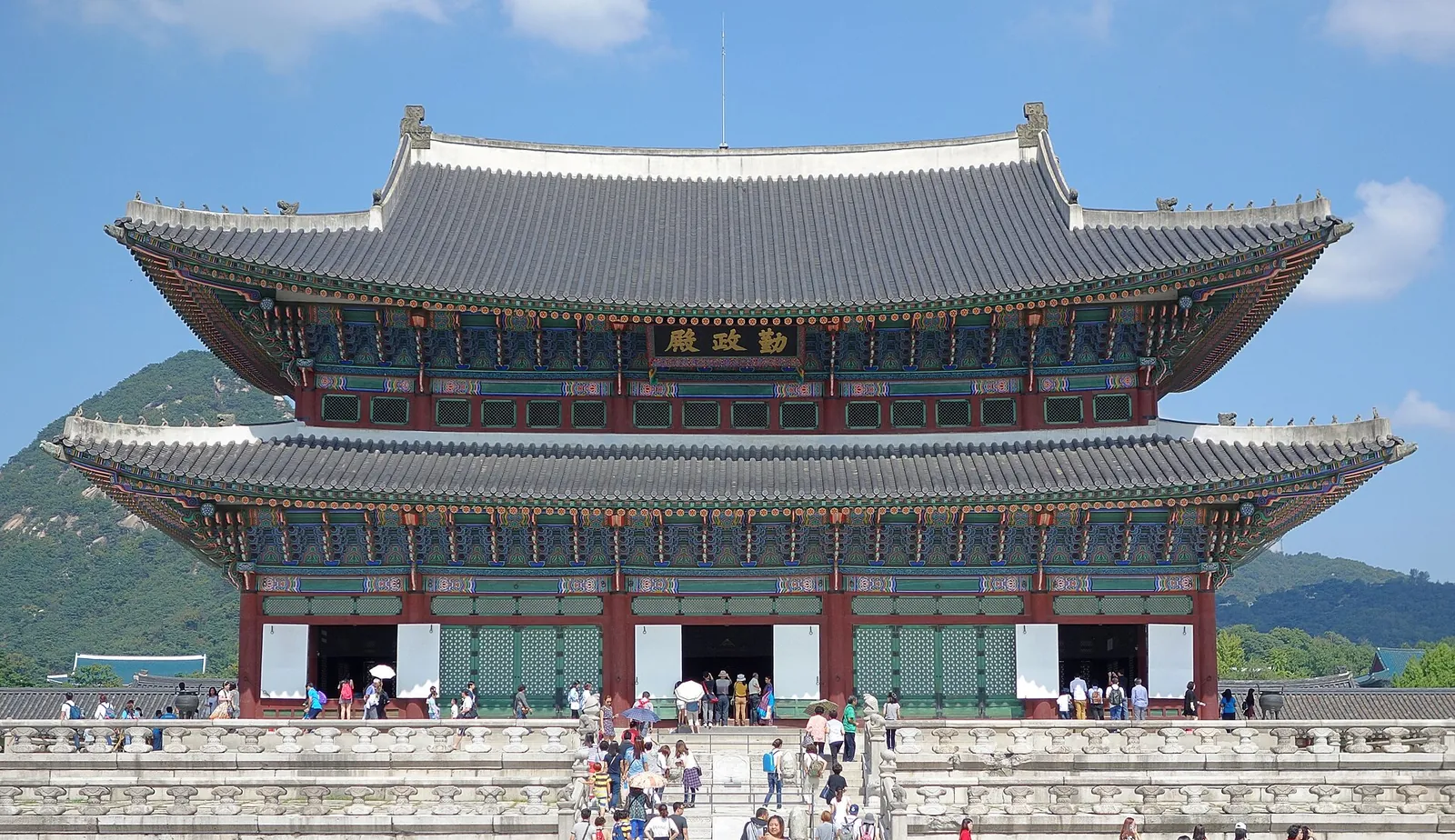
The palaces need more care. At Gyeongbokgung, Danurim notes a steep slope at the main entrance, ramps inside the grounds but also unpaved paths and rough stone paving, and narrow single-user accessible toilets at Hongbokjeon; wheelchairs and pushchairs can be borrowed, and it closes on Tuesdays. Changdeokgung can be entered step-free, but sandy paths, arched stone bridges and uphill stretches call for caution, with accessible toilets near Geumhomun Gate, Nakseonjae and Buyongji; it closes on Mondays. Plan a shorter loop and a companion for the rough sections rather than the full circuit.
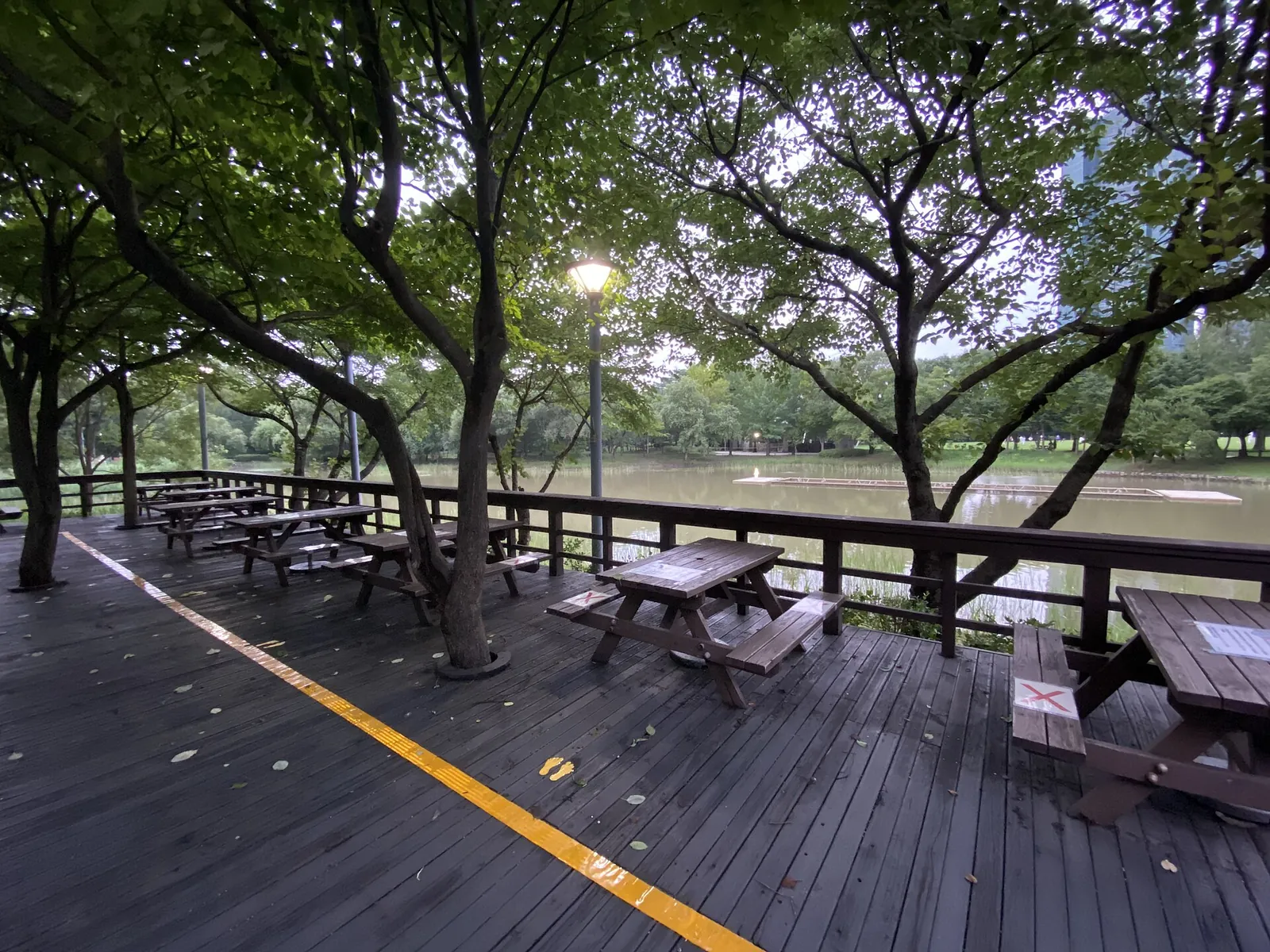
For views and green space, Danurim lists an accessible lift and toilets at the Namsan Cable Car station. Visit Seoul's barrier-free Seongsu course starts in Seoul Forest, which it describes as having wide entrances for wheelchair users and fast chargers for electric wheelchairs. At the MMCA gallery inside Deoksugung, wheelchair users need an inclined platform lift at the entrance; there is a call button at the door.
Renting equipment and getting help in English
Danurim rents travel aids to visitors in Seoul: manual wheelchairs, shower wheelchairs, portable ramps (46, 73, 125 and 165 cm), a patient lift, shower chairs and pushchairs. When we checked on 2026-10-03, rentals ran for three to seven days and had to be booked online between two months and 14 days ahead, subject to stock on the calendar. You collect from the rental station near Seoul Station on weekdays (9:00–18:00), or ask for free delivery and collection at your hotel or a sight within Seoul between 10:00 and 17:00. The FAQ also offers collection and return at Gimpo Airport. A refundable deposit of about two-thirds of the device's value is paid in person by card or cash, capped at 500,000 won if you rent several items. Equipment may be used only within Seoul, unless you are a foreign resident of Seoul.
For everything else, the Korea Tourism Organization's 1330 Korea Travel Helpline answers by phone and chat. Danurim's FAQ lists 24-hour service in Korean, English, Japanese and Chinese, and other languages from 8:00 to 19:00; dial 1330 in Korea or +82-2-1330 from abroad. In a medical emergency, call 119: Danurim says your location is detected automatically and an interpreter joins the call. If you would rather hand over the logistics, Danurim's FAQ names four Korean barrier-free tour agencies (MovingTrip, AbleTour, D&G Tour and K Best Tour). We have not checked their services, so ask each for specifics about vehicles and routes.
Beyond Seoul: barrier-free park trails, Jeju and Busan
The Korea National Park Service maintains a set of barrier-free trails (mujangae tambangno), each with its surface, width, accessible toilets and parking listed on its Korean-language page. At Juwangsan, the 2.1 km path from Daejeonsa temple to Yongchu Falls takes about an hour each way on a firm, gently sloping surface 3 to 5 m wide, with ramps and a bypass near the falls but some narrow, rockfall-prone points; wheelchairs and pushchairs can be borrowed at the Sangui visitor support centre, about 700 m before the start. At Gayasan, a 2.1 km route links Gilsangam hermitage with Haeinsa temple, though the park warns that the first 300 m are narrow and steep. Naejangsan has a 2.6 km trail through maple woods to the cable car area, reached from Jeongeup by low-floor bus 171, and Odaesan has a 1.6 km fir-forest path to Woljeongsa. For all of them, the park service recommends going with a companion.
These parks are far from rail stations, so a hired car with driver or a tour is the realistic way to reach them. For high-speed rail, Korail did not publish an English page on wheelchair seats or station assistance that we could check, so confirm both with Korail or through 1330 when you book, rather than on the day.
Jeju and Busan are both reachable by domestic flight. The Korea Airports Corporation pages for Jeju and Gimhae airports list wheelchair rental at the information counter on presentation of ID, priority security lanes for disabled passengers and boarding ramps for the aircraft door. At Gimhae, the domestic terminal offers a Porty Care service to escort travellers with reduced mobility to check-in (booking +82-2-1661-2626). The Jeju Tourism Organization runs a barrier-free section, Jeju for All, on Visit Jeju, and Danurim links to barrier-free tourism portals for Daegu and Gyeonggi Province. Most of this regional information is in Korean, so a translation app or a call to 1330 will help.
Practical questions
Is Seoul wheelchair accessible?
Largely yes, for a city of its age. Danurim says nearly all subway stations can be reached by lift, AREX airport trains are fully accessible, and major museums are step-free. Palaces have rough stone and unpaved paths, and some older stations rely on stair lifts, so check each place on your route.
Can tourists use Seoul's wheelchair-accessible taxis?
Yes. Danurim says the Seoul Facilities Corporation's accessible call taxis are available to foreigners travelling by wheelchair, booked in advance on +82-2-1588-4388. Average waits are 30 to 60 minutes, so do not rely on them for a fixed appointment.
How do I get from Incheon Airport to Seoul in a wheelchair?
Take the AREX train to Seoul Station, which Danurim describes as fully accessible with wheelchair spaces on every train, or book the free Danurim Mini Van to your Seoul hotel two months to 14 days ahead. Most airport limousine buses are not accessible.
Can I rent a wheelchair or a portable ramp in Seoul?
Yes. The Seoul Danurim Accessible Tourism Center rents wheelchairs, shower wheelchairs, ramps from 46 to 165 cm, a patient lift and more for three to seven days, booked two months to 14 days ahead, with free delivery within Seoul. Incheon Airport lends wheelchairs free at its information desks.
Are Gyeongbokgung and Changdeokgung palaces accessible?
Partly. Both can be entered without steps and lend wheelchairs, but Danurim notes a steep entrance slope and rough stone at Gyeongbokgung, and sandy paths, arched bridges and uphill stretches at Changdeokgung. Plan a shorter loop with a companion.
Who can I call for help in English?
The 1330 Korea Travel Helpline (+82-2-1330 from abroad) answers 24 hours a day in English, Korean, Japanese and Chinese. In an emergency, dial 119, and an interpreter joins the call.
Sources and checks before you travel
Reference sources for the version dated 3 October 2026. Confirm opening times, access, transport and conditions for your travel dates.
- Seoul Danurim: Seoul Danurim Accessible Tourism Center ↗ — opens in a new tab
- Seoul Danurim: Our Mission ↗ — opens in a new tab
- Seoul Danurim: Transportation ↗ — opens in a new tab
- Seoul Danurim: FAQ (pages 1–4) ↗ — opens in a new tab
- Seoul Danurim: Mini Van reservations open (October 1 notice) ↗ — opens in a new tab
- Seoul Danurim: Travel Assistive Devices ↗ — opens in a new tab
- Seoul Danurim: accessible destinations database ↗ — opens in a new tab
- Seoul Danurim: National Museum of Korea ↗ — opens in a new tab
- Seoul Danurim: Seoul Museum of Craft Art ↗ — opens in a new tab
- Seoul Danurim: Gyeongbokgung Palace ↗ — opens in a new tab
- Seoul Danurim: Changdeokgung Palace ↗ — opens in a new tab
- Seoul Danurim: Namsan Cable Car and MMCA Deoksugung ↗ — opens in a new tab
- Visit Seoul: barrier-free Seongsu course ↗ — opens in a new tab
- Seoul Metro: care facilities by station ↗ — opens in a new tab
- Incheon International Airport: travelers accompanied by the mobility impaired ↗ — opens in a new tab
- VisitKorea: 1330 Travel Helpline ↗ — opens in a new tab
- Korea National Park Service: barrier-free trails ↗ — opens in a new tab
- Korea Airports Corporation: Jeju Airport, accompanying the mobility handicapped ↗ — opens in a new tab
- Korea Airports Corporation: Gimhae Airport, accompanying the mobility handicapped ↗ — opens in a new tab
- Seoul Danurim: Korean accessible tourism links ↗ — opens in a new tab
- Visit Jeju: Jeju for All (barrier-free) ↗ — opens in a new tab
Photo credits
The National Museum of Korea in Yongsan: level approaches, lifts to every floor and accessible toilets on each floor
Photograph: Jinah78 — opens in a new tab · CC BY-SA 3.0 — opens in a new tab
Changes: Resized and converted to WebP; displayed with responsive crops. · Original photograph and licence details ↗ — opens in a new tab
A glass-roofed entrance at Hwarangdae Station on Line 6 in Seoul
Photograph: LERK — opens in a new tab · CC BY-SA 4.0 — opens in a new tab
Changes: Resized and converted to WebP; displayed with responsive crops. · Original photograph and licence details ↗ — opens in a new tab
Jongno 5-ga Station on Line 1: screen doors line the platform, and a blue wheelchair sign marks the wheelchair space
Photograph: LERK — opens in a new tab · CC BY-SA 4.0 — opens in a new tab
Changes: Resized and converted to WebP; displayed with responsive crops. · Original photograph and licence details ↗ — opens in a new tab
A level boardwalk in Seoul Forest, where Visit Seoul's barrier-free Seongsu course begins
Photograph: CartoonChess — opens in a new tab · CC BY-SA 4.0 — opens in a new tab
Changes: Resized and converted to WebP; displayed with responsive crops. · Original photograph and licence details ↗ — opens in a new tab
Geunjeongjeon at Gyeongbokgung: the courtyard's rough stone paving is one of the surfaces to plan around in a wheelchair
Photograph: Spike — opens in a new tab · CC BY-SA 4.0 — opens in a new tab
Changes: Resized and converted to WebP; displayed with responsive crops. · Original photograph and licence details ↗ — opens in a new tab
Dolsot bibimbap, a complete meal in one bowl
Photograph: Sous Chef — opens in a new tab · CC BY 2.0 — opens in a new tab
Changes: Resized and converted to WebP; displayed with responsive crops. · Original photograph and licence details ↗ — opens in a new tab