Plan your trip · South Korea
Autumn foliage in Korea 2026: Seoraksan to Naejangsan, week by week
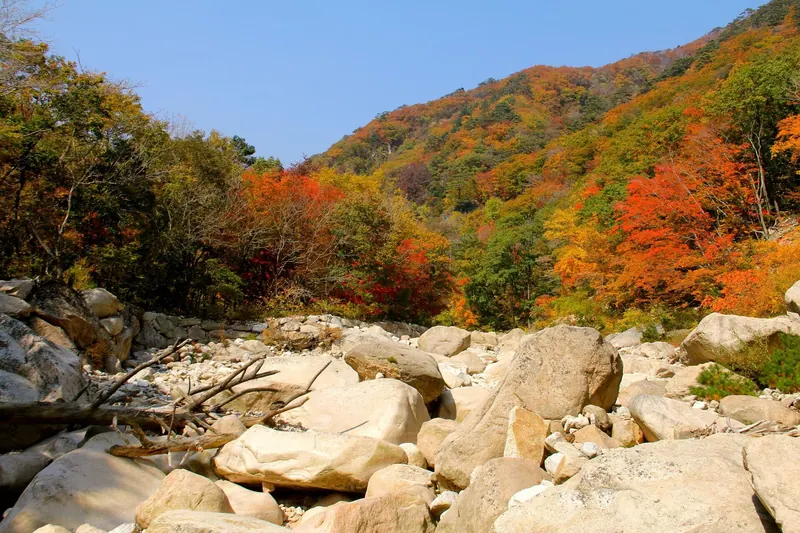
Korea's autumn colour does not arrive everywhere at once. It starts on the high peaks of Gangwon State in the north-east in early October, works its way down to Seoul and the southern mountains through late October, and finishes in the south-west and on Jeju in mid-November. That spread is the most useful fact for planning: one week in Korea catches one stage of it, and the famous valleys at their peak are also the most crowded places in the country. This guide follows the 2026 forecast published by the Korea Tourism Organization, then suggests where to sleep for each stage and which gardens, forests and temples work as quieter alternatives.
- Suggested time
- 2–3 nights per foliage region; 10–14 days to follow the colour from Seoraksan to Naejangsan
- Where to stay
- Sokcho or Seorak-dong for Seoraksan, Seoul for Bukhansan and Gapyeong, Jeongeup for Naejangsan
- Season and timing
- Early October to mid-November; in 2026 the forecast peaks run from about 25 October (Seoraksan) to about 13 November (Hallasan).
The short answer
Choose the week first, then the region. For late October, base yourself in Sokcho or Seorak-dong for two or three nights: VisitKorea's 2026 forecast puts Seoraksan's peak around 25 October. For the first week of November, stay in Seoul and use the city's parks, Bukhansan (peak around 4 November) and day trips to Gapyeong. For around 11 November, take the KTX on the Honam Line to Jeongeup and give Naejangsan two nights, adding Baegyangsa on the Jangseong side. With ten days to two weeks from about 25 October, you can follow the colour south: Seoraksan, then Seoul, then Naejangsan. Go on weekdays, start at dawn, and treat every forecast date as approximate.
How the colour moves: the 2026 forecast
On 8 September 2026 VisitKorea, the Korea Tourism Organization's English site, published its fall foliage forecast, credited to the private forecaster Weatheri. It put the first colour at Seoraksan on 3 October, Bukhansan on 23 October, Jirisan on 28 October and Hallasan on 31 October, and expected peak foliage across the country from mid-October to early November. The predicted peaks were Seoraksan around 25 October, Bukhansan around 4 November, Jirisan around 5 November, Naejangsan around 11 November and Hallasan around 13 November.
Read those dates as a guide to order, not a booking calendar: the forecast itself warns that actual dates change with the weather. What holds every year is the direction. The colour starts high and in the north-east, reaches Seoul and the central and southern mountains later, and ends in the warmer south-west and on Jeju. If you can travel for only one week, choose the region that matches your dates rather than trying to see the famous names in one go.
The forecast is also a crowd calendar. VisitKorea's own feature on less crowded foliage spots says the famous mountains, Seoraksan and Odaesan among them, are always packed in the season. Expect the weekends around each peak to be the busiest days of that park's year, and plan the hikes you care about for a weekday.
- Early to mid-October: colour on the high ridges of Seoraksan; the lower valleys are still mostly green.
- Late October: Seoraksan's forecast peak (about 25 October); Odaesan and the Gangwon valleys; Bukhansan just starting.
- Early November: Seoul and Bukhansan (about 4 November), Jirisan (about 5 November), and the gardens around Seoul.
- Mid-November: Naejangsan (about 11 November), Baegyangsa and the south-west, then Hallasan on Jeju (about 13 November).
Late October: Seoraksan and Odaesan in Gangwon State
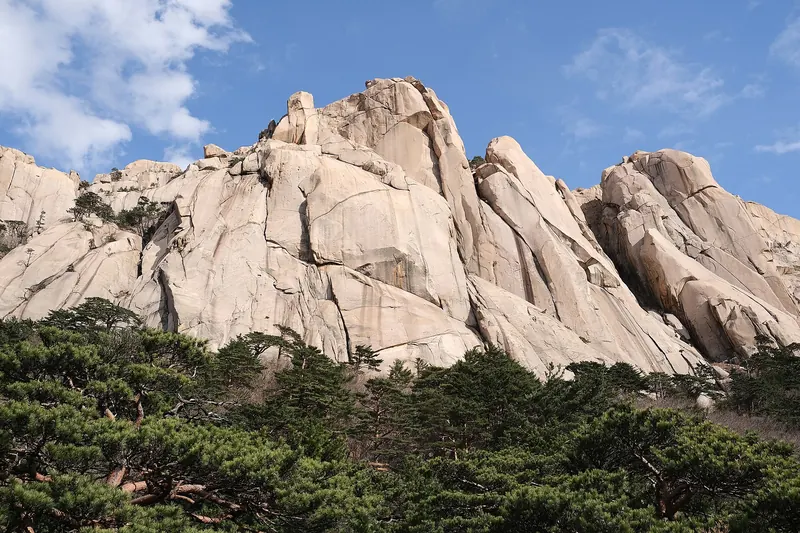
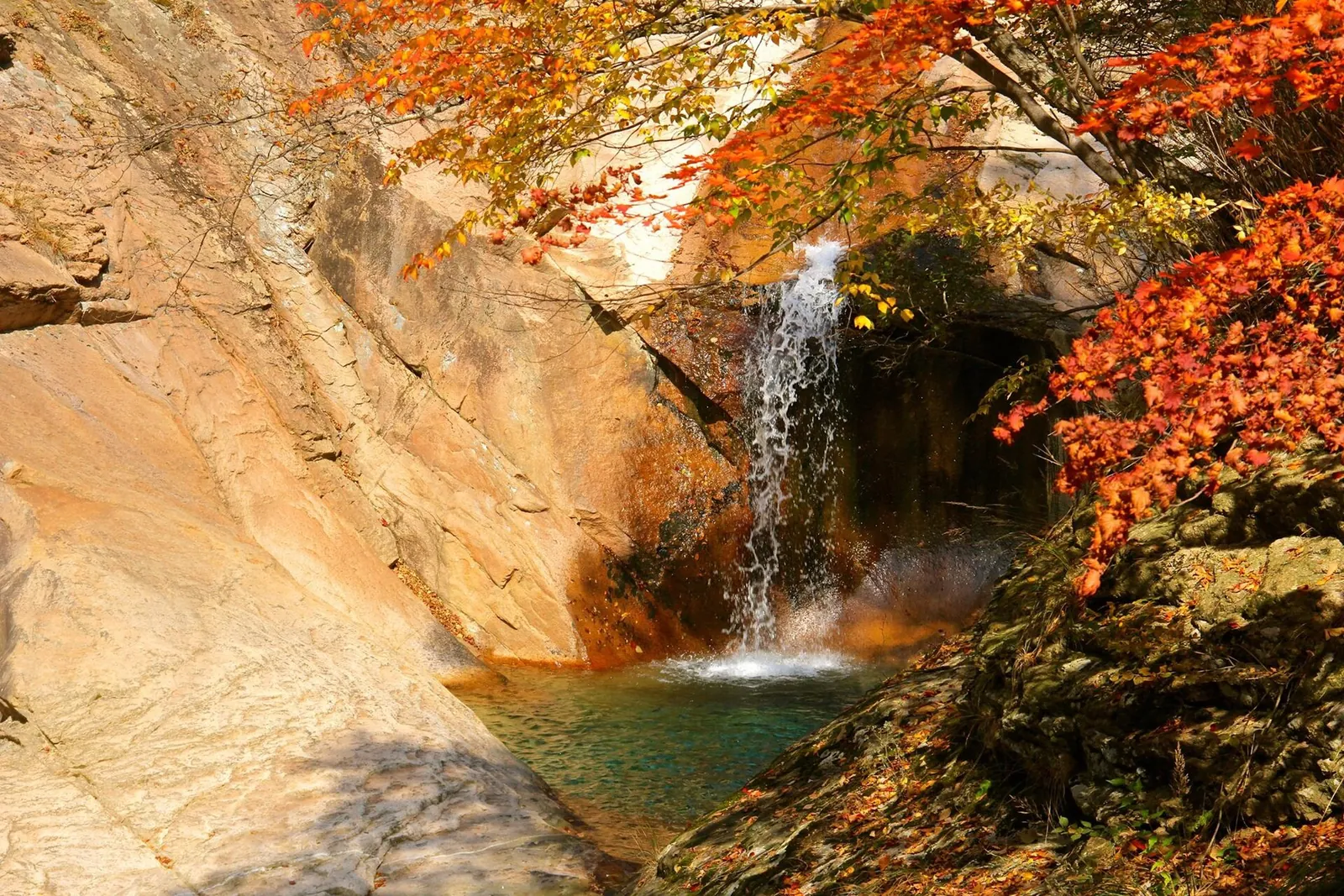
Seoraksan is the first big park to colour, and it rewards an overnight stay more than a day trip. Sleep in Seorak-dong at the park entrance or in Sokcho, and choose your Seoraksan by fitness: the cable car and the flat valley walk to Biseondae for an easy day, Ulsanbawi for a steep half-day, or Daecheongbong from Osaek for a hard summit day. Our Seoraksan guide has the routes in detail.
Two rules matter in the foliage season. First, trail entry hours: when we checked on 2026-10-03, the Korea National Park Service (KNPS) listed entry from Osaek towards Daecheongbong at 03:00–12:00 from April to October and 04:00–11:00 from November to March. Second, Heullimgol, the short valley walk on the Osaek side, runs on a reservation system in October and November, with entry from 09:00 to 14:00, according to the same KNPS page. Book it on the national park reservation site as soon as you know your date.
Seoraksan's upper trails also close for forest-fire prevention. VisitKorea listed the closure of the upper sections from Biseondae to Daecheongbong from 15 November to 15 December (and 2 March to 15 May), in a column last updated in September 2024, so a November summit attempt is not a safe plan.
Odaesan, south of Seoraksan in Pyeongchang, is the gentler alternative. VisitKorea describes the Seonjae-gil, a 9 km forest road from Woljeongsa to Sangwonsa once used by monks, as famous for its foliage along the valley and suitable for older walkers and families with children. It suits a day when you want colour without a climb. It is not a crowd-free choice, though: VisitKorea names Odaesan alongside Seoraksan as one of the packed autumn mountains, so go early.
Make time for the local food
What to eat and where to look
Sanchae bibimbap at Naejangsan
Rice mixed with mountain greens, mushrooms and other vegetables. Jeongeup city lists Naejangsan sanchae bibimbap as one of its three signature tastes, made with about ten ingredients, many of them wild-gathered greens.
- Where to look
- Restaurants in the Naejangsan tourist area at the park entrance and in central Jeongeup.
- Fit it into your day
- A late breakfast or lunch after an early walk to Naejangsa; it is filling without being heavy before the train back.
Usually served with gochujang and sesame oil; the side dishes may include fish sauce or salted seafood, so ask if you avoid them.
Buckwheat noodles in Yangyang and Sokcho
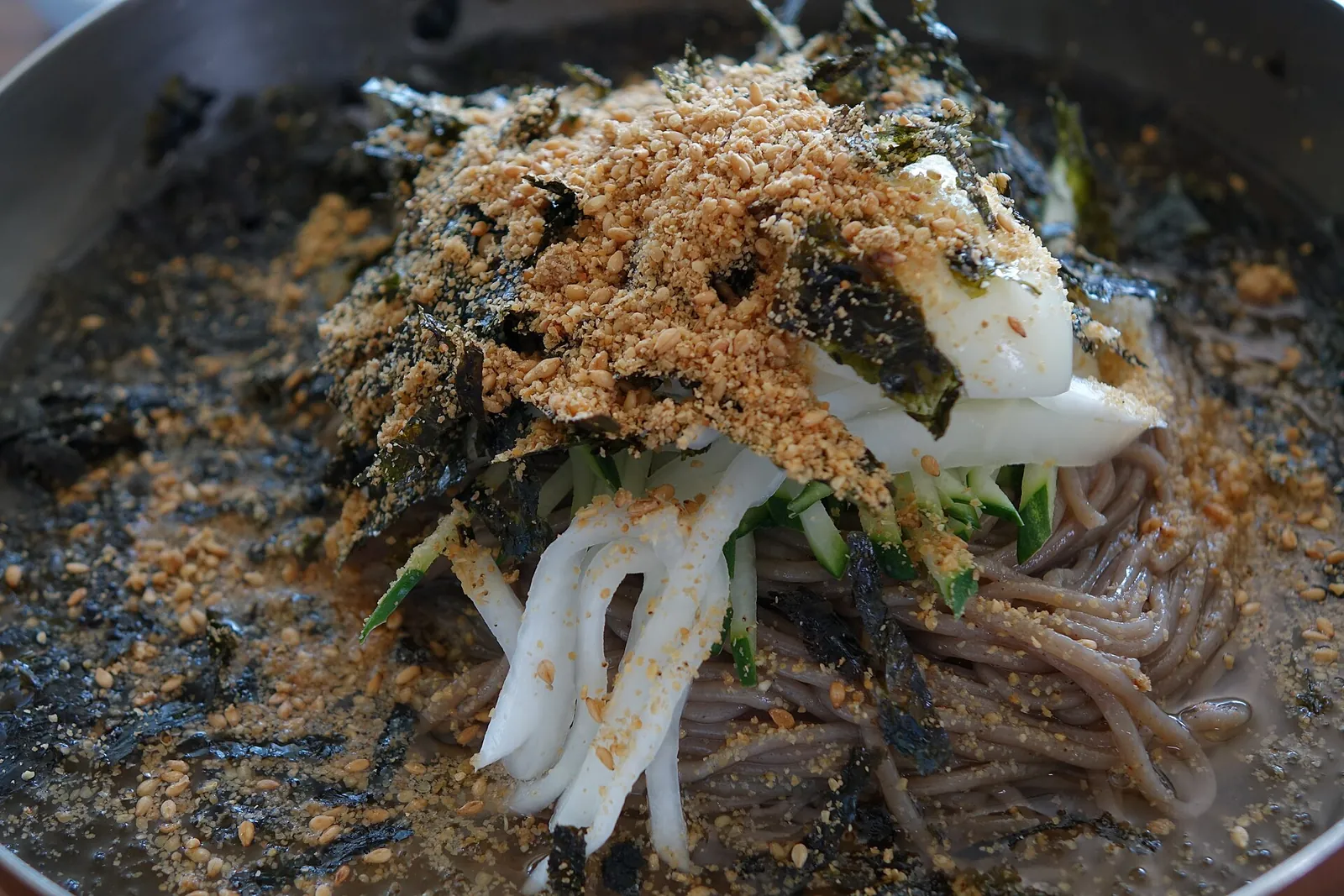
Buckwheat noodles (memil guksu or makguksu), served cold in broth or mixed with a spicy sauce. VisitKorea calls buckwheat noodles Yangyang's famous local specialty and points to restaurants near Osaek.
- Where to look
- Noodle restaurants around Osaek on the Yangyang side of Seoraksan and in Sokcho.
- Fit it into your day
- Lunch after a morning on the trail, or the meal before the bus back to Seoul.
Buckwheat is a common allergen, and the noodles may also contain wheat flour; ask if you avoid gluten.
Jatguksu in Gapyeong
Noodles in a cold soup of finely ground pine nuts, garnished with cucumber. VisitKorea describes it as a folk dish of Gapyeong, a well-known pine-nut growing area, richer and cleaner in taste than the soybean version.
- Where to look
- Local restaurants in Gapyeong town and on the roads towards the Garden of Morning Calm.
- Fit it into your day
- Lunch between Nami Island and the Garden of Morning Calm. It is traditionally a summer dish, so ask whether it is still on the menu in November.
Contains pine nuts; not suitable for nut allergies.
Cheongsong apples
Cheongsong in North Gyeongsang is known for its apples, and VisitKorea describes the apple festival as held in autumn when they are at their peak. It listed the Cheongsong Apple Festival for 4–8 November 2026.
- Where to look
- Roadside stalls and markets in Cheongsong, and the festival itself.
- Fit it into your day
- A snack to carry on a Juwangsan valley walk.
Festival details on VisitKorea were based on the 2025 edition when we checked; confirm the programme on csapplefestival.kr.
Early November: Seoul, Bukhansan and Gapyeong
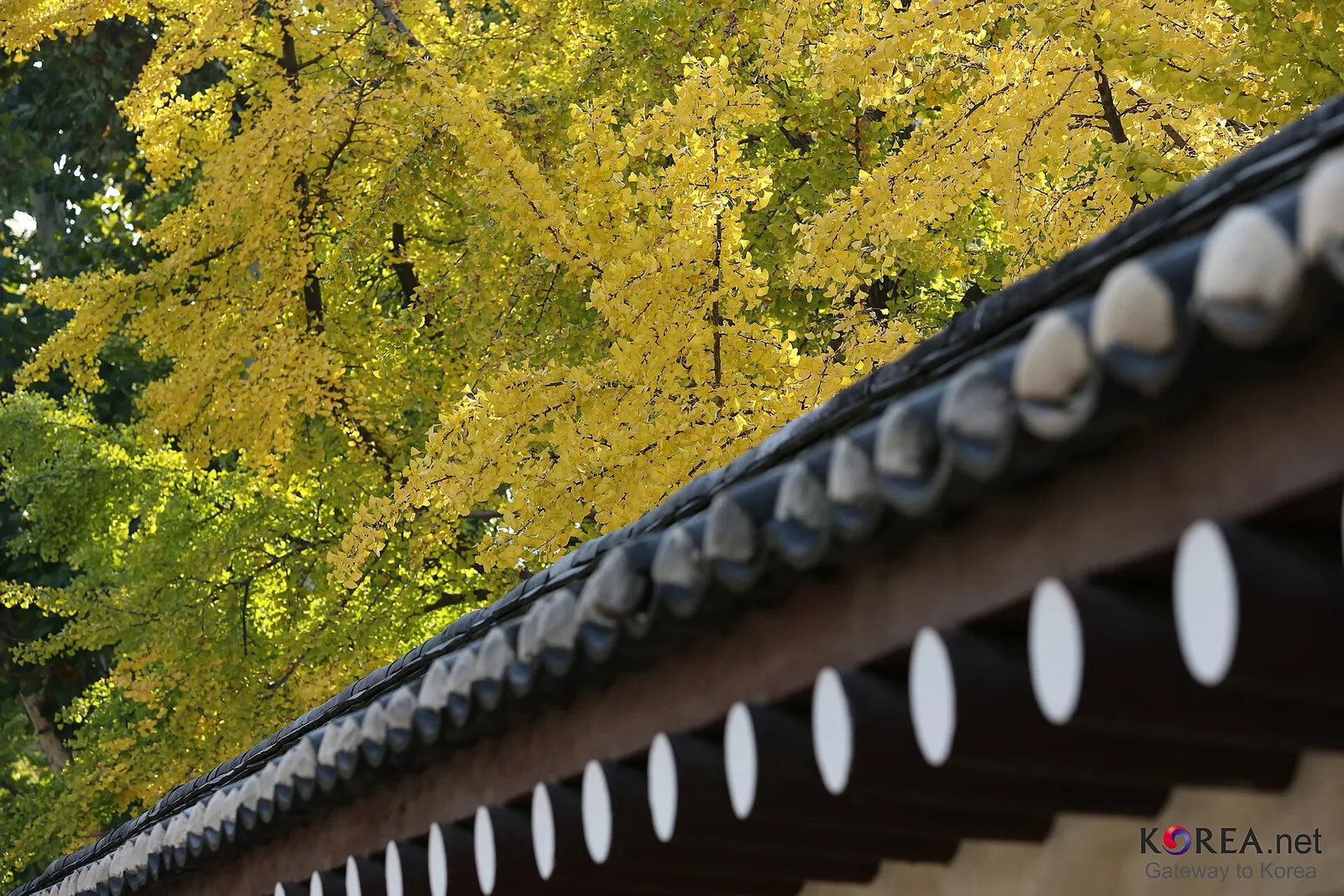
Seoul colours later than Gangwon, which makes the capital the natural middle stage of a foliage trip. The 2026 forecast expected Bukhansan, the mountain park on Seoul's northern edge, to peak around 4 November, and named Gyeongbokgung Palace, Seoul Forest, Olympic Park and N Seoul Tower as the city's popular foliage spots. These need no planning beyond the subway.
For something less obvious inside the city, VisitKorea's guide to Seoul's autumn forests picks Seoul Forest in Seongsu-dong for its metasequoia and ginkgo trees turning gold, Olympic Park for the path along Seongnaecheon Stream that is also called the Fall Foliage Path, Haneul Park above World Cup Stadium for its hilltop silver grass, the Dream Forest in Gangbuk for easy paths lined with oak and maple, and Seokchonhosu Lake by Jamsil for cherry trees that turn crimson. The column was last updated in August 2025.
Just outside Seoul, the forecast lists Nami Island and The Garden of Morning Calm, both in the Gapyeong area, among the famous foliage attractions on the city's outskirts. When we checked on 2026-10-03, VisitKorea listed Nami Island as open 08:00–21:00 with ferries from Gapyeongnaru Pier, and noted longer opening hours in the fall foliage season; it listed the Garden of Morning Calm as open 08:30–19:00. Both are at their busiest on autumn weekends. Our Gapyeong guide covers trains, ferries and where to stay.
Mid-November: Naejangsan, Baegyangsa and the south-west
VisitKorea calls Naejangsan the best mountain in Korea for autumn foliage, and its nickname, the Geumgang of Honam, refers to the same fame. The 2026 forecast expected its peak around 11 November, the last of the mainland mountains on the list. That makes it the natural end of a trip that starts in Gangwon; expect the weekends around the peak to be very busy.
Go by train. VisitKorea's rail guide notes that Jeongeup Station on the Honam Line is especially famous in autumn for hikers heading to Naejangsan, and its Jeongeup page says that at the foliage peak the KTX makes the trip much easier and avoids traffic jams. The Honam Line starts at Yongsan Station in Seoul. Sleep in Jeongeup or at the park entrance in Naejang-dong so you can be on the trail early. When we checked on 2026-10-03, KNPS listed entry at the Naejangsan trailheads from 05:00 to 15:00 from November to March (04:00–16:00 from April to October), so a mid-November hike has to start by mid-afternoon at the latest. Our Naejangsan guide has the walks around Naejangsa and the cable car.
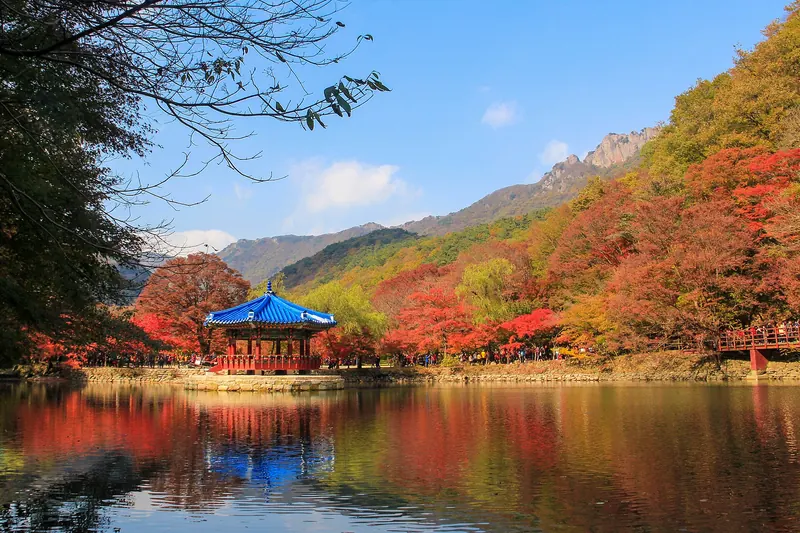
On the Jangseong side of the same park, Baegyangsa is a 6th-century temple where, VisitKorea writes, a forest path leads to a lake overlooked by Ssanggyeru Pavilion, a famous autumn scene. When we checked, VisitKorea listed it as open 24 hours with an adult admission of 3,000 won, and the temple runs temple stays booked through baekyangsa.templestay.com, a calmer way to be there at dawn.
Quieter alternatives to the famous valleys
In a feature on less crowded foliage destinations, VisitKorea suggests five places that work well when the big parks are packed. The column was last updated in August 2025, so check the current details on each official site before you go.
One more option is further away: Juwangsan National Park in Cheongsong, North Gyeongsang, a rocky park with valley walks to waterfalls. In autumn 2026 two notices matter. KNPS runs the 5.7 km Jeolgol entrance to Gamebong trail on a reservation system from 16 September to 14 November 2026, 09:00–18:00, for 1,350 people a day, booked at reservation.knps.or.kr; the notice warns of a fine of up to 500,000 won for entering without a booking. And the access road to Jusanji, the 18th-century reservoir with willows growing in the water, is closed from 25 August to 23 October 2026 for construction work, with parking at the Jusanji Theme Park car park and a walk in. Our Cheongsong guide has the detail.
- Hwadam Botanic Garden, Gwangju (Gyeonggi-do): an arboretum about 1 hour 30 minutes from Seoul by public transport, with gently sloping paths and a monorail loop. When we checked on 2026-10-03, VisitKorea listed 09:00–18:00 (last admission 17:00), closed on Mondays, with online reservation required and adult admission at 11,000 won. Taxi about 10 minutes from Gonjiam Station.
- Hongcheon Ginkgo Forest, Gangwon State: over 2,000 ginkgo trees on private land, open to the public only in October, 10:00–17:00 and free, according to VisitKorea. Check the county site (hongcheon.go.kr) for this year's dates before the long bus trip via Hongcheon and Nae-myeon.
- Seonunsa, Gochang (Jeonbuk State): an ancient temple best known for its spring camellias, with autumn colour along Dosolcheon Stream. Bus from Seoul's Central City terminal to Heungdeok, then about 20 minutes by local bus.
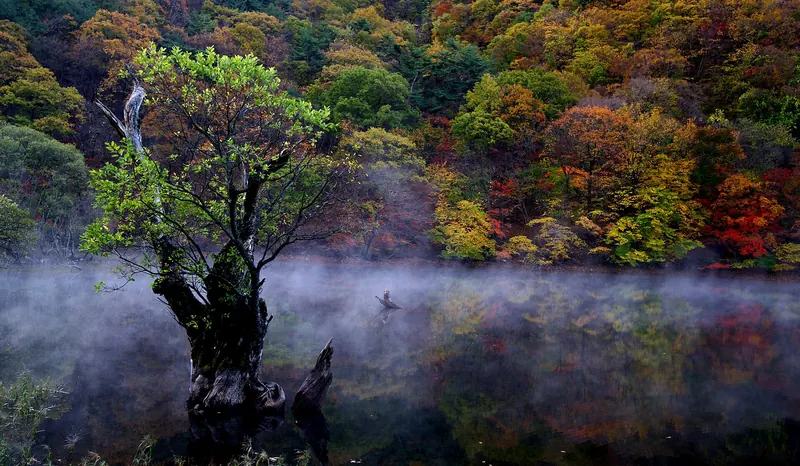
- Gwanbangjerim Forest, Damyang (Jeollanam-do): a 2 km forest along a 6 km embankment, best early in the morning when the autumn leaves meet the early morning fog. About 19 minutes' walk from Damyang Bus Terminal, and an easy add-on to a Naejangsan trip.
- Wondae-ri Birch Forest, Inje (Gangwon State): some 70,000 birch trees. VisitKorea listed it as closed on Mondays and Tuesdays, with last admission three hours before closing; it fits a Seoraksan trip.
Practical questions
When is the best time to see autumn leaves in South Korea?
From mid-October to early November, according to VisitKorea's 2026 forecast. The colour starts in the north-east at Seoraksan (peak around 25 October) and ends in the south-west at Naejangsan (around 11 November) and on Jeju's Hallasan (around 13 November). Actual dates depend on the weather.
Can I see autumn foliage in Seoul?
Yes. Seoul peaks later than Gangwon State; the 2026 forecast put Bukhansan's peak around 4 November. Gyeongbokgung Palace, Seoul Forest, Olympic Park and N Seoul Tower are the popular city spots, all reachable by subway.
Is Seoraksan or Naejangsan better for autumn colour?
They peak at different times, so your dates usually decide. Seoraksan is the late-October choice and a bigger mountain with harder hikes; Naejangsan is the mid-November choice, easier to reach by KTX to Jeongeup and with gentle walks around Naejangsa. VisitKorea calls Naejangsan the best mountain in Korea for autumn foliage.
How do I avoid the crowds in the foliage season?
Go on a weekday, be at the trailhead or ferry at opening time, and stay overnight near the park instead of coming on a day trip. Or choose a less famous place: VisitKorea suggests Hwadam Botanic Garden, Hongcheon Ginkgo Forest, Seonunsa, Gwanbangjerim Forest in Damyang and the Wondae-ri birch forest in Inje.
Do I need reservations for autumn hikes?
For some trails, yes. When we checked on 2026-10-03, KNPS ran Seoraksan's Heullimgol on reservations in October and November, and the Jeolgol to Gamebong trail in Juwangsan from 16 September to 14 November 2026. Book through reservation.knps.or.kr. Most main routes need no booking but have entry-time limits.
Are trails closed in late November?
Some are. Parks close certain trails for forest-fire prevention; VisitKorea listed Seoraksan's upper sections (Biseondae to Daecheongbong) as closed from 15 November to 15 December. Valley walks usually stay open, but check KNPS notices before you go.
Sources and checks before you travel
Reference sources for the version dated 3 October 2026. Confirm opening times, access, transport and conditions for your travel dates.
- VisitKorea: 2026 Fall Foliage Forecast ↗ — opens in a new tab
- VisitKorea: Korea's BEST 5 Fall Foliage Destinations ↗ — opens in a new tab
- VisitKorea: Seoul's Top 5 Fall Forests ↗ — opens in a new tab
- Korea National Park Service: trail entry hours (입산시간지정제) ↗ — opens in a new tab
- VisitKorea: Seoraksan hiking column (forest-fire closures) ↗ — opens in a new tab
- VisitKorea: Seonjaegil Trail ↗ — opens in a new tab
- VisitKorea: Nami Island ↗ — opens in a new tab
- VisitKorea: The Garden of Morning Calm ↗ — opens in a new tab
- VisitKorea: Naejangsan National Park ↗ — opens in a new tab
- VisitKorea: Jeongeup Naejangsan Special Tourist Zone ↗ — opens in a new tab
- VisitKorea: Train travel in Korea ↗ — opens in a new tab
- VisitKorea: Baegyangsa Temple ↗ — opens in a new tab
- VisitKorea: Hwadam Botanic Garden ↗ — opens in a new tab
- VisitKorea: Hongcheon Ginkgo Forest ↗ — opens in a new tab
- Juwangsan National Park office: 2026 trail reservation notice (No. 2026-25) ↗ — opens in a new tab
- Juwangsan National Park office: Jusanji access road closure ↗ — opens in a new tab
- VisitKorea: Jusanji Pond ↗ — opens in a new tab
- Jeongeup City: Naejangsan sanchae bibimbap ↗ — opens in a new tab
- VisitKorea: Yangyang travel column ↗ — opens in a new tab
- VisitKorea: Jatguksu (noodles in cold pine nut soup) ↗ — opens in a new tab
- VisitKorea: Cheongsong Apple Festival ↗ — opens in a new tab
- VisitKorea: Express and intercity buses ↗ — opens in a new tab
- VisitKorea: Incheon Airport transport ↗ — opens in a new tab
Photo credits
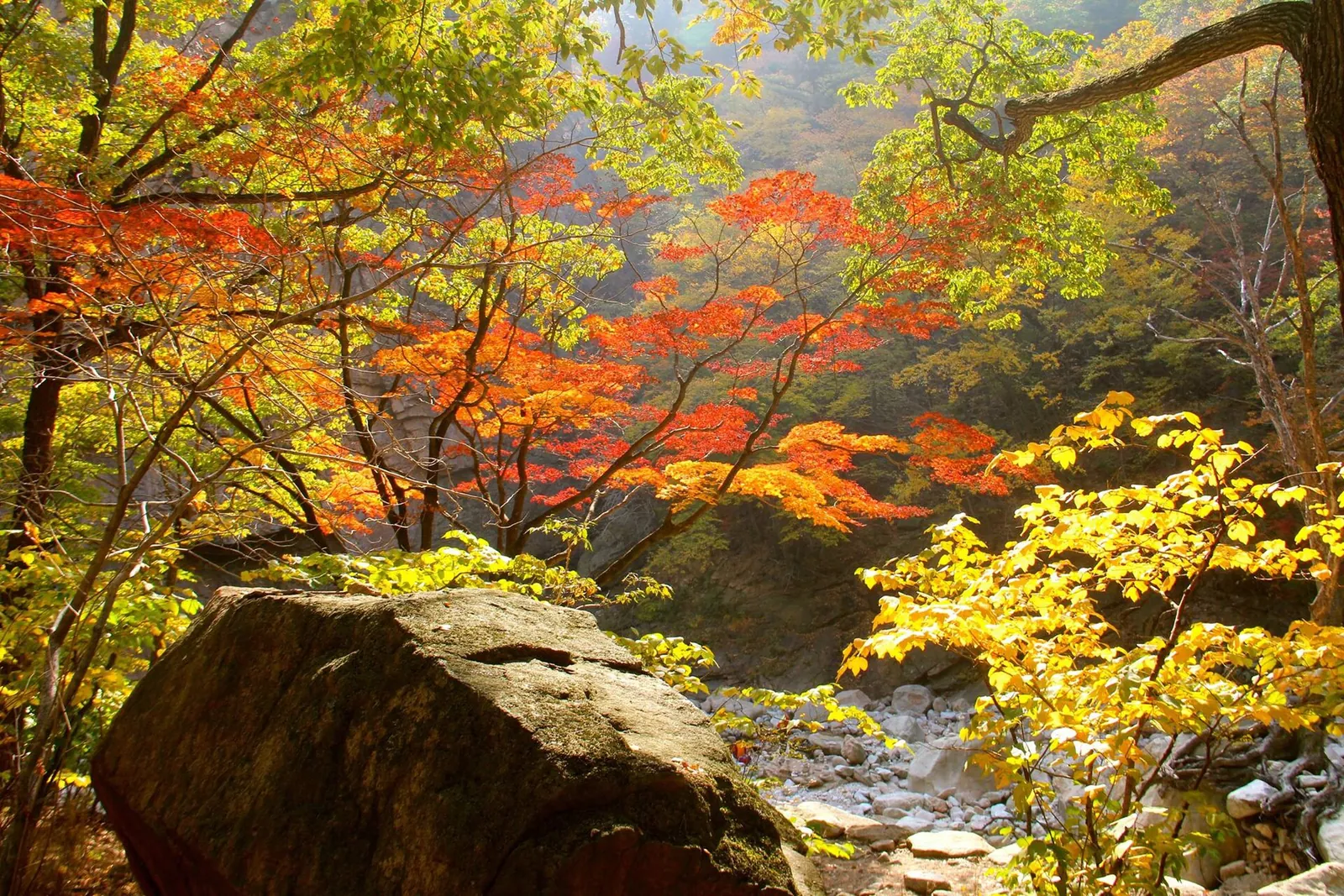
Autumn maples in a valley of Seoraksan National Park, the first big park to colour each year
Photograph: Joycekim77 — opens in a new tab · CC BY-SA 3.0 — opens in a new tab
Changes: Resized and converted to WebP; displayed with responsive crops. · Original photograph and licence details ↗ — opens in a new tab
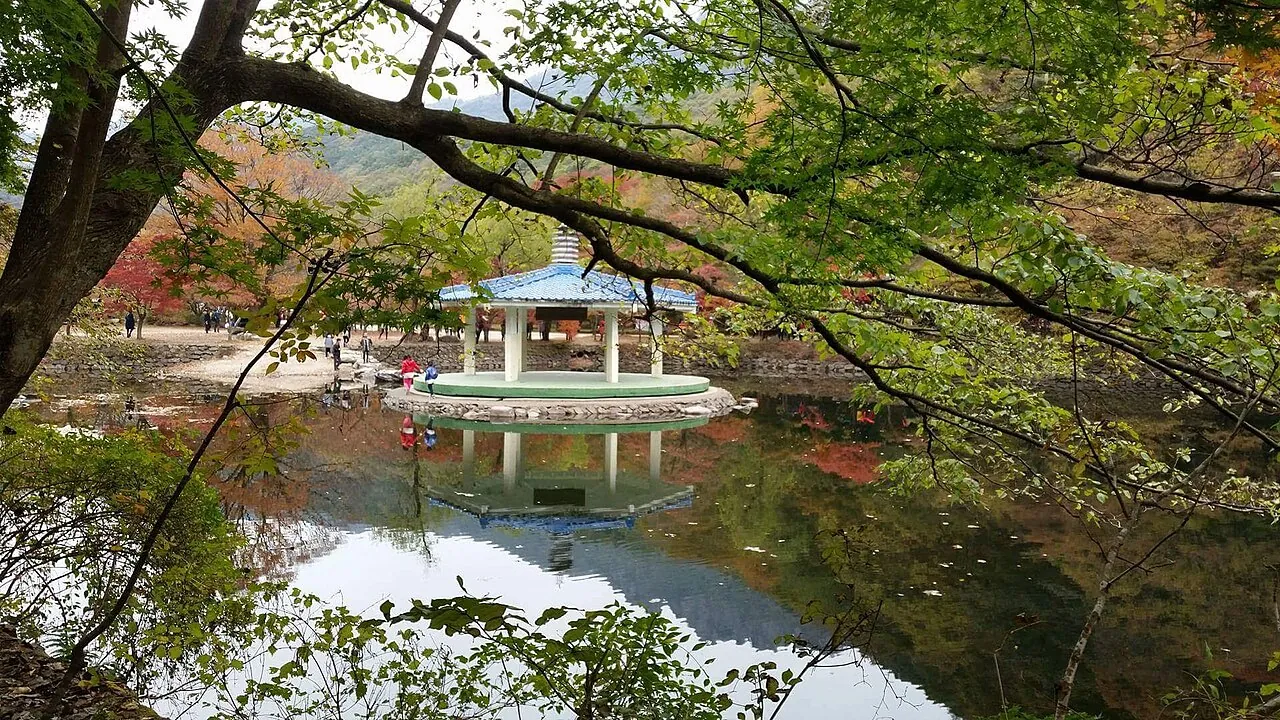
A pavilion on the lake at Naejangsan National Park in autumn
Photograph: Marcella Astrid — opens in a new tab · CC BY-SA 3.0 — opens in a new tab
Changes: Resized and converted to WebP; displayed with responsive crops. · Original photograph and licence details ↗ — opens in a new tab
Ginkgo trees turning gold above a wall of Gyeongbokgung Palace, Seoul, in late October
Photograph: Korea.net / Korean Culture and Information Service (Jeon Han) — opens in a new tab · CC BY-SA 2.0 — opens in a new tab
Changes: Resized and converted to WebP; displayed with responsive crops. · Original photograph and licence details ↗ — opens in a new tab
A waterfall framed by red maples in Seoraksan National Park
Photograph: Joycekim77 — opens in a new tab · CC BY-SA 3.0 — opens in a new tab
Changes: Resized and converted to WebP; displayed with responsive crops. · Original photograph and licence details ↗ — opens in a new tab
A bowl of makguksu; buckwheat noodles are a local speciality of Yangyang and Sokcho near Seoraksan
Photograph: 최광모 — opens in a new tab · CC0 — opens in a new tab
Changes: Resized and converted to WebP; displayed with responsive crops. · Original photograph and licence details ↗ — opens in a new tab