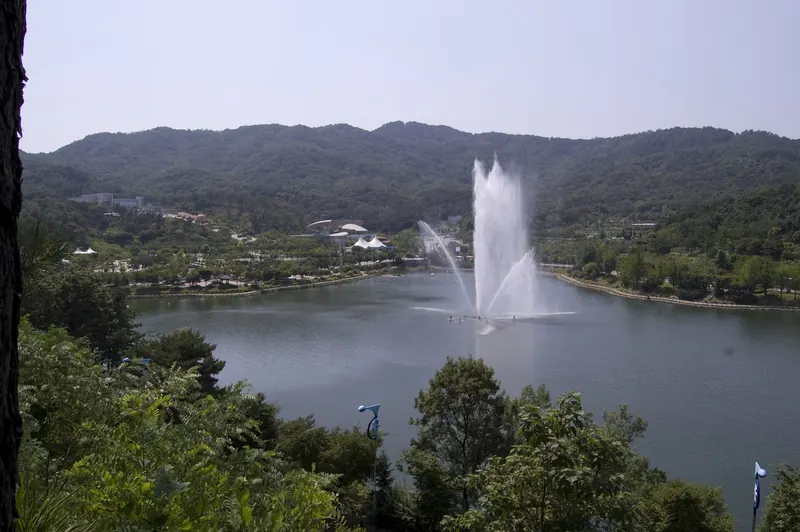
Chungcheong · North Chungcheong
Cheongju travel guide: Jikji, Sangdangsanseong and where to stay
Cheongju is where, in 1377, monks at Heungdeoksa Temple printed Jikji, the oldest surviving book made with movable metal type. The temple is gone, but its excavated site now holds the Cheongju Early Printing Museum, and that, more than any single building, is the reason to come. The rest of the city rewards a short stay built around three things: the 4.2-kilometre wall of Sangdangsanseong Fortress on the hills just outside the centre, the old downtown of Seongan-gil, Yukgeori Market and the Seomun Market pork-belly street, and the converted tobacco factory that now holds a national art museum and the city's craft collections. Cheongju also has its own international airport, which VisitKorea presents as a gateway to central Korea for flights from elsewhere in Asia.
- Suggested time
- 1–2 nights
- Where to stay
- Downtown Seongan-gil for markets, food and buses; Osong only for an early KTX; a hanok stay at Chojeong for a slower night near the airport
- Season and timing
- Spring and autumn suit the fortress walk best. VisitKorea's 2026 foliage forecast expects peak colour across the country from mid-October to early November. The Cheongju Craft Biennale has been held every two years since 1999; its 14th edition ran from 4 September to 2 November 2025 at Culture Factory. The museums, the covered Yukgeori Market and the art museum work in any weather.
The short answer
Give Cheongju one night, or two if you add Cheongnamdae or the Chojeong mineral spring. Sleep downtown around Seongan-gil: Bus 747 from Cheongju International Airport reaches it in under 30 minutes, and the market, the pork-belly street, Jungang Park and the Suamgol hillside are close by. Spend one morning at the Early Printing Museum and the Heungdeoksa site, one afternoon on the walls of Sangdangsanseong, and an evening at Seomun Market or Suamgol. Choose Cheongju over Daejeon as your base if you fly into Cheongju or want the Cheongju sights; choose Daejeon if you are arriving by KTX on the Seoul–Busan line.
Cheongju or Daejeon: which base, and where in Cheongju
The two cities are close and linked: VisitKorea gives about 50 minutes from Cheongju Station or Cheongju Airport Station to Daejeon Station by ITX or Mugunghwa train on the Chungbuk Line. The choice depends on how you arrive. Daejeon Station is on the main Gyeongbu Line between Seoul and Busan, and Daejeon is the better base for KTX journeys and for Gongju and Buyeo. Cheongju's own KTX stop is Osong, on the high-speed lines but outside the city centre, and not every KTX stops there. Cheongju wins if you fly into Cheongju International Airport, if the printing museum and the fortress are the point of your trip, or if you want Cheongnamdae and Chojeong, which are on this side.
Within Cheongju, stay downtown around Seongan-gil. VisitKorea describes it as the city's car-free shopping street, with Jungang Park and restaurants beside it; Yukgeori Market, Seomun Market's pork-belly street and the Suamgol café hillside are all in the same district of Sangdang-gu, and the airport's 747 bus runs here. Osong is only worth it for a very early high-speed train. For something slower, the Chojeong Haenggung hanok stay near the mineral spring has 12 rooms, according to VisitKorea, and is a short drive from the airport; check how you will get back into the city before you book.
Jikji and the Early Printing Museum on the Heungdeoksa site
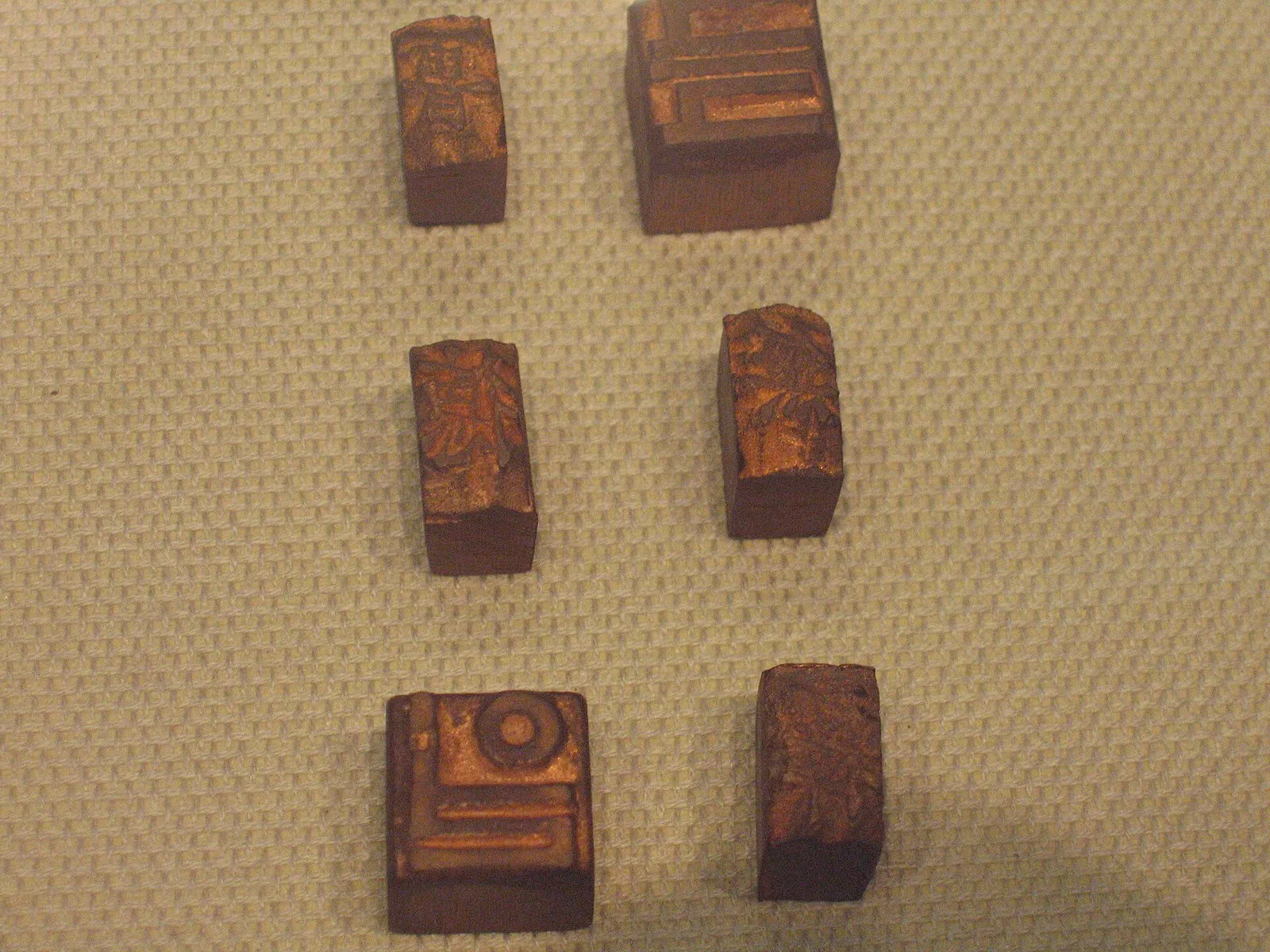
The temple site came to light in 1985, when a land development project turned up relics and the Cheongju University Museum excavated the site. The colophon of Jikji (Buljo Jikji Simche Yojeol, an anthology of Zen teachings) records that it was printed with metal type at Heungdeoksa in 1377; VisitKorea notes this is 78 years before Gutenberg. Only the second volume of the metal-printed edition survives, and it is in the National Library of France, not in Cheongju. UNESCO inscribed it on the Memory of the World Register in 2001, and the city awards the UNESCO/Jikji Memory of the World Prize with UNESCO.
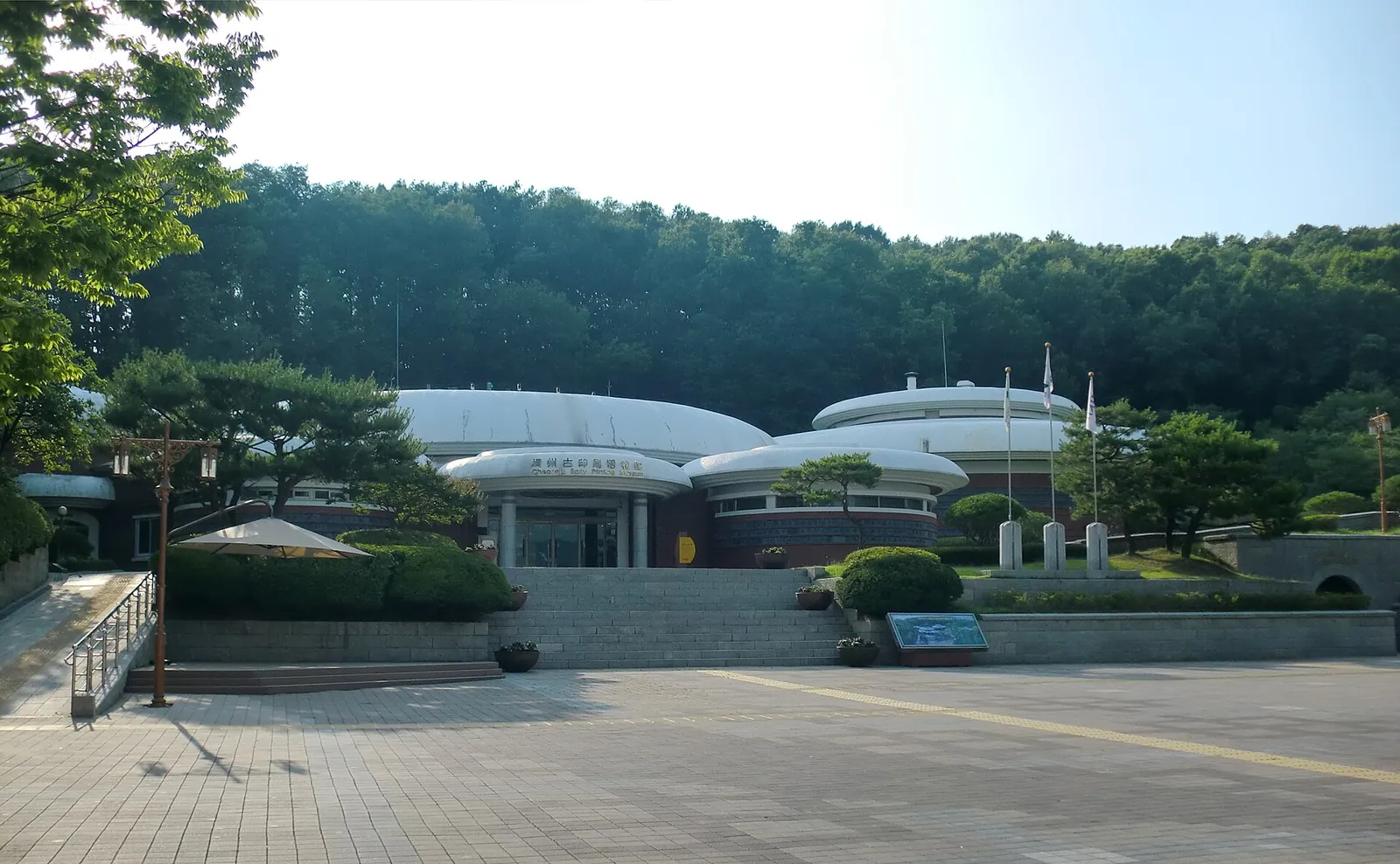
The Cheongju Early Printing Museum opened on the temple site on 17 March 1992, at 713 Jikji-daero in Heungdeok-gu. VisitKorea says it shows about 650 artefacts, including Goryeo and Joseon books printed with metal and wooden type, finds from the Heungdeoksa site and printing tools; a separate Exhibition Center for Modern and Contemporary Printing follows the story from lead type at the end of the 19th century to today, and printing classes are offered for children, families and adults. Allow two hours for both, and walk the excavated temple site outside.
When we checked on 3 October 2026, VisitKorea's current listing gave hours of 9:00 to 18:00, closed on Mondays and 1 January, with guided tours between 10:00 and 17:00 booked at the information desk or by phone, and free admission. An older VisitKorea page for the same museum lists adult admission at 800 won, last entry an hour before closing, and closures over Seollal and Chuseok, while the newer one says the museum closes at 14:00 on those holiday days. Check before you go on a holiday.
Make time for the local food
What to eat and where to look
Cheongju-style samgyeopsal (soy-dipped pork belly)
Cheongju's local version of grilled pork belly: VisitKorea describes the meat dipped in soy sauce before it goes on the grill and eaten with spicy seasoned green onions.
- Where to look
- Seomun Market Samgyeopsal Street, 18 Musimdong-ro 392beon-gil, Sangdang-gu, where a whole street of restaurants serves it.
- Fit it into your day
- The main dinner of a Cheongju stay; it is a grill-at-the-table meal best shared by two or more.
Pork, and soy sauce usually contains wheat. Hours vary by restaurant.
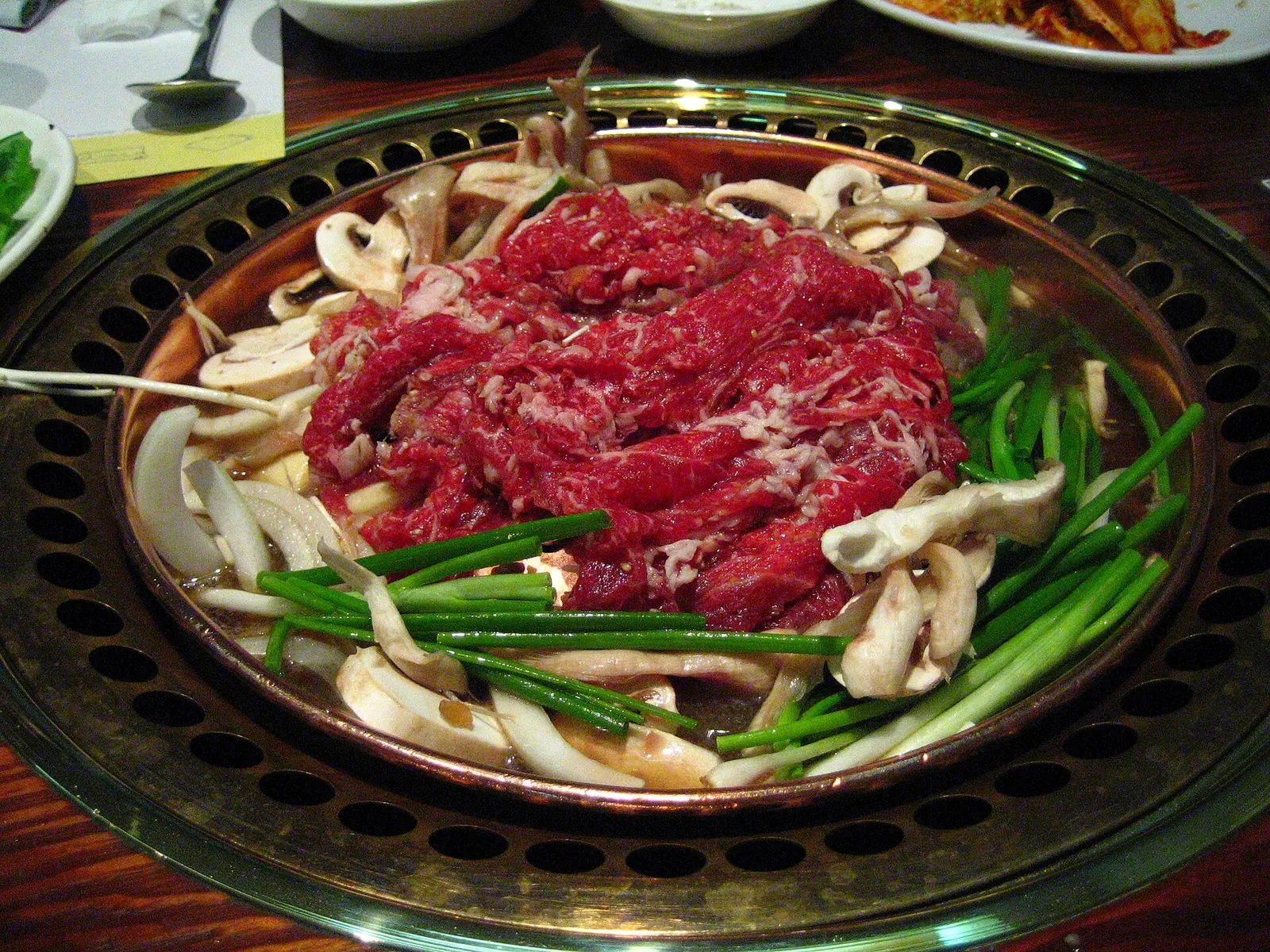
Korean beef bulgogi
Thin slices of marinated Korean beef, grilled or cooked in a shallow pan. VisitKorea lists Suijae1928, a bulgogi specialist with a traditional Korean interior, where Korean beef bulgogi is the signature and a Korean beef tartare bibimbap is also on the menu.
- Where to look
- Suijae1928, 308 Jikji-daero, Heungdeok-gu, on the same road as the Early Printing Museum; VisitKorea listed hours of 11:00 to 21:00.
- Fit it into your day
- Lunch on the museum morning.
The marinade is sweet and soy-based; the tartare bibimbap contains raw beef.
Hanjeongsik (Korean course meal)
A full Korean table of many dishes served in sequence. VisitKorea describes Ihak Hanjeongsik's courses running from porridge through seasonal kimchi and salad, seafood, meat, soup and braised dishes to a finishing pot of rice, with a wild-vegetable bibimbap set as the simpler option.
- Where to look
- Ihak Hanjeongsik, 22 Andeokbeol-ro, Cheongwon-gu; VisitKorea listed 11:30 to 21:30, closed on Sundays.
- Fit it into your day
- A sit-down dinner for a group or a special occasion.
VisitKorea says reservations are mandatory. Courses include seafood and meat; ask in advance about dietary needs.
Chojeong sparkling mineral water
Naturally carbonated water from the Chojeong spring north-east of the city, known since the Joseon period; VisitKorea describes its taste as sharp and cool.
- Where to look
- Chojeong Mineral Spring in Chojeong-ri, Cheongwon-gu, where drinking is free; VisitKorea listed drinking hours of 8:00 to 21:00.
- Fit it into your day
- A stop on the airport-side day with Unbo's House and the Chojeong Haenggung foot bath.
Treat the health claims made for the water as tradition, not medical advice.
Sangdangsanseong: an afternoon on the walls
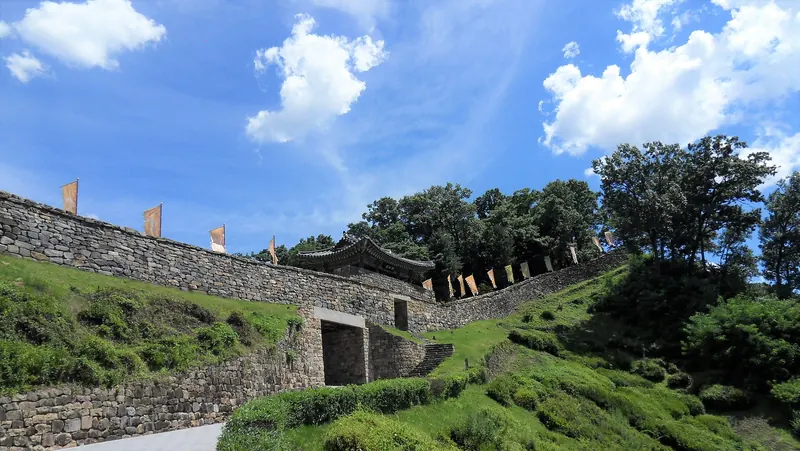
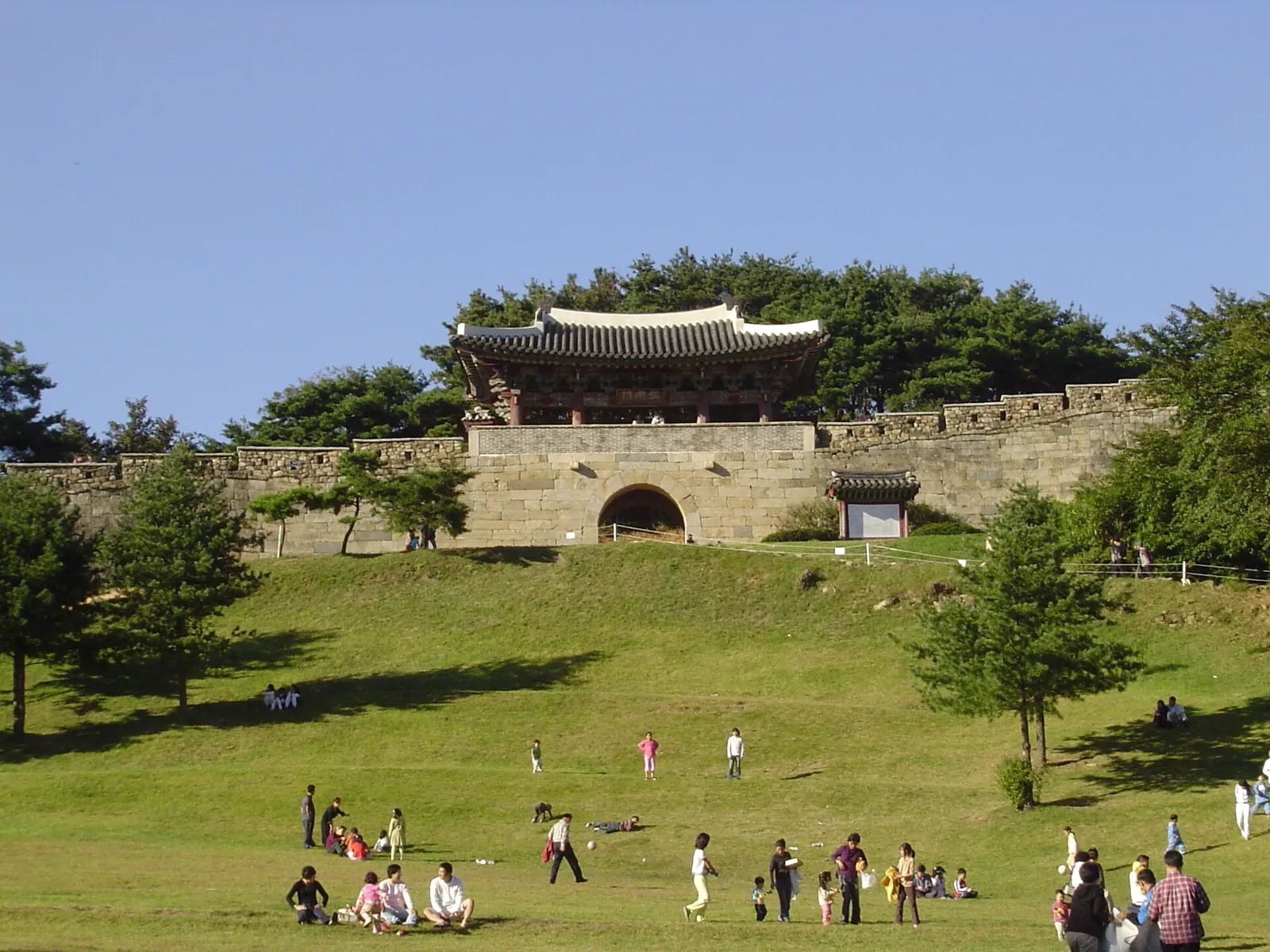
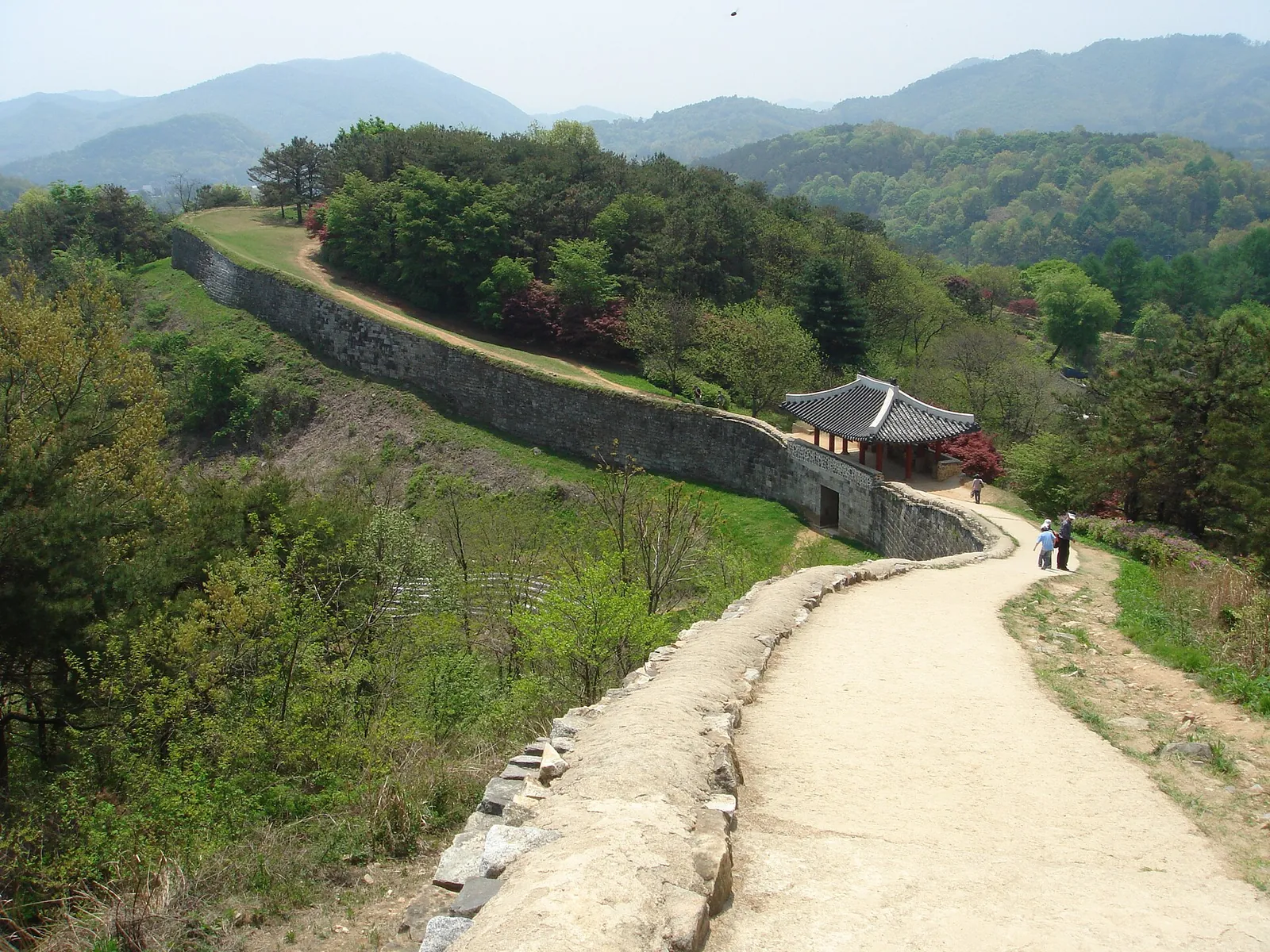
Sangdangsanseong is built along the natural slopes of the hills just outside downtown Cheongju. VisitKorea describes a wall 4.2 kilometres long and 3 to 4 metres high, overhauled in 1596 during the Japanese invasions and rebuilt in stone in the reign of King Sukjong. All three gates, east, west and south, survive with their gate towers: the south gate, Gongnammun, is crescent-shaped, the other two square. East and West command posts stand inside, and the fortress has been Historic Site No. 212 since 1970.
The full loop on top of the wall gives views back over the city; the 2026 VisitKorea feature calls it an easy walk and notes that historical dramas, including The King's Affection, have been filmed here. When we checked, VisitKorea listed the fortress as open 24 hours and free, at 70 Seongnae-ro in Sangdang-gu. Inside the walls is a small village where, VisitKorea says, you can try local dishes and jujube wine. Go in the afternoon, start at Gongnammun, and wear walking shoes.
Back in the centre, Jungang Park is the quick heritage stop: VisitKorea describes a ginkgo tree about 30 metres high and close to a thousand years old, and Mangseollu, a Goryeo-period pavilion that is the oldest wooden building in Cheongju.
Culture Factory, MMCA Cheongju and Unbo's House
Cheongju calls itself a craft city, and the clearest place to see why is Culture Factory at 314 Sangdang-ro. VisitKorea says it was a tobacco factory from 1946 to 2004 and reopened as a cultural complex in 2021, keeping the original columns, frame and chimney. The Korean Craft Museum on the third and fourth floors runs free craft exhibitions, and the Cheongju Open Library is on the fifth floor. The Craft Biennale uses the building in its years.
In the same complex, the Museum of Modern and Contemporary Art Cheongju (MMCA Cheongju) is Korea's first open-storage art museum: storage rooms normally closed to visitors are open, so you walk among the national collection's works rather than past a hang. When we checked, VisitKorea listed it as free, open 10:00 to 18:00 and closed on Mondays.
Unbo's House, in Naesu-eup on the airport side of the city, is the hanok home where the painter Kim Ki-chang spent his later years; he painted the King Sejong portrait on the 10,000-won note. The museum on site shows his work and that of his wife, Park Rehyun, and the garden is a K-drama filming location (Mr. Sunshine). When we checked, VisitKorea listed adult admission at 6,000 won, closure on Mondays, and April to October hours of 9:30 to 17:30 on weekdays and to 18:00 at weekends, with last entry an hour before closing. It pairs well with Chojeong on an arrival or departure day: VisitKorea places both within a 20-minute drive of a villa ten minutes from the airport.
Markets, Suamgol and the pork-belly street
Cheongju Yukgeori Market began in the Joseon period beside the Musimcheon stream and has carried its present name since 1973. VisitKorea's 2026 feature counts more than 1,200 shops and stalls and calls it one of Korea's five largest traditional markets; it is open daily, with an early-morning farmers' market and a larger five-day market on dates ending in 2 and 7. When we checked, VisitKorea's listing gave hours of 9:00 to 22:00 and an arcade over the lanes.
Seomun Market Samgyeopsal Street, opened in 2012 in Seomun Market, west of the Seomun-dong intersection, is the dinner stop: VisitKorea describes Cheongju-style pork belly that is dipped in soy sauce before grilling and served with spicy seasoned green onions. Hours vary by restaurant.
Suamgol, on the slopes of Uamsan above the centre, began as a hillside village settled by refugees after the Korean War. Its lanes are now painted with murals, and a row of large cafés with terraces on the road above looks over downtown, which is the reason to come at dusk. It is a residential area: VisitKorea asks visitors not to come after 21:00.
Further out: Cheongnamdae and the Chojeong mineral spring
Cheongnamdae, near Daecheong Dam in Cheongju's Sangdang-gu, was a private retreat for Korea's presidents from 1983 until it opened to the public on 18 April 2003. VisitKorea's 2026 feature mentions a Presidential Memorial Hall built at 60 percent of the size of Cheong Wa Dae and six forest trails. When we checked, VisitKorea listed February to November hours of 9:00 to 18:00, last admission an hour and a half before closing, closure on Mondays and over the Seollal and Chuseok holidays, and adult admission at 5,000 won. It is well outside the centre, so give it half a day and check transport before you set off.
Chojeong Mineral Spring, about 16 kilometres north-east of Cheongju, produces naturally carbonated water; VisitKorea says King Sejong came here in 1444 to treat an eye condition. Drinking from the spring is free, and VisitKorea listed drinking hours of 8:00 to 21:00. The neighbouring Chojeong Haenggung, opened in June 2020 on the site of the king's temporary palace, is a hanok stay with an outdoor foot bath that uses the mineral water; the 2026 feature describes the foot bath as free.
A workable Cheongju stay
This is an editorial suggestion, not a timetable. Most museums close on Mondays, so do not plan the printing museum, MMCA or Cheongnamdae for that day.
- Arrival: from the airport, Unbo's House and the Chojeong spring if you land early; otherwise the 747 bus downtown, Seongan-gil and Jungang Park, then pork belly at Seomun Market.
- Day 1 morning: the Early Printing Museum and the Heungdeoksa site; Culture Factory and MMCA Cheongju after lunch if you have energy for both.
- Day 1 late afternoon: the walls of Sangdangsanseong from Gongnammun, then Suamgol's café terraces at dusk.
- Day 2 (optional): Cheongnamdae, or Yukgeori Market in the morning before moving on.
- Moving on: the Chungbuk Line to Daejeon, the KTX from Osong, or the C-Tour Bus from the airport to Gongju and Buyeo.
Practical questions
Is Cheongju worth visiting?
Yes, for one or two nights, especially if you fly into Cheongju International Airport or care about the history of printing. The Early Printing Museum on the Heungdeoksa site, the walls of Sangdangsanseong and an evening of soy-dipped pork belly at Seomun Market make a full day.
Can I see the original Jikji in Cheongju?
No. The only surviving volume of the 1377 metal-printed edition is held by the National Library of France. The Early Printing Museum, built on the site of Heungdeoksa where it was printed, tells its story and shows early Korean metal and wooden type and printed books.
Should I stay in Cheongju or Daejeon?
Stay in Cheongju if you fly into Cheongju airport or want the Cheongju sights, Cheongnamdae and Chojeong. Stay in Daejeon if you are travelling by KTX between Seoul and Busan or going on to Gongju and Buyeo. VisitKorea gives about 50 minutes between the two by ITX or Mugunghwa train.
How do I get from Cheongju airport to the city centre?
VisitKorea says express bus 747 and a local bus from the stop outside the terminal reach downtown, including Seongan-gil, in under 30 minutes, and a taxi takes about 20 minutes. Cheongju Airport Station on the Chungbuk Line is about a 10-minute walk, and bus 747 or B3 goes to Osong for the KTX.
Is the Early Printing Museum free?
VisitKorea's current listing says admission is free; an older VisitKorea page lists 800 won for adults. Either way it is closed on Mondays, and holiday hours differ, so check before going.
How long does the Sangdangsanseong walk take?
We could not find an official walking time. The wall is 4.2 kilometres long, so plan an unhurried afternoon for the full circuit, or walk a section from the south gate and come back.
Sources and checks before you travel
Reference sources for the version dated 3 October 2026. Confirm opening times, access, transport and conditions for your travel dates.
- VisitKorea: Korea Beyond Seoul — Cheongju and central Korea (updated June 2026) ↗ — opens in a new tab
- VisitKorea: Cheongju Early Printing Museum ↗ — opens in a new tab
- VisitKorea: Cheongju Early Printing Museum (Heungdeoksaji Temple Site) ↗ — opens in a new tab
- VisitKorea: Cheongju Heungdeoksa Temple Site ↗ — opens in a new tab
- Wikipedia: Jikji ↗ — opens in a new tab
- VisitKorea: Cheongju Sangdangsanseong Fortress ↗ — opens in a new tab
- VisitKorea: Cheongju Jungang Park ↗ — opens in a new tab
- VisitKorea: Cheongju Seongan-gil Fashion Street ↗ — opens in a new tab
- VisitKorea: Cheongju Yukgeori Market ↗ — opens in a new tab
- VisitKorea: Seomun Market Samgyeopsal Street ↗ — opens in a new tab
- VisitKorea: Suamgol Mural Village and Café Street ↗ — opens in a new tab
- VisitKorea: Culture Factory ↗ — opens in a new tab
- VisitKorea: MMCA Cheongju ↗ — opens in a new tab
- VisitKorea: Unbo's House ↗ — opens in a new tab
- VisitKorea: Cheongnamdae Presidential Villa ↗ — opens in a new tab
- VisitKorea: Chojeong Mineral Spring ↗ — opens in a new tab
- VisitKorea: Chojeong Haenggung ↗ — opens in a new tab
- VisitKorea: Explore Korea's premier art festivals (2025) ↗ — opens in a new tab
- VisitKorea: 2026 Fall Foliage Forecast ↗ — opens in a new tab
- VisitKorea: Suijae1928 and Ihak Hanjeongsik ↗ — opens in a new tab
- VisitKorea: Airport transportation guide ↗ — opens in a new tab
- VisitKorea: Train travel in Korea ↗ — opens in a new tab
- VisitKorea: Express and intercity buses ↗ — opens in a new tab
- Wikipedia: Osong station ↗ — opens in a new tab
Does this experience fit your route?
Cheongju needs no tour: the airport bus, city buses and short taxi rides cover it. A guided day from Seoul makes more sense for the Baekje towns further south if you are not staying in the region.
Browse relevant experiences on Viator ↗ — opens in a new tabAffiliate link · Book with ViatorPhoto credits
Gongnammun, the crescent-arched south gate of Sangdangsanseong Fortress, with visitors on the lawn below
Photograph: Hutch1225 — opens in a new tab · Public domain — opens in a new tab
Changes: Resized and converted to WebP; displayed with responsive crops. · Original photograph and licence details ↗ — opens in a new tab
The walking path along Sangdangsanseong's 4.2-kilometre wall
Photograph: ja:User:Sonata — opens in a new tab · CC BY-SA 3.0 — opens in a new tab
Changes: Resized and converted to WebP; displayed with responsive crops. · Original photograph and licence details ↗ — opens in a new tab
The Cheongju Early Printing Museum, on the site of Heungdeoksa Temple, where Jikji was printed in 1377
Photograph: hyolee2 — opens in a new tab · CC BY-SA 3.0 — opens in a new tab
Changes: Resized and converted to WebP; displayed with responsive crops. · Original photograph and licence details ↗ — opens in a new tab
Antique metal type on display at the Cheongju Early Printing Museum
Photograph: Ken Eckert — opens in a new tab · CC BY-SA 4.0 — opens in a new tab
Changes: Resized and converted to WebP; displayed with responsive crops. · Original photograph and licence details ↗ — opens in a new tab
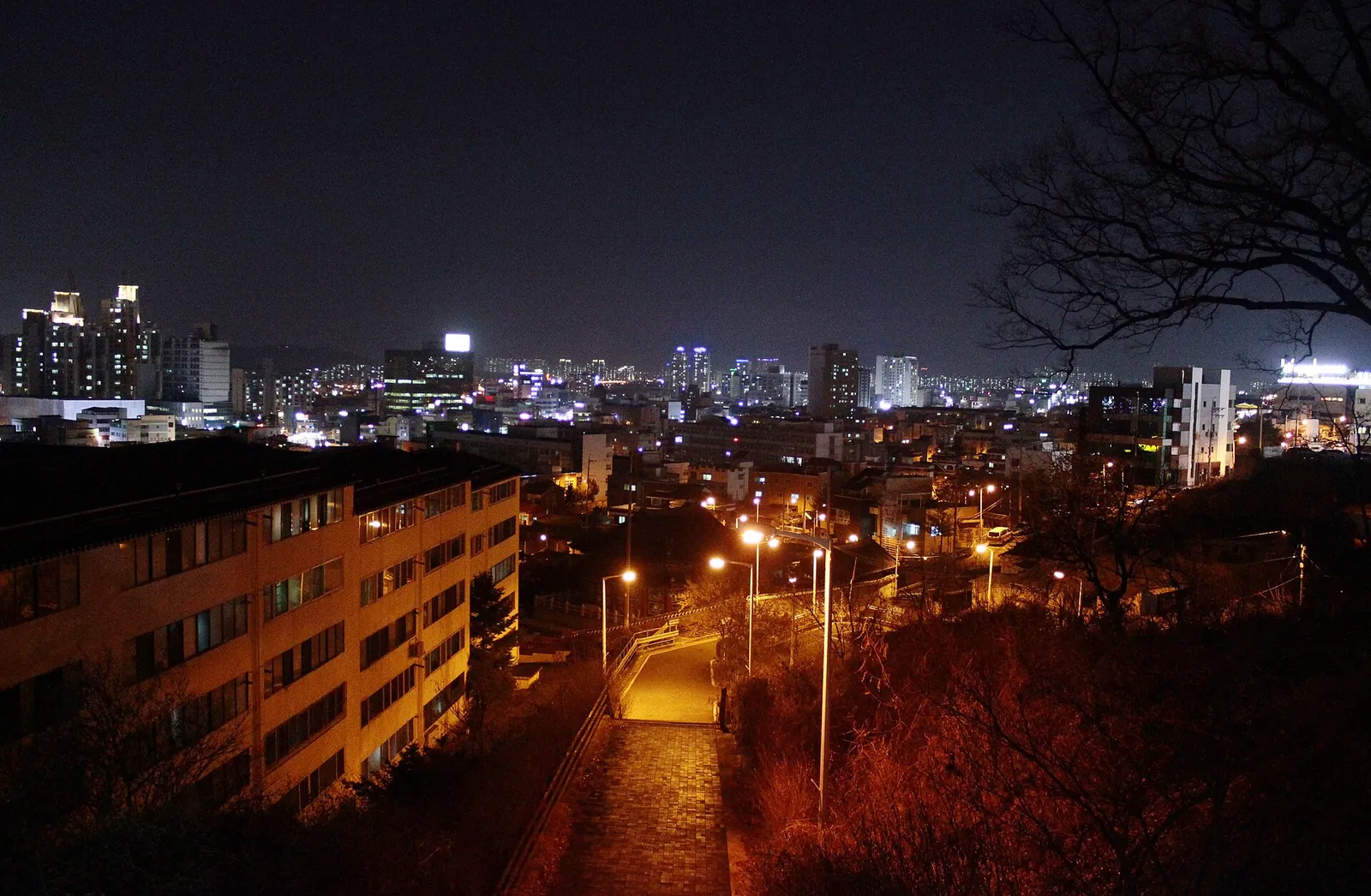
Cheongju's old town after dark
Photograph: Minseong Kim — opens in a new tab · CC BY-SA 4.0 — opens in a new tab
Changes: Resized and converted to WebP; displayed with responsive crops. · Original photograph and licence details ↗ — opens in a new tab
Beef bulgogi on a Korean grill pan, before cooking (illustrative photo, not taken in Cheongju)
Photograph: by ayustety — opens in a new tab · CC BY-SA 2.0 — opens in a new tab
Changes: Resized and converted to WebP; displayed with responsive crops. · Original photograph and licence details ↗ — opens in a new tab