Itineraries · North Gyeongsang
Andong and Yeongju in 4 days: Hahoe, Confucian academies and Daegu
North Gyeongsang is where Korea's Joseon-era scholar culture is still easiest to see on the ground: the country's first royally chartered private academy in Yeongju, the clan village of Hahoe in a bend of the Nakdonggang, and the riverside academies of Andong. It suits travellers who have already done Seoul and Busan and want something slower. The pieces line up neatly: the Jungang Line KTX-Eum from Seoul stops at Yeongju and then, at the next stop, Andong, and Daegu lies to the south, with KTX trains back to Seoul from Dongdaegu. This route uses four days: Yeongju first, a night inside Hahoe, a day for Andong's academies and its lit wooden bridge, and a last day and night in Daegu for its markets and food streets.
- Suggested time
- 4 days, 3–4 nights
- Where to stay
- Yeongju (1 night, central or Seonbichon), Hahoe Village in Andong (1 night, hanok), central Andong (1 night) and Daegu (1 night, downtown or by Dongdaegu Station)
- Season and timing
- Spring and autumn are best for walking between academies and villages. The Andong Maskdance Festival ran from 24 September to 4 October in 2026, and VisitKorea listed Hahoe's Seonyu Julbul Nori fireworks on select Saturdays in May and from August to October. Hahoe and the Yeongju academies close earlier in winter.
The short answer
Take four days and four nights, or three if you catch a train out of Daegu on the last evening. Day 1: KTX-Eum from Seoul (Cheongnyangni to Yeongju is about 1 hour 40 minutes, according to VisitKorea), then Sosuseowon, the Sosu Museum and Seonbichon on one ticket, and Buseoksa towards sunset; sleep in central Yeongju or in Seonbichon's hanok stay. Day 2: the train one stop on to Andong, bus 210 or a taxi to Hahoe Village for the 14:00 mask dance (not on Mondays), Buyongdae, and a night in a village hanok. Day 3: Byeongsanseowon early, jjimdak at Andong Old Market, Dosanseowon in the afternoon and Woryeonggyo at dusk; sleep in central Andong. Day 4: train or intercity bus to Dongdaegu (about 1 hour 20 minutes to 90 minutes, according to VisitKorea), the modern-history alleys, and Seomun Night Market or a makchang dinner; leave next morning by KTX (about 1 hour 40 minutes to Seoul Station) or from Daegu airport. Start on a Tuesday, Wednesday or Thursday so the mask dance avoids Monday and Daegu falls on a night-market evening.
How the route fits together, and where to sleep
The route runs north to south along one rail line and one road. The Jungang Line KTX-Eum from Seoul calls at Punggi, Yeongju and then Andong before continuing south via Yeongcheon and Gyeongju towards Busan, so the first two stops of this trip are consecutive stations. VisitKorea gives about 1 hour 40 minutes from Cheongnyangni to Yeongju, and about 1 hour 50 minutes from Seoul Station, Cheongnyangni or Sangbong to Andong. Daegu is not on that line: from Andong, VisitKorea lists a Mugunghwa train or an intercity bus to Dongdaegu (about 1 hour 20 minutes in its Andong guide; its Daegu airport guide gives about 90 minutes for the bus). Check current times with Korail and the bus operators before you travel; we could not read an official timetable.
Sleep in four places, each close to where the next morning starts. In Yeongju, sleep near Yeongju Station for the train next morning, or book the overnight hanok programme at Seonbichon, the scholars' village beside Sosuseowon, which VisitKorea lists among its activities. The second night is the one that matters: sleep inside Hahoe Village. VisitKorea's own Andong guide says the village's real charm appears after the day-trippers leave, and its listing names hanok stays among the village facilities; Rakkojae, which VisitKorea describes as about a 30-minute drive from Andong Station, has a thatched annex in the village and a main building by the Hahoe Mask Museum.
For night three, move to central Andong, near the Old Market and the bus routes to the eastern sights, or to the Woryeonggyo side of town for the lit bridge and the heotjesabap restaurants on Seokju-ro. In Daegu, stay downtown around Dongseongno if the evening is the point, or by Dongdaegu Station if you are leaving by KTX in the morning; VisitKorea puts Dongdaegu about 15 minutes from Daegu airport by city bus 101 or 401 or by taxi.
Day 1: Yeongju — Sosuseowon, Seonbichon and Buseoksa
Take a morning KTX-Eum to Yeongju and a taxi out to Sosuseowon, at the foot of Sobaeksan. VisitKorea says the magistrate of Punggi, Ju Se-bung, founded it in 1542 as Baegundongseowon to enshrine the Goryeo scholar An Hyang, and that his successor, Toegye Yi Hwang, asked the king for a royal charter; the renamed Sosuseowon was the first private academy to receive one. Next door are the Sosu Museum, opened in 2004, and Seonbichon, a recreated village of scholars' houses with programmes from calligraphy to rice-cake pounding.
When we checked on 2026-10-03, VisitKorea's listings for the museum and Seonbichon gave one 3,000-won adult ticket covering all three sites (the Sosuseowon page itself listed 2,000 won, so check at the gate). Hours were 09:00–17:00 in March to May and September to October, 09:00–18:00 in June to August and 09:00–16:00 in November to February for Sosuseowon and Seonbichon, with last admission an hour before closing. The three addresses run along one road (2740, 2780 and 2796 Sobaek-ro), so you can walk between them.
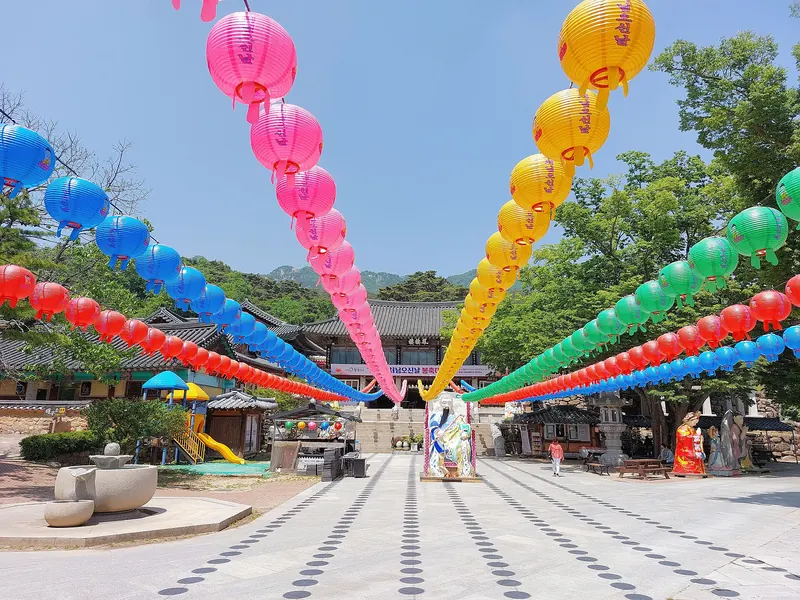
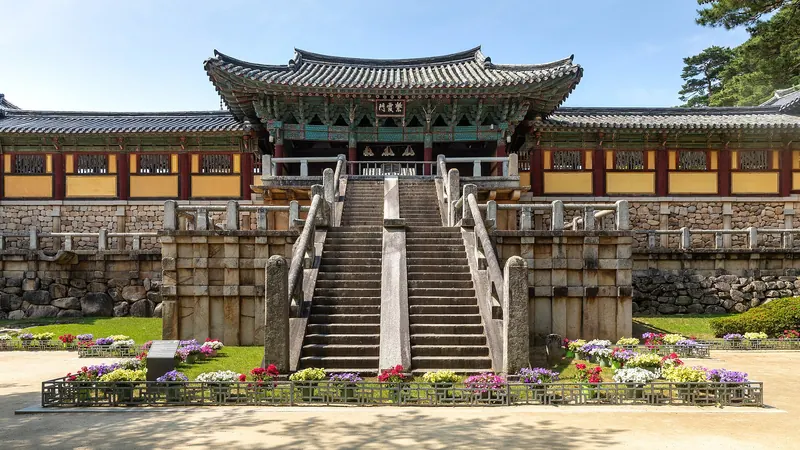
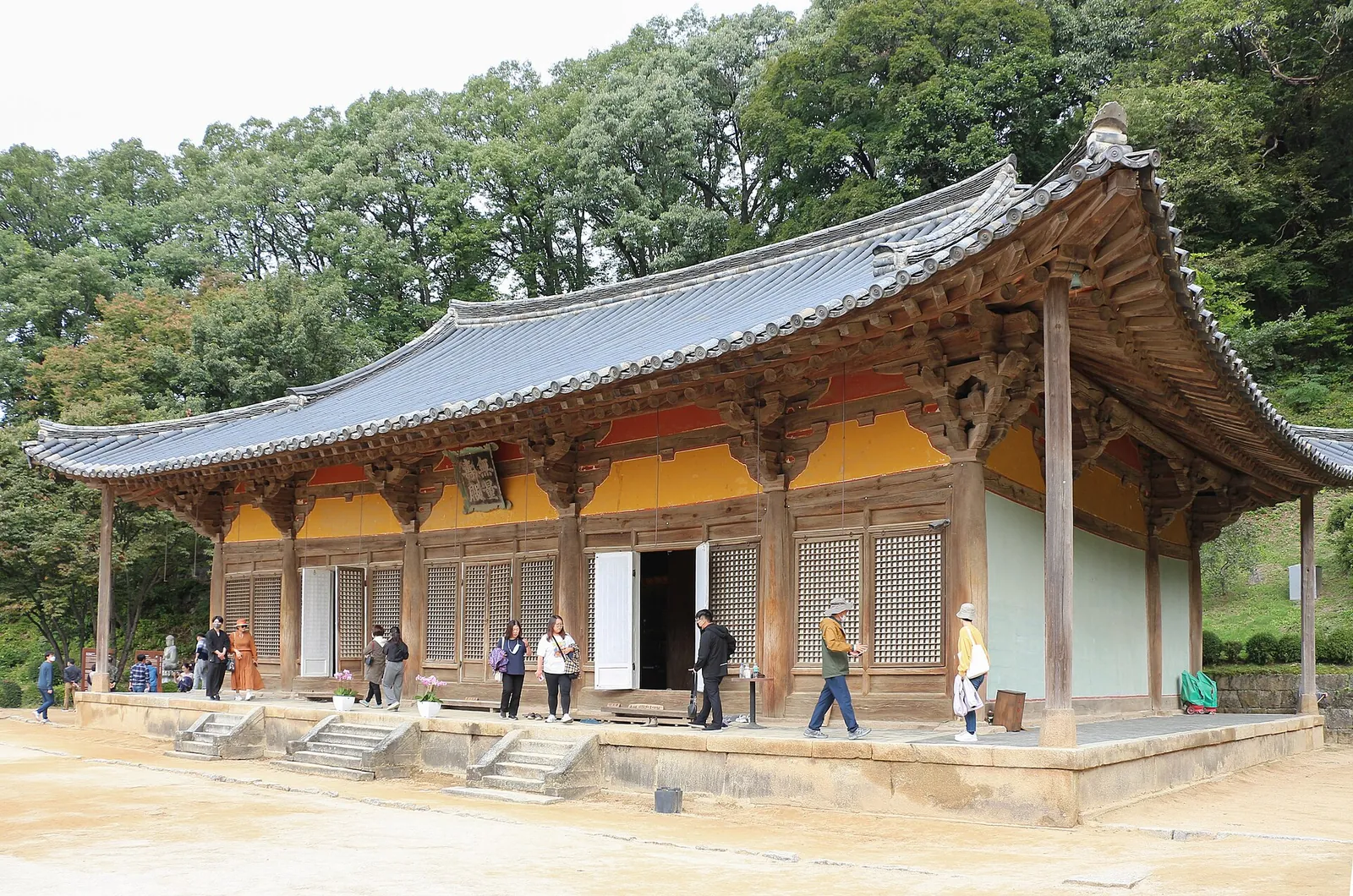
Leave Buseoksa for late afternoon. VisitKorea dates the temple to 676 on the eastern slope of Sobaeksan, lists it as open 24 hours, and its Yeongju feature calls Muryangsujeon Hall a prime example of Goryeo-era Buddhist architecture and recommends coming up at sunset, when the light falls between the ridges of Taebaeksan, Bonghwangsan and Sobaeksan. Because the academy closes and the temple does not, the order matters. Buseoksa (345 Buseoksa-ro, Buseok-myeon) is well outside town and we found no official English bus information, so agree a return with your taxi driver.
Make time for the local food
What to eat and where to look
Andong jjimdak (braised chicken)
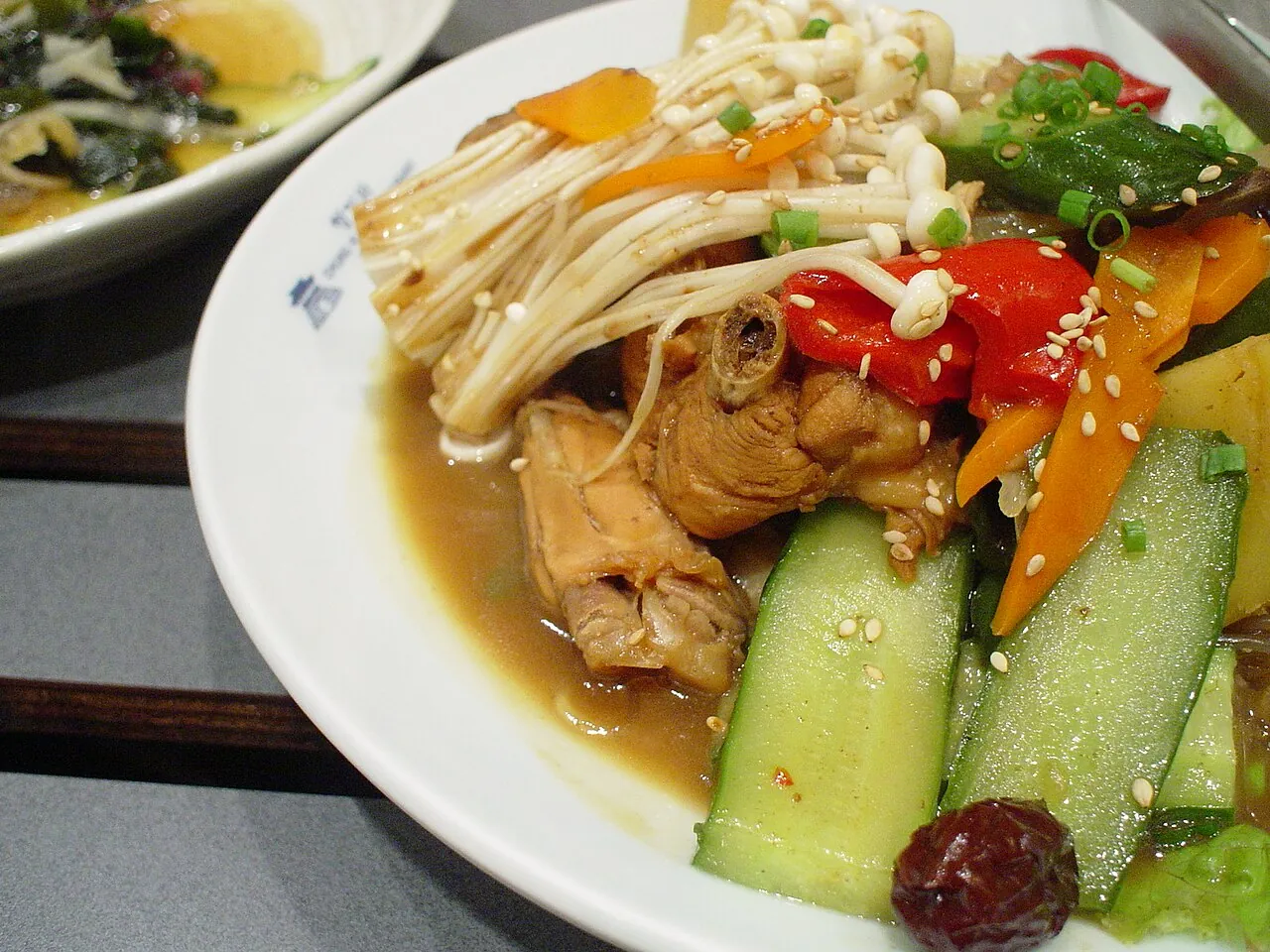
Chicken, glass noodles and vegetables braised in a sweet, savoury and mildly spicy soy-based sauce. VisitKorea says it was born in the chicken alley of Andong Old Market, where merchants cooked chicken with the seasoning of braised galbi; the alley, since renamed Jjimdak Alley, now has some 30 restaurants.
- Where to look
- Jjimdak Alley in Andong Old Market, 30 Beonyeong-gil, central Andong.
- Fit it into your day
- Lunch on day 3, between Byeongsanseowon and Dosanseowon.
VisitKorea notes that jjimdak is usually a whole-chicken dish for two to three people, not a single serving; solo travellers may do better with a salted mackerel set.
Heotjesabap ("fake ancestral-rite meal")
The dishes of an ancestral-rite table served without the rite: rice with vegetables and jeon pancakes, mixed like bibimbap, with a soup made without chilli. The Digital Andong Culture Encyclopedia explains that it recreates the custom of mixing leftover rite food into rice and that the restaurant dish was developed in the late 1970s.
- Where to look
- Seokju-ro near Woryeonggyo; VisitKorea lists Heotjesabap Kkachi Gumeongjip at 203 Seokju-ro, open 11:00–20:00 and closed on Seollal and Chuseok when we checked on 2026-10-03.
- Fit it into your day
- Dinner on day 3, after Woryeonggyo.
Deliberately plain flavours; the rite dishes traditionally include fish and meat, so ask what is in the set.
Andong gangodeungeo (salted mackerel)
Mackerel salted to keep on the long journey inland, grilled until crisp outside and moist inside. VisitKorea describes it as a popular part of a Korean set meal and says many restaurants serve salted mackerel sets for one.
- Where to look
- Korean set-meal restaurants across central Andong.
- Fit it into your day
- Breakfast or lunch in Andong if you are travelling alone and jjimdak is too big.
Salty by design; eat it with plenty of rice.
Insam galbitang (ginseng and rib soup)
Beef short ribs in a long-boiled bone broth with Punggi ginseng. VisitKorea says Punggi, a town within Yeongju, has grown ginseng for more than 500 years.
- Where to look
- Restaurants in Punggi-eup and central Yeongju.
- Fit it into your day
- Dinner on day 1 in Yeongju.
Contains beef; ginseng is bitter, and anyone on regular medication should ask a doctor before eating it in quantity.
Makchang and gopchang (grilled pork intestines)
VisitKorea calls makchang Daegu's favourite comfort food; at Anjirang the grills also serve gopchang (small intestines) and pork heart at relatively low prices.
- Where to look
- Anjirang Gopchang Alley, 67 Anjirang-ro 16-gil, Nam-gu, Daegu.
- Fit it into your day
- Dinner on day 4 if the night market is closed or you want a sit-down meal.
This is offal, cooked at the table; ask staff when it is done, and order a small portion first if unsure.
Kaljebi and napjangmandu at Seomun Market
Kaljebi is a noodle soup with hand-pulled pieces of dough; napjangmandu are thin, flat dumplings filled with glass noodles and vegetables. VisitKorea names both as Seomun Market favourites.
- Where to look
- The food lanes of Seomun Market, Jung-gu, Daegu, and the stalls of the night market.
- Fit it into your day
- A late lunch on day 4, before the night market.
The day market closes on the first and third Sundays; the night market opens only Friday to Sunday.
Day 2: Andong — into Hahoe Village for the night
Take the train one stop on from Yeongju to Andong Station, and take your bags with you on the bus or in a taxi to your Hahoe guesthouse. VisitKorea's Andong guide lists Express 2, 210, Pungcheon 2 and the Hahoe shuttle bus to the village; real-time locations are on Andong's bus information system, in Korean only.
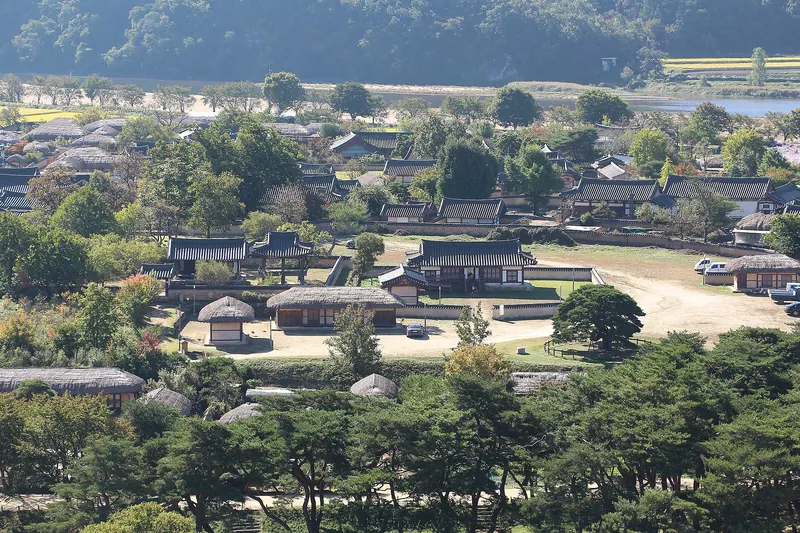
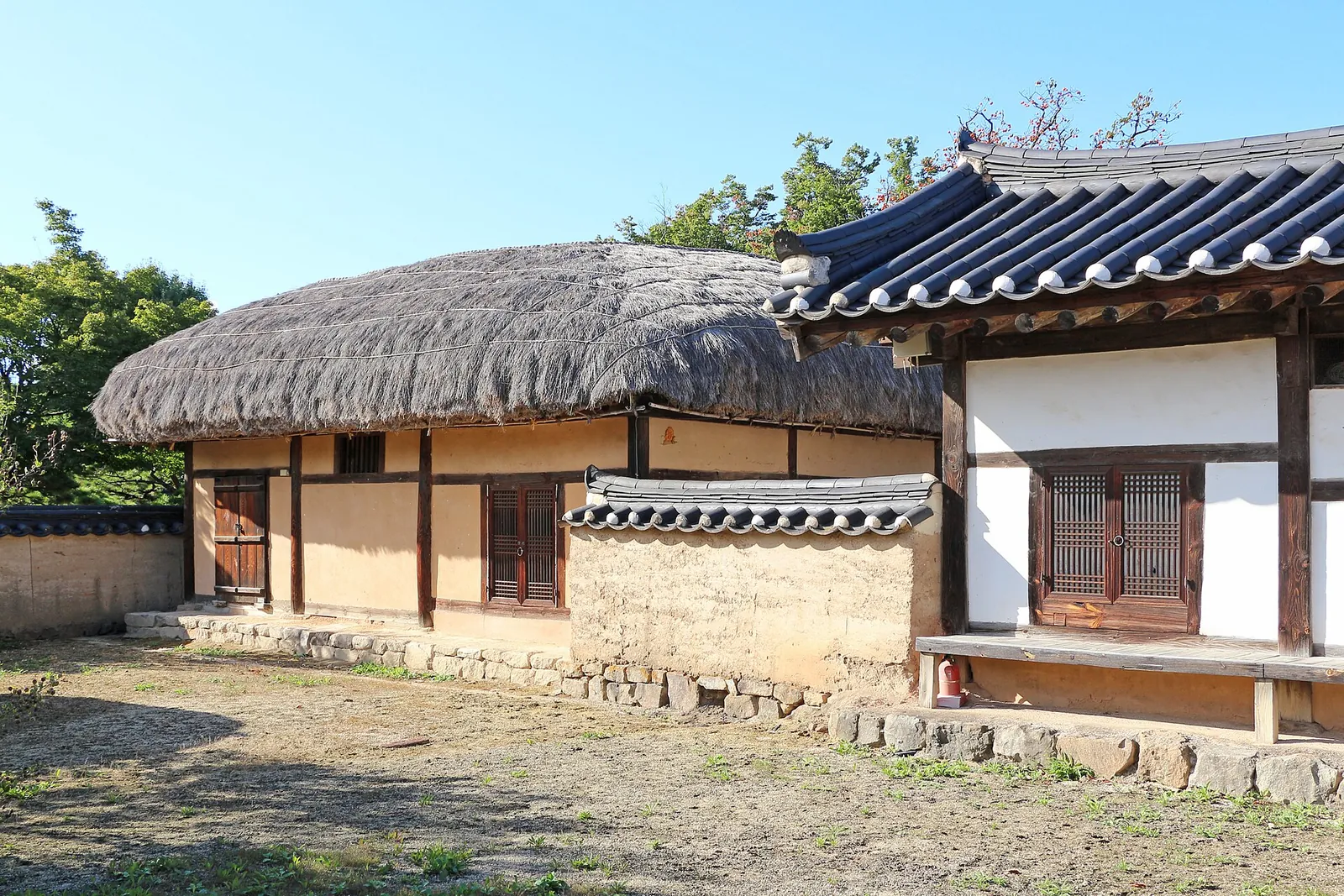
Hahoe Village is home to descendants of the Pungsan Ryu clan, who VisitKorea says still make up 70 percent of the villagers, in tile-roofed and thatched houses inside a broad bend of the Nakdonggang. It was designated a National Folklore Cultural Heritage in 1984. When we checked on 2026-10-03, VisitKorea listed day-visitor hours of 09:00–18:00 from April to September and 09:00–17:00 from October to March (last admission 30 minutes before closing) and an adult ticket of 5,000 won. Be at the Hahoe Village Mask Dance Theater for Hahoe Byeolsingut Tallori, the satirical mask dance drama, which VisitKorea's Andong guide listed at 14:00 from Tuesday to Sunday, closed on Mondays.
Later, cross to Buyongdae, the cliff across the river from which, as VisitKorea puts it, the village looks like a lotus flower floating on water. Then stay put. After the ticket office closes, the lanes go quiet; this is the reason to sleep here rather than in town. On the Saturdays when the Seonyu Julbul Nori fireworks are held (VisitKorea listed 3, 10, 17, 24 and 31 October in 2026), embers fall from ropes strung over the river; VisitKorea recommends booking online a month ahead, with 300 same-day tickets from 13:00 at the Hahoe ticket office.
Day 3: Byeongsanseowon, Dosanseowon and Woryeonggyo
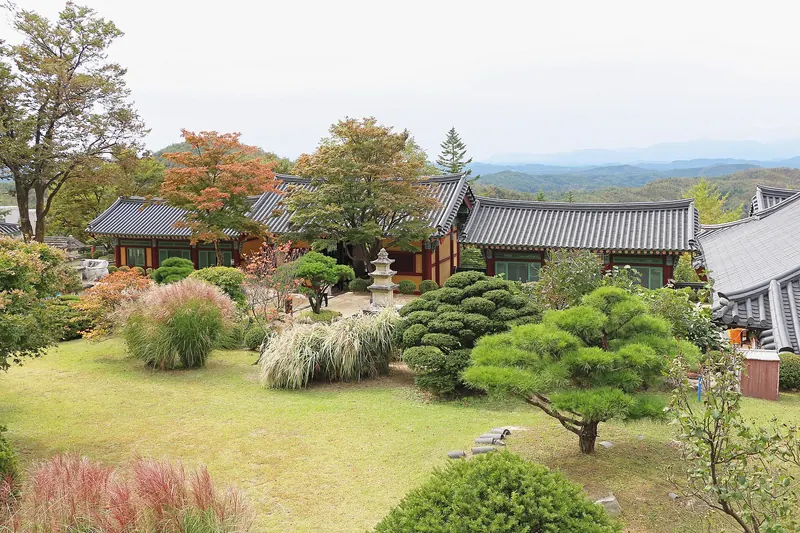
Start at Byeongsanseowon, also served by bus 210, before tour groups arrive. VisitKorea says the scholar Yu Seong-nyong (Seoae) moved the school here in 1572 and that it took the name Byeongsanseowon in 1614. Its draw is the view from the floor of Ipgyodang, the lecture hall, through the pillars of Mandaeru pavilion to the Nakdonggang and Byeongsan Mountain, with about 120 crape myrtles behind that flower red from summer into early autumn. VisitKorea listed hours of 09:00–18:00 in summer and 09:00–17:00 in winter.
Head back into central Andong for lunch at the jjimdak alley of Andong Old Market, then out east to Dosanseowon, the academy tied to Toegye Yi Hwang, the scholar on the 1,000-won note. VisitKorea says Yi Hwang designed the lecture hall Dosanseodang himself in 1561, making it the oldest building on the site, and that the academy compound was completed in 1576, after his death; it listed hours of 09:00–18:00 in summer and 09:00–17:00 in winter. VisitKorea's Andong guide makes the trade-off plain: Hahoe, Byeongsanseowon and Woryeonggyo fit in a day, but Dosanseowon, Bongjeongsa and Manhyujeong are spread out and justify an overnight stay. We could not verify bus frequencies to Dosanseowon, so a taxi, or Andong's tourist taxi, is the safe choice.
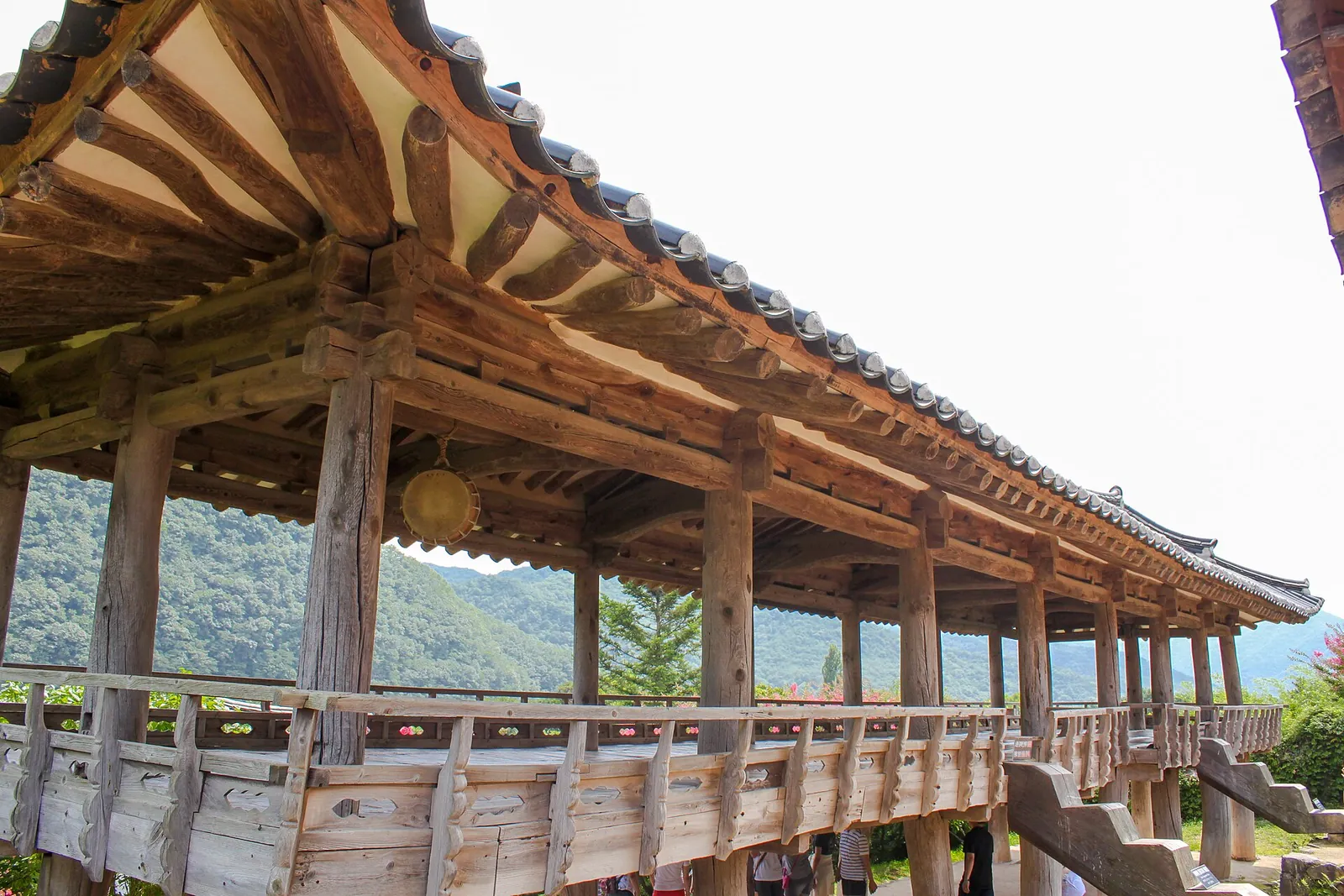
Finish at Woryeonggyo, which VisitKorea calls Korea's longest wooden pedestrian bridge, across Andongho Lake in Sanga-dong. It is open 24 hours and lit after dark, and VisitKorea's Daegu airport guide notes that at sunset the bridge lights and fountain reflect on the water. Have dinner on nearby Seokju-ro, where heotjesabap restaurants serve the dishes of an ancestral-rite table.
Day 4: Daegu — modern-history alleys and a food night
Take the Mugunghwa or an intercity bus from Andong to Dongdaegu, and the metro into the old centre. Daegu runs 13 themed alley walks; VisitKorea names Course 2, the Modern Cultural Street, as the most popular, past Gyesan Catholic Church, Jeil Church and old houses, and Cheongna Hill, where missionaries settled in the early 20th century, is the usual start. When we checked on 2026-10-03, VisitKorea listed free multilingual tours in English, Japanese and Chinese at 14:00 every Saturday, booked through the official website.
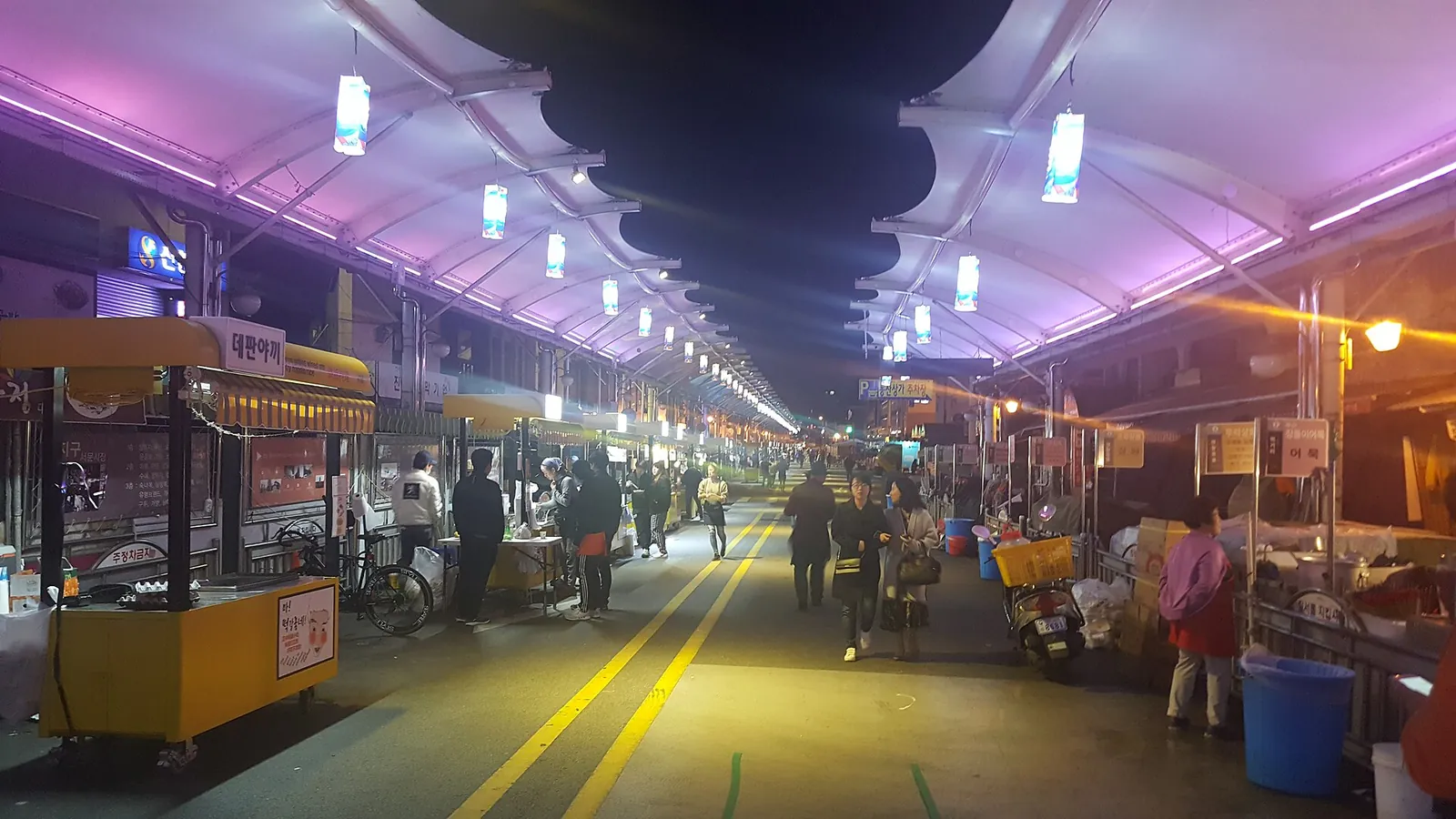
Then go to Seomun Market, which VisitKorea says was one of the three major markets of the Joseon dynasty and now has more than 5,000 shops. When we checked, VisitKorea listed the day market at 09:00–18:00 (hours vary by shop) and closed on the first and third Sundays of the month. The Seomun Night Market is why the route should end on a Friday, Saturday or Sunday: its official site listed Friday and Saturday 19:00–23:30 and Sunday 19:00–22:30, closed Monday to Thursday, and it posts weather closures (it closed for rain on 17 July 2026).
On other evenings, or if you would rather sit down, go to Anjirang Gopchang Alley in Nam-gu, which VisitKorea says began with one restaurant in 1979, stretches about 500 metres and was chosen in 2012 as one of the country's top five food-themed streets; or to Dongin-dong for spicy braised short ribs. The next morning, VisitKorea gives about 1 hour 40 minutes by KTX from Dongdaegu to Seoul Station; Gyeongju is about 20 minutes away by KTX or SRT if you want to keep going.
The route at a glance, and variations
This is an editorial suggestion, not a timetable. Check the Monday mask-dance closure, the night market's days and the train and bus times before you lock in the order.
- Day 1 — Yeongju: KTX-Eum from Cheongnyangni, Sosuseowon, the Sosu Museum and Seonbichon on one ticket, Buseoksa at sunset; sleep in Yeongju or Seonbichon.
- Day 2 — Hahoe: train to Andong, bus 210 or taxi to Hahoe, the 14:00 mask dance (Tuesday–Sunday), Buyongdae; sleep in a village hanok.
- Day 3 — Andong: Byeongsanseowon early, jjimdak at the Old Market, Dosanseowon, Woryeonggyo at dusk and heotjesabap on Seokju-ro; sleep in central Andong.
- Day 4 — Daegu: Mugunghwa or bus to Dongdaegu, Course 2 of the alley walks, Seomun Market and its night market (Friday–Sunday) or makchang at Anjirang.
- Adding Mungyeong: our Mungyeong guide covers the Saejae pass walk; the Gyeongbuk Line runs from Jeomchon in Mungyeong to Yeongju. Add a day at the start.
- Adding Gyeongju: the Jungang Line KTX-Eum continues from Andong to Gyeongju, and from Dongdaegu the KTX or SRT takes about 20 minutes, so Gyeongju fits as a fifth day either way.
- Flying into Daegu: run the route in reverse, starting with Daegu and taking the bus to Andong.
Practical questions
Is four days enough for Andong and North Gyeongsang?
For Yeongju's academy and temple, a night in Hahoe, Andong's two great academies and a Daegu evening, yes. It does not leave time for Bongjeongsa, Manhyujeong, Museom Village, Mungyeong or Gyeongju; add a day for any of them.
Can I do Andong as a day trip from Seoul?
It is possible by KTX-Eum (about 1 hour 50 minutes each way, according to VisitKorea), but VisitKorea's own advice is that a day covers only Hahoe, Byeongsanseowon and Woryeonggyo, while Dosanseowon, Bongjeongsa and Manhyujeong justify an overnight stay. The evening in Hahoe, after day visitors leave, is the best part of the trip.
Do I need a car?
No, but plan on taxis. Andong's buses (210 for Hahoe and Byeongsanseowon) cover the main stops, though we could not verify their frequencies. Buseoksa and Sosuseowon in Yeongju and Dosanseowon in Andong are outside town; when we checked on 2026-10-03, VisitKorea listed Andong's tourist taxi at 125,000 won for a four-seat car for up to five hours within 10 km of Andong Station.
Which days should I avoid?
Avoid a Monday in Hahoe, because the regular mask dance is listed from Tuesday to Sunday only, and avoid ending in Daegu from Monday to Thursday if you want the Seomun Night Market, which opens Friday to Sunday. Starting on a Tuesday, Wednesday or Thursday solves both.
Is there English help at the sites?
VisitKorea says free guided commentary in English, Japanese and Chinese can be booked at major Andong sites such as Hahoe Village and Dosanseowon, and Daegu's alley walks have a free multilingual tour at 14:00 on Saturdays. The 1330 Korea Travel Helpline (+82-2-1330) also answers in English.
Sources and checks before you travel
Reference sources for the version dated 3 October 2026. Confirm opening times, access, transport and conditions for your travel dates.
- VisitKorea: Andong travel guide (KTX-Eum, buses, mask dance, food) ↗ — opens in a new tab
- VisitKorea: Andong Hahoe Village ↗ — opens in a new tab
- VisitKorea: Andong Market and nearby sights (Byeongsanseowon) ↗ — opens in a new tab
- VisitKorea: Byeongsanseowon Confucian Academy ↗ — opens in a new tab
- VisitKorea: Dosanseowon Confucian Academy ↗ — opens in a new tab
- VisitKorea: Woryeonggyo Bridge ↗ — opens in a new tab
- VisitKorea: Andong Maskdance Festival ↗ — opens in a new tab
- VisitKorea: Andong Jjimdak Alley ↗ — opens in a new tab
- VisitKorea: Heotjesabap Kkachi Gumeongjip ↗ — opens in a new tab
- Digital Andong Culture Encyclopedia: Andong local food ↗ — opens in a new tab
- VisitKorea: Sosuseowon Confucian Academy ↗ — opens in a new tab
- VisitKorea: Sosu Museum ↗ — opens in a new tab
- VisitKorea: Seonbichon Village ↗ — opens in a new tab
- VisitKorea: Buseoksa Temple ↗ — opens in a new tab
- VisitKorea: Yeongju feature (Buseoksa, Sosuseowon, trains) ↗ — opens in a new tab
- VisitKorea: Ginseng and galbi soup ↗ — opens in a new tab
- Korean Wikipedia: KTX-Eum ↗ — opens in a new tab
- Korean Wikipedia: Gyeongbuk Line ↗ — opens in a new tab
- VisitKorea: Fly to Daegu International Airport ↗ — opens in a new tab
- VisitKorea: Daegu travel guide ↗ — opens in a new tab
- VisitKorea: Daegu Modern History Alleys ↗ — opens in a new tab
- VisitKorea: Seomun Market ↗ — opens in a new tab
- Seomun Night Market official site ↗ — opens in a new tab
- VisitKorea: Anjirang Gopchang Alley ↗ — opens in a new tab
- VisitKorea: Airport Transportation Guide ↗ — opens in a new tab
Does this experience fit your route?
This route works best on your own by train, bus and taxi. If you have only one day for Andong, a guided Hahoe trip from Seoul is the alternative; check the time on site before you book.
Check dates and details on Viator ↗ — opens in a new tabAffiliate link · Book with ViatorPhoto credits
Thatched and tiled houses side by side in Hahoe Folk Village, where this route spends its second night
Photograph: Bernard Gagnon — opens in a new tab · CC0 — opens in a new tab
Changes: Resized and converted to WebP; displayed with responsive crops. · Original photograph and licence details ↗ — opens in a new tab
Mandaeru pavilion at Byeongsanseowon, the academy on bus 210 near Hahoe
Photograph: Kwkhh — opens in a new tab · CC BY-SA 4.0 — opens in a new tab
Changes: Resized and converted to WebP; displayed with responsive crops. · Original photograph and licence details ↗ — opens in a new tab
Muryangsujeon Hall at Buseoksa, the Goryeo-era hall at the top of Yeongju's mountain temple
Photograph: Bernard Gagnon — opens in a new tab · CC0 — opens in a new tab
Changes: Resized and converted to WebP; displayed with responsive crops. · Original photograph and licence details ↗ — opens in a new tab
Andong-style jjimdak, chicken and glass noodles braised in a soy-based sauce
Photograph: by shizu k (shezzz) at Flickr — opens in a new tab · CC BY-SA 2.0 — opens in a new tab
Changes: Resized and converted to WebP; displayed with responsive crops. · Original photograph and licence details ↗ — opens in a new tab
Seomun Night Market in Daegu, the food night that ends the route (Friday to Sunday)
Photograph: Choi2451 — opens in a new tab · CC BY-SA 3.0 — opens in a new tab
Changes: Resized and converted to WebP; displayed with responsive crops. · Original photograph and licence details ↗ — opens in a new tab