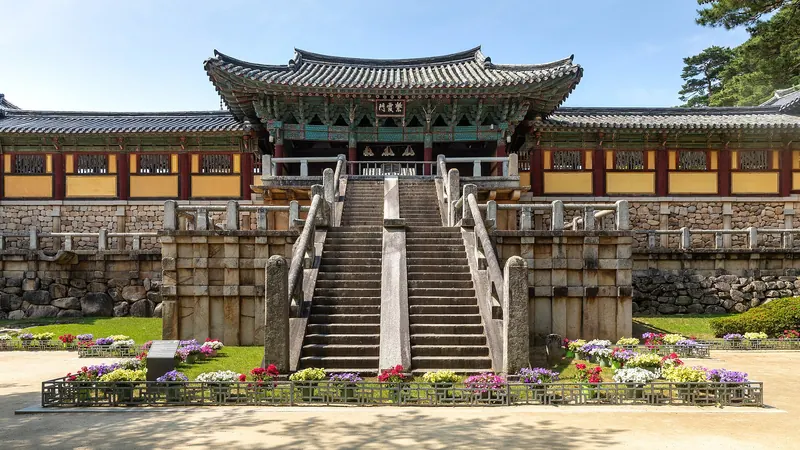
Daegu and North Gyeongsang · Daegu
Daegu travel guide: Seomun Market, modern-history alleys and spicy food
Daegu is Korea's fourth-largest city, yet many travellers only pass through it on the KTX. VisitKorea notes that it came through the Korean War with far less damage than most of the country, so its old centre still holds missionary houses, a cathedral with stained glass from France, a medicine market that has traded for more than three centuries and a market that was one of the three greatest of the Joseon era. Add a food culture built on grilled offal, garlic-heavy braised ribs and flat dumplings, and a KTX station within reach of Gyeongju, Haeinsa and Andong, and Daegu works as both a destination and a base.
- Suggested time
- 2–3 days
- Where to stay
- Downtown Jung-gu (Dongseongno, Jungangno, Banwoldang) for the alleys and markets; Dongdaegu Station for KTX day trips
- Season and timing
- Spring and autumn suit the long walks: Palgongsan is covered in azaleas in spring and its 16.3-kilometre park road is lined with autumn colour. Summer brings the Daegu Chimac Festival (1–5 July in 2026) at Duryu Park. The Seomun Night Market runs only Friday to Sunday.
The short answer
Give Daegu two full days: one on foot through the modern-history alleys of Jung-gu (Cheongna Hill, the 90 stairs, Gyesan Cathedral and the Yangnyeongsi medicine market) ending at Seomun Market, timed for the night market on a Friday, Saturday or Sunday; and one for Palgongsan and Donghwasa or the Apsan cable car, with makchang or jjimgalbi for dinner. Sleep downtown around Dongseongno and Jungangno for walking access, or by Dongdaegu Station if you are using the city as a rail base. Add a third day for Haeinsa or Gyeongju.
Where to stay: downtown alleys or the KTX station
Almost everything a first visit is about sits in Jung-gu, the old centre: the Dongseongno shopping streets, the modern-history alleys around Cheongna Hill and Gyesan Cathedral, the Yangnyeongsi medicine market and Seomun Market. Staying here means you can walk between them and come back to the hotel between the day's walking and a late dinner. Daegu Metro Line 1 runs through the centre at Myeongdeok, Banwoldang, Jungangno and Daegu Station before reaching Dongdaegu; Line 3, a monorail opened in 2015, has its own stations at Seomun Market and Myeongdeok.
Dongdaegu Station, on Line 1 east of the centre, is where the KTX and SRT stop and where the Dongdaegu bus terminal and transfer centre gather the intercity buses. VisitKorea gives about 20 minutes from here to Gyeongju by KTX or SRT and about 90 minutes to Andong by intercity bus, so if your Daegu days are really day-trip days, sleeping by the station saves a cross-town ride each morning.
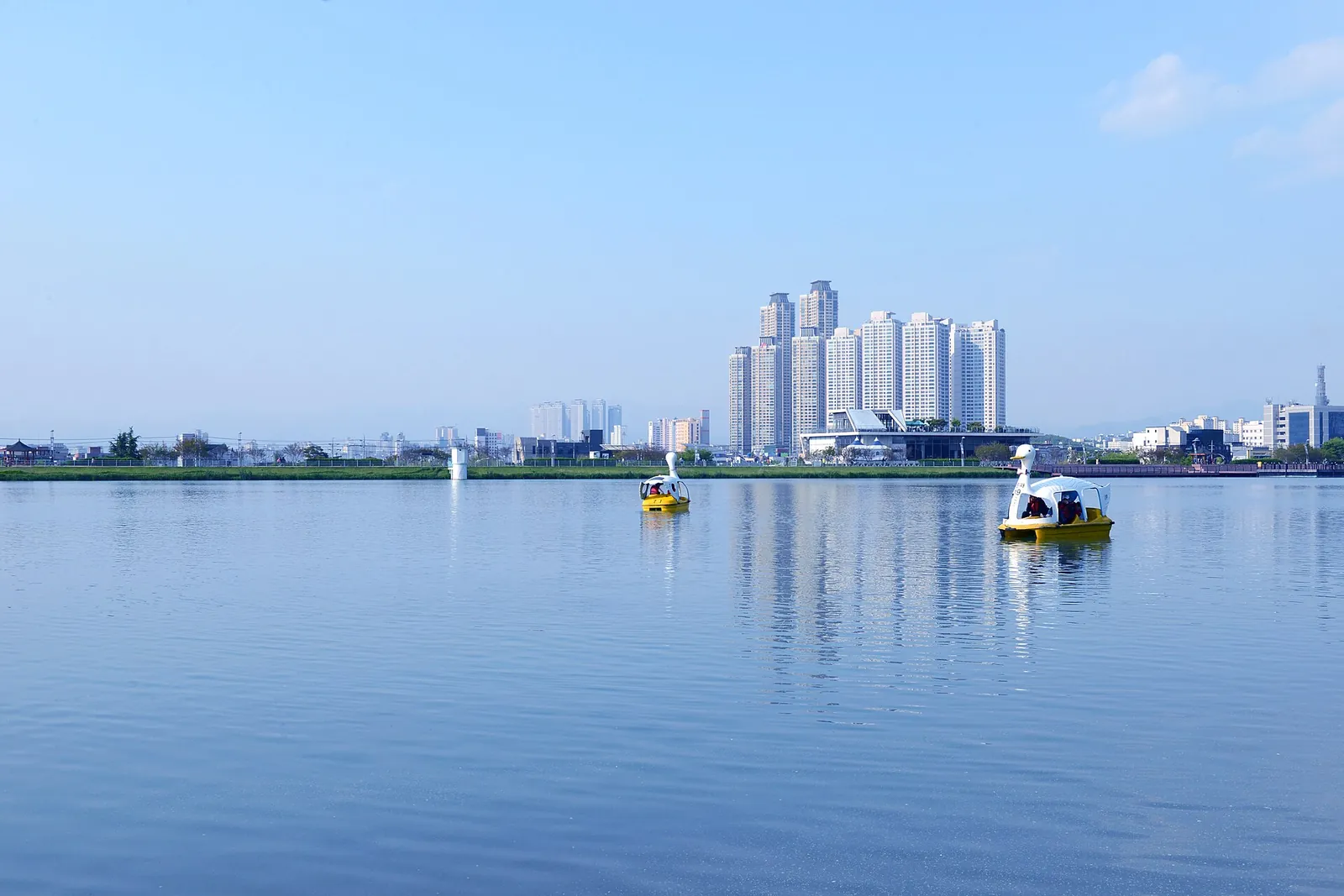
Suseong-gu, around Suseongmot Lake in the southeast, is the residential option: VisitKorea describes the lake park as a favourite local spot for dates and weekend outings, with a fountain show from April to October, and Line 3 stops at Suseongmot. It is pleasant in the evening but puts the old centre a monorail ride away.
Modern-history alleys: Cheongna Hill to the medicine market
Daegu's alley-tour programme has 13 themed walking courses, run by local community groups, and VisitKorea names Course 2, the Modern Cultural Street, as the most popular. It is only about 1.64 kilometres long, but VisitKorea suggests allowing about two hours because there is so much to stop for. Start at Dongsan Cheongna Hill, where Christian missionaries lived in the early 20th century: the Chamness, Switzer and Blair houses still stand among the ivy, beside Daegu's first Western apple tree and the missionaries' cemetery. The hill is open 24 hours and free.
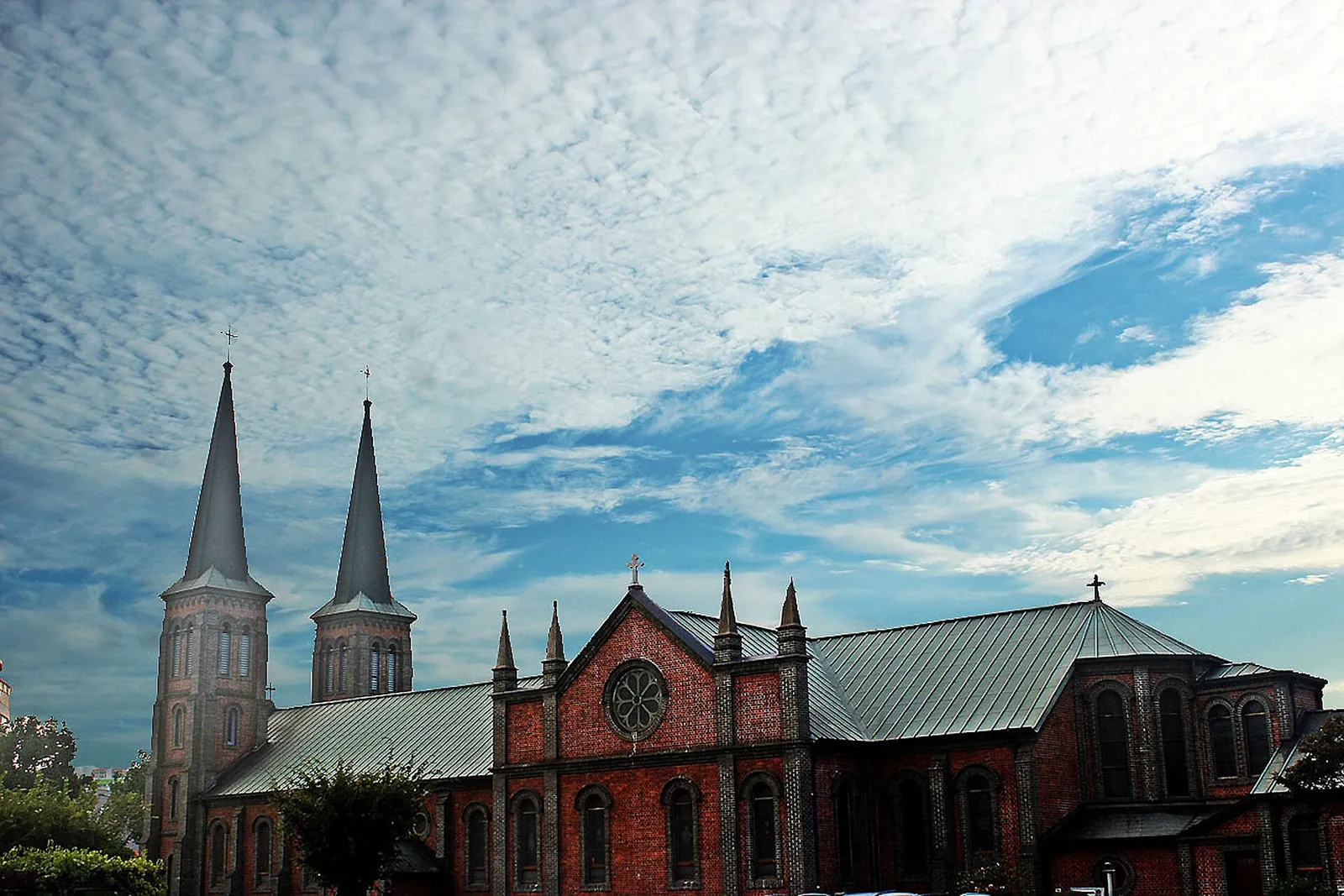
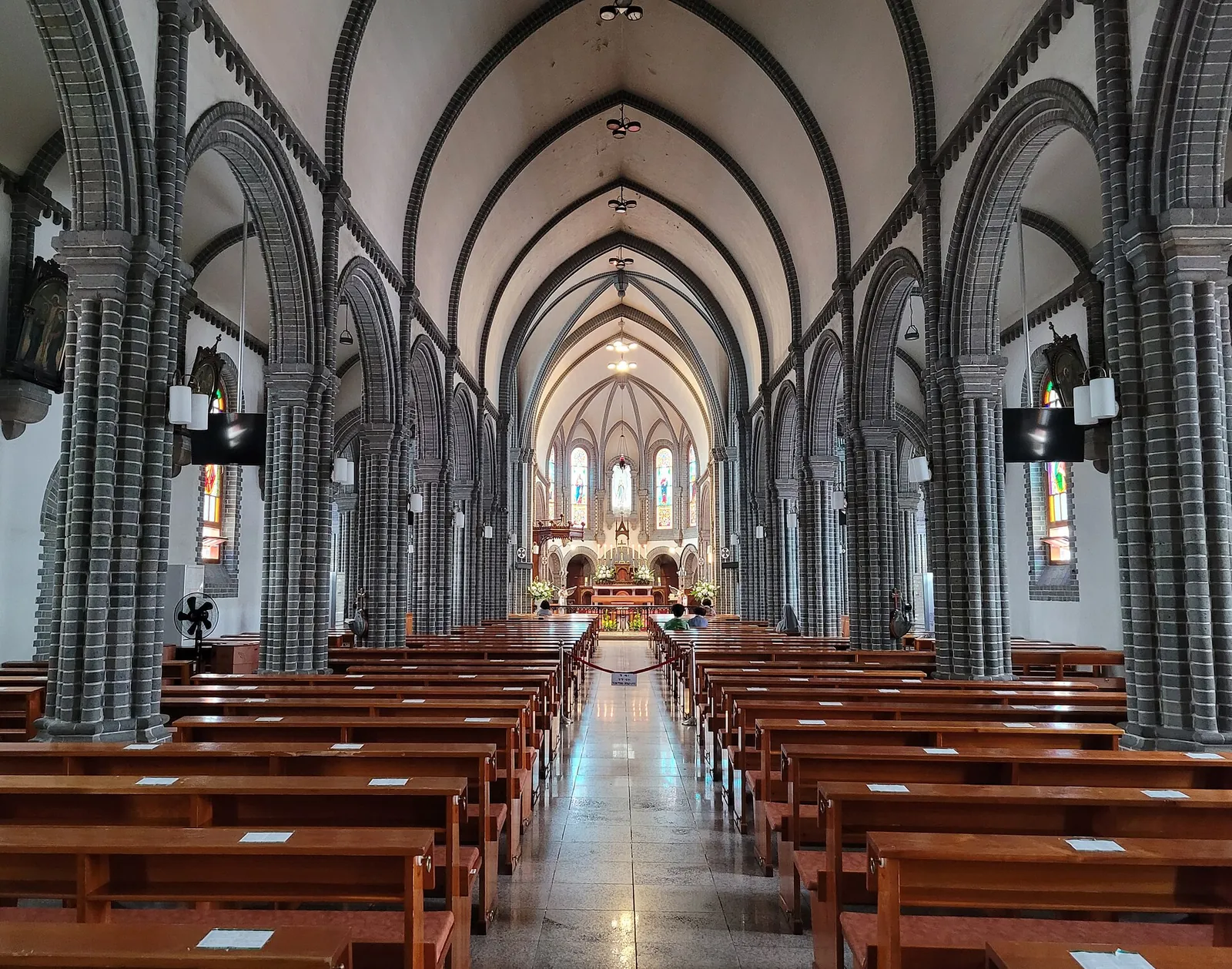
From the hill, the March 1st Independence Movement Road, also called the 90 Stairs, drops down towards the cathedral. Daegu residents gathered here for the independence movement on 8 March 1919, and the wall of the stairs now carries historical photographs and a QR-code AR display. At the bottom stands Gyesan Cathedral, designed by Father Poisnel, who also designed Myeongdong Cathedral in Seoul, with stained glass imported from France. It is a working parish: when we checked on 3 October 2026, VisitKorea listed masses several times a day, so visit quietly and avoid mass times if you want to look around.
The course continues past the old houses and Jeil Church to Yangnyeongsi, the medicine market. VisitKorea says the herbal market has traded for more than 350 years, since the Joseon governor of Gyeongsang-do sold surplus herbs to the public, and that until 1910 it supplied merchants from as far as Japan, China and Russia. The Yangnyeongsi Museum of Oriental Medicine sits above the wholesale market; when we checked, VisitKorea listed it as open Tuesday to Sunday from 9:00 to 18:00 with free entry. The market itself closes on Mondays, so plan this walk for another day.
Jung-gu runs free guided walks of the alleys. When we checked, VisitKorea listed a regular multilingual tour (English, Japanese and Chinese) at 14:00 every Saturday, with on-demand tours for groups of more than five, booked through the district's website. The Daegu Modern History Museum in Pojeong-dong, in a former bank built in 1932, adds the indoor context; VisitKorea listed it as open 9:00 to 18:00, free and closed on Mondays.
Make time for the local food
What to eat and where to look
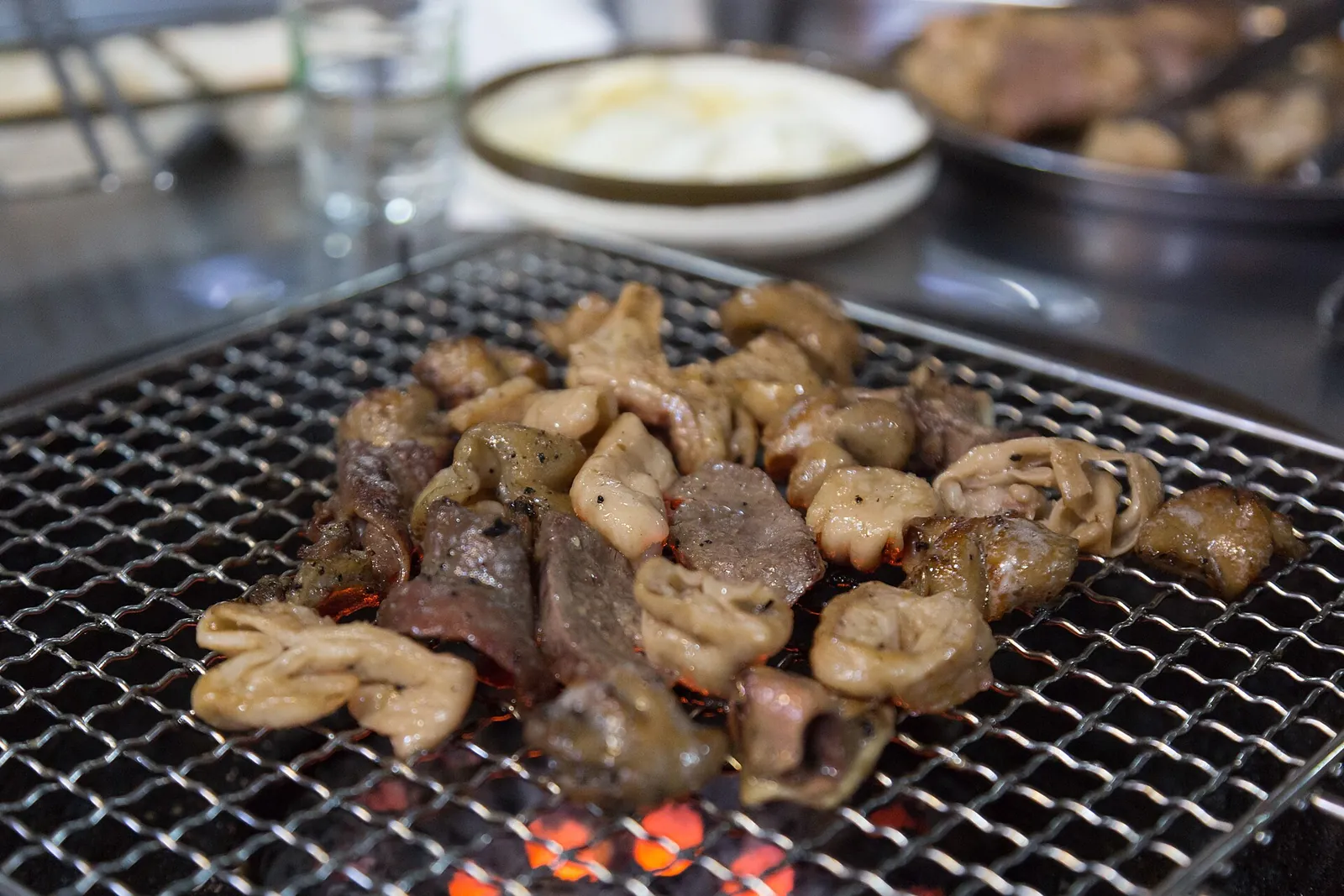
Makchang (grilled pork intestines)
Thick pork intestines, scrubbed clean with flour to remove the smell and grilled at the table until crisp outside and chewy inside. VisitKorea calls it Daegu's favourite comfort food; the dipping sauce, heavy with hot pepper and chives, is part of the point.
- Where to look
- Anjirang Gopchang Alley in Nam-gu, by Anjirang station on Line 1, and the many restaurants signed "Daegu makchang" across the city.
- Fit it into your day
- A shared dinner with drinks after a day out, ideally after the Apsan cable car.
This is offal; ask the staff to tell you when it is cooked through and order a smaller portion first if you are unsure.
Dongin-dong jjimgalbi (spicy braised short ribs)
Beef short ribs braised with plenty of red chilli powder and minced garlic instead of the usual soy-sauce base. When the meat is gone, ask for rice to be fried in the remaining sauce.
- Where to look
- The jjimgalbi alley in Dongin-dong, Jung-gu.
- Fit it into your day
- A main dinner for two or more, ordered by portion.
Spicy and very garlicky; check the price per portion and whether the meat is Korean or imported on the menu.
Napjak mandu (flat dumplings)
Thin, flat dumplings with a sparse filling of glass noodles and chives, cooked on a griddle and topped with soy sauce, chilli powder and spring onions, or eaten with spicy rice cakes. VisitKorea lists them among Daegu's local specialities.
- Where to look
- Seomun Market's food lanes, and long-running specialists such as Miseongdang in Jung-gu, open since 1963.
- Fit it into your day
- A snack between the alley walk and the market, or a side to tteokbokki.
Light on filling by design; when we checked, VisitKorea listed Miseongdang as closed on Mondays.
Kalguksu and kaljebi at Seomun Market
Knife-cut noodle soup, and its cousin kaljebi, which mixes noodles with hand-pulled pieces of dough. VisitKorea names kaljebi among Seomun Market's local favourites.
- Where to look
- The noodle counters inside Seomun Market, near the Line 3 station.
- Fit it into your day
- A cheap, filling lunch in the market before you walk on.
Counter seating and busy lunchtimes; remember the market closes on the first and third Sundays of the month.
Seomun Market by day and by night
Seomun Market was one of the three great markets of the Joseon dynasty, along with those in Seoul and Pyongyang, and has stood on its present site, a reclaimed reservoir, since 1922. VisitKorea counts more than 5,000 shops; textiles are still the main trade, but most visitors come to eat. Look for kalguksu and kaljebi noodle soups, napjak mandu (Daegu's flat dumplings), hotteok and pork pancakes in the food lanes. When we checked on 3 October 2026, VisitKorea listed day hours of 9:00 to 18:00 (individual shops vary) and closure on the first and third Sundays of each month. The Line 3 monorail stops at Seomun Market station.
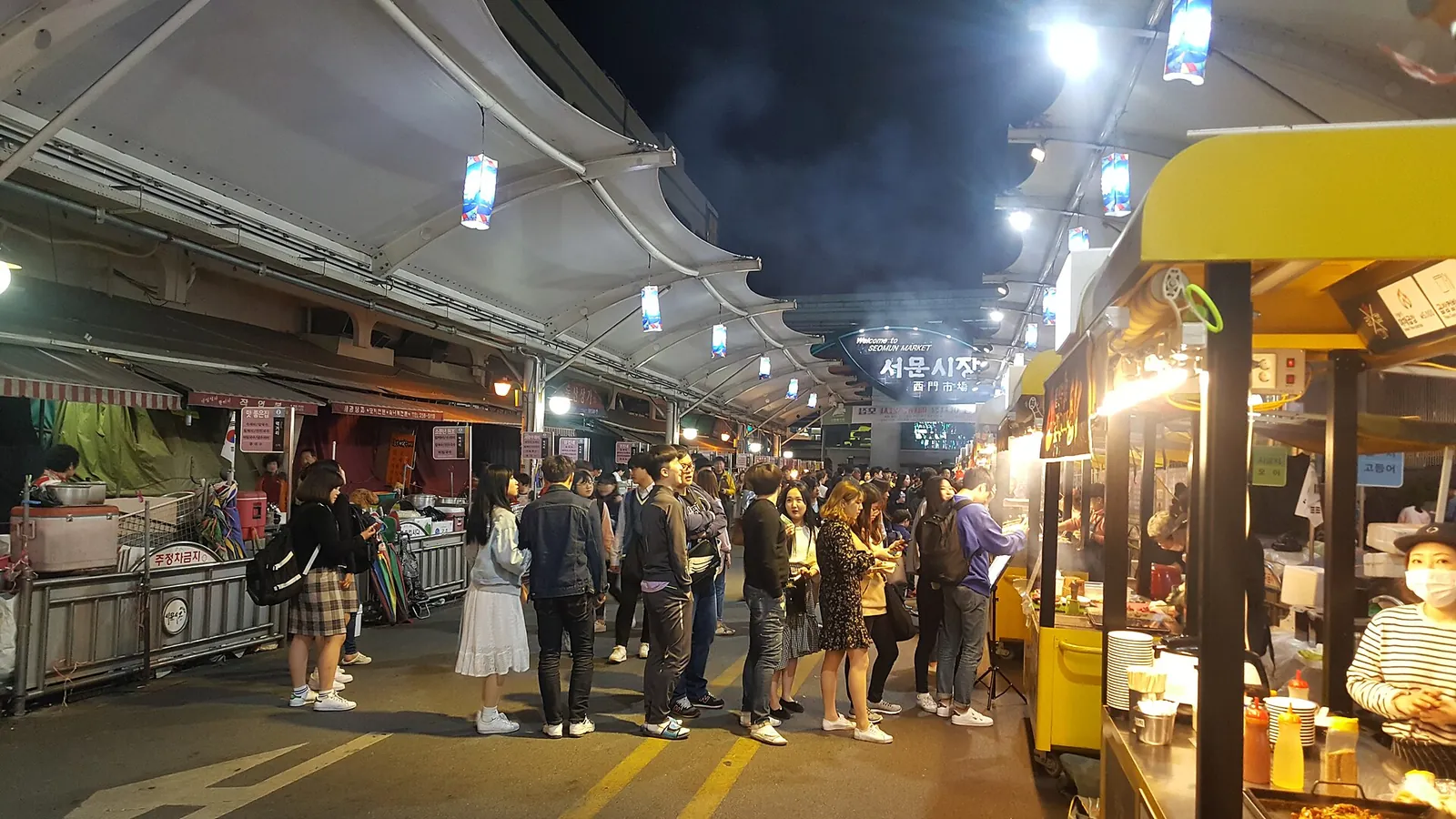
The night market sets up along the market's edge with dozens of food stalls, busking and a media façade on the parking tower. When we checked, its official site listed Friday and Saturday from 19:00 to 23:30 and Sunday from 19:00 to 22:30, closed Monday to Thursday, and warned that hours can change for weather; it posted a rain closure in July 2026. If you are in Daegu midweek, Chilseong Market in Buk-gu has run its own night market since 2019; VisitKorea listed it as open every evening except Tuesday.
Come hungry and order small. VisitKorea warns of long lines at the night-market stalls, and a few shared plates moving between stalls make a better evening than one long wait. For a quieter detour, Kim Kwangseok-gil, a 350-metre mural wall beside Bangcheon Market dedicated to the late singer Kim Kwang-seok, is open around the clock and free.
Daegu's offal and garlic: where the food streets are
VisitKorea calls makchang (grilled pork intestines) Daegu's favourite comfort food, and the city's food is organised into streets that each do one thing. Anjirang Gopchang Alley in Nam-gu began with a single restaurant in 1979 and is now around 500 metres of grills serving gopchang, makchang and pork heart at relatively low prices; VisitKorea notes that it was chosen in 2012 as one of the country's top five food-themed streets. VisitKorea puts the Apsan cafe street, with more than 40 cafes, a 5- to 10-minute walk from Anjirang station on Line 1, so the two make one evening.
For something bigger, Dongin-dong's braised-rib alley serves jjimgalbi made with lots of red chilli powder and minced garlic rather than the usual soy sauce; finish by having rice fried in the leftover sauce. Pyeonghwa Market in Dong-gu has a street of chicken-gizzard restaurants (dakddongjip), and the Chimac Festival each July is built around fried chicken and beer.
Most of these places are shared tables built for groups of two or more. Arrive early for dinner at the famous names, or choose a busy neighbour on the same street.
Mountains on the city's edge: Palgongsan and Apsan
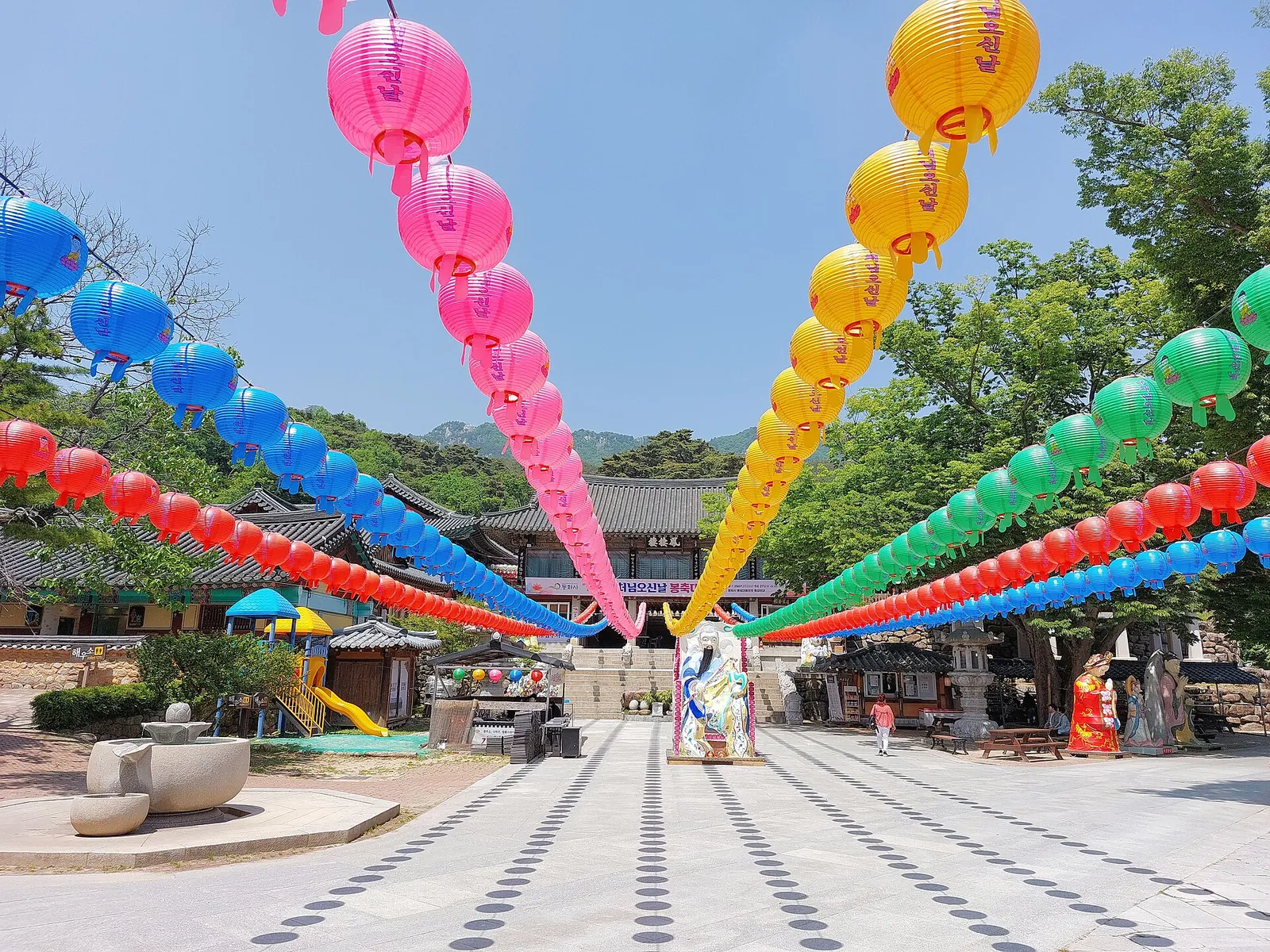
Palgongsan rises about 20 kilometres northeast of downtown, with its highest point, Birobong, at 1,192.3 metres. VisitKorea lists it as open around the clock and free, subject to weather closures. On its southern slopes stands Donghwasa, founded in 493, which VisitKorea says was largely rebuilt between 1723 and 1732 and offers templestays. The Palgongsan cable car climbs 1.2 kilometres in about seven minutes to Sinnimbong; when we checked, VisitKorea listed a round trip at 14,000 won for adults, with hours varying by month.
The Gatbawi Stone Buddha on the eastern side of the range is one of Palgongsan's best-known prayer spots. VisitKorea lists the Gatbawi section under Gyeongsan, in Gyeongsangbuk-do, rather than with Donghwasa, so treat it as a separate outing.
Apsan, much closer to the centre in Nam-gu, is the quick view. A cable car runs up to the Apsan Observatory, which VisitKorea calls one of the best night views over Daegu; when we checked, it listed a round trip at 14,000 won for adults and seasonal hours. Combine it with the Apsan cafe street and a makchang dinner at Anjirang.
A workable two- or three-day plan
This is an editorial suggestion, not a timetable. Check opening days for each place you choose, especially Monday closures.
- Day 1 — Old centre: Cheongna Hill, the 90 Stairs and Gyesan Cathedral in the morning, Yangnyeongsi and the medicine museum (not on a Monday), then Seomun Market in the afternoon and its night market from 19:00 on Friday to Sunday.
- Day 2 — Mountain and grill: Donghwasa and the Palgongsan cable car, or a slower morning at Kim Kwangseok-gil; then the Apsan cable car near sunset and makchang at Anjirang Gopchang Alley.
- Day 3 (optional) — Day trip: Haeinsa and the Tripitaka Koreana by bus from Seobu bus terminal, or Gyeongju by KTX or SRT from Dongdaegu.
- On a short stay: keep Day 1 and swap Palgongsan for a jjimgalbi dinner in Dongin-dong.
Day trips: Haeinsa, Gyeongju and Andong
Haeinsa, in Hapcheon county across the border in Gyeongsangnam-do, holds the Tripitaka Koreana, the world's oldest woodblock Buddhist canon on nearly 80,000 blocks. VisitKorea's temple guide gives the public-transport route as a bus to Haeinsa from Daegu's Seobu intercity bus terminal. Viewing the woodblocks themselves needs a reservation on the temple's website, released at noon every Monday when we checked; VisitKorea also lists general admission at 3,000 won for adults and asks visitors to avoid shorts, sleeveless tops and slippers.
Gyeongju, the Silla capital, is about 20 minutes from Dongdaegu by KTX or SRT according to VisitKorea, close enough that you can sleep in Daegu and spend a long day among the tombs and temples. Andong's Hahoe Village and Dosanseowon are about 90 minutes away by intercity bus from Dongdaegu and deserve a night of their own if you can spare it. Busan, at the southern end of the Gyeongbu Line from Seoul, has its own guide.
Practical questions
How many days do I need in Daegu?
Two full days cover the modern-history alleys, Seomun Market and one of the mountains, Palgongsan or Apsan. Add a third if you want to go out to Haeinsa or Gyeongju.
When is the Seomun Night Market open?
When we checked on 3 October 2026, its official site listed Friday and Saturday 19:00–23:30 and Sunday 19:00–22:30, closed Monday to Thursday, with closures possible in bad weather. Chilseong Night Market is the midweek alternative.
Is Daegu worth visiting or is it just a transit stop?
It deserves at least two nights. The old centre survived the Korean War largely intact, the markets and food streets are among the liveliest in the country, and the KTX connections make it a practical base for Gyeongju and Haeinsa.
How do I get to Haeinsa from Daegu?
VisitKorea's route is a bus to Haeinsa from Seobu intercity bus terminal in Daegu. Book Tripitaka Koreana viewings on the temple's website (opened at noon on Mondays when we checked) and check the return times before you set off.
What food is Daegu known for?
Grilled makchang (pork intestines), Dongin-dong jjimgalbi (spicy, garlicky braised short ribs) and napjak mandu (flat dumplings). Fried chicken and beer have their own summer festival.
How do I get from Daegu Airport to the city?
VisitKorea lists city buses 101, 401 and Express 1 to Daegu Station and Dongseongno, about 30 minutes, and taxis taking about 25 minutes. International cards are not accepted on the buses, so carry cash or a transport card.
Sources and checks before you travel
Reference sources for the version dated 3 October 2026. Confirm opening times, access, transport and conditions for your travel dates.
- VisitKorea: [Monthly Travel Recommendation] Daegu ↗ — opens in a new tab
- VisitKorea: [Korea Beyond Seoul ①] Fly to Daegu International Airport ↗ — opens in a new tab
- VisitKorea: Airport transportation guide ↗ — opens in a new tab
- VisitKorea: Daegu Seomun Market & Seomun Night Market ↗ — opens in a new tab
- VisitKorea: 【Daegu】 Seomun Market (Traditional Markets) ↗ — opens in a new tab
- Seomun Night Market (official site) ↗ — opens in a new tab
- VisitKorea: Daegu Chilseong Market & Chilseong Night Market ↗ — opens in a new tab
- VisitKorea: Daegu Modern History Streets ↗ — opens in a new tab
- VisitKorea: Dongsan Cheongna Hill ↗ — opens in a new tab
- VisitKorea: March 1st Independence Movement Road ↗ — opens in a new tab
- VisitKorea: Daegu Gyesan Cathedral ↗ — opens in a new tab
- VisitKorea: Daegu Medicinal Herb Wholesale Market ↗ — opens in a new tab
- VisitKorea: Daegu Yangnyeongsi Museum of Oriental Medicine ↗ — opens in a new tab
- VisitKorea: Daegu Modern History Museum ↗ — opens in a new tab
- VisitKorea: Kim Kwangseok-gil Street ↗ — opens in a new tab
- VisitKorea: Anjirang Gopchang Alley ↗ — opens in a new tab
- VisitKorea: Apsan Cafe Street ↗ — opens in a new tab
- VisitKorea: Daegu grilled pork intestines (makchang) ↗ — opens in a new tab
- VisitKorea: Daegu Dongin-dong braised galbi ↗ — opens in a new tab
- VisitKorea: Miseongdang Napjak Mandu ↗ — opens in a new tab
- VisitKorea: Palgongsan National Park (Donghwasa district) ↗ — opens in a new tab
- VisitKorea: Daegu Donghwasa Temple ↗ — opens in a new tab
- VisitKorea: Palgongsan Cable Car ↗ — opens in a new tab
- VisitKorea: Palgongsan National Park (Gatbawi section) ↗ — opens in a new tab
- VisitKorea: Apsan Cable Car (Apsan Observatory) ↗ — opens in a new tab
- VisitKorea: Hapcheon Haeinsa Temple ↗ — opens in a new tab
- VisitKorea: K-Temple Tours (Haeinsa) ↗ — opens in a new tab
- VisitKorea: Korea's Top 10 Summer Festivals for 2026 ↗ — opens in a new tab
- Wikipedia: Daegu Metro Line 1 and Line 3 ↗ — opens in a new tab
Does this experience fit your route?
Daegu is easy to explore independently by metro and on foot. If you want a guided day elsewhere in Korea, check the starting city and what is included before you book.
Browse relevant experiences on Viator ↗ — opens in a new tabAffiliate link · Book with ViatorPhoto credits
Lanterns over the courtyard of Donghwasa, on the southern slopes of Palgongsan
Photograph: HwangHuang — opens in a new tab · CC BY-SA 4.0 — opens in a new tab
Changes: Resized and converted to WebP; displayed with responsive crops. · Original photograph and licence details ↗ — opens in a new tab
Gyesan Cathedral, at the foot of the 90 Stairs in Daegu's modern-history alleys
Photograph: 최옥석 — opens in a new tab · CC BY-SA 4.0 — opens in a new tab
Changes: Resized and converted to WebP; displayed with responsive crops. · Original photograph and licence details ↗ — opens in a new tab
Seomun Night Market, open Friday to Sunday evenings beside Seomun Market
Photograph: Choi2451 — opens in a new tab · CC BY-SA 3.0 — opens in a new tab
Changes: Resized and converted to WebP; displayed with responsive crops. · Original photograph and licence details ↗ — opens in a new tab
Makchang, grilled pork intestines, the dish Daegu is best known for
Photograph: 채지형 — opens in a new tab · CC0 — opens in a new tab
Changes: Resized and converted to WebP; displayed with responsive crops. · Original photograph and licence details ↗ — opens in a new tab
Suseongmot Lake in Suseong-gu, the quieter residential side of Daegu
Photograph: Daegu City Official — opens in a new tab · CC BY-SA 4.0 — opens in a new tab
Changes: Resized and converted to WebP; displayed with responsive crops. · Original photograph and licence details ↗ — opens in a new tab
Inside Gyesan Cathedral, a working parish church in central Daegu
Photograph: 기여자 — opens in a new tab · CC0 — opens in a new tab
Changes: Resized and converted to WebP; displayed with responsive crops. · Original photograph and licence details ↗ — opens in a new tab