Daegu and North Gyeongsang · North Gyeongsang
Mungyeong Saejae guide: walking the Joseon pass road through three gates
Mungyeong Saejae is the old road over Joryeongsan Mountain in the north-west corner of North Gyeongsang, where the main route between the Yeongnam region and Hanyang (Seoul) crossed the Baekdudaegan ridge. Its name is usually read as 'the pass even birds struggle to fly over'. After the Imjin War of 1592–1598 three fortified gates were built across the valley — Juheulgwan, Jogokgwan and Joryeonggwan — and they still stand on a forest road that you can walk from the bottom gate to the top. Around them the Mungyeongsaejae Provincial Park has a museum of old roads, the open-air film set behind many Korean historical dramas, and a small cluster of restaurants serving grilled meat and acorn jelly. Mungyeong itself is known for omija berries, which it grows more of than anywhere else in Korea, and for wood-fired tea bowls.
- Suggested time
- 1 night (2 with pottery, omija and the rail bike)
- Where to stay
- The provincial park entrance on Saejae-ro, Mungyeong-eup, for an early start on the trail; Mungyeong-eup town near the station as an alternative
- Season and timing
- Spring and autumn are the best walking seasons. The Mungyeong Chasabal (tea bowl) Festival is held in the park in May (1–10 May in 2026), the Omija Festival in September (19–21 September in 2025), and VisitKorea's 2026 forecast put peak autumn colour across Korea from mid-October to early November. The trail is open all year; in winter snow and ice are possible on the upper section, and the park's museum and film set close an hour earlier.
The short answer
Give Mungyeong Saejae one full day and one night. Sleep at the park entrance on Saejae-ro, where the Mungyeong Tourist Hotel and the youth hostel are a short walk from the first gate, so you can start walking early. Walk from the first gate to the third gate and back — VisitKorea puts the round trip at roughly four hours — and fit the Museum of Old Roads and the drama set in at the start or the end. Arrive on the KTX-Eum from Pangyo to Mungyeong Station, opened on the Jungbu Naeryuk Line in November 2024, or by intercity bus from Dong Seoul Terminal, then take a taxi to the park. With a second day, add the Ceramic Museum, the omija tunnel or the rail bike, or continue east to Yeongju and Andong.
Where to stay: the park entrance or the town
Everything for the walk is at the bottom of the valley in Mungyeong-eup, where Saejae-ro leads up to the provincial park. VisitKorea lists two places to sleep right there: the Mungyeong Tourist Hotel (32-11 Saejae 2-gil), a 43-room hotel inside the park area with a Korean restaurant and café and ondol rooms as well as beds, and the Mungyeongsaejae Youth Hostel (913-14 Saejae-ro), with 40 standard and four group rooms, breakfast for a separate charge and reservation required. Staying here means you can be at the first gate when the valley is still quiet and finish the day with dinner at the restaurants by the car park.
The town of Mungyeong-eup is where you arrive: Mungyeong Station (7 Oseo-gil) is the terminus of the Jungbu Naeryuk Line, and the town also has the Ceramic Museum, the Dawan Museum of Korea and the Bongmyeongsan Suspension Bridge. Check the distance to the park on a map before you book a room in town; you will want a taxi or bus each way.
Jeomchon, the city centre with Mungyeong City Hall, lies some way south and is a different place from Mungyeong-eup. It is useful mainly as a rail and bus hub: Jeomchon Station is on the Gyeongbuk Line, which links Gimcheon and Yeongju, and express buses from Seoul serve Jeomchon. Do not book there by mistake if you want to walk the pass.
Walking the pass: three gates and the old road
The road over the pass was opened in 1414, according to the site's heritage signboard, and it became the best-known stretch of the Yeongnam Great Road between Dongnae (Busan) and Hanyang, and the fastest way from the Yeongnam region to the capital. Provincial scholars travelling to the civil-service examinations in the capital favoured it; a well-known story has them avoiding the Chupungnyeong and Jungnyeong passes, whose names suggested falling like autumn leaves or slipping like bamboo. The three gates are designated together as Historic Site No. 147, and the pass was named Scenic Site No. 32 in 2007. VisitKorea lists the park as open 24 hours and free to enter.
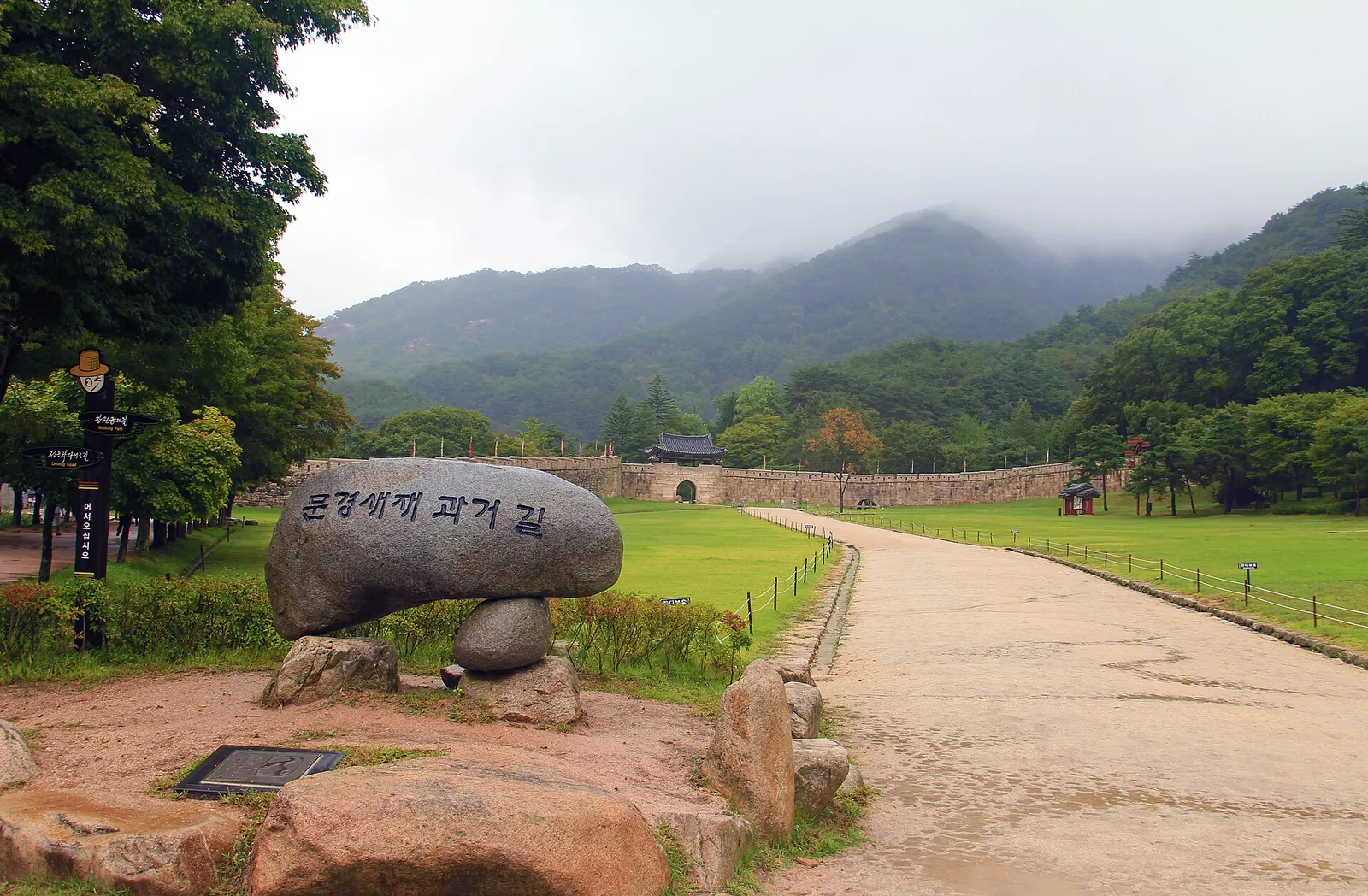
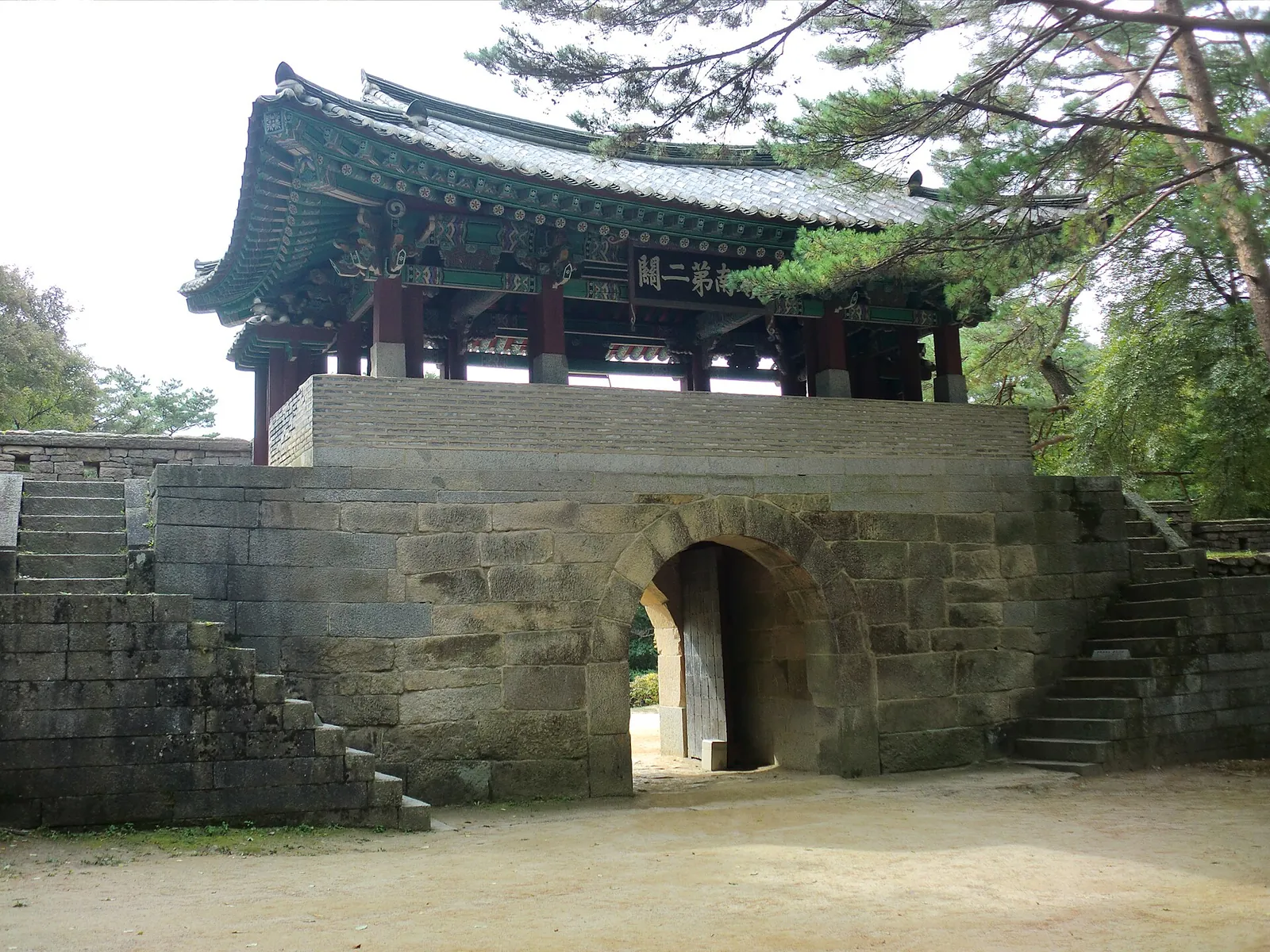
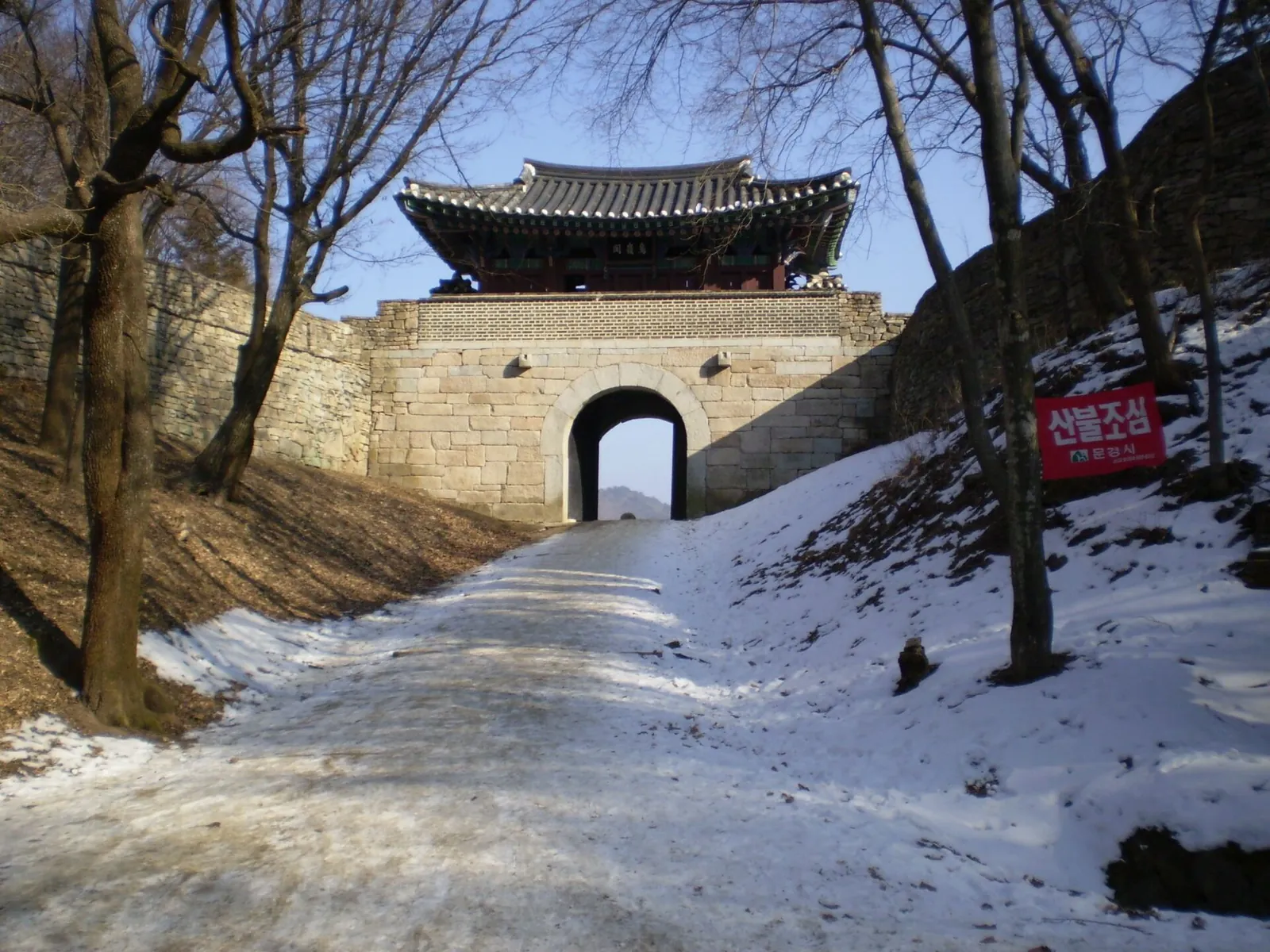
Start at Juheulgwan, the first gate, a stone gatehouse with walls running up the slopes on either side, near the park entrance. The path then follows the Joryeongcheon stream up through the forest to Jogokgwan, the second gate, and on to Joryeonggwan at the top of the pass, where the road crosses from Mungyeong into Goesan County, North Chungcheong. VisitKorea puts the walk from the first gate to the last and back at roughly four hours.
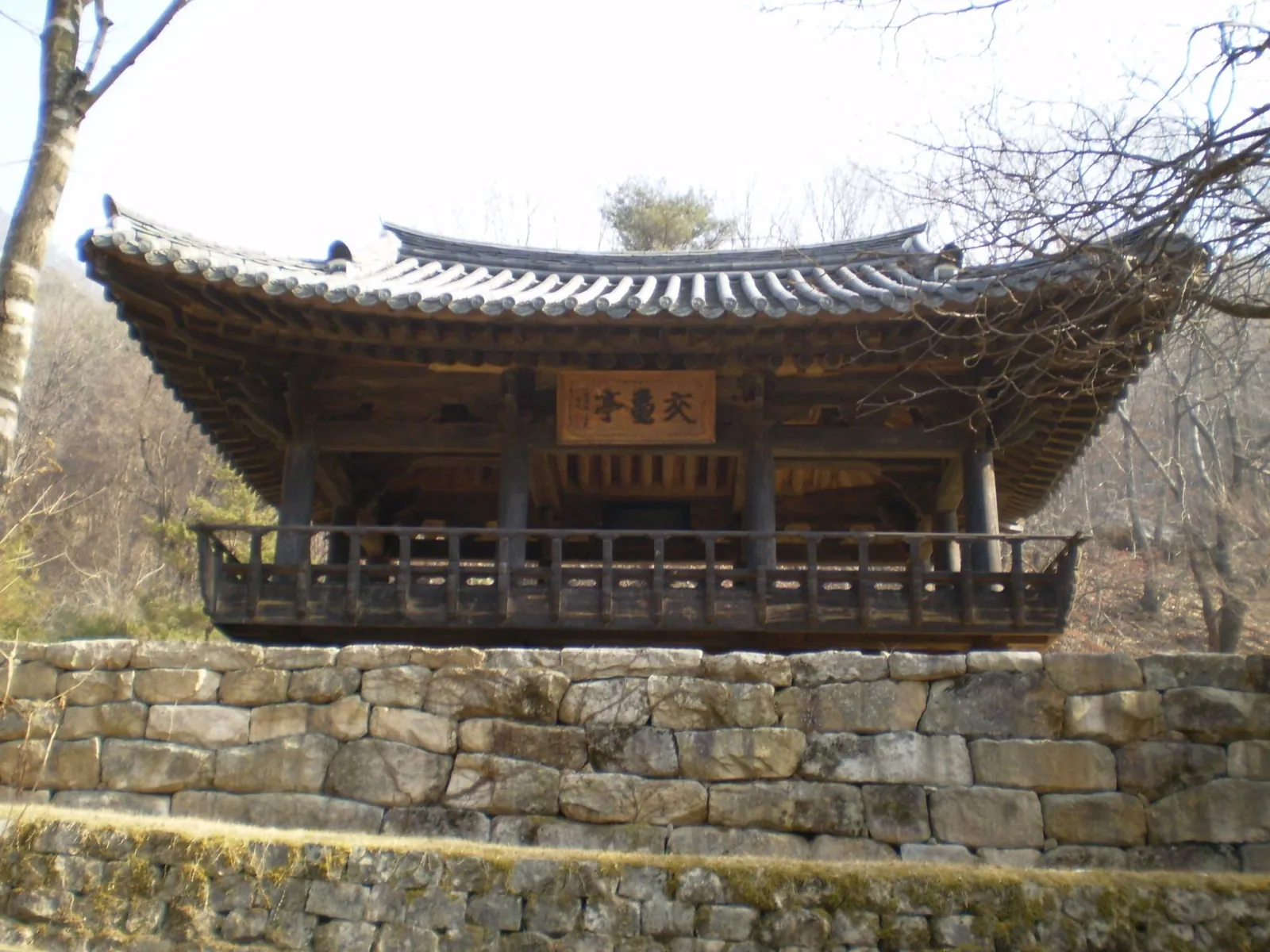
Along the way, look out for the sites that explain how the road worked. Joryeongwon is the site of a state inn where officials on the road were given lodging and food. Gyogwijeong is the pavilion where an outgoing governor of Gyeongsang Province handed over the office to his successor. A boulder called Madangbawi is said to be where bandits waited for travellers, and a small stone marked 'Sanbul dyosim' ('beware of forest fires'), thought to date from the late Joseon period, is a rare inscription in old Korean script alone, without Chinese characters.
If you are short of time, walk to the second gate and back and keep the museum for the end of the day. The pass road is also the venue for a barefoot walking festival: when we checked on 2026-10-03, VisitKorea listed the 2026 event on 22 August, with a 15,000 won fee.
Make time for the local food
What to eat and where to look
Seoksoe gui (gochujang-grilled meat)
Meat marinated in gochujang (red chilli paste) and grilled on a seoksoe, a wire grill. It is the dish the restaurants at the foot of the pass are known for, and VisitKorea's listing pairs it with grilled deodeok root, a green-onion pancake and acorn jelly.
- Where to look
- The restaurant cluster by the park entrance on Saejae-ro. VisitKorea lists Saejae Halmaejip (922 Saejae-ro), a long-running restaurant known for gochujang seoksoe gui, open 11:00–18:00 on weekdays and 11:00–18:30 at weekends when we checked.
- Fit it into your day
- Lunch or an early dinner after the walk; note that the park restaurants close early.
Spicy; ask which meat is used if you avoid pork or beef.
Dotorimuk and deodeok gui
Dotorimuk is a jelly made from acorn starch, served cold in slices with soy, chilli and vegetables; deodeok gui is the root of the bonnet bellflower, flattened and grilled with a sweet chilli glaze. Both are classic mountain side dishes, and both appear on the menus at the Saejae restaurants.
- Where to look
- Restaurants at the park entrance, alongside seoksoe gui.
- Fit it into your day
- Share as sides with a grilled main, or as a lighter meal with a pancake.
Dotorimuk is often dressed with a soy sauce that may contain wheat; deodeok glazes can be spicy.
Mapae tteok (horse-warrant rice cake) and omija sweets
Handmade glutinous rice cakes filled with red bean and stamped with the mapae, the horse warrant that Joseon secret royal inspectors carried. VisitKorea describes them as not too sweet, with crunchy nuts, and the same shop sells a 'Secret Royal Inspector' bread made with Mungyeong omija marmalade.
- Where to look
- Mungyeongsaejae Yetnal Chapssal Tteok, in the park car park at 914 Saejae-ro; VisitKorea lists 09:00–19:00, closed on Tuesdays.
- Fit it into your day
- Buy a box in the morning for the walk; VisitKorea notes they can sell out early.
Contains nuts.
Omija drinks: tea, makgeolli and OmyRosé
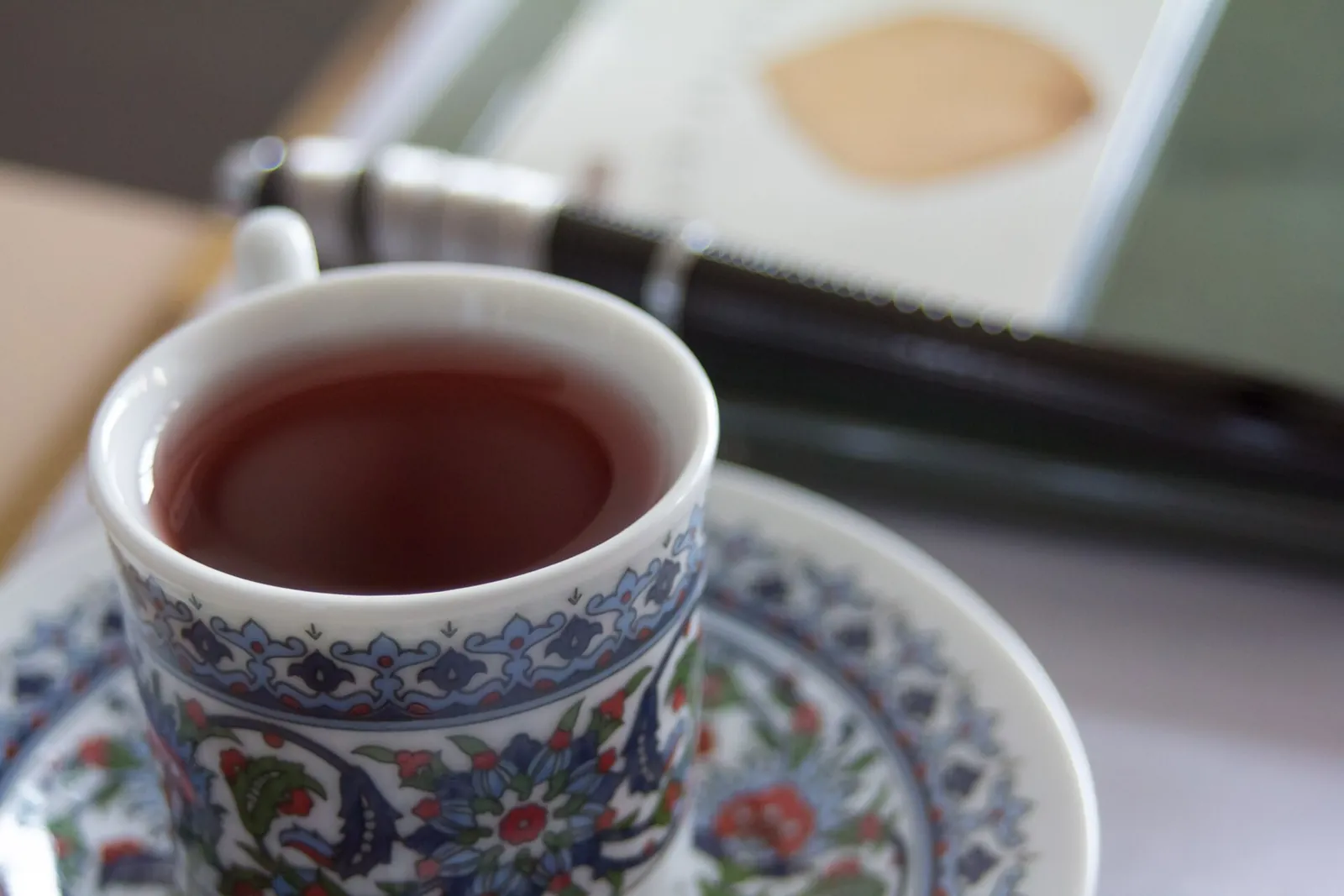
Mungyeong's omija turns up as a ruby-coloured tea or cold punch (omija-cha or hwachae), in omija makgeolli, which VisitKorea names among Korea's notable local rice wines, and in OmyNara's sparkling OmyRosé.
- Where to look
- Cafés and shops near the park entrance, the Omija Theme Tunnel shops, and the OmyNara winery at 609 Saejae-ro.
- Fit it into your day
- Omija tea after the walk; a bottle of omija makgeolli with dinner.
The tea is tart and is often sweetened with honey or sugar; makgeolli and OmyRosé contain alcohol.
Mungyeong yakdol hanu (local beef)
Korean beef raised with pegmatite ('yakdol', medicine stone), which the city promotes as a local speciality. Mungyeong Yakdol Hanu Town is a city-built butcher and restaurant serving grilled cuts, bulgogi hot pot, bibimbap and cold buckwheat noodles.
- Where to look
- Mungyeong Yakdol Hanu Town, 2426 Mungyeong-daero, Mungyeong-eup, next to the Ceramic Museum; VisitKorea lists 10:00–21:00, open all year.
- Fit it into your day
- Dinner in town on the night you stay, or lunch combined with the Ceramic Museum.
Grilled hanu is expensive; check prices per portion before ordering.
The Museum of Old Roads and the drama set
At the park entrance, the Museum of Old Roads (944 Saejae-ro) tells the story of Korea's traditional routes. Besides Saejae itself, the Mungyeong area holds Haneuljae, which VisitKorea describes as one of the oldest roads in Korea, opened in 156 AD, the Tokkibiri trade route and the old Yugok post station. The museum opened in 2009 in the former Mungyeongsaejae Museum. When we checked on 2026-10-03, VisitKorea listed hours of 09:00–18:00 from March to October and 09:00–17:00 from November to February, with last admission 30 minutes before closing, closed on New Year's Day, Seollal and Chuseok, and admission of 1,000 won for adults and 700 won for children.
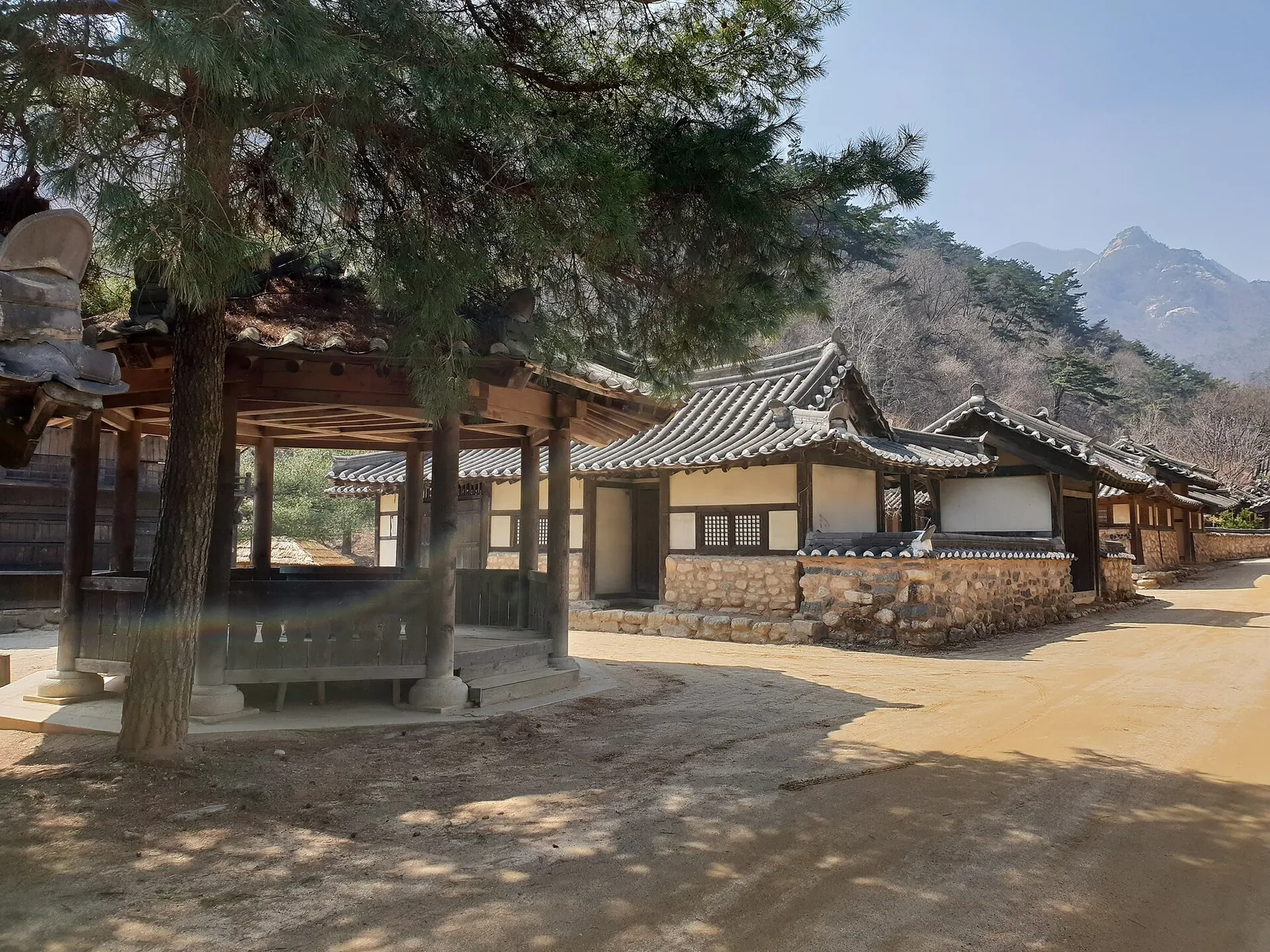
The Mungyeongsaejae Open Set, inside the provincial park, is a large Joseon-era town built for filming. VisitKorea names dramas shot here including *The Moon Embracing the Sun* (2012), *Kingdom* (2019) and *The Red Sleeve* (2021), and its best-known corner is a replica of Gwanghwamun Gate, with a hanok quarter, a market street and a commoners' village. When we checked on 2026-10-03, VisitKorea listed the same seasonal hours as the museum and admission of 2,000 won for adults, 1,000 won for teenagers and 500 won for children. It closes on 1 January, Seollal and Chuseok, and also during maintenance and filming, so check before you plan your day around it.
Parking is at the park entrance. VisitKorea's listings disagree on the charge — the park entry says parking is free, the museum and Juheulsan entries list 2,000 won for a car — so expect to pay a small fee.
Omija, tea bowls and pottery
Omija (Schisandra chinensis) is the fruit of the 'five flavours', at once sour, sweet, bitter, pungent and salty. VisitKorea says Mungyeong produces about 45% of Korea's omija, and it turns up as tea, makgeolli, bread and sweets around the park. OmyNara (609 Saejae-ro), on the road down from the pass, is an omija winery making a sparkling wine called OmyRosé by traditional fermentation, with winery tours and tastings; VisitKorea lists it as open 09:00–18:00.
Mungyeong is also one of Korea's historic pottery towns: VisitKorea says its kilns have produced buncheong ware since the early Joseon period, and that its tea bowls are made with local clay and fired in wood-burning mangdaengi kilns. The free Mungyeong Ceramic Museum (2416 Mungyeong-daero, Mungyeong-eup) introduces the tradition; when we checked on 2026-10-03, VisitKorea listed 09:00–18:00 from March to October and 09:00–17:00 from November to February, closed on Mondays and on New Year's Day, Seollal and Chuseok. Yeongnamyo (579 Saejae-ro), a family pottery with a long lineage, is listed as open 09:00–18:00 and closed on Mondays.
The best time for both is a festival. The Mungyeong Chasabal Festival, devoted to tea bowls, fills the provincial park in spring, with bowl-making and tea-ceremony programmes; VisitKorea listed it for 1–10 May 2026, free to enter with some paid programmes. The Mungyeong Omija Festival is held in early autumn in Dongno-myeon, in the east of the city; in 2025 VisitKorea listed it on 19–21 September, with omija syrup-making and tastings.
With a second day: the old coal valley
South of Mungyeong-eup, around Jinnam in Maseong-myeon, old railway lines that once carried coal from the Mungyeong coalfield have been turned into attractions. The Omija Theme Tunnel (1356-1 Mungyeong-daero, Maseong-myeon) is the 540-metre Seokhyeon railway tunnel, now lit as a 'starlight tunnel' with trick art and omija and pottery shops, and VisitKorea says it stays at 15 to 18°C all year. When we checked on 2026-10-03, VisitKorea listed it as closed on Mondays, with admission of 3,500 won for adults. Above it, Gomosanseong is a Silla-era mountain fortress about 1,300 metres round, free and open at all hours, with wide views from its walls.
Nearby, the Mungyeong Rail Bike runs pedal cars on the old coal line from Jinnam and Gurang-ri stations. When we checked, VisitKorea listed 09:00–17:00 (13:00–17:00 on Seollal and Chuseok), with Jinnam closed on Mondays and Gurang-ri on Tuesdays, and 25,000 won for a four-seater or 15,000 won for a two-seater. In Gaeun-eup, the Mungyeong Coal Museum (112 Wangneung-gil) covers the miners' lives and the industry that powered Korea's growth; VisitKorea listed adult admission at 2,000 won, or 6,000 won combined with the mine-tunnel experience hall.
For something more active, Mungyeong Flying Land offers tandem paragliding: when we checked on 2026-10-03, VisitKorea listed a Regular Course at 130,000 won, ages six and up, with no flights in rain or bad weather. Without a car, all of these are easiest by taxi from Mungyeong-eup or Jeomchon.
Mungyeong also works as a stop on a slow route across the mountains. From Jeomchon Station, the Gyeongbuk Line continues to Yeongju, a good next stop before Andong. Danyang, with its river cliffs and caves, lies to the north, and VisitKorea's listing for STX Resort, by Ssangyonggyegok Valley in Mungyeong, places Songnisan National Park within reach.
Practical questions
How long does it take to walk Mungyeong Saejae?
VisitKorea gives roughly four hours for the round trip from the first gate, Juheulgwan, to the third gate, Joryeonggwan, and back. Walking only to the second gate, Jogokgwan, and back is a shorter and easier option.
Is there an entrance fee for Mungyeong Saejae?
The provincial park itself is free and open 24 hours, according to VisitKorea. When we checked on 2026-10-03, the Mungyeongsaejae Open Set charged 2,000 won for adults and the Museum of Old Roads 1,000 won.
How do I get to Mungyeong Saejae from Seoul?
KTX-Eum trains on the Jungbu Naeryuk Line run from Pangyo via Chungju to Mungyeong Station, which opened in Mungyeong-eup on 30 November 2024. Intercity buses also run from Dong Seoul Terminal to Mungyeong. From the station or terminal, take a taxi or local bus to the park entrance. Check current times on Korail or at the terminal before travelling.
Which dramas were filmed at the Mungyeongsaejae Open Set?
VisitKorea lists The Moon Embracing the Sun (2012), Kingdom (2019) and The Red Sleeve (2021) among others. The set closes during filming and maintenance as well as on 1 January, Seollal and Chuseok.
Is Mungyeong Saejae the same as Mungyeong city centre?
No. The pass and the provincial park are at Mungyeong-eup in the north of the city. The city centre, with City Hall, Jeomchon Station and the main bus terminal, is at Jeomchon, further south.
What is omija?
The fruit of Schisandra chinensis, known as the five-flavour berry. VisitKorea says Mungyeong grows about 45% of Korea's crop; you can try it as tea, makgeolli or sparkling wine.
Sources and checks before you travel
Reference sources for the version dated 3 October 2026. Confirm opening times, access, transport and conditions for your travel dates.
- VisitKorea: Mungyeongsaejae Provincial Park ↗ — opens in a new tab
- VisitKorea: Mungyeongsaejae Open Set ↗ — opens in a new tab
- VisitKorea: Mungyeongsaejae Open Set (older listing) ↗ — opens in a new tab
- VisitKorea: Museum of Old Roads ↗ — opens in a new tab
- VisitKorea: Juheulsan Mountain ↗ — opens in a new tab
- VisitKorea: Mungyeong Tourist Hotel ↗ — opens in a new tab
- VisitKorea: Mungyeongsaejae Youth Hostel ↗ — opens in a new tab
- VisitKorea: Saejae Halmaejip ↗ — opens in a new tab
- VisitKorea: Mungyeongsaejae Yetnal Chapssal Tteok ↗ — opens in a new tab
- VisitKorea: Mungyeong Yakdol Hanu Town ↗ — opens in a new tab
- VisitKorea: Lee Jong-ki's Ominara (Luxury Korea) ↗ — opens in a new tab
- VisitKorea: OmyNara ↗ — opens in a new tab
- VisitKorea: Beverages and desserts ↗ — opens in a new tab
- VisitKorea: Like a Local — Mungyeong tea cup ↗ — opens in a new tab
- VisitKorea: Mungyeong Ceramic Museum ↗ — opens in a new tab
- VisitKorea: Yeongnamyo ↗ — opens in a new tab
- VisitKorea: Mungyeong Chasabal Festival ↗ — opens in a new tab
- VisitKorea: Mungyeong Omija Festival ↗ — opens in a new tab
- VisitKorea: Mungyeong Saejae Bare-foot Walking Festival ↗ — opens in a new tab
- VisitKorea: Mungyeong Omija Theme Tunnel ↗ — opens in a new tab
- VisitKorea: Gomosanseong Fortress ↗ — opens in a new tab
- VisitKorea: Mungyeong Rail Bike ↗ — opens in a new tab
- VisitKorea: Mungyeong Coal Museum ↗ — opens in a new tab
- VisitKorea: Mungyeong Eco World ↗ — opens in a new tab
- VisitKorea: Mungyeong Flying Land ↗ — opens in a new tab
- VisitKorea: STX Resort ↗ — opens in a new tab
- VisitKorea: Bongmyeongsan Suspension Bridge ↗ — opens in a new tab
- Wikipedia (Korean): Mungyeongsaejae ↗ — opens in a new tab
- Wikipedia: Mungyeong Saejae ↗ — opens in a new tab
- Wikipedia (Korean): Mungyeong Station ↗ — opens in a new tab
- Wikipedia (Korean): Jungbu Naeryuk Line ↗ — opens in a new tab
- Wikipedia (Korean): Mungyeong-si ↗ — opens in a new tab
- VisitKorea: Express bus and intercity bus ↗ — opens in a new tab
- VisitKorea: Airport transportation ↗ — opens in a new tab
- VisitKorea: 2026 fall foliage forecast ↗ — opens in a new tab
Does this experience fit your route?
Mungyeong is easiest on your own by train and taxi, but if you would rather join a guided day from Seoul, check that the itinerary includes the Saejae gates and enough time to walk at least to the second gate.
Browse relevant experiences on Viator ↗ — opens in a new tabAffiliate link · Book with ViatorPhoto credits
Juheulgwan, the first gate, and the stone marking the old scholars' road at Mungyeong Saejae
Photograph: Tungdangthanh — opens in a new tab · CC BY-SA 4.0 — opens in a new tab
Changes: Resized and converted to WebP; displayed with responsive crops. · Original photograph and licence details ↗ — opens in a new tab
Jogokgwan, the second gate, halfway up the pass
Photograph: hyolee2 — opens in a new tab · CC BY-SA 4.0 — opens in a new tab
Changes: Resized and converted to WebP; displayed with responsive crops. · Original photograph and licence details ↗ — opens in a new tab
Gyogwijeong pavilion, where outgoing governors of Gyeongsang handed over the office
Photograph: No machine-readable author provided. Visviva assumed (based on copyright claims). — opens in a new tab · Public domain — opens in a new tab
Changes: Resized and converted to WebP; displayed with responsive crops. · Original photograph and licence details ↗ — opens in a new tab
Joryeonggwan, the third gate at the top of the pass, in winter
Photograph: No machine-readable author provided. Visviva assumed (based on copyright claims). — opens in a new tab · Public domain — opens in a new tab
Changes: Resized and converted to WebP; displayed with responsive crops. · Original photograph and licence details ↗ — opens in a new tab
Joseon-era streets at the Mungyeongsaejae Open Set drama set
Photograph: Choi2451 — opens in a new tab · CC BY-SA 4.0 — opens in a new tab
Changes: Resized and converted to WebP; displayed with responsive crops. · Original photograph and licence details ↗ — opens in a new tab
Omija-cha, the tart five-flavour berry tea made from the fruit Mungyeong is known for
Photograph: Raheel Shahid — opens in a new tab · CC BY 2.0 — opens in a new tab
Changes: Resized and converted to WebP; displayed with responsive crops. · Original photograph and licence details ↗ — opens in a new tab