Sulawesi · Southeast Sulawesi
Wakatobi guide: choosing an island, dive bases, flights and boats
Wakatobi is a chain of islands off the south-eastern tip of Sulawesi whose name is built from its four largest islands: Wangi-Wangi, Kaledupa, Tomia and Binongko. The whole regency is a marine national park and a UNESCO biosphere reserve, and Wikivoyage notes that its reefs see far fewer divers than better-known parks such as Komodo and Bunaken. What decides a Wakatobi trip is not which reef you want to see but how you get there: flights are few, the islands are linked by boats that mostly leave once a day in the early morning, and the island you sleep on sets how much time you spend underwater rather than in transit.
- Suggested time
- 7–10 nights
- Where to stay
- Tomia (Waha, or the resort island of Tolandona) or Hoga off Kaledupa for diving; Wanci on Wangi-Wangi for arrival and departure nights
- Season and timing
- Diving runs year-round. The Wakatobi tourism authority names October to December and March to May as the best months, when winds are lighter and boat crossings easier; May to August is the drier season and December to April the rainier one. Water is coolest, around 25–27°C, from June to October.
The short answer
Give it a week, and ten days if you plan to move between islands. There are two very different ways to do it. The first is the all-inclusive dive resort on Tolandona, off Tomia, whose guest charter flies from Bali straight to its own airstrip; you dive daily and never deal with local transport. The second is independent: fly to Matahora (WNI) on Wangi-Wangi via Kendari, sleep a night in Wanci, then take the morning boat to Hoga (via Kaledupa) or Tomia and stay at least four or five nights with a local dive operator. Bring all the cash you need from Wanci and leave a spare day before any flight out, because boats do not sail in high waves.
Pick your island first: Wangi-Wangi, Hoga or Tomia
Wakatobi is not one place with day trips; it is four main islands and many small ones spread across open sea, and the boats between them run on a daily or less-than-daily rhythm. Choose the island where you will dive or snorkel, and plan the rest of the trip around reaching it.
Wangi-Wangi is the gateway. Its main town, Wanci, has the airport, the main harbour, the regency offices, the banks and by far the most warungs. The Wakatobi tourism authority calls diving around Wangi-Wangi "the easiest option" because of the airport and harbour, with sites such as Waha Cemara, Sombu, Wandoka Pinnacle and Kapota Pinnacle off the west coast and Kapota Island. It suits a short trip or a first and last night.
Hoga, a small island about 15 minutes by boat from Kaledupa, has no roads or vehicles, a few homestays and two dive resorts, and reefs used by the research organisation Operation Wallacea. The tourism authority counts 22 dive sites within 30 minutes of the island, including Channel Drop Off, Outer Pinnacle and The Ridge, and notes that June to August and March to April, when the researchers are in residence, are Hoga's busiest periods. Kaledupa itself is the quietest of the main islands, with mangroves, stilt-house villages and the Bajo village of Sampela offshore.
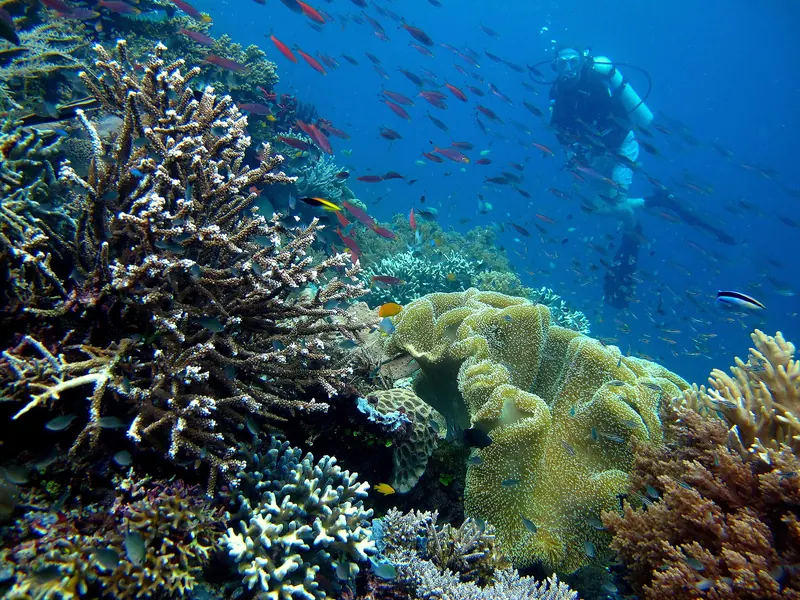
Tomia has the largest number of named dive sites in Wakatobi; the tourism authority puts them at more than 40, most reached by boat, with Roma, Mari Mabuk, Ali Reef and the Kulati wreck among the favourites. Independent travellers stay around Waha, the main harbour town on the west coast, or at Kulati in the east. On Tolandona, the small island just south-west of Tomia, the private Wakatobi Dive Resort runs its own all-inclusive operation and flights, and is effectively a separate trip.
Getting there: Matahora flights, the Bali charter and the Kendari boat
The public gateway is Matahora Airport (WNI) on the east side of Wangi-Wangi, about 11 kilometres from Wanci. Scheduled services there have started and stopped repeatedly. When we checked on 2026-10-03, Wikipedia's airport article listed FlyJaya as the only airline on the Kendari route and TransNusa to Denpasar, and said Wings Air had suspended its Kendari flights in May 2025; Wikivoyage, updated in December 2025, reported only two Kendari flights a week. Treat this as a lead, not a schedule, and confirm with the airline before you book the rest of the trip.
Guests of the Wakatobi Dive Resort fly in another way. The resort's site says its guest flight goes from Bali to its own airstrip on Tomia in about two and a half hours, generally on a Monday and Friday pattern that varies with the season, leaving in the morning and arriving in time for lunch. The charter is only for resort guests, so independent travellers cannot use it to reach Tomia.
Without a flight, you can come by sea. The tourism authority and Wikivoyage both describe a boat from Kendari, the provincial capital, to Wanci that leaves in the morning and takes about 10 hours, with several operators running on different days. Another route is to fly to Baubau on Buton and cross from Buton's east coast; Wikivoyage puts the crossing at about three hours from Pasarwajo and two from Lasalimu, each about one to two hours' drive from Baubau. The tourism authority warns that boats do not sail when the waves are too high and that safety standards may be lower than you are used to.
Make time for the local food
What to eat and where to look
Grilled fish at the Wanci night market
Snapper, tuna, barracuda, crabs and sea urchins from the day's catch, laid out on wooden tables, with grilled fish and traditional dishes prepared at the front of the market. The tourism authority notes that the sea urchins are eaten raw or lightly steamed.
- Where to look
- The Pasar Malam at Marina Bay, near the ferry harbour in Wanci, which the tourism authority says opens around 4 pm; Wikivoyage also points to the seafood restaurant on stilts beside it.
- Fit it into your day
- Dinner on your arrival or departure night in Wanci.
Choose fish that is grilled through in front of you, and go easy on raw sea urchin if you are not used to it.
Parende fish soup
A fish soup that Wikivoyage calls one of Wakatobi's most prominent delicacies, cooked in small restaurants and homes across the islands.
- Where to look
- Small restaurants by the ferry port in Ambeua on Kaledupa and on Binongko, or ask your homestay to cook it.
- Fit it into your day
- Lunch on a travel day, or a homestay dinner.
Made with whole fish; watch for bones.
Soami, perangi and Liya Togo snacks
The Ministry of Tourism lists the dishes the women of Liya Togo are known for: perangi (likened to a Wakatobi-style sashimi), karasi (crispy rice noodles), dole fish nuggets and hesoami, plus snacks to take home such as soami, cassava chips, fish chips and tangkulela syrup.
- Where to look
- Liya Togo village in the south of Wangi-Wangi, or the morning cake sellers outside Pasar Sentral Mola, the main market near the regency office.
- Fit it into your day
- A morning market visit or snacks on a Liya Togo afternoon.
Perangi is raw fish; eat it only where it is freshly made.
Satay and pisang epe on Tomia
Charcoal-grilled satay, pisang epe (grilled banana) for dessert and a wide choice of fish and other Indonesian dishes, sold from evening food stalls.
- Where to look
- The stalls along Lakota Beach in Waha, which the tourism authority describes as the island's evening food spot.
- Fit it into your day
- Dinner on a non-diving evening on Tomia.
The tourism authority recommends ordering lunch and dinner at your hotel or homestay on Tomia, as restaurant choice is limited.
Homestay and resort meals
On Kaledupa, Hoga and Binongko, most meals are cooked where you sleep. The tourism authority praises Kaledupa's homestay cooking with fresh fish, crab, shrimp and local vegetables, and says Binongko has no restaurants at all.
- Where to look
- Your homestay or resort; ask for a packed lunch before a day trip or a boat day.
- Fit it into your day
- Plan on full board away from Wanci and Waha.
Tell your host in advance if you are vegetarian or have allergies; the tourism authority notes that refusing offered food is seen as impolite.
Moving between the islands: morning boats from Wanci
Once you are in Wakatobi, the tourism authority says plainly that the only way between islands is by boat, and that flight and boat schedules often do not connect, so you may need a night on Wangi-Wangi before catching the next morning's boat. Plan for that night rather than hoping to avoid it.
When we checked on 2026-10-03, the tourism authority's getting-around page listed regular boats from Numana harbour in Wanci at about 8 am to Kaledupa (two to three hours) and to Tomia (three to four hours), and a speedboat to Waha on Tomia at about 2 pm; in the other direction, boats left Kaledupa at about 6 am, the Tomia speedboat at about 6 am and the regular Tomia boat at about 9 am. The page itself says that all times are subject to change and asks visitors to have their accommodation check daily. Wikivoyage, updated in 2025, describes the same pattern for Tomia.
For Hoga, take the Kaledupa boat; the tourism authority says it stops off Hoga when enough passengers want to get off, and otherwise you take a small boat from Ambeua harbour on Kaledupa, which homestays and Hoga resorts usually arrange. Wikivoyage notes that the boat from Ambeua to Hoga can only leave at high tide. On the larger islands, ojek motorbike taxis and rented scooters cover the roads; ride-hailing apps are largely absent beyond Wangi-Wangi.
Build a buffer into the end of your trip. The tourism authority says boats cannot cross in big waves, and Wikivoyage recommends flexibility especially when leaving to catch a flight. Sleeping your last night in Wanci, close to the airport, is the safest plan.
Diving and snorkelling: currents, slack tide and what to choose
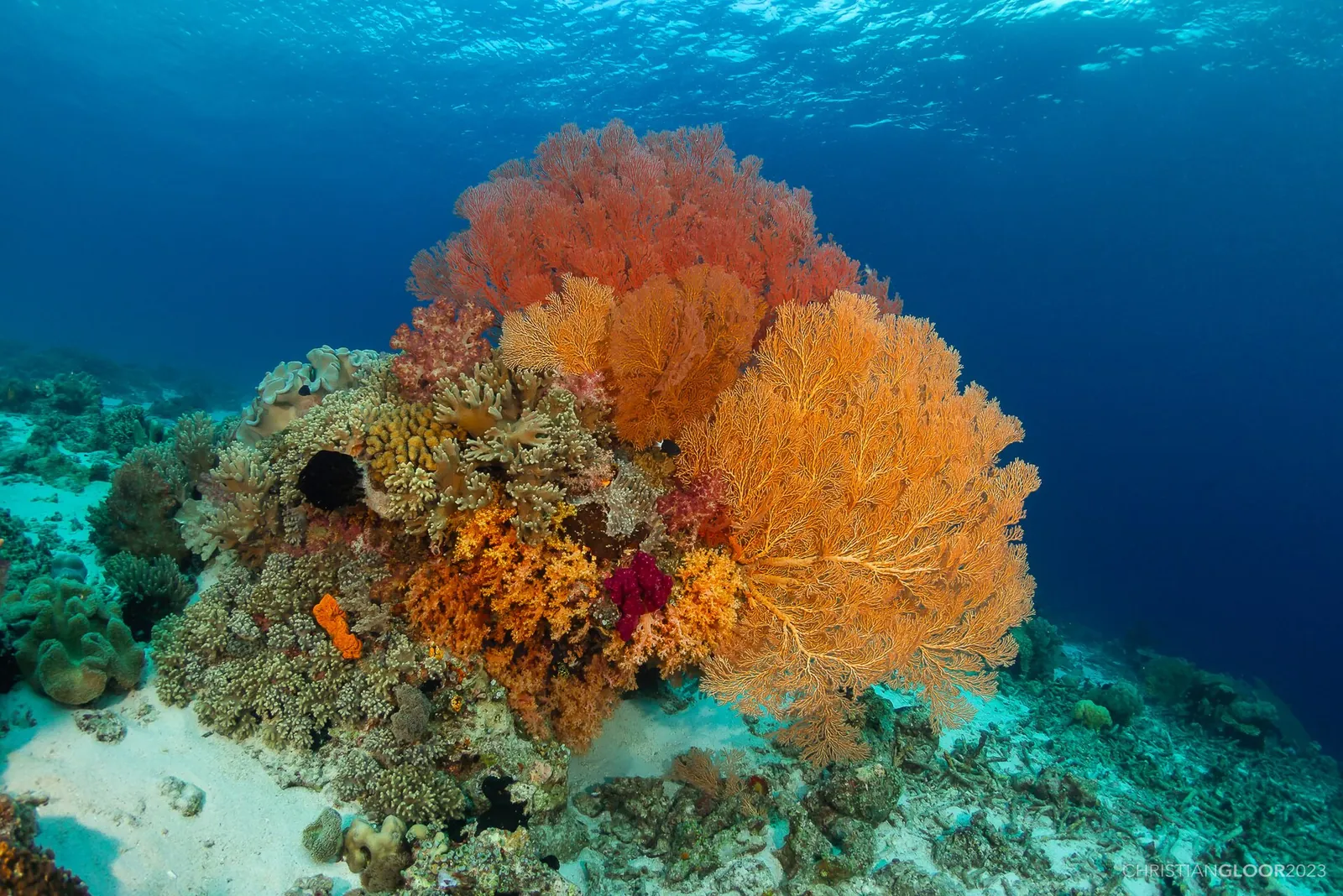
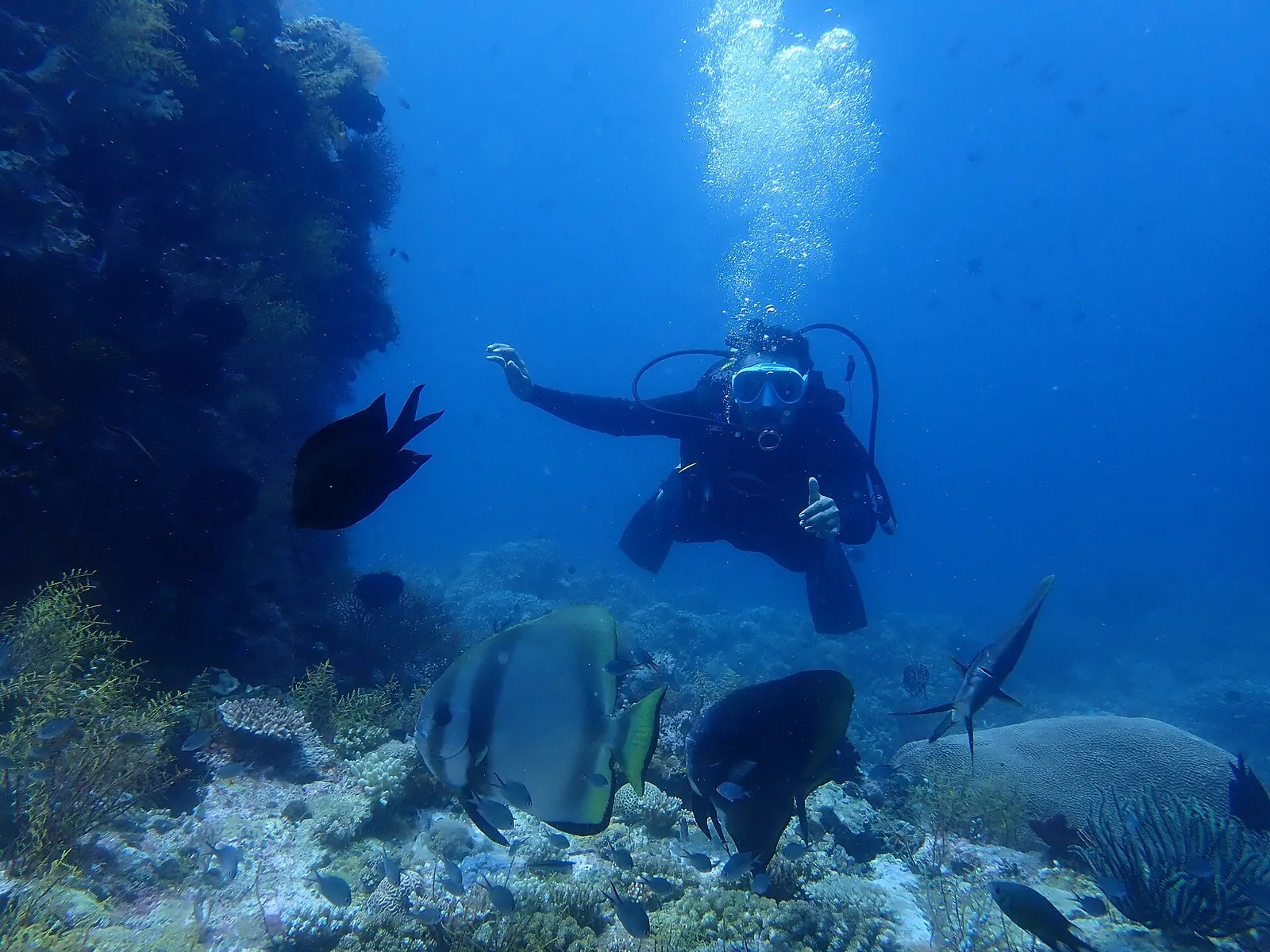
UNESCO's biosphere reserve listing counts about 590 fish species and 396 coral reef species in Wakatobi, along with turtles, dugongs and several species of dolphins and whales. The tourism authority describes more than 50 dive sites reached from the main islands, in every style from walls and slopes to seamounts, pinnacles, channels and drift dives. The resort on Tolandona says underwater visibility is mostly between 20 and 50 metres, partly because there are no rivers carrying sediment.
The tourism authority's site profiles show why it matters to dive with operators who know the tides. Mari Mabuk, off Tomia's west coast, has strong currents and is recommended only for experienced divers, at slack tide. Roma, nearby, is a coral garden around a pinnacle suitable for all divers. The Kulati wreck on Tomia's east side, a 30-metre Japanese cargo ship covered in coral at 5 to 21 metres, has only weak current but is reachable only in calm seas. Channel Drop Off between Hoga and Kaledupa is a drift dive with schooling barracuda and eagle rays, for experienced divers and not advised for snorkelling.
Snorkellers do well here, but Wikivoyage advises bringing your own mask, snorkel and fins rather than counting on rental gear, and warns that some spots have strong currents: snorkel with someone in a boat watching you, or ask at a local dive shop first. Roma and the Kulati wreck are rated good for snorkelling by the tourism authority; Wikivoyage also lists the reef off Hoga.
Plan for the remoteness. The tourism authority's health page says that a diver with confirmed decompression sickness must be evacuated to Makassar or Bali, that the hospital in Wanci is basic, and that the decompression chamber on Wangi-Wangi was not running at its last update. Carry dive insurance that covers evacuation, dive conservatively and ask your operator about its emergency plan before the first dive.
Above the water: Bajo villages, Liya Togo and Tomia's forts
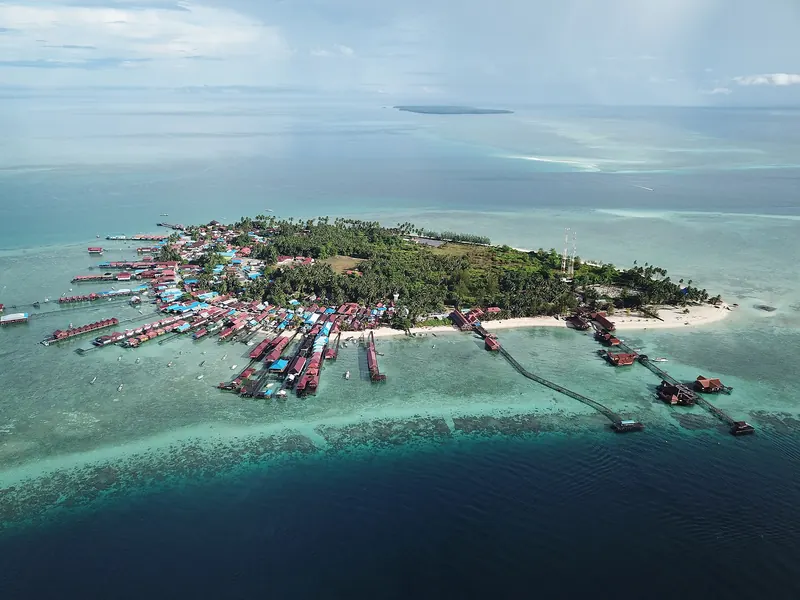
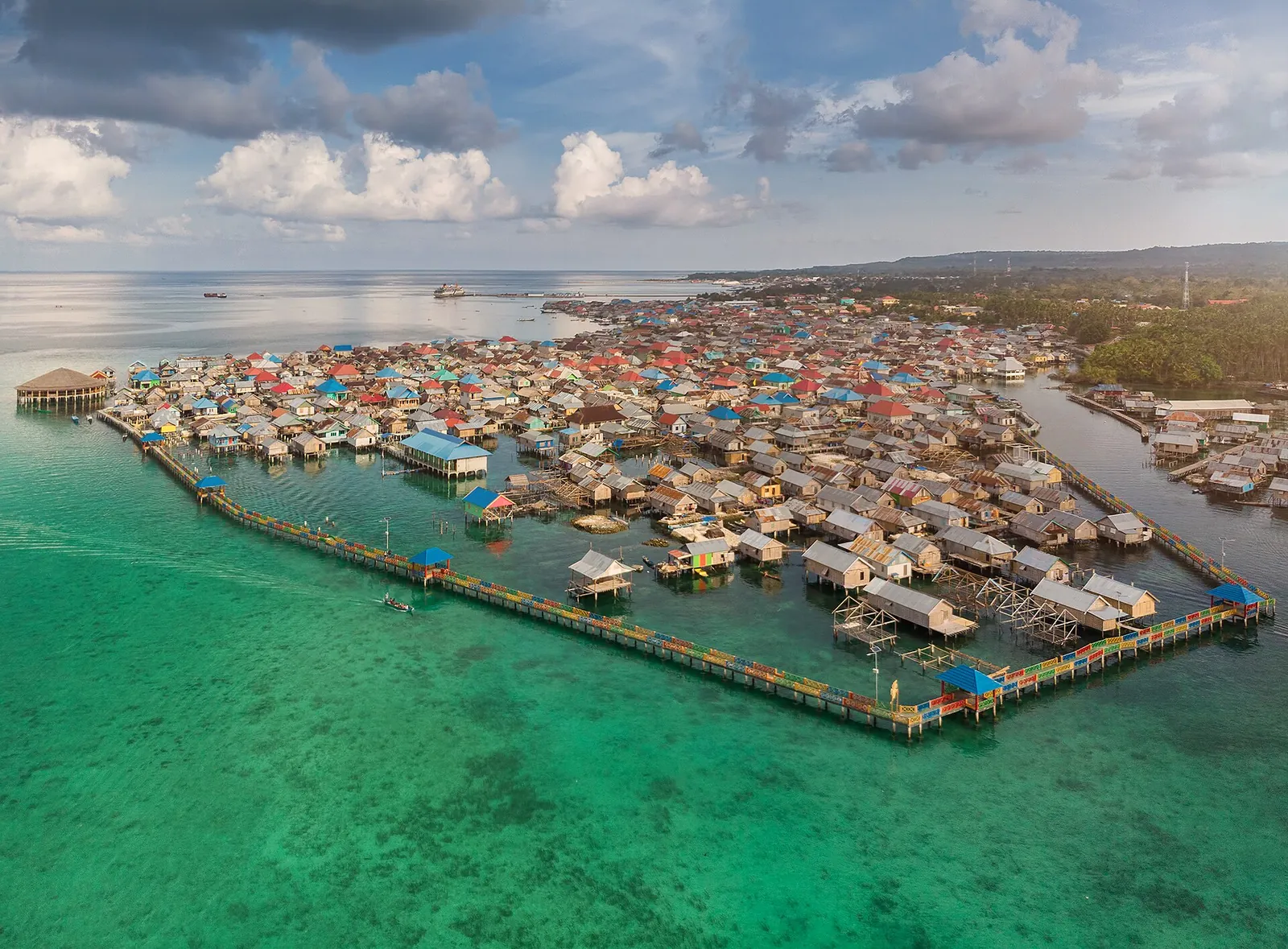
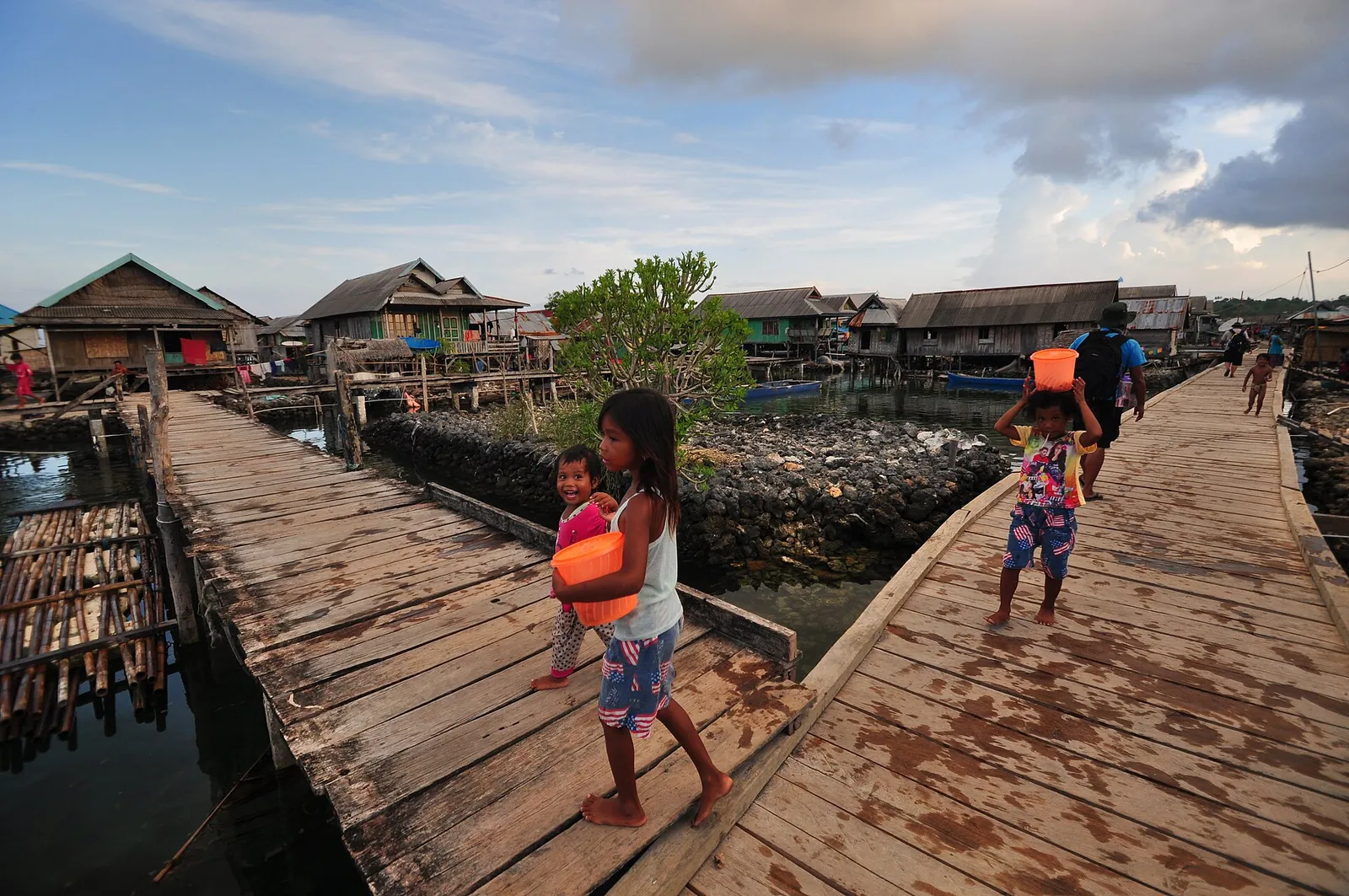
Wakatobi's Bajo communities, descendants of sea nomads, live in stilt villages built over the reef. The tourism authority describes Bajo Mola on Wangi-Wangi, the largest Bajo settlement in the region, where a community tourism office runs walking tours and dawn dolphin-watching trips to the waters around Kapota Island, about 40 minutes by boat. Off Kaledupa, Sampela is a Bajo village of wooden stilt houses about 10 minutes by boat from Ambeua harbour and 20 minutes from Hoga, with a small homestay.
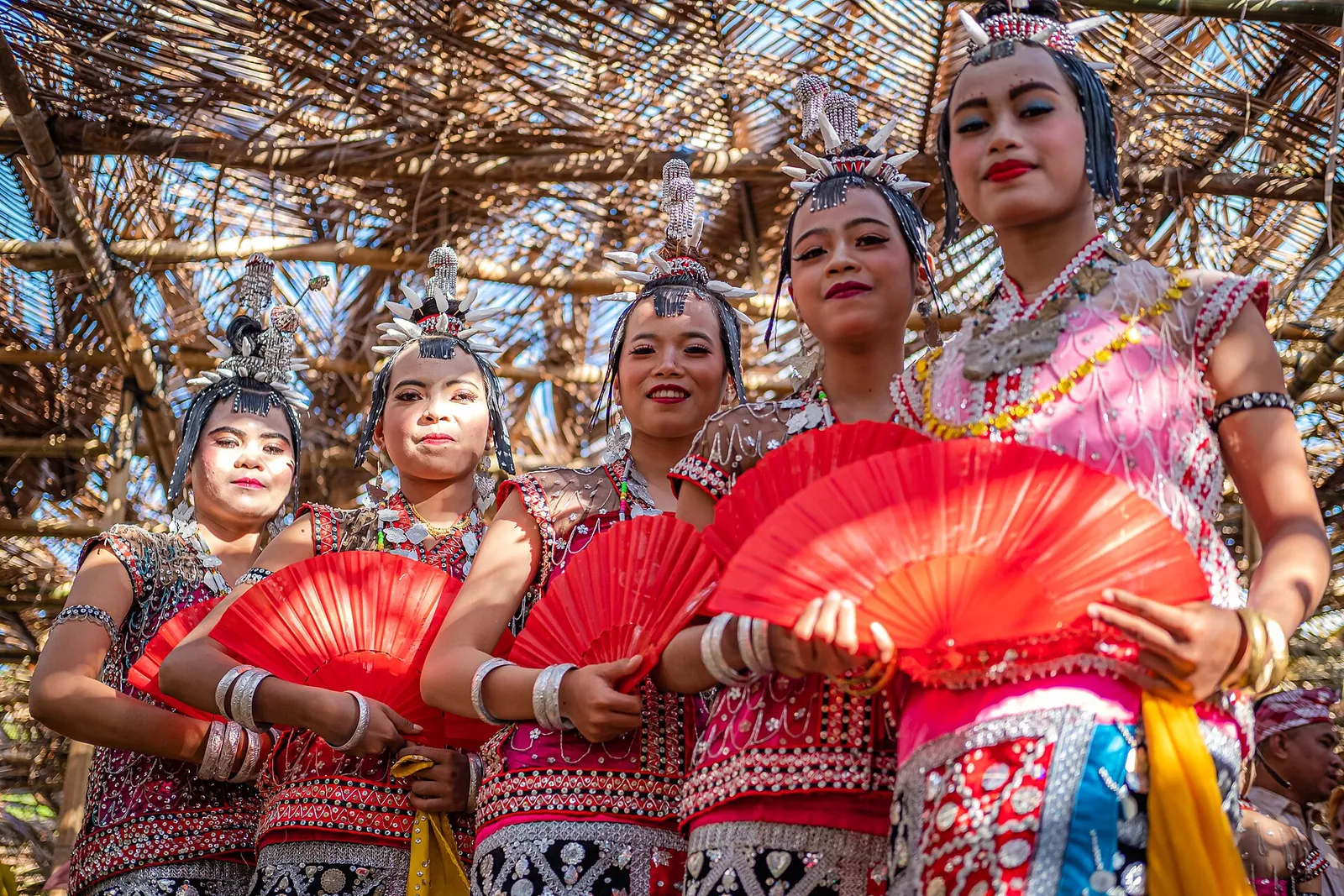
Liya Togo, in the south of Wangi-Wangi, is the Ministry of Tourism's choice for culture: a village inside the stone walls of Liya Fort, a relic of the Buton Kingdom, with the Mubarok Mosque in its innermost ring, Lariangi dances by the village women, handwoven homoru cloth and homestays in raised houses. It is about 15 minutes from the centre of the regency.
On Tomia, the tourism authority and the Ministry of Tourism recommend Patua Fort, which the ministry describes as built from piled coral rock, and a sunset ride by motorbike to Kahianga Peak, one of the island's highest points, where locals come for a picnic at dusk. Binongko, the most remote of the four, gave the archipelago its old name, Tukang Besi ("blacksmith"): the tourism authority describes forges in villages such as Popalia where machetes are still made by hand.
The Wakatobi WAVE festival on Wangi-Wangi brings cultural parades, including the Karia coming-of-age procession and decorated Bajo boats, along with turtle releases and coral planting. When we checked on 2026-10-03, the Ministry of Tourism's event page listed the 2026 edition for 2 to 4 October; check that page for later years.
Practical: cash, power, signal and dress
Bring cash. The tourism authority says Wakatobi's banks (BNI, BRI and Danamon) are all in Wanci, that only a few hotels and restaurants accept cards, and that there are no money changers. Withdraw what you need for the outer islands before you leave Wangi-Wangi.
Expect limited power and internet away from Wangi-Wangi. The tourism authority's practical page says electricity on Kaledupa, Tomia and Binongko may run only from evening to early morning, that mobile internet works reliably only on Wangi-Wangi and that Telkomsel has the best coverage. Charge cameras and dive computers whenever the power is on.
Wakatobi is predominantly Muslim. The tourism authority asks women to wear a T-shirt and shorts over swimwear away from hotels and empty beaches, to dress modestly in villages, and visitors to be discreet about eating and drinking in public during Ramadan. Use your right hand for giving and receiving, and take off your shoes when you enter a home.
Practical questions
How do I get to Wakatobi?
Fly to Matahora Airport (WNI) on Wangi-Wangi, usually via Kendari, or take the roughly 10-hour boat from Kendari to Wanci. Guests of the Wakatobi Dive Resort fly on the resort's own charter from Bali to an airstrip on Tomia. Scheduled flights to Matahora change often, so confirm with the airline.
Which island is best for diving in Wakatobi?
Tomia has the most named dive sites, more than 40 according to the tourism authority, and Hoga off Kaledupa has about 22 within 30 minutes by boat. Wangi-Wangi is the easiest to reach and works for a short stay.
How long should I stay in Wakatobi?
At least a week. Getting there and between islands takes time, boats mostly leave once a day in the early morning, and you need a buffer day before your flight out in case boats cannot sail.
When is the best time to visit Wakatobi?
Diving is possible all year. The tourism authority names October to December and March to May as the best months for calm seas and easy boat crossings. Water is coolest from June to October, when a thicker wetsuit helps.
Are there ATMs in Wakatobi?
Only in Wanci on Wangi-Wangi, according to the tourism authority, and few places accept cards. Take enough cash for your whole stay on Kaledupa, Hoga, Tomia or Binongko.
Is there a decompression chamber in Wakatobi?
The tourism authority says the chamber on Wangi-Wangi was not running at its last update and that divers with decompression sickness are evacuated to Makassar or Bali. Ask your dive operator about the current situation and carry insurance that covers evacuation.
Sources and checks before you travel
Reference sources for the version dated 3 October 2026. Confirm opening times, access, transport and conditions for your travel dates.
- UNESCO Man and the Biosphere Programme: Wakatobi ↗ — opens in a new tab
- Wakatobi Tourism (regency tourism authority): Getting Around ↗ — opens in a new tab
- Wakatobi Tourism: About Wakatobi ↗ — opens in a new tab
- Wakatobi Tourism: Practical Information ↗ — opens in a new tab
- Wakatobi Tourism: Health & Safety ↗ — opens in a new tab
- Wakatobi Tourism: Tomia, Kaledupa and Wangi-Wangi island pages ↗ — opens in a new tab
- Wakatobi Tourism: Hoga Island ↗ — opens in a new tab
- Wakatobi Tourism: dive site profiles (Mari Mabuk, Roma, Wreck of Kulati, Channel Drop Off) ↗ — opens in a new tab
- Wakatobi Tourism: Bajo Mola, Sampela, dolphin watching, Kahianga Peak, Tukang Besi, Wanci markets ↗ — opens in a new tab
- Indonesia Ministry of Tourism: Liya Togo tourism village ↗ — opens in a new tab
- Indonesia Ministry of Tourism: Experience the 4 unforgettable islands of Wakatobi ↗ — opens in a new tab
- Indonesia Ministry of Tourism: Wakatobi WAVE 2026 ↗ — opens in a new tab
- Wakatobi Dive Resort: Getting here and Seasons ↗ — opens in a new tab
- Wikipedia: Matahora Airport ↗ — opens in a new tab
- Wikivoyage: Wakatobi ↗ — opens in a new tab
Photo credits
A Bajo stilt village built over the reef flat on Wangi-Wangi, the gateway island of Wakatobi.
Photograph: Pambudiyoga — opens in a new tab · CC BY-SA 4.0 — opens in a new tab
Changes: Resized and converted to WebP; displayed with responsive crops. · Original photograph and licence details ↗ — opens in a new tab
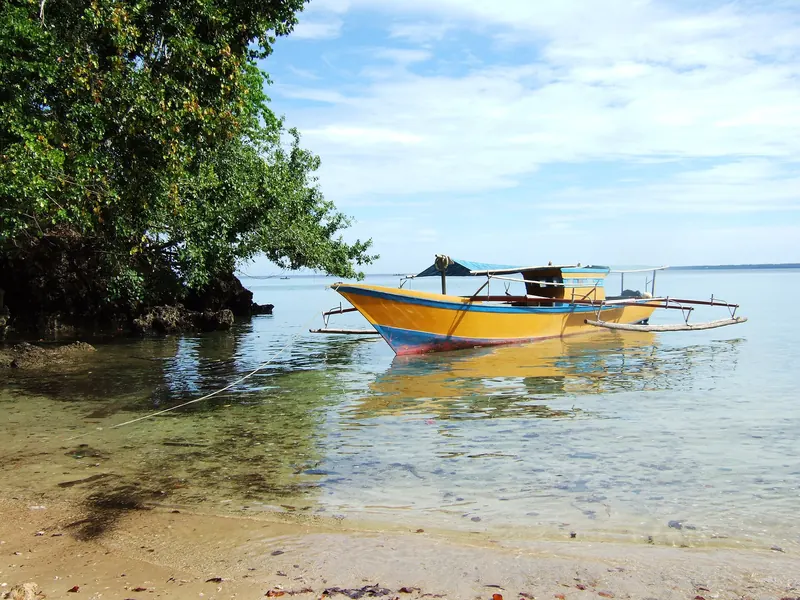
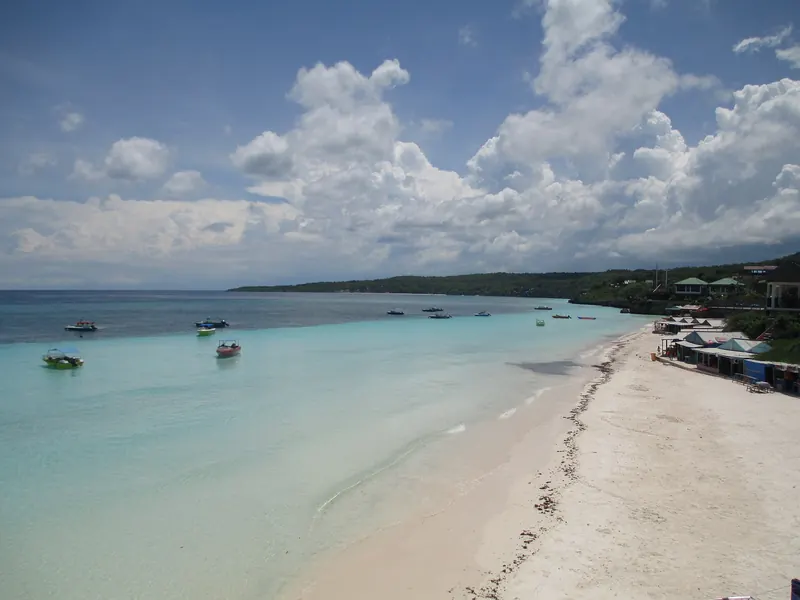
A white-sand beach and clear shallows in Wakatobi.
Photograph: Jenny from Taipei — opens in a new tab · CC BY 2.0 — opens in a new tab
Changes: Resized and converted to WebP; displayed with responsive crops. · Original photograph and licence details ↗ — opens in a new tab
Sea fans on a reef off Kaledupa in Wakatobi National Park.
Photograph: Christian Gloor from Wakatobi Dive Resort, Indonesia — opens in a new tab · CC BY 2.0 — opens in a new tab
Changes: Resized and converted to WebP; displayed with responsive crops. · Original photograph and licence details ↗ — opens in a new tab
Diving off Tomia, the island with the most named dive sites in Wakatobi.
Photograph: Chevi absyar — opens in a new tab · CC BY-SA 4.0 — opens in a new tab
Changes: Resized and converted to WebP; displayed with responsive crops. · Original photograph and licence details ↗ — opens in a new tab
Daily life on the boardwalks of Sampela, a Bajo village off Kaledupa.
Photograph: BastianKyle — opens in a new tab · CC BY-SA 4.0 — opens in a new tab
Changes: Resized and converted to WebP; displayed with responsive crops. · Original photograph and licence details ↗ — opens in a new tab
Lariangi dancers at the Barata Kahedupa festival in South Kaledupa.
Photograph: Rustamawat — opens in a new tab · CC BY-SA 4.0 — opens in a new tab
Changes: Resized and converted to WebP; displayed with responsive crops. · Original photograph and licence details ↗ — opens in a new tab