Plan your trip · Indonesia
Diving in Indonesia: Raja Ampat, Komodo, Bunaken, Nusa Penida, Wakatobi
Indonesia has more first-rate reef than any one trip can hold, and the five names divers ask about first are very different trips. Bunaken is a short boat ride from a provincial capital; Nusa Penida is a fast boat from Bali; Komodo is a current-swept national park with a daily visitor quota; Raja Ampat and Wakatobi sit at the far end of domestic flights and island boats. They also run on different calendars, because the best months in Papua are close to the worst months for some places further west. This guide sorts them by what you can dive safely, when the sea is likely to cooperate, how you would sleep, and what to check before you hand an operator your deposit.
- Suggested time
- 5–7 nights for Bunaken, Nusa Penida or Komodo; at least a week each for Raja Ampat or Wakatobi
- Where to stay
- Bunaken or Manado; Sanur or Nusa Penida; Labuan Bajo; Waisai or a Raja Ampat island homestay; Wanci or Tomia in Wakatobi
- Season and timing
- No single season: Bunaken is at its best from May to October and Nusa Penida from April to October, while Raja Ampat's calmer months are October to April and Wakatobi's are October to December and March to May. Diving continues all year in all five.
The short answer
Pick one region per week of travel rather than stringing reefs together. With a week or less, choose Bunaken (fly to Manado and sleep on the island, May to October) or Nusa Penida (stay in Sanur or on Nusa Penida, April to October, mantas all year and mola-mola mostly July to October). For Komodo, sleep in Labuan Bajo and go out on day boats or a short liveaboard, but book through an operator who can confirm your place under the park's 1,000-a-day quota, and dive Castle Rock-type sites only with experience in strong currents. Raja Ampat (October to April for calmer seas) and Wakatobi (October to December or March to May) need at least a week each: sleep in a dive resort, a family homestay or on a liveaboard, and pay the local marine park fee. Whatever you choose, leave 12 to 18 hours between your last dive and your flight, as Divers Alert Network recommends.
Match the reef to your experience
The single most useful question is how comfortable you are in current. Indonesia's richest reefs are rich because water moves through them: the Coral Triangle Center describes the Indonesian Throughflow pushing warm Pacific water through deep channels between the Lesser Sunda islands around Nusa Penida, and the Ministry of Tourism describes Komodo's strong currents as both challenging and rewarding for experienced divers. Nobody should be talked into a drift dive that is beyond them, so read the descriptions below as a ladder.
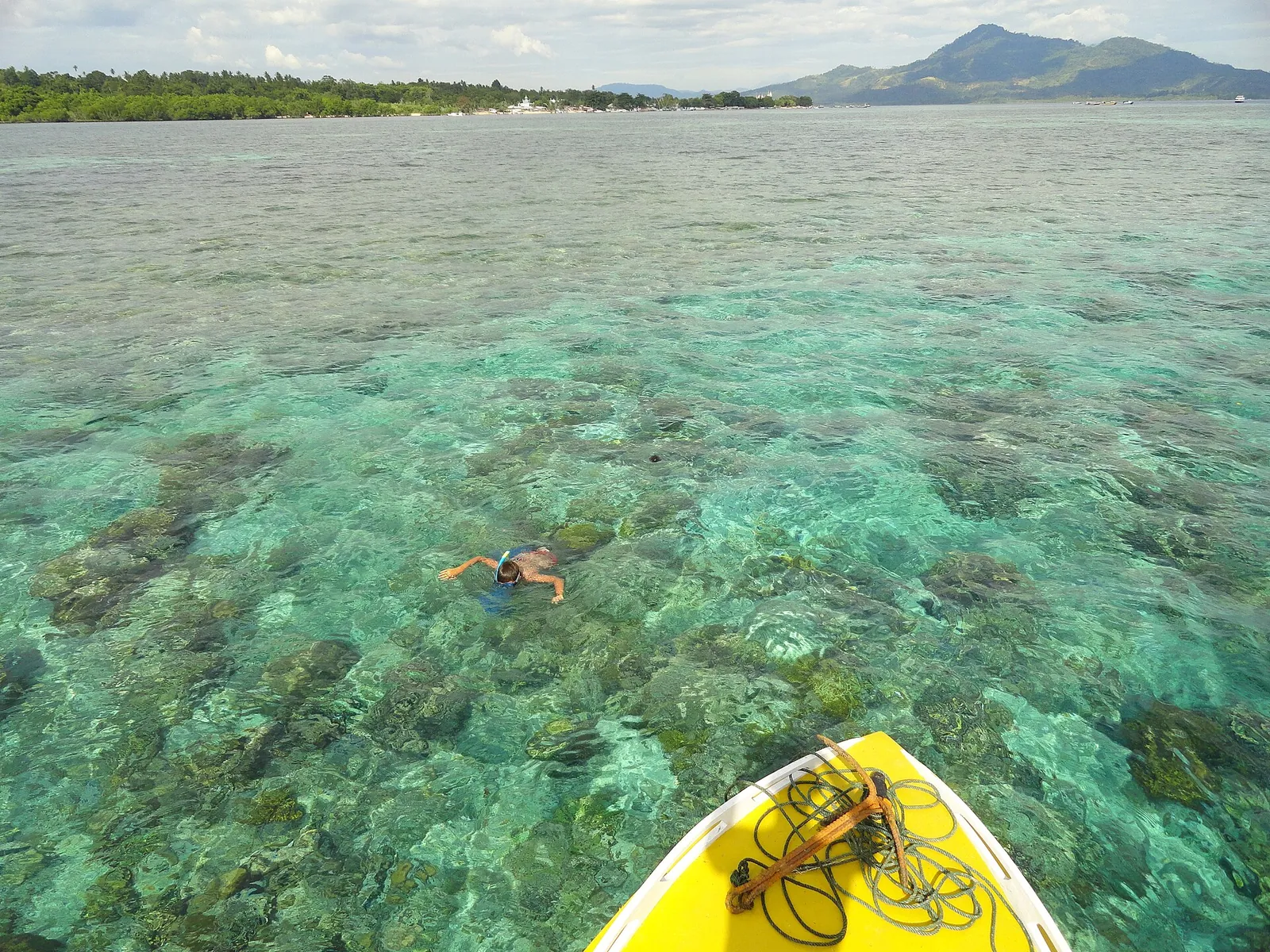
New divers and snorkellers have the easiest start at Bunaken. The Ministry of Tourism says the reef off the beach is clear enough to snorkel without taking a boat, and that at Lekuan I, one of the park's best-known walls, currents tend to be calm; Lekuan II and III are more demanding. It recommends at least Open Water certification because some sites have strong currents and challenging depths. On Bali, the ministry lists the Liberty shipwreck at Tulamben as a snorkelling site, and around the Gili Islands it describes green turtles at 10 to 20 metres.
Intermediate divers have the widest choice. Off Nusa Penida, the ministry lists Crystal Bay, Manta Point on the south side and Malibu Point on the east for snorkelling and diving, and the Coral Triangle Center says reef manta rays are present all year. In Wakatobi, the regency's tourism site lists more than 50 dive sites close to the main islands, from walls and slopes to seamounts, pinnacles, channels and drift dives, so a good operator can match the site to the group. Raja Ampat suits snorkellers and divers alike; the ministry names the Kabui Passage, Arborek's jetty, Sawandarek, Yenbuba and Friwen Wall among its sites.
Experienced divers get the most from Komodo. The ministry's list of the park's top sites includes Batu Bolong, Manta Point, where it says manta rays reach up to three metres, and Castle Rock, which it describes as a challenging site with strong currents, white-tip sharks and pelagic fish. Snorkellers are not left out: the ministry lists Manta Point, Batu Bolong and Tatawa Besar, north of Rinca, as snorkelling stops.
When to go: each region keeps its own calendar
The Ministry of Tourism describes two relative seasons in most of the country, including Java and Bali: dry from April to October and wet from November to March, with a warning that the seasons have become less predictable. The eastern reefs do not follow that pattern, and for diving the wind matters more than the rain, because it decides whether small boats can reach the sites.
The month ranges below come from official tourism pages, plus the community homestay network for Raja Ampat; they are general guidance, not forecasts. Before any boat day, check the marine forecast and high-wave warnings on BMKG's maritime weather service.
- Bunaken (North Sulawesi): the Ministry of Tourism calls May to October the best time, with calmer sea and clear water; the park is open all year.
- Nusa Penida (Bali): the ministry recommends the dry season, April to October. The Coral Triangle Center says nutrient-rich upwelling between July and October draws mola-mola to cleaning stations; reef mantas are there all year.
- Komodo (East Nusa Tenggara): we found no official month-by-month diving advice. Currents and wind decide the day, so build a spare day into the plan.
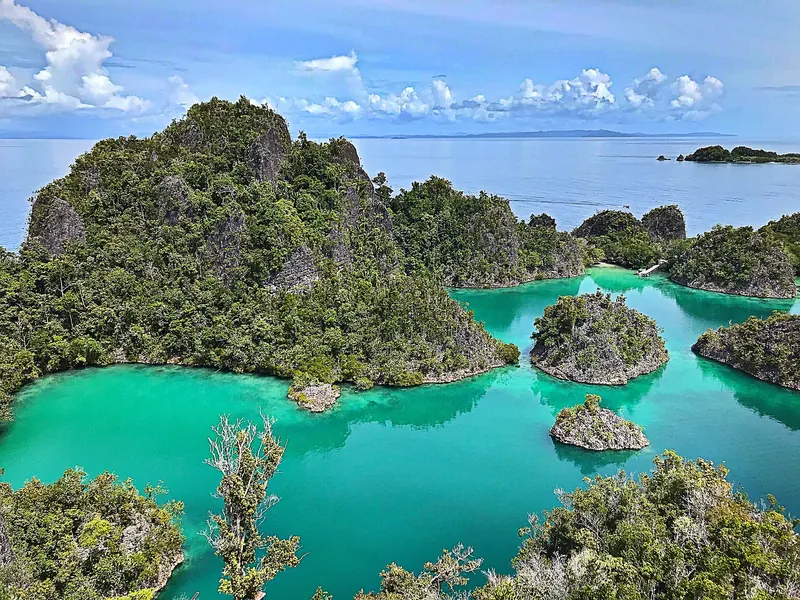
- Raja Ampat (Southwest Papua): the ministry names October to April, when seas are calmer. The community network Stay Raja Ampat adds that mid-June to mid-September brings windy days that can limit small-boat travel, though visibility is not affected and dive centres operate all year.
- Wakatobi (Southeast Sulawesi): the regency tourism site names October to December and March to May as the best months, when winds are lighter and sea crossings easier, and says boats do not sail when waves are too high.
Make time for the local food
What to eat and where to look
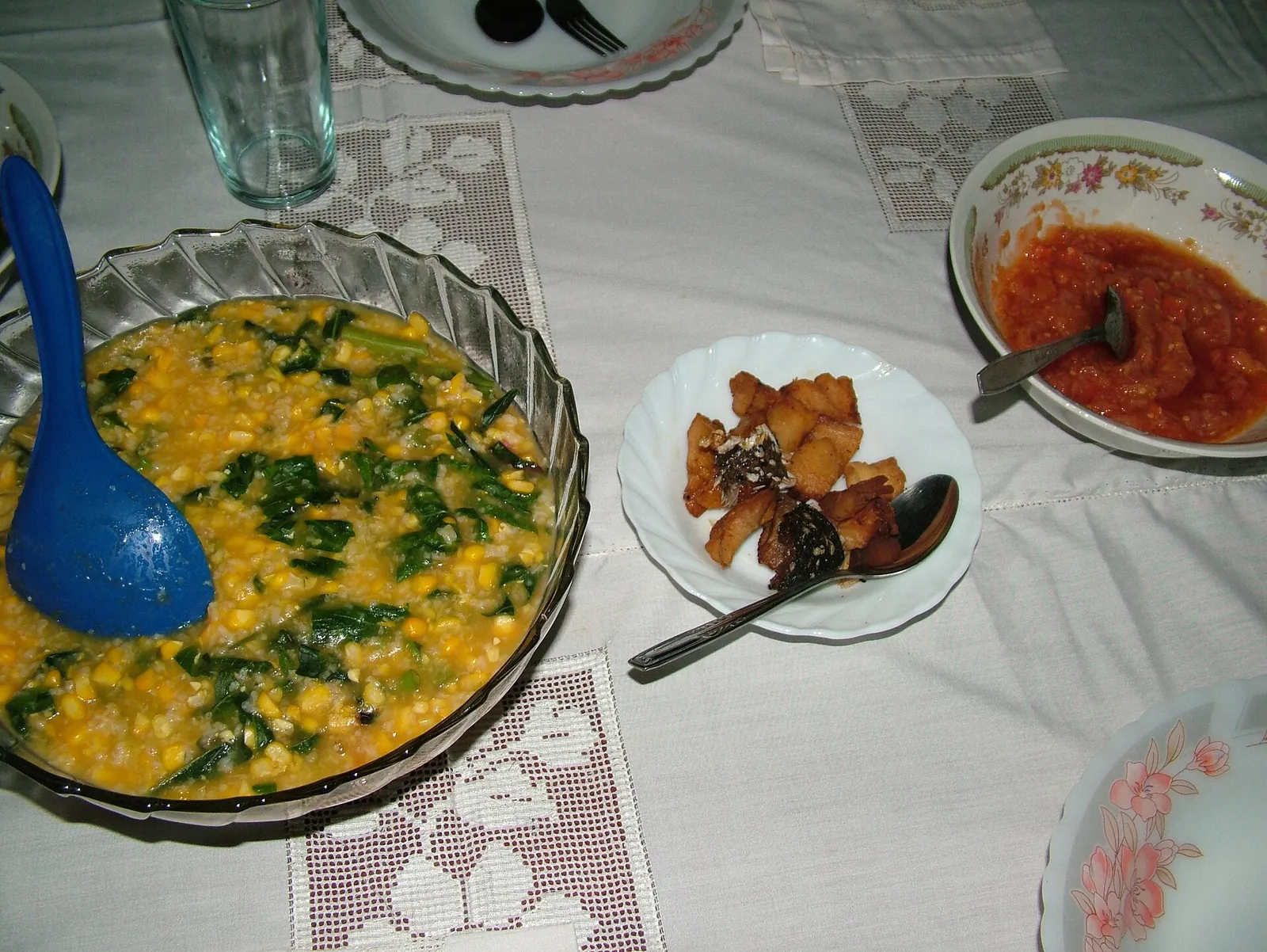
Tinutuan (Bubur Manado)
Manado's vegetable rice porridge, cooked with pumpkin, sweet potato, cassava, corn, water spinach and other greens, seasoned with lemongrass, garlic and bay leaves. The Ministry of Tourism calls it an icon of the city and notes that the dish itself is vegetarian.
- Where to look
- Breakfast stalls and small restaurants in Manado before you cross to Bunaken.
- Fit it into your day
- A light, filling breakfast before a morning dive or the boat to the island.
It is usually served with tomato sambal and ricaroa, a fish-flavoured chilli sauce; ask for them on the side if you avoid fish or heat.
Papeda ikan kuah kuning
Sticky sago porridge with fresh fish such as tuna or snapper cooked in a yellow broth of turmeric and lemongrass, a dish the ministry links to coastal West Papua and Fakfak in particular. Locals twist pieces of papeda off with chopsticks.
- Where to look
- Traditional eateries in Sorong and other Papuan towns on the way to or from Raja Ampat.
- Fit it into your day
- A shared lunch or dinner on a transit day in Sorong.
Mildly spicy; the papeda itself tastes neutral and carries the broth, so it suits cautious eaters.
Sate lilit (fish)
Balinese 'wrapped' satay: minced fish, chicken or pork mixed with a Balinese spice paste and coconut, pressed around bamboo or lemongrass sticks and grilled over charcoal. The ministry notes that fish versions are common in coastal areas.
- Where to look
- Warung in Sanur, Padang Bai and the east-coast dive villages on Bali.
- Fit it into your day
- Dinner after a day boat to Nusa Penida.
Pork versions are common in Bali; ask for ikan (fish) if you do not eat pork.
Kuah asam (sour fish soup)
A sour fish soup the ministry describes as an authentic flavour of East Nusa Tenggara, the province that includes Labuan Bajo and Komodo.
- Where to look
- Seafood eateries in Labuan Bajo.
- Fit it into your day
- A light dinner the evening before an early boat into the park.
Watch for fish bones.
Resort, homestay, day boat or liveaboard
How you sleep decides how much diving you get. At Bunaken, sleeping on the island puts you on the reef in minutes. Staying in Manado is possible, but then every dive day starts with a crossing: the ministry describes the public wooden boat from Pasar Bersehati as taking 45 to 60 minutes and waiting until it has enough passengers, while a chartered speedboat takes 20 to 30 minutes. For Nusa Penida, fast boats from Sanur, Kusamba or Padang Bai take about 30 to 45 minutes, according to the ministry; Sanur works as a base if you also want Bali, while sleeping on Nusa Penida saves the crossing on every dive day.
Komodo is usually done from Labuan Bajo, either on day boats or on a multi-day boat. Since 1 April 2026 the national park has limited visitors to 1,000 a day, ANTARA reports; the quota covers Padar, Rinca and Komodo and 23 dive sites around them. Ask your operator, before you pay, whether your dive days are confirmed under the quota.
In Raja Ampat, the choice is between Papuan family homestays, dive resorts and liveaboards. Stay Raja Ampat explains that most homestays run no boat trips or diving on Sundays, a day of rest and church for host families, though Waisai transfers still run; if diving is your priority, it suggests staying somewhere with its own dive centre. In Wakatobi, guests of the Wakatobi Dive Resort fly in on its private charter from Bali to Tomia, which the regency tourism site says runs twice a week; independent travellers fly to Matahora on Wangi-Wangi via Kendari and often spend a night there before the next morning's boat, because, as the regency tourism site warns, flight and boat schedules often do not connect.
Choosing an operator, and what to ask before you dive
Standards vary. The UK government's travel advice for Indonesia says diving school standards are not always as high as in the UK, and recommends that you check a dive operator's credentials, make sure safety equipment, particularly oxygen, is on the boat, and ask about safety precautions including the ability to get divers to a hyperbaric chamber. The same advice warns that sea conditions can change rapidly and that boats can be overloaded or poorly maintained, so check for life jackets, and bring children's sizes yourself.
Ask where the nearest working chamber is, especially in remote regions. Wakatobi's tourism authority says divers with confirmed decompression sickness must be evacuated to a hospital in Makassar or Bali, that the chamber on Wangi-Wangi was not running when it last updated, and that it should be checked with your local operator. Bring your own dive computer to Raja Ampat: Stay Raja Ampat says most places there do not have them for hire. The Ministry of Tourism suggests bringing at least your own mask and snorkel to Bunaken.
Responsible operators make the reef last. Around Nusa Penida, the Coral Triangle Center worked with the Lembongan Marine Association and dive operators on codes of conduct for swimming with manta rays and mola-mola, and it promotes Green Fins, a UN Environment Programme scheme that certifies diving and snorkelling businesses for environmentally responsible practice; asking whether an operator follows these is a quick filter. At Bunaken, the ministry asks divers not to touch or damage coral, not to feed fish and to use reef-friendly sunscreen.
Finally, plan the last dive around your flight. Divers Alert Network's guidelines recommend a minimum surface interval of 12 hours before flying after a single no-decompression dive, and 18 hours after several dives a day or several days of diving, with substantially longer after dives that needed decompression stops. With a morning flight out of Sorong, Manado or Labuan Bajo after several days of diving, the 18-hour rule means surfacing from your last dive by early afternoon the day before.
Park fees, permits and quotas
Each marine area runs its own system, so ask operators exactly which fees their price includes. In Raja Ampat, the regency's marine protected areas authority sells the official Marine Park Fee on its website and publishes a visitor guide; buy it before you start diving. At Bunaken, an ANTARA report on the park's 2025 revenue gave the entrance fee for foreign visitors as Rp150,000 per person per day, and the park office counted 59 dive sites, 21 of them around Bunaken itself; check the current rate locally before you go.
At Komodo, the 1,000-a-day quota is the constraint to plan around: the park office told ANTARA the rule has applied since 1 April 2026, and the governor of East Nusa Tenggara said it would be evaluated after three to six months, so confirm the current arrangement with your operator. Wakatobi is a national park (since 1996) and a UNESCO biosphere reserve; ask your resort or operator which fees apply.
Building a route between the reefs
Domestic connections shape the trip as much as the reefs do. Bali's Ngurah Rai airport is the easiest hub for Nusa Penida (by road to the fast-boat harbours) and for Labuan Bajo, which the Ministry of Tourism says is about an hour and 20 minutes by air from Denpasar. For Bunaken, Manado's Sam Ratulangi airport has direct flights from Jakarta (about three and a half hours) and Bali (about three hours), and from Singapore, according to the ministry. Raja Ampat starts with a flight to Sorong from Jakarta or Makassar and a ferry to Waisai, which the ministry puts at about two hours. Wakatobi is reached via Kendari to Matahora, or on the resort charter from Bali.
Two reefs in one trip work best when they share a hub: Nusa Penida and Komodo through Bali, or Bunaken with the Lembeh Strait, near Bitung about an hour from Manado, which the ministry describes as famous for muck diving with frogfish, mimic octopus and flamboyant cuttlefish. Raja Ampat sits at the end of its own flight-and-ferry chain, so give it a week of its own.
Practical questions
Where is the best place to learn to dive or snorkel in Indonesia?
Bunaken is the easiest of the five big names: you can snorkel from the shore, and the Ministry of Tourism describes calm currents at Lekuan I. The ministry still recommends at least Open Water certification for Bunaken's deeper or current-swept sites. Komodo's strongest sites, such as Castle Rock, are for experienced divers.
When is the best time to dive in Indonesia?
It depends on the region. Bunaken is best from May to October and Nusa Penida from April to October, while Raja Ampat's calmer seas run from October to April and Wakatobi's best months are October to December and March to May. Diving continues all year in all of them.
When can I see mola-mola at Nusa Penida?
Mostly between July and October, when, according to the Coral Triangle Center, upwelling draws them to cleaning stations. Reef manta rays are present all year.
How long should I wait before flying after diving?
Divers Alert Network recommends at least 12 hours after a single no-decompression dive and at least 18 hours after multiple dives a day or several days of diving; after dives with decompression stops, wait substantially longer.
Do I need to book Komodo in advance?
Yes. Since 1 April 2026 the park has limited visitors to 1,000 a day, covering Padar, Rinca, Komodo and 23 dive sites, ANTARA reports. Ask your operator to confirm your place before you pay for flights.
Can I go diving on a Sunday in Raja Ampat?
Not at most homestays: Stay Raja Ampat says they run no boat trips or diving on Sundays, though Waisai transfers still operate. Dive resorts and liveaboards set their own schedules.
Sources and checks before you travel
Reference sources for the version dated 3 October 2026. Confirm opening times, access, transport and conditions for your travel dates.
- Indonesia Ministry of Tourism: Diving Bunaken ↗ — opens in a new tab
- Indonesia Ministry of Tourism: Things to do in and around Manado ↗ — opens in a new tab
- Indonesia Ministry of Tourism: Diving Komodo ↗ — opens in a new tab
- Indonesia Ministry of Tourism: Snorkeling Komodo ↗ — opens in a new tab
- Indonesia Ministry of Tourism: Komodo National Park ↗ — opens in a new tab
- ANTARA: park sets a quota of 1,000 visitors a day ↗ — opens in a new tab
- ANTARA: quota covers Padar, Rinca, Komodo and 23 dive sites ↗ — opens in a new tab
- ANTARA: governor says the Komodo quota will be evaluated ↗ — opens in a new tab
- Indonesia Ministry of Tourism: Five seafront hotels in Labuan Bajo ↗ — opens in a new tab
- Indonesia Ministry of Tourism: Raja Ampat ↗ — opens in a new tab
- Indonesia Ministry of Tourism: Discover Raja Ampat ↗ — opens in a new tab
- Raja Ampat MPAs Management Authority: Marine Park Fee and Visitor's Guide ↗ — opens in a new tab
- Stay Raja Ampat (community homestay network): Raja Ampat weather ↗ — opens in a new tab
- Stay Raja Ampat: Raja Ampat homestays ↗ — opens in a new tab
- Indonesia Ministry of Tourism: Nusa Penida beaches, harbour access and tips ↗ — opens in a new tab
- Indonesia Ministry of Tourism: Snorkeling Nusa Penida ↗ — opens in a new tab
- Coral Triangle Center: Nusa Penida MPA ↗ — opens in a new tab
- Indonesia Ministry of Tourism: Snorkeling Tulamben ↗ — opens in a new tab
- Indonesia Ministry of Tourism: Gili Trawangan and the Gilis ↗ — opens in a new tab
- UNESCO Man and the Biosphere Programme: Wakatobi ↗ — opens in a new tab
- Wakatobi Tourism (regency tourism authority): About Wakatobi ↗ — opens in a new tab
- Wakatobi Tourism: Getting Around ↗ — opens in a new tab
- Wakatobi Tourism: Health & Safety ↗ — opens in a new tab
- ANTARA Sulawesi Utara: Bunaken National Park revenue in 2025 ↗ — opens in a new tab
- UK FCDO travel advice: Indonesia safety and security ↗ — opens in a new tab
- Divers Alert Network: Flying after diving ↗ — opens in a new tab
- Indonesia Ministry of Tourism: Weather, climate and seasons ↗ — opens in a new tab
- BMKG maritime weather service ↗ — opens in a new tab
- Indonesia Ministry of Tourism: Denpasar, Bali Ngurah Rai Airport ↗ — opens in a new tab
- Indonesia Ministry of Tourism: Manado tinutuan porridge ↗ — opens in a new tab
- Indonesia Ministry of Tourism: Papeda ikan kuah kuning ↗ — opens in a new tab
- Indonesia Ministry of Tourism: Sate lilit ↗ — opens in a new tab
- Indonesia Ministry of Tourism: Culinary spots in East Nusa Tenggara ↗ — opens in a new tab
Does this experience fit your route?
Planning a reef trip? Compare boat trips and snorkelling days, and ask each operator about oxygen on board, group size and what happens if the sea is too rough.
Browse relevant experiences on Viator ↗ — opens in a new tabAffiliate link · Book with ViatorPhoto credits
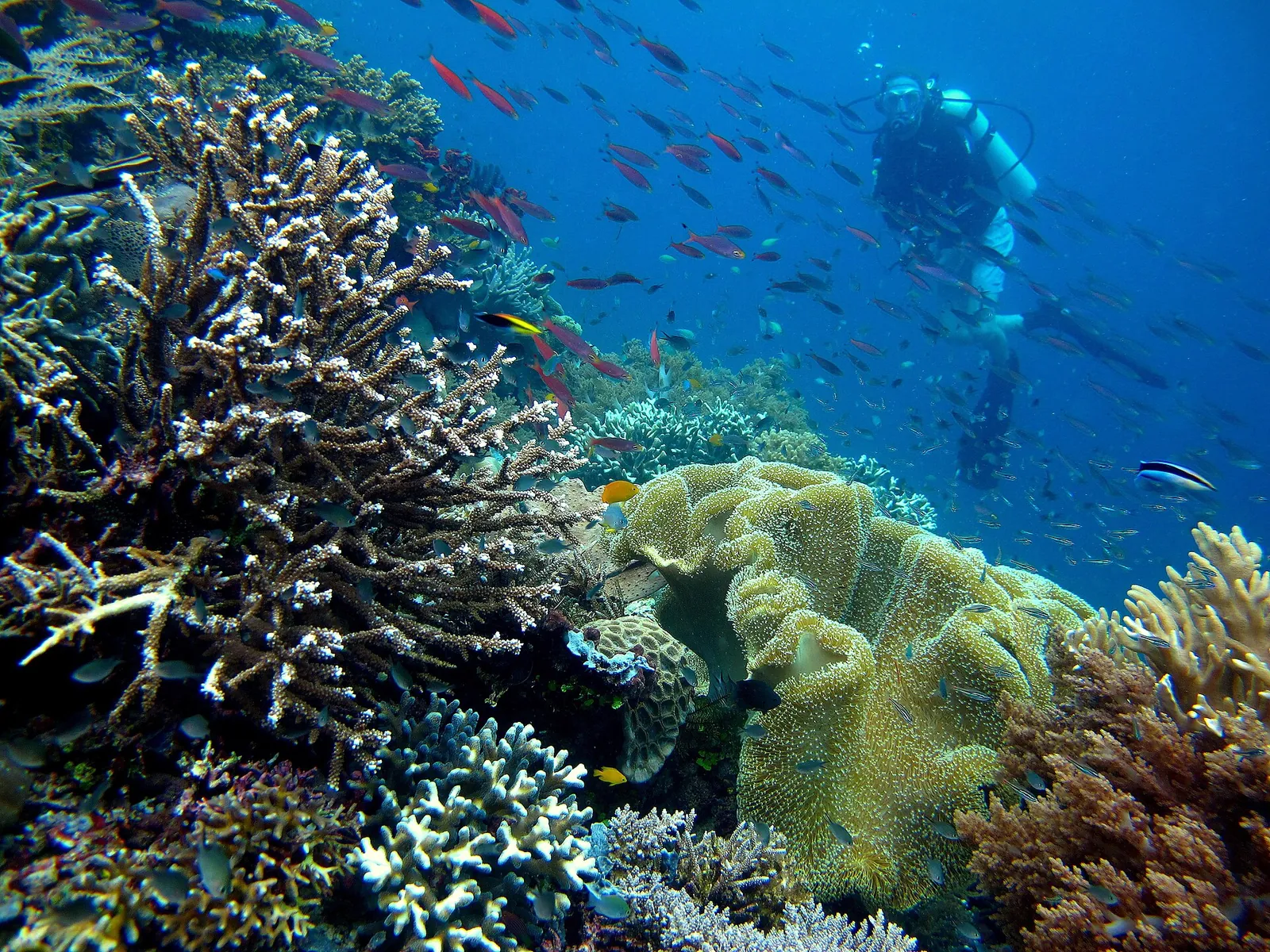
A diver over a coral garden in Raja Ampat, Southwest Papua
Photograph: Rizalubun — opens in a new tab · CC BY-SA 4.0 — opens in a new tab
Changes: Resized and converted to WebP; displayed with responsive crops. · Original photograph and licence details ↗ — opens in a new tab
Snorkelling over the reef flat off Bunaken Island, North Sulawesi
Photograph: Fabio Achilli from Milano, Italy — opens in a new tab · CC BY 2.0 — opens in a new tab
Changes: Resized and converted to WebP; displayed with responsive crops. · Original photograph and licence details ↗ — opens in a new tab
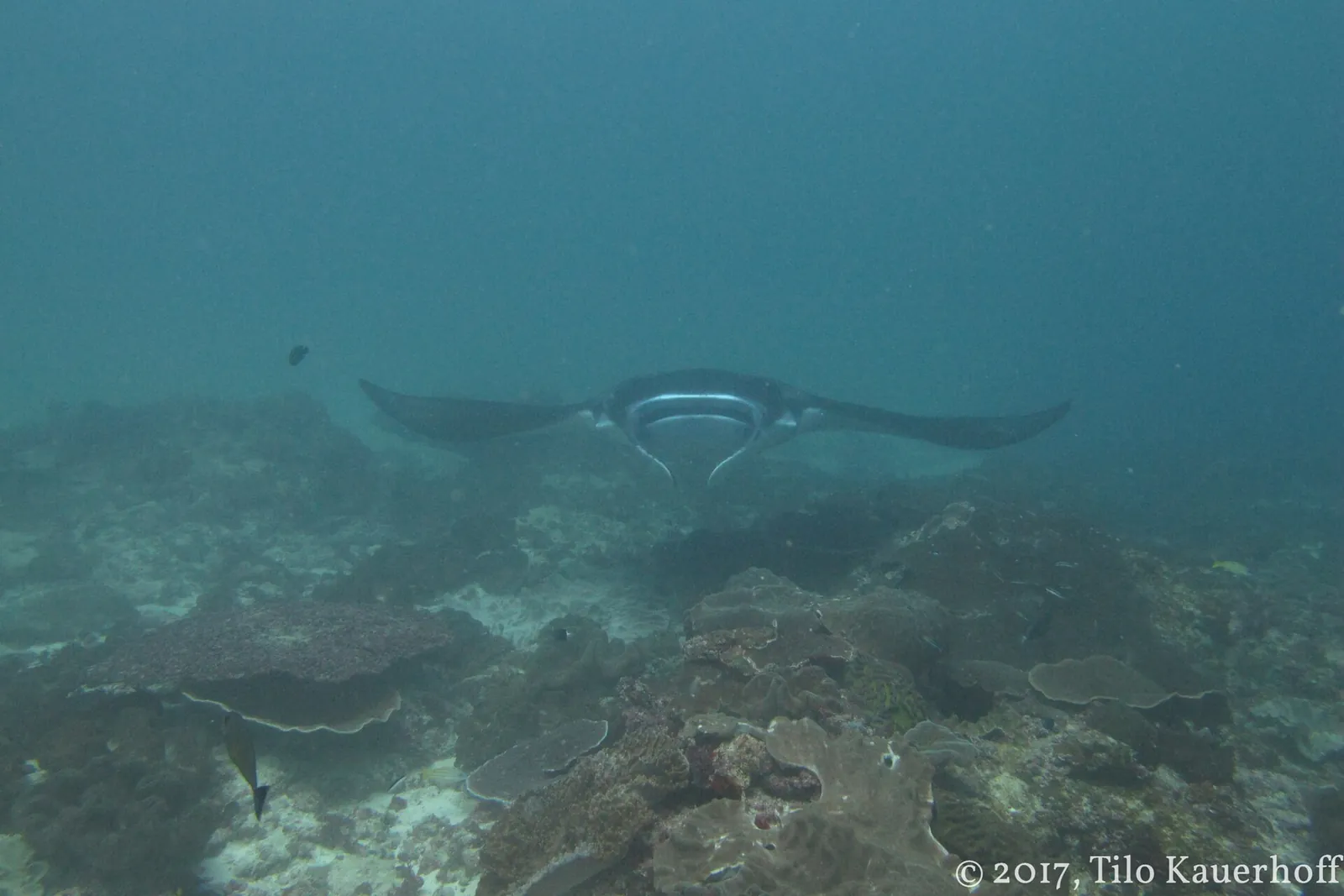
A manta ray at Manta Point off Nusa Penida, Bali
Photograph: Tilonaut — opens in a new tab · CC BY 3.0 — opens in a new tab
Changes: Resized and converted to WebP; displayed with responsive crops. · Original photograph and licence details ↗ — opens in a new tab
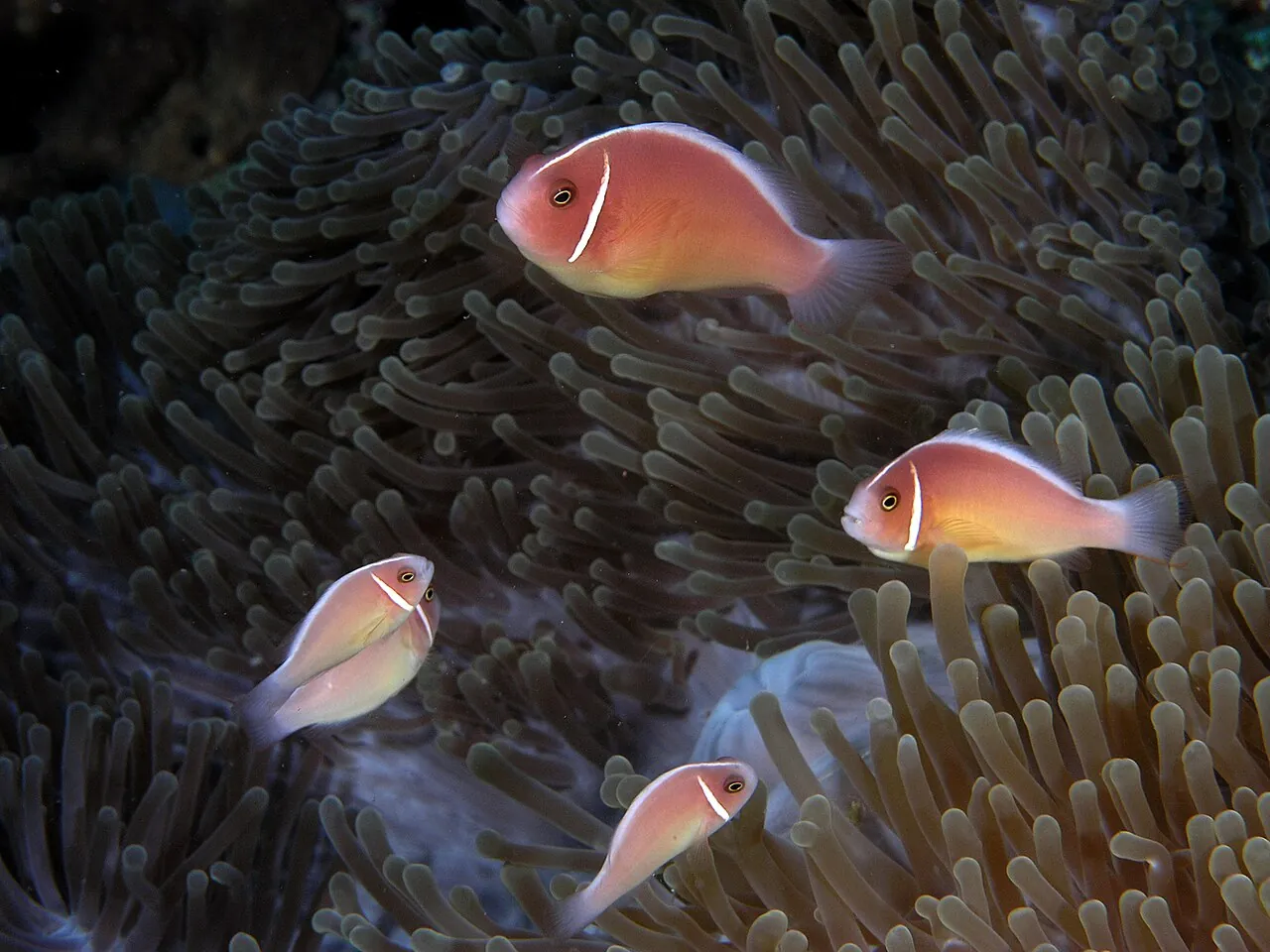
Pink anemonefish in Komodo National Park
Photograph: Nhobgood — opens in a new tab · CC BY-SA 3.0 — opens in a new tab
Changes: Resized and converted to WebP; displayed with responsive crops. · Original photograph and licence details ↗ — opens in a new tab
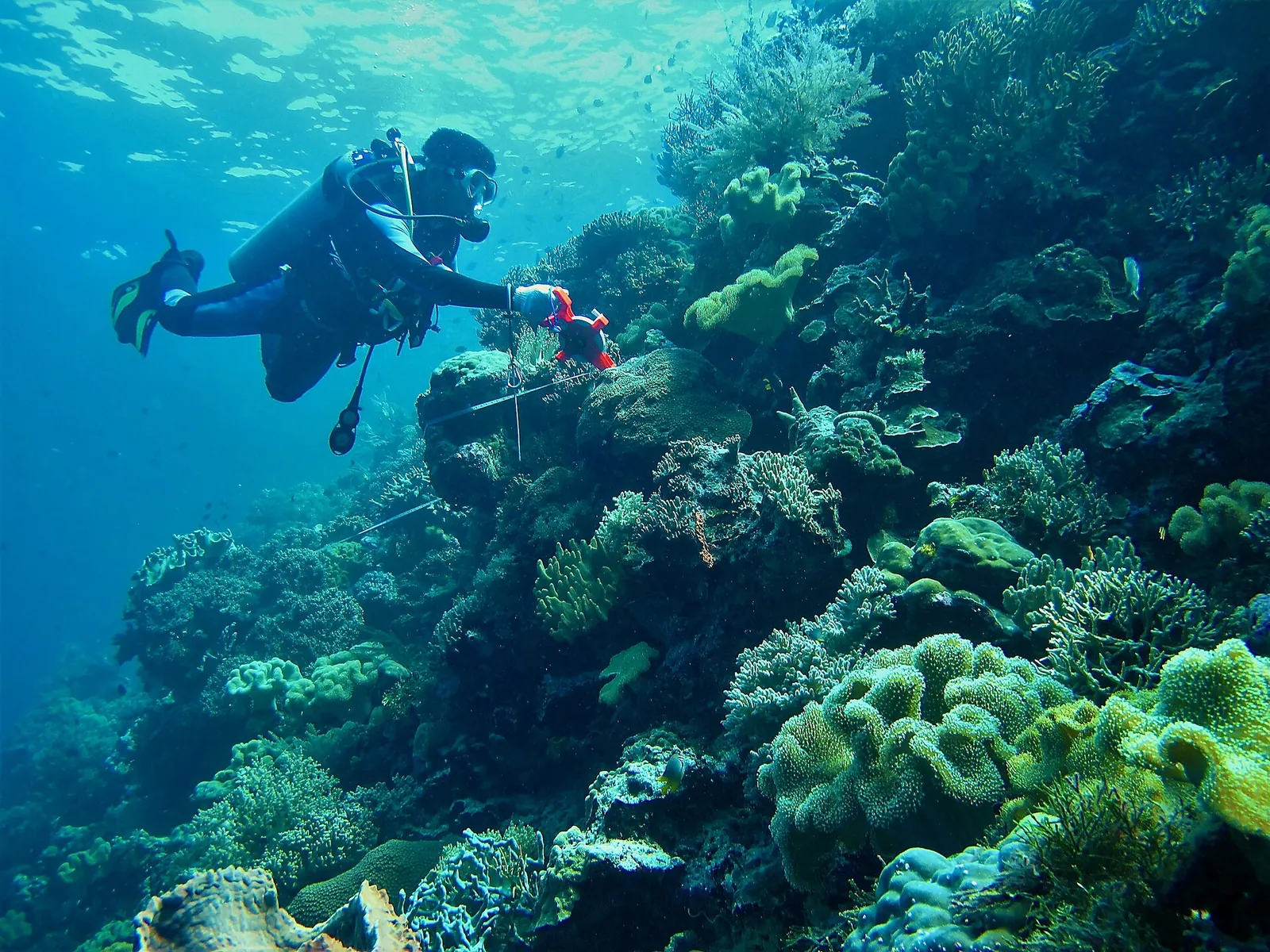
A reef survey on the coral slopes off Tomia, Wakatobi National Park
Photograph: Fakhrizal Setiawan — opens in a new tab · CC BY-SA 4.0 — opens in a new tab
Changes: Resized and converted to WebP; displayed with responsive crops. · Original photograph and licence details ↗ — opens in a new tab
Tinutuan, Manado's vegetable porridge, served with sambal and salted fish
Photograph: mattjlc — opens in a new tab · CC BY 2.0 — opens in a new tab
Changes: Resized and converted to WebP; displayed with responsive crops. · Original photograph and licence details ↗ — opens in a new tab