Kalimantan · East Kalimantan
Derawan Islands guide: turtles, Kakaban's jellyfish lake and Maratua
The Derawan Islands lie off the coast of Berau in East Kalimantan, in the Sulawesi Sea and inside the Coral Triangle. Of the 31 islands, four matter to most visitors: Derawan, a small village island where green turtles swim close to the shore; Maratua, a long, curving island around a lagoon with resorts and demanding dive sites; Kakaban, uninhabited, with a landlocked lake full of jellyfish that cannot harm you; and Sangalaki, a tiny turtle-nesting island known for manta rays. None of them is quick to reach. The trip is a flight to Tanjung Redeb followed by a road-and-speedboat transfer, and the sea decides a lot of the plan.
- Suggested time
- 4–5 nights on the islands, plus a travel day each way
- Where to stay
- Derawan Island for the village and turtles; Maratua for lagoon resorts and diving; Tanjung Redeb for a night before or after the boat
- Season and timing
- Wikivoyage suggests March to May and August to October for calmer seas and better visibility. Indonesian long-weekend holidays fill the island lodgings, so book ahead around them.
The short answer
Allow four or five nights on the islands, plus travel time at each end. Sleep on Derawan if you want a walkable village, homestays and turtles a few steps from your room; sleep on Maratua if you want a resort on the lagoon and the stronger dive sites. Fly to Kalimarau Airport (BEJ) in Tanjung Redeb, then either drive to Tanjung Batu and take a short speedboat ride to Derawan, or go by speedboat from Tanjung Redeb. Kakaban and Sangalaki have no visitor lodging, so see them on a chartered boat day from Derawan or Maratua, with food and water on board.
Derawan or Maratua: choose the island you sleep on
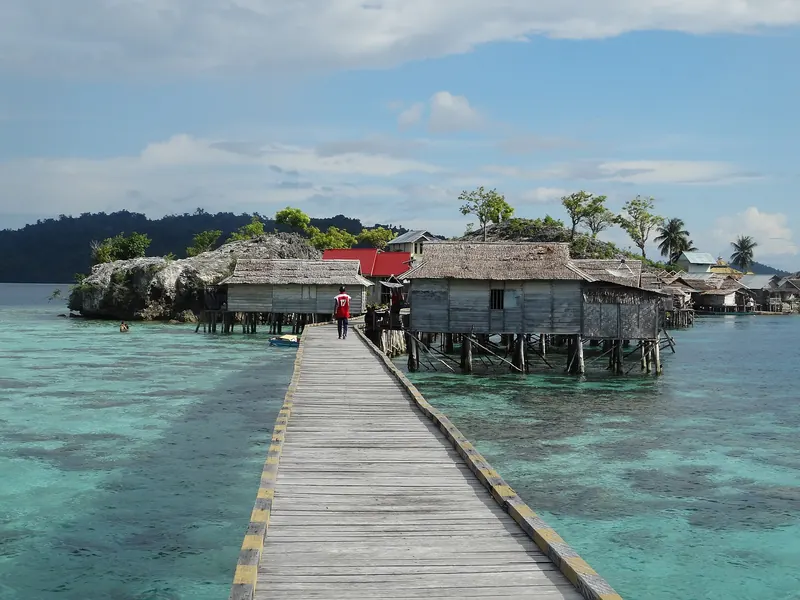
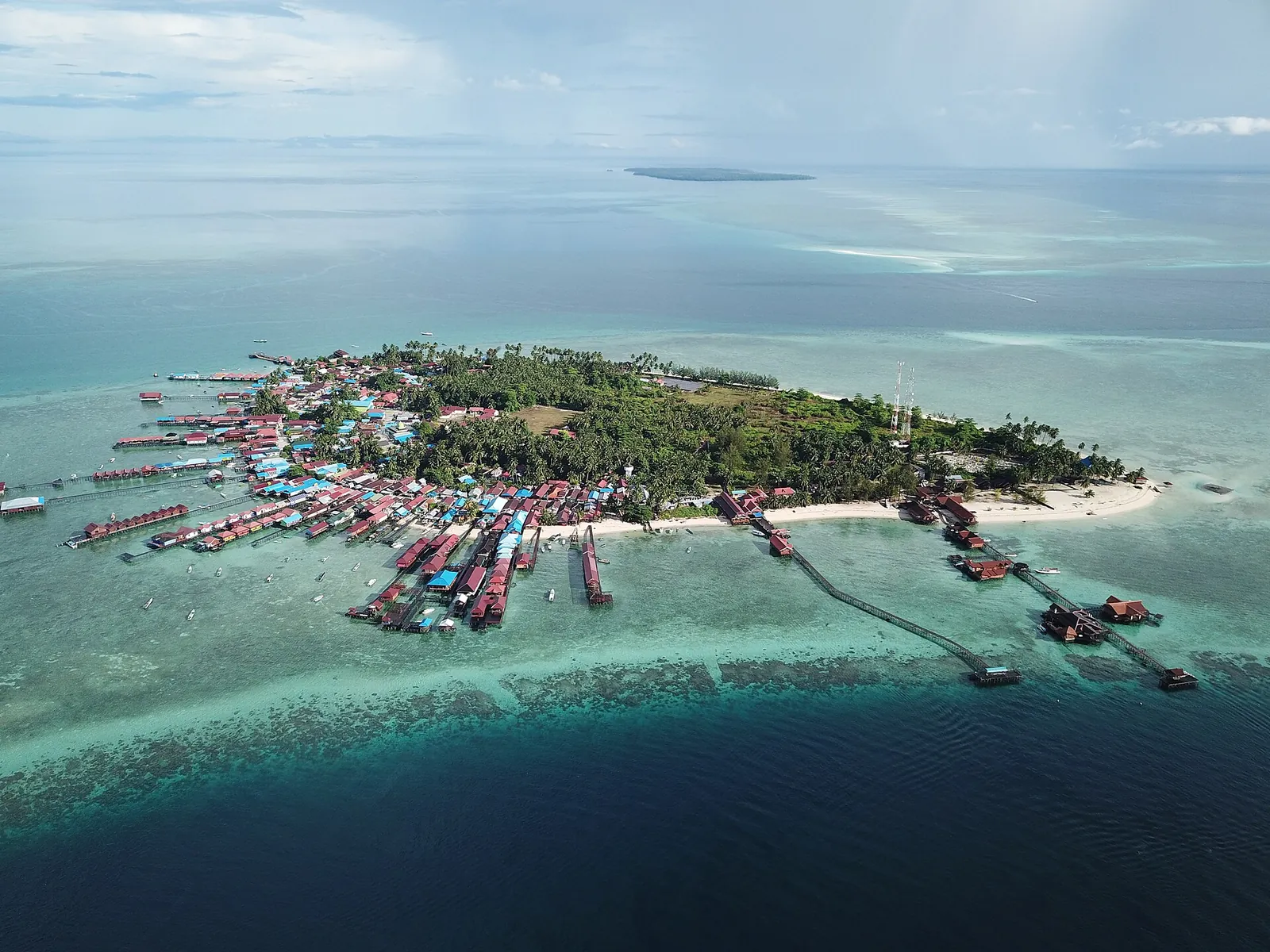
Derawan Island is small enough to walk around: the Wikipedia island list gives it under 45 hectares. Most of it is one village, home to Bajau people according to Indonesian Wikipedia, with guesthouses and the Derawan Dive Resort along the shore and stilt buildings reaching out over the reef. Wikivoyage notes that most lodgings are run by local families and that bicycles and scooters can be hired on the road along the west shore. Stay here if you want to snorkel from the beach, eat in the village and keep boat costs down by sharing day trips.
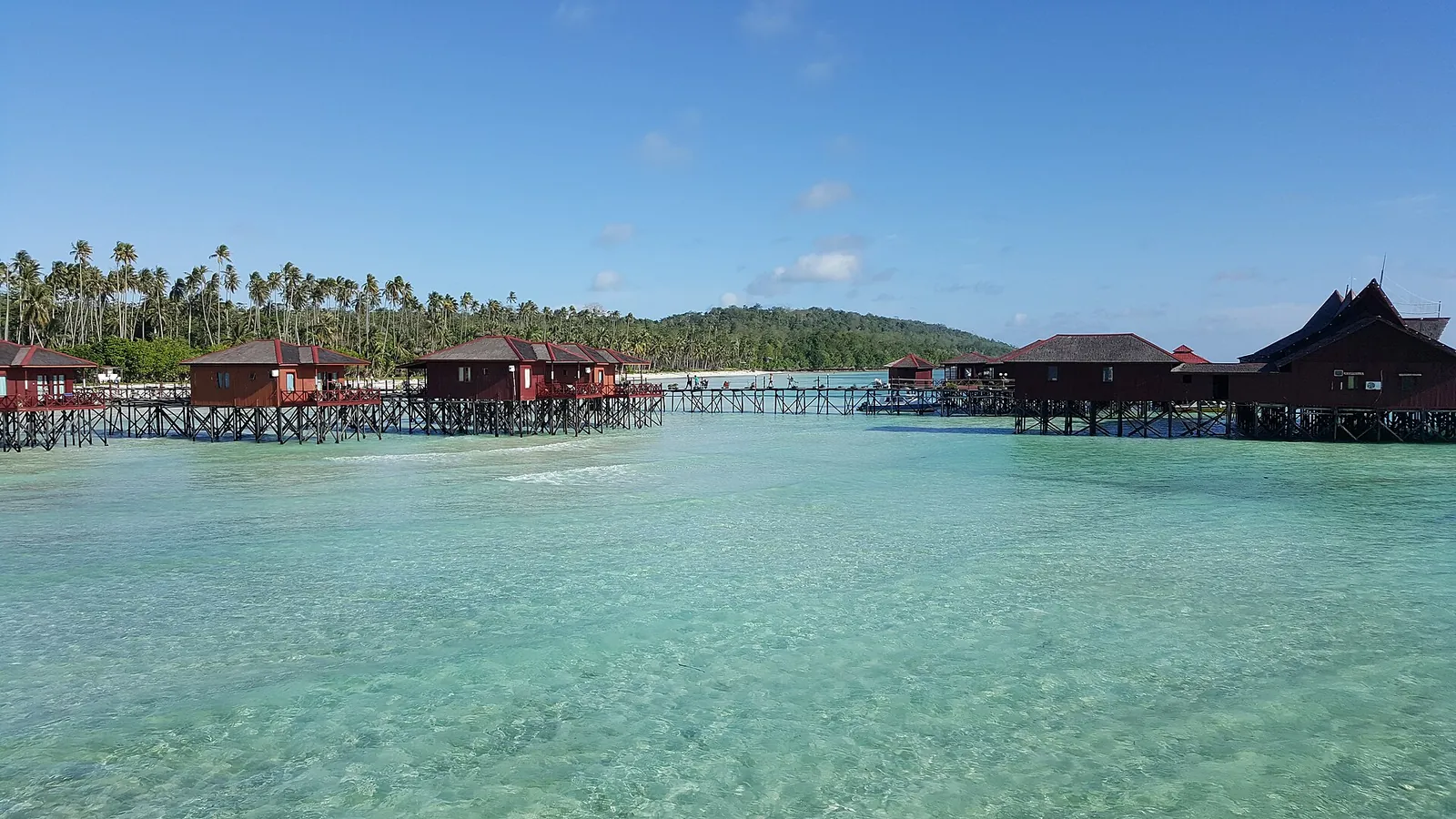
Maratua is by far the largest island in the group, bent around a wide lagoon, with four Bajau villages according to the Ministry of Tourism. It is where the water-chalet resorts are: the ministry describes Maratua Paradise Resort's beach chalets and stilted water villas, and Wikivoyage also names Nabucco. Maratua's dive sites include Turtle Traffic, known for green turtles, and Big Fish Country, which the ministry reserves for advanced divers because of deep water and strong currents. It is also the closest base to Kakaban, about 30 minutes away by boat.
Kakaban and Sangalaki are day-trip islands. The ministry notes that there is no accommodation on Kakaban, and Wikivoyage says only conservation staff live on Sangalaki. If you arrive late or leave early, a night in Tanjung Redeb, the regency town by the airport, takes the pressure off the boat connection.
Kakaban: swimming in the jellyfish lake
Kakaban is an uplifted coral atoll of about 774 hectares whose middle is taken up by a large brackish lake, sealed off from the sea as the island rose. The Ministry of Tourism says the name comes from a local word for "hug", because the island wraps around the lake. Wikipedia describes the lake as up to 17 metres deep, fringed with mangroves and carpeted with Halimeda algae, and about a 10-minute walk from the shore.
The lake holds four species of jellyfish, including a fingertip-sized box jellyfish and an upside-down Cassiopea, and none of them can harm people with their stinging cells, according to Wikipedia. Snorkelling is the way to see them: Wikipedia notes that visibility in the lake is poor, so the jellyfish near the surface are the reward rather than the view into the depths. The ministry describes the lake as a government nature reserve. Swim slowly, keep your fins off the algae-covered bottom, do not lift jellyfish out of the water and follow any rules the rangers give you.
Outside the lake, Kakaban is a very different place: Wikipedia describes a wall that drops to 180 metres, with strong upwellings, down-currents and currents that change direction. Dive it only with a local operator who knows the site.
Make time for the local food
What to eat and where to look
Grilled reef fish and seafood
Fish and seafood are the basis of island meals; the Ministry of Tourism describes the resort food on Maratua as mostly fish and other seafood cooked in Indonesian style, with fresh fruit.
- Where to look
- Family-run warung and homestay kitchens in Derawan village; resort restaurants on Maratua.
- Fit it into your day
- Dinner after a day on the boat, with rice and sambal.
Choices are limited on the islands; tell your host in advance about allergies or dietary needs.
Kulabutan (dried large squid)
A large squid that is dried and then cooked as a local dish, one of the specialities the Ministry of Tourism suggests trying in the archipelago.
- Where to look
- Local eateries on Derawan; the ministry notes that some places also sell it raw before cooking.
- Fit it into your day
- As a side dish with rice at lunch.
Squid is a mollusc, so avoid it if you have a shellfish allergy.
Kima-kima
A large sea shell dried like salted fish and cooked with spicy seasoning, served with warm rice, as the Ministry of Tourism describes it.
- Where to look
- Local eateries in the islands.
- Fit it into your day
- A lunch side dish if you want to try something only found locally.
Kima is the Indonesian name for giant clams, and Wikipedia lists several giant clam species among the protected animals of these islands. Ask what the shell is and skip it if you are unsure.
Kalimantan durian
The ministry recommends the local durian for dessert: an orange-fleshed variety that is sweeter and softer than the common kind.
- Where to look
- Fruit sellers in Tanjung Redeb and on the islands when durian is in season.
- Fit it into your day
- Buy it fresh as an afternoon snack and eat it outdoors.
Strong smell; ask before taking it into your room or onto a boat.
Sangalaki, the turtles and the manta rays
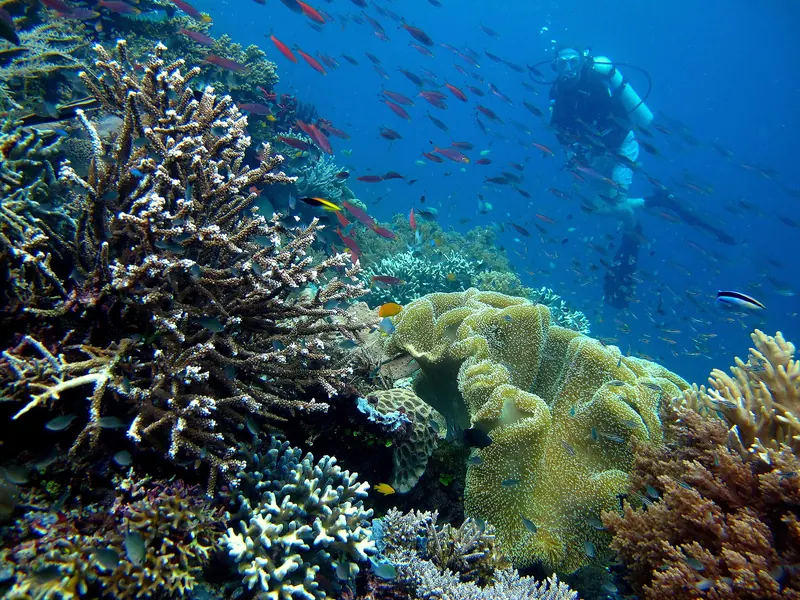
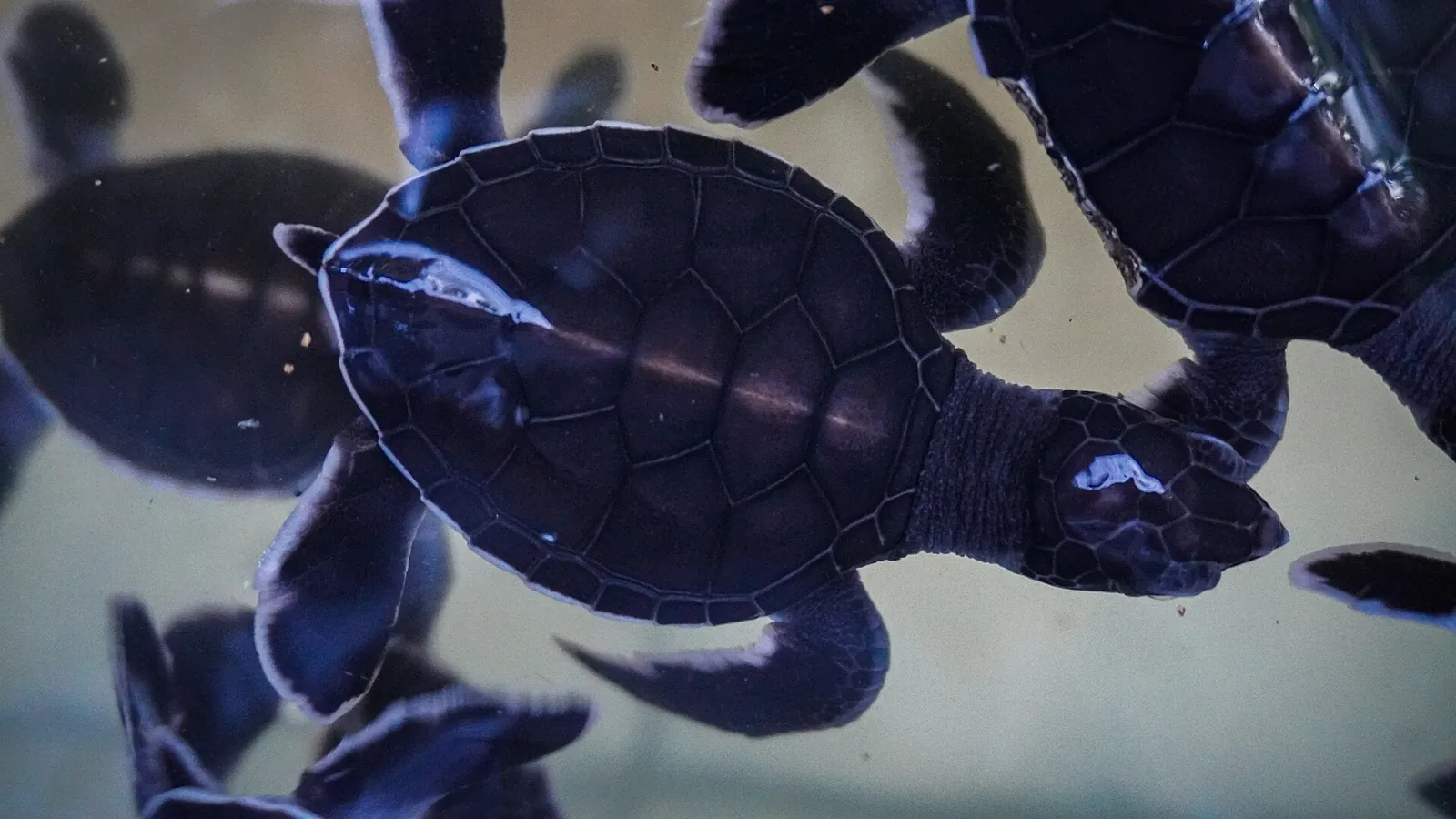
The Ministry of Tourism calls the Derawan archipelago Indonesia's largest nesting site for green and hawksbill turtles. On Sangalaki, a turtle conservation island that the ministry lists as a nature recreation park (Taman Wisata Alam), green turtles come ashore to lay their eggs at night, and the ministry says visitors can watch it happen during the nesting season. The island's waters are also the archipelago's best-known manta-ray site; the ministry lists dive sites such as Manta Run, Manta Parade and Coral Gardens.
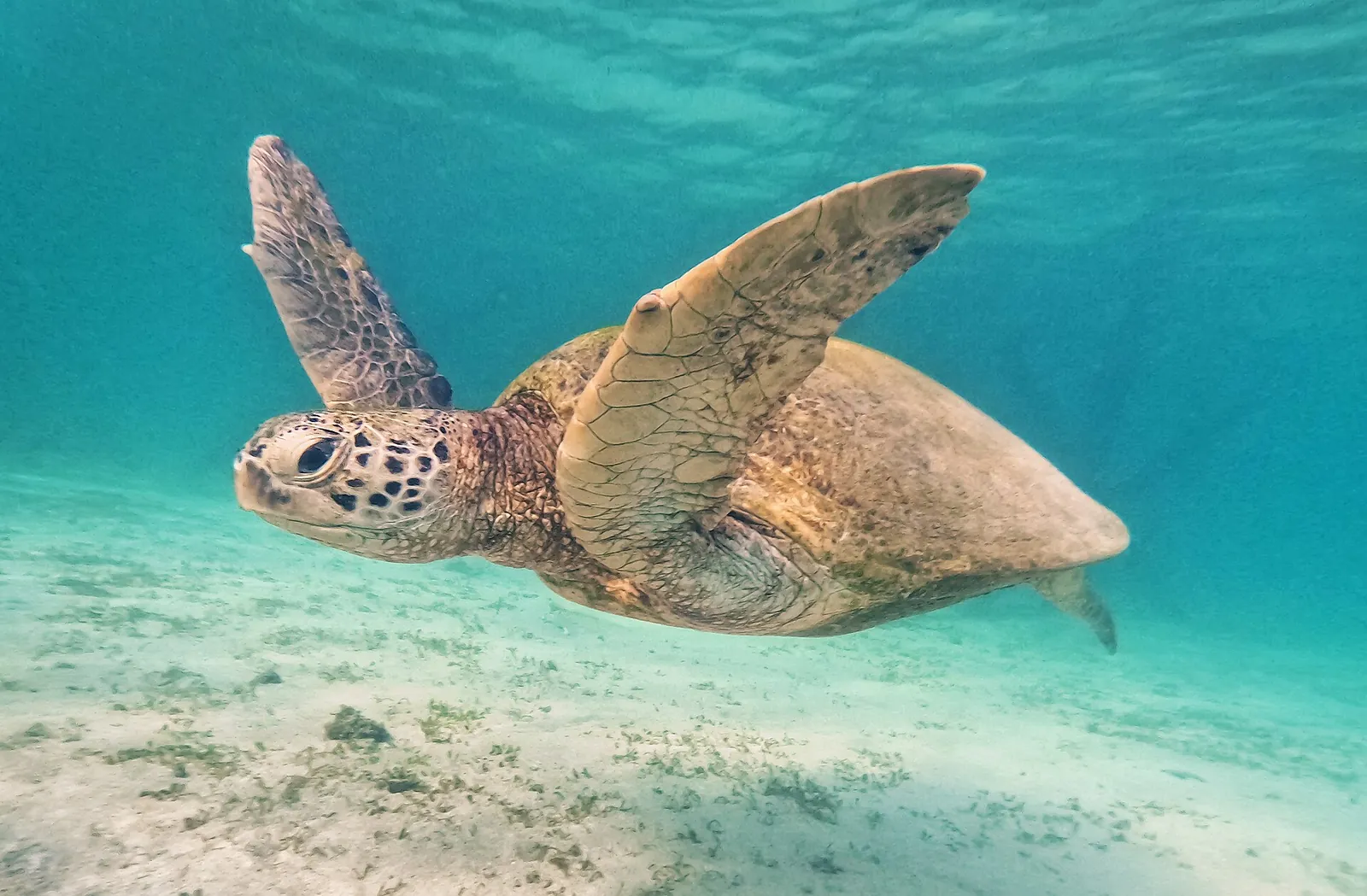
On Derawan itself, the ministry says turtles can be seen around the shore and you can swim with them, so a mask and snorkel are often enough. Keep your distance and let turtles surface without being crowded, never touch or ride them, and do not use a flash on nesting females. Wikipedia notes that turtle eggs here have been heavily exploited; do not buy them or anything made from turtle shell.
The ministry notes that a chartered speedboat can visit several islands in one day, so Kakaban and Sangalaki fit into a single trip from Derawan; the ministry gives Kakaban as about 20 minutes from Sangalaki and 45 minutes from Derawan. Wikivoyage warns that there are no restaurants on Kakaban or Sangalaki, so agree lunch and drinking water with the boat before you leave.
Getting there: flight, road and speedboat
The usual gateway is Kalimarau Airport (BEJ), about 8 kilometres from the centre of Tanjung Redeb. When we checked on 2026-10-03, Wikipedia's route list showed Batik Air from Jakarta and Surabaya, flights from Balikpapan on several airlines, Wings Air from Samarinda and a Sriwijaya Air route from Makassar. Routes to Berau change often, so confirm with the airline before you build the rest of the trip around a connection.
From Tanjung Redeb there are two ways to the islands. The Ministry of Tourism describes a road transfer to Tanjung Batu port followed by 30 to 45 minutes by speedboat to Derawan; Wikivoyage puts the drive at about two hours. Alternatively, the ministry describes a speedboat ride of about two hours from Tanjung Redeb down the river and out to the islands. Boats typically seat about 15 people and can be chartered for a multi-island day.
Maratua has its own small airport (RTU). When we checked on 2026-10-03, Wikipedia listed only Smart Aviation flights from Tanjung Redeb and Samarinda, and noted that a Wings Air service launched in January 2026 lasted about two months because most visitors still preferred the cheaper speedboat. The ministry also describes a route via Tarakan in North Kalimantan, with speedboats from Tengkayu port; Wikivoyage gives three to four hours for that crossing.
Sea conditions, money and holidays
Wikivoyage recommends March to May and August to October to avoid high waves, strong currents and poor visibility. Whatever the month, keep a spare day at the end of the trip: open-water crossings to Maratua, Kakaban and Sangalaki depend on the weather, and a cancelled boat on your last day can cost you a flight.
The islands are popular with Indonesian travellers. Wikivoyage warns that hotels and resorts on Derawan and Maratua fill up during long holiday weekends; plan around them or book well ahead. It also advises bringing enough cash for lodging, boat trips, diving and food, because banking on the islands is limited.
A workable four-night plan
This is an editorial suggestion, not a timetable. Boat times depend on the sea and on what you arrange locally.
- Day 1 — Arrival: fly to Tanjung Redeb, transfer by road to Tanjung Batu and by speedboat to Derawan; snorkel with the turtles off the village in the late afternoon.
- Day 2 — Kakaban and Sangalaki: a chartered boat day to the jellyfish lake and Sangalaki's reefs, with lunch and water on board.
- Day 3 — Move to Maratua: cross by boat, settle in by the lagoon, and snorkel or dive with a local operator.
- Day 4 — Maratua: a dive day for certified divers, or the lagoon and a Bajau village for everyone else.
- Day 5 — Out: return by boat to the mainland in the morning and keep the flight for the afternoon or the next day.
Practical questions
How many days do I need for the Derawan Islands?
Four or five nights on the islands, plus a travel day each way. That gives one boat day for Kakaban and Sangalaki, time on Derawan and Maratua, and a spare day in case the sea cancels a crossing.
How do I get to the Derawan Islands?
Fly to Kalimarau Airport (BEJ) in Tanjung Redeb, then either drive to Tanjung Batu and take a 30- to 45-minute speedboat to Derawan, or take a speedboat of about two hours from Tanjung Redeb. Maratua has a small airport with limited flights, and there are also speedboats from Tarakan.
Are the jellyfish in Kakaban Lake really harmless?
The four species in the lake cannot harm people with their stinging cells, according to Wikipedia, so you can snorkel among them. Move slowly and do not take them out of the water.
Should I stay on Derawan or Maratua?
Derawan for a walkable village, homestays and turtles near the shore; Maratua for lagoon resorts, stronger dive sites and the shortest boat ride to Kakaban. You can also split your nights between the two.
Can I stay overnight on Kakaban or Sangalaki?
No visitor lodging exists on Kakaban, and only conservation staff live on Sangalaki, so both are visited by boat from Derawan or Maratua.
When is the best time to visit?
Wikivoyage suggests March to May and August to October for calmer seas. Avoid Indonesian long holiday weekends or book well ahead, because island lodgings fill up.
Sources and checks before you travel
Reference sources for the version dated 3 October 2026. Confirm opening times, access, transport and conditions for your travel dates.
- Indonesia Travel (Ministry of Tourism): Derawan Archipelago ↗ — opens in a new tab
- Indonesia Travel (Ministry of Tourism): The exotic Derawan Archipelago ↗ — opens in a new tab
- Indonesia Travel (Ministry of Tourism): Kakaban Island ↗ — opens in a new tab
- Indonesia Travel (Ministry of Tourism): Maratua Island ↗ — opens in a new tab
- Indonesia Travel (Ministry of Tourism): Sangalaki Island ↗ — opens in a new tab
- Indonesia Travel (Ministry of Tourism): Taman Wisata Alam Pulau Sangalaki ↗ — opens in a new tab
- Wikipedia: Derawan Islands ↗ — opens in a new tab
- Wikipedia: Kakaban ↗ — opens in a new tab
- Wikipedia: Kalimarau Airport ↗ — opens in a new tab
- Wikipedia: Maratua Airport ↗ — opens in a new tab
- Indonesian Wikipedia: Pulau Derawan ↗ — opens in a new tab
- Wikivoyage: Derawan ↗ — opens in a new tab
Photo credits
Derawan Island from the air: the village, stilt houses and jetties sit on a ring of shallow reef
Photograph: consigliere ivan from Bontang, Indonesia — opens in a new tab · CC BY 2.0 — opens in a new tab
Changes: Resized and converted to WebP; displayed with responsive crops. · Original photograph and licence details ↗ — opens in a new tab
A green sea turtle in the shallows off Derawan Island
Photograph: Fikry Agara — opens in a new tab · CC BY 4.0 — opens in a new tab
Changes: Resized and converted to WebP; displayed with responsive crops. · Original photograph and licence details ↗ — opens in a new tab
Water chalets on stilts at Maratua Paradise Resort, Maratua Island
Photograph: Deffy Kuswanto — opens in a new tab · CC BY-SA 4.0 — opens in a new tab
Changes: Resized and converted to WebP; displayed with responsive crops. · Original photograph and licence details ↗ — opens in a new tab
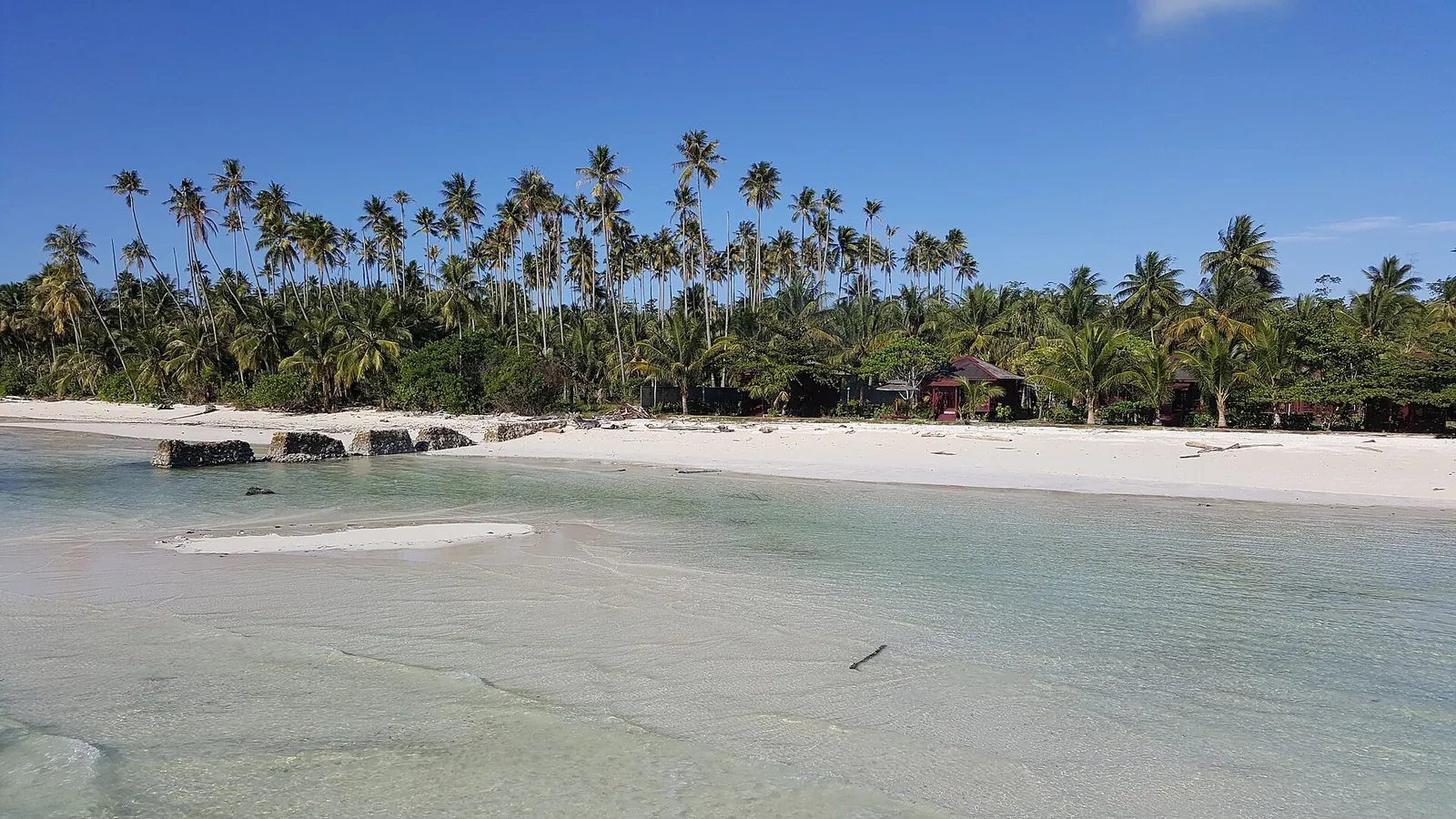
Beach and coconut palms on Maratua Island
Photograph: Deffy Kuswanto — opens in a new tab · CC BY-SA 4.0 — opens in a new tab
Changes: Resized and converted to WebP; displayed with responsive crops. · Original photograph and licence details ↗ — opens in a new tab
Green turtle hatchlings at the Sangalaki Island turtle hatchery
Photograph: A.m.iqro — opens in a new tab · CC BY-SA 4.0 — opens in a new tab
Changes: Resized and converted to WebP; displayed with responsive crops. · Original photograph and licence details ↗ — opens in a new tab