Sulawesi · North Sulawesi
Bunaken and Manado guide: wall diving, where to stay and Minahasan food
Bunaken is a small, flat island in the Bay of Manado, but the reason people fly to the far north of Sulawesi lies just off its shore: coral walls that drop steeply into deep water, a few fin-kicks from the beach. The island is part of a marine national park that also takes in the volcanic cone of Manado Tua, Siladen, Mantehage and Nain. Manado, the provincial capital across the bay, is the gateway, and it is worth more than a transit night: Minahasan cooking is among the boldest in Indonesia, and the cool volcanic highlands around Tomohon are an hour away.
- Suggested time
- 4–6 nights
- Where to stay
- Bunaken Island (Liang or Pangalisang beach) or Siladen for diving; Manado for food and day trips
- Season and timing
- May to October is the drier season, with the clearest water. November to mid-April brings more rain and occasional multi-day storms that can cut visibility, though diving continues year-round.
The short answer
Give it four to six nights. Sleep on Bunaken (or Siladen) for three or four nights if diving or snorkelling is the point: you are on the reef in minutes, and most resorts sell full-board stays with dives. Add one or two nights in Manado, ideally at the end, for the food, the Boulevard at sunset and a day trip to Tomohon and Lake Linow. Choose a Manado hotel instead only if you want one or two park days among other trips; boat transfers then become a daily commute. Fly into Sam Ratulangi airport (MDC) and let your resort arrange the boat.
Island or city: decide where you sleep first
The marine park lies just off Manado, so you can see it on day trips from a city hotel. The Ministry of Tourism puts the crossing at roughly 30 to 45 minutes by boat from Manado harbour. In practice, if you want to dive or snorkel on more than one day, sleeping on the island is the better plan: the reef is in front of your room and the long boat ride is done once. Wikivoyage notes that most Bunaken resorts sell full-board packages, and their dive centres also take guests staying elsewhere.
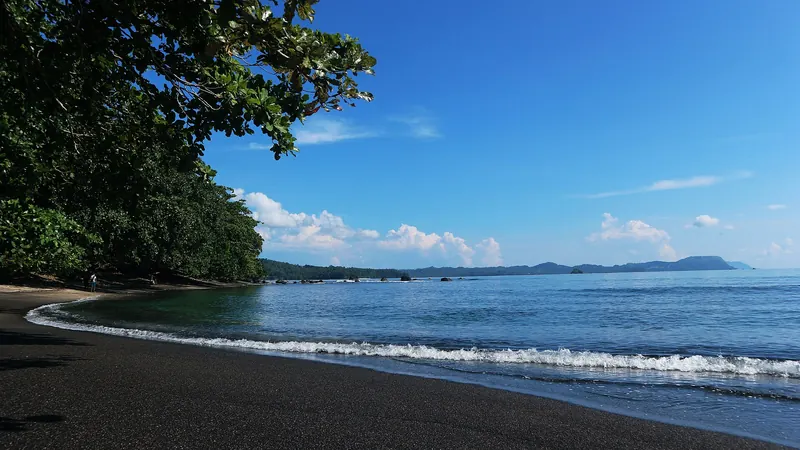
On Bunaken, the resorts sit in two main strips. Liang Beach and the south-west side have a strip of coarse yellow sand. Pangalisang, on the east coast, has a mix of mangroves and small beaches and is close to the walls. Bunaken village, near the public jetty, has homestays, simple warungs and some of the best snorkelling from the shore. Siladen, a smaller island a short hop away, is quieter and has a few boutique resorts.
Manado makes sense if Bunaken is one day of a broader North Sulawesi trip with Tangkoko, Lembeh or the highlands, or if you want air-conditioned city comfort and restaurants. Bunaken has no natural drinking water, so island resorts and homestays provide bottled or refill water, and paths between settlements can turn to mud after rain.
Diving the walls: Lekuan, Fukui and Bunaken Timur
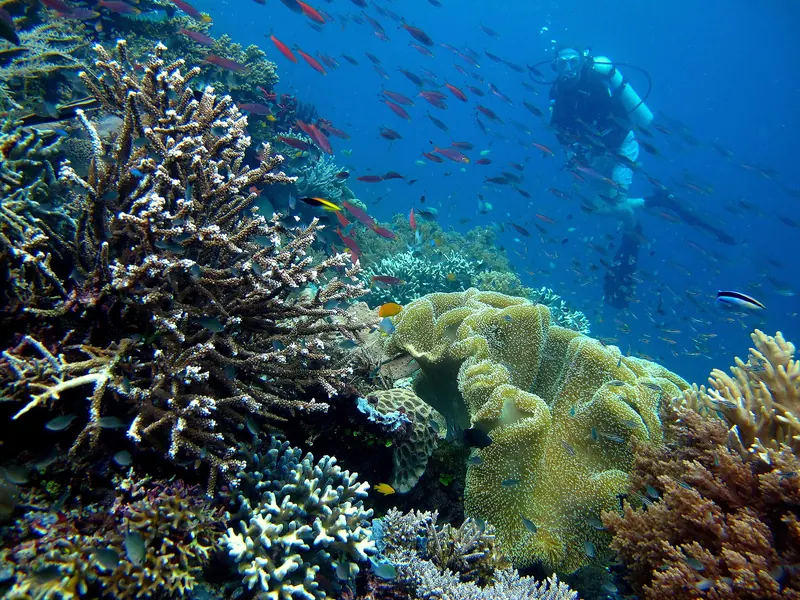
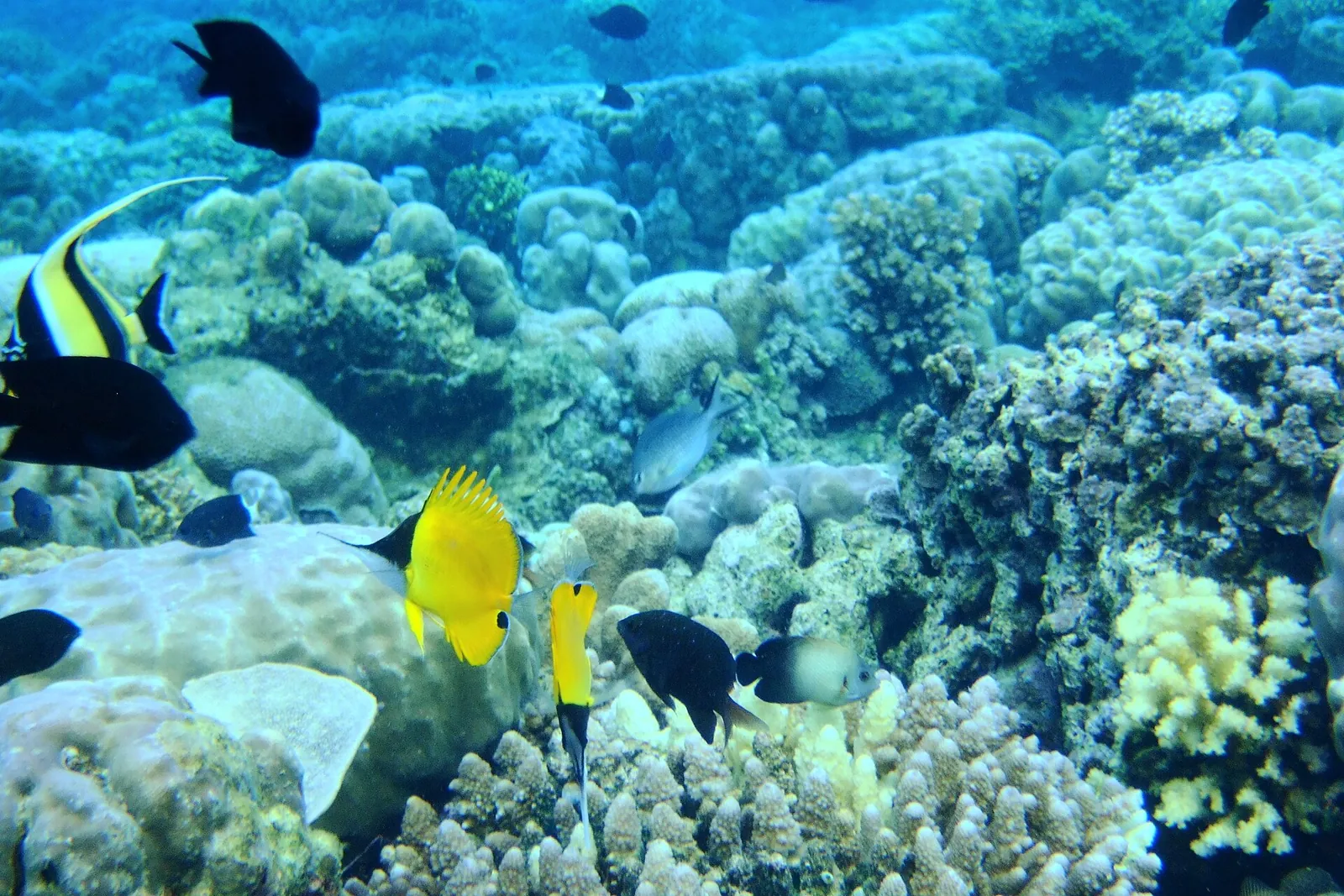
Bunaken is known for its walls: vertical reef faces that, according to the Ministry of Tourism, fall 25 to 50 metres, cut by crevices and covered with sea fans and giant sponges. The islands are separated from the mainland by a trench up to 1,200 metres deep, which the ministry credits with keeping the water relatively clear of city silt. An ANTARA report quoting the head of the park office counted 59 dive sites across the whole park, 21 of them around Bunaken itself.
Lekuan I, II and III, one long wall split into three sites, are usually the first dives people ask for. The ministry describes Lekuan I as calmer with good visibility, and II and III as more demanding; green turtles, schools of jacks and the occasional whitetip reef shark are typical sightings. Mandolin has shallow coral tops busy with fusiliers and snappers; Fukui Point is deeper, with turtles, barracuda and giant trevally. Mike's Point and Bunaken Timur are the macro sites, with nudibranchs, pygmy seahorses and small shrimps, and seagrass at Bunaken Timur where turtles and dugongs sometimes feed.
Currents can be strong and change quickly, so the Ministry of Tourism recommends at least an Open Water certificate, and Wikivoyage notes that many sites suit intermediate or advanced divers. Beginners are not shut out: dive shops run introductory dives and courses on gentler sites. Ask each centre about group size, guide-to-diver ratio and how they handle drift dives before you book. Do not touch the coral, do not feed the fish and use reef-safe sunscreen.
Make time for the local food
What to eat and where to look
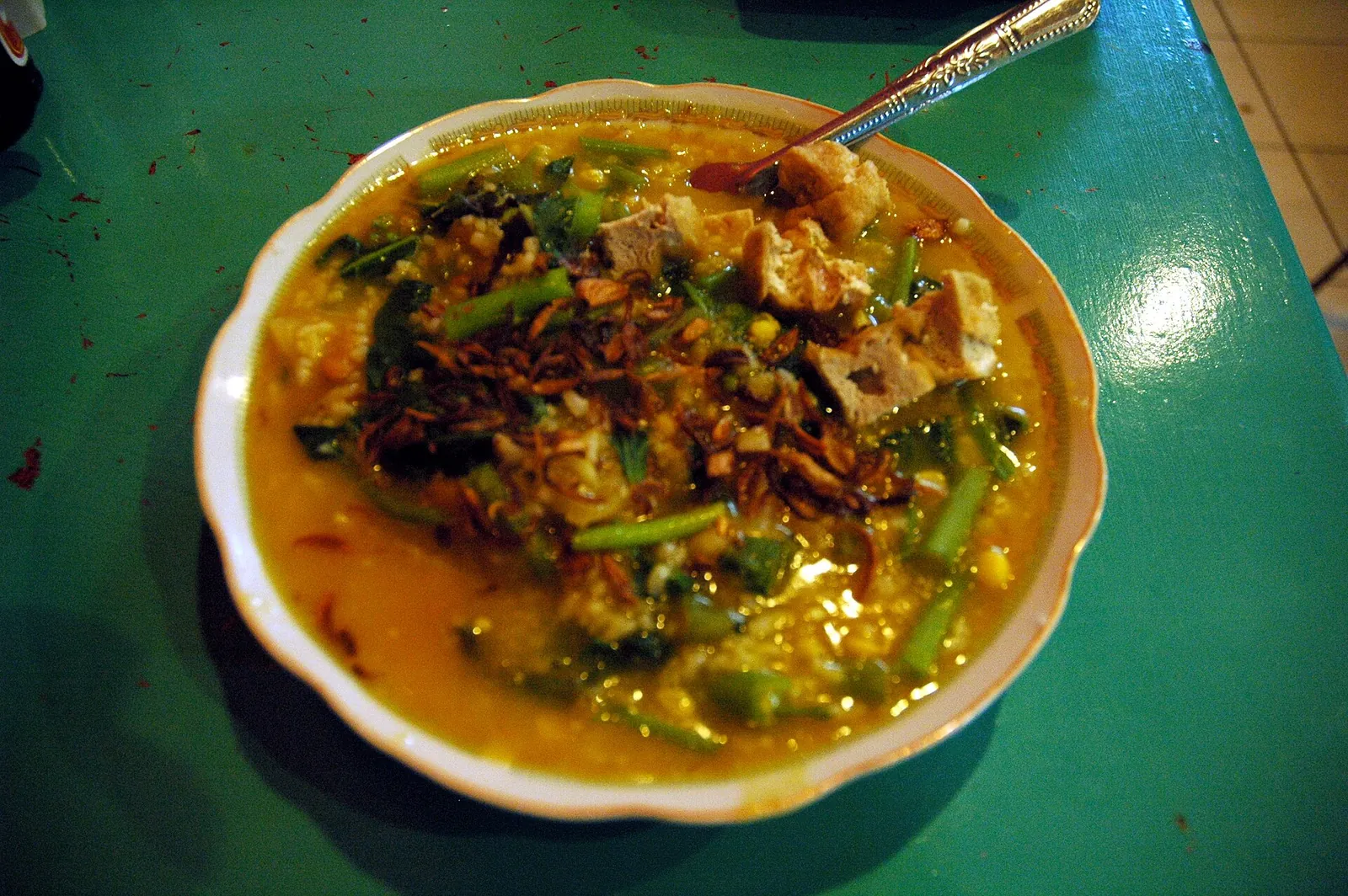
Tinutuan (bubur Manado)
Manado's signature breakfast: rice porridge cooked with pumpkin, sweet potato, cassava and corn, finished with greens such as water spinach and spinach and seasoned with lemongrass and basil. The porridge itself is vegetarian and not spicy; heat comes from the sambals served with it.
- Where to look
- Jalan Wakeke in central Manado, a street of stalls the Ministry of Tourism recommends for tinutuan and other Manadonese dishes.
- Fit it into your day
- Breakfast on your Manado day; the ministry notes it is mostly a morning dish.
Usually served with salted or smoked fish and fish-based chilli paste (sambal roa or ricaroa); ask for them on the side if you eat vegetarian.
Rica-rica
The fiery Manado chilli treatment — fresh chilli, tomato, shallots, garlic and ginger cooked in coconut oil with lime leaf and lemongrass — spread over grilled chicken, fish or tuna. Ayam rica-rica and tuna rica-rica are the classic versions.
- Where to look
- Restaurants along the Boulevard and seafood places on the coast at Malalayang and Kalasey.
- Fit it into your day
- Dinner on the Boulevard at sunset, shared with rice and a vegetable dish.
Very hot. The Ministry of Tourism notes that many Manado dishes are milder, with chilli condiments served alongside, so ask before you order.
Cakalang fufu and woku
Cakalang fufu is skipjack tuna smoked on a frame, eaten with rice and often with garo bunga pepaya, bitter papaya flower buds stir-fried with chilli. Woku dishes, such as cumi woku, cook seafood in a fragrant green herb and chilli paste.
- Where to look
- Manadonese restaurants in the city; the ministry says the best cakalang fufu is found around the port of Bitung.
- Fit it into your day
- Lunch in Manado, or on the way to Tangkoko or Lembeh through Bitung.
Papaya flower is pleasantly bitter; if it is not to your taste, ask for another vegetable.
Klappertaart
A Dutch-influenced baked custard of young coconut, often with raisins and walnuts and a hint of rum, closely associated with Manado.
- Where to look
- Bakeries and cake shops in Manado.
- Fit it into your day
- An afternoon snack, or dessert to cool down after rica-rica.
Keep it refrigerated; it does not travel well in the heat. Some versions contain alcohol.
Meals on the island
On Bunaken itself, resorts usually serve buffet-style full-board meals built around fish and rice, while the village has simple warungs with nasi campur, fried chicken and bakso, according to Wikivoyage.
- Where to look
- Your resort, or the warungs around Bunaken village near the jetty.
- Fit it into your day
- Plan most island meals at your resort and save Manado's specialities for your city night.
There is no natural drinking water on Bunaken; drink bottled or filtered water provided by your accommodation.
Snorkelling from the beach, and the park fee
You do not need a boat to see the reef. The drop-off along much of Bunaken is close to the shore; Wikivoyage puts it about 40 metres out in places, past the mangroves, and singles out the water in front of the village. Timing matters: at low tide the reef top can be too shallow to cross without standing on coral, and the current along the wall can pick up suddenly. Wear fins, pick a landmark on shore and stay close to it. A kayak, which you can rent in the village, gives you somewhere to rest and makes you visible to boats.
Bring your own mask and snorkel if you have them — the Ministry of Tourism suggests it even though resorts and dive centres rent equipment. A boat trip to Manado Tua or Siladen adds different reefs: the ministry describes Manado Tua's plateaus sloping from 5 to 30 metres before the walls begin.
Every visitor to the park pays an entrance fee. When we checked on 2026-10-03, ANTARA quoted the head of the Bunaken National Park office as saying that foreign visitors pay Rp150,000 per person per day, multiplied by the number of days if you stay inside the park. Resorts and dive centres often collect it for you; ask whether it is already in your package price, and keep the proof of payment with you.
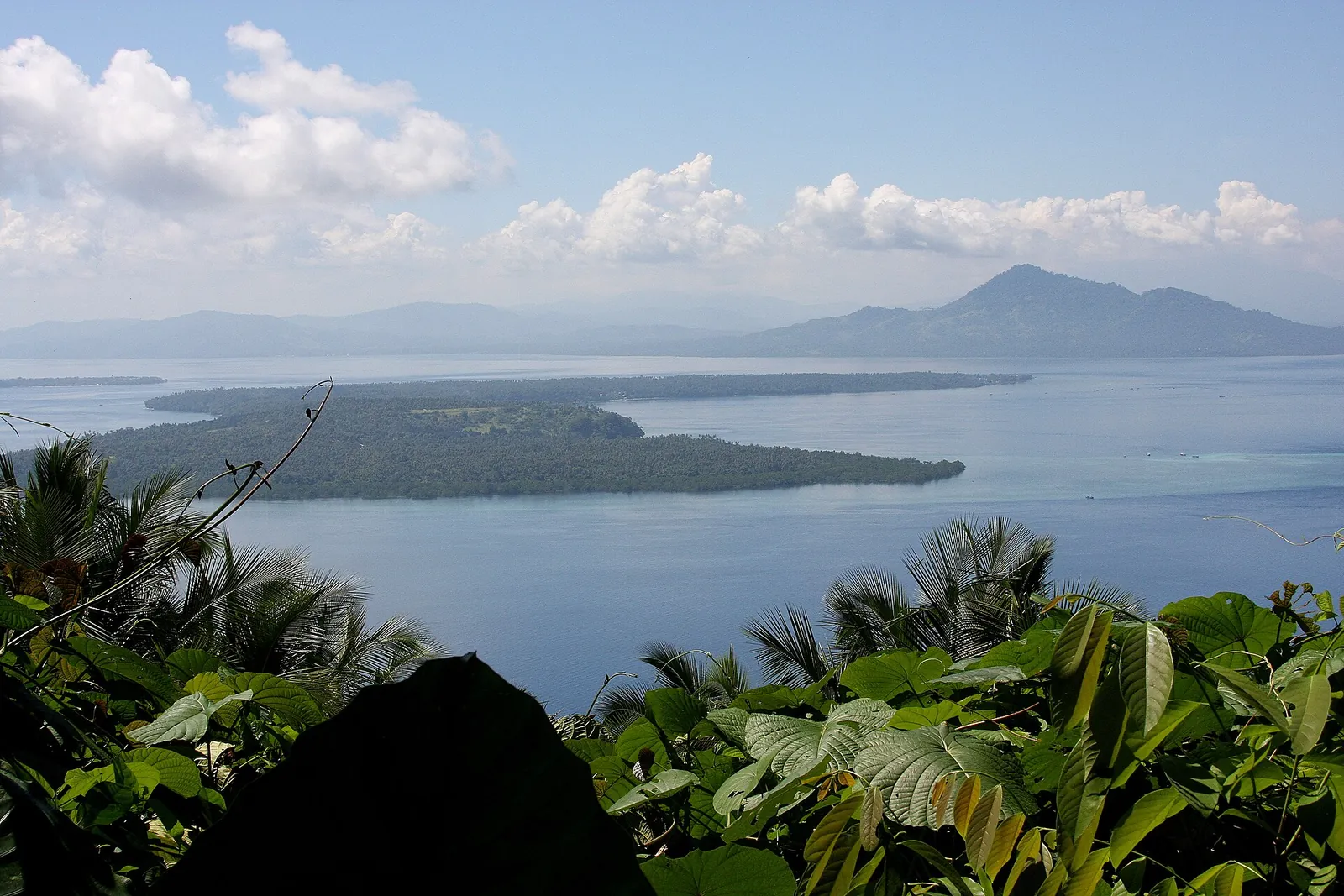
Getting to Bunaken: boats from Manado
Most island resorts collect their guests from the airport and include the boat, which is by far the simplest arrangement after a long flight. Confirm the pick-up time with them: if you land late in the day, you may need a first night in Manado.
Independent travellers can take the public boat. When we checked on 2026-10-03, the Ministry of Tourism's Bunaken page said boats from Manado leave around 2 pm daily, depending on the tide, and return from Bunaken early in the morning, around 7 to 8 am; charter boats run from morning to late afternoon for packages arranged by hotels and agents. Wikivoyage, updated in 2024, reports the same pattern from Kalimas harbour behind the Celebes Hotel, no service on Sundays and frequent delays. Treat these as patterns rather than a timetable and confirm locally the day before.
Because the public boat runs once a day in each direction, plan at least two nights on the island if you go this way, and do not schedule a flight out of Manado on the morning you leave Bunaken by public boat.
A day in Manado: the Boulevard and the Wakeke breakfast street
Manado is a busy port city rather than a sightseeing destination, but a day here is well spent around food. The Ministry of Tourism points to Jalan Wakeke for its row of stalls serving tinutuan and other Manadonese dishes, mostly in the morning, and to the Boulevard (Jalan Piere Tendean) along the bay, which fills with restaurants and people at sunset, with Manado Tua on the horizon.
Other ministry suggestions are Ban Hin Kiong, the city's oldest Chinese temple, in the Calaca area; the Christ Blessing statue on the hillside at Citraland; and Malalayang Beach, about 15 minutes from the centre, where locals come for grilled seafood stalls at sunset. Ride-hailing apps work in the city, and the ministry suggests hiring a car with driver for Tomohon or Tangkoko.
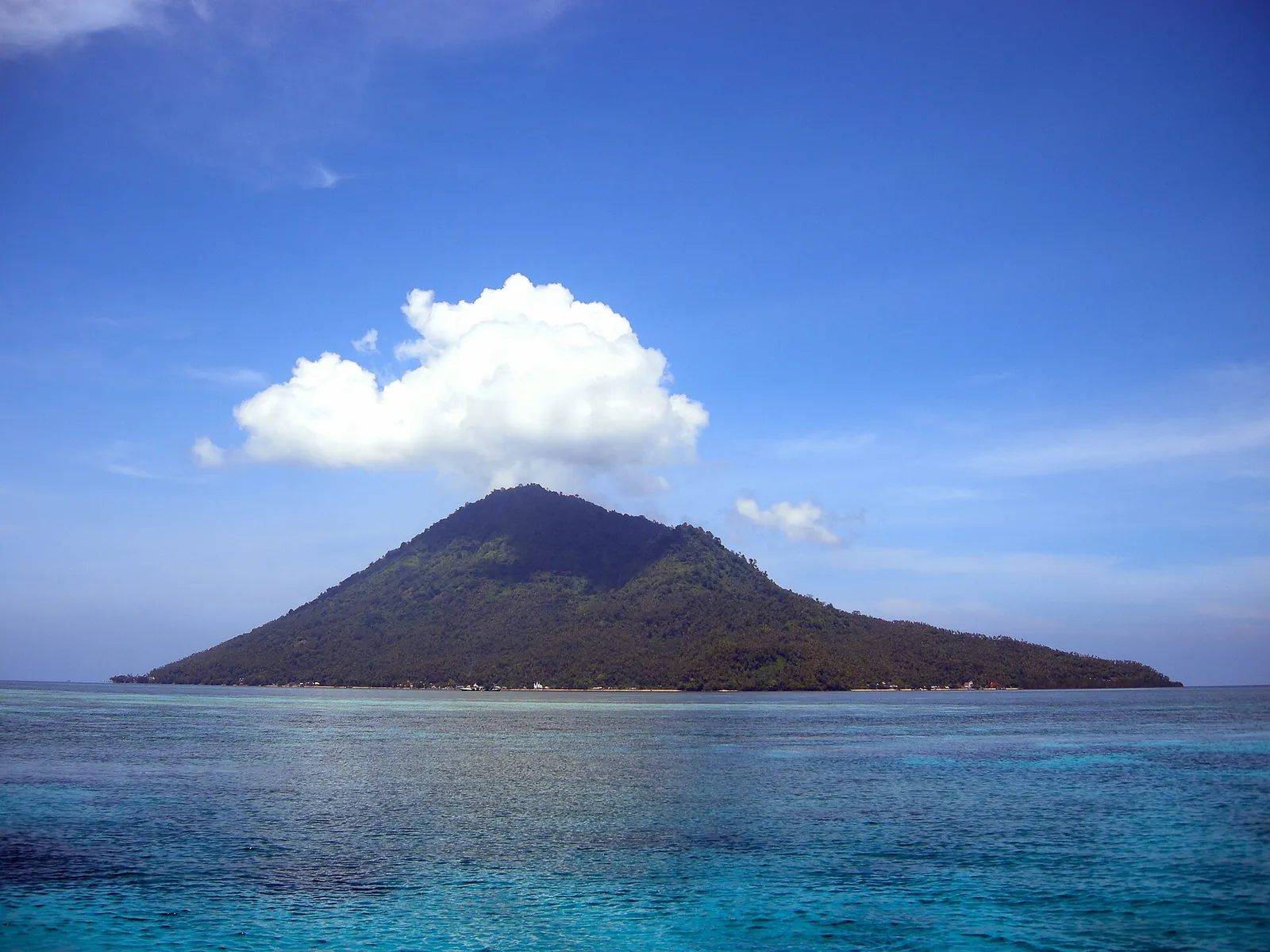
The Minahasa highlands: Tomohon, Lake Linow and the volcanoes
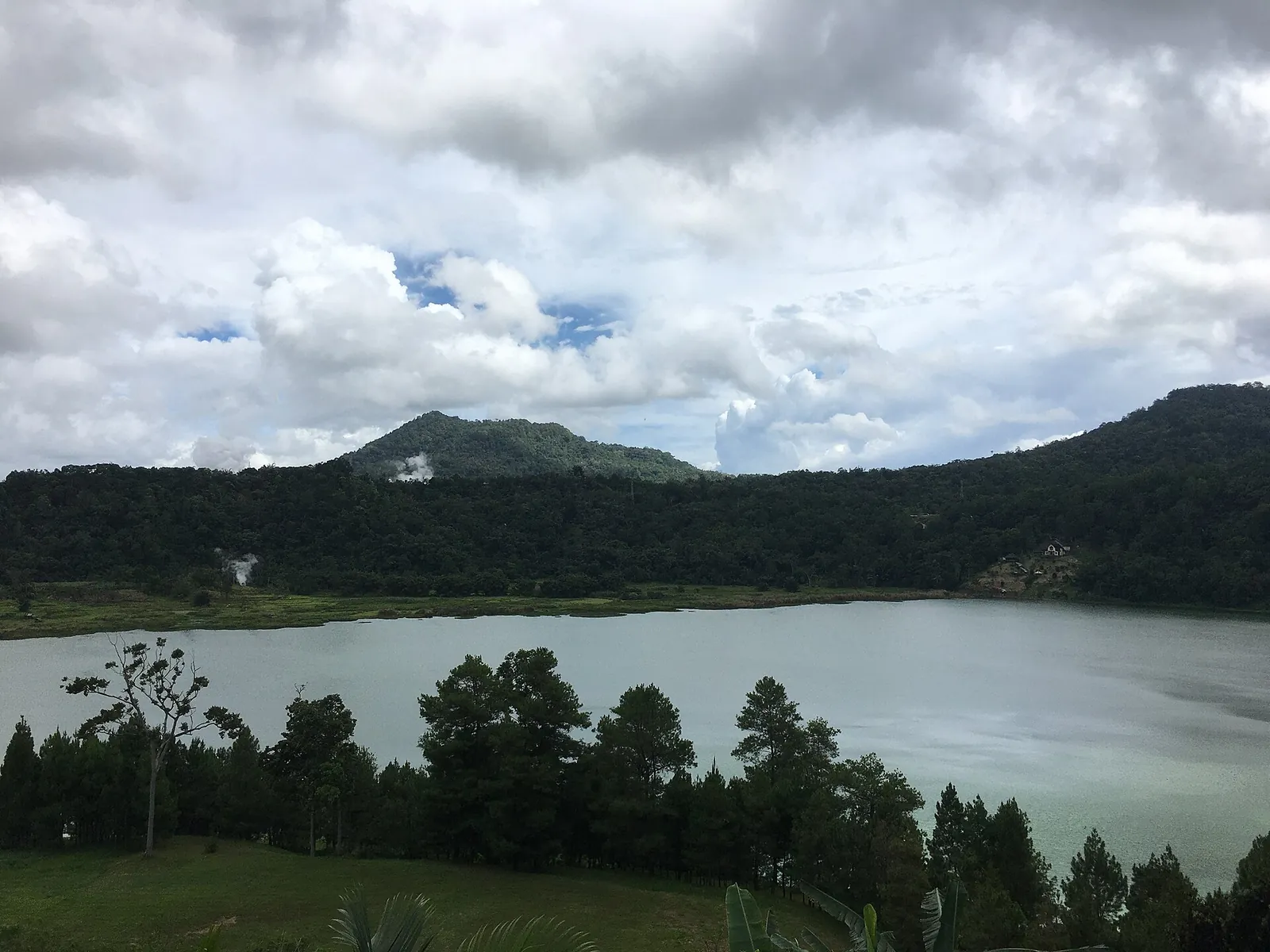
About an hour inland, Tomohon sits in a cooler volcanic landscape that makes a good contrast to days in the water. The Ministry of Tourism describes Lake Linow as a volcanic lake whose water changes colour, overlooked by Mount Lokon and Mount Mahawu, and a quiet place to stop for coffee. Tomohon is known as Indonesia's flower city, and the ministry lists the Tomohon International Flower Festival with its float parade; check the event page for the current year's dates.
Tomohon's traditional market is famous for selling exotic meat, including dog, bat, rat and snake, as the ministry notes; Wikivoyage adds that animals bought alive are slaughtered on the spot. Many visitors find it distressing, so decide in advance whether you want to see that section. In Woloan, villagers build traditional wooden houses in kit form, using hardwood and traditional methods, and ship them to buyers.
Mount Lokon (1,580 metres) and Mount Mahawu are both active volcanoes. When we checked on 2026-10-03, Indonesia's volcano monitoring service MAGMA listed Lokon at alert Level II (Waspada) and Mahawu at Level I (Normal). Check the current level and any exclusion zone on the day, and climb Lokon only with a local guide who follows official advice.
Combine Bunaken with Tangkoko and Lembeh
Manado is the hub for North Sulawesi's other headline trips. The Ministry of Tourism puts Tangkoko Nature Reserve, for tarsiers at dusk and crested macaques, about two hours from Manado, and the Lembeh Strait near Bitung, one of the world's best-known muck-diving areas for frogfish, mimic octopus and flamboyant cuttlefish, about an hour away.
A balanced route is three or four nights on Bunaken, a night near Tangkoko, and either a Lembeh stay for keen divers or a final Manado night with the Tomohon day trip. Ask your dive centre how long it wants you to wait between your last dive and your flight home, and use that gap for Manado and the highlands.
Practical questions
Should I stay on Bunaken or in Manado?
Stay on Bunaken or Siladen if you plan to dive or snorkel on several days: the reef is on the doorstep and most resorts sell full-board packages. Stay in Manado if the park is a single day among other North Sulawesi trips, or for the food and the Tomohon day trip.
How long is the boat from Manado to Bunaken?
Roughly 30 to 45 minutes, according to the Ministry of Tourism. Resorts usually include a transfer; the public boat runs about once a day each way, so check timings locally.
How much is the Bunaken National Park entrance fee?
When we checked on 2026-10-03, ANTARA quoted the park office as charging foreign visitors Rp150,000 per person per day. Ask your resort or dive centre whether it is included.
Can I snorkel at Bunaken without a boat?
Yes. In several places, including off the village, the reef edge is close to shore. Mind the tide, wear fins and stay near a landmark, because currents along the wall can change quickly.
Do I need to be an experienced diver?
Not for every site, but the Ministry of Tourism recommends at least Open Water certification because some sites have strong currents and depth. Dive centres run introductory dives and courses on gentler sites.
When is the best time to visit Bunaken?
May to October is drier with the best visibility. The wetter months from November to mid-April can bring storms that last several days and reduce visibility, but diving continues.
Sources and checks before you travel
Reference sources for the version dated 3 October 2026. Confirm opening times, access, transport and conditions for your travel dates.
- Indonesia Travel (Ministry of Tourism): Bunaken ↗ — opens in a new tab
- Indonesia Travel (Ministry of Tourism): Diving Bunaken ↗ — opens in a new tab
- Indonesia Travel (Ministry of Tourism): Manado Tua Island ↗ — opens in a new tab
- Indonesia Travel (Ministry of Tourism): things to do in and around Manado ↗ — opens in a new tab
- Indonesia Travel (Ministry of Tourism): eight natural places around Manado ↗ — opens in a new tab
- Indonesia Travel (Ministry of Tourism): Tomohon ↗ — opens in a new tab
- Indonesia Travel (Ministry of Tourism): Tomohon International Flower Festival 2026 ↗ — opens in a new tab
- Indonesia Travel (Ministry of Tourism): deliciously hot Manado foods ↗ — opens in a new tab
- Indonesia Travel (Ministry of Tourism): tinutuan porridge ↗ — opens in a new tab
- Indonesia Travel (Ministry of Tourism): Bubur Manado ↗ — opens in a new tab
- ANTARA Sulawesi Utara: Bunaken National Park revenue in 2025 ↗ — opens in a new tab
- ANTARA Sulawesi Utara: foreign arrivals at Sam Ratulangi airport ↗ — opens in a new tab
- MAGMA Indonesia (volcano monitoring): activity levels ↗ — opens in a new tab
- Wikivoyage: Bunaken ↗ — opens in a new tab
- Wikivoyage: Manado ↗ — opens in a new tab
- Wikivoyage: Tomohon ↗ — opens in a new tab
Does this experience fit your route?
Compare the programme, departure point and practical requirements with your travel plans.
Check dates and details on Viator ↗ — opens in a new tabAffiliate link · Book with ViatorPhoto credits
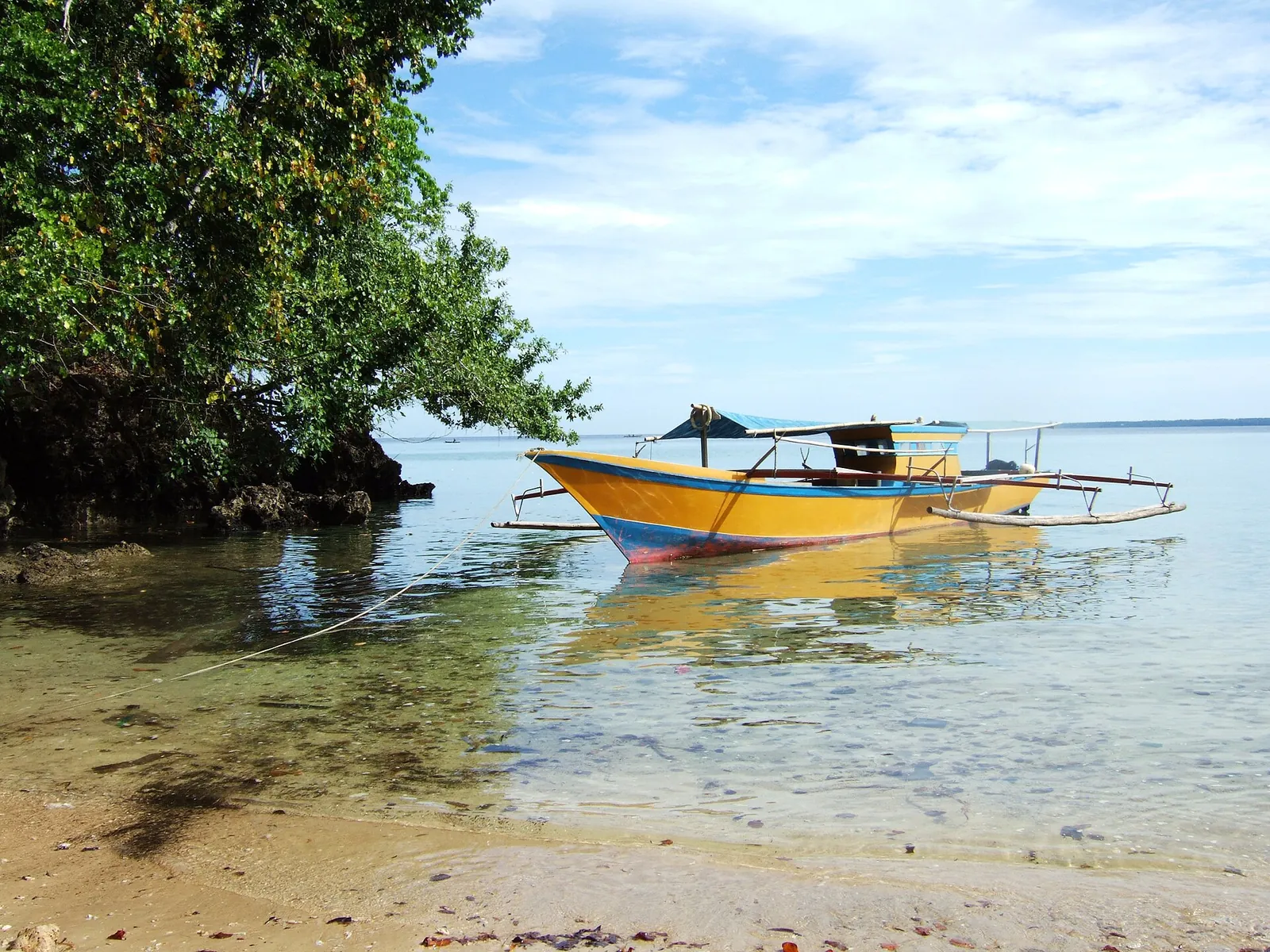
An outrigger boat in the shallows at Tanjung Perigi on Bunaken Island
Photograph: Sakurai Midori — opens in a new tab · CC BY-SA 3.0 — opens in a new tab
Changes: Resized and converted to WebP; displayed with responsive crops. · Original photograph and licence details ↗ — opens in a new tab
Reef fish over hard coral in Bunaken National Marine Park
Photograph: Sakurai Midori — opens in a new tab · CC BY-SA 3.0 — opens in a new tab
Changes: Resized and converted to WebP; displayed with responsive crops. · Original photograph and licence details ↗ — opens in a new tab
Bunaken Island seen from Manado Tua, with the North Sulawesi mainland beyond
Photograph: Btv70 — opens in a new tab · CC BY-SA 3.0 — opens in a new tab
Changes: Resized and converted to WebP; displayed with responsive crops. · Original photograph and licence details ↗ — opens in a new tab
Tinutuan (bubur Manado), the city's vegetable rice porridge, served in Manado
Photograph: User: (WT-shared) Jpatokal at wts wikivoyage — opens in a new tab · CC BY-SA 3.0 — opens in a new tab
Changes: Resized and converted to WebP; displayed with responsive crops. · Original photograph and licence details ↗ — opens in a new tab
Manado Tua, the extinct volcano at the centre of the marine park
Photograph: Matt Kieffer — opens in a new tab · CC BY-SA 2.0 — opens in a new tab
Changes: Resized and converted to WebP; displayed with responsive crops. · Original photograph and licence details ↗ — opens in a new tab
Lake Linow near Tomohon in the Minahasa highlands
Photograph: Juxlos — opens in a new tab · CC BY-SA 4.0 — opens in a new tab
Changes: Resized and converted to WebP; displayed with responsive crops. · Original photograph and licence details ↗ — opens in a new tab