Plan your trip · Indonesia
Vegetarian and vegan Indonesia: tempeh, tofu and hidden shrimp paste
Indonesia is easier for vegetarians than its famous meat dishes suggest. Tempeh and tofu are everyday food rather than a substitute, and Java in particular is full of boiled and raw vegetables dressed in peanut sauce. The difficulty is not meat but seafood you cannot see: shrimp paste ground into the sambal, prawn-based petis stirred into a sauce, dried shrimp in a coconut-milk stew, prawn crackers on top. Knowing which dishes are meat-free by design, and which few words remove the rest, matters more than finding a vegetarian restaurant.
- Suggested time
- Any length of trip; no extra days needed
- Where to stay
- Ubud or Canggu in Bali; central Yogyakarta on Java; central Jakarta for the city's vegetarian restaurants
- Season and timing
- Year-round. In Bali, Nyepi (March or April) closes everything, the airport included, for 24 hours: stock up on food beforehand. During Ramadan, daytime eating is quieter in Muslim-majority areas and the evening break-fast markets are full of meat-free snacks.
The short answer
A meat-free trip does not need a different route, only a different way of ordering. Base yourself where the choice is widest — Ubud or the Canggu café district in Bali, or central Yogyakarta near Malioboro on Java — and eat Javanese vegetable dishes such as gado-gado, pecel, ketoprak and kupat tahu, with tempeh and tofu as your protein. Say you are vegetarian and then name what you do not eat: meat, fish, shrimp, egg and, above all, terasi (shrimp paste) in the sambal. Vegans should also ask about egg and prawn crackers on every plate. In Bali, buy food the day before Nyepi, when everything closes for 24 hours.
How meat-free eating works in Indonesia
Start with what is already on the table. Tempe (tempeh, fermented soybean cake) and tahu (tofu) are everyday foods across Java, fried, simmered in palm sugar or battered, and they appear as side dishes on many plates whether or not anyone thinks of them as vegetarian. Around them sits a family of vegetable dishes — gado-gado, pecel, karedok, ketoprak — built on boiled or raw vegetables and a peanut sauce. If you eat these with rice, lontong or ketupat (compressed rice cakes), you can eat local food at every meal rather than relying on cafés.
The catch is seafood used as seasoning. The Ministry of Tourism's own descriptions of Lombok's plecing and beberuk list terasi (shrimp paste) in the sambal, Bali's jukut urab is seasoned with terasi, and Central and East Java's petis is a thick paste made from shrimp or fish. None of these is visible on the plate, and a cook who hears 'no meat' may not think of them. Treat sambal and sauces, not the vegetables, as the part to ask about.
Halal does not mean vegetarian. Much of Indonesia is Muslim-majority, and a halal kitchen avoids pork but still cooks with chicken, beef, fish and shrimp. Lombok, which the ministry promotes as a halal destination, is a good example: its signature dishes are grilled chicken, beef satay and rib soup, and its vegetable sides are dressed with shrimp-paste sambal.
Dishes that are meat-free by design, and what to strip off
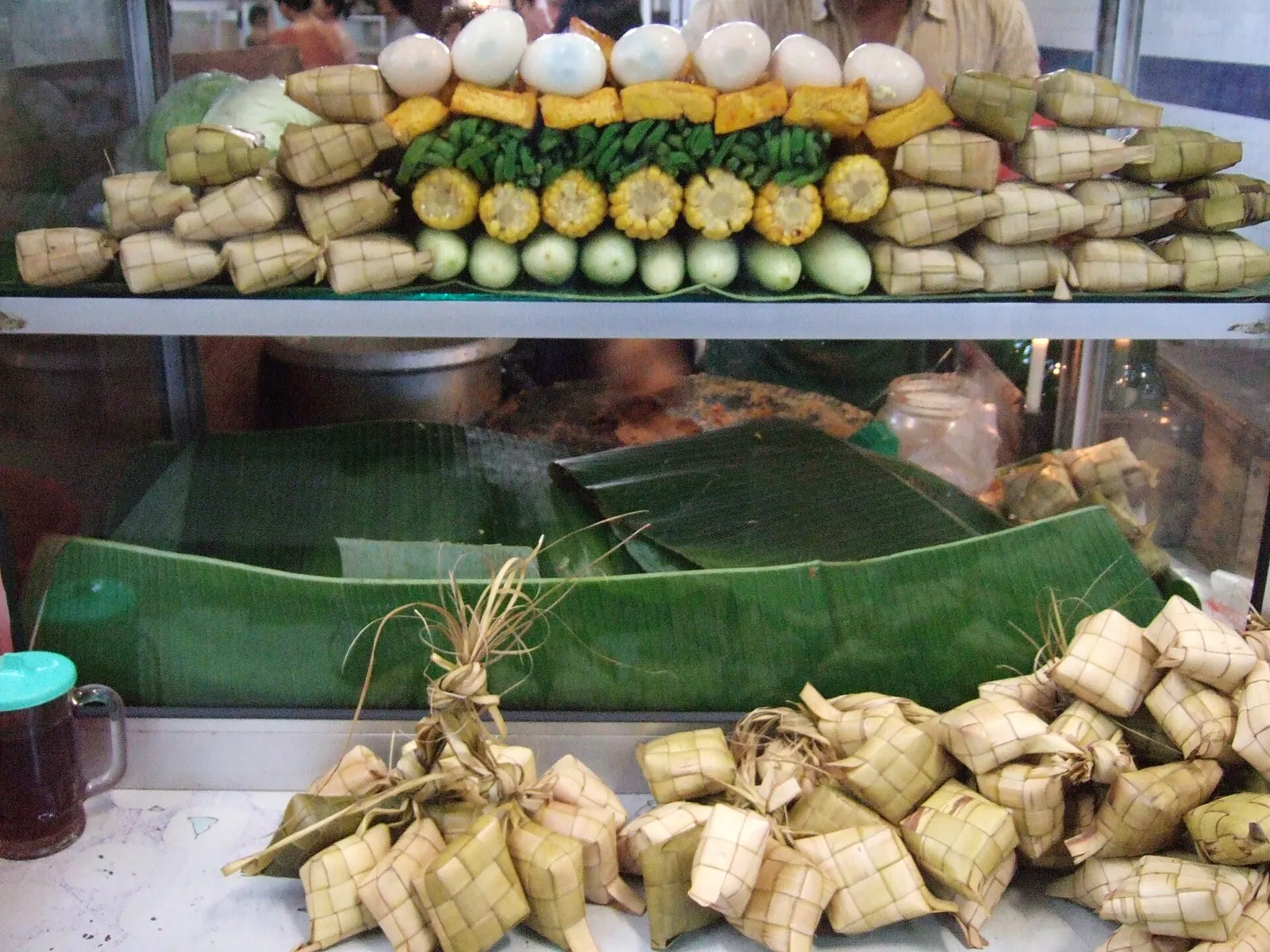
Gado-gado is the easiest dish to find in Jakarta and beyond. The ministry describes the Betawi version as fresh vegetables with ketupat, tofu and tempeh under a thick, slightly sweet peanut sauce. It often also comes with hard-boiled egg and krupuk (crackers), and recipes for the peanut sauce can include terasi, so vegans should ask for it without egg, without crackers and without shrimp paste. Ketoprak is similar — lontong, tofu, rice noodles and bean sprouts with peanut sauce, sweet soy sauce and crackers — and is sold by street vendors for breakfast or dinner.
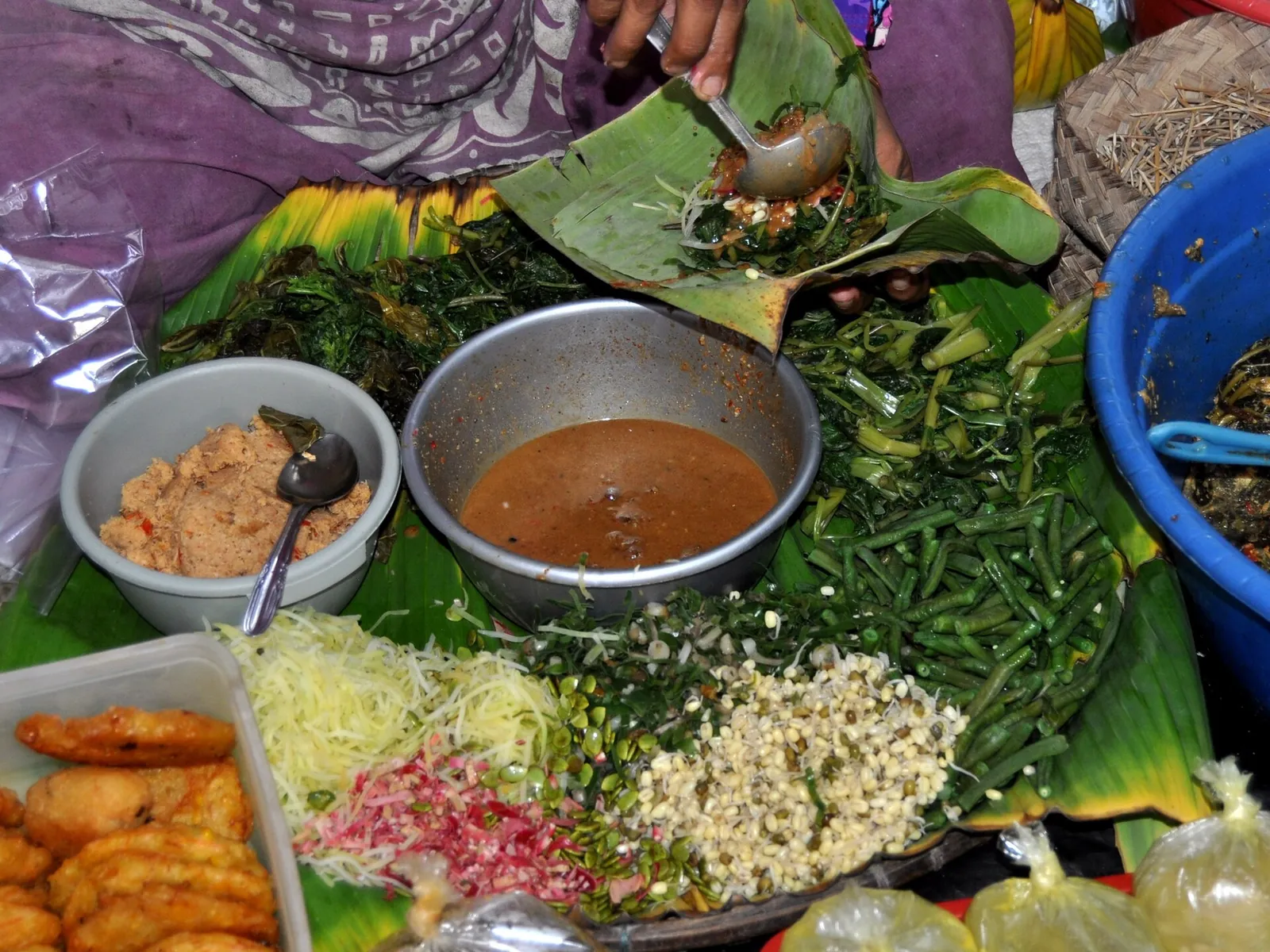
Pecel is the Javanese version: boiled vegetables with a peanut sauce, eaten with rice or rice cakes, often with fried tempeh or tofu and crackers such as rempeyek. Karedok, from West Java, uses raw long beans, cabbage and bean sprouts with a peanut sauce of garlic, kencur and a little tamarind. In Magelang near Borobudur, the ministry calls kupat tahu — rice cakes, noodles, fritters, cabbage and tofu under a thin, sweet peanut sauce — the town's most iconic dish, and Tasikmalaya has its own kupat tahu Singaparna.
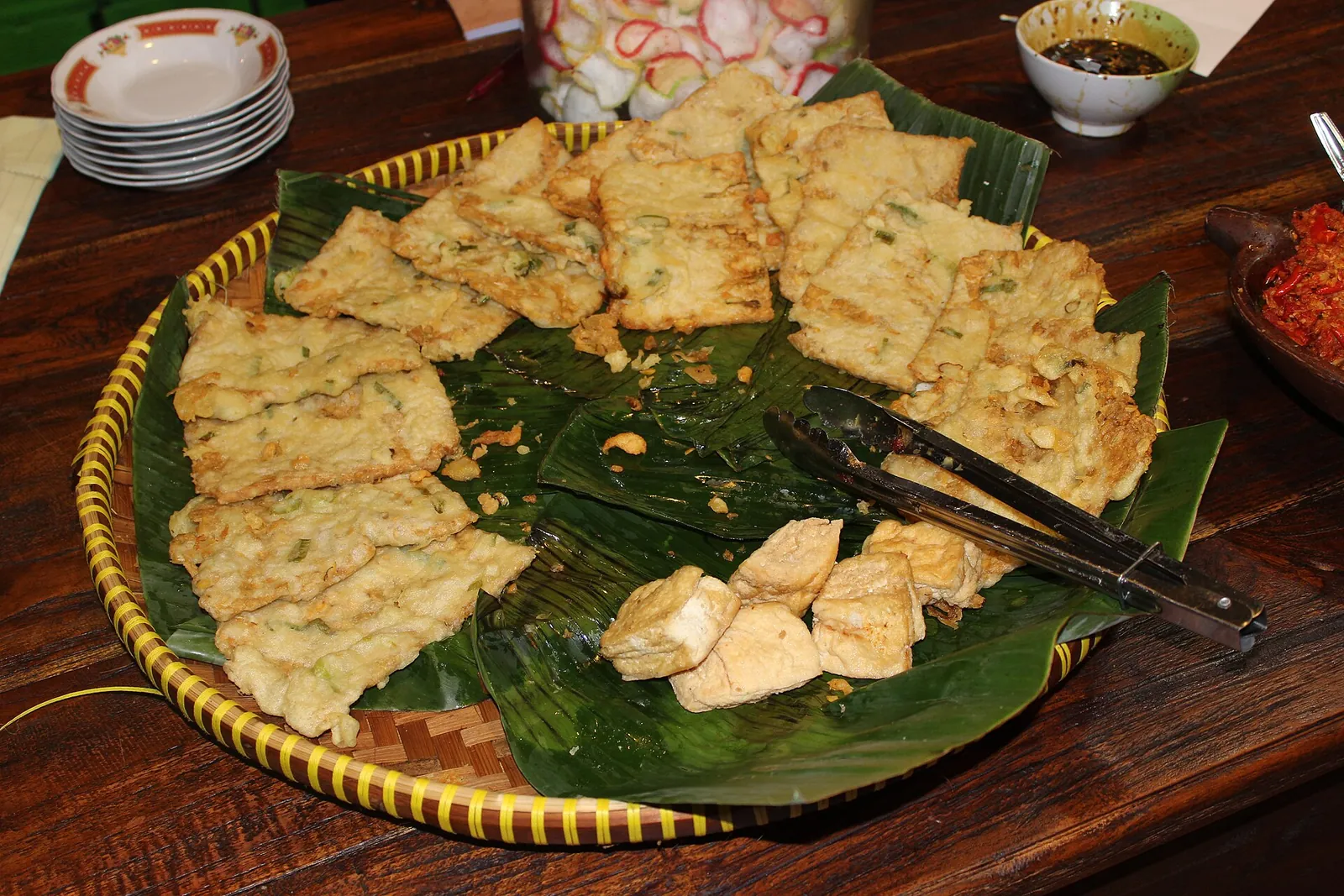
For protein on the side, look for tempe mendoan (thin tempeh fried half-cooked in seasoned batter), tahu bacem (tofu simmered in spices and brown sugar, then fried) and tempe bacem. Above Yogyakarta, the province's tourism office highlights jadah tempe — sticky rice with tempeh — at Kaliurang on the slopes of Merapi. Yogyakarta's gudeg is young jackfruit slow-cooked in coconut milk, but a full gudeg plate traditionally adds beef-skin krecek, chicken in coconut milk and egg; order the jackfruit with rice and tempe or tahu bacem instead.
Make time for the local food
What to eat and where to look
Gado-gado and ketoprak (Jakarta)
Gado-gado is vegetables with tofu, tempeh and ketupat under a thick peanut sauce; ketoprak swaps in lontong, rice noodles and bean sprouts and adds sweet soy sauce. Both are Jakarta street classics and among the easiest vegetarian meals in the country.
- Where to look
- Street vendors and market stalls across Jakarta and most Javanese cities; gado-gado is also on many hotel and restaurant menus in Bali.
- Fit it into your day
- A filling lunch or an early dinner; ketoprak is also a common breakfast.
Usually served with egg and crackers, and some peanut sauces contain terasi. Vegans should ask for it without egg, crackers and shrimp paste.
Pecel and karedok (Java)
Pecel is boiled vegetables with a peanut sauce, eaten with rice or rice cakes and often fried tempeh or tofu; karedok is the West Javanese version with raw vegetables and a peanut sauce of garlic, kencur and tamarind.
- Where to look
- Warungs, markets and stalls across Java, including vendors at Borobudur; karedok at Sundanese restaurants in Bandung and West Java.
- Fit it into your day
- Breakfast or lunch on a sightseeing day, when it is freshly made.
Check the crackers on top, since many krupuk are made with prawn or fish, and ask whether the sauce has terasi.
Tempe mendoan and tahu bacem
Mendoan is thinly sliced tempeh fried half-cooked in seasoned batter; tahu bacem is tofu simmered with spices and brown sugar, then fried. They are served hot with sweet soy sauce and bird's eye chilli.
- Where to look
- Fried-snack stalls and warungs across Central Java, including around Borobudur and Magelang; tempe and tahu bacem also come with gudeg in Yogyakarta.
- Fit it into your day
- Add them to any vegetable plate as your protein, or eat them as a snack between sights.
Often fried in the same oil as other fritters, some of which contain prawn; ask about the batter if you are vegan.
Gudeg (Yogyakarta)
Young jackfruit cooked for hours in coconut milk with palm sugar, garlic, shallot, coriander, galangal and teak leaves, which give it its reddish-brown colour. It is sweet, soft and Yogyakarta's signature dish.
- Where to look
- Wijilan, a short walk from the kraton, and Barek near Gadjah Mada University, where the ministry says many gudeg restaurants are grouped.
- Fit it into your day
- A lunch in the old city: order the jackfruit with rice and tempe or tahu bacem.
A full plate adds beef-skin krecek, chicken in coconut milk and egg; ask for gudeg without them.
Plecing kangkung (Lombok)
Blanched water spinach under a fresh, raw sambal of chilli, shallot, garlic, tomato, tamarind, lime and palm sugar, often with grated coconut, fried peanuts and bean sprouts.
- Where to look
- Warungs and markets across Lombok and Bali; the ministry mentions warungs near Senggigi and Pasar Kebon Roek market.
- Fit it into your day
- Order it with rice and fried tempeh or tofu for a full meal.
The sambal normally contains terasi. The ministry notes that it can be left out — ask before the sambal is made.
Tinutuan (Manado)
Manado's vegetable porridge: rice cooked with pumpkin, sweet potato, cassava, corn, water spinach and spinach, seasoned with garlic, lemongrass, bay leaves and ginger. The ministry calls it a vegetarian dish and a breakfast staple.
- Where to look
- Jalan Wakeke in Manado, which the ministry describes as lined with tinutuan stalls.
- Fit it into your day
- Breakfast before a day trip to Bunaken.
Usually served with ricaroa (a fish-flavoured chilli sauce) and salted fish, and sometimes noodles; ask for the tomato sambal only.
Shrimp paste, petis and fish: where they hide
These are the dishes and sauces where meat-free on the menu does not always mean meat-free in the kitchen. Ask each time; recipes vary from stall to stall.
Lombok's tourism pages are a useful warning and a reassurance at the same time: the ministry's article on plecing kangkung lists shrimp paste in the sambal but notes that it is optional and can be left out, which makes the dish a good vegetarian choice if you ask before it is made. Its Manado porridge tinutuan, a vegetable rice porridge that the ministry calls vegetarian, is normally served with ricaroa, a fish-flavoured chilli sauce, and salted fish — order the porridge with the plain tomato sambal only.
- Sambal: Lombok's plecing and beberuk sambals and Bali's jukut urab use terasi; Bali's sambal matah is made with shallots, chilli, lemongrass and lime leaf, but variants add terasi.
- Petis: a thick shrimp or fish paste. Tahu petis is fried tofu filled with it, and Semarang's tahu gimbal combines tofu with a prawn fritter, egg and a prawn-petis peanut sauce.
- Ebi (dried shrimp): Jakarta's sayur godog, a coconut-milk stew of chayote, long beans and tempeh, is seasoned with it.
- Krupuk: crackers come in cassava and rice versions, but many are made with prawn or fish, and krupuk kulit is made from cattle skin.
- Side dishes: a gudeg or nasi campur plate may arrive with meat, egg or fish even when the main item is vegetables.
The phrases that get you a meat-free plate
Indonesian is written in the Latin alphabet and is easy to read aloud, which makes a few short phrases realistic even on a first trip. Negation is simple: tidak comes before a verb ('saya tidak makan…', I do not eat…), and tanpa means without. Name the exact ingredients rather than relying on the word vegetarian alone, and say it before the cook starts, since sambal is often ground fresh for each order.
- Saya vegetarian — I am vegetarian. In Bali's café districts, *vegan* is understood as well.
- Saya tidak makan daging, ayam, ikan atau udang — I do not eat meat, chicken, fish or shrimp.
- Tanpa terasi / tanpa petis — without shrimp paste / without petis.
- Tanpa telur, tanpa kerupuk — without egg, without crackers (useful for vegans on gado-gado and ketoprak).
- Sambalnya pakai terasi? — does the sambal have shrimp paste in it?
- Tidak pedas — not spicy, if the fresh chilli sambal is too much.
Where meat-free travel is easiest
Bali has the widest choice of dedicated restaurants, concentrated in two places. The ministry's Ubud page recommends starting the day with yoga and a healthy breakfast, and its list of vegetarian restaurants names a raw-food café in central Ubud and a vegan fine-dining room at a wellness retreat on the Ayung River at Mambal. Canggu, which the ministry describes as a place for beach yoga and healthy-food cafés, has several plant-based cafés in the Berawa and Tanah Barak area. Away from these districts, Balinese warung food is built around pork, duck and chicken, so carry your phrases.
Yogyakarta is the best base on Java: gudeg comes with tempe or tahu bacem, pecel is a Javanese staple, Kaliurang's jadah tempe and Magelang's kupat tahu are within reach, and the ministry's list includes a vegan-friendly café near Malioboro. In Jakarta, gado-gado and ketoprak are on every street, and the same list names Dharma Kitchen in Pluit, a vegetarian restaurant with Indonesian, Asian and Western menus, and Loving Hut in Jatinegara. In Medan, it lists Socrates, a vegan restaurant serving mock 'goat' satay and fried 'chicken'.
The ministry's restaurant lists are several years old, and small cafés change hands quickly. Use them to know which neighbourhoods to search, and check a restaurant's own current page or listing before crossing a city to eat there. When we checked on 2026-10-03, the ministry's Bali list still showed opening hours for each café; we have not repeated them here because they could not be confirmed with the businesses.
Holidays that change what you can eat
Nyepi, Bali's Day of Silence, falls in March or April. For 24 hours the airport and all transport close, and everyone, visitors included, is expected to stay inside. The ministry advises preparing food and other supplies before it starts and staying inside your accommodation; if you are in a guesthouse or villa without a kitchen, buy enough meat-free food the day before.
During Ramadan, daytime eating is quieter in Muslim-majority areas, but the late afternoon break-fast markets are a gift for vegetarians: the ministry's Jakarta Ramadan guide describes Pasar Benhil filling with takjil — sweet porridges, kolak with banana or sweet potato, iced desserts and fried snacks — before sunset. Ask about fillings in savoury fried snacks.
The ministry's vegetarian page also notes that some Chinese Indonesians eat vegetarian on two days during the lunar new year. Its restaurant list includes mock-meat dishes, such as the vegetarian 'goat' satay at Socrates in Medan.
Practical questions
Is Indonesia good for vegetarians?
Yes, especially Java and Bali. Tempeh and tofu are everyday foods, and dishes such as gado-gado, pecel and ketoprak are vegetable-based. The main thing to watch is seafood used as seasoning — shrimp paste in sambal, petis in sauces and prawn crackers — rather than meat.
Is it hard to be vegan in Indonesia?
Harder than being vegetarian, but workable. Tempeh, tofu, peanut sauce and rice are plant-based by nature; eggs and crackers are the usual additions to remove. Bali's Ubud and Canggu have the most dedicated vegan cafés.
What is terasi and why does it matter?
Terasi is fermented shrimp paste. It is ground into many sambals, including Lombok's plecing and beberuk sambals and the seasoning of Bali's jukut urab, so a vegetable dish can contain shrimp even when no seafood is visible. Ask 'tanpa terasi' (without shrimp paste) before the sambal is made.
How do I say I am vegetarian in Indonesian?
'Saya vegetarian' (I am vegetarian), then name what you do not eat: 'saya tidak makan daging, ayam, ikan atau udang' — I do not eat meat, chicken, fish or shrimp. Add 'tanpa terasi' for shrimp paste and 'tanpa telur' for egg.
Is halal food vegetarian?
No. Halal rules cover pork, alcohol and how meat is prepared; a halal kitchen still uses chicken, beef, fish and shrimp. Lombok, promoted as a halal destination, is built around grilled chicken and beef dishes.
Where should a vegetarian stay in Bali?
Ubud or Canggu. Both have plant-based cafés and restaurants close together, and many Balinese cooking classes start from Ubud. Elsewhere, local warung food is often built around pork, duck or chicken.
Sources and checks before you travel
Reference sources for the version dated 3 October 2026. Confirm opening times, access, transport and conditions for your travel dates.
- Ministry of Tourism: Vegetarian restaurants in Indonesia ↗ — opens in a new tab
- Ministry of Tourism: 5 vegetarian restaurants in Bali ↗ — opens in a new tab
- Ministry of Tourism: Plecing kangkung ↗ — opens in a new tab
- Ministry of Tourism: Beberuk terong ↗ — opens in a new tab
- Ministry of Tourism: Lombok's delicious halal cuisine ↗ — opens in a new tab
- Ministry of Tourism: Jukut urab ↗ — opens in a new tab
- Ministry of Tourism: Sambal matah ↗ — opens in a new tab
- Ministry of Tourism: Tahu petis ↗ — opens in a new tab
- Central Java tourism office: Tahu gimbal ↗ — opens in a new tab
- Ministry of Tourism: Sayur godog ↗ — opens in a new tab
- Ministry of Tourism: Gado-gado Betawi ↗ — opens in a new tab
- Wikipedia: Gado-gado ↗ — opens in a new tab
- Ministry of Tourism: Ketoprak ↗ — opens in a new tab
- Ministry of Tourism: Karedok ↗ — opens in a new tab
- Wikipedia: Pecel ↗ — opens in a new tab
- Ministry of Tourism: Magelang dishes around Borobudur ↗ — opens in a new tab
- Ministry of Tourism: Kupat tahu Singaparna ↗ — opens in a new tab
- Yogyakarta provincial tourism office: Jadah tempe Mbah Carik ↗ — opens in a new tab
- Ministry of Tourism: Gudeg, the sweet jackfruit stew of Yogyakarta ↗ — opens in a new tab
- Ministry of Tourism: Nutritious tinutuan porridge ↗ — opens in a new tab
- Wikipedia: Krupuk ↗ — opens in a new tab
- Ministry of Tourism: Ubud ↗ — opens in a new tab
- Ministry of Tourism: Pantai Canggu ↗ — opens in a new tab
- Ministry of Tourism: Nyepi in Bali, frequently asked questions ↗ — opens in a new tab
- Ministry of Tourism: Ramadan in Jakarta ↗ — opens in a new tab
- Wikivoyage: Indonesian phrasebook ↗ — opens in a new tab
Does this experience fit your route?
A cooking class is the surest way to see what goes into a sambal. Ask for a vegetarian or vegan menu without shrimp paste when you book, and check where the class starts.
Browse relevant experiences on Viator ↗ — opens in a new tabAffiliate link · Book with ViatorPhoto credits
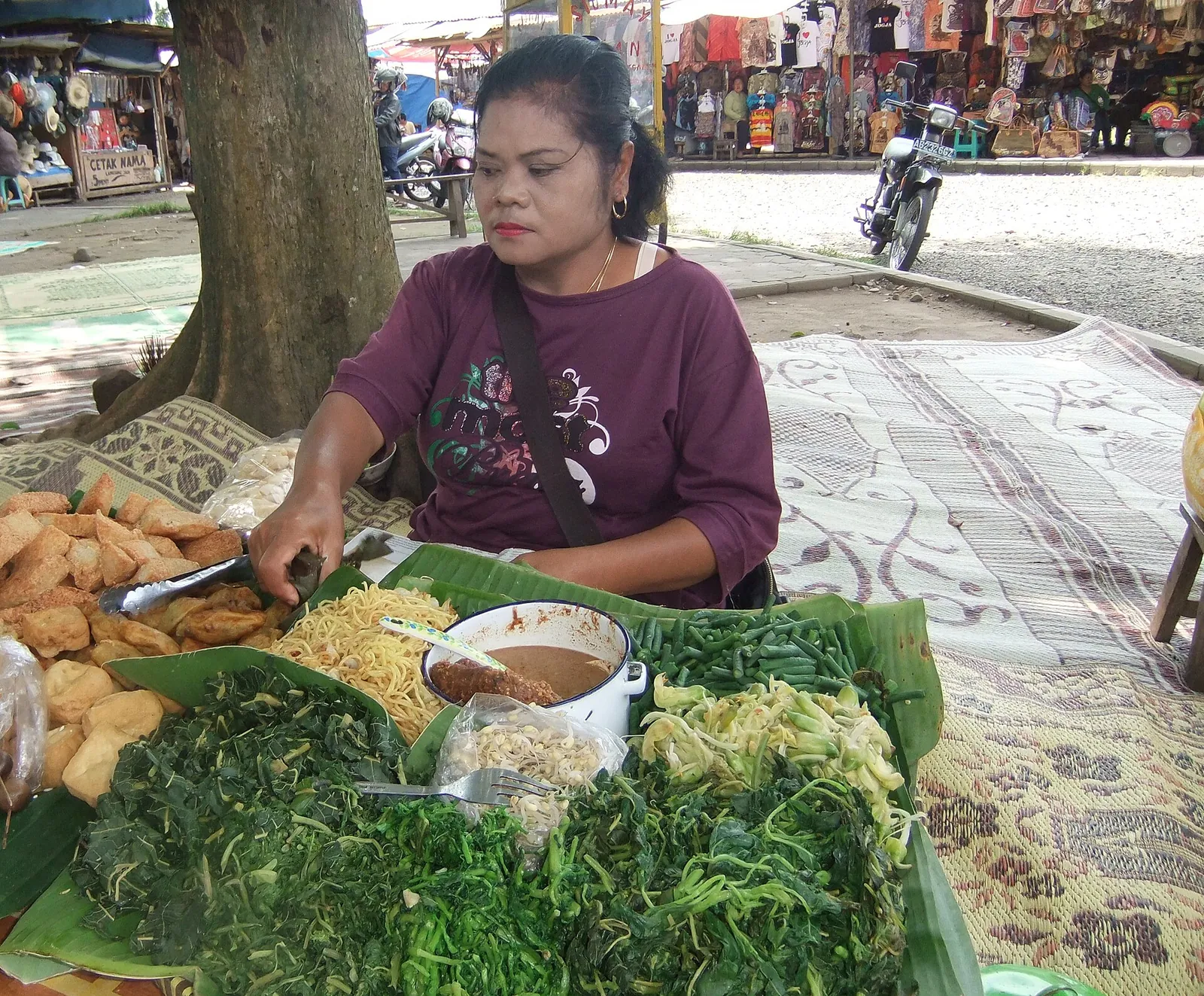
A pecel seller at Borobudur, Central Java: boiled vegetables with peanut sauce are one of the easiest meat-free meals on Java
Photograph: Midori — opens in a new tab · CC BY 3.0 — opens in a new tab
Changes: Resized and converted to WebP; displayed with responsive crops. · Original photograph and licence details ↗ — opens in a new tab
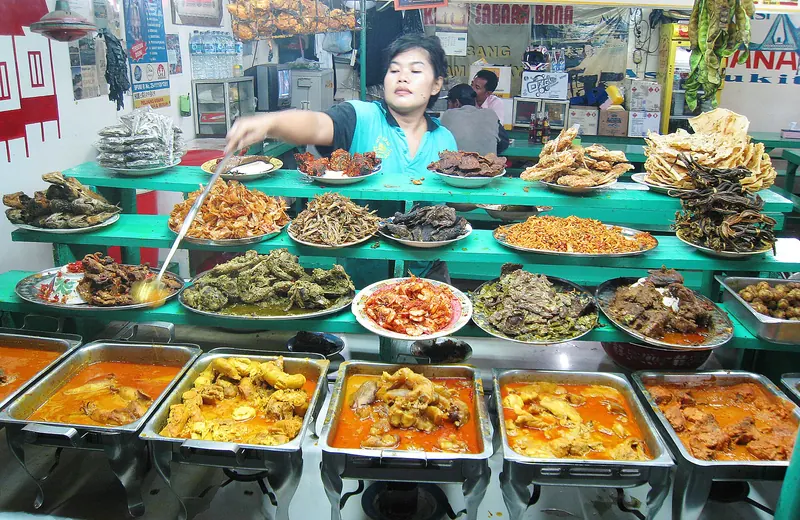
A gado-gado stall at a traditional market in Jakarta; ask for it without egg, krupuk or shrimp paste if you need to
Photograph: Sakurai Midori — opens in a new tab · CC BY-SA 2.5 — opens in a new tab
Changes: Resized and converted to WebP; displayed with responsive crops. · Original photograph and licence details ↗ — opens in a new tab
Pecel in Banyumas, Central Java, with boiled vegetables, peanut sauce and fried sides
Photograph: Wibowo Djatmiko ( Wie146 ) — opens in a new tab · CC BY-SA 4.0 — opens in a new tab
Changes: Resized and converted to WebP; displayed with responsive crops. · Original photograph and licence details ↗ — opens in a new tab
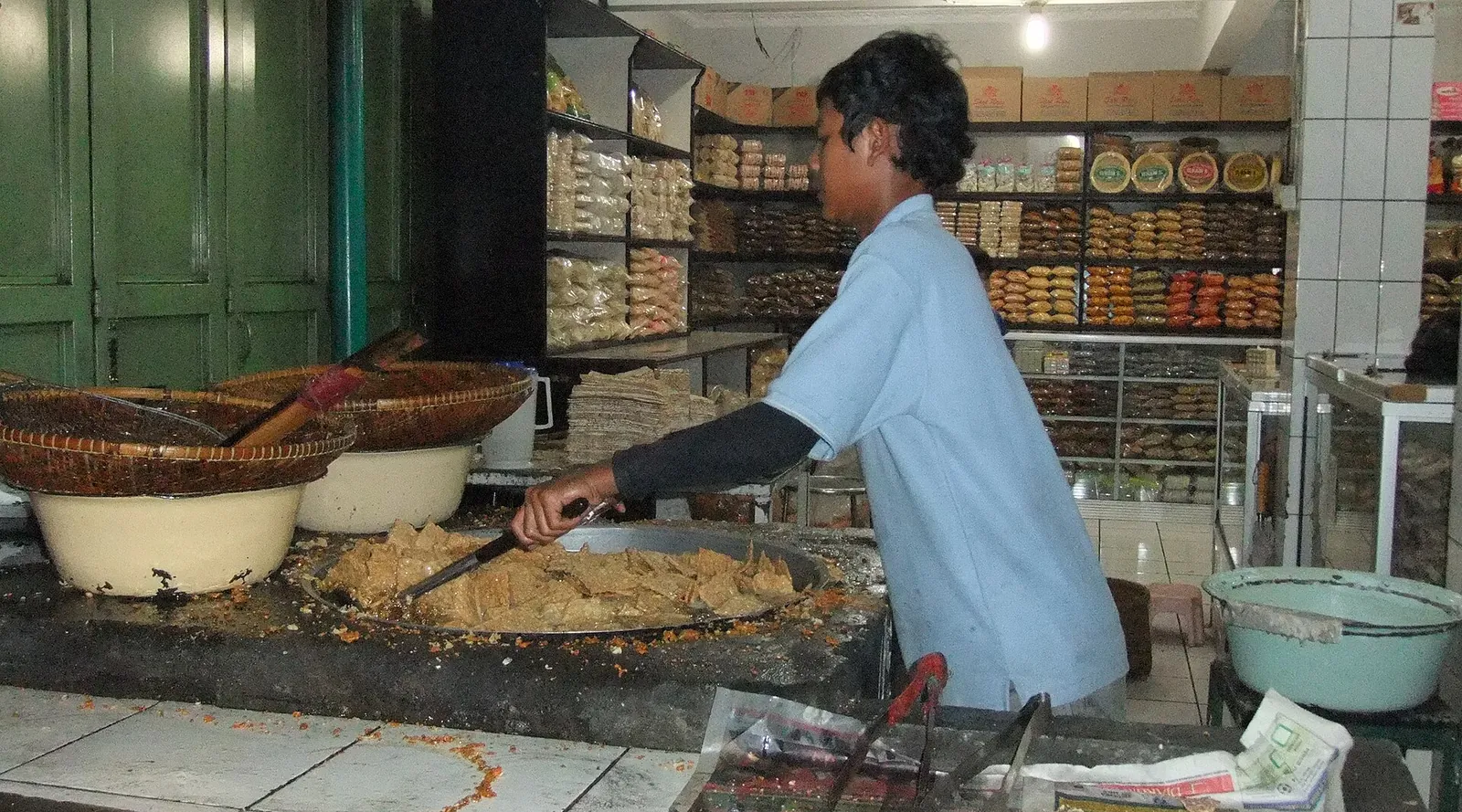
Fried tempeh and tofu, the everyday protein of a vegetarian trip in Indonesia
Photograph: D.W. Fisher-Freberg — opens in a new tab · CC BY-SA 3.0 — opens in a new tab
Changes: Resized and converted to WebP; displayed with responsive crops. · Original photograph and licence details ↗ — opens in a new tab
Frying tempeh chips (keripik tempe) in Lembang, near Bandung in West Java
Photograph: Midori — opens in a new tab · CC BY 3.0 — opens in a new tab
Changes: Resized and converted to WebP; displayed with responsive crops. · Original photograph and licence details ↗ — opens in a new tab