Bali · Bali
Bali travel guide: where to base yourself and how to split your stay
Most Bali trips go wrong in the same way: one hotel in the south, then a car every day to Ubud, the rice terraces, the mountain temples and back again. The island is small on a map, but its roads are slow, and a day trip to the north or east can easily mean more time in traffic than on arrival. A better plan treats Bali as three or four short stays: a stretch of coast in the south, the green hill country around Ubud and, with more time, the fishing villages of the east or the black-sand coast of the north.
- Suggested time
- 7–10 days
- Where to stay
- One south-coast base (Sanur, Uluwatu or Canggu), then Ubud; add Amed or Lovina with more time
- Season and timing
- The drier months are roughly April to October; from December to March the west monsoon brings heavy showers, often in the late afternoon. The mountains around Bedugul and Kintamani can be cloudy and cool at any time of year.
The short answer
Give Bali at least a week and split it between two or three bases. Spend three nights on the south coast — Sanur for calm water and the boats to the Nusa islands, Uluwatu for cliffs and surf, or Canggu for surf, cafés and rice fields — then three nights in or around Ubud for terraces, temples, museums and dance. With ten days, add two or three nights in Amed in the east or Lovina in the north. Move between bases with a car and driver, and see the inland sights on the transfer days instead of making long return trips from the coast.
Choose one south-coast base, not three
The south is where most visitors land and where most hotels are, but its beach towns are very different from one another. Pick one that matches what you want from the sea, then stay put. The traffic between them is heavy enough that moving every night or two costs you whole afternoons.
Sanur, on the east side of the south coast, has reef-protected shallow lagoons that the Ministry of Tourism describes as good for swimming and snorkelling, a paved beachfront path of about 5 km and some of Bali's historic hotels, since this is where the island's tourism first took off. It is also the launch point for boats to Nusa Lembongan and its neighbouring islands, and the official guide puts it about 20 minutes by taxi from the airport. It suits families, slower travellers and anyone planning a day or two on the islands.
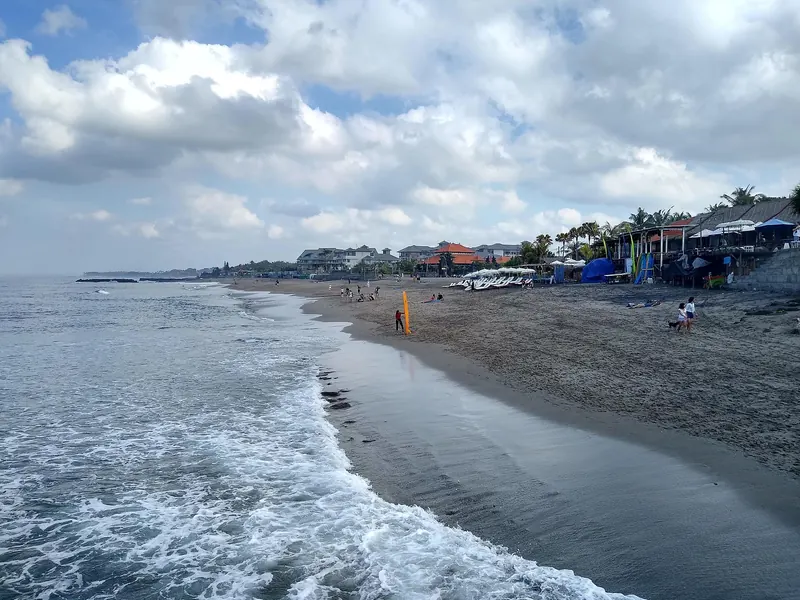
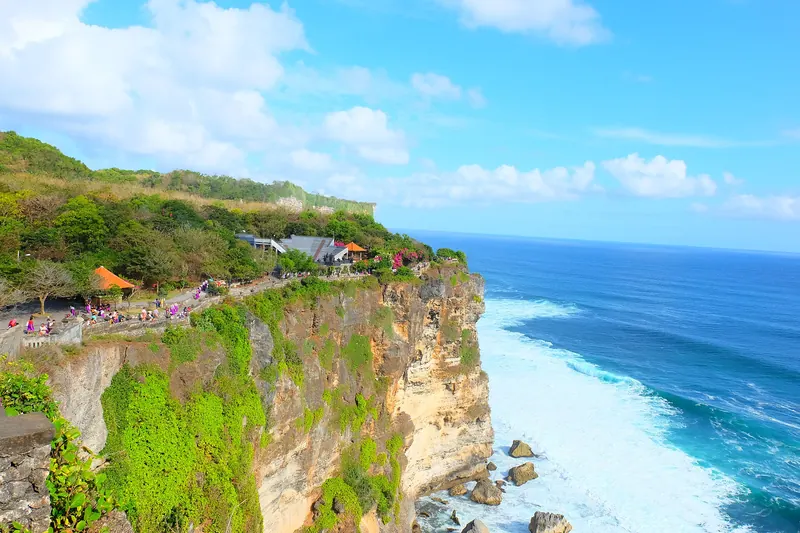
Uluwatu, on the Bukit Peninsula at the southern tip, is the surf coast: the waves below the cliffs are among the most famous in Bali, and the official guide notes that some breaks are for experts only because the water is so shallow. Accommodation ranges from simple places near the breaks to cliff-top resorts, and it is about an hour by road from the airport. Canggu, north-west of Seminyak, has a wide black-sand surf beach backed by rice fields, many cafés and villas, and is about 25 minutes from Tanah Lot temple.
Seminyak, Legian and Kuta are the busiest and most built-up stretch, with the most shopping and nightlife, and they are among the places where traffic is worst. Nusa Dua is a planned enclave of large international resorts on a calm, white-sand coast: convenient for a short, low-effort stay, but self-contained rather than a place to see village life.
Move inland to Ubud for the second half
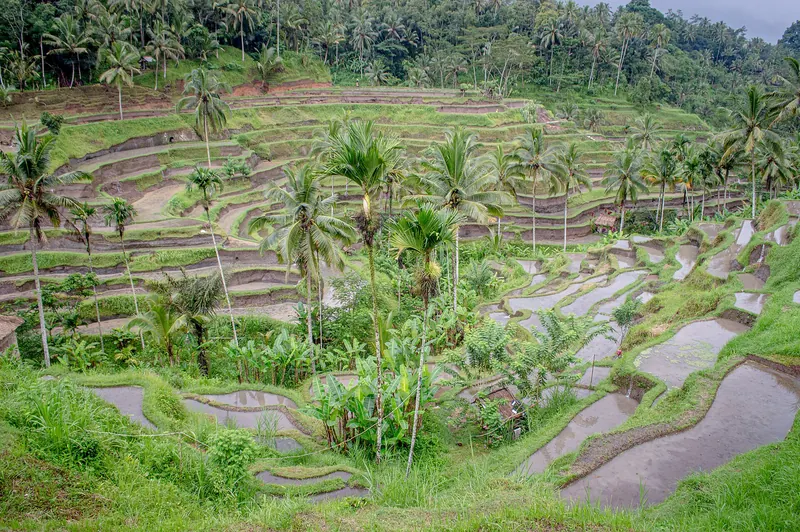
Ubud, in the foothills of central Bali, is the island's centre of art and dance, and it is worth sleeping there rather than visiting on a day trip from the coast. The Ministry of Tourism suggests seeing the Tegallalang rice terraces early, while the sun is still low, and walking the Campuhan ridge later in the day when it is cooler — a rhythm that does not work if you have to drive in and out from the south.
The Ministry of Tourism's own advice is to choose between two kinds of stay: the centre, with restaurants, the market and the museums within walking distance, or a hotel among the rice fields outside town for quiet. If you stay outside, check how you will get into the centre in the evening, because the roads are narrow and hilly and the centre itself is often congested.
Within a few days you can cover the Ubud Monkey Forest (keep bags and food out of the macaques' reach), the painting collections at Museum Puri Lukisan, ARMA and Neka Art Museum, and the Tegallalang terraces about 15 km north. Tirta Empul, the holy spring temple near Tampaksiring, is about 14 km north-east of Ubud, roughly half an hour by car. Temples are places of worship: you need a sarong and sash to enter, usually available to rent at the gate of the larger temples, and inner courtyards may be closed to visitors during ceremonies.
Make time for the local food
What to eat and where to look
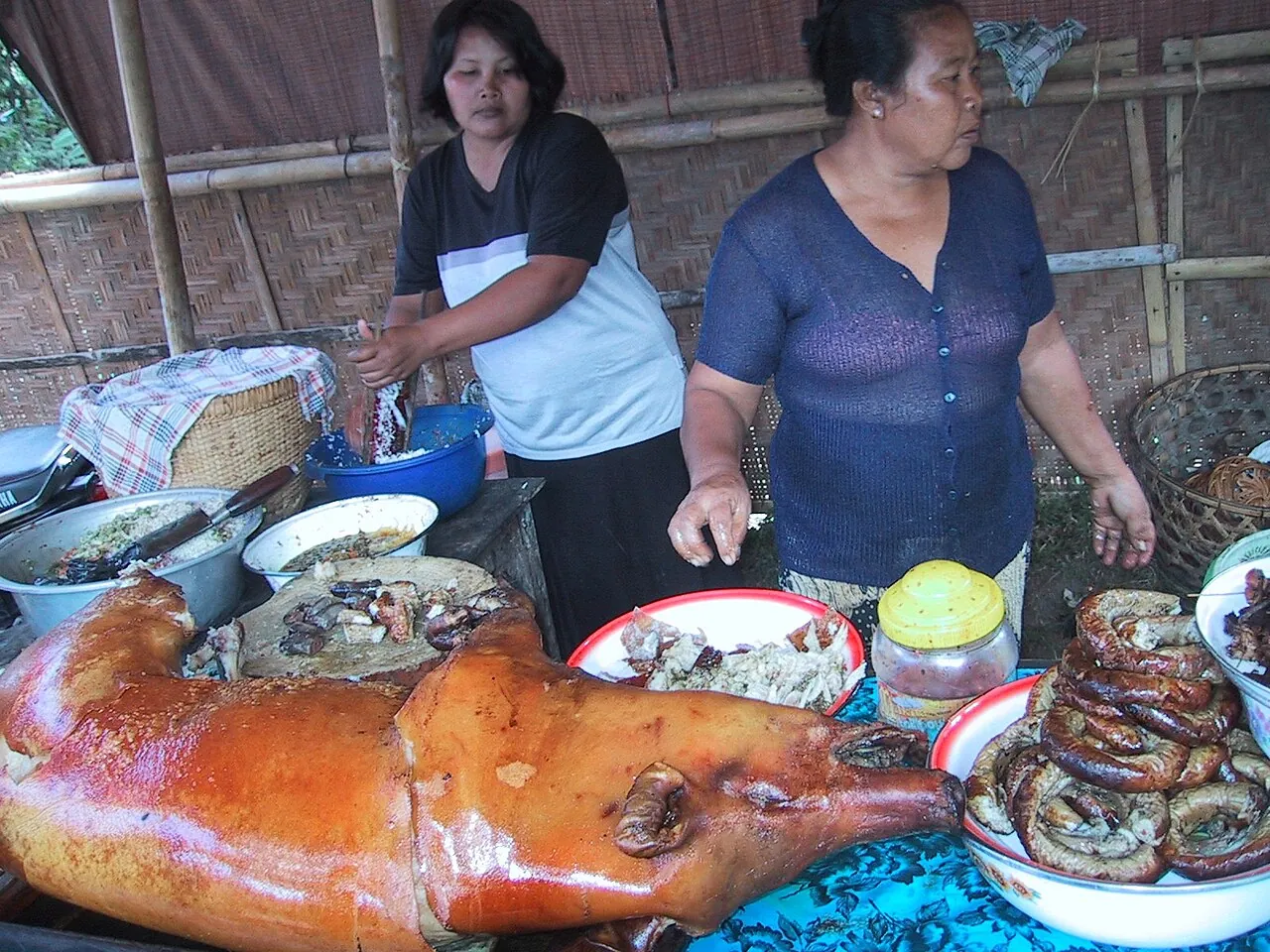
Babi guling (roast suckling pig)
A whole suckling pig seasoned with Balinese spices and roasted on a spit, served in portions with rice and side dishes such as lawar. It began as a ceremonial dish and is now Bali's best-known food.
- Where to look
- Specialist warungs, such as the long-established ones in Ubud, and some night-market stalls.
- Fit it into your day
- A lunch stop on an Ubud day; for a whole pig at a celebration, it has to be ordered days ahead.
Pork, so not for Muslim, Jewish or vegetarian travellers; mixed plates may include offal and blood sausage.
Ayam or bebek betutu
Chicken (ayam) or duck (bebek) coated in a thick paste of Balinese herbs and spices, wrapped in banana leaves and slow-cooked until very tender.
- Where to look
- Balinese restaurants and warungs; duck restaurants among the rice fields are a fixture around Ubud.
- Fit it into your day
- A sit-down meal with rice and vegetables, good after a morning in the rice fields.
Can be very spicy; ask for it less hot (tidak pedas) if needed.
Lawar
A mix of finely chopped vegetables such as green beans, grated coconut, minced meat and spices. Traditional versions are mixed with fresh blood.
- Where to look
- As a side with babi guling or nasi campur at Balinese warungs.
- Fit it into your day
- Order it as part of a mixed plate rather than as a meal on its own.
Ask whether it contains raw blood; many places for visitors make it without.
Sate lilit
Balinese satay made from minced seafood or meat and wrapped around a lemongrass stalk rather than threaded on a skewer, then grilled.
- Where to look
- Seafood warungs on the coast and Balinese restaurants.
- Fit it into your day
- A snack, or part of a seafood dinner by the sea.
Check the filling if you have a fish or shellfish allergy.
Nasi campur
Steamed rice with small portions of several dishes — vegetables, meat or fish, egg, sambal — chosen from a counter or served as a set plate.
- Where to look
- Everyday warungs across the island; point at what you want from the display.
- Fit it into your day
- The quickest, cheapest local lunch between sights or on a long transfer day.
Dishes may contain pork in Bali; ask if you avoid it, and expect the sambal to be hot.
The quieter east and north are worth extra nights
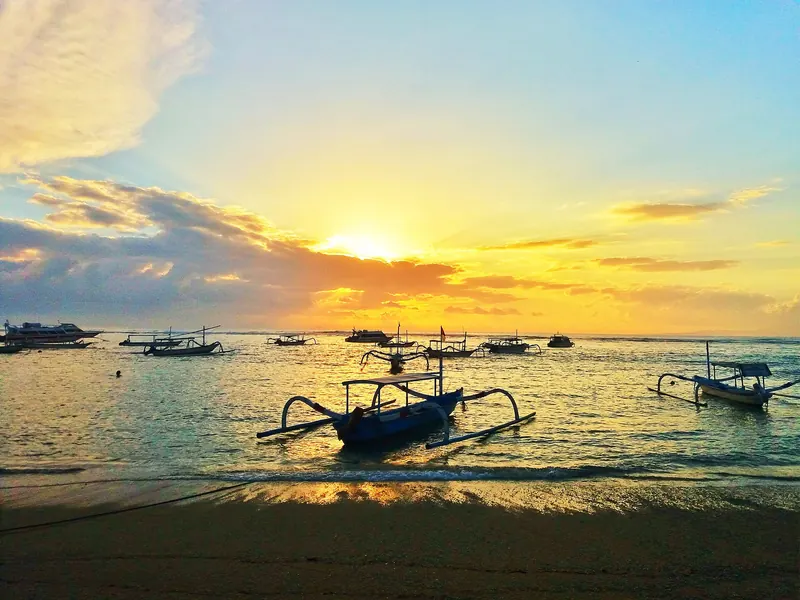
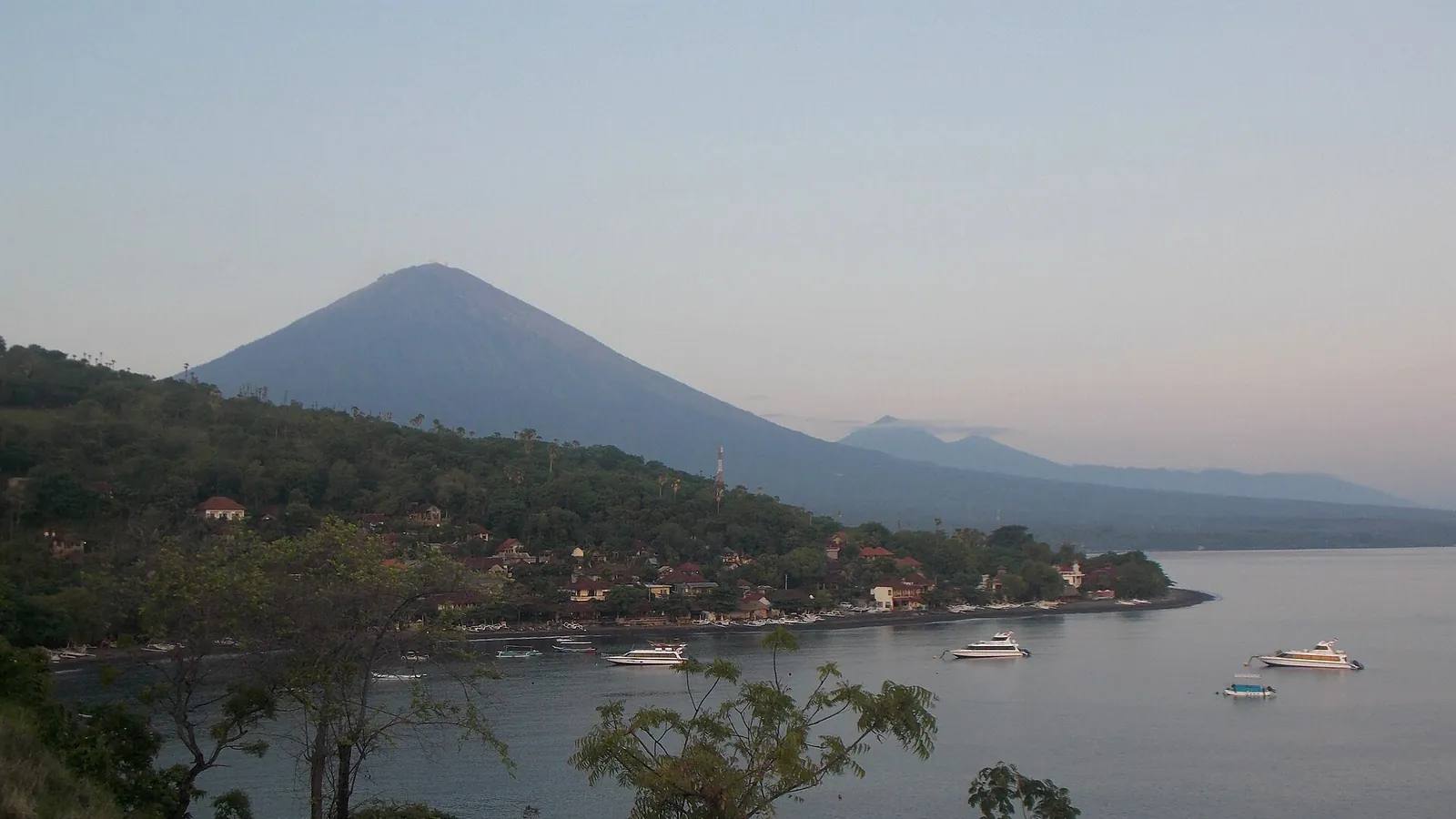
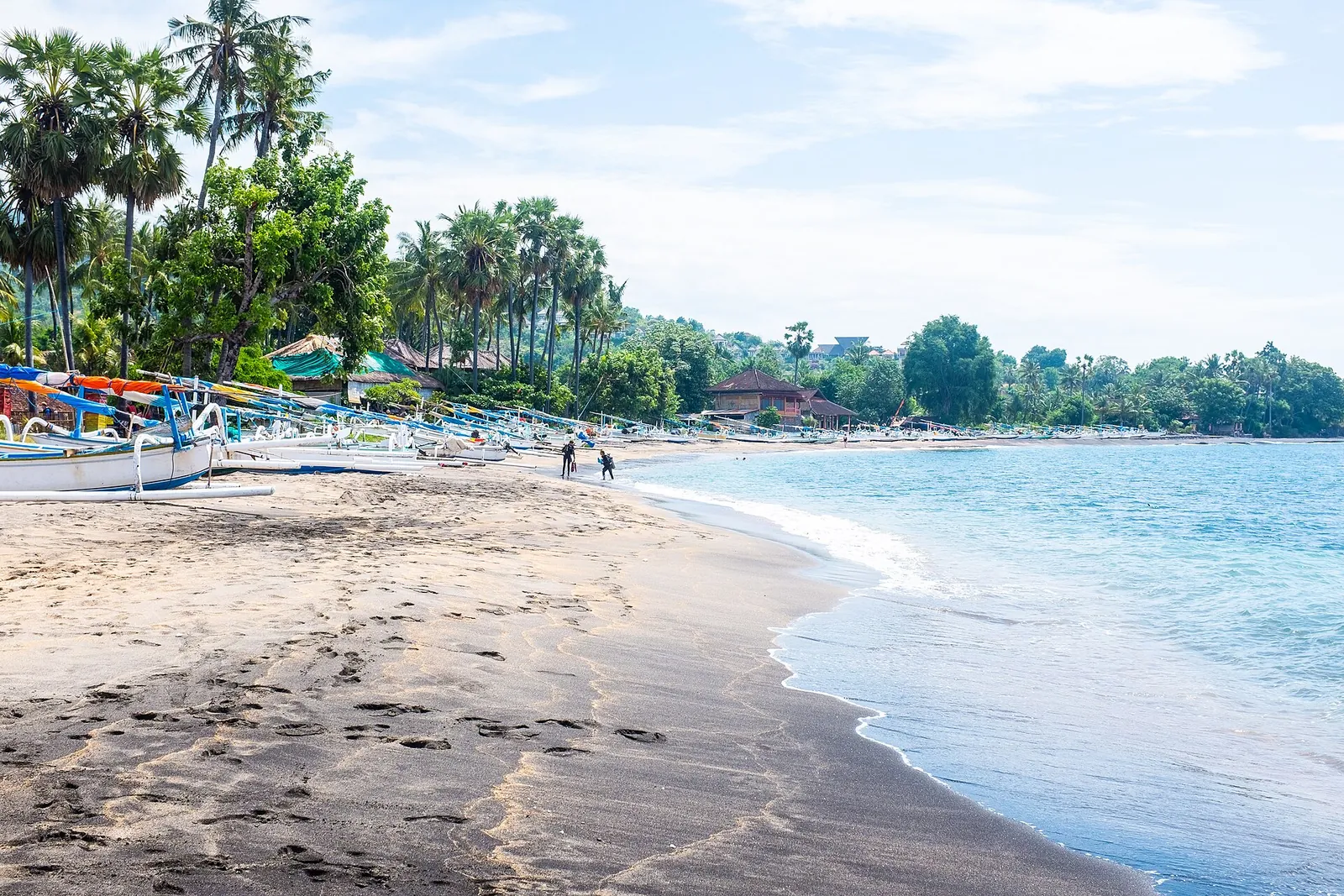
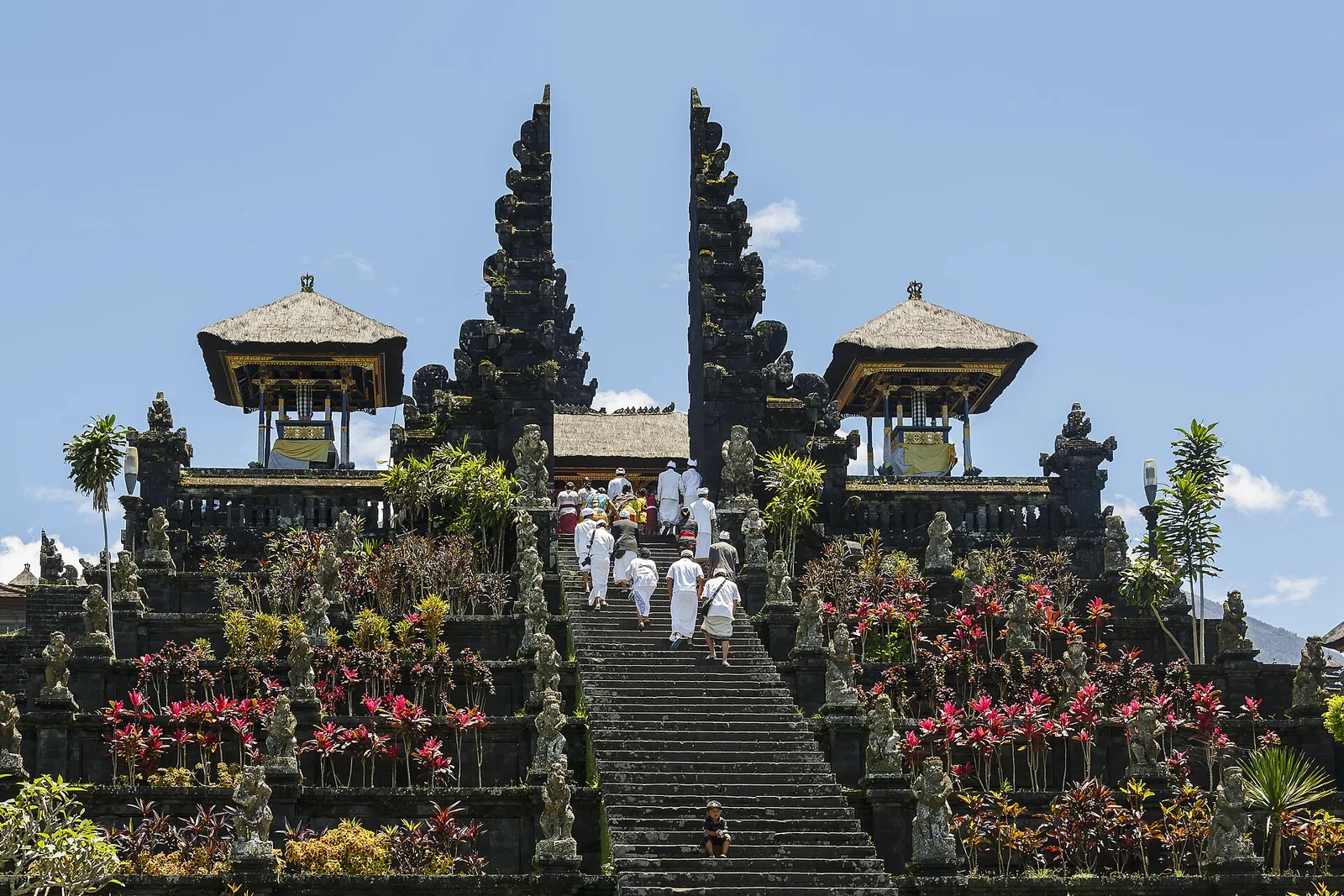
Amed, on the east coast below Mount Agung, is a string of fishing villages with black-sand beaches, coloured jukung outrigger boats and traditional salt-making. The Ministry of Tourism highlights snorkelling and diving at Jemeluk Bay and Lipah Beach, a Japanese shipwreck offshore, and sunrise over the sea with Mount Agung behind you. It is a long drive from the south, so stay at least two nights. Pura Besakih, Bali's mother temple, stands at about 900 metres on the slopes of Mount Agung and can be visited on the way there or back.
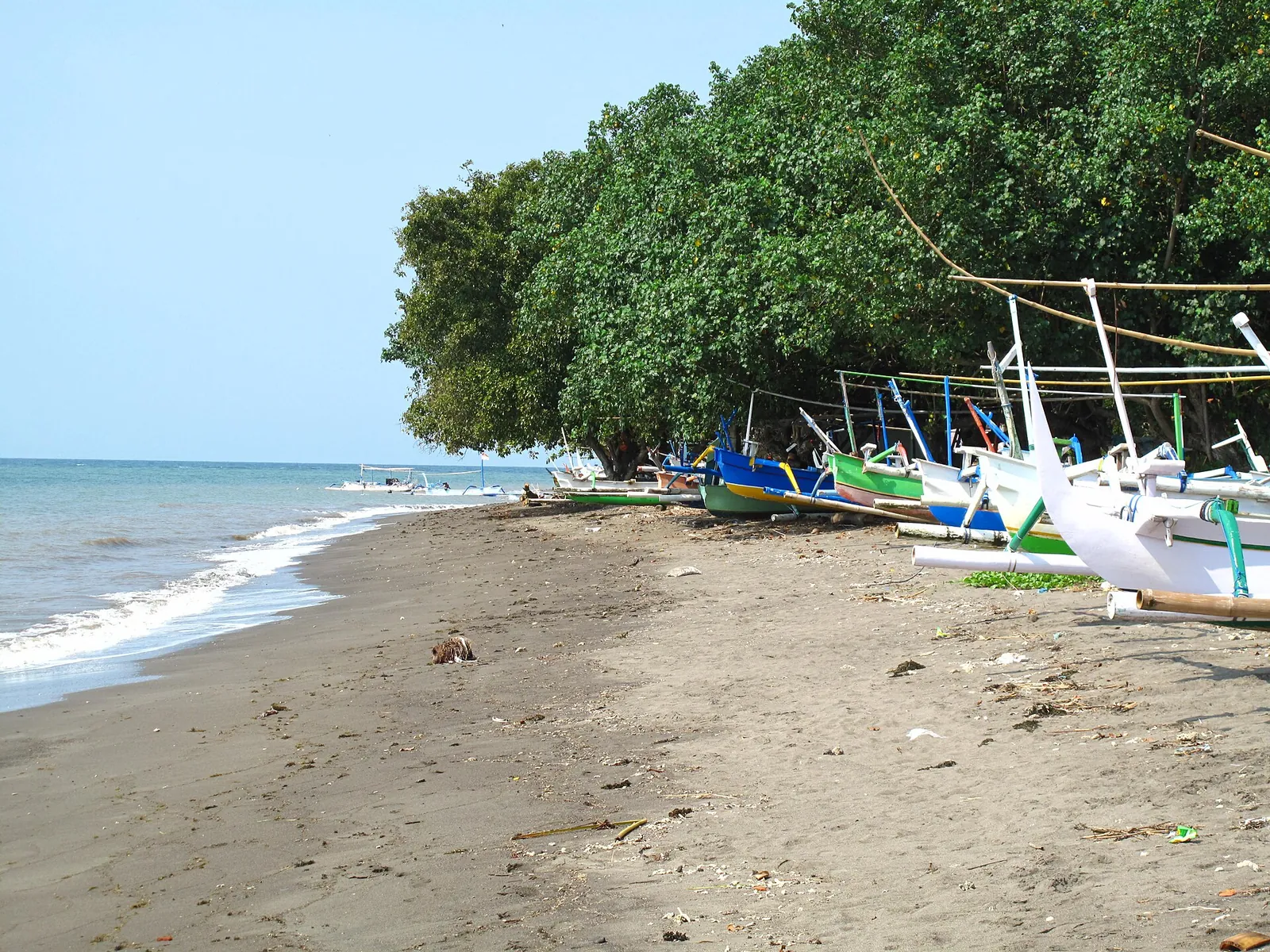
Lovina, on the north coast, has grey and black volcanic sand rather than the white beaches of the south. Its best-known outing is a dawn trip in a jukung to look for the bottlenose dolphins that often appear early in the morning. The official guide puts it about two hours from Denpasar over the mountains via Bedugul, or about four hours along the west coast via Gilimanuk.
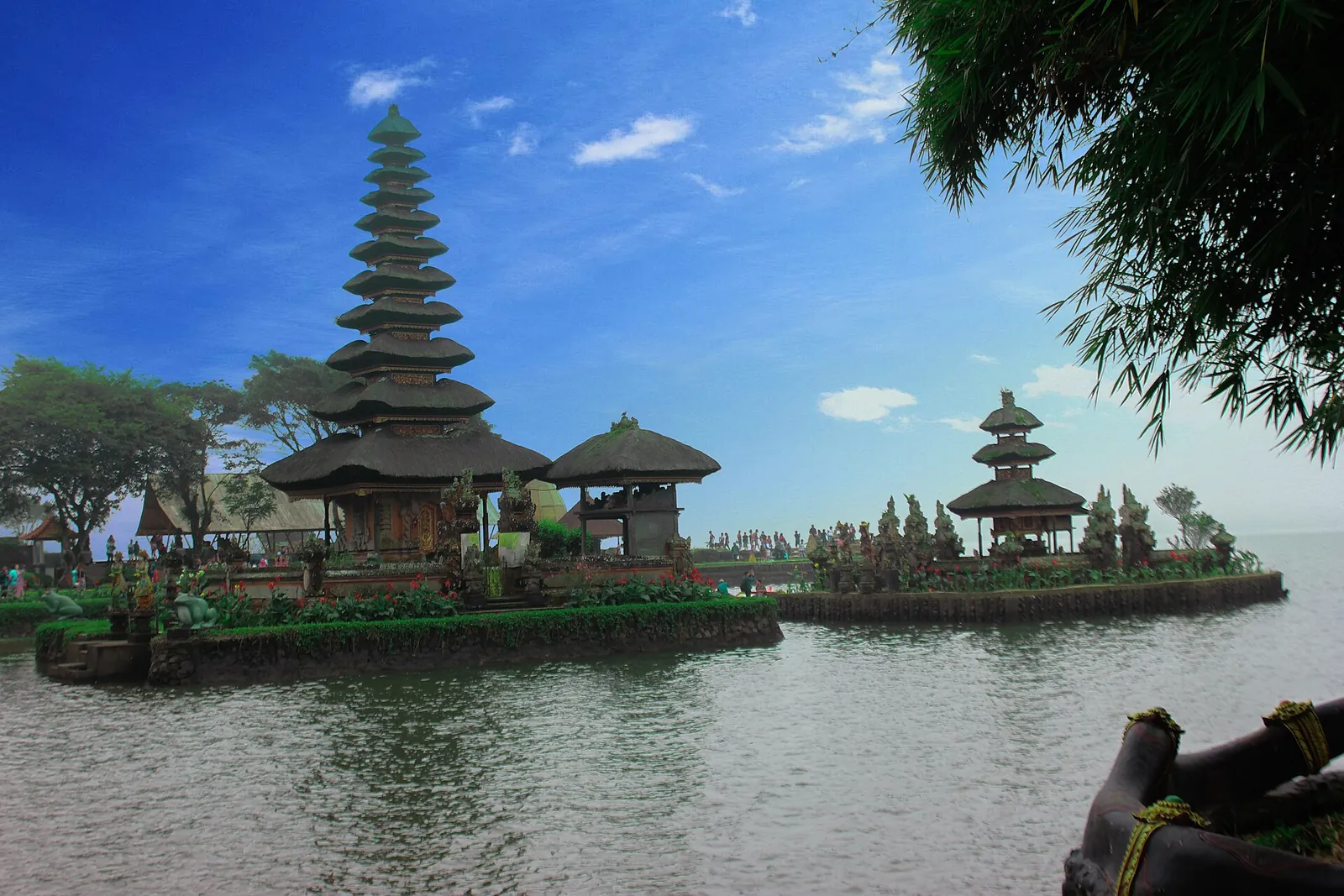
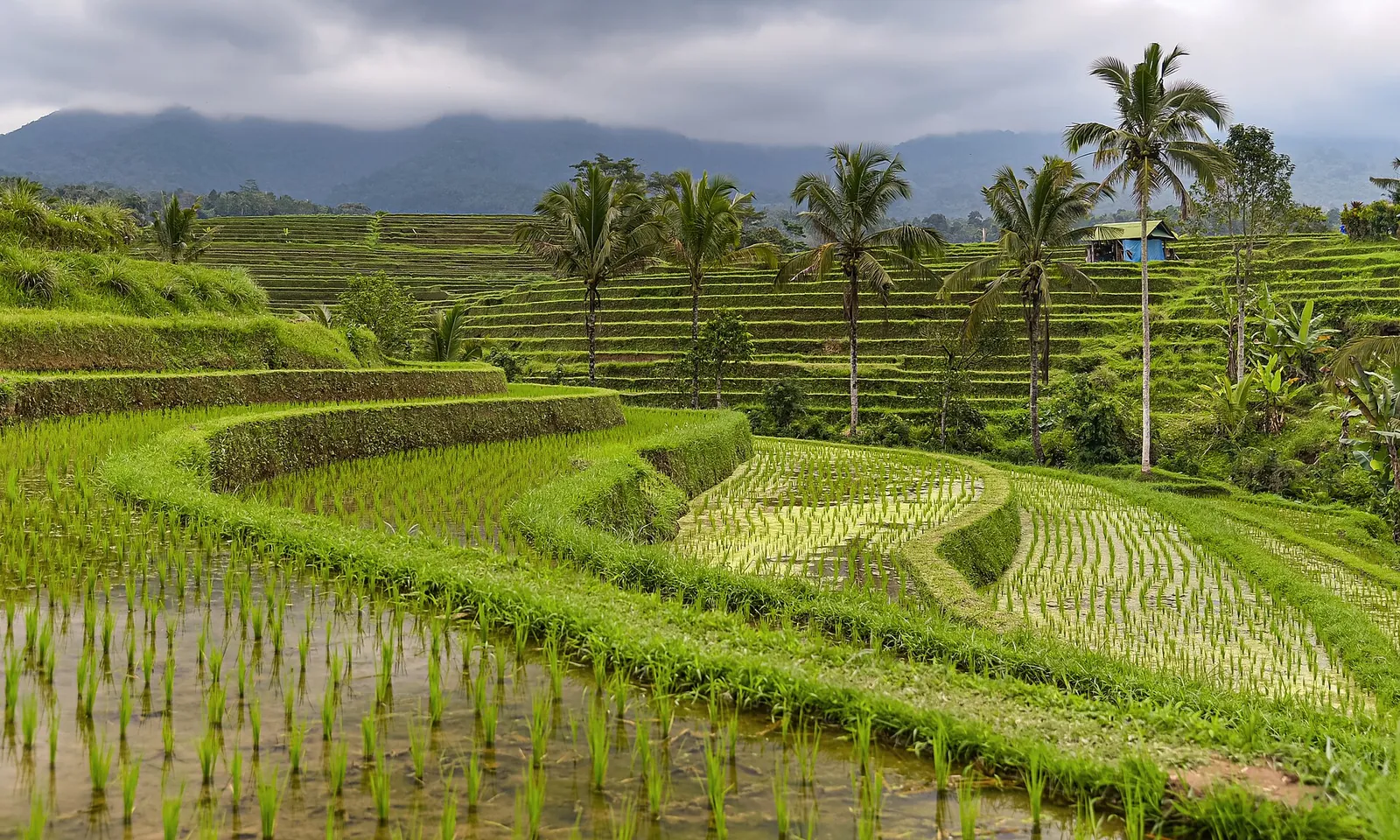
The mountain route north is a sightseeing day in itself. Pura Ulun Danu Beratan stands on Lake Beratan at about 1,500 metres in the Bedugul highlands, where the air is noticeably cooler, and the Jatiluwih rice terraces in Tabanan are one of the sites of the subak cultural landscape that UNESCO added to the World Heritage List in 2012. Combine them on the transfer from Ubud to Lovina rather than as a return trip from the south.
Mount Batur and the Kintamani area are the other highland trip. The Ministry of Tourism describes the drive as about three hours from the main tourist areas, so plan it as a full day with other stops, such as the traditional village of Penglipuran in Bangli, and bring a warm layer for the evening.
Getting around: drivers, apps and realistic distances
Bali has no railway, and the south in particular suffers from daily traffic jams around Kuta, Seminyak, Canggu, Denpasar and central Ubud. The usual way to move between bases, and to sightsee on the way, is a car with a driver hired by the day, arranged through your hotel or an established company. Agree in advance what the day includes: the hours, fuel, parking and entrance tickets.
In the south, metered taxis and the Grab and Gojek apps cover short trips. In some areas, including Canggu and Uluwatu, local drivers put up signs saying app-based drivers may not pick up there; follow your driver's lead on pick-up points. Denpasar's Trans Metro Dewata buses are aimed at commuters and do not serve most sights.
Think carefully before renting a scooter. Roads in the south are crowded, pavements are often narrow or missing, and you need an International Driving Permit with the right category as well as your home licence. Ride only if you are already experienced and properly insured.
Before you go: the levy, Nyepi and the sea
When we checked on 2026-10-03, the Bali Provincial Government's Love Bali site listed a one-time levy of IDR 150,000 for international tourists, payable online before arrival. The Ministry of Tourism's page on Bali's regulations says it can also be paid at counters at Ngurah Rai airport and Benoa port, but recommends paying before you travel. Check the Love Bali site for the current rules and keep the voucher it emails you.
Nyepi, the Balinese Day of Silence, falls in March or April and changes date every year. For 24 hours the whole island stops: no one may go outside, lights are kept low and the airport is closed. Do not book a flight in or out on that day, stock up beforehand and expect to spend it in your hotel. The evening before, villages parade and burn their ogoh-ogoh effigies — a good reason to be on the island, as long as you plan for the day after.
Bali's surf beaches have strong currents and rips. Never swim where a red flag is planted in the sand, and choose Sanur or Nusa Dua if you mainly want calm water. Rabies is present on the island, so avoid contact with dogs, cats and monkeys, and get medical help immediately if you are bitten.
A sample split for seven to ten days
This is an editorial suggestion, not a timetable. Drive times depend heavily on traffic and the time of day.
- Nights 1–3 — South coast: Sanur, Uluwatu or Canggu. Recover from the flight, spend time on the beach or in the surf, and from Sanur add a boat day to the Nusa islands if you want one.
- Nights 4–6 — Ubud: rice-field walks early, museums and the market later in the day, a dance performance; one half-day by car to Tirta Empul and the temples north of town.
- Nights 7–9 — East or north: Amed for snorkelling and sunrise (with Besakih on the way), or Lovina via Jatiluwih and Ulun Danu Beratan.
- Final night: back in the south near the airport if your flight leaves early; the drive from Amed or Lovina takes a large part of the day.
Practical questions
How many days do I need in Bali?
A week covers one south-coast base and Ubud at a comfortable pace. With ten days you can add the east coast at Amed or the north coast at Lovina. Arrival and departure days are shortened by traffic, so do not count them as full sightseeing days.
Where should I stay in Bali for a first trip?
Split the stay. Sanur is the easiest first base in the south: calm water, a long beachfront path and boats to the Nusa islands. Then move to Ubud for the rice fields, temples and dance. Choose Uluwatu or Canggu instead of Sanur if surfing is the point of your trip.
Is it better to stay in Ubud or visit it on a day trip?
Stay. Ubud's best hours are early morning in the rice fields and the evening dance performances, and a return trip from the south coast in traffic leaves little time for either.
Do I have to pay a tourist levy in Bali?
When we checked on 2026-10-03, the provincial Love Bali site listed a one-time levy of IDR 150,000 for international tourists, payable online. Check the official site before you travel, as the rules may change.
Can I fly into or out of Bali on Nyepi?
No. On Nyepi, the Day of Silence in March or April, the airport and all transport stop for 24 hours and everyone must stay indoors. Check the date for your year and book your flights around it.
Is Bali worth visiting in the rainy season?
Yes, if you are flexible. Between December and March the showers are heavy but often come in the late afternoon or evening. The Bukit Peninsula around Uluwatu gets less rain than the rest of the island, while the mountains can be cloudy in any season.
Sources and checks before you travel
Reference sources for the version dated 3 October 2026. Confirm opening times, access, transport and conditions for your travel dates.
- Indonesia Travel (Ministry of Tourism): Bali ↗ — opens in a new tab
- Indonesia Travel (Ministry of Tourism): Sanur Beach ↗ — opens in a new tab
- Indonesia Travel (Ministry of Tourism): Uluwatu ↗ — opens in a new tab
- Indonesia Travel (Ministry of Tourism): Canggu Beach ↗ — opens in a new tab
- Indonesia Travel (Ministry of Tourism): Nusa Dua ↗ — opens in a new tab
- Indonesia Travel (Ministry of Tourism): Ubud ↗ — opens in a new tab
- Indonesia Travel (Ministry of Tourism): Subak, Bali's cultural landscape ↗ — opens in a new tab
- Indonesia Travel (Ministry of Tourism): Tirta Empul ↗ — opens in a new tab
- Indonesia Travel (Ministry of Tourism): Jatiluwih rice terraces ↗ — opens in a new tab
- Indonesia Travel (Ministry of Tourism): Ulun Danu Beratan ↗ — opens in a new tab
- Indonesia Travel (Ministry of Tourism): Pura Besakih ↗ — opens in a new tab
- Indonesia Travel (Ministry of Tourism): activities at Amed Beach ↗ — opens in a new tab
- Indonesia Travel (Ministry of Tourism): Lovina Beach ↗ — opens in a new tab
- Indonesia Travel (Ministry of Tourism): Kintamani ↗ — opens in a new tab
- Indonesia Travel (Ministry of Tourism): Ngurah Rai Airport ↗ — opens in a new tab
- Indonesia Travel (Ministry of Tourism): Nyepi frequently asked questions ↗ — opens in a new tab
- Indonesia Travel (Ministry of Tourism): Bali regulations ↗ — opens in a new tab
- Love Bali (Bali Provincial Government): tourist levy ↗ — opens in a new tab
- Wikivoyage: Bali ↗ — opens in a new tab
Does this experience fit your route?
A day with a driver is the most flexible way to see the temples and rice terraces between your bases. Before booking, check the pick-up area, the length of the day and what the price includes.
Browse relevant experiences on Viator ↗ — opens in a new tabAffiliate link · Book with ViatorPhoto credits
Pura Ulun Danu Beratan on Lake Beratan in the Bedugul highlands, a cool inland stop on the way from Ubud to the north coast.
Photograph: Ananta Chandra Priambodo — opens in a new tab · CC BY-SA 4.0 — opens in a new tab
Changes: Resized and converted to WebP; displayed with responsive crops. · Original photograph and licence details ↗ — opens in a new tab
The Jatiluwih rice terraces in Tabanan, part of the subak landscape that UNESCO listed in 2012.
Photograph: Jorge Franganillo — opens in a new tab · CC BY 2.0 — opens in a new tab
Changes: Resized and converted to WebP; displayed with responsive crops. · Original photograph and licence details ↗ — opens in a new tab
Babi guling, Balinese roast suckling pig, served at a stall.
Photograph: Jeff McNeill from Chiang Mai, Thailand — opens in a new tab · CC BY 2.0 — opens in a new tab
Changes: Resized and converted to WebP; displayed with responsive crops. · Original photograph and licence details ↗ — opens in a new tab
Mount Agung seen across the bay at Amed on Bali's east coast.
Photograph: Lalalalabpi — opens in a new tab · CC BY-SA 4.0 — opens in a new tab
Changes: Resized and converted to WebP; displayed with responsive crops. · Original photograph and licence details ↗ — opens in a new tab
Jukung fishing boats on the beach at Amed, east Bali.
Photograph: Marklchaves — opens in a new tab · CC BY-SA 4.0 — opens in a new tab
Changes: Resized and converted to WebP; displayed with responsive crops. · Original photograph and licence details ↗ — opens in a new tab
The split gateway and stairway of Pura Besakih, Bali's mother temple on the slopes of Mount Agung.
Photograph: CEphoto, Uwe Aranas — opens in a new tab · CC BY-SA 3.0 — opens in a new tab
Changes: Resized and converted to WebP; displayed with responsive crops. · Original photograph and licence details ↗ — opens in a new tab
Outrigger boats on the beach at Lovina on Bali's north coast.
Photograph: Ken Eckert — opens in a new tab · CC BY-SA 4.0 — opens in a new tab
Changes: Resized and converted to WebP; displayed with responsive crops. · Original photograph and licence details ↗ — opens in a new tab