Java · Banten
Ujung Kulon National Park guide: Peucang, Cidaon and Java's last rhinos
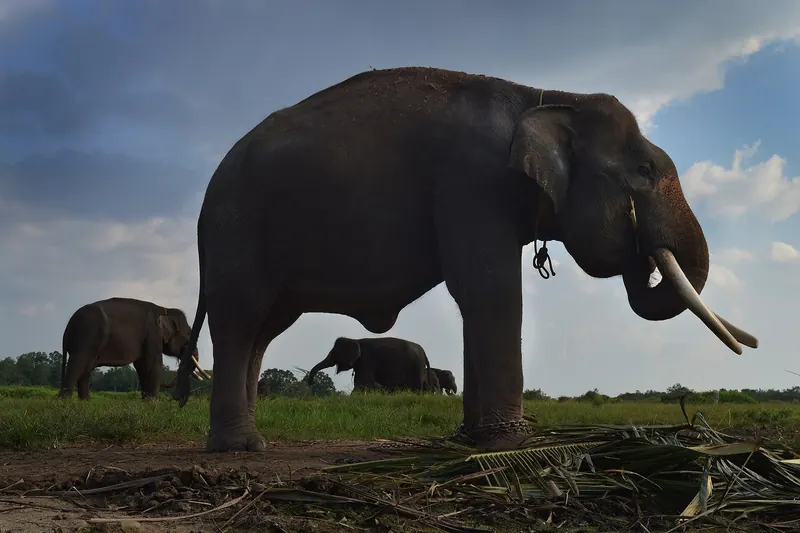
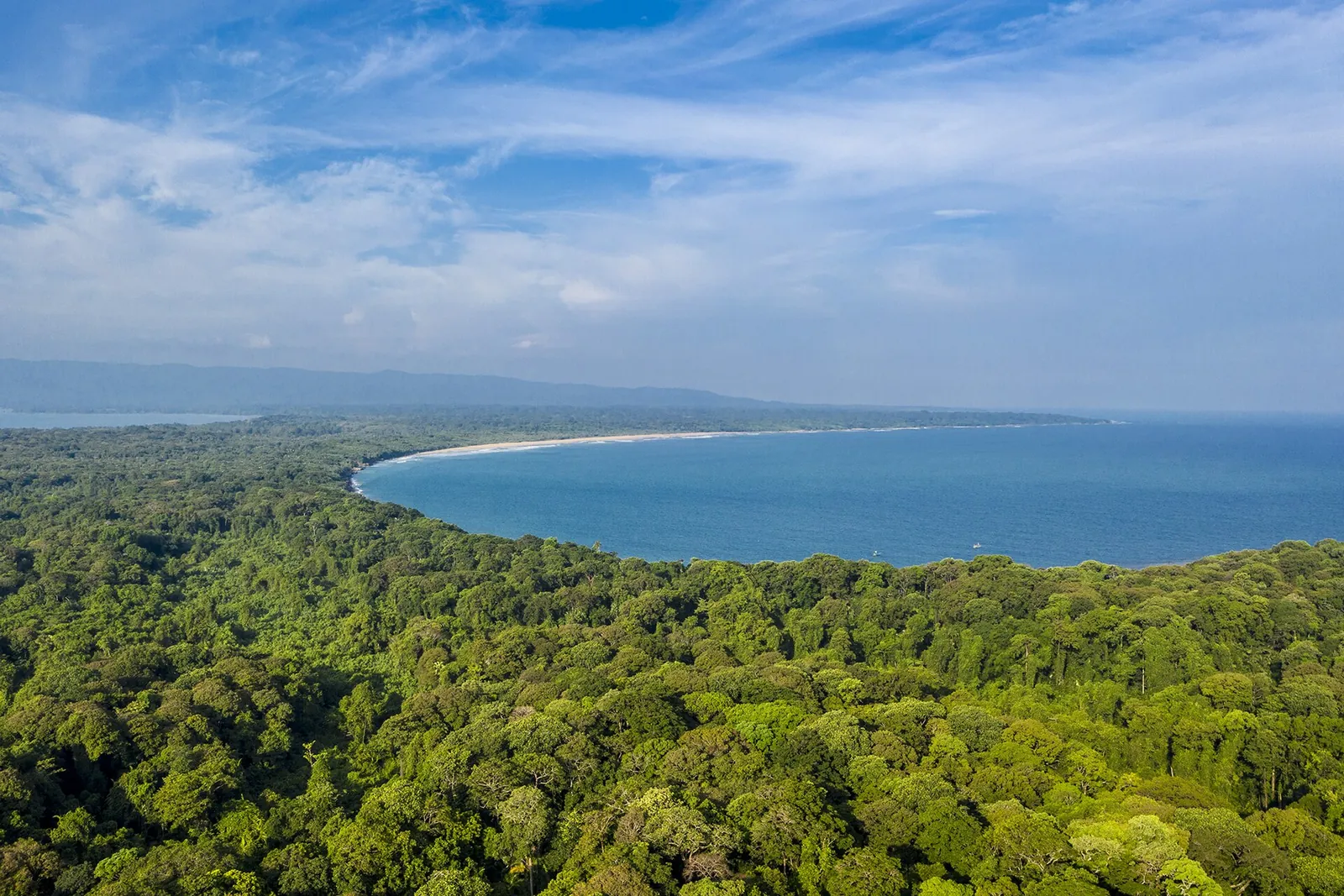
Ujung Kulon National Park covers the far south-western tip of Java in Banten, together with Panaitan and several smaller islands. Founded as a nature reserve in 1921, it is Indonesia's oldest national park and was inscribed as a UNESCO World Heritage Site in 1991 for the largest remaining stand of lowland rainforest on Java. It is also the only place on Earth where the Javan rhinoceros survives. There are no roads inside the park: you arrive by boat or on foot with a guide, sleep on Peucang Island or in a village just outside the boundary, and spend your days on forest trails, beaches and grazing meadows. It is a trip for travellers who want wild coast and quiet forest rather than guaranteed wildlife sightings.
- Suggested time
- 3 days and 2 nights from Jakarta; 4–5 days for longer guided treks
- Where to stay
- Peucang Island inside the park, or Tamanjaya village on the mainland edge; Carita and Tanjung Lesung for the night before
- Season and timing
- Pandeglang's dry season runs from about June to August, and the park says the district receives 2,000–4,000 mm of rain a year. Wikivoyage advises against the windy west-monsoon months of December to February, when seas are high and some trails flood. Sea conditions decide every crossing, so keep a spare day.
The short answer
Give Ujung Kulon at least three days and two nights from Jakarta; a long weekend is the usual minimum because the journey alone takes most of a day each way. Most visitors join a guided package that runs by road to the coast, then by boat to Peucang Island, where the park has lodging and a restaurant, with a short crossing to the Cidaon meadow to watch banteng in the afternoon. Independent travellers usually sleep in Tamanjaya village, where the park's Area II office sells entry tickets and arranges guides and boats. Do not plan around seeing a rhino, and check before you book: Handeuleum Island and its Cigenter river canoe trip have been closed since 30 October 2025.
Getting there: boat from Carita or the road to Tamanjaya
The Ministry of Tourism describes two ways in. The sea route is a chartered boat from Carita Beach on Banten's west coast to Peucang Island, about two to three hours on the water, landing where the park's lodging and representative office are. The land route runs from Jakarta to Serang on the toll road (about two hours), then west to Labuan in Pandeglang, home of the park's headquarters (another two hours), and on for roughly two more hours to Panimbang, Sumur or Tamanjaya. The ministry warns that some of these roads are narrow and in poor condition.
Tamanjaya is where independent trips start. The ministry says entrance tickets, insurance, guides, boat hire and other visitor needs are arranged at the park's Area II Handeuleum office in Tamanjaya village, and Wikivoyage notes that most independent visitors sleep there, just outside the park. From the mainland you still need a boat to reach Peucang.
Public transport exists but is thin. In February 2025 the state bus company DAMRI relaunched tourism services in Banten, including a route from Rangkasbitung railway station through Pandeglang, Labuan, Panimbang and Tanjung Lesung to Sumur, ANTARA reported. Treat that as a lead to check, not a timetable: we could not confirm current departures. Wikivoyage calls a tour bought from a resort in Anyer the easiest way in, with a three- to four-hour boat trip from Anyer to Peucang and prices falling as more people join.
Peucang Island and the Cidaon meadow
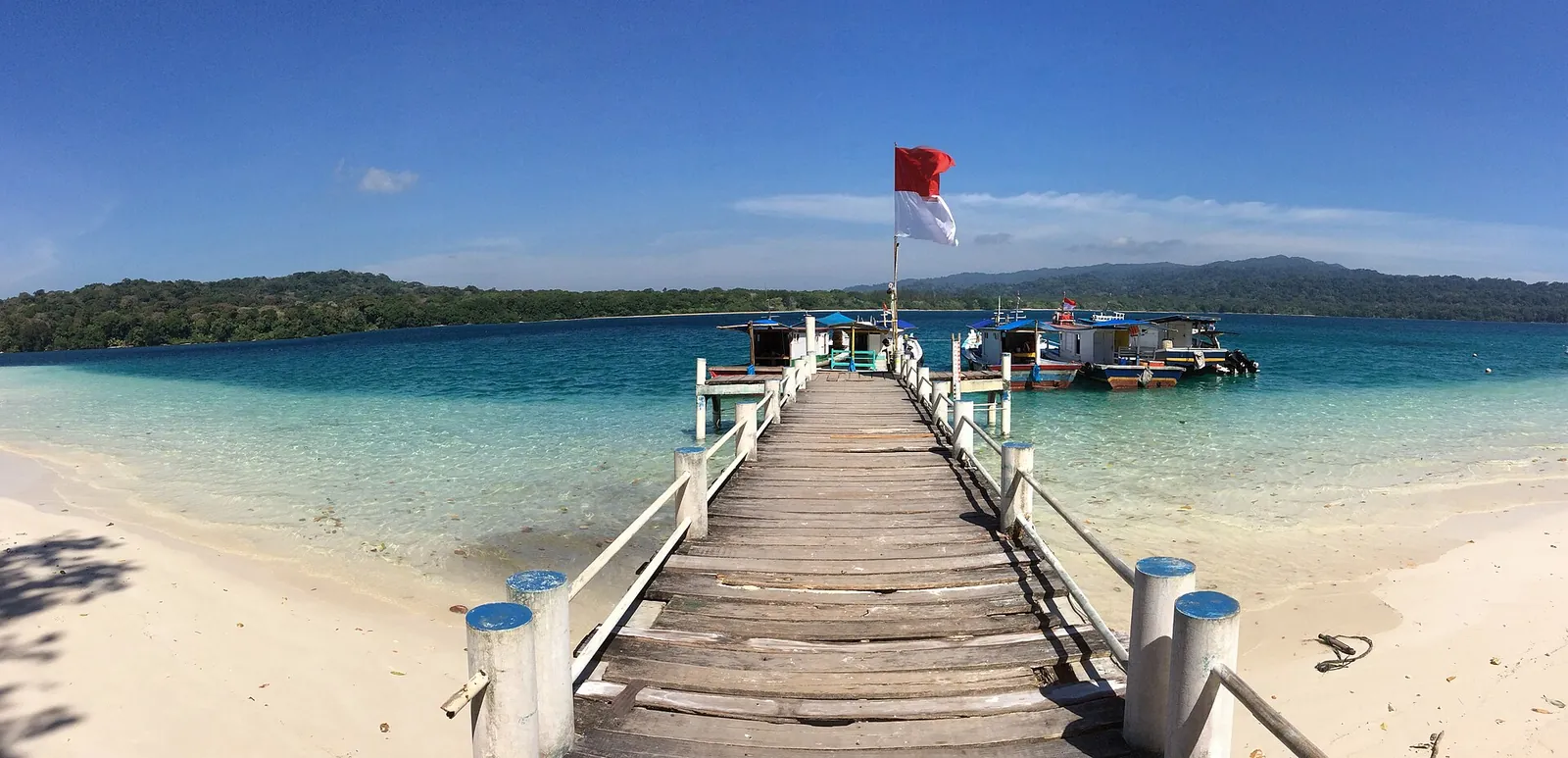
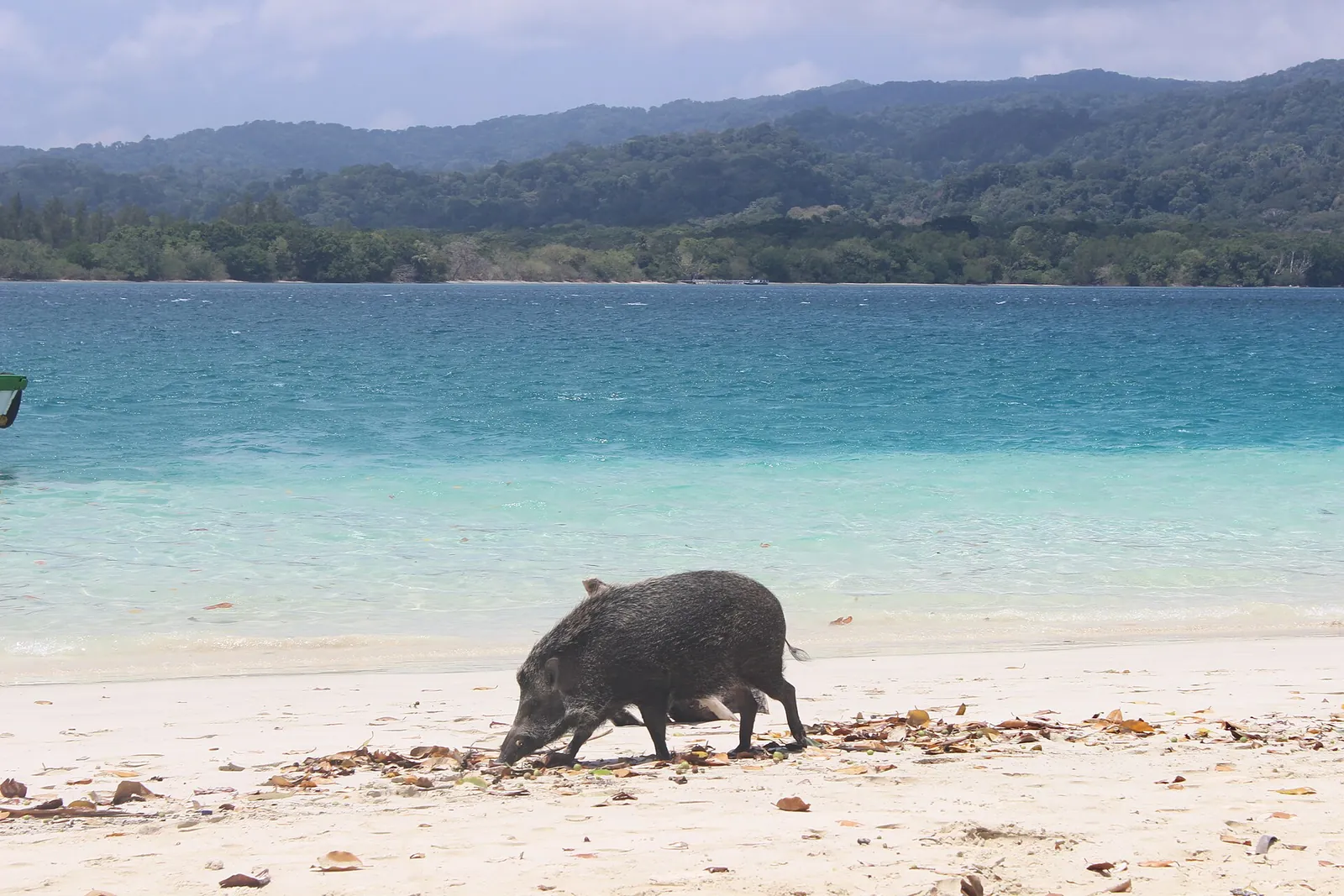
Most trips revolve around Peucang, a small forested island just off the Ujung Kulon peninsula. The park describes wide white-sand beaches, a walk to the rock arch at Karang Copong, swimming, snorkelling and diving. It is one of the park's designated utilisation zones, which is why the lodging and visitor activity are concentrated here; Wikivoyage mentions monkeys, Timor deer and wild boar on the island.
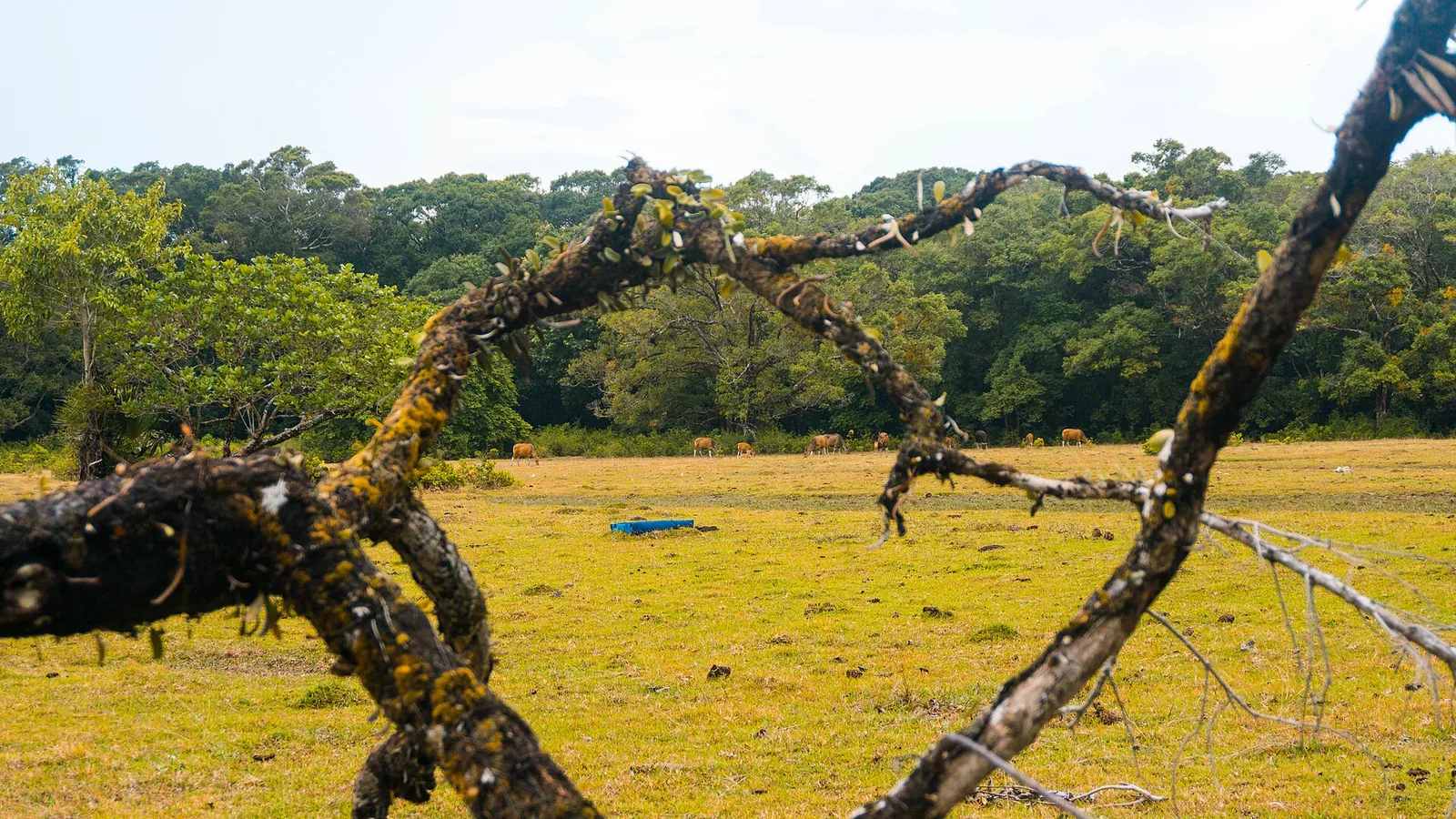
Across the channel, the Cidaon grazing meadow is the park's most reliable wildlife stop. The park puts the crossing at about 15 minutes in a small six-person boat, and lists banteng (wild cattle), peafowl, deer and wild boar there. Wikivoyage recommends the afternoon, when banteng stay longer in the open, and a long zoom lens: they are wary and keep to the forest edge, so you watch from the tower or the rim of the meadow.
From Cidaon, Wikivoyage describes an easy but mostly shadeless walk of about an hour and a half to Tanjung Layar (Java Head) at the tip of the peninsula, where the park notes remains of a colonial-era lighthouse and jetty. Wikivoyage adds that the lighthouse guard's permission is needed before climbing the working lighthouse. Go with a guide or ranger; Wikivoyage is clear that one is a must for walking in the park.
Make time for the local food
What to eat and where to look
Meals on Peucang or with your guide
Inside the park there is very little choice: Wikivoyage mentions one park-run restaurant on Peucang Island, and group tours usually bring their own cook.
- Where to look
- The restaurant on Peucang, or the meals included in your package or homestay in Tamanjaya.
- Fit it into your day
- Breakfast, lunch and dinner on park days; confirm what is included when you book.
Tell the operator about allergies or vegetarian needs in advance; there are no shops on the islands to fall back on.
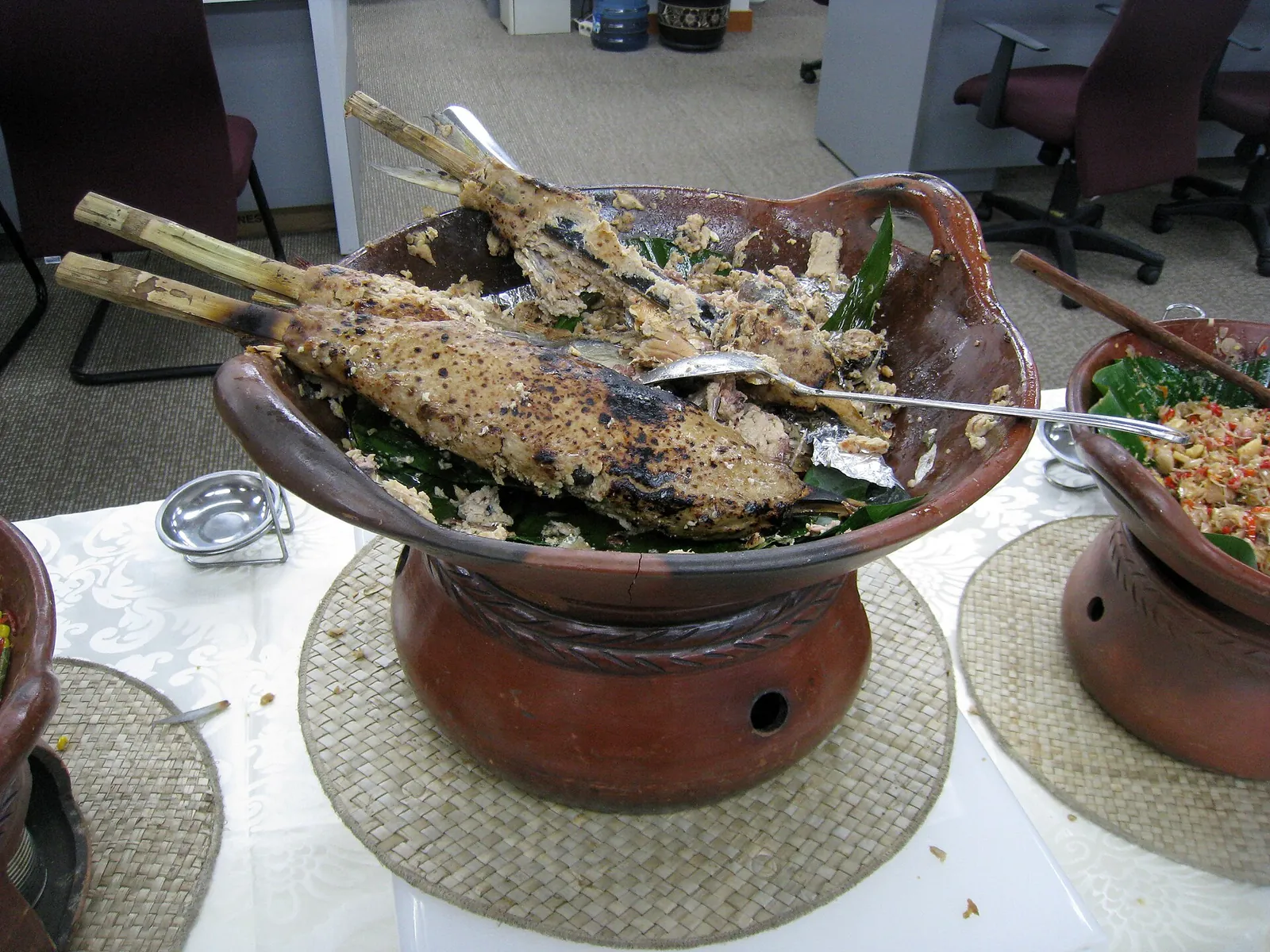
Sate bandeng (milkfish satay)
Banten's best-known dish: milkfish, deboned and spiced, then grilled in its skin on bamboo skewers, as Wikivoyage describes.
- Where to look
- Restaurants and warung across Banten; look for it on the road between Jakarta and the coast.
- Fit it into your day
- A lunch stop on the road between Jakarta and the coast.
The boning is done for you, but check for stray small bones.
Pecak bandeng and fresh fish around Labuan
Pecak bandeng is roasted milkfish covered in spices and sambal, served with rice and raw vegetables. Labuan, where the park has its headquarters, is a port town with a well-known fish auction and market, Wikivoyage notes.
- Where to look
- Local warung in Labuan and along the west coast towards Carita and Panimbang.
- Fit it into your day
- Dinner on the night before or after the park.
Sambal can be very hot; ask for it on the side, and ask the price of fish before it is cooked.
Water and trail snacks
The trails, meadows and beaches have nothing for sale, and walks such as Cidaon to Tanjung Layar are mostly without shade.
- Where to look
- Shops in Labuan, Sumur or Tamanjaya before you board.
- Fit it into your day
- At least one large bottle per person for each walk.
Take all wrappers and empty bottles back to the boat.
What is open in 2026: closures, fees and rules
Check the itinerary of any tour against the park's notices. In an announcement issued in October 2025, the park authority closed Handeuleum Island and Kuta Karang to visitors from 30 October 2025 until further notice, because both lie in the second ring of the area used to translocate Javan rhinos. Handeuleum is where the park ran its mangrove canoe trips up the Cigenter river, so older itineraries and reviews that promise that canoe trip may be out of date. We found no reopening notice on the park's site on 2026-10-03.
Fees changed on 1 November 2025. When we checked on 2026-10-03, the park's official tariff sheet listed entry for foreign visitors at Rp150,000 per person per day, with separate charges for activities: Rp20,000 per person for hiking, Rp25,000 for scuba diving and Rp5,000 per person per day for camping, plus a daily fee for each motorboat by engine size and Rp2,000,000 per day to fly a drone. Ask whether your package price includes these, and remember that the entry fee is charged per day.
The park's management plan divides it into zones. Visitor use is permitted in utilisation zones on Peucang, Handeuleum, parts of Panaitan and the Gunung Honje area, while the inner peninsula is a core zone. Wikivoyage notes that visitors may not cut new trails, and that walking in the forest at night is unwise unless you know the trails well.
The Javan rhino: why you probably will not see one
Ujung Kulon is the last home of the Javan rhinoceros. Estimates differ by source: in September 2025 the Ministry of Forestry put the population at 87 to 100 and said it was certain the number was under 100, while ANTARA's English service wrote in February 2026 that fewer than 80 are believed to survive. In January 2026 a camera trap recorded a female known as Arum with a calf thought to be under five months old, the first calf recorded that year.
The animals are shy, mostly active at night and live in dense forest, so researchers count them with camera traps. Wikivoyage says actual sightings are rare, although footprints and droppings are often found on trails. Come for the forest, the coast and the banteng; a rhino would be extraordinary luck.
The pressure on them is real. In a June 2026 press release on court verdicts, the park said that 10 Javan rhinos had been killed by poachers in the cases tried. Since August 2025 the government has been moving selected rhinos from the peninsula to a study and breeding area, the Javan Rhino Study and Conservation Area (JRSCA), about 14 kilometres away in Ujungjaya village and still inside the park, to build a second population. This work is the reason for the Handeuleum closure, and it is a good reason to follow every instruction your ranger gives.
Safety at sea, Krakatau and health
The boat is the riskiest part of the trip. Wikivoyage warns of high waves and strong currents in open water and recommends a boat with at least three engines for the open-sea crossings. Before you pay, ask how many passengers the boat carries, whether there are life jackets for everyone and what happens if weather stops sailings. In September 2026 a speedboat carrying five journalists covering the eruption of Anak Krakatau went missing in the Sunda Strait; search teams working from Carita had found no trace after nine days, ANTARA reported.
Some operators also run trips to Anak Krakatau, which the park's site counts as part of its wider protected area. The volcano was at Level III (Siaga) from 2 July 2026 and was lowered to Level II (Waspada) on 21 September 2026, the Geological Agency said, with visitors told to stay outside a two-kilometre radius of the crater. Check the current alert level before any Krakatau trip.
Wikivoyage still describes Ujung Kulon as a malaria-risk area and advises consulting a doctor at least a couple of weeks before travel. Mosquitoes are abundant, and biting flies around the banteng meadows are painful, so bring strong repellent. Carry water on every walk.
Panaitan and longer treks
Panaitan, the large island off the peninsula's western tip, is about 17,000 hectares of forest and beach, according to the park. On its summit, Gunung Raksa, stands an old Hindu statue of Ganesha that the park calls the island's main cultural draw, and its southern bay holds One Palm Point, a world-class left-hand reef break that the park says is best in the west-monsoon season when the weather allows. Panaitan is reached by chartered boat and suits surfers and multi-day expeditions rather than a weekend visit.
For walkers, Wikivoyage describes a two- to three-day coastal trek from Tamanjaya to Tanjung Layar, and a demanding 20-kilometre stretch along the Indian Ocean from Cigenter to Karang Ranjang and back to Tamanjaya that takes eight to twelve hours on loose volcanic sand with almost no shade. Cigenter is the river reached from Handeuleum, which is closed, so confirm with the Tamanjaya office which trails are open before you plan around it. Treks are organised through the park office and local guides in Tamanjaya.
Practical questions
How many days do I need for Ujung Kulon?
At least three days and two nights from Jakarta, because the road and boat journey takes most of a day each way. Allow four or five days for longer guided treks or a trip to Panaitan.
Can I see a Javan rhino?
Almost certainly not. Fewer than 100 survive, all in Ujung Kulon, and they are shy, mostly nocturnal and live in dense forest. Wikivoyage says sightings are rare, though tracks are often found. Banteng at the Cidaon meadow are the realistic wildlife highlight.
Is the Cigenter canoe trip on Handeuleum Island open?
Not when we checked on 2026-10-03. The park closed Handeuleum Island and Kuta Karang from 30 October 2025 until further notice to support rhino translocation, and we found no reopening notice. Ask your operator to confirm before booking.
How much is the entrance fee?
When we checked on 2026-10-03, the park's tariff sheet in force since 1 November 2025 listed Rp150,000 per person per day for foreign visitors, with extra charges for hiking, diving, camping, boats and drones.
Can I visit without a tour?
Yes. Travel to Tamanjaya and arrange tickets, insurance, guides and boats at the park's Area II office there, as the Ministry of Tourism describes. A guide or ranger is still needed for walking in the park.
Can I combine Ujung Kulon with Krakatau?
Some operators offer it. Anak Krakatau was lowered from Level III to Level II on 21 September 2026, with visitors told to stay outside two kilometres of the crater. Check the current alert level and your boat's safety equipment first.
Sources and checks before you travel
Reference sources for the version dated 3 October 2026. Confirm opening times, access, transport and conditions for your travel dates.
- Indonesia Ministry of Tourism: Ujung Kulon National Park ↗ — opens in a new tab
- Ujung Kulon National Park (Balai TNUK): history and status ↗ — opens in a new tab
- Ujung Kulon National Park: entrance tariff (PNBP) from 1 November 2025 ↗ — opens in a new tab
- Ujung Kulon National Park: closure of Handeuleum Island and Kuta Karang ↗ — opens in a new tab
- Ujung Kulon National Park: Peucang Island ↗ — opens in a new tab
- Ujung Kulon National Park: Handeuleum Island ↗ — opens in a new tab
- Ujung Kulon National Park: Panaitan Island ↗ — opens in a new tab
- Ujung Kulon National Park: zoning ↗ — opens in a new tab
- Ujung Kulon National Park: general conditions ↗ — opens in a new tab
- Ujung Kulon National Park: court verdicts on rhino poaching (June 2026) ↗ — opens in a new tab
- ANTARA: Javan rhino calf recorded in Ujung Kulon (February 2026) ↗ — opens in a new tab
- ANTARA: Indonesia reveals critical decline of native rhino species (September 2025) ↗ — opens in a new tab
- ANTARA: strict security at the Javan rhino translocation area (August 2025) ↗ — opens in a new tab
- ANTARA: Anak Krakatau lowered to Level II (21 September 2026) ↗ — opens in a new tab
- ANTARA: search for missing journalists on day nine (16 September 2026) ↗ — opens in a new tab
- ANTARA: DAMRI relaunches tourism and pioneer routes in Banten (February 2025) ↗ — opens in a new tab
- Wikivoyage: Ujung Kulon National Park ↗ — opens in a new tab
- Wikivoyage: Banten ↗ — opens in a new tab
Does this experience fit your route?
Ujung Kulon is easiest as a guided trip that handles the road, the boat and the park permits. Before you book, check the nights, what fees are included and that the boat carries life jackets for everyone.
Check dates and details on Viator ↗ — opens in a new tabAffiliate link · Book with ViatorPhoto credits
The jetty on Peucang Island, where boats from the mainland land in Ujung Kulon National Park
Photograph: NiaKurniawati11 — opens in a new tab · CC BY-SA 4.0 — opens in a new tab
Changes: Resized and converted to WebP; displayed with responsive crops. · Original photograph and licence details ↗ — opens in a new tab
Lowland rainforest and coastline in Ujung Kulon National Park, the largest remaining stand on Java
Photograph: Muhammad Adimaja — opens in a new tab · CC BY-SA 4.0 — opens in a new tab
Changes: Resized and converted to WebP; displayed with responsive crops. · Original photograph and licence details ↗ — opens in a new tab
A wild boar on the beach of Peucang Island
Photograph: Dewicilay — opens in a new tab · CC BY-SA 4.0 — opens in a new tab
Changes: Resized and converted to WebP; displayed with responsive crops. · Original photograph and licence details ↗ — opens in a new tab
Cidaon grazing meadow, a short boat ride from Peucang, where banteng and peafowl come out to feed
Photograph: Muhammad Syahroyni — opens in a new tab · CC BY-SA 4.0 — opens in a new tab
Changes: Resized and converted to WebP; displayed with responsive crops. · Original photograph and licence details ↗ — opens in a new tab
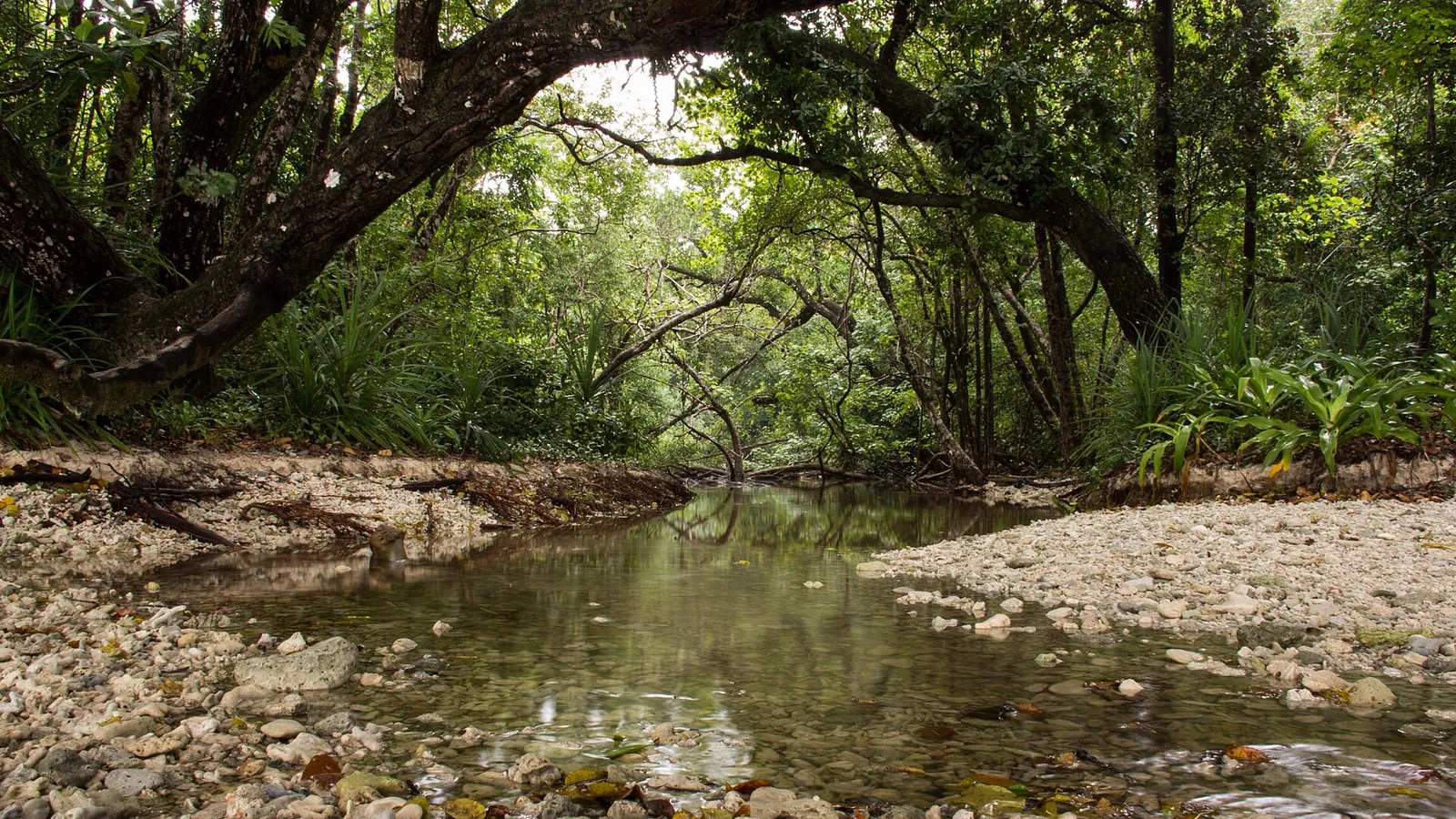
A forest stream in Ujung Kulon National Park
Photograph: Achmad Soerio Hutomo — opens in a new tab · CC BY 2.0 — opens in a new tab
Changes: Resized and converted to WebP; displayed with responsive crops. · Original photograph and licence details ↗ — opens in a new tab
Sate bandeng, Banten's spiced milkfish satay, here served at a buffet in Jakarta
Photograph: Gunawan Kartapranata — opens in a new tab · CC BY-SA 4.0 — opens in a new tab
Changes: Resized and converted to WebP; displayed with responsive crops. · Original photograph and licence details ↗ — opens in a new tab