Java · West Java
Bogor travel guide: botanical gardens, Puncak tea hills and the train
Bogor sits at the foot of Mount Salak, about 60 kilometres south of Jakarta, and the Dutch called it Buitenzorg, "free of care". It is wetter and noticeably cooler than the capital, and its centre is one enormous garden: the Bogor Botanical Gardens, with the white Presidential Palace on its edge. Above the town, the road climbs to Puncak, the pass where Jakarta has gone for mountain air since colonial days. Treat the town and the hills as two different trips, because the traffic between them decides your day.
- Suggested time
- 1 day from Jakarta; 2 days with Puncak or Cibodas
- Where to stay
- Near the Botanical Gardens or Jalan Suryakencana in central Bogor; Cisarua or the Puncak resorts for the hills
- Season and timing
- The Ministry of Tourism gives April to October as Java's dry season and November to March as the wet season, but Bogor has high rainfall all year and is known as the Rain City. Plan outdoor walks for the morning and carry rain gear in any month.
The short answer
For the town alone, a day trip from Jakarta is enough: take the KRL commuter train to Bogor station, spend the morning in the Botanical Gardens and the afternoon eating along Jalan Suryakencana. Stay one night, near the gardens or in the old Chinatown, if you also want the Puncak hills: the Gunung Mas tea estate, Taman Safari or the Cibodas Botanical Gardens. Go up there on a weekday with a car and driver. Weekend and holiday traffic on the Puncak road is heavy enough that the police run one-way traffic hours.
Day trip or overnight: decide by what you want above the town
Central Bogor is compact. The Botanical Gardens, the Presidential Palace, the railway station and the old Chinatown street of Jalan Suryakencana lie close together, so a day trip by train from Jakarta covers them without a car. The train also avoids the toll road, which the Ministry of Tourism warns is much busier at weekends and on long holidays.
The hills are a different matter. Puncak, Taman Safari, the Gunung Mas tea estate and the Cibodas Botanical Gardens lie up a narrow, winding road that the ministry says is reached by private car, taxi or tour bus. On a weekday, the ministry puts the drive from Jakarta at about an hour and a half via the Bogor toll road, and much longer at weekends. Adding the hills to a train day trip rarely works. Sleep in Bogor or up at Puncak and give the hills a weekday morning of their own.
If you stay in town, the area around the gardens and Suryakencana puts you within walking distance of the main sights and the evening food stalls. The Puncak and Cisarua resorts suit travellers who want the cool air and views, and who will drive everywhere.
The Bogor Botanical Gardens: plan a long morning
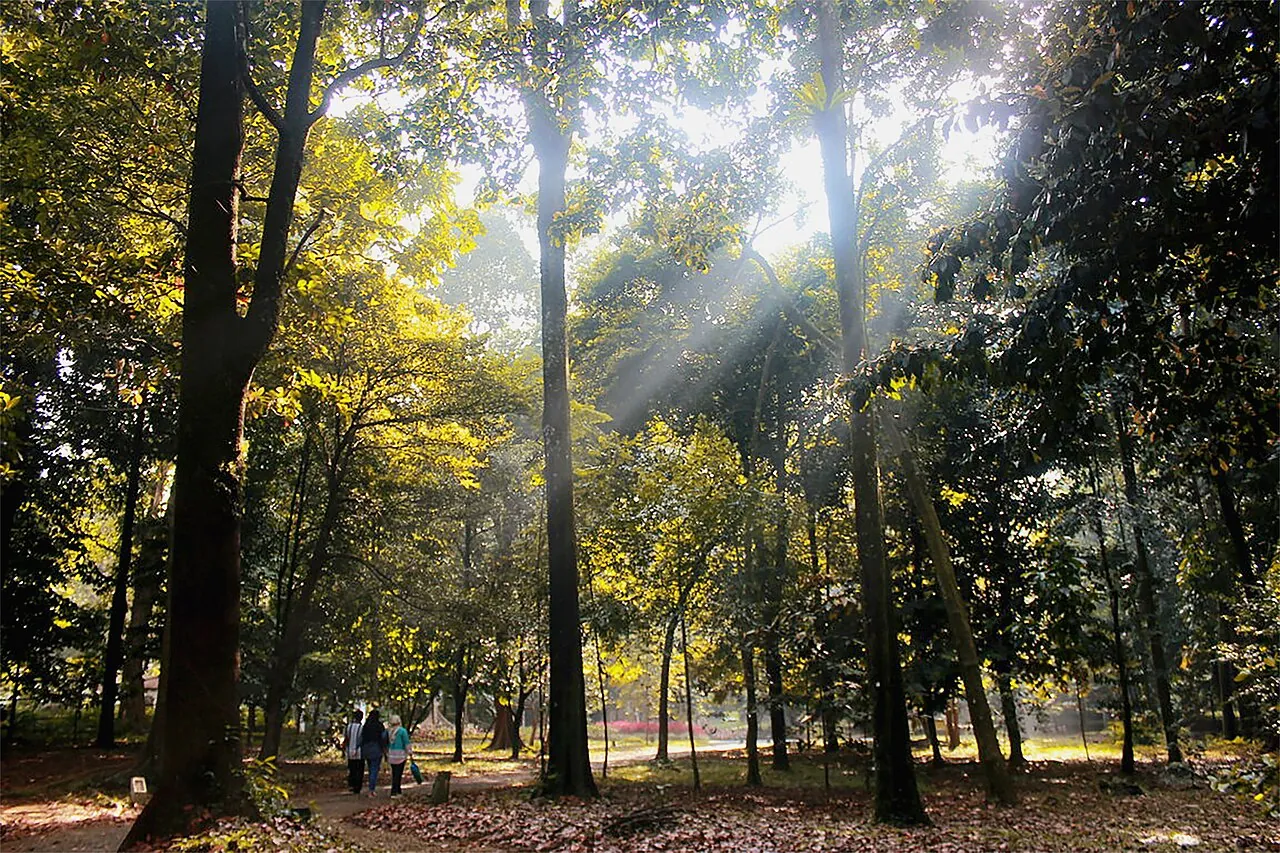
Kebun Raya Bogor covers about 87 hectares in the middle of town. The Ministry of Tourism describes more than 400 species of palm, around 5,000 trees from across the tropics and an orchid house. Sir Stamford Raffles, the British Governor-General of the East Indies from 1811 to 1816, first laid out a small garden here, and a memorial to his wife still stands in it. The Dutch formally founded the gardens in 1817 under the botanist C.G.C. Reinwardt. Today it is a research and conservation garden as well as a park, with paved paths under the old trees and a river running over boulders.
When we checked on 2026-10-03, the ministry's guide to Bogor's historic sites listed admission at about Rp15,500 on weekdays and Rp25,500 at weekends. Tickets are sold through the gardens' official ticket site, tiketkebunraya.id; check the current price and opening times there before you go. The ministry says the gardens open daily and are usually very crowded on Sundays and public holidays, so a weekday morning is the calm time.
Inside, aim for the Mexican Garden of cacti and succulents north of the main garden, the avenues of giant trees and the lotus pond in front of the palace. The gardens' own site also lists the Zoological Museum (Museum Zoologicum Bogoriense) among its attractions. Its history goes back to 1894; it is now run by the national research agency BRIN, and the ministry notes that it holds the mount of the last one-horned rhino from the Bandung plateau. Allow at least three hours, and take a break at one of the garden cafés if rain sets in.
Make time for the local food
What to eat and where to look
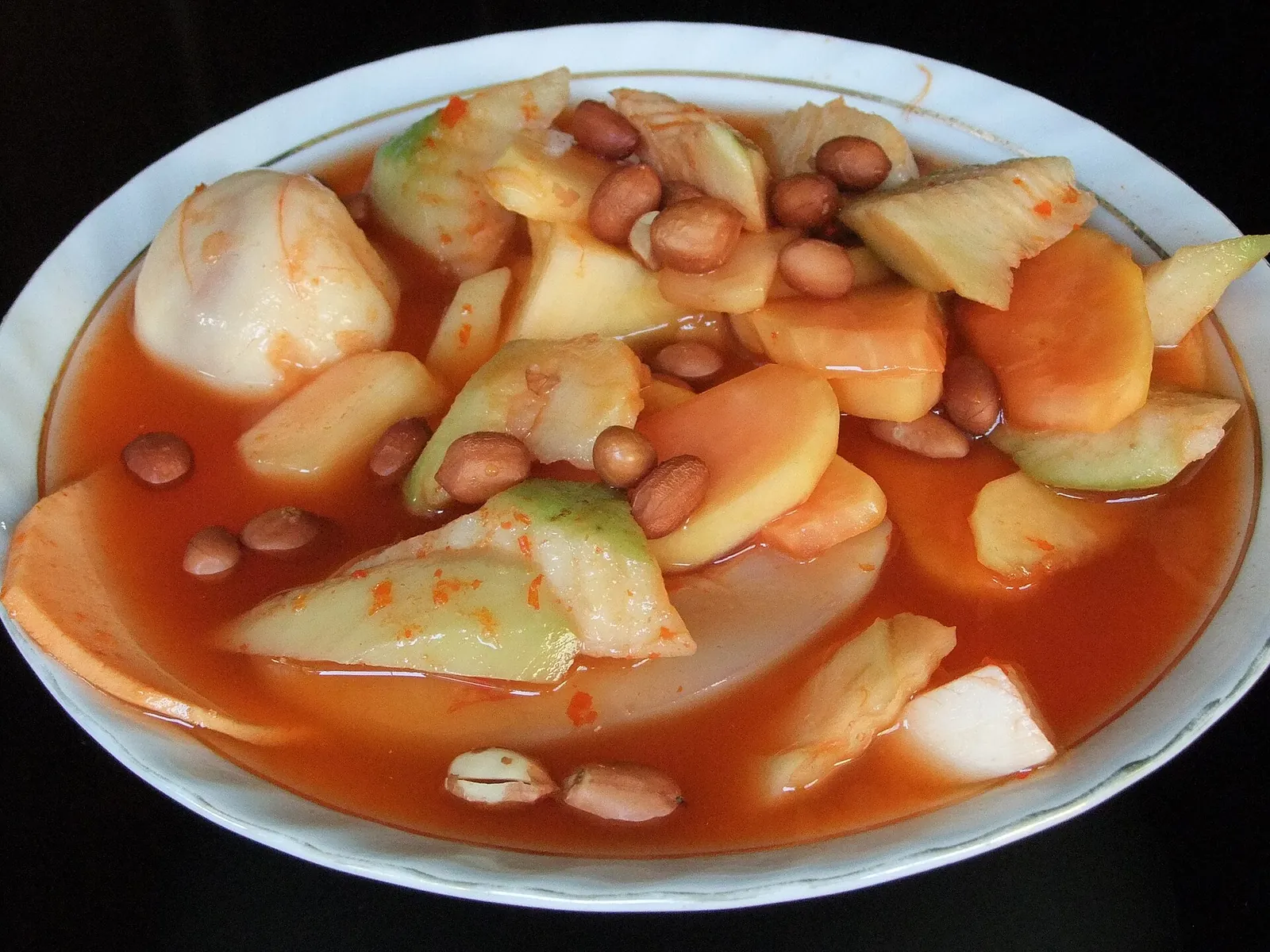
Asinan Bogor (pickled fruit salad)
Bogor's best-known snack, which the Ministry of Tourism describes as fresh fruit and sour vegetable salads. Expect a sharp, pickled flavour and a bright red dressing.
- Where to look
- Asinan sellers and snack shops in central Bogor; ask locally for the best-known stalls.
- Fit it into your day
- A cold, sharp snack after a hot morning in the gardens, or a box to take back to Jakarta.
Can be spicy and may come with peanuts; ask before ordering if either is a problem.
Makaroni panggang (baked macaroni)
Baked macaroni, soft and savoury, which the ministry says Jakartans sit through toll-road traffic to buy and take home.
- Where to look
- Specialist bakeries and cafés in central Bogor; the ministry's food guide names Makaroni Panggang, near the centre.
- Fit it into your day
- A filling late lunch or something to take home in a box.
Contains dairy, egg and usually meat; check the filling.
Klappertaart (coconut custard tart)
A Dutch-inspired coconut tart made with fresh slices of young coconut meat; the ministry lists it, along with apple pies, among the town's sweet specialities.
- Where to look
- Dessert cafés and bakeries in central Bogor, such as Klappertaart Huize named in the ministry's guide.
- Fit it into your day
- Afternoon coffee and dessert between the gardens and Suryakencana.
Sweet and rich; ask about milk and egg if you avoid them.
Colenak and Sundanese plates
Colenak is a local dessert of fermented cassava (peuyeum) with sweet coconut and palm-sugar sauce. Garden cafés also serve staples such as gado-gado (vegetables in peanut sauce) and es teler (fruit with condensed milk and shaved ice).
- Where to look
- Cafés inside and around the Botanical Gardens and Sundanese restaurants in town.
- Fit it into your day
- Lunch inside the gardens, so you do not have to leave and queue again.
Peanut sauce is common; mention allergies clearly.
The palace, Suryakencana and Batutulis
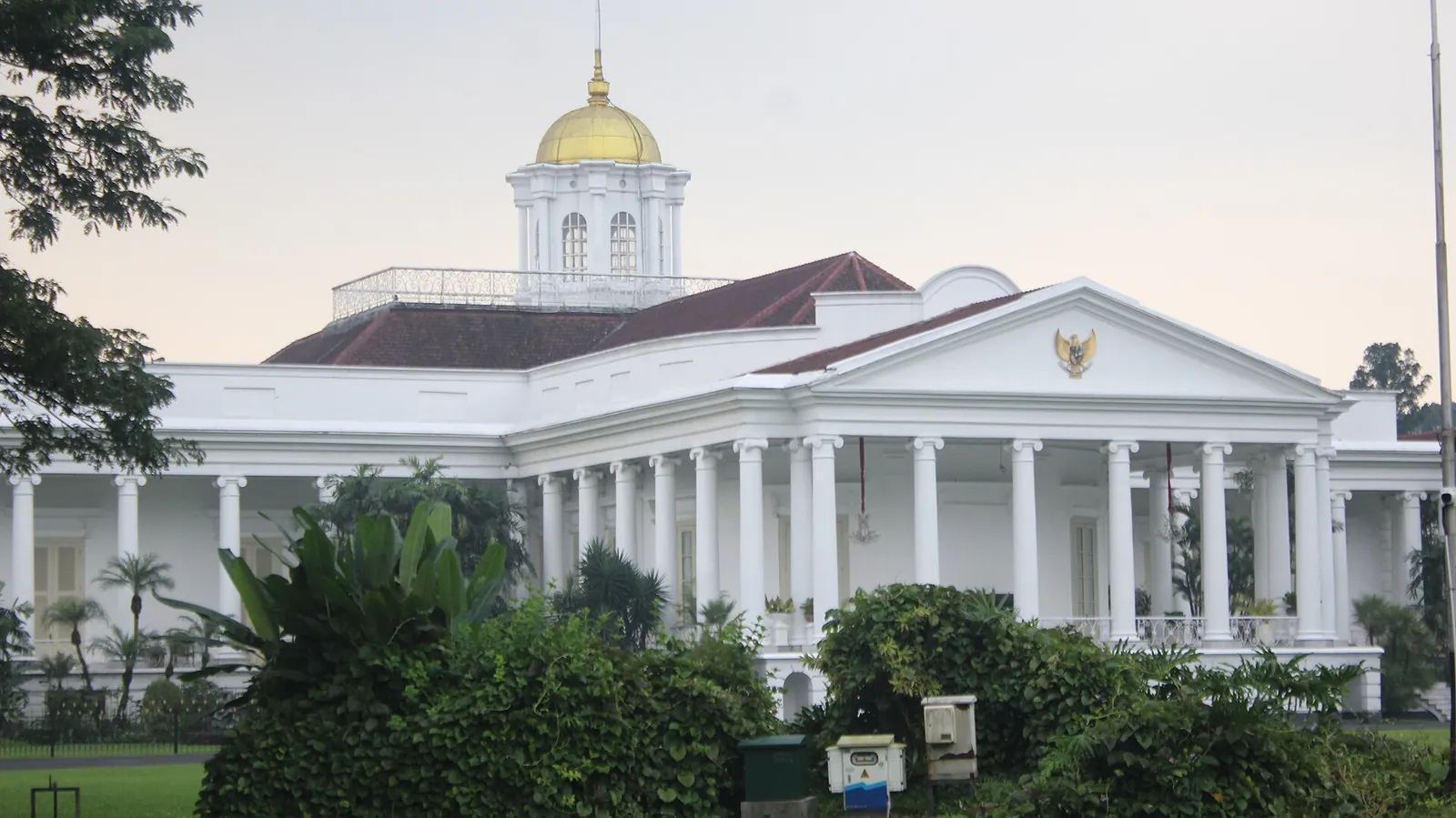
The Bogor Presidential Palace faces the gardens across a lawn where spotted deer graze. Building began in 1744 under Governor-General van Imhoff. According to the Ministry of Tourism, it can only be visited inside with special permission or during official open-house events; there is no regular ticket. You can see the palace and the deer from the gardens and from the road outside the fence.
Jalan Suryakencana is Bogor's old Chinatown, which the ministry calls the best-preserved heritage area in town, and its main street for street food. At No. 1 stands Vihara Dhanagun, the town's oldest place of worship. It began as the Hok Tek Bio temple, probably founded between 1672 and the 1740s, and is the centre of Bogor's Cap Go Meh celebrations. The ministry says it is open to visitors free of charge; keep to quiet, respectful behaviour inside.
Two more historic stops are easy to add by taxi or ride-hailing car. The Batutulis inscription, south of the centre on Jalan Batutulis, is an Old Sundanese stone text carved in 1533 on the orders of King Surawisesa, recording the glory of the Pajajaran kingdom; the ministry says entry is free or by voluntary donation to the keeper. Bogor railway station itself dates from 1873 and the line between Batavia and Buitenzorg.
Getting there: the commuter train from Jakarta
The simplest way to reach Bogor without traffic is the KRL Commuter Line run by KAI Commuter. The Bogor line, shown in red on the network map, runs between Jakarta Kota station in the old town and Bogor station, and is the busiest line in the Greater Jakarta network. Bogor station is in Paledang, the same central neighbourhood as the Botanical Gardens. Because it is the busiest line, travel outside the weekday rush hours if you can.
We could not read KAI Commuter's own website, so we do not give fares, timetables or journey times here. Check the current schedule and ticketing in KAI Commuter's official app or at the station before you travel.
By road, the ministry puts Bogor about an hour from Jakarta by car with a driver, with heavier traffic at weekends and on long holidays. A car is the practical choice if you are continuing up to Puncak or Cibodas.
Puncak: tea hills, Taman Safari and the one-way traffic
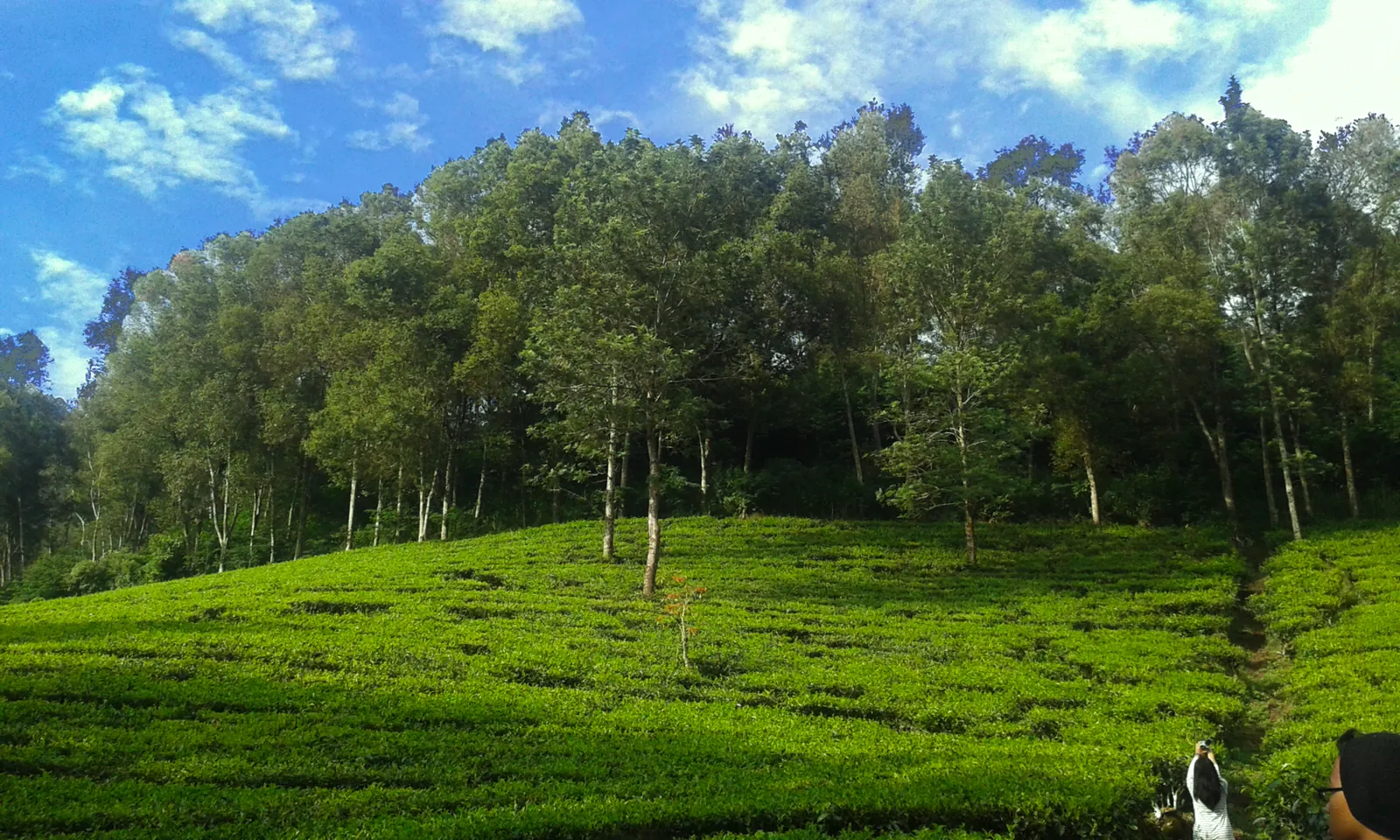
Puncak means "the peak". The road from Bogor climbs past resorts and villas to a pass facing the volcanoes Salak, Gede and Pangrango, and Jakarta has come up here for fresh air since Dutch times. The ministry's tea-garden guide describes Puncak Gunung Mas as an agro-tourism estate with tea walks, factory visits, horse riding and outbound activities, plus paragliding and ATV rides for anyone who wants them. Taman Safari Indonesia, a safari park at the foot of Mount Gede Pangrango, is on the same road; the ministry lists more than 2,500 animals and says you can tour it in your own car or a park vehicle.
The road is the catch. The ministry advises going on a weekday, because the road is usually jammed from Friday afternoon through Sunday and especially on long weekends and school holidays. At those times the police enforce one-way traffic hours, alternating between traffic going up and traffic coming down. If you must travel at a weekend, set off very early, ask your driver about the one-way times and keep the day plan short.
Cibodas and Gede-Pangrango: the cooler, quieter option
About four kilometres down from the Puncak Pass, the Cibodas Botanical Gardens were founded in 1852 as a mountain branch of the Bogor gardens, for plants that need a cooler climate. The ministry gives an altitude of 1,300 to 1,425 metres, rhododendron and cherry-blossom gardens, and the best flowering in January and February or from August to September. It also lists waterfalls inside the garden area. Java's first coffee and quinine for export were grown here, and the gardens have two guesthouses.
Cibodas is also the main gateway to Mount Gede Pangrango National Park. The ministry describes three official hiking routes; the Cibodas trail is the most popular and easiest, passing the Cibeureum waterfall. Mount Gede is an active volcano, and a summit climb is a serious mountain hike for which the national park's official site lists mandatory equipment. For most visitors, the trail to the waterfall is the right day out.
A workable two-day plan
This is an editorial suggestion, not a timetable. Check opening days and the traffic situation before you set off.
- Day 1 — Bogor town by train: the KRL from Jakarta in the morning, the Botanical Gardens and the palace view until lunch, then Jalan Suryakencana and Vihara Dhanagun in the afternoon, with dinner there.
- Day 2 — the hills by car (weekday): an early start for Puncak, the Gunung Mas tea estate or Taman Safari in the morning, or the Cibodas gardens and the Cibeureum waterfall trail instead, then back down before the afternoon traffic.
- Day trip only: do Day 1 and return to Jakarta by train in the evening. Leave Puncak for another visit.
Practical questions
Is Bogor worth a day trip from Jakarta?
Yes, if you like gardens and food. The KRL commuter train takes you from Jakarta to Bogor station, a short walk from the Botanical Gardens, and Jalan Suryakencana's food street is close by. Go on a weekday: the gardens are busiest on Sundays and public holidays.
How do I get from Jakarta to Bogor by train?
Take the KRL Commuter Line's Bogor line, which runs between Jakarta Kota and Bogor. Check the current schedule and fares in KAI Commuter's official app or at the station, and avoid the weekday rush hours.
Can I visit the Bogor Presidential Palace?
Not on a normal visit. The Ministry of Tourism says the palace can only be entered with special permission or during official open-house events. You can see it, and the deer on its lawns, from the Botanical Gardens.
Can I see Puncak on the same day as Bogor?
Only with a car and an early start on a weekday. The Puncak road is narrow and very busy at weekends, when the police run one-way traffic hours. An overnight stay in Bogor or Puncak makes the hills far easier.
What is the best time to visit Bogor?
Any time of year, on a weekday. Bogor gets rain all year, so plan outdoor walks for the morning. For flowers at Cibodas, the ministry suggests January to February or August to September.
How much does the Bogor Botanical Gardens cost?
When we checked on 2026-10-03, the Ministry of Tourism's guide listed about Rp15,500 on weekdays and Rp25,500 at weekends. Check the current price on the gardens' official ticket site, tiketkebunraya.id.
Sources and checks before you travel
Reference sources for the version dated 3 October 2026. Confirm opening times, access, transport and conditions for your travel dates.
- Indonesia Travel (Ministry of Tourism): Bogor ↗ — opens in a new tab
- Indonesia Travel: Bogor Botanical Garden ↗ — opens in a new tab
- Indonesia Travel: 8 historic places in Bogor (Indonesian) ↗ — opens in a new tab
- Indonesia Travel: 6 botanical gardens of Indonesia ↗ — opens in a new tab
- Indonesia Travel: savouring Bogor Botanical Garden ↗ — opens in a new tab
- Kebun Raya Indonesia: Kebun Raya Bogor ↗ — opens in a new tab
- Kebun Raya: official online tickets ↗ — opens in a new tab
- Indonesia Travel: Museum Zoologicum Bogoriense ↗ — opens in a new tab
- Indonesia Travel: Puncak and Cibodas ↗ — opens in a new tab
- Indonesia Travel: Mount Gede Pangrango ↗ — opens in a new tab
- Gunung Gede Pangrango National Park (official) ↗ — opens in a new tab
- Indonesia Travel: leisure activities in and around Bogor ↗ — opens in a new tab
- Indonesia Travel: 7 Indonesian tea gardens ↗ — opens in a new tab
- Indonesia Travel: macaroni, klappertaart and more in Bogor ↗ — opens in a new tab
- Indonesia Travel: weekend places in Bogor ↗ — opens in a new tab
- Indonesia Travel: explore Kota Tua ↗ — opens in a new tab
- Wikipedia (Indonesian): Commuter Line Bogor ↗ — opens in a new tab
- Indonesia Travel: DKI Jakarta ↗ — opens in a new tab
Photo credits
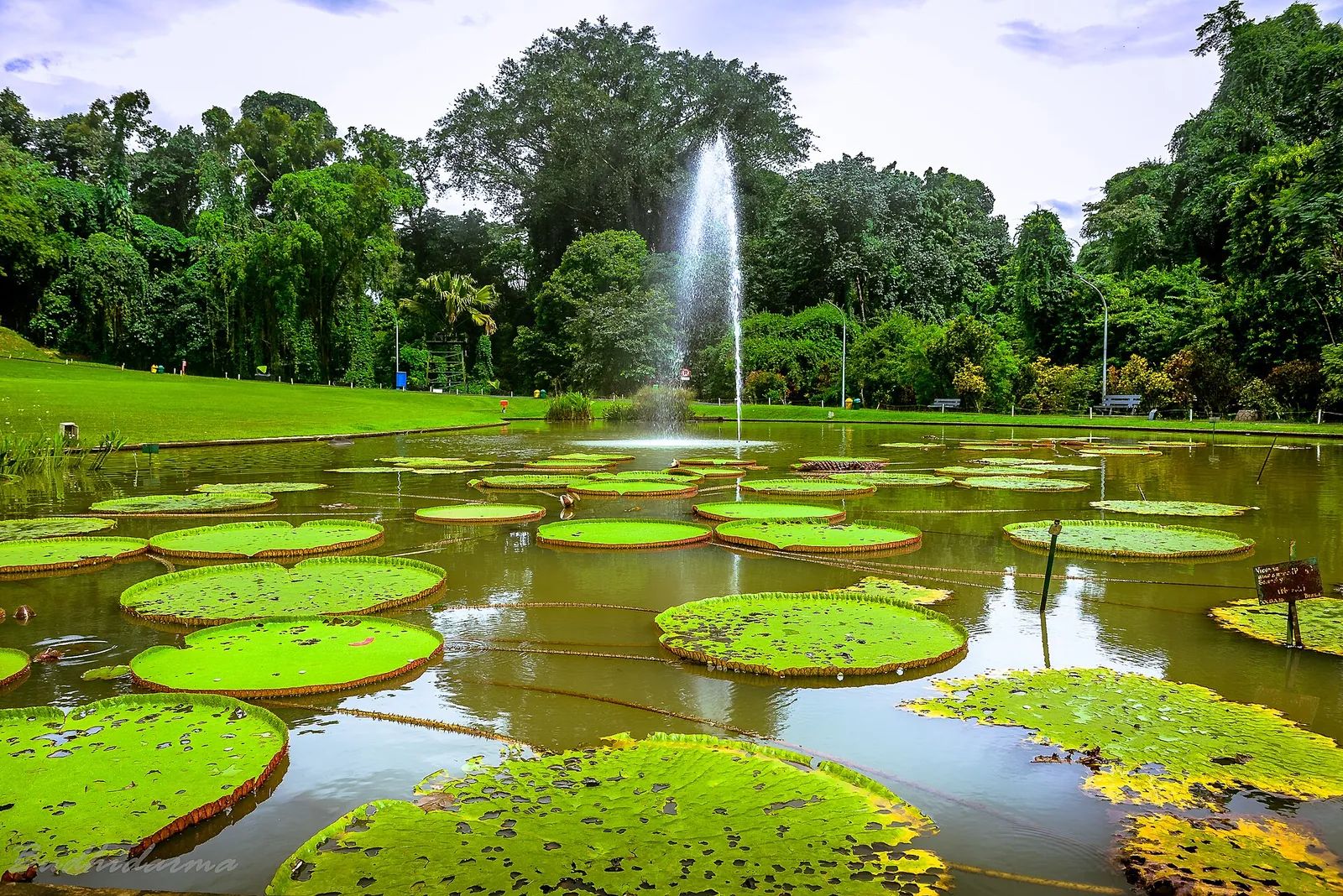
Giant water lilies on a pond in the Bogor Botanical Gardens (Kebun Raya Bogor)
Photograph: Cep Budhi Darma — opens in a new tab · CC BY-SA 4.0 — opens in a new tab
Changes: Resized and converted to WebP; displayed with responsive crops. · Original photograph and licence details ↗ — opens in a new tab
Bogor Presidential Palace, which faces the botanical gardens
Photograph: Nafisathallah — opens in a new tab · CC BY 4.0 — opens in a new tab
Changes: Resized and converted to WebP; displayed with responsive crops. · Original photograph and licence details ↗ — opens in a new tab
Tall old trees in the Bogor Botanical Gardens
Photograph: Saya dwi — opens in a new tab · CC BY-SA 4.0 — opens in a new tab
Changes: Resized and converted to WebP; displayed with responsive crops. · Original photograph and licence details ↗ — opens in a new tab
Tea bushes at the Gunung Mas tea estate in the Puncak hills
Photograph: Jonathan — opens in a new tab · CC BY-SA 4.0 — opens in a new tab
Changes: Resized and converted to WebP; displayed with responsive crops. · Original photograph and licence details ↗ — opens in a new tab
Asinan Bogor, the town's pickled fruit salad
Photograph: Sakurai Midori — opens in a new tab · CC BY 3.0 — opens in a new tab
Changes: Resized and converted to WebP; displayed with responsive crops. · Original photograph and licence details ↗ — opens in a new tab