Java · East Java
Baluran National Park: Bekol savanna, Bama beach and the Ijen add-on
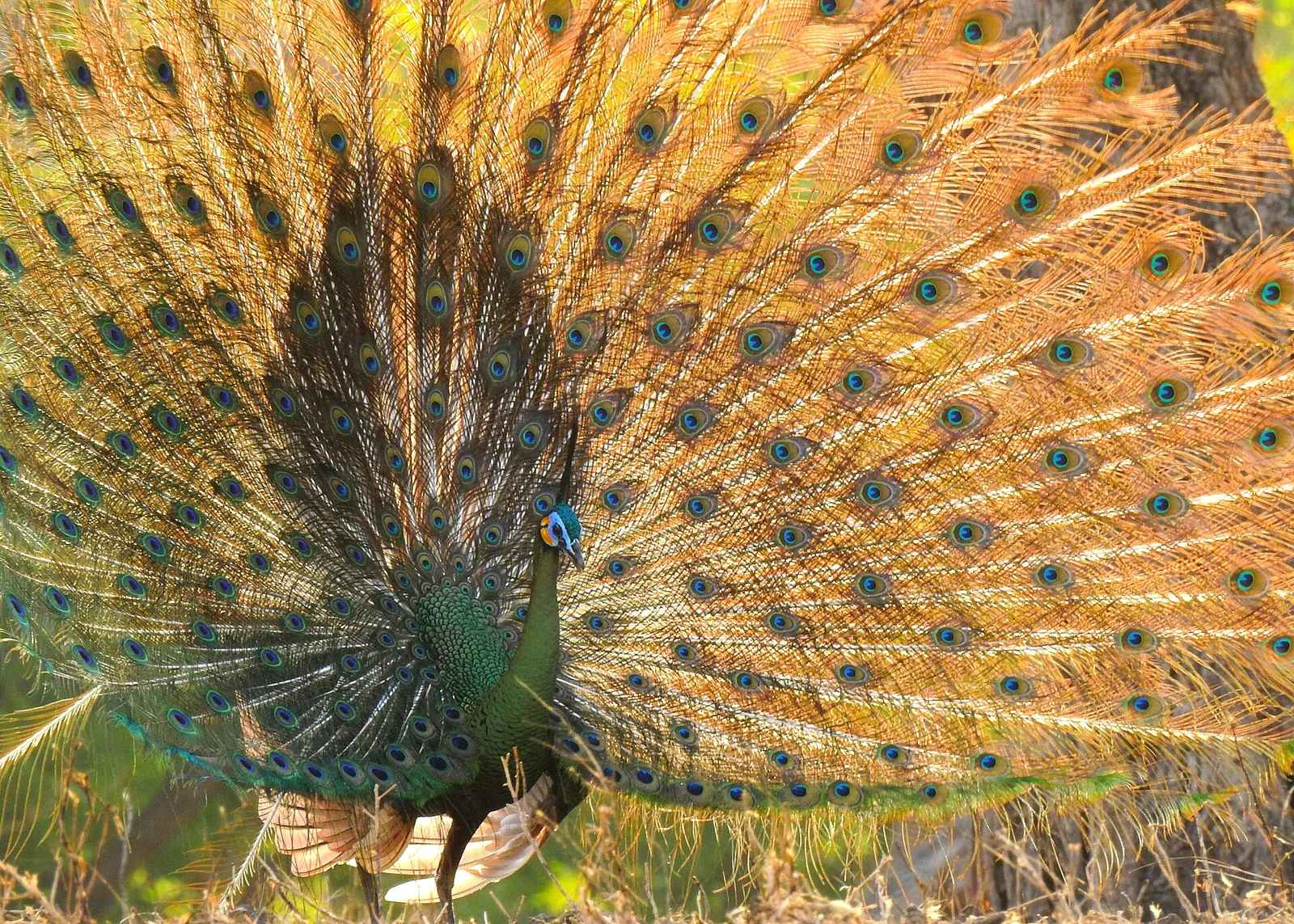
Baluran is the dry corner of Java. On the island's north-east tip, between the Madura and Bali straits, the national park mixes open savanna, monsoon forest, beach forest and mangroves around the old Baluran volcano. The ministry calls it a stark contrast to the green scenery elsewhere on the island. Deer graze on the Bekol savanna, banteng (Java's wild cattle) wallow in the swamps, green peafowl live in the grassland and forest, and long-tailed macaques forage along the shore at Bama beach. Most people come for a few hours rather than a few days, because the park sits right on the main road from Surabaya and Situbondo to Banyuwangi and the Bali ferry. That is also the best way to treat it. Baluran makes a half-day stop that fits on either side of an Ijen night hike.
- Suggested time
- Half a day (a full day for serious wildlife watching)
- Where to stay
- Banyuwangi town or the Ketapang ferry area for an Ijen–Bali route; homestays at Wonorejo by the Batangan gate for an opening-time start
- Season and timing
- The Ministry of Tourism describes a dry season from April to October and rain from November to April. In the dry months the savanna dries out and water becomes scarce; in the wet season the banteng retreat into the forest. Fires burned large parts of the park between May and September 2026. The park closes every Monday, on set days around public holidays, and at short notice for fire or heavy rain.
The short answer
Give Baluran half a day, from 07:30, when the gate opens, until about midday, or a whole day if you want to wait for wildlife. Sleep in Banyuwangi or near the Ketapang ferry port if you are combining it with Ijen and Bali, or in one of the homestays near the gate at Wonorejo if you want to be inside at opening time. Come by car with a driver or on a tour. Pay at the Batangan gate, drive the 12 kilometres to the Bekol savanna and its viewing tower, then carry on to Bama beach and the mangrove boardwalk. Do not plan it for a Monday: the park now closes every Monday unless it is a public holiday.
What Baluran is, and what you will actually see
Baluran was one of Indonesia's first five national parks, declared on 6 March 1980 alongside Gunung Leuser, Ujung Kulon, Gunung Gede Pangrango and Komodo, according to the Ministry of Tourism. Its protection is older. The park's own history says the Dutch colonial government declared it a forest reserve in 1930 and a wildlife reserve of 25,000 hectares in 1937. Citing the Forestry Ministry's conservation directorate (KSDAE), the ministry now gives its area as about 30,266 hectares. The extinct Baluran volcano stands at its centre, and the park runs down to the Madura Strait in the north and the Bali Strait in the east.
Its fame comes from the savanna. The park calls itself the 'Africa van Java', and the ministry is careful to add that this is a tourism label, not an ecological classification. Much of the park is in fact forest: monsoon forest adapted to the long dry season, evergreen forest that stays green all year, beach forest and mangroves. The visitor route runs through these on the way from the gate to the open grassland at Bekol and on to the coast at Bama.
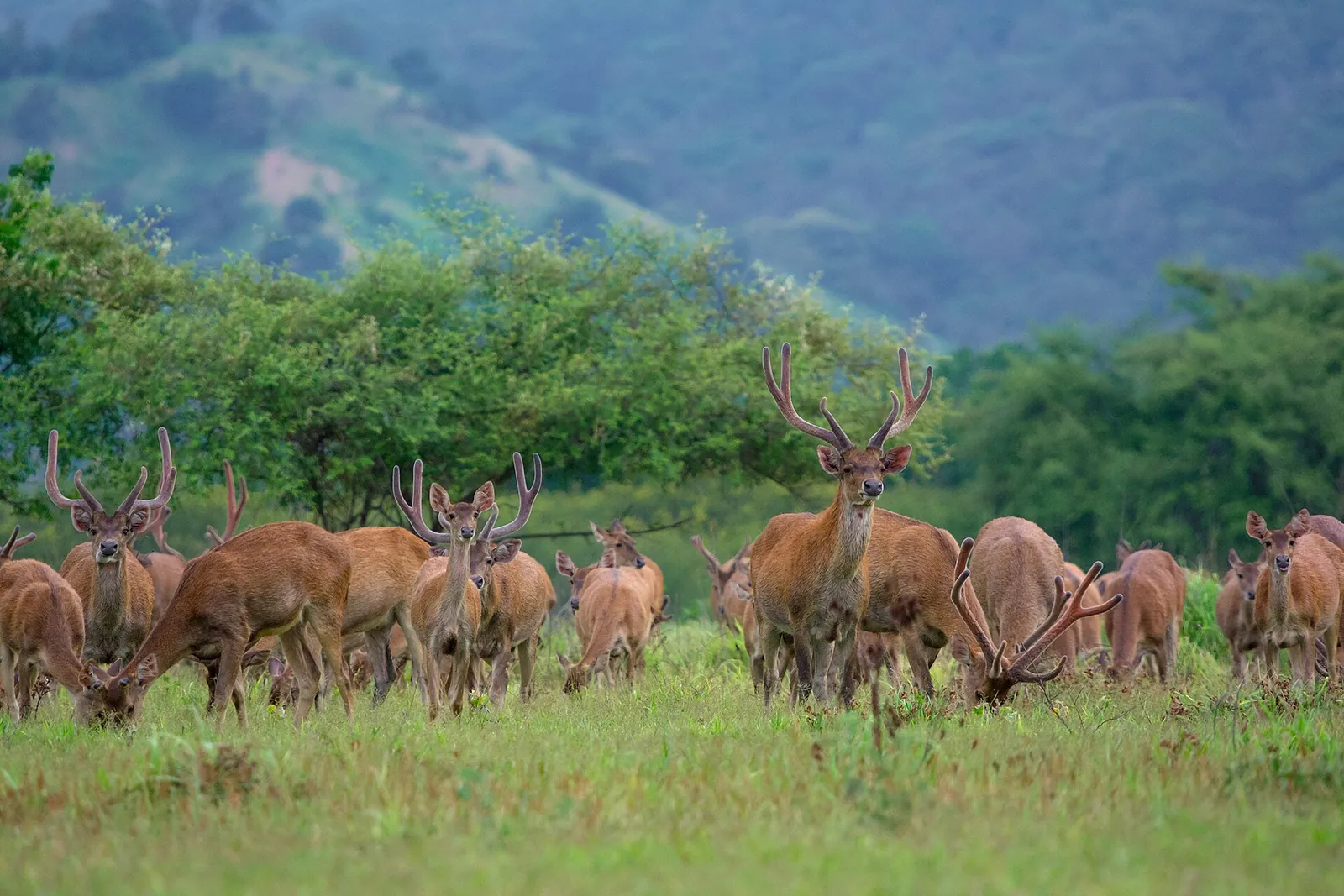
The animals the park says you are most likely to meet are Timor deer, which it says are easy to find grazing on the savanna, banteng (Javan wild cattle, the park's emblem, which often wallow in the swamps), wild water buffalo, long-tailed macaques around the forest and the green peafowl. The dhole, or Asian wild dog, is one of the park's predators. The ministry is frank that a species on the park list may not be one you see. Sightings depend on the season, the time of day, the state of the habitat and the animals themselves.
Visiting rules that change the plan: hours, Mondays, tickets
When we checked on 3 October 2026, the park's official website gave visiting hours of 07:30 to 16:00 (Western Indonesia Time) and said these can change with weather or management decisions. Since 1 December 2025 the park has closed every Monday. Its 2026 closure calendar (decree SK.9 of 2026) keeps that rule but makes an exception for Mondays that fall on a national holiday. It also closes the park on set days around public holidays, and at short notice for forest fires, heavy rain or other conditions. The fixed dates listed for 2026 ran until 26 August, so after that only the Monday rule and short-notice closures were left.
On the same date, the park's ticket page listed admission for foreign visitors at Rp 205,000, the same on weekdays and holidays. Indonesian citizens paid Rp 21,000 on weekdays and Rp 31,000 on holidays. Parking was listed as Rp 5,000 for a motorbike and Rp 10,000 for a car. The page also mentions compulsory visitor insurance of Rp 1,000 or Rp 5,000 without saying clearly whether it is included, so ask at the gate. Tickets were being sold only at the gate, not online, and the park warns that anyone found without a ticket is fined five times the fare. Carry your passport, because the park asks for identification at the entrance. The Ministry of Tourism's page quotes older figures from the Situbondo regency; go by the park's own page.
A few other rules matter. Drones are banned throughout the park without special permission. Since 1 November 2025 buses may not enter through the Batangan or Watunumpuk gates. Groups have to leave the bus at the drop-off point and continue by car or motorbike. From 1 August 2026, vehicles with non-standard, loud exhausts have also been turned away at the gates. Stay on the marked routes, do not feed or approach the animals, take your rubbish out with you and do not smoke where there is any risk of fire.
Make time for the local food
What to eat and where to look
Sego cawuk (nasi cawuk)
A Banyuwangi breakfast of rice with savoury grated coconut, grilled corn and a light pindang-style broth, topped with a boiled egg, salted fish or steamed fish, according to the Ministry of Tourism.
- Where to look
- Morning warungs in Banyuwangi town.
- Fit it into your day
- An early breakfast before the drive north to the Batangan gate.
It is a breakfast dish, so look for it in the morning; the side dishes often include fish.
Rujak soto
A Banyuwangi speciality that combines two dishes in one bowl: vegetable rujak with lontong (rice cake) and peanut sauce, with savoury soto broth poured over the top.
- Where to look
- Local eateries in Banyuwangi.
- Fit it into your day
- A filling late lunch after a morning at Bekol and Bama.
Contains peanuts; ask what the soto broth is made with if you avoid beef or offal. The rujak can be spicy.
Pecel rawon
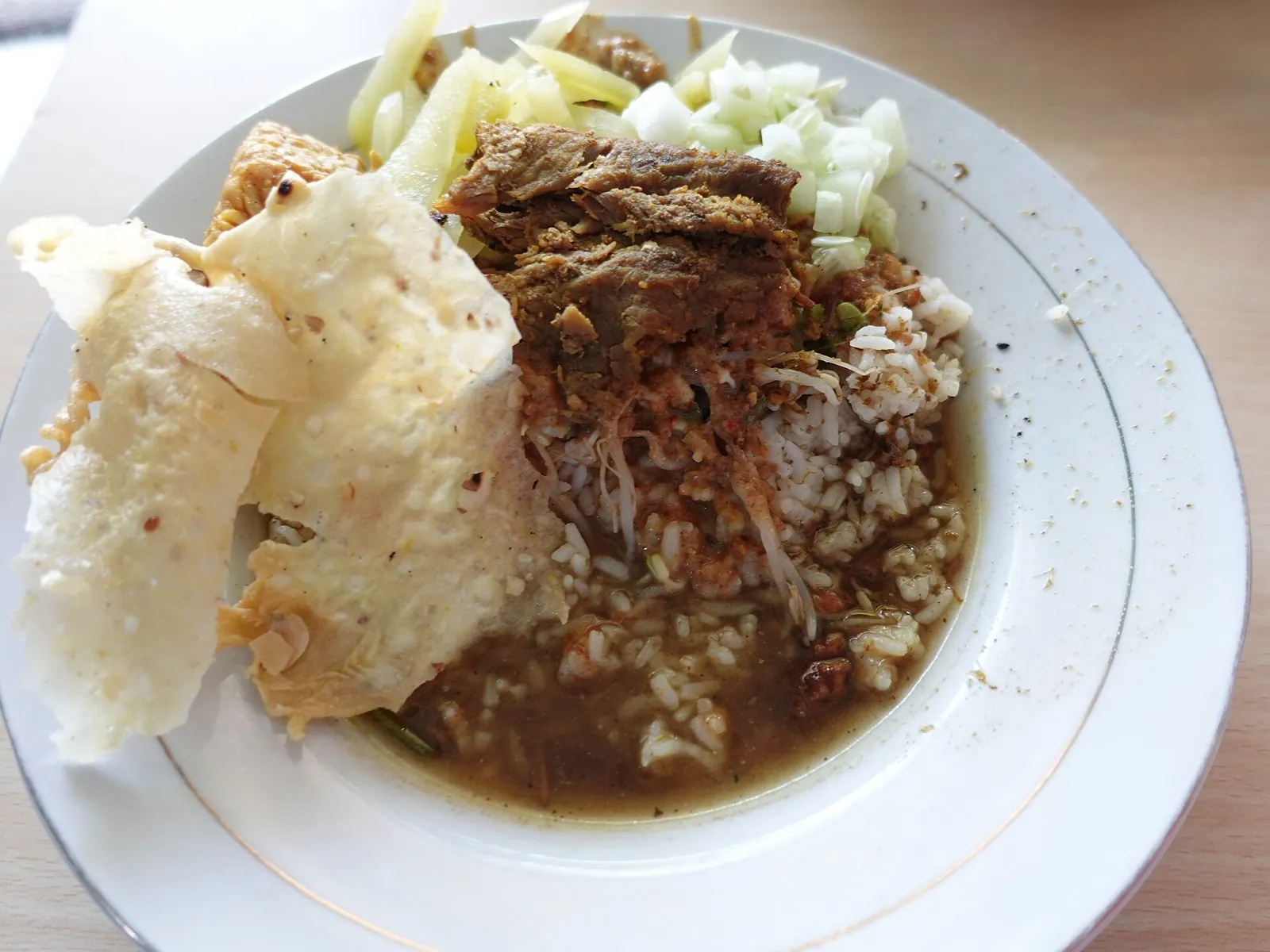
Vegetable pecel such as water spinach and long beans served under rawon, the black East Javanese beef broth that gets its colour and deep savoury flavour from kluwek nuts.
- Where to look
- Rumah makan (local restaurants) in Banyuwangi.
- Fit it into your day
- Dinner back in Banyuwangi on the evening before an Ijen night or a Bali ferry.
The rawon broth is made with beef.
Pindang koyong
A Banyuwangi fish soup in a refreshing yellow broth, usually made with fresh seafood and aromatic spices.
- Where to look
- Seafood warungs in Banyuwangi.
- Fit it into your day
- A lighter lunch or dinner on a hot day.
Fish soup with bones; check if you have a seafood allergy.
Kerupuk kepiting and rengginang ikan from Situbondo
Situbondo, the regency Baluran belongs to, is known for crab crackers and for rengginang made with sea fish. These are crisp snacks sold in local souvenir shops.
- Where to look
- Pusat oleh-oleh (souvenir food shops) in Situbondo town, on the coast road west of the park.
- Fit it into your day
- A snack to take with you for the savanna, or something to carry home if you continue west towards Bromo.
Made with crab or fish; shellfish allergies apply.
The route inside: Batangan, Bekol and Bama
The main tourist entrance is at Batangan, in Wonorejo village, on the Banyuwangi–Situbondo road at kilometre 35. From there a paved road runs through the forest towards the coast. The ministry gives the drive to Bekol as about 12 kilometres and around 45 minutes, and the distance from the entrance to the Bekol–Bama area as about 15 kilometres. It recommends a car with good clearance even though the road is asphalted. Inside the park, management also rents out trooper off-road vehicles, which the park suggests for the savanna and some routes.
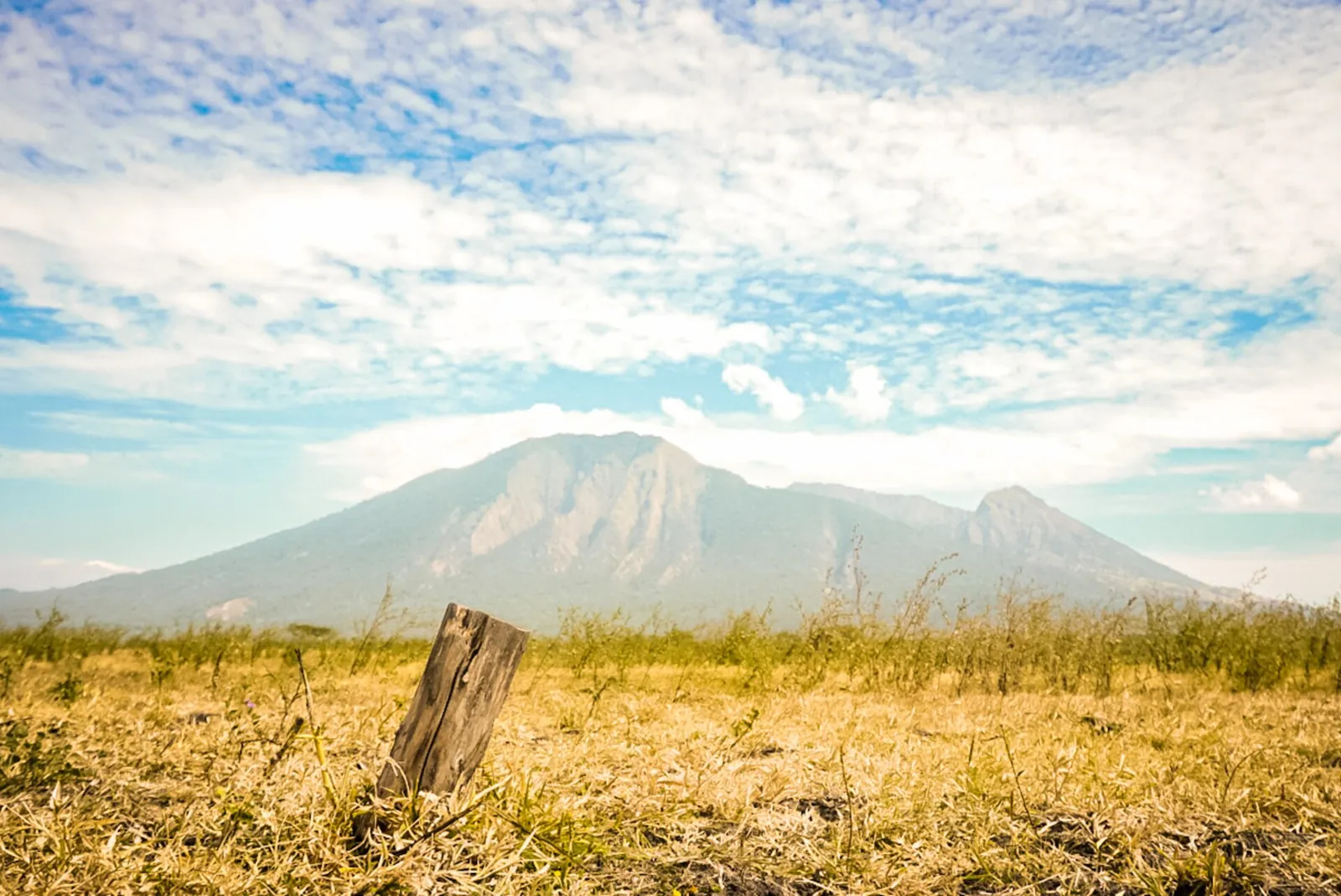
Bekol is the stop most people come for. The open savanna has the Baluran volcano behind it, and the park's map marks an observation tower (menara pandang) there as the best place to look out over the grassland and its animals. Scan the edges of the savanna and any water, and give yourself time rather than ticking it off from the car. The savanna is exposed, so the first hours after the 07:30 opening are also the most comfortable.
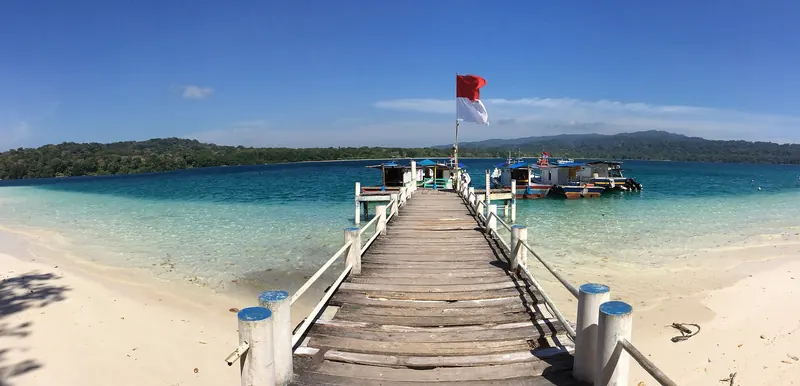
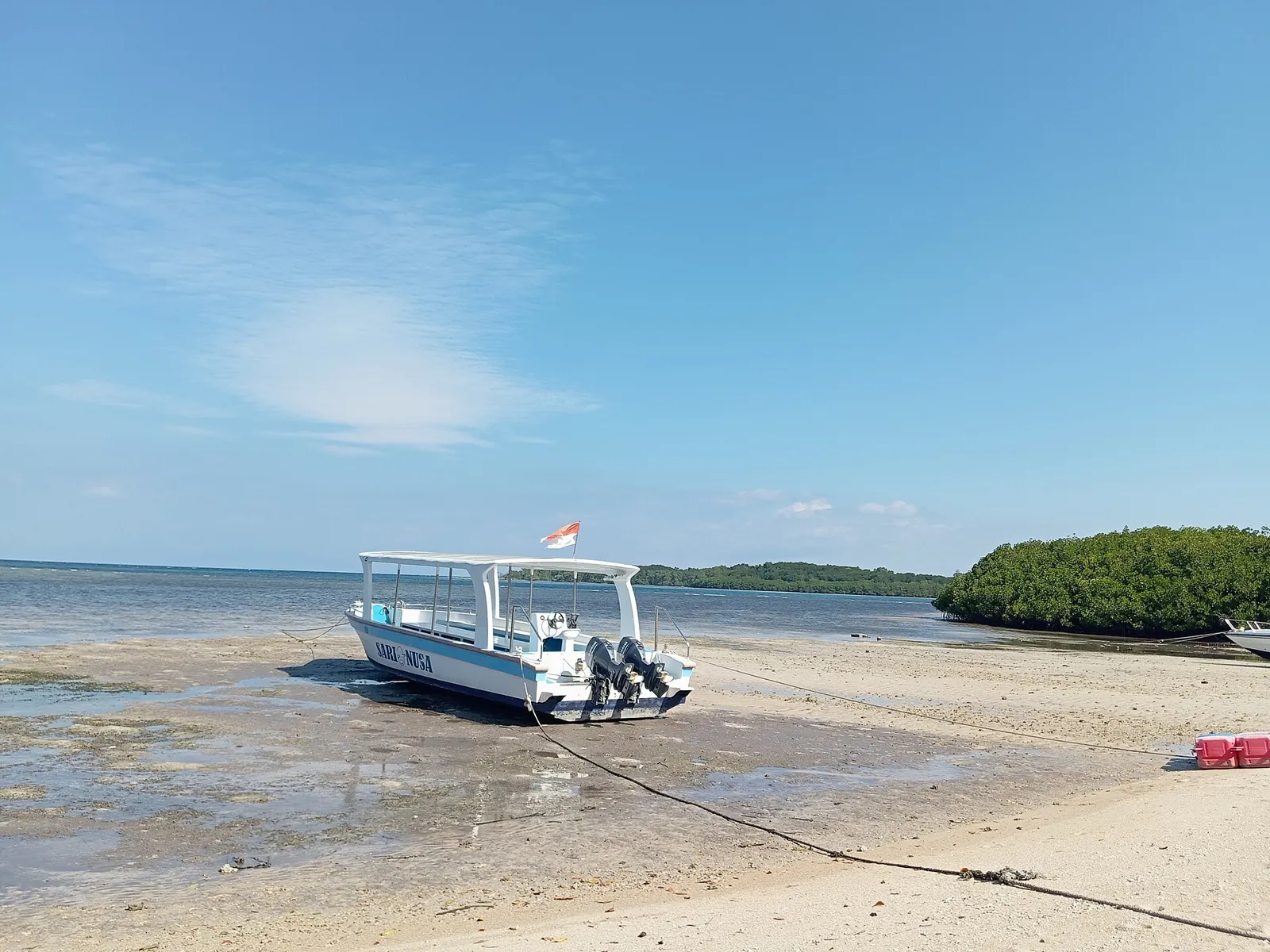
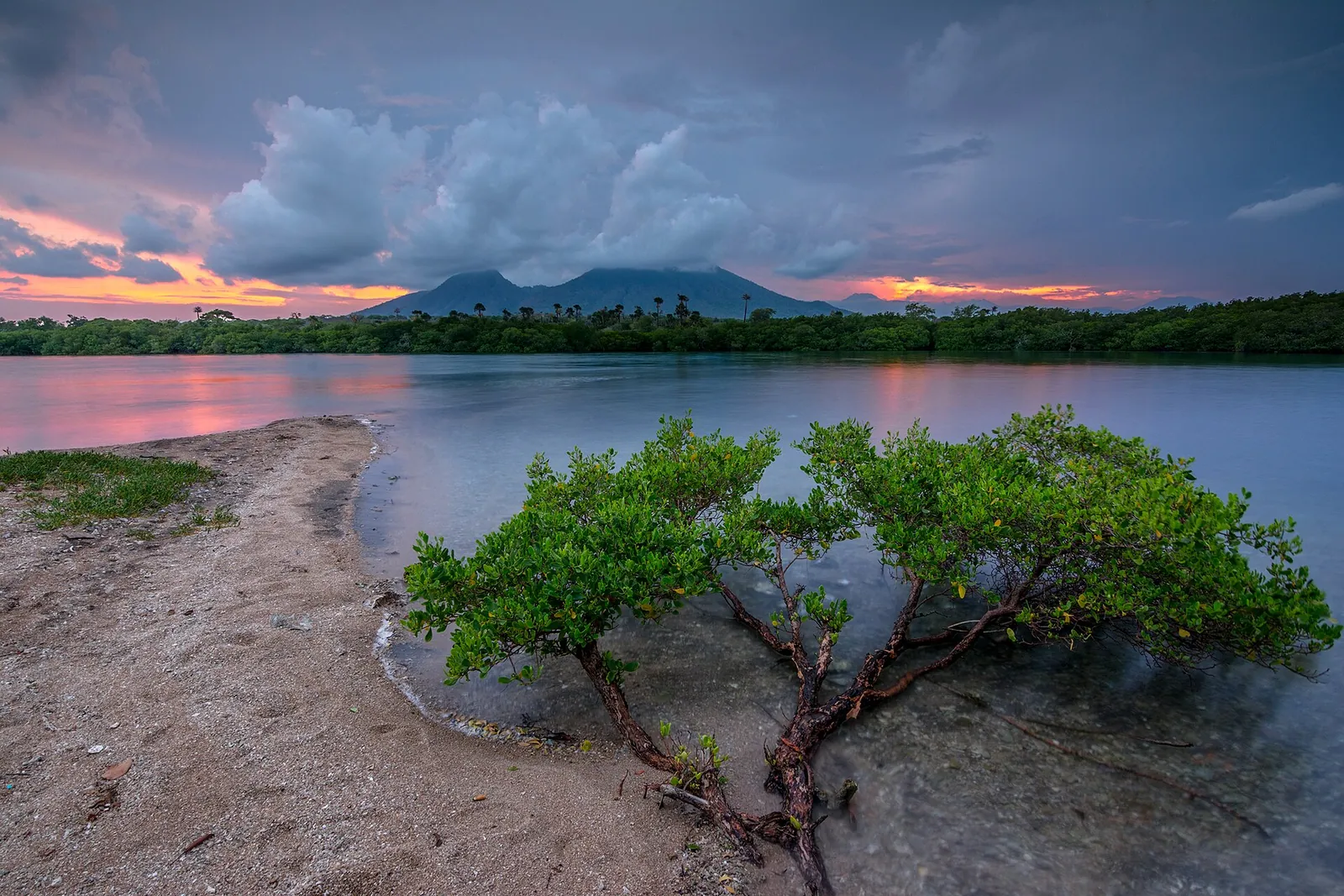
The route continues to Bama, a white-sand beach backed by mangroves, with trails and a boardwalk through the mangrove forest. Long-tailed macaques live along this coast and the forest edge. The park also lists Bilik–Sijile beach, for sunrise and snorkelling, and Perengan, a black-sand beach by a fishing settlement. Further sites named by the Situbondo regency include the evergreen forest, a Japanese cave, Talpat and Balanan. The park's website takes bookings for guided wildlife-watching with park guides and for beach camping. That is the way to go deeper than the main road.
Fitting Baluran around Ijen and the Bali ferry
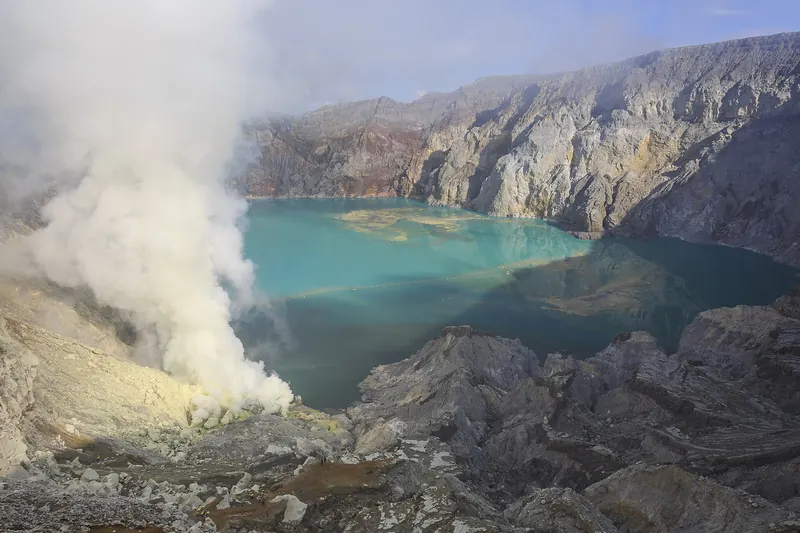
Baluran and Ijen share a road and a gateway town, which is why they pair so easily. The Ijen night hike starts at the Paltuding trailhead in the early hours (see our Ijen guide), so you are back down by mid-morning and in no state for another dawn start. There are two sensible ways to combine them.
Baluran first: sleep in Banyuwangi or at Wonorejo, be at the Batangan gate at 07:30, spend the morning at Bekol and Bama, and rest in the afternoon before the night drive to Ijen. This gives you the savanna at its best hour. Ijen first: do the hike, sleep the next night in Banyuwangi, and visit Baluran the following morning on the way north to Situbondo and Probolinggo, or as a morning out before the ferry. Either way, check the calendar: a Monday morning at Baluran is not an option.
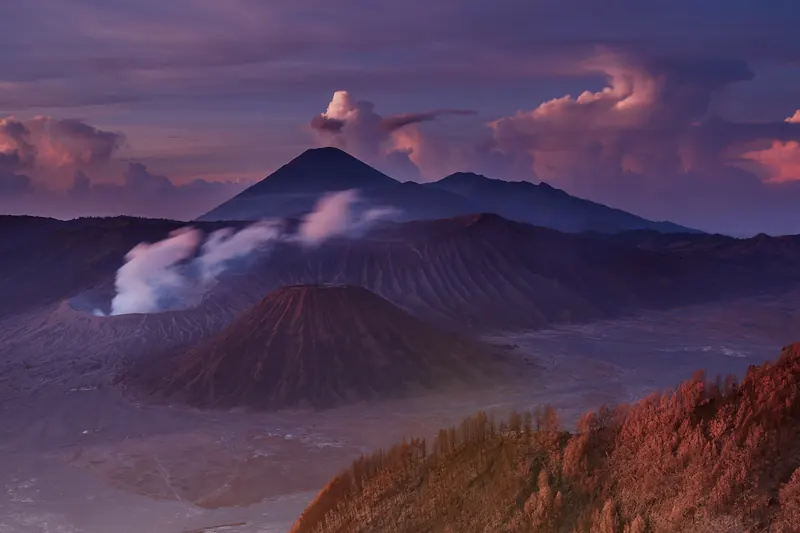
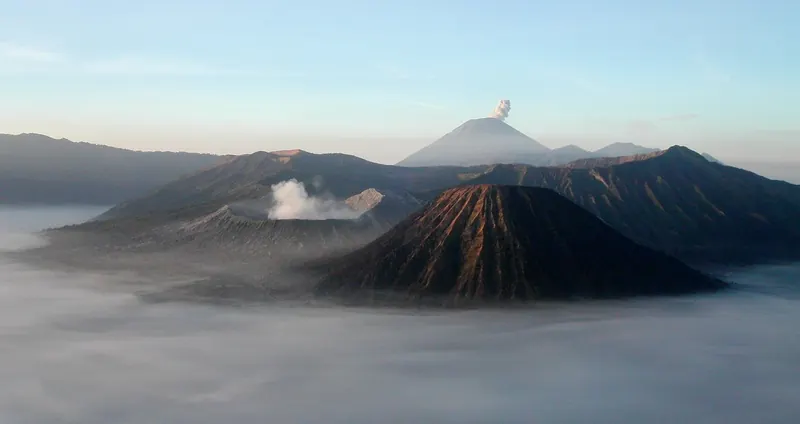
For Bali, the ministry describes the ferry from Ketapang port in Banyuwangi across to Gilimanuk on Bali's western tip. Pemuteran, on Bali's north-west coast, is the natural first stop on the other side. Heading west instead, Baluran sits on the coastal road towards Situbondo, Probolinggo and Mount Bromo.
- Day 1 — Banyuwangi: arrive by air, by train or by ferry from Bali; early night.
- Day 2 — Baluran: Batangan gate at opening time, Bekol savanna and the tower, Bama beach before midday; afternoon rest.
- Night 2 to Day 3 — Ijen: night drive to Paltuding, sunrise at the crater rim, back to Banyuwangi to sleep.
- Day 4 — onward: the Ketapang–Gilimanuk ferry to Bali, or west along the coast towards Bromo.
Fire, heat and doing it well
Fire is the park's biggest seasonal risk. The park reported that fires burned about 3,372 hectares between May and September 2026, peaking at 1,484.95 hectares in July. By September the area burned had fallen to 279.76 hectares. Closures for fire are announced at short notice, so check the park's website or social media on the day before you go, especially late in the dry season. Never leave a cigarette or any embers behind.
The savanna has little shade, and the park warns that mobile signal can be unreliable in parts of the park. Take water, a hat and sun protection, and keep the main part of the visit to the cooler morning hours. We could not confirm on an official page what food is on sale inside, so eat before you go and carry snacks. Keep food out of sight of the macaques at Bama. Keep your voice down on the savanna, as the park asks, and use a long lens rather than walking towards animals. That is better for the wildlife and gives you far more to see. The park's emergency number is (0333) 461650.
Practical questions
Is Baluran open on Mondays?
No. Since 1 December 2025 the park has closed every Monday, unless the Monday is a national holiday. It also closes on set days around public holidays and at short notice for fires or heavy rain. Check the park's website before you go.
How much is the Baluran entrance fee for foreigners?
When we checked on 3 October 2026, the park's official ticket page listed Rp 205,000 for foreign visitors on weekdays and holidays, plus Rp 10,000 to park a car. Tickets were sold only at the gate.
What time does Baluran open?
The park's website gave hours of 07:30 to 16:00 Western Indonesia Time when we checked, and said they can change. Arrive near opening time: the savanna has little shade, and the morning is the most comfortable part of the day.
Will I see banteng at Baluran?
Possibly, but not certainly. Timor deer are easy to find on the Bekol savanna, while banteng are more elusive and keep to the forest in the rainy season. The park takes bookings for guided wildlife-watching with its own guides, which is the best way to look for them.
Can I visit Baluran and Ijen on the same trip?
Yes, they are both reached from Banyuwangi. Do Baluran in the morning and rest before the Ijen night hike, or visit Baluran the morning after the hike, having slept in Banyuwangi in between.
Can I drive my own car or come by bus?
Cars and motorbikes can use the paved road to Bekol and Bama, and the ministry recommends a car with good clearance. Buses have been barred from the gates since November 2025, and visitors arriving by bus need another vehicle from the drop-off point.
Sources and checks before you travel
Reference sources for the version dated 3 October 2026. Confirm opening times, access, transport and conditions for your travel dates.
- Taman Nasional Baluran (official): ticket information ↗ — opens in a new tab
- Taman Nasional Baluran (official): FAQ ↗ — opens in a new tab
- Taman Nasional Baluran (official): location and access ↗ — opens in a new tab
- Taman Nasional Baluran (official): sights and wildlife ↗ — opens in a new tab
- Taman Nasional Baluran (official): accommodation ↗ — opens in a new tab
- Taman Nasional Baluran (official): rules and etiquette ↗ — opens in a new tab
- Taman Nasional Baluran (official): history ↗ — opens in a new tab
- Taman Nasional Baluran (official): announcements ↗ — opens in a new tab
- Balai TN Baluran: decree SK.9/2026, 2026 closure calendar (PDF) ↗ — opens in a new tab
- Taman Nasional Baluran (official): map ↗ — opens in a new tab
- Taman Nasional Baluran (official): forest fire area, September 2026 ↗ — opens in a new tab
- Indonesia Travel (Ministry of Tourism): Taman Nasional Baluran (Indonesian) ↗ — opens in a new tab
- Indonesia Travel: Baluran National Park ↗ — opens in a new tab
- Indonesia Travel: Banyuwangi ↗ — opens in a new tab
- Indonesia Travel: 13 Banyuwangi foods you must try ↗ — opens in a new tab
- Indonesia Travel: Situbondo sea-themed local products (Indonesian) ↗ — opens in a new tab
Does this experience fit your route?
Most visitors reach Baluran with a driver hired in Banyuwangi or on an Ijen trip. If you book a tour, make sure Baluran is actually in the itinerary and that the day is not a Monday.
Browse relevant experiences on Viator ↗ — opens in a new tabAffiliate link · Book with ViatorPhoto credits
The Bekol savanna in Baluran National Park, with the extinct Baluran volcano behind it
Photograph: Muhammad Farhan Atmawinanda — opens in a new tab · CC BY-SA 4.0 — opens in a new tab
Changes: Resized and converted to WebP; displayed with responsive crops. · Original photograph and licence details ↗ — opens in a new tab
Timor deer grazing on the Bekol savanna
Photograph: Candra Firmansyah — opens in a new tab · CC BY-SA 4.0 — opens in a new tab
Changes: Resized and converted to WebP; displayed with responsive crops. · Original photograph and licence details ↗ — opens in a new tab
A male green peafowl displaying in Baluran National Park
Photograph: Panji Gusti Akbar — opens in a new tab · CC BY-SA 4.0 — opens in a new tab
Changes: Resized and converted to WebP; displayed with responsive crops. · Original photograph and licence details ↗ — opens in a new tab
Bama beach, at the end of the park road, with its mangrove fringe
Photograph: Hurin saputri — opens in a new tab · CC BY-SA 4.0 — opens in a new tab
Changes: Resized and converted to WebP; displayed with responsive crops. · Original photograph and licence details ↗ — opens in a new tab
Bilik–Sijile beach in Baluran National Park at dusk
Photograph: Candra Firmansyah — opens in a new tab · CC BY-SA 4.0 — opens in a new tab
Changes: Resized and converted to WebP; displayed with responsive crops. · Original photograph and licence details ↗ — opens in a new tab
Nasi pecel with dendeng and rawon broth at a warung in Jember, East Java — the same pairing of pecel and rawon as Banyuwangi's pecel rawon
Photograph: Astari28 — opens in a new tab · CC BY 4.0 — opens in a new tab
Changes: Resized and converted to WebP; displayed with responsive crops. · Original photograph and licence details ↗ — opens in a new tab