Sulawesi · North Sulawesi
Tangkoko Nature Reserve: tarsiers, black macaques and a night in Batuputih
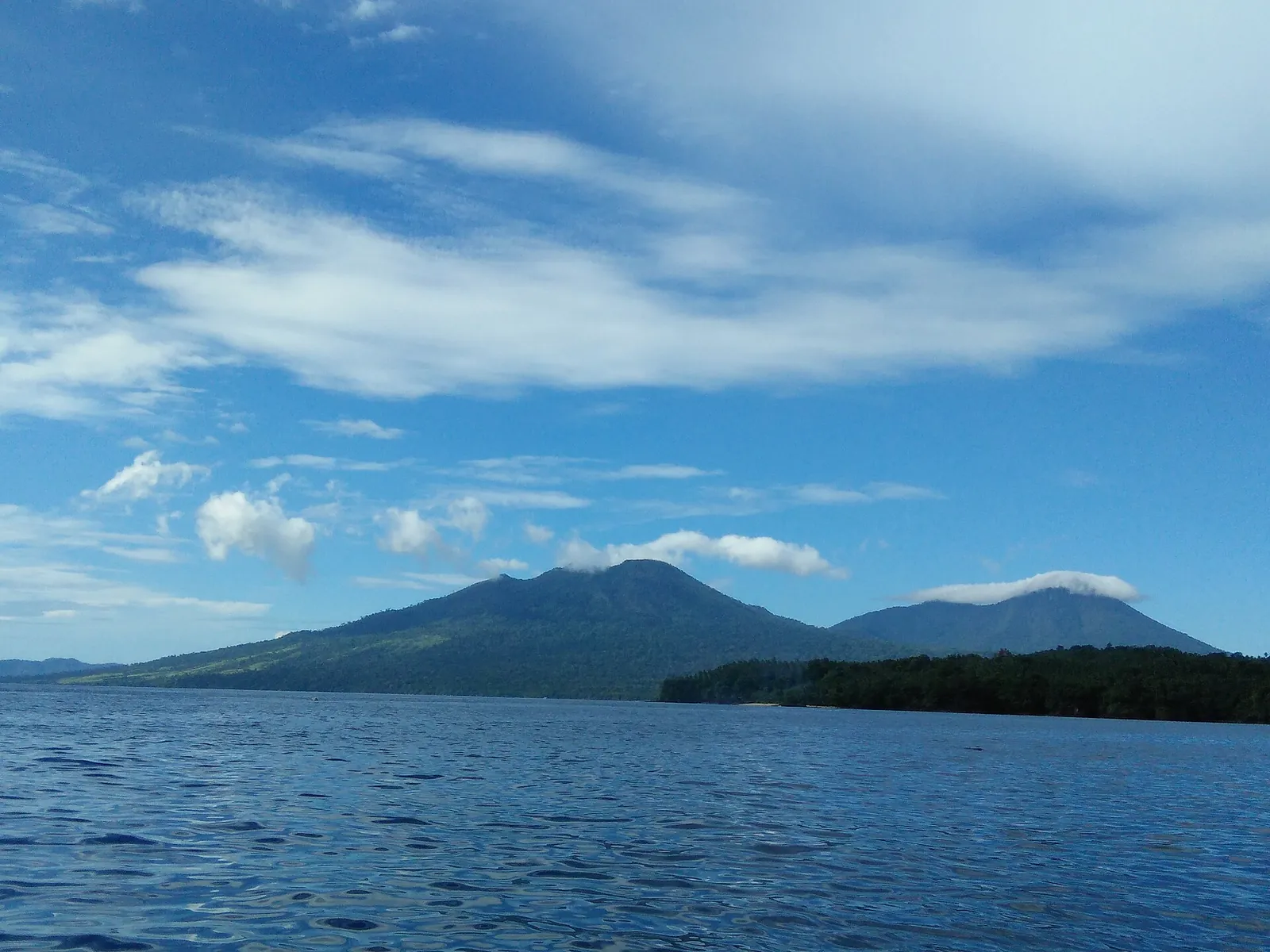
Tangkoko is the forest at the north-eastern tip of Sulawesi where two very different primates can be seen in the wild within a few hours of each other. Groups of crested black macaques, the yaki of North Sulawesi, forage on the forest floor and sometimes along the beach, while at dusk spectral tarsiers, small enough to fit in a fist, leave their roosting trees to hunt insects. The reserve runs up the slopes of Mount Tangkoko and Mount Duasaudara above the coast of Bitung, but visitors walk only in the Batuputih area by the village of the same name. That is where the guides, the guesthouses and almost every Tangkoko trip begin.
- Suggested time
- 1–2 nights
- Where to stay
- Batuputih village at the reserve edge; Bitung or the Lembeh Strait resorts if you only come for a walk
- Season and timing
- The Ministry of Tourism names May to October, the dry season, as the best time for outdoor trips around Manado. The wildlife is resident all year; whenever you go, pack shoes with grip and a rain layer.
The short answer
Give Tangkoko one night, two if you want a second chance at the wildlife or are keen on birds. Sleep in Batuputih village at the reserve edge: you arrive in the early afternoon, walk with a local guide into the evening for the tarsiers, and go out again at first light, when the macaques are most active, before heading back to Manado or on to Lembeh by late morning. The easiest way there is a hired car with driver from Manado or from Sam Ratulangi airport (MDC); the drive takes around two hours. Combine it with Bunaken for reefs and the Lembeh Strait for muck diving.
Stay a night in Batuputih rather than visit on a day trip
The key to Tangkoko is timing. The tarsiers are nocturnal: the Ministry of Tourism notes that they can be seen only at night, and that a local guide helps you watch them quietly as they emerge from their nests in the evening. The macaques are early risers, and Wikivoyage describes a morning walk as the best chance for birds and for the troops as they search for food along the coast. A day trip from Manado can fit the dusk walk, but it means driving back in the dark and skipping the morning.
Batuputih, the village at the reserve entrance, is where overnight visitors sleep. Wikivoyage lists simple guesthouses (losmen) and says most overnight guests eat where they stay because eating options nearby are limited. The Ministry of Tourism names Tangkoko Lodge, Tangkoko Hill and Tangkoko Guesthouse as options, though we have not checked any of them ourselves. Expect simple rooms, and plan to eat where you sleep.
Mobile signal is patchy. When Wikivoyage was last updated, only the Telkomsel network worked here and guesthouses offered Wi-Fi through a mobile hotspot, so download maps and confirm your pick-up for the next day before you arrive.
The dusk walk: finding the tarsiers
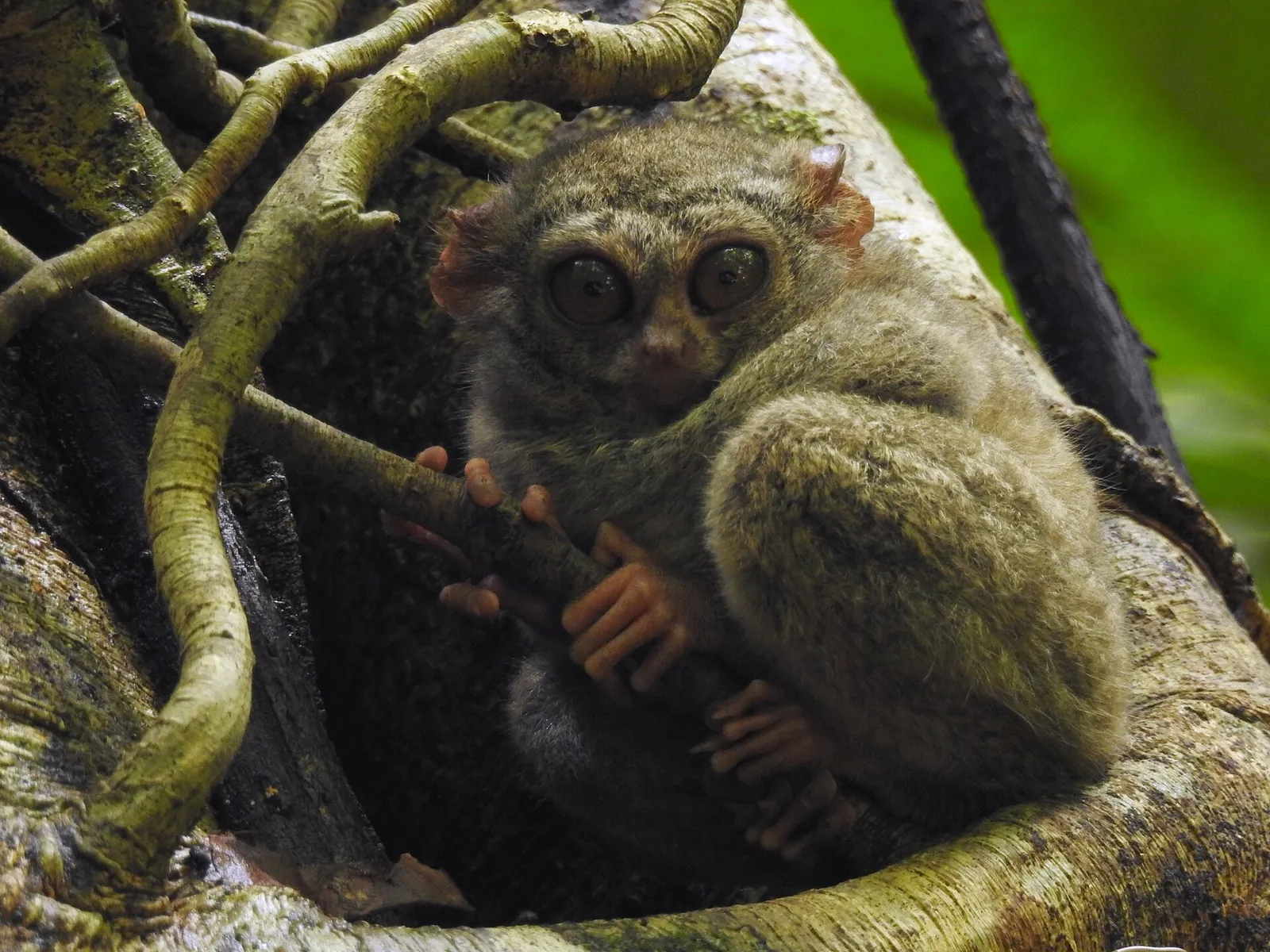
Tarsiers are, in the ministry's words, among the smallest primates in the world, only about the size of a fist, and known locally as tangkasi. Its Bitung page says they grow to only 10 to 15 centimetres, weigh around 80 grams, eat grasshoppers and other insects, and can leap about three metres between branches. Their enormous eyes are built for the dark, which is also why they are sensitive to light.
The usual pattern is an afternoon walk that ends at a roosting tree as the light fades, then a wait while the animals wake and move off to hunt. Wikivoyage reminds visitors to let the guide handle the torch, never to shine a light into the animals' eyes and never to use a flash. If your camera cannot manage without flash, enjoy the moment instead of photographing it. Carry your own headlamp with a red or dimmable setting for the walk out of the forest after dark.
Wikivoyage also warns that guiding is not well regulated and that some guides break the reserve's rules, for example by using too many torches, feeding animals or waking the tarsiers in the afternoon. Agree the plan before you start, say clearly that you do not want any of that, and do not tip a guide who does it.
Make time for the local food
What to eat and where to look
Guesthouse dinners in Batuputih
Simple home cooking at your guesthouse. Wikivoyage notes that options in the village are limited and pricier than in Manado, so most overnight guests eat at their accommodation.
- Where to look
- Your guesthouse in Batuputih; ask when you book whether dinner and an early breakfast are included.
- Fit it into your day
- Dinner after the dusk walk and a quick breakfast or coffee before or after the dawn walk.
Mention vegetarian or other dietary needs when you book, as the kitchen may only shop for what it expects to serve.
Cakalang fufu (smoked skipjack tuna)
Skipjack tuna smoked on a frame, eaten with rice and often with garo bunga pepaya, papaya flower buds stir-fried with chilli. The Ministry of Tourism says the best cakalang fufu is found around the port of Bitung, which you pass on the way to Tangkoko.
- Where to look
- Manadonese restaurants and food stalls in Bitung, and Bitung's markets, where Wikivoyage mentions fresh and smoked fish for sale.
- Fit it into your day
- Lunch in Bitung on the drive to Batuputih or on the way back towards Lembeh.
The papaya flower side dish is deliberately bitter and usually spicy.
Rica-rica
The signature Manado chilli treatment: fresh chilli, tomato, shallots, garlic and ginger cooked in coconut oil with lime leaf and lemongrass, spread over grilled chicken, fish or tuna. Ayam rica-rica and tuna rica-rica are the classics, according to the Ministry of Tourism.
- Where to look
- Seafood and Manadonese restaurants in Bitung and Manado; the ministry also points to the restaurants along Manado's Boulevard.
- Fit it into your day
- A sit-down dinner in Bitung or Manado on the night before or after Tangkoko.
Very hot. The ministry notes that many Manado dishes are milder, with chilli served on the side, so ask before ordering. Pork is common in Bitung, Wikivoyage notes, so ask if you need halal food.
Panada and nasi jaha
Two snacks that travel well on a long drive: panada, fried bread pockets filled with spicy tuna floss, and nasi jaha, sticky rice with ginger, coconut milk and lemongrass cooked in bamboo tubes, as the Ministry of Tourism describes them.
- Where to look
- Bakeries, cake shops and snack stalls in Manado and Bitung.
- Fit it into your day
- Buy them in town before you drive to Batuputih, for the long gap between the afternoon walk and dinner.
Both contain fish (tuna floss); nasi jaha is sliced and often served with it. Do not eat in the forest or near the macaques.
The morning walk: crested black macaques and hornbills
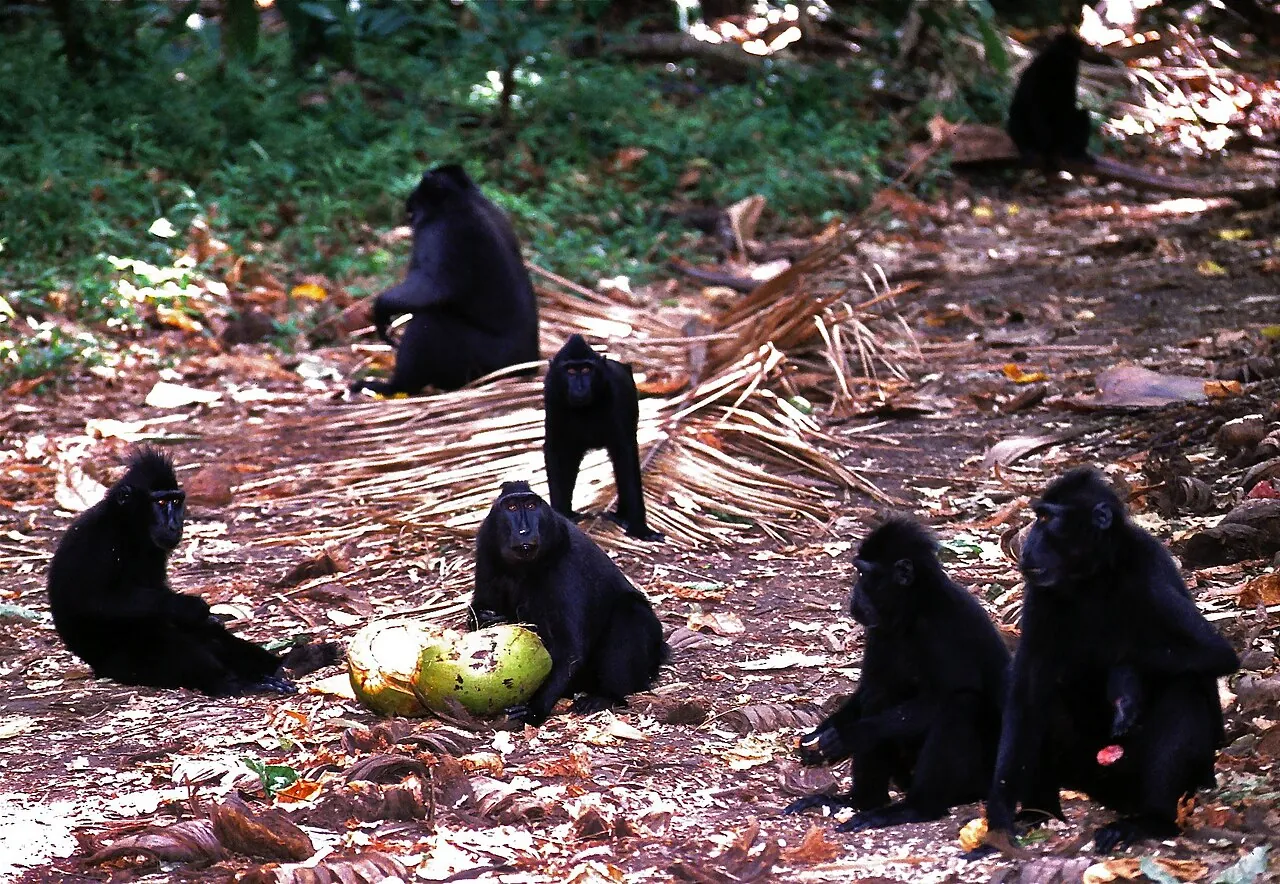
The crested black macaque (Macaca nigra) is found only in North Sulawesi, as the Ministry of Tourism points out. It lives in large social groups that move mostly on the ground, so you watch them grooming, playing and squabbling at eye level rather than craning up into the canopy. The Macaca Nigra Project, a research and conservation programme that has worked in Tangkoko since 2006, calls the species critically endangered and says its numbers have fallen by more than 75 per cent in the last 30 years, mainly through habitat loss and hunting for meat.
Keep the distance your guide asks for, do not feed the macaques and keep food and bags closed. The project reports macaques regularly ranging outside the reserve into gardens and yards in Batuputih, so human food is a real problem for them, not a harmless treat.
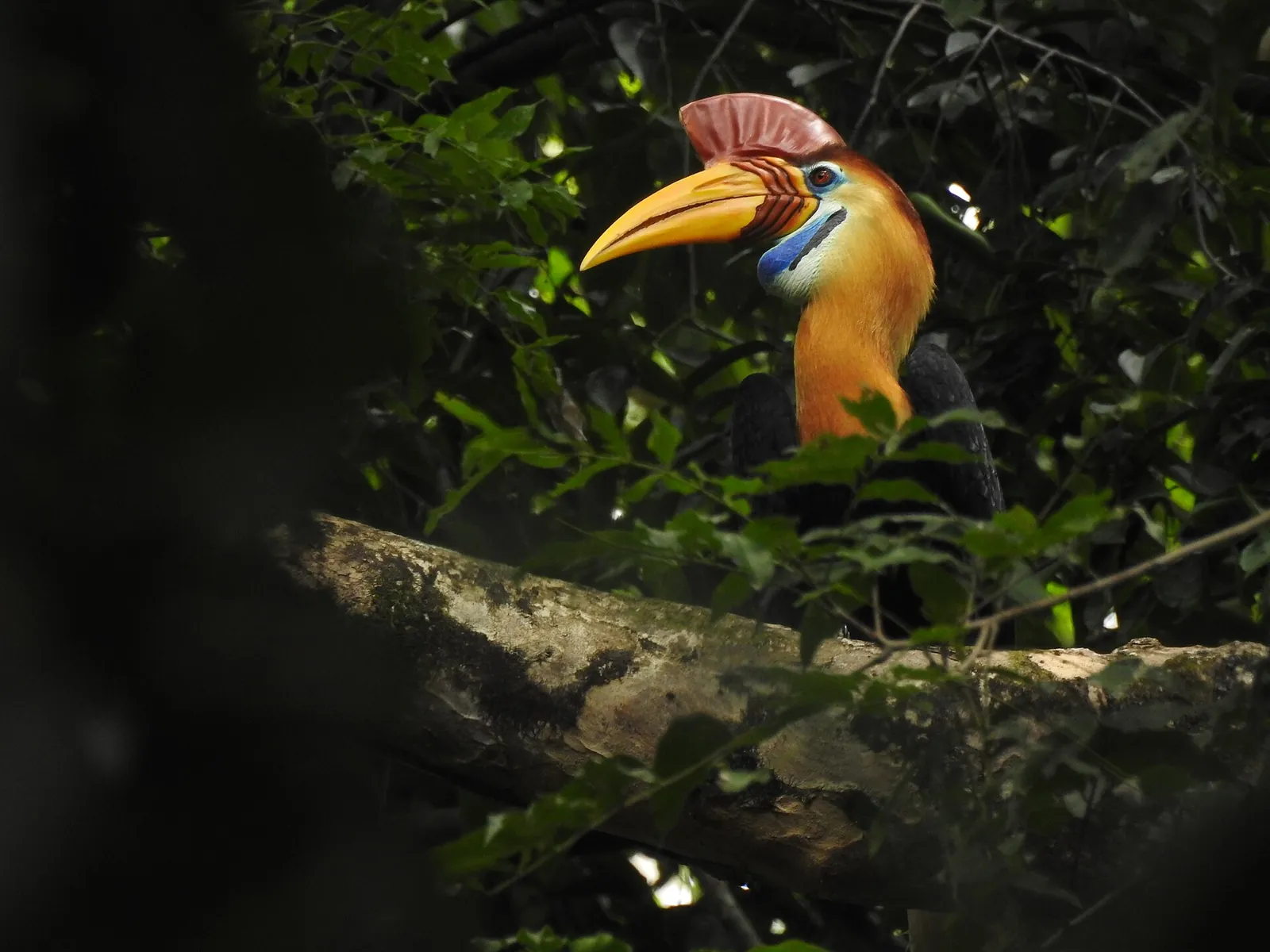
The same walks are good for birds. The ministry lists hornbills and maleo among the reserve's wildlife, and Wikipedia names the knobbed hornbill, the Sulawesi hornbill and several kingfishers. The maleo is the hardest to see: ANTARA reports that Rumesung in the Tangkoko conservation area is the only active maleo nesting ground left in the Minahasa and Bitung area, protected by the North Sulawesi conservation agency with the help of local villagers. Cuscus, the tree-dwelling marsupials, are a matter of luck, as the ministry notes.
Guides, the entrance fee and what to bring
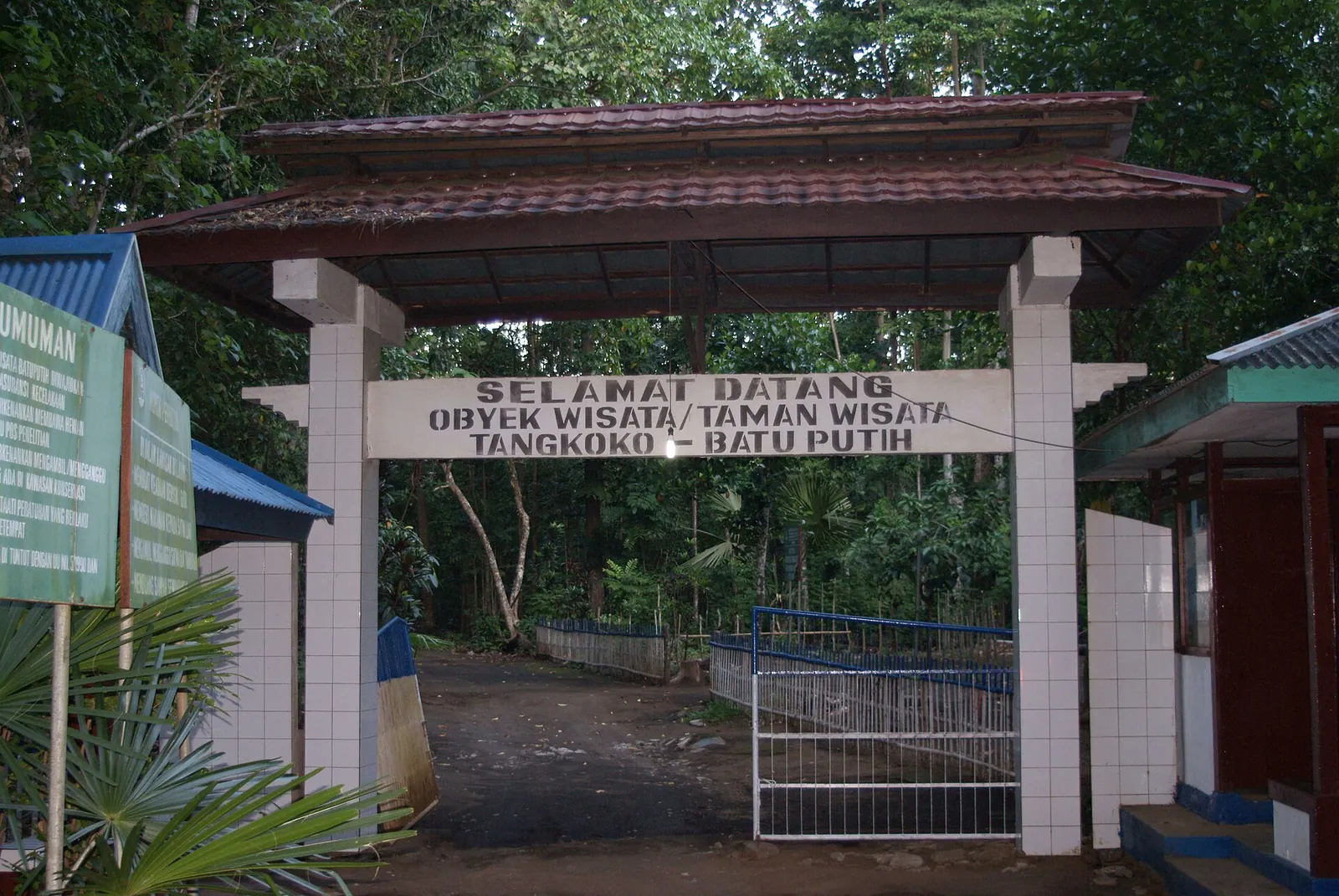
Tangkoko is a nature reserve managed by the North Sulawesi Natural Resources Conservation Agency (BKSDA Sulut). Visitors are allowed only in the Batuputih area, and the Ministry of Tourism presents visits as guided tours. Guides and rangers are found in Batuputih, and guesthouses and Manado tour operators can arrange them in advance.
When we checked on 2026-10-03, the Ministry of Tourism's Tangkoko page listed both the admission fee and the opening hours as unknown. Wikivoyage quotes an entrance fee for foreigners and separate per-person guide charges that vary by morning or afternoon walk and are higher on Sundays, but its figures are undated, so we do not repeat them. Ask your guesthouse or driver for the current entrance and guide charges, confirm whether the guide fee is per person or per group, and carry cash in small notes.
Bring closed shoes with good grip, long trousers against mosquitoes and ants, insect repellent, a headlamp, water and a light rain layer. Much of a walk is spent waiting quietly while the guide searches, so patience matters as much as fitness.
Getting there from Manado and the airport
The reserve is in North Bitung District, and the Ministry of Tourism gives its address as Jalan Desa Batu Putih, Bitung Utara. Its Tangkoko pages put the drive from Manado at about an hour to Bitung plus another 45 minutes on winding roads to Batuputih, while its Manado guide simply says about two hours. Allow two hours, more in Manado traffic.
A hired car with driver is the practical choice, and the ministry recommends it for Tangkoko. It also lets you stop in Bitung on the way. Public transport is possible but slow: Wikivoyage describes a bus or angkot from Manado's Paal Dua terminal towards Bitung, then a change onto an open pick-up for Batuputih, and warns that getting back out is just as fiddly. If you go this way, ask your guesthouse to arrange the return.
From Sam Ratulangi airport, which lies north-east of Manado, you do not need to go into the city first: drivers can take you straight towards Bitung and Batuputih, so an early flight can connect with an afternoon walk the same day.
Combine Tangkoko with Lembeh and Bunaken
Tangkoko fits neatly into a North Sulawesi trip because it sits on the same side of the peninsula as the Lembeh Strait. The Ministry of Tourism describes the strait as a narrow channel between the mainland and Lembeh Island, known for muck diving with nudibranchs, frogfish, mimic octopus and flamboyant cuttlefish, and says boats from the Pateten pier in Bitung reach Lembeh Island in about 15 minutes. A Lembeh resort stay before or after a Batuputih night saves you a return trip to Manado.
On the other side, Bunaken off Manado is the place for wall diving and snorkelling. A balanced route is a first night in Manado or straight to Batuputih from the airport, one night at Tangkoko, two or three nights at Lembeh or Bunaken, and a last day in Manado for food and a trip to the Tomohon highlands.
If you are in Bitung in early October, the Ministry of Tourism lists the Festival Pesona Selat Lembeh 2026 for 3 to 11 October 2026, with a decorated boat parade in the strait, cultural performances and rowing and swimming competitions.
Practical questions
Can I visit Tangkoko as a day trip from Manado?
Yes, but it is a long day. The drive takes around two hours each way, and the tarsiers appear only at dusk, so you return in the dark and miss the morning walk, which is best for the macaques. A night in Batuputih gives you both.
When is the best time of day to see tarsiers and macaques?
Tarsiers at dusk, when they leave their sleeping trees to hunt. Crested black macaques are active from early morning. Most guides plan an afternoon walk that ends with the tarsiers and a dawn walk the next day.
Do I need a guide at Tangkoko?
Yes. Visits are guided, and guides and rangers in Batuputih know where the macaque troops and tarsier trees are. Agree the plan and the charge in advance, and ask whether it is per person or per group.
How much is the Tangkoko entrance fee?
When we checked on 2026-10-03, the Ministry of Tourism's page listed the admission fee as unknown, and we could not find a current official figure. Ask your guesthouse or guide for the current entrance and guide charges and carry cash.
Can I photograph the tarsiers with flash?
No. Tarsiers are nocturnal and very sensitive to light. Let the guide handle the torch, never point a light into their eyes and switch off your flash.
Is the crested black macaque endangered?
Yes. The Macaca Nigra Project, which has studied the species in Tangkoko since 2006, describes it as critically endangered after a fall of more than 75 per cent in 30 years. Do not feed the macaques and keep your distance.
Sources and checks before you travel
Reference sources for the version dated 3 October 2026. Confirm opening times, access, transport and conditions for your travel dates.
- Indonesia Travel (Ministry of Tourism): Tangkoko Nature Reserve ↗ — opens in a new tab
- Indonesia Travel (Ministry of Tourism): Tangkoko: habitat of tarsiers, macaques, maleos and cuscus ↗ — opens in a new tab
- Indonesia Travel (Ministry of Tourism): The tarsius, icon of Bitung ↗ — opens in a new tab
- Indonesia Travel (Ministry of Tourism): Exciting experiences in and around Manado ↗ — opens in a new tab
- Indonesia Travel (Ministry of Tourism): Eight natural places around Manado ↗ — opens in a new tab
- Indonesia Travel (Ministry of Tourism): The Lembeh Strait ↗ — opens in a new tab
- Indonesia Travel (Ministry of Tourism): Festival Pesona Selat Lembeh 2026 ↗ — opens in a new tab
- Indonesia Travel (Ministry of Tourism): Deliciously hot Manado foods ↗ — opens in a new tab
- Indonesia Travel (Ministry of Tourism): Manado ↗ — opens in a new tab
- Indonesia Travel (Ministry of Tourism): Photographing endemic wildlife of North Sulawesi ↗ — opens in a new tab
- Macaca Nigra Project ↗ — opens in a new tab
- Macaca Nigra Project: conservation ↗ — opens in a new tab
- ANTARA Sulawesi Utara: maleo conservation in Tangkoko ↗ — opens in a new tab
- Wikipedia: Tangkoko Batuangus Nature Reserve ↗ — opens in a new tab
- Wikivoyage: Tangkoko Nature Reserve ↗ — opens in a new tab
- Wikivoyage: Bitung ↗ — opens in a new tab
Does this experience fit your route?
Compare actual activities, departure points, programmes and guide languages before choosing an experience.
Browse relevant experiences on Viator ↗ — opens in a new tabAffiliate link · Book with ViatorPhoto credits
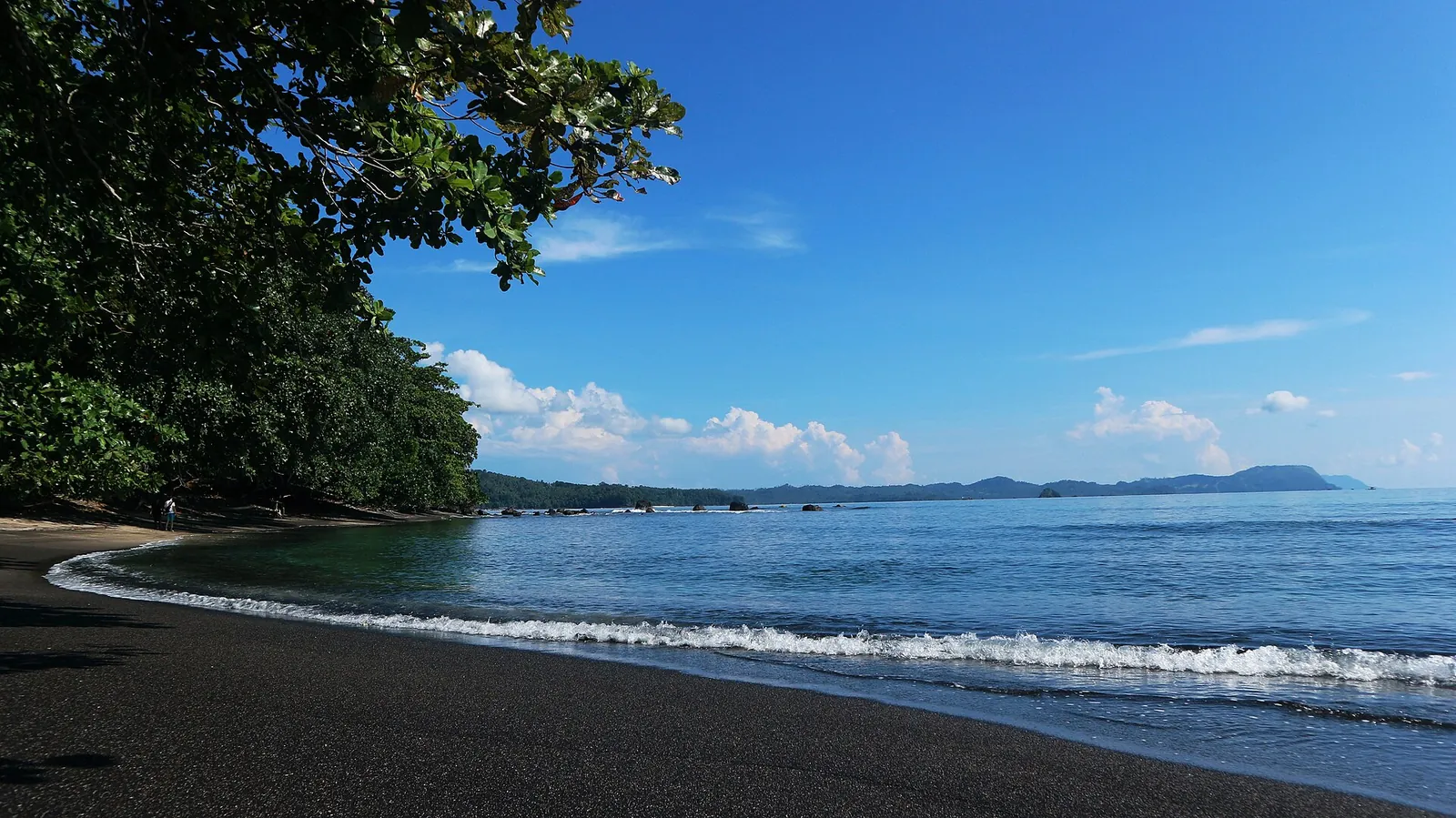
Batuputih beach at the edge of the Tangkoko reserve, where the coastal forest meets the Molucca Sea
Photograph: R.Rahasia — opens in a new tab · CC BY-SA 4.0 — opens in a new tab
Changes: Resized and converted to WebP; displayed with responsive crops. · Original photograph and licence details ↗ — opens in a new tab
A spectral tarsier at its roosting strangler fig in Tangkoko Nature Reserve; guides know these trees and wait here at dusk
Photograph: T. R. Shankar Raman — opens in a new tab · CC BY-SA 3.0 — opens in a new tab
Changes: Resized and converted to WebP; displayed with responsive crops. · Original photograph and licence details ↗ — opens in a new tab
Crested black macaques, the yaki of North Sulawesi, foraging on the ground in Tangkoko
Photograph: Bernard DUPONT from FRANCE — opens in a new tab · CC BY-SA 2.0 — opens in a new tab
Changes: Resized and converted to WebP; displayed with responsive crops. · Original photograph and licence details ↗ — opens in a new tab
A male knobbed hornbill in Tangkoko Nature Reserve, one of the birds of the morning walk
Photograph: T. R. Shankar Raman — opens in a new tab · CC BY-SA 3.0 — opens in a new tab
Changes: Resized and converted to WebP; displayed with responsive crops. · Original photograph and licence details ↗ — opens in a new tab
Mount Tangkoko (left) and the twin peak of Duasaudara (right), the mountains of the reserve, seen from the sea
Photograph: T. R. Shankar Raman — opens in a new tab · CC BY-SA 3.0 — opens in a new tab
Changes: Resized and converted to WebP; displayed with responsive crops. · Original photograph and licence details ↗ — opens in a new tab
The main gate at Batuputih, where walks into the Tangkoko reserve begin
Photograph: Sakurai Midori — opens in a new tab · CC BY 2.5 — opens in a new tab
Changes: Resized and converted to WebP; displayed with responsive crops. · Original photograph and licence details ↗ — opens in a new tab