Itineraries · Sulawesi
Sulawesi in 12 days: Makassar, Toraja, Tangkoko and Bunaken
Sulawesi is two trips joined by a flight. In the south, Makassar is the gateway to the limestone towers of Rammang-Rammang and, a long day's drive north, the Toraja highlands, with their carved tongkonan houses, cliff graves and funeral ceremonies. In the north, Manado is the base for the tarsiers and black macaques of Tangkoko and for the coral walls of Bunaken. The roads between the two halves are far too long for a 12-day trip, so this route flies Makassar to Manado and spends the saved days where they count: a full three days in Toraja, a night at the edge of the forest for Tangkoko, and three nights on Bunaken. The Togean Islands in Central Sulawesi are possible too, but only if you can add about a week.
- Suggested time
- 12 days (11 nights)
- Where to stay
- Makassar (2 nights), Rammang-Rammang (1), Rantepao (4), Batuputih at Tangkoko (1), Bunaken Island (3)
- Season and timing
- The Ministry of Tourism gives April to October as the dry season and November to March as the wet season in most of Indonesia, but warns of regional variation. Its Sulawesi pages narrow this down: May to September for calm seas and island trips off Makassar, and May to October for sunny weather and clearer water around Manado and Bunaken. In the wet months, keep a spare half day for delayed boats and flights.
The short answer
Fly into Makassar (UPG) and out of Manado (MDC). Spend night 1 by Losari Beach in Makassar and night 2 in a Rammang-Rammang homestay, then drive north to Toraja and sleep four nights in Rantepao, which gives you three full days on the ground. On day 7, return to Makassar by road or by a flight from Toraja Airport where one is scheduled; on day 8, fly to Manado and go straight on to Batuputih village for the dusk tarsier walk. After the dawn macaque walk on day 9, cross to Bunaken for three nights of diving or snorkelling and take the boat back for your flight on day 12. Hire a car with driver for the Makassar–Toraja leg and for Tangkoko. To add the Togean Islands, allow about six more days and travel overland from Toraja to Ampana.
How the route fits together, and where to sleep
Sulawesi is a long, many-armed island, and the two halves of this trip are a flight apart. The Ministry of Tourism lists daily flights to Manado from Makassar, so the easiest plan is an open-jaw ticket: arrive in Makassar, leave from Manado. Done in the opposite direction it works just as well; reverse the days.
Make as few hotel changes as you can. Makassar is the base for the first night and the night before the flight north; sleep near Losari Beach on the old waterfront, where Fort Rotterdam and the sunset promenade are on foot. In Rammang-Rammang the village homestays are the point: the morning mist over the karst is gone by the time day-trippers arrive. In Toraja, sleep four nights in Rantepao, which the ministry calls the tourism and accommodation centre of the highlands, rather than moving around. In the north, one night in Batuputih, the village at the gate of Tangkoko, and three on Bunaken island itself.
The route has two long road days, Rammang-Rammang to Toraja and Toraja back to Makassar, and one day built around a flight. Treat them as travel days. The time you save by not crossing the island by road is spent in Toraja, where three full days is the minimum that makes the journey worthwhile.
Days 1–2: Makassar and the Rammang-Rammang karst
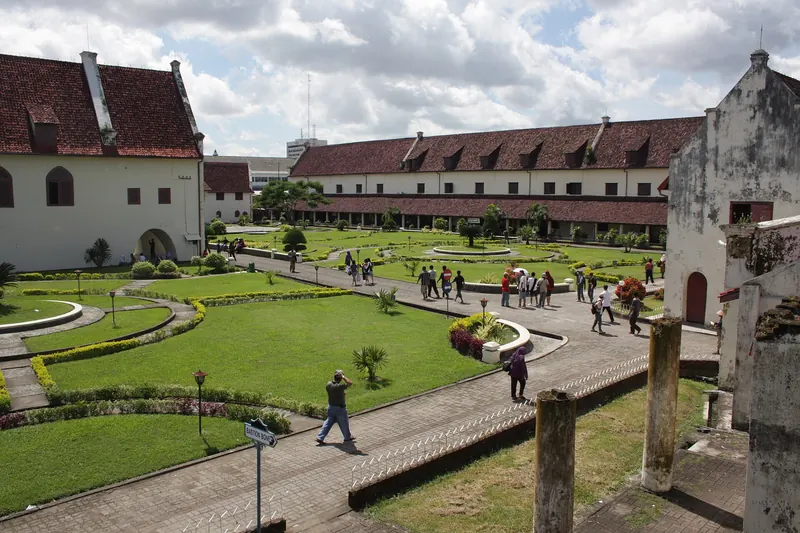
Day 1. Makassar's Sultan Hasanuddin airport is about 20 km from Fort Rotterdam, which the Ministry of Tourism puts at 30 to 40 minutes by airport taxi or a Gojek or Grab car, depending on traffic. When we checked on 2026-10-03, a ministry guide gave the fort's hours as daily from 8am to 5pm, with tickets usually between Rp10,000 and Rp20,000 depending on the visitor category. Spend the late afternoon inside its walls, then walk to Losari for sunset and a bowl of coto Makassar for dinner.
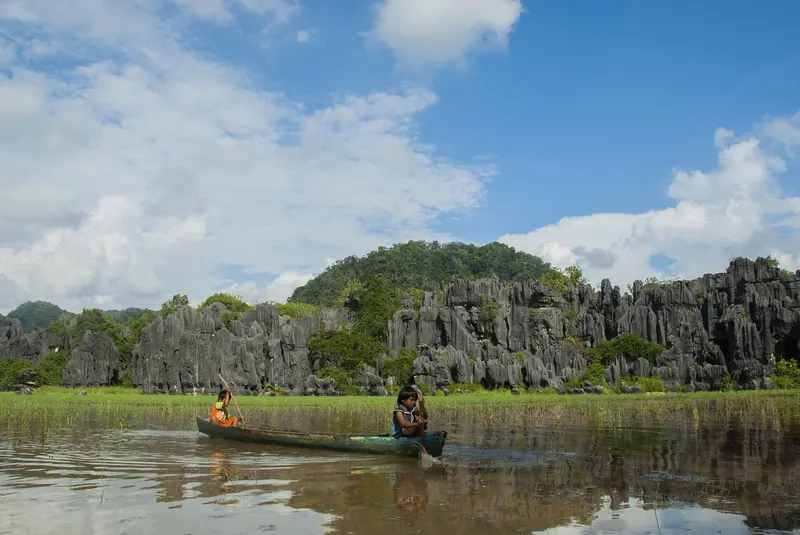
Day 2. Leave early for Rammang-Rammang in Maros Regency, which the ministry puts 32 km, about an hour, from the airport. Narrow boats called jolloro leave from Dermaga 1 or Dermaga 2 and follow the river between nipah palms and karst towers to Kampung Berua, a farming hamlet ringed by cliffs. Walk the paddy dikes to the Kingkong stone, about ten minutes from the jetty, where red prehistoric hand stencils are still visible, or climb to the Padang Ammarung viewpoint. Agree the boat price, stops and waiting time before you set off.
In the afternoon follow Maros Regency's own one-day circuit: the Leang-Leang archaeological park and its cave art, about 6 km from Rammang-Rammang, and the waterfall at Bantimurung, about 7 km further. Then go back and sleep in the village. The name rammang-rammang means cloud or mist in Makassarese, and the ministry calls the morning, when mist still lies over the valley, the favourite time for photographs. If you would rather have a conventional hotel, the regency suggests the one at Bantimurung.
Make time for the local food
What to eat and where to look
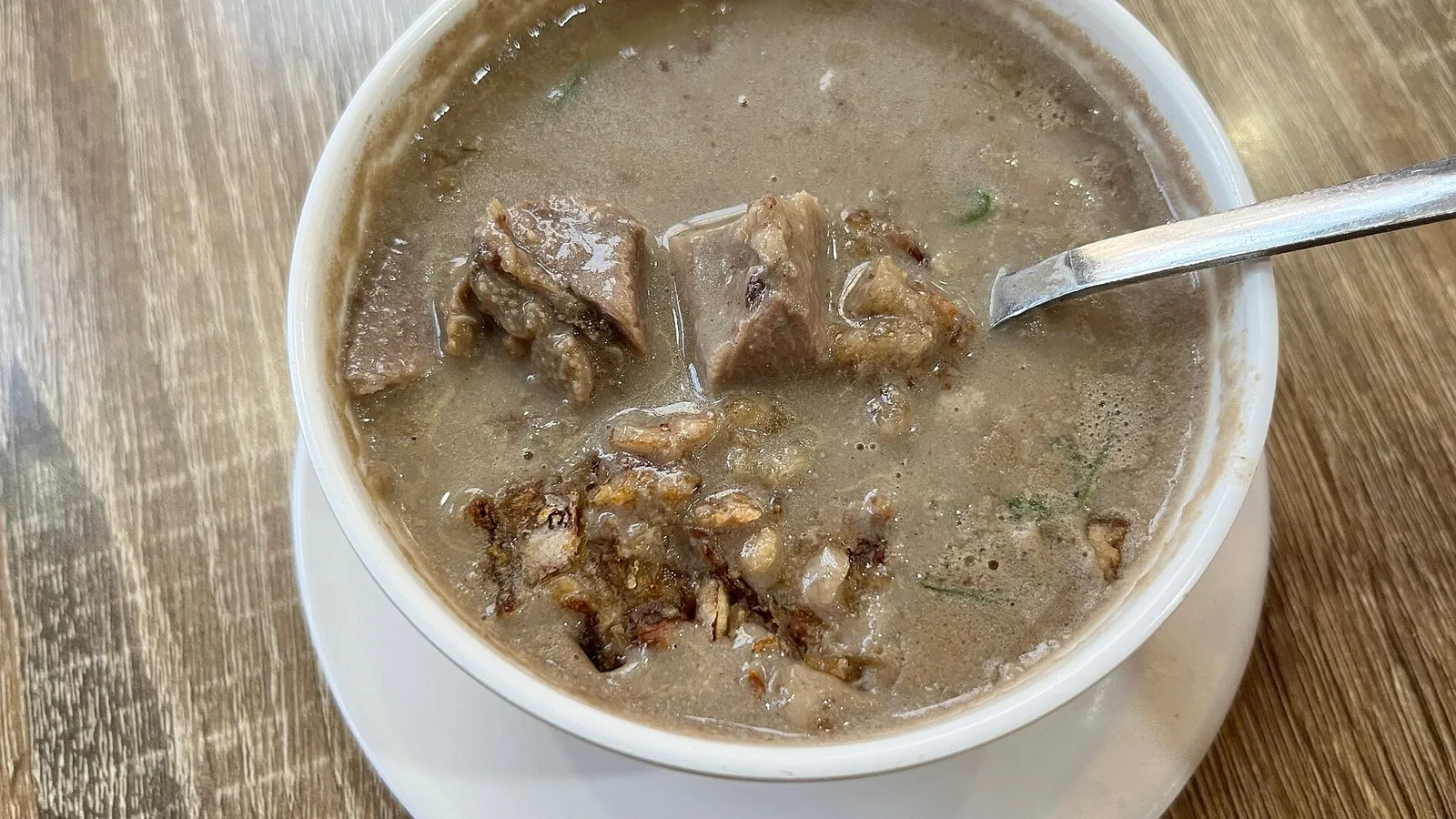
Coto Makassar
Makassar's signature soup of beef and offal stewed with dozens of spices; the Ministry of Tourism says some people link the 40 spices to the unity of the Makassarese people.
- Where to look
- Coto shops across Makassar, from the waterfront to the inland districts.
- Fit it into your day
- Dinner on day 1 or day 7, the two nights you spend in the city.
Usually includes offal; ask for meat only if you prefer.
Pa'piong
Meat of various kinds, or rice, cooked with seasonings inside a length of bamboo, which the ministry calls one of Toraja's iconic dishes.
- Where to look
- Local eateries in Rantepao; some cook it to order.
- Fit it into your day
- Lunch on a Toraja day after the grave sites; order ahead if needed.
Often pork, which is central to Toraja feasts; ask which meat is inside.
Kopi Toraja
Coffee grown in the Toraja highlands at about 1,200 to 1,800 metres; the ministry describes a full-bodied, earthy cup with notes of dark chocolate and spice.
- Where to look
- Cafés and warungs in Rantepao, and the coffee stops at Gunung Nona on the drive up.
- Fit it into your day
- Morning coffee before a highland day, and beans to take home.
Ask whether sugar is added before it is served if you want to taste the coffee on its own.
Tinutuan (bubur Manado)
A vegetarian porridge of rice cooked with pumpkin, sweet potato, cassava, corn and greens, Manado's breakfast icon, served with tomato sambal, ricaroa chilli sauce and salted fish.
- Where to look
- The row of stalls on Jalan Wakeke in Manado, which the ministry recommends.
- Fit it into your day
- Breakfast on day 12 before the flight.
The porridge is vegetarian, but the sambal roa and salted fish served with it are not.
Rica-rica and cakalang fufu
Rica-rica is Manado's chilli, tomato, ginger and lemongrass sauce, spread over grilled fish, chicken or meat; cakalang fufu is smoked skipjack tuna, which the ministry says is best around the port of Bitung, near Tangkoko.
- Where to look
- Restaurants along the Boulevard in Manado, and simple eateries on the road through Bitung.
- Fit it into your day
- Lunch in Bitung on day 8 on the way to Batuputih, or dinner in Manado.
Rica-rica means spicy and hot in the local language, and it is; ask which meat is in a dish if you avoid pork.
Days 3–6: four nights in the Toraja highlands
Day 3 is the drive north. Toraja is about 300 km from Makassar; the ministry gives 8 to 10 hours by night bus, so by car with stops expect most of the day. A car with driver is what makes this route work: you start from Maros rather than from central Makassar, and you can stop at Gunung Nona in Enrekang, which the ministry describes as a favourite break for coffee and the view, about two hours before Toraja. Arrive in Rantepao before dark.
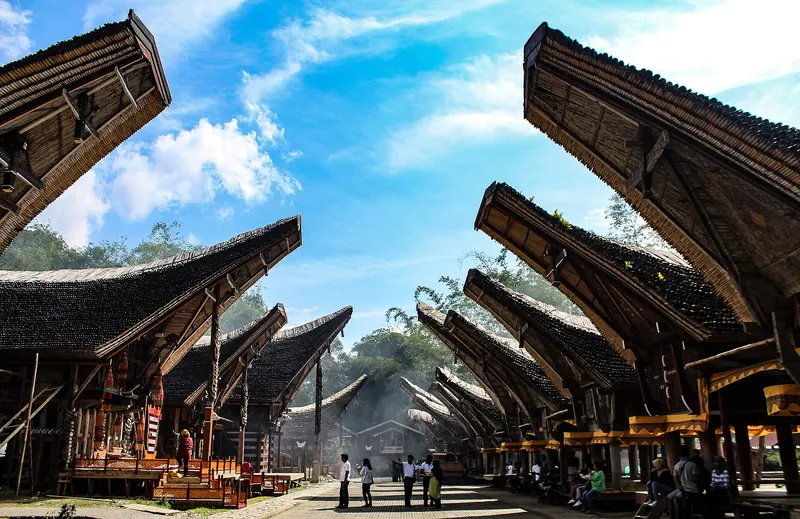
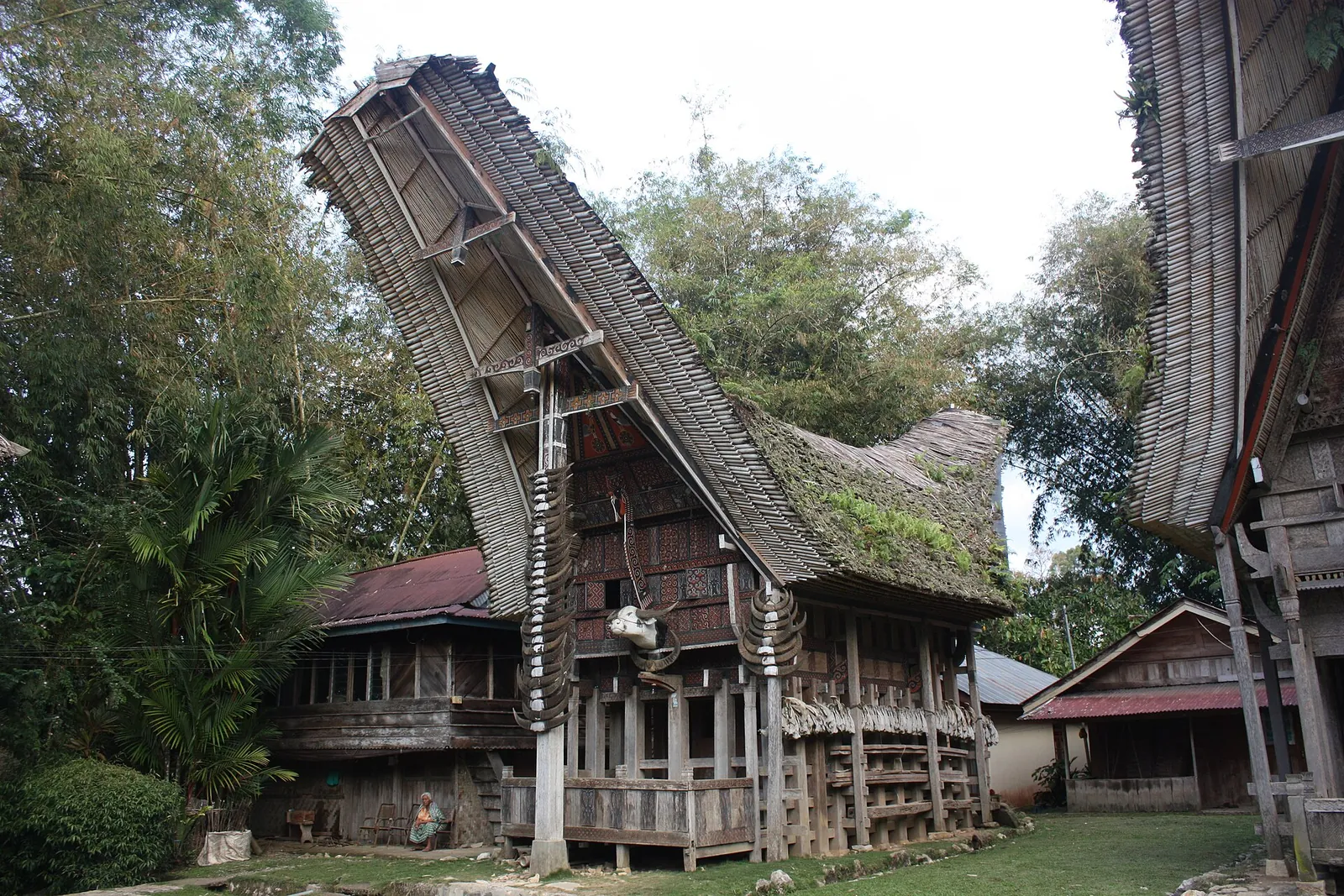
Days 4 to 6 are the three full days. Hire a local guide, who explains what you are seeing and is your introduction at villages and ceremonies. A sensible split is one day for the tongkonan houses of Ke'te Kesu' and the graves at Londa, a burial cave about 7 km south of Rantepao, and Lemo, where coffins sit in chambers cut into the cliff; one day for the uplands at Palawa and Batutumonga, which the ministry recommends at sunrise, when the view can sit above the clouds; and one day kept free.
Keep that day for a Rambu Solo' funeral if your guide can confirm that a family will welcome visitors. The ministry describes ceremonies that last days or even weeks, with buffalo and pigs sacrificed; they are private family events with no public schedule, so do not plan around a date you have read online. If there is no ceremony, use the day for the buffalo market, which the ministry says runs once every six days, so ask in Rantepao which day it falls. At Londa, follow the rule the ministry spells out: do not move or take any bones, skulls or objects. Our Tana Toraja guide has the detail on each site.
Day 7: back to Makassar
There are two ways down. The road is the reliable one: 8 to 10 hours, according to the ministry, by day with your driver or on a night bus from Rantepao (if you take the night bus, leave on the evening of day 6 and you gain a day in Makassar). The quicker one is the air: the ministry's current Toraja article says several local airlines fly direct between Toraja Airport (TRT) at Mengkendek and Makassar, with 30 to 45 minutes by road from the airport to Rantepao. Services are limited and change, so check the current schedule before you plan on it, and keep the road as the fallback.
Sleep near Losari again, and use a short evening for the waterfront and a seafood dinner. Do not try to connect the Toraja road and the flight to Manado on the same day: one late arrival from the highlands is enough to miss it.
Days 8–9: fly to Manado for the tarsiers of Tangkoko
Day 8. Take a morning flight to Manado's Sam Ratulangi airport and go straight to Batuputih, the village at the edge of the Tangkoko Nature Reserve. The ministry puts Tangkoko about two hours from Manado, or about an hour to Bitung and a further 45 minutes on winding roads, and recommends a car with driver. A morning flight gets you there for an afternoon walk with a local guide that ends at dusk, when the tarsiers, fist-sized and nocturnal, which locals call tangkasi, leave their roosting trees. Let the guide handle the light, and never use a flash.
Day 9. Go out again at first light, when the crested black macaques, found only in North Sulawesi, are on the move in large groups on the forest floor. Do not feed them and keep bags closed. By late morning drive back towards Manado's harbour. When we checked on 2026-10-03, the ministry's Bunaken page said the public boat leaves Manado daily around 2pm, depending on the tide, and leaves from a different spot, near Pasar Jengki, on Sundays; most island resorts also send their own boat. Either way, you sleep on Bunaken tonight.
The ministry's Tangkoko page listed both the entrance fee and the opening hours as unknown when we checked, so ask your guesthouse for the current entrance and guide charges and carry cash. Rooms in Batuputih are simple, and you will usually eat where you sleep.
Days 10–12: Bunaken's walls, then the flight home
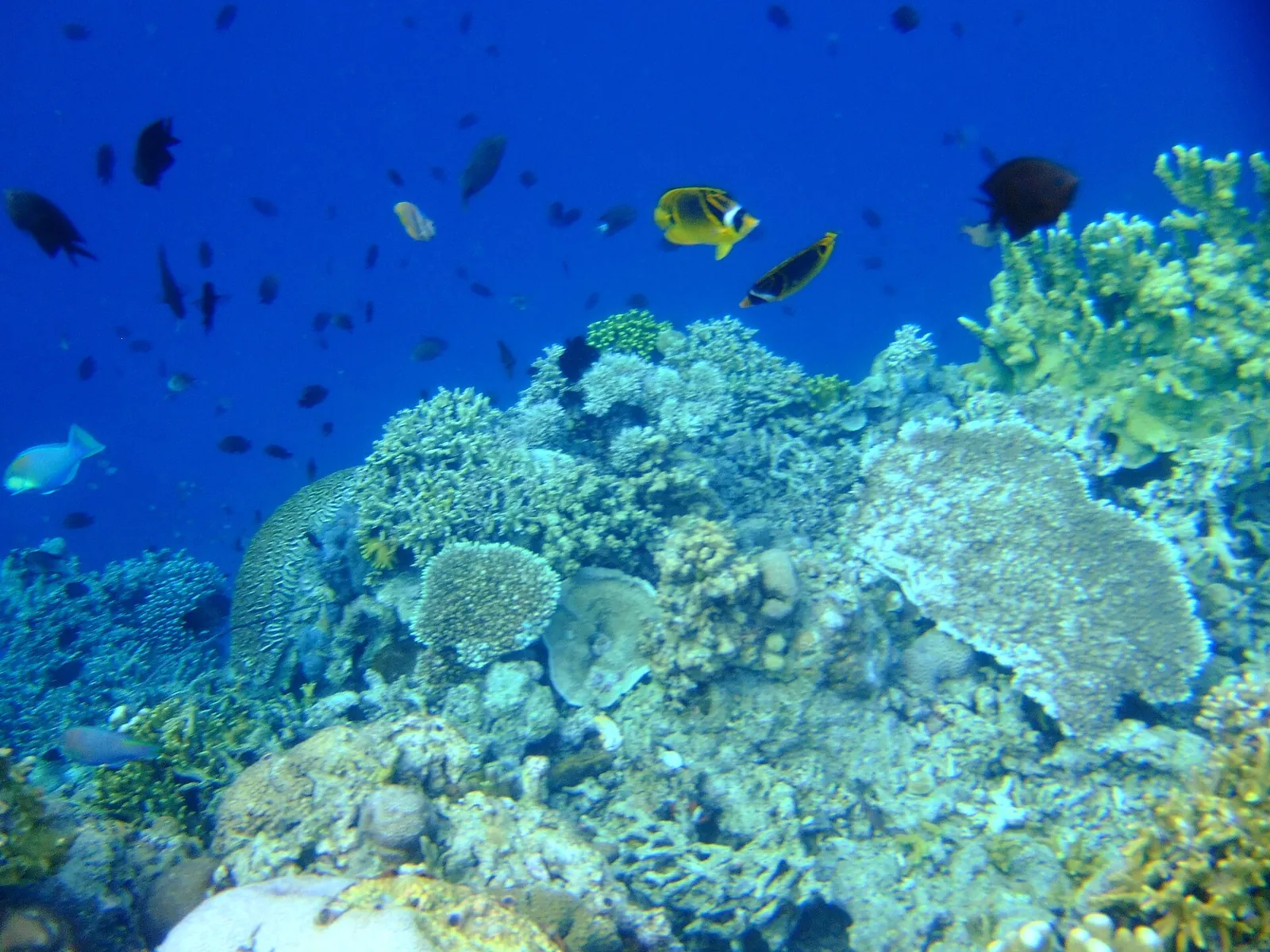
Bunaken is in the Bay of Manado, around 40 minutes by boat according to the ministry. Its reef walls drop 25 to 50 metres, marked with crevices, sea fans and giant sponges, while the shallows above them, in the ministry's words, are filled with fish, so snorkellers see plenty too. Book diving through your resort or a dive centre on the island, and ask about group size and currents. Every visitor pays the park entrance fee: when we checked on 2026-10-03, ANTARA quoted the head of the national park office as saying that foreign visitors pay Rp150,000 per person per day, multiplied by the days you stay inside the park. Ask whether your resort has already included it.
Plan your dives around the flight home. Do your last dive on day 10 and keep day 11 for snorkelling, a kayak or Manado itself; your dive centre will tell you how long it wants you to wait before flying. On day 12, the ministry says the public boat back to Manado usually leaves Bunaken early, around 7 to 8am. If you have time before the flight, the ministry points to Jalan Wakeke in Manado for its row of stalls serving tinutuan, the city's vegetable porridge, as a farewell breakfast.
The twelve days at a glance
This is an editorial suggestion, not a timetable. Check flights, boats and park notices before each move.
- Day 1 — Makassar: land at UPG, Fort Rotterdam in the late afternoon, sunset at Losari. Night: Makassar (Losari).
- Day 2 — Rammang-Rammang: jolloro boat to Kampung Berua, walks, Leang-Leang and Bantimurung in the afternoon. Night: Rammang-Rammang homestay.
- Day 3 — To Toraja: mist over the karst, then the long drive north with a stop at Gunung Nona. Night: Rantepao.
- Days 4–6 — Toraja: Ke'te Kesu', Londa and Lemo; Palawa and Batutumonga; a ceremony or the buffalo market. Nights: Rantepao.
- Day 7 — Back to Makassar: by road, or by air from Toraja Airport where scheduled. Night: Makassar.
- Day 8 — To Tangkoko: morning flight to Manado, drive to Batuputih, dusk tarsier walk. Night: Batuputih.
- Day 9 — To Bunaken: dawn macaque walk, back to Manado harbour, afternoon boat. Night: Bunaken.
- Days 10–11 — Bunaken: diving or snorkelling on day 10, snorkelling only on day 11. Nights: Bunaken.
- Day 12 — Home: early boat to Manado, breakfast on Jalan Wakeke, fly out of MDC.
With extra time: the Togean Islands
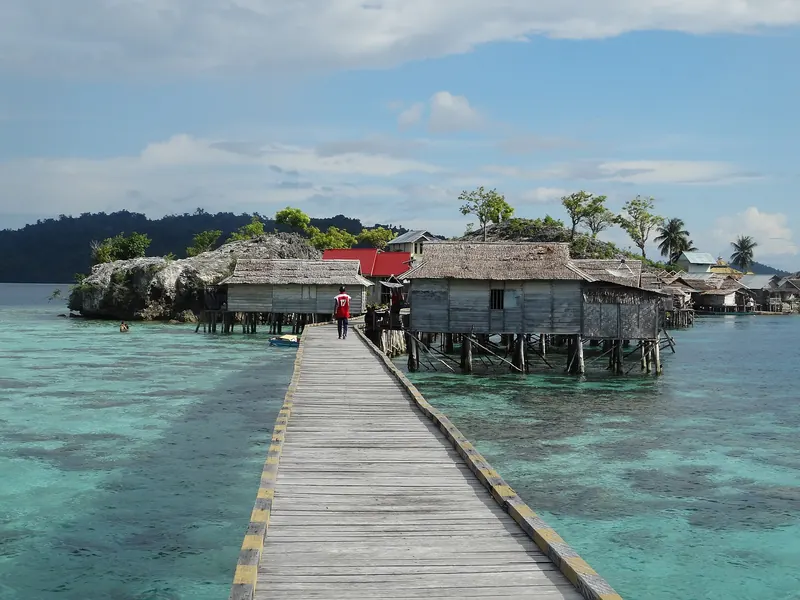
The Togean Islands in the Gulf of Tomini sit between the two halves of this route, which is exactly why they need their own week. The ministry describes the route from Rantepao via Mangkutana, Pendolo, Tentena and Poso to the port of Ampana, about 14 hours by car, followed by a boat of about four hours to Wakai and Malenge. The islands themselves deserve at least four or five nights: there are no roads between them, and lodgings send boats to meet the ferry.
Leaving the islands, a slow public ferry links Wakai with Gorontalo; the ministry says it runs twice a week, and Wikivoyage puts the overnight crossing at about 13 hours. From Gorontalo, Wikivoyage lists regional flights to Manado and daily buses that take most of a day, so you can rejoin this route at day 8. Ferry days change and the sources disagree with one another, so ask your Togean lodging for the current boats before you commit. Bring all the cash you need: Wikivoyage warns there are no ATMs on the islands. In all, the detour adds about six days, turning this into a trip of 18 days or more; see our Togean Islands guide before deciding.
Practical questions
Is 12 days enough for Sulawesi?
It is enough for the south and the north if you fly between them: Makassar, Rammang-Rammang and three full days in Toraja, then Tangkoko and Bunaken around Manado. It is not enough to add Central Sulawesi or the Togean Islands, which need about six more days.
Should I fly or go by road to Toraja?
Go up by road with a driver: it lets you start from Rammang-Rammang and stop at Gunung Nona, and the ministry gives 8 to 10 hours by bus. For the way back, a flight from Toraja Airport (TRT) to Makassar saves most of a day when one is scheduled, but services are limited, so check before you plan on it.
Can I see a Toraja funeral ceremony?
Only if a family welcomes visitors. Rambu Solo' ceremonies are private and have no public schedule, so keep one Toraja day free and let a local guide find out what is happening and whether you can attend. Dress soberly, and stay back from the sacrifices if you do not want to watch them.
Which airports should I use?
Fly into Makassar's Sultan Hasanuddin airport (UPG) and out of Manado's Sam Ratulangi airport (MDC). The ministry lists daily flights from Makassar to Manado for the middle of the trip, and Manado also has international flights, including from Singapore.
Do I need a day trip or a night at Tangkoko?
A night. The tarsiers come out at dusk and the macaques are most active at first light, so sleeping in Batuputih gives you both walks without driving back to Manado in the dark.
Can I dive at Bunaken and fly home the next day?
Plan a gap. On this route the last dive is on day 10 and day 11 is for snorkelling, so the flight on day 12 is not squeezed. Ask your dive centre how long it wants you to wait before flying.
Sources and checks before you travel
Reference sources for the version dated 3 October 2026. Confirm opening times, access, transport and conditions for your travel dates.
- Indonesia Travel (Ministry of Tourism): Tana Toraja (Indonesian) ↗ — opens in a new tab
- Indonesia Travel: 9 things to add to your must-do list in Tana Toraja ↗ — opens in a new tab
- Indonesia Travel: Tana Toraja – Londa ↗ — opens in a new tab
- Indonesia Travel: Benteng Rotterdam ↗ — opens in a new tab
- Indonesia Travel: Rammang-Rammang tourism village (Indonesian) ↗ — opens in a new tab
- Maros Regency: one-day trip package ↗ — opens in a new tab
- Indonesia Travel: fascinating things to see and do in Makassar ↗ — opens in a new tab
- Indonesia Travel: weather, climate and seasons ↗ — opens in a new tab
- Indonesia Travel: Manado ↗ — opens in a new tab
- Indonesia Travel: exciting experiences in and around Manado ↗ — opens in a new tab
- Indonesia Travel: Bitung – the Tangkoko Nature Reserve ↗ — opens in a new tab
- Indonesia Travel: Tangkoko Nature Reserve ↗ — opens in a new tab
- Indonesia Travel: Manado – Bunaken ↗ — opens in a new tab
- ANTARA: Bunaken National Park revenue 2025 ↗ — opens in a new tab
- Indonesia Travel: Togean Island ↗ — opens in a new tab
- Wikivoyage: Togian Islands ↗ — opens in a new tab
- Wikivoyage: Gorontalo ↗ — opens in a new tab
- Indonesia Travel: Coto Makassar ↗ — opens in a new tab
- Indonesia Travel: Manado's nutritious tinutuan porridge ↗ — opens in a new tab
- Indonesia Travel: deliciously hot Manado foods ↗ — opens in a new tab
- Indonesia Travel: Kopi Indonesia (Indonesian) ↗ — opens in a new tab
Does this experience fit your route?
The Toraja leg is the part of this trip where a guide adds most. Compare what a package includes, especially the transfer from Makassar and how ceremonies are handled, before you book.
Check dates and details on Viator ↗ — opens in a new tabAffiliate link · Book with ViatorPhoto credits
Tongkonan houses at Ke'te Kesu', the usual first stop on a Toraja day
Photograph: Arian Zwegers — opens in a new tab · CC BY 2.0 — opens in a new tab
Changes: Resized and converted to WebP; displayed with responsive crops. · Original photograph and licence details ↗ — opens in a new tab
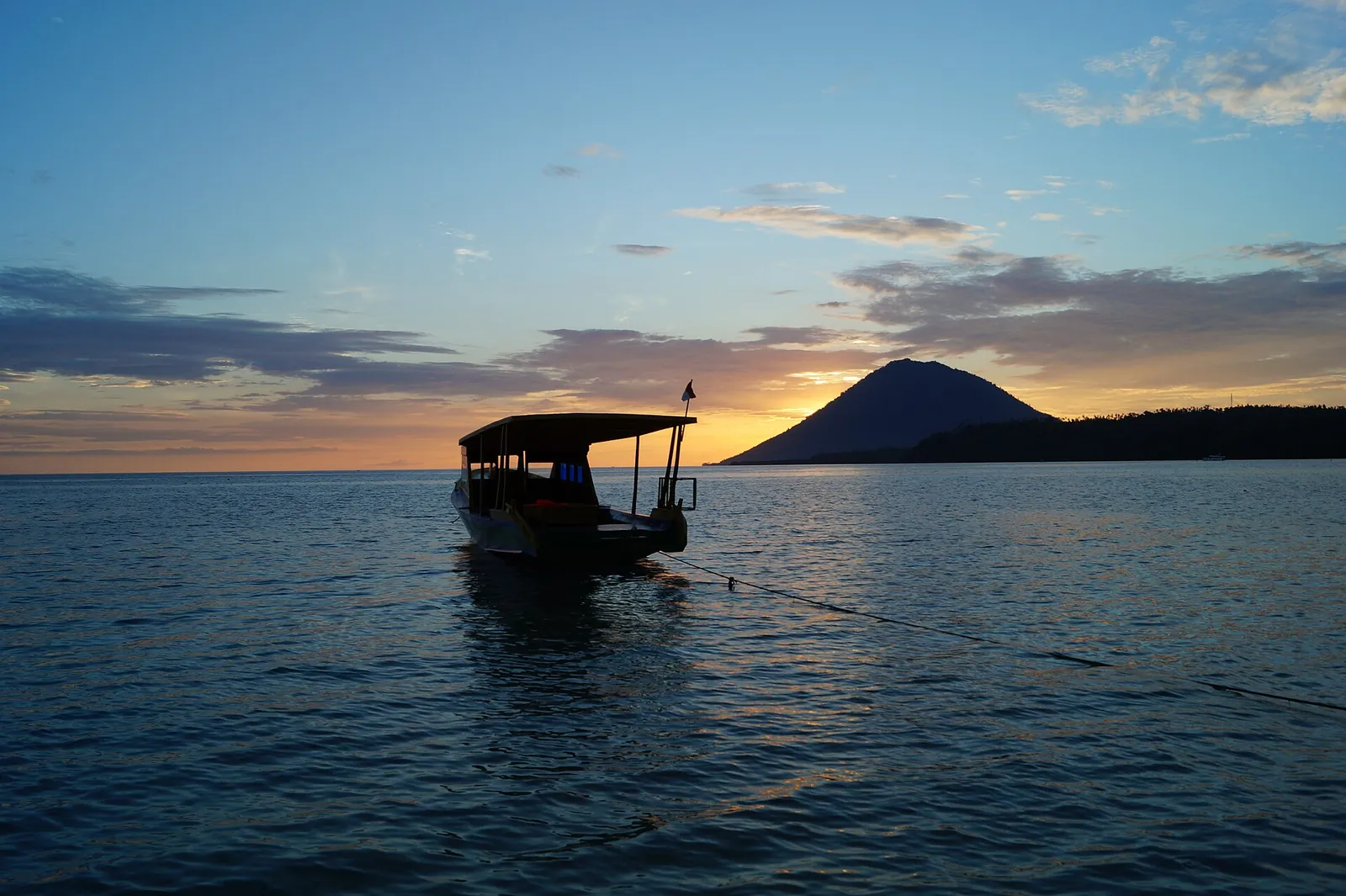
Sunset off Bunaken Island, with the volcanic cone of Manado Tua behind
Photograph: Niek van Son — opens in a new tab · CC BY 2.0 — opens in a new tab
Changes: Resized and converted to WebP; displayed with responsive crops. · Original photograph and licence details ↗ — opens in a new tab
Coral and reef fish in Bunaken National Marine Park, North Sulawesi
Photograph: Sakurai Midori — opens in a new tab · CC BY-SA 3.0 — opens in a new tab
Changes: Resized and converted to WebP; displayed with responsive crops. · Original photograph and licence details ↗ — opens in a new tab
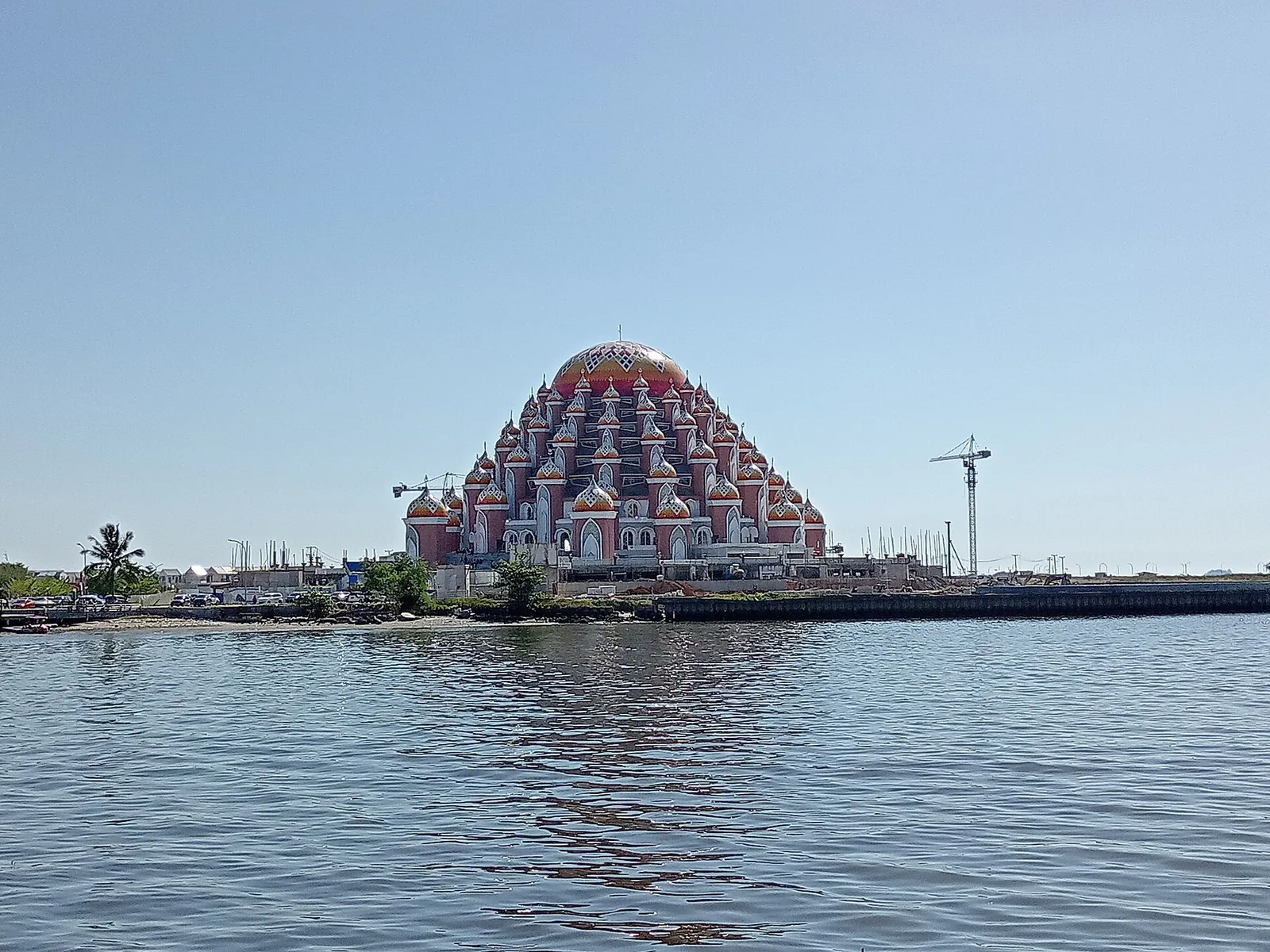
The many-domed mosque on Makassar's waterfront near Losari Beach
Photograph: Bennylin — opens in a new tab · CC BY-SA 4.0 — opens in a new tab
Changes: Resized and converted to WebP; displayed with responsive crops. · Original photograph and licence details ↗ — opens in a new tab
Coto Makassar, the beef soup to eat on your nights in Makassar
Photograph: Oceanmuse — opens in a new tab · CC BY 4.0 — opens in a new tab
Changes: Resized and converted to WebP; displayed with responsive crops. · Original photograph and licence details ↗ — opens in a new tab