Java · East Java
Surabaya travel guide: heritage streets, Ampel, rawon and where to stay
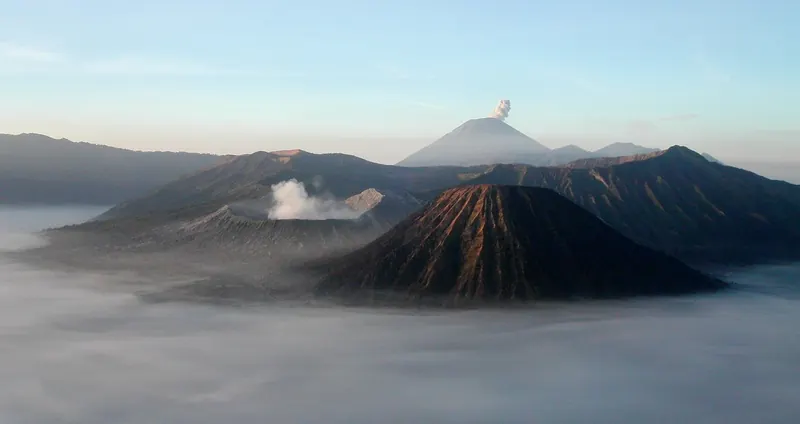
Most travellers meet Surabaya on the way somewhere else: it is East Java's capital, its main airport and rail junction, and the usual jumping-off point for Bromo, Malang and Ijen. Give it a day of its own and the city explains itself. This is the City of Heroes, where the Battle of 10 November 1945 is remembered at Tugu Pahlawan, and an old port whose north side still has Dutch commercial streets, a Chinese temple quarter and the Arab neighbourhood around the Ampel Mosque. The food is a reason in itself: rujak cingur and lontong balap are Surabaya's own, and the city makes its own thicker version of East Java's black rawon.
- Suggested time
- 1 full day (2 nights); 2 days with Madura or Trowulan
- Where to stay
- Central Surabaya around Jalan Tunjungan and Embong Malang; Gubeng for early trains; Darmo and Mayjen Sungkono for the big hotels further south-west
- Season and timing
- The Ministry of Tourism gives April to October as the dry season on Java and November to March as the wet season. Surabaya is hot all year at sea level; plan walking for the morning and late afternoon, and expect occasional flash floods and heavy traffic in the rains.
The short answer
Stay two nights for one full day in the city. Spend the morning in the old north (Tugu Pahlawan and its museum from opening time, Jembatan Merah, the colonial bank buildings and the Ampel quarter), rest through the midday heat, then take Jalan Tunjungan, the Siola museum and the Submarine Monument in the late afternoon and stay on the street for dinner. Sleep in the centre around Jalan Tunjungan and Embong Malang, or near Gubeng station if you are leaving by train. The city museums close on Mondays, so do not make Monday your one Surabaya day. Add a second day only for Madura across the Suramadu Bridge or the Majapahit sites at Trowulan; otherwise move on to Malang or Bromo.
Choose a base by how you will leave
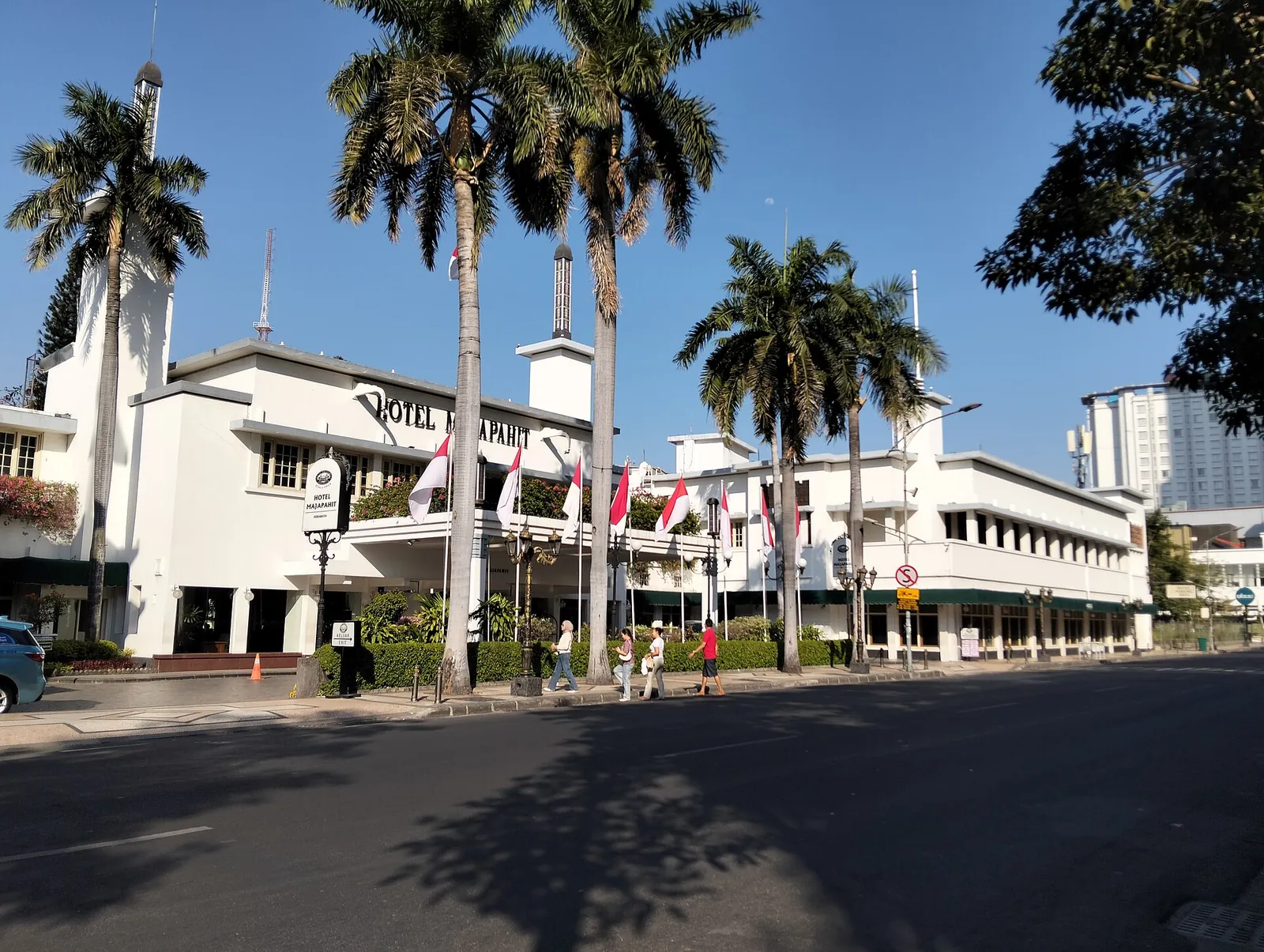
Surabaya is spread out, its sights sit in two clusters, and the traffic is heavy, so the right hotel saves real time. The most practical base for a short stay is the centre around Jalan Tunjungan and Embong Malang. The Siola building, the heritage shopfronts of Tunjungan and the city's best-known evening food are on foot from here, and the old north is a short ride away. Hotel Majapahit at Jalan Tunjungan 65 is the landmark: it opened in 1910 as the Hotel Oranje, built by Lucas Martin Sarkies of the family behind Raffles in Singapore and the E&O in Penang.
If your next step is a train, look at Gubeng. Gubeng station handles most trains to the south and east of Java, including Yogyakarta, Bandung and Banyuwangi, and the hotels around it are within reach of the centre. Trains from Jakarta, Semarang and the north coast mostly use Pasar Turi instead, also in the centre, so check which station your ticket names before booking a room on the strength of it.
The large modern hotels and malls along Jalan Mayjen Sungkono and the Darmo area suit business trips and longer stays, but they put you further from the heritage districts. Wherever you stay, note that some hotels in Java refuse check-in to unmarried couples; read the hotel's policy before booking.
Old Surabaya on foot: Tugu Pahlawan, Jembatan Merah and the bank district
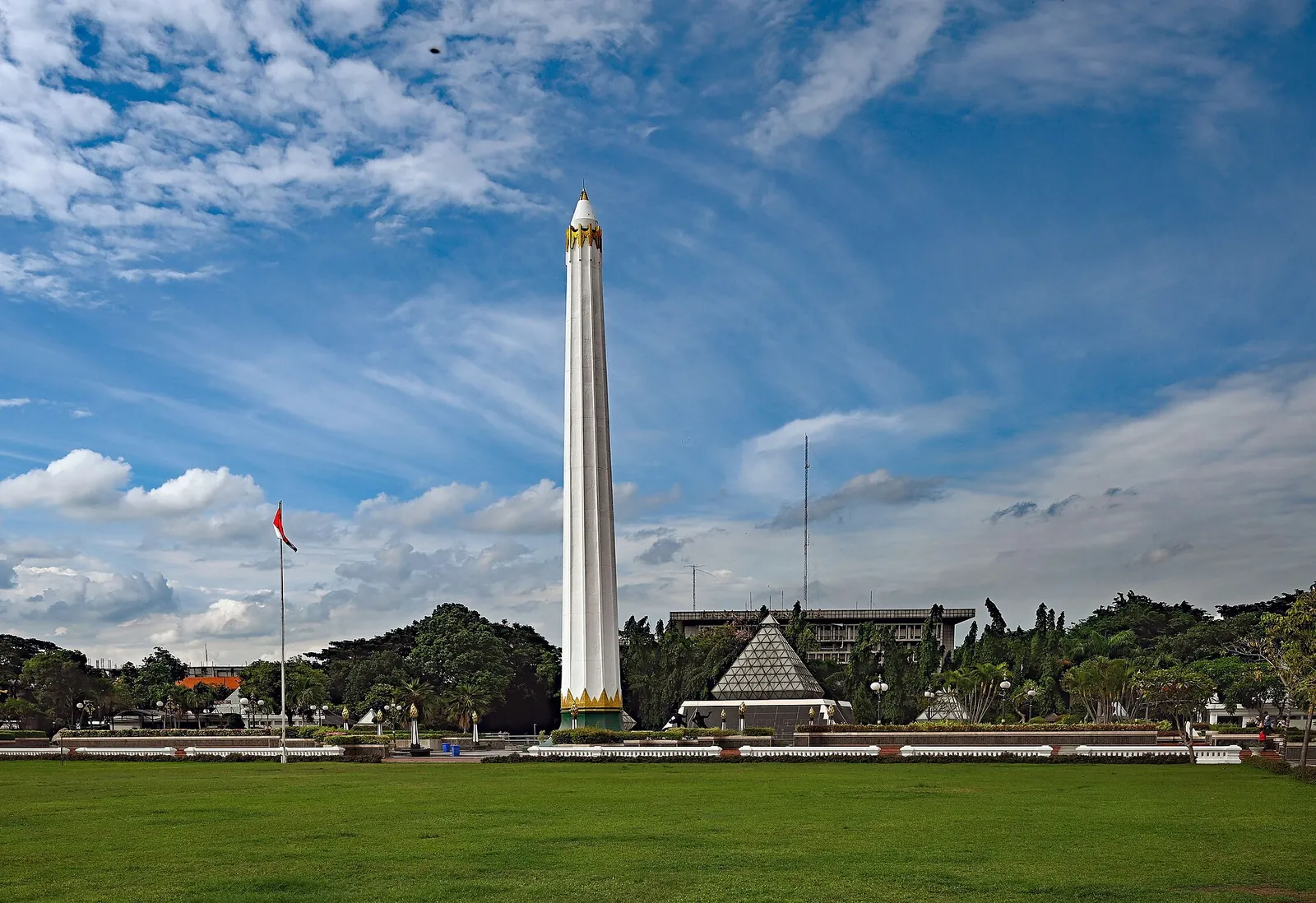
Start at Tugu Pahlawan, the Heroes Monument, an obelisk shaped like an upturned nail and about 41 metres tall, raised to the fighters of the Battle of Surabaya. Below its grounds, built underground so as not to compete with the monument, the Museum 10 Nopember holds Bung Tomo's radio and the original recordings of the speeches he broadcast during the battle, alongside weapons, uniforms and dioramas. When we checked on 2026-10-03, the city's official ticket site listed the museum at 08:00–15:00 for Rp 8,000 (free for students), payable in cash or by QRIS; the city price list shows it open Tuesday to Sunday.
From there, the Ministry of Tourism suggests taking Tugu Pahlawan, Jembatan Merah and the historic buildings of North Surabaya as one route. The Red Bridge was part of the fighting of November 1945 and is still a working bridge in the middle of a busy trading district on Jalan Kembang Jepun. Around it stands the old Dutch commercial quarter: De Javasche Bank at Jalan Garuda 1, now a museum (Tuesday to Sunday, 08:00–15:00 and free, according to the ministry's 2026 guide), and Gedung Cerutu at Jalan Rajawali 7, named for its cigar-shaped tower, which is not set up for regular visits; look at it from the street. The Kalisosok prison, built on Daendels' orders in 1808, is in the same area.
Two changes catch people out. House of Sampoerna, the restored 1862 compound that once headlined this walk, has been closed since the COVID-19 pandemic according to both Wikipedia and Wikivoyage; do not build the morning around it. And the north is hot and traffic-heavy by late morning, so start at the museum's opening time and keep the walking short between rides.
Make time for the local food
What to eat and where to look
Rawon
East Java's black beef soup, coloured and flavoured by kluwek (keluak) nuts and a paste of shallots, garlic, turmeric, galangal, lemongrass and candlenuts. The Surabaya version is slightly thicker and richer, served with rice, short bean sprouts, salted egg, sambal and crackers.
- Where to look
- Warungs and restaurants across the centre; Wikivoyage points to Rawon Setan on Jalan Embong Malang, whose late-night 'devil's rawon' is famously hot.
- Fit it into your day
- A hearty breakfast before the heritage walk, or a late supper after Tunjungan.
Rawon setan is very spicy; ask for sambal on the side.
Rujak cingur
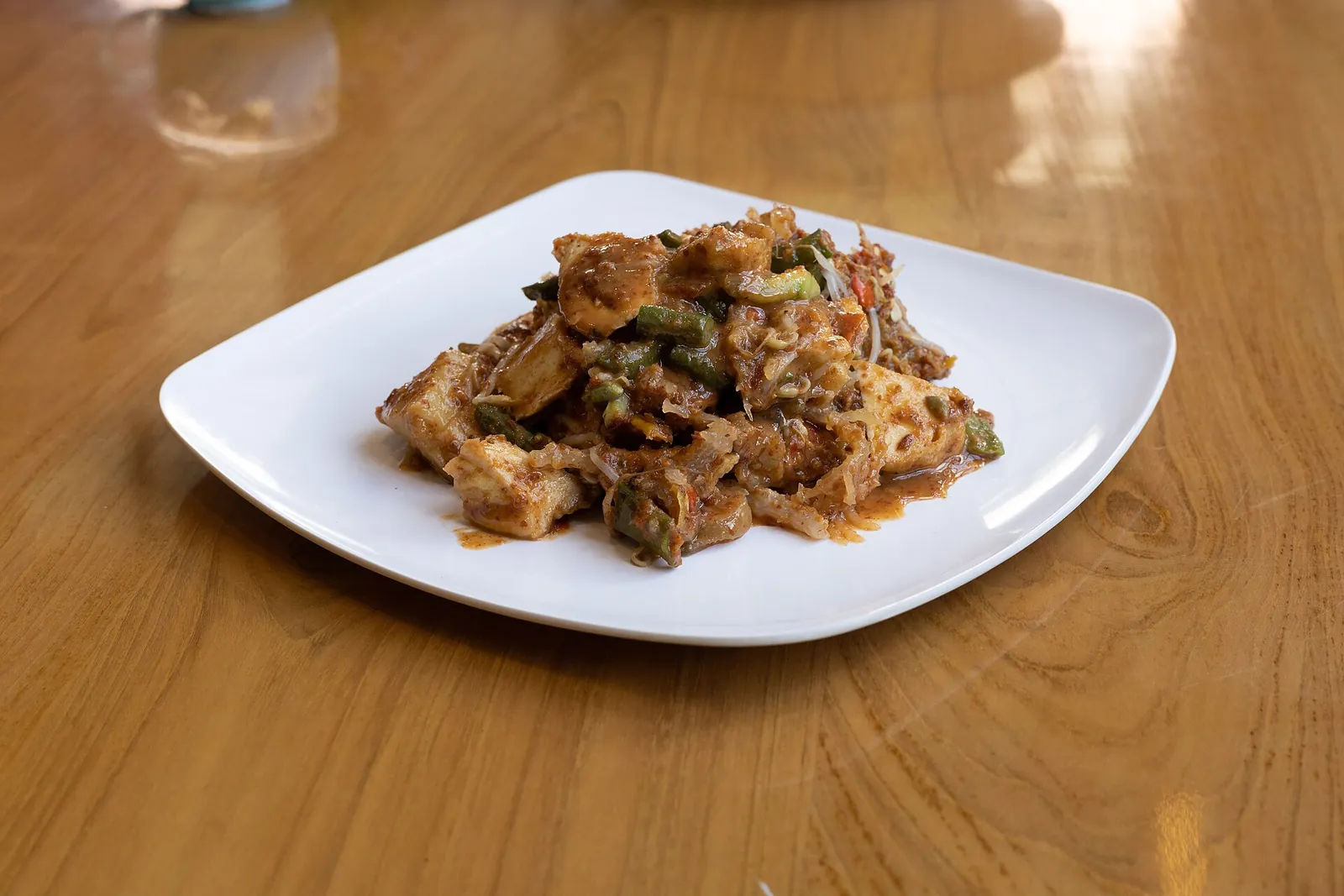
Surabaya's signature salad: boiled water spinach, bean sprouts and long beans, fresh cucumber, jicama and ambarella, fried tofu and tempeh, lontong rice cake and thin slices of beef snout (cingur), all mixed in a stone mortar with a sauce of ground peanuts, black shrimp paste (petis), chilli, salt and sugar.
- Where to look
- Long-running warungs in the centre; Wikivoyage names Rujak Cingur Genteng Durasim on Jalan Genteng Durasim.
- Fit it into your day
- A filling lunch; one plate is a meal.
Contains beef snout and shrimp paste; the sauce is made to order, so say how much chilli you want.
Lontong balap
Compressed rice cake with bean sprouts, fried tofu, lentho (fried bean fritters) and fried shallots in petis and sweet soy sauce, usually eaten with skewers of clam satay (sate kerang).
- Where to look
- Street stalls and small eateries; Wikivoyage lists Lontong Balap Pak Gendut on Jalan Embong Malang, near the Tunjungan hotels.
- Fit it into your day
- A quick lunch or an early-evening snack before a longer dinner.
The sate kerang is shellfish, and the sauce contains shrimp paste.
Sate klopo
Beef satay coated in grated coconut, one of the local specialities Surabaya is known for alongside rujak cingur and rawon.
- Where to look
- Jalan Walikota Mustajab, where Wikivoyage points to the smoky Sate Klopo Ondomohen stall.
- Fit it into your day
- Dinner on the way back from the Submarine Monument side of the centre.
Expect smoke and a small, busy dining area.
The Ampel quarter: mosque, market and modest dress
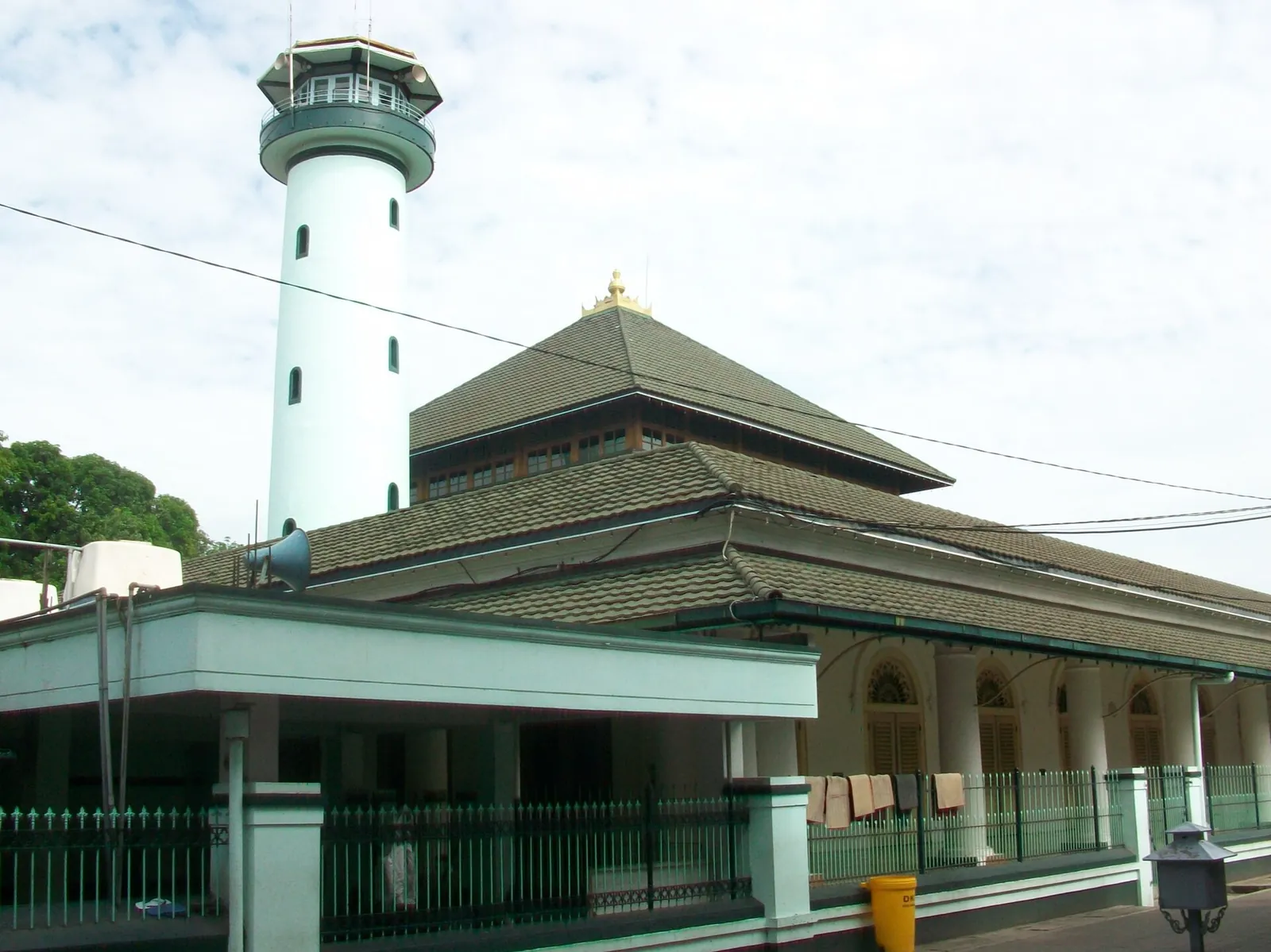
A short ride north-east of Jembatan Merah, the Ampel Mosque is the oldest mosque in East Java, founded in 1421 by Sunan Ampel, whose tomb lies in the walled complex behind it. The streets around it, in the Semampir district, form Surabaya's Arab quarter, lined with buildings of Arab and Chinese style.
Pasar Ampel, the Arab market beside it, sells imported dates, perfumes, hats, water pipes and Qurans along with food you will not find elsewhere in the city, and it is one of Surabaya's real highlights on foot. This is a religious neighbourhood first: dress conservatively, be friendly, keep photography respectful and keep out of the way of worshippers. Wikivoyage suggests exploring in daytime and not wandering too deep into the back alleys at night.
Combine Ampel with the old north on the same morning. If you have time, the Chinese temple Hok An Kiong on Jalan Coklat, built in the early 19th century and full of old wooden carving, is nearby; from it, walk through the surrounding streets of old commercial buildings.
Tunjungan, Siola and the Submarine Monument
After a midday break, move to the centre. Museum Surabaya occupies the Siola building at Jalan Tunjungan 1–3, the former Whiteaway Laidlaw department store; it opened on 3 May 2015 and covers the city's social history with more than 1,000 objects, from old office equipment to vehicles. When we checked on 2026-10-03, the city ticket site listed it as free, 08:00–15:00, and the ministry gives Tuesday to Sunday.
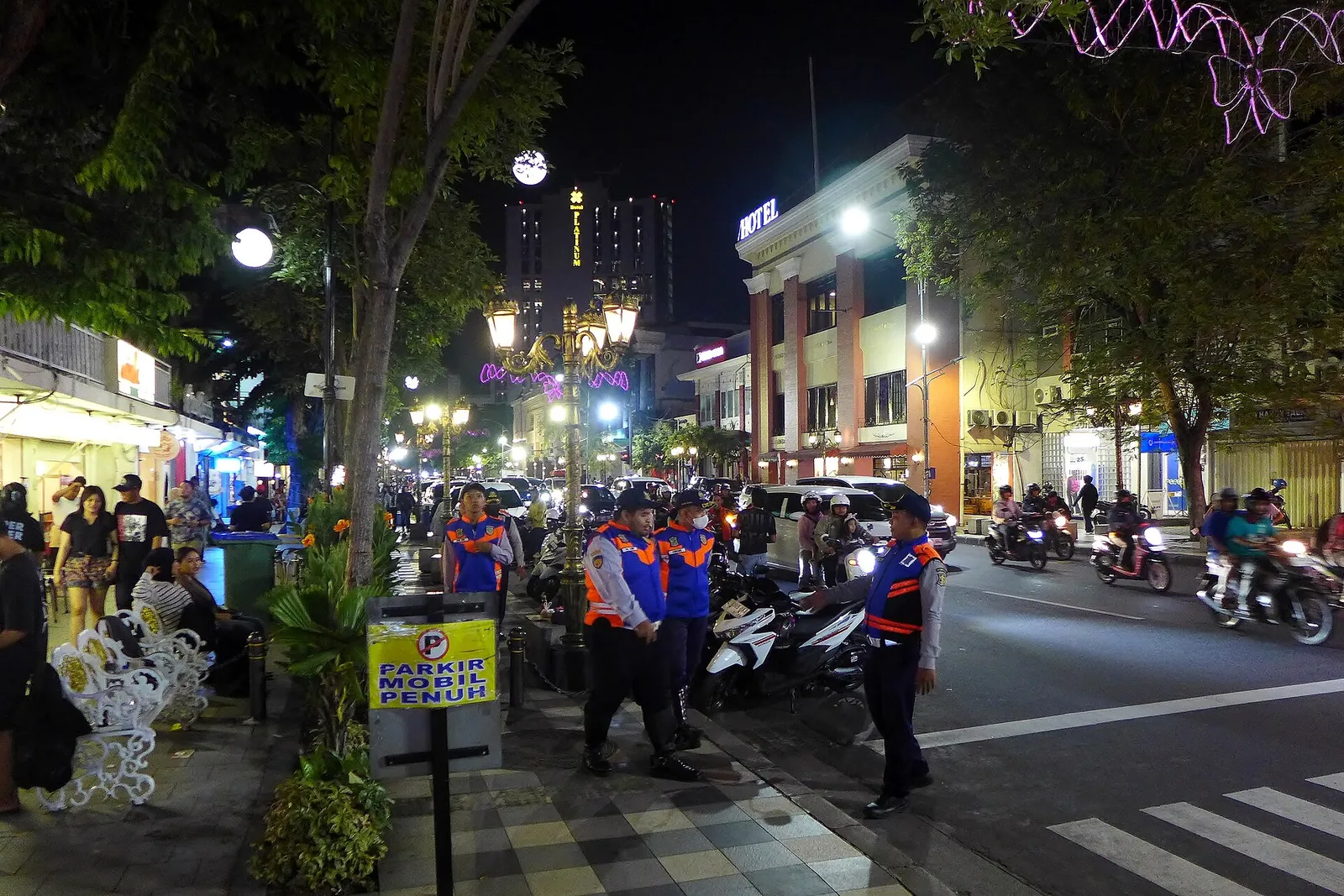
Jalan Tunjungan itself is the old shopping street, with Hotel Majapahit, the Monumen Pers Perjuangan at number 100 and restored shopfronts that come alive in the evening. A little to the east, on Jalan Pemuda beside the Kalimas river, the Submarine Monument (Monkasel) is the Soviet-built KRI Pasopati 410, which served in the Operation Trikora campaign for West Irian; you can walk through its control room, torpedo bay and crew quarters. The ministry's 2026 guide lists it at around 08:00–21:00 and about Rp 15,000, noting that both can change.
From Taman Prestasi on Jalan Ketabang Kali, the city runs Kalimas river boats to the Submarine Monument in morning, afternoon and evening sessions. Tickets are sold through the city ticket site on the day only, paid by QRIS, and the boats do not run when the river level is too low.
A guided bus loop and the Suramadu Bridge
The city's Surabaya Sightseeing and City Tour (SSCT) bus is a cheap way to see heritage stops you would not find alone. When we checked on 2026-10-03, the official ticket site listed a 'Road to Surabaya Heroic Days' programme from 2 October to 29 November 2026 on Fridays, Saturdays and Sundays, with two roughly two-hour sessions a day from Alun-alun Surabaya (Balai Pemuda), on routes that include the old town and Willemsplein, the Kemayoran mosque and Pasar Atom. Tickets go on sale online only from 09:00 the day before, payment is by QRIS, you must re-register at the Tourism Information Centre in the Alun-alun complex 30 minutes before departure, the bus does not run on national holidays, and passengers are asked to dress neatly and modestly.
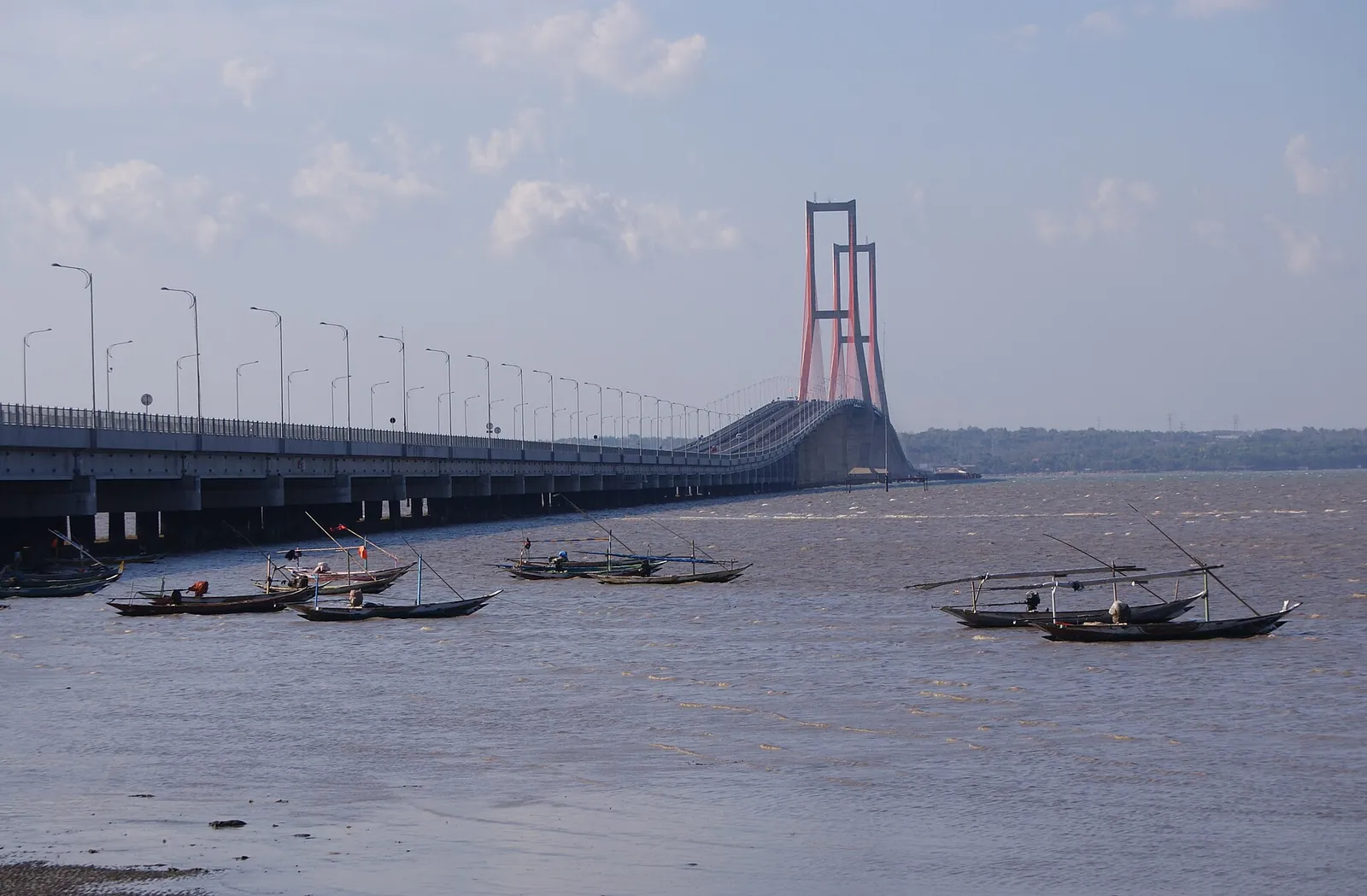
To the north-east, the Suramadu Bridge crosses the Madura Strait for 5.4 km to Bangkalan on Madura. It opened in 2009 and has been toll-free since 27 October 2018. The easiest look at it is from Kenjeran Beach park, which the city lists at 07:00–16:00, Rp 10,000 on weekdays and Rp 15,000 at weekends when we checked. A full day on Madura means a car and driver: the bull races (karapan sapi) have their main season from late August to September, centred on Pamekasan, and Sumenep's 1750 kraton is at the far eastern end of the island.
Surabaya as a gateway: Bromo, Malang, Ijen and Trowulan
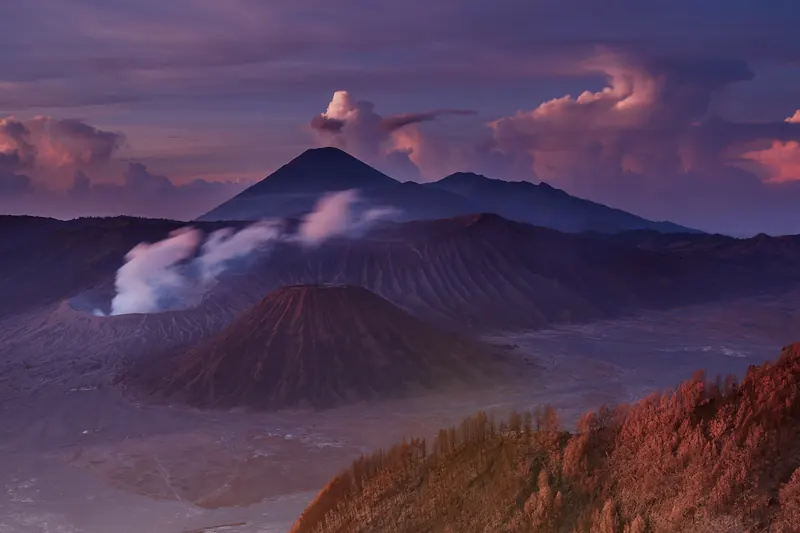
Surabaya is the usual arrival point for East Java's volcanoes, but it is not the closest base for them. The Ministry of Tourism puts Mount Bromo about four hours' drive away and suggests leaving Surabaya between 23:00 and midnight to reach the rim for sunrise; most visitors are better off sleeping in Malang or near the park first. Bromo's entry tickets are sold online only, so see our Mount Bromo guide before you book anything.
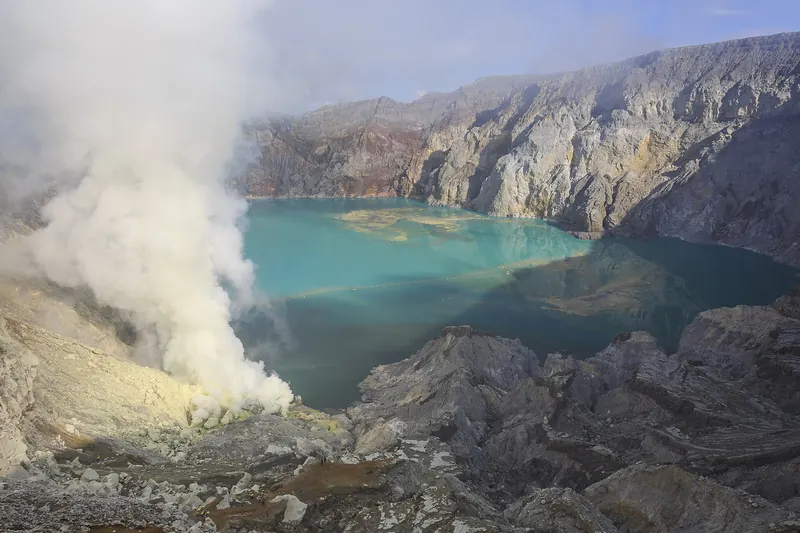
Malang is the comfortable next stop, reached by train or road, and Banyuwangi, the base for Ijen, has trains from Gubeng. For history, Trowulan near Mojokerto is believed to be the site of the Majapahit capital, with the Segaran pool and the Tikus, Brahu and Bajang Ratu remains; it makes a day trip from the city.
If you only have one evening in Surabaya between connections, spend it on Jalan Tunjungan with a bowl of rawon rather than in an airport hotel.
- Day 1: Tugu Pahlawan and Museum 10 Nopember at 08:00, Jembatan Merah and the bank district, Ampel by late morning; rest; Siola and the Submarine Monument; dinner on or near Jalan Tunjungan.
- Day 2 (optional): Suramadu Bridge and Kenjeran, a driver for Madura, or Trowulan; or the SSCT bus on a Friday to Sunday.
- Then: train or road to Malang for Bromo, or a train from Gubeng towards Banyuwangi for Ijen.
Practical questions
Is Surabaya worth a stop?
Yes, if you give it at least one full day. Its heritage north, the Ampel quarter, the Battle of Surabaya story and its food are different from anywhere else on Java. If you only have hours between a flight and a train, keep to Jalan Tunjungan and one meal.
How many days do I need in Surabaya?
One full day with two nights covers the old north, Ampel, Tunjungan and the Submarine Monument. Add a day for Madura, the Suramadu Bridge or Trowulan.
Where should I stay in Surabaya?
Around Jalan Tunjungan and Embong Malang for sightseeing and food, or near Gubeng station if you are catching a train south or east. The Darmo and Mayjen Sungkono hotels are further from the heritage areas.
Are the museums open every day?
No. The city price list shows Museum 10 Nopember open Tuesday to Sunday, and the ministry gives the same days for Museum Surabaya (Siola) and De Javasche Bank. Avoid Monday for a museum day and check the city ticket site before you go.
Is House of Sampoerna open?
Wikipedia and Wikivoyage both report that it has been closed since the COVID-19 pandemic. Check for any reopening before planning around it.
How do I get from Juanda Airport to the city?
Taxis and ride-hailing cars are the simplest option. The airport lists DAMRI buses and airport shuttles too, and DAMRI runs to the Purabaya bus terminal south of the city. Allow for heavy traffic, especially in the evening rush hour.
Can I visit Bromo as a day trip from Surabaya?
It is possible but tiring: the ministry suggests leaving Surabaya between 23:00 and midnight for the sunrise. Sleeping in Malang or near the park is easier, and Bromo tickets must be booked online in advance.
Sources and checks before you travel
Reference sources for the version dated 3 October 2026. Confirm opening times, access, transport and conditions for your travel dates.
- Indonesia Travel (Ministry of Tourism): historic places in Surabaya (Indonesian) ↗ — opens in a new tab
- Tiket Wisata Surabaya (city government ticket site) ↗ — opens in a new tab
- Tiket Wisata Surabaya: price list ↗ — opens in a new tab
- Tiket Wisata Surabaya: SSCT sightseeing bus ↗ — opens in a new tab
- Tiket Wisata Surabaya: Kalimas boat, Taman Prestasi–Monkasel ↗ — opens in a new tab
- Indonesia Travel: Museum 10 November ↗ — opens in a new tab
- Indonesia Travel: Museum Surabaya ↗ — opens in a new tab
- Indonesia Travel: Submarine Monument Surabaya ↗ — opens in a new tab
- Indonesia Travel: Madura Island across Surabaya ↗ — opens in a new tab
- Indonesia Travel: 6 unique dining experiences in Surabaya ↗ — opens in a new tab
- Indonesia Travel: rawon ↗ — opens in a new tab
- Indonesia Travel: rujak cingur ↗ — opens in a new tab
- Indonesia Travel: Hotel Majapahit Surabaya ↗ — opens in a new tab
- Indonesia Travel: Mount Bromo ↗ — opens in a new tab
- Indonesia Travel: weather, climate and seasons ↗ — opens in a new tab
- Juanda International Airport: public transport ↗ — opens in a new tab
- Pemerintah Kota Surabaya (city government) ↗ — opens in a new tab
- Wikivoyage: Surabaya ↗ — opens in a new tab
- Wikipedia: Ampel Mosque ↗ — opens in a new tab
- Wikipedia: House of Sampoerna ↗ — opens in a new tab
- KAI (Kereta Api Indonesia) ↗ — opens in a new tab
- Bromo Tengger Semeru National Park: online booking is required to enter the Bromo area ↗ — opens in a new tab
Does this experience fit your route?
If you have one day and no wish to haggle over rides, a private guide and driver is the easiest way to link the old north, Ampel and Tunjungan. Check the stops, the start time and what is included before you book.
Check dates and details on Viator ↗ — opens in a new tabAffiliate link · Book with ViatorPhoto credits
Tugu Pahlawan, the Heroes Monument, commemorates the Battle of Surabaya of 10 November 1945; the museum lies beneath its grounds.
Photograph: P. Hughes — opens in a new tab · CC BY 4.0 — opens in a new tab
Changes: Resized and converted to WebP; displayed with responsive crops. · Original photograph and licence details ↗ — opens in a new tab
Hotel Majapahit on Jalan Tunjungan, opened in 1910 as the Hotel Oranje.
Photograph: Hd. Aisya — opens in a new tab · CC BY-SA 3.0 — opens in a new tab
Changes: Resized and converted to WebP; displayed with responsive crops. · Original photograph and licence details ↗ — opens in a new tab
Jalan Tunjungan in the evening, when the old shopping street fills with people.
Photograph: Bahnfrend — opens in a new tab · CC BY-SA 4.0 — opens in a new tab
Changes: Resized and converted to WebP; displayed with responsive crops. · Original photograph and licence details ↗ — opens in a new tab
The Ampel Mosque, at the heart of the Ampel quarter in north Surabaya.
Photograph: consigliere ivan from Bontang, Indonesia — opens in a new tab · CC BY 2.0 — opens in a new tab
Changes: Resized and converted to WebP; displayed with responsive crops. · Original photograph and licence details ↗ — opens in a new tab
The Suramadu Bridge links Surabaya with Bangkalan on Madura across the Madura Strait.
Photograph: Sakurai Midori — opens in a new tab · CC BY 3.0 — opens in a new tab
Changes: Resized and converted to WebP; displayed with responsive crops. · Original photograph and licence details ↗ — opens in a new tab
Rujak cingur: boiled vegetables, fruit, tofu, tempeh and beef snout in a peanut and shrimp-paste sauce.
Photograph: Alfiyah Rizzy Afdiquni — opens in a new tab · CC BY-SA 4.0 — opens in a new tab
Changes: Resized and converted to WebP; displayed with responsive crops. · Original photograph and licence details ↗ — opens in a new tab