Java · East Java
Malang travel guide: colonial streets, Bromo trips, temples and Batu
Malang sits in the cool uplands of East Java, and the Dutch built it up as a retreat: planters came here to escape the heat, and the town hall, the round Tugu square, the Ijen boulevard and the old Kayutangan shopping street still give the centre its shape. Today it is the most comfortable city base for Mount Bromo, for the temples of the 13th-century Singhasari kingdom on its edge, and for the parks and pine forests of Batu next door. Treat it as a base with three different kinds of day, not a city to tick off in an afternoon.
- Suggested time
- 3 nights (4 with both the temples and Batu)
- Where to stay
- Central Malang (Kayutangan, Tugu square, Jalan Ijen); Batu for the theme parks and highland air
- Season and timing
- On Java the dry season generally runs from April to October and the wet season from November to March. Malang and Batu are cooler than the coast, and the Bromo area can be cold before dawn.
The short answer
Stay three nights. Spend the first day on foot in the colonial centre and its food streets, the second on a pre-booked Bromo sunrise trip (it starts in the middle of the night, so keep the afternoon free), and the third on either the Singosari and Tumpang temples or Batu's highland outings. Sleep in the city centre around Kayutangan, the Tugu square or Jalan Ijen; choose Batu only if its parks are the point of the trip. Book your Bromo entry ticket online before you go: the national park does not sell tickets at the gate.
Pick a base: the centre, Ijen or Batu
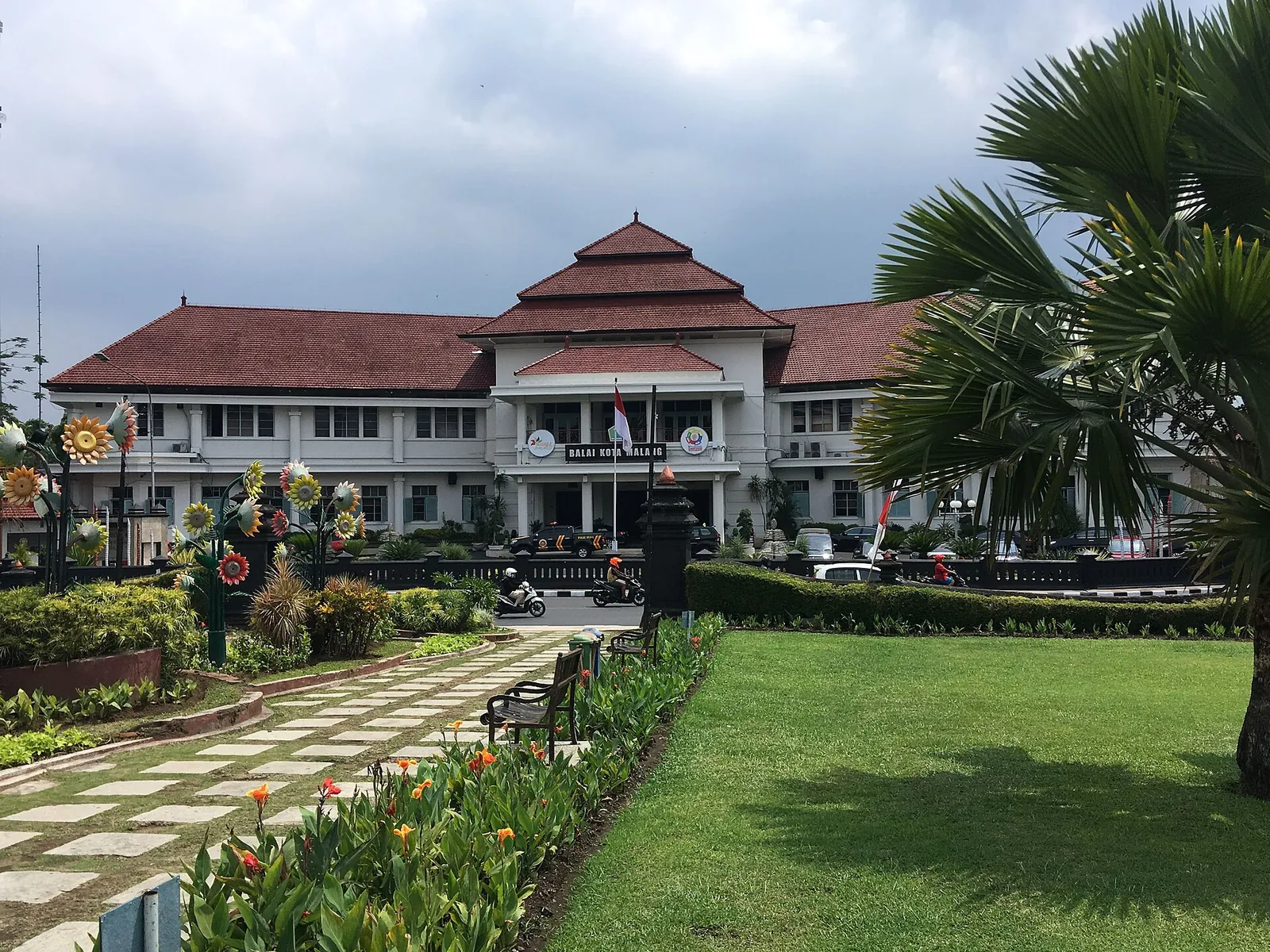
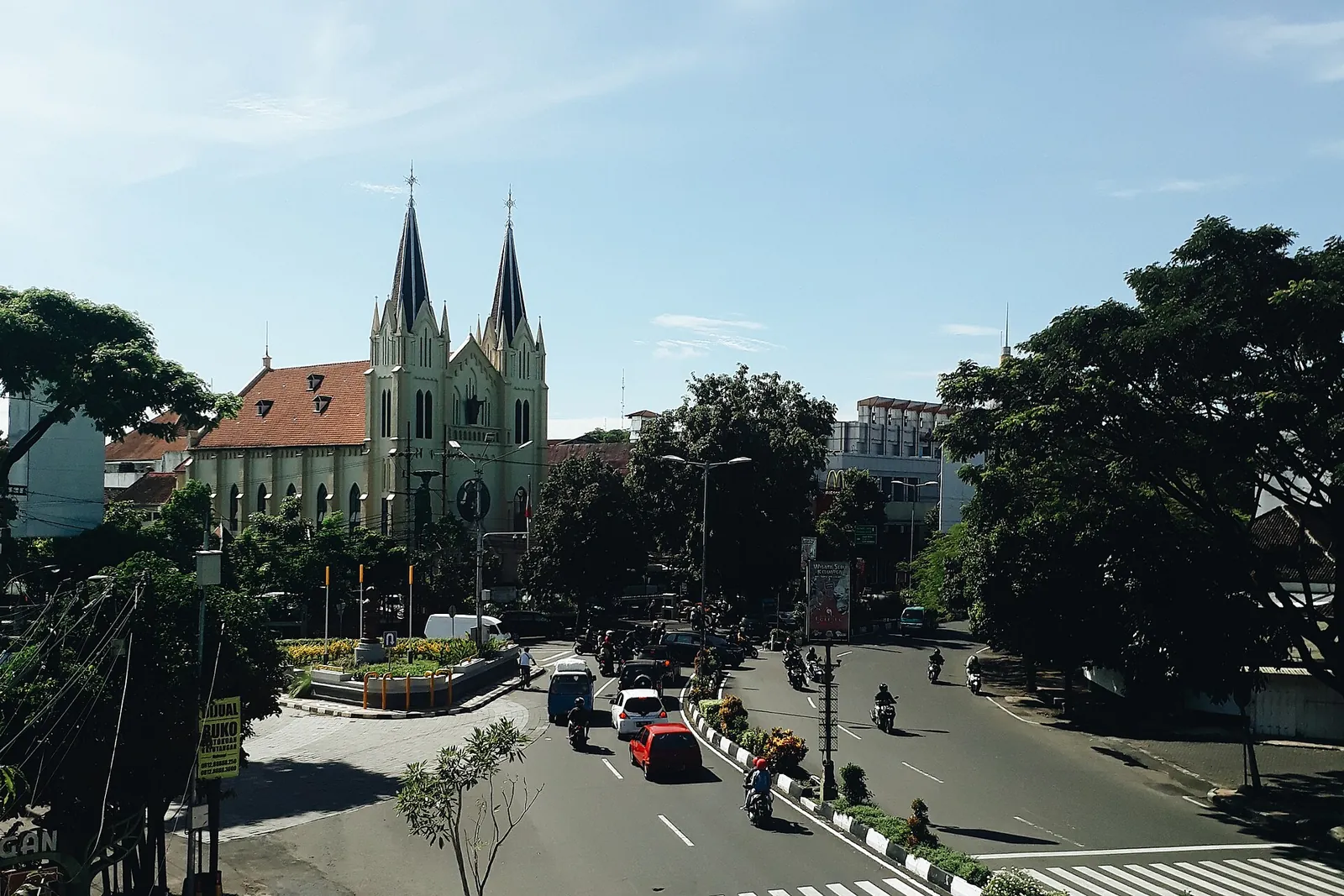
Most visitors are best served by central Malang. The town hall (Balai Kota), built from about 1927 at Jalan Tugu 1, looks onto the round Tugu square with its monument and lily pond. Close by, Jalan Basuki Rahmat is the old Kajoetanganstraat, and the older Alun-Alun Merdeka square is a short walk further. Staying here puts the heritage walk, the colonial-era restaurants and the city's best-known dishes within walking distance.
The Ijen area, laid out in the Dutch period as a planned residential district of wide, tree-lined avenues, is quieter, with art deco houses still lived in today; it suits travellers who prefer leafy streets to a busy centre.
Batu is a separate highland city next to Malang, with the Museum Angkut, the Jatim Park attractions, Selecta and waterfalls in the pine forest. It makes sense as a base if those are what you came for, especially with children. If Bromo and the temples are your priority, central Malang is the better choice.
Colonial Malang on foot: Kayutangan to the Alun-Alun
The Ministry of Tourism's guide to the city's historic places makes a good walking route. Start at Kayutangan Heritage, the kampung behind Jalan Basuki Rahmat that the city government opened as a cultural tourism village on 22 April 2018; its lanes, old houses, prayer houses and riverside paths are lived-in streets, not a museum, so keep your voice down and ask before photographing people.
From there, walk to Alun-Alun Merdeka, a square that dates back to 1767 and was remodelled in 1882, with the Masjid Jami on its edge. Around it stand the Bank Indonesia building, opened on 1 December 1916 as a branch of De Javasche Bank and designed by the Hulswit firm; the GPIB Immanuel church on Jalan Merdeka Barat; and Hotel Pelangi, which began life as Hotel Malang in the colonial period.
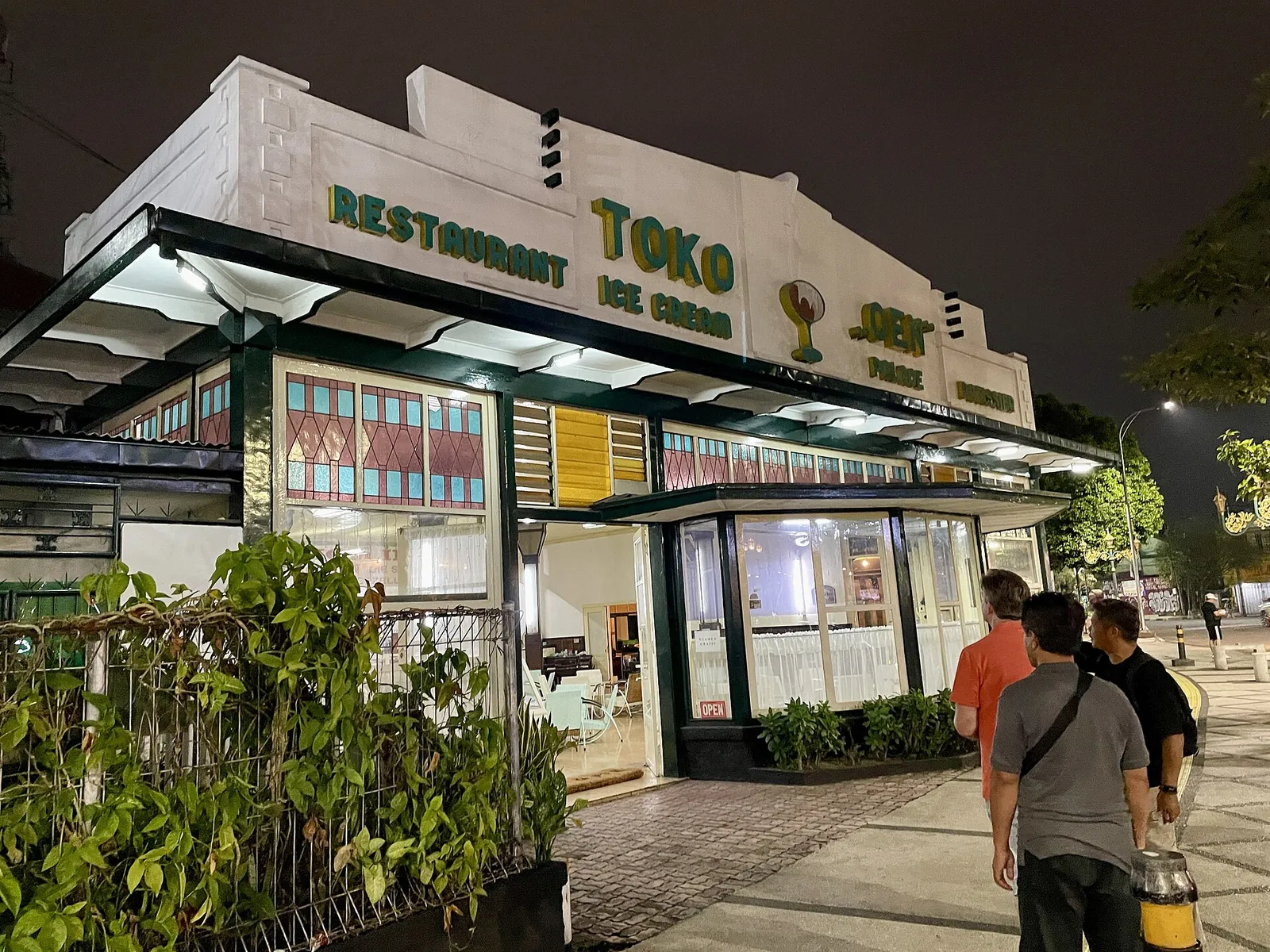
Finish at the town hall and the Tugu square, or carry on to the Ijen boulevard. Further out, the Chinese temple Kelenteng Eng An Kiong on Jalan Laksamana Martadinata was founded in 1825 and is still in active use, and the Monumen Juang 45 stands in front of the Malang Kota Baru railway station. For lunch with the period setting, the ministry singles out Toko Oen, a colonial-era restaurant that keeps its original architecture and interior and serves Dutch and Indonesian dishes and ice cream.
Make time for the local food
What to eat and where to look
Bakso Malang (Malang meatball soup)
Malang's signature dish. The ministry's food guide describes a bowl that goes well beyond meatballs: smooth and sinewy beef meatballs, tofu, siomay, fried and boiled wontons and noodles in a savoury beef broth.
- Where to look
- Pushcart sellers, small shops and food centres all over the city; you choose the pieces you want.
- Fit it into your day
- A quick lunch or dinner on a city day. When we checked on 2026-10-03, the ministry's guide gave Rp10,000 to Rp40,000 a bowl, depending on the contents and the place.
Beef-based; the fried pieces and siomay may contain fish or chicken, so ask if you avoid either.
Rawon (black beef soup)
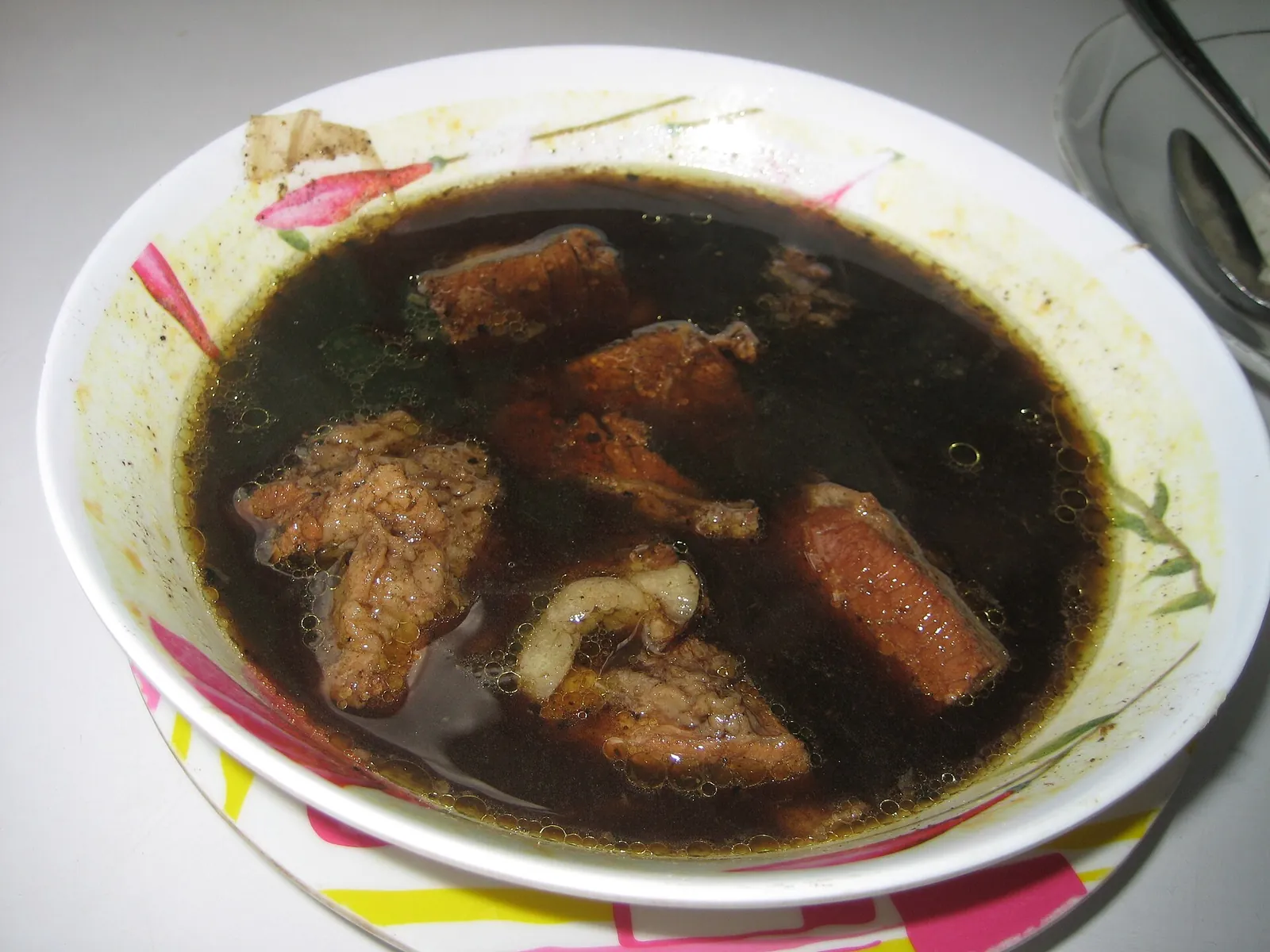
East Java's best-known soup, made dark and earthy by kluwek (black keluak nuts), with tender beef. It comes with rice, and often half a salted egg and prawn crackers.
- Where to look
- Rawon restaurants and local eating houses (warung) across Malang; the ministry recommends it for brunch.
- Fit it into your day
- A late breakfast after an early start, or a warming lunch on the day you return from Bromo.
Rich and quite filling; the sambal on the side is very hot.
Cwie mie
A Chinese-influenced Malang noodle dish: fine, soft noodles topped with seasoned minced chicken, lettuce, wontons and spring onion, lighter in taste than an ordinary mie ayam.
- Where to look
- Noodle houses in the centre; the ministry's Malang itinerary recommends the old Hok Lay restaurant for it.
- Fit it into your day
- Brunch or a light lunch during the heritage walk.
Contains chicken and wheat noodles; check the toppings if you have dietary restrictions.
Sego resek (night-time fried rice)
A Malang fried rice cooked over a wood fire, mixed with noodles, vegetables, shredded chicken, egg or offal. The name means 'leftover rice' in Javanese, after its mixed look, not its ingredients.
- Where to look
- Evening stalls; it is known as a late-night dish.
- Fit it into your day
- Dinner on a night you are not getting up for Bromo.
Ask for it without offal (jeroan) if you prefer; the smoke flavour is intended.
Angsle, wedang ronde and ketan
Warm sweets for cool highland evenings: angsle is a hot pandan-scented coconut milk with sticky rice, mung beans, sago pearls and bread; wedang ronde is a ginger drink with peanuts and small rice-flour balls; and ketan is steamed sticky rice with toppings such as cheese, milk, chocolate or durian.
- Where to look
- Night stalls in Malang, and the Pos Ketan Legenda stall by the Alun-Alun Batu, which the ministry calls an icon of the square.
- Fit it into your day
- After dinner, especially in Batu.
Very sweet; angsle and many toppings contain coconut milk, peanuts or dairy.
Mount Bromo from Malang: book first, then sleep early
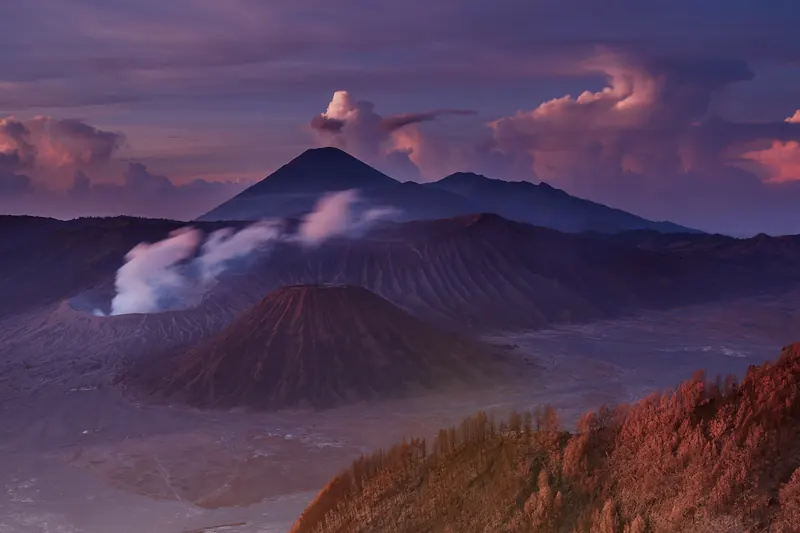
Malang is one of the classic starting points for a sunrise at Mount Bromo. The ministry's Bromo page puts the Penanjakan viewpoint (2,770 metres) about 2.5 hours from Malang, which means leaving in the middle of the night; the ministry's Bromo guide names Bukit Cinta, Bukit Mentigen and Penanjakan as the sunrise viewpoints. From Malang, the main route climbs through the village of Gubugklakah, which the ministry describes as the crossing point for jeep tours to Bromo. Most visitors from Malang go with a driver and a 4x4 rather than driving themselves in the dark.
Entry has to be booked in advance. When we checked on 2026-10-03, Bromo Tengger Semeru National Park's official site said that tickets for the Bromo area are sold only online through bookingbromo.bromotenggersemeru.org, with no tickets sold on the spot; that payment must be made by virtual account within two hours of booking; and that paid tickets cannot be rescheduled or refunded. The park introduced a daily visitor quota in December 2019. If you book a tour, ask whether the operator buys the ticket in your name or whether you must do it yourself.
The park also closes for religious reasons. In 2025 it closed the whole national park to visitors for Nyepi and Idul Fitri, and the Bromo area during Wulan Kapitu, the sacred seventh month of the Tengger calendar. Check the park's news page before fixing your date. The Tengger people living around the caldera hold the Yadnya Kasada ceremony each year at Bromo; if your visit coincides with it, treat it as a religious event first.
The Singhasari temples: Singosari, Jago, Kidal and Badut
Malang was the heartland of the Singhasari kingdom, which the ministry dates from 1222, when it was founded by Ken Arok, to the death of King Kertanegara in 1293; Kertanegara's son-in-law went on to found Majapahit. Little of the kingdom survives above ground, which is what makes its temples worth the trip.
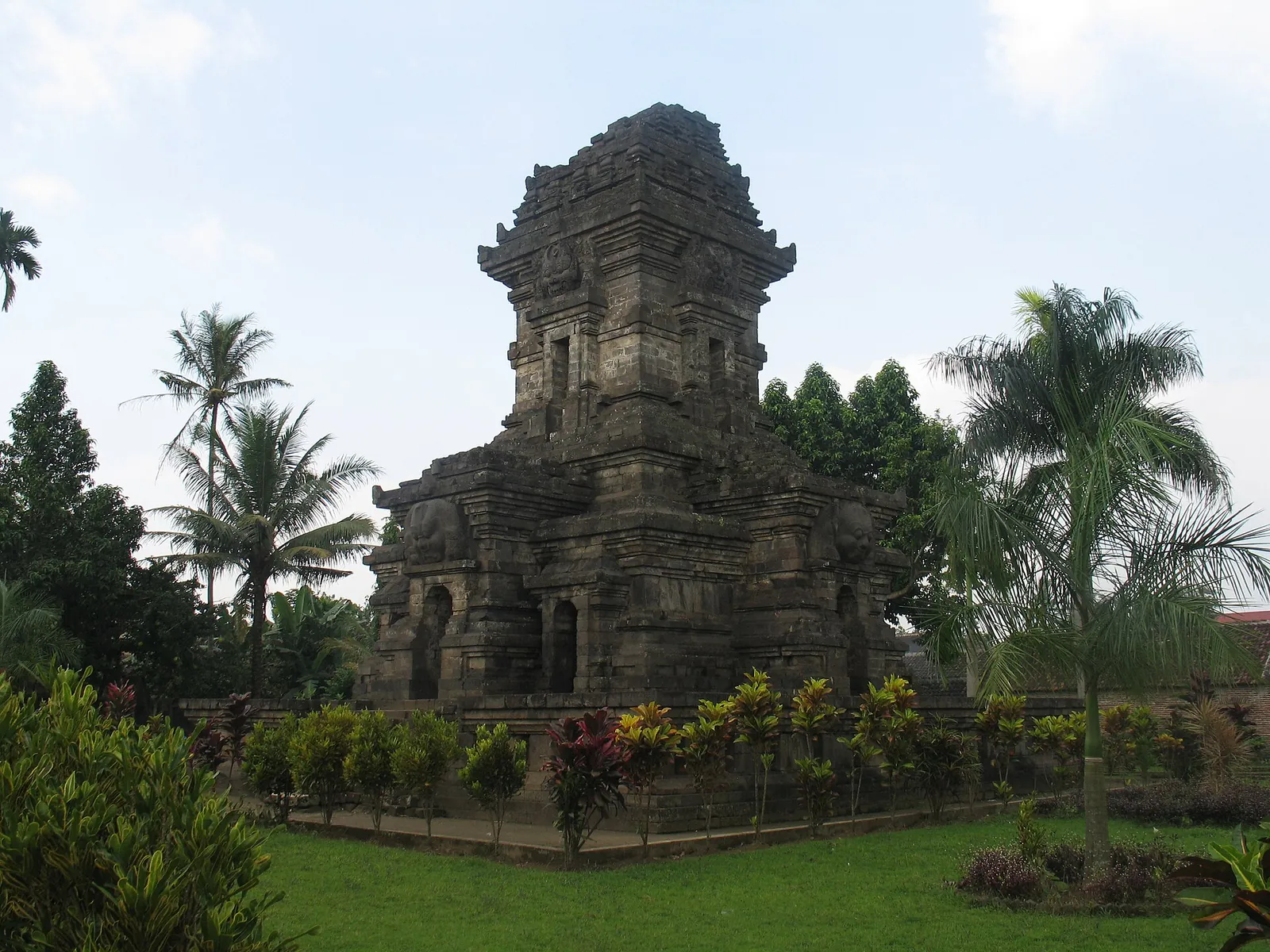
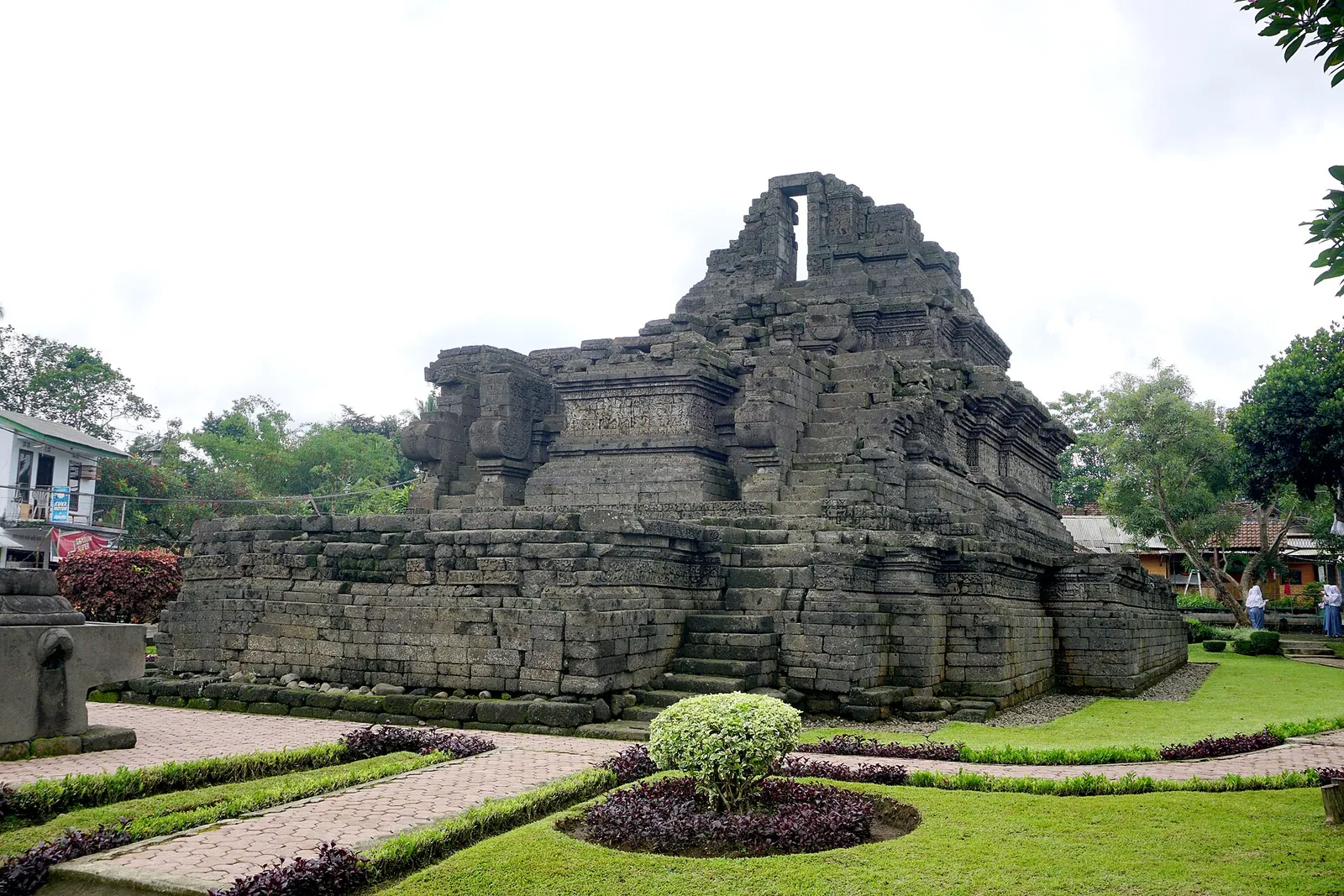
Candi Singosari, in Candirenggo village, is the one to see if you have time for only one: an unfinished temple decorated with reliefs, and, nearby, two giant guardian statues that once stood before the palace. Candi Jago and Candi Kidal are both in Tumpang and pair well in one outing. Jago's terraced base carries reliefs from Buddhist and Hindu stories, including the Kunjarakarna, the Parthayana and the Arjunawiwaha, and Kidal has lion figures at the four corners of its base.
Candi Badut, in Karang Besuki, is much older: a small Shivaite temple that the ministry dates to the 8th century and counts among the earliest signs of civilisation in East Java. Its discovery was reported by a Dutch official in 1923. All four are religious and protected heritage sites: dress modestly, do not climb on the stones, and keep to the paths the site keepers set.
Batu: pine forests, apples and theme parks
Batu is where Malang goes for cool air and family outings, and it fills up during the long school holidays. The ministry's guide to the area lists the Museum Angkut transport museum on Jalan Terusan Sultan Agung, with vintage vehicles in themed street settings; Jatim Park 2, a zoo and animal museum on Jalan Oro-Oro Ombo; Jatim Park 3 at Beji, with its dinosaur park; and Selecta, a flower garden and spring-fed pool in Tulungrejo dating from 1920. Choose one large park per day: each is a half-day or more.
For nature, Coban Rais in Oro-Oro Ombo is a waterfall in the pine forest about 15 to 20 minutes by car from central Batu, followed by a 20 to 30-minute walk on a rocky path. When we checked on 2026-10-03, the ministry's page listed daily opening from 07:00 to 15:00 and tickets from Rp10,000; wear shoes with grip, because the path is slippery after rain. Coban Rondo, in Pandesari village in the Pujon district, is a waterfall of about 84 metres in protected forest. You can also pick apples at the farms around Batu, or watch the paragliders above Gunung Banyak.
In the evening, the Alun-Alun Batu square, with its giant Ferris wheel and food stalls, is the place to warm up with a sweet drink or a plate of sticky rice.
Getting there and a three-day plan
Malang has its own airport, Abdul Rachman Saleh (MLG), in Pakis in Malang Regency. The ministry's Malang page lists flights from Jakarta, Surabaya, Balikpapan and Bali, and road and rail connections from Jakarta, Bandung, Yogyakarta and Surabaya; check current schedules before you book, as routes change. Surabaya's Juanda airport has more international routes (the ministry lists direct flights from Singapore, Kuala Lumpur and Hong Kong), and Malang is reached from there by train or road.
This is an editorial suggestion, not a timetable. Check opening days for each place you choose.
- Day 1 — Colonial centre: Kayutangan Heritage in the morning, the Alun-Alun Merdeka buildings, lunch at a long-established restaurant, then the town hall and Tugu square; bakso or rawon for dinner.
- Day 2 — Bromo: a pre-booked sunrise trip leaving in the middle of the night, back by midday; sleep in the afternoon and keep dinner close to your hotel.
- Day 3 — Temples or Batu: Candi Singosari in the morning (with Jago and Kidal if you have a driver), or a day in Batu with one park and one waterfall.
- Day 4 (optional): the other of the two, before you continue to Surabaya or east towards Ijen.
Practical questions
How many days do I need in Malang?
Three nights cover the colonial centre, a Bromo sunrise trip and either the temples or Batu. Add a fourth night if you want both, because the Bromo day starts in the middle of the night and leaves little energy for anything else.
Should I visit Bromo from Malang or stay near the crater?
Malang gives you a comfortable city hotel and a good choice of tours, but the ministry puts the Penanjakan viewpoint about 2.5 hours away, so you leave in the middle of the night. Staying in a village near the crater shortens the drive; Malang suits travellers who want the city as well.
Do I need to book a Bromo ticket in advance?
Yes. When we checked on 2026-10-03, the national park's official site said entry to the Bromo area is sold only online, through bookingbromo.bromotenggersemeru.org, and that paid tickets cannot be rescheduled or refunded. Check the park's news page for closures before you choose a date.
Is it better to stay in Malang or Batu?
Stay in Malang for the heritage walk, the food and Bromo tours. Stay in Batu if your days revolve around its theme parks, waterfalls and apple farms, or if you are travelling with children.
How do I get to Malang?
Fly into Abdul Rachman Saleh Airport (MLG) in Pakis, just outside the city, or travel overland by train, bus or car from Surabaya, Yogyakarta, Bandung or Jakarta. Many international visitors arrive in Surabaya first.
When is the best time to visit Malang?
The dry season, roughly April to October on Java, brings drier weather for the Bromo sunrise and the forest paths. The wet season runs from about November to March; city sights remain easy, but forest paths to the waterfalls become slippery.
Sources and checks before you travel
Reference sources for the version dated 3 October 2026. Confirm opening times, access, transport and conditions for your travel dates.
- Indonesia.travel: Malang ↗ — opens in a new tab
- Indonesia.travel: 10 historic places in Malang ↗ — opens in a new tab
- Kampoeng Heritage Kajoetangan (official) ↗ — opens in a new tab
- Indonesia.travel: 3D2N trip ideas in Malang ↗ — opens in a new tab
- Indonesia.travel: Homestays in East Java (Bromo–Ijen, Malang, Banyuwangi) ↗ — opens in a new tab
- Indonesia.travel: Mount Bromo ↗ — opens in a new tab
- Indonesia.travel: Bromo Tengger Semeru National Park ↗ — opens in a new tab
- Indonesia.travel: Desa Gubugklakah, Malang ↗ — opens in a new tab
- Indonesia.travel: Bromo Tengger Semeru activity ideas ↗ — opens in a new tab
- Bromo Tengger Semeru National Park: online registration ↗ — opens in a new tab
- Bromo Tengger Semeru National Park: news and closures ↗ — opens in a new tab
- Indonesia.travel: Singosari, Malang ↗ — opens in a new tab
- Indonesia.travel: Candi Singosari ↗ — opens in a new tab
- Indonesia.travel: Candi Jago ↗ — opens in a new tab
- Indonesia.travel: Candi Kidal ↗ — opens in a new tab
- Indonesia.travel: Candi Badut ↗ — opens in a new tab
- Indonesia.travel: Places to visit in Batu, Malang ↗ — opens in a new tab
- Indonesia.travel: 10 ideas for an adventure in Malang ↗ — opens in a new tab
- Indonesia.travel: Air Terjun Coban Rais ↗ — opens in a new tab
- Indonesia.travel: 11 Malang specialities ↗ — opens in a new tab
- Indonesia.travel: Rawon ↗ — opens in a new tab
- Indonesia.travel: Weather, climate and seasons ↗ — opens in a new tab
- Directorate General of Civil Aviation: Abdulrachman Saleh airport ↗ — opens in a new tab
Does this experience fit your route?
A Bromo sunrise is the one day in Malang that is easier with a driver. Check the pick-up time, the entry ticket and the closure policy before you book.
Check dates and details on Viator ↗ — opens in a new tabAffiliate link · Book with ViatorPhoto credits
Balai Kota, Malang's town hall, built from about 1927 on Jalan Tugu.
Photograph: Christophe95 — opens in a new tab · CC BY-SA 4.0 — opens in a new tab
Changes: Resized and converted to WebP; displayed with responsive crops. · Original photograph and licence details ↗ — opens in a new tab
Jalan Basuki Rahmat, the old Kajoetanganstraat, in central Malang.
Photograph: Mr. Francozzz — opens in a new tab · CC BY-SA 4.0 — opens in a new tab
Changes: Resized and converted to WebP; displayed with responsive crops. · Original photograph and licence details ↗ — opens in a new tab
Candi Singosari, a temple of the 13th-century Singhasari kingdom near Malang.
Photograph: Gombang — opens in a new tab · CC BY-SA 3.0 — opens in a new tab
Changes: Resized and converted to WebP; displayed with responsive crops. · Original photograph and licence details ↗ — opens in a new tab
Candi Jago in Tumpang, whose terraced base carries Buddhist and Hindu reliefs.
Photograph: Anandajoti Bhikkhu from Sadao, Thailand — opens in a new tab · CC BY 2.0 — opens in a new tab
Changes: Resized and converted to WebP; displayed with responsive crops. · Original photograph and licence details ↗ — opens in a new tab
Rawon, East Java's black beef soup coloured with kluwek nuts (this bowl photographed in Surabaya).
Photograph: christian razukas from Honolulu, Hawaii — opens in a new tab · CC BY-SA 2.0 — opens in a new tab
Changes: Resized and converted to WebP; displayed with responsive crops. · Original photograph and licence details ↗ — opens in a new tab
Toko Oen, a colonial-era restaurant in Kayutangan, Malang.
Photograph: Annidafattiya — opens in a new tab · CC BY 4.0 — opens in a new tab
Changes: Resized and converted to WebP; displayed with responsive crops. · Original photograph and licence details ↗ — opens in a new tab