Java · East Java
Ijen Crater night hike: blue fire, acid lake and gas safety from Banyuwangi
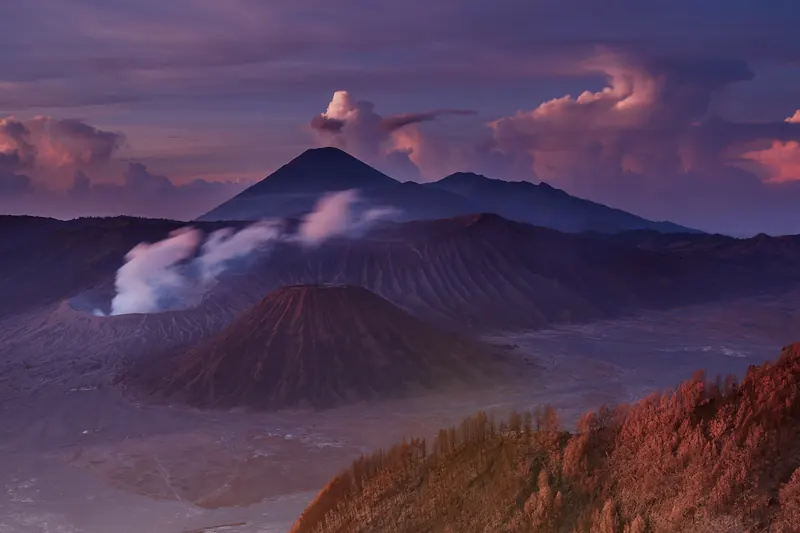
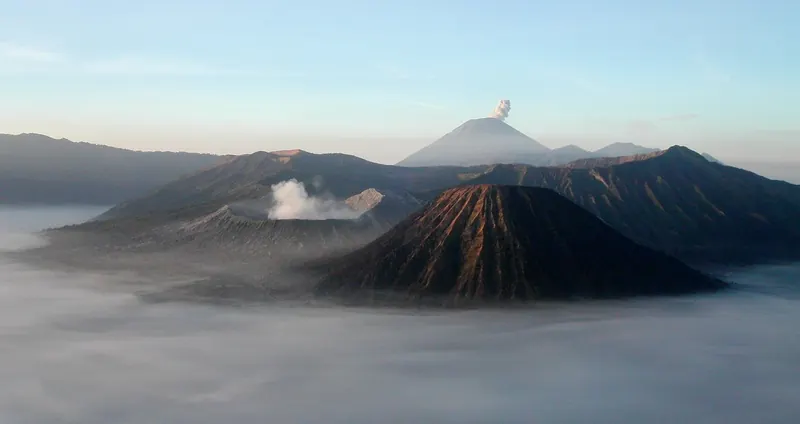
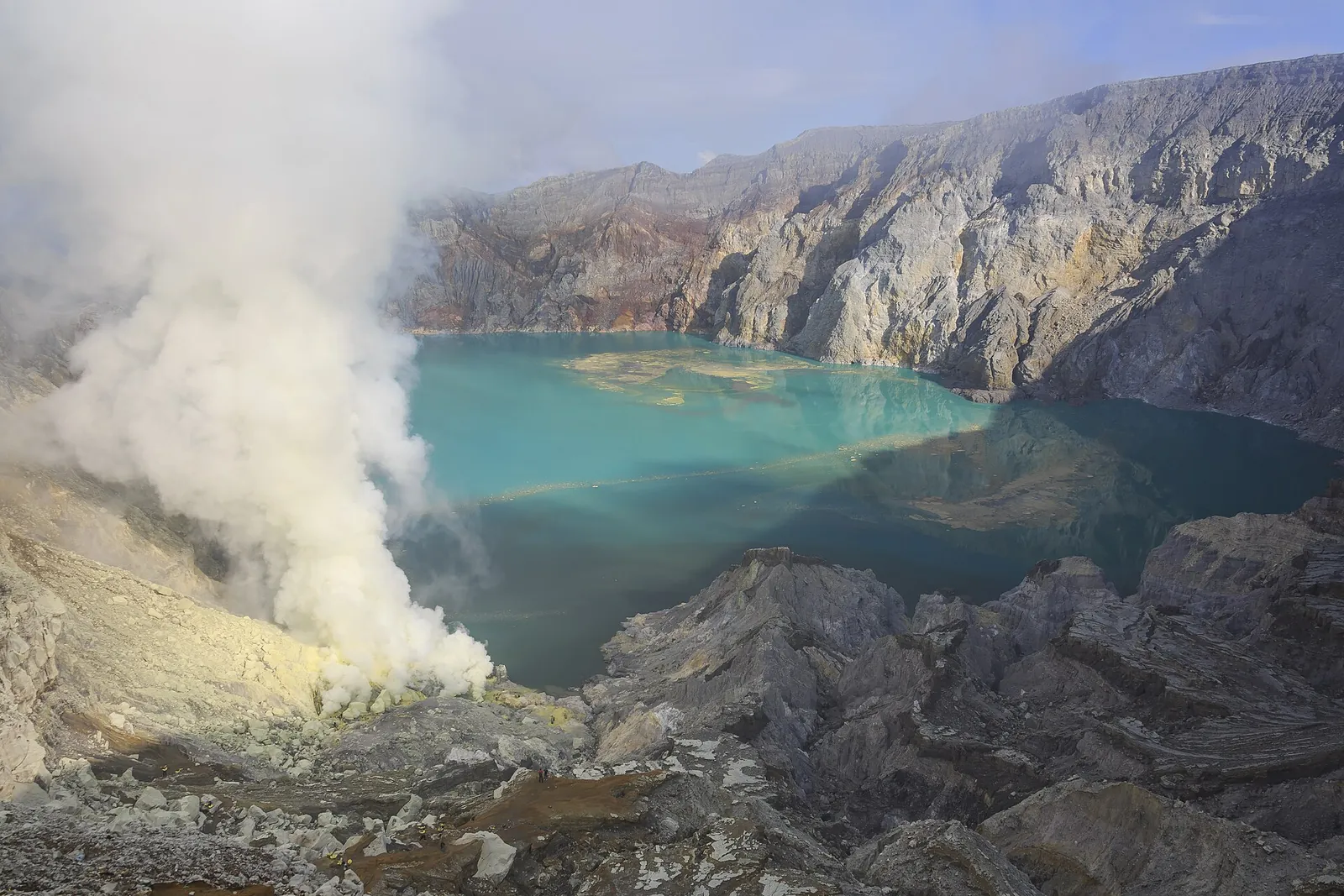
Kawah Ijen is the crater of a volcano on the border of the Banyuwangi and Bondowoso regencies at the eastern tip of Java. Inside it lies a turquoise lake that UNESCO calls the most acidic in the world, and from vents on its wall miners still dig sulphur by hand and carry it out in baskets. Before dawn, burning sulphur gas gives off the blue flames that made Ijen famous. Most visitors do it in one cold night, starting at the trailhead at Paltuding in the early hours. It is worth doing, but it is a hike through volcanic gas, and the rules about the crater floor matter more than any photo.
- Suggested time
- 1 night (2 if you add Kemiren or Baluran)
- Where to stay
- Banyuwangi town or Kemiren village on the east side; Bondowoso on the west side
- Season and timing
- The Ministry of Tourism recommends the dry season, April to October, for clear views. The rim is cold at night all year, about 10°C on a normal day according to the ministry, and sometimes as low as 2°C. The park can close at short notice for volcanic activity or forest fires, as it did in September 2026.
The short answer
Give Ijen one night and a day of rest afterwards. Sleep in Banyuwangi, the closer side, or in Kemiren on the road up; or in Bondowoso if you are coming from the west. Go with a guide. Plan to reach the Paltuding trailhead when the climb opens: when we checked, that was 01:00, or 03:00 during restriction periods. Walk the 3 to 4 kilometres up to the crater rim and watch sunrise over the lake. Book your ticket online in advance and bring a head torch, warm layers and a proper gas mask. The volcanology agency tells visitors not to go down to the crater floor, so check what the current rules allow before you plan your night around the blue fire.
What the Ijen night hike involves
Ijen rises to 2,386 metres, according to Indonesia's volcanology agency (PVMBG). It stands on the edge of a vast old caldera that the Ministry of Tourism puts at 134 square kilometres. Since 2023 it has been the main attraction of the Ijen UNESCO Global Geopark, which covers 4,723 square kilometres. Around 22 younger volcanic cones have grown inside the caldera and on its rim.
The walk starts at the trailhead at Paltuding Post (Pos Paltuding). The ministry's destination page gives the trail as 3 kilometres to the edge of the crater. A newer ministry article describes a trek of about 3.8 to 4 kilometres taking two to three hours. Its main Kawah Ijen page says one to one and a half hours. In practice, the time depends on your fitness and on how often you stop on the steep stretches. From the rim you look down onto the turquoise lake, the steaming sulphur vents and the miners' path. You can then walk part of the way around the rim.
When we checked on 3 October 2026, the ministry's Ijen Crater page said the climb opens daily at 01:00, and at 03:00 during restriction periods. It is cold up there. The ministry describes the air at about 10°C on a normal day and sometimes as low as 2°C, so bring a warm jacket and long trousers, as well as water and a snack. The ministry also warns that the sulphur will tarnish silver jewellery, so leave it at your hotel.
Gas, the crater floor and the blue fire: the safety realities
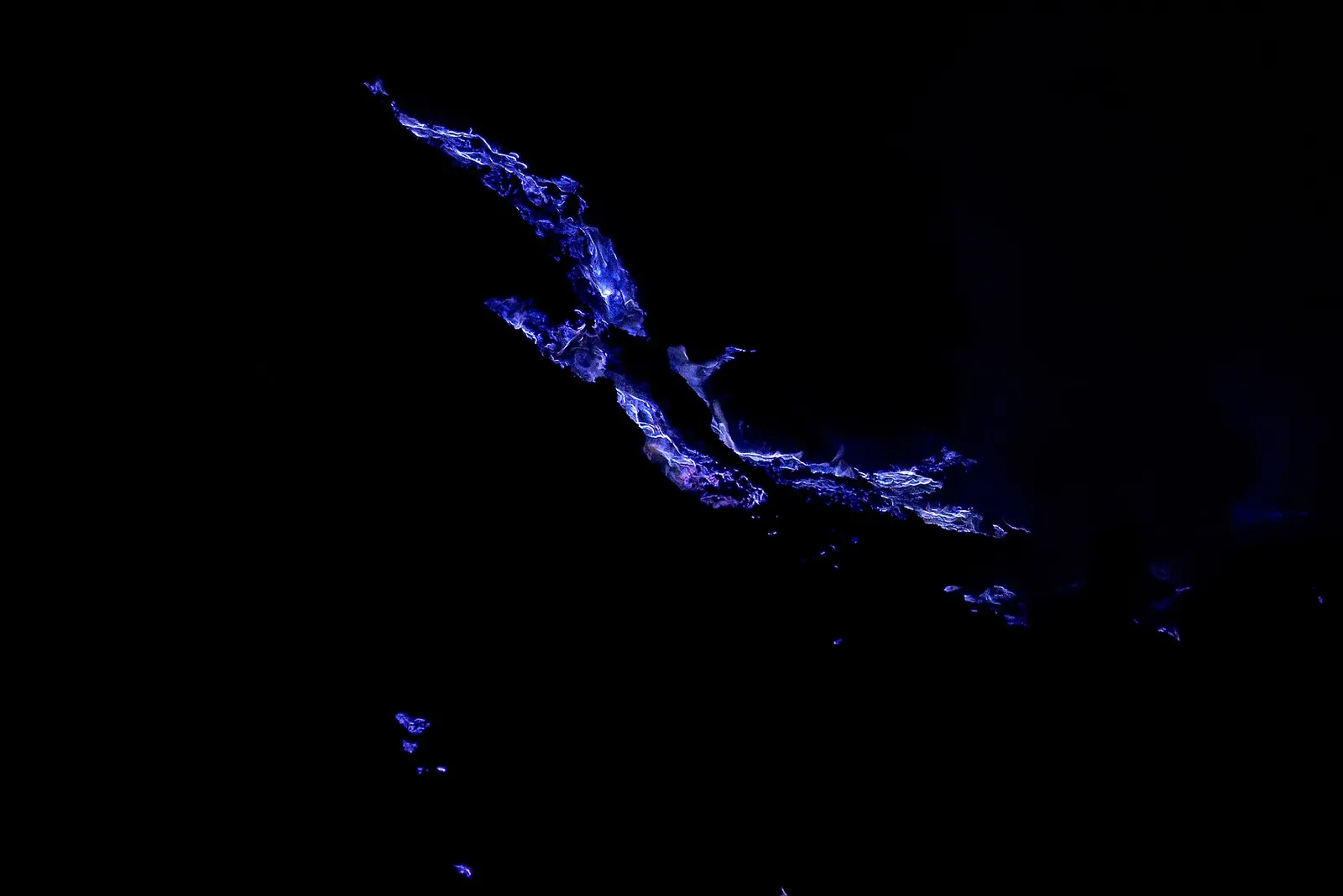
The blue fire is sulphur gas that ignites as it reaches the air. UNESCO's geopark profile explains that Ijen's high sulphur concentrations and temperatures above 360°C produce the blue flames, and that they can only be seen at night because daylight drowns them out. The ministry's guidance is to be there between about 2:00 and 4:00, before first light. The flames burn at the vents inside the crater, near the lake, where the miners work.
This is where you need to slow down. When we checked on 3 October 2026, PVMBG's daily report on its MAGMA Indonesia site (dated 2 October) listed Ijen at Level I (Normal), the lowest alert level. The report still advised visitors not to go down to or approach the floor of the crater, not to camp within 500 metres of it, and to beware of toxic gas around the crater and possible collapse of the crater walls. It also warned of carbon dioxide along the Banyupait–Banyuputih river. If a guide or tour offers to take you down to the flames, remember that the agency advises against it. Ask your guide exactly where they plan to take you, and decide before you start.
Gas is the everyday risk. The ministry strongly recommends a guide because toxic gases can be present around the crater, and the head of the nature park told ANTARA that protective masks are strongly recommended. Bring a proper respirator rather than a cloth mask. If the plume blows towards you, turn back. People with asthma or heart or lung conditions should take medical advice before going.
The park can also close with little warning. On 4 September 2026 the East Java conservation agency (BBKSDA) closed the Ijen Crater Nature Tourism Park until further notice, after forest fires spread towards Pondok Bunder on the hiking route. Banyuwangi declared a 14-day fire emergency. The park reopened on 28 September 2026, with a reminder that lighting campfires is forbidden. Check the latest status before you travel.
Make time for the local food
What to eat and where to look
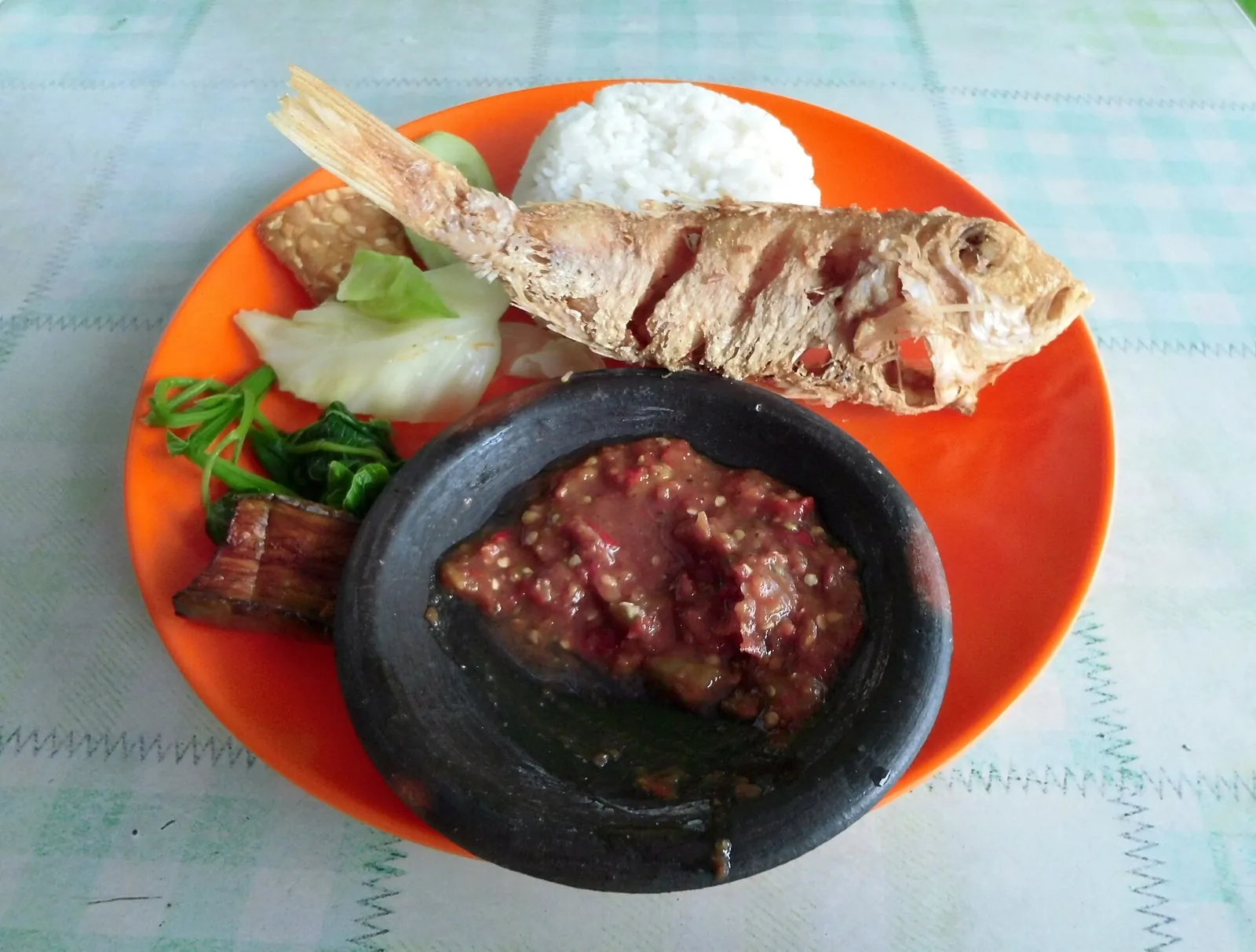
Nasi tempong (sego tempong)
Banyuwangi's best-known plate: warm rice with fried fish, tofu, tempeh and boiled greens such as spinach and long beans, served with a sambal so hot that the name refers to it 'slapping' you, as the Ministry of Tourism puts it.
- Where to look
- Local eateries all over Banyuwangi town.
- Fit it into your day
- A late lunch after you have slept off the night hike.
The sambal is very hot; ask for it on the side.
Ayam kesrut
A light, sour and spicy soup of free-range chicken cooked with chilli and bilimbi fruit. The ministry notes that it is found in local eateries on the slopes of Mount Ijen.
- Where to look
- Local eateries on the slopes of Ijen.
- Fit it into your day
- A warming breakfast or early lunch after the descent.
The chicken comes on the bone, and the broth can be spicy.
Pecel pitik and Osing coffee
Pecel pitik is grilled free-range chicken, shredded and mixed with seasoned grated coconut; it is a ceremonial Osing dish. In Kemiren it comes with coffee roasted the traditional way over a wood-fired clay stove.
- Where to look
- Cafés and home kitchens in Kemiren village, some of which offer cooking sessions.
- Fit it into your day
- An afternoon in Kemiren the day after the hike.
Cooking sessions and homestay meals need to be arranged in advance.
Nasi cawuk
A local breakfast of rice with savoury grated coconut, grilled corn and a light broth, with boiled egg or fish on the side, according to the ministry.
- Where to look
- Morning stalls and warungs in Banyuwangi town.
- Fit it into your day
- Breakfast on the day you arrive, or the morning after a full night's sleep.
It is a breakfast dish, so look for it early.
Tapai from Bondowoso
Fermented cassava is Bondowoso's signature food, sold under brand names that end in a number. It also comes as suwar-suwir (tapai sweets), prol tapai cake and crisp tapai chips, the ministry explains.
- Where to look
- Souvenir shops (pusat oleh-oleh) in Bondowoso.
- Fit it into your day
- A snack and something to take home if you come through on the Bondowoso side.
Tapai is fermented and contains a little alcohol.
How to arrange it: tickets, guides and which side to sleep on
Ijen is a nature tourism park (Taman Wisata Alam) managed by BBKSDA East Java. Entry tickets are sold online. When the park reopened in September 2026, its head told ANTARA that tickets could be booked through the Forestry Ministry's site, ayoketamannasional.kehutanan.go.id. We have not given a price, because we could not confirm the current fee on an official page. Check it when you book, and check whether your tour includes it.
Go with a local guide; the ministry strongly recommends it. ANTARA has reported on a group of Ijen guides based in Licin subdistrict, on the Banyuwangi side, who are now learning Mandarin as well as English. That gives a sense of how busy the trail has become. On the mountain you will also find cart taxis (ojek gerobak), nicknamed 'lamborghini', for visitors who cannot walk the trail or would rather not.
Banyuwangi is the closer and more practical base. The ministry describes it as the starting point for the blue fire, and it is where the airport, the trains from Surabaya and the ferry from Bali arrive. The Osing village of Kemiren lies on the road up to Ijen, according to the ministry, and has homestays; arrange these in advance. Bondowoso is the western approach. The ministry notes that Ijen can be reached through Bondowoso from both the north and the south coast, ending at Paltuding. This side suits travellers coming from the west, for example after Mount Bromo. Whichever side you choose, the ministry warns that the road up is very steep and recommends a sturdy vehicle. That means hiring a car with a driver or booking a tour with pick-up rather than driving yourself.
The sulphur miners
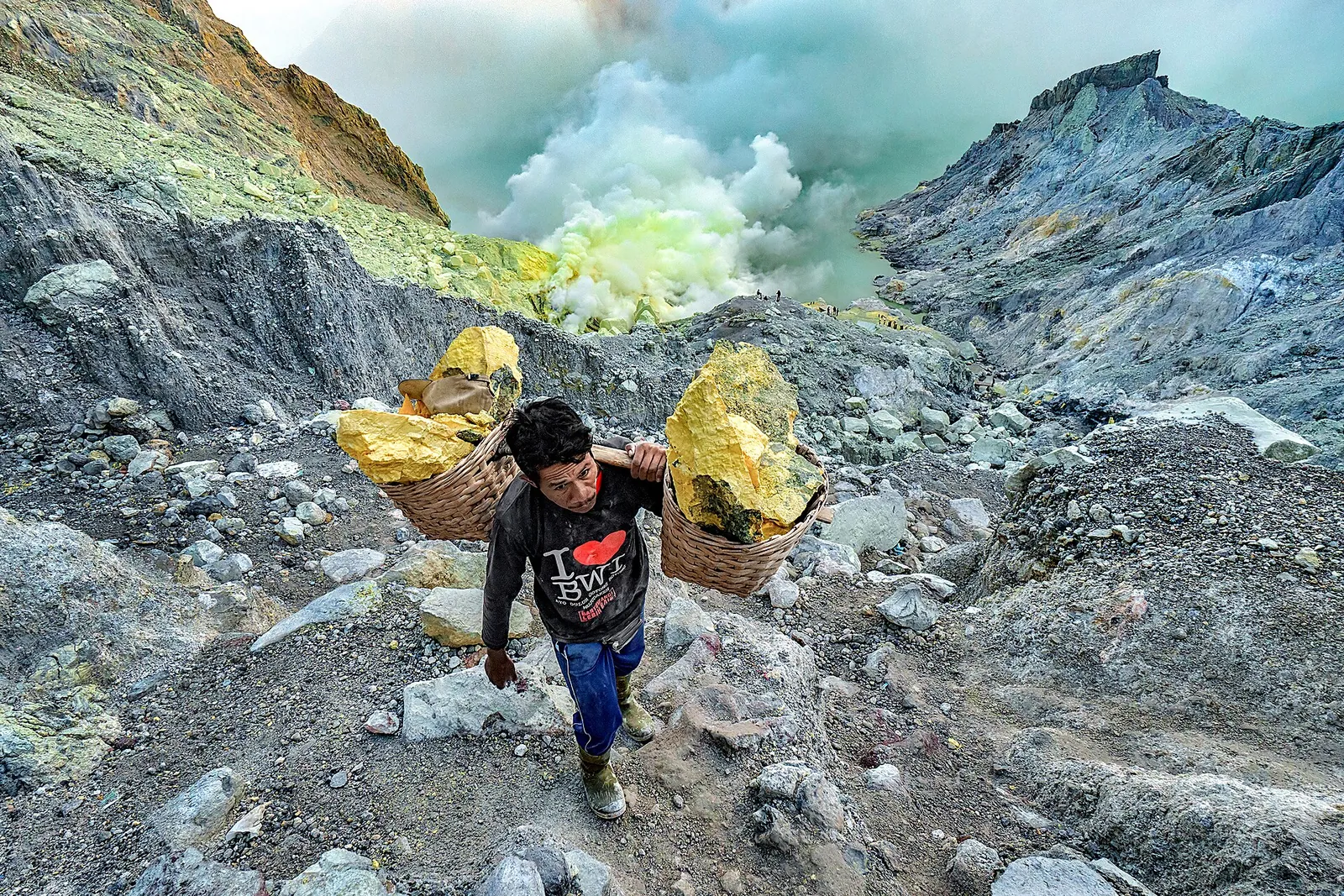
The miners are the reason the crater has paths at all. They walk down into the crater each day, dig out the sulphur by hand and carry it up the crater wall in two baskets slung from a shoulder pole. The ministry describes this traditional hand-mining as a humbling look at the labour behind the local economy.
Remember that they are at work. Give way on the narrow sections, especially on the path inside the crater. Ask before you take close-up photos, and do not stop in their way to take them.
After the hike: Kemiren, Banyuwangi and onward
By mid-morning you will be tired, so plan an easy afternoon. In Kemiren, the Osing people keep their own language, carved wooden houses with three distinct roof shapes, the Gandrung dance and a tradition of coffee roasted over a wood-fired clay stove. The Ministry of Tourism describes cafés where you can learn to roast and brew it, and Osing dishes such as pecel pitik. The ministry puts Kemiren about 40 minutes' drive from Banyuwangi's Blimbingsari airport.
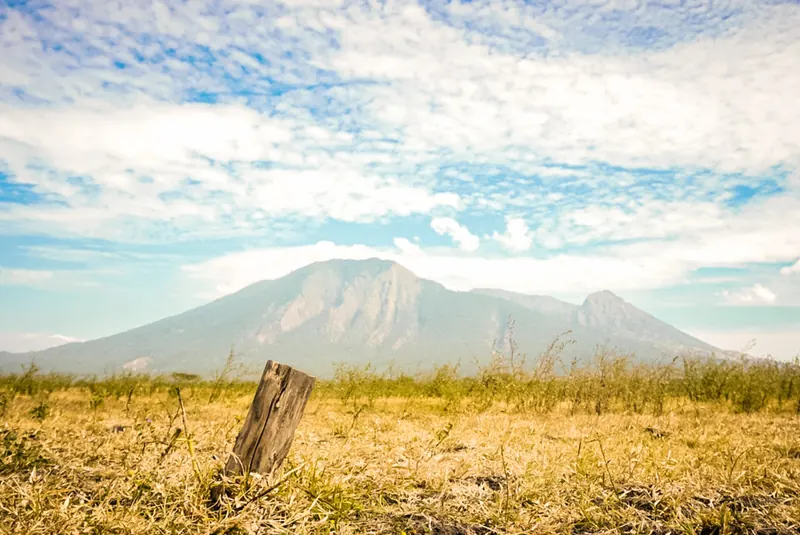
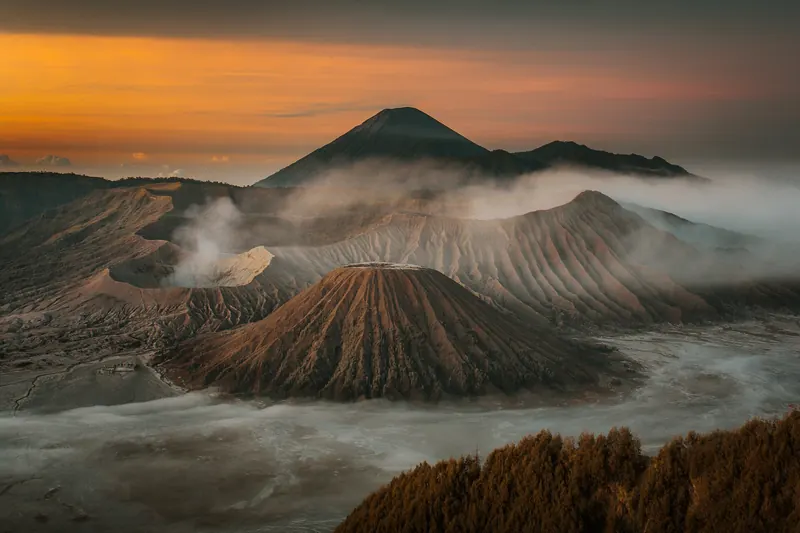
From Banyuwangi, Baluran National Park, with its savanna and herds of banteng, makes a good next stop. The ferry from Ketapang harbour crosses to Gilimanuk in Bali, for Pemuteran on Bali's north-west coast. Heading west, Ijen pairs naturally with Mount Bromo; the ministry's guide to East Java treats Bromo and Ijen as one trip.
Practical questions
What time does the Ijen hike start?
When we checked on 3 October 2026, the Ministry of Tourism's Ijen Crater page said the climb from Paltuding opens at 01:00, or at 03:00 during restriction periods. The ministry says the blue fire is best seen between about 2:00 and 4:00.
Can you still go down to see the blue fire?
Not on the volcanology agency's advice. When we checked, PVMBG's daily report listed Ijen at Level I (Normal) but still told visitors not to go down to or approach the crater floor, which is where the flames burn, down inside the crater. Ask your guide what is allowed on the day, and remember that sunrise over the lake from the rim is spectacular on its own.
Do I need a gas mask at Ijen?
Yes. The park's head told ANTARA that protective masks are strongly recommended, and the ministry warns of toxic gases around the crater. Bring a proper respirator, and turn back if the plume blows over the path.
How do I get an Ijen ticket?
Tickets are booked online through the Forestry Ministry's site, ayoketamannasional.kehutanan.go.id, the park told ANTARA in September 2026. Check the current fee there, and check whether your tour includes it.
Should I stay in Banyuwangi or Bondowoso?
Banyuwangi (or Kemiren, on the road up) is closer and easier if you arrive by air, by train from Surabaya or by ferry from Bali. Bondowoso is the western approach and makes sense if you are coming from the Bromo side.
Is Ijen open?
It reopened on 28 September 2026 after being closed from 4 September because of forest fires. Closures for fires or volcanic activity can happen at short notice, so check BBKSDA East Java and MAGMA Indonesia shortly before you go.
Sources and checks before you travel
Reference sources for the version dated 3 October 2026. Confirm opening times, access, transport and conditions for your travel dates.
- Indonesia Travel (Ministry of Tourism): Ijen Crater ↗ — opens in a new tab
- Indonesia Travel: Kawah Ijen ↗ — opens in a new tab
- Indonesia Travel: The Magic of Kawah Ijen, a journey to Indonesia's blue fire ↗ — opens in a new tab
- UNESCO: Ijen UNESCO Global Geopark ↗ — opens in a new tab
- MAGMA Indonesia (PVMBG): volcano activity levels ↗ — opens in a new tab
- MAGMA Indonesia (PVMBG): Ijen activity report, 2 October 2026 ↗ — opens in a new tab
- ANTARA: Ijen Crater temporarily closed due to forest fires ↗ — opens in a new tab
- ANTARA: Banyuwangi declares emergency over Ijen forest fire ↗ — opens in a new tab
- ANTARA: Ijen Crater to reopen to tourists following wildfires ↗ — opens in a new tab
- ANTARA (Indonesian): Ijen tour guides learn Mandarin ↗ — opens in a new tab
- Indonesia Travel: Banyuwangi ↗ — opens in a new tab
- Indonesia Travel: Kemiren ↗ — opens in a new tab
- Indonesia Travel: 5 things to do in Osing Kemiren Tourism Village ↗ — opens in a new tab
- Indonesia Travel: 13 Banyuwangi foods you must try ↗ — opens in a new tab
- Indonesia Travel: Homestays in East Java, Bromo–Ijen, Malang, Banyuwangi ↗ — opens in a new tab
- Indonesia Travel: Tapai products from Bondowoso ↗ — opens in a new tab
Does this experience fit your route?
If you are coming from Bali, a guided overnight trip takes care of the ferry, the drive and the guide. Before you book, check what it includes, and whether it follows the volcanology agency's advice on the crater floor.
Check dates and details on Viator ↗ — opens in a new tabAffiliate link · Book with ViatorPhoto credits
The acid lake on the floor of the Ijen crater, with steam from the sulphur vents on the left
Photograph: CEphoto, Uwe Aranas — opens in a new tab · CC BY-SA 3.0 — opens in a new tab
Changes: Resized and converted to WebP; displayed with responsive crops. · Original photograph and licence details ↗ — opens in a new tab
A miner carries sulphur up from the crater floor in two baskets on a shoulder pole
Photograph: Emjeha — opens in a new tab · CC BY-SA 4.0 — opens in a new tab
Changes: Resized and converted to WebP; displayed with responsive crops. · Original photograph and licence details ↗ — opens in a new tab
The blue fire of Ijen: burning sulphur gas, visible only before dawn
Photograph: Jakub Hałun — opens in a new tab · CC BY-SA 4.0 — opens in a new tab
Changes: Resized and converted to WebP; displayed with responsive crops. · Original photograph and licence details ↗ — opens in a new tab
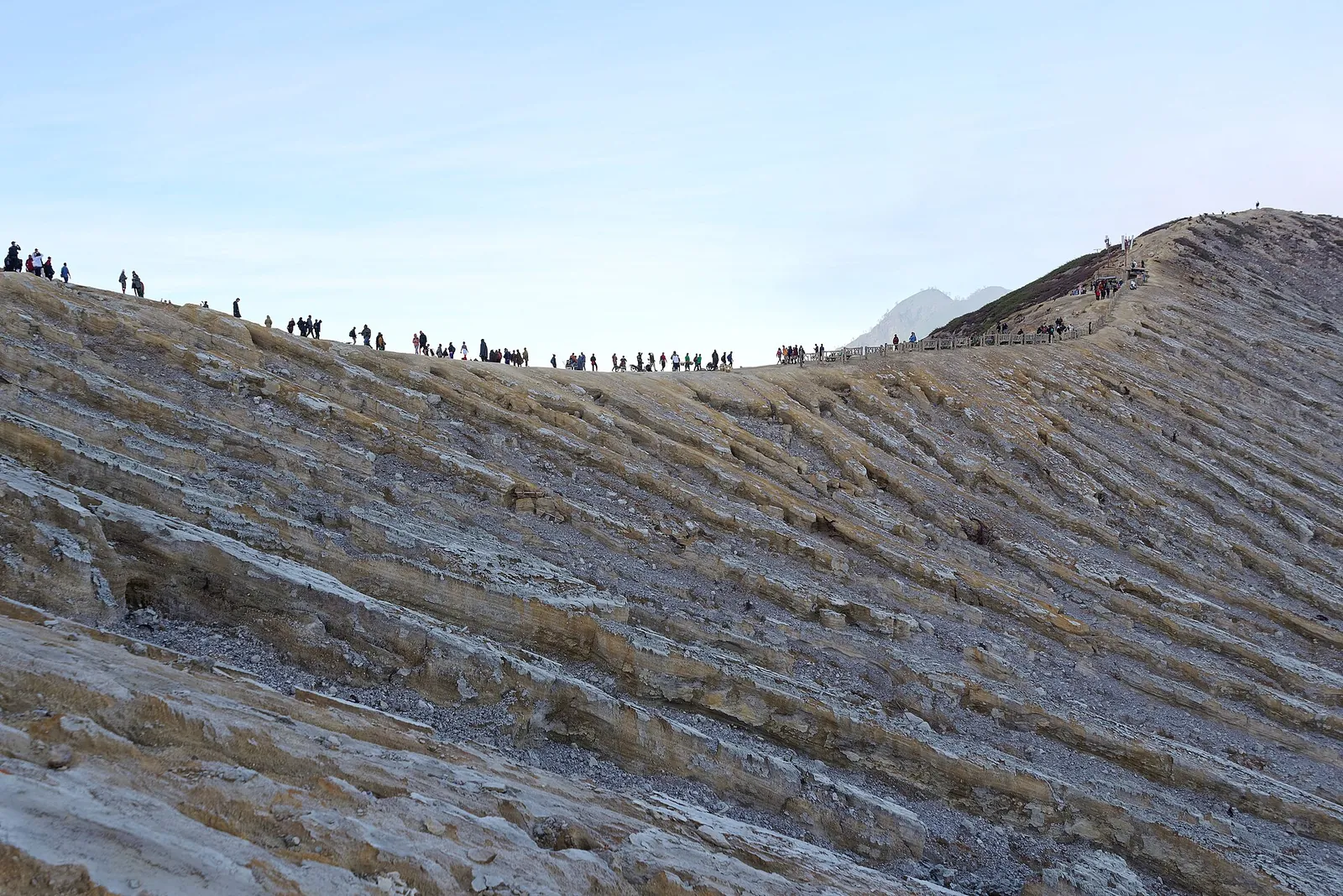
Hikers on the summit ridge of the Ijen cone in the early morning
Photograph: Jakub Hałun — opens in a new tab · CC BY-SA 4.0 — opens in a new tab
Changes: Resized and converted to WebP; displayed with responsive crops. · Original photograph and licence details ↗ — opens in a new tab
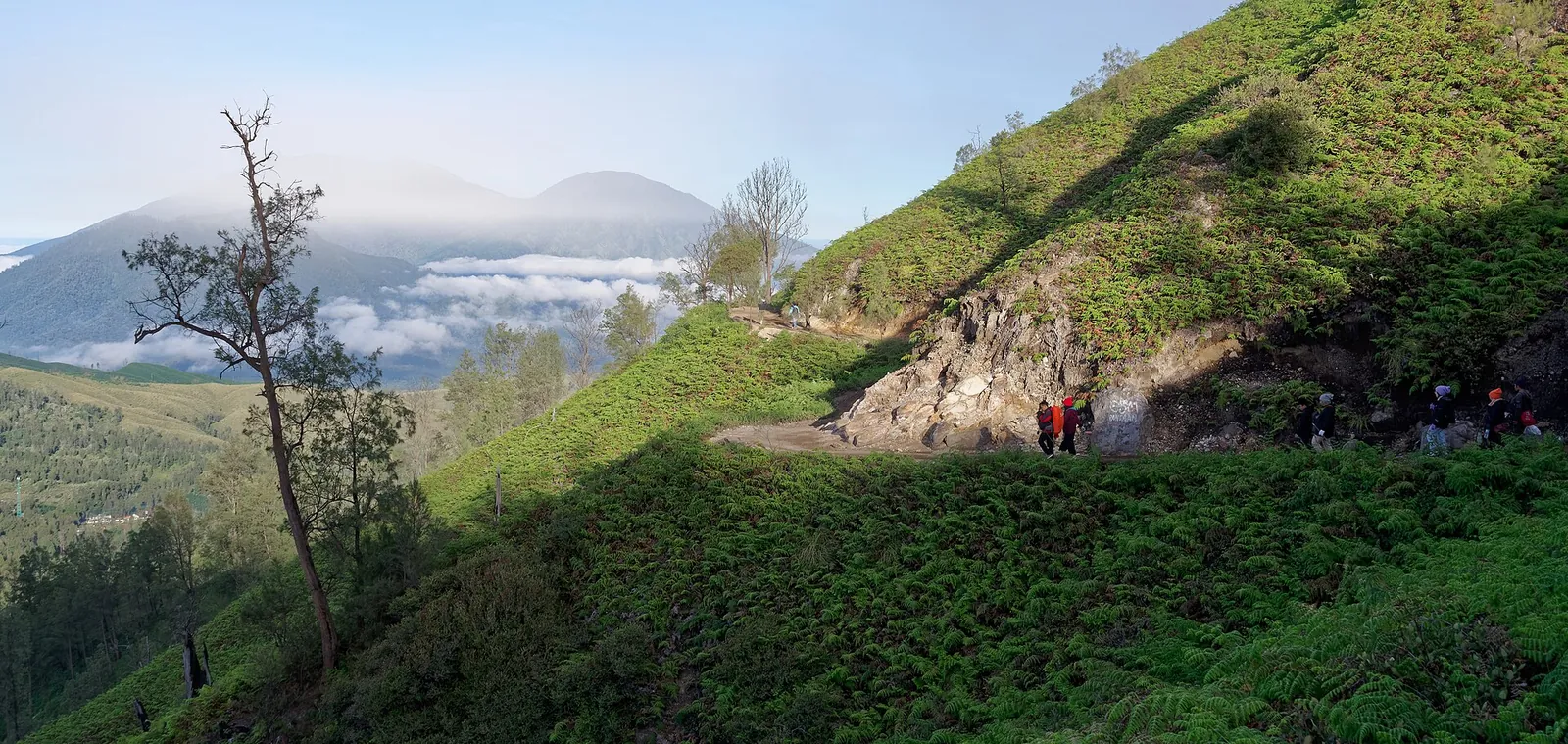
The trail down from Kawah Ijen, with Raung volcano on the left
Photograph: Jakub Hałun — opens in a new tab · CC BY-SA 4.0 — opens in a new tab
Changes: Resized and converted to WebP; displayed with responsive crops. · Original photograph and licence details ↗ — opens in a new tab
Nasi tempong, Banyuwangi's rice plate with a very hot sambal
Photograph: Gunawan Kartapranata — opens in a new tab · CC BY-SA 4.0 — opens in a new tab
Changes: Resized and converted to WebP; displayed with responsive crops. · Original photograph and licence details ↗ — opens in a new tab