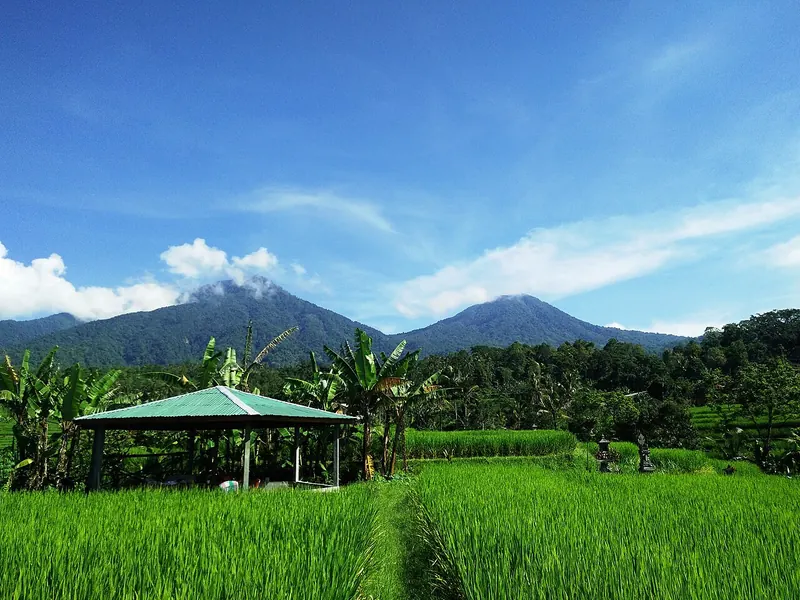
Plan your trip · Indonesia
Where to stay in Indonesia: villas, homestays, resorts and city hotels
Indonesia has every kind of bed, from a mattress in a Tengger farmhouse above the clouds at Bromo to a private-pool villa in Bali and a wooden boat on a Borneo river. The choice matters more here than in most countries, because distances between islands are long, many of the best places are villages rather than towns, and on some trips the boat is the hotel. This guide sorts the main types of stay by what each one is good for, then goes region by region through the bases that make sense for a first or second trip.
- Suggested time
- About two weeks for Bali, Java and one island further east; 5–7 days for Bali alone
- Where to stay
- Ubud and one Bali beach area, Yogyakarta, and Labuan Bajo or Lombok
- Season and timing
- Generally drier from April to September in Bali and Java; book early for Nyepi (March or April), Vesak and the end of Ramadan.
The short answer
On a two-week first trip, use two or three bases rather than moving every night: four or five nights in Bali split between Ubud (or a rice-field stay just outside it) and one beach area such as Sanur, Nusa Dua or Uluwatu; three or four nights in Yogyakarta, with one night near Borobudur if you want the temple at dawn; and, if you have the time, a few nights in Lombok, the Gili Islands or Labuan Bajo. Use city hotels and guesthouses where you arrive and leave, villas and resorts where you want to rest, and village homestays for one or two nights where the village itself is the point, such as Candirejo near Borobudur, Ngadas near Bromo or Kemiren on the way to Ijen. In Komodo and Tanjung Puting, budget for nights on a boat as well as on land. Book ahead for Nyepi in Bali, Vesak at Borobudur and the end of Ramadan.
Villas, homestays, guesthouses, resorts and city hotels: what each is for
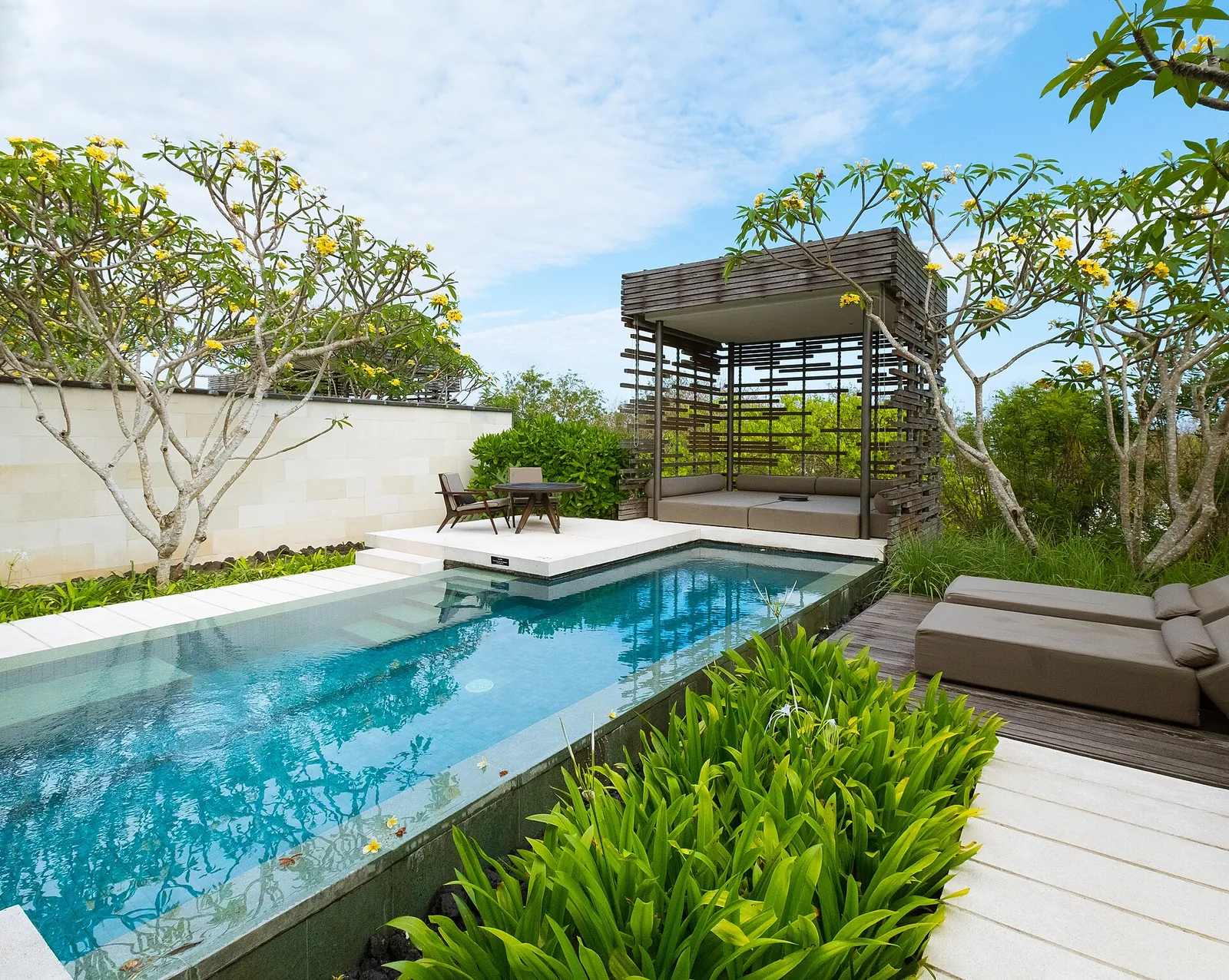
Most Indonesian trips mix several kinds of accommodation, and the trick is to put each one where it earns its place. Villas are a Bali speciality, from a single room with a plunge pool to a house with staff, and they suit rest days, families and groups more than busy sightseeing. The Ministry of Tourism's pages on Canggu and Uluwatu both list villas alongside hotels, and in Uluwatu the range runs from staying at a simple warung, where you pay for your meals, to starred hotels near the resorts. Resorts cluster in a few planned or coastal areas: Nusa Dua in Bali is described by the ministry as a purpose-built enclave of international luxury hotels, spas and golf courses.
Homestays in Indonesia usually mean a room in a family house or a small group of rooms run by a household, often in a tourism village (desa wisata). They are the best way to spend a night where hotels would make no sense: the ministry describes Ngadas, at 2,150 metres on the slopes of Bromo, as having around 50 homestays with water heaters, and Candirejo near Borobudur as having more than 50 homestays run by the community. Guesthouses and small hotels (often called losmen or penginapan) fill the backpacker streets of Yogyakarta, Ubud and the islands, and city hotels are what you want in Jakarta, Surabaya or Yogyakarta, where traffic makes a central location worth paying for.
A simple rule keeps the trip comfortable: sleep in a well-located hotel the night you arrive and the night before an early flight, and put the village homestay, the boat night or the remote lodge in the middle of the trip. A shared bathroom and a cold night are easy between two comfortable stays; they are harder before a dawn departure.
Bali: which area for which kind of stay
Bali is small on the map but slow on the road, so the area you choose decides how much of each day you spend in a car. For Ubud, the ministry's own advice is to stay off the centre, among the rice fields, if you want nature, or in the centre if you want to be close to the action; the first suits a villa or a quiet guesthouse, the second suits walking to dinner and dance performances. Sanur is one of the places where Bali tourism began and still has some of the island's historic hotels; it has a paved beachfront path of about 5 km, calm water, and is the launching point for boats to Nusa Lembongan. The ministry gives about 20 minutes by taxi from the airport.
On the south coast, Nusa Dua is the resort enclave, about 15 minutes from Jimbaran and 20–30 minutes from the Kuta area by the main bypass road. Uluwatu, on the cliffs of the Bukit Peninsula, is about an hour from the airport and suits surfers and anyone who wants a villa with a sea view; the ministry notes that the better hotels are near the resorts. Canggu is described by the ministry as still partly rural, with a black-sand surf beach backed by rice fields and a growing number of hotels, villas and cafés, about 45 minutes by car from the airport; it advises hiring your own car or arranging a hotel pick-up.
If you split Bali into two stays, the most common pairing is Ubud for culture and rice fields plus one coastal area for the last nights. That keeps the long drives to two transfers and puts the beach at the end, close to the airport.
- Ubud centre: walkable to restaurants, markets and evening performances; busier and noisier.
- Rice fields around Ubud: villas and guesthouses in green surroundings; you will rely on a driver or scooter.
- Sanur: calm beach, a long seafront path, boats to the Nusa islands; an easy family choice.
- Nusa Dua: large international resorts in a self-contained enclave.
- Uluwatu: cliff-top villas and surf; about an hour from the airport.
- Canggu: villas and cafés among rice fields; arrange the airport transfer in advance.
Make time for the local food
What to eat and where to look
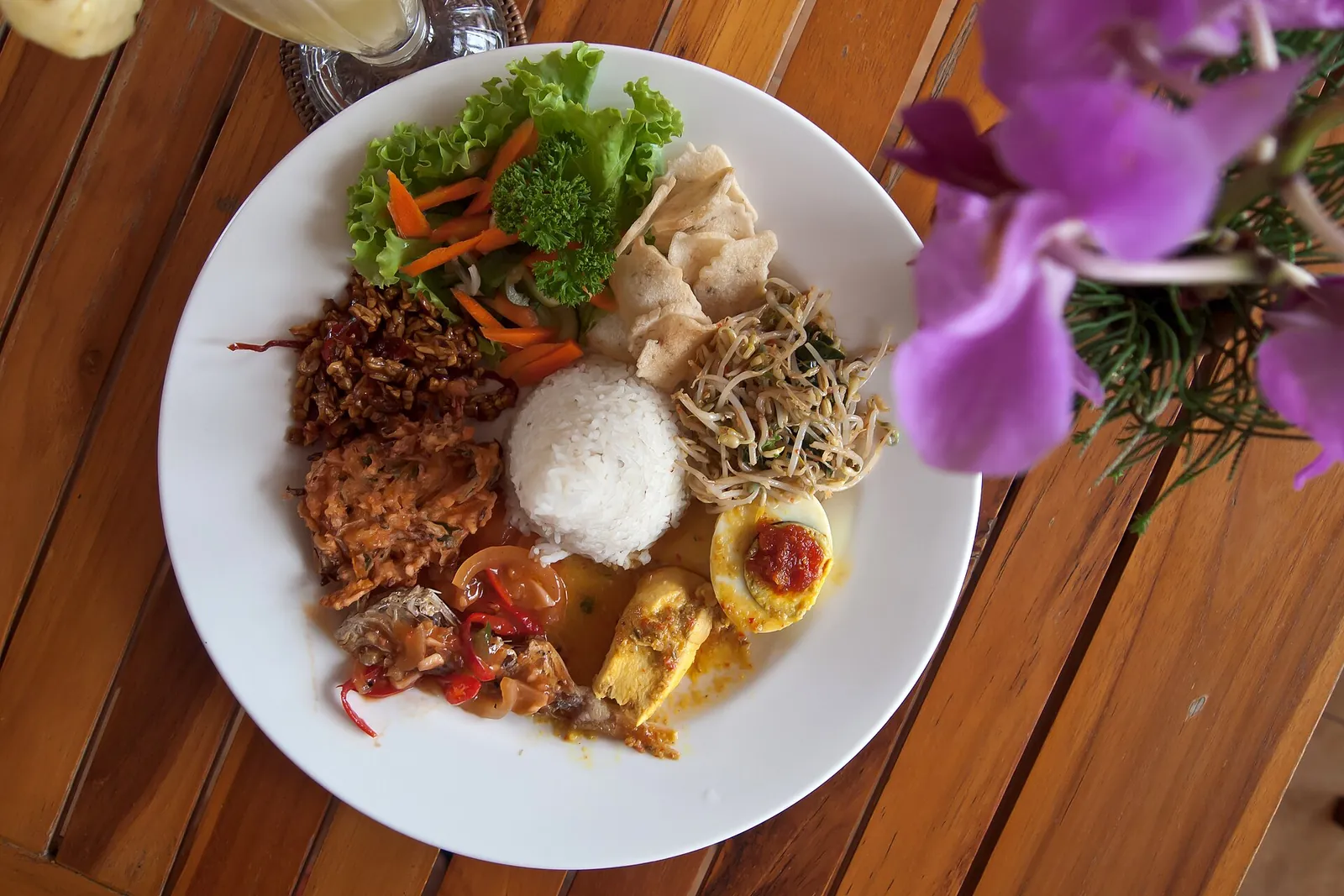
Nasi campur
Rice with a selection of small portions: vegetables, a little meat or fish, egg, peanuts, sambal. In Bali, warung versions often include shredded chicken, satay or lawar, and every cook's plate is different.
- Where to look
- Warung near your villa or guesthouse in Ubud and the Bali beach areas, and the night market in Sanur at the northern end of Jalan Danau Tamblingan.
- Fit it into your day
- An easy lunch between sights, or dinner on nights when a villa's kitchen is closed.
Balinese versions often contain pork; ask, or look for a halal sign, if you avoid it. Sambal can be very hot.
Gudeg
Yogyakarta's best-known dish: young jackfruit slow-cooked for hours in coconut milk with spices, with teak leaves giving it its reddish-brown colour, served sweet with rice, egg and chicken.
- Where to look
- Gudeg stalls and restaurants in Yogyakarta; the lesehan tents along Malioboro at night serve many local dishes.
- Fit it into your day
- Breakfast or dinner when you are based in Yogyakarta, before or after a day at Borobudur or Prambanan.
It is sweet; some versions come with spicy krecek (beef-skin stew) on the side. Contains coconut milk.
Grilled fish and seafood
Fish, squid, prawns and crab chosen raw and grilled or fried to order, a nightly ritual in the island bases.
- Where to look
- The night market in front of the pier on Gili Trawangan, which the ministry says opens around sunset, and Pede Beach in Labuan Bajo, where it mentions grouper, squid, red snapper, shrimp and crab.
- Fit it into your day
- Dinner on the nights you stay on the Gilis or in Labuan Bajo, especially after a boat day.
Agree the price and weight before the fish is cooked, and avoid shellfish if you have an allergy.
Home-cooked homestay meals
In tourism villages the family usually cooks for guests, which is often the best food of the trip: rice, vegetables, tempeh, tofu and whatever is in season. In Candirejo near Borobudur, homestays offer cooking classes for local snacks such as criping and rengginang.
- Where to look
- Village homestays such as Candirejo near Borobudur, Ngadas near Bromo and Kemiren on the way to Ijen.
- Fit it into your day
- Dinner and an early breakfast before a sunrise trip; confirm when you book whether meals are included.
Tell the family about allergies, pork, shellfish and chilli in advance; village kitchens cook with what they have.
Java: city bases, temple stays and volcano villages
On Java, the base is usually a city with a station, and the special nights are short excursions from it. In Yogyakarta, the classic area is around Malioboro, within walking distance of Tugu railway station, where lesehan food tents open on the pavement at night and Yogyakarta's oldest hotel, the colonial-era Garuda, still stands. Yogyakarta International Airport (YIA) is the main gateway, and the ministry lists taxis, ride-hailing and shuttle buses into the centre.
For Borobudur, the ministry points out that most visitors stay in Yogyakarta, Solo or Semarang, but that sleeping nearby lets you reach the temple at dawn and see the surrounding villages. Options range from luxury resorts such as Amanjiwo to budget hotels and homestays. InJourney, the state company that manages the site, describes Hotel Manohara as the only accommodation inside the Borobudur temple area, a short walk from the monument. Nearby, the tourism village of Candirejo has more than 50 community-run homestays, some in traditional houses, with cooking classes for local snacks. The ministry warns that rooms around Borobudur fill up around Vesak, so book early if your dates are close to it.
In East Java, Bromo and Ijen are where a village bed makes the most sense, because both are early-morning trips. Ngadas, about 6.5 km from Bromo and around 30 km from Malang, has around 50 homestays according to the village head quoted by the ministry; temperatures there range from about 0 to 25 °C, so expect a cold night and ask whether there is hot water. On the Ijen side, the Osing village of Kemiren in Banyuwangi has homestays about 40 minutes by road from Blimbingsari airport; the ministry advises arranging and confirming the price, facilities and availability before you arrive.
Jakarta is a city-hotel stop. The ministry's advice is to choose a hotel close to what you plan to see, because distances are long and traffic heavy; many of the upscale hotels are in Central Jakarta. Soekarno-Hatta, the main airport, is outside the city in Tangerang, in neighbouring Banten province.
Village homestays: how to find one and what to ask
The Ministry of Tourism runs Jadesta, a network site for Indonesia's tourism villages. Its homestay pages list the facilities (for example a shared or private bathroom, a fan, breakfast), a starting price and the contact of the village tourism group (pokdarwis) that manages bookings. When we checked on 2026-10-03, for example, the eco-lodge at Rammang-Rammang in South Sulawesi was listed from Rp 400,000 with both shared and private bathrooms. The same site highlights villages recognised by UN Tourism's Best Tourism Villages programme, including Nglanggeran (2021), Penglipuran (2023), Jatiluwih and Wukirsari (2024).
Homestays vary enormously, from a spare room with a mattress to small guesthouses with private bathrooms that still serve family meals. Before you book, ask the questions that decide whether the night is a pleasure:
- Bathroom and water: private or shared, a squat or sit-down toilet, and whether there is hot water (important in highland villages such as Ngadas).
- Meals: whether dinner and breakfast are included and whether the family can cook without meat, pork, shellfish or chilli if you need it.
- Getting there: whether the host or the village group can collect you from the station, the bus stop or the airport, and how luggage reaches the house.
- Price and availability: confirm the price, what it includes and how you pay before you travel; the ministry gives exactly this advice for Kemiren.
Lombok, Komodo, Borneo and Sumatra: islands, boats and lakes
East of Bali, the bases are fewer and the choice of area matters more. On Gili Trawangan, the largest and most built-up of the three Gili Islands, the ministry notes that most accommodation and facilities are on the east side, and it is the busiest of the three for nightlife, with a night market in front of the pier. On Lombok itself, trekkers to Rinjani usually sleep in Senaru or Sembalun, where the ministry lists plenty of hotels, lodges, local eateries, guides and porters.
In Labuan Bajo, the gateway to Komodo National Park, the ministry suggests the Waecicu beach area for its line of hotels and resorts with views, and notes that there are also hotels on nearby islands such as Bidadari and Seraya. The other option is a liveaboard: several days on a phinisi boat visiting the islands and dive sites. The UK government's travel advice warns that boat safety standards vary, that vessels can be overcrowded or poorly maintained, and that you should check life jackets and lifeboats before you travel, bring children's life jackets if needed and avoid travelling after dark unless the vessel is properly equipped. Treat a boat night as you would a hotel night: check the operator, not just the cabin.
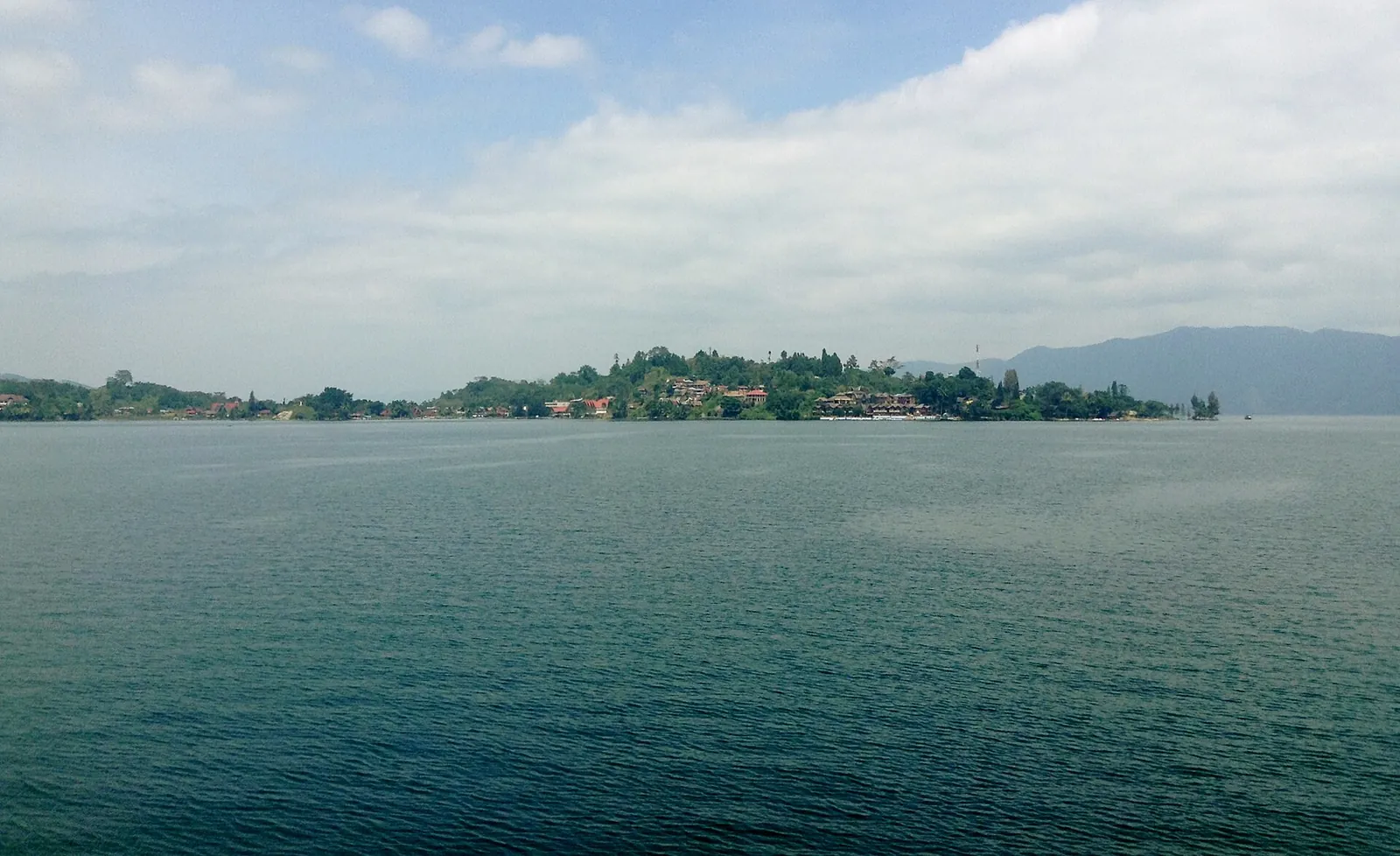
In Tanjung Puting National Park in Central Kalimantan, the boat is the accommodation: the ministry explains that visitors travel down the Sekonyer River from Pangkalan Bun on traditional klotok boats, which house them for the length of the stay. On Lake Toba in North Sumatra, the ministry lists Parapat, Tuktuk on Samosir Island and Balige as the main places to stay, from homestays to upscale resorts, and suggests checking whether the hotel provides transport or shuttles.
Holidays, levies and safety where you sleep
A few dates change availability and what you can do from your room. Nyepi, the Balinese day of silence, falls in March or April. The ministry's Nyepi guide says all transport, including the airport, stops for the day; you must stay inside your accommodation, keep noise down and use only low light inside the room, though many resorts offer indoor activities. Choose a hotel or villa you will be happy to spend a whole day in. Around Vesak, rooms near Borobudur fill up. During Ramadan, the UK advice notes that hotels and restaurants serving food in fasting hours may screen you off from Muslim guests.
In Bali, every foreign visitor pays a one-time levy. When we checked on 2026-10-03, the provincial Love Bali site listed Rp 150,000 per person, payable once per trip, cashless, either online before arrival or at counters at the airport and port, and also through registered hotels, travel agents and attractions; the proof is a QR-code voucher sent by email.
The UK government's travel advice also applies to where you sleep and drink. It warns of deaths from methanol in counterfeit spirits, including drinks bought in licensed bars, shops and hotels in tourist areas, and of assaults and robberies after tourists invited strangers back to their rooms. It says you must always carry your passport or stay permit. Indonesia has regular earthquakes, and the UK advice is to follow local authorities' instructions after a major quake near the shore, bearing in mind that a tsunami could arrive within minutes; the BMKG warning app is one way to get alerts. The rainy season usually runs from October to March, with flash floods in Jakarta and parts of Bali, so a hotel close to your departure point is worth more in the wet months.
Practical questions
Where should I stay in Bali on a first trip?
Split the stay: three or so nights in or around Ubud for rice fields, temples and performances, then two or three nights in one beach area. Sanur suits families and calm water, Nusa Dua suits large resorts, Uluwatu suits surfers and cliff-top villas, and Canggu suits cafés and villas among rice fields. Put the beach at the end, closer to the airport.
Is a villa or a hotel better in Bali?
A villa is better for rest, families and groups, and for a day like Nyepi when you cannot leave your accommodation. A hotel or guesthouse is better if you want to walk to restaurants and sights, as in central Ubud or Sanur. Many travellers do both: a hotel in the busy part of the trip and a villa for the last few nights.
How do I book a village homestay in Indonesia?
The Ministry of Tourism's Jadesta site lists tourism villages and many of their homestays, with facilities, starting prices and the contact of the village tourism group. Contact the group or the host directly, confirm the price, meals and bathroom type, and ask how to get there from the nearest town or station.
Is it worth sleeping near Borobudur?
Yes, if you want the temple early in the day or the surrounding villages. The ministry notes that sleeping near the temple lets you reach it at dawn. Hotel Manohara is the only accommodation inside the temple area, and the nearby village of Candirejo has more than 50 homestays. Book early around Vesak.
Can I stay on a boat in Komodo National Park?
Yes. Liveaboard trips on phinisi boats leave from Labuan Bajo and spend several days among the islands and dive sites. Choose the operator carefully: the UK travel advice warns that boat safety standards vary and recommends checking life jackets and lifeboats before you travel.
What happens at my hotel during Nyepi in Bali?
On the day of silence, which falls in March or April, the airport and all transport close and you must stay inside your accommodation, keeping noise down and lights low. Hotels still allow quiet television or radio, and many resorts organise indoor activities. Book a place you will be happy to spend the whole day in.
Sources and checks before you travel
Reference sources for the version dated 3 October 2026. Confirm opening times, access, transport and conditions for your travel dates.
- Indonesia Ministry of Tourism: Ubud ↗ — opens in a new tab
- Indonesia Ministry of Tourism: Sanur ↗ — opens in a new tab
- Indonesia Ministry of Tourism: Nusa Dua ↗ — opens in a new tab
- Indonesia Ministry of Tourism: Uluwatu ↗ — opens in a new tab
- Indonesia Ministry of Tourism: Canggu Beach ↗ — opens in a new tab
- Indonesia Ministry of Tourism: Ngurah Rai Airport ↗ — opens in a new tab
- Indonesia Ministry of Tourism: Nyepi FAQ ↗ — opens in a new tab
- Love Bali (Bali Provincial Government): Tourist levy FAQ ↗ — opens in a new tab
- Indonesia Ministry of Tourism: Malioboro ↗ — opens in a new tab
- Indonesia Ministry of Tourism: Karaton Ngayogyakarta ↗ — opens in a new tab
- Indonesia Ministry of Tourism: Gudeg ↗ — opens in a new tab
- Indonesia Ministry of Tourism: 8 beautiful hotels closest to Borobudur ↗ — opens in a new tab
- InJourney Destination Management: Hotel Manohara Borobudur ↗ — opens in a new tab
- Indonesia Ministry of Tourism: Candirejo tourism village ↗ — opens in a new tab
- Indonesia Ministry of Tourism: Ngadas village at Mount Bromo ↗ — opens in a new tab
- Indonesia Ministry of Tourism: Kemiren village ↗ — opens in a new tab
- Jadesta (Ministry of Tourism tourism-village network) ↗ — opens in a new tab
- Jadesta: Rammang-Rammang eco-lodge homestay listing ↗ — opens in a new tab
- Indonesia Ministry of Tourism: Gili Trawangan ↗ — opens in a new tab
- Indonesia Ministry of Tourism: Mount Rinjani ↗ — opens in a new tab
- Indonesia Ministry of Tourism: Labuan Bajo ↗ — opens in a new tab
- Indonesia Ministry of Tourism: Seafront hotels in Labuan Bajo ↗ — opens in a new tab
- Indonesia Ministry of Tourism: Tanjung Puting ↗ — opens in a new tab
- Indonesia Ministry of Tourism: 6 things to know before exploring Lake Toba ↗ — opens in a new tab
- Indonesia Ministry of Tourism: DKI Jakarta ↗ — opens in a new tab
- UK FCDO travel advice: Indonesia safety and security ↗ — opens in a new tab
Photo credits
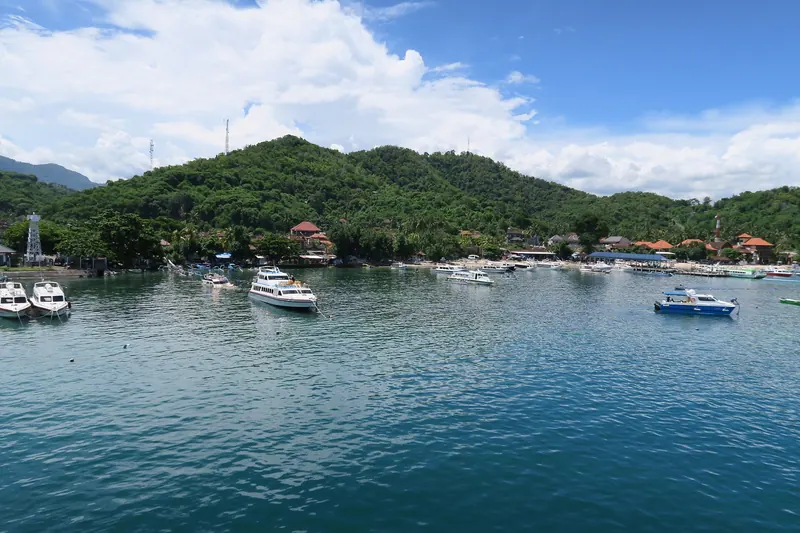
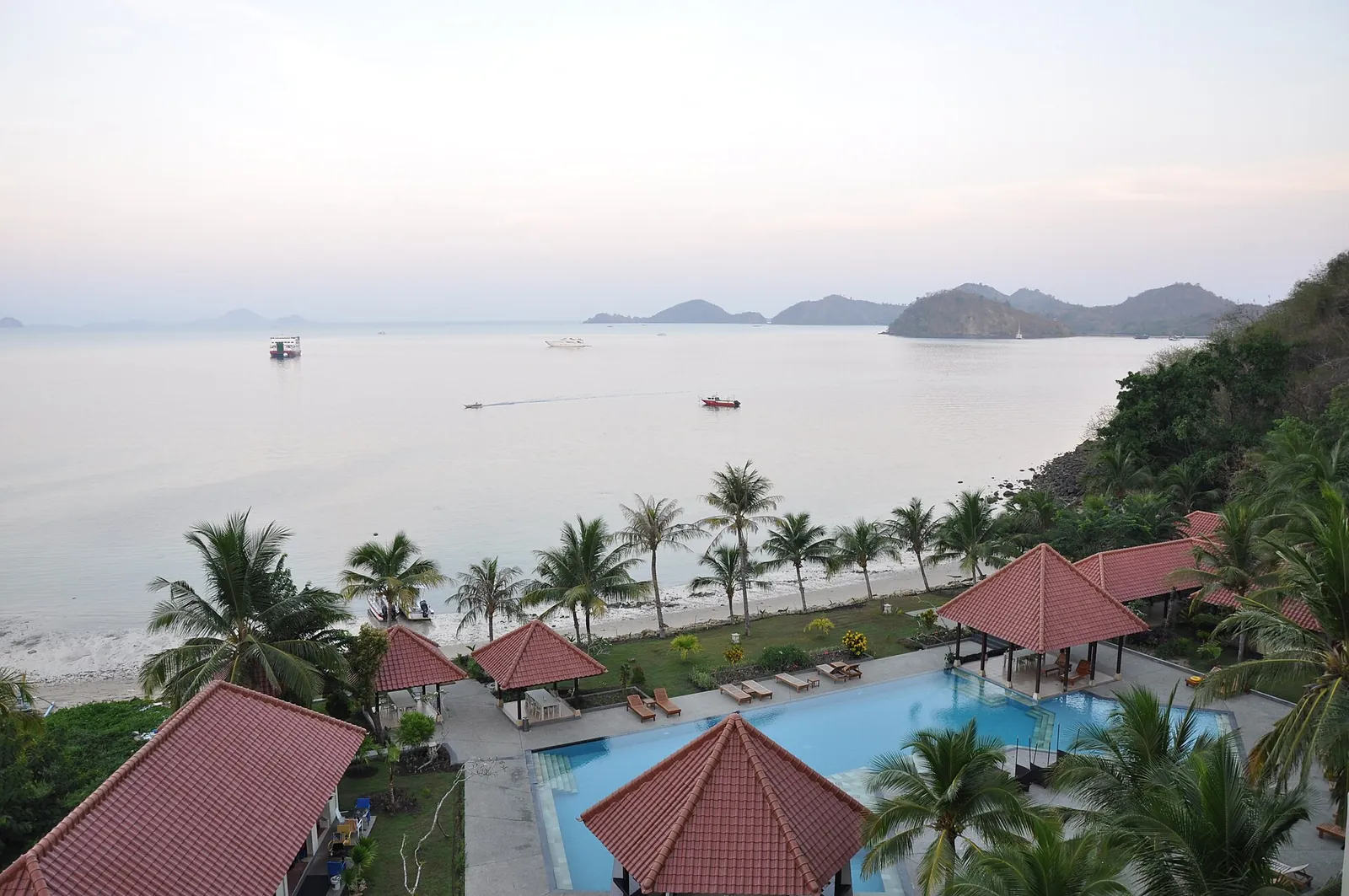
A hillside hotel above the bay at Labuan Bajo, the base for Komodo boat trips
Photograph: Jorge Láscar from Melbourne, Australia — opens in a new tab · CC BY 2.0 — opens in a new tab
Changes: Resized and converted to WebP; displayed with responsive crops. · Original photograph and licence details ↗ — opens in a new tab
A villa resort pool at Alila Villas, Bali
Photograph: a.canvas.of.light from Melbourne, Australia — opens in a new tab · CC BY 2.0 — opens in a new tab
Changes: Resized and converted to WebP; displayed with responsive crops. · Original photograph and licence details ↗ — opens in a new tab
Tuktuk on Samosir Island, the main lodging area on Lake Toba
Photograph: Christian Advs Sltg — opens in a new tab · CC BY-SA 3.0 — opens in a new tab
Changes: Resized and converted to WebP; displayed with responsive crops. · Original photograph and licence details ↗ — opens in a new tab
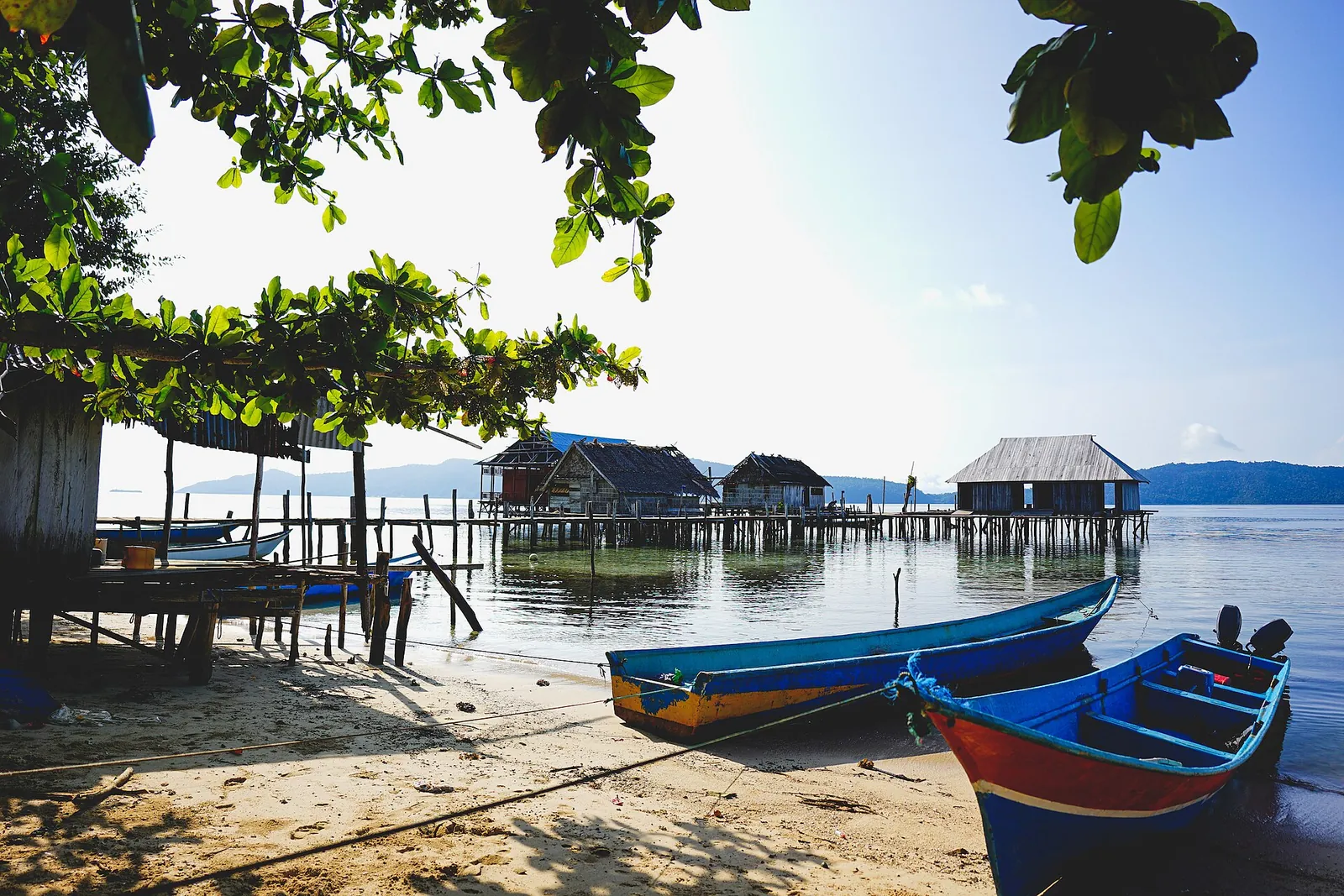
Homestays built over the water at Sawinggrai village, Raja Ampat
Photograph: Brizinsky T Juneanto — opens in a new tab · CC BY-SA 4.0 — opens in a new tab
Changes: Resized and converted to WebP; displayed with responsive crops. · Original photograph and licence details ↗ — opens in a new tab
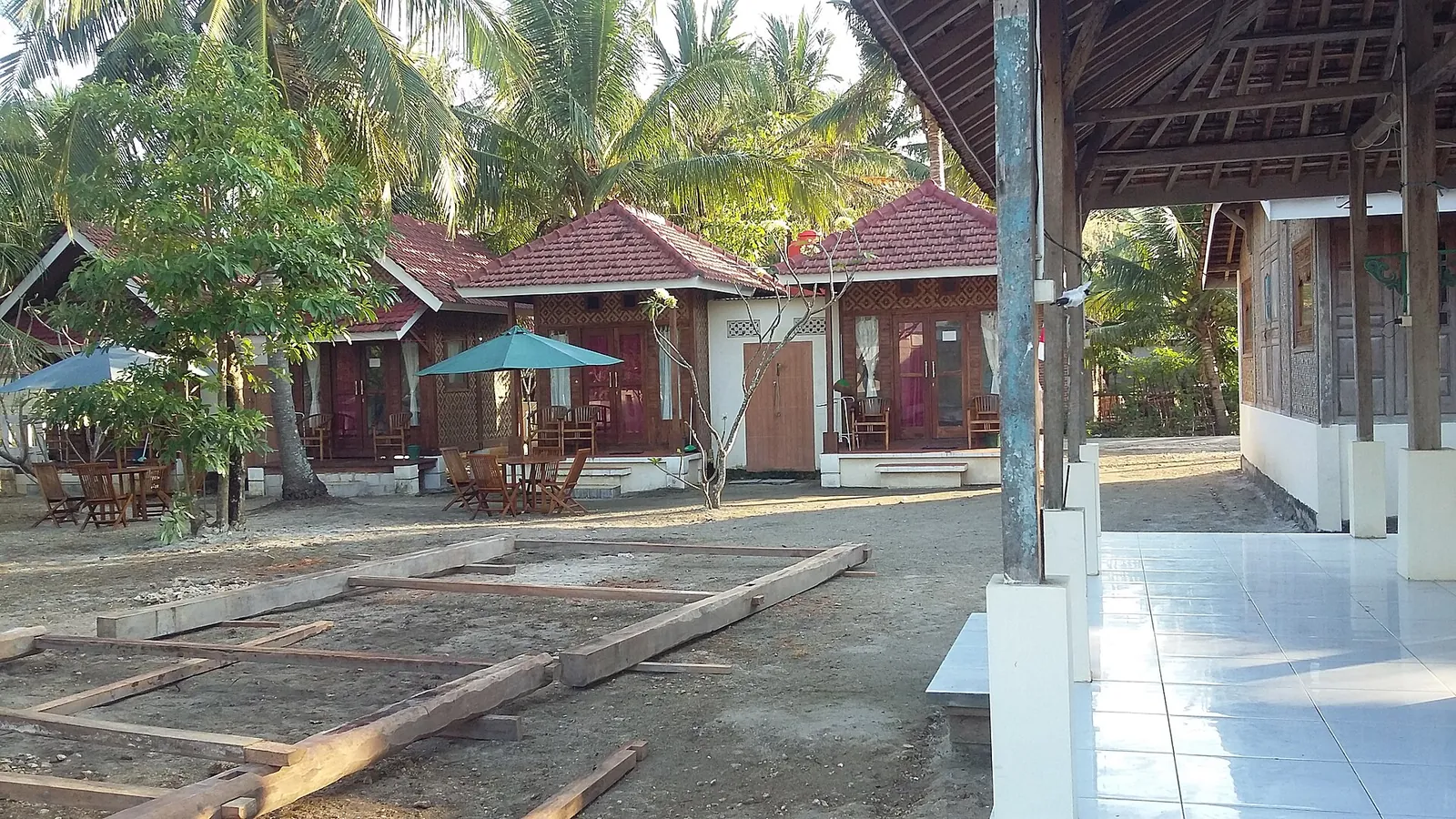
A family-run homestay in Watukarung on the south coast of East Java
Photograph: Humboldt — opens in a new tab · CC BY-SA 4.0 — opens in a new tab
Changes: Resized and converted to WebP; displayed with responsive crops. · Original photograph and licence details ↗ — opens in a new tab
Nasi campur at a restaurant in Ubud, Bali
Photograph: Vyacheslav Argenberg — opens in a new tab · CC BY 4.0 — opens in a new tab
Changes: Resized and converted to WebP; displayed with responsive crops. · Original photograph and licence details ↗ — opens in a new tab