Plan your trip · Indonesia
Indonesia trip budget: what really costs money and where to save
Indonesia can be a cheap country to travel in day to day: a warung lunch, a city bus or a homestay room costs little. What decides the size of the budget is the shape of the trip. Every extra island adds a flight or a boat, every volcano or marine park adds an entrance fee and usually a jeep or a boat, and private drivers quickly become the largest daily cost. Plan the route first, then the money.
- Suggested time
- About two weeks on one or two islands is the best value; each extra island adds a transport day and a fare
- Where to stay
- Homestays and guesthouses in Ubud or Sanur on Bali, Gili Air, and Prawirotaman or Malioboro in Yogyakarta
- Season and timing
- Rooms and transport fill up in the July–August school holidays, around Idul Fitri (Lebaran) and over Christmas and New Year; book transport and rooms early for those weeks.
The short answer
Build the budget from the route, not from a daily figure. Two weeks spent on one or two islands, say Bali with Lombok or the Gilis, or Java from Yogyakarta to Bromo, costs far less than the same two weeks spread across four islands, because transport between islands is the largest single cost after your international flight. Sleep in homestays and guesthouses in Ubud, Sanur or Yogyakarta's Prawirotaman, eat at warungs, and use ride-hailing apps or city buses instead of a driver for short trips. Save the money for the few things that cannot be done cheaply: a national park day with its fee and jeep or boat, a fast boat where the slow ferry wastes a day, and one guided experience that matters to you.
Where the money goes on an Indonesia trip
Most of an Indonesia budget falls into five buckets: getting between islands, getting around each island, entrance and park fees, rooms, and food. Food is usually the smallest. Rooms vary the most with your choices. Transport is the one people underestimate, because the map makes Bali, Lombok, Komodo and Java look close together when each hop is a separate flight or a long boat journey.
The cheapest way to cut a budget is therefore not to sleep in worse rooms but to cover less ground. A route that stays on Bali and Lombok, or that runs overland through Java by train, avoids most domestic flights. Adding Komodo, Sumatra or Raja Ampat to the same trip can easily add more in flights and boats than you spend on rooms for the whole stay. Decide which one or two regions are the point of the trip and give them time.
There are also fixed costs that do not shrink: your entry visa, if you need one, which is applied for and paid on the official eVisa site by card; Bali's levy for international tourists; and park fees at places like Bromo. Put those in the budget first, because no amount of bargaining changes them.
Fixed costs: visa, the Bali levy and park fees
Visa. Many visitors use the electronic Visa on Arrival (e-VOA). The official eVisa site of the Directorate General of Immigration takes applications for up to five people at once and the fee by Mastercard, Visa or JCB card. Check the current fee and whether your nationality qualifies on that site, not on a third-party agent's page, which may add a service charge. The same site says every traveller must submit an arrival card within three days before arrival, and the tourism ministry describes the All Indonesia app for the customs declaration.
Bali levy. When we checked on 2026-10-03, the Bali provincial government's Love Bali site listed the levy for international tourists at IDR 150,000 per person. The tourism ministry describes it as a one-time payment per stay, made cashless through Love Bali or at BRI counters at Ngurah Rai airport and Benoa port; the voucher arrives by email.
Park and temple fees. These are where foreign-visitor prices differ most from local ones, so check them before you plan. When we checked on 2026-10-03, the Bromo Tengger Semeru National Park notice in force since 30 October 2024 listed Rp 255,000 per foreign visitor per day, weekday or holiday, including insurance, against Rp 54,000–79,000 for Indonesian visitors. At Borobudur, the site operator InJourney listed its limited Borobudur Sunrise ticket at Rp 1,000,000 per person, capped at 100 people a day; ordinary temple tickets are sold separately on the official ticket site. In Komodo National Park, ANTARA reported that a cap of 1,000 visitors a day has applied since 1 April 2026, so the cost of a boat trip there includes the risk of losing a day if your slot is not confirmed.
Fees change, and many guides and booking pages quote out-of-date figures. Take each one from the park's or operator's own site in the week you travel, and ask any tour operator in writing whether park fees are included in its price.
Make time for the local food
What to eat and where to look
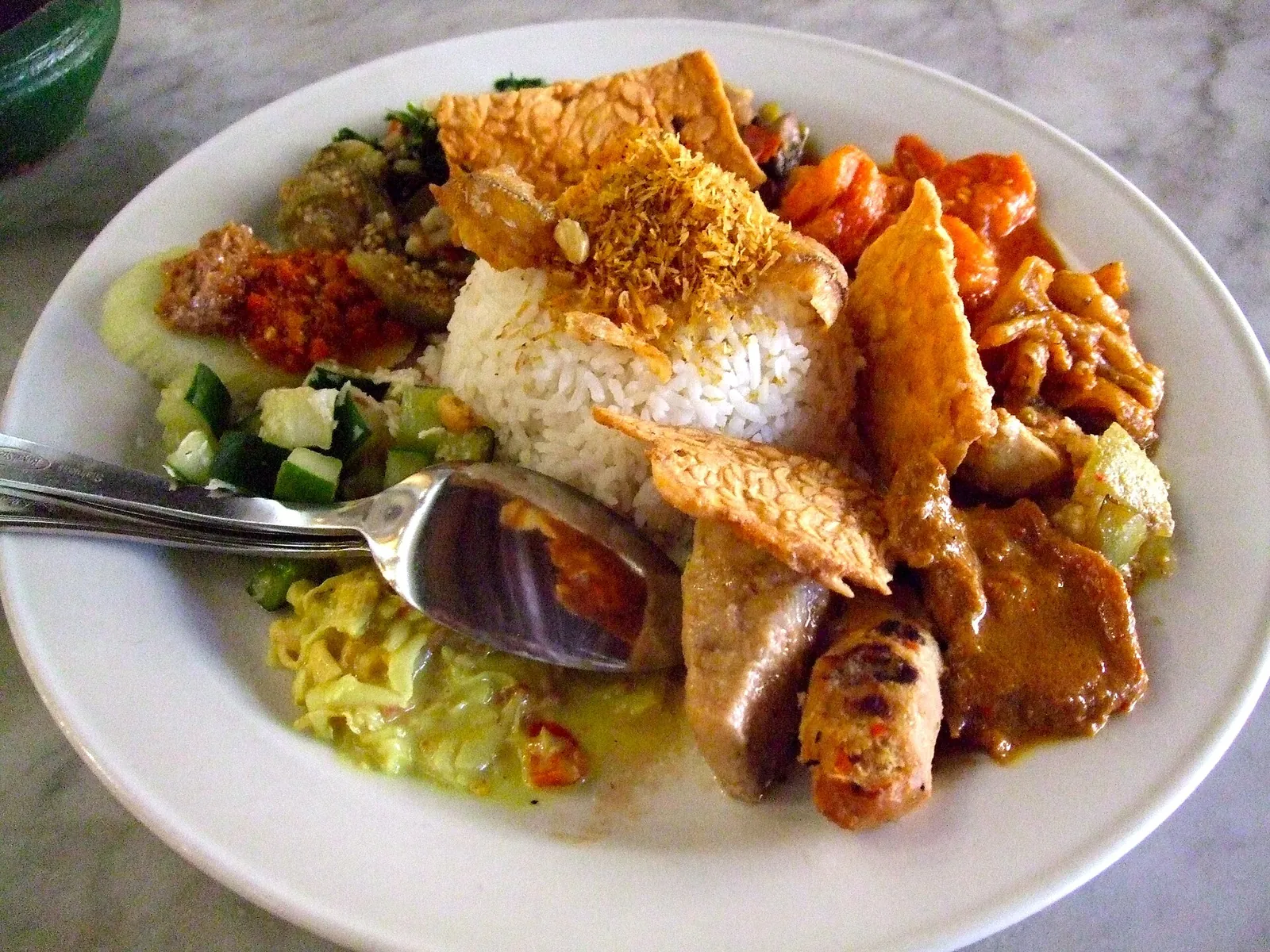
Nasi campur
Rice with a choice of small portions from the counter: vegetables, tempeh or tofu, egg, chicken or fish, a little sambal. On Bali it is the everyday lunch, and the plate can be as modest or as generous as you choose.
- Where to look
- Warungs with a glass display counter in Ubud, Sanur and Denpasar, busiest at lunchtime.
- Fit it into your day
- The cheapest full lunch on a sightseeing day; point at what you want and ask the total before you sit down.
On Bali the meat may include pork; ask if you avoid it. Food that has sat on the counter since the morning is best avoided late in the day.
Nasi Padang
West Sumatran cooking served across Indonesia: rendang, curries, fried chicken, greens and sambals cooked in advance and served with rice.
- Where to look
- Padang restaurants (rumah makan Padang) in every city and most towns, from Jakarta to Bali.
- Fit it into your day
- A filling lunch or early dinner on travel days, when the food is ready as soon as you sit down.
In table-service restaurants many dishes may be set out at once and you pay for what you eat; if you are watching the budget, order specific dishes or choose from the counter. It can be very spicy.
Angkringan snacks and kopi joss
Yogyakarta's night stalls sell small packets of rice, satay skewers and fried snacks, with kopi joss, coffee served with a piece of glowing charcoal dropped into the glass.
- Where to look
- Angkringan carts in central Yogyakarta in the evening, including around Malioboro.
- Fit it into your day
- A light dinner or late snack after a temple day at Borobudur or Prambanan.
Snacks are often pre-cooked and served at room temperature; choose what has been grilled or reheated in front of you.
Grilled fish by weight
Fresh fish and seafood chosen from ice and grilled, served with rice and sambal. It is the treat meal of an island trip.
- Where to look
- The night market on Gili Trawangan, the harbour-front stalls of Labuan Bajo and beach warungs on Lombok.
- Fit it into your day
- One dinner on an island stay, after a day on the water.
The price is per kilo: agree the weight and the total before it goes on the grill, and avoid fish that has not been kept on ice.
Island hopping: flights, ferries and fast boats
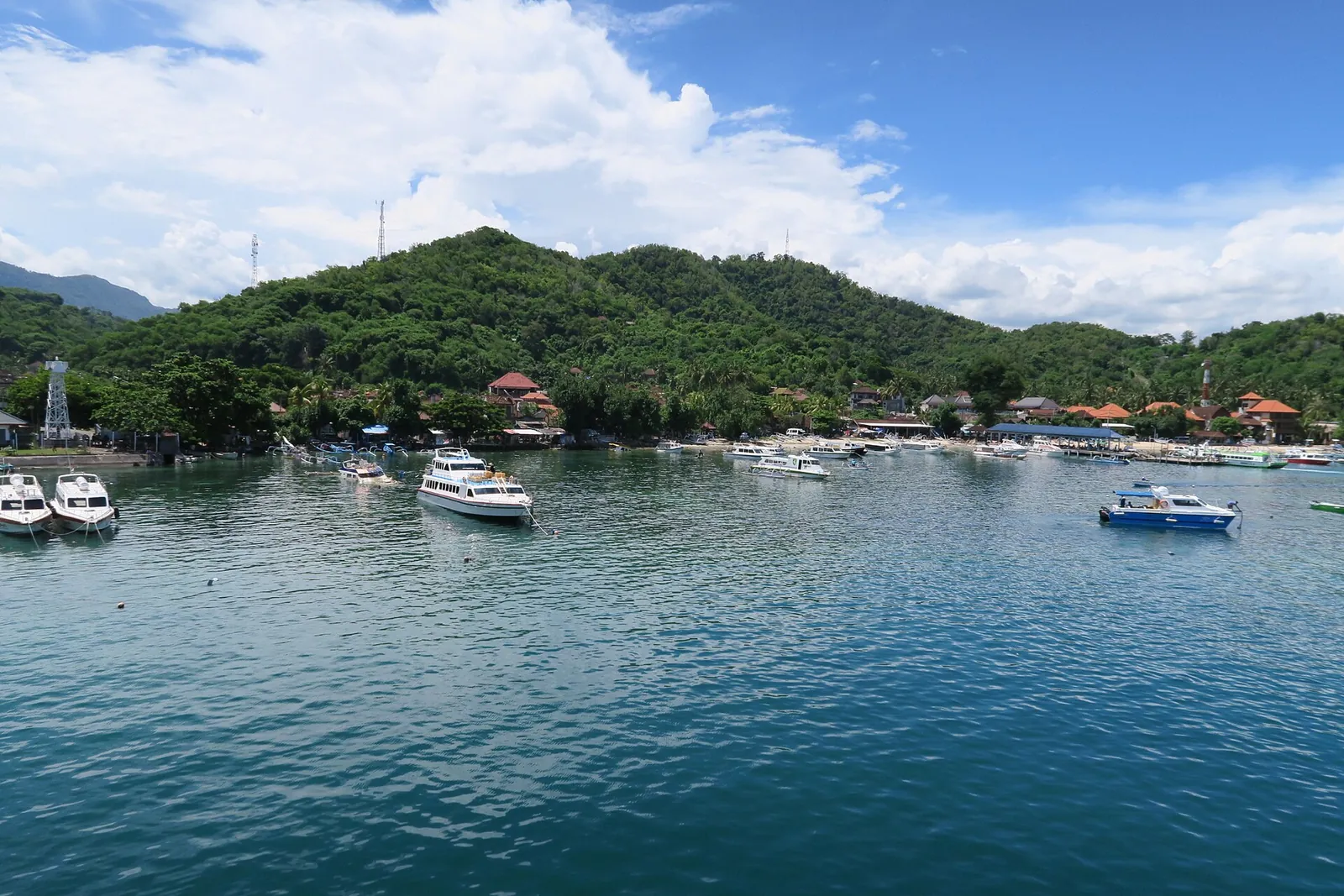
Between the main islands, the choice is time against money. The public ferry from Padangbai on Bali to Lembar on Lombok runs several times a day and takes four to five hours, according to the tourism ministry, which warns that the crossing can be rough; the state operator ASDP Indonesia Ferry sells tickets online through its Ferizy site. Fast boats from Bali go straight to the Gilis or Lombok: when we checked on 2026-10-03, the ministry's Gili Trawangan guide put direct Bali fast boats at roughly IDR 350,000–600,000, depending on operator and season.
The cheapest way to the Gilis is the slow way round: fly or take the ferry to Lombok, then use the harbour at Bangsal, where the same ministry guide listed public boats at IDR 20,000–30,000 and speedboats at IDR 85,000–150,000, against private speedboats from Teluk Nare from about IDR 350,000 one way. Public boats leave when they are full, so the saving costs you some waiting.
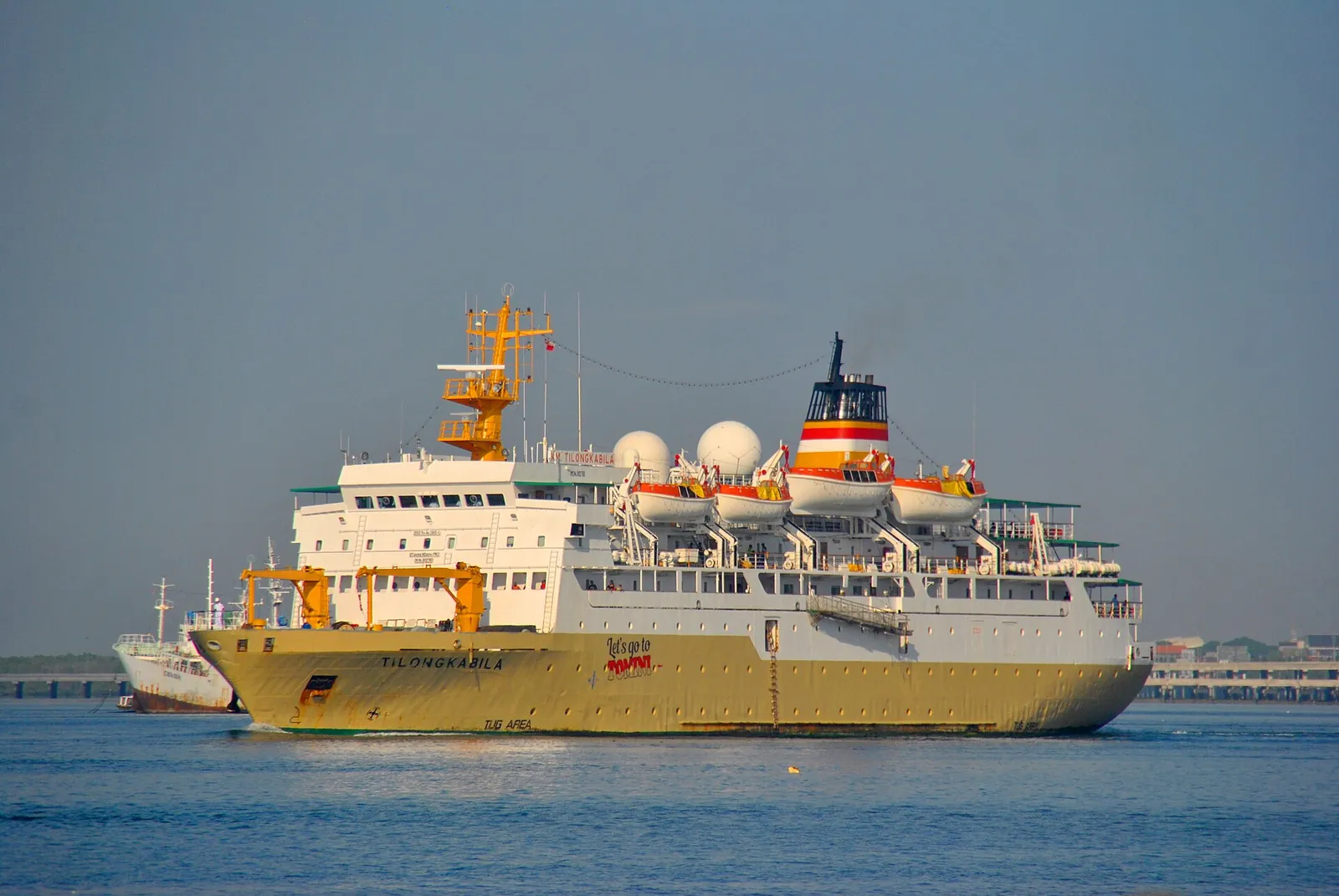
For longer distances, domestic flights usually make more sense than a day or two at sea, and the price of a ticket depends heavily on how early you book and on the season. The national shipping line Pelni still links distant islands with long-distance passenger ships and sells tickets on its own site; it suits travellers with time to spare rather than a fixed two-week plan. On Java, the railway is the budget backbone between cities: book on the KAI site or the Access by KAI app.
Getting around each island without overspending
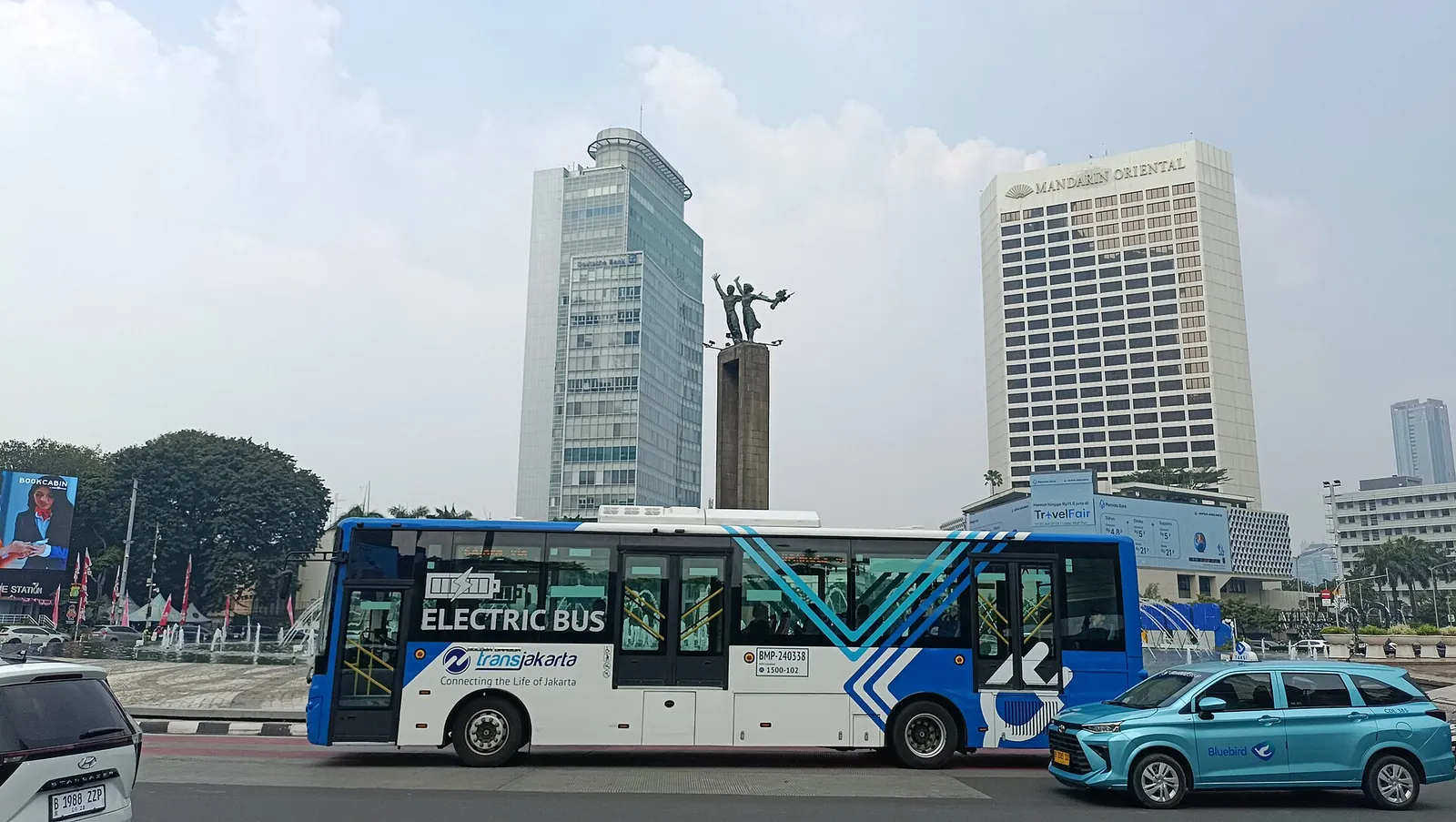
Inside cities, public transport is very cheap where it exists. In Jakarta, the tourism ministry's 2023 commuting guide listed MRT fares from about IDR 3,000 to IDR 14,000 depending on distance and Transjakarta bus fares of IDR 3,500 (IDR 2,000 between 05:00 and 07:00). Both are cashless: buy a JakLingko card or use a bank e-money card, and tap out at the end of the journey. Check the operators for current fares, as these figures date from that guide.
Away from the rail and bus lines, the same guide points visitors to the Grab and Gojek apps, which show the fare before you book a car or a motorbike. That upfront price is the main defence against overpaying for short rides. At Bali's Ngurah Rai airport, the ministry notes that only the official airport taxi has a counter (outside the arrivals hall, turn right) and that sharing it between up to three people is the cheaper way to use it.
The biggest variable is the private driver. On Bali and Lombok, many visitors hire a car with a driver by the day; it is good value for a full day of sights in different directions, but poor value for short hops you could make by app. Agree the hours, the route and what the price includes before you set off. For Bromo, the ministry's guide quoted jeep hire at roughly Rp 750,000 to Rp 1,500,000 a vehicle, which is why travelling in a group, or joining a shared tour, changes the cost per person far more than any other saving.
Rooms and food: where the cheap days come from
Indonesia's family-run homestays and guesthouses are the main reason a day on the ground can be inexpensive. They are common in Ubud, around Yogyakarta's Prawirotaman and Malioboro, on Gili Air and in many smaller towns. Planned resort areas such as Nusa Dua are built around larger hotels and are harder to do cheaply. Compare a cheaper room further out with the cost of getting in and out every day: on Bali, a room an hour's drive from what you want to see can end up costing more once the driver is added.
Eating cheaply is easy and is also how most Indonesians eat: rice-based meals at warungs, Padang restaurants and street stalls. Hotel restaurants and beach clubs in Bali's resort areas cost many times more for similar dishes. Fresh fish sold by weight on the Gilis or in Labuan Bajo is the one meal where you should always agree the price before it goes on the grill.
Book rooms early for Indonesia's busy weeks. The tourism ministry notes that Idul Fitri is usually extended into seven to ten days of collective leave as families travel home, and that Christmas also brings collective leave; flights, trains and rooms fill up fast. The school holidays are the other crunch: Statistics Indonesia (BPS) recorded Bali's star-hotel occupancy at 67.29 per cent in July 2026, the highest of any province, driven mainly by domestic school-holiday travel, ANTARA reported.
Cash, cards and the costs of paying
All transactions in Indonesia must by law be made in rupiah, the tourism ministry notes. Cards, mostly Visa and Mastercard, are widely accepted in hotels, larger restaurants and shops in the cities and main resort areas, but warungs, markets, small homestays, boat captains and park gates in remote areas often take only cash.
ATMs on the Plus and Cirrus networks are common in cities and tourist areas. The ministry advises withdrawing enough in a major town before heading somewhere remote and keeping small notes, since IDR 100,000 notes can be hard to break in rural areas. Your own bank's foreign-withdrawal and card fees are often a bigger cost than anything charged locally, so check them before you go and withdraw larger amounts less often.
For a phone, the ministry notes that local SIM cards are sold at provider booths in airports, starting from IDR 10,000 for the card, and must be registered with your passport. A local data plan makes ride-hailing apps, ferry tickets and maps much cheaper to use than roaming.
- Pay before you go: visa (on the official eVisa site), the Bali levy (Love Bali), and limited tickets such as Borobudur Sunrise.
- Book early: inter-island flights and fast boats for July–August, Lebaran and Christmas–New Year.
- Share: jeeps at Bromo, private boats on the Gilis and day drivers on Bali cost the same whether one or four people ride.
- Carry cash: small rupiah notes for warungs, public boats, parking and village sights.
- Spend where it matters: one well-chosen guided day, such as a park, a reef or a temple at first light, is better value than several rushed ones.
Practical questions
Is Indonesia cheap to travel?
Day to day it can be: warung food, city buses and homestay rooms cost little. The expensive parts are getting between islands, park and activity fees, and private drivers. A trip that stays on one or two islands is far cheaper than one that tries to cover four.
How much is the Bali tourist levy?
When we checked on 2026-10-03, the provincial Love Bali site listed IDR 150,000 per international tourist. The tourism ministry describes it as a one-time payment per stay, made online through Love Bali or at counters at Ngurah Rai airport and Benoa port.
Should I pay for a visa on arrival online?
Applying for the e-VOA on the official eVisa site of Indonesia's immigration directorate lets you pay by card before you travel; the site accepts up to five people in one application. Use the official site rather than an agent, which may add a fee, and check the current fee and eligibility there.
What is the cheapest way to get from Bali to the Gili Islands?
The cheapest route is the public ferry from Padangbai to Lembar on Lombok (about four to five hours), then onward to Bangsal and a public boat, which the tourism ministry listed at IDR 20,000–30,000 when we checked. Direct fast boats from Bali are much quicker; the ministry put them at roughly IDR 350,000–600,000.
Do I need cash in Indonesia?
Yes. Cards work in hotels, larger restaurants and shops in cities and resort areas, but warungs, markets, public boats and many sights in smaller places take cash only. Withdraw rupiah in a major town before heading somewhere remote and keep small notes.
How much does a jeep to Bromo cost?
When we checked on 2026-10-03, the tourism ministry's Bromo guide quoted jeep hire at roughly Rp 750,000 to Rp 1,500,000 per vehicle, on top of the park fee, which the park listed at Rp 255,000 per foreign visitor per day. Sharing the jeep is the easiest saving.
Sources and checks before you travel
Reference sources for the version dated 3 October 2026. Confirm opening times, access, transport and conditions for your travel dates.
- Love Bali (Bali Provincial Government): Tourist levy ↗ — opens in a new tab
- Indonesia Ministry of Tourism: Bali vacation in mind? Get informed of the latest regulations ↗ — opens in a new tab
- Directorate General of Immigration: Official eVisa website ↗ — opens in a new tab
- Indonesia Ministry of Tourism: All Indonesia app ↗ — opens in a new tab
- Bromo Tengger Semeru National Park: Fee adjustment notice under PP 36/2024 ↗ — opens in a new tab
- Indonesia Ministry of Tourism: Activity ideas at Bromo Tengger Semeru ↗ — opens in a new tab
- InJourney Destination Management: Borobudur Sunrise ↗ — opens in a new tab
- ANTARA: Komodo National Park sets quota of 1,000 visitors a day ↗ — opens in a new tab
- Indonesia Ministry of Tourism: Gili Trawangan guide ↗ — opens in a new tab
- Indonesia Ministry of Tourism: Lombok ↗ — opens in a new tab
- ASDP Indonesia Ferry: Ferizy ↗ — opens in a new tab
- PT Pelni: Official site ↗ — opens in a new tab
- KAI: Official site ↗ — opens in a new tab
- Indonesia Ministry of Tourism: Commuting options around Jakarta ↗ — opens in a new tab
- Indonesia Ministry of Tourism: Denpasar, Bali Ngurah Rai Airport ↗ — opens in a new tab
- Indonesia Ministry of Tourism: Getting to Indonesia ↗ — opens in a new tab
- Indonesia Ministry of Tourism: Currency ↗ — opens in a new tab
- Indonesia Ministry of Tourism: Payment system ↗ — opens in a new tab
- Indonesia Ministry of Tourism: Wi-Fi and connectivity ↗ — opens in a new tab
- Indonesia Ministry of Tourism: Business hours and holidays ↗ — opens in a new tab
- ANTARA: BPS records highest hotel occupancy in Bali, Banten and Yogyakarta in July ↗ — opens in a new tab
Does this experience fit your route?
Splitting a jeep or a boat is the easiest saving in Indonesia. Compare shared and private tours, and check what each price includes before you book.
Check dates and details on Viator ↗ — opens in a new tabAffiliate link · Book with ViatorPhoto credits
Padang Bai in east Bali, the harbour for the public ferry to Lembar on Lombok
Photograph: Felix Dance — opens in a new tab · CC BY 2.0 — opens in a new tab
Changes: Resized and converted to WebP; displayed with responsive crops. · Original photograph and licence details ↗ — opens in a new tab
Nasi campur, rice with a choice of side dishes, is the everyday warung meal in Bali
Photograph: WeI-chieh Chiu from Taipei, Taiwan — opens in a new tab · CC BY-SA 2.0 — opens in a new tab
Changes: Resized and converted to WebP; displayed with responsive crops. · Original photograph and licence details ↗ — opens in a new tab
A Pelni passenger ship leaving Benoa: the state line's long-distance routes link islands far apart
Photograph: Sabung.hamster aka Everyone Sinks Starco aka BxHxTxCx — opens in a new tab · CC BY-SA 4.0 — opens in a new tab
Changes: Resized and converted to WebP; displayed with responsive crops. · Original photograph and licence details ↗ — opens in a new tab
A Transjakarta electric bus at Bundaran HI; Jakarta's city buses are cashless and cheap
Photograph: Farhan S. Fadhillah — opens in a new tab · CC0 — opens in a new tab
Changes: Resized and converted to WebP; displayed with responsive crops. · Original photograph and licence details ↗ — opens in a new tab